Jolt (00:09):
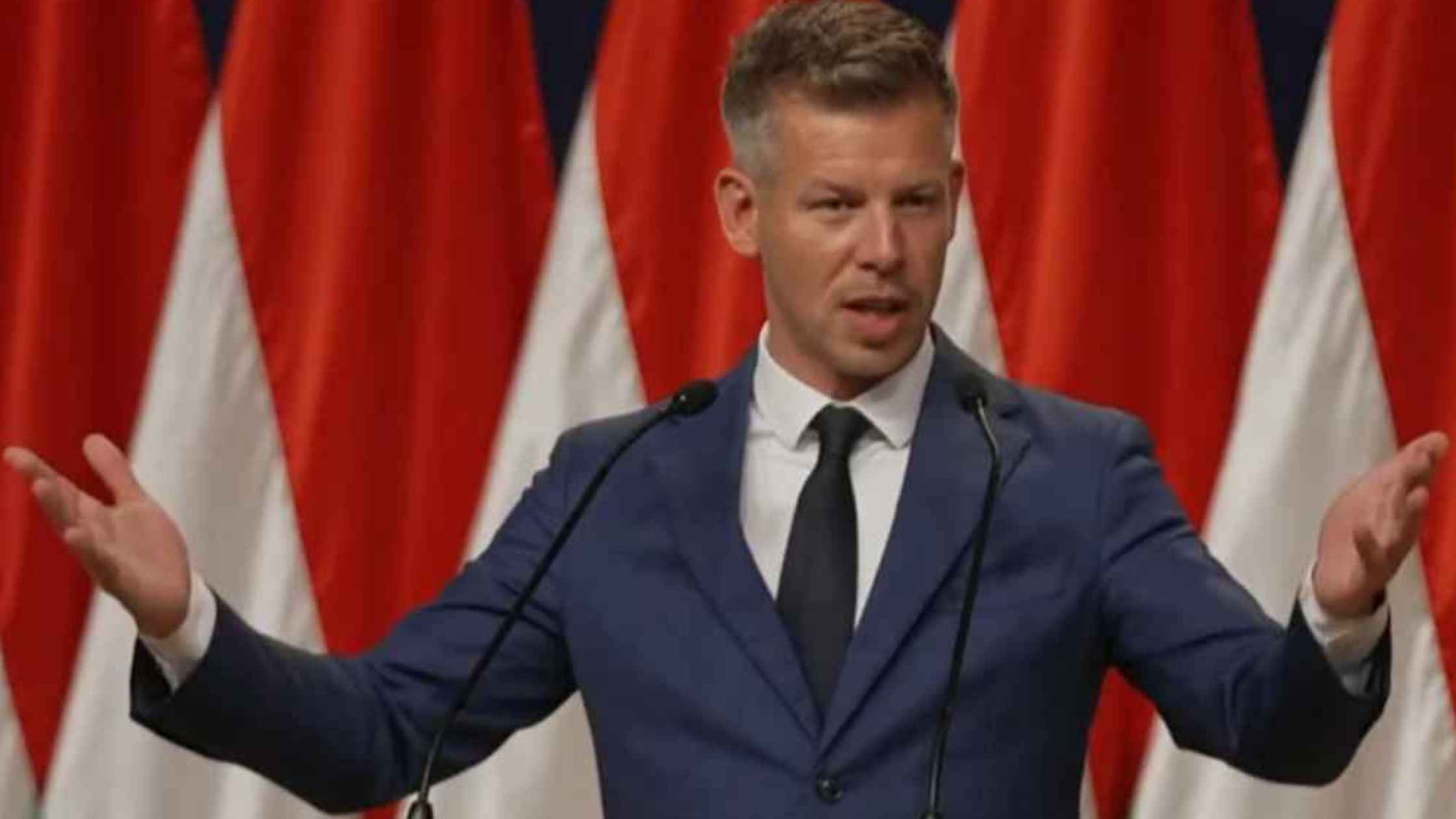
Good afternoon and welcome. To the International Press Conference of Péter Magyar, the future prime minister of Hungary. We are planning this press conference to last until 5:00 PM. There will be simultaneous interpreting into German and English. After Péter Magyar's speech, there will be time for questions. Every medium can ask two questions at the same time, and then please pass the microphone on. Thank you for your cooperation, and the floor goes to Péter Magyar.
Péter Magyar (00:45):
Good afternoon, ladies and gentlemen. Thank you for this great interest that you are showing, both from the international and from the Hungarian press. Thank you for joining us today, paying attention to us, to our country. Let's wait for everyone to be seated. As Jolt has explained, I will be available to you for about three hours, but from 5:00 PM until 8:00 PM, I will have phone calls with a dozen of European and other leaders, and I don't want to make them wait. So please be patient, and also please observe the rule of two questions. There are hundreds of press representatives, and I will try to answer every question and answer them briefly.
(01:58)
Hungary and the Hungarians wrote history yesterday on the 12th of April. What we saw and experienced in Hungary and also from across the world, it was history in the making in real time. This was a decisive victory for Tisza and for Hungary. We have a strong super majority in the new parliament and according to the current figures, Tisza will have 138 represent MPs in parliament, which has a total number of 199 seats, but some ballots have not yet been counted. Still roughly 400,000 votes still haven't been counted because they were cast elsewhere. And we expect that there will be an additional three to four MPs for the Tisza party, totaling 142 eventually, which is never before seen mandate. No one has ever voted for the same party. This number of people have never voted on the same party.
(03:25)
Roughly 3.3 million people voted for us, which gives us a huge mandate, but also a huge responsibility. And Fidesz, the state party used to have two-thirds majority, but currently they have only one-fifth of the votes in the Hungarian [inaudible 00:03:46]. I would like to point out here that the reason that the state party won this many seats is that they have a propaganda machine behind them spending hundreds of billions of forints, spreading lies morning, day and night. And the entire state apparatus was managed by a state party, not unlike what we used to have in the 1980s and before that, before the political changes.
(04:31)
Now, without this propaganda machine and without using the state institutions for party policy purposes, such as the Secret Services and the law enforcement agencies, then we would have even fewer seats in parliament, in the next parliament. And it is also no coincidence that we have an unprecedented turnout yesterday. Almost 80% of Hungarians cast their votes, which is a huge mandate for [inaudible 00:05:08].
(06:42)
... couldn't wait until the travel may, but maybe the 5th of May will [inaudible 00:06:50] if the result is final. And I would also like to call upon [inaudible 00:06:57] as a leader of the [inaudible 00:07:00] to forming the new [inaudible 00:07:04]. [foreign language 00:07:08].
(06:46)
... showed and was due to this that we did things when Viktor Orbán, he betrayed his country. He betrayed Hungarians living outside Hungary, Hungarians living in Transylvania when he was supporting the Romanian George Simion candidate. We decided to walk to Nagyvárad, Oradea and the Partium, which is in Romania, and we did one million steps on foot, going through the smallest villages in Hungary and in Transylvania to our sisters and brothers outside the borders. This is what politics is about, and it seems that it struck a chord with people. We got a tremendous mandate. This goes hand in hand with huge responsibility. Allow me to repeat here that the government is a collective. It's a team. The prime minister is not going to be like a king, but like a captain who coordinates tasks, who relies on the opinion of his ministers on their proposals, who relies on members of parliament, but also on Hungarian people. I, myself, have changed a lot. I learned how important direct relationship with the people is crucial, or as they say, participation. Yes, it is important. This is the only way democracy can work. Facebook posts are not enough or to go into some studios and send messages to people and make decisions above their heads.
(22:48)
This is how we will function, how this community functioned in the past two years. We will make decisions together with the people. We will draw them in. This can mean referendum. The previous government made it impossible to hold a referendum, but this can mean that an online questionnaires are not the ones we've seen that for 20 billion forints, they ask nothing, but we can ask the opinion of citizens. I believe that this will give again and again a mandate for or to the government, not in Brussels to fight, but to bring and make the best decisions. This is what we shall continue. Let me say a few words about foreign policy because I guess a lot of the press here is interested in this.
(23:45)
Hungarian people made a clear decision yesterday. They are proud that we are part of the European Union and NATO. They are proud that for 1,000 years, our ancestors, our kings and queens and princes have struggled to be part of Europe. We are proud that we protected the borders of Europe for hundreds of years. All Hungarians are proud of their European identity. And people could see that if this vile propaganda is lying to them, is accusing the European Union and criticizing them, that they want war, everyone knows that it's a peace project that was created, the European community, that there should never be a war between the founding member states. And since the EU was created earlier, it was called differently, but there was no war. So Hungarian people could feel and understand that the fact that there is peace today in Hungary is due to a great deal to the EU and NATO. We also see the force of the EU, 27 member states. It's a large organization, many national interests, party interests, lobby interests.
(25:14)
I, myself, for eight or nine years, I worked as a diplomat in Brussels as a diplomat of the Hungarian government at the permanent representation, and I could get to know the functioning of the EU. It's complicated, bureaucratic, seeking compromise, how difficult this is and also the beauty of this. I can tell you that you can indeed find the compromise. I am here and I personally and Hungary is also prepared to create compromises. We shall have debates. I'm sure we will have debates because all member states are there to represent their national interests, the interests of their people, their companies, but we are not going there to fight so that we can fight and then we can write on billboards to the Hungarian people that Brussels is evil and it has to be stopped.
(26:21)
I can promise you that I will always represent the interest of Hungarians, both in Strasbourg and in Brussels, but also in Moscow, in Berlin, or in Washington, or in Beijing, everywhere. I will be very strong and steadfast and honest about Hungarian interests, and I will represent them. But I attended the Munich Security Policy Conference, and I met many EU leaders, and I can see that this is a normal operation, normal way of working. And this is what is expected by the other members, is that we are open and honest with each other, especially when it's a private conversation but even in a greater room. So we should discuss and settle our disputes. And Hungary will be there. We will be a constructive partner because Europe is in trouble in more than one ways. There is still a war waging next to us for over four years, and we are in dire economic straits, and we have lost pace. We have lost a lot of competitiveness.
(27:32)
There are many social issues, and we are here and we are ready to help. I am, my person ready to help to accelerate this process rather than expanding the issues, make it more streamlined to make decision making easier, and also to accept the countries that are ready to join rather than making them wait in line, because that wouldn't be in the interest of the European people. We have seen countless number of times, as well as yourselves, that the leadership of the EU ... How shall I put this? The EU doesn't really have leadership, so Harry Kissinger's question cannot really be answered to this day. So we will be there, and we would like to help to make Europe's voice stronger, to help Europe make headway, and to make decisions together, whether it's concerns competitiveness or any other topic, to support European citizens and also Hungarians. There's a new piece of information in front of me. Many people believe that Péter Szijjártó disappeared, who was resigning minister for Foreign Affairs because he wasn't there behind Viktor Orbán, but I would like to reassure you that he resurfaced. And today at 10:00, he went to the Ministry of Foreign Affairs together with [inaudible 00:29:36], and he is in a meeting, and they are currently destroying documents that have to do with the sanctions. This is what's happening in Hungary. We know that people have been destroying documents, just like in the old communist age, the
Péter Magyar (30:00):
... that shredders are working full-time, not only in ministries, but also the other background institutions. They are destroying shredding documents, but that's not going to help them. But this is just to give you some context about the situation in Hungary today. A normal transition period, just a handover process. In a normal country, if there is an opposition party, which has been more popular than the governing party for over a year and will take over the government, then the resigning prime minister will share information with the incoming leader, information that is important regarding the national security. But that's not what is happening in Hungary. We have no information at all.
(31:04)
And just one last remark, that there are many things that we don't know. There are international treaties, confidential government decrees were passed by the Orbán government. There are classified documents that they signed, and we have no idea what they are. There are many international commitments that the Hungarians have no idea about, not even myself, the leader of the largest opposition party and the future prime minister. Orbán, Viktor took out loans with unknown interest and conditions. We have no information about those loans. He signed international treaties that cost billions to Hungarians, but we have no idea about the details, the conditions, terms and conditions of those loans. So we will have to get our hands on all of the documents that haven't been shredded so that the country remains operational after the handover, whether it's critical infrastructure, IT systems, national security systems, the foreign exchange reserve, the oil reserve. We have our team, we have our plans.
(32:28)
We had plans for a super majority or a simple majority, but now we will be fortunately using the plans that we have ready for the super majority. So I would once again call upon the president to listen to the voice of the people, because the voice of the people is the voice of God, and convene the first parliament and also receive me in the the Sandor Palace where he resides as soon as possible. But we will do everything in our power once we read and learn about those documents, whether it's confidential government degrees or confidential loan agreements, to review them, and those who do not violate the interest, financial or security interests of Hungary, to disclose them. To make them available in the public domain, whether it has to do with education, healthcare, infrastructure, the budget, the economy, what the current status of the country is. What the robbers have left behind, those who robbed and betrayed the country.
(33:44)
So we will have a stock take, and then after that, we will have a stable budget. And clearly, the current budget will have to be amended because it already collapsed back in 2025. It was amended twice already. And in the first three months, we had a deficit that is unprecedented in the Hungarian budget since 1990. And the world watched from the outside how Orbán, Viktor is robbing his own country and takes out loans without responsibility. But fortunately, Hungarians decided yesterday to end that era and open a new era, the era of a humane and functioning and free European Hungary. So there are many things I should address, like the constitution, the economy, the responsibility, our actions to be taken. But now I will stop here and open the floor for questions.
(34:54)
I would like to ask all of you to state your name clearly, your country, and also the name of your newspaper or your news outlet. And the first few questions will be asked by the Hungarian press, and then later on the international press will have a chance. Now, formerly, the international press conferences worked in a way that at this point, the propaganda media could ask the questions that were written for them by the government itself and the independent press couldn't ask questions. And therefore, we will now give the floor to those large Hungarian news outlets who are still independent and who survived the last 16 years, very often working with donations and with advertisements. But they were practically the public media of Hungary instead of the state propaganda channels. And first, I will ask Partizán to ask their question.
Jean Barush (36:05):
Thank you. It's a Jean Barush Partizán Hungary. I have two questions. One, yesterday, you called upon Tamás Sulyok, the president of Hungary, to resign. Can you share us your thoughts? If he was not to take that step, how will you make him resign? And also, during the campaign you said many times that you will not only go among the people during the campaigns, but regularly. Can you make a commitment as a prime minister when will you travel the country once again to meet your voters, your electorate in person?
Péter Magyar (36:45):
Let me answer the second question. Yesterday, people suggested that we should take a tour of gratitude and walk [inaudible 00:37:19] closed doors. So I'm sure there will be some cabinet meetings that will not touch upon sensitive issues, and therefore, we may have some public and open government or cabinet meetings and people will be able to ask questions. So we would like to change politics in Hungary. And we would like to give an example, not only in Hungary, but also for the whole world, what politics should be about. It's not politics by Orban. These politicians like Orban, who are playing the high priests of peace, they are the ones who start wars or who generate wars. And I would like to be very clear, Minister Orban said that if Donald Trump were to ask, they will consider sending troops to the Iranian war.
(39:12)
Now, I don't know if you are aware of this, but his son, his only son, was planning a military mission in Chad, in Africa, with 200 Hungarian soldiers for tens of billions of forints. So once again, the prime minister's son, and he said privately that up to one half of the Hungarian soldiers who will be deployed there may die. And this is in the middle of 2020s in an EU member state, that the prime minister's son is planning a military mission in Africa. So this is not how we approach politics. We will work for Hungarians instead.
(39:58)
And to your other question, it is clear for everyone that Hungarians decided to change the regime, and Tamás Sulyok, President, and the other puppets, are parts or were parts of this regime, and they were elected not because they were qualified for the job or because they wanted to represent the unity of the nation, which is the job of the president or to watch over those in need and support them and to be the human face of Hungary, which would be the role of a president, but rather he was appointed to sign everything. Every document that he's presented with, whether it's the menu or the constitution or the laws. So we don't need people like that. That's not a president. To me, he is not a president. He allowed the country to be robbed, the national bank to be robbed. He didn't say a word when thousands of Hungarian children were abused by pedophiles, pedophiles who were appointed by this government, who were awarded by this government, or who were pardoned by this government. The president didn't say a word.
(41:21)
That's not a true president. And I hope that he is listening. He may not have heard last night, so let me repeat. He should resign. He should resign as soon as possible. This is the decision of the Hungarian people. We have a super majority which will make it possible for us to amend the Constitution. But I don't want to be a lawyer, especially against a lawyer like the president. I hope that the remainder of his dignity would be left and he would leave his office because we don't need the puppets of the mafia. Hungarian people deserve a president who is really showing the unity of the Hungarian nation who will stand for a humane Hungary, who would act if he sees that GRU, the military Secret Service agents are here and wanted to influence the Hungarian elections.
(42:24)
1956, 70th anniversary this year. Such a person cannot be the president of Hungary on the 70th anniversary of '56. He should leave. We have solutions. We are not going to do anti-rule of law measures to restore the rule of law that way, but with a super majority that enables us to many things. Next question, 444.hu.
Speaker 1 (43:00):
You also referred to the two-thirds majority, so it will be two cycles that you will restrict how long the prime minister can be. So will you talk with the opposition about this? Can you say that Viktor Orbán is never, ever going to be the prime minister and that you yourself will only do two cycles max? Last time when asked about your ministers, you said, "Let's cross our bridges when we get there." Now you said the team is ready. What can you say, share with us about the cabinet, the future cabinet, the ministerial structure, who will be the heads of the different ministries?
Péter Magyar (43:49):
Balazs Kaufmann, you heard it's partly due to him that we can stand here, because more than two years ago he was the journalist who wrote the pardon scandal. He wrote an article which really shook in its foundations Hungary, which partly led to my appearance. I just wanted to make this comment as Jhad talked about in the relevance of independent press. So structure, maybe I'll start. So first, I have said many times that we will have a different governing structure than what it was with Fidesz. In Fidesz, there were these big, major ministries and we will have sectoral ministries, so minister of health, minister of education, environment protection, rural development, clean finance ministry. So we will have foreign trade, domestic trade. We will have a prime minister's office, Secret Service will go back to where it was before. Information Office will go back to the Ministry of Foreign Affairs and we will have responsible ministers. They will take responsibility for their decisions.
(45:22)
Many names are known actually, more than what would be expected because few names were known when a Fidesz government led to a Fidesz government. So a prime minister needs to have discretionary power to discuss it amongst themselves, assessing the magnitude of the mandates to create the team with whom they plan to manage the country. András Kármán, George Hegedus. I could mention many others. I won't announce any new names here, but within weeks you will, or the Hungarian public will get to know them. Parliament committees will hear them and then people will see them. They will be experts, I can say. So, not puppets, as not corrupt, sometimes betraying. So not corrupt puppets, but real expertise is going to be there in Hungary, which I think is good news and it's necessary for us to progress. Prime ministerial cycle, I can state. We got a mandate now for one cycle. If my body one term, I can't see five years ahead, so for four years we got a mandate, which is tremendous, and this will be in the fundamental law. And I said, because Viktor Orbán has been prime minister for 20 years now, of 36, 20 years as a prime minister. So this limitation in the fundamental law will apply to him so he cannot be prime minister of Hungary, but still he is the prime minister who was in office for the longest period of time. He had a tremendous mandate. He had a tremendous opportunity. He could have carried out tremendous things for his country to make Hungary a country that develops, but he didn't use it. He misused this opportunity. Thank you.
Hussein Napontu (47:35):
24.hu, Hussein Napontu. Chaba Horvath. Holding to account ...
Péter Magyar (47:45):
Where are you? I can't see you. Sorry.
Hussein Napontu (47:48):
So yeah, holding to account, I want to ask my questions. Anti-corruption measures you mentioned, what are these measures going to be? And Asset Recovery Institution Office, when can it be set up earliest? What mandate remit will it have? What will be the first cases in your view? Thank you.
Péter Magyar (48:20):
So anti-corruption measures. European Prosecution Service, I said. So even if Hungary decides, parliament can initiate our accession, but it's about six months before this can all happen. We will create an Anti-Corruption Office. I know some of you don't believe in office, but intentions are crucial. Do you want to do something and not the name or the label that matters? So everything with public money, it will ... So preventive education and the watchdog role, whistleblowing, and anonymous whistleblowing possibilities. So to really to uproot or to take out corruption. Hungary cannot develop. For some time, it was almost like accepted. We spoke about corruption. It's called theft, and the money that is stolen, the thousands of billions of forints through overpriced public procurement, this is the money of the pensioner. It's missing from child protection in Tiszadob child protection home where they don't give extra food to the children, and the refrigerator was locked so that a five-year-old child cannot eat if he's hungry. So this is not normal. We should not accept that stealing public money is normal.
(49:53)
But we will restore the independence so no politically appointed leaders, whether they were at the prosecution, police, or Inland Revenue or at Secret Service, to cover up cases. Bence Szabó, captain, who was a captain of the National Bureau of Investigation, under what pressure they were working, they were forced, small police officers or [inaudible 00:50:25] spoke about the defense forces not to go after the real culprits. He spoke about many agencies, and politically motivated procedures were launched against civilians or journalists or artists. If we restore professionalism, if we can separate the operative and the political management, and if we can say that a minister cannot intervene into the work of a police commander, into their professional work, so only political oversight, because obviously it's the minister of the interior who has this political oversight.
(51:14)
National Asset Recovery Office, this will be an important role. It's going to be one of the most difficult tasks to head, to lead this. We have some candidates, but here we cannot make any mistakes because there's a huge expectation from people. And it's the interest of the Hungarian economy that from the past 16, 20 years, crimes can be revealed. So this office can really help investigation investigative authorities, so they won't be competing the different units or branches or agencies. They will work together. What remit? Well, two-thirds majority we were given, so substantive remit, even investigative rights can go to such an office. But we want a coordination role. National Bank, 650 billion motorway concession, tobacco and waste concession, breathing machines, Matthias Corvinus Collegium assets given to them, transfer of assets to them. Ministry building leases, sales, gas, oil, procurement, [inaudible 00:52:43] net, Botchani Loyos Foundation, state ad support contracts, all banned campaign financing above 10 billion public procurement ... Investigating all public procurement above 10 billion half Hungarian forint. So maybe I'm too fast. I apologize from the interpreters.
(53:12)
So I only mentioned just the first couple of tasks that this office will have. So this industrial-scale corruption has to be solved. 8,000 billion from the EU doesn't arrive because of this, and this is why we became the poorest and the most corrupt country in Europe. I can tell you, I would hope that in June we will be there. I will do everything personally to set it up so there is an office. It can replace the so-called Sovereignty Protection Office that was created to serve the propaganda. It has nothing to do with sovereignty protection. 6.2 billion Hungarian forints were given to this office. This will be thrown over to the asset recovery. Bence Szabó, [inaudible 00:54:13] and many others will be welcomed to this new institution. We'll still remain a little bit with the Hungarian. So now, Telex. Telex is not sitting together with the other.
Dániel Simor (54:35):
Dániel Simor. Yesterday you said Viktor Orbán congratulated you. Did he say anything? And my other question, you asked for many people to resign. Mihály Varga, you didn't mention. So Sulyok, Tamás appointed him. Why is Mihály Varga different? Why did you not tell him to resign? Thank you.
Péter Magyar (55:10):
Telephone congratulations. I guess it's not a secret. This was a short telephone conversation. It was, as I had imagined, although I did not guess it would happen, but the prime minister did it, so my telephone rang and my once good friend Georg Gulyas, the godfather of my son was there, and we know each other's number, and he said, "The prime minister would like to congratulate." [inaudible 00:55:50] because I don't take unknown numbers, he gave the last four digits.
(55:54)
The comrades' prime minister called within minutes and I said, " I am Péter Magyar, good evening." And he said, "I am Viktor Orbán. I would like to congratulate you for your victory." I said to this, "Thank you very much for your congratulations on behalf of Hungary, and it's a great honor. It's the greatest honor that sitting in the chair of Lajos Batthyány, I can serve the Hungarian nation as a prime minister." And I also said, "If I can say this from today, from the 13th of April, we have a joint responsibility to reunite the Hungarian nation and to do everything so that it will be easier and better day by day for Hungarian people." And he said, "Good, I wish you goodnight." This was our telephone conversation.
(56:50)
To your other question, the governor of the National Bank, I intentionally left him out from the list. I said that Hungary was in a very difficult financial and economic situation, and the National Bank of Hungary's prime responsibility is to ensure the stability of the exchange rate. And well, it hasn't been very successful recently when we have had major inflationary pressure as well, but as far as I can see, irrespective of who appointed Mihály Varga, he's a different kind of governor for the National Bank. He seems that he is willing to observe the requirements and the provisions of the act on the National Bank. And I think that it's important in a country, especially if it's in a difficult financial situation, not to have cooperation between the budget and the fiscal and monetary policy, but obviously respecting the independence of the National Bank. And that is why we have decided to try to work with him.
(58:07)
And what we see is that the governor of the National Bank and National Bank itself will do its statutory job instead of blocking the economic policies of the new government, then we may be able to work together. So it's not necessary to create even greater chaos and to launch new procedures or to lose the confidence of international financial markets in Hungary even more with a war between the government and the National Bank. We don't want that. The next is RTL, but we should also come to the international press soon. Yes. RTL.
Morjia Riva (58:52):
Thank you. Morjia Riva, RTL News. I saw that someone gave you a piece of paper during your speech regarding the information concerning Péter Szijjártó. Can you share with us some details where the information is coming from? Do you have any proof that this is what's happening, that they are shredding documents in the Ministry of Foreign Affairs? And also, my question is whether Hungary will be able to detach itself from Russian oil.
Péter Magyar (59:29):
Well, the first, to your first question, this is a piece of insider information regarding what's happening in the Ministry for Foreign Affairs. Many people shared information with us in the last couple of weeks, information concerning crimes, felonies that are taking place in the ministries and the background institutions. And I believe that the state knows and
Péter Magyar (01:00:00):
Our prosecutors and our police officers know that the Tisza government is counting on them. They took a while to protect and serve the Hungarian people, but not the state party, not Viktor Orbán. And I think it is only just if they report crimes when they see them. Until now, it was pointless because they couldn't investigate. So this is where the information is coming from. And once again, we will rely and count on everyone who did their job well, who kept the laws, didn't violate the laws, because the Tisza government needs government people, good police officers, good prosecutors.
(01:00:50)
And there are people like that, such people in the country, but they haven't been able to do their jobs. But now they will be able to do their jobs and they will have a lot of work to do. So this is where the information is coming from. But we also receive information from ambassadors and because someone worked as a career diplomat or a head of department in a ministry, they were looking at watching how the country is being robbed, but still they can be a good public servant and we rely on the experience of those people. They can take out the materials, the documents, the files from the drawers that until now they couldn't act upon. Now they will be able to act upon them. So the foreign press may not be aware, but we have a beautiful poem written in the 1950s when we had the darkest communist dictatorship in Hungary and Gyula Illés wrote a poem, A Sentence About Tyranny.
(01:02:02)
It's about 10 pages, but it's one sentence, a single sentence. And that poem could not be published for five years. So he kept it in his drawer. And then during the 1956 revolution, that's when it was published. So this is the kind of document that I'm talking about. So now people can open their drawers and take out the files. And when it comes to the Russian oil, I've said many times what I will repeat it now, that this government will do everything in its power to diversify our energy mix, energy purchases for two reasons, because that gives us security and energy security is one of the most important issues in Hungary. And secondly, this is how you can purchase oil or gas at the cheapest, the lowest prices. So I was trying to explain this to the fetus propagandist. If you are buying oranges from three places, from the east, from the west and from the south, then even during a geopolitical conflict or a war, you will be able to buy oranges and you will be able to buy oranges cheaper because your sources will compete with each other.
(01:03:12)
So the same applies to oil and gas, but let us also not forget that we cannot change geography. There are many things we can change and Hungary has worked miracles, but we are unable to change geography. Russia will be here. Hungary will be here, but we will try to diversify. That doesn't mean that we want to detach ourselves. We want to buy oil at low prices and secularly. But the Druzhba, the Friendship Oil Pipeline, and what's happened there, we can see that it threatens Hungary's energy supply, or what's happening in Tehran, in Iran, that threatens our energy supply. So it is in the interest of Hungary to diversify our energy mix and energy supply as much as possible, to build cross-border capacities, to sign international treaties by the Hungarian state or by more so that we are able to buy energy from the east, from the south, from the west, or from the north to supply Hungarian households and companies.
(01:04:25)
And obviously there is a war which is still ongoing and that's why we have the sanctions, but we see what's happening in Iran, in Tehran. And sometimes the sanctions are lifted because otherwise the global economy would collapse and countries would go bankrupt because of the oil shortage. But as soon as the war is over, and let's hope that the negotiations will be successful and this war will stop soon, then immediately Europe will lift the sanctions because we are neighbors to Russia and it is not in Europe's interest to buy raw materials at higher prices because that destroys our competitiveness. It's sometimes easy to say things, and I understand the moral issues or the issues of principle, and I will protect human rights as much as possible, as much as the next guy. But let's not shoot ourselves in the leg. So we will try to buy oil and gas from as many sources as possible. That's my answer. Thank you. And now foreign press.
Speaker 2 (01:05:33):
Péter Magyar has said many times that as prime minister, his first journeys will take him to Warsaw first to Poland and then Vienna, Austria. So let's begin with those two countries. I can see that the TV and news from Poland are here, so the floor is yours. Please pass the microphone. So you have two questions.
Speaker 3 (01:06:01):
... head for your trip to Warsaw, would you meet president of Poland who supported Viktor Orbán during the campaign? And the last thing, Viktor Orbán granted asylum to two politicians from Poland, Zbigniew Ziobro and Marcin Romanowski. You said many times that you will get it back. Would you tell us when? Thank you.
Péter Magyar (01:06:27):
Thank you. My answer to your first question is that yes, I spoke to Prime Minister Donald Tusk yesterday. He congratulated me on the phone and he expressed his joy that Hungary will no longer be a puppet state for Russia, but will return to Europe. And that's what the Hungarians decided. And indeed, my first trip hopefully, and this is what I discussed with him, will be to Warsaw. At the beginning of May, I'm very happy to go there. I would like to also travel to Gdańsk or other Polish towns. And once again, I would like to point out that Hungary and Poland has a special relationship. It's a deep friendship and a deep alliance. Over a thousand years, we had shared kings and queens. The Polish helped us out. We helped them out over those 1,000 years, and we are too very proud of that. We have a saying that Hungarians and Poles are two good friends.
(01:07:26)
They fight together and they drink together. And Viktor Orbán hurt that friendship to a large extent by serving Russian interests and by also... So he practically destroyed the Hungarian, Polish relations, but we are going to rebuild them. That's one of my personal issues to restore the friendship between Poland and Hungary to what it used to be a couple of decades or a couple of centuries ago. And obviously when I'm traveling to Poland, I will be glad to meet the president who was democratically elected. He didn't congratulate me, but well, I can live with that. And the other question, what was the other question? Sorry.
Speaker 3 (01:08:19):
I asked Mr. Romanowski and Mr. Ziobro.
Péter Magyar (01:08:21):
Well, I think I spoke very clearly about as earlier that I suggested that they shouldn't buy any furniture in Hungary in Ikea because they are not staying long. Hungary will not be an asylum for international criminals. And that doesn't only apply to them, but also to Mr. Nikola Gruevski, the former Northern Macedonian president, who is also a felon. And that's not because this is fair, but also we expect other European countries that if Hungarian political criminals are escaping to other countries, we want them to extradite them back to us in line with the spirit of European cooperation, these potential criminals.
(01:09:08)
And I can only suggest to Mr. Ziobro and Mr. Romanowski that if they have nothing to hide, then they should go home and stand in front of the people. Well, he used to be a minister for justice, so he must know the Polish judicial system, so he should clear his name of the accusations. And that's not my job. So we will find a way, unless they have already left. But if they haven't left, we will extradite them to Poland. And thank you. The next question is from the ORF, the Austrian Public Broadcasting Company.
Speaker 4 (01:09:56):
Thank you. My name is [inaudible 01:09:58]. Your goal of your upcoming visit to Austria and of developing the relationship to the neighboring country. And the second question is, will you reverse Viktor Orbán's stance on Ukraine support and unblock the 90 billion Euro credit that is being withheld on the European level?
Péter Magyar (01:10:39):
Thank you. First, I will discuss with the Chancellor of Austria, but I also met him formerly in Munich. So we agreed that I will visit him because we used to share a country and Austria is a key economic partner of Hungary. Many Hungarians work in Austria, and we have a good relationship, even though this relationship has deteriorated in recent years under the government of Viktor Orbán. So I would like to strengthen the relationship between Hungary and Austria for historical, but also for cultural and economic reasons. And I would like to say in general that we are not trying to only restore the Hungary and Poland friendship, but also the Visegrád Four countries that is including Czech, Czechia and Slovakia. And if possible, we would like to extend the Visegrád Four cooperation. There is the Slavkov threes, Czech Republic, Slovakia and Austria, and there's the Visegrád Four country, and those could be merged.
(01:11:51)
And we could even invite other members such as Slovenia, Croatia. So I would very like to have a strong European Union with a strong Central Europe, with economic, cultural, infrastructural cooperation. We already have this with Austria, but not with Warsaw. We do not have direct train lines to Warsaw. So I believe this is the in the interest of every country, including Austria and Hungary. So I hope that we will be able to make progress here. And the 90 billion loan to Ukraine. Well, I'm not sure what we are talking about because in December at the meeting of the European Council, Viktor Orbán was an opt-out. So the European Council of Europe decided that Hungary, Slovakia, and Czechia will be left out from the 90 million Euro loan, so it doesn't apply to our countries, and that's how it was accepted. And I'm not entirely clear on that.
(01:12:53)
I will discuss with European leaders, but I personally agree that Hungary should opt out. Hungary is in a very difficult financial situation, and it is our job to bring back the EU funds that belongs to us and that every other member states have received but us. So we haven't received it. We are unable to use it to improve our economy, so we cannot really take out even more loans. The Hungarian budget deficit and that state debt has tripled since 2010. So we would like to bring home the EU funds, but this is already a decision that was made in December in Brussels. So I don't know why this should be reopened. Even though I understand that the position of Viktor Orbán changes often because he first accepted it, then he rejected it that the same with the EU exception of the Ukraine. In 2022, he wrote a letter to Ursula von der Leyen that Ukraine should exceed to the EU immediately, but then he is against it. He is very strongly opposing it. So we will try to be coherent and honest in our communication and not change our minds every six months.
(01:14:05)
From the beginning, we have said that we are not supporting the fast track accession to the EU of Ukraine. It would be impossible that a country in war to be taken by the EU. These discussions cannot be held all the chapters to discuss. So I don't think this has relevance, but I can see that there are some movements. So the people that we have spoken with, the member states don't take this as a possible scenario. So all accession countries have to go through the same process. They have to discuss all the chapters. And if Ukraine does it, then in Hungary, there will be a referendum whether the EU should take it and it's not going to be in the near future. Deutsche Welle, Facsar Fanny.
Facsar Fanny (01:15:07):
Good afternoon Mr. Magyar. My first question goes towards relationship between Israel and Hungary. Last year when I was here, I was covering how Prime Minister Viktor Orbán rolled out the red carpet for Israel's Prime Minister Netanyahu, and also Hungary has made a decision to start a process that Hungary withdraws from the ICC, will you revise this decision? And second, we have just underlined how important it is to forge close ties with European leaders. What will the relationship look like between Hungary and Germany? What kind of relationship would you like to build with Germany's chancellor, Mr. Mertz? Thank you very much.
Péter Magyar (01:15:47):
Thank you very much. Yes. And I'm looking for my papers. ICC, the Orbán government started, I think on the 2nd of June, this will close and this is a process we cannot stop. However, we are going to relaunch Hungary's accession to the International Criminal Court Cooperation. I think it's the interest of the international community and Hungary for us to be there. Israel and Hungary, obviously there's a special relationship. A lot of Hungarians live in Israel. A lot of Israeli citizens come here to Hungary. We have a very strong Jewish community living in Hungary, one of the largest, thankfully in security, safety and peace and zero tolerance in Hungary to all forms of antisemitism. This is going to continue. We won't do anything like the propaganda, what the Orbán government said in some of its propaganda brochures, but Israel is also an important economic partner. We strive for pragmatic relations.
(01:17:08)
I cannot guarantee, of course, we need to examine every decision, but I don't want to run too far into the future. We will see what decisions the EU will make and to see what the truth is. Germany is the most important partner of Hungary, strong historic alliance, cultural ties. A lot of Hungarians work there. Most important investor in Hungary. The relations also met Viktor Orbán. No bilateral relationship, no bilateral meeting happened between the two politicians. We want to create very strong ties in Munich. I met the chancellor yesterday. He called me and said he would like to host me in Berlin to discuss any open issues and to have close political ties similarly to the economic ties. German investors are doing a good job here. They employ a lot of Hungarians. I can also see there are some German investors that were kind of persecuted by this government and competitive equality was not guaranteed to them, but I could say this for Austrian companies as well.
(01:18:42)
Level playing field is what we want to provide to all foreign investors. So not benefits like to the South Korean or the Chinese investors that the previous government did, but no, we want to have a level playing field. We are waiting for foreign investors. We want to support Hungarian SMEs. Foreign investors will see, and also the Hungarian investors will see that the rule of law is working. Its legislation will not be paused during the night, but predictable, stable processes. This is what I can say, and I'm looking forward to the cooperation with Germany. I studied in Hamburg. I love that city and I really like Germany, although I've forgotten a lot of my German. Mr. Magyar said a few words in German. So we are now about halfway through and now I'd give the floor to the BBC to ask that question. So BBC. Katya Adler.
Katya Adler (01:19:58):
... Viktor Orbán what he stood for at home and abroad. What should we expect from Péter Magyar? What will you be standing for? And if I can ask as a second question, can we-
Péter Magyar (01:20:09):
Sorry, standing for?
Katya Adler (01:20:10):
Yes. What principles will you be standing for? What should we expect from you? And secondly, can we get a clear answer please on the Hungarian veto on the loan to Ukraine? Will you be removing it or not? Thank you.
Péter Magyar (01:20:26):
Thank you. To your first question, I can say what I have, I think referred to what can be expected. We want to cooperate with our European partners. Hungary will be a country of rule of law, a reliable partner, not just in the EU, within the, or with the United Kingdom, with the United States, within NATO. So you will see about Hungary, what you saw decades ago. So Hungary was a front-runner. This is what we want to go back to. We want to place Hungary to the front-runner of Central Europe. We know we have strong competitors. From me, you will always see and from Tisza, we will stand by the rule of law, human rights. Even if sometimes there is a contradiction between human rights and economic interest, we will always choose human rights and we will be a reliable, trustworthy partner. Maybe sometimes it won't be simple because we will be representing Hungarian interests, but we will always be reliably there if there is an issue and we will communicate honestly.
(01:21:42)
And if someone communicates or if there is honest communication, then you can always find the solution. Your second question, I don't fully understand. So it will be more than one month from now that the Tisza government is going to be formed. By then, it's going to be off the agenda. So this, I can see that in Brussels, negotiations are going on to bring it back, but this is a decision that's been accepted. Hungary has an opt-out. Hungary was left out and is going to be out, but the European partners have accepted this. So I think with this, I have answered the question. Sky News is the next question. Sky News.
Ivor Bennett (01:22:36):
Ivor Bennett from Sky News. You've said that those who have defrauded the country will be held accountable. Does that include Viktor Orbán? Could he go to prison? And secondly, you have heavily criticized Viktor Orbán's relationship with Russia and with Vladimir Putin. What will your relationship be like with Vladimir Putin? Will you speak to him? And if so, what will you say? Thank you.
Péter Magyar (01:23:01):
Thank you. First question, it's not the task of a politician. It's not the task of a prime minister. It's not the task of a prime minister, not a party leader's task to assess whether the other party president, former prime minister's place is in prison or not. A prime minister's task, a government's task is to guarantee the independence of the judiciary, the independence of investigative units to give financial sources or funds so that they can carry out their tasks. So the new independent Hungarian judiciary's task will be to investigate who carried out what kind of criminal offenses. It will be the task of the Asset Recovery Institute to examine whether there was a crime or not. How did they deceive? How did they manipulate public procurement? Everyone can see that it's not a normal thing and it cannot happen legally that Viktor Orbán friend. So treasurer, Lőrinc Mészáros, gas technician, water technician in 10 years, he's five times richer than the royal family in 400 years.
(01:24:39)
So we are talking about someone who cannot read or write, who cannot really speak. So he's a childhood friend of Viktor Orbán. I think all of us have assumptions that this is not okay. You can't do this legally, but it's not Magyar Péter's task. And I would be cautious that it's not the politician's task. It's the judicial system's task to do this. What we can do is we can guarantee the independence of the judiciary, the investigative bodies. We will create the Asset Recovery Institute. I can see the social need that our country has been robbed, but we are not living in communism that we take something away without a court decision and we say that someone should go to prison. This is not my task, but the judiciary will carry out its own task.
(01:25:40)
Regarding Russia and Hungary, I'm glad that what the Kremlin said today, that they respect the outcome of the Hungarian elections and that they've heard that I, myself and the new government will strive for a pragmatic relationship with Russia and I can confirm that. And similarly to many other European countries who have a pragmatic relationship with Russia, because you cannot change geography, we are exposed to Russia in terms of energy sources because there is an heavily overpriced nuclear power plant expansion, but we will revise all contracts. We will renegotiate them if necessary. We will terminate them if necessary. So if Vladimir Putin calls me, I will pick up the phone. But I will not call him myself. But if we were to speak, I can say, I will ask him to please stop the killing after four years, stop the war that has no point at all for them either.
(01:26:57)
Tens of thousands or hundreds of thousands of Russians also died and families destroyed, including Russian-speaking people living in Ukraine, killing them, bombarding their cities, raping them, et cetera. But so this is what I would tell him, and I think that will be a very brief discussion. I'm afraid that he will not stop acting on my advice, but I hope that he will be forced to end the war soon. Thank you. The next question is from Kyiv Independent, Ukraine.
Speaker 5 (01:27:34):
[inaudible 01:27:35] from the Kyiv Independent. I congratulate you on your victory. [inaudible 01:27:43] have clearly rejected the pro Russian Fidesz scare campaign during the election all about Ukraine and Zelensky and war. But since you're saying this is going to be a clear shift back to the EU and NATO and these values, how specifically is your Ukraine policy, Tisza's Ukraine policy going to be different to pro Russian Fidesz Ukraine policy? And the second question would be connected. We've had now over a year of effort by President Trump, mostly with pressure on Ukraine rather than Russia to make peace. What is your vision for exactly how peace should be achieved in your neighboring country? Thank you.
Péter Magyar (01:28:29):
Thank you very much. The first question for Ukraine and Hungary, I can say that the Tisza government will try to have an alliance with every neighboring country or preferably a friendly relationship with every neighboring country, and primarily because Hungary is surrounded by Hungarian people as a result of an international treaty, which is more than 100 years old. Many Hungarians live also in Ukraine, even though much fewer than a couple of years ago. In Karpaty, we have some historic towns and roughly 100,000 Hungarians still live in Ukraine. So it is in our interest to have good relations with our neighbors and to resolve any disputes that applies to Ukraine, Slovakia, Serbia, and also Austria, there are some outstanding issues, even though they may not be as sensitive as the ones with Slovakia or Ukraine. So I received the congratulations from your president, and I'm sure I will meet him if nowhere else than in the European Council when I will become prime minister, and I will strive to resolve the situation situation
Péter Magyar (01:30:00):
Situation with every neighboring country. There are many outstanding issues that we will inherit from the Orbán government because they used these disputes for party politic reasons or purposes. And let me then now turn to the second question. We have always been clear that in this situation, and I wasn't changing my mind one day to the next, I didn't say different things in Brussels or in Moscow, just like Orbán did. So everyone in Hungary knows that Ukraine is the victim of this war. And Ukraine, based on the Budapest Memorandum of 1994, it is the job of any Ukrainian government to protect its territorial integrity and sovereignty. And no one should tell them that hopefully, at the end of a four-year war, under what conditions they should enter peace or sign a peace treaty. So we cannot say any country to give up their territory. If they do, they are a traitor.
(01:31:10)
And this is what the Fidesz politicians said. Then I would like to ask them, what happened? What would you do if Russia attacked Hungary? Which Hungarian counties would you be willing to give up? So this is a blood-curdling speech, and it's not doing right by our heroes of the Revolution of 1956. And I hope that every international players will be a part of this because obviously Hungary will not decide the peace between Ukraine and Russia, but they should give security guarantees, territorial guarantees that can be observed or that can be kept. So Ukraine will not end up like many other countries where he gave up in the Budapest Memorandum, he gave up his nuclear arsenal, but then for guarantees, but those guarantees were violated repeatedly by Russia. Once again, I would like to say that we will strive to be friendly with all neighboring countries, but with Ukraine, it will be a condition precedent to resolving the situation is to ensure the rights of the Hungarian minority living in Ukraine.
(01:32:24)
And I believe it's clear also for the Ukrainian government that linguistic rights must be restored in Ukraine. I don't really understand why this hasn't happened until now because either... There was always the intention there from either Ukraine or Hungary, but we couldn't reach an agreement. The Hungarians living in Ukraine are not asking much. They are only asking the same rights that they used to have 10 or 15 years ago so that they don't have to live in fear so that Hungarian kids don't have to leave the country if they wish to use their mother tongue. I think this is not such a great ask and I hope that we will be able to resolve those disputes. So Bloomberg's in line two.
Speaker 6 (01:33:13):
In terms of your plans for joining the Eurozone... This has been part of your platform in running for this election campaign. Can you establish for us a timeline? Will you use that two-thirds majority in order to accelerate that process? And also on the 20 billion euros that is on the sidelines from the European Union, can you establish a timeline there for when you'd like to see those funds unlocked? And just a final, if I may, just on the clarification on the 90 billion question that you've got a couple of times, because Orbán has blocked the loan despite the fact that Hungary is not a party to that loan, it still needs unanimity at the European Council. Will you approve it? Thank you very much.
Speaker 7 (01:33:47):
Thank you. [foreign language 01:33:49].
Péter Magyar (01:33:51):
So the first question having to do with the Eurozone, yes, indeed we did mention it more than once in the campaign that it is in Hungary's interest to join the Eurozone and Bulgaria has already joined recently. And Hungary hasn't used this opportunity that is granted... Well, the flexibility that is granted by the non-membership of the Eurozone. On the contrary, we had giant inflation. We had some very bad economic decisions. We increased our state debt, so we didn't observe the Maastricht criteria and therefore the majority of Hungarian business leaders believe that the Hungarian economy could have some stability if we had a date, a target date for the Eurozone accession. And I said in the campaign, and I can only say again, that we will need to look at the budget, the actual position of the budget and our international commitments, and we will have public discussion about the Eurozone membership.
(01:34:53)
And once that is over, we will have a decision about the date when Hungary joins the Eurozone and how Hungary can comply with the Maastricht criteria, which is in the interest of the country because it provides stability, also price stability for Hungarians. They will not need to face record inflation rates what happened during the Orbán government. Whether it's 2030 or 2031 or later, I cannot tell you right now, we will need to wait and see the Hungarian budget position and the weaknesses or the exposures. Regarding the 20 billion EU funds, it's very important to bring them home as soon as possible because for the majority, there are some very strict deadlines.
(01:35:49)
There are some funds where the deadline is August 2026, and we are aware of that in the EU institutions and the commission are also aware of that deadline. I said clearly what we can do and what's good for Hungary, for the Hungarian companies and for the Hungarian people, and what the EU expects us or the commission expects us to do. There are four things, anti-corruption measures, including joining the European prosecutor's office. The second, the independence of law enforcement and the judiciary, third, freedom of press, and stopping the propaganda spending. And the fourth, academic freedom, restoring academic freedom to the Hungarian universities, liberating Hungarian universities, and giving them back to the Senate and citizens of university, and also research institutions. These are the things that we can do and we will be able to do, and I hope that the decision will be made quickly.
(01:36:54)
I said that my first journey will be towards the second to Vienna and the third to Brussels, and that can happen in one or two days. I must be very quick, and I hope that by then we will have a preliminary agreement. I would like to discuss that with Ursula von der Leyen today on the phone to repeat our commitments, our promises, and then they will give us a timeline so that we don't lose all that money, which is badly needed for the Hungarian economy. We have already lost two billion euros, one at the end of 2024 and the other at the end of 2025, but we don't want to lose any more money.
(01:37:36)
And thirdly, I can say the same thing, that this is already a decision, but I will have some consultation. I will consult EU leaders if any decision is still required, that can only be a technical decision because the decision of merit was made in December. And in the last month, or the next month, hopefully... Well, Orbán Viktor was still with the caretaking prime minister. And I said even yesterday that if there are any international commitments that must be met, then please... I asked him to call me. He knows my number now, so we can discuss it. I do expect him to do so as the future prime minister, I should be informed and he shouldn't make decisions over my head, but if he's blocking something also, the same procedure should apply. I'm looking forward to his phone call. Thank you. The Polish TVP from Poland is the next. Thank you for joining us today. So the floor is yours.
Małgorzata (01:38:49):
Małgorzata from TVP: Well, the English turn of the Polish Public Broadcaster. I want to ask you, could you give us more specifics on the planned closer cooperation with Warsaw? In what fields do you see this cooperation growing? And my second question is, you said that you will be making phone calls with other leaders after this conference. Do you plan to call US President Donald Trump, and how do you see the future cooperation with Washington after it openly backed Viktor Orbán in the selection?
Péter Magyar (01:39:19):
Thank you. First question. Thank you. So yes, indeed, I said we have some very close historic and cultural links and friendship with Poland, but I already discussed with your prime minister that we would like to restore and strengthen the institutional system, but also infrastructural links are required. Economic links should be developed because how is it possible that we have much greater investments with other countries that are much further away from us or they invest here, whereas with our historic friend that is not very far from us, we don't really have joint ventures, we don't have a shared central European platform. We would like to deepen our friendship and cooperation in every field. First comes the friendship and honest communication and laying the groundworks and then anything can happen. I am personally involved in a strong alliance between Poland and Hungary. I remember when I was a diplomat in Brussels, the Visegrád Cooperation was so strong, and the decision-making was slightly different that the V4 countries had the same number of votes as the Germans and the French together.
(01:40:47)
And we were able to influence decisions. And at the time, the Brits were also part of the EU. Let's hope they will rejoin. But this is not only in Hungary's interest, it's also in Poland's interest. Poland is also stronger if it has stronger ties with Hungary and vice versa. And that also applies to Czechia. So I would like to thank Mr. Andrej Babiš, the Czech Prime Minister who sent me a congratulatory letter, and he is also a strong ally of Viktor Orbán and he invited me and congratulated me and he asked me to visit Prague, visit him in Prague. Prague is one of my favorite cities, so I will be glad to meet him there, and I would like to discuss with him how we can, despite our political differences built a strong Central Europe and a strong V4.
Speaker 1 (01:41:37):
Donald Trump, American president. I don't think it works like this that I call him. He called Viktor Orbán in the kitchen. It has happened and the vice president traveled to Budapest in the campaign. I think people attack this, but I think all leaders can decide whether they support or campaign or endorse as it is said in English. I don't have a problem with this, but obviously after an elections, it's a different situation. And in NATO and US is a strong and important partner of Hungary leading strength of NATO and the world, we have to do everything regardless of what happened in the election campaign to have a close relationship with the US. I, myself, am not going to call him, but if he or anyone else from the US administration contacts the TISZA administration, we will be available for the 70th anniversary of the '56 Revolution when we are expecting world leaders to Budapest, the US Secretary of State or the vice presidents or the president can visit Hungary for these celebrations, CNN in the front row.
Speaker 8 (01:43:04):
First of all, Viktor Orbán was such a figurehead for the global populist movement. What does his defeat mean for movements like MAGA? And my second question is more Hungarian. Here in Budapest, you have such a large part of the infrastructure of that global populist movement, the think tanks, the learning centers, the MCC. What becomes of them and do they continue to be funded by state money?
Speaker 7 (01:43:31):
Thank you very much. First of all, the MAGA and these populist institutions, and the defeat of Prime Minister Orbán in that field. [foreign language 01:43:47].
Speaker 1 (01:43:47):
I don't think this is my task because MAGA and this whole Patriot group, this is not our case, this is theirs. I believe this is a major losing for them. Orbán Viktor was their ed face. I mean, what ed face he was, but he was the idea behind this fight against Brussels. Orbán Viktor is an interesting personality. I don't want to talk too much about him because he's the past. In '89, he was fighting against the Soviets. Then he was the Liberal International's vice chair, then he was fighting against others. Then European People's Party vice chair, he was fighting against liberals, then he was again elected prime minister. He started fighting against Brussels and against the American elite when it was headed by the Democrats. And then when the Republican president was elected first, and then he started fighting against Europe and he created this network of populist think tanks, how should I put it? Yes, state finance network.
(01:45:03)
So he's always fighting against someone. An elected Hungarian prime minister's task is not to fight against someone on the global stage, against liberals or the conservatives or this or that, but to make the lives of Hungarian people better, to deal with our problems that hospitals shouldn't close, that we shouldn't die five years sooner than the European average. This is a major loss at European level. And this is why the world was monitoring so close. We love our country, and I'm sure that the international press and attention was aimed at us because he was and will remain, despite his losing now, remain in this party. Many have congratulated us from his allies, from Viktor Orbán's allies, congratulated us. The vice president, when he was here, JD Vance, they will cooperate with the next Hungarian government, whether it's going to be headed by Viktor Orbán or the leader of the opposition that they didn't know then, hopefully, we'll get to know each other.
(01:46:27)
The Americans have dropped him then. Now the Kremlin have dropped him after the statements of today. And I believe more and more those linked to Maga or Patriots alliances, it was his very close Russian ties were... It could be seen that he was not representing European interests, but other interests, Russian interests. So now, having lost the elections so strongly, let's say for him, this is a major lost the whole propaganda, Secret Service agencies. He called world leaders. He was bowing to the east, to the west. He asked for help from everywhere, and still he lost. I believe his stance fell. And the second question, the state is not going to finance CPAC events, no, or Mátyás Corvinus Collegium institutions. The state shouldn't have. I think this was a criminal offense. Party financing mixed up with government expenditures that are budget funds. I think this is a criminal offense, and the future authorities will have to examine or investigate these because these budget funds were not for party events.
(01:48:01)
CPAC can come to Budapest, very welcome, but not from Hungarian taxpayers money. Then Fidesz' money or Viktor Orbán's buddy's money before we take it back. Thank you. France '24 in the white shirt in the third row. Thank you.
Speaker 9 (01:48:28):
Thank you very much. I would like to stay on this theme of Far-Right. Hungary has been seen as a laboratory of far-right policies. Lately, Marine Le Pen was here, Matteo Salvini, Geert Wilders. How do you see the impact of these results of yesterday results on the rise of the far right wing parties, especially in Europe, and especially that some countries will be having some crucial elections in the coming months and years, like France, for instance. And I'll let my colleague ask the second question.
Speaker 7 (01:49:07):
Thank you.
Clovis Casali (01:49:08):
Hi, Clovis Casali, France 24. Another question on Russia this time, you spoke of the risks, the dangers for Europe previously on many levels. Do you believe Russia presents a security risk for Europe?
Speaker 7 (01:49:25):
Thank you. The first question. First question on the far right, if you... Yes. [foreign language 01:49:36]
Speaker 1 (01:49:36):
Yes. We know that these players are important allies of Viktor Orbán. They work together. They are supporting each other. I can say the same thing. If you look for the reasons, European politicians, I mean, who don't belong to the extreme left or the right or the anarchists, but some kind that they are in some mainstream party and they see that there's a decline and extremities are rising. So it's not these band-aids should be used, but the real reasons should be found because these are not coincidences. It's never a coincidence when extreme is on the rise. I don't like the word extreme. National Front in France has a lot of supporters and I think a lot of decent French people, patriots are supporting the national front. I don't like when they say, Viktor Orbán said, "We are left." We are not left wing. We are Hungarian patriots.
(01:50:44)
If the word patriot wouldn't have been taken, I would say we are patriots ourselves. I respectfully recommend to everyone. And I learned a lot about the way of thinking, the mindset of people, how you can do politics. Let's talk about the essence. And this is what I recommend to European leaders. So they should leave this politically correct talk aside, talk about what fears people have, what affects their feeling of security. Europe mismanaged the migration crisis. They didn't see that this is a real fear in people, the European culture, labor market situation deteriorating. So pseudo solutions, they tried to be the good people, the good men, the good... They are helping the problems, but their own citizens, they forgot the fears of their own citizens. This is one example, illegal migration.
(01:51:53)
Most countries now, rather late, they have realized that their initial stance was not good. And it's not because you shouldn't help people who are in a problem, but the problem shouldn't be brought to Europe, but we should help the most in those countries that are issuing countries where the problem is there. So it's not thinned food, and we take three immigrants, and we sell weapons to African countries and become rich. I will be an honest person.
(01:52:28)
Not everyone may like this. I'm not doing this to attack, but I'm not too old and I'm not an experienced politician, but what I can see, what happened here yesterday is a landslide, and this is how European leaders are looking at this. What are the lessons learned from this? What can we learn from this? To talk directly to people, to deal with people, to care about the not rosy and pink words, but if Europe has a problem, if Europe loses its economic power, military power, it should be said and we should find a solution for it and we should work together.
(01:53:13)
But of course, recognizing our differences, respecting the differences of the member states. If I talk to the president of the commission or the council, I spoke yesterday, President Costa, I will use this opportunity to talk about... Let's not force things on one another. Europe has this slogan, Unified in Diversity, so we don't have to have a European United States. So some politicians thought about it, but Europeans don't strive for this. At least I see this here in Hungary. They want functioning, strong nation states, and a good and well-functioning EU that gives the framework that helps people so that they can travel freely. They can work. They can invest in each other's countries and to live in peace. This is what Hungarians want.
(01:54:22)
I worked eight or nine years in Brussels. So for some reason, people in Brussels think everything is happening there. Everything should be regulated, but less is more occasionally. And if you adhere to it, stick to it, and everyone respects it, we are further ahead than if we have 125 rules and no one wants to adhere to them, but I don't want to go too far. All I wanted to say was that the extreme right, but I don't like this name. I think everyone can find the solution, and I would recommend to all politicians work, work, work. This is what we asked from our volunteers, and without money, without power, in minus 20 and in plus 40, they worked. And the result was that yesterday, this has got the largest mandate ever, and I'm extremely grateful to them.
(01:55:18)
Second question, Russia, is it a security risk? I think yes. I think everyone knows. We know the Russians, and I'm not talking about the Russian people, the Russian culture, the Russian people. They are fantastic people, but the Russian bear in Hungarian history, we felt it in 1849, in 1944, 1945, but in the 1920s, in 1956, and then they were here with us for a long time.
(01:55:56)
We know exactly what this is about. And Europe has to be able and the member states separately, but Europe has to prepare for this, has to protect and defend itself. And what the previous Hungarian government said is not possible that Russian hackers go in and out of the foreign ministry before the breaking out of the war and sensitive NATO information landed in the hands of Russians. So it's no coincidence that we are allies. We are in the same club, in the same team, not even in a football team. I can't go to the dressing room of the other team and share the tactics that we discussed before the match. And Péter Szijjártó did this. He was on a hotline with the Russian foreign minister with his good friend. This cannot happen.
(01:56:47)
Of course, a foreign minister should be in contact with another foreign minister. This is what diplomacy is about, but sensitive information of my allies, I cannot hand over to a country that is in war.
Speaker 7 (01:57:01):
Independent Serbia?
Speaker 10 (01:57:10):
CNN affiliate, one of less standing independent media in Serbia. There are serious allegations of coordinated activities between Aleksandar Vučić, the president of Serbia and Viktor Orbán, including the claims of a false flag operation recently in Serbia. So really look into this once you get into your position and will redefine the relationship with Serbian authorities. Thank you.
Speaker 7 (01:57:37):
Thank you very much. Yes. The first question. [foreign language 01:57:44]
Péter Magyar (01:57:46):
Thank you. Thank you. I received the congratulations from the government of Serbia, and yes, indeed. Also in the campaign, there was a false-flag event on actually Easter Sunday when there was a planned attack on the gas pipeline, but it was an attack that Viktor Orbán had already disclosed a week earlier. And I think that the Serbian leaders also backed out from this event or mission, and that it was only... It was a good thing that they did so because the TISZA government will investigate this situation because if there is an actual danger, then a prime minister must take responsibility for that instead of playing like a theater play because Viktor Orbán flew there by helicopter and wearing a helmet or whatnot. So no, he must guarantee the security of the country, whether it's Serbia or Hungary. So under this government, there will be order, peace, security, and development in Hungary.
(01:59:14)
I will gladly meet the Serbian president. I know exactly what's going on in Serbia, and I also know the ties between the Orbán government and the Vučić government in Serbia. And I also am aware of the links between Robert Fico and Slovakia and Viktor Orbán, and I know who is behind that. I know who is the godfather behind these friendships, yet the people, Hungarians living... Because of the Hungarians living in Serbia, it is very important for us to maintain the relatively good Serbian-Hungarian relations and not to make them dependent on individuals.
Péter Magyar (02:00:00):
... vigils. I think that it is in the interests of the Serbian leadership and of Hungarians living in Serbia and ourselves in Hungary, despite the fact that we think differently about the world than President Vucic or his government or Serbian leaders, but it's very important to have a friendship and good relations with Serbia. And we are not going to interfere with the internal affairs of other countries. I saw the riots or the demonstrations in Serbia and I know that in Serbia, similarly to Hungary, the media is in a very tough situation. And I can only send a message to the Serbian people without interfering with their country that they should use the power from the Hungarian elections last night. And to all other countries with a hybrid regime, that I hope that we can give them hope. If people unite their efforts, if we are able to unite our efforts, then we can make headway even in very difficult situations. And yesterday was such a day.
(02:01:21)
And I hope that it will give some hope also to Serbia that despite all the odds and all the international endorsements for Viktor Orban, many global leaders endorsed him, the Russian president, the U.S. president, the Chinese president, the Turkish president, the prime minister of Israel, and many other leaders such as Mr. Vucic or Robert Fico and I could continue the list yet. Hungarian people said that, "No, we write our own history here in Hungary," and the Hungarian people won yesterday. So once again, I'm more than happy to meet him and to talk to him. And I will do so also with the Democratic Association of Hungarians in Serbia, even though they strongly supported the campaign of Viktor Orban. Despite the opinion of Hungarians living in Serbia who wanted to decide for themselves who they should vote for.
(02:02:22)
So I would like to say thank you to those Hungarians living in Serbia who voted for us. But I can say to every Hungarian living across the border that they can rely on the Tisza government. They will have the double citizenship, the same funding, but the funds that they've been receiving so far will not be stolen by criminals linked to Viktor Orban. But it will be spent on Hungarians living whether in Serbia or in Romania. Another neighboring country, Romania?
Speaker 11 (02:02:57):
[Romanian 02:02:57]. I'm from Romania. You said that Orban betrayed the Hungarian in Transylvania when he supported George Simion. Why do you say that? Do you have a message now for the Hungarian people living in Romania? And the second question is, what are your intention regarding political and economic relation with Romania? How will relation with the RMDSZ evolve, considering that Keleman Hunor supported Viktor Orban and the large majority of Hungarian in Romania voted for Fidesz. Thank you.
Péter Magyar (02:03:40):
Thank you. The first one, yes, yes, I think George Simion, who was a candidate for the presidency in Romania. And we know him, he has a past. George Simion was dancing on the graves of Hungarian war heroes, our ancestors. And such a person, whether he becomes a politician or not, no Hungarian prime minister can support him, and especially not in an ancient Hungarian church, but Viktor Orban did that. He didn't only endorse George Simion in the Romanian elections unsuccessfully, because the majority of Romanians and Hungarians living there didn't vote for him and his policies, but they had leaflets together. 500,000 leaflets were distributed in Transylvania about a candidate for the presidency who was dancing on the graves of Hungarian war heroes. That was considered as betrayal both in Hungary and also in Transylvania. Well, and it's true that many Hungarians did vote for Fidesz who lived there, but I can tell you why they voted for Fidesz, because they are being misled, because the same propaganda works there in Romania, the same party propaganda is financed from Hungarian taxpayers. The same propaganda works there as we have here. And they lied in the morning, at noon, and in the evening about Tisza and about myself personally. I will support Hungarians living in Romania in every possible way. I visited many times. I have some friends, family friends, and even relatives living there. But Orban Viktor and his party lied throughout the campaign about me, and RMDSZ did play a part indeed together with Keleman Hunor, the leader of RMDSZ. And we are in the same European party. They are also in the EPP like us, but yet they participated in this campaign of lies and misleading the Hungarians living there. I think that wasn't right, but let's forget about it. The campaign is over now.
(02:06:17)
Tisza has a strong mandate. I will be elected by the Hungarian Parliament to become the next Prime Minister of Hungary. And I, as a Prime Minister of Hungary, will cooperate with every organization of Hungarians living abroad who represent their constituents. And I will give them every support and help personally and also my government will support Hungarians living across the border. I think I will have a phone call with Hunor Keleman either today or tomorrow, and I will say that I don't hold grudges. And it's not about me or what they claimed about or said about me during the campaign, but rather what we can do together for Hungarians living in Romania. So I'm looking forward to the phone call and I hope we will be able to cooperate with each other.
(02:07:11)
You had another question concerning Hungarian and Romanian relations? We are looking forward to it. We would like to cooperate with Romania. We would like to further improve the cooperation with Romania economically, culturally, and also help our fellow Hungarians living there. And I think that the Romanian government will also be open to that. We could cooperate with each other if we had respect for each other, if we didn't criticize each other too much on either side. So I'm looking forward to a good relationship or deepening our economic relations with Romania, whether we could also involve not only Croatia or Slovenia or Austria, but even Romania in the V4 cooperation. So we could become V8 instead of V4. Thank you. The next is Times in the second row.
Tom Kington (02:08:11):
Tom Kington from The Times of London. I have a question about the €1 million daily fine imposed by the European Union against Hungary for not complying with rules on asylum seekers. And what your plans are to perhaps end that fine, what you think you need to do and whether you will do it? Thank you.
Péter Magyar (02:08:35):
Thank you very much. Thank you for the question. I can say that for over a year, formerly it was €2 million per day, and then after that €1 million per day, that was the fine imposed by the EU. So we have lost almost €1 billion on that, the Hungarian people. Lots and lots of money that's missing from the Hungarian state healthcare, the education system or the infrastructure. So the government did that only to generate disputes, because there are many European countries, countries that are led by allies of Viktor Orban who were able to comply with the EU law on asylum seekers, and yet still stop illegal migrants coming to their countries. So if Slovakia was able to do that, if Poland and if many other countries are able to do that, then it's possible to do. And this is what we are going to do.
(02:09:34)
And I will explain this clearly to the president of the Commission and to every European leader that Hungary has a very strong stance on illegal migration. We do not accept any pacts or allocation mechanisms, and we will maintain our border fence on the southern border and we will mend it, because there are some holes on the fence. And unlike Viktor Orban, we will not release 2,200 finally convicted human traffickers from the Hungarian prisons. We will not take illegal migrants to the Slovak border if it's in the interest of our friends in Slovakia. So we are honest and we would like to protect Europe and Hungary from illegal migration.
(02:10:25)
There are legal forms of migration which we accept, but we don't accept the illegal forms of migration. So we will find a way not to pay this fine any longer, because that's missing from the Hungarian budget. I think this is a misappropriation of funds what Orban and his government did, that they couldn't find a legal solution to keep out the illegal migrants, yet not having to pay this penalty. So we will find a way, we will find a solution, but Tisza will have strict policies on illegal migration. Thank you. In the first row, Georgia?
Luka Changelia (02:11:00):
[foreign language 02:11:05].
Péter Magyar (02:11:05):
Thank you.
Luka Changelia (02:11:05):
Luka Changelia from RUSTAVI to Georgia. Considering that Georgia and Hungary are having the longstanding friendship that is expressing in the strategic partnership, what should we look from you? Will you continue the relationships with the Georgia and would be there any closer cooperation with the government of Georgia and Tbilisi? Thank you.
Péter Magyar (02:11:25):
Thank you. Yes, obviously we will continue the good relations with Georgia. And I would like to say in general that the fact that Viktor Orban's government had strong ties with a country in the Balkans or anywhere else, that doesn't mean that Hungary will have worse relations with the same country. But if Hungary had bad relations with the country, we will improve that, because it is in our shared interests to work together, to cooperate and to prosper together. I'm happy to visit you in Tbilisi or elsewhere, and I'm looking forward to working with you, but we are not going to interfere with the internal affairs of other countries. We will not try to influence the elections in your country or in North Macedonia or anywhere. That's not our style, and that is not the job of any European government. Everyone is elected to support and represent the electorate of that country. Thank you.
Luka Changelia (02:12:32):
Thank you.
Péter Magyar (02:12:33):
N1. N1, Croatia?
Speaker 12 (02:12:43):
Thank you so much. Sorry, Mr. Magyar, two questions. First one, you said during this press conference that you will not be standing in the way for legal procedures for some individuals that are in Hungary. Whether they are guilty or not, they should be proven in front of the court. Does that apply to Mr. Hernadi Zsolt? He is sought by Croatian judiciary and he was never basically... Hungarian institutions have never prosecuted him. And Mr. Viktor Orban even told that he is a person of very special importance for Hungarian state. Do you have the same stance? I know that as a prime minister, you won't be able to do anything, courts should be doing that, but will you remove all the obstacles for Mr. Hernadi Zsolt to be delivered to Croatia and trialed in front of Croatian courts?
(02:13:40)
And my second question is, in Mr. Orban's office, I believe still is standing a map of Greater Hungary, Hungary, which also has parts of Croatia and other neighboring countries. Will you be removing that map? And what do you think of that map and the fact that Mr. Orban held it in his office for so long? And what kind of relationship do you expect to have with Croatia? Thank you.
Péter Magyar (02:14:03):
The third one, voila. First question, Mr. Hernadi. I can say in relation to this, Prime Minister Plenkovic and I had the chance to meet yesterday, we talked. Thank you for the congratulations. So the inner MOL friendship is a long story. I think on all sides, there are lessons learned. So for instance, international court assessed damages should be paid that the International Court has ruled. We're talking about a lot of money and MOL has not received these, if my information is correct. What I know, I will have to look at this file. I think it's no coincidence that the Hungarian courts were not handing Zsolt Hernadi over, because in the case of the former prime minister, it wasn't guaranteed in everything that there would be an objective and impartial procedure. So without hastily saying anything, I need to learn. These were classified information that we do not know as mere mortals, but when in government, I'll have the chance to look into them and I'll be able to get back in this.
(02:15:37)
So cooperation with Croatia, I think here it's a historical crime of Viktor Orban to have created this relationship between Croatia and Hungary. This was an excellent relationship for a long time. We cooperate in energy. A lot of Hungarians love Croatia and travel there in cultural areas. Hungarians live there. We have Croatians living here. We can peacefully coexist. We have had common cultural heritage. And this leads me to your other question. I don't remember what map the prime minister has on his wall, but this was like a Danube water collection map. Hungary has a history. The great Hungary map, you will see in many areas, we are not denying our past. We like to think about it with love. We're not denying this 1,000 years. Obviously, there were changes in the territorial size. This belonged here, but this map is a common map, so this does not mean revisionism, if you are trying to refer this, that in the office of the prime minister, there's a map or on a scarf.
(02:17:09)
I don't see any objectionable thing in this. I don't want to protect him. Viktor Orban doesn't need my protection, I guess. But I don't think this is objectionable. The Croatian-Hungarian relationship can be good. And if we are honest with the Austro-Hungarian monarchy, a lot of good things can be found. A lot of things developed in Dalmatia, in Croatia, and in Hungary. We Hungarians think back as a golden age. I'm sure we weren't faultless and the other countries are not faultless, but let's look into the future and improve relations. Mr. Prime Minister Plenkovic, I hope we can create a... We both sit in the People's Party, so the negotiations are there. And I'll be happy to travel there and we will invite your prime minister to Hungary. In the second row from Slovakia, 360 TKSK.
Speaker 13 (02:18:17):
Thank you so much. My name is [inaudible 02:18:19], Media 360, independent media in Slovakia. I would like to ask you, you said you spoke with several leaders. Was Prime Minister of Slovakia, Robert Fico among them? And if yes, what did you talk about? And the second one during the campaign, Robert Fico said if Tisza wins, he expected relations between Hungary and Slovakia be worsened, do you think so as well?
Péter Magyar (02:18:52):
Thank you. Number three. No, I didn't speak to Robert Fico. I guess they issued a communique, well, if not welcoming, but they are accepting the results and they are ready to cooperate and negotiate with the new Hungarian leadership. I can say similar things as Mr. Vucic. So campaign support, let's take it as that. They are allies, close allies, perhaps too close allies with Viktor Orban, and they will remain as such. But the Slovak and the Hungarian Prime Minister must strive for the best possible relationship. And I said this clearly, it doesn't matter whether Mr. Fico, your president, what he thinks about the world, what party group they belong to. The several hundred thousand Hungarians living there, this is an unavoidable thing.
(02:19:58)
Even if I didn't want to, I would have to be in a good relationship with the Slovak leadership, but, and there is a major but here, that in order to be in a good relationship that we can move closer the two opinions in a V4 corporation or through bilateral or in the economic, cultural, or any other area, we need to settle certain issues. It is not acceptable, it doesn't matter whether it's Felvidek, what the Slovak media is taking up. In 2025, it is not acceptable in the EU that from European citizens, they take away their land and they don't pay for it, because they have Hungarian origin. That they differentiate between Slovak and Slovak nationals in 2026 is not acceptable. And it is unacceptable that the Slovak Parliament and then the Slovak president signed, which said that you can go to prison if you're a Slovak national with Hungarian origin who dare to criticize the Benes state.
(02:21:16)
And some people don't know what it is. Hungarians and Germans collective guilt, collectively punished. These were legislation in Czechoslovakia and Slovakia. Slovaks took it over and they are still in effect, it is said, but around accession, Slovak leaders said that it's just historical remnants. But now we found out that based on these remnants, they take away the land of Hungarians without anything. And the majority of Slovak people think similarly, I think. So there's a good relationship between Hungarians and Slovaks. They can peacefully coexist. They would like to live in prosperity. They would like to work together, create companies. There are many mixed marriages. And then politics comes along and uses this hatred and tension between Hungarian and Slovak or Hungarian and Romanian. So this era is over. This was the 20th century. Everyone should notice that we have gone past this. I will do my utmost to have the best relationship with the Slovak leadership, but we need to settle these.
(02:22:34)
And here we have to be clear. I don't think we should strike bargains in this. So people shouldn't go to jail because they say their opinion, that they don't like a package of legislation where their grandfathers or great grandfathers collectively were blamed, their land was taken, their houses were taken, they lost their homeland, they were forced to move out of the country, uprooted. So if something belongs to a historical past, it should belong to that and it shouldn't make more difficult to these Slovak nationals who have Hungarian origin. They have the same rights. They pay the same tax, so no differentiation should happen with them. And if this is granted, we will have the best relationship. If this is not there, we will still have a good relationship with the Hungarians in Felvidek. And Robert Fico is a tried and tested, experienced politician. So I hope we will be able to come to compromise or agreement. So Danish television reporter will get the opportunity now to put his question. Danish television?
Jesper Steinmetz (02:24:01):
Thank you so much. And first of all, congratulations on your election.
Péter Magyar (02:24:04):
Thanks.
Jesper Steinmetz (02:24:04):
I'm Jesper Steinmetz from TV 2 Denmark. This kind of press conference has been unheard of for 16 years. How are you going to make sure that freedom of press is restored in this country? What are you going to do with all the state controlled or state owned media? I mean, how are you going to make sure that they also adhere to normal European standards of freedom of press? And then secondly, allow me a personal question. How did your three sons react when they realized that daddy is going to be prime minister?
Péter Magyar (02:24:41):
Thank you. Thank you. The first question, the freedom of press. I am happy to speak about this and that these government ministers will be available for the press. It's not going to be once a year, a controlled international press conference. We are thinking, we have a different mindset when it comes to the relationship with the free press. We're not building a propaganda machine. We're going to dismantle that. It'll be enough to have one or two government spokespersons. I spoke clearly in the campaign. The several hundred billion forint taxpayers money that they pay for Hungarian healthcare or roads, the Orban government put it to lies, a propaganda machine. Through state companies, media outlets were financed.
(02:25:43)
I forgot to say one thing though. Even though we achieved this fantastic result, we got the most amount of votes. So I, as the leader of the biggest opposition party for one and a half years, they did not allow me into state television, not once. This might sound unbelievable. So 300 lies people heard every day. The state media lied in the morning, during the day and in the evening. They didn't allow me once to this television or to the big commercial televisions, TV2, Hir TV. So 70, 80% of the media market was related to the Orban mafia. They didn't allow me in. Night and day, my family, my colleagues, they were insulting us. Crimes were committed against us and we achieved this despite this. If this was not the case, Fidesz wouldn't have received 10%.
(02:26:49)
So thank you very much for Hungarian people that they were not misled and they were laughing at the propaganda. It was so stupid. It was so many lies. Hungarian people were laughing. They created a comic, the Fidesz people from state money that is insulting me all the time. Not no Fidesz voter bought it. Tisza voters bought this comic and they put it away for a historic relic as to what was the situation in Hungary in 2026. They couldn't press or print enough. So Tisza voters made the oligarchs a little bit richer, and I was signing these comics that were insulting me.
(02:27:37)
But jokes aside, we will stop the propaganda, state funding propaganda, because we will protect Hungarian taxpayer money. And also this is against the EU rules to have commercial channels and media outlets that have preferential treatment. There are two large commercial channels, one is RTL, the other is TV2. TV2 is owned by Orban's friends and 10 times the money was spent in TV2 by the state then at RTL, so we need level playing field. The Hungarian state will advertise where it's reasonable and not where people are loyal to it. So this will automatically make the propaganda collapse, because the mobsters will not spend their own money on propaganda. They like to spend the state money and taxpayer funds on that. So they are now crying crocodiles tears. But I told them they should update their CVs. And they were unable to keep up the pace with me, because I visited eight different places every day. So I kept telling them that they will have a long holiday after the 12th of April.
(02:28:58)
So one of the first measures will be to stop the news broadcasts of the public television and radio. We would like to have a board that will ensure the independence of the state media outlets, whether along the BBC principles or some other way to have... So during the Tisza government, opposition party leaders will be interviewed by the state media. And if the propagandists have a sense of humor... So this morning, the public media television invited me to go into their studio for a live interview, but I'm not going to accept. And ANSA
Speaker 14 (02:30:00):
From Italy.
Valentina Brini (02:30:00):
Thank you, [inaudible 02:30:01]. Valentina Brini from [inaudible 02:30:05] News Agency. Have you already-
Mr. Péter Magyar (02:30:08):
Sorry, sorry. I forgot one question. My three sons...
Péter Magyar (02:30:14):
[foreign language 02:30:13]. I forgot to answer the second question regarding my sons. So, that was the most difficult for me during these two years. And it will be the most difficult for me because I have three sons aged 17, 14, and 12. And I didn't have much time to spend with them, but obviously that was a very well, sensitive matter that your father is coming from nowhere and he wants to become prime minister. And that was politically very sensitive because their mother is the supporter of the other party.
(02:30:56)
But fortunately, my kids are very smart and they understood what this was all about. They congratulated me for my victory and we discussed what difficulties or how this will change their lives. I hope it won't change their lives too much. They have never experienced any atrocities, not even when my wife, my ex-wife was a minister or now that I became a politician. But obviously the propagandist was spreading lies about me and how my sons didn't talk to me, even though they stayed with me and I talked to them every day. So, that was true. That was never true, that was untrue, and it was very difficult to live with. But I'm very grateful to fate and also to my ex-wife and my sons. They are great kids. I'm very grateful to them.
Valentina Brini (02:31:57):
It's just a quick question. Have you already spoken with Prime Minister Meloni? And also given the closeness of Prime Minister Meloni and the Vice Prime Minister Salvini with Viktor Orbán, how do you think that the cooperation with the Italian government will develop? Many thanks again.
Péter Magyar (02:32:21):
I haven't talked to Madam Giorgia Meloni, but I will be more than glad to talk to her. I think Foreign Minister Tajani called me, I will have to call him back. And I hope that I will soon be able to speak to Madame Meloni as well.
(02:32:40)
On the one hand, Italy is one of my favorite countries. And there are very strong friendly ties between Hungarians and Italians for historical reasons as well. So, we would like to use the possible opportunities for cooperation. And I would like to meet her in person because she has achieved wonderful things from nothing really. And she was able to restore stability in Italy, in a country where that was not typical for a long time. And it seems that Italians believe that she's doing a good job. And obviously, Italy is a very important country within the EU. It's one of the largest, the strongest countries in the EU, so I will be more than glad to meet her.
(02:33:29)
And once again, if someone had a good personal relationship with Viktor Orbán, that doesn't mean that we cannot have a good personal relationship. We can think and believe many things, similar things about the world. So, I hope that we will be able to continue our good cooperation and further develop our corporation. I will be glad to travel to Rome, or I will be more than happy to host her in Hungary if she decides to come.
(02:33:57)
And Hong Kong news outlet in the first row.
Speaker 15 (02:34:01):
Thank you [inaudible 02:34:03] Mr. Magyar. [inaudible 02:34:04] from South China Morning Post. So as you know, hundreds of Chinese companies have came to Hungary under Viktor Orbán's rule. And then we have big mega factories from BYD and CATL ready to start full scale production in the times of weeks or months. You mentioned that they were [inaudible 02:34:28] favored by Viktor's regime. What position do you see then occupy in your Hungary? Will you investigate their contracts, their public projects, achieve assigned under the Viktor Orbán regime? And will you terminate them if you find traces of corruption? And second, sorry, you noted Beijing's congratulation messages to you. Will you be open to talking to the Chinese president, Chinese prime minister, or even a potential visit to China? Thank you.
Mr. Péter Magyar (02:34:59):
Thank you.
Péter Magyar (02:35:00):
Thank you. Let me begin with the second question. Yes, absolutely, we are open. China is one of the largest and strongest countries in the world. It is our shared interest to have good relations. I'm happy to visit Beijing and they are welcome to come to Hungary.
(02:35:20)
And your first question regarding Chinese, or even I could say that about South Korean investments, but you mentioned BYD and CATL. We can only say that you must comply with the laws, whether it's environmental laws, occupational health and safety laws, corruption laws. We are going to revise those investments, but not to stop them. But rather to have investments and projects that comply with the EU and the Hungarian environmental health, labor safety regulations. And they contribute to the output of the Hungarian economy, because lots and lots of state funding money or tax cuts were offered by the Hungarian government in order to attract these companies.
(02:36:12)
And there is no problem with that. We don't have an issue with that, provided that it has an added value to the Hungarian national economy. If we are able to build up the supply chains, if the Hungarians SMEs can also work for these, if there is a value chain based in Hungary, and if it contributes to Hungarian, the GDP and to the wellbeing of Hungarians. But we cannot and we are unable and unwilling to accept to bring foreign companies coming here with a lot of state funding, with very few Hungarian employees threatening the cleanliness of Hungarian water base or soil. Or the safety of Asian migrant workers or the people living in the surroundings of those factories.
(02:37:04)
But I hope that we will find a way, we will find a solution. We will have ministry for the environment, we will be honest in our communication, and we will obviously have preference for Hungarian SMEs. And we would like to make sure that CATL, BYD, and other Chinese investments will also employ or retain Hungarian companies. [Inaudible 02:37:29] I could mention Samsung, South Korean company. So in their own home country, in South Korea or in China, they comply with the laws. So we only expect you to comply with our laws to protect your employees, to protect the people living here, and to protect our environment. And then you will be able to continue working here, investing here.
(02:37:54)
So we are ready to welcome investors, but we must find our shared interest. Because it may not be in the interest of Hungary to have a Budapest Belgrade railway line that was built with Chinese funding, Chinese workers, et cetera. Lots of money that is still missing from the Hungarian Railway Network, and it's not even operational. So, I think it's China's interest and our interest to have good cooperation with each other with mutual benefits. This is what we will be working towards. And once again, I'm happy to visit Beijing and also we are happy to welcome Chinese leaders here.
(02:38:36)
Economist from the UK.
Speaker 16 (02:38:42):
[inaudible 02:38:41]. I wanted to ask about the long list of officials whose resignations you requested yesterday in your victory speech, the president, the head of the Curia, the head of the National Judicial Council, the head of the constitutional court, several others. If these individuals do not resign, will you use your two-thirds majority in parliament to try to force them out? And secondly, do you understand why some in Europe are worried that this dynamic suggests not a return to the rule of law, but the start of a cycle in which each new government will try to force out all of the independent officials from the previous one?
Mr. Péter Magyar (02:39:18):
Thanks for the questions.
Péter Magyar (02:39:23):
Yes, thank you. In response to your first question, once again, if these people, the president of the Curia or the constitutional court or the president, if they were to look into the mirror at home and ask the question, whether they have done everything to serve the Hungarian people, to protect the Hungarian people, and to act in accordance with their [inaudible 02:39:52]. And to comply with the laws instead of party decrees or the decrees of a mob boss, then I think that they will have... The answer to that is I didn't do that. And if they still have some dignity left in them and the power that appointed them has failed because Hungarians want a regime change.
(02:40:17)
And I didn't hide, I didn't conceal my intentions. My intention was a regime change, and that doesn't only mean that the state party loses and has one fifth of the seats in Hungary and Parliament. But the puppets that they appointed for 12 years when you mentioned rule of law. So transforming two third majority laws, they appointed people for 12 years so that the future government's hands will be tied if they were to lose, even though they didn't expect to lose, obviously. So, I think that is already against the rule of law, but I also explained it clearly that we are not going to take measures against the rule of law in order to restore the rule of law. But rather... But quite the opposite, but we have a super majority in the parliament and that gives us the power to transform state systems. And we are going to do that.
(02:41:22)
So my answer is yes to your question. And I don't want anyone to be fearful, or as you mentioned that we are starting a cycle and then every new government will fire the appointees of the previous one. But no, it is personally for me, it is important to limit my own powers as prime minister. And I, as the president of my party, we've been discussing that with my colleagues. And there is a list of 63 measures that if I were to commit any of those 63 things, they should make me resign. Because I'm not here to get rich and I'm not here to rule forever. And the Tisza experts are all experts who have achieved things in their own lives, such as Istvan Kapitany, who was the Global Vice Chairperson of Shell. So, I wouldn't compare him to the servants of this mob government who have never worked in the private sector a day in their life. Who have never taken risks, who were party soldiers from the get go and who robbed their own country.
(02:42:36)
And this is what I would like to clarify in good faith, that this country was held hostage. It was a capture state and the Hungarians had enough. And the Hungarians didn't only vote against Fidesz yesterday, they didn't only oust Viktor Orbán, but the entire elite. Also, the opposition, the former opposition parties, the opposition of his majesty, the satellite parties, and the economic and media elites as well. These people held the country hostage for 20 years.
(02:43:11)
In 2004, when we joined the EU, we were for front-runners, but now Hungary is the poorest and most corrupt country in the U. Yet, I am a lawyer and I will never take any measures that go against the rule of law. And you will just wait and see, but I do expect these puppets, I personally and millions of Hungarians to take responsibility for their action or inaction of the personal responsibility for being part of such Mafia, a mob. Thank you.
(02:43:49)
And then in the first row, BBC World Service.
Rajini Vaidyanathan (02:43:57):
Rajini Vaidyanathan from the BBC World Service and BBC News Channel. Prime Minister elect, you say you're not going to call the U.S. President. But if Mr. Trump calls you, what will you say to him?
Péter Magyar (02:44:12):
It depends what the question will be and what the topic of the question will be. Possibly, I would say, "I'm happy that you called because the two countries, the U.S. and Hungary are strong allies in NATO. We are important economic partners." Hungary is an important partner of the U.S. and I would say that we are ready to further enhance this close alliance and to use all opportunities. I would invite the President for the 70th anniversary of the October Revolution on the 23rd of October.
(02:44:50)
Here, Kyoto News Japanese News Agency would like to ask a question. Yes, there in the middle.
Speaker 1 (02:44:59):
Congratulations. Kyoto News, Japan. My question would be during the Orbán government, foreign policy's main pillar was the Eastern opening. If this were to change, how would this influence Hungarian Japanese relations? Or I'm asking on behalf of other Asian countries, will this change in the future?
Péter Magyar (02:45:25):
No, it will not change. We have said this several times, what is good, what is functioning, we will keep. What needs to be repaired, we will repair. So we spoke about corruption, that we are going to cut from it, that Asian countries, most important could be most important economic partners. So it's our interest, it's their interest for this corporation to continue.
(02:45:53)
We do not foresee any change, but we will always say that we are members of the EU. This is our system. If in the EU there is a decision that goes along the lines of European interest, we will follow that. If that goes against some other interests, well, we are part of the European Club. Asian countries are part of other systems of alliances, but I think these can be reconciled. We are open and I'm very happy to negotiate and our economic minister will be happy to talk to all the investors from Asian countries. So I think he did it when he was Global Vice President of Shell.
(02:46:39)
And the gentleman with the blue sweater.
Speaker 17 (02:46:45):
I'm from the telegraph of London.
Mr. Péter Magyar (02:46:49):
Very good afternoon.
Speaker 17 (02:46:51):
You're a conservative gentleman, you're a former member of Fidesz. What will you do differently to Mr. Orbán when it comes to issues such as abortion rights and LGBT rights? Will you still ban Pride marches, for example? Thank you.
Mr. Péter Magyar (02:47:07):
Thank you. Just a second.
Péter Magyar (02:47:14):
I think I am different to Viktor Orbán in everything. Sometimes I hear about these fears that we are similar in many things. No, I don't think so. They say I speak almost as good as he does. I think I speak much better than him. My perseverance is like his... I think I'm much more perseverant. I think we showed this in the campaign, but to answer your question, we are different in many things. I said clearly last year, several times, freedom of assembly, everyone has the right. Full stop. Everyone can use this right in Hungary. Abortion, this issue is settled. No one, no major social groups questioned this. We also clearly said that according to Tisza and the many million Hungarian people supporting it, everyone lives with whoever they love, as long as they do not violate laws and they are not harmful to others. And I think everything is in this without having to explain any of the details. We are different in everything. Let me emphasize here. I am not away from my sons a lot. I didn't give up my good life to be a Fidesz, to build a Fidesz life on an Orbán Viktor to know. But so that tens of thousands, hundreds of thousands of people can bring free Hungary.
(02:48:57)
Yes, I'm conservative, I love my country. I come from a family that loves its homeland very much. I have fantastic ancestors. I was raised up in a way if the country has a problem, we have to speak about them, even if this will mean some personal things. I quoted the words of the first pre-elected prime minister. "I serve and I serve as long as the nation has benefit from it. I do it as long as I can and not a minute longer than if the people say they don't want me or if I feel that I cannot help or someone else could do this better, this person will do it better."
(02:49:44)
We have five minutes remaining. We have time for two more people. Irish Times in the middle, so the microphone is approaching you.
Alex (02:50:01):
Thank you. Alex [inaudible 02:50:03], Irish Times. On the subject of migration, could you clarify something for me please, Prime Minister [inaudible 02:50:13]? You have said you reject the EU's Migration Pact. Does that mean simply the settlement of people under a quota in Hungary, or does that mean also rejection of the payment of a solidarity contribution as an alternative to accepting migrants under the quota? Thank you.
Péter Magyar (02:50:34):
We reject both, but there is a third solution that several countries apply. A third solution in the migration pact, defense capabilities of other countries, the country takes part not with money, but by sending border guards, by police officers. Hungary did this in the past, and the Tisza government will continue to do this because this is a joint European interest. We're not paying money and relocation we don't accept, but we are not alone with this in the European Union. And we only have time for one last question.
Speaker 18 (02:51:17):
My name is [inaudible 02:51:19] from Digi24. Mr. Magyar, I would like to ask you a question. So Viktor Orbán, 36 years ago, was a promising young politician, a liberal politician who protested against Soviet presence in your country. But as he gained power, he turned into the more authoritarian figure that you described in this conference. What is your guarantee to the Hungarian people and to the EU countries that this new young and charismatic leader is not going to go in the same path in the near or distant future?
Mr. Péter Magyar (02:52:05):
Thank you. First of all, the second guy is not so young as young Prime Minister Orbán was in 1989, unfortunately.
Péter Magyar (02:52:16):
But the difference I can say, maybe you have found out from what I said, and this is in our election pledges in our manifesto, checks and balances being restored. But if we were to want to do anything bad, if we were to become or to go on the path that Viktor Orbán went where he really reached... So from a 20 something year old guy who stood for democracy, our community would not allow the repetition. We are a small and new party, but we have more than 50,000 volunteers. These people, these are very heterogeneous. From the left, from the right, there are people who have never been part of politics. These are called Tisza Islands. They are the backbone of this political community. Without them, we would be nowhere. And they would be the first to send away this government if we weren't restoring checks and balances, a plural democracy. If we were not to build a European country.
(02:53:34)
We don't have propaganda and we don't want to have a propaganda army. We don't have any economic power. They stole half the country. We don't want to, and we couldn't. You will see from the composition of the cabinet and the ministers, they are coming from different places. Fidesz's advantage why they could become such a mafia, a group of thieves, because they came from a room in a boarding school. 88, 89, they graduated together. They know each other's sins. They were a gallery, a bunch of people who knew each other, and they built up this mafia state.
(02:54:20)
Luckily, it's not easy to be built. I cannot give you a guarantee. But everyone, I mean, everyone will see... I mean, we don't want to meet the demands of Europe. We want to meet the expectations of Hungarians. Everyone will see from our first steps, we will carry out the program that is accountable. Fidesz has not had a program, no written program for 16 years. I don't know if there's a European country. A party goes to elections and the prime minister candidate is for 20 years, not daring to attend a debate with the challenger. He was hiding from me, behind his 86-year-old father. And I think with, I mean, someone who is a thief, who doesn't have courage, they're not interested.
(02:55:15)
But everyone will see from the decisions of Tisza, we want to build a democratic rule of law, country, a plural democracy. We will build a country where every Hungarian can count on its country. Where there's a national minimum, protection of children, respect for the elderly, protection of public funds, sanctity of private ownership, a country where we need to unite Hungarians.
(02:55:48)
Viktor Orbán was making trenches, hatred propaganda. They divided the country, they divided Hungarians. We remember from history, if Hungarians are divided, this causes major damage to our country. We want to fill these trenches with a unified nation. We want to work with a unified nation for a more beautiful future for our children and our grandchildren. Thank you very much for your attention. And now I am going on to meet my European colleagues. Thank you for being here. Thank you very much for your attention.