Ted Budd (02:49):
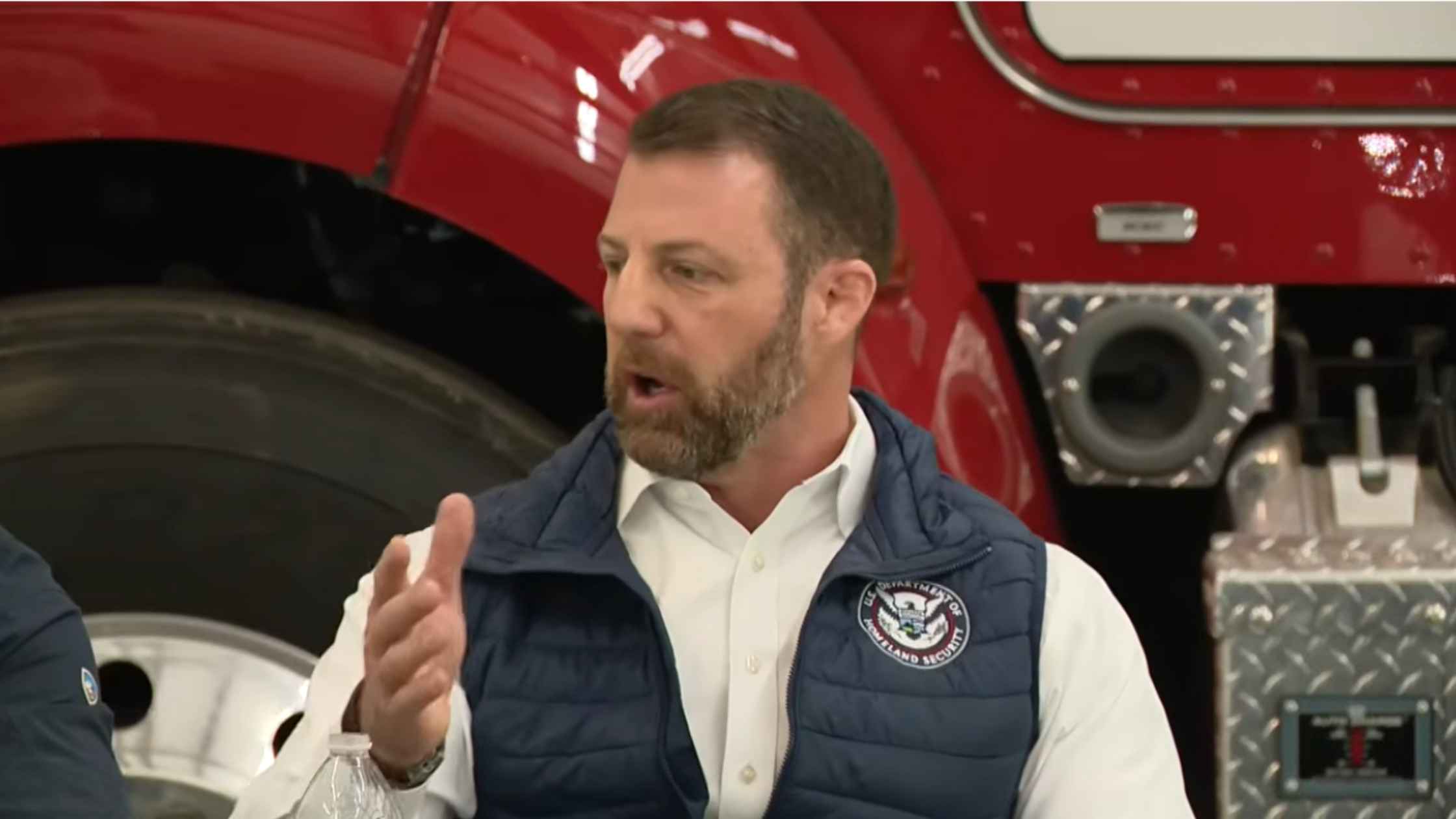
Thank you, everybody, for being here. I'm Senator Ted Budd. It's absolutely my honor to have a friend and colleague all the way a decade ago when we served in the House together, to coming in 2022 in the US Senate together, and now it's absolutely my pleasure to have the Secretary of Homeland Security here, Markwayne Mullin. And I tell you what, before the vote confirmation even happened in the Senate, he was on the phone to North Carolina to start arranging this visit, and it was still hours before he would ever be officially confirmed, but he was already starting the ball rolling for North Carolina. This is a man that not only knows how to serve his country, but he knows how to work on a business, lead a business, and so he's bringing those skills together. He's a person of action. He's a great individual.
(03:45)
Love his family. He has been, again, a great friend. So honored to have him here. But before we get going, if we could just start with... We'll start here on the right, and then we'll go back over to John England after Matt, and then come back around here, and we'll turn it over to the Secretary.
Markwayne Mullin (04:03):
You got to introduce your wife, though.
Ted Budd (04:05):
Oh, Amy Kate. We actually had a seat of highest honor right here for Amy Kate Budd, has been with me on...
Markwayne Mullin (04:11):
She's my favorite. She brought me some cakes.
Ted Budd (04:13):
Yeah, that's right. She puts up with me. He loves Amy Kate. That's right. My guest at the State of the Union was Steve Freeman, who was from Bat Cave, just up the road here. Just led heroic efforts there. A lot of heroes at these tables and that you've met today, people that pulled together, so many volunteers for this section of Western North Carolina.
(04:35)
But it has been amazing over the last 18 months what we've seen in this state, how many people have pulled together, brought in volunteers from all over the country, but it's just been absolutely amazing. Steve, we'll turn it over to you, and then we'll go over to Peter. Just if you'd introduce yourself.
Steve Freeman (04:52):
Okay. I'm Steve Freeman. I'm the Chief of Bat Cave Fire and Rescue. We're the last volunteer department in the county up there. We were kind of ground zero when all this hit us in Chimney Rock and Lake Lure. If it weren't for all the volunteers and everybody that lived through this, and all the glory goes to God for it. We were blessed not to have more fatalities than what we did. It could have been a lot worse. But I want to thank you all for coming and all the help that we've had so far, and for not forgetting about us, because we've still got a long ways to go.
Markwayne Mullin (05:38):
Well, let me tell you, between Tim and Chuck, and, of course Ted, no one in DC is forgetting about it. They are your biggest advocates. But Chief, I can tell you're a fire chief without even being introduced because you're mustache.
Steve Freeman (05:58):
You won't remember my name, but-
Markwayne Mullin (06:00):
But I'll remember the mustache.
Ted Budd (06:04):
All right. That's great. Peter?
Peter O'Leary (06:05):
I'm Peter O'Leary. I'm the mayor of Chimney Rock Village, and it's my pleasure and honor to welcome this group to the village, this distinguished group. And I'll echo what Steve said. We appreciate the support. This has been devastating to our community, but we definitely appreciate all this support, and look forward to a strong recovery with the help of these individuals, as well as many more.
Dave Natonski (06:32):
I'm Dave Natonski. I'm Secretary Mullin's Chief of Staff. Thank you all for hosting us here. It's an honor to be here on our first trip.
John Mitchell (06:39):
I'm John Mitchell. I'm the Henderson County Manager. The folks just up the road. I think y'all are going to go through there later today. I think it's probably incumbent upon me, I lead an organization of about a thousand individuals who stepped up and went to work before the storm and been working since. And they deserve a lot of thanks, but I think I should just point out, I know that maybe this is for the benefit of the press, but we've got members of the general assembly here, congressmen, senators, sir, appreciate your efforts who've really stepped up for the people of West North Carolina. The general assembly has voted to provide resources.
(07:19)
The Congress has voted to provide resources. And I look around the table and I can see men and women here who have been working to get those resources in West North Carolina. I'm thankful that you're here and just at the risk of going too far, and saying too much, I just want to encourage you to give these men and women the ability to make the decisions that need to be made. I think we can endure just about anything if we know how long it's going to be, or if there's a yes or no answer to it. So, sir, I appreciate you being here. It means the world to us that you're here.
Ted Budd (07:59):
John, thank you.
Jay Allen (08:01):
I'm Jay Allen. I'm Chief at Gerton Fire Department up at the very top of the mountain. We were the ones that donated 34 and a half inches of rain in 36 hours to Chimney Rock. And I know they're very appreciative of it. We were very fortunate. We had no loss of life in our district at all. We found that everybody survived. We lost structure. We lost roads. We lost every power pole. We lost a lot.
(08:30)
Our station was damaged, but we never shut down. We continued to operate the whole time. If it had not been for volunteers and state and federal resources that came in, we probably wouldn't have survived the whole thing. And so I echo what Mr. Mitchell said, we just... Keep our back because we're still struggling.
Markwayne Mullin (08:53):
Chief, how are y'all doing now?
Jay Allen (08:55):
We're still struggling. We're still working on... We still have projects at our station that are still not complete as of today. We've been working on a septic system since the storm, and we still haven't got it yet.
Markwayne Mullin (09:10):
Just at your station?
Jay Allen (09:12):
Yes.
Markwayne Mullin (09:13):
Explain that to me, your septic system.
Jay Allen (09:15):
The storm destroyed everything-
Markwayne Mullin (09:17):
Right, but I mean, you've been working on it since. What's the deal?
Jay Allen (09:21):
We had to put a treatment center on. So we had to go through a whole bunch of different assorted problems. We had to jump through a bunch of EPA hoops and DQs.
Markwayne Mullin (09:29):
So you're putting an aerobic system in there now?
Jay Allen (09:29):
Yes. But hopefully soon.
Tim Moore (09:36):
I'm Tim Moore. I'm the congressman for this area, the 14th district. And it says a lot... The first trip that the President took when he took office out was here to Western North Carolina. And here, I believe this is your first trip, Mr. Secretary, here to Western North Carolina. And that sends a very important message to the folks who live here, that Washington is not forgetting this area, continues to invest resources. So, thank you for the work you're doing. You've already done great things to speed up resources.
(10:05)
And I do want to give a shout-out to three of my former colleagues when I served in the legislature. The state legislature has also really stepped up in a significant way to help out too. So these guys have been great partners with us at the federal level as well.
Markwayne Mullin (10:18):
Well, the President made it very clear when we were going through the nomination process that this is where he wanted my first stop to be, because he says there's still a tremendous amount of work to go. And as a quote, he says, "People in North Carolina love me." And I believe that's true. And Karen and her team at FEMA, they were prepared to go, too. When we started talking about the resources needed, some of the stuff that needed to be released, everybody was ready to move. And so it's an honor to be here and definitely make my first official trip.
Tim Moore (10:50):
We appreciate you.
Markwayne Mullin (10:52):
Yep.
Tim Moffitt (10:53):
Hey, I'm State Senator Tim Moffitt, former member of the House when Tim was actually my speaker at that time. I live in the Gerton Fire District, so I was part of all the rain that we sent down through Bat Cave and Lake Lure. It has been 18 months, and in some respects it seems longer, that it happened longer ago, and some respects it seems like it was yesterday. But I look at all these spaces here, and these are people that care about their communities, they care about our state, and without fail have demonstrated that 24 hours a day, they're committed to our recovery, and it's lengthy. And some of the things that we've discovered is that all storms are not created equal, and all public policy doesn't fit in the same box. So, some of the issues that we're facing are federal policies that kind of counteract one another.
(11:43)
We have state policies that we're working on, but the willingness of both our members of Congress, as well as my colleagues in the House and the Senate have demonstrated to help us make those changes has been very heartfelt and very meaningful. So we appreciate your being here, Ted, honestly, you have been a champion for us. Tim and Chuck, you've been there for us. Can't thank you enough. Pleasure to have you here.
Jake Johnson (12:09):
I'm Jake Johnson. I represent House District 113, which is where we're sitting right now. We've got Rutherford, Polk, Henderson, and McDowell Counties. I grew up about 15 minutes that way. We're very grateful you're here. We've made close to, at the state, roughly $2 billion, between $1.8 and $2 billion that are getting out the door right now. For the state, that's a huge investment and any other storm that would be moving the needle almost to complete, but this, we're going to need a lot more help. And the way you've come in and sped things up, that has been huge for us here. And we hear that from our local folks and our neighbors. So, thank you for being here. We really appreciate it.
Ted Budd (12:47):
Thank you. Matt, [inaudible 00:12:49].
Matt Calabria (12:49):
Good afternoon, Mr. Secretary. Thank you so much for being here. We really appreciate it. And thank you, Administrator Evans, for being here as well and for sitting down with the governor and me when we were up in DC. I'm Matt Calabria and I'm with the Governor's Recovery Office for Western North Carolina. And we really do appreciate y'all being here.
(13:06)
As you know better than anybody, there's no substitute for being there and seeing the situation on the ground. But I also wanted to specifically thank you for expressing your interest in accelerating the work of FEMA, and making sure that we do everything we can and move quickly on public assistance projects and hazard mitigation grant project reviews and approvals and reimbursements. We know a lot of local governments are working very hard in cash strap times with very difficult circumstances. Certainly, as I think others have alluded to, the state is doing everything we know to do, to make sure that we move as quickly and as strongly as we can, and very much appreciate your partnership in that.
Ted Budd (13:48):
Thank you, Matt. John?
John England (13:50):
Hey, John England. I'm from Yancey County. I'm with a construction firm called the Branch Group, located in North Carolina, Virginia, doing a lot of the transportation work. And I'm here because I found myself on the incident management team after the storm hit Yancey County where we had the most rainfall, the highest wind, two rivers that flow off of Mount Mitchell, the highest peak east of the Rockies just devastated our communities. County about 19,000 people and we had one posture after the storm and that's please help us. So I want to thank Congressman Edwards, his team and Senator Budd's team. They've been just in the trenches with us from day one. Can't say enough about what they've done for us. And I'm glad you're here and on a personal note, I'm a proud citizen of Muskogee Creek Nation. And my mom's from Oklahoma. My mom's from Oklahoma.
Markwayne Mullin (14:40):
Whereabouts in Oklahoma?
John England (14:41):
McIntosh County, Eufaula.
Markwayne Mullin (14:43):
Well, that's where I go to the lake at.
Jake Johnson (14:45):
Good to have you here, sir. Thank you for being here. Appreciate what you bring to the table.
Ted Budd (14:49):
Thank you, John. Dwayne?
Dwayne Tatus (14:52):
Dwayne Tatus. I'm the federal coordinating officer for FEMA for North Carolina. Just real quick, I worked with a lot of you around the table at different times on different things, and just really appreciate the cooperation and teamwork we've had to work towards the recovery of North Carolina. Thank you.
Ted Budd (15:07):
Hey, Jen.
Jennifer Baucom (15:09):
Have good news for you. I'm Jennifer Baucom. I serve in the House District 117, which is Henderson County, the Bat Cave, Mr. Freeman's district. Born and raised here. I was here first hand, saw it all, still working through. And I appreciate Senator Budd and Congressman Edwards and Congressman Moore for working with us, and appreciate everything that FEMA is doing to do that. I know we have a long road. We're all aware of that, and just continue to support us is what I can ask, and help us continue. And as of the state, we will continue to work with you through the process. So thank you.
Ted Budd (15:49):
Congressman Ed?
Chuck Edwards (15:50):
Yeah. Mr. Secretary, we've had the opportunity to meet on a number of occasions. First of all, I just want to thank you for making this your first trip after being sworn in, like the President did. And I think all of us in Western North Carolina can take a great deal of comfort in knowing the commitment from the White House to seeing us rebuild. I represent North Carolina's 11th Congressional District, which by the way, was part of this area on the day that the storm hit. A couple of months after that due to redistricting, we traded counties just a little bit.
(16:32)
And I want to reiterate that what you see here in this area can be played out in dozens of local communities across the mountains of Western North Carolina. Strong, resilient people that have learned to come together and face the murky waters, no pun intended, of dealing with FEMA because none of us have dealt with any situation of this magnitude. I certainly appreciate the partnership that we've been able to build in Congress with the Congressman Moore, with Senator Budd, with our state legislature. I've got to commend the state legislature for running such a tight fiscal ship and being able to have a rainy day fund, again, no pun intended, to help lead the charge in our rebuild here. So thank you again for making the trip.
Ted Budd (17:24):
David?
David DiOrio (17:24):
Sir, thank you. Dave DiOrio, Mayor Pro Tem of Lake Lure. I would invite everyone to the grand reopening of Lake Lure. It's going to happen a couple of weeks. I'll tell you, sir, it's a miracle, really. When policy and appropriations and balance come together, amazing things can happen. Thank you all for... It's all due to your efforts. Greatly appreciate it. Thank you.
Markwayne Mullin (17:50):
Thank you. I should have postponed it a couple of weeks, and... We couldn't have made it our first time.
Ted Budd (17:55):
We'll bring you back. Rob?
Rob (17:59):
Yes, sir. Absolutely great to have you here in
Rob (18:00):
I'd be here in the region for your first visit. For the team here, a lot of work has been done. We fully understand there's a lot of work that SPO needs to be done. The message for our team here in the region is that we're not coasting, we're accelerating. So we're excited about what you're bringing to this organization. We will execute aggressively to make sure we're meeting your intent.
Markwayne Mullin (18:20):
Thank you, sir. Appreciate that.
Rob (18:20):
Sir.
Markwayne Mullin (18:20):
Go ahead.
Victoria Barton (18:23):
Hi, good afternoon. Victoria Barton. I'm with FEMA. I'm the associate administrator for External Affairs. Thank you all for having us here and spending the time. It's also great to see folks in person. I know we've had several countless virtual visits, familiar faces, so very much appreciated. I do want to thank Senator Bud and Chuck Edwards, the Congressman, Tim Moore as well. You have fierce advocates in DC. I speak with their staff constantly. I know Karen and I have been up to the hill several times and we are constantly in communication. So fierce advocates and thank you all and just want to thank the secretary for your leadership. It's been very helpful.
Markwayne Mullin (19:07):
Thank you. Chris.
Chris Melton (19:10):
Chris Melton. I'm the fire chief of Chimney Rock Fire Department and welfare. Thanks for coming. And we appreciate everybody's support that's helped us. I say us because we're a collaborative effort. We've all worked hard prior to the storm and we still work hard today. My full-time job, I work for the town of Lake Lure, so proud to say that. And the fire department-
Markwayne Mullin (19:33):
This is a full-time job?
Chris Melton (19:35):
No, sir. This is all volunteer.
Markwayne Mullin (19:36):
Is it?
Chris Melton (19:37):
We have no paid staff here at Chimney Rock. So I'm fortunate enough to be able to work for the town of Lake Lure, the deputy fire chief there. And we work hand in hand. And to be able to work together during the storm, it was a collaborative effort during the pre-storm prep and after the storm. And here we are today, still recovering, working hard to get our issues that we have here fixed and in the town. But we're just very thankful for you being here and all all y'all's help.
Markwayne Mullin (20:11):
Chief, you have to explain to me the flag you have it there. It's got to be significant.
Chris Melton (20:15):
Well, I haven't brought that flag out until yesterday. That was in my office and one of our Lake Lure police officers come up to me. Sorry. And he said that he found it in the water, in the river. And he couldn't think but to give it to me. So we dried it out and I folded it up and I wanted to do something with it. And I hadn't had time to build a thing for it and heard y'all was coming and today was a good day to pull it out and display it.
Markwayne Mullin (20:59):
I think it should be framed.
Chris Melton (20:59):
That's what I want to do.
Markwayne Mullin (20:59):
Would you allow me to pay for that frame?
Chris Melton (21:02):
I would.
Markwayne Mullin (21:02):
Okay.
Chris Melton (21:03):
Thank you.
Markwayne Mullin (21:03):
Will you make sure we'll get it taken care of for you?
Chris Melton (21:06):
Thank you so much.
Markwayne Mullin (21:06):
Yeah.
Chris Melton (21:08):
But I'm very proud of it. It was poured out of the river as we was doing some rescues and things like that. And he kept it and said, "I had something for you." And he come to me a couple days later and gave it to me. But this is my hometown. So thank you.
Markwayne Mullin (21:27):
Don't thank me. Dwayne, can you and Rob, make sure the thing gets framed and make sure I get the bill on that. Can you do that?
Dwayne (21:33):
Yes, sir.
Markwayne Mullin (21:33):
All right. And then make sure I get those guys to do it.
Chris Melton (21:34):
Thank you.
Markwayne Mullin (21:34):
I love seeing that.
Chris Melton (21:34):
I'll do that.
Markwayne Mullin (21:34):
Thank you, Sir. Administrator.
Karen Evans (21:42):
So I'm Karen Evans and now it's really hard to follow, sir.
Markwayne Mullin (21:44):
It is.
Karen Evans (21:45):
I just really appreciate the opportunity to be traveling with you, sir, and the opportunity to continue to serve. So I'm not going to take any more time after that. That was very moving.
Chris Melton (21:54):
Sorry.
Karen Evans (21:54):
No, it's awesome. It's very moving.
Tim Moffitt (21:58):
Administrator, I'll just say one quick thing before I turn it over to the secretary. In the less than two weeks that Secretary Mullen has been in place. He's already helped get this area of the state $134 million in public assistance. He has helped break the log jam on hazard mitigation grant program and bring some clarity to that. Still some work to go on that, but that's been absolutely fabulous. And there was, prior to Secretary Mullen, there was a $100, 000 threshold which required the secretary to evaluate, which led to a real log jam. And I just appreciate you breaking through that, leaning on your very competent team and staff, they need a proper review for our taxpayers. They deserve that, but to eliminate waste and fraud and abuse, that still needs to happen, but it doesn't always have to happen at the secretary's desk. So you've got a great team reviewing those requests and I appreciate that. And things are already moving. And this is your first visit and you have been in office two weeks, so we're grateful for your help. Turn it over to you.
Markwayne Mullin (23:08):
Appreciate it. Well, guys, thank you for being here. Thank you for the time. Thank you for the press that took the journey out here with us too, because one thing we want to make sure the American people know is that we're still recovering. And being from Oklahoma, we deal with a lot of tornadoes. We see a lot of destruction, but I have never seen anything like this. And I can't even imagine what it looked like 18 months ago, but to see everybody come together, in Oklahoma, we call that the Oklahoma standard, but that usually takes months of recovery.
(23:42)
You guys, 18 months later, you're still here and it's just one big family. And as a chief, obviously, you could tell is still emotional about it. But to see what's happening and see the revitalization that's taken place from the roads to the towns, to the buildings, to even the lake. I mean, you wouldn't have believed that lake was packed full of soot and debris because it looks beautiful and prestige now. It's pretty remarkable. But I'm proud of one, of the work you guys are doing and two, the work that FEMA has done here too. To make it our first trip to see the private public partnership from the state level to the local level to the federal level, this is how it's supposed to work. But everybody said too, I mean, when we talked to the mayors, there's been some hiccups, but we're able to work past them.
(24:35)
We're still working past some of them. I don't know how many times Ted and I have had conversations about this before secretary was even a thought because we would have dinner quite often because we came in freshmen together in the Senate and we have this thing called the Red Shirt Freshman Class. JD's part of it or the vice president's part of it too. And from the get go, Ted was talking about what was happening and as this process was going through with my nomination, obviously I was somewhat familiar with it just because of the conversations we've had, but when he started giving me action items, this is what we need.
(25:12)
It was very simple to get in and get started. And Karen and Victoria brought it to my desk immediately and we were able to get to work, but there's a lot of lessons that can be learned. Even though there's work to be done, there's lessons that can be learned. And one thing I do believe is when we step back and we have an awful disaster like this, it also allows us to be more efficient and more prepared moving forward. And so as we go here and we take questions and we hear from you guys, please be as open as you possibly can. Give us action points. I'm not a... You guys ever heard the five blood languages? It was written in North Carolina. We've had this conversation.
Tim Moffitt (26:00):
We have.
Markwayne Mullin (26:02):
Yeah. Well, words of affirmation is not mine at all. I want to know what we can do better. And so when we're going through this conversation, let us know what we can do better. Not just beat up on FEMA. That's not the point because they've done a great job, but what is it that we could maybe tweak just a little bit to tear down some of the redundancy? And I think Tim, you were talking about... And by the way, first name works just perfect for me because I'm going to use your first name, so please don't feel like you need to use titles with me. But Tim, you're talking about some of the redundancy from the state and federal side. Maybe you can expand a little bit on that and so we can still, we can break down some of those walls and then we just go around. I don't know how you want to handle it, just go around the room. And then press, we'll take some questions from you guys towards the end too. Is that okay? All right. Tim, you want to go ahead and start?
Tim (26:54):
Yeah. I probably actually brought something for you to read on the airplane on your way back.
Markwayne Mullin (26:57):
I need something else to read. They're not giving me enough binders.
Tim Moffitt (27:04):
So there's probably three pinch points that we're dealing with right now that are causing us a problem from a recovery standpoint. The first one is the Hazard Mitigation Grant Program. I think it's a good program, but when most of the buildable land in our area here is in floodplains, it creates problems on our recovery, especially when we rebuilding our roads. So if a property owner qualifies for the Hazard Mitigation Grant Program and their property is conveyed to the federal government, if we could have permission to use it for a core public purpose, like rebuilding our roads, rebuilding water and sewer, then that allows us to not have the conflict between present day value offerings from the condemnation, taking their rights away from them, but I think it protects the integrity of the federal design to make sure that we're not building a structure back in a flood prone area, if that makes sense.
(28:03)
So what I've been trying to work with, and I spoke to Victoria and Greg about it a few weeks ago, and Ted's been working with me, and so has Ted's office and Congressman Edwards, is just really a memorandum of agreement from FEMA that basically says if this property was a recipient of a hazard mitigation grant and the state or the local government needs to use it for a core public purpose, then here in writing is permission to do so. So that's one area that we need a lot of help. The other one, there's two more, but I'll just get into the other one. There's a consensus that this was a thousand-year storm, and I think that's a uniform consensus, but public policy is really geared around 100 year storms. So the fact that we have a lot of areas that were not in a flood hazard area in the beginning, but they are now, is limiting our ability to rebuild structures simply because they were damaged in a thousand-year event.
(29:05)
So we had adopted a 200 historic flood event, part of our statutes that we're looking to get a memorandum of agreement from FEMA that says, yes, you're not going to be in violation of the National Flood Insurance Program if we respect the fact that your statutes are very constrained that allows your communities to rebuild. And an example of that is the town of Biltmore Village. Biltmore Village is historic. It's the gateway to Biltmore State. We have structures there that were built to a hundred-year floodplain. This storm was 11 feet above that. You have a lot of historic buildings there that need to be rebuilt, but they can't be rebuilt because they were more than 50% substantially damaged, which requires them all to be lifted six feet or they're just going to remain vacant. So our ask is from the state's perspective, it's a thousand-year event. The likelihood that that's going to happen again mathematically is on our side that it won't, allow us to rebuild without these constraints that are imposed on us federally.
Markwayne Mullin (30:12):
Karen, do you know about this? [inaudible 00:30:15].
Karen Evans (30:15):
About that and [inaudible 00:30:17].
Markwayne Mullin (30:17):
What are we going to do?
Karen Evans (30:18):
We're working through some of those flood mappings now, and so I took a note down, sir, to follow up on his specific suggestions.
Markwayne Mullin (30:27):
This will be my biggest action point and to figure out what we can do is because if this is through rulemaking, surely there can be an exception someplace. Bureaucracy is worse inside of not all agencies, but we just put layers and layers on stuff and we don't allow ourselves flexibility. So if it's not legislation or requires that it's legislations, these guys, if it's through rules, I bet we can probably figure something out on that. So we'll make this a priority.
Karen Evans (30:58):
Yes, sir.
Markwayne Mullin (30:59):
We'll make this a priority generated.
Tim Moffitt (31:00):
Very good. Thank you.
Markwayne Mullin (31:01):
Go ahead, Victoria.
Victoria Barton (31:03):
On the first plan that hazard mitigation, I think we do have some paths to solutions that the secretary was able to work with Karen to unlock. And so just yesterday, 75 properties were funded, and another tranche is imminent. Rob's team and the region and the local state team here have been working very diligently to process many of those. And Rob, do you want to speak to some of the parceling that we're doing so that they can be eligible?
Rob (31:32):
Absolutely. So the properties that are eligible for buyout, we looked at them and saw them in three different buckets, if you will. The first bucket, no major issues, and we'd be able to proceed with those, and our team is doing that now. The second bucket had some minor things that we could probably get through pretty quick, and so we're working through those. The last bucket are the ones that had a nexus with NCDOT, and we did figure out that we're able to do split parcels, if you will, so that now you can have two different funding sources available to pay for those properties. And I think that gets at what you were initially talking about.
Tim Moffitt (32:10):
Can I speak to that, Mr. Secretary?
Markwayne Mullin (32:11):
Okay. Go ahead, he works the work week.
Tim Moffitt (32:16):
So this is the problem. So let's say that the property owner has an acre and we as the state need a third of that acre to redesign and rebuild our roads. So the way that it's written right now, it disqualifies them from the Hazard Mitigation Grant program. The ideal solution would be to allow them to remain in the program. Once that property is acquired, then we can actually, for a core public purpose, use that third of an acre for our benefit to rebuild our roads. The way that it was just explained, you have a pre-storm value through the Hazard Mitigation Grant program, which the split parcel would apply to, and then we're constrained by the Uniform Act, which means we can only offer a present day value for the property that we need from a condemnation standpoint. So it unfairly punishes the property owner for something that really can be corrected from a-
Markwayne Mullin (33:11):
I don't know if we'll have the flexibility to do that in the grant program because grants are typically pretty well spelled out. So we'll look at it, but it may be once we go back and reauthorize the grant, it would have to be written in the grant to give us that flexibility. I think the way the grant is written now we probably can't do that. We'll get back to you or Ted. We'll get back to Ted's office and double check that, but I don't think we have the flexibility to do that.
Rob (33:44):
Yes, sir. And the biggest challenge is that the way that the mitigation rules are written is the challenge. And I don't know if we're going to have relief on that, and that's why we're trying to find We'll a solution.
Markwayne Mullin (33:56):
We'll sit down. If we have the ability to make some of the changes, we can.
Rob (34:00):
Absolutely.
Markwayne Mullin (34:03):
When we're dealing with flood prone areas, that's what a lot of this is written for because in the past we've had where we've rebuilt the same places over and over and over again. I mean, we have one place in Oklahoma that I can think of off the top of my head. I won't mention it because I'll stir a hornets nest, but we've dealt with this over and over again for 60 plus years, but we're dealing with a thousand-year flood that we had to look at it from a different perspective and give flexibility where we can, and we will take all that in consideration. One of our highest priorities is to clean up this backlog. And I mean, that was number one, when I sit down and talk to our components, we are looking at our backlogs, we're cleaning our plates so we can start fresh again. This is one of them. So if we had the flexibility, we'll do it. A lot of times grants don't give us flexibility, but if it's not, then that's where Ted and Tim and Chuck come in place.
John (35:03):
Sir.
Markwayne Mullin (35:03):
Go ahead, John.
John (35:05):
One of the things about... It's a great law, but it wasn't written for the mountains. And I think when you get out here it-
Markwayne Mullin (35:14):
I don't really think we're thinking this very big flood.
John (35:16):
When you get out here, you think we don't... Yeah, it's a good idea not to put this road next to the river, but there's nowhere else for it.
Markwayne Mullin (35:24):
I get it. Yeah.
John (35:26):
And one of the things that I'll just put on top of this, there is a deep sense of urgency because all these things cascade into one another. Imagine a family up here in one of these 50 hazard mitigation by all problems, some of which you'll drive by today. They've been waiting for 18 months, and there's probably an housing assistance provided by the federal government, they can't go to the next thing until this completes. And the thing, I've worked for the local state and federal government,
John Mitchell (36:00):
The idea that these two laws would conflict and they could not be untangled, it just can't be. And I know the strength of the Congress and the General Assembly. I know why it was that way. And Mr. Ash and the rest of these folks, Dwayne, you worked very hard on all this and I think it's great. And they're pleading to the law, which is what we would all expect. But there must be a rule that can be implemented or some clever lawyer.
Markwayne Mullin (36:35):
I'm still trying to figure out how to get my funded.
John Mitchell (36:36):
I would just begging. There's plenty of solutions I'm sure that come up. Maybe I could come up with one of the senator.
Speaker 1 (36:43):
Oh, I've got the solutions.
John Mitchell (36:47):
But there must be some sense of urgency because we're in a holding pattern. These gentlemen are too.
Markwayne Mullin (36:53):
I get it. That's why I said we're going to clean up our backlog. But I will say, if you think D.C. applies common sense, we lost that a long time ago, brother.
John Mitchell (37:06):
I hear you.
Markwayne Mullin (37:07):
But there's a way to bring some type of common sense to it. Like I said, if there is a way, there's a way we're going to work between Karen, Victoria, Rob, Dwayne, and the rest of the team of FEMA. If there's a way to get it done, we will do it. If not, we'll be in touch with the federal elected delegation and see how we can work it out. Go ahead, Matt.
Matt (37:33):
Just to build on Mr. Mitchell's comments, obviously we have this-
Markwayne Mullin (37:36):
By the way, the governor called and explained to me why he wasn't able to make it here and I really appreciate the phone call.
Matt (37:41):
Well, I'm a poor substitute, but I'm glad to be here.
Markwayne Mullin (37:43):
Yeah. We talked for quite a while.
Matt (37:44):
Thank you for doing that. But to build on the previous comments, obviously we have a strong sense of urgency and appreciate the urgency around PA approvals and HMGP project approvals. A couple of things to build on that. One, we obviously want to make sure that FEMA reimburses at reasonable rates. Similar to Mr. Mitchell, I think there's a sense that a lot of the rules and practices are built toward coastal storms rather than places in the mountains where there's a lot of vegetative debris, where the debris trucks are filled with sticks rather than sand and other such things. And so making sure that we don't have to spend unnecessary time litigating over reimbursements or what the amounts are really helps us move projects quickly. So I'd flag that. In addition to that, I know the shutdown has caused some hiccups on a number of the programs, but we have an extension right now request in for the Hazard Mitigation Grant Program to enable us to finish the infrastructure projects that we've been working on and make sure that we've run all of those to ground.
(38:53)
And I know that our congressional delegation members are well familiar with this because we're in constant communication, but we know with $60 billion of damage on the ground here in North Carolina, we're going to need additional funding to get the job done. And so for awareness for you, there is a FEMA component of the governor's federal ask, which he brought up as recently as January to D.C, but we're going to need additional funds to continue our reconstruction efforts and rebuilding efforts and put our infrastructure back to where it is, rebuild homes, all of that. Much of that is in HUD funding, but we're also hoping to get some additional leeway in the Community Disaster Loan Program, which is in FEMA. We have found that a lot of local governments are hoping to access those funds to help cash flow, help alleviate cashflow issues, but the cap on what a local government can get is pretty low and the administrative burden and the paperwork burden is very high and that's really discouraged a lot of folks. And so I would just flag that as a potential feature issue for you.
Markwayne Mullin (40:01):
Thank you.
Matt (40:01):
Thank you, sir.
Markwayne Mullin (40:03):
What else, guys?
Speaker 2 (40:07):
Sorry, I actually have something. Peter and I can relate to this. And so in a disaster like this, the burden, as you saw on the small communities, is expensive. Just to participate in the Public Assistance Delivery Program takes dollars. And we're actually entering that system with nothing in the bank, with a credit card maybe, but nothing in the bank. So I think one of the things that could really help us all, and this is part of the legislation, the FEMA and the format of 2025, it's one of the elements of that that would really help is this idea of a universal application program. We have a communications director that's used to answering social inquiries from the public. She became a national champion grant writing. Just to keep up with trying to tap into all the different colors of money from all the different agencies and organizations is more than a full-time job.
(41:04)
A universal application program where it goes in and then all of us can see what's there and what that may be a priority against everything else that's in that portal. And then query for information to support that particular item that we all would feel as a priority would really streamline the effort to get the limited resources to the right place and it would really release us of a burden of every week or so querying or answering a new question that comes out of whatever application is there.
(41:43)
And every time a question comes out, we're writing a check for 30 or $40,000 to do an engineering analysis to get the data to support that one element in a discrete item that may not even compete in that particular round. So that universe is more than just an ease of application. I would say it's a window for all of us, especially for state engagement, to take a look across the board of where resources need to be allocated, and it would really help us out a lot. I just put that out there as maybe something that we would... Even if the legislation doesn't go through, we may be able to do this.
Karen Evans (42:21):
Well, we are working before the pilot with HUD, so you guys have brought up HUD, just specifically for that reason. And so we're working jointly with them to have that data visible between us and HUD so that you don't have to continue to fill out the application going forward. And our goal is to have it operational before hurricane season starts this year. So we are working on that right now, so to start making it easier with the data portability piece.
Speaker 2 (42:56):
Thank you.
Speaker 1 (42:57):
So we hear a lot of people talking about maybe what's wrong with FEMA at times. I'm curious to know what you all see as being the solutions to try to see some change. I know it's two weeks for you, but I'm just curious to know what you are seeing on the ground right now to kind of get some things moving in that trajectory that you find is fitting.
Markwayne Mullin (43:16):