Oscar Perez (00:12):
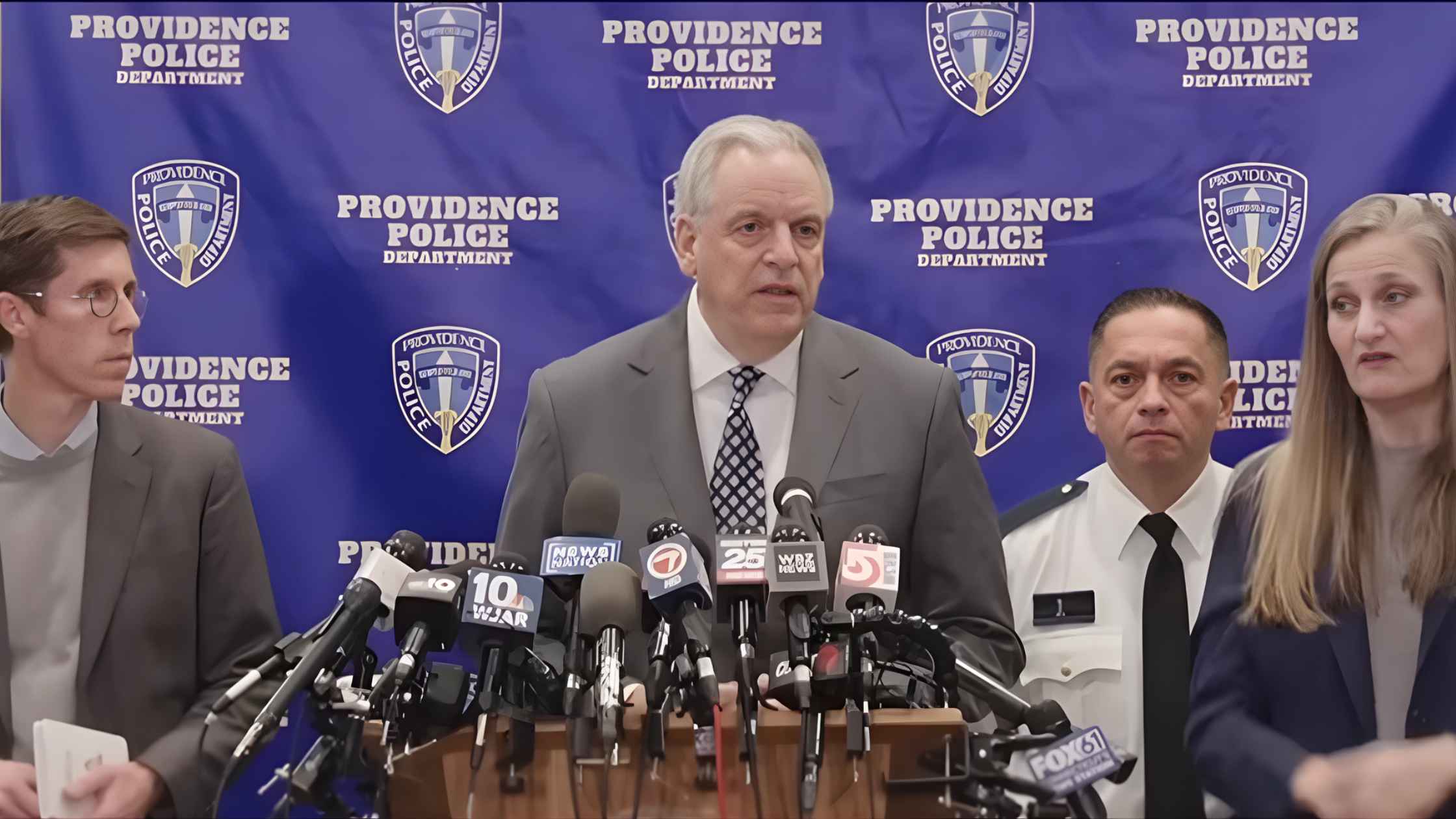
Thank you [inaudible 00:00:13] as the Mayor stated, if you don't have these videos, please let us know. And the reason we have shown these videos is a purpose. So as you can see, there's enhanced photos, there's enhanced video footage. And so, we're asking the public to ensure that they can see here that you want to focus on the body movements, the way the person moved their arms, their body posture, the way they carry their weight. I think those are important movement patterns that may help you identify this individual, which is extremely important.
(00:44)
Another thing that we're going to ask the public is if you have any type of camera system, including Teslas and your property… And this video that you just saw behind me, it all comes from the residential block of Waterman Avenue, Power Ives and Hope Street, and it's those residential areas that we're asking the public to look, if you have any camera systems or any Teslas, like I mentioned, that you look at that footage and that you can reach out to us and please provide us anything that you have. And we're asking you to go back at least a week to do that. And the reason for that is because on Saturday night, the day of, we actually learned that this individual was in that neighborhood at around 10:30 in the morning.
(01:26)
We also know, in this profession, that many criminals will case out an area weeks and days prior. And so, it's important for us to ensure that we can have you look at that and help us. And the reason for that is because our officers, our agents, are looking at terabytes of data, and we're looking for a moment that is shorter than somebody taking a breath. It's incredible hard work to do that, and so we're asking the public to assist us with that.
(01:49)
The other thing is the tip center. We have been receiving hundreds of tips. However, we're close to 200 actionable tips that we're still conducting investigations on, which is incredible and is important. Again, keep in mind that this video footage is extremely important to us. One more thing here, that as a reminder, please remember that the number that we need you to call is 401-272-3121, as well as the link that the FBI provided, which is fbi.gov/brownuniversityshooting. Thank you very much.
Brett Smiley (02:30):
Thank you, Colonel. Now we'll hear from FBI special agent in charge, Ted Docks.
Ted Docks (02:37):
Thank you, Mayor, and good evening. My name is Ted Docks, I'm the special agent in charge of FBI Boston. On the heels of this tragedy, the strength and resilience of the people of Providence is a powerful reminder of the bonds that unite us. The men and women of the FBI, along with the law enforcement team standing before you, carry the victims with us as we work around the clock to bring the individual responsible for their injuries and deaths to justice. Today, the FBI is working with Brown University to do everything we can to provide services to those impacted by this horrific shooting. The FBI has almost 30 victim specialists, special agents and analysts from all over the country who are here in Providence to support our survivors, the victims and their loved ones. The FBI Victim Services Response Team is one of the many specialized FBI assets that have been deployed here to assist. The toll this type of tragedy takes on victims and their families is immeasurable, and we ask everyone to respect their privacy at this difficult time. Thank you.
Brett Smiley (03:43):
Thank you, Special Agent. Next, Attorney General Peter Neronha.
Peter Neronha (03:47):
Thank you, Mayor. I don't have a lot to add, other than that from my perspective, I think the investigation in a case like this, which is a challenging one, is going really well. On the third floor of this building, there are dozens of agents, detectives, led by Providence Police, prosecutors from my office working to put together… And what you're seeing is just a portion of what they're working on right now. They are literally, because I have seen at least part of it, the shift changes late at night. I think Rhode Islanders should take confidence in their work, they are veterans of what they do. They're smart, they're professional, and they're getting the resources from the Mayor and the Governor that they need, the state police as well, to get this job done, and I'm confident they're going to be able to do that. We just need a little bit of patience, as hard as it is to say that in this really horrible context. Thank you.
Brett Smiley (04:44):
Thank you, General. Governor Dan McKee for an update now.
Dan McKee (04:49):
Thanks, Mayor. And right off the top, we're just making sure that the state is supporting Providence and Brown University, and then working with the FBI, as well as our state police and the Attorney General, to continue to provide information to the people in the state of Rhode Island. My information is that recently, today, we've met with all the university presidents in the state of Rhode Island. We know that we want to start a working group that will talk about enhancing the safety issues, and you'll see shortly that we'll be doing the same thing in terms of mental health issues, and I think that's important. As I'm out and about, we're hearing a great deal of anxiety coming from families and students and the general public, and that's one of the reasons why our state police has supported the Providence schools with presence as school begins and school ends in support of the Mayor and his efforts to support the schools.
Brett Smiley (05:53):
Thank you, Governor. We're also joined tonight by Brown University president, Christina Paxson.
Christina Paxson (06:00):
Thank you, Mayor. I want to begin by thanking the many law enforcement agencies who continue to work around the clock on this case, it's very impressive. I also want to thank the Mayor and the Governor for their continued support. The primary point that I wanted to address before we get to questions is that Brown is deeply committed to the safety and security and wellbeing of our community, and I've been deeply saddened to see people questioning that. We understand that as time goes on, there is maybe a natural instinct to assign responsibility for a tragic event like this, anxiety and fear is very natural. But the shooter is responsible. Horrific gun violence took the lives of these students and hospitalized others, and it's deeply sad and tragic that schools across the country are targets of violence. Brown is no exception. We are cooperating fully with law enforcement, and again, we thank the multiple agencies that have been working so hard, day and night, with increased patrols to keep our campus safe and to investigate this horrific shooting. Thank you.
Brett Smiley (07:16):
Thank you, President Paxson. I'll give a couple of updates on behalf of the city, and then we'll take your questions. First, as has been discussed many times, we continue to have enhanced police presence throughout the city of Providence to help bolster the confidence and provide a sense of additional security to our residents. Today, we were aided by neighboring municipalities in Central Falls, in North Providence, with supplemental officers. We're grateful to our neighbors for sticking up and standing up with Providence. The state police continues to be an incredible partner, and I thank the Governor and Colonel Weaver for their partnership.
(07:57)
Providence public schools remain in session. Friday is the last day of school before winter break. I spent some time at our schools again today. As has been the case in the past, the schools in the area of Brown are having regular police presence, and because of the assistance of the Rhode Island State Police, we've been able to provide additional police presence and coverage to other schools in Providence, and we thank them for that. When I was at one of our elementary schools this morning, the faculty were having a brief meeting before kids started to arrive, and in discussion with some of the teachers, I asked how they were doing, and one of the teachers said what I think a lot of us are feeling. She said, "It's hard, but I'm putting on a good face for the kids, we need to be here for them."
(08:48)
And I think that's how a lot of our residents feel right now, which is that we are taking very tentative steps forward, but we're doing it for one another. And so, I do want to thank our educators at this time, they're being asked to go to school right now, our principals are asked to be going to school right now, for the sake of the families and the kids. And at that same school, there was a second-grader literally skipping to the front door, because he's a second-grader and he doesn't know everything that's going on in this scary world right now. And so, the strength of the adults has allowed that little kid to skip to school this morning. And so, I want to thank all of my fellow residents of Providence for putting on a strong face for the sake of others at this time.
(09:35)
There were questions yesterday, and so I'll also just give a brief update on the health status of the survivors. If folks will recall, there had been eight hospitalized, one has since been discharged. The seven that remain in the hospital, one is in critical status, five in critical but stable status, although healthcare providers report that they are improving, and one in stable status. Those are the seven, one in critical, five in critical but stable, one in stable status and one discharged since the last time we made comments about their safety and recovery from the podium. Now, we'll open it up to questions.
Speaker 2 (10:22):
[foreign language 00:10:24]
Oscar Perez (10:43):
The question was, if I could just repeat what I stated earlier in English as far as what occurred here [inaudible 00:11:12].
(11:11)
[foreign language 00:11:12]
Speaker 1 (11:36):
Chief Perez, you said that you believed this person was in the neighborhood at 10:30. Clarify, you believe that was at 10:30 the morning of the shooting, and what do you believe he was doing there at that time?
Oscar Perez (11:46):
Correct. And we have video footage of that, and we believe that he was actually casing out this area to commit the crimes. That's [inaudible 00:11:56] that criminals do, and that's what he was doing.
Speaker 3 (00:00):
Speaker 3 (12:00):
Chief, Chief, yesterday the FBI described the person that we've been seeing in these images as a suspect. Today, the language seems to be person of interest. Can you clarify, do you believe that this person that we're looking at is your shooter, is your shooting suspect?
Oscar Perez (12:14):
Definitely, he's still a person of interest, and we're still investigating that to be able to get that [inaudible 00:12:19]. But we strongly believe that's a suspect in the incident and a person of interest.
Brett Smiley (12:19):
[inaudible 00:12:30] go ahead.
Speaker 8 (12:19):
An MIT professor died early this morning from gunshot wounds. Does that incident have any potential connection to this investigation?
Oscar Perez (12:19):
Not at all, no.
Brett Smiley (12:19):
In the back, sir.
Speaker 4 (12:35):
[inaudible 00:12:36] ask you, yesterday we were wondering about this person's age. Now that we've seen more video, again, a couple of days ago, I know you're saying 20s or some talk about 30s, but just to help people at home, people who have seen this video, do profilers or anyone in your department have any better understanding on a closer idea on his age? And the second part of that question is, can you now confirm that he has no connection as a past student or as a past staff member at the university?
Oscar Perez (13:01):
The first question, I'll tell you, when it happened on Saturday night, obviously it was chaos and there was a witness that stated that he might be in his 30s. At this point we're still just looking at the picture. We try to identify ages until that point. And as far as whether he's a Brown student or anything, we don't have any of those answers, no.
Speaker 5 (13:18):
Colonel, in one of the new videos prior to the shooting, this person of interest was seen running. At this point, do you have any inclination why he's running or where he's running to?
Oscar Perez (13:25):
Yeah, we're still investigating that, but what we do know that he was casing the area. And again, that's what criminals do prior to committing a crime.
Brett Smiley (13:29):
Chris.
Chris (13:39):
It appears that the FBI and PPE, at least according to what I'm looking at outline, look like they're releasing separate videos at separate times. Are you guys still coordinating or how are things looking?
Oscar Perez (13:46):
You've got to understand that there's a lot of people upstairs, as the general stated area. And we're trying to ensure that we do this, our job, and collect the evidence that we need. And we want to make sure everybody [inaudible 00:13:58] especially you guys in the public. One thing I want to make sure, that the community is safe, well informed and stay confident in the work that we're doing. So yes, there was a video that was released, but we also were working on another video. And the purpose of this press conference is to ensure that the public can see those videos showing movements. Like I stated earlier, the way the person walks, the way they carry their weight, that's the importance. And so our video, the second video that we showed was the one that we need to show the public.
Brett Smiley (14:23):
Please.
Chrsitina Paxson (14:25):
In terms of cameras inside and outside the engineering building, are those working at all? And if so, why not release some of those videos?
Oscar Perez (14:32):
The video that we showed you came from inside the building and that's all we had at the moment and it's all we have at this moment.
Chrsitina Paxson (14:36):
Inside the engineering building, though?
Oscar Perez (14:36):
I'm sorry?
Brett Smiley (14:36):
It's from the outside of the building.
Chrsitina Paxson (14:36):
From the outside, so do you have video from inside the engineering building?
Oscar Perez (14:46):
Yes, both inside and outside. Outside, just outside. That's all we have, not inside, no. I'm sorry, just outside.
Chrsitina Paxson (14:51):
Are they going to be released anytime soon, the ones from inside the building?
Oscar Perez (14:56):
That was released, that was the outside of the building. We released that.
Peter Neronha (15:00):
Let me just jump here and clarify. For those of you who've been with us before, and obviously not all of you have been, there is video inside the building, there are cameras inside the building. What we have released to you are videos of this person of interest. I want to be clear because later on there may be other videos that get released in the course of a prosecution, likely will be at some point. They show things like chaos after the shooting. What they don't show is this person of interest. And so that's why we haven't released those videos.
(15:35)
What you do have are videos from a camera outside of the Brown building and other cameras from around the neighborhood that the good men and women in law enforcement located and put together in this montage. And to your question, Chris, there are two versions of that video, but the bottom line is, as I understand it, they depict the same thing, number one. And number two, the agencies are working very, very well together, as I think the special agent charge would agree.
Brett Smiley (16:05):
You've got a follow-up and then we're going here.
Chrsitina Paxson (16:07):
Just to clarify, there's no clear video of the suspect inside [inaudible 00:16:11].
Oscar Perez (16:11):
I just said that. That's correct.
Speaker 7 (16:14):
Can I just ask as well, further to the surveillance footage that you have received? I've been here since Saturday, speaking to people who are living in the residential buildings around. And in the businesses and many of the store clerks there have told me it wasn't until this morning that the police would actually come to ask them if they had anything that they could offer, any CCTV or any evidence that they could provide. Why is it taking three days for these people to have police come to them to ask them for assistance?
Oscar Perez (16:42):
As I stated earlier, it's a residential block that includes a lot of homes, a lot of different camera footage, and it takes a lot of work in the sense that there's a lot of terabytes that we're looking at in order to be able to analyze it. Who will we need? And sometimes it's a moment that we need and it's almost shorter than somebody taking a breath, so it takes a lot of work. And then so once that leads us to next location, so we move strategically. We have to pull the video, download it, analyze it, investigate it, and then move forward. It takes time.
Speaker 9 (17:08):
Mr. Attorney General-
Peter Neronha (17:13):
I just want to jump in there too, because I think I want to clarify in a sense, what the Chief is saying. You start in the grid, in the first instance, that's closest to Brown. It takes a lot of work to canvas that area. And then you build out as you learn more about the path of travel. So it's entirely possible that tomorrow, we'll be canvassing places that we haven't canvased yet because we're working out with the resources that we have.
Brett Smiley (17:39):
Dan, go ahead.
Dan (17:41):
We have a question and a follow-up, right?
Brett Smiley (17:42):
Yes.
Dan (17:42):
My first question, Attorney General, to follow-up with my colleague, this is the question I asked on Saturday night, which is, so there's cameras in the hallway, but they don't show the suspect or Brown is not releasing them, or you're not releasing them to us? How does a multi-million dollar school not have a bunch of cameras in the hallway?
Peter Neronha (18:01):
Let me try to explain that. As President Paxson knows, there was a major addition put on that building within the last five years or so. That is a modern building attached to a much older one in the back. So it doesn't come as a surprise to me at least, that there are cameras in the newer part of the building and there is video footage, so there's the back part of the building, old part, and front part, new part. The shooting occurs in the old part towards the back, up towards Hope Street.
(18:32)
In that older part of the building, there are fewer, if any, cameras in that location, I imagine because it's an older building. So as students are fleeing the area of the shooting into the new part of the building, there are cameras in that brand new building that show that chaos. But the only video of the presumed, anticipated, suspected, however you want to define a person of interest, you have it. We would release it if we thought it would be helpful in identifying this subject because we are relying on the press and public to help get us there. There would be no reason for us to hold it back. We're looking for the best image we can.
Brett Smiley (19:17):
Dan, got a follow-up.
Dan (19:19):
Attorney General, thank you for explaining that because it really clarifies it. Although, I'm sure some people watching would think a multimillion dollar school with a huge endowment could afford new cameras in an old building, that's my statement. Here's my question. If he's casing that area, Colonel, as you said, he had an intended target, which speaks to the motive. Did he have a target to kill one of the two people that were killed?
Oscar Perez (19:41):
We're still investigating, Dan. And it's something that I'm trying to get the answers as well.
Brett Smiley (19:45):
Patrick, Patrick.
Patrick (19:48):
For President Paxson, two related. Have you reviewed any communications to Brown before the shooting that revealed any kind of threat of any kind to anyone with Brown? And then since the shooting, I believe some webpages for students or faculty have been taken down. Is that a response to any external threats to anyone in the community?
Chrsitina Paxson (20:12):
We have been working very closely with law enforcement to provide them with all of the internal to Brown information that they need to do this investigation. It's their investigation, they're the professionals. So we're providing information, we're not in the job of reviewing it for them. I know nothing about webpages being taken down as part of this. It's the first I've heard of it.
Brett Smiley (20:37):
In the back, yeah.
Speaker 6 (20:38):
You want people to feel safe. Can you say this person of interest is no longer in Providence, no longer in Rhode Island? Is the out of the state? Do you have any sense at all?
Brett Smiley (20:48):
I can speak to the investigation and if there's a follow-up for either the general or the colonel, I'm sure they'd be happy to answer it. But I'll restate what I've said several times now, which remains true as another day passes. Since the initial call came in at 4:05 PM on Saturday, we have not received, and this is now updated with another 24 hours have passed, a single, credible, specific threat to the area, to the city related to this event, and as far as I know, to the state. And I know that this is a question that many people are struggling with and it's difficult conversations that I've had with many, many of my constituents, including a very anxious parent this morning.
(21:43)
The best information we have is that there is no credible, actionable, specific threat that has occurred since Saturday. And in order to enhance and ensure the safety of our community, we have stepped up law enforcement efforts throughout the city in a precautionary measure, in an abundance of caution to try to give comfort and confidence to people who have to take the steps forward in their daily lives, who have to take their kids to school, who have to get to work. And that is the honest answer and the best answer we have at this time as the days continue to pass.
Speaker 5 (22:23):
But Mr. Mayor, with that, can you tell us where you believe he may be? Is he in the state, is he in the area?
Brett Smiley (22:31):
That question was asked as well, so Colonel, I'll let you answer that.
Oscar Perez (22:35):
Yeah, we'll continue to investigate that. That's not [inaudible 00:22:39] as they may have stated, we haven't really received any credibility as far as any other calls for that agent, but I'll tell you that we have enhanced our presence in the city and we're using every resource we have. And every call that comes in, we respond into it immediately.
Brett Smiley (22:57):
Pat.
Speaker 10 (22:58):
Are you working with any neighboring states?
Brett Smiley (22:58):
It's Pat, so we're working our way across from here. Pat?
Pat Ford (23:00):
Pat Ford, Coalition Radio. In a case involving a hit and run accident in the vicinity of Brown University that was litigated by the Office of Attorney General Neronha in 2023, Brown University Police Detective John Remka stated that the university maintains several thousand video surveillance cameras and license plate readers on Brown University campus and surrounding campus. Now, this is in addition, obviously, to the [inaudible 00:23:24] data center. Attorney General Neronha, your department litigated that case, essentially giving your department a thorough understanding of the landscape. Why isn't there more video [inaudible 00:23:30] data and were those cameras all operational?
Peter Neronha (23:33):
Yeah, I can't speak to what was operational or wasn't, but I will say this, and I've answered this question a few times today and I'll try to do my best to answer it again. Somebody reported, may have been The Globe, that there are 800 cameras or so on the campus. It might have been the Globe.
Speaker 11 (23:48):
1,200.
Peter Neronha (23:49):
1,200?
Speaker 11 (23:49):
Yeah.
Peter Neronha (23:50):
But this building is on the very edge of the campus. If you know, I know that building well, I had two sons who went, spent a good chunk of their lives there. It's
Peter Neronha (24:00):
It's at the very edge of the campus. It's not in the heartland of the campus, it's not the green. There are several greens, it's not any of the three greens as I remember them. So it's right on the edge of the campus, and where the shooting took place is at the very edge of that building on the edge of the campus. And so, as those of you who know Providence know, you are very quickly into a residential neighborhood, which is why the video footage you're seeing of this defendant's… Excuse me, wrong word. Person of interest's movements, excuse me, pre and post-shooting, are in that neighborhood.
(24:34)
So the building is on the edge of the Brown campus, where the shooting took place is at the edge of that building, and then you're very quickly into a residential neighborhood. There is no footage that depicts this individual that would be useful in identifying him that we have not released to you. And I think you can tell from frankly the not-very-helpful quality of the initial footage that our standard is pretty low. If we thought it was at all helpful, we would have and will release it.
Brett Smiley (25:09):
John.
Pat (25:09):
A follow-up question real quick. Does Brown University or the federal government employ StingRay or any other mass surveillance equipment in and around the Brown University campus? And again, remember that the Brown University Detective said that these applied and said that these cameras extend in the neighborhood. So the other question is, does mass surveillance by Brown University end at campus borders, or is there anything in the [inaudible 00:25:32] community, out that area, or anywhere else in the community?
Brett Smiley (25:38):
You asked me this question last night, Pat, and I don't have any knowledge of those systems.
Pat (25:44):
Well, I respect that, Mayor, I'm not asking you, I'm asking the Attorney General or the FBI.
Brett Smiley (25:46):
Okay.
Peter Neronha (25:50):
There's no mass surveillance… Well, first of all, I'm not sure what mass surveillance means, Pat. But by any standard, I wouldn't describe it as mass surveillance by Brown University. There are cameras that they have in place in an effort to protect their students. And unfortunately, here, given location, given age of building, we just don't have additional video footage. Trust me, I wish we did, but we don't. And so, we're doing everything we can to find additional footage from the neighborhoods, reinvent his path of travel, and continue to canvas for either people who may have seen him, encountered him, or who have video evidence that can supplement what you already have.
Brett Smiley (26:34):
John.
John (26:34):
I have a question for Agent Docks of the FBI. Agent, so this happened Saturday night, and then last night, we have an MIT professor, I know the question was asked, but this has the work… What we see on this video is seemingly someone very cautious, almost like a professional, kind of like the D.C. pipe bomber that is circling several times. What information do you have, that MIT Jewish professor for climate, basically executed, do you have any intelligence of that person [inaudible 00:27:06].
Ted Docks (27:08):
It's interesting, Colonel Noble reached out to me very early, they're lead on that particular incident. He made sure that if there's any intelligence, any information which is connected to what we have here, that they would share that. At this time, there seems to be no connection as it relates to that particular incident.
John (27:30):
As an FBI agent, what do you see in that individual who's walking? For example, he's walking with his arms behind his back, and I've seen people talk about, that sounds like a young kid on a campus, that scene where he's walking, that's something more either European or Middle Eastern. What do you see so far in this video that we see of this suspect, or person of interest?
Ted Docks (27:54):
I think the Colonel articulated in a sense what they see. I'd say from an FBI perspective, we have individuals that can hypothesize on that, our Behavioral Analysis Unit and those type of individuals. I will say I would be, I think, getting a little ahead of things if I give you an inference of what I see in that particular behavior. It can mean a lot of things, to be truly transparent with you, and to get into the mind of an individual that would commit such a heinous act, that's a place in which I don't want to go right now. I'm not sure what was going on in that particular individual's head-
John (28:27):
But you would agree, this individual seems very [inaudible 00:28:29].
Brett Smiley (28:29):
Brian at the back.
Brian (28:31):
President Paxson, clearly, as you stated, the shooter is to blame, but you're hearing a lot of questions about the lack of cameras, you mentioned you've heard some of the criticisms. What is your response to parents as well who said they pay a lot of money [inaudible 00:28:45] why the sirens didn't go off, do you believe that Brown had the precautions and safety measures in place before the shooting that were appropriate and necessary?
Chrsitina Paxson (28:57):
I do. And in fact, I'm glad you mentioned the sirens, because I think there's been some misinformation about that. We have two security systems that we can activate in time of an emergency. One is a system that sends out text messages, phone calls, emails, and it was activated within minutes of the incident. Those messages went out to 20,000 individuals, so all alerts. We also have a system of sirens, there are three sirens placed across campus. Those get activated when there is a broad-scale emergency and we want people to rush into buildings. In the case of an active shooter, activating that system could have caused people to rush into Barus and Holley, so that's not a system that we would ever use in the case of an active shooter.
Brian (29:51):
Just to follow up, it does say on the website when it was launched that it is for an active shooter.
Chrsitina Paxson (29:59):
It depends on the circumstances and where the active shooter would be, but you don't want to ever get people rushing into buildings that might be the site of an active shooting. That's my understanding.
Brett Smiley (30:11):
Go ahead, sir.
Speaker 12 (30:12):
Do you have any evidence that suggests that the victim, Ella Cook, may have been targeted?
Brett Smiley (30:14):
[inaudible 00:30:19]
Oscar Perez (30:14):
No, not at this point.
Speaker 13 (30:14):
[inaudible 00:30:21] Perez, question over here. You mentioned you have over 200 tips-
Brett Smiley (30:25):
Ms., we're working our way across, I'm sorry. Go ahead, Tom.
Tom (30:30):
Attorney General Neronha, what are the characteristics of the guy in the first video that makes you believe that he's also the same guy in the video that was released yesterday? And then, a follow-up for President Paxson.
Peter Neronha (30:42):
Yeah. Look, I think that that is an analysis that has been done by the agents and the detectives, a lot of factors are going into that. A lot of it is being able to, as I just saw upstairs, a really terrific job of tracing movements, and when you put movements and times together, it's easy to… Easier perhaps is the best word, to identify them as the same person. Now, look, look, there are no absolutes in any investigation, and I'm not about to make absolute statements in this one either, but that's the general reasoning for why we concluded that.
Tom (31:22):
Just a follow-up for President Paxson. Right now, school break is pretty much underway for a lot of the university students. Have you met with your police department and board of trustees on how you're going to secure the university going into the second semester and making these changes to the way you guys operate?
Chrsitina Paxson (31:44):
Well, right now, we have been… The campus is emptying out first, as you said, but we still have staff and faculty and graduate students and international students who will remain on campus during the winter break, so it's still open, and right now, our focus is on getting as many boots on the ground, people in cars. We have been really fortunate that the city and other municipalities have people who are helping us, people from the state, we also have security that we've brought in from outside. I think over 60 people today were patrolling the campus. I was on campus walking around, and I couldn't turn around without seeing a security person. So we will continue that for as long as we think is necessary, and right now, the campus feels very secure.
Brett Smiley (32:32):
Steve, I'm sorry, I missed you earlier.
Steve (32:33):
No, it's okay. If a Providence resident were to see someone who matched the description of the person of interest, how would they be sure that they weren't dealing with a federal ICE agent?
Brett Smiley (32:47):
The tip line that we've been providing throughout the last several days, 401-272-3121, that call comes in here and is answered in this building with Providence police professionals and our partners at the FBI. That is who's manning the phones, that is who's processing the tips, and we are encouraging anybody who has relevant information to please use that tip line, and they should know that that's who's on the other end of the phone. And again, if you have relevant information or information that you think might help us with this investigation, we encourage you to call.
Steve (33:28):
Is there anything that can be differentiated between this person and an ICE agent, who would be masked up walking through town, and not be approached by the police in the same way this person was?
Brett Smiley (33:40):
Again, we've worked really hard to build the trust of our community here in Providence. And I'm telling you that that phone number, 401-272-3121, rings in this building and is answered by Providence Police and/or FBI. Those are the agencies that are processing, running down and investigating any relevant information, and we urge folks, if you have relevant information, to please use that phone number. Luke.
Luke (34:06):
For the Colonel, do you have any indication as to whether all the interviews of the students in the classroom are completed? And was there any through-line that you gleaned from those interviews?
Oscar Perez (34:15):
So we're still conducting those interviews as we speak.
Brett Smiley (34:15):
Go ahead, please.
Speaker 14 (34:26):
You mentioned that you have no idea if the shooter is still in the area. Have you been working with any law enforcement agencies in other states that are nearby?
Oscar Perez (34:31):
Yes. We're working with every municipality here in the state of Rhode Island, Massachusetts, obviously we've had conversations with them as well. But the majority of the law enforcement that we're working with right now is our own nearby municipalities, the Rhode Island State Police and every agency that you can think of a federal agency in this building.
Speaker 14 (34:48):
[inaudible 00:34:49] agencies in Connecticut?
Oscar Perez (34:48):
We've had conversations with them, but they're not here now.
Peter Neronha (34:58):
I can just jump in here. What's really critical first is that we identify who the person is. Once we identify who this person is, I believe we'll be able to locate him. It's very hard to hide in this country. But until you have a name, which is why we're working so hard to identify him, that's not particularly productive to reach out to law enforcement across the country as who you're looking for because we don't yet know who we're looking for. So that's why we have to identify the person. Once we've identified him, we'll know more information about where he's from and who his friends are and where he might go. So those are the things that we can do once we have an identification of this person, and that's why the team now is laser focused on identifying who this person is in this video.
Brett Smiley (35:42):
Amanda.
Amanda (35:43):
I just have another question for the Chief. Just following up on another question that was just asked, I'm glad to hear that some of the students are beginning to recover, how many of the students who were inside that building and also outside have detectives been able to interview?
Speaker 15 (36:00):
And have they elaborated that anything that this man said, allegedly he yelled something in the classroom before opening fire? Did he appear to be wearing a bulletproof vest and that's why he appeared bulky?
Oscar Perez (36:12):
It's a good amount of interviews that have been conducted. We have interviewed several people. And so as part of the investigation right now, we'll continue investigating, we'll continue to speak with them. And like the general stated, we're just trying to build the case here and make sure that we can move forward and continue the progress as we are doing. But the interviews are still being conducted.
Speaker 15 (36:34):
Chief, they haven't elaborated exactly in what this man did say anything, what he was yelling.
Oscar Perez (36:41):
Yeah, I don't have that info now.
Speaker 16 (36:41):
Straight back. Sir.
Speaker 17 (36:47):
What do we know about the path of the shooter as they left Barus and Holley and where did he lose sight?
Oscar Perez (36:50):
So his movements were all in the residential block that I mentioned between Waterman Avenue, Power Street, Ives Street, Hope Street. There's all that block. The whole residential block that I just mentioned is where the movements were. And obviously it's where we lose sight of him somewhere around Governor Street.
Speaker 17 (37:12):
Is this after the shooting, Chief?
Speaker 16 (37:14):
In the back there.
Oscar Perez (37:15):
Correct.
Speaker 18 (37:17):
To any point, will there be kind of like a map put out as to which cameras you're seeing him on to kind of give an idea to the public of maybe my cameras there, maybe my Tesla's there like you said?
Oscar Perez (37:28):
Correct. Great point. Something that we talked about before I came down here to be able to release that map as well.
Speaker 16 (37:34):
Alex.
Speaker 19 (37:41):
For the Colonel, do investigators know how many shots have been fired and can you tell us that?
Oscar Perez (37:41):
So in our forensics unit, and obviously with the FBI as well, they're all [inaudible 00:37:46] and there was several rounds of the fires inside the building.
Speaker 19 (37:49):
And just another follow. Image today of the person of interest, they have a satchel. Is it known if there were additional weapons in there or magazines of some kind?
Oscar Perez (38:00):
No, that's all we know, that it was just that one weapon I mentioned the other day.
Speaker 16 (38:00):
Go ahead.
Speaker 20 (38:10):
Yeah. [inaudible 00:38:08] or the colonel here. I wanted to follow up on the scrubbed internet pages that were mentioned. There's a lot of misinformation out there. There's been a lot of speculation about what the scrub pages might mean. Can you help fact check, give us some information today about what this scrubbed individuals about, one very particular individual, does that have any connection to do with the shooting?
Speaker 21 (38:33):
As I said before, I have no knowledge of any scrubbed pages. You can follow up with our communications office if you want to get more information maybe tomorrow, but this is the first I've heard of it.
Speaker 20 (38:44):
So I did and then they directed me to Colonel Perez, do you know anything about…
Oscar Perez (38:47):
I do not know.
Speaker 16 (38:52):
Right behind. Yes.
Oscar Perez (39:14):
The question is, what makes this person one of the suspects that we have that is a priority and he seems to be [inaudible 00:39:38] already in the past? What makes this person the subject? So [foreign language 00:39:38].
(39:38)
So the answer is pretty much that there's a lot of leads that we have here that identify this individual as the person who committed this [inaudible 00:39:51]. We have enough to be able to move forward in progress, and we're very confident that that is the individual that committed the [inaudible 00:40:25].
Speaker 16 (40:24):
Do you have one follow up here? You, go ahead, please. I'm sorry.
Speaker 22 (40:24):
[foreign language 00:40:25].
Oscar Perez (40:24):
So why don't we call the suspect and what do we tell the community that is nervous? [foreign language 00:40:25].
Peter Neronha (40:34):
Can I just jump in here with your permission? I want to come back to your question about that name. And I know the name that you're asking about because a member of the media asked me about it. I am familiar with it. I wasn't familiar with it when the media member asked me about it. I think it was… I think it was either CBS or NBC. I asked my team about it, and I think this is an area where caution is really necessary. There are lots of reasons why a page might be taken down, particularly if there's chatter out there about, to your question, Amanda, about words that were spoken. It's easy to jump from someone saying words that were spoken to what those words are to a particular name that reflects a motive targeting a particular person. That's a really dangerous road to go down. Really dangerous.
(41:26)
If that name meant anything to this investigation, we would be out looking for that person. We will let you know we were looking for that person. Again, I think it's just a really dangerous road to go down. I know that in today's age, there are lots of things that people read into things. It's just a dangerous thing to do. And I would leave it to us to identify persons of interest and let us run them down. What the public can do for us today is help us figure out who this guy is, and we hope to have more information out that will help you do that. Help you, help us do that.
Speaker 23 (42:00):
I do have a follow-up here.
Speaker 24 (42:02):
I'm sorry, just very, very quickly. It was my colleague's question that you have answered most of it, but just in regards to the rumors that are circulating as well about the [inaudible 00:42:13]. Do you have any information regarding the rumors that a particular professor was being competent?
Peter Neronha (42:22):
Yeah, there is no information that the investigative team has about motive. Zero. There's nothing about… Even if taking at face value what one or two witnesses may have said about what something was said, and there are many witnesses that say nothing was said. There's nothing about what we know was perhaps said that indicates any kind of motive that is related at all to ethnicity or political outlook or culture. There's nothing at all that we know right now about that. And I think that is a dangerous road to go down, particularly in today's environment.
Speaker 16 (43:03):
Patrick has a follow-up.
Speaker 25 (43:04):
Is the fact that the satchel is in some videos and not in others and his disappearance around Governor either indicate that there's a vehicle involved or one of the houses involved and he picks up the satchel or gets off the satchel? What does that tell us the fact that he disappears and if there's a vehicle?
Oscar Perez (43:21):
So the actions are of a criminal pretty much, I'll tell you that. You're right. And that's something that we're looking at. As you can see in the video, the satchel's on, [inaudible 00:43:28] not on. There's a heavy coat on. He has something in front of his abdomen. He could have hid the satchel and something that [inaudible 00:43:35] that we have. We'll continue to investigate his competence and we'll continue to investigate.
Speaker 16 (43:39):
Chris has got a follow-up. Chris has got a follow-up. Chris has got a follow-up.
Speaker 26 (43:44):
In [inaudible 00:43:47], after four days, the suspect had taken his own life. So if you can just step to the microphone, are you assuming right now that you're showing these videos that this is a suspect after 72 hours that's still live? Or do you have dogs and thermal imaging from helicopters that are looking for a person that's taking their own life?
Oscar Perez (44:04):
Yeah, we're using a lot of resources. As soon as we get a lead, we continue to follow through with it. An investigation I mentioned the other day, they start here and they lead in a different direction. So we're there. Yes, you're right. We use dogs. Yes, if we have a lead on something and we think that we need to go back and search it again, we need to re-interview. We're doing all that.
Speaker 16 (44:22):
Chris, you got the last question. Go.
Speaker 27 (44:25):
This is for Colonel [inaudible 00:44:26]. The mayor had noted the Boston Globe podcast that there were setbacks earlier in this investigation. Would you also say that initial detention with that first person of interest, would you also categorize that as a setback?
Peter Neronha (44:40):
Well, the mayor and I agree on nearly everything, but we look at this case maybe from different backgrounds and experiences perhaps. Surely the mayor has had many great experiences that I've never had, leading the city for example. But I would not characterize it as a setback. The way I would characterize it is it was a lead that had to be run to ground and the person… As that lead was run to ground, there was an initial period where that lead looked very promising, but there was still physical evidence that had to be analyzed. And once it was analyzed, it was clear that that person was not a person involved here. But that's not unusual in investigations like this. And that's happening as we speak. We are developing people of interest and some we quickly rule out, others we quickly rule in. And when I say persons of interest, people that could be this guy based on other evidence.
(45:36)
So I would not view it as a setback. I mean, I think frankly, the police worked there and the analytical work that had to be taken out of state, brought back very quickly was very well done. Certainly was it a disappointment for those of us who hoped we could wrap this case quickly for the benefit of the Brown community and the people of Providence [inaudible 00:45:53]. Of course. But I don't know that I would use the setback, but I think maybe those words don't… Maybe what I'm saying is not all that different from what the mayor said, but I look at it as good police work while other work was going on.
Speaker 16 (46:08):
We will be back tomorrow with further updates unless there is a meaningful update. Again, if you are not yet on the press list, please see Camille or Julie to my left and they can add you to the list. Thank you all very much.
Speaker 28 (46:22):
Mayor, on the posting from the FBI, it says that there's a second individual. Is there a second individual or no?
Speaker 29 (46:28):
Colonel, we believe he was local or [inaudible 00:46:32].
Oscar Perez (46:28):
I'm still investigating.
Speaker 30 (46:39):
Okay. I need to track. Are they going to kick us out of here? Can we do the hit from here? Brian's doing the six, right? We're good. We're done. Yeah, for now.