

Overcoming Common Evidentiary Issues In Criminal Defense
Explore evidentiary problems, from hearsay to missing foundation, and how criminal defense teams challenge the prosecution under the Federal Rules of Evidence.

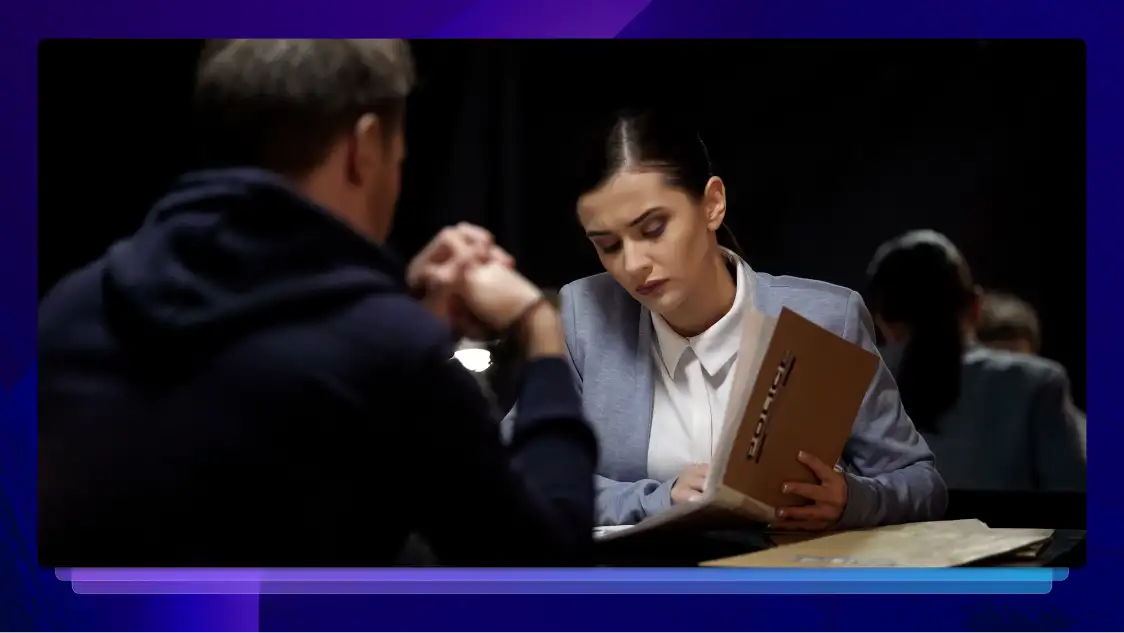
At trial, evidence issues often show up in the little details. For example, say a detective testifies that a witness identified the defendant as the person they saw at the scene. The witness never takes the stand, but the statement sounds authoritative, and the prosecutor moves on. But later, as the defense team reviews the testimony, a key question comes up: Is the jury hearing firsthand evidence, or an out-of-court statement presented as fact?
Pauses like that can lead to light-bulb moments for the defense. What initially sounded like firsthand testimony turns out to be an inadmissible statement. Other times, there’s missing context, a shaky foundation, or evidence that carries more prejudice than value.
In criminal defense, searching for evidentiary issues like these isn’t just an academic exercise. It’s how attorneys apply the United States Federal Rules of Evidence to the prosecution’s case, testing whether it meets the standards required to reach the jury. In this guide, we’ll break down the most common prosecution-side evidentiary problems and how defense teams find and challenge them to turn the tide in a case.
What Are Evidentiary Problems?
Evidentiary problems are issues that arise when the prosecution’s evidence falls short of the legal requirements for admissibility under the Federal Rules of Evidence or state equivalents. In criminal cases, this often means evidence is introduced without a proper foundation, relies on inadmissible hearsay, or contains unfair prejudice that outweighs its relevance.
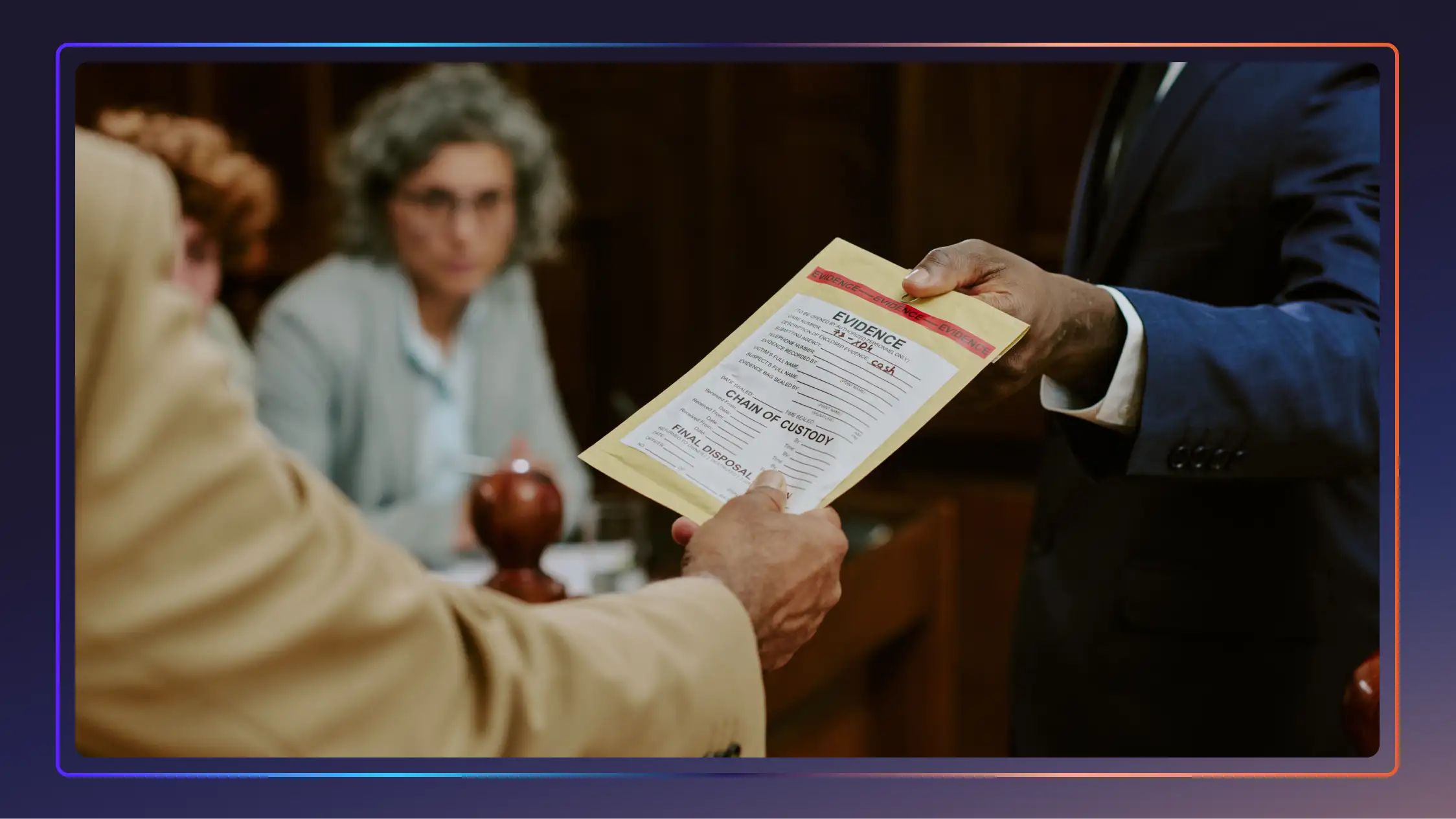
Many evidentiary issues relate to how evidence is handled and presented, particularly nowadays, with the widespread use of digital evidence. When recordings, body-cam footage, or text messages aren’t collected, stored, and reviewed consistently, questions can arise about their authenticity, completeness, or whether the chain of custody has been properly maintained.
Whatever the specific issue, the implications for the defense are the same: When evidence is fragmented, selectively presented, or poorly documented, it creates openings for challenge. Below, we’ll explore six of the most common issues.
1. Hearsay and Misapplied Hearsay Exceptions
Issues with hearsay — bringing in out-of-court statements during trial — often arise when the prosecution introduces statements indirectly. For instance, an officer on the stand recounts what a witness or bystander said, presenting the statement as fact rather than an observation. If the original speaker does not testify themselves to confirm the statement as true, it may be inadmissible under the Federal Rules of Evidence.
Prosecutors rely on numerous hearsay exceptions to justify using these types of statements. Some are admitted as “excited utterances” made in the heat of the moment, or as a way to show what someone was thinking or feeling rather than to prove a specific fact (a classic “state of mind” exception for hearsay). But when the circumstances don’t actually support those claims — because the statement was made later, out of context, or for a different purpose — a judge may not grant the exception.
Transcript review can be particularly helpful for defense teams in arguing against exceptions to these and other hearsay examples. Slight phrasing changes can reveal when testimony crosses from firsthand knowledge into something impermissible.
Defense takeaway: Flag any testimony that recounts what someone else said rather than what the witness personally observed. Carefully inspect how statements are framed in transcripts, particularly in summaries of interviews or conversations. If the prosecution claims any hearsay exceptions, test them by examining timing, context, and purpose.
2. Lack of Proper Foundation or Authentication
Evidentiary problems often come into play when the prosecution introduces evidence without clearly establishing what it is, where it came from, and how it was handled. If authenticity or reliability is assumed rather than demonstrated, defense teams may be able to challenge its inclusion.
Ron Harper, paralegal and owner of OTD Ticket Defenders Legal Service, explains how he’s experienced this in his own practice: “There may be instances where a device appeared to work properly on the date of the offense. However, a pattern of chronic malfunctions may be evident from the maintenance records. My team [tries to show that] reliability is merely an assumption — not a fact.”
The same principle applies to digital records, where gaps in collection, storage, or the chain of custody can undermine confidence. A careful review of the evidence helps expose these assumptions and identify where the foundation of proof is missing.
Defense takeaway: Don’t accept evidence reliability at face value. Confirm that the record clearly shows what the evidence is, how it was collected, and how it was handled from start to finish. Look for any missing documentation, unexplained gaps, or assumptions about device accuracy, storage, or chain of custody.
3. Relevance vs. Unfair Prejudice
Even when evidence is relevant to the case, a judge may rule it problematic if it’s mainly presented to inflame emotions or invite speculation. Graphic details, prior encounters with law enforcement, or marginally related conduct can gradually shape how jurors view a defendant, even if the evidence does little to establish guilt.
A critical role of the defense is to identify these imbalances and challenge evidence that creates more prejudice than it proves. The goal is to limit what reaches the jury and keep them focused on admissible evidence that ties directly to the charged offense.
Defense takeaway: Analyze how the prosecution frames each piece of evidence and ask what it actually adds in terms of proving the charged offense. Flag evidence that relies on emotional impact, background narratives, or prior encounters rather than facts tied to the elements of the case. Focus on whether exhibits and testimony inform the jury or risk steering them toward improper inferences.
4. Improper Lay or Expert Opinion Testimony
Another common evidentiary issue occurs when prosecution witnesses offer opinions they are not qualified to give. Non-expert (lay) witnesses, including law enforcement officers, may describe what they observed but are generally not permitted to draw conclusions that require specialized training or expertise.
For example, an officer might testify about a defendant’s intent or state of mind, or a witness may present their interpretation of events rather than mere observations. In other cases, expert witnesses cross the line by offering opinions outside the scope of their training. Spotting these moments of overreach involves careful review of witness testimonies by defense teams to pinpoint where witnesses move from observation into interpretation.
Defense takeaway: Review witness testimony line by line and distinguish clearly between observation and interpretation. Highlight moments where non-expert witnesses draw conclusions about intent, credibility, or causation — or where experts make judgments that fall outside their qualifications.
5. Prior Bad Acts and Character Evidence
Prosecutors are allowed to introduce evidence of a defendant’s prior conduct to provide context or explain background facts. But when that evidence is used to make claims about a person’s character, it can create serious evidentiary problems.
Subtle references to prior arrests or interactions with law enforcement can alter a jury’s perception of a defendant, regardless of whether those facts are directly tied to the charges at hand. But the justice system demands that evidence relate directly to an alleged offense, not perceptions about a person’s character.
Defense teams must be especially vigilant to guard against these types of prosecution strategies. Identifying when prior acts aren’t relevant to the case allows counsel to seek exclusion or limit testimony before prejudice takes hold.
Defense takeaway: Earmark any references to prior conduct, arrests, or interactions with law enforcement and evaluate how the prosecution is using them. Does it serve a legitimate, limited purpose or encourage character-based assumptions? Pay especially close attention to indirect phrasing that introduces past conduct subtly, and be prepared to challenge or narrow that material before it influences juror perception.
6. Incomplete or Selectively Presented Evidence
In many cases, evidence falls short not for its substance or strategic misuse, but simply for what it leaves out. Short interview excerpts or clipped audio recordings may appear damaging when they leave out crucial context that changes the story.
This selective presentation may be unintentional, but that doesn’t make it less misleading. Without full context, jurors may draw conclusions that don’t have adequate evidentiary support. This is especially common with digital evidence, where large volumes of material are reduced to brief highlights.
That makes the defense’s work of identifying what’s missing just as important as reviewing what’s included. Comparing excerpts to the full record of searchable, time-stamped transcripts can reveal omissions and support arguments for adding context before the jury forms a distorted view. With tools like Rev, attorneys can even review searchable, timestamped transcripts in real time, ask our closed-loop AI questions about missing context, and receive answers that link directly back to citable portions of the evidence.
Defense takeaway: Examine not just what the prosecution includes, but what it leaves out. Compare excerpts against the full record, review where recordings begin and end, and question whether omitted context changes the meaning of what’s said. Before the jury forms an opinion, use searchable transcripts and cited references to spot gaps and support requests for additional context.
Using Federal Rules of Evidence To Resolve Evidence Issues
Fortunately, defense teams don’t have to rely on their gut when calling evidence into question. The prosecution is held to a strict set of evidentiary standards that govern how and when it may introduce evidence for a jury’s consideration, including the foundational evidence needed to establish authenticity and reliability.
Those standards all stem from the Federal Rules of Evidence, which establish what can be admitted in federal courts. Many state and municipal courts follow similar frameworks, which you can find through state judicial branch websites, state bar association practice resources, and local court or county clerk pages. Altogether, there are more than 60 detailed federal rules, alongside any local additions, so it’s critical for defense teams to do their own research.
While the list of rules is extensive, they tend to operate in groups, each shaping a different aspect of how evidence is offered and challenged at trial. The following six groups relate directly to the issues we’ve explored:
- Hearsay and Hearsay Exceptions (Rules 801–807): Govern out-of-court statements and the limited circumstances under which they may be admitted.
- Authentication, Foundation, and Identification (Rules 901–903): Require proof that the evidence is what the prosecution claims it is and that it has been handled properly.
- Relevance and Exclusion of Evidence (Rules 401–403): Define what evidence is relevant and allow courts to exclude evidence that creates unfair prejudice, confusion, or distraction relative to what it proves.
- Witness Testimony and Opinions (Rules 601–615 and 701–705): Set boundaries on who may testify and limit opinion testimony by lay and expert witnesses.
- Character Evidence and Other Acts (Rules 404–405): Restrict the use of prior conduct to prevent improper character-based inferences.
- Completeness and Context (Rule 106): Allow additional portions of writings or recordings to be introduced to prevent misleading presentations.
Evidentiary Standards: Civil vs. Criminal
The same standards of evidence apply in both civil and criminal cases, but the consequences of missing the mark are quite different. Because criminal cases can involve loss of liberty or life, evidentiary safeguards are especially critical.
Burden of proof is a particularly important distinction. Civil cases generally require proof by a preponderance of the evidence, meaning a claim is more likely true than not. Criminal cases demand proof beyond a reasonable doubt — a much higher threshold that requires the jury to be thoroughly convinced of a defendant’s guilt. The same rules apply, but courts tend to scrutinize evidence more closely in criminal cases as a result.
This is an important distinction for defense teams. Evidence that might be acceptable in a civil case may not meet the reliability, fairness, or completeness required in a criminal trial. That higher standard of proof opens more opportunities for a defense team to identify weaknesses in the prosecution's presentation.
Advanced Tips For Overcoming Evidence Issues
The high standard set for the prosecution doesn’t mean the defense has an easy job. Evidentiary problems aren’t usually glaring; defense teams must dig to find the gaps or moments where the record doesn’t quite line up.
“Difficulties tend to manifest themselves in ordinary breaks and not in dramatic situations,” says Robert Tsigler, attorney at The Law Office of Robert Tsigler. “Sound that breaks towards the end or audio time stamping that drifts several minutes off dispatch logs is usually an indication of the missing context.”
Uncovering these issues takes a disciplined, methodical review. That means comparing testimony against recordings, timelines, and supporting documentation, rather than accepting prosecution summaries at face value.
Typically, this involves:
- Reviewing recordings alongside transcripts to catch pauses, omissions, or off-camera discussions.
- Checking timestamps against dispatch logs, reports, or other digital records.
- Comparing witness accounts for repeated phrasing or unexplained similarities.
- Confirming who can authenticate each piece of evidence and what assumptions are being made.
- Using searchable, timestamped transcripts to quickly isolate inconsistencies across large volumes of digital evidence.
From Evidence Review to Evidentiary Advantage
Evidentiary issues come up all the time in court. But without careful review and attention to detail, they can easily slip by unnoticed. The defense’s job is to stay on high alert, ready to spot any potential gaps in the prosecution’s presentation.
However, given the sheer volume of evidence in most cases, defense attorneys need an easier way to conduct a detailed review. Pairing transcripts with Rev’s AI assistant allows defense teams to ask targeted questions about the record and receive answers that are always grounded in the underlying evidence. It turns recordings into clear, navigable records, so attorneys can spend less time foraging through mountains of evidence and more time building a strong case.