Sidharto Reza Suryodipuro (08:37):
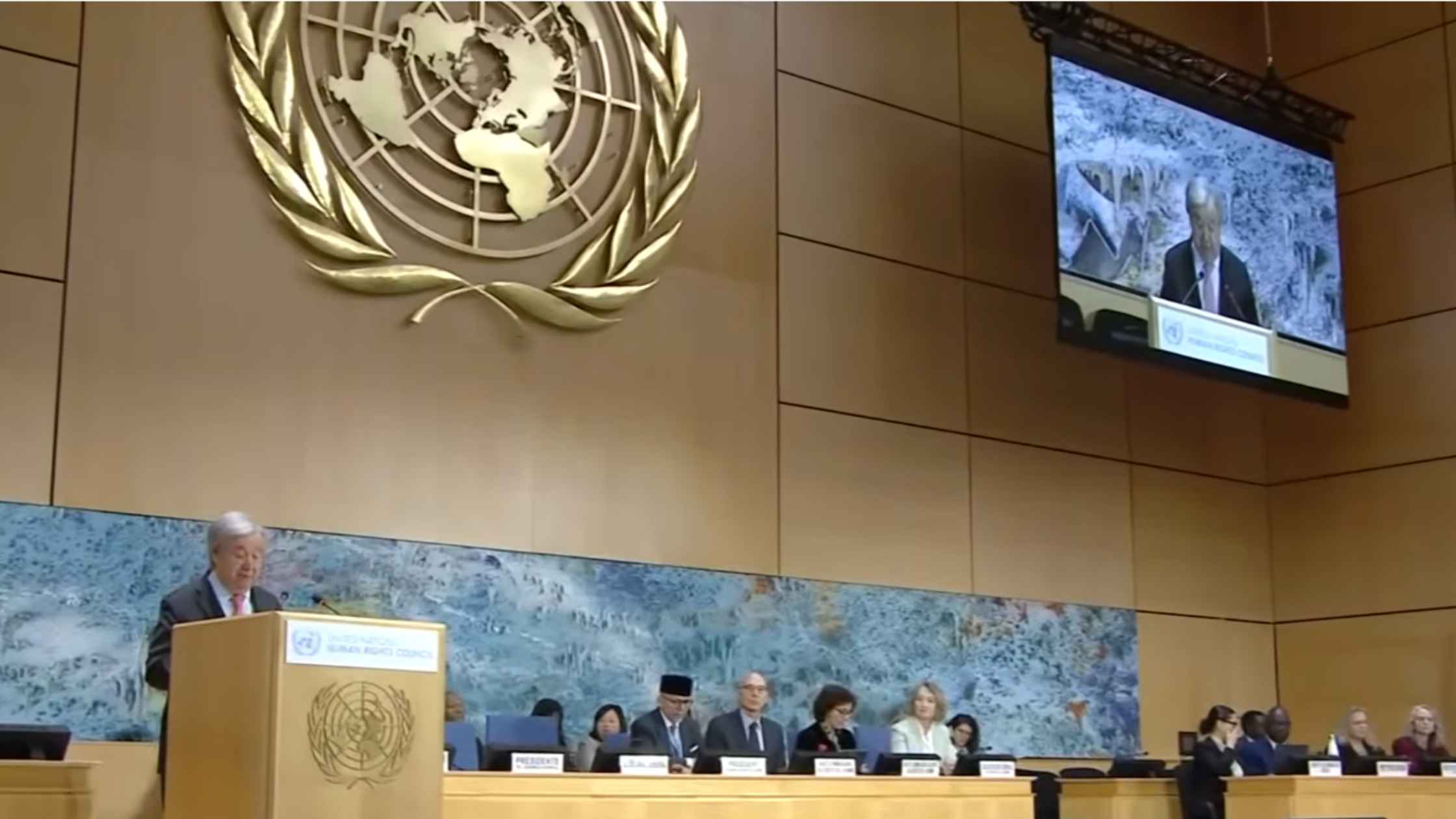
Secretary- General of the United Nations, Director General of the United Nations office at Geneva, High Commissioner for Human Rights, Vice President of the Federal Council and Head of the Federal Department of Foreign Affairs of Switzerland, Excellencies, distinguished participants, I hereby declare open the 61st session of the Human Rights Council.
(09:28)
It is my great honor to welcome you all. Today, your strong presence with over 120 high-level dignitaries from all regions sends a powerful and unmistakable message that this Council matters, that human rights matter, and that multilateral cooperation remains indispensable in navigating our shared challenges. Even amid pressures on the foundations of multilateralism, your presence reaffirms the determination enshrined in the Charter of the United Nations, and that is to reaffirm faith in fundamental human rights, in the dignity and worth of the human persons, and in the equal rights of men and women and of nations large and small.
(10:29)
As we mark the 20th year since the establishment of the Human Rights Council, we reflect not only on two decades of meaningful contributions from fostering dialogue and cooperation among states, to advancing norms and standards, to strengthening accountability mechanisms, but also on the resiliency of this body.
(10:58)
The Council has evolved. It has expanded its tools. It has responded to emerging crises, and it remains a central pillar of the international human rights architecture. From digital and technological risks to the impacts of climate change, conflict, inequality and food insecurity, the Council has sought not only to deliver it, but to promote tangible improvements on the ground. The sustained engagement reflects the Council's enduring relevance and our shared commitment to universal respect for human rights, guided by universality, objectivity, non-selectivity, and the equal treatment of all rights, including the right to development.
(11:45)
At the same time, you must acknowledge the ongoing financial constraints within the United Nations have affected our collective ability to fully implement our mandates. Yet rather than retreat, these constraints compel us to act with greater resolve, to innovate, remain responsive and reinforce the multiple layers of the global human rights architecture. Regional organizations and national human rights institutions alongside civil society are therefore the Council's indispensable partners. Let this session therefore serve as a renewed call to listen, to cooperate and to act and mark the Council's rise to the demands of the moment.
(12:36)
Excellencies, distinguished participants, before handing over the floor to our distinguished guests for their opening statements, I now call on the Council to observe a moment of silence in memory of all victims of human rights violations around the world.
(12:53)
Excellencies, distinguished participants, we now have the honor of hearing statements from our distinguished guests, which will mark the opening of the 61st session of the Human Rights Council. I now have the honor to give the floor to the Secretary-General of the United Nations, His Excellency, Mr. Antonio Guterres. Your Excellency.
Antonio Guterres (14:24):
Distinguished President of the Human Rights Council, High Commissioner, Excellencies, ladies and gentlemen. Human rights are under a full-scale attack around the world. The rule of law is being out-muscled by the rule of force. And this assault is not coming from the shadows or by surprise. It is happening in plain sight and often led by those who hold the greatest power. Around the world, human rights are being pushed back deliberately, strategically, and sometimes proudly. The consequences are devastating, as witnessed in the Council, and as written in the lives of people who suffer twice, first from violence, oppression or exclusion, and then again from the world's indifference.
(15:20)
When human rights fall, everything else trembles: peace, development, social cohesion, trust, solidarity. This is precisely why the tools of Human Rights Council, such as the Special Rapporteurs, special procedures, investigative mechanisms and Universal Periodic Review are essential. And it is precisely why, as we mark the Council's 20th anniversary, we also recognize it's more important than ever to translate geopolitical engagement into a path towards strengthening human rights everywhere. Excellencies, tomorrow, I should address the Security Council on the fourth anniversary of Russia's full-scale invasion of Ukraine, where more than 50,000 civilians have been killed. It is more than past time to end the bloodshed. I began this month speaking to the Committee on the exercise of the inalienable rights of the Palestinian people, about blatant violations of human rights, human dignity and international law in the occupied Palestinian territory. The current trajectory is stark, clear and purposeful. The two-state solution is being stripped away in broad daylight. The international community cannot allow this to happen. A few days ago I was at the African Union Summit, where Sudan, the Democratic Republic of the Congo, the Sahel and other crises were front and center. Excellencies, we are living in a world where mass suffering is excused the way where humans are used as bargaining chips, where international law is treated as a mere inconvenience. Conflicts are multiplying and the impunity has become a contingent. That is not due to a lack of knowledge, tools or institutions. It's the result of political choices. The crisis of respect for human rights does not stand alone. It mirrors and magnifies every other global fracture. Humanitarian needs are exploding while funding collapses. Inequalities are widening at staggering speed. Countries are drowning in depth and despair. Climate chaos is accelerating, and technology, especially artificial intelligence, is increasingly be used in ways that suppress rights, deepen inequality and expose marginalized people to new forms of discrimination, both online and offline.
(18:12)
Across every front, those who are already vulnerable are being pushed further to the margins, and human rights defenders are among the first to be silenced when they try to warn us. In this coordinated offensive, human rights are the first casualty. We see it in a tightening grip on civic space: journalists and activists jailed, NGOs shut down, women's rights rolled back, children's rights ignored, persons with disabilities excluded, democracies eroding, the right of peaceful assembly crushed, and I can then once again the recent violent repression of protests in Iran, migrants harassed, arrested and expelled, with total disregard for their human rights and their humanity, refugees scapegoated, LGBTIQ-plus communities vilified, minorities and indigenous peoples targeted, religious communities attacked, online spaces poisoned by disinformation and hate, resulting in real world harm.
(19:28)
Excellencies, human rights are not a slogan for good times. They are a duty at all times. And so we must stand up for them, and even when it is difficult and convenient or costly, especially then. That requires action on three urgent fronts. First, we must defend our shared foundations without compromise. UN Charter, Universal Declaration of Human Rights and the International Human Rights Law are not a menu. Leaders cannot pick the parts they like and ignore the rest. Human rights themselves are also not divisible. Economic rights, social rights, cultural rights, civil rights, and political rights, these are inherent, universal, inalienable and interdependent. [foreign language 00:20:26]. Excellencies, third, we must unlock the power of human rights. After all, human rights are not only what we defend, they're what lifts the world to a better place. When rights are upheld, people live more freely, economies grow more fairly, communities trust more deeply, and peace and stability take hold because dignity takes root. Human rights are not an obstacle to progress. They are essential to progress. We have seen it time and time again all over the world. Where rights advance, conflict loses ground. Where justice transcends, violent extremism weakens. Where equality expands, possibility explodes. Where freedom prevails, societies flourish.
(23:32)
And so we must change course and let human dignity set the direction by renewing our commitment to respect for the rule of law at every level, by supporting the pivotal work of the International Court of Justice and International Criminal Court, by delivering on the sustainable development goals, by accelerating climate action, by upholding what makes us human. Excellencies, ladies and gentlemen, in my first address to this Council as Secretary-General, I spoke of a deep, personal commitment to human rights. Growing under the Salazar dictatorship taught me that the denial of human rights corrodes every aspect of society. Working for United Nations has shown me our respect for human rights brings out the best in humanity. And now, in my 10th year at the helm of the power of human rights has never been more clear. Human rights are not west or east, north or south. They are not a luxury. They are not negotiable. They are the foundation of a more peaceful and secure world, and states are bound by their obligations under the Charter and international law.
(24:55)
We still have much work ahead together, but since this is my final address to the opening of your session, I leave you with this appeal: Do not let the erosion of human rights become the accepted price of political expediency or geopolitical competition. Do not let power write a new rule book in which the vulnerable have no rights and the powerful have no limits. Let these Human Rights Council be the voice and shield for all those in need. Let this be the place that helps end the broad and brutal assault on human rights, because a world that protects human rights protects itself, and I thank you.
Sidharto Reza Suryodipuro (26:04):
Thank you, Secretary- General. I now have the pleasure to give the floor to the High Commissioner for Human Rights, Mr. Volker Turk. You have the floor.
Volker Turk (26:19):
Mr. President of the Human Rights Council, Mr. Secretary-General, Excellencies. A fierce competition for power, control and resources is playing out on the world stage at a rate and intensity unseen for the past 80 years. People are feeling unmoored, anxious and insecure. The gears of global power are shifting, and the consequences are not clear. Some are signaling the end of the world order as we know it, but today I want to talk about another world order, one that is organized from the ground up and that is unshakable, a foundational system of how people relate to each other based on our inherent worth, our hopes and our common values. I'm referring to the people's pursuit of dignity, equality and justice. This quest is innate to what makes us human, to be free, to be heard, and to have our basic needs met.
(27:33)
And it is a strong counterbalance to the top-down, autocratic trends that we see today. The use of force to resolve disputes between and within countries is becoming normalized. Inflammatory threats against sovereign nations are thrown about with no regard to the fire they could ignite. The laws of war are being brutally violated. Mass civilian suffering from Sudan to Gaza to Ukraine to Myanmar is unfolding before our eyes. In Sudan, there needs to be accountability for all violations by all parties, notably the war crimes and possible crimes against humanity committed by the Rapid Support Forces in Al Fashir. Such atrocities must not be repeated in Kordofan or elsewhere, and all those with influence need to act urgently to put an end to this senseless war.
(28:32)
The situation in Gaza remains catastrophic. Palestinians are still dying from Israeli fire, cold, hunger and treatable disease. The aid allowed in is not enough to meet the massive needs. There are concerns over ethnic cleansing in both Gaza and the West Bank while Israel is accelerating efforts to consolidate unlawful annexation. Any sustainable solution must be based on two states, living side by side in equal dignity and rights in line with UN resolutions and international law.
(29:07)
Tomorrow marks four years since Russia's full-scale invasion of Ukraine, four interminable and agonizing years. Civilian casualties have soared and Russia's systematic attacks on Ukraine's energy and water infrastructure could amount to international crimes. The fighting needs to end, and I urge a focus on human rights and justice in any ceasefire or peace agreement.
(29:34)
In Myanmar, five years after the military coup, the awful conflict is claiming even more civilian lives and the humanitarian situation continues to deteriorate. The recent elections staged by the military have only deepened people's despair. Across most violent conflicts today, journalists, health and aid workers are targeted in blatant violation of international law. These actions must not be allowed to harden into the new normal. States need to be persistent objectors to violations of the law by pursuing accountability and by clearly denouncing these egregious crimes with consistency and without exception.
(30:21)
Meanwhile, violence and tensions are resurging in some countries, including South Sudan and Ethiopia, and authorities in Iran have violently repressed mass protests with lethal force, killing thousands. I will provide more detail on these and other country situations in my global update later this week.
(30:44)
Excellencies, developments around the world point to a deeply worrying trend: domination and supremacy are making a comeback. If we listen to the rhetoric of some leaders, what lurks behind it is a belief that they are above the law and above the UN Charter. They claim exceptional status, exceptional danger or exceptional moral judgment to pursue their own agenda at any cost. And why wouldn't they try, when they are unlikely to face consequences? They build and sustain systems that perpetuate inequalities within and between countries. Some weaponize their economic leverage. They spread disinformation to distract, silence and marginalize. A tight clique of tech tycoons controls an outside proportion of global information flows, distorting public debate, markets, and even governance systems. Corporate and state interests ravage our environment, robbing the riches of the earth for their own gain.
(31:54)
But at the same time, people are not watching all this from the sidelines. They're activating their power from the ground up. Women and young people especially are leading these movements. They're claiming their rights to basic living conditions, to fair pay, to bodily autonomy, to self-determination, to be heard, to vote freely and many other rights. From Nepal to Madagascar, from Serbia to Peru and beyond, people are demanding equality and denouncing corruption, neighbors and communities standing up for each other, sometimes even risking their lives. People are protesting war and injustice in places far from home, expressing solidarity and pressuring their governments to act. They see human rights as a practical force for good. And they're right. Human rights are anathema to supremacy. They're a direct challenge to those who seek and cling onto power. That is what makes human rights radical, and that is what gives
Volker Türk (33:00):
... than force. They are universal, timeless, and indestructible. Excellence. [foreign language 00:33:09]. Human rights are the thread that runs through all these movements. And we do not take their achievements for granted. Tyranny will seize any chance and exploit any opening. We must keep standing up for human rights in solidarity with each other and when we come together, we wield more power than any autocrat or tech billionaire. The struggle for human rights can never be derailed by the whims of a handful of leaders with reactionary supremacist agendas. While some states are weakening the multilateral system, we need bolder and more joined-up responses. First, this means calling out violations of international law regardless of the perpetrators. Too often denouncing violations by one party is labeled as siding with the enemy. In reality, it is upholding the universality and the pursuit of justice for all. The alternative, selective fragmented responses weakens international law and hurts us all.
(36:03)
The entire human rights ecosystem is designed to promote universality and ensure consistency. This includes the tools that are mandated by this council, and I condemn all attacks against them. Second, we need stronger commitment to accountability. This includes strengthening the international criminal court and encouraging national prosecutions under the principle of universal jurisdiction. We need to increase the cost of breaking international law. Third, let's forge coalitions to champion what unites us, and uphold equality, dignity, and justice for all. We must protect the diversity of the human family and demonstrate what we gain by standing together. In the coming weeks, we will set in motion a global alliance for human rights to capture the energy and commitment that is palpable everywhere. It will be cross-regional, multi-stakeholder involving states, businesses, cities, philanthropists, scientists, artists, philosophers, young people and civil society. It'll confront top-down domination with grassroots solidarity and support. It will represent the quiet majority who want a different world. Human rights are not a political currency, they're not up for grabs. Our future depends on our joint commitment to defend every person's rights, every time, everywhere. Thank you.
Sidharto Reza Suryodipuro (37:48):
I thank the High Commissioner for human rights. We will now listen to the address by her Excellency Ms. Annalena Baerbock, president of the United Nations General Assembly, followed by his Excellency, Mr. Ignazio Cassis, vice president of the Federal Council and head of the Federal Department of Foreign Affairs of the Swiss Confederation in his capacity as representative of the host states. Following the statements, we will officially commence the high-level segment of this session. Now I have the honor to give the floor to the president of the 80th session of the General Assembly, her Excellency, Ms. Annalena Baerbock.
Annalena Baerbock (38:34):
Distinguished President of the Human Rights Council, Mr. Secretary-General Mr. High Commissioner for Human Rights, Excellencies, ladies and gentlemen, first of all, apologies, New York is still not so used to snow, so I'm very happy that I made it. Especially in these very challenging times. And as you have heard already, the importance of human rights. And as we are all agreeing, at least in principles, otherwise, we would not speak at the Human Rights Council about the importance in the 20th year of this Human Rights Council to protect human rights.
(39:14)
I would like to start a bit differently, a bit self-reflectively to our own work here. Especially given the latest headlines of the worst structural human rights violation. Some call it gender apartheid system against Afghan women and girls. Because frankly speaking, I cannot stop thinking about the debates we had also here in our UN system, also here in Geneva and New York and different capitals, about how we should deal with the humanitarian aid delivery and the principles of humanitarian aid and support, while women were not allowed to work anymore, also not for the UN anymore. And girls could not go to school anymore.
(40:10)
And I think you also remember very well because these are hard debates and hard decisions that there was also some of the argumentation saying, "Well, this is Kandahar. Kabul might be different, there might be more moderate." which could prevail. And in some speaking points of capitals and maybe also of UN officials, the before most important point of protecting human rights and women rights was in some of these debates a bit lowered. So therefore, I think this is also a moment where we should remember once and for all, and again, that appeasement in the light of most severe human rights violations never prevails and that we should not learn the hard lesson again. That women rights are indeed the benchmark for the state of a society, the state of the world. Because of women, meaning half of the world population, 4 billion people are not safe. No one will be safe.
(41:28)
So as we are seeing not only a dramatic backlash in women, but also human rights and other rules and standards, which were believed to be set in stone. And are now openly questioned, dismissed, or violated. My speech today, I would say similar as this speech, is a call to action. To all of us. To all of you. Because history teaches us that large systems rarely collapse in one dramatic moment. They erode slowly, rule by rule, commitment by commitment. With those who should defend them, rather staying silent, until one day what seemed permanent simply vanishes. So being a member of this human rights council, a member of state, an ambassador, a minister, an UN official in these times, it's not a spectator sport. We are not bystanders who have the luxury of standing on the sidelines while injustice unfolds. Silence is a choice, inaction is a choice. And it has consequences.
(42:52)
Yet the good news is action is a choice as well. And it lies in our own hands. And the human rights system, the Universal Declaration, the principles as enshrined in the Charter need this action of every one of us now. Action by governments and diplomats, officials and parliamentarians. It needs all of us. It needs you. Your support, your leadership, your principles stands. Your cross-regional cooperation to protect and defend and champion all the three principles of the Charter. Peace and security, development and human rights. As we all know, they are interconnected that they benefit us all individually and collectively. It needs you as ambassadors to stand up when the next attack on human rights comes by single amendments to resolutions for which we thought they were written in stone. And suddenly deleting some humans, women or LGBTIQ-plus persons, people with disabilities, refugees, migrants. You don't know who will be next.
(44:16)
As a pact for the future states, these three pillars are equally important, interlinked and mutually and reinforced. We cannot have one without the others. It means always endeavoring to bridge divides and find compromise, insofar as compromise doesn't become appeasement. When compromise shifts from mutual accommodation to the slow erosion or deliberate dismantling of the very foundations of this institution, then it's no longer compromise, it's compromising. Therefore it needs you, distinguished ministers, as well to uphold human rights. Not only here in the council when we are meeting all together, but in your national debates when in highly popularistic times with social media pressure and seconds, some challenge suddenly the 1951 refugee convention again. Or start lowering the age of marriage, meaning de facto allowing child, well girls, marriage. Or when we have the spread of anti-Semitic races, the Islamophobic propaganda trying to rewrite our criminal law, our civil law. It needs a clear commitment from every member states that UN premises belong to the United Nations, including UNRWA. And that their schools are currently essential for guaranteeing Palestinian children their right to education. It needs a clear commitment from every member states that the abduction of Ukrainian children is a war crime. It needs a clear commitment of every member states that everywhere around the world people have the right to demonstrate peacefully and freely, also in Iran. It needs all of us to neither give in nor give up. If we are seeing humanitarian catastrophes, starvation, mass killings, and mass rape in Sudan year after year, seeing the devastating situation of Thuringia, yet continuing to try even harder, for delivery of humanitarian assistance for people to return, for people to be safe. It needs our common understanding that our human right work is not static, yet must evolve as new threats to human dignity emerge. This includes a rapidly evolving fields of technology and artificial intelligence. Used responsible, it can expand knowledge, improve healthcare strengths and disaster response and support climate resilient agriculture.
(47:14)
But without safeguard, the same technologies can entrenching biases, amplifying harm, even teaching our own children how to commit suicide currently in some countries without any consequence. Therefore, responsible global governance of technology is essential. And the AI summit, just the other day, as well as UN's independent international scientific panel on AI approved by the General Assembly just 11 days ago, are great proof that even, and especially in these challenging times, we are indeed better together if we take the step forward. And in this regard, I would really like to thank our dear Secretary General, because he was the one pushing forward the artificial intelligence framework, the debate that this is also responsibility for our United Nations. Because it's not true that we have to lower our ambitions for caring around the world. The United Nations means especially facing new chances, but also challenges. And for sure in these times when our system is heavily under pressure, and 80 years is quite some time, we have to reform.
(48:40)
So it needs all of you, all of us in Geneva as well as in New York, and the other places around the world together to engage jointly in our UNED reform process. And we have to be true to ourselves again. There is an overlap between the Human Rights Council and the Third Committee. There are duplication across agencies. And this is the reason why we are doing this reform to make this institution stronger and better, more efficient, and not weakening it. Finally, for an institution built on human rights, representing all of the people, one question looms large, how is it that within 80 years a woman has never served as Secretary General, even though half of the 8 billion people we are supposed to serve are women and girls? So again, silence is a choice, but action as well. After member states called in consensus to strongly encourage women nomination, do not suddenly as a decision about it comes closer, let them ask you again to explain.
(49:52)
So why should we have a woman and what is about the competence? The question we never hear about when we talk about male applications. On the contrary, make them explain why not after 80 years, half of the society, half of the world has also right to be represented. Excellencies, ladies and gentlemen, leadership matters. We are just around the corner of Italy obviously, where the Olympics are just closing and the Paralympics are starting. And there athletes from all around the world and all that diversity showed us again what we can achieve when we come together despite our differences. Or especially the cause of our diversity, to compete fiercely yet fairly on the same playing field, governed by the same rules, always in mutual respect, that a life is a life, that the human being is a human being. Now it's up to us, to you, to all of us, to stand up in this spirit. It needs your support, your leadership, your principles stand, your cross-regional cooperation, to defend these principles, our common global human rights here in Geneva, in New York, in your capital, your government. Now every day. I thank you.
Sidharto Reza Suryodipuro (51:47):
I thank the President of the General Assembly. I now have the honor of inviting his Excellency, Mr. Ignazio Cassis, head of the Federal Department of Foreign Affairs of Switzerland, to make a statement on behalf of the host country. You have the floor, Excellency.
Ignazio Cassis (52:02):
[foreign language 00:52:13].
Sidharto Reza Suryodipuro (55:44):
I thank his excellency, Mr. Cassis, for the statement on behalf of the host country. Excellencies distinguished participants, before we proceed with the list of speakers for the high-level segment of the 61st session, let me remind you that this segment is scheduled to conclude on Wednesday the 25th of February and will be immediately followed by the general segment. Before giving the floor to the first speaker on the list, allow me to recall that the list of speakers for the high-level segment is available and regularly updated on the Council's extranet. Out of respect for the high dignitaries, I invite delegations to be present in the room at least 10 minutes before the start of each meeting and to maintain silence so as not to disrupt the statements. Given the large numbers of dignitaries who will address a council. I kindly request to inform the Secretariat as soon as possible of any potential delay.
(56:51)
As in the past years, and in conformity with the Council's rules and practices, there is no possibility to interrupt a dignitary statement by way of a point of order. All requests to exercise a right of reply relating to statements delivered during the high-level segment will be accommodated after the conclusion of the general statement. I wish to remind delegations that the speaking time is seven minutes for heads of state and heads of government, and five minutes for all other participants in the high-level segment. I kindly ask all delegations to respect the speaking time by adhering to your allocated time, you help other delegations to deliver their statements as scheduled. Concerning pre-recorded video statements, I wish to underscore that any videos not received in a timely manner will be rescheduled based on availability. I would also like to remind delegations to upload an electronic version of their statements through online speaker registration system so that they may be posted on the Council's extranet.
(58:01)
It is imperative that statements be uploaded in Word format in order to enhance the Council's accessibility for persons with disabilities. Please note that statements uploaded in non-accessible format will not be posted on the extranet. Excellencies distinguished participants, the effective conduct of the Council's sessions as well as the fulfillment of its mandate rests upon a constructive, safe, and respectful environment. It is therefore imperative that delegates, representatives of civil society, members of the Secretariat and the Council's mandate holders are able to carry out their responsibilities free form from personal attack, intimidation, or undue pressure. In this regard, I wish to express my deep concern and regret at the personal attacks and sanctions directed against certain mandate holders of the council. Such practices are incompatible with the spirit of cooperation and dialogue, and that must underpin our work. Mandate holders are a cornerstone of the Council's work for the promotion and protection of all human rights worldwide.
(59:27)
Such attacks highlight the significant, significant challenges that these experts may face, even as they discharge their mandate with professionalism and dedication, often in particularly sensitive and complex contexts. I therefore call upon all member of states to cooperate fully with them, and to refrain from any acts of intimidation, personal attacks, and unlawful unilateral sanctions that may hinder the independent and effective discharge of their mandates. In my capacity as president of the Council, I wish to reaffirm my full and unequivocal support for the mandate holders and to encourage states. And all relevant stakeholders to uphold and safeguard their integrity. While recognizing that mandate holders, like all actors within the human rights system, are not beyond scrutiny and constructive dialogue, even criticism.
(01:00:32)
Their independence and protection remain essential to the effectiveness, credibility, and legitimacy of the Council's collective action. Finally, I would like to extend my sincere gratitude to the government for its generous support in funding the live broadcasting of the Council's high-level segment. I also wish to thank all the donors contributing to the Voluntary Technical Assistance Trust fund for supporting the participation of least developed countries and small island developing states. Excellencies, distinguished participants, let us now proceed with the list of speakers for the high-level segment. And I have the honor to give the floor to his Excellency Mr. Jose Ramos-Horta, president of Timor-Leste. Your Excellency, have the floor.
Jose Ramos-Horta (01:01:39):
[foreign language 01:01:38]. I will be speaking in Portuguese, but translation done in several languages. And this is an abbreviated speech to keep with a seven-minute given to me. And apologize to interpreters because I'll be jumping page to page. It might confuse you. So I start in Portuguese. [foreign language 01:02:29].
José Ramos-Horta (01:11:17):
[foreign language 01:06:00] for Gaza, proposed by President Donald Trump [foreign language 01:11:22] Benjamin Netanyahu [foreign language 01:11:31] Israel [foreign language 01:12:21] Republic of Congo, Yemen [foreign language 01:12:39] Donald Trump [foreign language 01:12:49] Cuba [foreign language 01:13:01].
(01:12:46)
May God the Almighty bless us all.
Sidharto Reza Suryodipuro (01:14:43):
So we are taking a brief pause to allow our distinguished guests to take their leave. I respectfully request delegations to remain in their seats as we will immediately resume our work. Thank you.
(01:15:33)
We'll now return to our list of speakers. I have the honor to give the floor now to her Excellency Ms. Hilda Heine, president of Marshall Islands, who will deliver a message by video.
Hilda Heine (01:16:20):
Mr. President, Excellencies, [foreign language 01:16:24]. Greetings from the Marshall Islands.
(01:16:27)
As a member of the Human Rights Council, the Republic of the Marshall Islands holds to the belief that the spirit of multilateralism will continue to move states towards meaningful dialogue, empathy, greater solidarity, cooperation, and action to advance the realization of human rights for all.
(01:16:51)
We firmly believe that international cooperation and collective action lead to our shared prosperity. The Marshall Islands have experienced the consequences of multilateralism failing. Our atolls and islands were used to test nuclear weapons while administered by the United States of America under a United Nations trusteeship. This was a monumental failure in multilateralism with lasting human rights consequences for the Marshallese people.
(01:17:26)
Between 1946 and 1958, the Marshall Islands was subjected to 67 known nuclear weapons tests. The Marshallese people were exposed to nuclear fallout as well as radiation-contaminated environments, and used as human test subjects in a top-secret scientific experiment called Project 4.1.
(01:17:51)
To study the effects of such exposure, our humanity was disregarded, and the scientists that carried out the study did so without our consent. They went as far as to justify this with racism comparing us to mice and calling us uncivilized. To this day, the Marshallese people have not received an apology. There has been no meaningful reconciliation as we continue to seek justice. Reconciliation may not be easy, but it is the only way forward. It requires honesty and bold leadership to respond to our people's calls for justice and redress.
(01:18:41)
After almost 80 years, we remain hopeful for meaningful reconciliation with the United Nations and the United States of America.
(01:18:52)
Mr. President, with respect to climate change, multilateralism continues to fail when high- emitting states deny the signs and the urgent need for a rapid transition from fossil-fuel-based economies. This denial has dire consequences on the Marshallese people as rising sea levels erode our shores, infiltrate our freshwater sources, and threaten the human rights of our people and our cultural way of life.
(01:19:27)
As a low-lying [foreign language 01:19:29] nation with the average elevation of about two meters above sea level, we are among the most vulnerable to climate change-induced sea level rise. It is concerning that those most responsible who can make the greatest difference in the fight against climate change choose to deny our reality and the urgent need to rapidly transition. Despite these challenges, the Republic of the Marshall Islands firmly believes in the spirit of multilateralism, what it represents, and its potential. We continue to believe that constructive dialogue will move states towards common ground and lead to pragmatic, durable solutions.
(01:20:18)
The Human Rights Council represents the success that can be achieved if states engage in this manner, and our experience as a member reaffirms this understanding. While this council does not always agree, we have found consensus on matters that resonate deeply with the Marshallese people. This council adopted by consensus the resolution that continues the of the Special Rapporteur on human rights in the context of climate change, as well as the resolution that continues the OHCHR mandate to provide technical assistance to address the human rights implications of our nuclear legacy.
(01:21:06)
In doing so, the council serves as a beacon of hope for the Marshallese people. The impact of this Council's work strengthens our belief in the spirit of multilateralism. With renewed resolve, we recommit to our efforts to share our lived experiences with the human rights consequences of climate change and nuclear weapons. We will continue to insist on states fulfilling their obligations where climate change is concerned in accordance with the unanimous advisory opinion of the International Court of Justice on state's obligations in respect of climate change.
(01:21:50)
Furthermore, in October, we will seek to extend the mandate for OHCHR technical assistance to address the human rights implications of our nuclear legacy. We trust that we can continue to count on the Council's support. Mr. President, the Republic of the Marshall Islands will commemorate Nuclear Victims' Remembrance Day on March 1st, the 72nd anniversary of the Castle Bravo test, which caused catastrophic human rights and humanitarian consequences for the Marshallese people. This year's commemoration is also significant as we approach the 80th anniversary of the start of the nuclear weapon test in the Marshall Islands on July 1st, 1946, which continued until 1958.
(01:22:53)
The Republic of the Marshall Islands will hold a commemoration event in Geneva and we invite delegation and civil society to join us on this occasion. On this important anniversary, we must remember the victims of nuclear weapons and answer their calls for justice. Justice demands the abolition of nuclear weapons in recognition of the legacy of harms caused by their testing and use as well as their continued existence. Mr. President, the Republic of the Marshall Islands is proud to serve as a member of this council. We embrace this responsibility, and we'll continue to uphold the principles that we hold dear as a nation and as a people. We recognize that we can offer this council unique perspectives and understandings of human rights. And likewise, we look forward to the enriching contributions from states and civil society alike. Together, we can strengthen and promote international human rights governance through meaningful dialogue, empathy, greater solidarity, cooperation, and action. The Human Rights Council must strive to be a beacon of hope for humanity and multilateralism, and the Marshall Islands will share its light for that cause.
(01:24:32)
[foreign language 01:24:35], and I thank you.
Sidharto Reza Suryodipuro (01:24:36):
I thank the president of Marshall Islands. Next I have the honor to give the floor to her Excellency Ms. Sushila Karki, prime minister of Nepal who will deliver a video message.
Sushila Karki (01:25:01):
Mr. President, Mr. High Commissioner, Excellencies, at the outset, I would like to congratulate you, Mr. President, on your election as the President of Human Rights Council for 2026.
(01:25:18)
Nepal assures its full support in discharging your mandate. We are meeting at a critical time. The world is facing several crises - some conventional and some emerging. Climate change, increasing conflicts, and severe disasters are to name a few. And most importantly, these crises are not stand alone. They are intertwined and complex. Multilateralism itself is being tested, but our commitment to human rights is still strong and unflinching. We must uphold the university of human rights despite several odds and uncertainties. Mr. President, Nepal is committed to protect and promote human rights. Our journey to democracy and freedom is a testimony to our consistent efforts to ensure human rights.
(01:26:21)
We have taken several measures - policy, legal and institutional - to reflect our commitment in practice. Now, our priority is to institutionalize human rights and make it a culture. A culture that respects each other and ensures human dignity and equality; a culture that makes the state responsible for protecting human rights and fundamental freedoms; and a culture that fosters decent living without compromising basic needs and services.
(01:27:04)
Mr. President, I'm happy to share with you all that Nepal has achieved - remarkable progress in the field of human rights. Human rights and fundamental freedoms are the very foundation of our Constitution. It guarantees equality and social justice. It protects the rights of women, children, persons with disabilities, indigenous people, Madhesis, Tharus, Muslims, Dalits, marginalized communities, as well as sexual and gender minorities. It upholds rights to education, health, employment, food, and clean environment among others.
(01:27:56)
Nepal has enacted several laws and policies to translate these right into realities. We are party to 24 human rights instruments, including seven core human rights conventions and 11 ILO conventions. Mr. President, Nepal is firmly committed to the purpose and principles of the Charter of United Nations. Peace is an inherent characteristic of Nepali society. We successfully ended decade-long armed conflict through home-grown, and nationally-led peace process. Transitional justice is an integral part of this process. We are committed to concluding the transitional justice process in a credible, inclusive, and victim-centric manner.
(01:28:54)
As you move towards the conclusion of the last mile works of transitional justice, the government has reconstituted the Truth and Reconciliation Commission and the Commission of Investigation on Enforced Disappeared Persons last year. In addition, Nepal has been consistently contributing to international peace and security. Today, Nepal is number one troops contributing country in different UN Peacekeeping missions.
(01:29:25)
Through these missions, Nepali women and men have defended peace, protected civilians, and upheld human rights. Mr. President, the powerful Gen-Z movement in September last year called for accountable, transparent, and corruption-free governance. The main mandate of my government is to address the very aspiration of Nepali youth. For this, we are resolute in combating corruption and ensuring transparent and accountable governance, and we are holding the general election of House of Representatives on 5 March 2026. We are at the last stage of the preparation of this election.
(01:30:19)
To make it free and fair, we are mobilizing all possible efforts and energies. Mr. President, human rights are global good. It is our shared responsibility to protect and promote them. I believe this high-level segment is a historic moment to reiterate our commitment and to take concrete and coordinated steps toward this direction. Nepal stands ready to work together with the international community. Thank you.
Sidharto Reza Suryodipuro (01:30:53):
I thank the Prime Minister of Nepal. I have the honor now to give the floor to his Excellency Mr. Hamza Abdi Barre, Prime Minister of Somalia who will deliver a video message.
Hamza Abdi Barre (01:31:12):
Excellencies, distinguished delegates, ladies and gentlemen, I am honored to address the Human Rights Council at its first session.
(01:31:25)
We meet at a moment of profound global human rights challenges, but also at a time that calls for a new commitment to dignity, justice, and respect. Conflicts and crises continue to put millions at risk and test the credibility of the international community. Ongoing violations of human rights in the Dubai-Palestine Treaty are deeply troubled. When the rule-spacing international order is applied selectively, it witnesses every principles on which it was built. Somalia calls on all states to uphold one clear and consistent standard.
(01:32:17)
Human rights must be respected everywhere and for everyone. Mr. President, the issue of double standards resonates painfully with Somalia's own experience. Somalia strongly condemns the recent violation of our suffering, territorial integrity, political independence, and unity, resulting from Israel's purportive recognition of a region in Somalia as an independent state. This action constitutes a clear breach of international war and established norms. The United Nations Security Council has repeatedly reaffirmed its respect for Somali sovereign, territorial integrity, political independence, and unity, including and Resolution 2809 of 2025.
(01:33:18)
Any attempt to fragment Somalia is illegal, null and void, and will not be tolerated. Selections carry serious risks, not only for Somali, but for the stability of the [foreign language 01:33:35]. Beyond the legal implications, the human rights consequence are real and far-reaching. Somalia has fought powerfully against the terrorist group Al-Shabaab, restoring peace and security in many parts of our country. However, actions that undermine Somali risk reserve these hard won gains, instability, and boldness, extremist groups divert resources from humanitarian priorities and threatens the fundamental fights of our citizens' life, security, and development.
(01:34:24)
We call on all member states to respect Somali unity and refrain from actions that violate our territorial integrity.
(01:34:36)
Our appreciation goes to partners who have stood firmly in support of Somali sovereign and stability, including African Union is the African community, elite, or Arab states, organization of Islamic Cooperation, European Union, and United Nations. US support strengthens prospectus or peace in our region. Distinguished delegates Somalia comes before this council with a message of measured progress and renewed commitment to human rights. We have undertaken legislative and institutional reforms to strengthen human rights protection. A defined milestone was the establishment of the Somalis First National Independent Human Rights Commission in December 2025. This marks the shift towards nationally-owned mechanisms for safeguarding human rights.
(01:35:46)
The Commission provides an independent platform to document violations, support victims, and promote human rights-based governance, resounding our determination to build strong national systems grounded in the form of war and accountability.
(01:36:09)
We continue to strengthen our legal and post frameworks to align with international human rights obligations as reflected in Somalia's fourth Universal Periodic Review national report, which will be considered by this council in due course. We are committed to constructive engagement with international human rights mechanisms. We maintain open dialogue with special procedures and continue implementing recommendations from previous review cycles. The transition from the mandate of the independent expert to nationally-owned oversight demonstrates both purpose and responsibility. We are also advancing efforts to protect the rights of women and children, including compartmental, sexual and gender-based violence, and expand access to education and economic opportunity.
(01:37:26)
Excellencies, Somalia's foreign policy is guided by support for multilateralism, respect for suffering, and the promotion of universal human rights. There can be no last peace without justice, and no justice without truth and equality in the application of international law.
(01:37:56)
Finally, Somalia will continue to work with member states to address global human rights challenges in a spirit of cooperation in which we respect. We urge this council to close the gap of double standards to support countries in affecting human rights while respecting their sufferings, and to ensure that human rights are universal, not only in principle, but in practice.
(01:38:38)
I, thank you.
Sidharto Reza Suryodipuro (01:38:39):
I thank the Prime Minister of Somalia. I have now the honor to give the floor to her Excellency Ms. Sabine Monauni, Deputy Prime Minister and Minister for Foreign Affairs of Liechtenstein. You
Sabine Monauni (01:39:01):
We meet here at a time when multilateralism is under threat, international law blatantly disregarded, and the number of armed conflicts continuously rising. We face challenges that can only be solved collectively, like climate change and the digital transformation, all while the United Nations is facing an institutional and financial crisis. Adherence to international law, and particularly the UN Charter, the Human Rights Treaties, the Rome Statute, the Geneva Conventions, and many other core instruments is of crucial importance, particularly in such times of crisis. These most fundamental rules have not only been intended to prevent ever further escalation, but to guide us through critical times. The UN can only be as successful in achieving its main goals as member states allow it to be.
(01:40:09)
It starts with respecting the most fundamental provisions of the Charter and it continues with providing adequate resources for the UN to carry out its mandates. The UN80 Initiative offers an important opportunity to reflect on the functioning of the UN and how it can be made fit for purpose in a rapidly changing world. However, it should not absolve member states from their obligations, vis-a-vis the organization, including when it comes to financial obligations.
(01:40:47)
We call up on all states to meet their financial obligations fully and on time. The ongoing liquidity crisis and the long-standing underfunding of the human rights pillar have a particularly negative effect on the UN's ability to deliver on human rights as the bedrock for peace, security, and stability.
(01:41:14)
Mr. President, tomorrow marks the fourth anniversary of Russia's full-scale invasion of Ukraine. Liechtenstein reiterates its condemnation of Russia's ongoing war of aggression against Ukraine and the deliberate targeting of the civilian population and infrastructure. While we support ongoing efforts to advance discussions on a peace agreement, I would like to emphasize that any outcome must respect relevant decisions of the UN General Assembly and be in accordance with the principles of the UN Charter, particularly the principles of sovereignty, territorial integrity, and right to self-determination.
(01:42:03)
It is an important part of the mandate of the Human Rights Council to address situations of severe human rights violations. The Council has observed this duty recently when it held a special session on the human rights situation in El Fasher, Sudan, after the horrific attacks by the rabid support forces against the civilian population, including extrajudicial killings, torture, rape, and other sexual crimes.
(01:42:34)
In a similar vein, the Council recently convened to address the violent crackdown on peaceful protestors in Iran, resulting in thousands killed and many more detained. While addressing these gross and systemic violations, we have to recognize that the Human Rights Council is not a court. There are limits as to what the Council can do to ensure accountability and prevent impunity. It is the role of the International Criminal Court under the Rome Statute to prosecute most serious crimes under international law. Given its mandate, it is no surprise that the court has faced challenges since its inception. However, the escalation of sanctions against two deputy prosecutors, eight judges, and three civil society organizations are unprecedented.
(01:43:40)
In such times, states parties must unite to ensure that the court is backed by strong political support, sufficient financial resources, and states' consistent execution of the court's decisions, including the execution of arrest warrants.
(01:43:59)
Mr. President, we strongly believe that civil society actors are key players in ensuring that the Human Rights Council can fulfill its mandate. Liechtenstein is very concerned about the increasing attacks and reprisals, both online and offline against human rights defenders in many countries. The work of civil society actors is moreover often hampered by obstacles such as restrictive legislation or administrative burdens. All this is unacceptable. We call on all states to protect human rights defenders and to ensure an open, conducive, and safe environment for them to conduct their very important work. Thank you very much.
Marcelo Vàzquez Bermúdez (01:44:53):
I thank the Deputy Prime Minister and Minister for Foreign Affairs of Liechtenstein.
(01:44:58)
I have now the honor to give the floor to His Excellency, Mr. Ervin Ibrahimović, Deputy Prime Minister for International Relations and Minister for Foreign Affairs of Montenegro. You have the floor.
Ervin Ibrahimović (01:45:18):
Mr President, Excellencies, ladies and gentlemen, let me begin by congratulating Ambassador Suryodipuro on assuming the position of the President of the Council and by assuring him of our support in advancing cross-regional dialogue and the Council's efficiency.
(01:45:38)
Excellencies, we meet at time of profound strain on the international system. Armed conflict persists, international law is flouted, divisions deepen, human right protection are challenged, while resources diminish and political resistance grows. Trust in multilateral institution is fragile. The year 2026 must, therefore, be more than a symbolic milestone. It is a moment of reckoning, a test of our collective resolve to defend the principles that define this organization.
(01:46:15)
The authority in this council rests on consistently. The UN Charter and the universal human rights cannot be applied selectively without eroding our own legitimacy. The Charter's principles, sovereignty, territorial integrity, human rights, and peaceful settlement of disputes are not optional. They are the bedrock of international peace, stability, and security.
(01:46:42)
As we mark the 20th anniversary of this council, we acknowledge its vital role in strengthening norms, advancing accountability, and giving voice to those at risk. Yet progress is reversible. Civic space is shrinking, democratic institutions are under pressure, women's rights face renewed backlash. The Council must remain principled, impartial, and [inaudible 01:47:09] objective in dialogue, clear in the face of violations, and firm in defending universality.
(01:47:16)
We therefore welcome the High Commissioner's initiative to establish a global alliance for human rights rooted in the universal declaration and intended to galvanize governments, civil society, business, youth, and communities. Human rights must again serve as our shared compass that guides action, not rhetoric. The UN80 reform agenda must strengthen, not dilute, the human rights pillar, an agile and credible and requires a strong adequately resourced council and office of the High Commissioner.
(01:47:53)
Human rights are not adjunct to peace and development. They are the precondition. A United Nations fit for purpose need reliable and predictable financing, and members state meet their financial obligations in full and on time.
(01:48:09)
Excellencies, tomorrow marks four years since the Russian Federation launched its full-scale aggression against Ukraine in blatant violation of the UN Charter. Intensified attacks against civilians and critical infrastructure continue, in clear breach of international humanitarian law. There can be no credible peace perspective while aggression persists.
(01:48:36)
A just and lasting peace require cessation of hostilities, full respect for Ukraine's internationally recognized borders, accountability for violations, and justice for victims. The principles at stake concern not only Ukraine, but the integrity of the rule-based international order.
(01:48:56)
Excellencies, across crisis and region, international law must uphold consistently. In Sudan, protracted conflict has inflicted devastating civilian suffering and displaced millions. In Gaza, the humanitarian situation remains catastrophic. We call for full implementation of the comprehensive plan to end the conflict in Gaza, leading to a lasting ceasefire, release of all hostages, and an unimpeded humanitarian cross.
(01:49:28)
Ultimately, only a negotiation two-state solution, with Israel and Palestine living side by side in peace, security, and mutual recognition can bring sustainable peace.
(01:49:41)
Dear friends, for Montenegro, 2026 marks 20 years since the restoration of our independence through our democratic referendum, held in line with the highest international standards. It is also the year we aim to conclude the ongoing EU accession negotiation. Our European path and our engagement in this council and the broader UN system are a mutually enforcing expression of our commitment to multilateralism that delivers the universal human rights to an international system firmly encoded in law, responsibility, and shared value. Thank you.
Marcelo Vàzquez Bermúdez (01:50:19):
I thank the Deputy Prime Minister for International Relations and Minister of Foreign Affairs of Montenegro. I have now the honor and distinct pleasure to give the floor to His Excellency, Mr. Sugiono, the Minister for Foreign Affairs of Indonesia. You have the floor, sir.
Sugiono (01:50:58):
Thank you, Mr. President.
(01:50:59)
Excellencies, distinguished delegates, it is an honor to address this council once again, as Indonesia assumes its presidency. The confidence placed in us, particularly at a time of profound global uncertainty is not something we take lightly. It is as responsibility to deliver meaningful progress.
(01:51:27)
At home, we believe that human rights begin with dignity in daily life; when children can learn without hunger, families can access healthcare, communities feel safe, and when opportunity is within reach. Under the leadership of President Prabowo Subianto, Indonesia continues its national transformation to advance social justice, expanding access to nutritious food, healthcare, housing, education. Economic empowerment is not merely a matter of policy design; it is the realization of fundamental rights.
(01:52:21)
To institutionalize this commitment, Indonesia is advancing the sixth generation of its national human rights action plan. This framework strengthens coordination across ministries, enhances accountabilities, and ensures that human right promotion and protection are measurable and sustained.
(01:52:46)
Indonesia continues to work closely with its national human rights institutions, fostering constructive collaboration to advance our ongoing effort in promoting and protecting human rights, in line with our national priorities and international norms. In parallel, Indonesia has undertaken legal reform through the adoption of a new criminal code and criminal procedure code. These reforms not only affirm our legal sovereignty, but also strengthen the balance between order, liberty, and prosperity.
(01:53:33)
Mr. President, Excellencies, Indonesia's presidency is guided by simple belief that credibility begins at home, but responsibility extends globally. Multilateralism is currently under pressure. This council has felt the weight of geopolitical tension and our responsibility is to ensure that such tension do not further erode its credibility. To remain credible and relevant, this council must demonstrate dynamic resilience, adapting to emerging challenges while safeguarding its integrity and core principles.
(01:54:24)
To remain credible and relevant, this council must demonstrate dynamic resilience, adapting to emerging challenges while safeguarding its integrity and core principles. This requires strengthening, impartiality, objectivity, and transparency. If this council will become polarized, its authority will diminish. If it is perceived as selective, its legitimacy will suffer. If it fails to deliver fairness, it will lose trust. The universality of human rights should unite us in purpose, not divide us in approach. Indonesia will work to bridge differences, consult broadly, listen carefully, and act responsibly. Because this presidency is not for Indonesia alone, it is a presidency for all.
(01:55:33)
Excellencies, Indonesia is deeply concerned by the conflicts and humanitarian crisis unfolding across various regions. Such challenges require genuine dialogue and constructive engagement anchored in objectivity. Lasting solutions are not imposed but forged through trust and mutual respect. Within ASEAN, Indonesia remains steadfast in encouraging progress in Myanmar through the full and effective implementation of ASEAN's Five-Point Consensus. We remain committed to strengthening the ASEAN Intergovernmental Commission for Human Rights as a mechanism for promotion and protection.
(01:56:29)
With regard to the people of Palestine, Indonesia reaffirms its unwavering support for their inalienable rights. We continue to call for an immediate end to violence; rapid, full, safe, and unhindered humanitarian access; and a credible pathway toward a just and lasting peace based on a two-state solution. Upholding international humanitarian law is our collective obligation.
(01:57:09)
Mr. President, Excellencies, distinguished delegates, as the Council approaches its 20th anniversary, we must reflect, are we strengthening this institution or straining it? The Council's future relevance will depend on whether it can remain consistent and principled without being politicized, responsive without being selective, and firm without abandoning fairness.
(01:57:45)
This year marks the final year of Indonesia's current membership term. We're grateful for the trust placed in us and building on this experience, Indonesia intends to present its candidature for Human Rights Council membership for 2030/2032. And to conclude, Indonesia stands ready to work with all delegations to preserve this council as a platform for cooperation, not confrontation, and as a pillar that strengthens rather than fragments multilateralism. I thank you.
Marcelo Vàzquez Bermúdez (01:58:39):
... Foreign Affairs of Indonesia.
(01:58:43)
Next on the list is His Excellency Mr. Wang Yi, member of the Political Bureau of the CPC Central Committee and Foreign Minister of the People's Republic of...
Wang Yi (01:58:59):
Mr. President, colleagues, our world today is witnessing complexities in the international landscape, incessant regional conflicts, and some countries challenging right with might. The post-war international order and global human rights governance are confronted with new critical questions. History shows that in stormy nights, we must hold high the ban of multilateralism and press ahead together.
(01:59:25)
Last September, President Xi Jinping solemnly put forth a global Governance initiative. More than 150 countries and international organizations stand for it. The Group of Friends of Global Governance later launched marks a solid step in implementing the GGI. The initiative is deeply human-centered and highly relevant to human rights, offering Chinese insight on the future of global human rights governance. China stands ready to work with all countries to implement the GGI and boost the global human rights governance and the sound development of the global human rights cause. First, we must uphold sovereign equality and stay true to the purpose of global human rights governance. No country is in a position to lecture others on human rights and no model can claim to be superior. A path to human rights development must reflect national realities and meet the people's needs to hold a real promise. All countries must be equal in participation, decision-making, and benefit sharing, and the calls and aspirations of the Global South must be heard. This is how to shape a just, equitable and inclusive global human rights governance system.
(02:00:38)
Second, we must abide by international rule of law and strengthen the foundation of global human rights governance. Human rights must not be an ornament for democracy nor a cover for hegemonism. The purpose and principles of the UN Charter and equal and uniform application of international law and rules provide fundamental guarantee for human right development and advancement. All must uphold the golden rule of non-interference and firmly reject statements and actions that employ double standards in the name of human rights.
(02:01:11)
Third, we must practice multilateralism to tackle the challenges facing global human rights governance. The promotion and protection of human rights is a common cause of mankind. This year marks the 20th anniversary of the establishment of the Human Rights Council. It's an opportunity for countries to carry out a dialogue and cooperation, strive to end all forms of colonialism, racial discrimination, and navigate emerging domains such as AI and climate change in relation to human rights. We must adhere to member state-led approach and follow the principle of extensive consultation and joint contribution for shared benefit to steadily advance human reform in the human rights field and support a multilateral human rights bodies in fulfilling their duties in an objective and impartial way.
(02:01:55)
Fourth, we must advocate a people-centered approach and make global human rights governance more meaningful. To live a happy life is the greatest human right and development holds a key to achieving it. There must be effective responses to the most urgent and immediate concerns of the people. Their needs in elder care, child care, social assistance, and medical services must be met. Everyone must be able to enjoy dignity and no one should be left behind.
(02:02:20)
This year also marks the 40th anniversary of the adoption of the Declaration on the Right to Development. The international community should put the right to development higher on the multilateral human rights agenda and mobilize development resources to enhance well-being and make human rights progress visible, tangible, and accessible.
(02:02:41)
Fifth, we must be action-oriented and enhance the effectiveness of global human rights governance. The promotion and protection of human rights must be done through actions not rhetoric. Last year, China successfully hosted the Global Leaders' Meeting on Women and launched the new initiatives for advancing the global women's cause. China facilitated the HRC's adoption of resolutions on contribution of development to human rights and on economic social and cultural rights, providing new impetus for cooperation benefiting all parties. China shared its philosophy and practice on human rights through new platforms created to enhance human resources training and capacity building in developing countries. China is ready to work with the international community to open up new horizons in the global human rights cause.
(02:03:25)
Mr. President, colleagues, the year of 2026 marks the beginning of China's 15th Five-Year Plan period. China will take solid steps to promote common prosperity for all its people, keep strengthening the whole-process people's democracy, promote the all-around advancement of the cause of human rights, and deliver more fruits of Chinese modernization to the whole population in a more equitable way.
(02:03:47)
China is ready to work with all countries to promote development and prosperity for all, safeguard international fairness and justice, champion the common values of humanity, and build a community of shared future for humanity to advance our civilization in the field of human rights and make it beneficial for the entire world. Thank you.
Riia Salsa-Audiffren (02:04:13):
I thank the Foreign Minister of People's Republic of China and I have the honor to give the floor to Her Excellency, Ms. Liisa-Ly Pakosta, Minister of Justice and Digital Affairs of Estonia.
Liisa-Ly Pakosta (02:04:36):
Madam Vice President, Excellencies, ladies and gentlemen, it's my honor to address you all. Estonia is proud to serve on the Human Rights Council for the second time.
(02:04:49)
We are living in challenging times; war, multiple crises, growing tensions, and polarization. International law and human rights are under immense pressure. Defending them is our shared duty. The international rules-based system is being challenged exactly when we need it most. Russia's illegal and unprovoked military aggression against Ukraine has now spanned 12 long years. Tomorrow, we reach the fourth anniversary of its brutal escalation; the start of relentless full-scale war.
(02:05:35)
If Russia truly wished to end this war, it could do so in an instant. Despite international efforts to put an end to Russia's war of aggression and to pave the way for just and lasting peace, Russia has intensified its targeted attacks against Ukraine's energy and other civilian infrastructure. Attacks clearly intended to cut off Ukrainian people from electricity, heating, and water supplies in harsh winter conditions constitute a clear breach of Russia's obligations under international humanitarian law and may amount to war crimes.
(02:06:22)
Moreover, since the start of the war of aggression against Ukraine, tens of thousands of Ukrainian children have been unlawfully and forcibly deported by Russia. This is not only a crime under international law, it's a strategy to break a nation by attacking its most vulnerable with a genocidal aim of erasing their national identity.
(02:06:51)
Estonia remains committed to work with partners to ensure the safe return of children to Ukraine. We reaffirm our support for the International Criminal Court in ensuring accountability for all violations and war crimes committed by Russia's authorities. In this regard, the work of the Commission of Inquiry on Ukraine remains vital.
(02:07:20)
This month, Estonian Parliament became the first to approve the Council of Europe's agreement, establishing the Special Tribunal for the Crime of Aggression against Ukraine. We encourage other states to follow. The perpetrators must not go unpunished, and this should be our shared international understanding. Thus, we welcome the Council's attention to many deeply concerning human rights situations, including in Afghanistan, Belarus, TPRK, Iran, Palestine, especially in Gaza, Russia, Sudan, Syria.
(02:08:05)
Vice President, as a digitally highly advanced society, building a digital space grounded in democracy, rule of law, and human rights is Estonian central priority. Artificial intelligence offers great opportunities but also brings risks. This information, amplified by AI, is a prime example, but not only. Last year, we saw an escalated AI threat, malware to attack our mobile systems, water supply, electricity, heating, transport, malware not just created with AI, but also powered by AI to carry out cyber attacks. Ukraine was among the first to face this new kind of attack against humanity when the Russian military linked group, APT28, deployed its AI-enabled malware against another nation.
(02:09:16)
The Human Rights Council must help shape global standards to ensure safe and fair AI. We acknowledge the joint statement by Child Rights Committee and 14 UN agencies on AI and the rights of the child dedicated to ensure that AI is designed, developed, and used in line with children's rights. But we need to do more for human rights protection and Estonia, as a digital nation, is ready to cooperate at all levels.
(02:09:53)
And we stand for truth. At a time when truth is being eroded by disinformation, amplified by AI, and censorship, also amplified by AI, I wish to highlight the essential role of journalists, media workers, civil society, and the human rights defenders. We should do more to counter digital threats posed to them. Hard-won progress on human rights of women and girls is eroding. Estonia remains strongly committed to protect and promote rights of women and girls, including sexual and reproductive health and rights.
(02:10:38)
Vice President, let me reaffirm that Estonia is committed to a strong multilateral human rights system with multistakeholder approach. Thus, Estonia stands for sustainable and adequate financing of the UN human rights pillar and is committed to contribute. We see that two decades after its establishment, the Council remains more relevant than ever with important task to ensure intrinsic link between human rights, peace, security, and development. This is why Estonia is proud to be a member for the next three years of this very important council. Thank you.
Riia Salsa-Audiffren (02:11:34):
Thank you. And next I have the honor to give the floor to His Excellency Mr. Fuad Mohammed Hussein, Deputy Prime Minister, minister of Foreign Affairs of Iraq by video message.
Fuad Mohammed Hussein (02:11:55):
On behalf of God, the Merciful, the Compassionate, Mr. President
Speaker 1 (02:12:00):
Of the Human Rights Council, High Commissioner for Human Rights, your Excellencies, ladies and gentlemen, may the peace of God and his blessing be upon you. On behalf of the government of the Republic of Iraq, it is an honor for me to commend you, President, on your accession at the helm of the Human Rights Council, and I wish you every success in steering the Council's work. I wish to assure you of our full support. Mr. President, I'm very pleased to participate in this high-level segment today, at the 61st session of the Council. I wish to restate our commitment to human rights, and also constructive cooperation with the United Nations.
(02:13:19)
Our accession to the Human Rights Council as a member is a responsibility and also an honor. Last year, we experienced a crucial democratic phase following parliamentary elections, which were held on the 11th of January, 2025. That timeline enabled the Iraqi population to elect its representatives. The elections were organized in line with approved legal standards and full transparency, with oversight from the United Nations, the European Union, the League of Arab States, and there was a significant turnout at those elections. Mr. President, for two decades, Iraq has been undergoing political change, as well as economic and significant security changes. This has been reflected in our national stability and our regional influence. We are moving forward steadily towards stability and sustainable development, thus the improvement of the security situation has allowed for the return of almost 5 million IDPs to their places of origin following the defeat of the terrorist organization, Daesh. Iraq would like to underscore the important and responsible role it has played to ensure the return of its citizens who were in the Al-Hol camp in the northeast of Syria. Over 23,000 of ours citizens have benefited from an orderly and safe return.
(02:15:36)
This is a highly complex international issue in humanitarian and security terms. Mr. president, the Iraqi experience stems from our faith, our faith in a pluralist society. Our national and religious components enjoy full liberty. They choose their representatives, and local and national legislative timeframes, and exercise traditional and religious rituals freely. Our regime is a constitutional, democratic, and federal one. Federal institutions are evolving, and there is irreproachable interaction between the federal government in Baghdad, the government in the Kurdistan and Erbil, and also the governments in the various Iraqi governorates. Iraq is continuing its role to combat terrorism, and we have very close cooperation with our regional and national partners, and once again, we call upon the international community to shoulder its legal and moral responsibilities, and we would call the states across the world to recover their citizens who've been involved in terrorist acts, so that they be tried in the countries of origin. We have always been in favor of the Palestinian cause and the right of the Palestinian people to self-determination. We would support a ceasefire in Gaza, and we would call for the provision of humanitarian aid for Palestinian inhabitants in Gaza. President, the world, and our region in particular, are experiencing a dangerous time, when wars are breaking out, armed conflicts, crises, and international challenges. In the light of that situation, it is vital to work together on the multilateral front to maintain the achievements made by the UN over the past eight decades, that is to ensure that international law is respected, work towards de-escalation, and ensure that dialogue is prioritized and a peaceful dialogue. Thank you very much, indeed, for your attention.
Riia Salsa-Audiffren (02:18:51):
Thank you. Next, I have the honor to give the floor to His Excellency Mr. Bruno Rodríguez Parrilla, Minister of Foreign Affairs of Cuba.
Mr. Bruno Rodríguez Parrilla (02:19:22):
Madam Vice President, a new dictatorship has emerged in the globalized world. The order resulting from the Second World War, to avoid a third war, is being destroyed, and the philosophy of dispossession is being proclaimed as the exceptional and supreme right of the United States of America to conquer, and the use of force as an imminent, natural, and customary behavior. Above and beyond ideologies, all nation states are at risk regardless of their cultural or political models. The first world reserve of hydrocarbons in Venezuela was vilely attacked. What will happen to the critical minerals, rare earths, and water reserves? What will happen to the Amazon, the sea bed, the Arctic, and the Antarctic, the occupation of enclaves which are allegedly strategic, the inter-oceanic passages and trade routes? Opportunism and weakness will only encourage conquest.
(02:20:53)
How would freedom of trade and navigation look like with the use of tariffs as an instrument of aggression and the extraterritorial implementation of laws and the jurisdiction of the US judicial courts? The executive order of the 29th of January last, issued by the President of the United States, declares collective punishment against the Cuban people, and intends to create a humanitarian catastrophe through a siege on fuels. Would it be possible to allow a large power to destroy a small nation of peace, create a humanitarian tragedy, destroy its national culture, subject a noble and fraternal people to genocide, with the pretext of national security, or the alleged support to the Cuban citizens? The Cuban people will defend, with utmost vigor and courage, in close unity, and with broad consensus, their right to self-determination, independence, sovereignty, territorial integrity, and constitutional order. And we will do this with the support of Cubans residing in other parts of the world.
(02:22:17)
We will prevent a humanitarian crisis in Cuba. Although we will have to endure deprivation and hardships, we are a people that are brave, educated, and well aware, with highly qualified people, and powerful and universal systems of education, health and science. We have arable lands, water, mineral reserves, and infrastructure. We produce almost half of the oil that we consume. We have refining capacity, and we are making progress in a significant and efficient investment in renewable energy. Three generations of Cubans, through hardship, have overcome the US blockade for over 60 years. We have stood in solidarity with all countries, in particular with nations of the south. Even in the worst case scenario, we shall persist, and we shall find creative solutions. Against all odds, we will mitigate the humanitarian damage. We will stand in solidarity. We will also be willing to engage in a dialogue with the United States, based on equal sovereignty and international law, mutual respect, reciprocal benefit, without any preconditions or interference in domestic affairs, to achieve civilized relations within our differences, and we will even promote cooperation in areas where it is possible.
(02:24:04)
Our commitment to the defense and promotion of all human rights for all for human beings is growing stronger. We will continue to defend the inalienable right of the Palestinian people and the integrity of migrants. We admire the people of Minnesota in their community resistance. We will oppose double standards and political manipulation. In the year marking the centenary of the commander-in-chief of the Cuban Revolution, Fidel Castro Ruz, our determination to defend the country is absolute, and the determination to safeguard a society focused on achieving the full dignity of human beings, and the maximum possible justice, is irrevocable. Thank you very much.
Riia Salsa-Audiffren (02:25:07):
Thank you very much. I have now honor to give the floor to His Excellency Mr. Ararat Mirzoyan, Minister of Foreign Affairs of Armenia.
Mr. Ararat Mirzoyan (02:25:28):
Honorable Chair, Excellencies, let me first extend my heartfelt congratulations to the president and the members of the Bureau of the Human Rights Council on the election. I would also like to take this opportunity to convey appreciation to the High Commissioner for Human Rights and his office. For Armenia, our vision and intentions are unequivocally premised on the conviction that the human rights pillar of the United Nations must be further strengthened and adequately resourced to ensure prevention, accountability, and non-recurrence of violations and abuses of international human rights and humanitarian law. Mounting conflicts and humanitarian emergencies, as well as systemic inequality and their irreversible global impact warrant nothing less. Armenia stands ready to ensure that the ongoing UN80 initiative, and the forthcoming review process of the Human Rights Council, will serve as an important opportunity for honest reflection and concrete action to strengthen the Human Rights Council and its mechanism as cornerstones of the UN Human Rights architecture.
(02:26:50)
Dear colleagues, like many other democracies these days, our society is also facing a huge wave of hybrid threats, including disinformation, manipulation, and foreign interference. Those are targeted, systemic, hostile campaigns designed to achieve specific goals, including undermining trust of our citizens in democratic institutions and the effective enjoyment of human rights. Confronting these challenges has become a daily activity through continuous strengthening of the democratic resilience. Years of sound reforms, higher levels of rule of law, and human rights-based policies, as well as transparent and accountable institutions, have produced tangible development outcomes, also reflected in internationally-recognized indices. In the Freedom in the World 2025 report of Freedom House, Armenia received 54 out of 100, with significant scores for political rights and civil liberties. Quite remarkably, in 2025, Armenia ranked 34th on the Reporters Without Borders World Press Freedom Index, marking a significant improvement from 43rd place of the previous year.
(02:28:15)
According to the World Economic Forum's Global Gender Gap report 2025, Armenia ranks among the top countries in women's educational attainment, and has seen steady increases in women's representation in all spheres of political life. In line with Armenia's commitment to consolidating implementation of its human rights obligations, last year, Armenia established its national mechanism on implementation reporting and follow-up, and launched its supportive digital tool, the Armenia's Institutional Network for Monitoring and Reporting, AI-NEMRA, which serves as a centralized system, bringing together recommendations issued by international and regional human rights mechanisms. Armenia's engagement, however, is not confined to domestic implementation. We seek to contribute substantively to the strengthening of global safeguards against the gravest violations of international law. In this context, at the present session of the Human Rights Council, Armenia will once again table the resolution on the prevention of genocide. The progressive development of this resolution has reflected emerging challenges at the intersection of international human rights law, international humanitarian law, and international criminal law, and has consolidated international consensus on the means to address them.
(02:29:46)
Support by all member states to this important resolution will be much needed signal of our shared obligation to end the scourge of genocide. Excellencies, after decades of violent conflict and humanitarian emergencies, Armenia, together with Azerbaijan, took decisive actions towards establishing long-term peace in our region. Last year's Peace Summit in Washington, not only established peace between the two countries, but also paved the way for trade connectivity and people-to-people contacts. To take this path beyond the agreements between governments, we are also planting seeds of genuine dialogue and trust between our societies, including affected populations. Though the painful humanitarian consequences of the conflict are still to be resolved, and the wounds of the distant and recent past linger on, we have chosen the difficult path of reconciliation. This is indeed a difficult endeavor, with 19 Armenian detainees still being held in Baku, and need for clarification of the fates of missing persons and cases of enforced disappearances, and amid dissemination of distorted historical narratives.
(02:31:12)
Nevertheless, Armenia remains firmly committed to pursuing this path to its future-oriented conclusion, with the understanding that further institutionalization of peace will foster a more conducive environment for addressing the consequences of the conflict. Honorable Chair, in conclusion, I would like to underline that despite the immense pressure on multilateral institutions, we should remain, and raise voices of principled optimism, and express our strong conviction that the human rights system, and the United Nations as a whole, will emerge from this process with reinvigorated capacities to fulfill their global mandate. I thank you.
Riia Salsa-Audiffren (02:32:06):
Thank you very much. Next, I have the honor to give the floor to His Excellency Mr. Ronald Ozzy Lamola, Minister of International Relations and Co-operations of South Africa.
Mr. Ronald Ozzy Lamola (02:32:39):
Madam Vice President, Excellencies, and distinguished delegates, it is a pleasure for me to address this high-level segment of the 61st session of the Human Rights Council. I bring you warm greetings from the government and the people of South Africa. We're honored by the renewed trust that member states placed in South Africa through its re-election to the Council, whose 20th anniversary we mark this year. We are concerned about the attack on multilateralism, the unpredictable geopolitical dynamics, and the erosion of the rules-based international order. In this complex environment, South Africa remains firmly committed to a constructive dialogue and the defense of universal core values.
(02:33:43)
Madam Vice president, as the year 2026 marks the 25th anniversary of the Durban Declaration and the Programme of Action, we embrace this moment not only as a commemoration, but as a renewed call to action. In 2025, the African Union member states reviewed the progress towards the attainment of a long overdue justice and reparations following decades of colonialism, apartheid, slavery, the slave trade, and the transatlantic slave trade. We remain seized with this matter. Building on our successful presidency of the G-20, in 2025, we continue to advance the priorities of the Global South, notable, the implementation of the recommendations of the report of the G-20 Extraordinary Committee on Global Inequality. We are working with our international partners towards launching the International Panel on Inequality.
(02:34:53)
Madam Vice President, the world is currently experiencing a concerning rise of extreme poverty. Poverty is both the cause and consequence of violence, of economic, social, and cultural rights, and it has gendered face that is a face of women and girls. In order to mitigate this troubling trend, South Africa will use this current membership of the Council to advance and heighten our efforts to promote and protect the enjoyment of the economic, social, and cultural rights. We'll use our membership to combat all forms of discrimination, including the scourge of racism, racial discrimination, and to advance women's empowerment and gender equality, the rights of persons with disabilities, sexual orientation, gender identity and expression, and the rights of the child. We will continue our efforts to advance this elaboration of legality of legal binding instruments on private military and security companies, and on transnational corporations and other business enterprises.
(02:36:14)
For us, it remains of critical importance that accountability measures and effective remedies should be in place. Whenever, or wherever, these entities violate or abuse human rights, the current gap should be filled. We reaffirm the importance of inclusiveness and the important role of civil society in the work of the Council and broader global efforts at promoting and protecting human rights. We remain concerned about the continued shrinking civil space across the globe. We'll reiterate the intrinsic link between human rights development and peace and security. This nexus underpins South Africa's approach in involvement in conflict resolutions across the globe and our continent. This includes our call in Sudan, more specially given the genocide as highlighted by the fact-finding mission and the African Commission on Human and People's Rights. Together with South Sudan, as part of advancing the Agenda 2063, the Africa's agenda of silencing the guns, the Africa we want.
(02:37:38)
South Africa reiterates our unwavering support and solidarity with the Palestinian people. We remain steadfast in advocating for their self-determination, and that of the Sahrawi people. We call on all member states to recognize the Palestinian statehood and act in solidarity with its people. We continue to appeal for an end to Israel's unlawful occupation, an end to the ongoing genocide, together with efforts to a permanent displacement of the Palestinian people in Gaza and the West Bank. Madam Vice President, as I conclude, South Africa is concerned about attacks on special procedures, mandate holders in general, and Ms. Francesca Albanese, the Special Rapporteur on Occupied Palestinian Territory in particular. The special procedures mandate holders play a key role in promoting and protecting human rights, and they must be protected by all member states. We must recognize that understanding is a precursor to peace. Let us not bequeath the legacy of prejudice and hatred to our children. I thank you.
Riia Salsa-Audiffren (02:39:10):
Thank you very much. Next, I have the honor to give the floor to His Excellency Mr. Alberto van Klaveren Stork, Minister Foreign Affairs of Chile, by video message.
Mr. Alberto van Klaveren Stork (02:39:26):
It is an honor for me to address you on behalf of the Chilean government, on behalf of President Gabriel Boric. I regret that I have not been able to be with you in person today. However, I'd like to convey very clearly, the importance that Chile attaches to the Human Rights Council and its mandate as a specific expression of our belief in the universal value of fundamental rights and international law. For the fifth time, Chile is taking up its membership in this Council, with a renewed sense of responsibility, and we are doing this mindful of the fact that 2026 will be marked by profound tension and growing pressure on multilateral institutions. It is precisely for this reason that we believe the response cannot be retreat or inertia, but rather more cooperation, multilateralism that can provide results, and defense, which is consistent with the principles underpinning international coexistence.
(02:40:35)
Almost 80 years on from the Universal Declaration of Human Rights, it is particularly important to recall the contribution of the Chilean diplomat, Hernán Santa Cruz. He took an active part in that process. Santa Cruz entitled his memoirs Cooperate or Perish, and that sentence is not a rhetoric resource, it summarizes an historic experience and a valid warning. When states choose cooperation over rivalry, pathways are opened to affirm common standards, protect persons, and prevent the deterioration of peace. When that effort no longer takes place, those whose rights are threatened or violated, pay the price first. The Human Rights Council must continue to be a space which acts seriously, consistently, and with a sense of urgency, and to do this, it is vital to strengthen its efficiency, avoid an overlap of initiatives, focus energies on mechanisms which provide timely and verifiable results, and ensure meaningful participation of the civil society and human rights defenders. Their work is crucial to maintain this system and ensure that it is in step with reality.
(02:42:05)
This call also means that we need to take an honest look at material conditions which ensure that multilateral work can take place. The current budgetary situation of the United Nations, and its human rights architecture, is not an administrative issue. It affects the ability to prevent, monitor, provide technical assistance, and in short, the effective protection of people. Strengthening the human rights pillar means that we must ensure it has resources and tools in step with the expectations that the international community places in it. Chile is beginning this new period. We are very willing to listen, to build agreements, and to work for more a effective Council, and to be closer to those who require our actions. It is along that spirit that we reassert our commitment to international cooperation and multilateralism that complies and fulfills its promise, protect all persons without exceptions. We wish you a fruitful and constructive session. Thank you very much.
Riia Salsa-Audiffren (02:43:23):
Thank you very much. Next, I have the honor to give the floor to Her Excellency, Ms. Princess Kasune, Minister of Justice of Zambia.
Ms. Princess Kasune (02:44:04):
Madam Vice President, Excellencies, distinguished delegates, we meet at a time when the global human rights system is under extreme pressure. Some question its fairness and values, while others suggest we step away from it, but Zambia believes that stepping away is not the answer, rather, the times require that we enhance international cooperation to help overcome the challenges we are facing. It is true that we are stronger if we stand united than if we separate. We understand that no system is perfect, but instead of tearing
Speaker 2 (02:45:00):
... bearing down a system that has been many years in the making, we would seek to improve what is not working, and by all means, try to protect what has worked in defense of human dignity. Zambia remains firmly committed to working together with all nations to protect human rights, and we reaffirm the mandate of the council. Therefore, we must continue to engage openly with the Universal Periodic Review, which we consider to be a useful process that help us reflect and improve the human rights of our people. We also welcome engagement with special rapporteurs. Last year, Zambia received two country visits and the report of the last visit will be presented during the session. We see these visits as an opportunity to strengthen our institutions and improve the protection of our people. Excellencies, Zambia is a democratic country guided by the rule of law. In August this year, rule held our general elections. We are committed to ensuring that these elections are peaceful, transparent, and credible.
(02:46:41)
There cannot be meaningful development without good leadership in a peaceful environment. We firmly believe that human rights and development go hand-in-hand. Excellencies, Zambia is committed to women's rights and the empowerment of women and girls. Protecting girls mean protecting their rights to education, health, dignity, and ending child marriage. Zambia recently amended its constitution and in that it introduced reserved parliamentary seats for women, youth, and persons with disabilities. Education is key to reducing poverty, building a better future, and the Zambian government has extended free education for all citizens up to secondary level to ensure the progressive of human rights for all. Government has worked hard to restore fiscal discipline in managing public finances. This has resulted in increased funding under the Community Development Fund, CDF as its family known back home so that resources reaches all communities equally and directly. However, such positive national efforts must be supported by a fair... Just pardon me here, I just lost... Pardon me.
(02:48:39)
Okay. Okay. Just pardon me there. Education is key in reducing the poverty and building a better future, and the Zambian government has expanded its free education to all secondary school level. To ensure the progressive realization of human rights for all, the Zambian government has worked hard to restore fiscal discipline in managing public finances. This has resulted in the increase of the CDF fund as already alluded to. However, such positive national efforts must be supported by fair global financial systems. The high cost of capital firsts by developing countries has resulted in heavy debt burden that reduces the ability of such nations to invest in health, education and social protection. The impact of debt on the full enjoyment of all human rights, Israel. Climate change is another serious challenge. Drought and food shortages has affected the right to food, water, and health. Hence, climate justice requires support for countries that are most affected, but least responsible for the environmental degradation.
(02:50:13)
Excellencies, Zambia has presented its candidate for the membership to the Human Rights Council for the time of 2027 to 2029. If elected, Zambia pledged to serve as a fair, balanced, constructive voice within the council and beyond. We pledge to ensure that the council continues to represent the voice of all conditions in a mutual, respectful and impartiality manner. We believe that this council must remain a place of constructive dialogue, cooperation, and respect. Zambia stands ready to work with all partners to protect human dignity and indeed human rights to ensure that they're enjoyed by all. May God help us all and I thank you.
Speaker 3 (02:51:18):
Thank you very much. Next I have the honor to give the floor to his Excellency, Mr. Ian Borg, Deputy Prime Minister and Minister of Foreign Affairs and Tourism of Malta by video message.
Ian Borg (02:51:34):
Mr. President, High Commissioner for Human Rights, Excellencies, allow me to congratulate your Excellency Ambassador Siddartha Reza Suria Dipuro, permanent representative of Indonesia on your election as president of the Human Rights Council for 2026. We place our full trust and confidence in your able hands to continue strengthening the achievements of this council. Mr. President Malta, strongly reiterates its full support to the Office of the High Commissioner for Human Rights, Independence, and Impartiality. We also highly appreciate the high commissioner's relentless efforts to promote and protect human rights everywhere. Malta shares his alarm on the ongoing tragic situation in Sudan where civilians, particularly women and girls, are being subjected to unspeakable horrors, including sexual and gender-based violence. As we did during the 38th special session last November, we call for an immediate halt all hostilities and violations and to hold perpetrators to account. Likewise, we remain seriously concerned on the situation in the Islamic Republic of Iran.
(02:53:03)
The last special session brought to our collective attention the devastating effects of the crackdown on innocent protesters with thousands of casualties for simply exercising their right to protest. In Ukraine, we continue to call for an immediate end to Russia's aggression and full restoration to Ukraine's territorial integrity and sovereignty. Mr. President, last September in New York, Malta confirmed its recognition of the State of Palestine. With it so as a demonstration of our commitment to a genuine and peaceful two-state solution as the only way forward that will secure the future of both peoples. While the war in Gaza has ceased, much remains to be done to ensure a dignified life for the people of Gaza. Malta encourages all parties involved to ensure unhindered access for humanitarian assistance. Mr. President, we highly appreciate the council's work on a variety of thematic areas that impact on the enjoyment of human rights.
(02:54:15)
Climate change, including sea level rise, the rule of law, the protection of journalists and sexual orientation and gender identity among others remains Malta's major priorities during 2026. We seek your leadership, Mr. President, to protect the norms and principles already established in these thematic areas and all others. Mr. President, we regret that strong pushback on well-established human rights principles is increasing and eroding international human rights law and calling into question the various institutions and structures created to protect them. It is for this reason that Malta reaffirms its full support to all special procedures, mandate holders, investigative mechanisms and human rights treaty bodies. And to their important work, the principled position we will maintain if also elected to this council for the term 2032, 2034. And I thank you Mr. President.
Speaker 3 (02:55:32):
I thank the Foreign Minister of Malta. Excellencies, dear participants, with this statement, we have come to the end of the list of speakers for this first meeting. We will now take a short technical break and we'll reconvene in a few minutes to continue with a high-level segment. I hereby close the first meeting of the 61st session of the Human Rights Council. Excellencies, distinguished participants, I hereby declare open the second meeting of the 61st session of the Human Rights Council and we will continue with a high-level segment and I have the honor to give the floor to [foreign language 03:02:48] Monsieur Maxime Prevot [foreign language 03:02:51].
Translator (03:02:51):
Deputy Prime Minister and Minister of Foreign Affairs, European Affairs and Development Cooperation of Belgium. This is a video message.
Maxime Prevot (03:03:02):
Mr. President.
Translator (03:03:05):
President, High Commissioner, Excellencies, dear colleagues, I'm truly privileged to address you, but I'm also aware of the high degree of responsibility. Human rights are being contested more than ever before today in discourse, in fact, and even at the heart of the institutions that are supposed to protect them. In view of this trend, Belgium's commitment remains firm. This is because human rights and our diplomatic position, which is adapted according to circumstances, their principles, and we defend those principles particularly when the going gets tough. President, the Universal Declaration is clear. All humans are born free and equal in dignity and rights without any distinction or exception.
(03:03:55)
This universality is under attack today. Some consider it to be a Western agenda, as if human dignity had a nationality. Others invoke sovereignty to justify repression and others apply human rights selectively. Belgium rejects these approaches. What's true in Brussels should also be true in Tehran, Khartoum or Gaza, and there are no first or second class victims. President, equality and non-discrimination are at the heart of human rights.
(03:04:27)
As we approach the 25th anniversary of the world conference against racism, too many people are still victims of discrimination. That's why Belgium has drawn up its national action plan to combat racism because international credibility starts by coherence at home. And the same is true of the rights of women and girls, which are trampled on in too many regions around the world. Belgium will continue to defend gender equality as a priority. President, colleagues, this council was quite right to condemn the serious violations in Iran and Sudan. In Iran, repression targets those who are claiming their rights persistently and systematically. There is devastating conflict in Sudan, which has plunged millions into a catastrophic humanitarian crisis. The council must continue to document and name and hold people accountable, and we can't ignore Gaza. International humanitarian law is applicable to everybody at all times and in all places without any exceptions. President, the shrinking of civic space should alarm all of us. Human rights defenders are harassed, imprisoned, and even killed sometimes.
(03:05:43)
There are NGOs that are criminalized and now we even see international institutions being targeted. Pressure on the international criminal court is serious and incompatible with the international rule of law. Intimidating institutions and civil society have the same source, the fear of truth. Belgium will unreservedly defend the independence of the international criminal court and will continue to defend those who defend the court. President, I will be traveling to Geneva at the start of May to present our record to the Universal Periodic Review. We are convinced that each state must be held accountable to the same level as that which it demands from others, and I'll round off with one convention. Human rights are not an end in themselves. They are the milestones along a route which we must all travel. It's a long one, but it takes us to a world where everyone can live in dignity. I thank you.
Speaker 3 (03:06:56):
[foreign language 03:06:56]. I have-
Translator (03:06:57):
Thank you.
Speaker 3 (03:07:02):
Mr. Radoslaw Sikorski, Deputy Prime Minister of Poland by video message.
Radoslaw Sikorski (03:07:12):
Mr. President, Excellencies. We are living through a turning point in history. The international order can no longer be taken for granted. Respect for the UN Charter and human rights is eroding and fundamental freedoms are coming under strain. In this time of volatility, should we lose faith in the multilateral system or should we look to it as one of the few anchors of stability? Ladies and gentlemen, Poland remains committed to the mission of the Human Rights Council. We recognize its mechanisms to protect victims and to bring the truth to light in order to hold perpetrators accountable. These days, one of the most flagrant human rights violations are unfolding right in our immediate neighborhood, from the systemic repression in Belarus and Russia to the brutal realities in Russian occupied Ukrainian territories. In Ukraine, the Kremlin attacks power grids, hospitals and schools targeting the most vulnerable.
(03:08:21)
Within Russia and Belarus, the state wages war against its own people using a vast arsenal of tools to extinguish any spark of dissent, legal persecutions, disinformation, or outright violence. Behind every UN report from those territories, there is a human being, a life lost, a journalist unjustly detained or a community leader disappeared. Remembering our own difficult path to independence, Poland remains unapologetic in demanding accountability for human rights violations. We are committed to protecting human right defenders, particularly those targeted by transnational oppression. Mr. President, the global human rights landscape may appear bleak, but as I stated before this council 13 years ago, despair is not a strategy. A determined international community has all the capacity to overcome current turbulence. It is our task to reinforce the multilateral system and make it deliver on its promise of peace, justice, and accountability. Thank you.
Speaker 3 (03:09:47):
Thank you very much. Next I have the honor to give the floor to Her Excellency, Miss Maka Botchorishvili, Minister of Foreign Affairs of Georgia. Excellency, you have the floor.
Maka Botchorishvili (03:09:59):
Excellencies. Ladies and gentlemen, it's an honor to address the high-level segment of the United Nations Human Rights Council on behalf of Georgia. We meet at a time when the universal principles of human rights are increasingly challenged, not only by conflict and occupation, but also by attempts to instrumentalize international organizations for political pressure and to politicize human rights for narrow interests. The credibility of this council depends on remaining principled, impartial, and committed to protecting human dignity. Over the past decade, despite significant security challenges, Georgia has strengthened democratic institutions, the rule of law and fundamental freedoms reflected in improved international rankings, and more than 85% drop in applications to the European Court of Human Rights. We view human rights not only as international obligations, but as the foundation of our government's vision reflected in our human rights strategy, which provides a unified framework for civil, political, economic, and cultural rights.
(03:11:27)
Human dignity begins with economic opportunities and social justice. Over the last decade, Georgia has reduced poverty threefold from around 30% to below 10, reflecting sustained economic growth and targeted social programs for vulnerable groups. We have strengthened mechanisms against violence towards women, advanced women's economic empowerment, facilitated more than 5,000 women led small businesses since 2021. The rights of persons with disabilities have been reinforced through comprehensive legislation aligned with international standards, promoting accessibility, inclusion, and independent living. Last year, George's spotlighted autism on the sidelines of this council, emphasizing the urgent need for inclusion, dignity, and equal opportunity. And we call all states to join us in scaling up actions, sharing best practices, and advancing rights for persons without autism everywhere. Georgia values cooperation with human rights council mechanisms and treaty bodies, and recently completed its fourth Universal Periodic Review, accepting around 90% of previous recommendations. And we thank all delegations for their valuable input.
(03:12:59)
Excellencies, while Georgia has made progress, grave challenges still persist. Abkhazia and its Himalayan region remain under occupation by the Russian Federation, where residents are denied fundamental freedoms and face arbitrary detentions, ill-treatment, and ethnic discrimination. Hundreds of thousands of displaced persons cannot return home and international human rights mechanisms are blocked, leaving accountability entirely absent where it is most needed. Georgia continues to raise this issue in international forum, including through the annual cooperation with Georgia Resolution at this council, and we count on your continued principle support. Excellencies, tomorrow marks the four years anniversary of Russia's invasion of Ukraine, causing immense suffering, displacement and destruction. Georgia reaffirms its unwavering support for Ukraine's sovereignty and territorial integrity, and for upholding a rules-based international order rooted in the UN Charter and accountability for violations. Let me conclude by reaffirming Georgia's TITVA's commitment to the universal and independent nature of human rights as this council approaches its 20th anniversary. We will continue advancing democratic governance at home and supporting collective efforts to protect human dignity everywhere. Thank you.
Speaker 3 (03:14:43):
Thank you very much. Next I have the honor to give the floor to Her Excellency, Ms. Porgerour Katrin Gunnarsdottir, minister of Foreign Affairs of Iceland. Excellency, you have the floor.
Porgerour Katrin Gunnarsdottir (03:15:09):
Madam Vice President, one year ago I stood in this council for the first time. Iceland had just taken its seat on the Human Rights Council, and I dared to be hopeful. Hopeful that when we turned, I would speak of a year that turned to a path of peace and progress, but that is not the world we meet today. Wars still rage. International law and human rights are under attack. Regretfully, not least by some of the most important actors, the very principles that underpin the international human rights system continue to be tested. For four years, Russia's illegal and unjustified full-scale invasion of Ukraine has caused devastating human suffering. The people of Ukraine continue to defend a rules-based order on behalf of Europeans, and we continue to call for a just and lasting peace. Grounded in international law and accountability. In Gaza, the situation remains catastrophic. Full and safe and unhindered access for humanitarian aid is crucial, and so allowing UNRWA and other UN agency to carry out their mandate.
(03:16:39)
And the situation in the West Bank must not be overlooked. We condemned recent Israel's decisions which aim to expand and entrench Israel's unlawful presence in the West Bank. We must actively work toward adjust and to a sustainable peace based on the two-state solution and the right to self-determination. And dear colleagues, we are witnessing, we are witnessing a deeply troubling global backlash against fundamental human rights. In the past three years alone, five countries have passed laws criminalizing consensual same-sex relations, basic rights. Rights such as access to safe abortion and freedom of expression are under pressure. Fundamental principles are being eroded and in some cases deliberately dismantled. This is not happening in isolation. It is a part of a wider erosion of democracy, of human dignity, and the rules-based international order. For a small state like Iceland, whose security and prosperity depend on these values.
Speaker 4 (03:18:00):
This is not an abstract concern. It is existential and Madame Vice President. accountability is not optional. It's not optional. It is foundational because impunity fuels further abuse. Over the past year on this council, Iceland has sought to act accordingly. We led the call for a special session on the Islamic Republic of Iran. We called for the establishment of an independent investigate mechanism for human rights violation in Afghanistan, and we welcomed the Council's resolution on human rights violation in El Fasher in Sudan.
(03:18:48)
At home, we continue to strengthen our human rights framework. Even though Iceland ranks among the highest in the world in equality, we are not immune to a backlash. It is vital that every country stands ready to examine itself and we are looking forward to participating in the Universal Periodic Review next year. And Iceland will continue to stand for universality and indivisibility of human rights. We support the Global Alliance for Human Rights set in motion this morning by the High Commissioner and we will keep using our membership of the Council to advance arms, to advance protection and promotion of human rights for all.
(03:19:38)
Dear colleagues, I have just returned from Japan, from this wonderful country, where I visited Nagasaki. Being there, one cannot escape the weight of history. We must never forget what happens when humanity fails to defend its own values. Human rights are the building blocks of peace, and it is our duty to build a world of peace. My sincere hope is that when I stand here next year, we really have turned to the path of peace and progress. Let us stand united to make the world tomorrow more human, more safe, and more just than the world today. Thank you so much.
Vice President (03:20:37):
Thank you so much. I have the honor to give the floor next to His Excellency, Mr. Jeenbek Kulubaev, Minister of Foreign Affairs of Kyrgyzstan. Excellency, you have the floor
Jeenbek Kulubaev (03:21:00):
Mr. President, your excellencies, ladies and gentlemen. We're living in a time of serious changes with international relations. Trust in international institutions is declining, international law and the human rights' standards are increasingly being ignored. More often, power replaces law. In such conditions, small states risk being left out of decision-making. For Kyrgyzstan, this approach is unacceptable.
(03:21:38)
This year marks the 20th anniversary of the Council, which was created as a platform for dialogue and practical solutions, not confrontation. Today we heard criticism about how these criticisms are used. We do not agree with the assessments, but we cannot ignore them either. If we want to preserve the Council's authority, we must focus not on political pressure, but on real protection of human rights.
(03:22:13)
The UN reform has entered an important stage, it offers a rare opportunity to rethink the role of effectiveness of the organization. Kyrgyzstan supports meaningful reform. We believe reform should strengthen our ability to respond to modern challenges, not simply reduce budgets. Ladies and gentlemen, Kyrgyzstan welcomes the ceasefire in Gaza and the efforts of, yes, President Donald Trump to achieve lasting peace. We believe that a sustainable peace cannot be built on a ceasefire alone.
(03:22:53)
The Palestinian people must take part in all stages of the peace process. Peace cannot be found if the voices of the people are not heard. Ladies and gentlemen, as a neighbor of Afghanistan, Kyrgyzstan highlights its strategic importance for the future of Central and South Asia. Today, Afghanistan's population exceeds 40 million people and it's expected to grow significantly. Combine it with climate change, water shortage, and the land degradation, this may lead to large- scale migration that will affect areas far beyond our region.
(03:23:36)
Afghanistan should not be seen only a source of problems, but also a country with a great human potential. Its stability is directly linked to the security of neighboring states. We believe that isolating Afghanistan and limiting it is access to financial resources only worsens the humanitarian situation and the protection of fundamental human rights.
(03:24:04)
Ladies, gentlemen, for Kyrgyzstan, human rights are not foundation or state policy. We believe that sustainable development is impossible without respect for human dignity and [inaudible 03:24:18] institutions. The rule of law, the key principle for us. The abolition of the death penalty remains strong. In 2025, the constitutional court confirmed that it cannot be reinstated, showing that in Kyrgyzstan law guides state decisions.
(03:24:39)
That 2025, parliamentary elections were held with broad international observation and the use of digital technologies. A legally established 33% quota for women in Parliament reflects our commitment to real equality between women and men. Ladies and gentlemen, regional stability and integration are key priorities of Kyrgyz diplomacy. In 2025, thanks to the political will of the leaders of Kyrgyzstan, Tajikistan, and Uzbekistan, a long-standing border dispute in the Fergana Valley was resolved. Our people's choice, security, trust, and dialogue.
(03:25:24)
The five Central Asia states are strengthening cooperation. The C5+ 1 format allows countries of the region to speak with the one voice and engage in equal dialogue with global partners. Kyrgyzstan is a small country, but we strongly believe in multilateral cooperation. The future of human rights depends on our ability to preserve dialogue, respect, international law, and listen to one another. I thank you.
Vice President (03:26:06):
Thank you very much. Next, I have the honor to give the floor to His Excellency, José Manuel Álvarez Bueno, Minister of Foreign Affairs, European Union and Cooperation of Spain by video message.
José Manuel Álvarez Bueno, (03:26:23):
Mr. President, Spain's been given its second year as a member of the Human Rights Council, we face a difficult international situation, but Spain and the international community as a whole cannot be overcome by pessimism. It's our duty to defend human rights as being vital for peace, justice, and democracy.
(03:26:48)
The Council was created 20 years ago as a place for dialogue to address inequalities, and it's had a true impact on the enjoyment of all universal and indivisible rights, be they civil or political, economic, social, or cultural. The council is a place where victims, human rights defenders, and civil society can make their voices heard. Defending human rights is based on accountability for all human rights, violations and abuse, that's why we support the International Criminal Court and why we have put forward a Spanish candidate to reflect our commitment to the institution.
(03:27:35)
I would also like to show our support for the Council mechanisms established to provide recognition, truth, memory, justice, and reparation for victims. It's vital that these mechanisms and special procedures remain independent. They're absolutely vital for promoting and protecting human rights. It's more important than ever to underscore the Council's preventive work and to support the office of the High Commissioner, that's why Spain continues to defend a unique foreign policy, which is based on respect for human rights and international humanitarian law.
(03:28:19)
We call for full compliance, just as much in Ukraine, Gaza, Sudan, and Nicaragua, and we do want to see peace as the permanent state for Palestine and Israel, and we are convinced it's only a Palestinian state with recognized borders, which is geographically united and viable, and which encompasses Gaza and the West Bank with East Jerusalem as its capital will be able to meet the aspirations for peace and security of Palestinians and also those of Israelis, and to provide stability to the region.
(03:29:03)
We'll continue to support Ukraine. We'll defend its independence, sovereignty, and territorial integrity within its internationally recognized borders. We're also deeply concerned about the escalation of the conflict in Sudan as well as the serious human rights violations and those of international humanitarian law, which have caused the greatest humanitarian crisis in the world. We're worried about the situation Nicaragua, and we call for an end to repression. We are concerned about the lack of accountability in Ethiopia, including regarding the killing of humanitarian workers. When it comes to Venezuela, we are calling for a democratic fair and inclusive transition and a broad amnesty.
(03:29:46)
We'd like to thank the High Commissioner for his invitation to take part in the Global Alliance for Human Rights, and you can count on us to get this initiative going and we will defend human rights in Spain and the rest of the world. Spanish foreign policy is feminist. We have to end violence against women and girls, that's why we are investing in women taking part in all decision-making and at a multilateral level. We believe in an inclusive society because it's one that will be more prosperous and that's why we'll continue to combat all forms of discrimination, including those who face criminal persecution because of their sexual orientation or gender identity.
(03:30:29)
It is a fundamental goal of our co-presidency of the Equal Rights Coalition, the greatest public-private coalition working in favor of diversity and the rights of LGBTI persons. We will work for sexual orientation and gender identity to be decriminalized through that role and will continue to defend the complete abolition of the death penalty as well as to change the International Commission against the death penalty into an international entity. We're also commemorating the 20th anniversary of the Convention on the Rights of Persons with Disabilities this year, as well as the 20th anniversary of the Optional Protocols Convention on Torture.
(03:31:06)
We'd like to take this opportunity to congratulate the committees established under both those treaties for their excellent work. President, High Commissioner, ladies and gentlemen, Spain believes that this Council is the best place to cooperate in the area of human rights. We do not sign up to revisionist versions which deny its universality and which try to undermine and tarnish the work of the council and deny what we have achieved, and that's why we call on all countries to cooperate with treaty bodies without prejudice and we'll continue to work towards the respect for rights. Thank you very much.
Vice President 2 (03:31:44):
Thank you, Excellency. I now have the honor to give the floor to Her Excellency Ms. Aghabekian Varsen, Minister of State for Foreign Affairs and Expatriates of the State of Palestine.
Aghabekian Varsen (03:32:19):
[foreign language 03:32:20]. Excellencies, ladies and gentlemen, I would like to greet you from this rostrum and greet the people of Palestine in their homeland and the diaspora, and I would particularly like to welcome those who still resist in the Gaza Strip and who are facing the worst form of genocide. The Palestinian people is a victim of a systematic policy of forced displacement, of emptying the land of its inhabitants and imposing a colonial reality by the force of arms.
(03:32:56)
The international community has made calls to halt this war of extermination and revive a process based on international law, including the advisory opinion of the International Court of Justice of 2024, the General Assembly Resolution of 2024, the New York Declaration, President Trump's Peace Plan, the Security Council Resolution 2803, and others. Despite all this, the occupying power continues to violate international law and the UN Charter. The Palestinian people have long awaited an international intervention to attack the root causes of this tragedy, which would enable them to exercise their inalienable right to self-determination, including the establishment of their independent state based on a two-state solution.
(03:33:45)
Over the past decades, we have witnessed our lands being taken and the same crimes being repeated without any real accountability. This systematic impunity stems from a lack of political will to enforce international law, and that has allowed for war crimes, crimes against humanity and genocide to continue. Some attempt to cover up the enormity of these crimes, either by equating the victim with a perpetrator, by disregarding the colonial nature of the occupation or by adopting false narratives.
(03:34:24)
Even the United Nations and the Human Rights Council mechanisms have been attacked, as have the international courts, and this instead of holding criminals accountable for their war crimes. Mr. President, Israel, the occupying power and the apartheid regime continues to commit horrific crimes in the Gaza Strip despite the signing of the Sharm el-Sheikh agreement last October. The Gaza Strip remains under a suffocating siege. Crossing points are closed, humanitarian personnel is targeted, aid convoys are prevented from entering and restrictions are imposed against the entry of food and medicine.
(03:35:07)
This occupation also targets [inaudible 03:35:11] UN agencies and international and local organizations, and an arbitrary decision has been taken to prevent 37 humanitarian organizations from operating. This is an attempt to silence witnesses and cut off protection and services to millions of refugees and displaced persons. In the West Bank, including East Jerusalem, the de facto annexation is accelerating through the expansion of settlements and the establishment of over 1,200 checkpoints and electronic gates and the transfer of civilian powers to the occupation authorities, and this is part of an effort to seize more land and to re-register it in the names of the settlers making an illegality a reality.
(03:36:03)
There are attacks by settler gangs protected by the occupation forces. The crops are burned, villages are raided, families are displaced. Jerusalem is our historical capital despite the attempts to change the legal and demographic realities, including by attacks on holy sites and places of worship. There is no just solution without Jerusalem as the capital of the State of Palestine. Palestinian prisoners and detainees face arbitrary policies including administrative detention without fair trial, solitary confinement, torture, ill-treatment and medical neglect.
(03:36:48)
You have certainly seen that there has been a bill adopted to legislate the death penalty for prisoners to be carried out by electrocution or poisoning in violation of the Geneva Conventions and the Convention against Torture. The occupying power aims to weaken the State of Palestine politically, financially, and militarily through the withholding of $4.4 billion of tax revenues and the threat to paralyze the banking sector. Despite this, our strategy remains based on the unity of the Palestinian land and the right of our people to their land.
(03:37:30)
The State of Palestine is recognized by over 160 countries and will continue to strengthen the resilience of our people on its land while holding the occupation accountable for its legal responsibilities. This is what President Abbas explained in his vision to unify the Palestinians within one state, one government, one legal authority, and one armed force. He issued a presidential decree to hold election within one year throughout our territory, our occupied territory, including East Jerusalem and has called on the international community to support this democratic process. The international community should take practical measures to ensure that international law is upheld to impose measures and sanctions to compel the occupying force and prevent it from legitimizing violations of Palestinian rights, including policies of annexation and genocide.
(03:38:32)
Is it not time for the suffering of the Palestinian people to end starvation, killing, displacement, persecution and arrests at the hand of occupation forces and settlers. There must be a clear and firm practical stance against the extremist government and its practices and accountability must be upheld. The international community must comply with the advisory opinions of the ICJ regarding the illegality of the occupation, the annexation and settlement activity. It must not recognize any illegal situation and must work to put an end to it.
(03:39:10)
Furthermore, it must guarantee the partnership of the Palestinian peoples and recognize it as the sole legitimate representative in determining their future and the right to self-determination. The State of Palestine is fully willing to hold its responsibility for the governance and security in the Gaza Strip with Arab and international support whilst moving forward with reforms and development towards the preparation for the establishment of our independent state on our land. We will not relinquish our right to self-determination, freedom, independence, and return. We'll remain committed to internationalism. Justice may be delayed but will not fail. Thank you.
Vice President 2 (03:40:01):
Thank you, Excellency. I have the honor to give the floor to His Excellency, Mr. Cheikh Niang, Minister of African Integration, Foreign Affairs, and Senegalese Diaspora. Excellency, you have the floor.
Cheikh Niang (03:40:43):
Excellencies, ladies and gentlemen, at the outset I would congratulate the new President of the Council, Ambassador Suryodipuro of Indonesia, as well as the members of the Bureau as a whole and extend my wishes of best of success to them. I would also like to thank the High Commissioner Volker Türk for his efforts to promote the upholding of human rights throughout all the regions in the world.
(03:41:11)
Ladies and gentlemen, the architecture for the promotion and protection of human rights has seen the establishment of innovative and dynamic bodies such as the Human Rights Council and the UPR. Their actions have promoted the dignity of the human beings demonstrating that cooperation allows states to find common denominators. At the heart of the world's body for monitoring and protecting the human condition, the Council bears a fundamental role that of sounding the alarm and we must use its capacities to be effective and to define sustainable solutions for upholding human rights.
(03:41:56)
Senegal is concerned by the increased situation of conflict and violations of humanitarian laws over the past few years, by the increase of hate speech, racism, and xenophobia, and by the increased number of cases of a failure to uphold the rights of migrants and refugees, as well as the challenges connected to climate change and technological progress. Given this disquieting background, I would like to launch an appeal to strengthen the universality of human rights, which are the bedrock of the modern international order, and it is in this context that Senegal is increasingly integrating its legislation into the international legal human rights corpus.
(03:42:41)
My country has thus strengthened its legislation to improve the protection of human rights in all its dimensions. In particular, through its constructive cooperation with international and regional human rights mechanisms, as well as the 2025 adoption of laws regarding the status and protection of whistle-blowers, access to information and the finalization of our national action plan on business and human rights.
(03:43:08)
Ladies and gentlemen, despite an unfavorable international context with regard to the human rights themes, the Council remains a key body to raise essential issues relating to three generations of human rights, and in this context, the holding during these sessions of debates on violence against children and children in periods of conflict is to be welcomed.
(03:43:35)
The high-level panel planned for the 25th anniversary of the Durban Declaration and Program of Action is another excellent opportunity to strengthen our attention and focus on racism and its multiple signals. We must moreover ensure that we continue to work for law security throughout the world, that we must attach the same importance to the three generations of human rights because liberty alone is not sufficient when poverty and social exclusion debase certain segments of our society.
(03:44:15)
So ladies and gentlemen, I would like to state here the pride that we bear as co-facilitators in the process of maintaining, or not, the subsidiary body of the General Assembly conferred to the Human Rights Council. At these crossroads, we are preparing to celebrate our 20th anniversary, but it is up to us to uphold the hope that its establishment gave rise to in June 2006. And in this context, Senegal loyal to a long tradition of its culture of tolerance, reiterates its deep faith in a standing dialogue and consensus-seeking towards a strong multilateral system founded on law, justice, and equity as means to foster peace, security, and social progress. Thank you.
Vice President 2 (03:45:21):
Thank you, Excellency. I have the honor now to give the floor to His Excellency, Mr. Yván Gil Pinto, Minister of the People's Power for Foreign Affairs of the Bolivarian Republic of Venezuela. Excellency you have the floor.
Yván Gil Pinto (03:45:45):
President, Excellencies, on behalf of the Constitutional President of the Bolivarian Republic of Venezuela, Nicolás Maduro Moros, and on behalf of the Acting President, Delcy Rodríguez Gómez, who has taken on historic responsibilities following the tragic events of the 3rd of January 2026, I come before the Council today as a sovereign nation, which has resisted one of the multifaceted aggressive policies against a specific country for over 10 years when not at war with that country.
(03:46:34)
This whole narrative has been built on fake and biased manipulations of information in order to present Venezuela as a state which violates human rights. It wasn't a legal debate, it was a political operation. During this long period of aggression, our assets were frozen. Our migrants, our children were the targets of stigma campaigns, they were criminalized and targets of xenophobia. There were also practices, which are a shame on our universal position because of arbitrary arrest and imprisonment amongst other things, and all of this occurred in front of the whole world, and despite the multilateral system.
(03:47:37)
We must recall that the United Nations General Assembly has on a number of occasions adopted resolutions, which recognize that unilateral coercive measures are a blight on international law and which have a serious negative impact on the enjoyment of human rights, particularly on the enjoyment of economic, social, and cultural rights. Similarly, the Human Rights Council itself has warned against the adverse impact of these measures on access to health, education, food, and the decent development of nations. They should not be used as a weapon of political pressure.
(03:48:25)
Excellencies, on the 3rd of January 2026, we saw a terrible turn of events, illegal military attack on our country, which caused over a hundred deaths and the arbitrary detention of the President, Nicolás Maduro Moros, and the First Lady, Cilia Flores whilst they were exercising their official functions. We have seen that there is a technological and military imbalance because we're up against the nuclear power of the United States, nevertheless, we have opened up diplomatic channels in order to try and resolve the differences we have with that country. It's not a case of subordination, but it's on the basis of sovereign equality, not on the basis of fear, but on the belief that dialogue is the only civilized way for nations to behave with each other. Simón Bolivar, our liberator, said that "Peace will be my harbor, my glory, my hope, my luck, and most valuable thing I have in the world." For Bolivar, this is the supreme destination of humanity, and we call on people to resolve their differences through mutual recognition, through dialogue and respect, President, for an aggression has had an impact in our country as well, because there are sectors in our country, which have been working on the basis of this, causing a lot of pain.
(03:50:16)
There's been violence, there've been atrocious acts, which never should have occurred. There are people who have been burned alive in the street because of their political beliefs or their skin color. The Bolivarian government has always promoted dialogue and reconciliation. Today we're working on a policy of healing and reconciliation. The policy of political coexistence, which we recently adopted, is an instrument for building peace and reconciliation following the recent political cycles. This ensures legal certainty and restorative justice
Speaker 5 (03:51:00):
... justice without allowing for impunity for serious crimes such as crimes against humanity, murder or actions against our national sovereignty. It creates a special monitoring commission and reiterates that we will solve our problems internally on the basis of the Constitution with you promoting peaceful coexistence. And this is the message that we're bringing to the council today. Human rights cannot be an instrument for political warfare. They cannot be selective and they cannot depend on ideological positions. Excellencies, we are particularly concerned to see that while some countries are subjected to constant scrutiny which is disproportionate, there are also human tragedies such as the genocide of the Palestinian people do not get the attention they deserve. They're a stain on our collective conscience. We cannot have selective geopolitical stances in the council. The council must recover its position as being impartial, universal, and committed to all peoples. Venezuela isn't coming here to demand accountability.
(03:52:19)
We are a state which is committed to strengthening our institutions with constant improvements to our protection mechanisms on the basis of international cooperation, which in turn is based on mutual respect. We have renewed our commitment to the office of the High Commissioner with new forum for dialogue, ensuring also respect for our sovereignty. As United Nations member state, we must put our heads together and think about this. If human rights become a tool of political pressure, they will lose their moral essence. If they're applied selectively, they lose their legitimacy and if they're subjected to strategic interests, then they lose their authority. Venezuela has decided to chart its path, which is the path of peace with sovereignty. It's the path of dialogue without giving up our principles. It's the path of reconciliation at home without forgetting justice. It is the path of international cooperation based on equality among states. We demand that the council be capable of taking a critical look at itself and that it's capable of correcting its mistakes and that it acts with the same firmness towards any violation wherever it occurs.
(03:53:51)
I would like to round off this statement by a moral reflection. We demand the following action. Firstly, an end to all unilateral, coercive measures. Not only do they run counter to international law, but they have violated economic, social and cultural rights of millions of Venezuelans.
(03:54:16)
Secondly, we call for respect for state sovereignty in line with the United Nations Charter as a fundamental principle of effective multilateralism and universal human rights. Thirdly, a human rights agenda which does not sidestep the major tragedies of the world and which recognizes all victims as being equal without political selectivity for any of them.
(03:54:46)
And lastly, the fourth point is that we call for the immediate release by the United States government of the Constitutional President of the Bolivarian Republic of Venezuela, Nicolás Maduro Moros and his wife, the First Lady Celia Flores. Venezuela will continue to defend its independence, its dignity, and the rights of its people, and it will do it as it has done until today through diplomacy, through dialogue, and the firm belief that peace is the supreme good of humanity. Thank you very much, President.
Speaker 6 (03:55:28):
Thank you, Excellency. I now have the honor to give the floor to His Excellency Mr. Víctor Alfredo Verdún Bitar, Deputy Minister of Foreign Affairs of Paraguay. You have the floor Excellency.
Víctor Alfredo Verdún Bitar (03:56:03):
President of the Human Rights Council, High Commissioner, esteemed representatives. I'm to address the high-level segment for the promotion and protection of human rights. Today's world is particularly complex. Armed conflict, protracted crises affect millions. In this context, the council must strengthen its ability to act and reassert its key role. The world is clamoring for peace and our societies must be able to develop with dignity and in safety. Paraguay firmly defends democracy and the relevance of human rights as the bedrocks of institutional stability and government legitimacy. We're concerned about the events in Venezuela, the democratic order must be fully restored and there must be an orderly and transparent transition. Paraguay stands ready to work constructively alongside the international community in order to achieve this aim. We appreciate the recent enactment of the General Amnesty Act for political prisoners and once again, we urge the release of all persons detained for political reasons.
(03:57:39)
We are worried about the situation in Cuba. There continue to be significant limitations on fundamental freedoms. It's absolutely vital that human rights be respected and protected to ensure that people can live in dignity. We long for the well-being of the Cuban people and we hope that it arrives soon. In Nicaragua there are alarming restrictions on fundamental freedoms and rights. Appropriate conditions must be created immediately for restoring the democratic order and we urge the council in line with resolution 58/18 to closely follow the situation in Nicaragua.
(03:58:23)
Democracy and human rights cannot be strengthened unless fundamental freedoms are respected. The principle of non-intervention and sovereignty must not protect dictators. They must not be allowed to systematically violate human rights, such principles cannot be used as shields to avoid accountability. Paraguay President reiterates its commitment to the international human rights system and the strengthening of institutions at home through that system, Paraguay continues to promote fundamental freedoms such as protecting the right to life since conception and recognizing the family as the core of society, non-discrimination, equality before the law and other values, which are at the very heart of our country. We've made significant progress in reducing poverty and extending social protection systems in particular for vulnerable persons. At the same time, we've strengthened the rule of law, institutional transparency and improved prison conditions focusing on social rehabilitation for prisoners.
(03:59:52)
Alongside this, we've strengthened our policies designed to ensure equality between women and men and enabling women to fully participate in economic, social, and political life. Through SIMORE Plus, Paraguay has strengthened its national mechanism on implementation reporting and follow-up. This allows us to fully comply with international recommendations. This inter-institutional and participative model has garnered interest from other states and has encouraged us to exchange best practices. When it came to our fourth Universal Periodic review, we reiterated our readiness to continue implementing accepted recommendations.
(04:00:38)
Esteemed representatives defending human rights doesn't allow you to choose when to fall silent. Democracy, the rule of law and fundamental freedoms and not political choices. They are the peremptory conditions for government's legitimacy and for peace, and we firmly believe that it's only through consistent and effective multilateralism that we'll be able to build truly free and fair societies. Thank you very much.
Speaker 6 (04:01:15):
Thank you, Excellency. I now give the floor to Her Excellency Mrs. Hala Bint Mazyad Altuwaijri, president of the Human Rights Commission of Saudi Arabia.
Hala Bint Mazyad Altuwaijri (04:01:45):
Mr. President, ladies and gentlemen, peace, mercy, and blessings of God be upon you and good afternoon to all. I would like to extend first my congratulations to Muslims and to the world on the advent of the blessed month of Ramadan. I also express my congratulations to His Excellency Ambassador Suryodipuro on his assumption of the presidency. I also thank Mr. High Commissioner Volker Türk and his team for the great efforts to ensure the success of the Council's work.
(04:02:28)
Yesterday, February 22nd, we celebrated the founding day of the Saudi state three centuries ago. We take pride in our historical civilization and cultural roots as well as in the reforms and transformative developments our country's witnessing today, reflecting its commitment to the protection promotion of all rights and Saudi Vision 2030. At the legislative level, a number of important legal frameworks were updated in 2025, including the Sports Law, which incorporates a human rights-based approach and includes provisions grounded in the principles of equality and non-discrimination.
(04:03:18)
Mr. President, ladies and gentlemen, today more than 15 million foreign residents are in Saudi Arabia from over 60 countries with an integrated system that ensures respect for their rights. This includes the adoption implementation of the National Policy for the Promotion of Equal Opportunities and Non-Discrimination in Employment and Occupation. The National Policy to Eliminate Forced Labor, the National Policy and Plan of Action to Prevent Child Labor. These efforts have been tangibly reflected in several indicators. Compliance with occupational safety rose from 15 to 73%. Work-related fatalities decreased by 70%. Unemployment rate dropped from 12.3 in 2016 to approximately 7% in 2025. One of the most remarkable transformations in my country. And among the inspiring success stories of Vision 2030 is the full partnership between women and men in the national development process.
(04:04:39)
The female labor force participation rate exceeded 34%. That's a growth of over 108% since 2017. Women now hold 44% of middle and senior management positions. Women have also increased in the field of cybersecurity. In this context, we have worked on enhancing women's participation in cybersecurity through several efforts, programs, and plans. Foremost amongst which the initiative of his Majesty the King to empower women in cybersecurity, we reaffirm the importance of empowering women and enhancing her role in cybersecurity.
(04:05:38)
Mr. President, ladies and gentlemen, the world today is witnessing horrifying practices against children such as their exploitation and prostitution, pornography, and other forms of abuse. These have evolved into organized international crimes exploiting victims' vulnerability. Unfortunately, some of these practices have emerged through the misuse of human rights to justify deviant ideas, resulting in harmful consequences that extend across generations. We call on the international community to adopt a firm stance and to take effective measures to ensure that such crimes are not tolerated, that perpetrators do not escape accountability, and that they are prosecuted internationally. These crimes are crimes against childhood on par with crimes against humanity.
(04:06:46)
My country's approach to human rights is based on an integrated mission that links domestic rights promotion with the support of peace, stability, and civilian protection in conflict contexts. My country rejects and condemns the continued brutal assaults on the brotherly people in Gaza, the persistence of starvation and forced displacement. We reaffirm that the land of Gaza is Palestinian. The rights of its people are inalienable. Neither aggression nor threats can strip them away. We reiterate our firm position on Yemen, emphasizing its continued support for the legitimate Yemeni government to achieve security and stability for Yemen.
(04:07:34)
Moreover, we express deep concern that the ongoing conflict in Sudan and the grave violations of international humanitarian law. We call on Sudanese parties to prioritize the national interest reaffirming the Kingdom's commitment to continue all efforts to end the war in Sudan in line with the Jeddah Declaration signed on May 11th, 2023. The reforms and advancements in the field of human rights in the Kingdom stem from our national priorities and the goals of Vision 2030 will continue to work on attaining the highest standards in promoting and protecting human rights and to achieve sustainable development for all who live on the Kingdom's land. The protection of human rights is not a merely legal obligation, but a moral duty deeply rooted in Saudi values. Thank you for your kind attention.
Speaker 6 (04:08:39):
Thank you, Excellency. I now have the honor to give the floor to Excellency Edasso Rodrigue Bayala, Minister of Justice and Human Rights of Burkina Faso via video message.
Edasso Rodrigue Bayala (04:08:58):
Excellencies, President of the Human Rights Council, United Nations High Commissioner for Human Rights, ladies and gentlemen, heads of delegation Excellencies, ladies and gentlemen, I'm delighted to take the floor during the high-level segment of the 61st session of the Human Rights Council on behalf of my country, Burkina Faso. President, like other members of the Alliance of Sahel States, which are Mali and Niger, Burkina Faso has scored further successes in combating terrorism in order to protect the prime human right which is the right to life. Thanks to the victories, day in day out achieved by our brave defense and security forces and the volunteers for the defense of the Fatherland civilians have been resettled in their homes with access to education, health, and other basic social services. We've been fighting for sovereignty and dignity against the regressive forces, which are the puppets of imperialism who are arming and funding them with the terrible aim of trying to destroy our country and take advantage of our wealth.
(04:10:26)
Human rights have been manipulated and instrumentalized ignoring the situation on the field. Notably in the release from the United Nations Commissioner for Human Rights, Volker Türk on the 5th of February who took a stance which distorts promotion, protection of human rights, and which will be seen as a geopolitical tool of variable geometry from now on.
(04:10:52)
President Burkina Faso, in line with its commitments and under the strong leadership of [inaudible 04:10:58] President Captain Ibrahim Traoré has undertaken a number of actions to restore the dignity of the Burkina people, which has suffered the cowardly and barbaric attacks of terrorists. Joint actions of national armed forces, the domestic security forces and the volunteers of the defense of the Fatherland have enabled us to restore our control over 74% of national territory and resettle over 1.16 million people who have displaced back into their original homes across 871 different places, and we've gradually restored basic social services.
(04:11:32)
We are convinced that the need to promote human rights taking account of our prime concerns and situation on the ground. President, despite the security context, Burkina Faso has undertaken important legislative and institutional reform to support the trend which was triggered by the progressive and popular revolution. Last year we adopted a number of different legal texts. They've overhauled some of our laws to improve access to justice, speed up the handling of judicial cases to promote criminal mediation, protect women, children, and vulnerable persons, to promote transitional justice and to give a formal nature to traditional justice, which is based on our own values and to give a place in positive law to traditional leaders.
(04:12:19)
President, when it comes to institutional reform, we have created an entity to regulate communication and privacy. We have also extended the judicial system to the places where we have military detachments by placing the military police in those areas, and we have also deployed legal advisors to our military divisions. A number of presidential initiatives have been developed as well. We have implemented initiatives and adopted a new national development framework called the Relance Plan for the 2026-2030 period, and this is going to have a considerable beneficial effect on civilian life.
(04:13:04)
President, in order to speed up outstanding judicial cases last year we launched an operation to try and clean up the backlog of outstanding cases, which meant that 8,700 cases went to trial in the high courts and there were 548 appeal cases, which were heard. Lastly, Burkina Faso reiterates its unwavering commitment to protecting human rights and strict respect for its sovereignty and the situation in our society and our culture. We also call upon the international community to frank and sincere cooperation, which is free from paternalism and which does not instrumentalize human rights. Father land or death we will prevail. Thank you very much.
Speaker 6 (04:13:59):
Thank you, Excellency. I have the honor to give the floor to Her Excellency Mrs. Isabelle Berro-Amadeï, Minister of Foreign Affairs and Cooperation of Monaco via video message.
Isabelle Berro-Amadeï (04:14:18):
Mr. Human Rights Council President, High Commissioner, Excellencies, ladies and gentlemen, we are living through an era where force attempts to impose itself as a political language to the detriment of law. Violence is silencing law and conflict is quashing the search for joint solutions. The international equilibrium is under threat. It is our very system based on law and also the system that was built on two World Wars that is now jeopardized everywhere human rights, international law and international humanitarian law are tested and gradually eroded, characterized by a weakening of international institutions, the questioning of norms, a policy of force that imposes itself. The multilateral crisis is deep. The United Nations organizations, which is the pillar of the international system, is under political attack and delegitimization campaigns as well as direct threats against its staff and its mandates. In addition, there is a severe financial crisis that is present, which makes its balance weaker at a time when more than ever the world needs a creative and independent and strong UN.
(04:15:54)
An alternative to the UN is not a fairer world. It is a world that is under the rule of the strongest. And we see that every day in Gaza, civilians are paying an insufferable price. Infrastructures are destroyed. Access to humanitarian aid is impeded, and the international humanitarian law to often disregarded. The invasion of Ukraine and its disastrous consequences remind us that the inviolability of the territorial integrity is paramount and its violation is a violation of international law.
(04:16:32)
In Syria after tens of years of conflict, the displacement continues to impede international law where transitional justice and the rule of law remain extremely fragile. In Iran, the repression against the demonstrations, the death sentence, the cutting of communication and discrimination against dissidents gives rise to deep concerns. In Sudan millions of civilians have been plunged into a large-scale humanitarian catastrophe when rape and forced displacement and hunger are used as tools of war. These situations differ by their context, nevertheless have one thing in common. It is always the civilians who lose and pay the highest price or disregard for the international order.
(04:17:27)
Ladies and gentlemen, the protection of fundamental rights is not an option. To weaken them is to open the door to arbitrary rule, fragmentation and to permanent suffering. Given this reality, the Human Rights Council must not be just an abstract forum where words evaporate no sooner than they are spoken, it must be the voice of those who no longer have a voice. This ambition, however, is condemned to be merely words if the Human Rights Commissioner does not have the adequate means to live up to his mandates in particular that entrusted to him by our council. And this is why High Commissioner this year, once again, you can count on the financial support of the Principality of Monaco in its voluntary contribution to your office, which will be increased.
(04:18:23)
Mr. President, Excellencies, ladies and gentlemen, today more than ever, our responsibility collectively is to reassert the place of international law and human rights law at the core of the Universal Project embodied by the UN. History teaches us a simple lesson. Force may conquer but only law can build. And I can assure you that my country will always be on the side of the law. Thank you.
Speaker 6 (04:19:01):
Thank you, Excellency. I now have the honor to give the floor to His Excellency, Mr. Lejeune Mbella Mbella, Minister of Foreign Affairs of Cameroon. You have the floor Excellency.
Lejeune Mbella Mbella (04:19:45):
Mr. President of the Human Rights Council, High Commissioner, Excellencies, ladies and gentlemen, allow me at the outset to convey my warmest congratulations to His Excellency, Mr. Sidharto Reza Suryodipuro on his election to the Presidency of this council. I would also like to commend the UN High Commissioner for Human Rights, Mr. Volker Türk, for his consistent commitment at the service of this noble and universal cause, namely, the protection of human dignity.
(04:20:35)
Excellencies, the United Nations organization, which is the pillar of peace and collective security, is now facing multiple challenges, protracted conflicts, geopolitical fractures, growing inequalities, but also a financial crisis, which leads to great concern and weakens the functioning of our shared mechanisms. In this context, it is crucial to recall that the promotion and protection of human rights constitute one of the foundations of the UN Charter. They cannot be pushed to the background of international priority, and their promotion cannot be dissociated either from peace or from development. Cameroon most emphatically reasserts its commitment to multilateralism, which is the sole legitimate framework to face the global challenges of our time.
(04:21:51)
We remain convinced that dialogue, cooperation, and mutual respect are the safest pathways towards the advance of human rights throughout all the regions of the world. Ladies and gentlemen, the recent presidential election held in October, 2025 has constituted an appropriate barometer to gauge the rule of law and the democratic maturity in the Cameroon. Public liberties are carried out within the framework of a legal context. The vitality of the political pluralism and the participation of citizens have reflected that democracy is deeply rooted in our country. Under the impetus of His Excellency, Paul Biya, the President of the Republic, whose commitment to peace is well known. Cameroon has continued to strengthen the rule of law and democratic governance. In line with its national strategy for development Cameroon has integrated its public action in the full enjoyment of economic, social, and cultural rights as promoted by the United Nations 2030 agenda.
(04:23:19)
And in this context, efforts have been made in strategic sectors such as energy, water management, infrastructure, education, and health. A special focus has been placed on vulnerable groups, in particular women, youth, persons living with a disability and Indigenous peoples. In this context, a special plan for the promotion of youth employment with a budget allocation of 50 billion
Speaker 7 (04:24:00):
In francs CFA under the 2026 budget is currently being implemented. Excellencies, ladies and gentlemen, Cameroon is pleased to be supported by the High Commissioner in the process of a gradual return to normalcy in the regions of the Far North, Northwest, and Southwest of our country, as well as the recent publication of its report on the situation in the regions, which contributes an objective perspective on the efforts undertaken by my country. Ladies and gentlemen, international cooperation remains crucial. Cameroon has recently submitted its midterm report under the fourth cycle of the Universal Periodic Review, as well as its follow-up report under the Convention against Torture. We have also hosted the 15th Biennial Conference of the Network of African Human Rights National Institutions bringing together 46 national institutions, and this testifies to our regional commitment.
(04:25:19)
In the same spirit of openness, Cameroon reiterates its willingness to host the pending visits of several special rapporteurs of the United Nations as we are convinced that these exchanges contribute to strengthening our mutual understanding and the quality of our governance. Excellencies, ladies and gentlemen, the promotion of human rights requires persistence, responsibility, cooperation, and the promotion of dialogue. Even though we are observers, Cameroon will continue to actively participate in the work of this council with a view to contributing to its effectiveness, its efficiency, and its dynamism. At the beginning of the 61st session, may we reaffirm together our collective commitment to a world with more justice, more solidarity, and more peace. Thank you.
Vice President (04:26:32):
Thank you, Excellency. I now have the honor to give the floor to his Excellency, Mr. Mohamad Haji Hasan, Minister for Foreign Affairs of Malaysia via video message.
Mr. Mohamad Haji Hasan (04:26:47):
Mr. President, Excellencies, under the strain of numerous armed conflicts, humanitarian crisis, and growing inequalities, their multilateral system is facing its greatest challenge this century. In such dire circumstances, we must redouble international and national efforts to protect human rights. Gaza is the ultimate test of whether we will succeed in our collective commitment to human rights. The Council's Commission of Inquiry on Palestine last year concluded that Israel's actions in Gaza meet the Genocide Convention criteria of deliberate genocide acts. As the fundamental rights to life, dignity and self-determination of the Palestinian people, including children, are continuously denied impunity, will only enable further atrocities. The illegal occupation of the occupied Palestinian Territories must end. Malaysia strongly condemned Israel's ban and suspension on many UN and international organisations operations in Gaza. Humanitarian access must be open, safe and unhindered. Armed transfer must end immediately. Above all, we must completely reject collective punishment or false displacement as legitimate tools of statecraft.
(04:28:13)
We cannot and must not accept this as political realities in any corner of the world, whether in the Middle East, in North Africa, in Eastern Europe, or in Southeast Asia. Excellencies, as a member of ASEAN, Malaysia remains committed to advancing the promotion and protection of human rights in our region. During Malaysia's chairmanship last year, ASEAN adopted two landmark declarations, namely the Declaration on the Right to a Safe, Clean, Healthy, and Sustainable Environment, and the Declaration on Promoting the Right to Development and Peace Towards Realizing Inclusive and Sustainable Development. On the situation in Myanmar, Malaysia continues to support ASEAN-led efforts anchored on the Five-Point Consensus. This includes the delivery of aid through the ASEAN Humanitarian Assistance Centre, as well as facilitating inclusive and constructive engagement among stakeholders. In this context, your Excellencies, Malaysia remains committed to assisting Myanmar in finding a peaceful and durable solution to the crisis.
(04:29:27)
Excellencies, at the national level, Malaysia continues to advance human rights priorities through progressive legal reforms and institution building. In August last year, we launched the National Action Plan on Business and Human Rights for 2025, 2030 to ensure all business activities adhere to human rights standards, prevent abuses, and provide access to remedies in accordance with the United Nations guiding principles. The government is also undertaking further reforms, including drafting a Whistleblower Protection Act, Freedom of Information Act, and an Ombudsman Act. A strategic care plan focused on the needs of the aging population and long-term care services is also being comprehensively developed.
(04:30:21)
Children's right continue to be national priority. Malaysia recently engaged in a constructive dialogue under the Convention on the Rights of the Child. We are strengthening child protection measures both offline and online, including true initiatives to combat cyber bullying, online sexual exploitation and abuse and digital violence. Malaysia will continue to collaborate with OHCHR through various human rights mechanisms, including for capacity building and technical assistance. Excellencies, in order for the Human Rights Council to remain relevant, credible, and effective, it must not be selective and it must avoid double standards. The council must act with consistency and sincerity in an accordance with universally accepted principles. Before concluding, Excellencies, I'm also pleased to announce Malaysia's candidature to the Human Rights Council for the term 2030 to 2032. We look forward to receiving favorable consideration and support from all member states. I thank you.
Vice President (04:31:40):
Thank you, Excellency. I have the honor to give the floor to Her Excellency Mrs. Virginia Mabiza, Attorney-General of Zimbabwe.
Mrs. Virginia Mabiza. (04:32:02):
Thank you, Mr. President, Your Excellencies and distinguished delegates. It is my pleasure and distinct honor to address this 61st session of the Human Rights Council. Allow me at the outset to congratulate you, Mr. President, on your election as the president of the Human Rights Council for 2026. My delegation expresses his utmost confidence in your leadership. Mr. President, I wish to reaffirm Zimbabwe's unwavering commitment to the promotion and protection of human rights. In compliance with its human rights obligations, Zimbabwe presented the second periodic report under the International Covenant on Civil and Political Rights and the second periodic report under the International Covenant on Economic Social and Cultural Rights in 2025. Zimbabwe also hosted the Working Group on discrimination against women and girls in August 2025. Mr. President recognizing the importance of global solidarity and humanitarian cooperation, Zimbabwe established a humanitarian framework designed for rapid and coordinated international assistance by leveraging our strengths in agriculture and disaster management, Zimbabwe donated maize, food, clothing, and building materials to Cyclone Gezani victims in neighboring countries.
(04:33:38)
For the first time since 1997, our year-on-year inflation has dropped to single digits falling from 15% in December 2025 to 4.1 in January 2026. Zimbabwe has consolidated macroeconomic stability, achieving an estimated 6.6 growth in 2025, driven by agriculture, mining, and manufacturing. This stability provides the essential fiscal space required for the progressive realization of economic, social, and cultural rights. Social protection remains a priority for my government to ensure a rights-based approach to disability. In 2025, Zimbabwe enacted legislation to enhance the rights of persons with disabilities, thereby aligning our domestic laws with the UN Convention. My government is committed to ensuring that the law translates into tangible improvements in the lives of people with disabilities. In education, the school improvement grants have supported over 624,000 learners achieving 50% gender parity. Furthermore, in 2025 alone, we constructed 113 new schools and over 500 additional infrastructure units to reach under-served communities.
(04:35:09)
Zimbabwe continues to prioritize healthcare reforms to enhance maternal and child health, human capital, and digital inclusion. Simultaneously, the government is tackling the drug in substance abuse crisis through a multi-sectoral approach, partnering with the private sector and civil society to deliver essential prevention, treatment and rehabilitation services. Mr. President, my government is enacting the National Drug Substance Abuse and Enforcement Agency law to ensure an effective national framework on drugs and substance abuse. Again, Zimbabwe continues to review its legislation to eliminate gender disparities and promote equality and non-discrimination, increase the participation of women and youth across economic and governance structures remains a national priority.
(04:36:07)
Government has also adopted African Convention on ending violence against women and girls, which is consistent with existing legislation on the protection of the girl, child and gender parity. Mr. President Zimbabwe remains steadfast in its dedication to environmental rights and proactive stewardship, most notably evidenced by our hosting of the 15th meeting of the conference of the Contracting parties to the Ramsar Convention on Wetlands, COP15. By prioritizing protection of wetlands, we're not only safeguarding our biodiversity heritage, but we're also reinforcing our national drive toward climate resilience and the realization of a clean, healthy environment for all our citizens. Unilateral coercive measures continue to be an obstacle to the enjoyment of fundamental human rights by our people. I take that again. Unilateral coercive measures continue to be an obstacle to the enjoyment of fundamental human rights by our people.
(04:37:17)
We unequivocally condemn these illegal measures imposed on Zimbabwe. These measures are a direct assault on our sovereignty and the dignity of our people. We demand their immediate and unconditional lifting. In conclusion, Mr. President, Zimbabwe reiterates its commitment to the protection and promotion of human rights. We believe that multilateralism remains key in the promotion, protection, and advancement of human rights globally. We call for dialogue and equal treatment of all countries. Only through dialogue can the current global crisis be resolved. I thank you, Mr. President.
Vice President (04:38:10):
Thank you, Your Excellency. I now have the honor to give the floor to His Excellency, Mr. Kazem Gharibabadi, Deputy Foreign Minister for Legal and International Affairs of Iran. Excellency, you have the floor.
Kazem Gharibabadi (04:38:33):
Bismillah al-Rahman al-Rahim. Mr. Vice President, Excellencies, ladies and gentlemen, the Islamic Republic of Iran is a responsible and accountable country in the fields of human rights. Iran's Islamic Revolution was a human rights revolution undertaken to liberate the nation from dictatorship and to establish democracy. After 47 years, you witnessed tens of millions of Iranians taken to the streets to express their support for the revolution and their independence. However, unfortunately, certain deceivers incessantly patted about the human rights of the people of Iran. I will make it clear to you today that those who claim to be champions of human rights are themselves the principle violators of the rights of the great people of Iran. The United States, the United Kingdom and France, together with their allies provided full flesh support to Saddam's regime throughout its eight-year imposed war against Iran. As a consequence of which more than 830,000 individuals were martyred or wounded. Of these 117,000 were martyred or injured as a result of the deployment of inhumane chemical weapons supplied to Saddam, particularly by Germany.
(04:39:57)
More than 25,000 innocent Iranian civilians, including women and children were assassinated and martyred by the terrorist groups that today reside in the safe havens of Western countries. The human rights of millions of Iranians, most notably the right to life have been extensively violated as a result of the same self-proclaimed advocates of human rights, imposing, unjust and unlawful unilateral sanctions, thereby perpetrating crimes against humanity. During the Twelve-Day War waged by the United States and the Zionist regime against Iran back in June 2025, more than 1,06O individuals were martyred and approximately 6,000 were injured. While these very same so-called champions of human rights supported the aggressors and even prevented the Security Council and the Human Rights Council from condemning the aggression. Those countries which now profess consent for the human rights of the Iranian people, did they during those periods not feel the pain of these people's human rights?
(04:41:07)
What have these self-proclaimed advocates of human rights really done in the face of killing and injuring of more than 244,000 individuals in Gaza? Mr. President, the Human Rights Council has regrettably been transformed into an instrument in the hands of false and self- proclaimed champions of human rights. That which holds no significance for these countries is precisely human rights itself. At the time when the civilization of those who now claim to be champions of human rights had yet to take shape, Iran was a crater of civilizations and human rights. It is indeed regrettable that those who claim to champion human rights now have the audacity to lecture the Iranian people on democracy. The very Iranian people who 47 years ago liberated themselves from the yoke of the Pahlavi dictatorship. More lamentable still is the delusion entertained by certain anti-human rights seekers who imagine that this democracy can somehow be delivered, slow the breath of the fugitive and deposed dictator, as this not a betrayal and affront to democracy.
(04:42:26)
The people of Iran are those who under all circumstances have steadfastly defended the independence and territorial integrity of their country, not those who in treachery call for the bombardment of their own homeland and all hated among Iran and Iranian people. We take pride in all Iranians living abroad whose hearts beat for their homeland, even if they may hold certain criticisms. We call upon them to strive for the dignity, greatness and honor of Iran. I declare from this very podium that the Iran and the Iranian people will stand with resolve and authority against any conspiracy whether military or political in nature directed against their homeland. Although Iranians are not inclined to was aggression against other countries, they know full well how to defend their land and honor with firmness and resolve.
(04:43:24)
The enemies of Iran may be able to initiate a war, but they will not determine how to end. You have tested sanctions on war in your dealings with Iran. The result, nothing. It is time to experience diplomacy and respect, instead. Mr. President, unfortunately, the enemies of Iran who suffered a severe and painful defeat during the Twelve-Day War sought this time to pave the way for yet another military aggression through chaos and riots. To this end, they sought to divert the people's peaceful protests in reaction to economic conditions, into riots and chaos. The rioters and terrorists perpetrated Daesh-like atrocities, including burning individuals alive, beheadings and an orchestrated scheme of a stage killings designed to falsely attribute the deaths to law enforcement authorities, alongside the extensive use of firearms resulting in the martyrdom of 2,427 innocent civilians and guardians, of public order and security out of a total of 3,117 fatalities.
(04:44:38)
Most regrettably certain anti-human currents driven by political motives, disseminate fabricated casualty figures, understanding the fact that none has thus far been able to refute the officially published statistics through documented and substantiated evidence. None. We seek justice for every drop of blood unlawfully shed. The principle instigators of the incidents in question, particularly the United States and the Zionist regime, which once again were defeated by the people of Iran and their puppet, namely the breath of the fugitive and deposed dictator must be held accountable for crimes against humanity. I thank you.
Vice President (04:45:29):
Thank you, Excellency. I now have the honor to give the floor to Her Excellency Ms. Jina Kim, Vice Minister of Foreign Affairs of the Republic of Korea. You have the floor, Excellency.
Jina Kim (04:45:50):
Mr. Vice President and distinguished delegates. We meet at a moment many referred to as a polycrisis, a convergence of protracted armed conflict, widening development gaps and intensifying global climate crisis and rapid technological change, which is generating systemic instability across regions. Technological progress has expanded windows of opportunities, yet its benefits remain uneven. Without the adequate safeguards, emerging technologies can reinforce surveillance, misinformation and discrimination, deepening exclusion for those already most vulnerable and undermining democratic values. Meanwhile, conflicts around the world are becoming longer and more complex, with the use of technologies as witnessed in Gaza, Ukraine, and Sudan and development disparities persist both within and between societies. These structural pressures translate into unequal access to safety, healthcare, education, and justice, contributing to a broader regression in the human rights environment felt most acutely by women, children, migrants, refugees, and other marginalized communities. As unilateral approaches gain ground governance gaps widen and multilateral cooperation faces growing strains. Strengthening and reforming the human systems under the UN80 initiative is therefore essential to ensure that global communities can deliver real protection on the ground.
(04:47:54)
We must not compromise our key priorities, in this context the work of the Human Rights Council is more important than ever, and human rights norms must guide our responses to conflict development and technological change alike. In this environment, all states share a responsibility to translate principles into practices. The Republic of Korea is prepared to shoulder its part. Indeed, Korea's democratic institutions have demonstrated resilience through the rule of law and civic participation. At the same time, and active developer of artificial intelligence and emerging technologies, Korea seeks to contribute to global norm setting and governance frameworks that ensure innovation remains aligned with human rights principle, equity and public responsibility. Building on this foundation, Korea will seek to contribute in three practical ways. First, we'll promote a human rights-based approach in response to emerging technologies and share policy experiences with developing partners to set responsible AI principles.
(04:49:24)
We remain concerned that the misuse of digital innovation can generate significant human rights harms. Korea is committed to working with international partners and UN human rights institutions to mitigate these risks through engagement with UN mechanisms. Second, we'll expand our development cooperation that empowers youth and communities and strengthens health systems, social protection, digital access, and climate resilience based on a whole-of-society approach so that development gaps do not become rights gaps. In implementing its development cooperation, Korea emphasizes its contribution to the achievement of the SDGs. Third, we'll reinforce protection and ensure accountability for those most at risk, including survivors of conflict-related sexual violence. While joining the international community's efforts to prevent such violence from reoccurring, we remain committed to restoring the honor and dignity of the comfort women victims, bearing in mind the historical lessons learned from their experiences.
(04:50:52)
Furthermore, we will also continue efforts to counter hate speeches and the dissemination of false information, including through strengthened legal protections for survivors as an amendment to the Comfort Women Victim Act was recently passed. On the Korean Peninsula, we will continue to work with the international community to substantively improve the human rights of the people of the DPRK, while pursuing dialogue on pressing humanitarian issues, including separated families, abductees, detainees, and un-repatriated prisoners of war. Mr. Vice President, in times of uncertainty, our shared commitment to human dignity must remain constant, at this milestone of this 20th anniversary of the Council. Korea, as its proud and responsible member stands fully ready and willing to work with all partners to strengthen a multilateral system that protects the rights of all people. Thank you.
Vice President (04:52:14):
Thank you, Excellency. I now have the honor to give the floor to Her Excellency Mrs. Janine Mello dos Santos, Executive Secretary of the Ministry of Human Rights and Citizenship of Brazil. You have the floor.
Janine Mello dos Santos (04:52:40):
United Nations Secretary-General, United Nations High Commissioner for Human Rights, Madam President of the United Nations General Assembly, President of the Human Rights Council, Permanent Representatives to the United Nations in Geneva, ladies and gentlemen, Brazil reiterates its commitment to democracy, multilateralism defending the rule of law and human rights. Unless you guarantee social, environmental justice, gender equality, combat discrimination, and respect human diversity, you won't achieve democracy. Hate speech and fake news, particularly online, have been used as strategies to dehumanize vulnerable groups and are behind serious human rights violations. For Brazil digital governance must be anchored in international human rights law. Last year, we adopted the online statutes for children and adolescents with clear responsibilities for fully protecting children online. When it comes to tackling poverty, once again, Brazil has been taken off the United Nations hunger map. 24 million people have overcome serious food insecurity, and 19 million families and extreme poverty have been supported through the Bolsa Família program, which is a global reference in conditioned cash transfers.
(04:54:11)
Brazil confirms its unwavering commitment to the rights to education and health, designing, defining policies which extend access, retention, and quality in schools with full-time school days, support for education for young people and access to universities. The right to education is the top priority for our country. 93% of children are now enrolled in pre-primary education and we're also committed to the discussions for adopting additional protocol to the Convention on the Rights of the Child on free child education. We have extended the training of doctors and other health professionals with specific programs, we're investing in innovation. When it comes to the national care policy, we state that there are shared responsibilities with state and family. And through the National Pact against Femicide we affirm that we urgently need a whole of society commitment, including by the state and private sector in order to protect half of the Brazilian population, namely women and girls.
(04:55:20)
We've adopted a new national policy on migration, asylum and statelessness, which is based on reception, holistic protection, integration on discrimination, guaranteeing social rights, and in emergency response to humanitarian crises. The Here is Brazil program has already welcomed back over 3,000 people who've been deported, ensuring that they're reintegrated with respect for their human dignity, social protection, and family unity. We're part of the core group on the Resolution on the World Programme for Human Rights Education, the fifth phase of which includes subjects such as digital technology and climate change.
(04:55:56)
We defend the convergence between development, sustainability and climate justice. In the context of COP30 under the Brazilian presidency, we launched the Sumaúma Pledge for rights-based climate action, which calls on states to include human rights in climate policy. We had the greatest civil society participation in any climate conference. Last year, we strengthened the protection of collective and land rights of defenders by adopting the national plan to protect human rights defenders. When it comes to truth and memory, we have delivered corrected death certificates to the family members of people who were disappeared and killed by the military dictatorship. We recognize therein state's responsibility and we are physically marking places of memory of the dictatorship, the transatlantic trafficking of enslaved persons, and the Black Resistance Movement. On equality, we highlight the renewal of the mandate of the independent expert on the protection against violence and discrimination on the base of sexual orientation and gender identity.
Speaker 8 (04:57:00):
... Last year, we held the fourth conference on the rights of the LGBTQIA plus community and we established the national policy for this community. Brazil is taking active part in the negotiations on a legally binding instrument on human rights of older persons. We renew our commitment to dignity in aging. We held the sixth national conference on the rights of older persons and we are fostering policies which value diversity of our aging population, and we protect older persons who face discrimination and greater vulnerability.
(04:57:36)
This year we launched the Pop Rua Citizenship Network, which is the largest structure which provides holistic and also personalized human rights services to people living in street situations. In this context, Brazil calls on the members of the council to engage on this subject by supporting the draft resolution, which recognizes these people as rights holders. This year we will launch SIMFlor Brasil, which is our national mechanism on implementation reporting, and follow up on international recommendations. As we commemorate the 20th anniversary of the council, we recall that we are running for the 2027-2029 mandate, which reflects that human rights are at the heart of our Constitution identity as a democratic country, which is built on guaranteeing dignity and rights for all. Thank you.
Vice President (04:58:29):
Thank you, Excellency. I now have the honor to give the floor to his Excellency Mr. Abdullatif bin Rashid Al Zayani, minister of Foreign Affairs of Bahrain via video message.
Abdullatif bin Rashid Al Zayani (04:59:06):
Excellencies, may peace of God be upon you. Last year witnessed great progress on consolidating fundamental freedoms and human rights in my country. We are proud of the fact that these values are an integral part of the wise vision of King Hamad bin Isa Al Khalifa, may God protect him, as well as of the Crown Prince Salman bin Hamad Al Khalifa. Our kingdom is committed to protecting human rights. We can see this in various ways. There's been a pioneering initiative which chooses alternative sentences for for crimes instead of custodial sentences. This is an example which is also followed through having open prisons. Bahrain is one of the countries which is working effectively against human trafficking, and this has been recognized for the eighth year. In succession. We have also regulated the media act, including online outlets by ensuring that there are greater press freedoms. Bahrain has renewed its commitment to the principles of tolerance, fraternity and coexistence. These are basic principles of our foreign policy. We're proud of the fact that the General Assembly has accepted my country's initiative to commemorate the 28th of January as the International Day of Peaceful Coexistence. And in fact, we're quite proud of this, because the Guinness Encyclopedia has mentioned us as the country with the highest concentration of places of worship. This reflects our sincere commitment to the freedom of religion and worship. We would like to reiterate our commitment to the value of peace as the ideal solution for settling disputes and conflicts, and we are proud of being members of the Board of Peace. This reflects our constant commitment as well to the Palestinian cause and to ensure that there is fair lasting piece for the Palestinian people. We also support the Trump peace plan for the Gaza Strip, and we are quite convinced that the Board of Peace will be a cornerstone for ensuring stability, peace, and development for all.
(05:03:12)
My country is also running for non-permanent membership of the Security Council. This reflects our commitment to the peaceful resolution of conflicts. We believe that a culture of peace is in indeed the sole way of resolving our differences. In fact, we support peace and stability as well as diversity through the values and principles of the United Nations Charter. And we will pursue this path if we are elected to the Security Council. We support all peace initiatives, because peace is a vital step on the path towards human rights. The Council is facing major challenges today which require collective efforts if we are to provide stability and prosperity for all. Thank you very much, and may the peace of God be upon you.
Vice President (05:04:23):
Thank you, Excellency. I now give the floor to Her Excellency, Miss Megi Fino, Deputy Minister for Europe and Foreign Affairs of Albania.
Megi Fino (05:04:49):
Mr. Vice President, Excellencies, ladies and gentlemen, it is an honor to address the Human Rights Council at a time when the international human rights system faces profound and interconnected challenges. More than 75 years after the adoption of the Universal Declaration of Human Rights, its principles remain clear and non-negotiable. Human rights are not optional, they're not selective, and they are not subject to political convenience. Albania's commitment to these principles is deeply shaped by our own history. Having emerged from dictatorship and systemic denial of freedoms, we know that rights must be protected not only in declarations, but through strong institutions, independent justice and accountable governance, because human rights begin at home. Today, Albania's internal reform process closely linked to our path towards European Union membership continues to strengthen democratic institutions, consolidate the rule of law and enhance the protection of fundamental rights. Justice reform remains central to this transformation.
(05:05:51)
In this context, we attach particular importance to the guidance and recommendations of international and European human rights bodies, including relevant United Nations treaty bodies in ensuring full respect for due process guarantees and effective judicial oversight. We continue to modernize our legal framework in line with European and international standards, advancing equality, protecting minorities, safeguarding personal data, and promoting non-discrimination. Gender equality and the empowerment of women remain core priorities, as does strengthening child protection and combating violence against women and girls. We are equally committed to protecting civic space and ensuring media freedom. Reform is not an event, it is a continuous responsibility. Albania's domestic experience informs our strong position on global accountability. One of the most serious threats to the international human rights system today is the erosion of accountability for grave violations. Albania unequivocally condemns the ongoing war of aggression against Ukraine.
(05:06:52)
Russia's aggression is not only an attack on Ukraine's sovereignty, it is an assault on the fundamental principles that underpin international law and human rights. Widespread and well-documented violations of human rights and international humanitarian law must not go unanswered. There can be no sustainable peace without justice and no stability without accountability. We're also gravely concerned by the humanitarian catastrophe in Gaza, the protection of civilian lives, full respect for international humanitarian law, the delivery of humanitarian assistance must remain imperative. A sustainable ceasefire and a credible political horizon are essential for lasting peace and security for both Israelis and Palestinians. And we remain deeply concerned about the situation in Afghanistan, particularly the systemic repression of women and girls. The institutionalized denial of their fundamental rights demands continued international attention and accountability. We're equally concerned by the deterioration of the human rights situation in Iran, including the violent suppression of peaceful protests, arbitrary detention, and reports of torture and enforced disappearances.
(05:08:02)
Independent investigations and an end to impunity are essential. Excellencies, a credible human rights council requires a strong and independent human rights system. Albania reaffirms its full support for the office of the High Commissioner for Human Rights and its initiatives which protect and promote human rights, the special procedures, commissions of inquiry and fact finding missions. We strongly support the Universal Periodic Review as a unique and indispensable mechanism for advancing human rights globally. Albania remains fully engaged in this process, integrating international standards into domestic policymaking and upholding its international obligations. We also see the UN aid initiative as an opportunity to enhance the effectiveness and coherence of the United Nations. At the same time, we stress that any reform must preserve and strengthen, not dilute the human rights pillar of the UN system. In a world marked by division and geopolitical tension, multilateralism remains our strongest instrument. The Human Rights Council must continue to serve as a platform for dialogue, cooperation, and principled action. As a member of this council, Albania stands ready to work across regions to defend human dignity, strengthen accountability, and uphold the universal values that unite us. I thank you.
Vice President (05:09:30):
Thank you, Excellency. I now have the floor to give the floor to Her Excellency Ms. Gabriela Sommerfeld, minister of Foreign Affairs and Human Mobility of Ecuador via video message.
Gabriela Sommerfeld (05:09:48):
President, distinguished representatives, ladies and gentlemen, as Minister for Foreign Affairs and Human Mobility, and Ecuador as a whole, it's an honor take part in this high-level segment of the Human Rights Council. And at the same time, we're aware of the high level of duty. As members of the international community, we have made a constant progress towards promoting, protecting and ensuring human rights. Ecuador's tradition is to respect human dignity, fundamental freedoms, and strengthen the rule of law. Ecuador has shown consistency between its international commitments and public policies. Not only was Ecuador the first country in the world to have ratified the 27 international instruments, which have been deemed by the United Nations Treaty section as human rights instruments, but in addition, we have incorporated their rules and principles into domestic law. So we take on this duty in the firm belief that multilateralism, dialogue and cooperation are the most effective tools for tackling global challenges.
(05:11:16)
And this is a commitment which we will voice loud and clear as Vice Presidents of the council this year, so that we strengthen the voice of Latin America and the Caribbean in favor of all human rights. President, Ecuador has actively promoted international protection systems. We have an open and cooperative relationship with the special procedures. We've been constant participants in the Universal Periodic Review and we've strengthened our national institutions. Against this backdrop, we would like to highlight three priorities. Firstly, strengthening the council as a pillar of the universal system, which must give primacy to dialogue, consensus, cooperation, and prevention, and act with objectivity, impartiality, and without politicization. Secondly, we will have meaningful participation on the main items on the agenda by trying to combine international instruments with the sustainable development goals in order to ensure that development is inclusive and sustainable. And thirdly, we will give a firm impetus to gender equality and empowering women and girls through holistic policies to prevent and eradicate gender-based violence.
(05:12:41)
President, the government, which is led by the President of the Republic, Daniel Noboa Azin, has fostered holistic public policies designed to protect the population, strengthen the rule of law, and ensure that security operations fully respect human rights. This approach includes programs to prevent violence, protect children, adolescents, provide support to victims, and strengthen access to justice, social reintegration, and generate education and work opportunities since we recognize that security can be maintained when it's based on dignity and inclusion. In addition, we are fostering policies designed to attract responsible investment, productive development, and to create decent jobs through mainstreaming human rights into all these areas.
(05:13:49)
President, Ecuador's commitment to human rights is firmly embedded in all our structures and is estate policy. Current challenges, violence, inequality, climate change, and poverty can only be tackled through effective international cooperation, which is based on shared responsibilities. Shared challenges require shared responses. The new Ecuador reiterates that it stands ready to work with you all in order to strengthen peace, democracy, sustainable development, and respect for human rights in all regions of the world. We firmly believe that through dialogue and working together, we can work towards fair and inclusive societies in which everyone can live with dignity, safety, and freedom. Thank you very much.
Vice President (05:14:54):
Thank you, Excellency. I now have the honor to give the floor to Her Excellency, Mariam bint Ali bin Nasser Al Misnad, minister of State for international Cooperation of Qatar.
Mariam bint Ali bin Nasser Al Misnad (05:15:36):
Mr. President, Secretary General, High Commissioner for Human Rights, Excellencies, ladies and gentlemen, may the peace of God be upon you. Next month, we will be celebrating the 20th year since the establishment of this council. This was at the time a major initiative to support collective efforts and multilateralism on a basis of mutual respect. In this context, I would like to reiterate Qatar's support to this council and its mandate. The protection of human rights are a key pillar in the policy of my country domestically, as well as in terms of our foreign policy within the framework of a comprehensive strategy inspired by the rule of law and the very foundations of human rights.
(05:16:38)
Thus, Qatar has hosted a great number of events and negotiations for the settlement of regional and international conflicts. Qatar was even able to achieve ceasefire agreements, as well as political and diplomatic agreements to support peace and stability in many regions throughout the world. However, there are situations which should be brought to the council. In Palestine, older persons, men, women, and children, have seen their rights violated. They need their rights to medicine, to a peaceful environment, which allows them to live in peace, as peace is the crucial prerequisite for any development project. We call for upholding the ceasefire and for an implementation of all of its articles, whilst allowing access to humanitarian assistance and the opening of access points. In Syria, the state of Qatar has always stood by the Syrian people. We are committed to the ceasefire and to cooperation, as well as the integration of all the factions, as this is the key to stability whilst upholding the territorial integrity of Syria. We also welcome the integration of the Syrian Republic and its cooperation with the United Nations.
(05:18:13)
This will allow for greater accountability and national reconciliation. The state of Qatar will pursue its contacts with brotherly nations and states in order to support peace efforts whilst supporting stability in Syria. In Sudan, we express our deep concern regarding the continuation of hostilities, which have led to increased human suffering, hostilities without precedent, which are added to this severe human rights violations by Daesh. We call on all parties to attach the priority to the Supreme National International interest and to work to towards peace, which will allow for the preservation of stability, territorial integrity, and which will also meet the aspirations of the Sudanese people for development and the preservation of human dignity. In Sudan, Qatar has worked for the rights of women and has granted $10 million for the support, both psychological and physical, for women, as well as for women's empowerment. Ladies and gentlemen, we wish you the best of success in your work, and we hope that the outcome of our work will provide a greater contribution to the aims of the promotion and protection of human rights. Thank you.
Vice President (05:19:52):
Thank you, Excellency. This was the last dignitary we could accommodate at this meeting. Excellencies, dear participants, we will now take a technical break and we'll reconvene at 3:00 PM to continue with the high-level segment, to be followed by the annual high-level panel discussion on human rights mainstreaming. So now I hereby close the second meeting of the 61st session of the Human Rights Council. Thank you so much. Thank you.
Speaker 9 (05:20:32):
It was a pleasure and...