
Senator Cassidy (00:00):
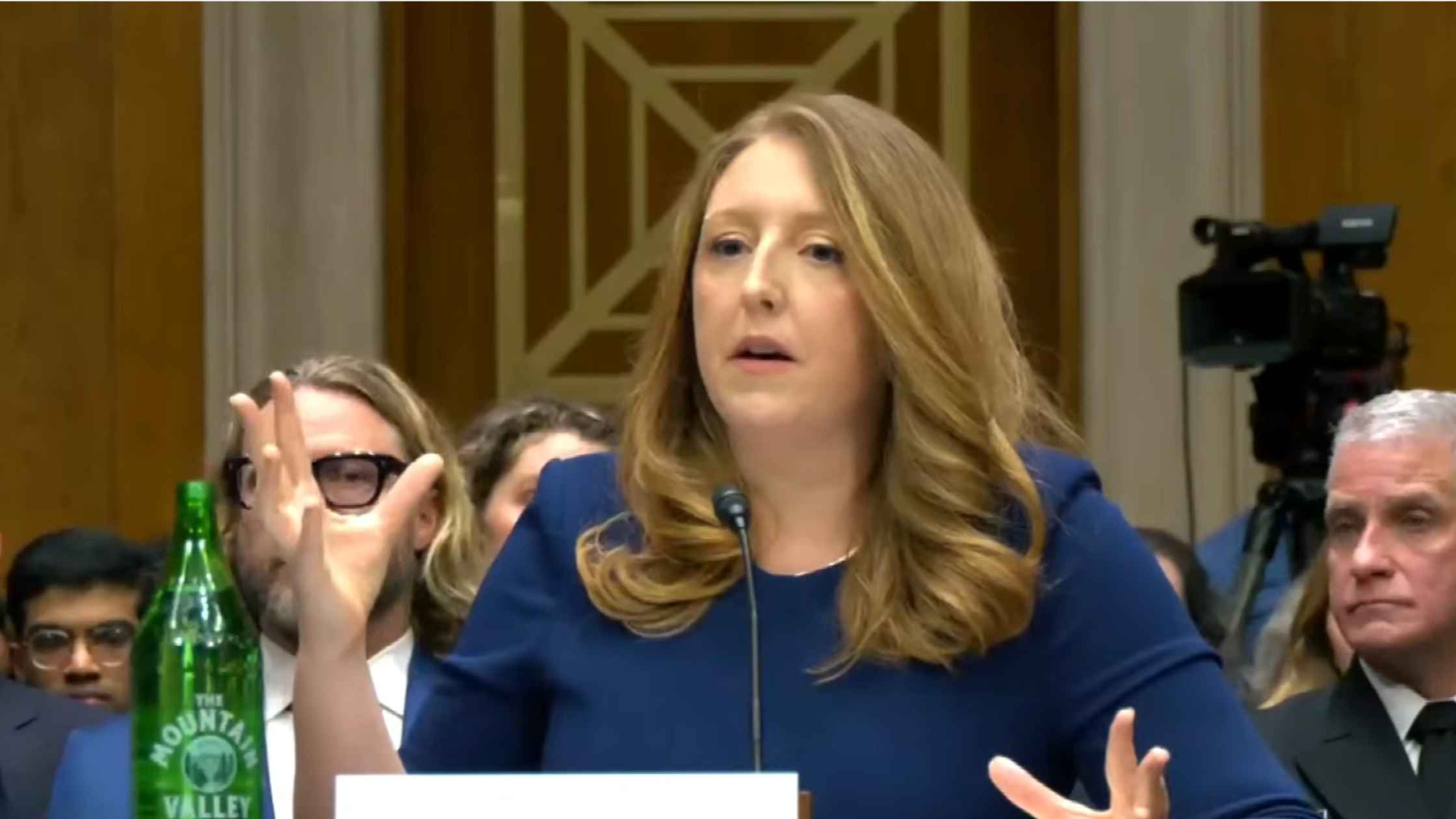
The Senate Committee on Health, Education, Labor and Pensions will please come to order. Hey, Dr. Means.
Dr. Casey Means (00:06):
Hello.
Senator Cassidy (00:06):
You came in just as I walked away. So greetings, I'm sorry to have missed shaking your hands down there. Thanks for appearing before the committee and for your willingness to serve the people of the United States in this administration. And by the way, congratulations on your baby.
Dr. Casey Means (00:22):
Thank you.
Senator Cassidy (00:22):
It gives you a great perspective on life and I trust all is well. And for the diocese on both sides, we will take a break at 11 to allow Dr. Means to care for her child. So just a 15-minute break at 11, just for that.
(00:43)
You'll be the nation's doctor. We've got some serious health problems in our country. High rates of mental health and substance use disorders, widespread chronic disease, re-emergence of deadly outbreaks, which are preventable by safe effective vaccines, but unfortunately, there's been a lot of promotion of vaccine skepticism. At the same time, many Americans have lost faith in public health leaders since the Covid-19 pandemic. And families can be confused by the whiplash of conflicting medical guidance. President Trump is committed to rebuilding trust in our health institutions and restoring radical transparency and that should be how we protect children's health.
(01:27)
If confirmed, Dr. Means, you'll have an important platform as the nation's doctor, Americans will look to you for clear medical guidance and direction to protect and promote family's health. Your writings express concern regarding chronic disease, and you speak to mothers and their families. The Surgeon General needs to be an effective and truthful communicator, a calming voice of reason, a steady hand of experience at a time when so many, for whatever reason, saw distrust and confusion. The Surgeon General must be someone who can execute on President Trump's commitment to restoring confidence in public health and to assure the American people that our institutions are making science-based decisions rooted in data that puts families health's first. This is especially important as HHS undergoes substantial personnel and policy changes. Dr. Means, it should be your mission and the mission of every HHS official to restore stability and assure Americans that protecting health is the top priority. I look forward to learning more about your public health priorities and views. With that, I recognize Senator Sanders.
Senator Sanders (02:37):
Thank you Mr. Chairman, and thank you Dr. Means for being here. Congratulations on your baby.
Dr. Casey Means (02:43):
Thank you.
Senator Sanders (02:46):
Today we are considering President Trump's nominee to be the next Surgeon General of the United States. The Surgeon General is considered the nation's doctor, a trusted leader who tells the American people the truth about science and medicine. Previous Surgeon Generals have warned the American people over the years about the dangers of smoking, drunk driving, loneliness, providing recommendations based on scientific evidence, not ideology. Dr. Means, you have made it clear to us that you believe it's time to "Make America healthy again." That is a great slogan that I expect that everybody up here agrees with. In America today, we have a very unhealthy society and there are a lot of reasons for that. The Chairman mentioned some of them. But perhaps the most important reason, is that we have a healthcare system that is broken, that is dysfunctional, and in fact, is very cruel.
(03:50)
In America today, we spend over $5 trillion a year on healthcare. Believe it or not, that is more than $15,000 for every man, woman, and child in our nation, twice as much per person of nearly any other major country. And yet, despite that huge expenditure, we remain the only major nation on earth that does not guarantee healthcare to all people as a human right. As a result, over 85 million Americans are uninsured or underinsured. More than a half a million Americans go bankrupt due to medically related debt and 68,000 Americans die every year because they cannot afford to see a doctor. If anybody in the world thinks that that is a rational healthcare system, you're living on another planet. In terms of life expectancy, we live four years shorter on average than people in other countries. As unacceptable as that is, if you are working class in this country you can expect to die seven years earlier on average, than if you're in the top 1%.
(05:02)
Further, as bad as our overall healthcare system is, our primary healthcare system is even worse. Today, tens of millions of people live in a community where they cannot find a doctor, a dentist, or a psychologist, even when they have decent insurance, while others wait months to get seen. Yes, Mr. Chairman, we must make America healthy again. Unfortunately, the problem is that since coming into office, President Trump and Secretary Kennedy have done the exact opposite. As a result of massive cuts to Medicaid and the Affordable Care Act, 15 million people will be losing the healthcare they had. Studies suggest that when you throw 15 million Americans off of healthcare and make over a trillion dollars in cuts to Medicaid in the ACA, some 50,000 of our fellow Americans will die unnecessarily each and every year. Secretary Kennedy and the Trump administration continue to spread dangerous conspiracy theories about vaccines, making it harder for Americans to protect their children from deadly diseases.
(06:10)
I'm having a hard time understanding how any of this will make America healthy again. In my view, we need a Surgeon General who has the courage to take on President Trump and Secretary Kennedy and say, "No, it is wrong to throw 15 million off of healthcare. It's wrong to double premiums for 20 million more Americans. It's wrong to spread misinformation about vaccines." And that's just not me talking, that's precisely what six former Surgeon Generals, three Republicans and three Democrats who served under Trump, Obama, George W. Bush, Clinton, and George H.W Bush, have told us in an op-ed they wrote in the Washington Post. That's what these guys wrote.
(06:50)
A few months ago they said, "The actions of Health and Human Services Secretary Robert Kennedy Jr. are endangering the health of the nation. He has rejected science, misled the public and compromised the health of Americans." That is Republicans and Democratic former Surgeon Generals. So Mr. Chairman, there is a lot to be discussed, but I have very serious questions about the ability of Dr. Means to be the kind of Surgeon General this country needs. Thank you very much.
Senator Cassidy (07:21):
Dr. Marshall will introduce the nominee.
Dr. Marshall (07:25):
Thank you Mr. Chairman. I'm certainly humbled and honored today to introduce Dr. Casey Means. I want to thank you for joining us here this week, I'm especially glad we're able to hold this meeting, which was long overdue. But being in labor is one of the best excuses we've had to delay a hearing, so congratulations to your family. We hope baby boy Phoenix, 17 weeks old today, is doing great, and again, we appreciate you being here.
(07:52)
As my colleagues have already said, today, nearly eight in 10 adults representing almost 200 million people in this country, live with at least one chronic disease, obesity, diabetes, heart disease, hypertension. Our children, the pride of this nation, the situation is equally alarming. Approximately 20% of our youth are obese. One in three adolescents at age 12 to 17 have pre-diabetes, one in three. And when it comes to our mental health, at least one in five American adults, 60 million people, experience some form of mental illness each year. Those are epidemic numbers.
(08:32)
We need a Surgeon General, the nation's doctor to guide us back to health, mobilizing science-based strategies to prevent disease, promote wellness, and address these epidemics head on. The Surgeon General serves as our country's chief health educator. But more than an educator, a coach, a cheerleader, providing evidence-based guidance to improve health and respond to crisis while leading the US Public Health Service Commission core and advising on key policies. Over the course of this process, I've truly enjoyed reading Dr. Means' books, her publications, and getting to know her and hearing her thoughtful vision for improving the health of Americans.
(09:12)
Dr. Casey Means is uniquely qualified, Stanford-trained physician who began surgical training at Oregon Health and Science University, where she excelled in clinical performance and patient care for underserved populations, before leaving that traditional system. Like many of us, she was disillusioned by its focus on treating symptoms versus addressing the real causes. She left it to champion preventive metabolic health. She co-founded Levels Health, using innovative glucose monitoring to empower metabolic health insights and authored the best-selling book Good Energy, which I'd recommend everybody on this committee to read to better understand exactly who she is. She offered science-based strategies to prevent chronic illnesses through lifestyle changes.
(09:58)
Dr. Means brings a forward-thinking vision focused on prevention, innovation, and patient empowerment. She's a proven communicator. She's appeared on over 200 podcasts. She's a faculty course director at Stanford. She's been featured in articles in the Wall Street Journal, Forbes, New York Times. She inspires, educates on complex health issues. She's poised to shift us from reactive sick care to proactive health care, emphasizing metabolic health to truly make America healthy again. Her entrepreneurial spirit and clinical background would drive solutions prioritizing outcomes over bureaucracy, aligning with the make America healthy movement again.
(10:39)
So that's my formal introduction from my heart. From my heart. Go back to our childhood and in my childhood, in the nineteen-sixties, everybody smoked. Everybody did. But a Surgeon General, Dr. Luther Terry under LBJ, had the courage to stand up and say smoking causes lung cancer. He wasn't able to finish the job, it was then under President Nixon that the next Surgeon General [inaudible 00:11:05]. And that's what I think Dr. Means can be. I think that she [inaudible 00:11:11], no one can deny that. And like I said before, we need a Surgeon General who's more than an educator, we need a coach, we need a communicator, we need a cheerleader to address these chronic diseases. And I believe that Dr. Casey Means is the person for the job. Thank you, Chairman.
Senator Cassidy (11:30):
Thank you. Dr. Means.
Dr. Casey Means (11:33):
Thank you. Good morning, Chairman Cassidy, Ranking Member Sanders and members of the Senate Health Committee. I want to thank President Trump for nominating me to serve as Surgeon General and for Secretary Kennedy for his support. Thank you for also being willing to postpone this hearing when I went into labor five hours before the hearing started in October. Our precious baby boy was born on the hearing day. As a physician, I have always been inspired that the root of the word healing, means to return to wholeness. Nothing is more urgent than restoring wholeness for Americans, physically, mentally, and societally. We are now the most chronically ill high-income nation in the world. We live shorter, sicker lives than peer high-income nations. Today's children are projected to live shorter, sicker lives than their parents. We spend trillions annually on reactive sick care. Nearly 150 million Americans are on federal healthcare programs and we spend $50 billion per year on research. Yet outcomes are worsening and disparities are widening.
(12:46)
Our nation is angry, exhausted, and hurting from preventable diseases. Rates of high blood pressure, many cancers, autoimmune conditions, type 2 diabetes, mental health disorders, dementia, neurodevelopmental challenges and youth suicide have all increased in the past two decades. This public health crisis is touching every American family. It is robbing our children of possibility, our workforce of productivity, and our nation of security. It strains our federal budget and dims hope for millions. We must confront this epidemic through a vision grounded in science, dignity, shared humanity, and a respect for freedom, not politicization and division. Public health leaders must address the evidence-based, modifiable drivers of chronic diseases, which include ultra-processed foods, industrial chemical exposure, lack of physical activity, chronic stress and loneliness, and over-medicalization.
(13:51)
I've been asked to help our nation get healthy and answer the call of millions, especially mothers who are begging for transparency and support. That is what I'm here to do. I believe that every American shares a core yearning to thrive and help their families thrive. But we are asking people to make healthy choices in environments that are squarely structured against them. Good policy and education can make health easier, more affordable and more accessible. I know our current leaders at HHS and across the federal government are committed to the ambitious policies outlined in the MAHA strategy released last year, that focuses on advancing research, aligning incentives, increasing public awareness, and fostering private sector collaboration to end the chronic disease epidemic. Specific efforts are already underway to fund and promote more whole healthy food for Americans, address financial conflicts of interest in our agencies, fund research focused on disease prevention and reversal, and make institutions accountable to measurable health outcomes for all Americans.
(14:57)
President Trump and Secretary Kennedy have invited a mature, candid, grand conversation about how our medical education and fixing perverse incentives can pull us back from the brink. And for this, I am profoundly grateful. My professional history has prepared me to meet these very complex times as an innovative, unifying, and practical leader focused on reversing chronic disease. Over the past 15 years, I have treated thousands of patients in clinics and operating rooms. I have run my own medical practice and co-founded a health technology company that empowers individuals with metabolic health data to address blood sugar dysregulation, a problem now affecting over 50% of American adults and 30% of teens. In this role, I recruited leading researchers from Yale, UCSF, Brigham Young University, Cleveland Clinic and more, to support this effort. And the company launched a 10,000 participant academic industry research collaboration on early metabolic disease detection. I've held biomedical research positions at the National Institute of Health, Stanford University, New York University, Oregon Health and Science University, and published this biomedical research in leading medical journals.
(16:19)
I was recruited as a faculty course director at Stanford University, where I taught undergraduate and graduate students on nutrition and health. I have served as an associate editor of an international medical journal focused on prevention and disease reversal. I have spoken internationally on chronic disease and wrote one of the most successful health books of the decade, outlining a vision for reversing this epidemic through personal empowerment, culture change and policy reform. I graduated from Stanford University with honors and from Stanford Medical School, where I was inducted by unanimous faculty vote into the Honor Society for Patient Care.
(17:02)
In conclusion, mental and physical health are unraveling from shared root causes that we can fix. Preventable heart disease, our number one killer in men and women, is emblematic of a nation with a broken heart. Diabetes, representing cellular energy collapse, is draining our human potential. Dementia, depression and neurodevelopmental decline, reflects a society losing its mind. Our bodies are telling us this current path is totally unsustainable.
(17:38)
There is another way, a path that unites rigorous science with reverence for our miraculous bodies and planet, and brings Americans and our medical institutions together around actual healing and prevention. This path is also economically sound, with the potential to save trillions of dollars annually. As I sit here in the early months of motherhood, I feel profound awe at the privilege we have as adults to create a better world for future generations. And that is why I'm here. As Surgeon General, I would call on every American and the public health service to join in a great national healing, one that halts preventable chronic disease, makes healthy living the easiest choice-
Senator Cassidy (18:25):
Yeah.
Dr. Casey Means (18:26):
Honors the body's connection to the environment and puts America back on the road towards wholeness and health. I look forward to answering your questions, thank you.
Senator Cassidy (18:36):
Thank you Dr. Means. I'll start. If confirmed, you'll be the nation's doctor, and to better understand your best medical opinion on various topics, I'll ask you some things that have been of concern to this committee. I have seven things to ask in five minutes, so please be tight. They won't be trick questions. Do you believe that the abortion pill, Mifepristone, is safe and should be prescribed without an in-person visit with a physician?
Dr. Casey Means (19:10):
Thank you so much, Senator Cassidy, for your question. [inaudible 00:19:15] the hearing, [inaudible 00:19:21], that every medication [inaudible 00:19:23] benefits, I think that all patients need to have a thorough conversation with their doctor and have true informed consent before taking any medication.
Senator Cassidy (19:31):
Should there be an in-person visit required?
Dr. Casey Means (19:37):
The question of whether it should be an in-person visit is out of the purview of the Surgeon General's office. But I do believe that every patient needs to have a very thorough conversation with their doctor before taking any medication. Unfortunately, in our current healthcare system, because of how overburdened doctors are, this often doesn't happen, whether it's in-person or online.
Senator Cassidy (19:57):
Do you believe that birth control that's safe, should be widely accessible, including perhaps without a prescription?
Dr. Casey Means (20:04):
I absolutely think that oral contraception should be widely accessible. Just as I said with Mifepristone, I believe that, especially when it comes to oral contraceptives, we need to have patients having a conversation with their doctor about risks and benefits. Like all medications, oral contraceptions do have significant risk and we need to make sure that women are empowered with information and informed consent before getting on a medication that's often prescribed for several years without follow-up.
Senator Cassidy (20:35):
Tragically, next question, we've had two children die from measles in West Texas. We now have an outbreak of like a thousand children almost, in South Carolina. You're a mom, we're on the verge of losing our measles elimination status. Would you encourage other mothers to have their children vaccinated against measles with the MMR vaccine?
Dr. Casey Means (21:00):
Like you, I'm a physician, I believe vaccines save lives. I believe that vaccines are a key part of any infectious disease public health strategy. And I would work with you, the CDC, the NIH, ACIP, FDA-
Senator Cassidy (21:14):
But would you encourage mothers to vaccinate their children with the MMR vaccine, seeing how we've had children die and this outbreak in South Carolina?
Dr. Casey Means (21:22):
I'm supportive of vaccination. I do believe that each patient, mother, a parent needs to have a conversation with their pediatrician about any medication they're putting in their children's bodies.
Senator Cassidy (21:33):
You're the nation's doctor, would you encourage her to have her child vaccinated?
Dr. Casey Means (21:36):
I'm not an individual's doctor and every individual needs to talk to their doctor before putting a medication in their body. I absolutely am supportive of the measles vaccine, and I do believe vaccines save lives and are an important part of the public health strategy.
Senator Cassidy (21:49):
We've had a tough flu season this year, would you, as past Surgeon Generals have, encourage Americans to get vaccinated with the flu vaccine?
Dr. Casey Means (21:58):
At the risk of sounding repetitive, I do think it's very important as a physician and to rebuild trust in public health, to make sure that patients are encouraged to have informed consent with their doctor before getting any medication. I believe vaccine save lives. I believe they're an important part of public health. I also do not want to not encourage patients to have a conversation with their doctor. I think it's incredibly important, and informed consent is going to be part of building trust in public health.
Senator Cassidy (22:29):
We've had an outbreak of whooping cough in Louisiana, a vaccine-preventable disease, children have actually died from it. Think about it. A child about the age of your child dying from a vaccine-preventable disease. And some have been scared to vaccinate their children because they've been told incorrectly that vaccines cause autism. Do you believe that vaccines, whether individually or collectively contribute to autism?
Dr. Casey Means (22:56):
Senator Cassidy, you're a physician, I'm a physician, the reality is that we have an autism crisis that's increasing. And this is devastating to many families, and we do not know, as a medical community, what causes autism. The administration has just committed a huge amount of funding to look at the exposome of all environmental factors that could be contributing to autism. And until we have a clear understanding of why kids are developing this at higher rates, I think we should not leave any stones unturned.
Senator Cassidy (23:29):
There's been a lot of evidence showing that they're not implicated, do you not accept that evidence?
Dr. Casey Means (23:34):
I do accept that evidence. I also think that science is never settled and I think that the effort to look at comprehensive cumulative exposures of our exposome into what is causing autism, is important and I look forward to seeing those results and sharing the best public health information with the American people.
Senator Cassidy (23:53):
Well, I got through five out of my seven, so thank you for cooperating. Senator Sanders.
Senator Sanders (23:59):
Thank you. And like the chairman, I've got a lot of questions and a short period of time. I enjoyed your opening remarks and I think you're right, this is a country that is sick in many ways. We need to focus on disease prevention rather than spending a huge amount of money on tertiary care. And I've enjoyed and appreciated some of the remarks you have made in the past. So let me just see if we're on the same page here.
(24:23)
When I was sitting where Senator Cassidy is now, I fought hard to have much more substance of labeling on junk food. In fact, it's my view that we should not have food manufacturers selling junk TV ads. My understanding is you have come out against junk food ads on television, is that correct?
Dr. Casey Means (24:48):
Yes.
Senator Sanders (24:48):
Can you just take 30 seconds to elaborate that? Would you use your position to ban junk food TV ads?
Dr. Casey Means (24:56):
Thank you so much, Senator Sanders. And I agree with you completely. I think there is so much that we agree on on these issues. Just to be clear, the Surgeon General's office does not have the purview to ban this-
Senator Sanders (25:08):
But you have a voice.
Dr. Casey Means (25:10):
Absolutely. And that's a voice I would absolutely lend to talking about the dangers of ultra-processed foods and getting these advertisements off TV.
Senator Sanders (25:16):
All right.
Dr. Casey Means (25:17):
This has long been a part of my message, I talk about it in my book and-
Senator Sanders (25:19):
Senator Marshall mentioned earlier ago, the crisis we have in obesity, childhood obesity, and you have these manufacturers selling sugar-laden products that cause obesity.
Dr. Casey Means (25:30):
Yes.
Senator Sanders (25:30):
So you'll speak out and do I understand you view is, you would fight to ban TV ads of junk food.
Dr. Casey Means (25:38):
I think you will be frustrated by how much I will be talking about ultra-processed foods.
Senator Sanders (25:42):
Good. I won't be frustrated, I'll be delighted. All right, let me ask you another area that we may have some agreement. As you know, the United States and New Zealand are the only two countries in the world that allow the pharmaceutical industry to advertise on TV. I believe we should ban those ads. How do you feel?
Dr. Casey Means (26:01):
I agree with you.
Senator Sanders (26:01):
Okay.
Dr. Casey Means (26:06):
I mean, just to elaborate. As you know, but for anyone who might be listening, about 65 to 70% of the calories that our children are eating are ultra-processed franken foods made in factories that are so disconnected from their origin source and nutritional value, that we're putting just nutritionally devoid food in our children. And then we wonder why we have an obesity crisis in children and why chronic diseases are rising as early as-
Senator Sanders (26:31):
No, you're right.
Dr. Casey Means (26:31):
... Toddler years. So-
Senator Sanders (26:32):
No, that's right.
Dr. Casey Means (26:34):
My vision in this role, is to get more whole healthy foods on American plates.
Senator Sanders (26:38):
And we spend a fortune, I mean-
Dr. Casey Means (26:39):
A fortune.
Senator Sanders (26:40):
We make people sick and then we spend a fortune trying to keep them alive. All right, those are important areas of agreement and I appreciate that. But I want to pick up on an issue that the chairman raised and it's a terribly important one, and that deals with vaccines. And I think the answers you gave us were a little bit political and not to the point. The American Medical Association, I don't know if you're a member of it or not, is the largest professional association of physicians, representing over 270,000 doctors. And they wrote in November, that, "An abundance of evidence from decades of scientific studies, shows no link between vaccines and autism." In contrast, Secretary Kennedy has said, "I do believe that autism does come from vaccines." Dr. Means, who is right. Is the AMA right, is the scientific community right, or is Secretary Kennedy right?
Dr. Casey Means (27:39):
As I said to Senator Cassidy, we have a situation where autism is rising.
Senator Sanders (27:47):
It is.
Dr. Casey Means (27:48):
This is a huge problem.
Senator Sanders (27:49):
It is. But we don't want conspiracy theories to be-
Dr. Casey Means (27:53):
Absolutely. I 100% agree with you. And also, as a biomedical researcher and physician, I am not going to sit here and say that we should not study something in the future. It's not a political answer.
Senator Sanders (28:03):
We should study everything.
Dr. Casey Means (28:05):
We should study the different factors that may be causing [inaudible 00:28:09].
Senator Sanders (28:10):
I agree. But you have scientific evidence, the overwhelming body of scientific evidence says vaccines do not cause autism.
Dr. Casey Means (28:19):
So just to be very clear, vaccine advocacy or any anti-vaccine rhetoric has never been a part of my message. I don't mention the word vaccine in my book. This is not a part of my core message. I am not here to complicate the issue on vaccines. And also, I, as a physician, am very careful with my words, and I don't think it's responsible to say that we're not going to study-
Senator Sanders (28:43):
All right.
Dr. Casey Means (28:43):
When kids are getting many medications.
Senator Sanders (28:45):
All right.
Dr. Casey Means (28:46):
I think it's important to just keep it on the table.
Senator Sanders (28:48):
Last question, I'm sorry, running out of time. We are the only major country on earth that does not guarantee healthcare to all people as a human right. Dr. Means, is healthcare a human right? Should the United States join every other major country and say to everybody, whether you're young, old, rich or poor, you are entitled to healthcare, as a human right? Yes, no, maybe?
Dr. Casey Means (29:10):
My focus is on ensuring that Americans have access to the best healthcare in the entire world, which as you talked about, as I talked about, as everyone who's spoken has talked about, is pretty much the opposite of what we have right now. We spend 2x every other country in the world and we have the worst outcomes.
Senator Sanders (29:25):
I agree.
Dr. Casey Means (29:25):
That is what the-
Senator Sanders (29:26):
But is healthcare a human right, will you join me in fighting for a national healthcare program?
Dr. Casey Means (29:32):
I will be by your side trying to get Americans access to the best healthcare in the world.
Senator Sanders (29:40):
Okay. Thank you very much.
Senator Cassidy (29:43):
Senator Mullin.
Senator Mullin (29:45):
Thank you. Thank you Chairman [inaudible 00:29:49]. Thank you Chairman, my green light was on, I thought my mic was on. I want to address a couple of things. During the Ranking Member's opening statement, he talked about misinformation coming from this administration. And I just want to point out that the Biden Surgeon General, Dr. Murthy, a court actually ruled against him in 2023, the Fifth Circuit Court, for trying to censor free speech on social media that's misinformation. And so for us just to throw out an accusation like that, with no evidence, when the Ranking Member was completely silent when that took place, it's really some hypocrisy there. When we start talking about healthcare not being affordable, Ranking Member and I actually agree on that. The problem is you supported the same tools that got us to where healthcare is unaffordable. Because ACA, Affordable Health Care, which is completely unaffordable, has risen three times faster than inflation itself. Yet we still support it, not we, you, the Democrats still support [inaudible 00:30:59].
Senator Sanders (30:58):
No, I support a national healthcare program-
Senator Mullin (31:00):
Yeah.
Senator Sanders (31:00):
Which will cut the cost of healthcare per person.
Senator Mullin (31:01):
I'm sorry, it's my time.
Senator Sanders (31:02):
But you're attacking me.
Senator Mullin (31:04):
No, I'm pointing out facts.
Senator Sanders (31:04):
You're going to attack me, I'm going to respond.
Senator Mullin (31:06):
No, I'm pointing out facts. You can say what you want, I'm just pointing out facts. The fact is-
Senator Sanders (31:10):
No, you're pointing out lies.
Senator Mullin (31:11):
Is that it has risen three times faster. And we know it yet, we still want to sit here and defend it. The Ranking Member wants to talk about all the death that is supposedly going to be happening because of President Trump and Secretary Kennedy, because how dare they look at a healthcare system that is broken and unaffordable and try to make changes. But yet the definition of insanity is what? Doing the same thing expecting different results, so we should just sit here and accept it? And how dare we look into vaccines, to just simply look to see if maybe vaccines, may be a partial cause to autism, when it's rising at a rate faster than any country in the nation? How dare us look at science?
Senator Mullin (32:00):
My goodness, science is supposed to be perfect? I thought science was always supposed to be studied. I'm for looking into it. As a father of six kids, yeah, I want to look into it. I want to know what's causing it and I will turn over every stone. And so Dr. Means, thank you for saying, "I want to turn over every stone." Good on you. I'm not a doctor, I'm not sitting here trying to say we shouldn't do something. I'm saying let's go after it. Let's look at it. Let's question what we're doing. Let's look at the healthcare system. We can agree on that one, I just don't want to socialize it, but we can agree that it is absolutely not affordable. 100% not affordable, yet it was supposed to be affordable. That's what we were sold by Obamacare.
(32:40)
So how about we work together and say, hey, scrap ACA. Admit it doesn't work, admit you guys made a mistake and let's work at something with President Trump to make affordable healthcare healthy and affordable for everybody, but there's zero chance you guys could do that. Zero chance. Yet everybody we bring up here, you guys chastise for trying to make changes. God forbid we change and try to fix our broken system. Anyways, I ranted too long. Let's talk about some-
Senator Sanders (33:05):
Yes, you did.
Senator Mullin (33:07):
I'm sorry I didn't ask your opinion on that.
Senator Sanders (33:08):
Got it.
Senator Mullin (33:09):
And if I cared about your opinion, I would ask you, but I don't care about your opinion. You're part of the system, you're part of the problem. You've been sitting here longer than I've even been alive. This is your problem. You should have fixed this a long time ago. You've been rel on it so long, what have you been doing?
Senator Sanders (33:21):
I've decided not to run for surgeon general. You're the nominee. I've decided not to accept that nominee.
Senator Mullin (33:28):
That is definitely something we would never accept. Ma'am, what's your passion about healthcare? What brought you into this?
Dr. Casey Means (33:39):
Thank you, Senator Mullin. For all of us, I'm just going to take a deep breath. My vision for surgeon general and for the future of America is to get more healthy whole food on American's plates and to work to systematically encourage our healthcare system to focus on the root causes of why we are sick and not just reactive sick care. This is my passion, this is why I was put on this earth. We have an incredible healthcare system. It's amazing, it is produced miracles. If we have an acute issue, absolutely you want to be in America to get that fixed, but 90% of healthcare costs are now going to chronic diseases. And frankly, having practiced, seen thousands of patients, worked in this system for almost a decade in clinical medicine, it's not the focus of what we as doctors are incentivized to spend our time on. It's not what's reimbursed.
(34:42)
And this is a problem. Medical education doesn't focus on these modifiable root causes of diseases. The science is showing us through amazing emerging work in systems biology and network biology that the physiologic causes of the vast majority of diseases that are taking American lives and torturing, shortening our lives even in our children are connected by shared physiology and shared root causes. We need to upgrade the paradigm of the American healthcare system to educate and treat in that way. It is by far the most efficient way to treat, of course, because if we're addressing shared root causes, we're going to be able to stop the whack-a-mole medicine that's not working for us and that is so costly. And so my passion is to help work with the AMA, work with medical schools, work with Democrats, Republicans, all sorts of agencies across the government to ensure that we really move the needle on shifting the American health court system towards root causes. I know we can do it, there's political will, it's what Americans want. Even the medical schools are on board, but we need a vision to get there.
Senator Mullin (35:47):
Thank you
Senator Cassidy (35:49):
Senator Murray.
Senator Murray (35:52):
Thank you, Mr. Chairman. Thank you, Dr. Means for being here. Let me start with this. You called birth control pills and I'm going to quote, " A disrespect life." And you said Americans, quote, "Use birth control pills like candy." You also claimed contrary to establish science that hormonal birth control has, quote, "Horrifying health risks for women." Now here are the facts. There are 18 FDA-approved contraceptive methods, both hormonal and non-hormonal and there are decades, decades of evidence showing that every one of these birth control methods is safe and effective. So I wanted to ask you, help me understand, should women trust the FDA which approved all 18 methods of birth control after a very rigorous look at the evidence or should they trust your statement that there are horrifying health risks to birth control, which contradicts that evidence?
Dr. Casey Means (36:48):
Thank you, Senator Murray, for your question. I'm curious if you're aware of what the side effects of hormonal contraception are?
Senator Murray (36:58):
I'm curious if you are with the FDA that went through all of these and rigorously looked at them or as surgeon general, if you're going to tell the truth to the American people?
Dr. Casey Means (37:09):
I absolutely believe these medications should be accessible to all women. And also all medications have risks and benefits and in our current medical climate with the burden on doctors, doctors do not have enough time for thorough informed consent conversations. Some of the horrifying side effects of birth control that I have mentioned include blood clots and stroke risk in women who have clotting disorders, who are smokers, who have obesity.
Senator Murray (37:35):
So is it general?
Dr. Casey Means (37:36):
No, it's not general. I'm very careful with my words. And when I say those comments which are taken out of context, I'm speaking about particular women that can be heard if there is not informed consent about their medical history, their lifestyle exposures and their family history. I want those women, and I know you do too, to be able to have a thorough conversation with their doctor and know whether they are at higher risk for side effects when prescribed the medication.
Senator Murray (37:59):
Saying that is one thing, but saying on different shows that birth control pills are a disrespect of life is very different. It's very different.
Dr. Casey Means (38:09):
I am passionate about women's health and I think it is disrespectful to women-
Senator Murray (38:14):
"People use to women birth controls like candy," is very different than what you just said.
Dr. Casey Means (38:20):
We prescribe a huge amount of hormonal contraceptive and I do not believe most of those conversations have informed consent because of the pressures that doctors are under because of our broken healthcare system. I want what's best for women, as do you. And I want every woman who could be at risk side effect to know-
Senator Murray (38:38):
I just have two minutes left and I have other questions. Let me move on. Thank you
Dr. Casey Means (38:39):
... if a woman died from a stroke or a blood clot because they did not have a thorough conversation-
Senator Murray (38:43):
Dr. Means, thank you for your answer. You made that clear. Let me go to another question. Tracy Beth Hogue, she's an anti-vaccine skeptic. She was elevated by the Trump administration to serve as the top drug regulator at FDA. She made comments last week casting doubt on the safety of RSV vaccines for baby. As you sure know, RSV can be deadly even for healthy full-term infants. Do you believe that Dr. Hogue is wrong to question the safety of RSV vaccines?
Dr. Casey Means (39:15):
I have not read that article or seen that quote. I would need to know what she said before I commented on that.
Senator Murray (39:21):
Well, you do know that RSV is the leading cause of hospitalization for infants?
Dr. Casey Means (39:26):
I have a 17-week-old, and I'm very aware of that.
Senator Murray (39:28):
If you hear her statement as surgeon general, would you contradict it?
Dr. Casey Means (39:32):
I certainly have absolutely no issue having very frank conversations with anyone in the administration if I believe that their statements are misguided in some way or not fully informed, that's not a conversation I would have publicly first, I would have a private and direct conversation with anyone in the administration if I felt that patients were at risk because of views.
Senator Murray (39:55):
And I also want to ask you about maternal health. Mental health conditions are the leading cause of maternal death in the US, including suicide and overdose deaths. In her comments last week, Dr. Hogue, same woman, also expressed concern about the safety of the antidepressants during pregnancy. Specifically she called out SSRIs the most commonly prescribed type. Do you believe that SSRIs are dangerous for pregnant women?
Dr. Casey Means (40:25):
I don't want to be a broken record here, but I do believe that every medication has risks and benefits and you need to have a nuanced conversation with your doctor before starting a medication. That is I think the most responsible position for any doctor to share.
Senator Murray (40:40):
Well, strong evidence has shown that SSRIs are safe in pregnancy. Most do not increase the risk of births effects-
Dr. Casey Means (40:47):
Certainly. Certainly.
Senator Murray (40:47):
... but untreated depression in pregnancy puts women at risk.
Dr. Casey Means (40:51):
And I agree with you, but I don't think it's responsible to make a blanket statement for all Americans.
Senator Murray (40:57):
Okay. Well, if confirmed as surgeon general, it will be your job to give accurate and up-to-date health information to the American people. I assume you will take that responsibility seriously.
Dr. Casey Means (41:04):
I will. I absolutely do. And I also believe that the American people are looking for a more nuanced conversation about health and I believe that that will help restore trust in public health.
Senator Murray (41:15):
Thank you.
Senator Cassidy (41:16):
Coach Tupperville.
Senator Tupperville (41:18):
Thank you, Mr. Chairman, Dr. Means, thanks for being here, congratulations on expanding your family.
Dr. Casey Means (41:23):
Thank you.
Senator Tupperville (41:25):
And I know it's an exciting time for you. Also want to thank assistant secretary of health, Dr. Christine for being here. Thank you for your service. Dr. Means, I've listened to you and your brother Callie and I know he's here. I don't know how many 10s and 10s of podcasts I've listened to, I learned a whole lot because I grew up in the health business, I was a coach, 35 years is all about nutrition. So the question I want to ask you is how do we get around this? I talk to people in the healthcare business. And in the medical field when we train our doctors, we don't teach anything about nutrition, everything's about a priority and those priorities are fine. But we need to teach our doctors and nurses about nutrition, about what to put in their body. This epidemic we have going on chronic disease as we've all talked about is out of control and getting worse. So how do you prioritize that?
Dr. Casey Means (42:25):
Thank you so much, coach. And I really, really enjoyed getting to know you throughout this process. Thank you. This is so key what you're talking about. Reforming medical education to focus on root causes and one of the key root cause modifiable factors of chronic diseases and nutrition as we all know. There has been incredible momentum already in the administration towards making this possible. Starting with the dietary guidelines for America, which came out about a month ago. This is the first time we've had a full-throated denunciation of ultra-processed food. And I think this is historic. It's historic when the federal government says that out loud. What that is going to do is impact medical education. It's going to impact procurement regulations for billions of meals served and paid for by federal dollars every year. We're going to see more real food, less ultra-processed food going into the national school lunch program, prisons, hospitals, and other federally-funded organizations.
(43:25)
I think it's a point that gets lost a little bit. That by just changing the dietary guidelines, it is going to trickle down into billions and billions of healthier meals for Americans. So I think that's step one. I think secondarily we've got Dr. Marty Makary, an absolute hero, who is approaching the grass loophole, the generally-recognized safe loophole through the FDA. So this is a program where companies have essentially been self-reporting the safety of the ingredients that they're putting in their foods with very, very little oversight, which has led to literally thousands of chemicals in our food system that we don't know what they are or what they're doing to our body. By addressing this loophole and starting to have much more scrutiny about what's going into our food, this is going to trickle down to affect medical education, affect culture, affect what companies are putting in the food.
(44:18)
The zeitgeist is going to shift about a lot of this because we're going to start to have transparency about what is even in our food system. Additional things are happening that are just incredible around food. There was just $700 million put forward towards regenerative agriculture. So we're going to have more investment in research and studying of soil health, water quality, nutrient density of food, and how that's affecting our health. That's going to trickle into medical education. There's a whole person health initiative at the NIH that's being put forward by Dr. Jay Bhattacharya, who is doing an incredible job. That's going to study the system's biology perspective of the body, not isolated silos, but the whole body health. And when we look at the body as a system like that, nutrition has to play into it.
(45:03)
So this is just four or five of some of the stones that are being moved right now that all will lead to nutrition being a bigger part of our healthcare system. I think where I can help on that is elevating the work that's being done, having conversations again across the whole medical community to help us in a really positive and unifying way move towards a more root cause approach to health.
Senator Tupperville (45:26):
You think that will be a hard item to push in our medical schools about nutrition? It shouldn't be.
Dr. Casey Means (45:32):
I've had conversations with a number of deans of medical schools who are very, very passionate about this issue, they want to change. It feels hard because we have this behemoth healthcare system that operates a certain way. But right now there's cultural momentum, there's political will, and I think the time is now to make generational changes that are going to have a huge impact on all Americans. And I also think it's an issue that all of us can work on together. It's positive, it's unifying, and I think that's what we need right now for Americans.
Senator Tupperville (46:05):
It's all about educating people and sometimes people don't want to be educated, but I think the surgeon general and our whole Department of Health and Human Services, I think everybody's on board with that. And if we do that, what Senator Sanders was talking about about the 5 trillion a year we spend. We can't afford to do that anymore. And the root cause is education, we have to educate people. Thank you very much.
Senator Cassidy (46:32):
Senator Baldwin.
Senator Baldwin (46:33):
Thank you, Mr. Chairman and thank you Dr. Means for being here today. You spoke in your opening statement about building trust, building trust in public health. And you also made I think a passing reference to conflicts of interest within agencies in HHS. So I want to ask you a few questions on that point. Dr. Means, you've promoted a lab testing company, Genova Diagnostics, which is backed by private equity. And may charge customers several hundred dollars for its services. Before you began promoting their tests on social media, the company agreed to pay $43 million to resolve allegations that it had billed for medically unnecessary lab tests and violated the False Claims Act. You personally accepted $10,000 from this company. And I want to ask you whether you were aware of Genova Diagnostics prior violations and the settlement when you started promoting their services?
Dr. Casey Means (47:50):
Thank you, Senator Baldwin. And also thank you so much for meeting with me beforehand. I really enjoyed our conversation. Frankly, I was not familiar with that settlement. There's a particular test that they make about nutrient quality that I find very compelling. I do think we need to understand a little bit more transparently about how the nutrients from our food are affecting our health. And I would just highlight that I have worked extremely closely with the Office of Government Ethics over the last several months and taken this process very seriously. Signed a letter that outlines how to rectify any potential conflicts. And I-
Senator Baldwin (48:28):
And I know you're going to divest your stocks-
Dr. Casey Means (48:30):
Absolutely.
Senator Baldwin (48:31):
... in all sorts of health-related and non-health-related entities, but it's troubling because the surgeon general must be someone that the public can trust and someone who does their homework before accepting money or lending credibility to a company. And for me, this raises questions about your judgment. It does not inspire confidence that you're here to make Americans healthy when you accept money to promote a company who's had to pay a settlement because of violating the False Claims Act.
(49:14)
Dr. Means, you've also promoted a range of supplements, including those that claim to promote longevity and detoxification. You made at least $325,000 from promoting supplements since the beginning of 2024 according to information provided to this committee. This includes nearly $135,000 for a so-called longevity supplement. And $46,000 for wellness teas and elixirs, both of which can cost upwards of $100 a month for somebody consuming them. Your company, Lovell's Health offers continuous glucose monitoring and AI-driven health insights. And a full membership, and I'm not sure what all of full membership involves, but costs $1,500 a year. And that's about a whole month's average rent for a one-bedroom apartment in Milwaukee, Wisconsin. So do you really believe that most Americans can afford to spend upwards of $1,500 a year on your supplements and programs, and is that one of your solutions to our nation's health problems?
Dr. Casey Means (50:29):
Thank you for the question. I certainly don't think every American needs to be wearing a glucose monitor. I think that we have a monumental blood sugar problem in this country that underlies most of the leading cause of death in this country, dementia, cancer, diabetes, heart disease, stroke are all connected by metabolic dysfunction, elevated blood sugar. And my work on using entrepreneurship as a tool to bring and study new tools that can help us understand our blood sugar better, I'm very proud of. And as I mentioned in my opening statement-
Senator Baldwin (51:13):
Thank you for that statement and those observations. Dr. Means, you want to address-
Dr. Casey Means (51:17):
And that research that we've done with the company is meant to benefit all Americans. It does not necessarily mean-
Senator Baldwin (51:23):
And that's what I want to tie up in my remaining 12 seconds. Dr. Means, you say you want to address chronic disease, but one-third of low-income adults have two or more chronic conditions. They need an affordable solution. Groceries are too expensive, healthcare is too expensive. Health insurance premiums have skyrocketed because of Republican's refusal to extend the tax credit and cuts to Medicaid. And 15 million Americans are losing their health insurance, people cannot afford their prescription drugs. So you've said that our healthcare system is broken, but it seems to me that you've spent your career making money off the flaws in the system. And I'm left wondering how the American people are supposed to trust you to put their health and safety first, not profits?
Dr. Casey Means (52:16):
Those are incorrect characterizations. I appreciate your comments and I do look forward to working with you on your priorities. And I absolutely am committed to giving Americans the best public health information possible. And like the comments I made prior, I think some of the movement in our administration towards making healthy food more accessible are going to impact all Americans in a very positive way. And I look forward to helping on that and many other issues that make healthcare accessibility much easier for all Americans.
Senator Cassidy (52:50):
Senator Husted.
Senator Husted (52:51):
Thank you, Mr. Chairman. Dr. Means, thanks for being here today. I'm going to try to get through pesticides and mental health for our children, if I could. I want to thank you for what you're trying to do to raise awareness about healthy eating healthy foods. And since your nomination and though I've had a lot of questions from farmers in the agriculture community in Ohio about your comments on pesticides. And you will not regulate pesticides in your role, but your views will impact American consumers and what they believe about what's healthy and good for them.
(53:24)
What is a pesticide? I would just put a little poster up here. And why do we use them? Because this is the kind of thing we try to prevent. This is an earworm, this is the kind of thing that destroys our crops all across the country. Corn, wheat, soybeans, fruit and vegetables. If we fail to use proper pesticides, it will drive down yields of 20 to 50%, even more for fruits and vegetables, the very things we want people to eat more of, which will restrict the supply chain, make food less accessible and more expensive if we can't have proper crop yields and use more land, more resources, etc. And so given all those facts and given what the concerns are, please just share your views on pesticides for what they mean to the average consumer of food in our grocery stores?
Dr. Casey Means (54:20):
Thank you, Senator Husted. And thank you so much for meeting with me prior to this hearing. This is a very complex issue and what I would just want to start by saying is that I have the utmost respect for the American farmer. And I think just like doctors, farmers are an impossible situation right now where we have developed an agriculture system that is dependent on chemicals that are toxic to have an affordable food supply. And that's not good for farmers, it's not good for consumers, it's a complex issue. And obviously changing anything overnight would be devastating to the American farmer and the American consumer. With that said, this administration is committed to understanding what's in our food and how it's affecting our bodies and how cumulative exposures to various chemicals in our environment is affecting us. And that is a core profound, long-term deep passion of mine.
(55:15)
As someone who thinks about how our environments and the system that we live in is affecting our health in the midst of this monumental chronic disease epidemic. And certainly pesticides, herbicides, insecticides is something we need to look into as part of that cumulative exposure. So it's a complex issue. It's very sensitive for farmers and for American consumers, especially mothers, because we want to have the safest water and the safest food supply in terms of what's on it. But I understand the nuance of these issues and that changes need to be made thoughtfully with full respect for American farmers and the constraints that they're under.
(55:52)
And also eventually we are going to need to move towards a more sustainable way of growing our food that decreases our reliance on toxic chemicals that ever are hurting human health. I think there are incredible movements happening within the administration, like I mentioned, the $700 million going towards gender of agriculture transitions, precision agriculture, and the private sector collaboration that may be using technology to help be more precise with pesticide spraying. And I think those are all positive developments. But at the end of the day, we do need to understand how these chemicals are affecting our bodies and work towards creating the safest food system.
Senator Husted (56:31):
Great. I have three quick questions for you, it's on mental health of our children. And I'm going to ask all three of them to give you a chance to respond. Do you believe that smartphones and social media are negatively impacting the health of America's children? What age should a child have access to a smartphone and social media? And would you recommend banning smartphones in America's schools?
Dr. Casey Means (56:55):
I believe that the research is showing that the impact of social media on children is profound and negative. And we need to take great efforts to protect children from a premature use of technology that is associated with mental health issues and depression. And it's a strong concern of mine.
Senator Husted (57:14):
And what age does the research say that we should give child access to a smartphone?
Dr. Casey Means (57:20):
I don't have the answer to that question. I don't know if that in exact number is known. But I think in light of how quickly things are moving with technology and social media and how rapidly things are changing, we need to, as parents, communities, schools, and a government exert an abundance of caution and be very proactive about making sure we're protecting children and their mental health.
Senator Husted (57:43):
I hope you'll spend some time talking about this issue in your role as surgeon general because if you go to a school that's banned smartphones, they will tell you it has a profound difference-
Dr. Casey Means (57:54):
Absolutely.
Senator Husted (57:54):
... on the mental health and the educational environment in those schools. So thank you for being here.
Dr. Casey Means (57:59):
Thank you.
Senator Cassidy (58:01):
We'll now go to Senator Murphy. And for the awareness of the members, after Senator Murphy will take a 15-minute break for the benefit of Dr. Means, and more importantly the benefit of her child. And then we'll return 15 minutes, as said.
Senator Murphy (58:15):
Thank you, Mr. Chairman. Good morning, Dr. Means.
Dr. Casey Means (58:17):
Hi.
Senator Murphy (58:18):
Dr. Means, are you familiar with FTC policy that requires those who are recommending products online to disclose their financial connection to those companies. In particular, the document from the FTC says this, "If you endorse a product through social media, your endorsement message should make it obvious when you have a relationship with the brand." Are you familiar with that?
Dr. Casey Means (58:44):
Certainly.
Senator Murphy (58:46):
Okay. So as you know, there is a pending complaint regarding your failure to adhere to those guidelines. That basically makes the contention, and this committee has verified the data that underlies their complaint, that you routinely violated this policy. And that in fact, in the majority of your posts for many of the products you recommend, you did not transparently reveal your financial connection. Let me give you an example.
Dr. Casey Means (59:24):
That's false. Please.
Senator Murphy (59:26):
Well, I'll give you an example. So there's a prenatal vitamin called WeNatal. Your filings before this committee show that you started receiving compensation in the spring of 2024. And yet in September of 2024 you posted a video saying that you had no financial relationship to the company, just a big fan. And then in October you said, not sponsored, just love these. But in fact you have documentation before this committee that showed when you said those things, you had a financial relationship. You had already started receiving money from that company. So you weren't telling the truth when you said you were just a fan, you were actually receiving money, correct?
Dr. Casey Means (01:00:22):
In any post where I said, "I am not receiving money." I had not been receiving money at that time.
Senator Murphy (01:00:26):
But you had received partnership fees for this particular prenatal vitamin. In fact, prior to September and October, you had posted partnership links in which you get compensated based upon click-throughs, correct?
Dr. Casey Means (01:00:43):
I'm happy to look at whatever documentation you're talking about, but it's incorrect and it's a false representation. And just to be very clear, I've spent the last several months working with the Office of Government Ethics to be fully compliant with this process. I take it very seriously before, during and after. If I'm in office, I will be in full compliance with the Office of Government Ethics. I think as I've talked about, conflicts of interest are incredibly important to rectify if we're in public service and I am fully committed to continuing to work with them.
Senator Murphy (01:01:15):
So let me give you some other examples. Function Health, which is your lab testing platform, data shows that you disclosed your partnership with them less than a third of the time that you recommended their services online. Genova Diagnostics, you disclosed your sponsorship and only two of the nine times that you promoted Genova. Daily Harvest, you disclosed your sponsorship and only three of the 14 posts recommending that product. Zen Basil Seeds, you disclosed your partnership only 2 out of the 13 times that you recommended the product.
(01:01:55)
This seems systemic. It seems that in the majority of instances in which you were as a medical professional recommending a product, you were hiding the fact that you had a financial partnership. You seem to be in regular willful violation of the FTC rules. That is concerning as someone who agrees with Senator Cassidy, that our focus has to be on restoring trust in the medical profession. And yet over and over again, you seem to be at scale recommending products without telling your followers. And you have 200,000 newsletter subscribers, you have almost a million Instagram followers. And in only 3 out of 14 times when you were promoting Daily Harvest, you disclosed that you're getting paid by them.
Dr. Casey Means (01:02:45):
It sounds like you have a lot to say about this issue, and I would be very interested to see how your staff looked at this data. I have a strong feeling that the way in which they gathered this data is done intentionally to create these claims that you're making.
Senator Murphy (01:03:00):
Well, I have the backup here.
Dr. Casey Means (01:03:04):
I did-
Senator Murphy (01:03:04):
We acknowledge that in many instances when you were promoting these products, you did not disclose that you had a financial relationship.
Dr. Casey Means (01:03:15):
I don't think that's true. And if it inadvertently has happened, I would rectify that immediately. However, I would be interested to see how your staff gathered this data.
Senator Murphy (01:03:28):
I'll be happy to send it to-
Dr. Casey Means (01:03:29):
And I'll conclude by saying that I take confidence-
Senator Murphy (01:03:30):
I'll send this to all the committee members. I mean, it's pretty incontrovertible evidence.
Dr. Casey Means (01:03:34):
I take conflicts of interest incredibly seriously, I work diligently with the Office of Government Ethics to make sure that conflicts are addressed thoroughly.
Senator Cassidy (01:03:46):
The committee will stand in recess for 15 minutes.
Dr. Casey Means (01:03:48):
Thank you.
Senator Cassidy (01:22:10):
Thank you for everybody being back. Senator Marshall defers to Senator Collins.
Senator Collins (01:22:16):
Thank you, Mr. Chairman. Welcome, Dr. Means. Addiction and drug overdoses are a major problem for families and communities in my state of Maine and across the nation. I am concerned that in your book on good energy that you urge readers to consider psilocybin assisted therapy. You also said that you were inspired to try psychedelics in what I can only describe as an internal voice that whispered, "It's time to prepare."
(01:23:09)
Illicit drug use remains a huge problem in this country, and this didn't happen in your teen years. According to your book, in 2021, you began using illicit psychedelic mushrooms. So my questions to you are twofold. One, do you stand by what you said in your book, encouraging people to try psychedelics? And second, as Surgeon General, should you be confirmed, how would you speak to the American people about the use of illicit drugs?
Dr. Casey Means (01:23:57):
Thank you so much, Senator Collins. And I also thank you sincerely for engaging so deeply with my work and learning about me. This is a very important question. And I would start by just saying that I believe what I would say as a private citizen is in many cases different than what I would say is a public health official joining a team where the purpose of this role is to communicate absolutely the best evidence-based science to the American people to keep them safe, thriving, and healthy. And when it comes to psychedelic therapy for mental health issues, I think the science is still emerging. And so it would certainly not be a recommendation to the American people to do that under no circumstances.
(01:24:45)
I do believe that there is exciting work being done in this area that needs to continue on psychedelic therapies for PTSD and veterans, for mental health issues. And some of the researchers who are doing this work have said it's some of the most promising and exciting of their entire careers.
(01:25:05)
So I look forward to following that, but to be very clear, under no circumstances would I recommend that to the American people in this role. Our illicit drug use problem in our country is monumental and severe. And I look forward to working with you on these issues that are so important.
Senator Collins (01:25:23):
What did you mean by saying that you heard an internal voice whispering to you saying, " It's time to prepare"?
Dr. Casey Means (01:25:33):
Yeah. In that passage of the book, I'm referring to my mother's passing, which happened. She got a diagnosis of pancreatic cancer about a week after that experience. And in my meditations and prayers at that time, I was having a deep sense that something ominous was coming. And so that's what that's referring to.
(01:25:57)
I think when I speak of spirituality, and I do believe Americans are ready to hear about spirituality as it pertains to medicine. 80% of Americans are spiritual or religious. There's amazing evidence coming out of Columbia University, the lab of Dr. Lisa Miller, that's spirituality has a large impact on health outcomes. And so certainly that's a personal anecdote, but I again am committed to sharing only the best solid science with Americans on how to be healthy.
Senator Collins (01:26:38):
I understand totally what you're saying about spirituality and I'm sorry about the loss of your mother. It's the link to illicit drugs that I'm having a hard time with. But I have very little time left so I want to go to another issue. And that is in the staff interview, when you were talking about wasteful spending, you referred specifically to money that NIH spent on Alzheimer's research that, quote, "proved to be fraudulent." And you were referring to the amyloid plaque research replication issue that was discussed in the New York Times. That story, however, has been largely debunked and countered. So I just want to make sure that I know for certain, whether you are for vigorous research on looking at a wide variety of factors when it comes to Alzheimer's disease and other dementias.
Dr. Casey Means (01:27:49):
Unquestionably, full-throatedly yes. This is one of the most devastating diseases facing Americans today. It's one that I'm very passionate about, particularly in light of research showing that early onset Alzheimer's dementia in as early as the 50s is starting to rise at a significant rate.
(01:28:10)
I believe that we need to be studying, like you said, all the different medical, genetic, lifestyle, environmental factors that can be contributing to this. And when I look at the research that some of the research that I'm very excited to elevate in the conversation, if I'm confirmed, I'd point to the Lancet study from 2024 about the modifiable risk factors for Alzheimer's dementia, which I'm sure you're familiar with. Which showed that with 14 modifiable factors, we could reduce 45% of Alzheimer's dementia cases. This is incredible.
(01:28:42)
This isn't really the type of research that we've been hearing from the medical community. We hear a lot about drugs, we hear a lot about interventions that slow decline once we're sick. But that's the type of research from the Lancet major medical journal that I really look forward to elevating and supporting further research like that that can really help Americans be empowered to prevent this disease when we can.
Senator Collins (01:29:05):
Thank you.
Senator Cassidy (01:29:08):
Senator Kim.
Senator Kim (01:29:09):
Thank you, Chairman. Thank you for coming out and congratulations on the new baby. I wanted to just ask you about the role of the surgeon General, the different aspects of it. So one of it is about issuing public health advisories. Is that correct?
Dr. Casey Means (01:29:24):
Yes.
Senator Kim (01:29:25):
I wanted to just ask, are you currently able to write prescriptions for patients?
Dr. Casey Means (01:29:31):
I have not been seeing patients over the last several years. And so I currently, with the status of my license that I voluntarily put on inactive status, which I'm sure what you're getting at, cannot prescribe a prescription right now. However, if I were to work with the Oregon Medical Board to reinstate that, it's very possible to do. And just to give you a-
Senator Kim (01:29:52):
Is that something you're just to give you? Is that something you're planning to do?
Dr. Casey Means (01:29:55):
I'm not planning on prescribing prescriptions to Americans.
Senator Kim (01:29:58):
No, but are you planning to reactivate your license?
Dr. Casey Means (01:30:02):
My path in medicine, I spent four years doing surgeries and seeing patients in clinics. And that one-to-one medicine, it's valuable, but my path took me down a different road to have a one-to-many approach to affect the root cause of why we're sick in America. And I've had a very successful-
Senator Kim (01:30:26):
So you're saying you're not going to pursue reactivating your medical license in taking this job, is that correct?
Dr. Casey Means (01:30:31):
I do not plan to reactivate my ... because I'm not going to be seeing patients in this role. It would not make sense to do that. In fact, for physicians ... if I could just clarify, because this has been a point of severe misinformation from the media? For any doctor in a state where you are required to put your license on inactive if you're not seeing patients, I would imagine that many physicians in public health service who aren't seeing patients would have to put their license on inactive status because they are not seeing patients unless they choose to continue to do so while in office.
Senator Kim (01:31:03):
So another important role here, I just want to clarify because you were saying you're not currently able to practice medicine, you're not currently able to write prescriptions because you're saying you're not going to be seeing patients in this job.
Dr. Casey Means (01:31:15):
And I do have a lot of success right now.
Senator Kim (01:31:16):
Another big role of the work that you're doing is to be a leader of the Commission Corps.
Dr. Casey Means (01:31:20):
Yes.
Senator Kim (01:31:21):
Is that correct? So I guess I wanted to just dive into this because with the Commission Corps, it's saying, "As the Commission Corps officer of the US Public Health Services keeping professional licensure and certification up-to-date is mandatory." So I guess I just wanted to get a sense of how you're squaring this here.
Dr. Casey Means (01:31:40):
Well, I do have a medical license right now. It is voluntarily placed on inactive status because I'm not actively seeing patients at this time. The HHS and Admiral Brian Christine have testified in front of this committee that I'm eligible to serve as the medical director of the HHS. And I'm the presidents nominee-
Senator Kim (01:31:58):
But how does that square it saying here, it says, " Keeping a professional licensure and certification up-to-date is mandatory"? Is yours up-to-date?
Dr. Casey Means (01:32:06):
I have a medical license that is unexpired right now. Admiral Christine has testified that I'm eligible to serve in this role. I'm the president's nominee for Surgeon General. And further questions about that, we'll have to go to that.
Senator Kim (01:32:18):
So if you were to expand that, would you say that with the others in the Commission Corps, do you think we should remove the mandatory licensure for them to be able to participate in the Corps?
Dr. Casey Means (01:32:33):
That's not a question that I've considered. I don't think it's actually relevant to this particular hearing.
Senator Kim (01:32:38):
Well, it's relevant in so far as, I'm just trying to think through if you're in this job, how are you going to be proceeding? And what kind of advice you're going to be able to give to the American people, and the credibility that they will have in understanding what your advice is. Also in terms of if you are a leader of the Commission Corps, I'm trying to get a sense, are you going to de-prioritize having an active license in the same way that you believe that you can do the job of a surgeon general without having an active license? Do you believe that that is the case for others in the Commission Corps, that they can do that job without having an active license?
Dr. Casey Means (01:33:12):
Senator Kim, I'm a medical doctor. I graduated from Stanford University School of Medicine. I have a medical license. My professional history is a feature, it's not a bug. I have had a unique history that has merged entrepreneurship, public health advocacy faculty course direction at Stanford University, as well as being an editor of a medical journal and a biomedical researcher.
Senator Kim (01:33:35):
I don't discount that. I just-
Dr. Casey Means (01:33:35):
And in these complex times for American healthcare, that type of multidisciplinary history is going to be extremely valuable for the American people.
Senator Kim (01:33:41):
I don't discount your accomplishments and your education, but what I'm trying to get a sense of here is your ability to be able to engage with our current medical professionals to show respect to that-
Dr. Casey Means (01:33:54):
I practiced medicine. I owned my own medical practice and I've seen thousands of patients and I did over four years of surgical training, which is more than many of our past surgeon generals completed who did medical specialties. I have completed extremely thorough medical training and I have the ability through these experiences to communicate excellent public health information. And I really look forward to working with the Commission Corps. This is an incredible group of people, 5,000 uniformed officers who are committing their lives to helping the American people. And personally, just to share a little bit of a vision for that-
Senator Kim (01:34:26):
I agree with that. I just want to say the signal that is being sent is one that I think we have to look at. And with that I'll yield back.
Dr. Casey Means (01:34:32):
Could I?
Senator Cassidy (01:34:34):
Yes, ma'am.
Dr. Casey Means (01:34:36):
This incredible group of officers has traditionally been deployed for public health emergencies, like natural disasters and infectious disease. And I think there's a huge opportunity to actually work with these members who are interested in approaching the chronic disease epidemic, which has not traditionally been part of their role. And I think that bringing that perspective and the demonstrated history of work in this area is actually going to be a really positive development for the Commission Corps. And I thank you for your questions. Thank you.
Senator Cassidy (01:35:05):
Dr. Means, I should have said this earlier, is your family behind you?
Dr. Casey Means (01:35:07):
Yes.
Senator Cassidy (01:35:08):
Would you please introduce?
Dr. Casey Means (01:35:10):
I'd be happy to. This is my stepmom, Kathy, my dad, Grady, my incredible better half and husband, Brian Nickerson, my best friend of 20 years, Fiona Biles, my sister-in-law, Leslie Voorhees. And somewhere in here is my brother, Callie. And also my cousin, Fleet White, and his wife, Adrienne, I don't think is here, but yes.
Senator Cassidy (01:35:38):
Well, I couldn't help noticing how proud the people looked behind you, so I said, "Let us put two and two together." So anyway, thank you. And thank you all for being here.
Dr. Casey Means (01:35:45):
Thank you. Thank you very much, Senator Cassidy.
Senator Cassidy (01:35:48):
Senator Marshall.
Senator Marshall (01:35:49):
All right. Thank you, Chairman. Before I begin my question, Mr. Chairman, I ask unanimous consent to submit this statement from Stanford School of Medicine supporting Dr. Means nomination and recognizing her
Dr. Marshall (01:36:00):
... as an outstanding student to the record.
Senator Cassidy (01:36:03):
Without objection.
Dr. Marshall (01:36:05):
Dr. Means, do you have a medical license?
Dr. Casey Means (01:36:07):
I do.
Dr. Marshall (01:36:07):
Thank you. Just wanted to make sure we clarified that as well.
Dr. Casey Means (01:36:12):
I had one for 11 years.
Dr. Marshall (01:36:13):
Exactly. Dr. Means, there's so many things that you could focus on. Narrow it down to what would be ... If you could accomplish one thing, what might it be? It's hard not to get into two and three, but just share a little bit what's on your heart and your goals. What's your mantra going to be?
Dr. Casey Means (01:36:31):
Thank you. Thank you, Senator Marshall. My dream for this role is, first and foremost, to help, nudge, push, inspire our healthcare system towards focusing on root causes and the reasons why we're getting sick, moving towards a real healthcare system and not just a reactive sick care system, which is of course also going to lower costs monumentally and unburden, I think, American taxpayers and doctors.
(01:37:03)
I want to see affordable, accessible, real nutritious food for all Americans, because we know that nutrition and food is one of the key most important drivers of chronic illness or of health. We're not eating real food. We're eating 70% ultra-processed food right now. There are structural barriers to making that possible that good policy and reform in the healthcare system can fix. I believe there's political will and cultural momentum to do so, and I look forward to being a leader in that.
(01:37:34)
I would say, lastly, a key passion of mine is to understand how the cumulative burden of the exposures we have in our environment across food, water, air, soil, the products we're putting in in our bodies, how these are affecting our health. We know that these diseases are going up rapidly, and of course genetics have not changed over the past 20, 30, 40, 50 years. It's environmental exposures that are making us sick, and we have not prioritized studying that. The NIH and the MAHA movement is focused on looking at this, and I think this is going to be a rapid accelerant of understanding why we're sick and how to heal.
Dr. Marshall (01:38:17):
Great. Thank you. You and I are both concerned about the mental health epidemic, but especially in our youth. I'm not expecting you to commit to this today, but at least to seriously consider what type of warning label we should put on social media and at what age. We have tobacco warnings, that it could be hazardous to your health, that alcohol could be hazardous to your health. In my humble opinion, social media, for all of us but especially young minds, can be hazardous to your health. So I'm asking you if you would just consider putting some type of a surgeon general's worry, concern about social media for especially our young adults', teenagers' health.
Dr. Casey Means (01:39:01):
Thank you. This is an area where I believe the last surgeon general also did incredible work. Obviously researchers and thinkers like Jonathan Haidt are doing great work on this and getting really the message out there and the culture of the problems. I am committed to working with you, and truly anyone within the medical establishment, the tech world, and the government to make sure that we're protecting children from the harms of social media and of excess screen use.
(01:39:33)
When we think about the world we want to see for our children, I think all of us know that we want to see our children outdoors, feeling safe, playing in the sunshine, joyful, interacting with other children, thriving, playing. That's the world that I vision for my child and for all American children, and I think part of getting to that vision is making sure that we're being very judicious about how we address digital technology use.
(01:40:05)
And of course making sure that children are prepared to use technology thoughtfully and responsibly, but making sure that when there's evidence showing, which I believe there is, that social media and premature use of these programs is hurting their mental health, that we take action on it.
Dr. Marshall (01:40:20):
Thanks. Let's talk about nutrition for a second through your eyes. I think we all acknowledge that America needs to eat better, but not everyone can afford to go to Whole Foods.
Dr. Casey Means (01:40:36):
Right.
Dr. Marshall (01:40:36):
Carbohydrates are cheap, processed foods are somewhat typically cheaper, but how do we help the masses?
Dr. Casey Means (01:40:44):
This is the most important question because obviously if it's not the easiest and the most accessible choice, it's not going to be sustainable for all Americans, which is what we need. This is why I'm so supportive of some of these systemic changes that are happening.
(01:40:55)
So the dietary guidelines for America, like I mentioned. Just by changing that and calling out no more ultra-processed foods full-throatedly, which is what they did, this is going to feed into billions and billions of meals per year, of changing procurement towards local organic whole foods for kids, military, prisons, hospitals, organizations that are getting federal dollars. So that's going to make billions of meals more accessible for people through federal dollars.
(01:41:22)
Additionally, with the GRAS loophole that the FDA is addressing, Dr. Marty Makary, this is going to mean that we can't even necessarily put some of these chemicals in our food. Then at the NIH, they are going to be studying this more thoroughly.
(01:41:40)
And so, I think altogether, this is going to trickle into a safer, healthier food system for Americans that's going to be more affordable. I would also just mention SNAP. The reforms to SNAP are making these federal dollars go towards healthier food, and I think that's going to have a huge impact on actually getting healthier food to low-income communities, because if the dollars are flowing there towards healthier food, the brands and the companies are going to bring their food there.
Dr. Marshall (01:42:03):
Thank you, Dr. Means. I look forward to supporting your nomination. Thank you so much, Mr. Chairman.
Senator Cassidy (01:42:07):
[inaudible 01:42:07] Blunt Rochester.
Senator Blunt Rochester (01:42:08):
Thank you, Mr. Chairman, and thank you so much, Dr. Means, for being here, for your family, and congratulations on the birth of your son. If you are confirmed, you know that you will be America's top doctor and, as such, people will be looking to you for scientifically accurate health guidance.
(01:42:33)
So I wanted to drill down a little bit more to understand your views on vaccines and the science supporting Secretary Kennedy's vaccine vision. I know you said earlier that this really isn't a part of your core message, but I know that you've talked about it before, whether it's on podcasts or on articles or tweets. And so, again, I just wanted to drill down a little bit more on that.
(01:43:09)
I know previously you stated that hepatitis B vaccine, giving it to a baby born to hepatitis B-negative parents is absolute insanity. I think you did an analogy to it being criminal. I was really pleased to hear you say so strongly here today that vaccines save lives, that you support the vaccinations for children. And so, my first question is if a mother is hepatitis B-positive, is providing the vaccine at birth the most effective way to prevent transmission to the baby? So, again, if a mother is hepatitis B-positive, is providing the vaccine at birth the most effective way to prevent transmission to the baby?
Dr. Casey Means (01:44:07):
I believe certainly that that is the most effective way. Again, I would just say obviously the patient should talk to their doctor, but, yes, that's a pretty clear case where certainly that would have a huge impact.
Senator Blunt Rochester (01:44:19):
Thank you for your response. It appears even as we're talking about the secretary's vision for vaccines in this country, that he has basically searched the globe to find things to justify his harmful unpopular vaccine policies. Just a few weeks ago we had Dr. Bhattacharya here, the head of NIH, and we got into a dialogue, even with the chairman, about using Denmark as our peer to make these kind of decisions.
(01:44:56)
On December 18th, 2025, the CDC announced funding for a study in Guinea-Bissau, a West African country with just over two million people. The CDC-funded study proposed withholding the hepatitis B vaccine birth dose from half of the newborn infants in the trial without screening all mothers for hepatitis B. As you know as a doctor that when babies are exposed to the virus at birth, they can face very high risk of liver damage or cancer later in life.
(01:45:38)
So as a doctor and as a mom, would you agree that it is unethical and dangerous to withhold a life-saving vaccine from babies at risk of a preventable disease?
Dr. Casey Means (01:45:54):
These are obviously extremely important issues. I am not familiar with the announcement that you just talked about-
Senator Blunt Rochester (01:46:02):
But hypothetically, just as a scientist, is it unethical to withhold life-saving vaccine for a baby?
Dr. Casey Means (01:46:15):
I think that in the case where standard of care is to give a vaccine, and that's the gold standard, I have trouble imagining a scenario where a study would be able to withhold that treatment.
Senator Blunt Rochester (01:46:29):
Right. Because when a safe-
Dr. Casey Means (01:46:31):
But again I'm not familiar with the study that you're talking about.
Senator Blunt Rochester (01:46:34):
Yeah. Again, the study is out there. But when a safe, effective vaccine is available, I think not just as a doctor but as a human, we want to make sure that -
Dr. Casey Means (01:46:48):
I don't believe that Dr. Jay Bhattacharya or the HHS would be interested in withholding-
Senator Blunt Rochester (01:46:54):
So we'll make sure you get the study, because what's interesting is that the researchers are also Danish, which is interesting to me. As-
Dr. Casey Means (01:47:02):
Also, sometimes the devil's in the details, and I think I would want to look into this myself.
Senator Blunt Rochester (01:47:06):
But as surgeon general, it would be your responsibility to act legally and ethically. So you might oversee comprehensive scientific reports and oversee the commission core who will conduct research and care for patients throughout the world. Would you advise against a study or refuse to conduct a study with serious ethical implications, even if the secretary or the administration pressured you to?
Dr. Casey Means (01:47:37):
Certainly as a physician, as a person, as a mother, ethical concerns are of top priority to me, protecting patients, protecting children. I'm a strong-willed person who has no problem having direct conversations with anyone, and I would not hesitate to have direct private conversations with anyone about ethical concerns. Also, I do not believe that the secretary or anyone in the administration would ask me to do something unethical.
Senator Blunt Rochester (01:48:03):
We'll follow up with you on that particular study. I thank you so much for your indulgence, Mr. Chairman. This is a vital kind of question for the foundation of this position. So thank you, and I yield back.
Senator Cassidy (01:48:14):
Senator Banks.
Senator Banks (01:48:18):
Thank you, Mr. Chairman. Dr. Means, the surgeon general is, first and foremost, the chief spokesperson for Americans' health, wouldn't you agree? You would be the first MAHA surgeon general. What is the public not hearing that you're uniquely qualified to communicate to them?
Dr. Casey Means (01:48:40):
Well, first I would say that I think that for anyone who has not read the MAHA strategy that came out at the end of last year, it's a document that everyone should read because it outlines an unbelievably positive, comprehensive, forward-thinking way of addressing the root causes of why we're sick. It's a profound document. I think it's groundbreaking. Many of the pieces from that strategy document are already way out of the barn, and wins are happening already that are going to make healthcare and food more affordable and accessible for all Americans.
(01:49:20)
And so, I'm just very supportive of the work that's being done, and I do think it's a huge sea change shift from what we've heard from prior administrations in my lifetime, or at least since I became interested in the biomedical sciences when I was ... 20 years ago. I have not heard at the federal level this just impassioned, brave approach to talking about busting through industry, potentially conflicts, conflicts in our research, the corporate capture of our agencies and our health organizations and just saying, we're not going to stand for this anymore. We're going to put American health first, and not just in a reactive way but in a proactive way.
(01:50:09)
So all that is to say that I think we're going to see monumental progress over the next several years. My deep hope is to be a unifying, practical messenger that brings people together around issues that I think every family cares about. There's not a person in this room who doesn't have a family member or a friend or know a child who's dealing with a chronic health issue. We know that our environment is contributing to these, and we need to make it systemically and structurally easier for people to be healthy in this country. That's what the MAHA is about.
Senator Banks (01:50:40):
When I read the MAHA strategy as articulated by President Trump and Secretary Kennedy, I mean these aren't partisan themes or strategies.
Dr. Casey Means (01:50:51):
No, no.
Senator Banks (01:50:51):
I mean these are ideas that are broadly supported by the vast majority of Americans, right?
Dr. Casey Means (01:50:56):
Yes.
Senator Banks (01:50:57):
Yeah. You've raised awareness about metabolic syndrome, how diabetes, stroke, heart disease, and their risk factors interact. What do people need to know about metabolic syndrome and why isn't our healthcare system preventing these diseases?
Dr. Casey Means (01:51:14):
Thank you for that question. This is one of my favorite topics in the world. So metabolic dysfunction and metabolic syndrome is referring to ... Not to get too technical here, but fundamentally it's the way our cells make energy and power themselves. We have trillions and trillions of cells in our body. They all need energy to work properly. Without that, we'd fall apart.
(01:51:35)
Unfortunately, the vast majority of American adults now have metabolic dysfunction. By some studies, 93% of Americans, adults, have at least one biomarker of metabolic dysfunction, meaning there's this fundamental whole-body cellular energy production problem that we know is deeply related to our diet and our lifestyles that then underlies diseases emerging all over the body, things like dementia, cancer, chronic liver disease, diabetes, obesity, heart failure, heart disease, stroke, et cetera.
(01:52:12)
And so, this is the system's biology approach that I'm talking about, that our healthcare system is not currently incentivized to look at the body as a whole system. We have over a hundred medical and surgical subspecialties and they're incentivized to look at one small part of their body. We need to bust that open, look at the body as a system, take the latest research on this unified approach to health, and then start to transform clinical practice into that way. If we do that, we can help people earlier understand what's going on in their body and hopefully prevent some of these catastrophic diseases as people get older.
Senator Banks (01:52:48):
So there's nothing partisan about that, right?
Dr. Casey Means (01:52:50):
No.
Senator Banks (01:52:51):
Yeah, I didn't think so. Something else I don't think is partisan, you've been outspoken about the infertility crisis in America. More and more couples have trouble conceiving and so many women struggle to have healthy pregnancies. Why is that?
Dr. Casey Means (01:53:03):
Yeah. So infertility is going up in our country, male and female infertility. It's going up about 1% per year. Up to 26% of women globally have a type of condition that can lead to infertility called polycystic ovarian syndrome. This is a disease I'm very passionate about because it actually goes hand-in-hand with metabolic dysfunction. There's certainly genetic aspects to it, but many lifestyle features as well.
(01:53:28)
Right now, the current standard of care for PCOS is to prescribe medications for the metabolic dysfunction and for the hormonal imbalances. But what the research has actually showed us, good research, is that very targeted interventions on our diet. For instance, there's a particular study I'm thinking of that did a ketogenic Mediterranean diet. In about 16 weeks, nearly all participants in the study reversed their PCOS markers just with a dietary intervention.
(01:53:58)
That's one study. I'm not saying that should be the gold standard. However, this is not information we're hearing. It's not information we're giving to women in OBGYN's office, and I think that's really something we need to change. We need to give people empowering information about how to take their health in their-
Senator Banks (01:54:12):
Thank you. My time has expired.
Dr. Casey Means (01:54:14):
Yes. [inaudible 01:54:15].
Senator Cassidy (01:54:14):
For the record-
Dr. Casey Means (01:54:15):
Sorry.
Senator Cassidy (01:54:16):
No problem. I'm just feeling a little heavy because we're running out of time. For the record, what Blunt Rochester was bringing up was a CDC study by press reports, which bypassed the career scientist but was pushed by the director's office. It was later suspended because Guinea-Bissau said it was unethical, at which point the Trump administration pulled it back. So just for the record. Next will be Senator Kaine.
Senator Kaine (01:54:39):
Thank you, Mr. Chair. Thank you, doctor. In a news report on January 7, just a month or so ago, Secretary Kennedy stated, "There is no evidence, no evidence, that the flu vaccine prevents serious disease or that it prevents hospitalization or deaths in children." Do you agree with that statement?
Dr. Casey Means (01:55:04):
Senator Kaine, as I've said, I believe vaccines save lives and are an important part of our health.
Senator Kaine (01:55:12):
But I'm not asking about the general. I heard that testimony earlier. But the statement is, "There is no evidence that flu vaccine," and I want to be scrupulous about this, "prevents serious disease or that it prevents hospitalization or death in children." You're an MD. Your qualifications have been much discussed earlier. Do you agree with the statement that there's no evidence that the flu vaccine prevents serious disease or that it prevents hospitalizations or death in children?
Dr. Casey Means (01:55:44):
I have not personally seen that quote or that article.
Senator Kaine (01:55:49):
I'm going to set the quote aside.
Dr. Casey Means (01:55:49):
I would want to review it before I comment on that.
Senator Kaine (01:55:49):
Yeah, I'm going to set the quote aside. I'll introduce for the record an article, CBS News, "RFK Jr. says it may be better if fewer children receive the flu vaccine," dated January 7th, 2026.
Senator Cassidy (01:55:59):
Without objection.
Senator Kaine (01:56:00):
Let me set aside the quote and set aside Secretary Kennedy and set aside the article. Do you believe that there is evidence that the flu vaccine prevents serious disease and prevents hospitalization or deaths in children?
Dr. Casey Means (01:56:17):
I believe that all patients should talk to their doctors-
Senator Kaine (01:56:22):
And so do I, and that's not what I'm asking you. Your qualifications have been much discussed. There is a mountain of evidence about this. Do you believe that there's no evidence that the flu vaccine has efficacy in reducing serious injury or hospitalization?
Dr. Casey Means (01:56:40):
I want to be careful with-
Senator Kaine (01:56:46):
This is an easy one, doctor. This is an easy one.
Dr. Casey Means (01:56:50):
I support the CDC's guidance on the flu vaccine, and I will always be working with the CDC, ACIP, and the agencies to make sure-
Senator Kaine (01:56:56):
So you believe it is an efficacious vaccine to reduce hospitalization and-
Dr. Casey Means (01:57:01):
Is or is not?
Senator Kaine (01:57:03):
Is. You believe it is.
Dr. Casey Means (01:57:05):
As I said, I support the CDC's guidance on the flu vaccine.
Senator Kaine (01:57:07):
Let me just say, do you think the flu vaccine reduces the risk of hospitalization or serious injury?
Dr. Casey Means (01:57:14):
I've said it. I will repeat it.
Senator Kaine (01:57:15):
You're a doctor.
Dr. Casey Means (01:57:16):
I believe vaccines save lives.
Senator Kaine (01:57:18):
The flu vaccine.
Dr. Casey Means (01:57:19):
I believe they're an important part of public health strategy.
Senator Kaine (01:57:20):
The flu vaccine, does it reduce the risk of injury or hospitalization?
Dr. Casey Means (01:57:24):
At the population level, I certainly think that it does.
Senator Kaine (01:57:28):
Let me introduce for the record, if I can, Mr. Chair, CDC seasonal flu vaccine effectiveness studies dated May 30, 2025 from the CDC that goes into this in some detail .
Senator Cassidy (01:57:39):
Without objection.
Senator Kaine (01:57:41):
This is not a hard question.
Dr. Casey Means (01:57:43):
I answered your question.
Senator Kaine (01:57:44):
I know it, after.
Dr. Casey Means (01:57:45):
At a population level, I think it does, yes.
Senator Kaine (01:57:47):
You did. Three minutes in, you answered a question that has a very simple yes or it had a very simple no to the proposition stated by the secretary that there is no evidence, the secretary said there is no evidence, that this is effective. Yes, after three minutes, you would acknowledge that at a population level you would disagree with it.
Dr. Casey Means (01:58:07):
I haven't seen that report. I have not seen his-
Senator Kaine (01:58:10):
Yeah, but you know about the flu vaccine.
Dr. Casey Means (01:58:11):
If I had a nickel for every time I was misquoted in the media, I'd be a very wealthy woman. I would like to understand what his comments were.
Senator Kaine (01:58:18):
I'm not asking you about the quote. I'm asking you about something in your remit, the effectiveness of the flu vaccine.
Dr. Casey Means (01:58:23):
[inaudible 01:58:24].
Senator Kaine (01:58:24):
All right. Let me ask you this. Do you believe it's important to continue to work to reduce youth smoking?
Dr. Casey Means (01:58:31):
Certainly.
Senator Kaine (01:58:33):
President Trump has said it's a priority to support moms, including supporting families that may need IVF. Do you support that position?
Dr. Casey Means (01:58:41):
I know the administration is strongly in favor of IVF, and I think people should have access to the best quality fertility treatments.
Senator Kaine (01:58:46):
Right.
Dr. Casey Means (01:58:47):
Also, my core message has been about how we are missing the mark on our fertility conversations [inaudible 01:58:53].
Senator Kaine (01:58:53):
I just was asking about IVF.
Dr. Casey Means (01:58:54):
Yes, certainly.
Senator Kaine (01:58:54):
Finally, the secretary and the president have talked about radical transparency in healthcare. You believe in that?
Dr. Casey Means (01:58:59):
Yes.
Senator Kaine (01:58:59):
Okay. Then I'm very puzzled, not by you, but I'm puzzled about why the administration eliminated the CDC office on smoking and health. It was the only federal entity running the campaign to promote smoking cessation. They eliminated it. They've eliminated whole programs at the CDC working on maternal health, including the center tasked with publishing data on the effectiveness of IVF clinics. They've eliminated the CDC's Freedom of Information Act Office. They've repealed the Richardson waiver, thus reducing public participation in the creation of HHS rules. I'm glad that you support smoking cessation. I'm glad you support work on IVF. I'm glad you support radical transparency. I'm puzzled by why the administration doesn't. I yield back.
Senator Cassidy (01:59:48):
Senator Hawley.
Senator Hawley (01:59:50):
Thank you very much, Mr. Chairman. Dr. Means, good to see you. Congratulations on your nomination. Congratulations also on the birth of your child. I'm the father of three. If you're like me, I ... You've had a tremendous career already, but I suspect maybe that your family wound up being the most significant thing you do. It certainly is for me.
(02:00:07)
I was just thinking. My ... I have three, as I said. My youngest is now five, Abigail. I left the house the other day. She had our Labrador. Not a very well-behaved dog, I will say. She had our Labrador there in the kitchen, had his paw stretched out, and was painting his toenails pink. So, anyway, you've got that too, I look forward to. Congratulations again.
Dr. Casey Means (02:00:27):
Thank you.
Senator Hawley (02:00:28):
Can I just ask you, from a health perspective, can we think about AI just for a second? I want to get your views on this. This is a cutting-edge issue, obviously, that's evolving almost by the day. Data centers. We've got more data centers in this country, I think, than almost anywhere else. They're proliferating. They're needed, we're told, for AI development and so on.
(02:00:48)
My question to you is about the health effect of data centers. Here's why I'm asking. When I am home in Missouri, I get asked a lot now by folks all across the state. Maybe especially in rural areas like where I grew up, where there are more and more data centers. They say, "We're worried about the health effects. We're worried about the contaminants in our water. We're worried about a digital cancer alley." We've had some reports of migraines, vertigo, nausea, chronic sleep disruption from residents, not necessarily people who work at the data center but just residents in the area.
(02:01:22)
Now all of this is anecdotal. I haven't seen any studies on it, but that's getting to my question to you. Is this something that we should be looking into? Should we be looking at the health effects, the wellness effects of data centers? I'm talking about these massive, massive centers for residents around, that live around the area. What do you think about this?
Dr. Casey Means (02:01:43):
First of all, thank you so much for your question, your kind words about family. It's an interesting question and it's one that I'm so glad you're sharing. It's not one that I've actually thought much about in this specific context. But a core and passion of mine and what I hope to bring to the role is really advocating for understanding how our environmental exposures are affecting our health. It's been understudied, and there's a huge commitment from the NIH, the Whole Person Health Initiative, and through Dr. Jay Bhattacharya's work to look at how these cumulative environmental exposures are affecting our health. That's something that I hope to champion in this role. And so, this would certainly fit squarely within that category. I'd love to chat with you more about this if I'm confirmed.
Senator Hawley (02:02:29):
Good. I look forward to that. I'm glad to hear you say that you have been just an incredible champion for looking at these environmental factors, as well as diet and the other things that you've been talking about. And who knows? I mean correlation is not causation. Of course, you're a scientist, and this is all what I'm hearing is anecdotal. I think what I read in the press is anecdotal, but maybe we do need a study on it.
(02:02:49)
I mean there's a sufficient number of these centers, and they're not going to be fewer. There's going to be a lot more everywhere. The level of concern I hear from working people ... These are just normal people. They're showing up to work, they're trying to raise their families, and they're concerned and they're concerned for their health. There are concerns about costs and so forth. But just putting those aside, they're concerned about their health.
(02:03:10)
I don't know what to tell them because I'm not a physician, I'm not a scientist. But I do think maybe the time has come to say, well, we're going to take this seriously. I mean, we'll look at it and we'll figure out what the truth is and we'll figure out if the things that we need to do to protect the health of our folks. So I'm glad to hear you say that you would make that a priority, and I look forward to working with you on that.
(02:03:29)
Can I introduce you here in just the few seconds that I have remaining, 90 seconds or so, to a young man whose name was Adam Raine. I think we may have a poster of him behind me. Adam was 16 years old when he was groomed by an AI chatbot into committing suicide. I think ... Do we have ... Yeah, there he is.
(02:03:51)
Adam was just an incredible kid. I've gotten to know his parents. He was a rock star athlete. He was a terrific student. He started using an AI chatbot, ChatGPT in this case. It's all a matter of public record. He started using a chatbot to do homework. Over time, this chatbot introduced him to the concept of self-harm. He tried to commit suicide multiple times. The chatbot told him every time, "Don't tell your parents." He didn't.
(02:04:15)
He was very close to his parents before this, I should say. I've met them. They're wonderful people. They've testified. Eventually the chatbot instructed him how to take his own life, and he did it using precisely the method that the chatbot recommended.
(02:04:28)
Now, I'm sad to say I've talked with too many parents whose stories parallel that one. My question to you is is it time to study the effect of AI chatbot companions for minor children? Adam was 16. He's not a college student yet. He's a kid. A bright kid, great kid, but still a kid. Is it time to study the effects when it comes to mental health and wellness on these AI chatbot companions for minors?
Senator Cassidy (02:04:55):
Please be quick with your answer because we're running late.
Dr. Casey Means (02:04:57):
Sure. Yeah. Well, it's obviously a complex question and a tragic story that you're sharing, and especially hits so hard as a new mother. I think that you and I are in complete alignment that children's health and protecting minors is of paramount importance. I think a country that doesn't protect its children has gone off course, and it's a top priority of mine to do everything that we can to make sure children are healthy and safe.
Senator Hawley (02:05:25):
Good. I look forward to working with you on this. Thank you, Mr. Chairman.
Senator Cassidy (02:05:28):
Senator Alsobrooks.
Senator Alsobrooks (02:05:29):
Thank you so much, Chair Cassidy, for hosting today's hearing. Dr. Means, welcome. Thank you so much for being at this hearing, and congratulations again on your beautiful, beautiful baby. I want to first begin by the places where we agree. The industry, you agree that industry should not have undue influence over our health policies. In fact, you have written that when pharmaceutical companies have a direct line to network television through advertising, and I quote, you say, "They can have influence over what messages are emphasized on the news and what is deemed misinformation or truth." Now can you confirm that those are your words?
Dr. Casey Means (02:06:07):
That sounds like something I would say.
Senator Alsobrooks (02:06:09):
I'm sorry?
Dr. Casey Means (02:06:10):
That sounds like something I would say.
Senator Alsobrooks (02:06:11):
Okay, perfect. I also want to confirm again that you have been compensated. Have you ever been compensated for platforming, spotlighting, or highlighting companies in your newsletters or podcast appearances?
Dr. Casey Means (02:06:23):
Yes.
Senator Alsobrooks (02:06:24):
Okay. So, for example-
Dr. Casey Means (02:06:26):
In my newsletter. I've had newsletter sponsors for my newsletter, yes.
Senator Alsobrooks (02:06:29):
Okay. For example, ENERGYbits. Have you received compensation from a company called ENERGYbits?
Dr. Casey Means (02:06:34):
Yes.
Senator Alsobrooks (02:06:35):
Okay. In your newsletter, the very same one where you rail out against pharmaceutical advertising, you acknowledged that ENERGYbits sponsored your newsletters. I wonder, were you aware that the Better Business Bureau found that that company, ENERGYbits, failed to provide substantiation for health-related and environmental claims and recommended that it discontinued doing so?
Dr. Casey Means (02:06:58):
Senator Alsobrooks, I take conflicts very seriously. I've worked diligently with the Office of Government Ethics to make sure we've looked at all potential conflicts of interests, have signed a letter, had been cleared, and have signed a letter and stating my commitment to divestments. Of course, during my time, if I'm confirmed in office, I would take no money from any company.
Senator Alsobrooks (02:07:20):
Okay. Dr. Means, let me just add a little bit more here. I know the time is tolling. Were you aware that this same company was served notice under California's Proposition 65 law alleging that their products contain lead above the allowable levels? Were you aware of that?
Dr. Casey Means (02:07:35):
Again, I just want to reiterate, in this office, I will not be taking any financial compensation from any companies. I will be complying with the Office of Government Ethics thoroughly before, during, and after my time in office, and I'm very committed to that.
Senator Alsobrooks (02:07:48):
Okay. Let me ask you about another company. Have you ever received compensation from a company called Pique?
Dr. Casey Means (02:07:53):
Yes.
Senator Alsobrooks (02:07:53):
Okay. In your newsletter, number 33, you acknowledged that Pique has sponsored you. Now were you aware that this company
Senator Alsobrooks (02:08:00):
I will serve notice under California's Proposition 65 for containing and failing to disclose that led above the allowable amounts of carcinogen and reproductive toxin was present.
Dr. Casey Means (02:08:11):
I just want to repeat, I've worked with the Office of Government Ethics. I'm not going to be taking any financial compensation-
Senator Alsobrooks (02:08:15):
Okay, but we're talking about just the ones you've already, so this is an ethics-
Dr. Casey Means (02:08:18):
We're talking about conflicts, and I have been cleared by the Office of Government and Ethics through an exhaustive process. I have signed a letter that I will be fully compliant. And this is before, during, and after the term. I take it very seriously, and I'll work closely with them to make sure there are no conflicts.
Senator Alsobrooks (02:08:34):
The point here is that you've received compensation from these companies, including Daily Harvest, where this company was subject to an investigation by the Food and Drug Administration after hundreds became seriously ill after consuming the product.
(02:08:48)
And these are companies that you have received money from. They've been investigated, and you are railing out against pharmaceutical companies that you say are advertising these products that mislead the public. And yet you've received compensation from companies, and you've promoted them in your newsletter. And you're doing the same thing the pharmaceutical companies are doing by advertising and influencing people for these products that have been deemed to be unsafe for the public.
(02:09:21)
Now, let me just move on as well to vaccinations. I want to just, you tweeted that you believe the Hepatitis B vaccine at birth is a crime. That is what you tweeted. Do you recall tweeting that?
Dr. Casey Means (02:09:36):
That is not the full tweet.
Senator Alsobrooks (02:09:39):
I actually do have the tweet. I can provide it for you. I have a copy of it here where you say that vaccinating that you believe the hepatitis B vaccine is a crime. And I wonder if you believe that, how is it that vaccinating children against hepatitis could be a crime?
Dr. Casey Means (02:10:00):
I support vaccines. I believe vaccines save lives. I believe they're a key part of our public health strategy. I also believe that this administration is committing to making sure we have the safest vaccine schedule in the world and that we are continually studying the vaccine schedule, vaccine injuries, making sure we're eradicating conflicts of interest in vaccine research and doing gold standard science on vaccines.
(02:10:23)
These are all things that I support, and I think there's a nuanced conversation that American families are looking to have about shared clinical decision making with their doctors about specific vaccines that their children may not be as seriously at risk for. And I think that that is the nature and the thrust of my comments.
Senator Alsobrooks (02:10:43):
Well, let me just follow. I know my time has expired. You have spoke on this panel about neurotoxin metals and vaccinations, yet you have promoted through a brief research-
Senator Cassidy (02:10:58):
I'm sorry, you're over your time. [inaudible 02:10:58]
Senator Alsobrooks (02:10:58):
Okay. Just this last sentence here. You've, through a brief search of the products that you've made money off of in your newsletters, many of them have been found to contain the same neurotoxins that you claim are in these vaccinations. I yield. Thank you.
Senator Cassidy (02:11:09):
Senator Murkowski.
Senator Murkowski (02:11:10):
Thank you, Mr. Chairman. Dr. Means, welcome to the committee here. I'm going to stick with vaccines here because-
Senator Cassidy (02:11:16):
[inaudible 02:11:19].
Senator Murkowski (02:11:18):
I am on. I'm red. Is that better, better, better, better? Yeah, just too far away. Sorry about that.
(02:11:26)
Sticking with vaccines, you have stated that, "There is growing evidence that the total burden of the current extreme and growing vaccine schedule is causing health declines in vulnerable children."
(02:11:37)
And so, I've heard your comments to several of my colleagues here today. So, I want to drill down more specifically to the hepatitis B vaccine. My state of Alaska has had a very long history with this, including early childhood immunization campaigns that were targeted specifically to Alaska native communities. We were seeing some just really startling issues with regards to liver disease in Native children.
(02:12:08)
And so, it was a pilot project decades ago that allowed for critical, timely vaccinations for these Native children in the outlying areas. It made a remarkable difference in Alaska. And I think other states, other countries look to that as an example.
(02:12:38)
You have expressed skepticism about the Hep B vaccine for newborns, and I need to try to understand your thinking on that, given the medical consensus that this vaccine prevents this serious liver disease and liver cancer that we again were able to demonstrate in real time, real life with that recommendation. And now the view that you seem to be taking on this is it is not necessary for newborn.
Dr. Casey Means (02:13:19):
Thank you, Senator Murkowski, for being willing to want to clarify this with me. And also thank you for meeting with me. I really enjoyed our conversation in October with you and your staff. I think the concerns and comments that you're sharing, I think they're incompletely representing my views. And so, I'll take the opportunity to share. This is an effective vaccine. I think it's a very important vaccine and I think it's, I mean, obviously Senator Cassidy knows better than anyone, given his work. This is a vaccine that has saved thousands, millions of lives. I don't know the exact number.
(02:13:56)
But I do think that this administration is committed to making sure we have the safest vaccine schedule and that parents have the opportunity to have shared clinical decision making on specific vaccines with their doctor so they can make the best decisions for their family. This is not a condemnation of the vaccine generally, which I am very supportive of.
(02:14:16)
However, I do believe that the thrust towards parents wanting to have the ability to have shared clinical decision making with their doctor is important when there are conditions like Hepatitis B where there's differential risk amongst different populations.
Senator Murkowski (02:14:34):
You have said that the B vaccine is, you stated this in response to a question on a TV show, "Is for a sexually transmitted disease and an IV drug user disease," which of course babies are not going to be exposed to.
(02:14:50)
And one of the things that we have certainly seen with Hep B, recognizing that it's this blood-borne pathogen, 100 times more infectious than HIV, not just contracted through sexual contact or drug use.
(02:15:07)
And in Western Alaska where we see Hep B as endemic, we find that it's being spread through mosquito bites where a child is itching an arm ordinary household community contact whether it's sharing food, toothbrushes and minor injuries.
(02:15:26)
And so, this is where many in my state are looking at this and saying we have been able to turn the corner on this. We're no longer seeing children with liver cancer, with this liver disease. And it is because the hepatitis B vaccine has been made available to them with their doctor.
(02:15:52)
But if you're an Alaska Native population that has been systematically impacted in a way that we've now seen a marked difference, it seems to me that's where you should be directing it. I'm well out of time, sir. Thank you.
Senator Cassidy (02:16:07):
Senator Hickenlooper.
Senator Hickenlooper (02:16:12):
Hello. Ms. Means, congratulations on your birth. As I know from two experiences, that is about the most magical time you can ever have. We know that many Americans struggle with the issues around infertility. Medical intervention often is necessary. According to the American College of Obstetrics and Gynecology, by the age of 30, fertility in women starts to decline and gets more rapid. That rate of decline gets more rapid throughout the decade.
(02:16:47)
For families like mine where a childbirth would have been impossible without IVF, I think it's potentially damaging to widely spread a message that if only we made lifestyle changes, we too could conceive naturally. I think that the people that are struggling with infertility sometimes feel that if they only made lifestyle changes, the world would open up.
(02:17:17)
I guess my question then is how much time should a woman of childbearing age take to self-reverse a fertility struggle that may ultimately serve as further setback to them growing their family? And I, again, say this as someone who we did use IVF, as you're aware. And it was a transformational that wouldn't have been possible without that.
(02:17:47)
So, how long do should people wait before making that decision?
Dr. Casey Means (02:17:54):
Thank you Senator for this very thoughtful question and also for meeting with me in October. I, of course, can't answer for a specific time period that someone should wait. But the broader message, which is I think one that we probably agree on, is that the American people deserve to and I think want to have information from medical authorities about what is possible and what the evidence shows in terms of what environmental factors are affecting these really important issues in our life, like fertility.
(02:18:29)
Like we've talked about earlier, infertility is going up about 1% a year in both men and women, male and female infertility. And the key medical conditions that are causing infertility, we know are lifestyle-related. Certainly that does not mean that all infertility cases can be reversed by lifestyle changes, and also the onus is on our medical authorities to make sure Americans are seeing that information clearly and loudly and in an empowered way, and that we then use policy and medical education to make systemic changes that make those choices easier, more accessible and affordable for Americans.
(02:19:06)
And that's really my message. Patients deserve to know what the data is showing and not just a myopic view on technological or medical or surgical interventions. They deserve to know the breadth of the spectrum.
(02:19:19)
And from working with thousands and thousands of both levels members and also in my clinical practice, I believe that people don't feel discouraged by understanding what the evidence-based levers are for how they can impact their own health.
(02:19:35)
I think they're looking for that right now, and it's a yes-and answer. I think IVF is miraculous. I think it should be widely accessible. And with that said, I also think we need to give patients the best public health information about what is impacting these conditions that are plaguing our population.
Senator Hickenlooper (02:19:57):
Let me switch tack here and talk a little bit about autism, because obviously, I don't think we definitively know what causes autism. I think we agree on that, and certainly I applaud any fact-based effort to get a better understanding of that diagnosis.
(02:20:15)
You stated that the cause of autism is very likely to be multifactorial, and anyone who claims to believe that it can be just only one factor is mistaken.
(02:20:29)
So, I guess the question is are those who believe autism is singularly caused by vaccines, including some of those currently serving at the Department of Health and Human Services, by that calculus are they incorrect?
Dr. Casey Means (02:20:46):
I can't speak for every person who's made a comment about autism and vaccines. I know that people are in pain looking at the childhood chronic disease epidemic and the rising rate of childhood neurodevelopmental diseases, and they're looking for answers. And I think that I certainly can't speak for anyone who's spoken out about vaccines and autism.
(02:21:07)
However, I would assume that most people understand that health is, there's multifarious things that impact every medical condition and are trying to understand if there's a contribution from a significant number of medications that our children are getting to this disease.
(02:21:26)
I'm strongly supportive of the research that the administration has, or the grants that the administration has recently enacted, I believe for about $50 million to study root causes of autism and specifically environmental factors. And I think we should all look forward to the results of those studies, and hopefully we can help children through that.
Senator Hickenlooper (02:21:49):
I appreciate that, and I look forward to that science being the north star of those investigations.
Dr. Casey Means (02:21:55):
Yes.
Senator Hickenlooper (02:21:55):
Thank you.
Dr. Casey Means (02:21:56):
Thank you.
Senator Cassidy (02:21:56):
Senator Markey.
Senator Markey (02:21:58):
Thank you. Dr. Means, thank you for being here and congratulations.
Dr. Casey Means (02:22:02):
Thank you.
Senator Markey (02:22:03):
You have spoken extensively including earlier in this hearing about the root causes of chronic diseases and the harmful impacts of unhealthy foods and environmental toxins. And this is an area where you and I may have some common ground. Over a decade ago I called on the EPA to review the safety of pesticides and their link to cancer.
(02:22:29)
So, yes or no, Dr. Means, do you agree with the scientific research that glyphosate, one of the key ingredients of the most widely used weed killer Roundup, is harmful to humans?
Dr. Casey Means (02:22:42):
I certainly have significant concerns about many of the environmental chemicals that are used in our agriculture system of which glyphosate is one of them, and I think they need to be significantly more robustly studied so that we can understand the cumulative impact on health. And that's a passion of mine.
Senator Markey (02:23:00):
Yeah. According to your blog post of August 19th, 2024, and I have this here, you wrote, "The World Health Organization has explicitly stated that glyphosate damages our DNA and probably causes cancer."
(02:23:19)
So, I request unanimous consent to [inaudible 02:23:22]-
Senator Cassidy (02:23:22):
Without objection.
Senator Markey (02:23:22):
... submit the blog post. Thank you. You also wrote that, "There are billions of people impacted by the sublethal chronic impacts. These are toxic substances," you wrote.
(02:23:38)
So, I agree with your concerns about glyphosate. We should prioritize protecting people from chemicals not pushing them, yet last week Donald Trump signed an executive order to promote production of glyphosate-based herbicides.
(02:23:56)
Just a few months before the Trump administration filed a brief with the Supreme Court arguing that Monsanto, one of the main producers of glyphosate, should be shielded from lawsuits from Americans who develop cancers from being exposed to glyphosate containing Roundup, which is a weed killer. Instead of fighting for families with cancer, the Trump administration is fighting against them.
(02:24:24)
So, again, back to you, yes or no, do you think President Trump's executive order promoting the production of glyphosate, which you yourself have said likely causes cancer, will put American families' health at risk?
Dr. Casey Means (02:24:40):
Senator Markey, you and I both know that these issues around agriculture and health are extremely complex and are affecting farmers, consumers, food producers, food accessibility. My understanding of the executive order is that the thrust of this has to do with national security and decreased resilience and reliance on foreign countries for tools that farmers are currently using right now. And two things-
Senator Markey (02:25:08):
But these are things, these are cancer-inducing chemicals.
Dr. Casey Means (02:25:12):
We must, as a-
Senator Markey (02:25:14):
According to your own statements.
Dr. Casey Means (02:25:15):
... We must as a country move away from using toxic inputs in our food supply, and we must study these chemicals more to understand their effects. I am very gravely concerned about the health impacts of these chemicals.
Senator Markey (02:25:28):
I understand that. Doctor, I'm just trying to help you to agree with yourself. You've already said it in the past, but Trump is contradicting you. He signed-
Dr. Casey Means (02:25:37):
Our food system is dependent currently on these chemicals. There is a good-faith movement towards moving our food system towards regenerative agriculture and precision application of pesticides. I believe in good faith is happening within this administration. I do also believe that we must do that for [inaudible 02:25:53] health.
Senator Markey (02:25:53):
It's not good faith. He's immunizing. He's arguing that there should be an immunization of Monsanto against any lawsuits. That's not good faith. That's just siding with the chemical manufacturing company that is in fact causing the cancers.
(02:26:08)
So, don't you think it does put families at risk if these chemicals are in the system? That's been your position historically.
Dr. Casey Means (02:26:16):
I think there's grave issues with these chemicals. I think that we are in a very complicated moment for agriculture and food. We cannot overturn the entire agriculture system overnight. That would hurt farmers. It would hurt food prices. This is a national security decision.
Senator Markey (02:26:32):
That's not what the Trump administration said.
Dr. Casey Means (02:26:33):
And as a physician and as the surgeon general, my focus would be on making sure that we are protecting American consumers and their health and making sure that we are having transparent, honest conversations about these [inaudible 02:26:44].
Senator Markey (02:26:44):
Well, I'm disappointed to see you back away from your efforts to protect American families.
Dr. Casey Means (02:26:48):
I'm not in any way backing away from this issue. It is a core passion of my life.
Senator Markey (02:26:51):
Look at, Secretary Kennedy has already backed away from his prior statements to glyphosate is a carcinogen and a, "Likely culprit behind chronic diseases in the United States." That's a total U-turn-
Dr. Casey Means (02:27:03):
This administration has-
Senator Markey (02:27:04):
... on the health risk of glyphosate, total U-turn by Kennedy. And you're in his agency. Thank you.
Dr. Casey Means (02:27:12):
Could I respond, Senator Cassidy? The administration has put down in very clear writing through the MAHA strategy that we are going to study the chemical inputs of our food supply. We are going to make sure American consumers are protected and that we are entering an era where we are going to prioritize helping farmers move to more sustainable farming practices. I think those are all good things. I think it's extremely important both for our planet and our health and I'm going to be a champion on that issue.
Senator Markey (02:27:39):
The MAHA movement is not happy with the Trump executive order. Okay. That's the reality. Thank you, Mr. Chairman.
Senator Cassidy (02:27:47):
Taking the chairman's prerogative, I've listened obviously to everyone. I have a couple follow-ups. When you speak of shared decision-making as regards to immunization, right now the doctor speaks with the mom or the dad as regard should the child be vaccinated. Does nothing like takes the parent out of the room and gives the child the shot. No, we're about to give this, and they discuss it and they give it. Are you speaking about something more than what is currently used?
Dr. Casey Means (02:28:12):
I think, Senator Cassidy, I think that in our current landscape or our healthcare system, robust, thorough conversations about informed consent [inaudible 02:28:22].
Senator Cassidy (02:28:22):
So, that should happen. So, are you speaking of a formal consent form?
Dr. Casey Means (02:28:27):
No, I'm speaking of generally that we need to unburden our doctors to make sure we're having conversations that address all-parent concerns that don't shame parents and that honor the ability to have robust and nuanced conversations about medical decisions for our children.
Senator Cassidy (02:28:40):
But that happens. So, you're advocating for something different, I think. My pediatricians me, they routinely have these conversations. Are you advocating for something different than what my pediatricians say they routinely have?
Dr. Casey Means (02:28:55):
If these pediatricians are doing that, I commend them, and I think that's fantastic. And I think we need to support doctors and our broken medical system.
Senator Cassidy (02:29:02):
But are you advocating for something different than current, than the doctors saying, "I think your child needs the hepatitis B vaccine. When the child passes through the birth canal, they're exposed to the same secretions that they would be through intercourse. By the way, when they're a teenager, they may have intercourse with someone who's a chronic carrier. Now is the perfect time, and it's safe."
(02:29:25)
Now, would you ask for something more than that or I'm not quite clear because it seems as if status quo is not adequate. And that's what I'm trying to understand.
Dr. Casey Means (02:29:34):
I support the CDC's recommendations on the vaccine schedule.
Senator Cassidy (02:29:38):
I get that, but I'm asking... What I'm trying to get at. Are you asking for a formal informed consent as if somebody's going for bypass surgery or somebody's going for appendectomy for an immunization?
Dr. Casey Means (02:29:54):
I'm not necessarily advocating for that. I think that you and I both know from clinical practice that the constraints on doctors are monumental, and many American parents are frustrated by what they feel like is lack of transparency on the issue of vaccines. And I think doing what we can as medical leaders, doing-
Senator Cassidy (02:30:11):
So, what would that be?
Dr. Casey Means (02:30:13):
It's encouraging a culture shift towards making sure that we're respecting parent questions, choices. I understand-
Senator Cassidy (02:30:20):
I don't see that culture lacking. And so, that's where, when I speak to the pediatricians, they emphasize that they spend a lot of time discussing immunizations.
Dr. Casey Means (02:30:29):
I spoke to a physician, leader of a major medical organization, last week who in his morning clinic saw 28 patients. I think you know exactly what I'm talking about, that the physicians are very overburdened.
Senator Cassidy (02:30:44):
In that case, I'm sure the nurse extender or the physician extender would be having the conversation. I mean, we both know that there's other ways to communicate and so I'm not sure I know what you're advocating for, which of course gives pause.
Dr. Casey Means (02:31:01):
Broadly speaking, I am very supportive of what's been laid out by this administration in regard to vaccines, which is that we want to make sure that for all of our vaccines we're pursuing gold standard placebo-controlled trials, that we are robustly and transparently studying vaccine injury, that we're making sure that conflicts of interest in any of the research around vaccines are addressed and understood, that post-licensing data is transparent and share with the American people, and that we work towards a healthcare system where doctors have more time and ability and incentive to spend more time with patients, for the sake of both the doctors and the patients.
(02:31:37)
Those are all common sense things that I agree with.
Senator Cassidy (02:31:41):
Now, the Secretary has suggested that the fact that a pediatrician gets five bucks more for vaccinating a child reflects a conflict of interest that would incentivize them to vaccinate a child and the conflict of interest being pejorative, if you will. Would that kind of outcomes measurement with the aligned incentive to promote immunizations be considered something negative?
Dr. Casey Means (02:32:06):
Senator Cassidy, I want to just back up and broadly just reassure you that this is not an issue that I intend to complicate or bring an agenda on vaccines. This has not been the core of my issue. As I said, I support the initiatives that the administration is putting forward to hopefully restore trust in public health through increased transparency and through placebo control trials.
Senator Cassidy (02:32:32):
One more thing, I'm sorry. And you've made that point. You've presented very well, by the way, let me just compliment you. It's clear that your concerns about metabolic disease are very important. And by the way, I agree with that totally. Do you agree with the need for universal hepatitis B immunization?
Dr. Casey Means (02:32:50):
I think right now any parent in America can walk into their pediatrician's office and get access to the hepatitis B vaccine for their child if they want it. And my understanding is that all insurers have agreed to continue with cost sharing on that vaccine.
Senator Cassidy (02:33:05):
I accept that, but is universal hepatitis B immunization, irrespective of what age the vaccine would be given, in your mind, is that an important goal?
Dr. Casey Means (02:33:15):
It is accessible to every American family right now.
Senator Cassidy (02:33:17):
That's not what I'm asking. Is it an important goal?
Dr. Casey Means (02:33:23):
I think it is an important vaccine. It's a life-saving vaccine. I also think that parents' autonomy and family autonomy needs to be respected.
Senator Cassidy (02:33:31):
No one's arguing that, because no one forces the child.
Dr. Casey Means (02:33:33):
Well, that's, universal and parent autonomy. But broadly speaking, I believe that parents want to have a good faith conversation without shame with their doctors about vaccines.
Senator Cassidy (02:33:48):
Totally agree with that.
Dr. Casey Means (02:33:49):
And that we need to move toward a medical culture where that's possible. And I genuinely believe that will help restore trust in public health.
Senator Cassidy (02:33:56):
One more time, though.
Dr. Casey Means (02:33:56):
Right now, that's not the current culture of medicine.
Senator Cassidy (02:34:00):
Everything you say I agree with. But the question is, because we want to support parents, the question is universal Hepatitis B immunization an important goal?
Dr. Casey Means (02:34:10):
I feel like we're going in a semantic loop here. Do you want to define for me exactly what you mean by universal?
Senator Cassidy (02:34:15):
So, we'd be promoting-
Dr. Casey Means (02:34:15):
Every child in America?
Senator Cassidy (02:34:17):
Yeah, should we be promoting to parents that for the long-term safety of your child, she or he should be vaccinated for hepatitis B at some time in their youth?
Dr. Casey Means (02:34:29):
At some time in their youth, I think that's an important recommendation. Yes.
Senator Cassidy (02:34:34):
Okay, so is that to say that you agree that universal Hepatitis B immunization is a goal we should be shooting for?
Dr. Casey Means (02:34:42):
I think there are many parents and I think the administration question whether this vaccine is necessary for all children on the first day of life. And I think that certainly if we're talking more broadly about promoting universal vaccination in children at some point in childhood, I think that's a worthy goal.
Senator Cassidy (02:35:03):
And I'll just note that among some populations in Hawaii, up to 10% of the folks are chronically infected. And of course we know that one of those may eventually marry someone who's not. So, if they're not immunized and they marry someone who's chronically infected, then you're more likely to have acute infection in the person married to the person who's chronically infected. And that's a very Hawaii-specific, but it of course can occur anywhere.
(02:35:29)
Thank you very much for your testimony.
Dr. Casey Means (02:35:30):
Thank you, Senator Cassidy.
Senator Cassidy (02:35:34):
For any senator wishing to ask additional questions, questions for the records will be due 5:00PM Thursday, February 26. Thank you again for being here. The committee stands adjourned.