

Geoff Bennett (00:00):
One of the world's most beloved and influential primatologist and conservationist has died. Jane Goodall spent more than half a century studying chimpanzees and advocating for animal rights and environmental protection.
Amna Nawaz (00:12):
She died today of natural causes. And as Jeffrey Brown tells us, Goodall helped change the way that we look at animals and their behavior.
Jeffrey Brown (00:21):
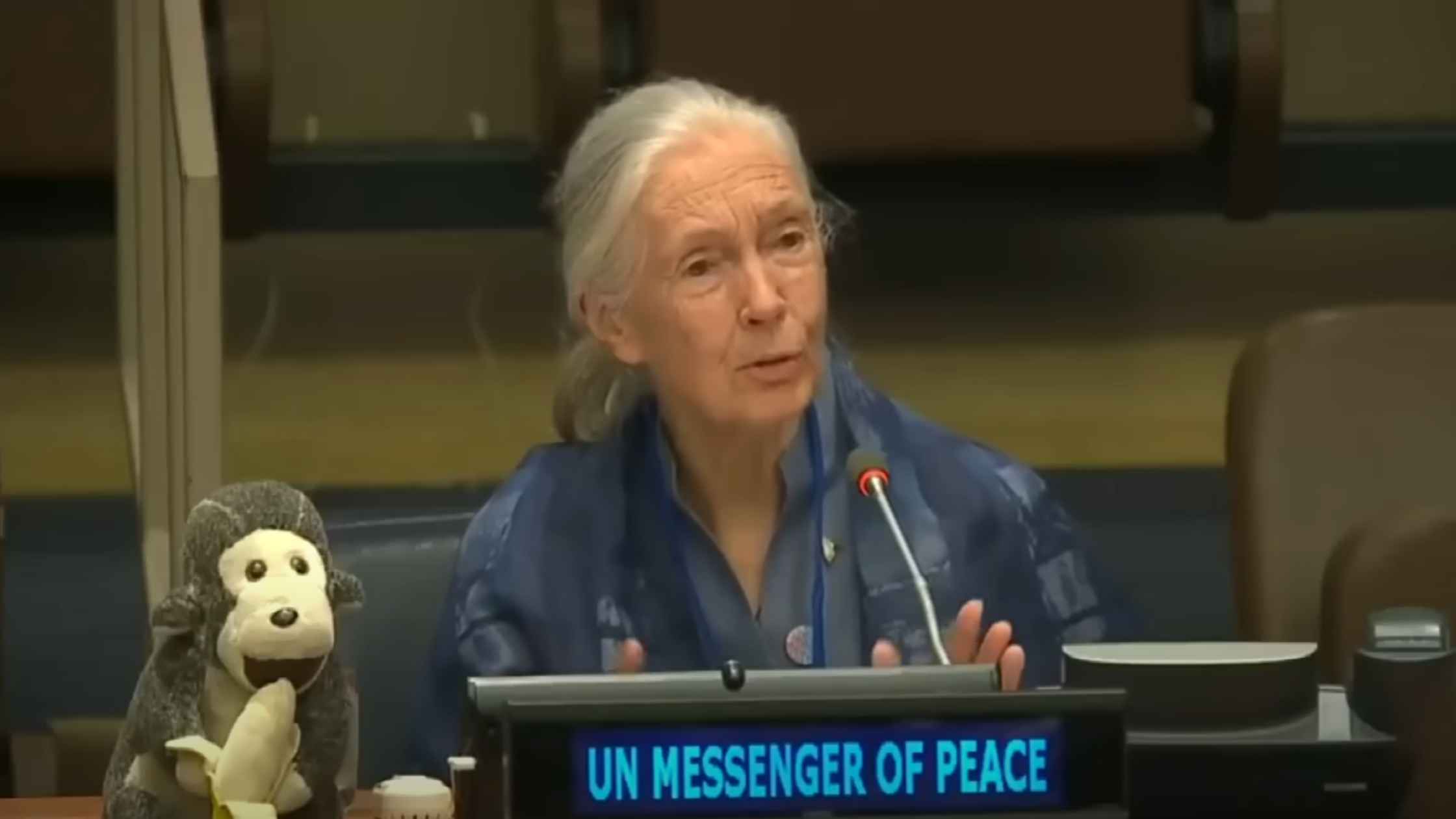
From the jungles of Tanzania to the halls of the United Nations, the natural world had no greater advocate than Jane Goodall.
Jane Goodall (00:29):
We're supposed to share the planet, and yet species are disappearing. Ecosystems are collapsing. That's going to affect us.
Jeffrey Brown (00:39):
Goodall was a pioneer who helped revolutionize our understanding of our closest living animal relatives. And as a woman, breaking through in a male-dominated field.
Jane Goodall (00:53):
Two people.
Jeffrey Brown (00:54):
In 1960, at age 26, she began the longest-running continuous study of wild primates in the world, in what is now known as the Gombe Stream National Park of Tanzania, working with Louis Leakey. She had no formal scientific training and her methods were unconventional. But among her insights, like humans, chimps made and used tools such as grass stems to feed themselves, a finding that shocked scientific consensus at the time. In 2020, marking the release of a National Geographic documentary on her life, she told me of her earliest days in Africa.
Jane Goodall (01:32):
It's absolutely so vivid. And, of course, it was a time when the chimpanzees were part of my family, and the striking thing was how like us they actually are. When I got to Cambridge, because Louis Leakey said I had to get a degree, I was told I'd done everything wrong. I shouldn't have given them the chimps names, they should have had numbers. I couldn't talk about personality, mind or emotion. Those were unique to us, I was told, but I've been taught by my dog, Rusty, who sits near me. It's Rusty. He was a very, very special dog, and there's never been another dog quite like him.
Jeffrey Brown (02:13):
Look at that. Look at Rusty and look at a young Jane Goodall.
Jane Goodall (02:16):
Look at us side by side. But Rusty was a special dog. All dogs are special, really, but he was extra special. And, of course, animals have personalities, minds, and emotions, and now science has been forced to accept. We're not after all the only beings with those attributes.
Jeffrey Brown (02:37):
Goodall made other discoveries too. Chimps, for example, engaged in organized warfare, and they had distinct personalities. Her research first chronicled in National Geographic and in several documentaries made her a household name. She used that fame to advocate against animal research and became a leading voice against animal trafficking and other abuses.
Jane Goodall (03:00):
What we do to animals from their perspective, certainly, and probably from ours is morally wrong and unacceptable.
Jeffrey Brown (03:06):
In 1977, she created the Jane Goodall Institute, which soon became one of the world's largest conservation groups. And later worked with young people in Africa and around the world through her Roots & Shoots program. She continued her advocacy until the end, still traveling nearly 300 days a year.
Jane Goodall (03:28):
Some of us could say bonjour, some of us could say guten morgen and so on, but I can say … That's good morning in chimpanzee.
Jeffrey Brown (03:45):
When we spoke in 2020, Goodall said she had no choice but to keep going.
Jane Goodall (03:50):
Well, being 86, obviously, the time I have left is slowly shrinking, which means I have to work ever harder. People say, "Well, you need to slow down," but I have to go quicker. The main message that I have is that every single one of us, every single day, we make some impact on the planet, and we have a choice as to what impact we make, what we buy, what we wear, where did it come from.
(04:17)
And if enough of us make ethical choices and start thinking in a new way, then business will have to change because of consumer pressure, and governments will just have to obey the will of the people. There's enough of us willing it, so each one of us is part of this growing … It's my greatest reason to hope.
Jeffrey Brown (04:40):
Jane Goodall died today while on tour. She was 91 years old. For the PBS NewsHour, I'm Jeffrey Brown.