


Mr. Lee (04:43):
[inaudible 00:03:50] or later to a red box, but that's no longer the case. Today, millions of Americans will stream their favorite classic movie or binge-worthy show, binge-worthy series right at home. Netflix has changed with the times as well, and Netflix has been a significant part of that change. They have grown into the largest streaming platform in the entire world. Netflix has more than 325 million subscribers, reaching one billion viewers. Premium Netflix streaming plans can cost as much as $300 per year to access Netflix's impressive and steadily growing library of content. Both of licensed content and of original content produced by Netflix on its own, some of which we would describe as full length feature films, others that we would describe as series. We would've previously described them as TV shows, even though they don't air on TV.
(05:55)
With this merger, Netflix would acquire Warner Brothers film and television production studios, their streaming services, and extensive existing content library. These include Warner Brothers Pictures and Warner Brothers television, HBO, HBO Max, DC Studios, and iconic franchises, including Harry Potter, Game of Thrones, Lord of the Rings, and some popular series such as The Wire, The Sopranos, and Succession.
(06:28)
The deal would not only give Netflix control over Warner Brothers existing catalog of entertainment content, but also intellectual property for future productions. The transaction raises potential horizontal antitrust concerns. Netflix and HBO Max both offer subscription-based streaming video services and compete directly for subscribers seeking premium content. Additionally, Netflix and Warner Brothers compete to develop critically acclaimed films and hit series content. So the merger would eliminate these areas where they compete head-to-head in today's market.
(07:13)
Not only did Netflix and Warner Brothers compete for subscribers and for content, but they also compete in a different direction. They compete for the employment and retention of creative talent, including writers, directors, actors, and other production professionals that go along with the process of producing this content. Consolidating two major employers within the same market inevitably has an impact on and can significantly weaken competition for that labor.
(07:49)
The Department of Justice and the Federal Trade Commission have made clear that monopsony power, which here refers to the potential power to suppress wages or limit professional opportunities is a cognizable antitrust harm, separate and apart from any monopoly-focused concerns. The Department of Justice has demonstrated this when it's successfully blocked, for example, Penguin random houses, attempted acquisition of competitor Simon and Schuster.
(08:23)
Second, this merger raises potential vertical concerns. Netflix is the largest global streaming platform, wielding an enormous influence due to its size over what audiences watch through its proprietary recommendation algorithms. Warner Brothers controls a portfolio of film and television content for its part. So combining dominant distribution with additional premier content creates the classic risk of what we refer to as vertical foreclosure. The merge firm would have both the incentive and the ability to put rivals at a disadvantage. It could withhold marquee titles. It could raise licensing fees. It could favor its own content with recommendations. On a platform of Netflix's size and reach, even a small set of changes invisibility could impact competition.
(09:22)
This deal also has potential downstream implications for movie theaters. Now, Warner Brothers is a central force in theatrical distribution. While Netflix is generally favored streaming over theatrical releases, this consolidation would increase incentives to divert major releases away from theaters to streaming only on Netflix. That would reduce consumer choice and threaten the viability of movie theaters.
(09:51)
Now, these risks are amplified by data ownership. Netflix already, due to its innovation and investments in this area, has unmatched insight into viewer behavior. Combining that with the content library of Warner Brothers could further entrench Netflix's dominance and raise barriers to entry, make it harder for nascent competitors to enter the market and compete effectively.
(10:19)
Antitrust cases are often decided on the basis of market definition. How you define the market in which the merged entity would make its appearance makes a big difference. In a subscription video on demand market, if it were defined in that way, the combined firm would likely exceed the 30% market share threshold, thus triggering a presumption of illegality established by the Supreme Court and longstanding precedent, the United States versus Philadelphia National Bank.
(10:55)
Additionally, this merger does not occur in a vacuum. It doesn't occur in isolation. Netflix recently secured an exclusive multi-year agreement with Sony Pictures. This arrangement announced, really, just in the last couple of weeks suggests a broader strategy to consolidate even more premium content behind Netflix's own paywall. Even the uncertainty surrounding this merger risks weakening Warner Brothers as a strong independent competitor to Netflix, which it currently is. So all told, one might say that Netflix seeks to become the one platform to rule them all, or at least to exercise a significant amount of market dominance. The merger raises numerous antitrust concerns, in a nutshell, consolidating both production and distribution power. If approved, the merger will likely shape in a really significant way how Americans access movies and series for many decades to come.
(12:04)
I look forward to hearing the testimony from our witnesses and ranking member Booker. We'll now proceed to you and hear your opening statement.
Mr. Booker (12:12):
I'm really grateful for Chair Lee for organizing this hearing and partnership with my team. We both are coming out this and with a lot of bipartisan accord that we have a real crisis in our nation right now with a level of corporate concentration like has not been seen for generations going all the way back to the trust busting days of Roosevelt. I would be remiss if I did not acknowledge that to my left is Amy Klobuchar, who literally wrote the book on antitrust enforcement, and having her leadership here and continued focus is extraordinary. And I'm grateful to serve in between both of these individuals and just feel very grateful today.
(12:56)
I want to thank Mr. Sarandos and Mr. Campbell for coming here. It is not fun often to testify before Congress. Sometimes I wonder if it ranks higher than a visit to the proctologist or to the dentist. I'm not sure, but it means a lot that you all are here.
Mr. Lee (13:13):
Proctologists and dentists everywhere are outraged by that statement.
Mr. Booker (13:16):
I am sure I will get letters. I'm sure I will get letters.
(13:21)
We're going to examine a lot of the specific facts of this proposed Warner Brothers Netflix merger, but I do want to say very specifically that there is an absence. I believe that this sale of Warner Brothers to any competitor could have serious consequences for consumers and for the television and film industry. And the absence of not having Paramount Skydance here, who has made a hostile takeover, is frustrating. I invited David Ellison, chair and CEO of Paramount Skydance, to appear today. Mr. Ellison declined, stating that Paramount "does not believe it would be useful or helpful" for them to participate as a witness because their offer had been rejected. I'd like to just ask for unanimous consent for this letter to be submitted into the record.
(14:09)
I do want to thank Mr. Ellison though for meeting with me and I know other senators in person to answer our questions. It was actually a very fruitful conversation. It's unfortunate it wasn't in public. Paramount's still a player here. They have made a hostile bid of $108 billion, and for that very reason, I, again, just want to state that their participation would be really relevant to this hearing.
(14:32)
And it would be, in fact, be helpful for Congress to question them about this effort, especially given the serious concerns that I have regarding President Trump's involvement in the deal and the allegations of political favoritism. We're in an unprecedented time where we're seeing executive power being exercised in a way that Congress should be checking. We have seen allegations that Paramount has promised the President to make sweeping changes to CNN after Trump said that he thinks, "The people that have run CNN for the last long period of time are a disgrace. I think that it's imperative that CNN be sold."
(15:13)
Days after the Netflix Warner Brothers deal was announced, President Trump purchased $2 million in stocks and bonds in both Netflix and Warner Brothers. I think it's outrageous for any Senator, any House member or for the president or vice president for that matter to be trading in individual stocks when they have extraordinary insider information and influence over policies that move corporate power. This is, again, another example of the corruption that is cancerously affecttacking our democracy. President Trump is using government power to reward allies, punish perceived enemies, and enable private enrichment at rates we have not seen before while ordinary Americans are left paying higher prices, consumers are suffering and money is siphoned off to the top, leaving families and workers worse off.
(16:04)
And aside from the concerns of this administration's exploitation of antitrust enforcement, the acquisition of Warner Brothers Discovery by either Netflix or Paramount or any other competitor would result in concerning consolidation of a sector of our economy that has already been putting a squeeze on consumers and artists.
(16:26)
Let's be clear, the sale of Warner Brothers to either Netflix or Paramount would have a significant impact on tens of thousands of Americans that work in the entertainment industry and American consumers. I've been hearing from people throughout this industry, concerns, fears, worries, legitimate folks that don't have a political ax to grind who are very concerned about the matters we're discussing today and how they're going to impact their lives. So this is not an either or situation with either merger, another corporation will gain significant control over what we see, what we hear, and the news we consume.
(17:03)
The acquisition of the Warner Brothers Discovery by either Netflix or Paramount or any other competitor would result in consolidation of a sector of our economy that is already seeing significant consolidation. It's something that we should be talking about and we should be asking the serious questions. With either merger, another corporation will have that control, increased control over what we see, what we hear, and what news we consume.
(17:32)
Now, let's be clear. I was born in 1969. My father made me sit down and watch Star Trek and watch Nichelle Nichols, the first one of the first African-American women to star in a show like that, made me watch movies like In the Heat of the Night. So much of our culture was shaped by extraordinary artists who showed diverse voices, who dreamed and saw a future that seemed almost impossible that in fact there'd be a Black Senator sitting right now as a ranking member of this kind of committee. Art matters. Art is vital.
(18:10)
With a merger like this, it has real concerns about art, about culture, about the voices of Americans, about the moral imagination of a nation. For years, workers, creators, and consumers have been told that consolidation and media and streaming would mean more choice, more unique stories, lower prices. I don't think we've seen that. What we have seen with each merger is higher subscription costs, fewer streaming options, shrinking creative opportunities. I've heard them from artists that I know personally. They speak of lower pay and growing instability for workers across the industry. Many voices that felt that just a decade ago, they had chances to bring their art to life now worry that those options are dwindling.
(19:06)
Even now, pre-merger, a small number of streaming companies control a lot from content production to distribution and to the actual platforms through which consumers access entertainment. We are seeing a lot of vertical integration. We know Netflix power. I am a subscriber. I watch Netflix with probably hours I don't want to confess here in an open hearing and put on the record, but it is the dominant streaming platform of my household, as well as in our nation. And that's just domestically. It has an extraordinary global scale and reach. Worldwide, they have over 325 million consumers with their closest competitor, Disney Plus, with half of that at 130 million subscribers worldwide. Warner Brothers controls one of the most valuable and largest content libraries in the world, including HBO, Harry Potter, CNN. And for me, one of my favorite platforms is DC Comics. The fact is that Netflix Warner Brothers transaction would consolidate the largest distribution platforms with one of the largest content producers, and that should raise questions that Americans should have answered.
(20:20)
I have concerns about Netflix getting more power over consumers and leaving fewer alternatives and streaming platforms. I have concerns about startups and competition, and of course, as I've already stated, about the impact on artists and artistry in our country. I am angry about our antitrust laws, which have been ignored by Democrats and Republicans in the White House. I believe that we are now seeing consolidation that is screwing Americans from our farms to pharma. We are in a crisis in America.
(20:55)
Our antitrust laws are designed to ensure that independent studios, smaller streaming services, and new entrants are not shut out and left unable to compete with companies that control both content and distribution. The concern that so many Americans have is not just about their jobs and the prices they're paying, but as my father, should he be alive right now, would be concerned about less movies and less original storymaking. We have such a vibrant entertainment industry. We have an entertainment industry that's the envy of the world and in fact shapes the world.
(21:32)
I want to make sure that everything we're doing is protecting what is so profoundly American, freedom, the fact that workers are treated fairly, that consumers have choice, that competition exists. I urge federal enforcers to review this merger fairly and without political bias, without a president bringing his personality and his political opportunism to bear. I think what the American people deserve is to see our laws, as conceived by previous generations, enforced justly and thoroughly. I look forward to hearing from the witnesses, and again, I thank them for being here.
Mr. Lee (22:13):
Thank you, Ranking Member Booker, and what you offered will be admitted to the record without objection.
(22:20)
The Senate Antitrust Subcommittee is, of course, a subcommittee of the Senate Judiciary Committee. We're grateful to have the chairman of the full Senate Judiciary Committee, Senator Grassley here with us, and we'll now turn to him for his opening statement.
Mr. Grassley (22:33):
Thank you. Every seat in this hearing room is filled, which speaks to the great interest in this issue, and it also speaks to maybe some of the controversy with the issue. This committee is interested in this because we want to make sure the Department of Justice and the Free Federal Trade Commission does its job of oversight on antitrust. So I thank Chairman Lee and ranking Member Booker for holding today's hearing on this proposed Netflix of Warner Brothers transaction.
(23:12)
We all know that America pioneered the film industry from Hollywood musicals to John Wayne Westerns on the rise of modern television. Families still enjoy watching shows together, and it remains a very important part of our culture, but how people watch these productions has changed quickly. The proposed transaction this committee will focus on today would combine Netflix, a leading subscription streaming platform, with Warner Brothers Studio assets and HBO Max, another streaming service. This proposed merger could affect prices and choices.
(24:03)
Congress enacted the antitrust laws to protect competition and consumers. The Department of Justice and Federal Trade Commission must apply those laws using a neutral, evidence-based approach, and Congress has an oversight role to play, and that's why we're here today. Opponents warn that this deal could reduce head-to-head competition in subscription streaming and lead to higher prices or less innovation. Families in my state of Iowa and across the country already juggle multiple subscriptions, and they deserve real competition that keeps prices in check.
(24:51)
Opponents also caution that a combined firm could limit access to popular content, limit licensing options, and make it harder for rivals to emerge and compete. Theater owners worry about shorter release windows and fewer wide theatrical releases, which could harm neighborhood cinemas, those they employ and affect local economies. Competition in this sector doesn't only depend on who has the most subscribers. High quality franchisees and libraries can shape competition by affecting what rivals are able to license and also affects what choices consumers ultimately have. Control of both a large platform and a deep library of films and shows can affect the bargaining power across the industry. So I say regulators ought to examine those dynamics very carefully.
(26:06)
The companies will, of course, argue this transaction will improve quality, expand distribution, and create efficiencies that help them invest more in content. Those claims deserve fair scrutiny. Any claimed benefit must result from the merger itself, be verifiable, and likely make content available to more families. Further and importantly, merger review shouldn't be used as a strategy to keep a company from moving forward for years by limiting its ability to pursue lawful alternatives while market conditions continue to change. So I encourage our antitrust regulators to carefully scrutinize this transaction to ensure that competition is not undermined and to make sure the consumers are protected.
(27:07)
I thank all the witnesses today for the testimony and I look forward to the discussion. Thank you, Mr. Chairman.
Mr. Lee (27:15):
Thanks so much, Mr. Chairman.
(27:17)
The Ranking Member Durbin, the ranking member on the judiciary committee has a conflict. Will be here later, so we'll be able to hear from him in due course when he arrives.
(27:29)
Now, I'm going to introduce our two witnesses for today. We've got Mr. Ted Sarandos, who's the co-chairman and executive officer of Netflix, and we've got Mr. Bruce Campbell, the chief revenue and strategy officer at Warner Brothers Discovery.
(27:44)
If the two witnesses will please rise and raise your right hand to be sworn in. Do you swear or affirm that the testimony you're about to give to the subcommittee will be the truth, the whole truth, and nothing but the truth, so help you God? Thank you. Let the record reflect that all witnesses answered in the affirmative, and thanks again for being here today. We'll now hear your opening statements.
(28:09)
Mr. Sarandos, will start with you, and please begin with your opening statement.
Ted Sarandos (28:16):
Thank you, Chairman Lee, Ranking Member Booker, members of the subcommittee. Really my honor to be here today.
(28:23)
A combined Netflix and Warner Brothers will strengthen the American entertainment industry, preserve choice and value for consumers and create opportunities for creators. I'm happy to answer all the questions about this deal. I thought it might be a little helpful to spend a few minutes to talk a bit about myself and about the company.
(28:41)
I grew up in Phoenix, Arizona. I was a son of a union electrician and a stay at home mom. They were too young to have five kids, but they did, and the house was crazy. So I found a lot of comfort in front of screens, either ducking into the theater, get out of the Arizona heat, or parking myself in front of a TV, which I've did for an embarrassing amount of time. As a teenager, one of my first jobs was working in a local video store. It was behind that counter that I learned so much about the importance of stories. I watched people roam around the store, reading the backs of boxes, desperately asking strangers for reviews, trying to figure out what to watch. I figured out that I had a pretty good memory for these movies and these titles and these directors, and I could help people find movies they otherwise would have missed, and I felt great to help them.
(29:26)
Home entertainment and the video store gave consumers value, choice, and control, but you had to do the distribution by yourself. You had to drive back and forth to the store. That experience started a chain of events for me that led me to Netflix, which at the time had a couple hundred employees and was stuffing envelopes and using the US mail to send DVDs around the country. It solved the distribution burden for consumers, broadened choice, and deepened value. No matter where you lived, you had access to nearly every TV show and every movie ever made, but you had to stand around waiting by the mailbox to rent them and return them. In the late 1990s, we saw how the internet was about to change entertainment as we know it today. So we built the technology to stream shows and films. Finally, fans had access to thousands of choices with total control of how and when to watch them and at a tremendous value relative to TV.
(30:24)
Over a decade ago, we began programming our own programming like House of Cards and Stranger Things and The Crown and movies like The Irishman and Marriage Story, Red Notice. Netflix productions have already created more than 155,000 American jobs, contributed $225 billion to the US economy. We have filmed in all 50 states. While other media companies have been cutting back their content spending, we have increased ours. If you're wondering if we're in this for the long haul, we're spending $1 billion right now to transform the old Fort
Ted Sarandos (31:00):
... Fort Monmouth Military Base in New Jersey into a state-of-the-art production facility, revitalizing the local economy there.
(31:07)
We also export American stories to the world. About the only place you won't find Netflix is China because they censor us and block us. With Warner Bros., we're going to create more economic growth and create more value for consumers. Warner Bros. assets are very different from ours. They have a century of iconic IP. They have a world-class theatrical distribution business and their studios produce and licensed TV shows to other networks and other streamers. We plan to operate those businesses largely as they are today. Netflix and Warner Bros. both have streaming services, but they are very complimentary. In fact, 80% of HBO Max subscribers also subscribe to Netflix. We will give consumers more content for less.
(31:54)
So this is not a typical media merger where you end up with what's called the Noah's Arc Problem, two of everything. We're buying a company that has assets that we do not, and we will keep investing in Warner Bros. We will preserve one of the five major studios in Hollywood. We'll support theaters by releasing those movies with traditional 45-day windows, and we'll keep growing the American entertainment industry. Let's be clear. TV and film have never been more competitive than they are today, and this deal will not change that. Our goal is to win the moment of truth. That's when Americans sit on their couch, pick up their remote control, and decide what to watch. That's where we compete. Today, consumers can easily choose between broadcast and cable like CBS and so many other networks, and streamers like Netflix, Disney+, HBO Max, Peacock, Paramount+, Tubi. That also includes deep pocketed tech companies who are trying to run away with the television business. Companies like Google's YouTube, Amazon Prime Video, and Apple.
(33:03)
If you look at streaming alone, YouTube is the number one platform for viewing time. They have NFL football. They have exclusive deal for the Oscars. They have a deal with the BBC to produce original programming. Some of their creators have bigger budgets than typical Hollywood television shows. YouTube is not just cat videos anymore. YouTube is TV. This explains why Netflix, with all of our success, are only about 9% of TV viewing time in the U.S. With Warner Bros., we'll be about 10%. This deal keeps one of the most iconic Hollywood studios healthy and competitive. Warner and Netflix together will create value for consumers, more opportunities for the creative community, and more American jobs. Thank you so much and I do look forward to your questions.
Mr. Lee (33:54):
Thank you, Mr. Sarandos. We'll turn now to Mr. Campbell.
Mr. Bruce Campbell (33:58):
Chairman Lee, Ranking Member Booker, and members of the subcommittee, thank you for the opportunity to appear before you today to discuss Warner Bros. Discovery and our decision to accept and offer to merge our studios and streaming business with Netflix while continuing our previously planned separation of our news and sports television networks into a new company, Discovery Global.
(34:23)
The iconic Warner Bros. Studios have created some of the country's most recognizable television and film productions, from Citizen Kane to Minecraft. Just last month, our films received 30 Academy Award nominations, tying our own record for the most nominations set two decades ago. Discovery grew largely from the cable revolution of the 1980s, delivering a variety of content on cable networks such as the Discovery Channel, Animal Planet, Food Network, and HGTV. As the media landscape evolved over the past several decades, Discovery expanded its focus on digital media, delivering high quality content across a range of platforms in addition to cable.
(35:09)
In 2022, Discovery merged with WarnerMedia, which was then being spun off from AT&T to create Warner Bros. Discovery. This history exemplifies the dramatic and dynamic changes we have experienced in the entertainment landscape over the past 100 years. Today, those changes are only accelerating as consumers access video content through numerous paid and ad supported services. Consumers are experiencing a flood of options, including expanded social media platforms, digital and interactive games, and dozens of other entertainment options that compete for consumers' interests and attention. This increasingly complicated media landscape has also resulted in considerable consumer frustration. The abundance of streaming options has made it more challenging for consumers to find the content they want. Advertising revenue is also less stable due to marketplace changes such as the move to on demand streaming services and the rise of social media.
(36:14)
At Warner Bros. Discovery, we have continuously sought to innovate and respond to the changing marketplace. The 2022 merger gave us the ability to identify and align common business strategies. We found our alignment with our combined collection of sports, news, and other cable networks, and we saw a different collection of business opportunities with our studios and streaming business. We concluded that the company would be best served by separating the studios and streaming division from news sports and entertainment networks, such as CNN, TBS, and HGTV.
(36:52)
Last summer, we announced plans to split into two companies, Warner Bros. and Discovery Global. The separation strategy was designed to position each company for long-term success by enhancing the strategic flexibility and sharpening the competitive focus of each entity. That decision prompted others in the industry to look anew at the company and our world-class collection of media franchises, brands, and properties.
(37:20)
Last fall, we began to receive various outreach and offers, including most significantly from Paramount Skydance and Netflix. Our board responded with a full review of the company's strategic options. Paramount Skydance, Netflix, and another company made a variety of offers that our board considered carefully and fully. Ultimately, after careful evaluation of the competing offers, our board unanimously determined that Netflix's offer was and remains the best opportunity for our company. In this proposal, we saw a compelling and unique opportunity to combine our existing separation strategy with the strengths of Netflix.
(38:03)
This vertical merger permits Netflix to expand its nascent movie and television production capabilities with the addition of the Warner Bros. Studio assets. It gives our production capabilities access to Netflix's popular and consumer-friendly streaming and distribution platform. The merger also permits us to continue our plan separation of the global network's business, which we continue to believe is in the best long-term interests of the company. At the same time, the board continues to review and evaluate additional offers as they have been received to determine if any are superior to the Netflix offer, consistent with the board's obligations under law.
(38:46)
We are excited about the future of the combined company with Netflix and we look forward to providing consumers with thrilling and entertaining content across all of our storied media properties for many years to come. Thank you and I look forward to answering your questions.
Mr. Lee (39:03):
Thank you so much. All right. We're now going to proceed to questions. Each senator will have five minutes to ask questions per round and we'll alternate between Republicans and Democrats in the order of seniority subject to the earlier rule. And as I mentioned earlier, Ranking Member Durbin has had a conflict, so when he arrives, we'll hope to hear his opening statement as well.
(39:31)
Mr. Sarandos, why don't we start with you, if that's all right. Now, Netflix, under current conditions, that is pre-merger status quo Netflix. It produces and distributes its own scripted long form full length feature films, TV shows, documentaries, and series, correct?
Ted Sarandos (39:58):
Thank you, Senator Lee. Yes, it is correct. We do produce. It is a small portion of our title offering.
Mr. Lee (40:03):
It's part of your library?
Ted Sarandos (40:04):
Part of our library, yes.
Mr. Lee (40:04):
In fact, it plans to invest roughly $20 billion annually, separate and apart from the merger in order to increase production, adding to its portfolio. Is that right?
Ted Sarandos (40:16):
Production and licensing. Correct, sir. Yes.
Mr. Lee (40:18):
Yes. So if Netflix already produces content and plans to increase production, increase that investment on new production, regardless of the merger, tell me why you want to make this acquisition with a competing content producer and a competing streaming platform.
Ted Sarandos (40:40):
Well, today, Warner Bros. is both a competitor and a supplier. And our history, the reason I walked through that little history in the opening was that our history and my own professional history has been about adding more and more value to consumers. And you do that by adding more choice. And to do that, it requires a great deal of volume of production and a volume of licensing, which we do today. I would say to-
Mr. Lee (41:03):
By supplier, you're referring to the fact that through licensing arrangements, you already-
Ted Sarandos (41:08):
Correct. We license television series.
Mr. Lee (41:09):
... air where you normally air, stream some of their content.
Ted Sarandos (41:12):
Correct. Movies and various windows and in original series and license series as well.
Mr. Lee (41:17):
Now, YouTube does not invest in producing original content, at least not in the same order of magnitude, not anywhere near what Netflix does. Is that right?
Ted Sarandos (41:28):
I can't speak to their specific economic impact. They know that they do not share the risk with the creators in doing that. They certainly step up and we compete with them for things like that, Academy Award deal, certainly for the NFL football games. They recently did with the NFL game in Brazil. So yes, they do spend a great deal of money on content.
Mr. Lee (41:48):
Now, YouTube does share advertising revenue with users, primarily, I believe, with users who do produce their own content. I assume you wouldn't disagree with that characterization.
(42:04)
In other words, most of regular YouTube ... let's differentiate for a minute. YouTube from YouTube TV, which is a different thing altogether. It's a cable TV subscription. But YouTube, whether it's regular YouTube, streams free, doesn't require login credentials, doesn't require any subscription, unless you want to get YouTube Premium, which allows you to bypass the ads attached to the streaming device, in which case you've got to pay a fee and have subscriber login credentials for that. They're not in the same business. They're not producing the same thing. Sure, they produce content. They share advertising revenue with creators, but these are more like sort of end user creators producing shorter content, not full feature-length films typically. Isn't that right?
Ted Sarandos (42:53):
Well, Senator Lee, thank you and I appreciate the complexity of all this and I really can't speak to the inner workings of their model. It's not really that clear for folks. It's not that transparent.
Mr. Lee (43:04):
But you would agree that YouTube content is free as a default matter. And as a default matter, it doesn't require either paid subscription or login credentials, right?
Ted Sarandos (43:14):
Well, they are a subscription service that also has an ad free and a subscription option, but it is the exact same content. And remember, when we talk about a competition, we're competing for the same content, we're competing for the same viewers, we're competing often for the same ad dollar, and sometimes it's the exact same programming. And in the case of YouTube creators themselves, this past weekend, a YouTube creator had a movie called The Iron Lung that put $17 million in the box office.
Mr. Lee (43:44):
Okay. And I don't doubt that they sometimes have feature-length films on there, but I'm struggling to grasp to fully understand what you're saying about how it's the exact same content. Is this content that is produced with, I don't know, the involvement of the Screen Writers Guild, content that is produced typically in a studio? Where does most of the content on regular YouTube come from? Again, regular YouTube, not to be confused with YouTube TV.
Ted Sarandos (44:17):
Correct. I would say I would point you to the comments of Neal, the CEO of YouTube, who just drew a point to the fact that YouTube creators are buying Hollywood studios and producing content at a very competitive levels today, and he themself calls it TV. I would say what people also miss is about 50% of the engagement on YouTube today happens in the living room on a TV. I think people largely think of YouTube as a mobile device service, and it is 50% today and growing very fast on television. And for Netflix, a very small percentage of our content is ever watched on a mobile device. It's primarily on television.
(44:55)
And on that screen, sir, it is a zero-sum game. So if you're watching YouTube, you're not watching HBO Max, you're not watching Netflix, you're not watching CBS. So that is why when we talk about competing for the moment of choice, competing for the viewer's attention, competing for the ad dollars, competing for the subscription dollars, it's all the same pool of content and all the same pool of viewers.
Mr. Lee (45:19):
Look, my time's expired, but just very briefly before we go to the next senator, I want to make sure that I understand what you're saying. Sure, you're choosing between this and something else in the same sense that if I'm watching anything on a screen, whether it's a small screen or a big screen on the wall, I'm not watching something else or doing something else. The two compete in the same sense that they compete for what else one might do in one's day, reorganize one's sock drawer, think about the Dormant Commerce Clause of the Constitution, or something else really fun like that. But it's not necessarily the same content. In fact, YouTube, regular YouTube, not to be confused with YouTube TV, which is like a cable subscription thing, the lion's share, the overwhelming share of what one consumes on YouTube while watching YouTube is not full length feature films written by screenwriters produced by full studios, is it?
Ted Sarandos (46:22):
Are we okay on time for me to answer?
Mr. Lee (46:23):
Well, yeah, just answer quickly and then we'll go to Senator Schiff.
Ted Sarandos (46:27):
So the exact splits of what type of programming is seen on YouTube is not ... again, there's no transparent reporting of the viewing except for what shows up as a view count on YouTube, unlike the other counts. But I would tell you that it is increasingly the exact same programming. Meaning, if you did not watch Saturday Night Live live on Saturday night, you probably watched that on Sunday morning on YouTube.
Mr. Lee (46:48):
Okay.
Ted Sarandos (46:48):
The exact same show.
Mr. Lee (46:49):
I may want to get back then in a subsequent round. Senator Schiff, [inaudible 00:46:52].
Ted Sarandos (46:53):
Thank you, Senator.
Mr. Schiff (46:53):
Thank you, Chairman. And thank you, gentlemen, for being here. I appreciate the opportunity to hear from you.
(46:59)
Mr. Campbell, let me start with you. Most of, I think ... Well, a lot of my concerns, whether it's this merger or the proposed Paramount merger, have to do with impact on the workforce, impact on consumer choice and cost among other things. Most of the media consolidation we have seen has not resulted in lower cost for consumers, but has resulted in a lot of layoffs and job losses.
(47:27)
Do you think that will be the case here? That is, as a result of this merger, should we expect there'll be a round of layoffs and how large? Should we expect consumer prices to go up? And if not, why should we think this will be the exception?
Mr. Bruce Campbell (47:45):
Thank you, Senator. No, no. I think the answer is no in both cases. One of the reasons that the Netflix offer appealed to us so much at Warner Bros. Discovery is to Mr. Sarandos' point that they don't have the type of film studio and film distribution infrastructure that we do today. They don't have the type of television studio that we do today. And we believe, based on our discussions with them in the negotiation process, that they're not only going to keep those operations intact, in fact, they're going to invest in those operations and invest in continued production, including on our lots in Burbank and elsewhere.
(48:27)
Similarly, on the consumer side, as Mr. Sarandos said, 80% of the HBO Max subscribers today already get Netflix. Now with this transaction, Netflix will have the opportunity to offer those two services together at a discount. In addition, they'll have the opportunity to take our content and the HBO Max content and put it on the Netflix platform, which they've invested in over 20 years. It is the best technology platform available to consumers. It is superior to the platform we have. I think that too will be very pro consumer.
Mr. Schiff (49:03):
And Mr. Sarandos, let me ask you about a couple of things, and I know we discussed part of this already, but-
Ted Sarandos (49:08):
Yeah. Good to see you again, Senator.
Mr. Schiff (49:08):
Good to see you too. Share with us your thoughts on the impact on the theater industry. I happen to be one of those people who loves to go see movies in the theater and be surrounded by other people experiencing the same thing. There was a lot of concern that given the business model you've had to date, that theatrical exhibitions will be cut down from 45 days or whatever that generally are the industry standard down to a lot less, maybe 17.
(49:41)
How long do you expect theatrical exhibition to be? How will that change or not change? And also in terms of jobs, for many of the other studios, we've seen a growth since the pandemic in production at home. Netflix has been a bit of an outlier though where we've seen more production move overseas. Now, I know you're building a new facility in New Jersey, but what accounts for the production shift, the greater production shift we see of Netflix to production overseas, and how do you think that'll be affected by this?
Ted Sarandos (50:15):
Well, thank you for asking, Senator. Let me work backwards on the question. We have some local for local production that happens overseas. Meaning, we have a service in South Korea and we produce some Korean content for the South Korean market in local language, local cast, local producers, that kind of producing. That happens separate and aside from this. The vast majority of our content spend is produced in the United States.
(50:40)
There's been many studios, including Disney just recently moved all the Avenger movies to London. By way of example, there's a production incentives that draw production away. What I've been doing for the last several years is working with the state of New Jersey to create an incentive that competes with that UK incentive and brings production home. We're building that big studio in New Jersey for that. Since that incentive passed, we had 11 projects, seven of them were slated to go to the UK, pulled back into New Jersey. We are leading production in the United States and intend to keep growing it.
(51:18)
As Bruce said, the Warner Bros. slate of movies are still getting made. We're going to operate Warner Bros. Studio largely as it is today, including releasing the movies in the theater with the traditional 45-day window. Now, I know I've earned some skepticism over the years on this because I was talking a lot about Netflix business model, which was different from that. We didn't own a theatrical distributor before, we do now, and a great one. They did $4 billion in box office last year. That's all baked into the price of this company that we're looking at, and we want to keep that going and invest further in that.
(51:53)
So this will continue to push up those jobs that we talked about and push up that production primarily in the U.S. So this will keep the theater business intact. This will definitely keep production in the U.S. growing. I think what we've done in New Jersey is going to change the course of production in the U.S. completely, and I think other states will see the value of that as well.
Mr. Schiff (52:12):
Well, this gives me a perfect final opportunity to do a little self-promotion.
(52:15)
Mr. Chairman, I have a bill that would provide a film tax credit analogous to what's been driving film production overseas that's offered in other countries and would welcome anyone who would like to work together.
Ted Sarandos (52:26):
Greatly support you on that, Senator.
Mr. Schiff (52:27):
Thank you very much.
Mr. Lee (52:31):
Thank you, Senator Schiff.
(52:32)
Senator Hawley.
Mr. Hawley (52:34):
Thank you Mr. Chairman for calling this hearing. Welcome to the witnesses. Mr. Sarandos, if I could just start with you. Let's continue to talk a little bit about the labor impacts here, if we could. How many U.S.-based employees does Netflix currently employ? Do you know?
Ted Sarandos (52:47):
About 10,000.
Mr. Hawley (52:48):
What about in production roles?
Ted Sarandos (52:50):
Well, just a fluid number, but we've had about 155,000 production jobs-
Mr. Hawley (52:56):
How about now?
Ted Sarandos (52:57):
... under originals. At any given time, I don't know the number exactly, sir. I can follow back with your staff though.
Mr. Hawley (53:01):
Warner Bros., how many U.S. production jobs?
Mr. Bruce Campbell (53:05):
I don't have the exact number, but it would be, I would think, in the 8,000 range.
Mr. Hawley (53:10):
Okay. Here's my question. If this merger goes through, what's your projection about the amount of domestic production, say, two years from now? Is it going to be static? Is it going to decline?
Ted Sarandos (53:25):
Our production is going to increase.
Mr. Hawley (53:26):
Domestic production.
Ted Sarandos (53:27):
Domestic production is going to increase.
Mr. Hawley (53:28):
Employment.
Ted Sarandos (53:29):
Most of our production is domestic and it will continue to increase. We've recently forecast our content spend independent of this deal to grow to $20 billion. That's a combination of licensing, producing. Now, those licensing dollars compel production as well. That's why it's hard to get an exact number of how many.
Mr. Hawley (53:50):
Let me show you the data here about U.S. production recently. It's the red line here starting from in 2021, you can see it is pretty much straight downward. There's been massive shift in productions. I think as Senator Schiff was alluding to just a moment ago, massive shift in production overseas to other foreign jurisdictions leaving the United States. So will you commit to increasing domestic United States production and domestic United States production jobs? Did I hear you just say you would?
Ted Sarandos (54:20):
Senator Hawley, absolutely. It's in our business plan. It's in our long-term operating DNA. I will point out, sir, respectfully, that chart is Los Angeles.
Mr. Hawley (54:29):
It is Los Angeles, but if you look at the data, it is reflective. This reflects all of U.S. production. U.S. production's not going up, right?
Ted Sarandos (54:35):
But some of these jobs have moved-
Mr. Hawley (54:36):
It's going down.
Ted Sarandos (54:38):
Some of these jobs have moved to [inaudible 00:54:38]-
Mr. Hawley (54:38):
Yeah, but the overall numbers are going down, and this is exactly the concern of labor. And without objection, Mr. Chairman, I'd like to enter into a statement for the record from the Teamsters who have major concerns about this deal, as does frankly, pretty much every segment of labor, Mr. Sarandos. What they all say is they're worried that you're going to cut residuals, which is effectively payments. You're going to cut production jobs. So let's just go through a few commitments here. Will you commit to using union labor for all domestic shoots?
Ted Sarandos (55:05):
We do use union labor.
Mr. Hawley (55:06):
Will you commit to using it in the future for all of your domestic shoots if this deal goes through?
Ted Sarandos (55:10):
Senator Hawley, this is the most unionized industry in America, and we use union labor on all our production.
Mr. Hawley (55:15):
And you're going to going forward. I'm looking for a commitment.
Ted Sarandos (55:18):
You have my commitment.
Mr. Hawley (55:19):
Will you commit to a 45-day or longer theatrical release window from major Warner Bros. films?
Ted Sarandos (55:24):
Senator Hawley, I just said that I would do that under oath, so yes.
Mr. Hawley (55:27):
Good. And will you commit to fairly compensating your workers in the industry with residual payments?
Ted Sarandos (55:32):
Well, top of market payment has been Netflix business philosophy since we started operating over 25 years ago.
Mr. Hawley (55:37):
Listen, what you have been routinely accused of compressing and reducing residuals, it's one of the biggest objections to labor to this deal. So let's see if you can lay that to rest today. Will you commit to full residuals?
Ted Sarandos (55:50):
Senator Hawley, I would like to tell you this is a very complicated answer because we prepay.
Mr. Hawley (55:56):
That's usually on the way to no. That's usually a way of saying no. I'm looking for yes.
Ted Sarandos (56:00):
Senator, I understand that this is not a yes or no answer because-
Mr. Hawley (56:02):
It kind of is though.
Ted Sarandos (56:03):
It kind of isn't because I ... And we were going to sit down with the unions.
Mr. Hawley (56:06):
You're disappointing me.
Ted Sarandos (56:07):
Starting in the next few days, sir, we're sitting down with the unions for new contract talks. That start actually in three days.
Mr. Hawley (56:13):
That's a complicated long no. I would really hope it would be yes.
Ted Sarandos (56:16):
Okay. Are you asking me to commit to residuals in the traditional form? Because I don't think that applies in many cases. That's why I'm getting there.
Mr. Hawley (56:24):
All right. Well, I think you've got some work to do on that, Mr. Sarandos. I would hope that you'd reconsider your position. Before my time expires, I want to ask you about something else related to children.
(56:34)
Why is it that so much of Netflix content for children promotes a transgender ideology? Almost half of your content for, I'm talking about minor children now, I'm not talking about teenagers, minor children promotes a transgender ideology agenda. I was just looking at the data here from your various series. What concerns me is just two days ago, a jury in New York awarded a former transitioner $2 million because she said that her psychologists and others pressured her into, they pushed on her an ideology that proved to be extremely detrimental. I'm sure you know that in the UK, the National Health Service in the UK has said that they're not going to perform transgender surgeries or any longer so called gender-affirming care for minors, including in counseling, because it is so incredibly detrimental. Our own HHS has come forward with similar findings this past year, yet if you turn on Netflix, you'll find that an enormous amount, and I say this as a parent with three young children, an enormous amount of your children's programming has this ideology and agenda in it. Is this an advocacy position for Netflix? Is this an ideological commitment you have? I mean, why is this?
Ted Sarandos (57:53):
Senator Hawley, Netflix has no political agenda of any kind. I would tell you that we have-
Mr. Hawley (57:57):
Well, then why is your children's program so full of this highly sexualized, highly controversial, highly controversial agenda? I don't understand it. It seems strange to me.
Ted Sarandos (58:09):
Respectfully, sir, it's because it's inaccurate. We have millions of hours of children's programming.
Mr. Hawley (58:15):
You're saying it's not there. You don't feature trans characters, trans storylines, trans themes.
Ted Sarandos (58:20):
I'm saying we-
Mr. Hawley (58:21):
It's not in your programming?
Ted Sarandos (58:22):
I'm saying we feature a wide variety of stories and programs to meet a wide variety of people's tastes-
Mr. Hawley (58:27):
Why is it almost half of it? Why does almost half of your children's program feature this highly controversial, highly sexualized material? That just seems strange to me. It can't possibly be a reflection of the population.
Ted Sarandos (58:40):
Senator Hawley, I don't have any idea where that number would come from or what that would be. I don't believe that's been your personal experience, but I can't speak to that.
Mr. Hawley (58:48):
Well, what do you mean you don't think it's been my personal experience? You don't think that I monitor what my children watch on your ... Here's what I tell you what my personal experience is since you bring it up.
(58:55)
My personal experience is that my three children, I can't let them watch anything they want on Netflix. I can't let them watch anything on Netflix unless I preview it because I don't have confidence in what's on your platform. I don't know what they're going to encounter. And I tell you what, I don't want my kids being pushed an agenda about their sexuality or gender identity when I have not had the opportunity first to discuss it with them and to form them in that. Frankly, on behalf of parents around the country, it offends me that Netflix is pushing this content at parents in what seems to be a very coordinated, thought through, planned out agenda in a way that frankly, I think undermines parents. Certainly undermines me and my wife. We have to watch every show beforehand before we can let our kids watch it.
(59:40)
Now, I don't know. That seems pretty concerning to me. I know you make a gob of money on it and maybe that's the answer, but it just seems to me that it's a disservice to the parents of this country, particularly given what's happening with our youth on this subject.
Ted Sarandos (59:54):
Senator Hawley, if I may answer. Like I said, we have millions of hours of content on Netflix at any given time. We have state-of-the-art tools for you to manage those choices for your children and to block any title that you might be offended by for any reason. We are parents at Netflix as well. We share all your concerns about raising kids and also the ability to raise them as you see fit in your household and anyone else's household as well.
Mr. Hawley (01:00:20):
My concern is that you don't share my values or those of many other American parents and you want the United States government to allow you to become one of the largest, if not, the largest streaming monopolist in the world. I think we ought to be concerned about what content you're promoting. Thank you, Mr. Chairman.
Mr. Lee (01:00:37):
Thank you, Senator Hawley. Senator Booker would be next. He is deferred to Senator Welsh. Time is yours.
Mr. Welch (01:00:41):
Thank you, Mr. Chairman. Thank you, gentlemen. Appreciate you being here. I think Mr. Sarandos, when we met, I indicated to you the big concern I have is what's the impact on the creative community?
Ted Sarandos (01:00:51):
Yes, sir.
Mr. Welch (01:00:53):
If this merger goes through, you'll be huge and the folks that are creating content will have to come to you. It's hard to see how with fewer outlets for a person or creators who have something special to present to the American people, if they have fewer options, it's going to suppress creative content. Can you address that?
Ted Sarandos (01:01:20):
Absolutely. The best way to keep giving opportunity to creators is to make more content, make more productions. Netflix is leading the way in doing that. I would say that into this merger, we intend to keep these operating entities operating exactly like they are today, with independent creative groups who do that buying. By the way, this is something rooted and something we started doing years ago at Netflix is creating competitive buying teams inside of Netflix.
(01:01:48)
Let's just say you're a writer, you bring a project to us, we have a family team, a comedy team and a drama team. It's pretty unlikely that any project that comes through the door is absolutely any one of those three things.
Ted Sarandos (01:02:00):
You can pitch it to all three teams, and one may pass and one may take it.
Mr. Peter Welch (01:02:04):
You explained that. But I'm a creator, I come to you, you've got these teams, you want to get my content, but my options to go elsewhere after a merger diminish. And, of course, there's been a wave of mergers in the entertainment industry preceding this proposed plan. You also have a business responsibility to Netflix to control cost. One of the way you can control cost is you pay me as a creator less. And me as a creator, if I have fewer places to go, there's less competition for you. Isn't that dynamic real and inevitable with this merger?
Ted Sarandos (01:02:46):
As I said, so we're keeping every one of those buying entities open for business, meaning that if you don't sell your show to Netflix, you can sell that show to HBO. If you don't sell it to Netflix for feature film, you can sell it to Warner Bros. And all four may want it, and it's very common in the business. I'm sure Bruce could talk to you about how CNN has bid against HBO for documentaries at Sundance Film Festival. Happens all the time. Everyone is focused on doing best by the consumer. And the way we win is to get the best product for the consumer.
Mr. Peter Welch (01:03:13):
Right, thank you. I'll ask Mr. Campbell, what I understand is that the Writer's Guild of America, after the Warner Bros. Discovery merger in 2022, the merge firm canceled and wrote off about $2 billion in content. That's true, right?
Mr. Bruce Campbell (01:03:30):
After the merger, there was a significant write-off. That merger included a significant amount of debt being put on the combined company. So, at least initially we had some meaningful financial considerations.
Mr. Peter Welch (01:03:44):
But the content-
Mr. Bruce Campbell (01:03:45):
Since that time, we've invested significantly in content and our content investment has grown every year.
Mr. Peter Welch (01:03:51):
This is really the question that I need to be answered. I think it's incredibly important that we have more content, not less. I think it's incredibly important that we have creators and writers and producers having an opportunity to get their story to us to try to get the benefit of stories that are told to America about our own experience. And it's just hard for me to understand how if there are fewer buyers, or there is less opportunity for competition, it's going to result in more content. You're telling me I'm wrong?
Mr. Bruce Campbell (01:04:28):
No, we know, as a successful studio, both on the television and film side, the way you're successful is by convincing the creative community that if you come to your studio, you're going to get a fair shake. And as Ted has-
Mr. Peter Welch (01:04:43):
There's something wonderful in the culture of a good company. And Warner Bros. has done extraordinary things. But it's really, as I understood it, been really committed to movies and creating incredible movies. Netflix is astonishing in what it's done. Out of nothing, it creates streaming, which is very, very popular. All of us use it. But if you're going to be in charge of Warner Bros., you'd like to say that nothing will change, but don't we usually hear that anytime there's a big merger, that nothing will change, and it'll all be better? So, prove it.
Ted Sarandos (01:05:23):
Senator Welch, I'd like to explain that, because like I said earlier today, most media mergers have fared poorly, I agree. Mostly because one of two reasons: either you have the Noah's Ark problem, you bought a company that has the exact same sets of assets that you do, so that's all you do, is cut everything in half and look for the profit, squeeze it out. That's not what we're doing. We don't have any of these assets that we're buying from Warner Bros. The other problem usually is a company that doesn't have particular expertise in that business and they wind up just sucking cash out instead of putting cash in. We have a particular expertise in this business and we have a strong, healthy balance sheet to keep investing in this business.
(01:06:02)
Now, it is different from previous media mergers, I know that. But I will tell you, I've been at Netflix for over 25 years. Every year we've been successful by doing things differently. And this media merger will be different than any of the others because we actually need these people. We need those movies. We need those series. So, we're going to keep them all operating, and I want them to compete with one another, just as if we didn't own them. And it's very common that the teams inside of Netflix compete for today for the same project all the time.
Mr. Peter Welch (01:06:32):
Thank you. Mr. Chairman, I yield back.
Chairman Mike Lee (01:06:34):
Thank you, Senator Welch. Senator Schmitt?
Mr. Eric Schmitt (01:06:36):
Thank you, Mr. Chairman. Mr. Chairman, Mr. Sarandos, you are currently the co-CEO of Netflix. Is that correct?
Ted Sarandos (01:06:44):
That is correct, sir.
Mr. Eric Schmitt (01:06:45):
Okay. And until recently, you were the chief content officer, is that correct?
Ted Sarandos (01:06:49):
It's been a couple years now, yeah, but yes.
Mr. Eric Schmitt (01:06:51):
Okay. Do you think Netflix is a powerful company?
Ted Sarandos (01:06:56):
We're a successful company.
Mr. Eric Schmitt (01:06:57):
Okay. I think it's pretty powerful. That's probably why we're here today, to judge whether or not it becomes anticompetitive in some particular way, because of the power that it wields. You just said a moment ago that Netflix does not have a political agenda. Do you think Netflix is a politically-biased company?
Ted Sarandos (01:07:17):
No, sir, I do not.
Mr. Eric Schmitt (01:07:18):
Okay. Would it surprise you if I told you that... What percentage of donations from Netflix employees and other folks affiliated with Netflix go to Republicans versus Democrats, do you think?
Ted Sarandos (01:07:30):
I saw a number published a while ago, it's very high Democrat.
Mr. Eric Schmitt (01:07:33):
Like 99%?
Ted Sarandos (01:07:35):
Could be, yeah.
Mr. Eric Schmitt (01:07:36):
Yeah. That seems pretty high. Do you think that indicates any kind of bias by the company?
Ted Sarandos (01:07:42):
Sir, Netflix doesn't have a political giving arm. We don't have an active PAC. We don't influence our employees to do anything, and our employees can support issues and candidates at their will.
Mr. Eric Schmitt (01:07:53):
Okay. On June 20th, 2020, on its X page, Netflix posted a video titled, quote, "To my white friends: guilt, shame, embarrassment." End quote. And saying, quote, "We need to do everything in our power to amplify that message." Do you stand by that statement?
Ted Sarandos (01:08:12):
I have no recall of that statement at all.
Mr. Eric Schmitt (01:08:15):
Okay, I just read it to you. Do you have an opinion about it?
Ted Sarandos (01:08:17):
I don't have any idea what context it's in or anything it sounds. Sounds like a social media post.
Mr. Eric Schmitt (01:08:21):
In the wake of the George Floyd riots on June 20th, Netflix posted on its page, "To my white friends: guilt, shame, embarrassment." What does that mean?
Ted Sarandos (01:08:30):
I think that is an uncharacteristic post that I'm deeply regret if that got posted that way.
Mr. Eric Schmitt (01:08:34):
Okay. Well, it did. Netflix also said on May 30th, "To be silent is to be complicit." Okay. I'm just reading you some things that Netflix posted at the time. So, you don't stand by that statement, then?
Ted Sarandos (01:08:53):
As I said, sir, we have no political agenda. Posting something like that would be quite political, but I believe-
Mr. Eric Schmitt (01:08:58):
I would agree.
Ted Sarandos (01:08:59):
Yes.
Mr. Eric Schmitt (01:09:00):
I would agree with you there.
Ted Sarandos (01:09:01):
And I would say, I hope that wouldn't happen again.
Mr. Eric Schmitt (01:09:02):
Okay. Netflix also said on June 10th, 2020, that to implement the BLM, the Black Lives Matter, agenda, Netflix understood, quote, "that our commitment to true systemic change will take time." Do you still think that takes time? Are you still actively engaged in this effort?
Ted Sarandos (01:09:18):
Again, sir, we're not engaged in political efforts like that.
Mr. Eric Schmitt (01:09:20):
Okay. Any longer? You were, but you're not now?
Ted Sarandos (01:09:26):
Again, I can't think of a period of time-
Mr. Eric Schmitt (01:09:29):
Okay.
Ted Sarandos (01:09:29):
I think of the time you're talking about was quite a volatile time for many companies.
Mr. Eric Schmitt (01:09:33):
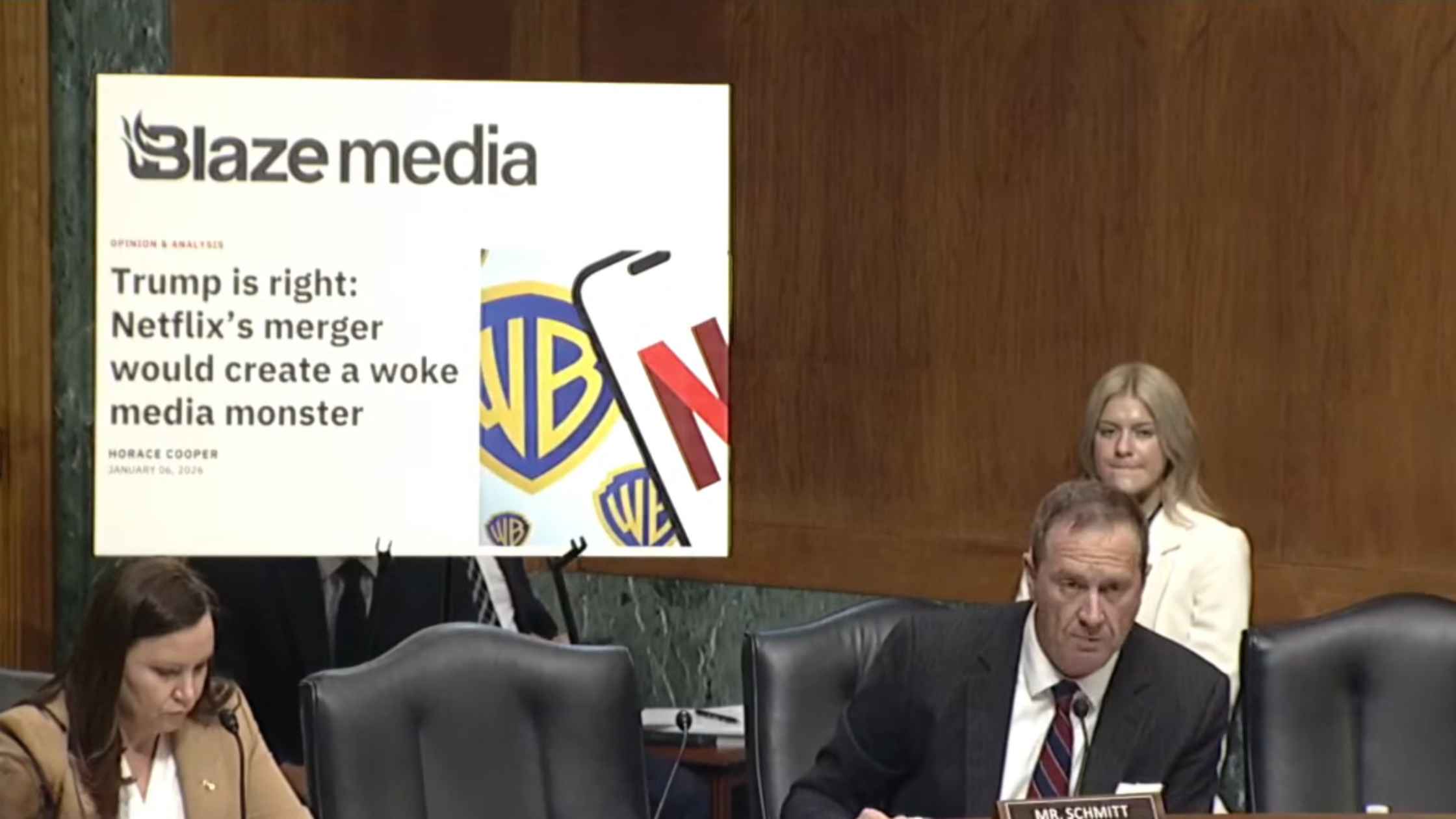
I think a lot of people said things they regret then. I'm just trying to figure out if they actually regret it or not. I'm not going to get into your quotes on DEI, but it seems that both you and Netflix both have made a habit of promoting DEI and wokeness. I'll just give a few examples. Netflix content is synonymous for the modern phenomenon of race swapping, both historical and real and fictional characters. Just a few examples: Netflix made Black Vikings, Netflix changed Cleopatra from Macedonian to Black, Achilles changed from Greek to Black.
(01:10:01)
Netflix overtly sexualizes children in its Cuties film, related to preteen girls. You mentioned earlier that you can block for titles. I'm not sure blocking the word Cuties would shield kids from the oversexualized content in Cuties, so I'm not sure that's sufficient enough. Netflix continues to push sexual and gender theory on kids, and maybe this is what was being referred to earlier, 41% of G-rated kid- approved series contain LGBTQIA+ content. You are the co-CEO, you were the chief content officer until recently: yes or no, does Netflix stand by its content production decisions?
Ted Sarandos (01:10:47):
Senator Schmitt, we have a great deal of programming on Netflix for all, left, right, and center. We have state-of-the-art tools for parents to manage what their kids see on Netflix. You could block anything. What you just described is exactly how it works. You block that title, [inaudible 01:11:02].
Mr. Eric Schmitt (01:11:02):
But why would I block Cuties? If a G-rated movie came out called Cuties, why would I have any belief as a parent that would be related to oversexualized kids?
Ted Sarandos (01:11:14):
That film you're speaking of is a MA rated adult movie for adults, not for kids. And the larger point, sir, is that of all the American values that we all share, and I understand parenthood is hard, I understand it's a difficult world that we all navigate, but the one we value a lot is the First Amendment. A lot of that is freedom of speech, and-
Mr. Eric Schmitt (01:11:32):
I get it. I get it.
Ted Sarandos (01:11:33):
And what we want to do is give creators a place to tell their stories and parents a place to control [inaudible 01:11:37].
Mr. Eric Schmitt (01:11:37):
I have no problem with a wide variety of content, that's not the issue. This is America. But I guess the point I'm making is that your company has made overtly political statements, has moved an agenda of DEI. You have Susan Rice on your board, the founder of Barack Obama's DEI agenda. 99% of your employees contribute to Democrats to the tune of hundreds of millions of dollars. Your content's oversexualized for kids. You're engaged in this very woke programming, overwhelmingly. You do have some other options, but overwhelmingly.
(01:12:07)
So, the question before this committee, and you come before Congress, why in the world would we give a seal of approval or a thumbs up to make you the largest behemoth on the planet related to content? It seems as though you have engaged in creating not only a monopoly of content potentially, but the wokest content in the history of the world. So, forgive me if I'm a little concerned, not only as a parent, but also that somebody believes that we ought to have a wide variety of content options. There are some, but the overwhelming majority of your stuff right now is overwhelmingly woke, and it's not reflective of what the American people want to see.
Ted Sarandos (01:12:45):
Sir, respectfully, if you ask a Netflix member today, or a consumer today generally, how they view Netflix, I think that what a proof point that we might be doing the right thing is they talk about Netflix in the exact same terms as they talk about the country: about 40% conservative, about 40% liberal, and about 20% don't know. You can look for and you can search for a character, a image or [inaudible 01:13:09]-
Mr. Eric Schmitt (01:13:09):
But that's not what it is. Those are not the statistics I gave you.
Ted Sarandos (01:13:11):
I don't know what those statistics came for.
Mr. Eric Schmitt (01:13:13):
So, 40% of your content for G-rated stuff has LGBTQIA themes.
Ted Sarandos (01:13:20):
Sir, I respectfully don't know how to-
Mr. Eric Schmitt (01:13:22):
We're happy to follow up and I'd love to get a response.
Ted Sarandos (01:13:24):
I'd love to engage with your staff and figure out how you-
Mr. Eric Schmitt (01:13:26):
I'd love to continue the conversation.
Ted Sarandos (01:13:27):
... came to that number.
Mr. Eric Schmitt (01:13:27):
Thank you.
Chairman Mike Lee (01:13:28):
Thank you, Senator Schmitt. Senator Booker, you're next.
Mr. Booker (01:13:35):
I'm getting back to the subject of antitrust.
Ted Sarandos (01:13:37):
Thank you.
Mr. Booker (01:13:40):
I guess I just want to start with asking for unanimous consent, maybe, Mr. Sarandos, you and I can talk about it, I just want to enter into the record statements and letters from stakeholders in entertainment industry from a lot of respected groups that believe they'd be harmed by this merger, and they include Cinema United, the largest trade organization in the world representing exhibitors and the owners of movie theaters; a statement from the Future Film Coalition, a national alliance representing filmmakers, producers, distributors, and other impacted workers; a letter from the National Hispanic Media Coalition, Committee for the First Amendment, Writers Guild of America West, and other orgs that are opposed to this Warner Bros. acquisition by either Netflix or Paramount; and a letter from the International Documentary Association opposing any consolidation between major studios and Hollywood; as well, finally, as a letter from the American Economic Liberties Project, urging the State Attorney's General to block the proposed, anticompetitive Netflix/Warner Bros. Discovery transition. Chairman, can I introduce these to the record?
Chairman Mike Lee (01:14:46):
It'll be admitted to the record without objection.
Mr. Booker (01:14:48):
And I guess my first question would be, why such a universal set of concerns, if not fears, that organizations who represent theater companies, who represent artists, who represent producers and directors, it seems pretty universal to me that people have a level of sophistication more than any senators about your industry seem to be really concerned. Could you shed some light on that?
Ted Sarandos (01:15:13):
Yeah, I would have to start, Senator, with the fact that the industry has been under attack for five years now. The pandemic, a prolonged strike, production downturn for companies trying to squeeze more profits to that of their businesses. Now, we've not been doing that, and we got through the strikes, and we got through the pandemic, and keep producing and keep growing. But anytime there's change, the parties that you just discuss get nervous, and rightfully so. They need to know that people are looking out for them and we are looking out for them. I mentioned in the theaters, I have been asked to give a blood oath about the 45-day window. I think giving my testimony to you under oath is good enough.
Mr. Booker (01:15:54):
And I've known you personally for a long time and to be a person of integrity, but I've heard more companies come before this body and make promises pre-merger that so many of them don't follow up. So, let me just add-
Ted Sarandos (01:16:06):
I would also add, Senator, if you don't mind, we have a long operating history of operating the way we do. So, I think we could point to our track record of expansion and growth and more and adding more value to consumers, not less.
Mr. Booker (01:16:17):
So, if I may ask a direct question, then?
Ted Sarandos (01:16:19):
Yes.
Mr. Booker (01:16:19):
Will this be a fully exclusive 45-day theatrical window?
Ted Sarandos (01:16:23):
Fully exclusive to theaters, yes.
Mr. Booker (01:16:25):
And will this be self-enforced? In other words, if you fall short of that.
Ted Sarandos (01:16:31):
It is the industry standard for self-enforcement. However, routinely, movies that underperform, the window moves a little bit, and Superman was a little shorter window, and Sinners was a little longer window, but they still could refer to it as a 45-day window.
Mr. Booker (01:16:44):
And so I guess the trend right now though is away from the theater experience. We are seeing a crisis of community in general in America. Theaters used to be, along with other great American institutional experiences that brought people together across backgrounds, sitting in the theater. You and I both grew up in-
Ted Sarandos (01:17:04):
Yes, sir.
Mr. Booker (01:17:05):
... with that in a way that I think is a cherished reality. But unfortunately, we're seeing market forces, which control companies that are beholden to shareholder profits. We seem to have elevated that form of capitalism when companies in the past used to have many different stakeholders, but you all are a company that's beholden to your shareholders. And doesn't that mean that the forces that are moving against theaters, why we're seeing so many closures of theaters, would be affecting your decisions as well?
Ted Sarandos (01:17:37):
Actually, no. And in fact, now that we are in the theatrical business, we want to win in the theatrical business. We want to make movies that people care enough to go out and see. In fact, in the last couple of weeks, we've done things like we put the finale of Stranger Things in theaters around the country the weekend it came on Netflix, and thousands of people, thousands of sold out shows, revitalized the theater business for that was otherwise going to be a soft weekend. We've done it in the past with these events. We've released our movies with the independent theater owners over the years all the time. And I think now that this is going to be part of our business, we want to treat it as importantly as every other part of our business and win.
(01:18:13)
And you do that by making movies that people care about and go out to do. I think Warner Bros. did an exceptional job of that this year, and they did $4 billion at the box office, which is one of the reasons why this company costs so much to buy. So, we want to keep that going, and actually improve and build on it.
Mr. Booker (01:18:27):
And so one of the last things I want to ask in this round is that theater experience is something we're losing, this force of market forces that seem to be undermining the things that create community and connection. Another one is obviously sports. This summer, the FIFA Men's World Cup will culminate in Jersey, which I'm really proud of, as you can imagine.
Ted Sarandos (01:18:51):
Hope to be there.
Mr. Booker (01:18:52):
But next year, the women's national team, which is our most successful soccer in America, sorry fellas, but it really is, they're going to head to Brazil to compete in the FIFA Women's World Cup. Their matches, however, will only be available to watch behind a digital paywall, as Netflix acquired the exclusive US and Canadian broadcasting rights for the tournament. How are you going to ensure that households can really afford what, to me, is, in terms of my national pride, not to mention the kind of universal power that sports has created, in terms of just connecting Americans, it's so central to American culture, what can you do about that? What can you tell me about that?
Ted Sarandos (01:19:46):
Yeah, well, we don't control the rights to those. As you know, we compete with other folks, all those folks I talked about earlier, for those rights. And I do think Netflix is a very affordable option for households. You can see by our large household penetration that people can afford Netflix, and we add a great deal of value to them. I know we keep talking about price and price, but I think it's impossible to talk about price without value. And a typical consumer watching Netflix spends 35 cents an hour to watch Netflix. 35 cents an hour. Just to put that in perspective, Paramount Plus is over 90 cents an hour. So, I think when people talk about affordability, they're talking about, "What do I get for my money?" And I think Netflix has done a great job of keeping that down for the American consumers and for consumers around the world.
Mr. Booker (01:20:29):
And so finally, and again, you're somebody I know to have extraordinary integrity, I know that you have, but the reality is, is there seems to be everybody that I talk to that are on the artists' side are seeing these trends as a way that is moving against the artist. And with your capacity for empathy, do you understand that point of view? Do you understand those fears?
Ted Sarandos (01:20:54):
I definitely understand those fears. And I am, like you, very friendly with most of the folks who create movies and television, not just for Netflix, but for others as well, and I hear about their fears. And the one thing that I could tell you, the reason I told that narrative about my life is I've made my life about getting those films made, getting those series seen. And it's very important to me and it's very important that we do it in a fair and equitable way. And it's a very competitive landscape. When you have your show, it's not like just the two of us are buying it. When you have your show, you have many places to take it to. And it's not always perfect for everybody, but when it is, if you work at it and get it on the air, you will.
(01:21:31)
Same thing with movies. Thousands and thousands of movies get submitted to Sundance every year. Only about 400 of them get seen in theaters; thousands of them get seen because of streaming. So, I do think it's important that all of these things work together, and the streaming window or the pay TV window that Senator Lee talked about earlier, that's the value unlocked to consumers, and that's helps fund... I'm very proud, I think that we've created a model that will ensure the ongoing production and viewing of movies. That's what I'm most proud of.
Mr. Booker (01:22:01):
Thank you, Mr. Chairman.
Chairman Mike Lee (01:22:02):
Thanks, Senator Booker. Senator Moody, you're next.
Mrs. Ashley Moody (01:22:03):
Thank you, Chairman Lee, for holding this hearing, and thank you for our witnesses for being here today. I think when there was an aside comment like, "Let me get back to antitrust," as if the concerns that were raised, because we'll have fewer players in this market, is not something that's related to antitrust. Indeed, antitrust laws were created to ensure that there's meaningful competition to protect consumers, correct?
Ted Sarandos (01:22:29):
Correct.
Mrs. Ashley Moody (01:22:30):
And some of the issues raised by parents, both parents, young children in school, I'm a parent, young child in school, a lot of those concerns came up because more and more and more of the content that was produced or made available through your streaming service had to be screened or vigilantly watch their children as they're watching TV to make sure that they're watching things that were acceptable in their household. You would agree? You're a parent, you would agree?
Ted Sarandos (01:23:03):
I'm a parent, and I think parents have to be vigilant about everything they watch anywhere they're watching.
Mrs. Ashley Moody (01:23:07):
So, I remember this Cuties documentary, because I was the attorney general in Florida at the time, and a mother of a young child, and immediately raised concerns to your company, who quickly dismissed my concerns. And you say, "Well, that was rated for adults." That wasn't rated for adults. It was 15+, correct?
Ted Sarandos (01:23:28):
No, ma'am, it was MA.
Mrs. Ashley Moody (01:23:29):
You were indicted by a federal grand jury for that content at one point, right? Or excuse me, a state grand jury in Texas? For the content of that?
Ted Sarandos (01:23:38):
I don't recall. I don't recall.
Mrs. Ashley Moody (01:23:42):
I believe it was 15+, and maybe I'm wrong.
Ted Sarandos (01:23:45):
Okay.
Mrs. Ashley Moody (01:23:45):
But in my world, that's not for adults, and we could debate that, and use up all my time talking about that. But I think what was being presented to you is there is, in some families and many families across America, there is highly objectionable content on your streaming platform, but it's becoming a more and more prevalent streaming platform in America. You were confronted with some prior statements that you had made, and you said in response to that, "I hope that wouldn't happen again." Very aspirational. Any parameters that have been put in place or policies that have been put in place to make sure that doesn't happen?
Ted Sarandos (01:24:27):
I'm sorry, Senator, which one are we speaking of? The previous-
Mrs. Ashley Moody (01:24:30):
The numerous statements that were put forth by Netflix.
Ted Sarandos (01:24:35):
Sure, what I said-
Mrs. Ashley Moody (01:24:35):
You said-
Ted Sarandos (01:24:35):
These are some-
Mrs. Ashley Moody (01:24:37):
... "I hope that wouldn't happen again." As if just by a wish and a prayer, will never happen again. But are there policies in place that would prevent statements like that?
Ted Sarandos (01:24:46):
There are policies in place. Our social media postings are not a place for politics. Our business intent is to entertain the world. It is not to have a political agenda. There are policies in place to make sure that-
Mrs. Ashley Moody (01:24:58):
But we're here-
Ted Sarandos (01:24:58):
What I'm saying is that these are people who do-
Mrs. Ashley Moody (01:25:00):
One second. We're here because you're proposing to become even larger. And if there are folks across America that are already struggling with their limited options, you're proposing you become even larger, and I am just saying maybe that shouldn't have been a joke, "Let's get back to antitrust." Let's truly talk about whether there are going to be options. In fact, we need to make sure that indeed these laws are protecting American consumers as they're meant to, and they're not just... And Chairman Lee's concerns that they're not just a way for government to choose winners by stringing along a acquisition, which I saw in the Biden administration happen.
(01:25:49)
Do you think that... And I know you say that this might help with costs, that cost to consumers may go down, or do you believe that you're going to have to put in place some sort of agreements to make sure that the competition remains strong and that consumers are protected in costs?
Ted Sarandos (01:26:14):
Senator, as I said earlier, this does not present a concentration risk that would require remedies like that. Our prices have gone up slower than all of our competitors. And as I was just saying to Senator Booker, they also offer much more value for the money. Again, I think consumers feel value in what do they get for their money.
Mrs. Ashley Moody (01:26:34):
Am I wrong, in the last 10 years, hasn't Netflix costs already doubled?
Ted Sarandos (01:26:38):
I'm not sure of the math. I do believe that streaming costs across the board have gone up for consumers. In our case-
Mrs. Ashley Moody (01:26:43):
Netflix costs, in the last 10 years, have doubled, and that outpaces the rate of inflation.
Ted Sarandos (01:26:48):
We have multiple tiers of service, so I'm not sure that that's true.
Mrs. Ashley Moody (01:26:54):
Are there guardrails that you're proposing that might ensure that this merger doesn't increase prices to consumers?
Ted Sarandos (01:27:02):
Like I said, we don't believe that this merger represents any concentration risk. We are speaking actively with DOJ right now on the process, and it's still pretty early in that process.
Mrs. Ashley Moody (01:27:12):
Thank you, Chairman.
Chairman Mike Lee (01:27:13):
Thanks, Senator Moody. Senator Klobuchar, you're up next.
Ms. Amy Klobuchar (01:27:16):
Thank you, Mr. Chairman. There's another spotlight hearing with the brothers of Renee Goode, and that's why I've been going back and forth, so I appreciate your understanding.
(01:27:24)
So, I think everyone knows I've had long-time concerns about competition, and anytime the biggest player in the industry seeks to get bigger, there is concern for consumers. Netflix has been noted as the most popular streaming service in the US, and through this acquisition, it would take over the rival streaming service HBO Max, potentially giving it power to further increase prices. What incentives will exist, Mr. Sarandos, for Netflix to ensure streaming remains affordable for consumers and to produce more content?
Ted Sarandos (01:28:01):
First of all, thank you so much, Senator. Good to see you. I'll tell you, the incentive is the business model that we've created. We've built on improving the value proposition for consumers. Whenever we come back and ask for a little more money, it's because we've given them a lot more value. And that's the dynamic I talked to about this price per hour of viewing being a third of some of the other services that are available. And I think people see that value in the engagement that they see. They have to really love what they're watching, and thank goodness we're doing a good job at that.
Ms. Amy Klobuchar (01:28:32):
So, last year, Netflix raised its subscription prices while continuing to add subscribers. And I'm just concerned by combining, there would be even more incentive to do that.
Ted Sarandos (01:28:43):
Well, I think we can only do that if the consumer sees the value. We are a one-click cancel. So, if at any point the consumer says, "That's too much for what I'm getting," they could just, with one click of the button, cancel Netflix. So, that whole process of being able to fund more entertainment for consumers, you have to do it in perfect harmony.
Ms. Amy Klobuchar (01:29:01):
Okay. Mr. Campbell, CNN. I think we need more independent and diverse sources of news, not less. The 24/7 nature of CNN allows people to immediately get news. And while Warner Bros. Discovery's linear television assets, including CNN, aren't part of this transaction, it's vital that CNN remain a viable, independent source of news moving forward. What are your plans for CNN as part of a standalone entity, and how will you ensure that consumers retain CNN as an independent, reliable source of news?
Mr. Bruce Campbell (01:29:38):
Yeah. So, one of the benefits of this transaction is, prior to completing the deal with Netflix, our global networks business will be spun out. CNN, both its linear and digital businesses, will be part of that entity. In fact, it will be a centerpiece of the offering. CNN is one of our most popular cable channels. It's important for advertising, it's important for distribution, and certainly it's important for consumers and their access to independent news. So, it will be part of that independent company. It will have its own leadership team, separate from what will be the merged Netflix and Warner Bros. Discovery company, and it will continue to have its own independent editorial policy and independent newsroom.
Ms. Amy Klobuchar (01:30:25):
And do you think Warner Bros., given all of the success last year, more than four billion globally with movies like Minecraft Movie, Superman, Sinners, not to give you advertisements here, do you believe that Warner Bros. Studios and streaming would be a profitable business as a standalone entity?
Mr. Bruce Campbell (01:30:47):
Well, we are a profitable studio. We've had great success. This movie studio business goes up and down every year. And as I mentioned in my opening statements, we didn't necessarily set out to sell that business. Our goal was to separate the two companies because they have very different business models. It was only when we got the inbound interest that we looked at our strategic options. Certainly under Netflix leadership, I think there's an even greater opportunity for that Warner Bros. business to grow. I know that Ted and his team are committed to continuing to invest in the great content there. So yes, we're profitable today, but I think there's an even better business with Netflix.
Ms. Amy Klobuchar (01:31:30):
Mr. Sarandos, just to turn, I know some of my colleagues ask about theaters, which I'm concerned about. I think it's a very important part, still, of places to gather and see movies together. And, Mr. Sarandos, iconic films have been made all over the US. In Minnesota, I'm sure you'll take note that the Coen brothers' Fargo to Disney's Mighty Ducks to, of course, Grumpy Old Men were made in Minnesota.
Ted Sarandos (01:31:55):
It's a beautiful place.
Ms. Amy Klobuchar (01:31:56):
Yeah, but we could do better. And so we have seen more and more production of movies shift overseas. And while announcing its planned acquisition of Warner Bros., Netflix said the deal would, quote, "significantly expand US production capacity and continue to grow investment in original content over the long term." Could you talk about the effect this is going to have on film production in the US and what will happen here?
Ted Sarandos (01:32:24):
Senator, we believe that this deal will make it possible for us to expand what was Warner's output and what we know were the already planned Netflix output to continue to produce. And we produce primarily in the United States. Most of what we make outside of the United States is local language, local production for local audiences. And some of the incentives that we were able to work on with Governor Murphy in New Jersey have made it so it's so competitive to film in New Jersey, that there's no reason to go overseas for a film production. Not just Netflix, but for others. So, we're very vested in creating more American jobs, keeping production
Ted Sarandos (01:33:00):
... Production in America. I think that we do this better than anyone else in the world, tell stories to the rest of the world, and we want to keep investing in it.
Ms. Amy Klobuchar (01:33:07):
Okay. Last words, I won't ask a question, but just the importance of a thorough antitrust review of this major mega merger. I continue to believe that we need to update our laws. That's the CALERA Bill that I have introduced, the Competition Antitrust Law Enforcement Reform Act.
(01:33:24)
Just because I think major mega mergers like this should be held to the burden of do they actually hurt competition or not? I think that would be a much better way to run things in a capitalist society that believes in the marketplace, but I appreciate both of you coming before us. Thank you.
Ted Sarandos (01:33:42):
Thank you, Senator.
Speaker 1 (01:33:43):
Thanks, Senator Klobuchar. Senator Cruz.
Senator Cruz (01:33:46):
Thank you. I want to start by having the record reflect that I'm amazed Senator Klobuchar managed to reference the terrific movie Grumpy Old Men.
Ms. Amy Klobuchar (01:33:53):
Well, it sort of is relevant to our workplace.
Senator Cruz (01:33:56):
Without [inaudible 01:33:59].
Ms. Amy Klobuchar (01:33:58):
I thought of saying that, but I chose not to, but now I did.
Senator Cruz (01:34:01):
You had the hanging punchline, and, Amy, I needed you to finish it because it does in fact describe our place of work.
Speaker 1 (01:34:11):
See how stories unite us?
Mr. Lee (01:34:13):
Cruz can use a movie quote from literally anything to match any situation. It's one of his superpowers.
Senator Cruz (01:34:19):
That's inconceivable. All right. This is an $83 billion merger. It's a big deal. Entertainment matters. Content matters. Mr. Sarandos, how many subscribers does Netflix have in the United States?
Ted Sarandos (01:34:40):
Around 86,000. 86 million. Sorry.
Senator Cruz (01:34:44):
If the merger goes ...
Ted Sarandos (01:34:45):
Senator Cruz, we report it by North America, so it includes Canada.
Senator Cruz (01:34:50):
So if the merger went through, how many subscribers would you anticipate having?
Ted Sarandos (01:34:56):
What's the growth of HBO Max? What's your last number?
Mr. Bruce Campbell (01:34:58):
Yeah. Well, we don't publicly disclose our HBO number, but the HBO subscribers in the US are roughly 50 million. Remember, 80% of those subscribers already subscribe to Netflix. So there's significant overlap there.
Senator Cruz (01:35:13):
So if you're at 90 million now with Netflix, by any measure, you'd be north of 100 million depending on the overlap. Is that fair to say?
Mr. Bruce Campbell (01:35:21):
Depending on the overlap and the retention, yes.
Senator Cruz (01:35:25):
It's a matter of basic economics. Does more market power typically lead to higher prices or lower prices?
Ted Sarandos (01:35:36):
Across which industry, sir?
Senator Cruz (01:35:37):
Across any industry.
Ted Sarandos (01:35:38):
Yeah. I think more market power gives you the ability, but if you're not delivering the value, you can never cash in on it.
Senator Cruz (01:35:46):
You have a gentleman sitting behind you in the Monopoly outfit. In your view, are monopolies a good thing in America?
Ted Sarandos (01:35:54):
No, sir. They're not.
Senator Cruz (01:35:59):
Should the American people be concerned about a monopoly in entertainment and streaming?
Ted Sarandos (01:36:05):
Just to be clear, while monopolies are not good, we are nowhere near dominant, let alone a monopoly. We have 9% market share that will grow to 10. If you wanted to contort yourself ...
Senator Cruz (01:36:16):
Well, but that's defining the market the way you want. Obviously an antitrust assessment, the market definition is critical. In the streaming market, paid subscription streaming, what percent do you have of the market?
Ted Sarandos (01:36:32):
For us, that would be kind of a fantasy construct.
Senator Cruz (01:36:34):
Okay. So you don't want to answer that.
Ted Sarandos (01:36:36):
No, I'm just saying if you take YouTube out of the picture, which is the one that people think is controversial, we'd be about 18% plus 3% of about 21%.
Senator Cruz (01:36:46):
So another aspect of this merger that I think is raising significant concerns, which is an ideological aspect. Would you agree there's a difference between entertainment and propaganda?
Ted Sarandos (01:37:04):
Yes, sir.
Senator Cruz (01:37:07):
I and many others on this committee have been concerned for a long time about censorship, censorship in the media and censorship in Hollywood. There already seems to be only one acceptable political ... Actually, I want to ask, did either of you all watch the Grammys this week?
Ted Sarandos (01:37:27):
I did not. Just the tail end of it.
Senator Cruz (01:37:29):
One simple question. Are we right now on stolen land?
Ted Sarandos (01:37:37):
I have no idea the history of this land, where we're sitting today.
Mr. Bruce Campbell (01:37:40):
Nor do I, Senator.
Senator Cruz (01:37:42):
So that speaks volumes that neither of you are willing to say, "Hell no, we're not on stolen land." I will say at the Grammys, when you see an entertainer say, "Nobody is illegal while we're on stolen land." Then you see entertainers leap to their feet clapping so excitedly at the notion that America's fundamentally illegitimate. It starts to convey that the entertainment world is deeply corrupt. I will point out that same singer who says no one is illegal on stolen land promptly went back to her $14 million mansion and somehow that stolen land she wasn't concerned about, just the United States of America.
(01:38:21)
Look, Netflix has long been a left wing company. Your founder, Reed Hastings, is one of the biggest Democrat donors in the country, including giving millions recently to the massive gerrymander in California, making it one of the most gerrymandered states in the Union because your founder desperately wants a Democrat House of Representatives. Susan Rice from the Obama White House is on your board of directors.
(01:38:50)
You guys gave $50 million to the Obamas, as far as I can tell, to produce no discernible content whatsoever. How would you tell a Texan sitting at home to feel comfortable? CNN is already a dumpster fire. There's nothing resembling objectivity. There's nothing resembling journalism anymore. How are people at home ... How should they feel even remotely confident that if this merger happens, the combined entity would not simply be a propaganda outlet pushing one particular political view with much greater market power than you have now?
Ted Sarandos (01:39:29):
Well, sir, we would fail. We would fail pushing a political view or propaganda. We deliver entertainment to consumers. Our consumers see our business pretty much the way they see America. About 40% conservative, about 40% liberal, about 20% don't know. When they turn on TV, they're tuned in to be entertained. If we fail to entertain them by trying to promote propaganda or something, anything other than entertainment, we fail.
Senator Cruz (01:39:56):
Mr. Campbell, same question to you.
Mr. Bruce Campbell (01:39:59):
We see the world very similar. We have a very broad range of content across not only HBO Max, but all of our platforms that we need to appeal to all audiences. Our content ranges from Hard Knocks from the NFL to shows like Deadliest Catch and Gold Rush. It's a very broad collection of programming that represents broad interests across America.
Senator Cruz (01:40:29):
You have a wide range of programming on HBO. Name one program that is designed to appeal to conservatives.
Mr. Bruce Campbell (01:40:35):
We don't design our programming to appeal to any political ...
Senator Cruz (01:40:37):
I can think of a lot that are designed to go to liberals. Name one.
Mr. Bruce Campbell (01:40:41):
None of our shows ...
Senator Cruz (01:40:42):
They don't exist.
Mr. Bruce Campbell (01:40:42):
... Are designed to go to any political group. They're designed to appeal to ...
Senator Cruz (01:40:46):
Really? John Oliver's not designed to appeal to a certain group?
Mr. Bruce Campbell (01:40:51):
It's a program for which there's an audience ...
Senator Cruz (01:40:53):
You just said none of your program is ... Look, let me ask you, do you think CNN is fair and balanced?
Mr. Bruce Campbell (01:40:59):
I do believe CNN is a fair and balanced [inaudible 01:41:01].
Senator Cruz (01:41:01):
So when CNN showed riots and fires behind them, and you put a chiron, mostly peaceful but fiery protest. Was that journalism?
Mr. Bruce Campbell (01:41:11):
Sir, I'm not involved with CNN. In fact, they're not part of this transaction, but they have an independent editorial board. They have independent news-gathering. We don't direct ...
Senator Cruz (01:41:22):
They have no independence other than hating Donald Trump, which is why their viewership numbers have plummeted because they don't actually report news. They instead engage in very biased propaganda. I will say the truest words you said a minute ago is when you said with respect to Mr. Sarandos, "Well, he and I see the world in very much the same way."
(01:41:42)
That is exactly the problem, that in the world of journalism, it should not be propaganda. In the world of entertainment, there is a reason why entertainers who are even slightly right of center get blackballed in Hollywood, writers get blackballed in Hollywood, actors get blackballed in Hollywood. I've heard nothing today to give me any confidence that this merger would do anything other than make that problem much, much worse. Thank you.
Mr. Lee (01:42:15):
Thank you very much, Senator Cruz. All right. Mr. Campbell, I want to go to you for a moment. Warner Brothers, on its official YouTube channel description, lists a few things in terms of its offering. It invites viewers to subscribe for what it describes as follows, I'm sorry, "Movie trailers, clips, and featurettes." It doesn't say anything in there about full feature length movies or television series, correct?
Mr. Bruce Campbell (01:42:58):
We provide a significant amount of content to YouTube, including produce shorts. We have television, children's programming. We do not license feature films. No.
Mr. Lee (01:43:11):
Okay. Okay. So yeah, there are some of those things on there, but you would say that's a smaller percentage, likely in the low single digits for Warner Brothers?
Mr. Bruce Campbell (01:43:21):
It's hundreds of hours of programming that we provide.
Mr. Lee (01:43:23):
No, I don't doubt that. I don't doubt that. In the broad scheme of things, in terms of all the content that is displayed through YouTube, it's a small portion, right? I mean, that's not your bread and butter for YouTube. It's not the bread and butter for this.
Mr. Bruce Campbell (01:43:43):
It's a small portion, but it's an important platform for us. Yes.
Mr. Lee (01:43:46):
Okay. All right. This is good to know. Now let's ...
Speaker 2 (01:43:54):
Existence of trans people [inaudible 01:43:56].
Mr. Lee (01:43:56):
Now, we're not going to do that. You're free to be here. I was worried, by the way, when Ted was suggesting it was a costume, I had this brief moment, what if it's not a costume? What if that's just the way he dresses? It's not.
(01:44:11)
After the merger, let's assume for a minute that the merger is consummated, that it doesn't encounter any hiccups. It isn't blocked by mergers or by some other event. Post merger, imagine that world, Netflix would control Warner Brothers film and television content library, correct?
Mr. Bruce Campbell (01:44:30):
Correct.
Mr. Lee (01:44:30):
Yeah. Netflix at that point could choose to do with it what it wants. So despite present intentions, I mean, you were the co-CEO of one of the most successful companies in American history, not just in history, but not just today, but ever. You've got to be that way because you've been able to adapt to market conditions.
(01:44:55)
You saw that, for example, you started out as a DVD rental business by mail, and you adapted with technology and changing market preferences, and you saw those things happen. So with changes, you won't be under any binding obligation to license Warner Brothers content to arrival of streaming service, correct?
Ted Sarandos (01:45:15):
I would not be obligated to, but we certainly would want to.
Mr. Lee (01:45:18):
Sure.
Ted Sarandos (01:45:19):
The business model, again, the price is baked into billions of dollars of revenue from that division of the company.
Mr. Lee (01:45:24):
No, I get that. I get that. There's no contractual obligation. I'm not aware of any legal obligation to do that. Now, intentions aside, because there is no obligation to license that content, you could decide not to. That I'm sure you would concede would alter the competitive landscape to a degree. It's relevant, is it not?
Ted Sarandos (01:45:49):
I'd say it would be possible, sir, to make bad business decisions like that, but I hope we would not.
Mr. Lee (01:45:57):
Likewise, even if you didn't decide to stop licensing to others, you could also make an infinitely dialable, infinitely scalable set of decisions regarding the licensing fee arrangements, so as to make it either more or less attractive for others to stream Warner Brothers content. Is that right?
Ted Sarandos (01:46:18):
I think what we'd want to ... It'd be a very competitive marketplace as it is today. I think what we want to do is make those deals work.
Mr. Lee (01:46:25):
No, I understand.
Ted Sarandos (01:46:26):
You cited the Sony pay TV deal in your opening remarks. That was a renewal of a deal that we've had for years with Sony. They renewed that deal because it was favorable to them. They liked the terms of that deal.
Mr. Lee (01:46:39):
Sure.
Ted Sarandos (01:46:39):
There was many people bidding for it.
Mr. Lee (01:46:42):
I get that.
Ted Sarandos (01:46:42):
Yeah.
Mr. Lee (01:46:42):
I get that.
Ted Sarandos (01:46:44):
Just also may, if you don't mind, that pay TV window I say is really exciting because it opens up the value to consumers. Prior to that window, you've got exclusivity to theaters, which comes with a price tag. You've got pay-per-view and digital rental, which comes with a price tag. Then you get it to the subscription model that's included in your subscription that's closer to 35 cents an hour of watching, which makes movie watching much more affordable for consumers.
Mr. Lee (01:47:09):
I won't have you do the math now, but I'll do the math later. So that's a pretty high volume user who's getting it that rate, but great. Great. If somebody wants to watch that much, that's great. All right.
(01:47:20)
I want to shift to a slightly different but related topic. It's my understanding that it's Netflix's position that this deal doesn't require any kind of divestiture or other remedy in order to address any anti-competitive concerns. Is that correct? Is that still your position?
Ted Sarandos (01:47:39):
It's our position, but it's going to ultimately be up to the Department of Justice.
Mr. Lee (01:47:42):
Sure. Now, there's a term of art in the industry among antitrust lawyers known as litigating the fix. Litigating the fix sometimes involves a technique whereby one takes a deal, take it all the way to the altar. Right before you reach the altar, you say, "Oh, wait a minute, we've got to fix."
(01:48:05)
Just to add on to show how magnanimous we are, we don't think there was a problem with it anyway, but just to show you how much we mean that we're going to make some divestitures or slap some of our own conditions on this voluntarily, just to make clear that we're the good guys, we're the good folks. We want a pro competitive marketplace. Now, if it's your position that no fixes are necessary, can I assume that you won't be litigating the fix here?
Ted Sarandos (01:48:32):
I'm sorry, Senator. It's premature to talk through it.
Mr. Lee (01:48:35):
Right. Have you pre-litigated the fix? Sometimes, as I understand it, litigating the fix is something that's actually not only conceived of, but more or less arranged privately prior to the consummation of the deal. It's known all along and it's not a surprise to anyone inside the company, at least among those who've been negotiating the deal that they're doing that. Do you have any of those arrangements here?
Ted Sarandos (01:48:59):
There's been no discussions about that that I'm aware of.
Mr. Lee (01:49:01):
Okay. Now, Netflix and Warner Brothers are both among the largest buyers, largest acquirers, payers, whatever you want to call it, of creative labor in the industry. Would you agree with that statement?
Ted Sarandos (01:49:25):
Sounds right. I mean, if you think about it, what we spend on programming, we spend so little on sports, so most of it is creative versus some of the other networks that might spend competitively. They're also spending a great deal on sports.
Mr. Lee (01:49:39):
By the way, you're planning to spend $20 billion a year in production. Are you aware of any other producer who spends more than that?
Mr. Bruce Campbell (01:49:51):
Well, on the entertainment side, we spend roughly $12 billion. I know we have very competitive industry. When you look at Disney, clearly they're spending more than we are. Paramount, Universal. We're all spending in the same general range.
Ted Sarandos (01:50:08):
Same ballpark.
Mr. Lee (01:50:10):
Okay. That is a fair amount of money. I mean, that's almost as much as my colleagues will earmark in a particular spending bill, but an enormous sum of money. So post-merger, again, fast-forward, let's imagine a world in which you don't encounter any other hiccups. Nobody backs out, nobody's blocked, and the merger happens. Wouldn't it be fair to assume that there would be fewer independent studios at that point, or fewer studios generally competing to hire writers, directors, actors, production professionals, and others involved on the production side?
Ted Sarandos (01:50:46):
I'm sorry, I'm missing the connection, sir.
Mr. Lee (01:50:47):
Okay. Pre-merger, you've got two different companies. You've both got your own separate revenue streams. After the merger, you'll all be under one ownership. All production costs, let's say if you ... I don't know what happens. I'm not asking you to divulge that here, but the two of you combined, you'll be both spending a certain amount.
(01:51:12)
I would imagine it could be something involving your current production cost plans plus your current production outlay plans, somewhere in that range. Right now, that's between two companies. It'll be under one ownership if the deal comes together and if it's completed. So at that point, wouldn't it be fair to say that there will be fewer studios competing to hire the writers, directors, actors, production, technicians, and so forth?
Ted Sarandos (01:51:45):
Actually, in the way that we're doing this deal, we're going to keep Warner Brothers studio, both television and film operating exactly like they are today. So no fewer studios. By way of example, in a potential Paramount deal, they would absolutely collapse from five to four studios.
Mr. Lee (01:51:59):
No, I grasp that. I appreciate that. You and I have talked about that in the past.
Ted Sarandos (01:52:03):
This keeps the five studios in [inaudible 01:52:05].
Mr. Lee (01:52:05):
I recognize your plan, and I respect that. Nevertheless, you didn't get to be where you are today by playing it safe. Otherwise, we'd still be back in, what's the name of the place where you worked? The video store?
Ted Sarandos (01:52:18):
Arizona Video Cassettes West.
Mr. Lee (01:52:20):
It's fantastic.
Ted Sarandos (01:52:21):
Very catchy title.
Mr. Lee (01:52:21):
I love the West on it. I've asked him in the past to repeat that several times. Otherwise, you might still be back there. You're not content with the status quo. You see market trends, you see changes in technology and in distribution of market power. There's no guarantee that that will continue to be the case. There are all kinds of things that could change. All right. I've gone significantly over in this round. We may be back. Senator Booker, go ahead.
Mr. Booker (01:52:49):
Thank you, Mr. Chairman. Mr. Campbell, it was reported that Mr. Sarandos met with President Trump on November 24th and discussed Netflix's bid to buy Warner Brothers at length. When Discovery acquired the Warner Media assets from AT&T in 2022, did you or Warner Brothers Discovery CEO, David Zaslav, meet with President Biden to discuss that transaction?
Mr. Bruce Campbell (01:53:17):
I'm not aware that there was any such meeting, no.
Mr. Booker (01:53:20):
Have you or David Zaslav met with President Trump to discuss this transaction?
Mr. Bruce Campbell (01:53:25):
No, we have not.
Mr. Booker (01:53:28):
Do you think there's anything inappropriate about meeting with the President of the United States to discuss a transaction?
Mr. Bruce Campbell (01:53:36):
I think in situations like this, all the parties involved often reach out to anyone in government that has an interest in the transaction, so I don't think it's unusual.
Mr. Booker (01:53:48):
What about Skydance? They were able to close a deal with Paramount last year, right around concurrent with the time that they paid President Trump $16 million to address the president's grievances about a 2024, 60 Minutes interview with Vice President Kamala Harris. Does that strike you as appearing improper?
Mr. Bruce Campbell (01:54:12):
Yeah. That was obviously not a decision we were involved with.
Mr. Booker (01:54:15):
I'm asking you just under oath, what do you think?
Mr. Bruce Campbell (01:54:18):
It was unusual, yes.
Mr. Booker (01:54:22):
So I believe that antitrust laws should be applied objectively, that they should follow the facts, but we're in an unprecedented, or you might call it, as you used your word, unusual environment right now. Where we see private organizations from universities, law firms, we're seeing corporations begin to come and make deals with the President of the United States, whether it's contributions to his ballrooms, whether it's giving him information that he is in this deal, then goes out and buys stock in those corporations. We're seeing people offer pro bono services. All it seems to be currying favor with the President of the United States who is exercising, as using your words, unusual sway over these deals. That strikes you as a concern, correct?
Mr. Bruce Campbell (01:55:18):
We are staying focused on the regulatory process [inaudible 01:55:23].
Mr. Booker (01:55:22):
I understand you're staying focused on that, sir, but so many people are staying focused on their narrow concerns and they're missing the larger erosion of our democracy. Antitrust, as presidents have said in the past, is an erosion of our democracy, of the free markets, of the ideals and the principles that are very much at the center of this hearing. We are, in my opinion, in a constitutional crisis right now when you have a president who is pocketing literally hundreds of millions of dollars from the very people that he is able to make decisions about the destinies of their companies.
(01:56:07)
Mr. Sarandos, it was reported that you met with the president, President Trump, for more than an hour on November 24th, which was less than two weeks before Netflix announced that it won the bidding war to acquire Warner Brothers within days that the President of the United States bought a significant amount of your stock. The reporting indicates that much of the conversation covered Netflix's bid to buy Warner Brothers, and that you left the meeting with the impression that President Trump wasn't opposed to the deal. What did the President have to say in that meeting about the proposed transaction?
Ted Sarandos (01:56:46):
Senator Booker, I don't ... Senator Booker, I can't speak to the reporting because I'm not sure what you're referring to, but I will tell you that I have met with the President a few times. We have talked about the state of the entertainment industry in general, production economy, runaway production, the value of incentives, the cost of tariffs, all the different ways that we can protect and create American jobs. I think it's wholly proper for the President of the United States to talk to leaders of industry about the industries that they're running.
Mr. Booker (01:57:12):
So the deal was not discussed. The merger deal was not discussed at all in the meeting?
Ted Sarandos (01:57:16):
Of course, he asked for what was going on. How was the deal going? I gave him some general overview of what we were doing, and that was it. It was a very small part of the entire meeting. It was not a meeting specifically to talk about the deal.
Mr. Booker (01:57:30):
Did you feel that President Trump wasn't opposed to the deal?
Ted Sarandos (01:57:33):
I got a feeling the president was very interested in protecting American jobs and American labor and American industry, and that's what we were talking about.
Mr. Booker (01:57:40):
You think his intentions in the case of this deal are just noble and objective?
Ted Sarandos (01:57:45):
I think the president, from my experience, has been nothing but interested in protecting and creating American jobs and protecting Americans.
Mr. Booker (01:57:55):
President stated that he would be involved in the decision making about the merger. Do you think it's appropriate for the President of the United States to be involved in a Justice Department merger review?
Ted Sarandos (01:58:08):
I have confidence in this case on the merits and that it will be run by the Department of Justice.
Mr. Booker (01:58:13):
That's not what I asked. I asked you is, do you think it's appropriate for the President of the United States to be involved in a merger review?
Ted Sarandos (01:58:22):
I don't know if he's involved or not. So all I'm saying is that this merger stands on its merits and will be reviewed by the Department of Justice, and that is the proper channel.
Mr. Booker (01:58:31):
Do you think it's appropriate for the President of the United States to buy stock in a company that's going through a merger that's going to be reviewed by the Justice Department in which he says he will be involved in?
Ted Sarandos (01:58:45):
Yeah, I really cannot comment on the president's personal finances.
Mr. Booker (01:58:49):
I think you could comment on whether you think it's appropriate. What about me? I've told you before I sold my Netflix stock when I came to Washington. Was that appropriate that I did that?
Ted Sarandos (01:58:58):
I think any kind of trading like that would be definitely worth questioning.
Mr. Booker (01:59:02):
It would be inappropriate for me right now to be in this hearing as my position to be trading in stock.
Ted Sarandos (01:59:09):
I think no one with insider information should be trading stock.
Mr. Booker (01:59:13):
So why is it hard? Wouldn't you agree then that the President of the United States?
Ted Sarandos (01:59:18):
I don't know whether he bought stock or ... I've heard it reporting all [inaudible 01:59:21].
Mr. Booker (01:59:20):
It would be inappropriate if he did do that, yes?
Ted Sarandos (01:59:23):
I don't think anyone with access to private inside information should be trading in stock.
Mr. Booker (01:59:29):
Do you think merger reviews should be in any way political?
Ted Sarandos (01:59:34):
No, I do not. I believe that they should be overseen by the Department of Justice and to protect consumers.
Mr. Booker (01:59:41):
I think that's one of the core challenges we have right now in our country is that we have major societal, impactful society impacting mergers like this being done by a justice department overseen by a president who seems to take personal tribute. Whether it's people settling ridiculous legal cases from media companies, where he and his family get direct payouts from those companies, where he's literally buying stock within days of having private conversations that were not public with leaders like yourself, where the president has insinuated time and time again that these are not for the independent justice department, but are for him.
(02:00:28)
That is clearly happening in the context where we have a corrupt political system where nobody on this dais or the people behind you and the public know whether you've made contributions to political organizations. We don't have disclosure laws that would allow us to even know if corporations like yours are contributing to the very politicians who seem to be wanting to exercise sway over the process.
Ted Sarandos (02:00:53):
I can assure you, Senator Booker, there was no request or any offer that had anything to do with this deal in that conversation.
Mr. Booker (02:01:00):
Yeah. I appreciate that. I take your word at it because as I've said multiple times, you're a person of remarkable integrity and I've found you that way. I think the larger problem here we have is that corporate power is growing in the United States of America in a staggering way, creating disparities of wealth that are unconscionable, even unimaginable just a generation ago. Where that wealth and that power are being exercised in a way that is indicative of crony capitalism, where people who have access to the President of the United States overtly give him millions and millions of dollars while he's overseeing decisions that affect the very culture of our country.
(02:01:47)
We are in a distraught moment as corporate power grows, as consolidation continues, where those who make decisions don't even hide their corruption anymore, where even the two of you before me are saying that these things are quote, "unusual," or even unacceptable. It's being done in open air. The President of the United States is trading in your stock and he is telling us clearly that he is going to hold sway over these decision making.
(02:02:20)
I tell you, and I've told you that I'm hearing from parties who are expressing fear. That fear comes not just from their self-interest, but about what our society is spiraling towards as wealth becomes more concentrated, corporate power and their ability to sway the decisions of politicians becomes greater and greater. How politicians on both sides of the aisle and this body and the House of Representatives and clearly the White House trade on insider information, trade stocks, make profits off of moments like this. It should anger every American that they want balls and strikes called by a justice department, but merger after merger, it seems like the interests of the people are not being served.
(02:03:17)
I am grateful for the two of you coming here. I said at the top, it's not an easy thing. It's in a context that is not of your making that should rightfully merit the ire of a nation, that we have a country that's becoming this overtly corrupted. I pray because the stories, especially Ted, that you've told, are what my life has been about. I'm here because my father sat in a segregated balcony as a child watching a movie about a man in a place that looked like a planet far away from him, never
Mr. Booker (02:04:00):
Never seen anything like it before. It was a place called Manhattan. And he watched a salesman make extraordinary success out of his wit and his strength of personality. And my father said he would never have imagined as that little Black boy in a segregated theater would one day be IBM's first Black salesman in this whole region, and then literally move his family, move me, a two-month-old to New Jersey. And he used to tell me, " Watch art. Watch. Watch the artists." And so my dad grew up in a very different capitalist system than we have right now. IBM back then, their allegiance wasn't just to shareholders. Their allegiance, the stakeholders, they saw were their workers, were the communities in which they had plans. The disparities of income weren't where they are now. The corporations weren't considered people by our Supreme Court. They couldn't influence our politics like we see now. And so I just want to thank the Chairman. He has been a great partner. I take it at your word, the affirmations you've made today. I worry about our society though, and I worry about the context in which this merger is going to be evaluated by actors I do not think are independent, and that brandish their corruption with bravado brag about their wealth. We have to stop what's happening in America right now. The trends are disastrous, but that does not fall in the laps of two companies that are trying to imagine something better perhaps.
(02:06:08)
So I want to say that there'll be questions for me for the record. I think it's really important that we gather as much information as possible. I do not trust this administration in their evaluations. And I just pray to God that everything that you all hope might come, should this move forward, that you all have attested to comes to pass, because I remember that one song sung by a paintered state of New Jersey. The poets around here say nothing at all. They just stand around and let it all be. If we lose our poetry, if we lose our art, if we shut out artists, I worry about people like my dad who are now kids looking for some seed of inspiration that could fuel their dreams so that they can create an America beyond that, which we can see right now. Thank you, Mr. Chairman.
Mr. Lee (02:07:10):
Thanks, Senator. To my knowledge, Netflix isn't in poetry yet, but maybe that's coming soon. Poetry streaming could become a new thing. If anybody can find it, perhaps you guys will get there. I appreciate both of you coming. We've had a lot of good information exchanged today and we will keep the record open for a week, whereupon it will close at that point, and the hearing stands adjourned.