


Norm (00:05):
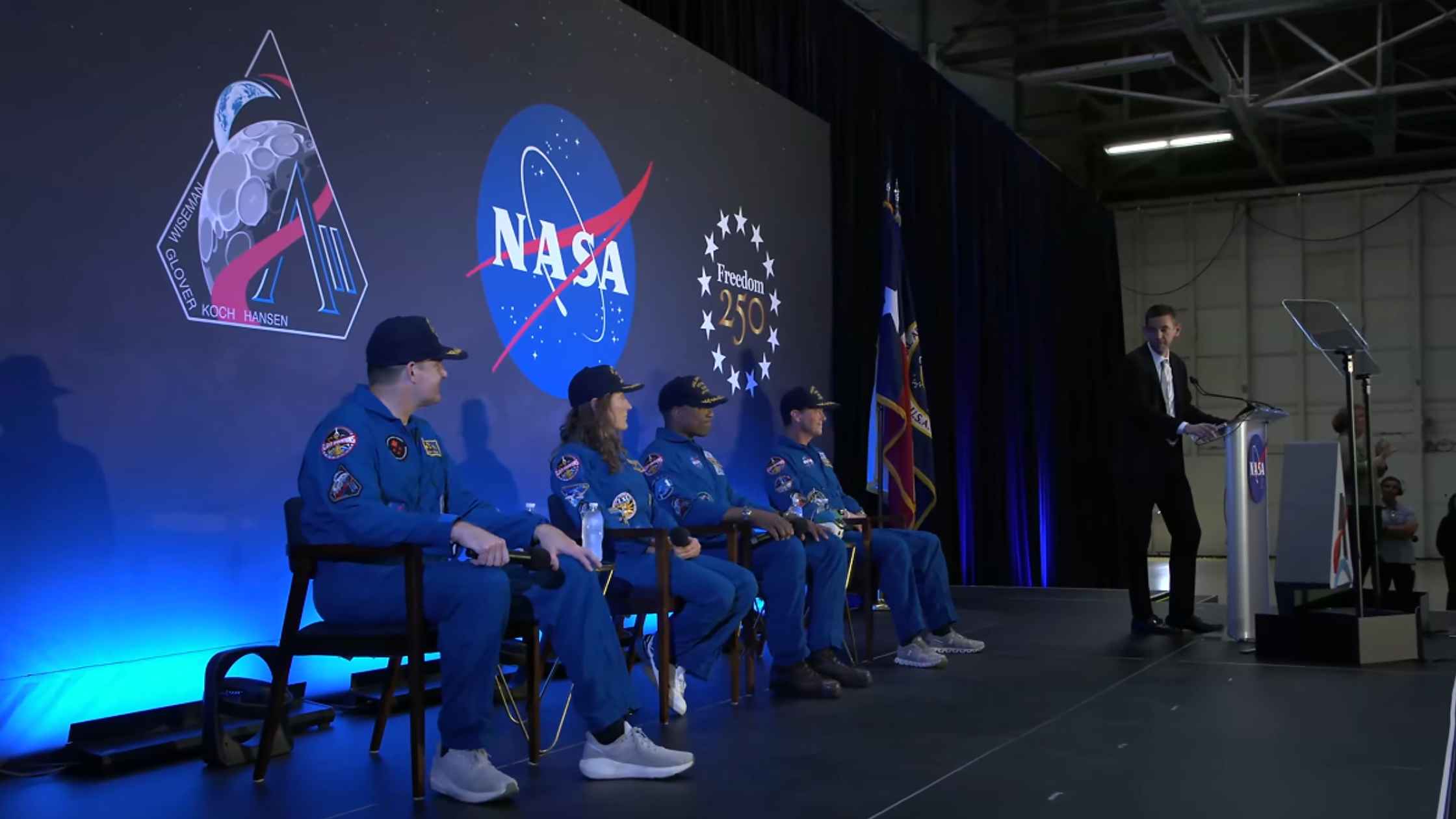
This afternoon, we're not only celebrating their safe homecoming, we're recognizing a milestone in space flight history that advances America's bold return to deep space, this time to stay. I also want to extend a warm and sincere welcome to our distinguished guests who have joined us for this extraordinary moment. We are pleased to be joined by US Representative Chairman, Brian Babin, Representative Michael Cloud and Chairman Greg Bonnen. We're also glad to be joined by the staff of Senator Ted Cruz's office. And of course, to our NASA leadership and our partners across government, industry, and abroad, we can't do this alone. Most importantly, a warm welcome to the families of our crew. Their steadfast support, resilience, and love are the quiet force that power every mission we fly. And joining us, everyone joining us on NASA+ and watching from around the world, thank you for following this mission and for standing with us in this divining moment for human space flight. Just 10 days ago, 4 extraordinary explorers, Reid, Victor, Christina, and Jeremy launched aboard NASA space launch system in the Orion spacecraft named Integrity on the first crude Artemis mission, embarking on humanity's first journey beyond Earth's orbit in more than half a century. Last night, they returned to Earth with a safe splash down in the Pacific Ocean. Today at Ellington Field, we welcome them home to Houston, Texas. With their safe return to their families, the Artemis II mission is now complete. Now, to help us bring this incredible crew out here, please join me in welcoming NASA Johnson Space Center Director, Vanessa Wyche, to the stage.
Vanessa Wyche (03:19):
Thank you, Norm. I love the energy in this room. To everyone joining us today, both in person and tuning in across the world, thank you. This is an extraordinary day, and it's your continued support that enables us to keep making giant leaps together. As Norm mentioned, just last night, Reid, Victor, Christina, and Jeremy splashed down off the coast of San Diego, concluding an unforgettable 10-day mission to the moon. Together, the crew and integrity traveled over 680,000 miles in total, journeying around the far side of the moon and return home safely. Marking a milestone within our agency's history that will echo for generations to come. Along the way, this crew completed critical demonstrations from Earth orbit operations to systems checkouts, to the translunar injection burn, and complex trajectory through cislunar space. For the very first time, Orion's life support systems were tested with astronauts on board, an essential mission milestone for deep space when we go there further and further ahead.
(04:52)
Beyond the data and demonstrations, this mission gave us something bigger, a powerful reminder of why we dare to explore. During a ship-to-ship call with the International Space Station, the crew shared a reflection that resonated around the world. How looking back at Earth, our bright, beautiful home suspended in the vastest of space, reminds us how connected we are, how alike we are, and how precious this shared planet truly is. Millions globally felt that connection throughout this mission. People didn't just watch. They were invested. They cheered every milestone. They raveled in each heartfelt moment and felt the triumph of this journey right alongside the crew. The excitement, the pride, the unmistakable moon joy, it is everywhere. And a new generation witnessed, if you can dream it, you can be it. And it will lead to countless students to become the next scientists, engineers, inventors, mathematicians, and astronauts who will dare to forge new frontiers in space and push the boundaries of what's possible for the benefit of all.
(06:15)
Artemis II was designed to test, to learn, and to prepare, and it did exactly that. Its success is a testament to the dedication of thousands of people across the agency and the world who worked tirelessly with excellence, supporting the crew through every phase of training and execution. This is the Golden Age of Exploration, defined by innovation, partnership, and a bold renewed commitment to extend humanity's reach. This mission moves us closer to exploring more of the moon, unlocking scientific discoveries, expanding economic opportunity, and laying the groundwork for the first human missions to have a sustained presence on the moon and for us to have our astronauts venture to Mars. Today's celebration is about more than hardware and milestones. It is a celebration of four pioneers who represent the very best of humanity, who traveled farther than any humans have gone before and who carried all of us along with them and now they are home.
(07:33)
Yes. It is with tremendous joy and pride that we welcome home Reid, Victor, Christina, and Jeremy. We often say that we stand on the shoulders of giants. After seeing them return from this mission, I have to say their shoulders now seem even broader for the next generation to stand on. Thank you all. And I now have the pleasure of introducing and inviting our NASA administrator, Jared Isaacman, to the stage to welcome the crew home.
Jared Isaacman (08:35):
Well, good afternoon and welcome home, Artemis II. I'd like to begin by thanking President Donald Trump and our partners in Congress for giving us the mandate and the resources to make this mission and many others to come possible. I also want to acknowledge the contributions the entire NASA workforce, our international partners at the European Space Agency and the Canadian Space Agency, and especially the American taxpayers. There is no doubt there is a price to pay when it comes to exploring the cosmos, but there is also a return, a return in the jobs it creates, the technologies that improve life here on Earth, and the inspiration it sparks and all those who choose to follow. And to people all around the world who look up and dream about what is possible, the long wait is over. After a brief 53-year intermission, the show goes on and NASA is back in the business of sending astronauts to the moon and bringing them home safely.
(09:54)
This is why it is now my great privilege to welcome to the stage Commander Reid Wiseman, pilot Victor Glover, mission specialist, Christina Koch, and mission specialist, Jeremy Hansen, ladies and gentlemen, your Artemis II crew.
(10:08)
[inaudible 00:10:47] There you go.
Speaker 1 (10:57):
A little space motion sickness on the rise.
Jared Isaacman (00:00):
Jared Isaacman (11:02):
Artemis II crew, this moment is the result of years of hard work, absolute immense expertise, and just being all around, great human beings. Now, of course, many of us already knew that, especially your families that supported you throughout your impressive careers, and on this 250,000-mile mission from earth. But now, the world knows what incredible people you are as you brought us all along with you on this epic journey of integrity. Over the last 10 days, you tested the SLS rocket, the Orion spacecraft. You manually piloted the vehicle. You performed critical operations, relayed scientific observations, captured inspiring pictures. And of course, ventured farther into space than anyone in history on a true test mission. You were, of course, the first crew to fly on this rocket in spacecraft, and that comes with risk. You accepted that risk for what we collectively stood to gain, all that we have now learned from your mission, and for where we will inevitably go from here.
(12:06)
But you're not alone. You took all of us along with you, the contributions from the pioneers of decades past, the love of your families here on Earth, and those that were watching over you from the stars. Artemis II is the opening act in America's return to the moon. As we stand here this evening, the mobile launcher is preparing to go back to the VAB, Artemis III will start being assembled, and the next crew will begin preparing to play their part. As we return to the lunar surface, we build the base, and we never give up the moon again.
(12:53)
Commander Wiseman, Reid, you said in an interview back in February that you hoped this mission would be forgotten, overshadowed by all that was to come after. But I'm very sorry to disappoint you all, Artemis II will always be remembered. It was the moment we all saw the moon again, where childhood dreams became missions. You helped the world start believing again, and this is something no one's ever going to forget. So on behalf of NASA and the space-loving community from around the world, thank you for showing us your courage, your professionalism, your unity, and your humanity. Thank you for showing us the moon again. Thank you for showing us planet Earth again. And thank you for contributing to the greatest adventure in human history.
(13:45)
Welcome home, Artemis II. And now, it's my honor to turn the floor over to Commander Reid Wiseman.
Christina Koch (14:05):
[inaudible 00:14:14]
Reid Wiseman (14:23):
What's that?
Christina Koch (14:23):
[inaudible 00:14:24]
Reid Wiseman (14:23):
Yeah, let's sync. Let's sync real quick. All right. 3, 2, 1 integrity.
Christina Koch (14:23):
Integrity.
Reid Wiseman (14:26):
So we wear these active watches, and if you hit this button, the red light lights up, which tells you you got a good battery. And I don't know why, but for the last two years when we wear these... Hey, Hopper. For the last two years when we wear these things, it just brings us back into focus whenever we get a little distracted. So, we did a lot of syncing when we were on this mission for no reason whatsoever. I have absolutely no idea what to say. This is 24 hours ago, the Earth was that big out the window and we were doing Mach 39. And here we are, back at Ellington, at home. Every one of us are just going to give a couple words, but I get the mic first, so I'm going to start. Victor, Christina, and Jeremy, we are bonded forever, and no one down here is ever going to know what the four of us just went through. And it was the most special thing that will ever happen in my life. And our families are over here, and with the exception of Dot, Susie, and Jeanie who are in the audience, but I don't know where they are, but Dot, I'm going to hit McDonald's later today in honor of your husband. No one knows what the families went through, man. This was not easy, being 200,000 plus miles away from home. Before you launch, it feels like it's the greatest dream on earth. And when you're out there, you just want to get back to your families and your friends. It's a special thing to be a human, and it's a special thing to be on planet Earth. Thank you. [inaudible 00:16:22]
(16:24)
Wait. Now, I got to make a joke. The only person who can follow that up is Victor Glover, so let's go.
Victor Glover (16:33):
And now, we're ready for questions. I'm going to keep it brief because I'm afraid to start talking. I have not processed what we just did, and I'm afraid to start even trying. When this started on April 3rd, I wanted to thank God in public, and I want to thank God again, because even bigger than my challenge trying to describe what we went through, the gratitude of seeing what we saw, doing what we did and being with who I was with, it's too big to just be in one body. And I wanted to thank our families for everything that he just said. So great words, great words, great words. I love you, but not just those five beautiful cocoa skin ladies right there. All of you. And I wanted to thank our leadership. It's changed since we were here in April of 2023, but the qualities haven't, and we are fortunate to be in this agency at this time together.
(17:55)
And so, I'm going to sit down. Thank you also to our air operations for this facility and for our ride home from San Diego. And I love you. Thank you.
Christina Koch (18:29):
Reid just said it was a setup for us who had to follow him. That's true. I couldn't sleep this morning, so I did write some words down in my mind, and I'm going to try and share them with you today. Ten days ago, this journey started with our mission manager, Sean Duval, knocking on my door in crew corridors and whispering, "Christina, we're going for launch. Get up." And it ended last night when my nurse on the ship put me to bed and said, "Ma'am, can I get a hug?" So a lot has happened since then, or between those two moments, but the start and the end were human moments here on earth. So several years ago, I was giving a speech and I was doing my usual talk about crew, and crewmates, and teamwork. And someone asked the question, "What makes a crew? What is different about a crew than a team?"
(19:38)
And I was like, "I got this." Opened my mouth confidently to tell them everything I knew about being a crewmate. And everything that came out of my mouth was completely without value. I was like, "Yeah, crews, they're in space and they work together, but they eat together too. So, they're a crew. And boats have crews. Your crew, if you're on a boat, helps if you have a paddle. That'll be good. That'll make you a crew."
(20:08)
But the last 10 days, I've gotten a little bit of a better answer on that question. A crew is people or a group that is in it all of the time no matter what, that is stroking together every minute with the same purpose, that is willing to sacrifice silently for each other, that gives grace, that holds accountable. A crew has the same cares and the same needs. And a crew is inescapably, beautifully, dutifully linked. So when we saw tiny Earth, people asked our crew what impressions we had. And honestly, what struck me wasn't necessarily just earth, it was all the blackness around it. Earth was just this lifeboat hanging undisturbingly in the universe. Uh-oh. So, I may have not learned... I know I haven't learned everything that this journey has yet to teach me, but there's one new thing I know. And that is at planet Earth, you
Norm (22:00):
You are a crew.
Speaker 2 (22:03):
Yeah.
Norm (22:03):
Thank you.
Speaker 2 (22:03):
You guys got to cut it out. Thank you. You did well.
Victor Glover (22:30):
Well, it's been a lot. This isn't helping, but this is the furthest I've been away from Reid in a long time. Thank you. All right. Let's go. Thank you.
(22:45)
I think... Yeah, thank you. I think what I'd like to share today is maybe three of the human experiences for us. And you haven't heard us talk a lot about the science, the things we've learned, and that's because they're there and they're incredible, but it's the human experience that is extraordinary for us, and it sounds like maybe for you, too.
(23:18)
And so, I think I'll start with gratitude. Gratitude for my family. Gratitude for NASA, for its leadership, gratitude for Canadian Space Agency, gratitude... The gratitude for [foreign language 00:23:38] Reid, Christina, Victor. Oh, Canada. Gratitude [foreign language 00:23:47] or gratitude for the bravery and the courage for the teams to be no-go when we were no-go and go when we were go. That took a lot. And I don't think people will really ever fully comprehend how well-supported and trained we were. It is almost unbelievable.
(24:10)
All right. And as my daughter would say, I'll try and stay locked in here. Okay. The next one is joy. We have a term in our crew that we coined a long time ago, the joy train. And I think you saw, sounds like you saw, a lot of joy up there. There was a lot of joy. We're not always on the joy train, this crew. There are many times we're not on the joy train, but we are committed to getting back on the joy train as soon as we can, and that is a useful life skill for any team trying to get something done.
(24:54)
And the last one is... I need your help for this. Come on up here guys. The last one is love. What you saw was a group of people who loved contributing, having meaningful contribution, and extracting joy out of that, and what we've been hearing is that was something special for you to witness. And the reason I had them form up here with me is because I would suggest to you that when you look up here, you're not looking at us. We are a mirror reflecting you, and if you like what you see, then just look a little deeper. This is you.
Speaker 3 (25:38):
Dude, come on.
Norm (26:08):
Wow. Thank you, Reid, Victor, Christina, and Jeremy for your leadership, your integrity, for representing the very best of human exploration. You are the tip of the spear representing all of the ground teams working along your side to make this mission a success. And, by the way, welcome home.
Speaker 4 (26:30):
Yeah.
Norm (26:41):
NASA is committed to working with international partners to successfully accomplish our missions. The US-Canada Cooperation for Artemis II marks a historic partnership with Canadian astronaut Jeremy Hansen, becoming the first non-American to fly around the moon. And now... That's the energy. And now, it is my pleasure to introduce Canadian Space Agency President, Lisa Campbell.
Lisa Campbell (27:15):
I know it's not protocol, but come on.
Speaker 3 (27:15):
Thanks, Lisa.
Speaker 5 (27:16):
Thank you.
Lisa Campbell (27:16):
We're so happy to have you back.
Victor Glover (27:16):
So are we.
Lisa Campbell (27:42):
Thank you. Hello, everyone. [foreign language 00:27:45]. Everybody's doing well? Excellent. Reid, Victor, Christina, and Jeremy. It's wonderful to see you safely back on Earth. For the first time in over 50 years, humanity has returned to lunar orbit and the world was watching. Through your perspective, we saw the earth in its full complexity and interconnection, and through your dedication, our greatest strengths, ambition, collaboration, ingenuity took flight once again, bringing humankind further than before.
(28:17)
Jeremy, with you representing us on board and Canadian Space Agency astronaut, Jenni Gibbons, Dr. Gibbons, right over there.
Speaker 6 (28:49):
Well Jenni.
Lisa Campbell (28:51):
Supporting the mission on console as Artemis Capcom, Canada's incredibly proud to be part of this endeavor. It's a powerful moment for our partners at NASA, for Canada, and for everyone who believes in what humanity can achieve together. Our deep and enduring partnership in space, working side by side in the shuttle era, through the International Space Station, and now through Artemis, all the way past the far side of the moon and back.
(29:16)
To our partners at NASA, thank you for this collaboration. Bold leadership, strategic investment, technological expertise brought together across nations. This is what delivers results. And the Artemis program shows us that when we align around common purpose, we can drive prosperity for generations to come. What's happened today, as you said, Administrator, has anchored in decades of leadership and proven expertise. And, in Canada, we've invested heavily in robotics in space, so we believe we're well positioned to deliver sought after capabilities that'll support the infrastructure and autonomy needed for a sustained human presence on the moon, and you've shown us the way.
(29:59)
Jeremy, over the last 10 days, you've represented the very best of what it means to be Canadian. You've exemplified our deepest values: discipline, humility, and hard work. And to the Artemis crew, the four of you embodied what teamworks look like at its very best. It was such a pleasure to connect with you live from Canada, even at three in the morning. During your mission, it was such a powerful example of unity in action, and we had a full room at three and two in the morning.
(30:29)
Together, this historic journey has reminded us that exploration begins with curiosity and that big dreams are worth pursuing and worth sharing. With your safe return to Earth, you've completed a new chapter in humanity's return to the moon and we're so proud.
(30:44)
[foreign language 00:30:57].
Norm (31:02):
We are proud to have strong bipartisan congressional support for the United States Space Program, and we're honored to be joined by members of Congress here with us today. Please join me in welcoming US representative, Chairman Brian Babin, to the stage.
Brian Babin (31:31):
Thank you. It's hard to know how to follow something like that. It's unbelievable. Just want to say how honored I am to be representing the 36th Congressional District of the State of Texas. For all these... Thank you. For all of this is transpiring and it's hard to describe.
(32:06)
I'm a dentist by profession. I'm not an attorney or a wordsmith. I usually turn to my wife to write my speeches and help me to flower them up. But you guys have really inspired us. And Christina, when you answered my question the other night, the most inspiring thing that you would like to relive would be the launch and seeing that eclipse. And Administrator Isaacman sent me the picture of that eclipse, which I have on my phone and which I'm going to blow up and put in my Washington office too. It is a awesome thing. That's all I can say.
(32:42)
You are welcome home. We're so very proud of you. You've inspired not only America and Canada, but the entire world and generations of humans that are going to be coming after you. We're grateful not only for your courage and your
Brian Babin (33:00):
... your commitment, but also for the sacrifices made by your families.
(33:05)
As my wife and I have 17 grandkids, I don't like to be away from them only about 24 hours. So when you're three quarters of a million miles away, I can only imagine how you want to get back to those beautiful people over there. So I thank you families as well.
(33:22)
And the team that has made this entire thing possible. It's not just four folks here. It's tens of thousands and many, many years and decades basically.
(33:35)
Over the past 10 days, Artemis II has demonstrated to the world what America is capable of and our international cooperation is capable of. You have traveled farther from earth than any humans have ever gone before.
(33:50)
Pushing the boundaries of exploration, reminding us of the pioneering spirit that defines our great country. And that goes for Canada as well. Through years of shifting priorities, technical challenges, budgetary pressures, Congress has maintained a steady continuity of purpose, providing the long-term support necessary to keep the Artemis program moving forward and ensuring America's return to the moon remain the primary objective.
(34:24)
And while we celebrate this extraordinary achievement, we must also recognize what it represents. This mission is a critical step forward in achieving President Trump's vision of returning Americans to the moon in 2028 and doing so before our competitors do.
(34:44)
And there is still much work ahead, but this moment should renew our confidence and it most certainly has. The United States is ready for this challenge and we are ready to lead. And as we lead in space, we carry with us the principles that have always guided us, freedom, innovation, and opportunity.
(35:08)
And this is only the beginning of our journey. America is going back to the moon and this time we are going to stay.
Reid Wiseman (35:16):
Yes. Let's go.
Brian Babin (35:19):
God bless our astronauts. God bless NASA. God bless America and Canada. Thank you so very, very much. Appreciate y'all. Thank you.
(35:36)
And now I'd like to introduce my friend and colleague, Michael Cloud from the 27th District, south of me. He's driven up here today to honor us with his presence. And he's also an appropriator. Thank you all very much.
Michael Cloud (36:13):
Well, I cannot tell you what an honor it is for me to be here. As a young child, I would look to the stars like so many others. And I actually wanted to be an astronaut. I still want to be an astronaut, truth be told, but it is certainly an honor to be here and to be a part of this historic moment.
(36:32)
No doubt of everyone in this room and of the millions watching perhaps, no one feels the gravity of this moment like you do, I'm sure. Quite literally. But thank you for all you've done to inspire us to dream again. You and everyone who has supported you.
(36:58)
As a father, I have three kids and I know some of you do too. And it's just for them to have something to look to, to dream again, to build again, to achieve again, us as a nation desperately needed this. The world needed this. We needed to see what could be done when we could come together again.
(37:19)
I'm reminded of the psalmist in Psalm 8. He said, "Even as we look to the night's sky and as we look at creation and behold the stars and the moon, we begin to think about what is mankind from God's perspective."
(37:34)
And so this trip gave us a different way of looking at ourselves. And the way that you have displayed the best of us has been extraordinary and has given us a perspective as we continue to push ahead into the future.
(37:52)
Your travels, your exploration, the years of work, the dedication for you, for your teams, all the prep that goes into this. And yes, as someone mentioned, thankfully, administrator for mentioning the taxpayer as well involved in this as well in our job in Congress to steward that.
(38:08)
But this is a noble cause. It's a worthy cause. It's worthy of our best efforts as a nation. And thank you for what you've done. You've given us something to dream of in. You've inspired us and you've given us something that we can build upon for the future.
(38:21)
God bless you. Thank you for your work. Thank you, NASA and all of you here. God bless you.
Reid Wiseman (38:25):
All right. Maybe this thing's working maybe it isn't. No, Norm, just stay right here. Just stay right here. We're going to do a NASA go back, but the whole time that we've been training and when we've been in flight, we have called this a relay race.
(39:06)
We, the four of us have batons sitting at our desk. They give us all colors. I'm red. You're gold-
Speaker 7 (39:12):
Gold.
Reid Wiseman (39:13):
... gold, blue and green. And when you're up there, you end up identifying yourself as red, gold, blue, and green. We've got aurora colors. So we have those colored batons sitting there.
(39:24)
But I just want to tell you, and Jared, looking at you and knowing the fortitude that you have and seeing the direction that this agency is going in right now, we would be remiss if the four of us didn't look right there and say, "It is time to go and be ready."
(39:37)
Because it takes courage, it takes determination, and you all are freaking going and we are going to be standing there supporting you every single step of the way in every possible way possible. Thank you.
Norm (40:06):
Thank you, Reid, and thank you to all of our representatives. We could not explore the unknown without your support, and that's for sure.
(40:14)
Well, what an incredible milestone. Today, we've celebrated the successful return of a mission that carried humanity back into deep space, captivating millions, inspiring the next generation, and reaffirming the United States leadership and dominance in both low earth orbit and the journey back to the moon.
(40:35)
To the Artemis II crew, welcome home and thank you for sharing this mission with all of us. To the workforce across NASA and our partners, this achievement belongs to you.
Reid Wiseman (40:45):
Yes. Whoo. You did it. Go, go, go.
Norm (41:17):
Your dedication, expertise, and passion made this mission possible. And to everyone watching, this is just the beginning. We are entering a new era of exploration, returning to the moon, building a sustained presence there, and preparing for missions to Mars. And we're glad you're on this journey with us.
(41:41)
You can continue to follow NASA and Artemis on NASA+ and across our social channels. But before we close, let's bring our crew back to center stage one more time for a big Texas round of applause and a big welcome home.