

Chairman Wicker (00:00):
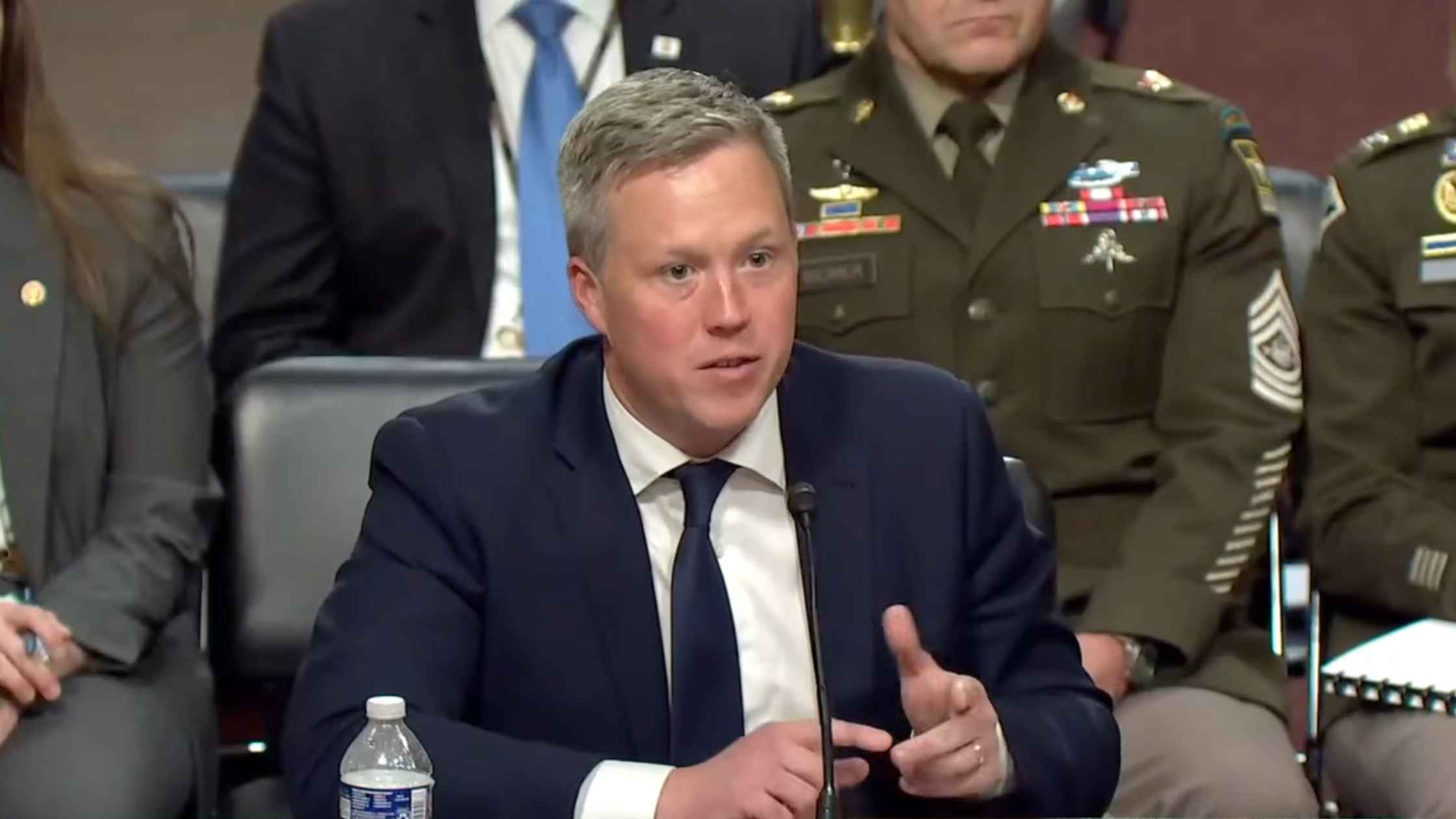
Many think of the Western Pacific as solely naval and air theater, but our two witnesses certainly do not agree with that. Our ground forces continue to make absolutely crucial contributions to security in the first island chain, including through massive and growing partnerships with our South Korean, Japanese ,and Filipino treaty allies. All these demands underscore the importance of fielding and sustaining the most advanced and capable systems in the world from missile defense and long range strike weapons to resilient command and control systems and new methods of breaching defensive lines.
(00:40)
These capabilities are not theoretical. They're being employed today to protect American lives and uphold stability. The Army provides the backbone of our global logistics. This enables joint operations and it delivers the land combat power that it takes to deter aggression and if necessary, to win decisively. The Army must be ready, but our readiness today is frankly uneven. Modernization efforts have produced promising capabilities, but not at the speed or scale required by the threat. I think our witnesses will agree with that. At the same time, the Army continues to struggle with the operational readiness rates of its primary equipment, its maintenance backlogs and its munition stockpiles all are under extreme strain.
(01:32)
Under Secretary Driscoll, the Army's made significant strides to prepare for changing combat conditions. So I commend the Secretary on that. The Army has acted with discipline and foresight to develop a new generation of weapons. The precision strike missile, low cost munitions, the new MV-75 helicopter, the M1E3 tank, and finally after 20 years of struggles, a more coherent command and control system. I also appreciate the Army's improved approach to modernization of our organic industrial base.
(02:10)
I remain troubled that the Pentagon is not moving fast enough or has not been moving fast enough to improve the logistics capability and capacity of the joint force and the Secretary will want to talk about that certainly today. Logistics sustainment and pre-positioning will be decisive in any future conflict. The Army must demonstrate how it will enable the joint force to operate effectively across that theater. This will require additional resources to bring unmanned surface and air vehicles into the force at scale to purchase next generation capabilities to sustain US forces in dispersed locations.
(02:54)
I want to also commend the Army led by US Army Europe in developing new methods of warfare in response to tactical and operational lessons learned in Ukraine. The Eastern Flank Deterrence Line concept consists of largely unmanned trip wire combined with layered missile defenses and distributed strike capabilities. It's exactly the direction we need to go and I hope the Army will field those capabilities to European command rapidly. So I look forward to hearing from Secretary Driscoll and General LaNeve about how to handle these challenges. We will need clear priorities, disciplined execution, and transparent communication as we move forward to secure that the US Army remains ready, modern, and capable of meeting the moment.
(03:46)
With that, I turn to my colleague and friend Ranking Member Reed.
Ranking Member Reed (03:51):
Thank you very much, Mr. Chairman and Secretary Driscoll, General LaNeve, welcome. Thank you for both of your outstanding service and please convey my appreciation to the soldiers and civilians serving under your command.
(04:05)
I want to begin by expressing my deepest condolence of the families of those who have sacrificed and were lost in the Middle East over the past several months. Their sacrifice deserves our greatest respect and gratitude. I also want to acknowledge the absence of General Randy George. Last month, Secretary Hicks has removed him as Army Chief of Staff without explanation. General George is one of more than two dozen general and flag officers that were fired over the past year, not for cause, not for misconduct, but for reasons the Secretary of Defense has refused to share with this committee.
(04:40)
What we do know is this, nearly 60% of those fired are female or Black in a field where women and minorities represent less than 20% of general officers. That is a disturbing pattern that directly undermines the merit-based promotion system. Secretary Dristoll, General LaNeve, these issues are of great importance to this committee and I would ask for forthright answers today.
(05:04)
The Army has been extensively deployed over the past year. The Army's tactical contributions to the operations of Venezuela, Iran, the Red Sea, and its continued support to Ukraine have been outstanding. The soldiers and commanders executing these missions have done their jobs with great professionalism and skill. I disagree with many of President Trump's foreign interventions, but my concerns are strategic, not with our military forces. Secretary Driscoll, last year you announced an ambitious plan called the Army Transformation Initiative. Among other changes, this initiative combines major commands, restructures brigade combat teams, reorganizes aviation and moves toward capability-based portfolio acquisition. These are significant changes. I want to understand how the Army is balancing this transformation while it is conducting combat operations overseas and maintaining a significant role on the Southwest border. Secretary Driscoll, I would ask for updates on these efforts.
(06:05)
The Army is also facing a nearly $2 billion readiness shortfall, largely because DHS has failed to reimburse the Army for border support missions. The committee will want to understand, and we made some progress in the closed session, what this means in concrete terms. I've received concerning reports about the potential for canceling training rotations, grounded flight hours, and reduced guard and reserve training resources. These are real costs for real units. I would note that rather than addressing this shortfall, the reconciliation bill under consideration in the Senate would send roughly $70 billion more to DHS, the same department that has not paid its bills to the Army.
(06:52)
At the same time, the Army has proposed increased funding for important programs like munitions procurement. That effort is well reasoned. However, even if production timelines shortened from three years to two, the munitions gap we have suffered from the war in Iran does not close overnight. I would like to know where Army munition stocks stand today and what the realistic replenishment timeline looks like given expenditures in Iran. Further, while I understand the Army is realigning its civilian workforce, the department has been far too slow to start civilian hiring after last year's reckless dose cuts and hiring freezes. Army has also curved its SMART Scholars program, which fast tracks STEM trained civilians into future leadership roles and has disrupted partnerships between Army depots and local community colleges.
(07:42)
Secretary Driscoll, the Army's civilian workforce is a readiness asset. Howling out has long-term consequences that may not show up in this year's budget, but will absolutely show up in this committee's hearings years from now. I want to hear how you are planning to speed up civilian hiring and ensure the Army is investing in its future workforce. Finally, I'm interested in hearing more about the Army's modernization priorities. The development of next generation helicopters and tanks, infantry fighting vehicles, UAS and counter UAS systems, offensive and defensive fires, and the evolving pre-positioning model are welcoming efforts, very much so. In a congested logistic environment where we stage our material will matter as much as what we have on hand.
(08:31)
I would appreciate an update on how the Army is balancing these efforts. I look forward to your testimony and thank you, Mr. Chairman.
Chairman Wicker (08:38):
Thank you, sir. And Secretary Driscoll, you are now recognized for your opening statement.
Secretary Driscoll (08:44):
Chairman Wicker, Ranking Member Reed, distinguished members, it is an absolute privilege to address you today. After a year in this position, I am prouder than ever to represent our soldiers and their families. As all of you know, our soldiers are the very best in the entire world. They're bold, decisive, and they can overcome anything when we properly enable them. That's why I spent over 130 days on the road across 19 countries and 25 states to hear directly from them. I ate with them, put hands on their equipment, and had candid discussions with soldiers of every single rank. What I heard was clear. Our soldiers are ready to innovate and win, but our own bureaucracy and regulations are still holding them back.
(09:31)
Getting what soldiers need to win and making the Army budget actually work for them is definitionally a bipartisan topic and I know all of you agree with that. You supported our army for decades and we wouldn't be here without all of you. But we know the system that should benefit soldiers remains broken. Quality of life and battlefield advantage aren't always the number one budget priority. It's a simple fact and we need your help to continue to change it. We need right to repair legislation, relief from pre-World War II laws and significantly more budget flexibility. Thank you so much for last year's progress, but if we're going to win the next fight, we must go even further.
(10:17)
Technological change is accelerating, warfare is evolving and speed is absolutely critical. Your help to either lower barriers to innovation or stick to the decades long status quo makes all the difference. I invite all of you to come see our transformation firsthand. We are partnering with private industry to adopt the best tech, talent, and trade craft. We're inviting those partners onto our bases to unlock dormant resources and offset federal budget delays. We are blazing a trail for our nation on nuclear energy, counter drone capabilities and military AI. Despite red tape, we're delivering better dining, barracks, wifi, and 3D printed barracks. Even though it can feel like the deck is sometimes stacked against us, the United States Army is a beacon of transformation.
(11:10)
For instance, as we speak, we are hosting the largest hackathon in human history to retroactively jailbreak our siloed equipment. It's named Operation Jailbreak. Last month in Europe, soldiers showed me how our software systems are compartmentalized, isolated, and ineffective against modern threats. Meanwhile, Ukraine's Delta common operating system, their modular open system architecture command and control system is absolutely incredible. It fully integrates every single drone, every sensor, and every shooting platform into just on single network. Ours does not. Unfortunately, for decades, our budget process incentivized companies to protect their intellectual property at all costs, creating walled gardens in our C2 architecture. And this has been the status quo for far too long. It is no longer acceptable and industry is helping us solve it.
(12:08)
I contacted nine of our defense primes and other large partners who immediately agreed to send thousands of pieces of equipment, engineers and scientists to Fort Carson. Together we will force our way through the firewalls, link every system and achieve true right to integrate. This is our first sprint and we will do it again and again and again until we get it right. I want to be clear, this is a perfect example of the Army's potential for speed and innovation. Absolutely no one else has the talent, the drive, and the obsessive work ethic to pull this off so quickly.
(12:46)
Operation Jailbreak is the first of many sprints to bypass red tape and bureaucracy. What we're doing in Colorado should be the standard operating procedure going forward. It's the iterative process that makes America's tech sector the very best in the world. But you would be amazed at the regulatory walls that stood in our way, and we've expended a sinful amount of energy just to do the right thing. Imagine what we can do if you continue to help us slash those restrictions. We can do more if you help us balance oversight with speed. We can maximize our budget if you help us partner with America's entrepreneurs. We can move faster if you help us shed obsolete equipment and invest in the future. And with your help, we can ensure our army remains the dominant land fighting force for the next 250 years. Thank you so much for having us and I look forward to answering your questions.
Chairman Wicker (13:44):
Thank you very much, Mr. Secretary. General LaNeve, if you are recognized.
General LaNeve (13:48):
Thank you, sir. Chairman Wicker, Ranking Member Reed. Thank you for the opportunity to appear before this committee today. The credibility of our army is defined by what it's prepared to do, not what it intends to do. So every decision I make enables our soldiers to be more lethal and ready to fight and win and serve as the backbone of the joint force. In the Indo-Pacific, we're building a force posture to deter threats to US national interest and designed to extend the operational reach and endurance of the joint force. Right now, 87,000 soldiers are campaigning throughout the region. Our typhoon missile systems are forward deployed to the Philippines of Japan. We position LTAMS in Guam and IFPC unit in Korea, extending next generation air and missile defense against current threats in the region.
(14:36)
The first and third multi-domain commands are now operational in the region and this fall of the fourth multi-domain command headquarters will stand up at Fort Carson. Each multi-domain command brings together long range fires, intelligence, electronic warfare, space, and cyber, all integrated into a single theater level capability designed to support the joint force commanders across vast distances of the Pacific. Every one of these capabilities exist because of the investments this committee supported. In the Middle East, our forces continue to defend US personnel and partners while sustaining layered air and missile defense, long range strike capability, and operational logistics across CENTCOM. At home, we're preparing the force for future conflict at our combat training centers. It's where we train our soldiers to fight against an adversary in the mud to solve complex problems and to test our latest systems. But we cannot field modern kit while sustaining agent systems that consume time, money, and manpower. Divesting legacy platforms reduces the maintenance demand that falls hardest on our junior soldiers and frees resources to advance next generation systems.
(15:46)
That's why we restructured how we acquire, design, sustain, and field equipment with decisive focus on speed, the right to repair and system modularity. That thinking is already reflected in some of our next generation platforms, like the XM30 Infantry Fighting Vehicle, the M13E Abrams, and the MV-75 Cheyenne, which provides unprecedented speeds, range, and flexibility. Each of these systems are designed to the next operational upgrade requires integration, not a brand new start. But none of this matters if we can't produce and sustain at scale. And that's why we continue to modernize the OIB through advanced manufacturing, depot modernization, and expanded partnerships with industry, including enhanced use leases that accelerate infrastructure development and production capability. And while the industrial capacity is important, the strength of our army is only as strong as our ability to retain experienced soldiers and whether the force we're building reflects the standards we claim to uphold.
(16:46)
That standard includes four billion in infrastructure investments throughout 2026, rolling out our campus style dining facilities, scaling our holistic health and fitness across the entire force. And soldiers are seeing the difference and so do American citizens. Our recruiting numbers are soaring. We're on track to achieve this year's succession target ahead of schedule because in the end, soldiers are the reason your army can do what it does. Your army delivers the intelligence and fires that enable maneuver. We sustain operations, we protect the force. We provide the command and control architecture that allows a joint force and America's allies to operate together every component of the fight, the joint fight depends on our army's ability to do all those things simultaneously and exceptionally well. We will not fail our country, this we'll defend. And thank you for your continued support as we sustain the best army the world has ever known.
Chairman Wicker (17:42):
Well, thank you very much and now we begin our round of questioning. Let me start with you, Secretary Driscoll. Operation Jailbreak involves the right to integrate. This is brand new this month. Is that right, Secretary Driscoll?
Secretary Driscoll (18:04):
As of about a week ago.
Chairman Wicker (18:06):
All right. Okay. How many companies are involved at this point?
Secretary Driscoll (18:11):
So we started chairman with the five primes, Anduril, Palantir, L3. We're the original. They have since been inviting other companies to come out. If I were estimating, I would guess 30 to 50 companies are currently involved by day 10. And what we have told industry is we will take every single piece of equipment that our army uses, this is thousands of pieces of equipment, and all of them will be jail broken. Which just practically means all of them will be able to share information out of the system and receive information into the system. And what's so powerful about this is once you can do that to these pieces of equipment, and this is what we've learned from the Ukrainians, this is where you can start to layer in things like generative AI models to help you with decision making.
Chairman Wicker (18:54):
Okay. How long have the Ukrainians been using this concept?
Secretary Driscoll (19:05):
I would say the entire war.
Chairman Wicker (19:09):
Okay. Is it frustrating to you that now in the fifth year we're just embracing this concept this month, May of 2026?
Secretary Driscoll (19:21):
Chairman, I would look at myself and only myself that we haven't moved faster on it. I do think that what we have that the Ukrainians don't have is we have deep infrastructure, we have deep expertise and the downside of a bureaucracy can also empower some upsides of a bureaucracy. And so what has been incredibly valuable for us, and I don't think respectfully the Ukrainians could have done it in 10 days, is we have basically the entire defense industrial base is now moving to this.
Chairman Wicker (19:49):
Have signed on?
Secretary Driscoll (19:51):
They are actively shipping equipment and we have scientists and computer engineers currently in Colorado making everything flow. And so I think what we will be able to do in six weeks will be unlike anything that could be done anywhere else in the world.
Chairman Wicker (20:03):
Okay. So in six weeks, you're going to have tangible results?
Secretary Driscoll (20:08):
Unequivocally.
Chairman Wicker (20:11):
Most interesting. How fast is the Army moving to embrace low cost munitions across portfolios and when are we going to start moving faster? So both of you can answer that. Yeah, General.
General LaNeve (20:33):
Sir, we're tied in with the Deputy Secretary of War's Munitions Council. We're moving as fast as we possibly can. I think the goal is to have a magazine depth that supports both low cost munitions and our exquisite munitions so we have the proper fit and the proper numbers that we think we're going to need in a future conflict.
Secretary Driscoll (20:55):
And Chairman, I would say under Secretary of War and the President, we've spent the first nine months of, at least my time in the seat, redoing a lot of the bureaucratic structures that existed with how we buy things, how we test things and how we scale things. And there are some leading indicators to me that make me believe that we have made strong and lasting changes that will allow us to do this much more frequently. So if you look at the day five of the war where we wanted to go get more interceptors for the Shahed drones, we were able to contract for Merops and 10,000 Bumblebees within five days. Those were showing up in theater in packages of 1,000 or more and we were able to flow soldiers in as a train the trainer model. And that to me is a massive success that shows me or makes me believe that all of the changes that had occurred earlier in the year are actually working and allowing us to be able to start to scale these lower cost solutions.
Chairman Wicker (21:53):
Mr. Secretary, in 60 seconds, can you give us a quick overview of your role in what might happen in the Indo-Pacific with regard to the Army?
Secretary Driscoll (22:05):
Absolutely. I think what we've seen in CENTCOM in the last couple of months is the Army has a huge role to play. We are the logistical backbone of what is occurring in the theater. We are able with our long-range precision fires to reach out and touch the enemy in ways that just the Army historically had not been able to. And then one of our superpowers as an army is we can disperse quickly. And so whether it's on the air defense side or on the offensive side, the United States Army will play a huge role in whatever happens in the Indo-Pacific.
Chairman Wicker (22:34):
All right, I'll yield back. Senator Reed.
Ranking Member Reed (22:37):
Thank you very much, Mr. Chairman. And let me commend you, Secretary Driscoll, because you not only sense the change in warfare, but you seized an opportunity and you're pushing through. Well done. Based on the experience in Ukraine, we understand fundamental changes are taking on. And I sort of characterize it when I served in the military a few years ago, the manager was shoot, move and communicate. Today it's communicate so you can shoot and move and hackathon goes right to that principle issue. Well done.
(23:10)
Let me ask another question though. The military promotion board system is central to our military in every way, shape and form. The law that we promulgated requires the selection board use a comprehensive evaluation process to review an officer's entire record and select officers who are, quote, the best qualified for promotion in future service. It's based on the collective assessment and judgment of their peers throughout their OERs and also the senior officers on the board.
(23:42)
Can you tell us why Secretary Hegseth has directed that five names be withheld from the most recent Army one star list concerning officers accused of no misconduct and did you support or recommend the actions by the Secretary?
Secretary Driscoll (23:57):
Ranking Member, the private conversations between me and Secretary of War, I'll never talk about those. I will say that the United States Army has always followed the rules and regulations around promotions board.
Ranking Member Reed (24:09):
Well, I don't think there's a very clear role for the Secretary of Defense to take off individuals from the board. What other promotion boards have been subject to this review?
Secretary Driscoll (24:24):
I'm sorry, Senator, would you mind repeating?
Ranking Member Reed (24:27):
Secretary of Defense removed several names from a promotion board, which I think is highly unusual, to be diplomatic. What other boards has he reviewed with the intent perhaps of removing people from the board from the recommendations?
Secretary Driscoll (24:44):
Senator, as far as I know, no other names have been put on a different scroll.
Ranking Member Reed (24:52):
So what incentivized the Secretary look at this particular board?
Secretary Driscoll (24:58):
I do not know, Senator.
Ranking Member Reed (25:00):
Well, it's a question I think would be important to ask. Now, if these officers were judged by their peers and their superiors to be of as statutorily required, best qualified promotion and future service, they've been denied immediate promotion. Would they still be eligible to go before another board?
Secretary Driscoll (25:24):
As I understand it mechanistically, Senator, the scroll that was submitted to the Senate did not include these officers' names on it. Another scroll could be submitted either individually or with the collective four to the Senate for promotion as it stands today.
Ranking Member Reed (25:39):
Are you actively reviewing the individual cases so that you can determine yourself that these individuals should be reconsidered for a board and promotion?
Secretary Driscoll (25:50):
I can commit to you, Senator and the entire committee, that General and Eve and I are advocating for American soldiers every single day and we are constantly working to make sure that the Army is promoting the best.
Ranking Member Reed (26:04):
My fear is that this is not something that's obscure, but it's very relevant to every officer and every person in the Army and that they've seen literally a life's work suddenly terminated without explanation by the Secretary of Defense. That doesn't send a good message, I believe, to the forces.
(26:22)
Let me raise a subject that is seldom considered here, Kwajalein. As you know, Mr. Secretary, the Army is responsible for Kwajalein. And as you also know, I suspect the status theory is terrible. Out of date radars, it's the major missile testing system for the Army, for the whole Department of Defense. Can you confirm that the Army is still in charge and how are you going to remedy the poor situation?
General LaNeve (26:52):
Sir, we are. We still are the executive agent and we're looking at ways to improve the infrastructure there. It's a critical component for testing, as you say, in the Pacific and we're not walking away from it.
Ranking Member Reed (27:08):
Thank you. In 30 seconds, General LaNeve, based on our experience in Ukraine, the observation we've conducted, how are you going to integrate that into the new combat vehicle systems? My sense is combat vehicles are very much vulnerable to drones and other systems, but can you respond?
General LaNeve (27:28):
No, sir. And thanks for the question. That's one of the key secret sauces in our new PAEs that the Secretary and team created is to be able to use lessons learned and feed it into the acquisition process, get it out into the soldier's hands, test it, and then get the feedback back into the acquisition to be able to have a system that continually innovates for the future threat. So our lessons are being incorporated in all of our systems across the board. Thank you very much. Thank you.
Chairman Wicker (28:02):
Thank you, Senator Reed. Senator Shaheen. I mean, Senator Ernst. I'm sorry.
Senator Ernst (28:08):
Thank you.
Chairman Wicker (28:08):
It's right here in front of me.
Senator Ernst (28:10):
Thanks, Mr. Chair. And thank you, Secretary Driscoll and General LaNeve for being in front of our committee today and for your continued service to our nation. I do want to start with the Army Transformation Initiative. And I want to thank the Ranking Member for bringing up the dismissal of General Randy George because Secretary Driscoll, when you first came into your position, I remember meeting with you, met with General George about the Army Transformation Initiative, which was long, long overdue. This committee has been very clear that we support the goal of a leaner and more lethal army. And with the dismissal of Randy George, we also saw the dismissal of General Hodne who was the US Army Transformation and Training Command Commander, two very unfortunate dismissals at a time when we do need that leaner, more lethal army.
(29:16)
So as we look at this, we need to achieve electronic dominance. We need to get unmanned systems into every division and we need to enable AI-driven command and control at the Theater Corps and division levels. Secretary Driscoll, can you provide an update on what tangible progress we are now making in the Army Transformation Initiative? And can you talk about some of the areas where we did in the past several months achieve greater capabilities within the Army because of the ATI?
Secretary Driscoll (29:57):
Absolutely, Senator. I'm incredibly optimistic that the groundwork that we've laid in the last 10 to 16 months has allowed us to move more quickly as an army. We've been able to do new starts on an M1E3, a new version of a tank, the FLRAA, a long range helicopter has gotten a lot of investment and focus. Our next gen C2 has expanded the number of divisions and we were able to do that much work more quickly than we were originally able to. And part of that is because of the hard decisions that we made on where to cut spending. It is very hard once a system and a program get up to be able to stop the spending in the future because all sorts of different reasons make it where that momentum is pretty difficult. I'm incredibly grateful to all of you for supporting us. We saved about $48 billion we think over the fear period that we've been able to reinvest into our transformation.
(30:53)
And then the last bit I'll say is a lot of it has been systematic changes. So when we look at what we did converting over our PEOs to PAEs, essentially what we did is we took 13 silos of decision making and within that silo, you'd have 15 different stops between when we wanted to buy something and when we actually could purchase it and any of those stops could kick it back to the beginning. And so for acquisition decisions, some of the times it would take between two and four years to get something we knew we wanted into the hands of soldiers. By the time we actually got it there, it was already outdated. We have been able to collapse those systems down and do much more like what occurs in the commercial sector where we're doing the equivalent of putting our engineers with our manufacturers and our accountants and our lawyers all on one team.
(31:37)
And so an example of when we've been able to move very quickly where I don't think we could have pre ATI is getting the Merops and the Bumblebee into the CENTCOM. From day five, we decided we needed it. By day 10, we had contracted for 23,000 and by day 20, they were starting to flow into theater.
Senator Ernst (31:56):
That's really good. And I do hope the other service branches take a look at what the Army has been able to achieve and find a way forward in their own service branches because this is pretty exemplary. And then as we're looking ahead, what are the next major phases in this initiative and where do you see that we are assuming the greatest risk as we're executing?
General LaNeve (32:23):
Ma'am, thanks for the question. You touched on it. So we spent a lot of time in the beginning of Army Transformation looking at division and below, really at the tactical level. You hit it spot on in your opening question. We're taking a hard look now at cores, Army Service Component Commands and what we have to change inside of those organizations to take on more of a role in how we're going to have to fight in the future. And that's a lens that we're taking a look at right now.
Senator Ernst (32:54):
That's wonderful. Yes. Secretary?
Secretary Driscoll (32:56):
And Senator, I'd say the biggest risk is not going fast enough. Next
Secretary Driscoll (33:00):
Next Gen C2, we think it will be in all the divisions or we're modeling it to be in all the divisions within five years. I don't think that's sufficient. I think we need to do it in two or three. It is just simply a spending pacing item at this point because we know what we need to do.
Senator Ernst (33:13):
Okay. Thank you gentlemen for being here.
Chairman Wicker (33:15):
Thank you, Senator Ernst. There's a vote going on now on the floor, actually a series of two votes. We will continue our hearing during the vote and I'll be leaving and I think Senator Budd will take the gavel for about five minutes. At this point, I call him Senator Hirono.
Senator Hirono (33:36):
Thank you, Mr. Chairman. Welcome to both of you. Secretary Driscoll, I want to ask you about your approach to the negotiations evolving Hawaii's military training lands consisting of some 29,000 acres. I understand the importance of these training lands for army readiness and Indo-Pacific deterrence. I also understand the importance of this land and these negotiations to the people of Hawaii and the native Hawaiian community. And that is why I have been engaging with DOD leaders about how these negotiations will proceed expressing the need for community input for a number of years now. And at your confirmation hearing and again at last year's posture hearing, you committed to negotiating in good faith with the state and the community. So it was concerning that instead of what I would consider open communication and transparency, the army last year pursued unilateral condemnation language as shown by your attempt to add last minute NDA language to support condemnation and Congress responded by instead reinforcing the continuing need for good faith negotiations.
(34:47)
A unilateral decision to condemn state lands would bypass the community, the state government and the congressional delegation. The relevant condemnation statute in fact requires the Army to pursue and exhaust all other available options before starting condemnation proceedings. So I don't see how the Army can meet that requirement when it is not even resubmitted, corrected EISs to address the deficiencies noted by the Board of Land and Natural Resources, which it may led to their disapproval of the Army submitted EISs. It's been a year. So given these actions appears that... I hope this isn't the case, that the Army is trying to run the clock and leave unilateral condemnation as the only viable course of action.
(35:38)
And I want to state again for the record that I oppose unilateral condemnation. What we need is a negotiated approach to these lease lands. And I've taken that position for years and we're now at the point where the leases are almost up and final negotiations need to occur with meaningful community engagement and input, especially from the native Hawaiian community. So Secretary Driscoll, I have a number of questions about your plans going forward. You previously, first, you previously committed to negotiating in good faith. Do you still stand by that commitment?
Secretary Driscoll (36:15):
Yes, unequivocally.
Senator Hirono (36:17):
The Army EISs were rejected by the Hawaii Land Board last summer because of several noted deficiencies, including their failure to adequately assess the cultural and historical impacts of continued training. Mr. Secretary, can I get your commitment that the Army will resubmit their EISs to address these deficiencies.
Secretary Driscoll (36:41):
Senator, just to the spirit of the question, I try to always say this and I mean it very sincerely. When you talk to our soldiers and their families who spend a lot of their lives on the Hawaiian islands, they're incredibly grateful to the community. The community has been fantastic to them over decades and so we want to be very respectful-
Senator Hirono (36:59):
That's good.
Secretary Driscoll (37:00):
... of the deep relationship that those people have with the land. And so I commit to following up with your office.
Senator Hirono (37:06):
And I hope that means that you will be resubmitting your EISs because to me, resubmitting the EIS is part of what even the condemnation statutes requires you to do, which is to exhaust all avenues. That means negotiations. Next question. What is the status of your negotiations with the state of Hawaii? And can you describe in detail what steps you plan to take in the next 60 days? The time is running on these leases to advance and negotiate an agreement with the state.
Secretary Driscoll (37:37):
Senator, we've aspired over the years before I was even in the seat. I think we've had a number of meetings. And then since I've been here, I can speak more articulately to that. We've engaged with the delegation both who represent here in DC, but then we've had a lot of conversations with state leadership. And what we've tried to do is balance out fairness to the local population with this idea and this commitment from me that we, the United States Army must maintain this land. We need it for our training. We need it to be ready for the Indo-Pacific. And with the timeline that you are referencing coming up very, very, very soon, we're-
Senator Hirono (38:14):
Frankly, the negotiations must occur with the state of Hawaii because the lease is with the state. That means negotiating with the governor basically. So those need to proceed in good faith, as I would call it. And so I want to urge you again to resume if there have been up pause, resume these good faith negotiations because that's what it's going to take for us to come to a resolution that is going to be fair to all parties. And that certainly includes with the input of the Native Hawaiian community. Thank you, Mr. Chairman.
Secretary Driscoll (38:47):
Yes, ma'am.
Senator Budd (38:48):
Thank you, Senator. I recognize myself. Good to see you both. Great to see a North Carolinian here. Thank you both for your service. General LaNeve, I was proud to see the Army's request of 2,400 infantry squad vehicles or the ISVs in this year's budget request. So I think that's the right step to modernize the squad vehicles and increase survivability. They're very impressive. We even saw them in Western North Carolina as the 18th Airborne Corps was out there for Hurricane Helene and I appreciate their work there. So what are some of your thoughts on multi-year procurement for that platform and also expanding procurement of the ISV heavy?
General LaNeve (39:33):
Yeah, sure. I support multi-year contracts. I mean, it helps us in the bargaining process. It helps us in the full procurement of it. The heavy version is going to be able to provide us the ability to also generate power on the battlefield that we're going to need to have that's running our command and control centers and some of our advanced weapons systems. It's a critical platform that we're going to need as well and look forward to having that compete in the next rounds.
Senator Budd (40:10):
Well, thank you for that. I look at multi-year as being a great way to take better advantage of taxpayer dollars and use it more efficiently. I mean, if you're doing one-year contracts, it seems risky to the producer and we can drive down the cost per unit. If it's aircraft for the other branches or yourselves or ISVs, I think it's a smart way to go forward. Did you have a comment on that, Secretary?
Secretary Driscoll (40:33):
Yes, Senator. And the ISV is actually a success story in a lot of different ways, particularly for North Carolina with Hendrick Automotive, a racing company. And one of the things is we were converting over the ISV, which is 80% of Chevy Colorado into what is now a very powerful beloved military vehicle is the rapid iteration of our soldiers being able to test the versions. And then this automotive racing company being able to make changes in near real time is what got that vehicle from off the drawing board into the hands of soldiers. And it is truly one of the beacons of transformation that we use for all the rest of the products that we're working on is we say, we need you to be more like Hendricks Automotive.
Senator Budd (41:17):
Well, it's certainly a great model. Thank you, Mr. Secretary. Another question, I know you've been laser focused on applying lessons learned from Ukraine to the Army Transformation Initiative. One lesson that I've learned is that small UAS, small drones, they need to be able to operate in a GPS denied environment sometimes with its own counter-droning technology on board. So what's the Army doing on this front? And I'll start with you, Mr. Secretary.
Secretary Driscoll (41:42):
You're absolutely right, Senator. This is the future of not only warfare, but just more generally how humans inflict violence on each other. This is a risk at our stadiums, our arenas, our ports, our borders, and not just for our nation but every nation all at once as we have the World Cup coming up. The President and Secretary of War have been very focused on partnering with the rest of the federal government to counter these exact problems. And so what we, the United States Army are doing is we have formed JIATF, or we are the lead to JIATF 401, the nation's preeminent counter drone joint task force.
(42:16)
And in that we are testing all sorts of drones and all sorts of environments and we are working with our federal partners to create training lands where we can do all of the things you're talking about with electronic warfare because one of the problems we as the nation have is, and it's more of an upside than an outside, but we're not actually in a war environment and we just don't want to take the same level of risk for training and testing as you might do perhaps in Ukraine or in CENTCOM right now. And so we are actively building out those ranges on behalf of the government.
Senator Budd (42:47):
Understood. Another question, Mr. Secretary, the 18th Airborne Corps has uncovered some valuable lessons in Scarlet Dragon with technology testing, one of which is the need for AI enabled predictive logistics software. So what's the Army doing to prioritize contested logistics capabilities specifically for a fight or long distances like in the Western Pacific?
Secretary Driscoll (43:11):
We were talking about Operation Jailbreak where we're physically breaking down these pieces of equipment so information can flow. A parallel exercise that has been going on is in our business systems. I think it was about a year and a half ago we had over 600 business systems and many of them didn't exchange information. We have collapsed those down to 200, which any business owner would still be horrified at the idea of 200 business systems. We are pushing them down to hopefully land in the teens where all of them will be able to exchange information and that once we break down those data silos, that's where we can start to layer in agentic solutions to help us with planning for the contested Indo-Pacific environment.
Senator Budd (43:48):
Well, I appreciate both of your work. You're headed in a great direction. Thank you. I now recognize Senator King.
Senator King (43:54):
Thank you very much, Mr. Acting Chairman. I thought for a moment you and I could take over the committee. I appreciate the recognition. Mr. Chairman, I want to reiterate a point that is I think very significant. For the first time in my experience on this committee we are putting 25% of the defense budget out of the bipartisan process. Mr. Secretary, you mentioned the... I tried to get the exact words, the Army budget is a bipartisan project and 15% of this budget is in so called mandatory spending, a term I've never seen before in this context, which is basically reconciliation, which is by definition, a partisan project. In terms of the entire defense budget, the Golden Dome Project, for example, is in this new category that's outside of the bipartisan process, both here in this committee and in the appropriations committee. I think that's a very dangerous precedent that's being set because basically it is deciding that a significant part of the defense budget shall be off limits to the minority party, whichever it may be at a particular time.
(45:06)
This is a significant change in our budgetary process that Mr. Chairman, I think we should really have a serious look at. I don't view this as a partisan issue. I view this as an institutional issue and we are basically seeding, in this case, 25% of our budgetary authority that's outside, as I say, the authority of this committee and the appropriations committee. Mr. Secretary, I'm a little unsure about the Operation Jailbreak. By the way, I compliment you on the impulse for this. I think it's absolutely essential, but you keep talking about integration and data silos. That's not right to repair. Please, what are we actually talking about here? Are we talking about getting the IP that will enable us to repair? Because I believe for years that we should be buying that IP every time we buy a platform, but it sounds like Operation Jailbreak is more about data sharing than it is the IP on right to repair these weapon systems.
Secretary Driscoll (46:13):
You're exactly right, Senator. So it is separate and distinct, slightly related to why it's important to us, but we're calling it right to integrate. And so fundamentally what we are requiring is each and every system that we use that creates data needs to create an API or an SDKS software development kit so that it can push information outside that closed system and we can send it over a network to our... We're starting with Anduril's Lattice platform for command and control, but basically what we are requiring, we are retroactively going back and creating these APIs and SDKs and we are proactively requiring any new piece of equipment that we buy to be able to share information and receive information so we can control it.
Senator King (46:54):
I get that. And I think that's salutary. And that's one of the lessons from Ukraine, I think, is vastly increasing the speed on command and control. But right to repair is a separate issue. And in my view, every Army depot, every Navy ship, every Air Force hangar should have a 3D printer. We have a readiness problem, as you well know, on all of these complicated machines, whether it's an airplane, a ship or a weapon system and we shouldn't be waiting for a valve from the manufacturer. And I hope that you'll push in the procurement process for buying the IP so that we can print our own parts or get our own parts in the market and not be held up by the proprietary nature of the IP on these complicated weapon systems. Are you with me on this?
Secretary Driscoll (47:48):
Yes, Senator. Right to repair. There are a couple of reasons that make it more important now than ever. One of the reasons is if our pacing threat is in the Indo-Pacific and we're worried about contested logistics, for many and most of the parts, we need to be able to manufacture them on site or nearly onsite. And with the increase in advanced manufacturing that's been going on, we're actually at a place that we can do that. And so what we the Army are doing is through our Vantage platform. We are scanning in a lot of these parts that break often. We are putting in the digital design file and what that is doing for soldiers is it's actually allowing them to access a nearby advanced manufacturing platform or a 3D printer and print these parts. And so like the 101st Airborne had 80% of its triple sevens down and many of them were for a part that had ended up we could 3D print for $8. And so we have since fixed that.
Senator King (48:39):
If Delta Airlines had that availability, they'd be out of business. I hope that you'll also talk to your procurement folks to be sure this is a part of the acquisition process that we're buying not only the object, but we're buying the IP so that we can maintain the object ourselves. So I commend you for this, but don't stop with integrating software. Let's keep going on the repair itself.
Secretary Driscoll (49:05):
Yes, sir.
Senator King (49:05):
Thank you. Thank you, Mr. Chairman.
Chairman Wicker (49:08):
Senator, I add my commendation. I would only say that right to repair is easier said than done and it involves intellectual property and I wish everyone the best who's trying to negotiate this because it's a sticky wicket. Senator Blumenthal.
Senator Blumenthal (49:29):
Thank you. Thank you both for your service. Thanks for being here. To the extent that you can in this setting, could you give me your assessment of how the Ukrainians are doing against the Russians? I think there is a false narrative that the Russians are winning. In fact, the contrary seems to be true at least in certain parts of the battlefield. Certainly the Ukrainians I think are capable of prevailing if they have sufficient support from us. What's your assessment?
Secretary Driscoll (50:05):
Senator, I talk to the Ukrainians reasonably frequently and definitely through SAG-U. The United States Army has had a presence helping Ukraine since day one. A lot of our leaders have developed very long-term relationships and it's been a two-way street. We have learned an enormous amount from them. When I talk about Operation Jailbreak, that was because two weeks ago we were in Germany running a joint exercise and the Ukrainians actually sent some of their most talented people to help us learn how they would do the fight. And it was in that instance that we learned this. But then on our side, we are able to see and help with a lot of their intelligence gathering.
(50:42)
And I think what we are seeing is the Russians loss of Starlink has set them back pretty meaningfully. They have probably since regathered the momentum. The Ukrainians have done an incredible job of starting to innovate to larger group two, group three, and group four drones, which is what we're seeing where they're able to reach farther into Russia to cause damage. I think the quick summary would be what we expect as a United States Army when we look at the conflict is continued grinding slow success in either direction with neither side likely able to break through in the next 18 months.
Senator Blumenthal (51:20):
General?
General LaNeve (51:21):
Yeah, sir, I concur completely with the secretary. As I said in the earlier session, I ran the training program for a year early on was eye-opening to see how long that they could hold on and what they've been able to do up to this point. But I concur with the secretary's assessment.
Senator Blumenthal (51:47):
And do we have munitions that we can provide to them that would be useful to them? They're buying them. We don't have to pay for them.
Secretary Driscoll (51:59):
Senator, I think we'd prefer to answer that in a closed setting.
Senator Blumenthal (52:03):
Let me ask you, in terms of our defense industrial base, again, to the extent you can talk about it in this setting, I think there is a feeling long term over years that we've failed to make our defense production as nimble and agile. The Ukrainians certainly have demonstrated both agility and nimbleness. I've seen them on my nine trips to Ukraine visiting the drone factories, how they actually make changes to their products on the assembly line in real time as they receive information from the front. We have nothing like that agility or nimbleness. Can you talk about what the Department of Defense should be doing to make our defense contractors more responsive to the needs of our military?
General LaNeve (53:07):
Sure. I can speak to the first part about our industrial base or our Army's 23 plus depots. We've taken a hard look at a ways across the board to invest in this for long term, whether it's advanced manufacturing, it's land use agreements, it's bringing in private public partnerships in at each of the different sites in order to get our industrial base up to a footing that we know that we're going to need them at to be able to produce at scale, whether that's parts for drones or parts for our equipment, both in the fleet that we have now and the fleet that we're going to look to procure in the future. The secretary has pushed us to ensure that we have the ability to be able to utilize our organic base in the equipment that we're going after into the future. I think the department writ large sees the same issues that we all acknowledge in a workforce that in sites that haven't been fully invested in over decades
Secretary Driscoll (54:22):
And Senator, I would just echo what General LaNeve is saying with we believe a one time and you all have to balance the preferences of your constituents much more than we do. We are more narrowly focused on soldiers and their family and lethality, but we believe that '27 budget would give us the one time spending to increase a lot of our abilities and capabilities on the OIB, which would make our country a lot safer.
Senator Blumenthal (54:46):
Thank you.
Chairman Wicker (54:48):
Thank you, Senator. Senator Scott.
Senator Scott (54:50):
Thanks both of you for being here. Secretary, I have three things. The first is Orlando. You've got the Army's program executive office for simulation, train instrumentation. So located in Orlando, what's going on? Are you going to make it a lot bigger? So just tell me, what do you think is going to be happening there? I was governor and we put a lot of money into the simulation program. It's a big opportunity, whichever one wants to answer it. But our goal is to do whatever we can, of course, to grow it, but you have to do what's best for the army.
General LaNeve (55:26):
Sure. Our simulation center there is incredible. It's going to continue to be very, very important as we move forward with our modernization program. We are not stepping away from the incredible capability that we have there, especially what it provides to our combat training centers, provides inside of our war fighting exercises that we execute at Brigade and all the way up to core level. There's a critical component in there that can help us to continue to modernize that program.
Secretary Driscoll (56:00):
And Senator, what I would say is simulation is more important than ever. The ability to take data from the battlefield, whether it's in CENTCOM or what we can get out of Ukraine and to feed that into the system to learn and not just for the human learning, but to train our counter drone models, to train our drone models as these agentic solutions start to flow, data and simulation will matter more than ever. And so if I was guessing as a directional guidance to a space, I would imagine that vertical grows over time.
Senator Scott (56:31):
Sure. Secretary, drones, and you've talked about it a little bit. So we had a speaker at one of our lunches the other day that said that Ukraine is building 5 million drones a year and said, doesn't mean this is accurate, but said that our military will add 100, 150,000 drones a year. So what do we need? How fast can we get there? Because clearly it sure appears that then going forward, drones are going to become more significant. And it actually is way safer for our military, our men and women. So can you just talk about how far away you want to get? How are we doing?
Secretary Driscoll (57:13):
Absolutely, Senator. Drones will be a core part of future combat and no matter where you go, I think what we as a nation need to do is create the mechanisms and the tools to be able to scale when we need to. We don't need 5 million drones a year right now, nor would we want them because they will get outdated likely well before we need them, but we need to be ready to scale and have a plan and have the resilience in the supply chain and know where we're going in that moment. And so what we are doing is as an army starting to slowly flex the muscle. And so we should have some of the first brushless motors rolling off our manufacturing lines that we, the army are owning.
(57:53)
We don't expect to supply the entire industry brushless motors, but we think it is so important for future warfare that we need to do that on our depots and our arsenals. And so what we are working on now in OBAC to this committee is a more fulsome plan of how we are looking at the entire drone ecosystem and where we think we need to have redundancy and overinvestment.
Senator Scott (58:14):
That makes sense. And then with the ability to ramp up if we need.
Secretary Driscoll (58:18):
Unequivocally, yes. Yep.
Senator Scott (58:21):
So you've had the job for a little while. What are you most proud of? What do you feel good about that you're getting done?
Secretary Driscoll (58:27):
This sounds like a unnecessarily flattering remark to all of you and to the American soldiers, but the vast majority of people I interact with every single day want to make our country safer. They want to innovate. The American soldier having spent time out of uniform at fancy schools and working at fancy firms, I would bet on them 100% of the time to solve a difficult problem. And so I guess now 18 months in, I am significantly more optimistic that all of these massive challenges and this inflection point that is occurring all over the world all at once, that we're going to win, that we will do it with whatever resources you give us and that the American soldier will come out the other end even more lethal, more ferocious and hopefully less likely to be needed because every adversary will know that they will lose that fight. And 18 months in, I can say I'm more positive than when I started.
Senator Scott (59:19):
Great. Are both of you confident that you're continuing to get the best leaders around you to be able to make sure we have the most lethal force?
General LaNeve (59:29):
I am 100% confident, sir.
Secretary Driscoll (59:32):
I would say the army from my mere 3 1/2 years in and then getting to see it from a different vantage point. Its superpower is that it creates incredible leaders at all levels of echelon and I would have absolutely no doubt that if you took out 50 at any given point, we could replace them immediately and the army would go rolling along like it has for 250 years.
Senator Scott (59:55):
Thanks. Thanks both of you.
Chairman Wicker (59:57):
Thank you, Senator Scott. Senator Warren.
Senator Warren (01:00:00):
Thank you, Mr. Chairman. We need a military right to repair law. Got an example today and that is Blackhawk helicopters. There's a tiny knob that pilots need to scroll through for information and every month about four of them break. The Army could replace them for about 15 bucks, but because the Army does not have right to repair, the whole helicopter goes offline and the contractor charges $ 47,000 to replace the entire screen. Let that sink in. $15 or $47,000. Now, Secretary Driscoll, you and other military leaders have repeatedly said that Congress needs to pass the right to repair law. And last year, both the House and the Senate passed reforms, but the big defense contractors lobbyists killed it behind closed doors. So let's talk out in the open about what those lobbyists are claiming. Let's just get it out here. Number one, they say contractors can't hand over their intellectual property and data because the Army would steal it. Secretary Driscoll, what do you say to big contractors that claim the Army can't be trusted with sensitive data?
Secretary Driscoll (01:01:25):
Senator, I would say one of the more preposterous things I've heard in the last 18 months.
Senator Warren (01:01:30):
But you have heard it.
Secretary Driscoll (01:01:31):
I have heard it often is that we, the United States Army would take this data and do something nefarious at worst or at perhaps best from a moral perspective, we would haphazardly handle it. The United States Army and the Pentagon in particular are exceptionally good at handling sensitive data and we have incredible processes in place, I would say more so than any other organization. And so my reply is and has always been, we don't want to take any data. We just want to purchase it.
Senator Warren (01:02:01):
Okay. So let's do another one. Big contractors claim that DOD doesn't need right to repair reforms because you already have all of the authority you need to access technical data for repairs. Now it turns out when you look at that existing legal authority, it explicitly says that technical data "does not include computer software". Secretary Driscoll, it's 2026. Most weapons run on software. If the Army can't use software to repair its own equipment and weapons, is that a problem for readiness?
Secretary Driscoll (01:02:38):
Unequivocally, yes.
Senator Warren (01:02:40):
So in fact, for example, the Army is already unable to repair the Avenger air defense system because it doesn't have the software it needs. So right to repair must include software. Let's do one more. Big contractors have floated the idea of "data and as a service", which is really just code for pay per view. It means that the department is "metered and build every single time they access materials". And it's pretty easy to see how costs would add up in those circumstances since one contractor is already charging the Air Force $900 a page for upgrades to its maintenance manuals. Secretary Driscoll, aside from the cost of pay per view, what happens if the Army is trying to repair a piece of broken equipment in a remote area and it has to keep messaging the contractor to get access to the manual?
Secretary Driscoll (01:03:45):
Senator, this is what happens frequently, whether the specifics are true today or it's directionally true. Directionally, our soldiers struggle mightily to keep a lot of our equipment online and this is not in a moment of conflict. That could be the decisive point between us being successful somewhere 6,000 miles away in the Indo-Pacific or failing our mission if we can't repair our own equipment.
Senator Warren (01:04:08):
It is a reminder we've got to have this access and I just want to say this business of data as a service is just one more attempt to try to gouge American taxpayers and put our service members at risk. Last question, Secretary Driscoll, does the Army need Congress to pass right to repair reforms in this year's National Defense Authorization Act or should we let the big contractors kill it once again behind closed doors? What do you think here? This one is known as low and slow over the plate.
Secretary Driscoll (01:04:42):
Yes. This is one of the most important things and I don't say this to be over the top. I'm not intending to play into the set of questions. We, the United States Army and we, the broader military must maintain the right to be able to take advantage of all of the new tools because if we don't, our adversaries will and we will be put at a meaningfully worse position.
Senator Warren (01:05:05):
Well, I very much appreciate the job you're trying to do. General, I'm sorry I didn't get to ask you the same set of questions, but I got a tough chairman who shuts me down when I go over.
Chairman Wicker (01:05:15):
She's 15 seconds over and I'm pretty hot about it.
Senator Warren (01:05:18):
Exactly. I can tell, but I really do appreciate all you're trying to do. We need to help you out with getting right to repair through this year.
Chairman Wicker (01:05:26):
There will be an opportunity, of course, for a second round and questions for the record also. Senator Sullivan, you're recognized.
Senator Sullivan (01:05:34):
Thank you, Mr. Chairman, and I want to commend Senator Warren on her great work on right to repair. It's very bipartisan and get that over the goal line. Thanks for your leadership on that. Mr. Secretary, General, good to see you both. Thanks for your visit to Alaska. I heard it went well. I want to talk about some Alaska issues. I appreciate that. Sorry I wasn't there to show you around, but I thank you for that. I don't thank you for stealing one of my
Senator Sullivan (01:06:00):
... my top staffers though who's sitting behind you, but I will forgive you. It's for the betterment of America, I guess, that I had to lose Jimmy, who's done a great job. I'm sure he's doing a great job for you. A couple things I wanted to talk about, Fort Greeley. The USARPAC commander was just out there this past weekend. The 49th Missile Defense Battalion does a great job with regard to Missile Defense for America. What was your assessment when you're out there? One thing that frustrates me is that we have 20 empty silos out there still. We need more missiles in those silos. That's, I'm sure you know, the motto of the 49th Missile Defense Battalion, the 300 protecting the 300 million. They're literally modern day Spartans. Do you have any sense on that, when we can accelerate more missile defense at Fort Greeley? General, Mr. Secretary, either of you.
General LaNeve (01:07:04):
Yeah, sure. We're tied in with the team that's looking at that. I can't give you a sense of how fast those are going to be... More assets moved there. I can tell you how critical that site is for all of our defense.
Senator Sullivan (01:07:22):
Yeah, maybe a queue for, if you can give me more details on that. We need to accelerate more ground-based missile interceptors there. I think it's just a no-brainer. I spent the weekend in Fairbanks, Alaska, at the US Chamber of Commerce and Fairbanks Military Appreciation Dinner. Major General Cogbill was there, the 11th Airborne Division Commander. By the way, the morale there seems very high. They were whipping every other Army unit in these competitions. General and his Sergeant Major went through all these things the 11th Airborne's doing, no offense to the 82nd, but there's some good competition going on right now. And I'm very proud of that unit. One of the first things I did as a brand new senator, I was here only a couple weeks and the Obama administration was going to cut 40,000 additional active duty troops. This is in 2015, which they did, and they were going to get rid of the 425, the only airborne brigade combat team in the entire Indo-Pacific.
(01:08:27)
I fought like crazy as a new senator to stop that, which I did. I put a hold on everybody in the Army's system until we got them to relinquish cutting the 425. And now the 425 is, as you know, part of the 11th Airborne. The 17 additional helos, my understanding, are coming to the 11th Airborne Division. Can you give me an update on that? And then some of the good work that's being done with regard to drones. You may have seen the University of Alaska Fairbanks just had a partnership with DIU on the drone capabilities that we have at the university. And if you can give me an update both on the helos coming to Fort Wainwright as part of the 11th Airborne Division and the work that we want to scale up that the 11th Airborne's doing on drone software and other capabilities.
(01:09:23)
And then as you answer that, because I want to be respectful. Mr. Secretary, one thing I want to make sure we do maybe in a phone call, I'm sorry we didn't get to meet before this. There was a memo on the eight-day contracting awards that came out from some DAS in the Army. It looks like it goes against previous commitments that Senior Army leadership made with regard to me. So I'd like offline to talk about that. This memo's causing a heck of a lot of confusion and I think it's misguided.
Chairman Wicker (01:09:54):
45 seconds.
Senator Sullivan (01:09:55):
But so with that, I'll follow up with you. Mr. Secretary, can you talk about the 11th Airborne there, General, and the issues that I raised and the great job they're doing.
General LaNeve (01:10:05):
No, sir, first off, thanks for the support of getting the 11th across the goal line. My daughter served in one, two, five. So bringing both of those units together under one division command, it brings about the esprit de corps and the morale that you're seeing across that division right now. We got great leadership up there. Sir, there's a lot of good going on inside the division right now, especially with what they're doing with drone experimentations. We'll take all those lessons learned, especially what we're learning about just surviving in the winter up there.
Senator Sullivan (01:10:40):
Cold winter.
General LaNeve (01:10:41):
Yes, sir. And what we got to do across the goal line, I mean, you take a look at batteries alone. We're going to learn a lot from how quickly the cold takes a battery down. It's the same thing that's going to happen in the heat when we're in the jungle. So we are learning a lot across the board in there. We are moving the helicopters. It's part of the aviation transformation. There's some that are coming out of further reaches in the Pacific and that will come back into Alaska to fully field the aviation brigade up there. We haven't walked back from that, and that's moving as fast as possible.
Chairman Wicker (01:11:18):
Thank you, General. And you can supplement your answer for the record. I appreciate your testimony in that regard. Senator Peters.
Gary Peters (01:11:27):
Thank you, Mr. Chairman and gentlemen. Welcome to the hearing here today. Secretary Driscoll, as you experienced last summer when you were up in Michigan, sorry I wasn't able to join you, I was out of the country during that time, but I know you enjoyed seeing Exercise Northern Strike in operation and the thousands of troops, both US allies and partner service members from over 20 countries. So we're at that National All-Domain Warfighting Center. And as you know, the center is comprised of about 148,000 acres of training space at Camp Grayling and 17,000 square miles of special use military airspace at the Alpena Combat Readiness Trading Center. It's an incredible place to do very advanced and sophisticated training. And in recognition of this unparalleled training environment, the department recently designated it as a national range for un-crewed aerial systems training as well. So my question is with this new designation, how is the Army leveraging exercises like Northern Strike for