
Mock Trial Analysis: How To Analyze Juror Feedback
Check out this guide to getting mock trial analysis right and how to use the learnings from your mock jury sessions to strengthen your case.


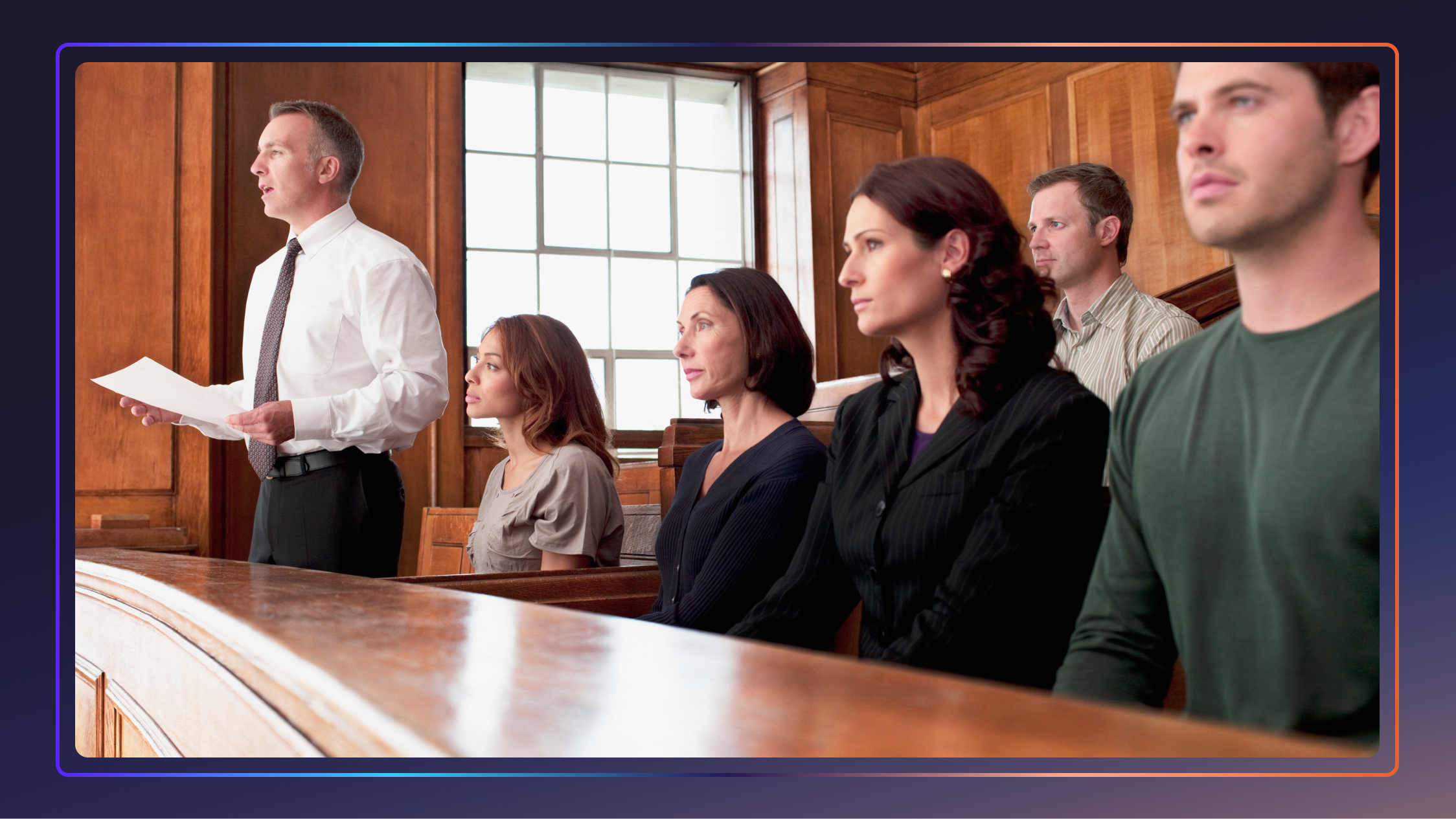
When done well, a mock trial can show you where your case narrative loses people, which witnesses build trust, what evidence jurors remember, and which arguments create doubt. For trial teams, those insights can shape everything from your opening statement to your cross-examination strategy.
But useful mock trial analysis requires careful planning. Before getting started, you'll need a plan for capturing individual juror reactions, observing deliberations, asking the right follow-up questions, and comparing feedback across jurors or multiple panels.
Below is your guide to getting mock trial analysis right and how to use the learnings to strengthen your case.
What Is A Mock Trial?
A mock trial is a simulated trial used to practice courtroom procedures, skills, or evaluate how the general public may react to a case before the real proceeding.
Mock trials can be used by law students, attorneys developing trial skills, or litigation teams preparing an actual case. For trial teams, the goal isn't to perfectly predict a verdict. It's to test case themes, arguments, witnesses, exhibits, and presentation choices with people who can evaluate the case from outside your own bubble.
Mock court exercises can range from streamlined presentations to more complete simulations involving opening statements, witness testimony, evidence, jury instructions, deliberations, and a verdict form. The American Bar Association's guidance on mock trials recommends building the exercise around the evidence and arguments that matter most, leaving enough time for juror deliberation and a detailed debrief afterward.
Benefits Of Mock Trials For Court Prep
Mock trials give attorneys a chance to see their case through unfamiliar eyes.
You may know every fact in the discovery record, but mock jurors don't. That's an important distinction because it exposes where your presentation depends on assumptions, legal knowledge, or background information that a real jury may not have.
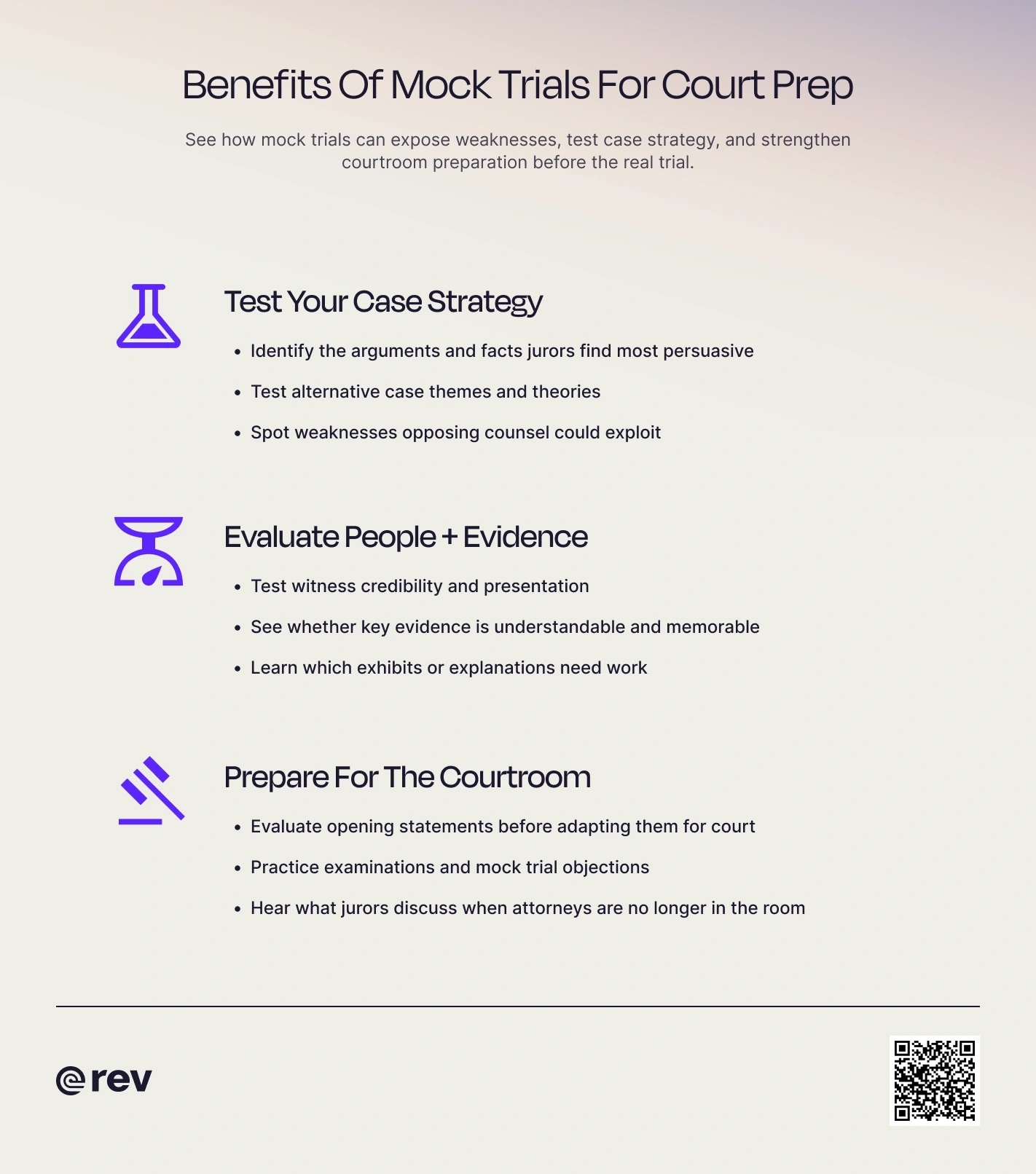
A mock trial can help your team:
- Identify the arguments and facts jurors find most persuasive
- Test alternative case themes and theories
- Evaluate an opening statement for a mock trial before adapting it for court
- See whether important evidence is understandable and memorable
- Test witness credibility and presentation
- Spot potential weaknesses opposing counsel could exploit
- Practice examinations and mock trial objections
- Learn what jurors discuss when attorneys are no longer in the room
The ABA also notes that mock trials can help attorneys refine arguments, examinations, exhibits, and presentation skills based on feedback from mock jurors. For more ways to get courtroom-ready, see Rev's guide to trial preparation.
Main Parts Of A Mock Trial
The exact trial format depends on what you want to learn. You could run a full simulation to stress test every part of the trial, or you could experiment with narrower exercises, like your opening statement, a key witness interview, or a disputed piece of evidence.
Common components include:
- Case presentations: Condensed presentations of the prosecution and defense theories.
- Opening statements: An opportunity to test which themes, facts, and framing resonate immediately.
- Witness testimony: Live, recorded, transcribed, or summarized testimony from important witnesses.
- Exhibits and demonstratives: Documents, photos, video, timelines, or other evidence jurors may encounter at trial.
- Jury instructions: Instructions that give mock jurors the legal framework needed to evaluate the case.
- Individual questionnaires: Written feedback collected before jurors influence one another.
- Deliberations: Group discussion that reveals how interpretations change, which jurors become influential, and what evidence drives debate.
- Post-trial interviews: Moderator-led questions that dig deeper into jurors' reasoning.
Mock Trial Participants
Depending on the scope of the exercise, participants in your mock trial may include:
- Attorneys: Present each side of the case and test arguments or examinations.
- Witnesses: Recreate expected testimony or allow the team to evaluate credibility and preparation.
- Mock jurors: Evaluate the evidence and arguments and participate in deliberations.
- Moderator or jury consultant: Guides the exercise and asks follow-up questions without unnecessarily influencing participants.
- Observers: Trial team members who document reactions, themes, and questions for later analysis.
- Support staff: Help manage exhibits, recordings, technology, questionnaires, and logistics.
Whenever possible, assign specific observation responsibilities to your mock trial team. One person might track reactions to witnesses while another focuses on exhibits or juror questions. This makes the final analysis more useful than a room full of attorneys taking scattered notes.
When choosing your mock jury, make sure to get a wide variety of people from different backgrounds. Reginald Greene, Attorney and Managing Partner at The Super Lawyer - Greene Legal Group, had this to say about jury selection for mock trials:
"Creating a panel that supports the trial team's preconceived notions is the biggest error in a mock trial. This can give us the confidence to make a case in court that actual jurors might not agree with."
Moot Court vs. Mock Trial: What's The Difference?
The main difference between moot court and mock trial is that moot court generally simulates an appellate argument, while a mock trial simulates a trial-level proceeding.
According to Cornell Law School's Legal Information Institute, moot court focuses on applying law to a fictional appellate record and does not typically involve presenting evidence or taking witness testimony. Mock trial, by contrast, recreates elements of a jury or bench trial.
For practicing litigators, a mock trial is often the right move, as it allows you to study how jurors react to witnesses, evidence, storytelling, and competing factual narratives.
How To Prepare For A Mock Trial
Good mock trial strategies start before the first juror enters the room. Decide what you want to learn first, then build the exercise around those questions.
1. Define Your Research Questions
Don't simply ask, "Will we win?" Choose specific questions that make it easier to design the exercise and analyze the results, such as:
- Do jurors understand your theory of the case?
- Which witness seems more credible?
- Does a disputed statement create reasonable doubt?
- Which facts do jurors remember after an hour?
2. Decide What You're Testing
You don't necessarily need to recreate every minute of trial. Instead, focus on the arguments, witnesses, evidence, and decisions most likely to affect your strategy. And since mock trial time is often limited, make sure your presentations are concise, as the largest chunk of your time should be reserved for deliberation and discussion.
3. Build Balanced Presentations
An unrealistically weak opposing presentation can give your team misleading confidence.
Present both sides credibly. Include the facts and arguments you expect opposing counsel to emphasize, especially the uncomfortable ones. The purpose is to stress-test your case, not prove your existing theory correct.
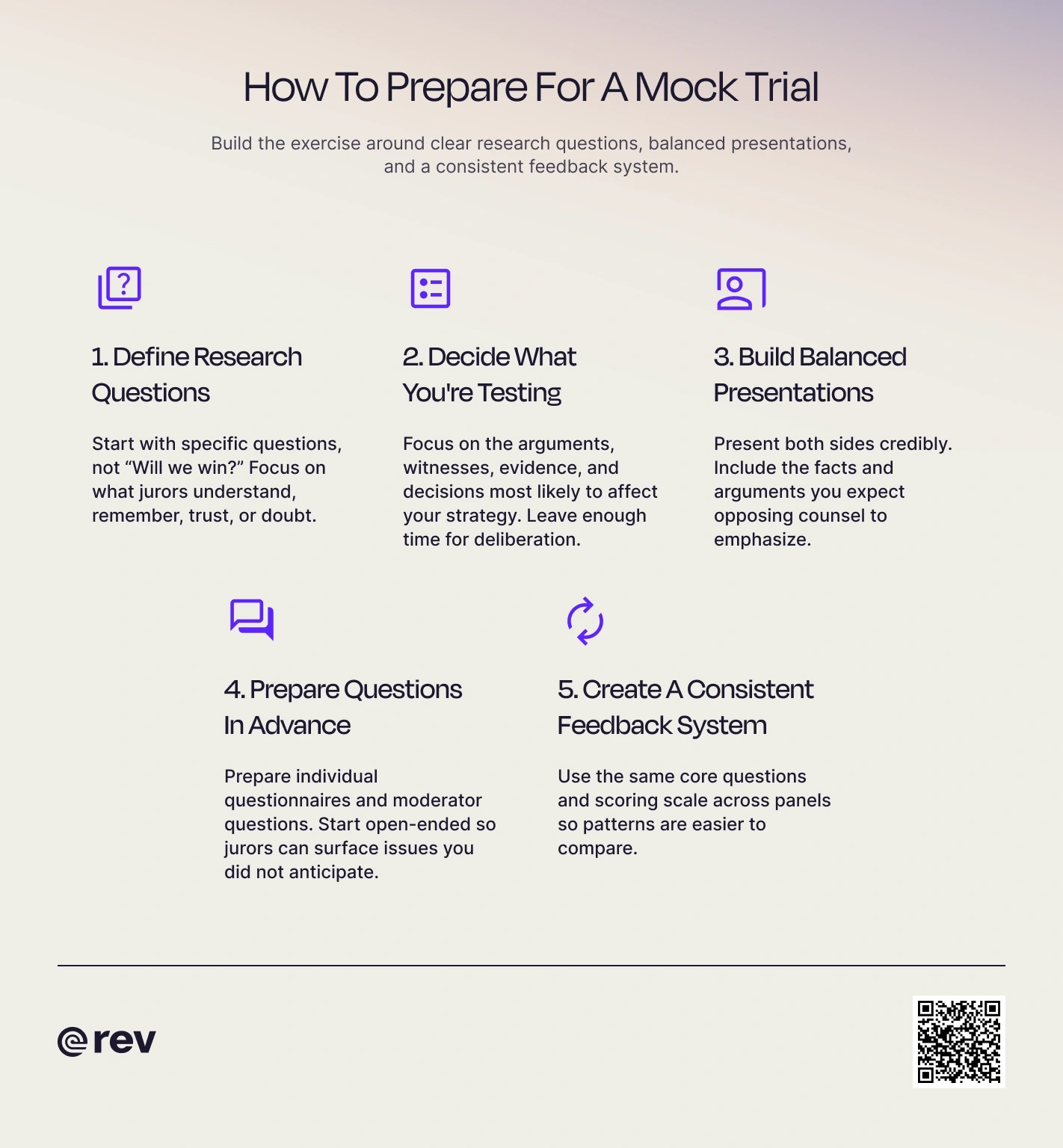
4. Prepare Your Questions in Advance
Create questions for both individual questionnaires and moderator-led discussions. Ask jurors what they believe happened, who they trust, which evidence mattered, what confused them, and what information they still wanted. Start with open-ended questions before asking leading or highly specific ones, to allow the jury to lead you to topics you might not have otherwise thought of.
5. Create A Consistent Feedback System
If you're running multiple panels in your mock trial program, use the same core questions and scoring system for each one.
For example, have every juror rate witness credibility, argument strength, evidence clarity, and overall persuasiveness using the same scale. Consistency makes it easier to see patterns across groups instead of relying on whoever gave the most memorable comment.
Conducting Your Mock Trial + How to Get Useful Feedback
Once the exercise starts, your goal shifts from presenting the case to capturing reactions without distorting them. Here's how to get the most out of your mock trial case.
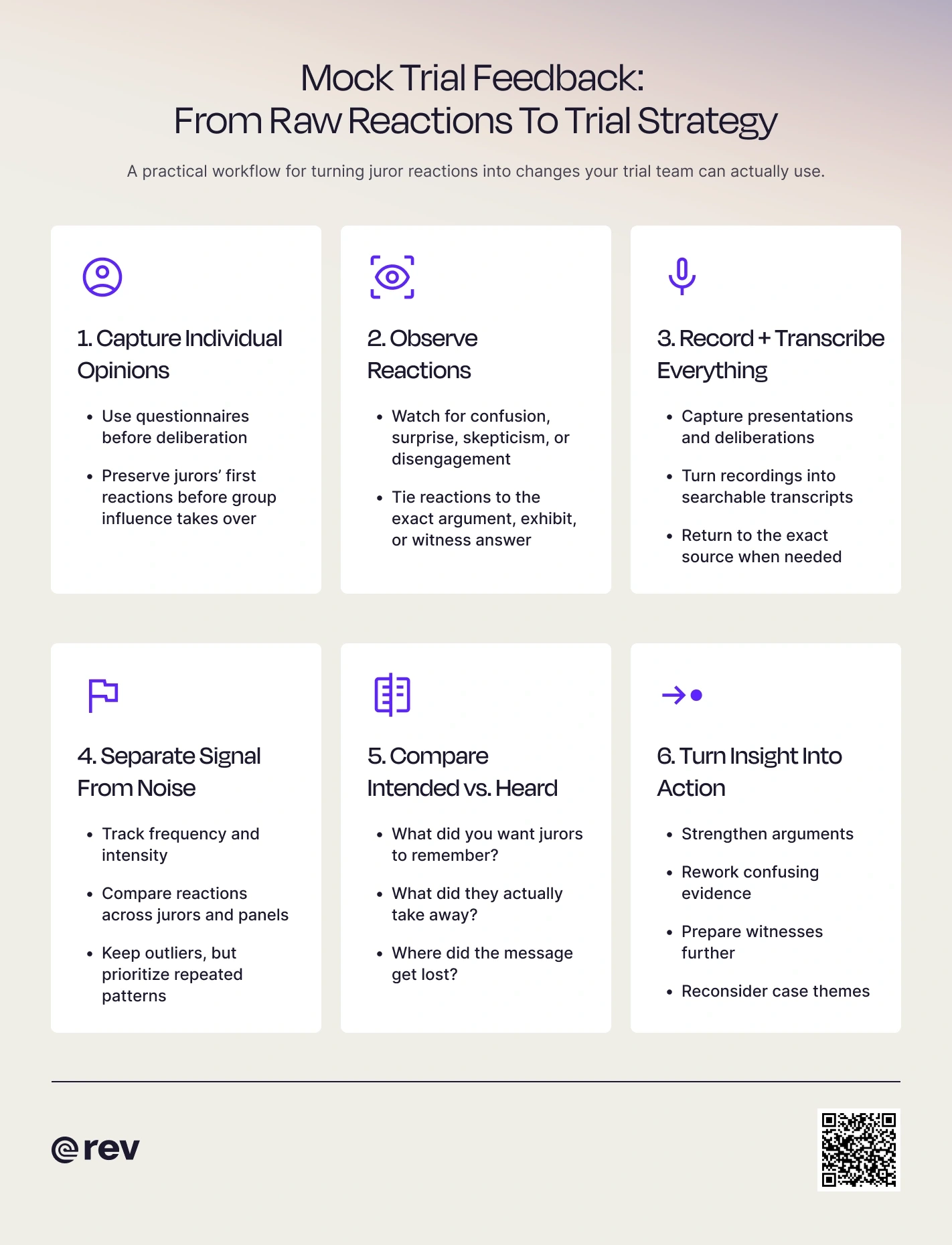
Capture Individual Opinions Before Deliberation
Ask jurors to complete questionnaires before the group discussion begins.
Their initial reactions matter because deliberation can quickly change opinions. Recording both stages lets you distinguish between an individual response and an idea that gained momentum because one persuasive juror introduced it.
Observe What Jurors Do, Not Just What They Say
Pay attention to moments of confusion, surprise, skepticism, or disengagement during the presentation. Watch juror reactions during mock exercises and use that feedback to understand how presentation choices are landing.
Note the exact argument, exhibit, witness answer, or statement that produced the reaction whenever possible.
Record And Transcribe The Entire Exercise
Notes alone can miss important details, especially during fast-moving deliberations.
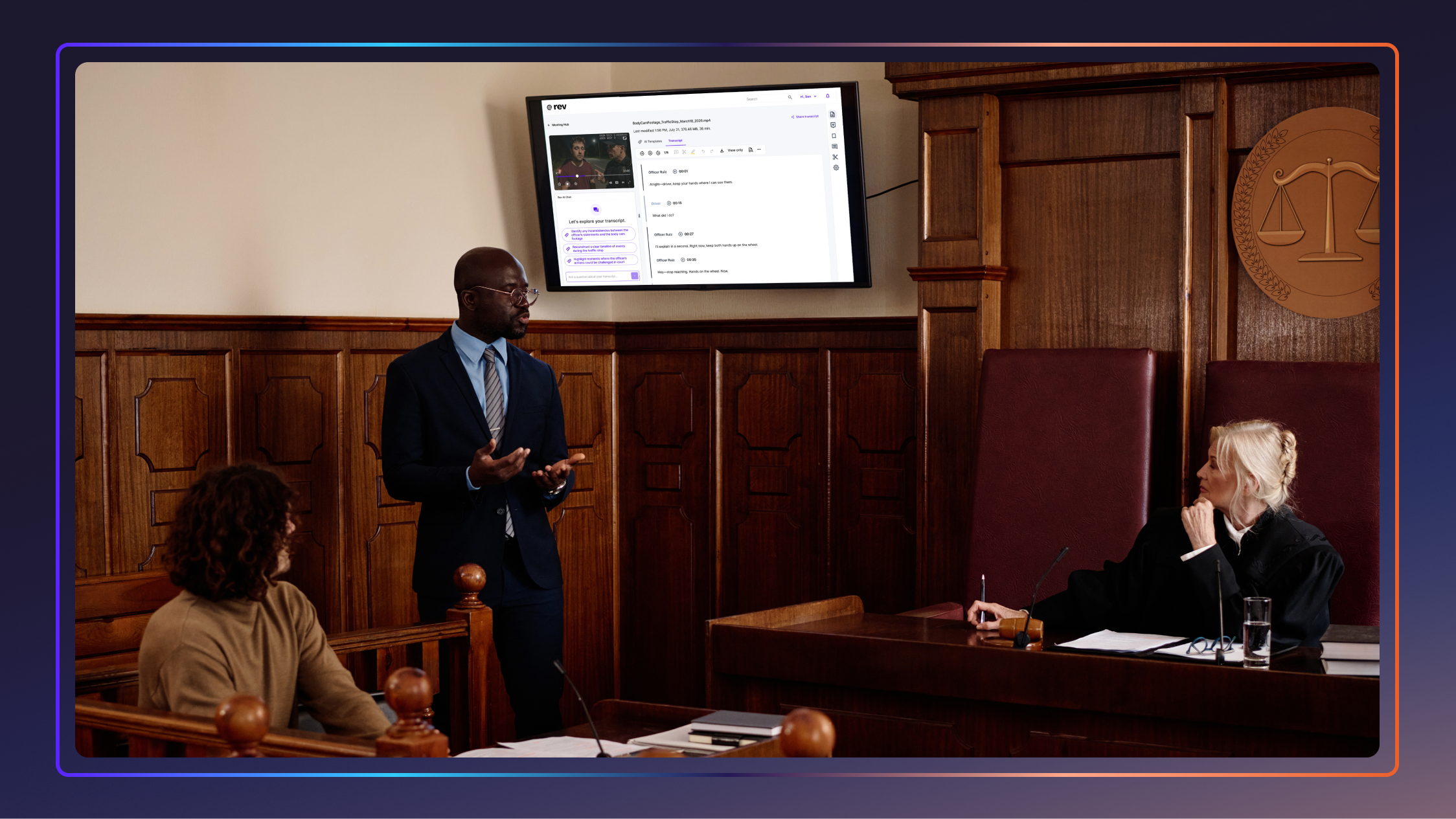
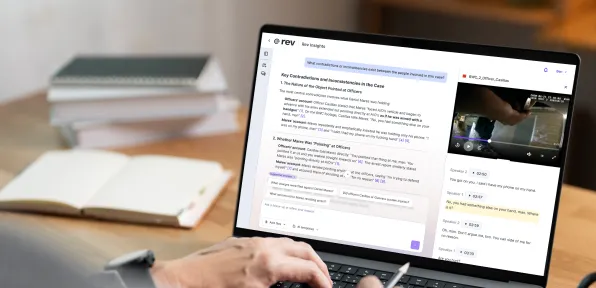
Record your mock trial and deliberations when appropriate and permitted, then create searchable transcripts. With Rev, trial teams can turn those recordings into searchable transcripts, then analyze multiple files together.
That makes it easier to search for recurring concepts, compare how different panels discussed the same witness, or return directly to the source when a comment changes your trial strategy.
For example, you might search across panels for every discussion of "reasonable doubt," your client's credibility, a key eyewitness, or a specific piece of physical evidence.
Separate Strong Patterns From One-Off Reactions
One juror disliking a witness is worth noting. Seven jurors independently raising the same credibility problem is something to take action on.
Organize your findings by frequency, intensity, and strategic importance. Look for reactions that repeat across individuals or panels, but keep outliers too. An unusual interpretation may reveal a risk your team had never considered.
"What I take seriously is feedback that shows up consistently across a large enough group of people. In focus-group research, there will always be noise at the top and the bottom, so the key is having enough data points to distinguish an outlier from a real pattern," explains Sean Claggett, Attorney at Claggett & Sykes.
"That is why I place so much emphasis on sample size. One juror reaction can be interesting, but it is not necessarily predictive. What matters is whether that reaction repeats often enough to become a pattern. The larger the data set, the easier it becomes to separate what is truly meaningful from what is simply an outlier."
Compare What Jurors Heard With What You Intended
After the exercise, compare your intended message with what jurors actually took away.
If your closing argument emphasized three reasons the identification was unreliable but jurors only remembered one, your presentation may need simplification. If jurors consistently interpreted a witness answer differently than your team did, you may need to adjust your witness preparation strategy.
Your mock trial analysis should ultimately produce changes you can make: arguments to strengthen, evidence to explain differently, witnesses to prepare further, and themes to reconsider.
Turn Mock Juror Feedback Into A Stronger Trial Strategy
A mock trial is most valuable when the feedback doesn't disappear into a stack of questionnaires and handwritten notes.
Capture individual reactions, record deliberations, and compare patterns across panels. Then, connect every useful insight back to the argument, testimony, or evidence that produced it.
Rev helps legal teams turn hours of mock trial recordings into searchable transcripts and analyzable case files, so the moments that could change your strategy are easier to find, verify, and share with your team.