
How To Run A Jury Focus Group For Trial Preparation
Learn how to run a jury focus group to test case themes, witness reactions, damages arguments, and weaknesses before trial.



You can spend months building what feels like an airtight case, only to discover that the argument you thought was obvious makes no sense to someone hearing it for the first time. That's the uncomfortable value of a jury focus group.
Put your case in front of people who aren't lawyers, and they may fixate on the witness you barely discussed, misunderstand the exhibit you thought was crystal clear, or use one offhand phrase to describe the case better than anything your trial team came up with. Finding those reactions before trial gives you time to do something about them.
Here's how to run a jury focus group that produces useful feedback instead of a room full of polite opinions.
What Is A Jury Focus Group?
A jury focus group is a group of participants assembled to provide feedback on specific parts of a legal case before trial. Attorneys can use these sessions to test case themes, arguments, evidence, witness credibility, damages theories, and other issues that may affect how an actual jury views the case.
Unlike your legal team, participants come to the facts without months or years of background knowledge. That fresh perspective is exactly what makes legal focus groups useful. This process can help uncover which details stick, what participants find confusing, which witnesses they trust, and where your case narrative starts to lose them.
Focus Group vs. Mock Trial
A jury focus group usually tests individual issues or portions of a case through guided discussion. A mock trial more closely recreates the trial itself, often including presentations from both sides, deliberations, and some form of verdict.
Focus groups are particularly useful when you're still developing case strategy and want room to test or change individual arguments. Mock trials are a better fit for when your case is further along, and you want to see if the full presentation holds together.
How To Run A Jury Focus Group
A focus group requires more than putting a few people in a conference room and asking whether they believe your client. The goal is to uncover reactions you didn't already know were there. Here’s how to run a jury focus group that actually helps your case:
1. Decide Exactly What You Want To Test
Start with a research question, not a presentation. Maybe you want to know whether mock jurors understand your self-defense theory. Maybe you're worried a particular witness comes across as evasive. Or, you might want to see whether a damages argument feels reasonable or excessive.
Choose a handful of specific questions before building the session. For example:
- Which facts do participants consider most important?
- What do they think happened?
- Which witness seems most credible?
- What creates doubt about your client's version of events?
- Which pieces of evidence need more explanation?
- What questions are participants still asking when the presentation ends?
Without a clear objective, the conversation can quickly turn into a general case review that produces plenty of notes but very little direction.
2. Recruit Participants Who Resemble The Jury Pool
Your focus group doesn't need to perfectly predict the jury that’ll sit in the box. It should, however, give you reactions from people who could plausibly evaluate the case.
Consider the jurisdiction, basic eligibility requirements, demographics, life experiences, and other characteristics relevant to your venue. For federal cases, courts draw eligible citizens from counties within the judicial district, and federal jurors must meet specific juror qualification requirements. State and local requirements vary, so your recruiting approach should reflect the court where the case will actually be tried.
Avoid building a group around people you think will agree with you. The uncomfortable reactions are usually the useful ones.
3. Build A Neutral Case Presentation
If participants can tell which side you represent five minutes into the session, your research may be telling you more about your presentation than about the case.
Give participants enough context to understand the issue at hand without quietly steering them toward your preferred conclusion. Depending on what you're testing, that might include:
- A neutral summary of the facts
- Key exhibits
- Portions of witness testimony or recorded interviews
- Short arguments representing both sides
- Trial graphics, diagrams, or timelines
- Relevant jury instructions or legal concepts
4. Ask Questions Before The Group Starts Influencing Itself
Some of the best feedback comes before participants begin discussing the case together. Ask people to write down or privately submit their initial reactions after major portions of the presentation. You might ask what they believe happened, which details they remember, or which side they currently find more persuasive.
If you get multiple similar answers, use that information to shape your case. Michael T. van der Veen, Criminal Defense Attorney at van der Veen, Hartshorn & Levin, explained to us the importance of this type of similarity:
“I pay the most attention when multiple jurors independently identify the same problem. If five or six people who don't know each other are confused by the same piece of evidence or have the same concern about a defense theory, that's something I need to take seriously.”
Then open the discussion. This gives you both individual reactions and group dynamics. Once people start talking, stronger personalities can influence everyone else. Capturing opinions beforehand lets you see where participants started before that happens.
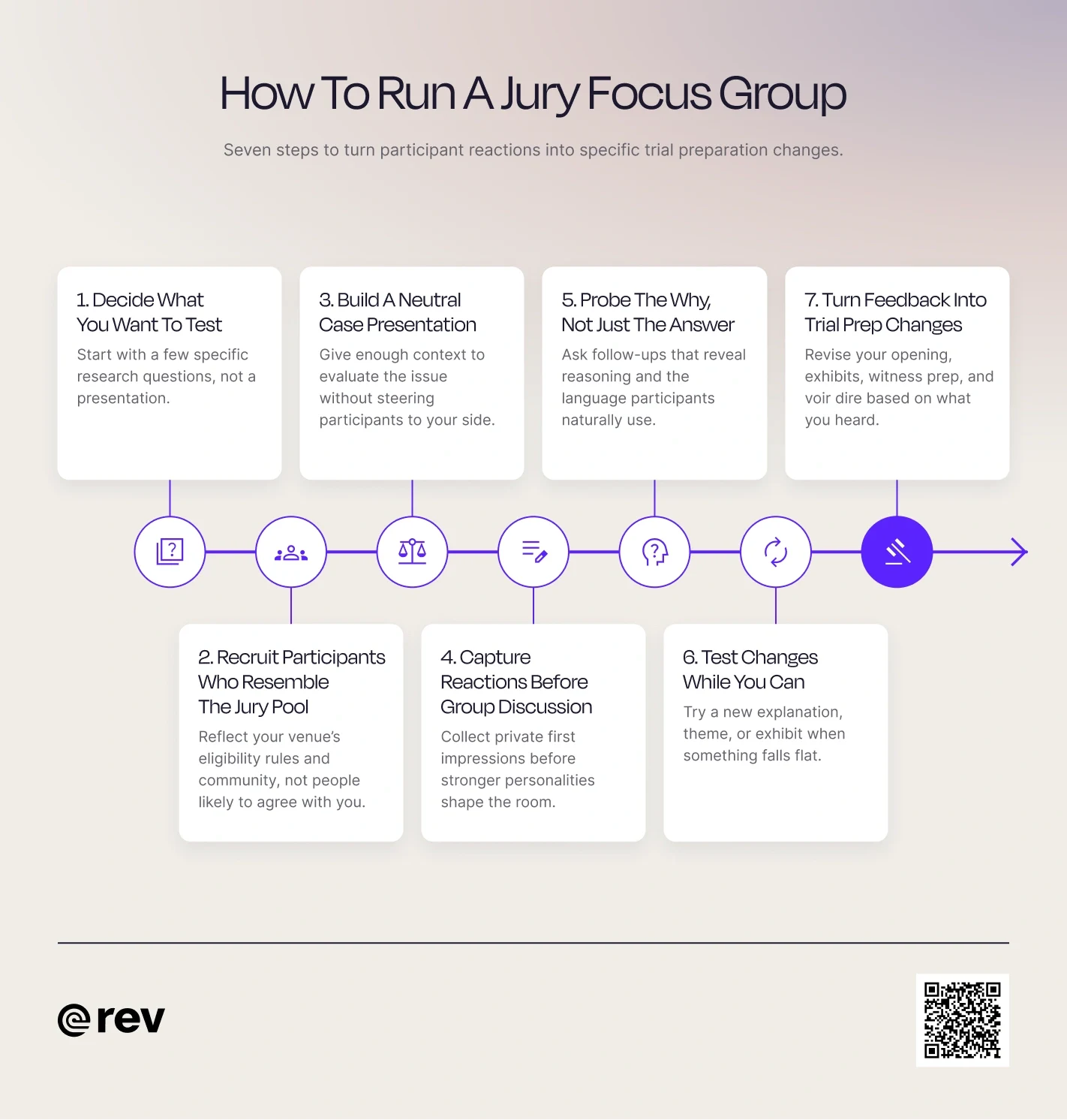
5. Probe The Why, Not Just The Answer
Consider the usefulness of these two responses: "Yes, I believed her" vs “I believed her because her account was credible and the evidence backs up her claims.” While the first response does give you an answer, it isn’t particularly helpful. That’s why it’s so important to dig deeper when asking questions during your focus group.
Your moderator or trial consultant should have several more specific questions in their back pocket at all times. Questions like "What made you think that?" or "Was there a specific moment that changed your opinion?" often produce better trial intelligence than asking participants a simple yes or no question.
Also, pay attention to the language participants naturally use, as it can show you how non-lawyers understand the story. That language may eventually even influence your opening/ closing arguments, witness prep, demonstratives, and even the questions you ask during voir dire.
6. Test Changes While You Still Can
One advantage of a focus group is flexibility. If participants consistently misunderstand an exhibit, try explaining it differently. If a case theme falls flat, test another. If a witness clip raises an unexpected concern, ask follow-up questions about it.
You're not trying to win the focus group. You're trying to learn what needs work before the stakes are much higher. That may mean revising themes, rethinking witness preparation, improving demonstratives, or investigating questions the group raises.
7. Turn The Feedback Into Specific Trial Prep Changes
The session isn't finished when participants leave. Bring the trial team together and identify what actually changes because of the research. You might consider:
- Rewriting a portion of your opening
- Simplifying an exhibit
- Preparing a witness for a credibility concern
- Adding new voir dire questions
- Investigating a factual gap participants noticed
- Changing how you explain damages
- Moving a key piece of evidence earlier in the story
This is where a recorded, searchable session becomes especially valuable. Instead of working from scattered notes, you can return to participants' exact words and compare reactions across every discussion, at once.
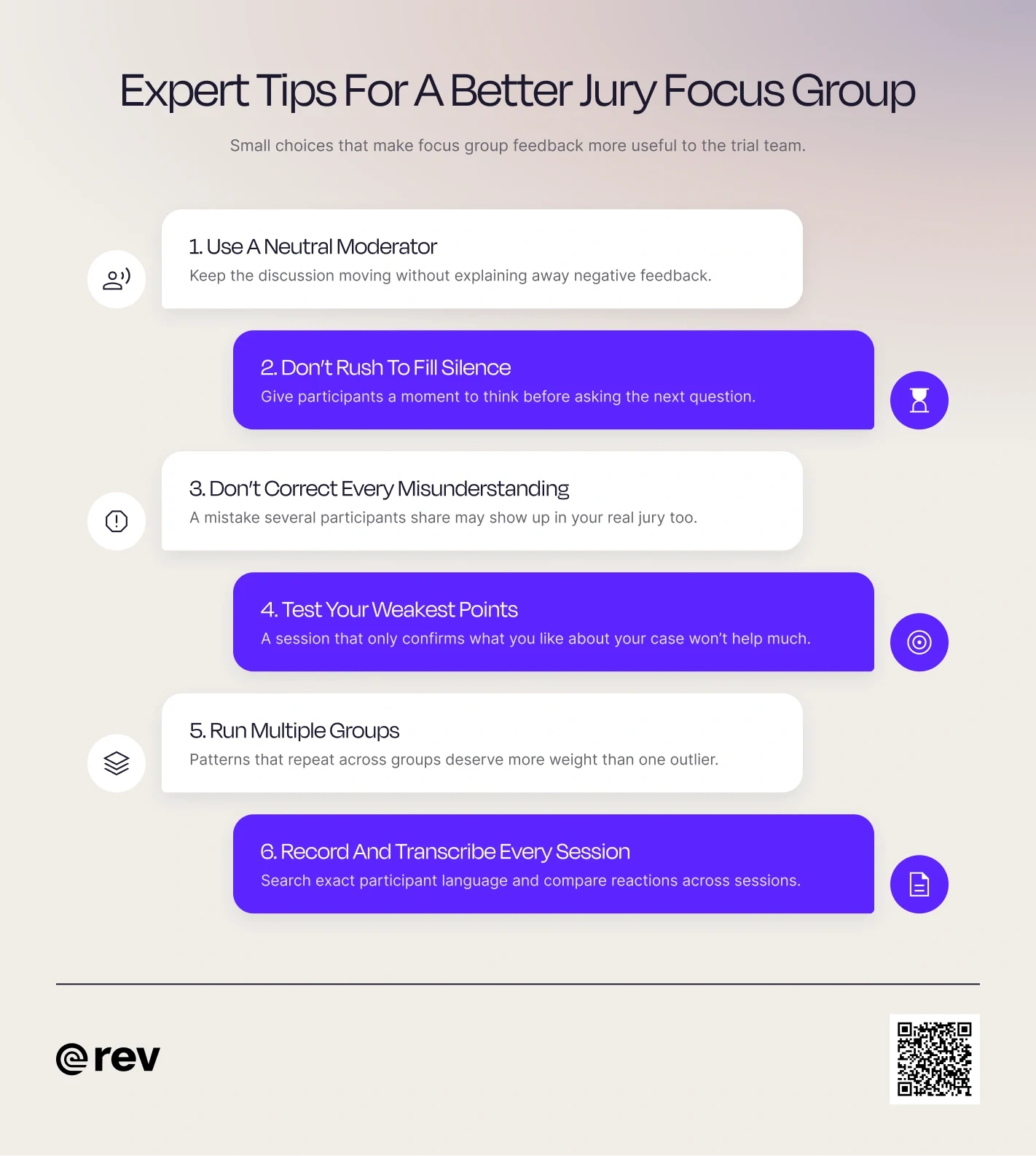
Expert Tips For A Successful Jury Focus Group
Small choices can have a major effect on the quality of your research. A few things can make the session more useful for the trial team:
- Use a neutral moderator. Attorneys naturally want to defend their case. A good moderator keeps the conversation moving without explaining away negative feedback.
- Don’t be afraid of silence. Give participants a moment to think before jumping in with another question.
- Don't correct every misunderstanding immediately. If several participants make the same mistake, that's useful information. Your actual jury might make it too.
- Test your weakest points. A focus group that only confirms what you already like about your case isn't doing much for you.
- Run more than one group when the case justifies it. Different groups can react very differently, and repeated patterns deserve more attention than one participant's unusual opinion.
- Consider online jury focus groups. Remote sessions can make recruiting and scheduling easier, especially when you are testing a narrow issue.
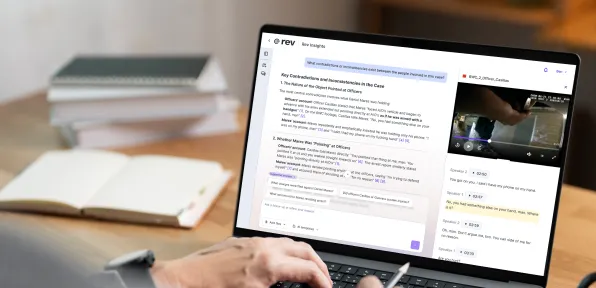
- Record and transcribe all sessions. With Rev, you can create a searchable transcript of the discussion and return to the source recording when you need context. That makes it easier to compare reactions, search recurring language, and review key moments with the rest of your trial team.
You can also bring what you learn into your broader trial preparation process instead of treating the focus group as a standalone exercise.
Benefits Of Focus Groups During Trial Prep
The biggest benefit of a jury focus group is getting to hear how people outside your case team actually understand your case.
Attorneys know the record too well to completely recreate that perspective. You already know why a particular date matters, you understand the terminology, and you might even remember what the witness said six months ago. Jurors won't walk into the courtroom with any of that background. A mock jury focus group can expose those gaps early.
It can also help your team pressure-test decisions that would otherwise rely on instinct. Instead of debating whether an exhibit is confusing, show it to participants. Instead of assuming a witness seems credible, hear what people say after watching the testimony. Most importantly, focus groups can uncover weaknesses while they're still fixable.
That doesn't mean a focus group predicts your verdict. It means you go into trial with fewer assumptions about how real people may respond to the story you're asking them to believe.
Make Your Jury Research Easier To Use
The most valuable focus group comment is easy to lose if it's buried three hours into a recording. Rev helps legal teams turn jury research sessions, mock trials, witness interviews, and other trial prep recordings into searchable transcripts so you can revisit exact participant language and share important moments with the rest of your team.
That means less time reconstructing what the group said and more time deciding what to do about it.