
How to Build a Personal Journalism Archive (That Actually Works)
Learn how journalists can create a searchable research library with Rev. Upload interviews, organize by story, and find critical quotes in seconds.

.webp)
Every journalist knows the feeling: you're racing toward deadline, and you need to verify a quote from that source interview three months ago. Or maybe you're chasing a developing story and need to cross-reference two witness statements recorded weeks apart. You know you have the information somewhere—buried in a folder of audio files, scattered across different platforms, or lost in a sea of unnamed recordings.
The problem isn't that you don't keep records. It's that your records are hard to search when you actually need them.
The Problem: Digital Chaos
Modern journalism runs on multimedia. Phone interviews, Zoom calls, field recordings, press conferences, expert testimonies—all essential to your reporting, all stored in ways that make finding anything a multi-hour ordeal. Traditional note-taking can't keep up, and generic file storage doesn't understand your content.
When you need to verify a claim, spot contradictions between sources, or pull a critical quote for your story, you're stuck scrubbing through audio or skimming through disconnected notes. It's not just inefficient—it's a risk to accuracy and speed, two things journalism can't compromise on.
The Solution: A Searchable Research Library
The answer isn't taking better notes or organizing folders more carefully. It's transforming your audio and video content into searchable, citable transcripts that work like a personal knowledge base. Here's how to build one that actually works for deadline-driven journalism:
1. Upload Everything Create one central repository for all your source material—interviews, press conferences, background calls, recorded meetings. Upload audio, video, and even existing transcripts and documents. The goal is to eliminate the scattered file problem and create a single source of truth.
2. Organize by Story Set up projects or folders organized around your active stories and ongoing beats. This isn't just about tidiness—it's about being able to instantly pull up every piece of relevant material when you're deep in reporting mode.
3. Make It All Searchable The real power comes from transcription. When every interview and recording becomes text, you can search across your entire archive by keyword, find exactly when someone said something, and compare statements across multiple sources instantly.
How Rev Powers Your Archive
This is where Rev comes in—not as another productivity tool, but as the foundation of a smarter research system built specifically for people who work with critical spoken content.
Transcription: Everything starts with accurate transcripts. Rev delivers industry-leading transcription accuracy—even in challenging conditions like noisy press conferences or interviews with poor audio quality. Every transcript is timestamped and speaker-labeled, making it easy to pull exact quotes and verify who said what.
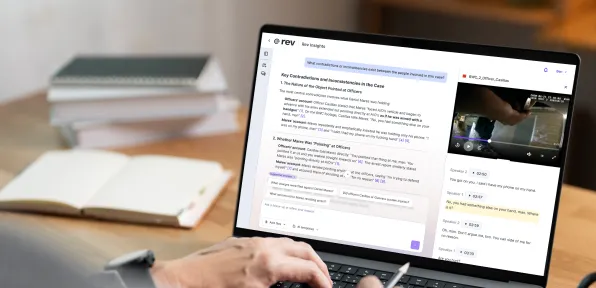
Rev Insights: Rev Insights lets you analyze multiple files simultaneously. Upload your interviews, press conference recordings, and background calls, then ask questions across all of them. Looking for contradictions between sources? Need to verify when a claim was first made? Rev surfaces the answers with clickable citations that link directly to the timestamp in your source material.
AI Chat: Use AI chat to interact with your archive like you're talking to a research assistant who's read everything. Ask "What did the mayor say about the budget?" or "Which sources mentioned the November meeting?" and get answers drawn from your transcripts—complete with citations so you can verify every claim.
AI Prompts: Rev includes pre-built AI prompts designed for investigative work: identify key quotes, summarize interview themes, spot inconsistencies across sources, or extract factual claims for verification. You can also create custom templates for your recurring workflows—whether that's analyzing city council meetings or processing daily press briefings.
The Result: Faster, Stronger Stories With Rev as your research foundation, you're not just saving time—you're building more credible, thoroughly-sourced journalism. Cross-reference multiple sources in moments instead of hours. Surface buried details that strengthen your reporting. Verify claims with confidence because every insight links back to the original source.
Your Archive, Your Advantage
Every interview you conduct, every press conference you attend, every background conversation you record—it all becomes part of a searchable knowledge base that makes you faster and more thorough. That's not just convenient. In journalism, where accuracy and speed determine whether you break the story or miss it entirely, a working archive is a competitive advantage.
Ready to stop losing critical information in the chaos? Start building your journalism archive with Rev.