

Senator John Boozman (02:06):
Okay. Can we-
Senator Amy Klobuchar (02:06):
I'll talk to you about it. Yeah.
Senator John Boozman (02:06):
Are you ready?
Senator Amy Klobuchar (02:06):
Yeah.
Senator John Boozman (04:33):
Good morning and welcome. It's my privilege to call this hearing to examine the work of the United States Forest Service and challenges facing our national forests and communities that depend on them. I welcome our witness, Chief of the U.S. Forest Service, Tom Schultz. Thank you for being here today and to share the work of the Forest Service to support our national forests, especially as fire season begins. The Forest Service manages and oversees roughly 193 million acres of forests and grasslands across this country.
(05:07)
My state of Arkansas is home to two of those national forests, the Ozark-St. Francis and the Ouachita, which account for nearly three million acres between the two. These national forests not only support their local community's economies, but also by providing recreational access to Arkansans. The University of Arkansas at Monticello and the Arkansas Department of Agriculture also have the close relationships that support research and local engagement. Needless to say, the impact of the Forest Service is well known in Arkansas and we are immensely proud of them.
(05:46)
Earlier this year, USDA announced it will be moving Forest Service headquarters to Salt Lake City, Utah, as well as moving from a region-based structure to a state-based structure. I understand the sentiment of moving people closer to communities they serve and I look forward to hearing how the Forest Service will continue to support its mission during this move, especially as we are already in the early part of peak fire season. The summer begins, the Forest Service capacity to fight wildfires is top of mind for many people. Wildfires are indifferent to federal, state, tribal and private property lines or political subdivisions.
(06:28)
Last year, we saw over 5 million acres burned with another 8.9 million burned in 2024. The outlook for this year looks grim with many predicting another active fire season. I look forward to hearing your insight and strategy on how the Forest Service will handle those challenges this year. The committee also reported the Fix Our Forest Acts called FOFA in October of last year. I want to thank Senators Curtis, Hickenlooper, Sheehy, and Padilla for introducing that important legislation in the Senate and thank Chairman Westerman for championing it in the House.
(07:09)
I also want to thank my Republicans and Democrat colleagues who voted for FOFA, including Ranking Member Klobuchar and Senators Fetterman, Luhan, Slotkin, Warnock, and Welch. I am committed to working with leadership to get FOFA across the floor and to the president's desk. FOFA will provide the Forest Service much needed and streamlined authorities to reduce catastrophic wildfires and improve forest health. Once again, thank you, Chief Schultz, for appearing before the committee today and I look forward to our discussion. I now turn to Ranking Member Klobuchar for her opening statement.
Senator Amy Klobuchar (07:50):
Well, thank you very much, Chairman, and thank you for holding this hearing. Thank you, Chief Schultz, for serving as the 21st chief of the U.S. Forest Service and for appearing before the committee. I also appreciated the briefing we had just last week with Secretary Rollins and Secretary Burgam and others about the status of various fires and what was happening across the country. And as I said then, I thank the firefighters of the Forest Service for responding to the recent Stewart and Flanders fires that were scary for many Minnesotans in Senator Smith's and my home state, including the residents of Two Harbors, Cross Lake.
(08:33)
And now we just this yesterday have a fire near Ely, Minnesota, which is actually where my dad grew up and I know that there's coordinated efforts as there were for the past fires over the last month with the Forest Service Bureau of Indian Affairs, the Minnesota DNR and local first responders most important who are protecting lives and properties. Last May, Senator Smith and I visited an incident command center in Two Harbors and surveyed the damage dropped by the Brimson Complex fires. Drier hotter spring seasons and an ongoing spruce budworm outbreak are contributing to these fires.
(09:12)
And I am focused on ensuring the Forest Service and its partners are ready for this approaching fire season. I don't quite remember a season where we've had so many I would call them flash fires. They come up out of the blue. They've been put out so far, but it just does not bowed well because of the dry weather and the conditions for what we're going to see. So Chief Schultz, I appreciate our recent conversations as I noted and I've also raised the issues with Director Fennessy at DOI. Your agency's focus on the welfare issue is critical and forests across the country, which is why I remain concerned by some of the reductions that we've talked about.
(09:53)
I'm troubled that more than 1,400 Forest Service employees with so called red cards, which allow them to fight wildfires without being hired as firefighters departed the agency last year amid broader workforce reduction, especially when we're seeing these sort of flash sudden fires as well as major fires across the country. These employees are crucial to the agency's wildfire response during challenging seasons like we may be seeing now and these departures could lead the agency less prepared. And I also look forward to hearing how the Forest Service will treat more acres for hazardous fuels this year after a year over year drop in 2025.
(10:34)
I believe we should be strengthening the agency's wildfire response capabilities and unfortunately we've seen these cuts that should be concerning to all. The budget that we've seen from the administration proposes deep cuts to popular state forestry programs, funding for volunteer fire departments and forestry research. And the budget the administration recommends moves wildfire operations out of the USDA's Forest Service, as you know, and we are concerned about the unintended consequences of doing that. I'm sure you'll address that.
(11:08)
The budget proposes eliminating forestry research and cutting NFS funding, but at the same time, the Forest Service reorg suggests these mission areas will be reconfigured. That leads to confusion. The Forest Service Research Facility in Grand Rapids, Minnesota, which carries out invaluable red pine research is on the list of facilities to be closed as is a site in Ely. Employees have been notified of potential reorganization, but questions remain about where researchers will be located. In April, I, along with ranking members, Heinrich and Merkley and more than 30 of my colleagues directly raised concerns with the reorganization of the USDA.
(11:52)
If this reorganization is not well executed, it could lead to additional capacity and workforce reductions. And again, I'm sure you will be addressing that and I've appreciated your willingness to answer my questions over the last few months. The departure of red card holding employees, a drop in wildfire mitigation and trail maintenance work and confusing reorg plans are concerning developments. And there is a role for Congress. My colleague, Senator Boozman, just mentioned the Fix Our Forest Act, which this committee passed through and we're looking forward to its consideration on the floor. And we understand that its passage could be eased by some additional changes that we hope we'll be able to develop together, but I do appreciate the bipartisan leadership and that is why I supported that bill.
(12:49)
Chief Schultz, your leadership and the dedicated work of the Forest Service personnel are much appreciated or needed more than ever to see the agency through these challenging times and I look forward to hearing your testimony. Thank you.
Senator John Boozman (13:09):
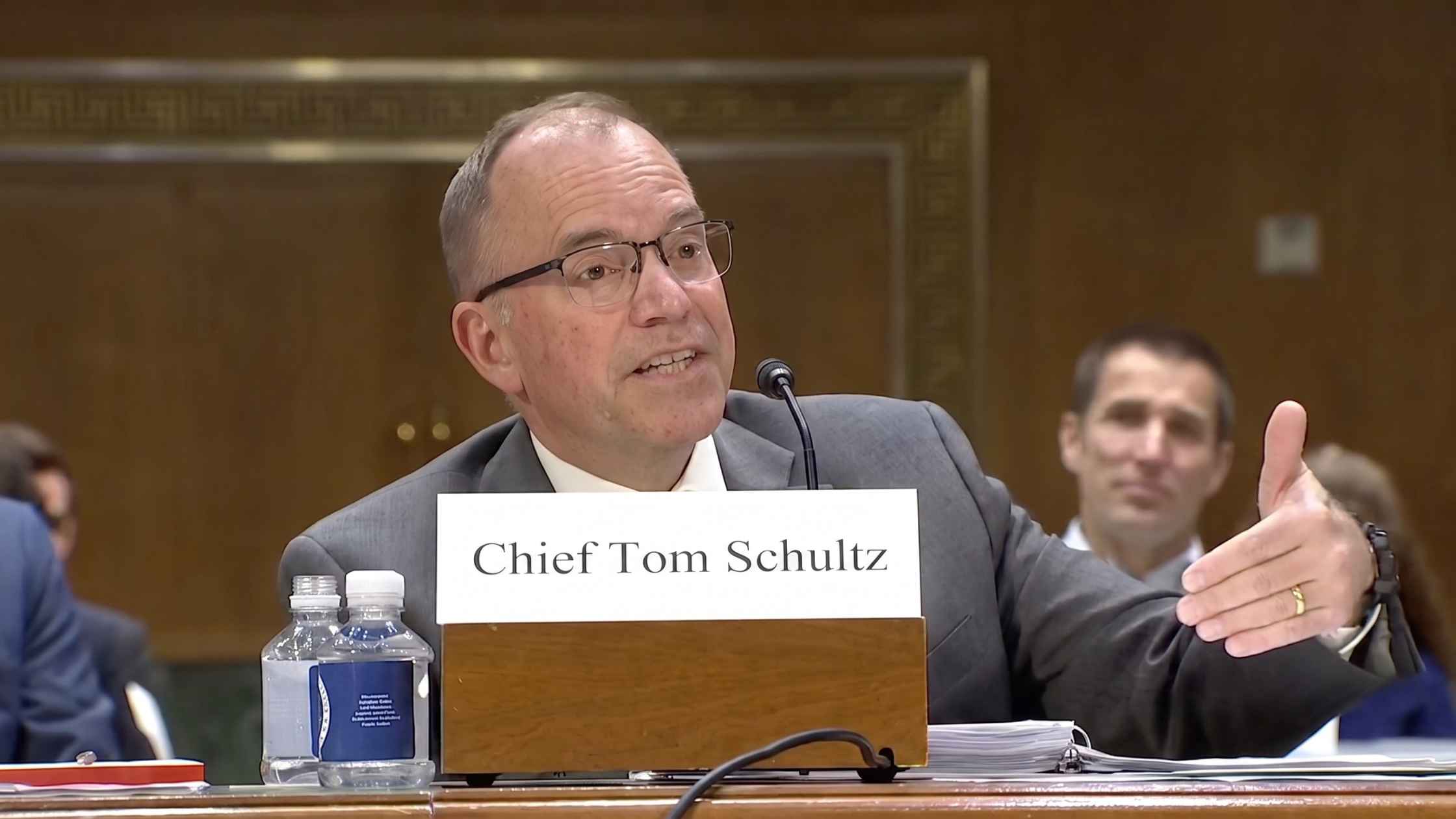
It's my pleasure to introduce Tom Schultz, the 21st Chief of the United States Forest Service. Prior to serving as chief, he was Vice President of Resources and Government Affairs at the Idaho Forest Group and Director of the Idaho Department of Lands. Chief Schultz also worked for the Montana Department of Natural Resources and served as an Air Force officer. He holds a bachelor's degree from the University of Virginia, a master's degree from the University of Wyoming, and a master's degree in forestry from the University of Montana. Thank you very much for being with us today and you are now recognized for your statement.
Chief Tom Schultz (13:52):
Chairman Boozman, ranking committee member Klobuchar and members of the committee, thank you for inviting me here today to testify. The USDA's Forest Service is the nation's foremost federal forestry organization. We have the privilege of managing 154 national forests, 20 national grasslands, covering 193 million acres. Since day one, my work as chief has been to refocus our efforts on the fundamental work that delivers the greatest good to the American people. Today, I'd like to share the priorities guiding the Forest Service forward as well as share key accomplishments from the previous year.
(14:23)
Our priorities reflect a back to basics approach that centers on the work we know that matters most, keeping people safe, protecting communities from wildfire, actively managing our forests for health and productivity, supporting communities recovering after disasters, extending access to the outdoors, increasing domestic mineral production, and cutting unnecessary red tape and strengthening partnerships that make all of this possible. At the center of everything we do is safety, whether it's firefighter safety on the line or an employee in the field, safety is our first and last priority. I'm proud to say that we reduced OSHA related recordable incidents by more than 15% year over year. That's a direct reflection of the culture that puts safety first.
(15:06)
Wildfire readiness and response remains one of our most urgent responsibilities. We're prioritizing rapid aggressive initial response so that we can keep fires small. We've invested in staffing, coordination, contracting and infrastructure to meet the reality that fire season in many cases extends 12 months and we're seeing results. In fiscal year 25, even though we had the highest number of wildfire starts in the national forest in nearly a decade, the acres that were burned were held to about half of the 10 year average. Our initial attack success rate was the strongest in 12 years and we treated more than 3.3 million acres to reduce hazardous fuels.
(15:42)
And for this fiscal year, we have treated nearly 2.2 million acres nationally already, or 61% of our target as of May with over 1.6 million acres of prescribed fire, nearly 500,000 acres more than last year at this time. In addition to these hazardous fuels treatments, other forms of active forest management, timber production, grazing, reforestation also remain essential to healthy, resilient forests. In 2025, we exceeded our timber targets, selling 2.95 billion board feet. This supports domestic mills, strengthens rural economies and improves forest health. And we are implementing the national active forest management strategy and we are on target to increase our timber volume off the national forests by 25% with an overall goal of four billion board feet by fiscal year 28.
(16:27)
We're also modernizing grazing processes and expanding access to ensure grazing continues to promote healthy landscapes and resilient rural communities. Last year we completed the highest level of reforestation in over 25 years, reforesting almost 287,000 acres and improving stands on another 165,000 acres. America's forests also play a critical role in supporting domestic energy and mineral production. The Forest Service is committed to facilitating responsible development, especially of critical minerals essential to national security, technology and energy while reducing unnecessary regulatory delays. We're currently working on 20 FAST-41 projects, including 6 covered and 14 transparency projects.
(17:07)
Disasters. When disasters occur, the Forest Service is a key partner in recovery. Following a 2024 hurricane season, we opened up more than 1,500 miles of roads and nearly 700 miles of trails and 34 recreation sites. Across more than 100 disaster recovery events, we awarded $885 million in contracts and $1.5 billion in agreements to restore landscapes and infrastructure. We're also working to expand recreation access and improve the visitor experience for the millions of Americans who enjoy their national forest. Under the Great American Outdoors Act, we completed 125 deferred maintenance projects improving 162 rec sites and 78 roads and bridges.
(17:45)
The Forest Service is working alongside states, tribes and local governments to manage the nation's forests more effectively. In the past two years, we have signed and entered into shared stewardship agreements with seven states and three tribal nations. And by the end of fiscal year 25, we'll have had 540 active good neighbor authority agreements, 99 which were signed in the past year. These partnerships help expand capacity, cut through operational challenges and deliver restoration work. We're also taking significant steps to reduce red tape and improve organizational efficiency.
(18:16)
Our restructuring, relocating headquarters to Salt Lake City, shifting to a state-based leadership model and creating an operations service center and unifying research programs is designed to move decision making closer to the communities and the landscapes that we serve. The shift represents a structural reset and common sense approach to improve mission delivery. As we look into the 2026 fire year, we enter the season facing elevated fire potential across large areas of the country. We also enter unified and prepared. We have hired more than 11,000 firefighters up 6% from last year at this time, and we will reach our 11,300 goal by July. We have increased the number of red carded non-fire staff by more than 450 personnel giving us more surge capacity when fires occur.
(18:57)
Finally, we are working with Department of Interior and Congress as directed on the administration's broader effort to consolidate the nation's wild and fire system. These efforts moving forward without compromising our operational readiness. Throughout all of this work, our commitment remains constant to protect the public's support, our partners, and ensure rapid, effective and unified response to wildfires across the nation. Chairman Boozman, Ranking Member Klobuchar and members of the committee, thank you for inviting me here today and welcome your questions.
Senator John Boozman (19:28):
Thank you, Chief, very much. We'll go to our questions now. As I mentioned in my opening statement, this fire season is expected to be active as we saw a very dry winter in our west and below average rain in the southeast this spring. How has the Forest Service prepared for this year and what is your strategy for approaching the fire season?
Chief Tom Schultz (19:52):
Mr. Chairman, this year we've actually ... We're ahead of about 8% over what we were last year over in terms of hiring at this time. So we've hired over 11,000 firefighters at this point in time. We've also got, I mentioned in my opening state ...
Chief Tom Schultz (20:00):
... firefighters at this point in time. We've also got, I mentioned in my opening statement, about 450 more red-carded personnel than we did previously. So we've increased our ability to basically suppress wildfires aggressively. The other thing that we've done is I've issued a letter of intent to our employees across the Forest Service and that's basically advocating for a safe fire season, but also one that we are going to attack aggressively the fires that occur in protecting communities. The other piece that we're also looking at doing, we've been working to implement the president's executive order with regard to wildfire unifications. We've had a lot of support and a lot of success in simplifying and unifying our processes between Department of Interior and the Forest Service so that we're communicating better and coordinating better this fire season.
John Boozman (20:45):
Very good. It was announced earlier this year that the Forest Service will move its headquarters to Salt Lake City, Utah, and move to a state-based structure. What measurable improvements do you expect this reorganization to deliver for the Forest Service employees, forest management operations, and can you describe how the agency engaged with local communities and state partners when considering the changes?
Chief Tom Schultz (21:13):
Mr. Chairman, so first of all, I think we have to take a step back and ask why we're doing this. And I think if you look at the way we've been structured for years, in many cases, things have worked, but we've also had a lot of shortfalls in what we've done and how we've made decisions. When the Forest Service was initially set up, the intent was to have decisions made at the local level as much as possible. And what we've seen over time is we have grown the size of the Forest Service. That decision making has gravitated away from local forest to regions and even the Washington office. So what this is first and foremost is an attempt to move the decision making back to the ground, back to those local communities, those forests and districts where those folks that work on the ground know those that land the best, work in and live in those communities, know the people the best, make those decisions.
(21:56)
So how we're doing that is we're creating the state-based system that you referenced. So we will have 15 state directors that'll be in the west and in the east, it's going to look a little bit different in the east where we have a smaller footprint, but that's the fundamental intention. We're going to have greater coordination with states. We think we're going to have greater coordination with tribes as well as county commissioners and local partners by having that approach. And just as an example right now, we have a single regional forester over California, Oregon, Washington, and Alaska. And in this new base model, we'll have an individual director over each of those states. So we think there's going to be greater communication and coordination with those local governments to get things done, but that's really what we're trying to do is really push decision making down and have the agency's presence closer to the people that are impacted by the forest on the ground.
John Boozman (22:48):
Very good. Chief, last October, as was mentioned by myself and Senator Klobuchar, we were able to advance the Bipartisan Fix Our Forest Act, or FOFA. From the Forest Service perspective, what measures in legislation like FOFA would be most effective in reducing wildfire risk and improving active forest management across our national forest system.
Chief Tom Schultz (23:14):
Mr. Chairman, FOFA has a lot of provisions in there which we think are very beneficial. Utility rights of ways is a big deal across the country, particularly in the West. We've seen that, an opportunity to expand how quickly we can remove some of those hazardous fuels for utility lines. There's been a lot of support for those provisions. There's provisions in there to reduce some of the litigation issues that we have and limit some of those. We think that's going to be very helpful. There's provisions with fire sheds and some of the work that's being done to identify those areas and expedite some of the work that can be done in those areas that need to be protected. So we think that overall, there's a lot of good things in FOFA. As was mentioned in your opening statement, there are a couple things I think folks are still looking at trying to tweak around the edges, but overall we think FOFA is going to be very helpful to the agency as we move forward, and actually helpful to the American public.
John Boozman (24:06):
Very good. Senator Klobuchar.
Senator Amy Klobuchar (24:07):
Thank you very much, Mr. Chair. We've talked about this before, Chief Schultz, but the Canada fires of the last few years, I understand there may be a chance they won't be as bad this year, and you can comment on that. I'm not going to hold you to it, but that's the hope given the smoke that they created, which really in my state and many others actually had an incredible impact on so many people across the country. And I understand that last summer, more than 500 US Forest Service and Minnesota DNR Wildland firefighters went to Canada to help and last month's personnel from Canada came to help in Minnesota with the fires I mentioned previously. As we're now in the fire season, how do you balance sharing resources with Canada, and could you talk about what you predict, what you've seen for what the Canada fires will be like this year?
Chief Tom Schultz (25:02):
Senator Klobuchar, Mr. Chairman, the agreements we have with Canada, it's over 40 years old. We've been working with them for 43 years. And as you mentioned last year, I think was actually nearly 600 firefighters and incident command personnel actually supported them in those efforts, and that will continue. And it goes both ways. We send support staff and resources to Canada and they reciprocate and send folks to the US as well when we have a difficult fire season, and that's been a very effective relationship. In terms of this upcoming fire season, as we've talked about, the conditions in the US look very difficult and last year looked very challenging as well as we went into fire season. If you remember Minnesota last year, early in the fire season, a very challenging season. One of the things that can be helpful, you asked about how we allocate resources, is the timing of when the fire season occurs.
(25:52)
So in some cases, the Minnesota fire season tends to be a little bit earlier in the year than some of the other... You kind of think about the fire season kind of like a U shape almost. It kind of starts in the East, goes in the Southeast, kind of comes up through the Southwest and then comes up to the West. So typically, the fire season doesn't directly overlap a lot of times with Minnesota in particular with Canada, but we will allocate resources accordingly. We have a lot of inner-agency coordination-
Senator Amy Klobuchar (26:18):
And the predictions on the Canadian smoke this summer?
Chief Tom Schultz (26:21):
I think it looks a little bit better than last year. Last year was a very tough year, but again, it's very difficult to predict how the season will go.
Senator Amy Klobuchar (26:28):
Okay. Quickly, what was the reason for putting the Grand Rapids facility set for closure in Grand Rapids, Minnesota?
Chief Tom Schultz (26:37):
Senator Klobuchar, Mr. Chairman, so what we identified is I think we have roughly 90 different R&D facilities approximately that have some degree of staffing in them. And we're looking at all of our facilities. We identified 20, which house about 50% of the R&D staff, but this is a broader discussion than just R&D. So right now we have about a $3 billion backlog and deferred maintenance across all of our structures in terms of infrastructure, and that's just for whether it's buildings or infrastructure-supporting buildings. And we have about a $37 million reduction in our budget year over year for facilities. So we're taking a hard look not just at R&D facilities, all of our facilities that we've got. And so I know there's been some confusion based on language that I've used previously about closures. We have not made any determination with regard to closures. We're evaluating facilities and looking at opportunities for consolidation. In some cases we know we have state partners or other partners that maybe have interest in buildings, but so there's been no determinations, just so you know, to close anything at this point.
Senator Amy Klobuchar (27:41):
Okay, because our just concern is forests aren't all the same. They're researching red pine, black spruce-
Chief Tom Schultz (27:46):
Yes, ma'am.
Senator Amy Klobuchar (27:47):
... things that you might not be able to do in other facilities. We can talk more about it later. I brought up in my opening how the president's budget once again requests moving the Forest Service fire operations to the DOI. When the congressionally directed study regarding this proposal is not completed, why not wait until the study is completed?
Chief Tom Schultz (28:10):
Senator Klobuchar, Mr. Chairman, so currently where the study is at, so the study is on the straight right now. It's open until I think June 8th for submission of proposals. And we're actually, it's called a RFQ, a request for quotes. My understanding is looking at the house mark that they're going to wait in the House version of the budget until the study is completed. I think in the president's budget, it clearly, we articulated this in '26 and in '27, a desire to move and consolidate the fire program and unify it. Congress asked us to complete the study, which we were going to do that. So I haven't seen a Senate mark yet on the budget, but the House I think is looking for that study to be completed before the House is proposing to move forward. So I think at this point in time, it looks like the study will be completed probably in the November timeframe. There's a six-month time limit to get the work done. So I anticipate the study will be completed before final decisions are made.
Senator Amy Klobuchar (29:08):
Okay. And last, what's your plan to minimize the loss of Forest Service employees with red cards that are subject to the reorganization? I mentioned all of these people and our concerns about people who have lost their jobs when we need more people fighting fires.
Chief Tom Schultz (29:23):
You did. Senator Klobuchar, Mr. Chairman, so appreciate those comments. So last year was a lot different than this year. You referenced the 1,400 number of folks that are red cards. We looked at those numbers last year and about it was less than 500 of those folks had been on a fire in the last five years, but this year we actually have 450 more red-carded personnel than we've had over the last several years, even going back to '24. So we've made an effort, to your point, to ensure that we had more outreach with staff to get more folks red carded as we go into this fire season. So we actually have more people that we've hired to date year to date over the last couple years. As of this date, right now more than 11,000 have been hired. Plus we have an additional 450 red-carded personnel available to fight fire this season. So we feel like in terms of staffing, we're better positioned this year than we have been over the last several years.
Senator Amy Klobuchar (30:11):
Okay. And I will put in writing or if we ask a question at the end about state forestry agencies not being able to accept certain awards because of changes to terms and conditions, and I'm just concerned. Last year, the grants went out, and given what we're facing right now, making sure those grants go out, but my time's expired. So thank you.
Chief Tom Schultz (30:31):
Yes, ma'am.
John Boozman (30:34):
Senator Hoeven.
John Hoeven (30:34):
Thank you, Mr. Chairman. Chief, good to see you. Appreciate you being here. As you know, prairie dogs are a big problem in the Dakota Prairie grasslands. In last year's interior Appropriations bill, we included language, which I'll read. "The committee remains concerned about the rapidly increasing levels of prairie dogs in the Dakota Prairie grasslands, as well as encroachment and degradation of adjacent non-federal lands, meaning our grazers. The committee encourages the service... And their private lands," excuse me. "The committee encourages the service to promulgate an amendment to the 2018 Prairie Dog Management Plan, which would limit occupied prairie dog habitat to not more than 1.5% of the federal land in any single grazing allotment and ensuring prairie dog control activity is conducted within a one-mile buffer between federal land and state and private land." As you know, we have a prairie dog problem. My first question is, when are you going to fully implement this '26 language?
Chief Tom Schultz (31:40):
So Senator Hoeven, Mr. Chairman, what we did was we had outreach with the Grasslands Association. So we met with folks here over the last couple months and they've come up with a list of recommendations that they've submitted to us and it was a jointly worked on piece of work. So that's something we're evaluating right at how to implement those recommendations, which includes recommendations specific to prairie dogs included in those recommendations.
John Hoeven (32:03):
Okay. Where are you in the process? What does that mean in terms of actually accomplishing the objective laid out in the language?
Chief Tom Schultz (32:11):
So the objectives and the language provided a framework to evaluate this and we took direct input from those folks that are impacted by the permitees and they developed a list of recommendations on how to proceed with that and they submitted that back to us just in the last month. So we're evaluating how to best implement those recommendations, whether it's through force plans, whether it's through individual allotments, even language in some of those association agreements that we have. So we're looking at how to best implement those.
John Hoeven (32:36):
That's good. What's your timeline for getting to determination?
Chief Tom Schultz (32:42):
Senator Hoven, I would say within the next month, we're going to have a plan on how to implement those recommendations.
John Hoeven (32:47):
Can you and I go back out and see our grazers then at that point and go through it with them? They're very concerned that they're losing ground. And as you know, in some cases, it looks like a lunar landscape-
Chief Tom Schultz (33:00):
I've seen it. Yes, sir.
John Hoeven (33:01):
... when they get... And that means on private land, not non-federal lands aren't adjacent lands, because the buffer's just not working. And so we need to get you back out. So you're agreeable to going back out there with me. And again, we'll try to time it with your formulation of the response there. I think we need to get back out and talk to those grazing associations and really see if it's going to work and hopefully what their thoughts are and obviously it needs to be coordinated with them.
Chief Tom Schultz (33:35):
Yes, sir.
John Hoeven (33:35):
Okay. And then the other thing is just all the other... We do appreciate what you're doing on noxious weeds. That funding's been there. Again, thanks to you and to Chris French. But again, to go out and see that interface of ranching and energy, there's so much going on with energy now, tourism, fires, and everything else. We just need to have you come back out and see our guys.
Chief Tom Schultz (33:56):
Yes, sir.
John Hoeven (33:56):
All right. Thank you, Chief. I appreciate it very much.
John Boozman (34:00):
Senator Smith.
Tina Smith (34:01):
Thank you, Mr. Chair and Ranking Member, and welcome Chief Schultz. Good to see you today. I want to actually quickly follow up on the questioning that my colleague from Minnesota was asking about the Grand Rapids Research Facility. So my ears perked up when you talked about sort of two combined goals, one, keeping decision making at the local level, which I completely agree with, and also always looking for ways that you can save money, which I can also relate to.
(34:27)
So I want to just, on the Grand Rapids facility, two points here. You may not be aware that that facility, the Forest Service leases from the University of Minnesota, and it's a dollar a year for a 50-year lease and there's 45 years left on that lease. So looks like a pretty good deal for the taxpayers to have those folks there. And then in addition on the goal of local decision making, those folks there have been hosting decades-long large scale experiments that's very local based on wetlands and peatlands and forests. It is a unique forest land. So can we follow back up with you? As I understand, this is on the closure list, there's decisions yet to be made. Seems to me like it could be a really good financial decision to leave this research facility in place in Northern Minnesota.
Chief Tom Schultz (35:15):
Senator Smith, yes, ma'am. We can sure visit on that. And again, I just want to clarify there, there have been no decisions made. And then with regard to the research program, and there's still been confusion on this, our intent is not to eliminate any research programs. We're looking at facilities in the best way to manage the facilities, reduce our overall footprint so that we can manage within our budgets. But in terms of the staffing and in terms of the research programs, the intent is not to reduce the programs, it's to look at facilities.
Tina Smith (35:42):
So we could maybe find some common ground here as we think about the value of the folks in Grand Rapids doing this research on very regionally-specific, but widely applicable research. Okay. I'm going to switch to another issue. I'd really like to talk with you about a public lands issue that the Forest Service has direct accountability for in Minnesota, and this is the boundary waters. So this is this large federal wilderness area in the superior national forest right on the border of Minnesota and Canada. I'm sure you're familiar with this issue, Chief. There's been a longstanding proposal to build a copper sulfide mine there.
(36:17)
There was a mineral lease withdrawal, which was done in 2023 after a comprehensive science-driven analysis. Public land order was put in place with a 20-year moratorium on these mineral leases, essentially because the analysis showed that this mine and this place posed unacceptable risks to the wilderness area. And then last month the congressional review process was used in an unprecedented way. This public land order was revoked, overturned despite widespread opposition in Minnesota. And so here is my question. Now, here we sit here today, the Forest Service is in a crucial place both for the decision around re-upping these leases, and then the permitting process that would follow as a result. So under section 102 of the National Environmental Policy Act, NEPA, the Forest Service is required to evaluate the environmental impacts of any project under its jurisdiction. There seems to be no doubt that this project would have significant environmental impact. So can you talk to me about what the Forest Service's plans are here for completing a full and complete environmental review of this project?
Chief Tom Schultz (37:37):
Senator Smith, Mr. Chairman, so my understanding is we did do an EIS previously on this, as you indicated, for that process. What we need to do is take a look at that. We probably need to dust it off and evaluate what additional work needs to be done. So I don't know exactly what work needs to be done to update that EIS with new information or what we might need to do. So I don't have an exact answer for you, but we can definitely get back to you on what a timeline might look like for updating and revising that analysis that was previously done.
Tina Smith (38:06):
So the concern in Minnesota is that the administration has made some statements about how this process could be done in a matter of weeks. And of course, that does not seem logical or credible to us that that would be a full review given that time period. What about the opportunity for members of the public to weigh in on this project and a public comment period? What are your plans, and will you commit to having a robust public comment period for this project?
Chief Tom Schultz (38:34):
So Senator Smith, Mr. Chairman, so what I will do is we have not determined a plan yet on a go-forward basis yet. So what we will do is we'll get back to you and your staff on that and let you know exactly what we're thinking about how to proceed. We just haven't had that discussion. As you mentioned, the action by Congress was relatively recent and we haven't had a time to go back and look and determine a plan of how to proceed yet.
Tina Smith (38:54):
One other thing. As you're going through that process, you should think about the requirement around intergovernmental consultation with the government of Canada, which this is outlined in the Boundary Waters Treaty of 1909. I will, of course, be following up with great interest because this is an issue of huge interest in Minnesota and actually around the country as tribal leaders and tribal members of outdoor enthusiasts, public land advocates, and also hunting and fishing groups care very much about what happens here. Thank you, Mr. Chair.
John Boozman (39:31):
Senator Hyde-Smith.
Cindy Hyde-Smith (39:38):
Thank you, Mr. Chairman, very much. And I certainly appreciate you being here, Chief Schultz, and I've enjoyed our relationships that we've had and the opportunities we've had together to visit mills and things, because Mississippi is a wood basket.
Chief Tom Schultz (39:52):
Yes, ma'am.
Cindy Hyde-Smith (39:52):
And that is very important, but they're facing some pretty critical challenges right now as we briefly discussed, that you and your team have been extremely helpful to our office-
Cindy Hyde-Smith (40:00):
You and your team have been extremely helpful to our office in tackling the decline of timber demand by building more sustainable market opportunities for our landowners. And what we want to talk about right now is the significant storms that we've experienced from the recent tornadoes. And winter storm Fern was absolutely brutal. It harmed private and national forest all over the state of Mississippi.
(40:27)
I live in southwest Mississippi and very familiar and spend a lot of time around the Homochitto National Forest, which suffered major damage in the tornadoes that we had on May the 6th and the 7th that came through. And I surveyed the damage and it is pretty staggering of what's happened to that. And the tornado caused, obviously, damage on private land as well as our federal land and it's pretty significant. But the impact reaches other national forest lands in Mississippi included the Holly Springs and the Delta National Forest. The roads, the forest service facilities, the campgrounds and other infrastructures, including the area around Lake Okhissa, which I've done an awful lot of work on there, bringing a project that has been very significant to southwest Mississippi. And it's very clear that the amount of damage in that area is going to take a lot of money. We're talking tens or even hundreds of millions of dollars.
(41:31)
And I'm concerned, obviously, about the dead timber and the biomass that's left behind that we know is perfect conditions to create wildfires that we certainly do not need. If this material's not removed quickly, that's exactly what we're going to be experiencing. So being very frank, the wildfires and these already hard hit areas, which have experienced drought conditions, would be catastrophic and threatening to the surrounding communities. So I believe Congress should act to prevent this from happening by passing supplemental disaster package for the forestry service to continue response efforts. And the package should include legislation. This committee approved, actually, in October to convey lands in the Homochitto National Forest to help spur the economic development in this rural region of my state.
(42:27)
So my question is, from the Forest Services perspective, what additional actions can be taken to accelerate the storm damage cleanup, reduce the risk of wildfires on affected national forest lands in Mississippi, and what additional resources can be provided to the forest service to rebuild badly damaged infrastructure in these areas?
Chief Tom Schultz (42:55):
Senator Hyde-Smith, Chairman Boozman, thank you for those questions, and thank you pointing out the impact of those recent tornadoes in Mississippi. Unfortunately, as you know, tornadoes are not uncommon as are not hurricanes. And when you see what happens with a tornado, a lot of times when it hits a community, not only does it impact people's lives and their structures but the trees are twisted. So a lot of times it can be challenging to be able to salvage those for value. But I am happy to report that it's been... You mentioned I think May 5th or May 6th was the date that that tornado hit. And here we are less than a month later. The Forest Service has already been selling salvage timber sales to help clean up some of those areas.
(43:33)
So in my checking this morning, a couple big things, one, roads. So when tornadoes and hurricanes hit, road closures are a big deal. We've already opened up 70 miles of roads that were impacted by the tornadoes so people can get access. That was a key piece. And in terms of the salvage sales, we've actually prepared six different salvage sales across the different forests. It's about 66,000 CCF of volume. Two of those sales have already sold. Four of them are on the shelf to be sold. I mean, we've priced them at basically as cheap as we can at nine cents a ton. Now what happens is in an area like this, what you see is typically the private lands want to be salvaged first. So our ability to sell some of the federal timber can be challenged. We don't want to oversupply the market. We want to ensure that those private landowners have first opportunities to make sure that they can salvage dead material for their properties. But we have acted quickly in this particular situation working with the forest.
(44:26)
And you're right, in terms of the infrastructure needs, there are other infrastructure needs, not just on road but some of the campgrounds. And that's where we will look internally, see what we can do. And if you decide and Congress decides to move forward with the supplemental, we'll definitely work with you to help identify areas where that could be helpful.
Cindy Hyde-Smith (44:43):
Thank you. And hurricane season started yesterday, so we're holding our breath. Thank you so much.
Chief Tom Schultz (44:48):
Yes, ma'am.
Chairman Boozman (44:51):
Senator Welch.
Senator Welch (44:55):
Thank you very much, Mr. Chairman. I'm delighted to be here. Chief Schultz, thank you so much for being here. The reorganization is always a tough issue because it's legitimate to have fresh eyes on a situation, but the consolidation has real impacts. And in Vermont, we have this tremendous relationship with USDA in general. It's been extremely helpful. It's a governmental agency that's doing important work, and Vermont farmers really depend on it, rely on it, as does our forest community. And we have a George Aiken Research Center that is in danger of being closed down. And I want to just point out that consolidation and moving people may ultimately result in some, quote, efficiencies. But on the other hand, there is an enormous value in having people assigned to be placed where they're doing the work. And the partnership we've had with USDA in the University of Vermont has been invaluable. So can you speak to me about what's going to happen to the George Aiken facility?
Chief Tom Schultz (46:14):
Yes, sir. Senator Welch, Mr. Chairman, as I reiterated previously, so we've made no determinations on any closures and with particular-
Senator Welch (46:22):
Can you speak more into the microphone? I'm having trouble hearing you.
Chief Tom Schultz (46:24):
Yes, sir. So there's been no determinations made on any closures. We're still evaluating sites. And specific to Vermont, my understanding is we do have an agreement with the University of Vermont, as you indicated, and I think the cost is about $40,000 a year. It's not a significant amount. But what we're looking at is all of these agreements, all of these structures, can we renegotiate some of those rates? How do we get our cost structure down? Like I said, our biggest issue right now is looking across all of our facilities, knowing that we have a shortfall and how can we best consolidate and save funds. So there's been no determination to close that site or that facility.
Senator Welch (47:00):
Okay. Let me just speak to that.
Chief Tom Schultz (47:01):
Yes, sir.
Senator Welch (47:02):
Because that doesn't give anybody any reassurance. It's legitimate. I want to acknowledge for you and your responsibility to look at how things are organized, how resources are used. But if the focus on reorganization is just saving money, bring back Elon Musk and Doge, doesn't work out so well. That decision about whether to relocate people from where the work is being done in the area that the work needs to be done comes with an immense cost in terms of the quality of the work. So it's hard for me to see how it makes any sense to be talking about closing down this facility that is a modest budget impact. It has huge environmental positive impact and it is based on a very successful relationship with the University of Vermont and with the Forest Service. Can you speak to that?
Chief Tom Schultz (48:02):
Senator Welch, yes, sir. So again, to reiterate my points previously that we are not shutting down research and we're not eliminating staff. In terms of any particular relationship with any university, we've got relationships with universities all across the country, not unlike the one with the University of Vermont.
Senator Welch (48:20):
But that's a good thing.
Chief Tom Schultz (48:21):
It is a good thing. I don't disagree with you.
Senator Welch (48:22):
Right.
Chief Tom Schultz (48:22):
My point being is that when we have these discussions, we're able to look at the lease structures, we're able to look at the rents being paid, we're looking at opportunities. We had the same discussion previously with the University of Baltimore, the Maryland campus, and also looking at that facility. And historically, it's not always been in the same facility. So we're just evaluating things. We have not made any determinations on closures.
Senator Welch (48:42):
Thank you. And maybe I'll just make the case here. This is very low cost and we have extraordinary invasive species problem in Vermont and that's true in a lot of areas of the country. But it is absolutely vital to us that we have on the ground local people that are familiar and committed over the long term to dealing with these invasive species problems. And that's what we have right now with the structure in place. So as the senator from Vermont and someone who sits in the seat of Senator Leahy, who is so instrumental in helping us, this is a vital institution for Vermont. This is a vital institution for the wellbeing of our environment. And I urge you to take into account the impact locally, not just the impact financially, where to save a dollar you may lose a forest. Thank you.
Chairman Boozman (49:47):
Thank you, sir.
Senator Welch (49:48):
I yield back.
Chairman Boozman (49:51):
Senator Marshall.
Senator Marshall (49:52):
Well, thank you, Chairman. Welcome, Chief Schultz to the hearing. Glad you're here. Just remind everybody that the terms Kansas and forest are oxymorons, that we get to examine the beauty of nature one tree at a time. And do you know what we call three trees in a quarter section of land in Kansas? A forest.
(50:15)
Now all that being said, the Cimarron National Grassland is something near and dear to my heart and is under your purview. I was out there not too long ago. And by the way, long-term district ranger Nancy Brewer gave me an incredible job. What a wonderful committed ranger we have there. But the same day, the wind was literally blowing 40 miles an hour, not gust of 40. I mean, that was the baseline was 40 miles an hour. And as we were leaving, she said, "My gosh, I sure hope we don't have any fires today. It's a bad day." And sure enough, we weren't 30 minutes out of the grasslands and there was a huge fire. Turns out to be 280,000 acres. But fortunately it was east of those grasslands. So look, to speak specifically to that grasslands and grassland management in this particular case to decrease the chances of losing all that, if you could.
Chief Tom Schultz (51:10):
Yes. Senator Marshall, Mr. Chairman, so in my opening statement, I talked about active management, and active management is not just forest management, it's also range management and managing grasslands. We have 20 national grasslands, Cimarron National Grasslands is one of those. So active management is key to reducing fuels and fine fuels on the landscape. So making sure that we have active permitees out there. And as you know, the forest service doesn't have staff all over the place. So it's the permitees in many cases, whether there's a wildfire issue or if there's a insect and disease issue or if there's an invasive issue, the permitees are going to see that and let us know. And they're the ones the front line of defense in most cases of making sure the management occurs. So we work with our permitees a lot.
Senator Marshall (51:53):
And what that means to me is that active grazing is a good thing.
Chief Tom Schultz (51:56):
Absolutely it's a good thing. It's necessary to reduce those fuels.
Senator Marshall (51:58):
And some prescriptive burns are a good thing as well. And I would still encourage you to think about what type of buffers you could put in there, around, between, or whatever to break it up somehow. Certainly when you took this job on, I thought one of the biggest challenges was the lack of management of our forests over the past decade or two. And that's a big reason that these fires get out of control. Can you tell me what type of progress you're making on actively managing our forest to prevent some of these huge, huge fires?
Chief Tom Schultz (52:30):
Senator Marshall, Mr. Chairman, yeah, so active management is a broad thing. So we've highlighted the importance of grazing. We've actually worked with permitees to increase grazing on the landscape and do it in a way that's consistent with our forest plans. We've also looked at our timber sale program. We've increased our timber sales sales that we're selling. We're going to increase that, I mentioned in my statement, up to about four billion board feet over the next three years. We're seeing about a 10 to 15% increase every year, and that's going to continue to increase. In terms of the fuels program, we actually treated more acres prescribed fire this past season than we have over the last year as well by about an additional 500,000 acres. So we are increasing-
Senator Marshall (53:08):
Is that a 5% increase or a 2%? Any-
Chief Tom Schultz (53:11):
In terms of year over year, we probably about a 40% increase over last year.
Senator Marshall (53:15):
Say again, how much?
Chief Tom Schultz (53:16):
About a 40% increase year over year in terms of prescribed fire on the landscape.
Senator Marshall (53:19):
And what's allowed you to do that?
Chief Tom Schultz (53:21):
So it varies, when you use prescribed fire, based on where you do it, how much you get done. So Region 8, which is the Southern region of the Forest Service, basically from Texas across to Georgia and South Carolina, Kentucky, Tennessee, that area, if we can get out there early in the season and get that fire on the landscape, allows us to treat a lot of acres, so we can get more work done. And this year we were able to get more work done early in the season given the fire conditions. Right now to burn prescribed fire in the west, it doesn't make any sense. The conditions are so dry and hot right now. So we've actually gotten ahead of our fuels program this year compared to where we were the prior year based on us getting folks out on the ground and just making that a priority.
(54:03)
So those are some things that we've done. But in terms of overall management, we've increased our forest management, increased our grazing management, increased our fuels treated. Those are the key focus areas that we've got. And then on the fire side, in terms of aggressive initial attack, I mentioned last season we had 12% more starts than we typically have on a 10-year average and we burn half as many acres of forest surface ground. So it's being safe, it's being aggressive in our initial attack, and it's also being aggressive in how we treat the landscape with fuel treatments and timber sales.
Senator Marshall (54:32):
Yeah. I want to point out that certainly we all are concerned about the cost of housing and we're hoping that by allowing the forest to be harvested appropriately and replenished, of course, is that that's going to bring down the cost of lumber as well. Just briefly, what would keep you from doing more management of the forest or what do you need from us to enable you to do even more?
Chief Tom Schultz (54:56):
Senator Marshall, I think, Mr. Chairman, question was asked about FOFA previously. We think that is a good provision that you could do in helping pass FOFA, that Fix Our Forest Act, which would provide us additional tools to get more work done on the ground. So in the short term, that's probably the biggest impact you could have, sir.
Chairman Boozman (55:16):
Senator Schiff.
Senator Schiff (55:18):
Thank you, Mr. Chairman. Mr. Schultz, I think many of us on the committee can agree that there are inefficiencies in the way Forest Service has done business in the past and that the agency is facing a lot of increasing costs, including from expensive real estate. I think Congress absolutely needs to provide your agency with more resources because we're asking you to do more and we're forcing you to do more at the moment with less. But this reorganization proposal causing me great concern, particularly because it has been put forward without any congressional input. I want to submit this LA Times article that ran yesterday for the record from two former secretaries of agriculture serving under President's Clinton and George W. Bush, which raise important oversight concerns with the organization proposal. This is the piece the Forest Service Is Too Important to Be a Political Pawn.
Chairman Boozman (56:14):
Without objection.
Senator Schiff (56:15):
Thank you, Mr. Chairman. The US Forester Service reorganization website lists six of eight research and development facilities slated for closure in California. This is more than any other state. The website also lists R&D facilities are still under evaluation, meaning there are dozens of other research and development sites across the country with unclear status. These research stations study wildfire risk as well as the most effective ways to restore land in a more resilient way after wildfires.
(56:47)
Chief Schultz, the Forest Service is committed that wildfire response coordination during the fire season won't be affected by the reorganization, but how can we be sure of the Forest Service's ability to reduce wildfire risk in the future? How can we be sure that it won't be harmed by shutting down these research stations, which, among other things, study wildfire risk and resilient response methods?
(57:12)
The president's budget proposal to eliminate the Forest Service research and development branch doesn't give much confidence that this key science will be valued properly. In particular, why was California hit so hard by targeted facility closures? I understand we may have more facilities than some other states, but no state faces wildfire risks more acute than California. And what criteria are being used to determine that these offices should be closed or if other offices should be closed?
Chief Tom Schultz (57:47):
Senator Schiff, Mr. Chairman, thank you for the breadth of questions. So let's talk about wildfire in California first. You made a statement, which I 100% agree with. You said that there's probably more risk to California than any other state, and that is 100% true. When we've looked at the data and what has happened in the California just in the last five years, it's about 22% of the national forests have burned in the last five years in California. There's about 20 million acres of national forest. I've been to California four times, Southern California, Northern California, Central California looking, for myself, on the ground to see what's happening. Huge impacts from wildfire in California, as you know firsthand from being there.
(58:23)
In terms of our resources, we are resourced up in California to make sure that we have the ability to fight fire effectively. In terms of research, I've met with our researchers out there at the Pacific Southwest Station. They're doing great work. So I want to assure you, you're looking for some assurance here that we are not going to reduce research. Not going to reduce research in California, we're not going to reduce research elsewhere.
(58:44)
What we're looking at doing with the reorganization is, again, looking at our facilities and making sure where we have facilities, are there opportunities to co-locate staff? In some cases we have facilities and 10 miles down the road, we have a forest supervisor's office, and we have two facilities that we could consolidate and have staff in one and save the government money. So that's what our intent is really to look closely at where we have facilities, not to impact research and not to impact researchers. That's our intent. And that's how we've structured this reorganization. But you're right. And we are going to continue to focus on working to reduce fuels and fight fire aggressively in California to protect those communities and those people in California.
Senator Schiff (59:22):
Has USDA or Forest Service done any analysis of the expected staff attrition that might come about as a result of the reorganization? I'm not aware of any, if it's been done. Has that been done?
Chief Tom Schultz (59:36):
Senator Schiff, Mr. Chairman, we've not done any just speculation in terms of what might happen. We do know, as has been stated previously, I've commented on this previously, we've had over the last year, about 6,500 people have taken DRP, which is the voluntary retirement program that was offered across the country. We have anticipated right now with the folks that would have to be relocated from their current location, from Portland, from Milwaukee, from the Washington DC office, and from Atlanta-
Chief Tom Schultz (01:00:00):
... from Milwaukee, from the Washington, D.C. office, and from Atlanta, we're estimating about 500 people out of about 30,000 would have to physically relocate, so some percentage of those could theoretically choose not to relocate. We don't anticipate overall that it's going to be a significant number of people. Most people have probably already left the agency.
Senator Schiff (01:00:21):
And with the planned cuts to staff and anticipated attrition, will the Forest Service have enough red carded staff to meet firefighting needs if we end up with a National Fire Preparedness Level of 5?
Chief Tom Schultz (01:00:35):
Senator Schiff, Mr. Chairman, yes, so I indicated we actually have more red carded folks this year than we've had in the last several years, but we've increased our red carded folks just over the last year by about 450 people that are prepared to fight fire this year. So we do feel like we've done outreach over this last year just to sure up that component of our firefighting capacity in red carded personnel. And on the firefighters, which we typically look at as GS-9 and below, that 11,300, like I said, today we're at just over 11,000 people that we've hired and brought on board before the ... The height of the fire season typically will happen sometime in mid to late June, if not even July, so we are ahead of where we've been over the last several years with bringing on our firefighting workforce.
Senator Schiff (01:01:22):
Thank you, Mr. Chairman.
Chief Tom Schultz (01:01:24):
Yes, sir.
John Boozman (01:01:24):
Senator Slotkin.
Senator Slotkin (01:01:24):
Thank you, Mr. Chairman. Thank you for calling this hearing. I'm glad to have administration witnesses. I want to do that more often. I'm from Michigan. We really feel that a well functioning Forest Service is critical to the state of Michigan. More than half of Michigan is forested. Michigan's forest industries provide direct employment for 40,000 people, $16.2 billion in economic output. And then our forests are key to our recreation economy, just the getting out and about, attracting young families to move to the state of Michigan, enjoying the state of Michigan. We got 35 million visitors a year to our state parks. And we care about forest management. We care about our environment. We care about conservation and shepherding our natural gifts for the next generation.
(01:02:17)
I was just in northern Michigan this past week visiting with a ton of people, including at our National Lakeshore, who are involved in conservation. We're concerned about wildfires. We don't have the same problem that California has, but we did just have a wildfire near Oscoda. But even though we see more and more need for the Forest Service, you all have lost 6,000 employees out of 35,000 in 2025, 16% of your workforce, and 100 of them in Michigan. And I think in cutting those people, you also have a proposal on the table to cut four research stations, all of our research stations in Michigan, in East Lansing, in Wellston, in Houghton, excuse me, in L'Anse, and have us based out of Madison, Wisconsin along with all the other Midwestern states. We feel like it's just really crucial for R&D, for our forestry products, but also for conservation to have people actually working in the state. In your current capacity have you visited the state of Michigan?
Chief Tom Schultz (01:03:29):
Senator, I have not been to Michigan yet, no, ma'am.
Senator Slotkin (01:03:30):
Okay. I would love for you before any decision goes final, to come to Michigan, commit to at least getting a ground-up view of what these R&D closures are going to mean in four locations across the state. It is for us just critical that we don't lose that expertise. We were up in Northern Michigan and the emerald ash borer, this bug that has just been devastating Michigan forest, the whole effort to stopped that in its tracks and prevention was led by these research offices. And so, can you first commit to that? And then just explain to us how it is that we could lose 100 staff in Michigan, but somehow you think the mission of your service is still well-fulfilled in our state.
Chief Tom Schultz (01:04:22):
Senator Slotkin, Mr. Chairman, what we have seen is when people took DRP, nobody was fired. They voluntarily took it. People left all over the country, and for different reasons and different capacities. What's going to happen with the reorganization is, over time we expect more resources to go to the field. So folks that have been in a regional office, folks that have been even in the Washington office, those positions over time, we feel will transition more to forests. So the 100 people in Michigan that you reference, we think over time that we will have staff that will go back there, whether it's we hire new staff or staff that transition from other locations to the-
Senator Slotkin (01:04:58):
But why would you ever have an expectation of staff coming in and backfilling when you're closing all four offices in my state?
Chief Tom Schultz (01:05:08):
Okay. Senator, what I'm talking about is on the forest. The forest personnel. You talked about 100 people.
Senator Slotkin (01:05:12):
Research. I see.
Chief Tom Schultz (01:05:12):
Yeah.
Senator Slotkin (01:05:12):
These are working in the forest. Okay.
Chief Tom Schultz (01:05:14):
That's right. And research, again, we're talking facilities. We're not talking research programs or program of work. We're not talking researchers. We're talking about facilities and making sure that folks have the right facilities, but also that we're consolidated where we can. So we're not just going to, I guess, unilaterally close offices without evaluating where can they be located. It could be another USDA office. Like I mentioned, we've got multiple instances where we have a forest supervisor's office within 10 miles of a research facility. We're paying rent on both facilities and we could easily consolidate one building or the other. So that's what we're taking a look at. Our intent is not to just- [inaudible 01:05:52]
Senator Slotkin (01:05:51):
Yeah. And I'm open to that. I was a Fed for 16 years, and Lord knows there's fat on the bone and consolidation. But I guess I would just ask for you to visit a place before you close four offices, and just get that on the ground look so that we're not just cutting ... We burned a lot of capital with people through DOGE of just random cutting lines on a spreadsheet. I'd ask you to come to Michigan and talk with folks. And if you continue to make those decisions, fine, but not to do it in a way that doesn't respect the on the ground view of things.
Chief Tom Schultz (01:06:24):
You bet. Senator, I just want to point out too, you talked about the states and your own interest in forest management. Well, I just want a shout-out for Michigan. The state that has done more good neighbor work than any state in the country-
Senator Slotkin (01:06:35):
Did you hear that, Mr. Chairman?
Chief Tom Schultz (01:06:36):
... has been Michigan.
Senator Slotkin (01:06:36):
Did you hear that, Mr. Chairman?
Chief Tom Schultz (01:06:38):
Very seriously. The state has been-
Senator Slotkin (01:06:39):
I love it. Don't try to butter me up though. It's too late-
Chief Tom Schultz (01:06:42):
No, I'm serious.
Senator Slotkin (01:06:42):
... you still got to come to Michigan. I just-
Chief Tom Schultz (01:06:43):
No, the state forester, the state of Michigan has done more than any state over the last three years consistently. So we really-
Senator Slotkin (01:06:49):
I believe it.
Chief Tom Schultz (01:06:49):
... appreciate the partnership that we have.
Senator Slotkin (01:06:51):
Well, we'd love to host you.
Chief Tom Schultz (01:06:52):
Yes, ma'am.
Senator Slotkin (01:06:52):
And again, I want you to make objective decisions, but I want you to do that with the expertise of what you just said was the best state in the country on forest service. Thank you, Mr. Chairman. I yield back.
John Boozman (01:07:03):
Thank you for that.
Senator Amy Klobuchar (01:07:04):
Note for the record on good neighbor service, but yes, it was very impressive.
John Boozman (01:07:10):
Senator Luján.
Senator Luján (01:07:11):
Thank you, Mr. Chairman. Chief Schultz, in an investment webinar last week, Connor Messler, the president of a Canadian mining company, Gamma Resources, said that he has plans to begin drilling for uranium exploration in the second quarter of 2027 in the Carson National Forest. It was a very specific public forecast from the company and the president to potential investors. Can you confirm if that is accurate, the timeline associated with the announcement from Connor Messler from Gamma Resources?
Chief Tom Schultz (01:07:50):
Senator Luján, Mr. Chairman, I did not hear that statement so I can't confirm what he did or didn't say, but I can tell you that-
Senator Luján (01:07:56):
I'm telling you he said it, sir.
Chief Tom Schultz (01:07:58):
No, I'm not denying it. I just don't have any first-hand knowledge.
Senator Luján (01:07:59):
I can send you the script.
Chief Tom Schultz (01:08:01):
We can look at that.
Senator Luján (01:08:01):
Let me ask you this question then, if what you can confirm, is there a mining company from Canada whose name's Gamma Resources, who has made application and is going to start mining uranium in New Mexico in the second quarter of 2027? Have you approved such a thing?
Chief Tom Schultz (01:08:17):
No, we have not approved anything like that.
Senator Luján (01:08:19):
Sounds like to me like they're lying then. If you've not approved it, I don't know how a president of a Canadian company who's changed their name three times that is in the financial hole, which is why they're hiding their name, is telling shareholders, "Hey, give me some money because we're going to go mine," and they haven't even gotten approval yet.
Chief Tom Schultz (01:08:38):
So Mr. Luján, Senator, here's what we do have from them. They made an application for exploration permitting. That's what they've made an application for, but to get a mine permitted you have to go through an entire EIS process after you do exploration. So I would find it challenging to expect to have a mine up and running in '27.
Senator Luján (01:08:57):
I appreciate that, sir. Are you aware, Chief, that I sent you a letter on April 9th? It went to the local forester. I also carboned you. Are you aware of this letter? Are you familiar with it?
Chief Tom Schultz (01:09:08):
Senator Luján, I don't recall it offhand, but I ... I don't recall.
Senator Luján (01:09:13):
Yeah. Mr. Chairman, I can submit this to the record. I'll give you a copy of this as well just so that I know you have it, sir.
John Boozman (01:09:17):
Without objection.
Senator Luján (01:09:19):
Mr. Chairman, I just wanted to take this opportunity today to make it clear to everyone that's listening, including everyone in this room, this mine's not welcome in New Mexico. This mine and this company from Canada, who again, has changed their name three times to hide their name and they're in a financial hole, are coming in and making false statements. Where I come from, it's called a lie. It's either true or it's not true, and he's trying to convince people to give him money so he could come to the United States and go mine uranium in a place where the United States should care. Not just because of this community, but the water that flows from this is going to have impacts with compacts with New Mexico and Texas and agreements between the United States and Mexico with water flow. That could all be jeopardized by what's going on in this place.
(01:10:10)
So I just want to be abundantly clear. After coming from a town hall that I had out in the community where they've been organizing, Democrats, Republicans, Libertarian ranchers that are in this area, very conservative constituents of mine, they're saying, "Hell, no. This is not going to happen." So for anyone that's listening, I hope they put this on their webinar, that they understand that this is not going to go well for them in New Mexico. And everything that I can do as an incumbent United States Senator and work with a governor of the state of New Mexico, work with the local county commission who are all on the same page, Democrats and Republicans, this is not going to go well. So please stay away.
(01:10:47)
And even this nonsense with what you're saying is this exploratory environment that they've created, carrying off of something that was cored back in '67, '68 and '69, I just don't get it. And by the way, if this happens, all those ranchers that are up there that this president says that he loves and he wants to take care of, you're going to throw them out of business. They're going to have to get up and they're going to have to move. So I certainly hope there's a lot of thought that goes into this as we have this conversation going forward.
(01:11:15)
Last thing that I'm going to say, Chief, something that my constituents that live in these communities was offended by, is the way that this company characterized this ... I don't even know what to call it. Bamboozle. They called it low-hanging fruit for uranium mining. That's what they think of these people and that's what they think of this land. I don't get it. But I appreciate your response today. I'll make sure I share a copy of this letter. I look forward to working with you and with the team. But I just want to be abundantly clear of the sentiments and the feelings of the constituents, the ranchers, those that have allotments in this area raising cattle, beef, sheep, lamb, up that way as well, they don't want to see this. So I hope we can work together in that space.
Chief Tom Schultz (01:12:01):
Thank you, sir.
Senator Luján (01:12:01):
Thank you. Yield back.
John Boozman (01:12:05):
Thank you. Okay. I've got to get this right or they'll yell at me later on. But we do appreciate you very much. Do you have anything, Senator Klobuchar?
Senator Amy Klobuchar (01:12:37):
No, I'll just follow up with the grants in writing, and thank you very much for being here today.
John Boozman (01:12:42):
Good. This I think was a very, very good hearing. We appreciate your willingness to come over as always and talk to us about really the very, very important things that were discussed today. So we appreciate-
Senator Amy Klobuchar (01:12:55):
Can I just-
John Boozman (01:12:55):
Yes.
Senator Amy Klobuchar (01:12:55):
... before you just ... I mean, one thing, I think the chief is aware of the concern on our side in a big way about reductions, especially reductions in research, and just what it's going to mean for especially the fire states that have a lot of fires, like as you pointed out, California. But I did appreciate the knowledge that you bring to this hearing and your clear willingness to work with us. Thank you.
John Boozman (01:13:19):
Very good. The hearing record will remain open for five business days. The hearing is adjourned.