Court attendees and officials (00:00):
(silence).
(00:00)
[inaudible 00:04:29]?
Speaker 1 (00:00):
Yeah, I think no... Yeah.
Court attendees and officials (04:42):
[Inaudible 00:04:32].
(04:42)
We're planning on putting some of the early preliminary people on today and getting through [inaudible 00:04:49].
Speaker 1 (04:47):
[inaudible 00:04:49].
Court attendees and officials (04:58):
I didn't understand that.
Speaker 1 (04:59):
It's mostly a [inaudible 00:05:01].
Court attendees and officials (05:01):
Yeah, yeah, okay, cool. I got you.
Speaker 1 (05:03):
[inaudible 00:05:03]
Court attendees and officials (05:03):
Is the microphone not in your way? Is that good?
Speaker 2 (05:19):
Oh.
Speaker 3 (05:19):
[inaudible 00:05:20].
Speaker 2 (05:19):
Okay.
Speaker 3 (05:19):
However, we believe that no birth control was [inaudible 00:05:29]
Speaker 2 (05:29):
I wondered what your position was going to be on that.
(05:30)
[inaudible 00:05:38].
Speaker 1 (05:30):
What's going on over here?
Speaker 2 (05:30):
[inaudible 00:05:58]
Speaker 4 (08:30):
Pleasure to meet you. And this is Mr. Foler.
(08:30)
[inaudible 00:08:34]
Speaker 2 (08:30):
Well, that's pretty good.
Speaker 4 (08:30):
[inaudible 00:08:42]
Speaker 5 (08:30):
Oh, that's fine. I just talked to him. He said his was fine.
Speaker 4 (08:30):
[inaudible 00:09:20].
Speaker 5 (08:30):
What time is it?
(08:30)
[inaudible 00:09:54].
Speaker 4 (08:30):
It's just warm. Could you crank the A/C?
Speaker 5 (08:30):
I turned it down, it's 71.
Speaker 4 (08:30):
We're going to bake. We had about 30 people in here.
Speaker 5 (12:00):
Oh, it is on 70 now. Someone turned it down again.
Speaker 4 (12:31):
If you're hot now...
Speaker 5 (12:33):
I know. I don't want to get in trouble.
(12:34)
We'll see.
(12:34)
[inaudible 00:12:53].
Speaker 4 (12:34):
[inaudible 00:14:20]
(12:34)
I didn't speak to Lisa.
Speaker 6 (12:34):
Okay, I'll tell him.
(12:34)
[inaudible 00:14:54]
Speaker 5 (12:34):
I'm like, I have to get that.
Speaker 4 (12:34):
That's right.
(12:34)
It's mine.
Speaker 6 (12:34):
[inaudible 00:15:20]
Speaker 2 (15:23):
He said he just wanted to say all he [inaudible 00:15:25] if you don't want the whole thing. So when you look at me because I figured you would, that's all he said.
(15:32)
Chrissy or Ed can say it. I didn't say it. I don't care.
(15:36)
I asked him. I said just all rise. You don't even just want it first initial? He said no.
(15:45)
[inaudible 00:15:56]
Speaker 5 (15:45):
Oh, I know.
Speaker 2 (15:45):
Yeah, but, yeah, [inaudible 00:16:17]
Speaker 5 (15:45):
Oh, yeah.
Speaker 2 (15:45):
Although it's not even 9:00 yet.
Speaker 5 (15:45):
[inaudible 00:16:48]
Speaker 2 (15:45):
Is that okay?
Speaker 5 (16:51):
Oh, yeah. I don't think I would've got in if you hadn't told me that. [inaudible 00:17:01]. Yeah, I was here. I was here 7:30. I got here right before 7:30.
Speaker 2 (17:17):
I wanted to leave earlier.
Speaker 5 (17:19):
I don't have a baby get ready, so.
Speaker 2 (17:21):
Well, I didn't really, but he was very, he wanted me this morning and I felt bad. I still left early enough.
Speaker 5 (17:25):
Is he sleeping [inaudible 00:17:41] in the house?
Speaker 2 (17:25):
Yeah.
Speaker 5 (17:25):
You're lucky.
Speaker 2 (17:49):
He did. I will say on Saturday we went home. We went to the old house.
Speaker 5 (18:00):
Yeah. Oh.
Speaker 2 (18:01):
And he was so excited because we played on the swing set.
Speaker 5 (18:01):
Aww.
Speaker 2 (18:01):
He went "We're home!" And I'm like...
(18:01)
I know he doesn't know. I mean he knows what home is, but I also feel like he just look at it as a place. You know what I'm saying?
Speaker 5 (18:01):
Yeah, yeah.
Speaker 2 (18:11):
I hope that's how he thinks of it anyway, but I keep saying the new house is home. But...
Speaker 5 (18:15):
He'll get it.
Speaker 2 (18:15):
I know.
Speaker 4 (18:15):
[inaudible 00:18:18].
Speaker 5 (18:17):
Thank you. Okay. Is she okay?
Speaker 4 (18:18):
[inaudible 00:18:38]
Speaker 2 (18:44):
I'll tell him, I know.
(18:44)
This is going to be difficult. [inaudible 00:18:45].
(18:44)
Really bad timing.
Speaker 4 (18:44):
Yeah.
Speaker 6 (18:44):
Ah, they're going to a hear him right now.
Speaker 4 (18:44):
[Inaudible 00:18:45]
Speaker 2 (18:44):
I just hope that she'll be distracted this week. I mean, hopefully.
Speaker 5 (19:21):
[inaudible 00:19:22]
Court attendees and officials (19:22):
You missed me.
(19:57)
You don't have to say it out loud.
Speaker 5 (19:57):
Hey, Ned, listen. My good friend Caroline, she [inaudible 00:20:09].
Court attendees and officials (19:57):
We love sweet Caroline.
(19:57)
[inaudible 00:20:38]
Speaker 5 (19:57):
The judge needs you all again.
Speaker 1 (19:57):
Oh. The Judge has a copy of the motion, right? He just said he reviewed and held something up, right?
Speaker 7 (22:12):
[inaudible 00:21:54] They're all back there again. The judge needs to address them...
Court attendees and officials (22:14):
Oh.
Speaker 7 (22:14):
[inaudible 00:22:23].
(22:14)
(Silence).
(22:14)
[inaudible 00:26:37].
Speaker 8 (30:06):
Will you tell security that we're going to get started?
(30:17)
[inaudible 00:30:18] presence of the jury, so [inaudible 00:30:18].
Speaker 9 (30:17):
Yes, sir.
Speaker 8 (30:17):
Kate, I'm going to shut this door.
Court attendees and officials (30:31):
Do you know the...
Speaker 2 (30:31):
Sorry?
Court attendees and officials (30:31):
...WiFi password?
Speaker 2 (30:31):
No.
Court attendees and officials (30:31):
Do you know what the WiFi password is, Christy? I can't remember.
Speaker 5 (30:31):
I wonder if I can see it.
Court attendees and officials (30:31):
[inaudible 00:30:40].
Speaker 5 (30:31):
It's not there, is it? [inaudible 00:30:46].
(30:31)
Let me see.
Speaker 1 (30:31):
Does counsel know?
Speaker 5 (30:31):
She may. I should know it, I'm sorry. I'm looking to see if it's... Oh, yeah, there I got it.
Speaker 1 (30:31):
[inaudible 00:31:03]
Speaker 5 (30:31):
Oh, no, I can't get it. I'm not an administrator.
Speaker 1 (32:57):
[inaudible 00:31:19]. That's the prior one.
Speaker 5 (33:01):
You got to use the [inaudible 00:33:01].
Speaker 1 (33:01):
Nobody knows it.
Court attendees and officials (33:03):
What is the public one?
Speaker 1 (33:03):
Courthouse public wifi. [inaudible 00:33:11].
Court attendees and officials (34:36):
Yeah, thank you.
(34:36)
( silence).
(34:36)
[inaudible 00:34:37].
Speaker 1 (34:36):
[inaudible 00:34:37].
Court attendees and officials (34:36):
Yeah, I know.
Speaker 1 (34:36):
[inaudible 00:35:00].
Court attendees and officials (34:36):
Yeah.
Samuel Shamansky (35:02):
Yeah. Oh, you know what we didn't do? We didn't waive his appearance for that discussion. Just in case.
(35:09)
[inaudible 00:35:25]
Katherine Clark (35:09):
[inaudible 00:35:31]
Mr. Gortz (35:09):
All rise.
Judge Chris Berhalter (35:57):
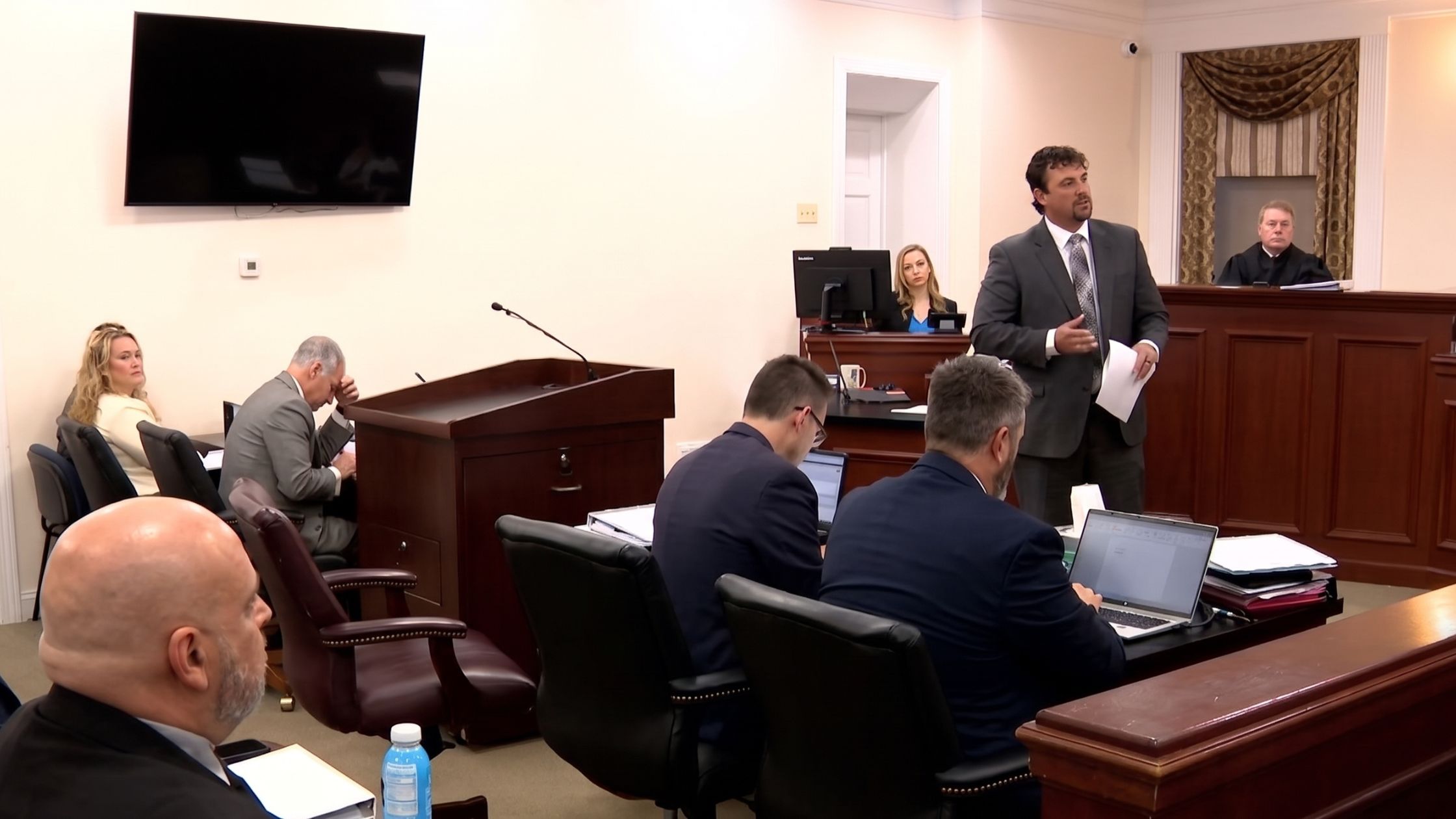
Please everyone be seated. Calling the case of State of Ohio versus Andrew Griffin, case number 25CR46. Mr. Griffin is present in the courtroom with his counsel, Samuel Shamansky, as well as Katherine Clark. The state of Ohio is represented by prosecuting attorney Kevin Flanagan, assistant prosecuting attorney Joseph Vavra, and assistant attorney general Christopher Kinsler. We are on the record outside the presence of the jury at this time. First, we have State's Motion P. I have a response from the defendant and then an additional reply from the state.
(36:39)
Does the state have anything to add?
Joseph Vavra (36:42):
Nothing additional, Judge.
Judge Chris Berhalter (36:46):
Mr. Shamansky.
Samuel Shamansky (36:48):
Your Honor, with respect to P, nothing. But sir, if you don't mind, with the court's permission, I would like to place on the record that relative to the conference that we had in your chamber on the record, we specifically waived and are now waiving again our client's appearance. He understands the issue and he understands that we moved forward without.
Judge Chris Berhalter (37:10):
All right.
Samuel Shamansky (37:12):
And nothing with respect to P, I'm sorry.
Judge Chris Berhalter (37:16):
I have reviewed again State's Motion P, undertaken a significant amount of research on the same. And based on Evidence Rule 616, State's Motion P is overruled as that information specifically underlying relationships, circumstances and influences operating on a witness are admissible and should be presented to the jury. In regards to the jury view script, that is Court's Exhibit 36. That was submitted to the court by the parties.
(37:54)
Does state have anything to add to that?
Joseph Vavra (37:57):
No, Judge.
Judge Chris Berhalter (38:00):
Does the defendant?
Samuel Shamansky (38:01):
No, sir.
Judge Chris Berhalter (38:03):
And in regards to the instruction on a jury view, I have included that in my preliminary instructions that I will give to the jury this morning. Does the state have anything to add?
Joseph Vavra (38:15):
No, Judge.
Judge Chris Berhalter (38:15):
Mr. Shamansky?
Samuel Shamansky (38:16):
No, we're good, Your Honor.
Judge Chris Berhalter (38:17):
Okay. Thank you. In regards to State's Motion N, where are we at with that, Mr. Vavra? That is scheduling a hearing on the same.
Joseph Vavra (38:28):
Thank you, Judge. After speaking with the attorney who represents that witness, the state believes it appropriate to simply address that on the date and time when we would actually physically call the witness, which we anticipate to be Monday, November 2nd. So we would propose to the court that we would just address that motion and the issues contained therein at that time.
Samuel Shamansky (38:54):
Totally agree with that, Your Honor.
Judge Chris Berhalter (38:56):
All right. Then that has been addressed. Before we bring in the jury, are there any other issues the state of Ohio needs to address?
Joseph Vavra (39:04):
Yes, Judge. We discussed this last week during the voir dire process. At that time, the state moved to dismiss specifications related to the death penalty and somewhat in conjunction with that, we have now discussed dismissing certain charges in the indictment that the state believes are duplicative. And to avoid any confusion, the state would now move at this point to dismiss the following counts contained in the indictment. Count 3, count 4, count 5, count 6, counts 9, count 10, count 11, count 12, and count 15. That would leave the remaining charges as counts 1, 2, 7, 8, and 13.
Judge Chris Berhalter (39:51):
Mr. Shamansky, does the defendant have a position?
Samuel Shamansky (39:55):
We're in favor of that, Your Honor. I think it makes sense to streamline the case as much as possible. Thank you, sir.
Judge Chris Berhalter (40:01):
Then the state is granted to dismiss and, Mr. Vavra, counts 3, 4, 5, 6, 9, 10, 11, 12, and what was the final count?
Joseph Vavra (40:14):
15.
Judge Chris Berhalter (40:14):
15.
Joseph Vavra (40:17):
I'm sorry, Judge, 14. There is no count 15.
Judge Chris Berhalter (40:21):
Okay. Thank you. And this trial is proceeding on counts 1, 2, 7, 8, and 13. Is that correct, Mr. Vavra?
Joseph Vavra (40:32):
It is, Judge.
Judge Chris Berhalter (40:33):
Thank you. Any other issues the state needs to address?
Joseph Vavra (40:37):
No, Judge.
Judge Chris Berhalter (40:38):
Mr. Shamansky, are there any issues you need to address outside the presence of the jury?
Samuel Shamansky (40:42):
No, thank you, sir.
Judge Chris Berhalter (40:43):
All right. Thank you.
(40:43)
Mr. Gortz, if you'll bring in the jury, please.
Mr. Gortz (40:48):
Yes, sir.
Samuel Shamansky (40:48):
[inaudible 00:41:54]
Katherine Clark (40:48):
[inaudible 00:42:40]
Judge Chris Berhalter (43:21):
Please everyone be seated. Good morning, ladies and gentlemen of the jury. I know I just asked you to have a seat, but I'm going to ask you to stand again because the first thing we're going to do is I'm going to place you under oath. So if you all will raise your right hand. Do you solemnly swear or affirm that you will diligently inquire into and carefully deliberate all matters between Andrew Isaac Griffin and the state of Ohio and diligently and faithfully try to reach a fair and impartial decision in this matter to the best of your skills and understanding without bias or prejudice, so help you God. To take this oath, please now say, " I so swear or affirm."
Jury (44:01):
I so swear or affirm.
Judge Chris Berhalter (44:04):
Was there anyone who could not take that oath? Record will reflect no one has answered in the affirmative. Please be seated. Now, each party is entitled to jurors who approach this case with open minds and agree to keep their minds open until a verdict is reached. Jurors must be free as humanly possible from bias, prejudice, or sympathy and not be influenced by preconceived ideas as to the facts or the law. You will receive the facts from evidence admitted during the trial and/or stipulated by the parties. Instructions of law will be given to you by this court. It will be your sworn duty to apply the instructions of law given to you. You may not substitute what you think the law is or ought to be.
(45:05)
It is important that you be fair and attentive throughout this trial. Do not discuss the case among yourselves or with anyone else and do not permit anyone to discuss it with you or in your presence. Do not form or express any opinion on the case until it is finally submitted to you in its entirety. Additionally, each of you may not discuss this case among yourselves until it is finally submitted to you. You'll receive the opening statements, the evidence, the law from this court and arguments of counsel in that order. It would be unfair to discuss the case among yourselves before you receive everything necessary to reach an informed decision. You must explain this rule prohibiting the discussion of this case to your family and friends.
(46:02)
When the trial is over, you'll be released from this instruction. At that time, you may, but you're not required to discuss the case and your experience as a juror. The court instructs you not to converse with the attorneys, the parties, or the witnesses during the trial. Likewise, the participants in the trial must not converse with you. I have instructed counsel and their respective clients not to converse with you. Therefore, they are not being rude if they do not speak or merely say hi, they are following the orders of this court. If anyone should attempt to discuss this case with you, report the incident to the court or to the bailiff immediately. You must not post anything about this case on the internet or any electronic device, including cell phones. This would include blogs or any social networking sites such as Facebook, Twitter, and others. Any discussion, if discovered, could lead to a mistrial and would severely compromise each party's right to a fair trial.
(47:12)
Do not investigate or attempt to obtain additional information about this case outside of the courtroom. It is highly improper for any one of you to attempt to do so. You are instructed not to read, view, or listen to any report in a newspaper, radio, television, or online on the subject of this trial. Such reports may be incomplete and sometimes are inaccurate. You may only consider and decide this case upon the evidence received at trial. If you should acquire any information from an outside source, you must report it. These admonitions will remain in effect throughout the entirety of this trial. And if they sound familiar, I recited them to you several times during voir dire on Wednesday, and I think you left with me reciting these as the last thing I gave you.
(48:13)
Was there anyone among you who had any issues since we were last together on Wednesday complying with those orders? Please raise your hand. Record will reflect no one has had any issues following those orders.
(48:28)
Now the procedure for this trial is as follows. First, counsel for the state outlines what he expects the evidence will be in opening statements. Counsel for the defendant may then state what the evidence will be in his opening statement. Although in a criminal case, the defendant is presumed innocent and need not produce any evidence in his defense. These opening statements are not evidence. They are a preview of the claims of each party, designed to help you follow the evidence and understand the case as it is presented. In the presentation of the evidence, the state proceeds first. Thereafter, the defendant may offer evidence and the state may offer rebuttal evidence. The court will then give you further instructions of law and the trial itself concludes with the closing arguments of counsel. Thereafter, you will deliberate on your verdict.
(49:29)
Before you hear the opening statements of counsel and begin to take evidence, I think it would be helpful if you were to have some preliminary instructions to follow in listening to and considering the evidence that you will hear in this case. Later, after you've heard all the evidence and the closing arguments of counsel, I will give you instructions covering additional law, which you are to follow in this case. It is the duty of the judge to instruct you in the law, and it is your duty to follow the law, as I will state to you both now and at the conclusion of the evidence. First, it is your exclusive duty to decide all questions of fact submitted to you. In connection with this duty, you must decide the effect and the value of the evidence. You must not be influenced in your decision by sympathy, prejudice, or passion towards any party, witness, or attorney in the case.
(50:34)
If in these instructions or in the instructions I give you at conclusion of the evidence, any principle or idea is repeated or stated in varying ways, no emphasis thereon is intended and none must be inferred by you. Therefore, you must not single out any particular sentence or individual point or instruction and ignore the others, but rather you are to consider all of the instructions as a whole and are to consider each instruction in relation to all of the instructions.
(51:12)
The fact that I give you some instructions now and some at the conclusion of the evidence has no significance as to their relative importance, nor does the order in which I have given you the instructions. The attorneys for the parties will of course have active roles during the trial. They will make opening statements to you, question witnesses, make objections, and finally will argue the case with closing statements as to the last step before you commence your deliberations. Remember, the attorneys are not witnesses and since it is your duty to decide the case solely on the evidence which you see or hear in this case, you must not consider as evidence any statement of an attorney made during the trial. There is an exception and that is if the attorneys agree to any fact, such agreement, stipulation or admission of fact will be brought to your attention and you may then regard such fact as being conclusively proved without the necessity of further evidence on such fact.
(52:24)
If a question is asked and the objection to the question is sustained, you will then not hear the answer and you must not speculate as to what that answer might have been or the reason for the objection. If an answer is given to a question and the court then grants a motion to strike that answer, you are to completely disregard such question and answer and not consider them for any purpose. A question in and of itself is not evidence and may be considered by you only as it supplies meaning to the answer given by the witness.
(53:05)
Any fact in this case may be proven by either direct or circumstantial evidence. Direct evidence means exactly what the name implies, that it is evidence which directly proves a fact without having to infer that fact from some other fact. Direct evidence is usually the testimony given by a witness who has seen or heard the facts to which he or she testifies. It includes exhibits admitted into evidence during the trial. Circumstantial evidence on the other hand is proof of facts by direct evidence from which you may reasonably infer a fact in question. An example of the differences between direct and circumstantial evidence is as follows.
(53:52)
If the issue in the case is whether Johnny ate the cherry pie, testimony by a witness that he saw Johnny put the pie in his mouth and eat it would be direct evidence of that fact. However, if a witness testifies that he arrived in the kitchen only to see Johnny standing there with an empty pie tin in his hand and cherry pie on his face, that would be circumstantial evidence of the fact that Johnny ate the pie. The law makes no distinction between direct and circumstantial evidence as to the degree of proof required and the facts may be proven by either type of evidence or a combination of them. Each is accepted as a reasonable method of proof and each is respected for such convincing force as it may carry.
(54:45)
As jurors, you have the sole and exclusive duty to decide the credibility of the witnesses who will testify in this case. Which simply means that it is you who must decide whether to believe or disbelieve a particular witness and how much weight, if any, you are to give to their testimony of each witness. In determining these questions, you will apply the test of truthfulness which you apply in your daily lives. These tests include the appearance of each witness on the stand, his or her manner of testifying, the reasonableness of their testimony, the opportunity he or she had to see, hear, and know the things concerning which they testify, his or her accuracy of memory, frankness or lack of it, intelligence, interest and bias, if any, together with all the facts and circumstances surrounding all the testimony. Applying these tests, you will assign to the testimony of each witness such weight as you, the jury, deem proper.
(55:57)
You are not required to believe the testimony of any witness simply because it was given under oath. You may believe or disbelieve all or any part of the testimony of any witness. You should not decide any issue of fact merely on the number of witnesses who testify on each side of such an issue. Rather, the final test in judging evidence would be the force and the weight of the evidence, regardless of the number of witnesses on each side of the issue. The testimony of one witness believed by you is sufficient to prove any fact.
(56:38)
Also, discrepancies in a witness's testimony between his testimony and that of others, if there is any discrepancy, does not necessarily mean that you should disbelieve the witness, as people commonly forget facts or recollect them erroneously after the passage of time. You are certainly aware of the fact that two persons who are witnesses to an incident may often see or hear it differently. In considering a discrepancy in a witness's testimony, you should consider whether such discrepancy concerns an important fact or a trivial one.
(57:19)
If you conclude that a witness has willfully lied in his or her testimony as to a material fact, you may distrust all of his or her testimony and you would then have the right to reject all of his or her testimony, unless from all the evidence you believe that the probability of truth favors his or her testimony in other particulars.
(57:46)
This court will permit those jurors who desire to take notes during the trial to do so. Underneath you is a notepad with two pens. Those are yours throughout the course of the trial. They will remain in this courtroom. You will only take them back to the jury room once you begin to deliberate. With you being permitted to take notes, keep in mind that no juror is required to take any notes. The taking of notes is entirely a matter of personal choice for each juror. The fact that the notes taken by a juror support his recollection in no way makes his or her memory more reliable than that of the jurors who do not take notes. Do not let the taking of notes divert your attention from what is being said or what is happening in the courtroom during the trial. Some persons believe that taking notes is not helpful because it may distract a person's attention and interfere with hearing all the evidence.
(58:54)
All notes are confidential and for the consideration of the jury only. Each note taker will leave his notes on the chair or underneath the chair during all recesses and until deliberations begin. At that time, you'll be allowed to take your notes into the jury room. Upon the conclusion of this trial, all notes will be returned to the bailiff for destruction at the time the jury is discharged. You will only be permitted to begin taking notes after opening statements and the jury view occurs. You will note that these proceedings are being broadcast and photographed by members of the news media. However, you will not be. You must not allow this fact to divert your attention from this case or to interfere with your duties as jurors. You are not allowed to talk to members of the media during this trial and members of the media are not permitted to contact you. Should any member of the media contact you, you should notify the bailiff immediately.
(01:00:05)
Now ladies and gentlemen, this concludes my preliminary instructions. I hope that they have been of some assistance to you in listening to and considering the evidence. Please keep these instructions in mind as you listen to the evidence and the statements of counsel. I may give you additional instructions during the trial and when the evidence is concluded, I will give you additional instructions on the law that you are to follow together with the instructions that you have just heard and any other instruction that is given during the trial.
(01:00:41)
At this time, counsel for the parties may have an opening statement. Opening statements of counsel are concise and orderly descriptions of each side's claims and defenses and the evidence counsel expects to produce in support of those claims and defenses. They are not evidence. Each side will address you once during opening statements. The state will proceed first. Immediately after opening statements, you will be transported for a jury view. You'll be taken to the location involved in this case. You'll remain together under the supervision of the bailiff until you return to the courtroom. Counsel and the parties have decided not to accompany you. The bailiff may call your attention to certain objects requested by counsel.
(01:01:36)
What you observe outside this courtroom is not evidence. Conditions may have changed since the time of the events in this case. The evidence of the physical appearance of the scene must come to you from the witness stand. The only purpose of your visit is to help you understand the evidence as it's presented in this courtroom. You are not permitted to discuss with each other anything about this jury view while it is occurring, nor are you permitted to ask any questions during the jury view. And again, at this time, we will proceed with opening statements.
(01:02:17)
Does the state of Ohio have an opening statement?
Joseph Vavra (01:02:20):
Yes, Your Honor.
Judge Chris Berhalter (01:02:21):
Then, Mr. Vavra, you may proceed.
Joseph Vavra (01:02:22):
May I step up?
Judge Chris Berhalter (01:02:24):
Yes.
Joseph Vavra (01:02:27):
May it please the court, counsel for the defense, ladies and gentlemen of the jury. Good morning. Opening statement is a chance for the attorneys to address you directly and to preview for you the evidence that you're going to hear. The judge used the word concise. I'm going to do my best, but what you're going to find out is this was an investigation that spanned about five years. So I'm going to try to summarize this evidence as best I can for you. I'm going to ask you to stick with me.
(01:03:04)
On the morning of Tuesday, September 21, 2021, around 7:00 AM, Belmont County 911 received multiple calls of a structure fire on Trails End Drive in Belmont, Ohio. One call came from a neighbor. Two calls came from employees of Stonebrakers Garage, which is across the street from where the fire was occurring. The callers weren't sure if anyone was inside, what the situation was. The employees from Stonebrakers went to the house. Two of the individuals got there. They attempted to get access to the front door. Front door was locked. They could see smoke inside, couldn't make contact, beat on the door, honked their car horn, got no response.
(01:03:58)
These two individuals then actually broke out one of the windows in the front of the house to, again, try to make contact. No luck. They then travel around to the back of the house where there's a door leading to the backyard and they found that door to be unlocked. They open it. The room is filled with smoke. They can't see inside. One of the individuals attempts to go in, Mr. Stonebraker himself, and he can't make it more than a step or two because of how bad the smoke is. John Phillips, who is another one of the employees who called 911, he's also a firefighter, a volunteer firefighter in his spare time. He comes around to the back and he's able to get on his hands and knees. He crawls, he has a flashlight on his phone, enters the home and is actually able to find a deceased female in the house. He drags her out, sets her on the back porch. It is clear and evident that she is no longer with us.
(01:05:12)
He then doesn't see anything else when he's in there, so he doesn't go back in. He waits for other firefighters to arrive. Multiple fire departments respond, as well as the sheriff's office at this point. Jeremy Wright, captain at Cumberland Trail Fire Department will testify and tell you that he, along with others, enter the house as well. When they enter the house, he finds a male individual inside on the ground. He drags that individual out and sets him on the back porch. Once again, it is clear and evident that this individual is no longer with us. They then turn their attention to putting out the fire. Eventually, they're able to do so.
(01:06:07)
And because we know that we have two deceased individuals, the Belmont County coroner is called in. When she arrives, she notices what she believes to be bullet holes on both victims in their head, multiple bullet wounds. At this point, we're no longer talking about a fire and somebody potentially dying as a result of the fire. We are talking about murder. The investigation shifts. Someone from the State Fire Marshal's Office comes in and conducts an investigation, looks around the house, and he finds that there are actually four points where a fire was started or attempted to be started in the home. One is a couch in the living room where our two deceased bodies were found. A hallway closet is a second source of fire. A master bedroom is a third source of fire. And a fourth source of fire was the oven in the kitchen. Now, that fire never ignited and you'll hear details about explaining what happened there, but it was a potential source for fire.
(01:07:17)
You'll also hear testimony about how fire complicates a crime scene and what all occurs from that. Because you're talking about, one, the damage the fire and smoke do on their own. You're talking about multiple individuals entering the home, firefighters who try to put the fire out. And then you're also talking about the water damage that's occurring. So you'll hear testimony about how those things affect the crime scene, affect collection of evidence, things like that.
(01:07:53)
Additionally, I mentioned firefighters, I mentioned state fire marshal, sheriff's office, coroner, BCI is called, Bureau of Criminal Investigation, they're a state agency and they investigate any crimes occurring in the state property. And in a case like this involving murder, they are called in to investigate as well. They take control of the crime scene to process it. Now, in the days following this, our two deceased individuals, Tom and Angela Strussion, are taken for autopsies. And in that process, we learned that Angela Strussion was shot three times in the head. We learned that Tom Strussion was shot twice in the head and once in his upper right shoulder area in the back.
(01:08:46)
Last week, defense counsel told you there's not a question that a murder occurred, and I agree with that. There's no question here if these two were murdered. The question is who did it? Who was responsible? The Belmont County Sheriff's Office and BCI did as best they could with the scene in collecting evidence, testing samples, looking for DNA, looking for fingerprints. All those attempts came up empty. No such luck.
(01:09:23)
I want to pause here and just tell you about Tom and Angela Strussion and who they were a little bit. Angela Strussion did not grow up in this area. She grew up in the South, educated, went to college, met Tom. They decided to move here. Tom is a businessman, he's a restaurateur. They were running two businesses at the time of their death, Salsa Joe's in Belmont, Ohio and Salsa Joe's in Elm Grove, Ohio. In addition to that, Angela also held down a full-time job. She was more of the behind the scenes person with the businesses, controlled a lot of books, finances-
Mr. Joseph Vavra (01:10:00):
... the behind-the-scenes person with the businesses, controlled a lot of the books, finances, things like that. Tom was more of the face of the businesses. He was president at the restaurants and dealt with customers, and things like that. He was also assisting in cooking a lot of the food that was served. Throughout the course of this trial, you're going to hear some things that may make you not like Tom Strussion. He wasn't faithful to his wife, and he wasn't the most honest businessman and the most honest business partner. You may not like him because of that, and that's okay. Not liking him because of those things doesn't mean he should be murdered.
(01:10:47)
Again, our officers were running on every lead they could. They investigated multiple folks. Their investigation actually turned up two individuals who were actually extorting Tom Strussion for money. Those folks were prosecuted. However, they were cleared of any involvement in this situation. The officers with our sheriff's department, as well as BCI, as well as the FBI, became involved. They began looking at cellphone towers, phone records. Seeing who was present or what phones were present at the scene at the time that we believe this to have occurred. As you can imagine, this location you'll see is right next to Interstate 70. So, these towers are picking up every car that's driving by. It's processing a lot of people, a lot of information. They are sifting through this, trying to make connections, not getting very far at this point.
(01:11:49)
Early on in the investigation, Andrew Griffin is identified as a person of interest. Andrew Griffin is from Oklahoma. He was in this area. He met Tom and Angela Strussion. He became involved in their businesses, and actually became a partner in running the Salsa Joe's Elm Grove location. When investigators first looked at him, they looked at his cellphone records. They saw that his cellphone was in Oklahoma at the time these events occurred. Based on that, he was somewhat set aside. They believed that that may have shown he wasn't here, so he was set aside. At that point, nothing else was really pointing in his direction. They continued investigating. They investigated an entire rogues gallery of usual suspects in Belmont County, in the Wheeling area, and were coming up empty. At a certain point in the spring of 2023, Chief Detective Ryan Allar says, "You know what? I'm going to call this Andrew Griffin guy. We're not getting anywhere. He was a business partner. He may be able to point us in the direction." Reaches out, doesn't receive a response.
(01:13:12)
In June, July of '23 in this timeframe, Detective Allar learns from Lisa Balog, who is Tom Strussion's sister, you'll hear testimony from her, informs them that, "Hey, I heard that Andrew Griffin is missing in Oklahoma." Detective Allar looks into this and finds out yes, in fact, he is reported missing in Oklahoma. And the investigation indicates that he took a work truck and crossed the border into Mexico and was not heard from right there. This piqued the investigator's interest. It was at this time as well that they reached out to Stacey Griffin. Stacey Griffin is the ex-wife of Andrew Griffin. At the time, July of 2023, they were estranged. They reach out to her and speak with her. And during this part of the investigation and speaking with her, they learned that Brett Cole is Andrew Griffin's best friend. You're going to hear a lot about Brett Cole in this trial. He's not a nice guy. He is currently serving life in prison for child rape. He's not somebody to like, but he became someone of interest in this.
(01:14:47)
Investigators subpoenaed his phone records to see where this leads. FBI Analyst Brian Warcholak looks at his phone records and he finds something odd in looking at it, something that doesn't look like everything else. On the morning of September 21, 2021, the same morning, Tom and Angela were found, he finds a strange number, doesn't look like any other numbers, calls Brett Cole. And he calls him at 7:03 Central Time, which would've been about an hour after the bodies were found. This call was placed from Jackson, Tennessee, and it became something of interest. It was 24 seconds in duration, very short. And Analyst Warcholak reached out to Special Agent Bryan Lacy with the FBI. Agent Lacy was the one looking at a lot of the cellphone tower information in this area. He says, "Hey, it might not be anything, but check out this number, this number that placed this call on Brett Cole. Seems odd, let's look at it." Agent Lacy looks at it and finds that this phone number, this phone was pinging off cell towers, the cell towers nearest Tom and Angela Strussion's house at the time we believe the murders occurred.
(01:16:17)
This phone now becomes the focus of the investigation. They're able to subpoena all the records for this phone. They find that this phone first registered, first time ever registered with a cellphone tower in Marion, Illinois on September 19th, 2021 at 5:48 PM Central Time. They then tracked the path of this phone. This phone goes directly from Marion, Illinois to Belmont, Ohio, when it arrives at 3:43 AM Eastern Time on September 20th, 2021. This phone then continues hitting cell towers surrounding the Strussion's home the entirety of that day. Now, we know from Angela Strussion's cellphone information that she was at home most of the day. You'll hear Lisa Balog testify to that as well. She was actually with her at the house that day. We know from Tom Strussion's phone records and other information that he was out and about. He was at the Salsa Joe's Elm Grove location that evening of the 20th of September until about 10:00 PM. Phone data shows his phone then leaving that area, heading home.
(01:17:41)
At about 10:30 PM, his phone connects to his house wifi. So, we know that he is in the home. We know that Angela is in the home. For the next about one hour, all three phones are there, hitting off these same towers until 11:37 PM. That is when our mystery phone leaves that house, leaves that area, and immediately heads west on Interstate 70. That phone is tracked on a path heading back to the state of Oklahoma, a path that evidence will show Andrew Griffin had utilized in the past. That phone is either turned off or shut off at 10:40 AM Central Time in Benton, Arkansas. It's never used again. That phone exists for about 40 hours. It exists from 5:48 PM, when it's activated on September 19th, until it's turned off or dies on September 21 at 10:40 AM. It existed to travel from Marion, Illinois to Belmont County back towards Oklahoma. Now, Benton, Arkansas is where it shuts off about 10:40. That is about three hours from Andrew Griffin's home in Whitesboro, Oklahoma. So if the State's theory means anything, he should arrive back home at about 1:40 PM.
(01:19:27)
Now, I mentioned that phone had one purpose: traveling to Belmont County and then leaving. I forgot about a second purpose, because the second purpose was he called Brett Cole the morning that these murders occurred. Now, Brett Cole's phone information shows that after receiving that call, he made a couple of calls. He called Amy Chase and he called Dalton Ray. We'll talk about them later. As mentioned, Andrew Griffin's phone was in Oklahoma this entire time. On September 19th, it's nears home in Whitesboro. After the 19th, it then travels to Hugo, Oklahoma. That's where Brett Cole lives. It then stays in and around that area until our mystery phone calls Brett Cole on September 21, and then it travels back to Andrew Griffin's phone in Whitesboro. It arrives there at approximately, I believe, 10:00 AM. Will remain stationary, inactive, doesn't do much of anything until 1:48 PM Central Time, when it starts making multiple calls to multiple individuals.
(01:21:02)
Now, you might ask what was Andrew Griffin's phone doing activity-wise on September 19th and September 20th? It wasn't doing much of anything. You'll see that on September 18th, it was making a lot of calls, a lot of activity. On September 19th, it placed zero calls. On September 20th, it placed zero calls. On September 21, at 1:48 PM, it begins making multiple calls. Now, there's a few text messages in there and we'll hear about that. We'll also hear that any calls coming into that phone for those two dates went completely unanswered. They went to voicemails. Nobody picked up the phone. Nobody said hello. Going back to our mystery phone, detectives looked at that tower that had hit in Marion, Illinois, noticed a couple areas of interest. There was a Cricket phone store there and there was Walmart there.
(01:22:05)
They reach out to Cricket, nothing there. Our detectives reach out to Walmart, and here they find where that phone was purchased. They obtained a receipt for September 19th at 5:05 PM, where a cellphone, a phone card to put minutes on the phone, and a portable charger were purchased with cash. Now, they don't come upon this information until July of 2024. So, we're almost three years removed from our murder. They attempt to get video of this purchase in September of 2021, but they're told, "Hey, sorry guys, we don't have it anymore. We don't keep our video that long." Detectives are able to obtain the registration information for this phone. It was registered in the names of a James Jody, and given an address in Knoxville, Tennessee. Detective Allar traveled to this address, could not find anyone named James Jody. The charger that was purchased became a little interesting, and our officers were able to identify and get a picture of it, what it would look like in Walmart's website if you were to look it up and purchase it that way.
(01:23:27)
Now, talking about Stacey Griffin again, ex-spouse of Andrew Griffin, she will testify. She will testify regarding some comments made during the marriage between she and Mr. Griffin. She will testify that once she began talking to officers, they asked her to keep an eye out for things. She will testify that in a car that she possessed that had previously been used by Mr. Griffin, she found a cellphone and a tracking device. She turned those over to our officers. You will find that the cellphone belonged to Brett Cole. You will find that the tracking device was used to track Tom Strussion's vehicle in the months of May and June of 2021.
(01:24:20)
I mentioned the charger being of interest. Detective Allar reached out to Ms. Griffin and said, "Hey, can you keep an eye out for a charger, a portable phone charger?" Didn't show her a picture of it, didn't tell her how it looked, nothing like that. She takes a look, gets a hold of it and says, "Hey, wait, I found one." Takes a picture of it, sends it to him. Same exact charger purchased in Marion, Illinois at Walmart. Make, model, looks the same. She provided it to Detective Allar. We have it in evidence. It's something you'll be able to see and look at. In the more recent past, you'll hear some testimony from Ms. Griffin that there were some moves, things being boxed up, not finding things right away. You'll hear some testimony from her that recently, this past summer, she found a couple more cellphones, gave them to our detectives. Our detectives searched them, were able to establish that they belonged to Mr. Griffin prior to the murder. So, they were older phones, this was sitting around the house.
(01:25:26)
However, one item of interest from these phones when the detectives looked it up is they found that Mr. Griffin had a Facebook friend by the name of James Jody. Now, we know the path our phone traveled. We don't know how it was traveling. Was it in a truck? Was it in a car? What was the situation there? We turned back to Brett Cole. In searching him, our detectives applied for search warrants to Facebook. They find Facebook messages in an exchange on September 13th of 2021, about a week prior to our murders, between Brett Cole and Corey White. Corey White lives in Texas. He is advertising and selling a motorcycle. There's some talk between the two of them about price. They said, "I want $3,000." Brett Cole asks him specifically in this text exchange, or Facebook exchange, "Will it make a long trip?"
(01:26:39)
Corey White responds, "Oh yeah, it's in tip-top shape." That day, November... I'm sorry. September 13, 2021, Brett Cole and another individual we soon learn as Dalton Ray, travels to Corey White's home in Texas to purchase this motorcycle. While Brett Cole is there physically, the phone records show that Andrew Griffin and he spoke four times on the cellphone. Through part of this, Mr. Griffin's bank records will come up. They were subpoenaed as well. You will hear and see that on August 31, he withdrew $5,000 cash from the bank. You will hear that the sale of this motorcycle was $3,000 cash on September 13, 2021. Mr. White is a cautious man. He took photographs of the individuals, Mr. Ray and Mr. Cole, with the motorcycle loading it on or loading it up when they took it out. You'll see the registration that was filled out for this vehicle to transfer the title. You'll see that the transferee, the person it's going to, was filled out, somebody named James Fisher from Mississippi. Investigators are never able to confirm whether that person exists.
(01:28:11)
The phone number written down on that document is the exact same phone number that Andrew Griffin had at the time, except one digit was changed. Title was never transferred. That bike remained in Corey White's name for quite some time after these events. I mentioned Dalton Ray. He is present when this bike is purchased. He's mentioned as being around Mr. Cole at the time this was going on. Detectives made attempts to reach out to him. They were not successful. You will hear about that. However, they did confirm that in Andrew Griffin's bank records, there were multiple checks written out to Dalton Ray. So, we know they knew each other. We know Mr. Ray was around.
(01:29:09)
Now, turning back to our motorcycle and our cellphone, detectives knew the path of travel, and they knew the times that this motorcycle was hitting cellphone towers on its travel, and you're going to see all this information. They attempted to get some kind of photograph or video of this motorcycle. And again, given the passage of time, they knew this was going to be a challenge. They were coming up empty. They located a toll bridge that goes from Indiana to Kentucky to the time that the motorcycle should be traveling somewhere in that area on September 19th, 2021. In August of 2024, they subpoena records from Riverland. That's who controls these cameras, and processes, and plates that are rent because you're going to learn that's what they're looking for. It was explained to our detectives that, "We don't have any motorcycles at this time. The license plate was obscured or hidden. We wouldn't have picked it up anyway, and our system would've gotten rid of it. We don't have anything."
(01:30:41)
That was the status quo until January of 2026, this January. Our detectives began talking to a Karen Nakonis. This is a different fresh set of eyes. She looked... The license plate might not have been read, but if there's footage, it still exists. It's just in a different place than they were looking before. She is able to look back and find in their storage. That at 10:52 PM, a motorcycle and a rider in a helmet crossed that bridge in this photograph. We have that photograph. You will see that photograph. You will be able to look at pictures of that motorcycle and compare it to pictures of the motorcycle that Corey White sold to Brett Cole, and you will find that... Now... Oklahoma area, at the time these murders occurred. We also found that there was one bank transaction on his banking account, his credit/debit card, that occurred during this timeframe as well, September 20th, 2021. There was a purchase at a Shell gas station in Hugo, Oklahoma.
(01:32:16)
Now, I've mentioned Amy Chase before. Cole, at the time that she was... Someone set with him off and on at his home in Hugo, Oklahoma, along with Dalton Ray from time to time. She's going to tell you that at the time that we're talking about, she caught Brett Cole with two phones. As his girlfriend at the time, she kind of panicked. "What the heck? What's the second phone for? You're stepping out on me? What's going on here?" She confronts him about that, and she learns that Mr. Cole had two phones because one belonged to Andrew Griffin. Andrew Griffin was in Oklahoma. Had Andrew Griffin's credit/debit card at the time and used it to make a purchase at a gas station in Hugo, Oklahoma.
(01:33:40)
At this point, Amy Chase is also interested in [inaudible 01:33:48], so the detectives look at her phone records. They find her phone activity during this time and confirmed that she was in and around Hugo as expected. You'll also hear testimony that her phone and Mr. Griffin's phone were in the same locations around Hugo at the time. You'll hear her testify that she didn't see Andrew Griffin during this time, but his phone was there. He just wasn't. You'll hear specifically that her phone and Andrew Griffin's phone were hitting off a tower near a farm and feed store in Grant, Oklahoma. You will see at the same time, there was a purchase at Grant, Oklahoma made by Brett Cole, who signed the credit card receipt with his name, and you'll see the exact time that that occurred. So Brett Cole was there, and Amy Chase was there, and Andrew Griffin's phone was there.
(01:34:47)
I mentioned Brett Cole log times. I told you you're going to hear a lot about him. In December of 2024, you'll hear he was in federal prison in Illinois at the time, serving his life sentence. Our detectives were able to secure and bring him back here, and he spoke to our detectives. You're going to hear that he was given immunity to give information. You're also going to hear again, he's already doing life in prison. You're also going to hear that our investigators indicate while he may have... No evidence indicates he ever left the state of Oklahoma. Now, one of the things Mr. Cole mentions to our defendant is that, "Hey, that motorcycle helmet, I still have it. It's at my mom's house in Oklahoma." Sure enough, detectives secure the motorcycle helmet from Brett Cole's mom's house in Oklahoma. Once they receive it, they send it to a place called Pure Gold Forensics in California to see if there's any evidence, any DNA, anything that might link [inaudible 01:36:06].
(01:36:05)
They conduct an investigation. They send their results to Cybergenetics, which is another DNA place in Pittsburgh, Pennsylvania, and Cybergenetics will confirm that Mr. Griffin's DNA was found inside that motorcycle helmet. Now, you may be thinking why would Mr. Griffin do this? What's the motive? I mentioned before when Mr. Griffin came here from Oklahoma, he met Tom and Angela, and struck up a relationship. Decided that he was going to go into business with Tom and Angela. They signed a written agreement on March 17th, 2021, indicating that they're 50/50 partners with Salsa Joe's Elm Grove. Prior to that, in January of 2021, Mr. Griffin's bank records said that he wrote a check to Tom and Angela's business, AJS Holdings, in the amount of $10,000, which was deposited into the Belmont Salsa Joe's location. So, that's his initial investment. From March of 2021 until July of 2021, Mr. Griffin invests another, roughly, $96,000, in AJS Holdings, the Salsa Joe's Elm Grove location.
(01:37:50)
As far as getting money out of that business during this timeframe, zero. No withdrawals, no draws, nothing. Now, he did receive about six or seven paychecks. He was a manager at that business, so he was getting a weekly paycheck for about seven weeks, $1,000 a week for that. But as far as actually getting investment back? None. You will learn that Salsa Joe's Elm Grove was open from about mid to late May until the time that Tom and Angela passed. In that timeframe, the business took in about $90,000 in cash sales. There were other sales, credit cards, [inaudible 01:38:36], things like that. Cash that came into that business. You will find that Tom Strussion is the one who controlled the cash that came in, and you will find that at the time Andrew was involved in the business, zero cash went into AJS Holding accounts. From about the 4th of July 2021 until the August 22, 23 of 2021, Mr. Griffin was not present there. He was, I believe, down south in Oklahoma. And during this time, the business, that Elm Grove wasn't doing very well to begin with. During this time, it got even worse. When Mr. Griffin returns, he has a meeting on August 23 with Tom Strussion at the business and is told, "Hey, we're done. Business, we're going to shut this place down. We're done. We're not making any money." So he offers to buy him out and say, "Hey, I'll buy it." Mr. Griffin offers to buy him out to keep the business going, and is told, "No, not an option." The next day, August 24, Tom and Angela Strussion take him off the AJS Holdings account without telling him. We know this because Mr. Griffin calls Commonwealth Savings Bank with this account is and say, "Hey, what the heck? I can't get access." And is told by Pam McKinnon about [inaudible 01:40:10]. "Well, you got to talk to them about it because they're the ones who took you off."
(01:40:16)
A few days later, he returns to Oklahoma. So at this point, he's contributed about $106,000 to this business and has received nothing on his return, save $7,000 in income from being the manager. That's what we're talking about here as a motive: money and revenge.
(01:40:45)
Now, we're going to present to you some other witnesses from Oklahoma, some other acquaintances of Mr. Griffin. They're going to talk to you about discussions they had with him about these murders. And you're going to hear some phone calls, some wiretaps, because at one point, our officers secured a wiretap warrant from Mr. Griffin's phone. You're going to be able to hear his own comments and statements on these wiretaps. One individual that you're going to hear from, from Oklahoma, is Arthur Cole. Arthur Cole is elderly. He's not in good health. Physically, he's not going to be able to be here. And we took his deposition prior to this trial last summer in 2025, and you're going to be able to watch him. You're going to be able to look at him. He sat in that chair there, and testified, and was cross-examined. Arthur Cole is Brett Cole's grandfather. He's also a surrogate grandfather to Andrew Griffin. He looked at Andrew as a grandson, Andrew looked at him as a grandfather.
(01:41:57)
His wife, Arthur Cole's wife, actually assisted when Andrew Griffin's mother gave birth to him. She was there in the room and helped that process happen. When they were growing up, he was always around. Arthur Cole raised him like a grandson. Arthur Cole will talk about how there were two different versions of Andrew. There was a version of Andrew prior to the time he spent in Belmont County, and there was the version of him after he returned, and how different that version was. You're also going to hear that at one point, Mr. Griffin came to pick Mr. Cole up to drive around. This is something he did all the time, get in the car, drive and talk, go to different hunting locations and things like that. On this particular occasion, Mr. Griffin was on the phone talking to somebody, and Arthur believed he was talking to Brett Cole, his grandson.
(01:42:57)
And Arthur overheard the conversation, and he heard Andrew Griffin say, "Well, I had to go get my money and I killed two people." After that conversation, Mr. Cole instructed Mr. Griffin that he was no longer welcome to his house, that he was not to come around. He'll tell you that Mr. Griffin did come around a couple days later to tell them goodbye. And it was shortly after that, that Mr. Griffin left the area and appeared to go to the Mexico. You'll hear more details about that, and how he was eventually returning to Mexico, and we'll delve into that now.
(01:43:52)
So at the start of this, and somewhat last week, we talked about there's no question these murders happened. There's no question his house was set on fire. The question is, who did it? The State's going to present a lot of evidence, a lot of witnesses, a lot of undisputed data information, cell phone towers and things like that. That information, plus what Arthur Cole tells you he heard, is enough for you to convict Mr. Griffin of murder. I think what you're going to find though, at the end of the day, is the State's going to need you a lot more than that. Thank you.
Judge (01:44:31):
Mr. Shamansky.
Mr. Samuel Shamansky (01:44:35):
Thank you, Judge. Good morning, ladies and gentlemen, counsel for the government. When I, Kate and I, should say, participated in voir dire, we explained to you that we didn't have a burden. That remains true today. That doesn't mean we're not going to challenge this evidence that the government claims proves beyond a reasonable doubt-
Speaker 10 (01:45:00):
...Proves beyond a reasonable doubt that our client, Andrew Isaac Griffin, in cold blood, over a hundred grand supposedly, took the lives of two innocent Belmont County citizens.
(01:45:14)
Now, even though we have no burden, let me guarantee you what we're going to prove. We're going to prove the evidence upon which the government relies points to a conspiracy for sure, but it is a conspiracy that does not involve Andrew Griffin. It involves one of the lowest, most unreliable scumbags of the earth. That is a man who rapes a child, receives, as he should, life in prison, who then makes a deal with the government to save his own pitiful hide.
(01:46:15)
That's just one of the characters that the government wants you to rely and act upon. They want you to believe somehow that this man is trustworthy, all because of some electronic data, the reliability of which, God knows what.
(01:46:33)
Secondarily, the government wants you to believe in the likes of Stacy Griffin, a woman who has also been immunized. And if you believe the government's version of facts in this case, she's as guilty of murdering two people as her husband. Same with Mr. Cole. And what do they get? A pass. Why do they get a pass? Because the government believes that they've got to prove this case, and that they've got to prove that Andrew Griffin did it. And they're going to rely upon two of the most unreliable characters you will ever hear.
(01:47:13)
Mark my words, this is what we're going to establish.
(01:47:18)
The government has done a workman-like job in running down electronic leads, cell towers, none of which will prove beyond a reasonable doubt that Andrew Griffin was anywhere near the Strussion [inaudible 01:47:37] perished.
(01:47:39)
There's zero proof of who committed these two murders, who set this house on fire. I should say there's zero forensic proof. The scene was not properly analyzed. And when BCI came up with snake eyes, they did nothing further to try to establish who was in that house, who pulled the trigger, and who lit the place on fire.
(01:48:07)
This is a case built on innuendo and it's a case built on bought-and-paid-for testimony, which is the most unreliable testimony on the face of the earth. And you'll hear right out of Brett Cole's mouth, "What's in it for me? What are you going to do for me? If I have to take this stand, I'm going to help my brother."
(01:48:29)
And then lo and behold, the promises start coming, fast and furious.
(01:48:36)
And when all this testimony is over, you're going to have to ask yourself, are you going to bet the farm on the likes of a Brett Cole and Stacy Griffin in a case where there is not one piece of direct evidence that ties Andrew to this murder or to these murders? That's what you have to ask yourself, because all this chicanery, all this conspiratorial conduct all occurred behind his back and he's nothing more than a fall guy.
(01:49:10)
As you listen to this evidence, you evaluate the likes of a child rapist and an angry ex-wife, find our client not guilty. Thank you.
(01:49:25)
Thank you, Your Honor.
Judge (01:49:29):
Thank you.
(01:49:29)
All right, ladies and gentlemen of the jury, you're going to retire to the jury room, get a drink, use
the restroom, and then as I advised you, you'll be taken on a jury view, and I will give you that instruction one additional time.
(01:49:44)
You're going to be taken to the location involved in this case. You'll remain together under the supervision of the bailiff until you return to the courtroom.
(01:49:55)
Counsel and the parties have decided not to accompany you. The bailiff may call your attention to certain objects, excuse me, requested by counsel. What you observe outside of this courtroom is not evidence. Conditions may have changed since the time of the events of this case. The evidence of the physical appearance of the scene must come to you from the witness stand. The only purpose of your visit is to help you understand the evidence as it is presented in this courtroom.
(01:50:34)
You are not permitted to discuss with each other anything about this jury view while it is occurring, nor are you permitted to ask any questions.
(01:50:46)
And finally, every time we break, those admonitions I gave you, those orders remain in effect. That is, you are to have no discussions about this case with anyone, including yourselves. You're not to undertake any independent research, and you're not to post anything about this case.
(01:51:06)
If anyone attempts to contact you or does try to discuss this case in your presence, you are to report that to me or to the bailiff.
(01:51:18)
With that said, you can retire to the jury room and you will leave your notebooks in here.
(01:51:22)
All right. We are outside the presence of the jury. Is there any issues the State of Ohio needs to address?
Court attendees and officials (01:52:06):
No, judge.
Judge (01:52:07):
Mr. Schmansky, the same question.
Speaker 10 (01:52:09):
We're good, Your Honor. Thank you.
Judge (01:52:10):
Okay. Just scheduling, it is 10:30. I'm guesstimating about an hour for the jury view. That would give us 11:30.
(01:52:22)
I'll start first with the state. Do we have them eat lunch? That is the jury and maybe resume at 12:30?
Court attendees and officials (01:52:30):
Yeah, that's acceptable, Judge.
Speaker 10 (01:52:32):
Give me one second. I'm sorry.
Judge (01:52:51):
Sure.
Speaker 10 (01:52:57):
Judge, we're cool with starting or resuming at 12:30.
Judge (01:53:02):
All right. Then that will work. The court will be in recess until 12:30.
Speaker 10 (01:53:05):
Thank you, Your Honor.
Judge (01:53:06):
Thank you.
Court attendees and officials (01:53:06):
[inaudible 01:53:15]
(01:53:06)
Right?
Speaker 10 (01:53:06):
No, it's going to jump a little bit.
Court attendees and officials (01:53:26):
Okay.
(01:53:26)
We know the exhibit's somewhere.
Speaker 10 (01:53:29):
Hey, Kate.
Court attendees and officials (01:53:31):
You can shoot me a picture of this or...
(01:53:33)
Well, this is probably the same one you have.
(01:53:37)
Kate, do we have a printed copy of their witness list?
Speaker 11 (01:53:41):
Yeah.
Court attendees and officials (01:53:42):
Can you whip it out real quick so we can get it?
Speaker 11 (01:53:43):
It's in the car.
Court attendees and officials (01:53:43):
Oh, so...
Speaker 11 (01:53:43):
Would you like a copy?
Court attendees and officials (01:53:43):
I'll make a copy of this.
Speaker 12 (01:53:43):
[inaudible 01:54:01]
Court attendees and officials (01:55:46):
So we're doing those two first, and then we're going to do Phillip, Stonebraker, Bright, and if we still have time, we'll do Nixon and Doug Cruz.
Speaker 10 (01:55:58):
Oh, good. So we can get all those done today?
Court attendees and officials (01:55:59):
Hopefully, but yeah. This stuff is all just...
Speaker 10 (01:56:01):
It's the guys that went to the scene, responded to the scene.
Court attendees and officials (01:56:06):
Yeah, we're going to have zero questions.
Speaker 11 (01:56:06):
[inaudible 01:56:12].
Court attendees and officials (01:56:11):
Thank you, sir.
(01:56:13)
I'm going to hang on to that.
Speaker 11 (01:56:13):
Okay. Thank you.
Court attendees and officials (01:56:13):
[inaudible 01:56:20].
(01:56:13)
It's up to you.
Speaker 10 (01:56:13):
[inaudible 01:56:29]
Court attendees and officials (01:56:48):
So there's a diner right down the street here if you head West and there's a pizza shop across the street, pizza shop right next to it, and there's another diner, you go down the hill.
Speaker 13 (01:56:57):
And the coffee shop on the corner. They sell my scones there.
Speaker 10 (01:56:59):
Oh, yeah. You're baking these scones?
Speaker 13 (01:57:00):
I have a home bakery. Legal Indulgence.
Speaker 11 (01:57:04):
You sell your scones there?
Speaker 13 (01:57:04):
Yes.
Speaker 11 (01:57:04):
I've had one before.
Speaker 13 (01:57:04):
Legal Indulgence in my home bakery.
Court attendees and officials (01:57:05):
They'll never sell them.
Speaker 10 (01:57:06):
Oh. Yeah.
Court attendees and officials (01:57:06):
I love scones.
Speaker 13 (01:57:14):
I came up with the concept during a drug trial.
Speaker 11 (01:57:16):
The bakery on the corner with the whiteboard.
Court attendees and officials (01:57:18):
GSM post?
Speaker 11 (01:57:18):
Yeah.
Speaker 13 (01:57:18):
GSM post. Yeah.
(01:57:18)
(silence).
Speaker 14 (02:20:00):
(silence)
Speaker 15 (02:55:00):
(silence)
Court attendees and officials (03:49:28):
[inaudible 03:47:59].
(03:49:28)
[inaudible 03:49:18].
(03:49:28)
No, we really do appreciate it.
(03:49:28)
If you'd like a cookie or anything else, there's cookies back here. Sam's here also.
(03:49:29)
Do you want coffee or anything?
(03:49:29)
[inaudible 03:49:48]. Thank you.
Mr. Schamansky (03:49:29):
So I left it down there, and yours ground to a halt.
Clerk (03:49:29):
[inaudible 03:50:11].
Court attendees and officials (03:51:01):
[inaudible 03:50:20].
(03:51:01)
That's 167. Perfect. All the way in the back.
Clerk (03:55:59):
All rise.
Judge (03:56:02):
Please everyone be seated. We are back on the record in the case State of Ohio versus Andrew Griffin, Case 25CR46. Mr. Griffin is present in the courtroom with his counsel. The state of Ohio is represented by Assistant Prosecuting Attorney Joseph Vavra and Assistant Attorney General Christopher Kinsler. We are outside the presence of the jury. The jury view was undertaken. Mr. Gorrets?
Mr. Gorrets (03:56:37):
Yes, sir.
Judge (03:56:38):
Did you take the jury for the jury view?
Mr. Gorrets (03:56:40):
I did.
Judge (03:56:42):
And how were they transported?
Mr. Gorrets (03:56:44):
By van.
Judge (03:56:45):
Did they all fit in one van?
Mr. Gorrets (03:56:47):
We had two vans.
Judge (03:56:48):
All right. Who drove the other van?
Mr. Gorrets (03:56:50):
Mr. Gossett.
Judge (03:56:51):
All right. Did you read the script that was prepared by the parties?
Mr. Gorrets (03:56:55):
I did.
Judge (03:56:56):
And did you follow that script?
Mr. Gorrets (03:56:58):
I did.
Judge (03:56:59):
And do you have a copy of the very... Or do you have the script that you read from?
Mr. Gorrets (03:57:03):
I do.
Judge (03:57:04):
Would you approach? Thank you. I'm holding Court's Exhibit 36, Agreed Jury View Script. And again, that's what was read to the jury?
Mr. Gorrets (03:57:20):
That's correct.
Judge (03:57:21):
With the instructions?
Mr. Gorrets (03:57:22):
Yes.
Judge (03:57:23):
Did anyone have any contact with the jury?
Mr. Gorrets (03:57:26):
No.
Judge (03:57:27):
Did you overhear any of the jury discussing this case?
Mr. Gorrets (03:57:30):
No.
Judge (03:57:31):
Thank you. Mr. Gossett, did you drive the other van of the jurors?
Mr. Gossett (03:57:37):
I did.
Judge (03:57:39):
Did you hear them undertake any discussions about this case?
Mr. Gossett (03:57:42):
No.
Judge (03:57:43):
Did you view or witness them have any contact with anyone other than themselves and you and Mr. Gorrets?
Mr. Gossett (03:57:49):
No.
Judge (03:57:50):
All right. Mr. Schamansky, do you have anything to add?
Mr. Schamansky (03:57:54):
We're satisfied. Thank you, Your Honor.
Judge (03:57:56):
Okay. Mr. Vavra?
Assistant Prosecutor Joseph Vavra (03:57:57):
Nothing, Judge.
Judge (03:57:58):
Okay. Mr. Vavra, outside the presence of the jury, is there any issues you need to address?
Assistant Prosecutor Joseph Vavra (03:58:05):
No, Judge.
Judge (03:58:06):
Mr. Schamansky?
Mr. Schamansky (03:58:06):
No, we're ready to roll, Your Honor. Thank you.
Judge (03:58:08):
Okay. Then, Mr. Gorrets, if you'll bring in the jury.
Mr. Gorrets (03:58:11):
Yes, sir.
Judge (03:59:47):
Everybody can have a seat while we're waiting. Thank you. Ladies and gentlemen of the jury, have any problems following my orders? No one is raising their hand. Any violations to report of my orders? No one has raised their hand. Thank you.
(04:00:29)
All right. At this time, Mr. Vavra, is the state of Ohio ready to present their case?
Assistant Prosecutor Joseph Vavra (04:00:34):
Yes, Judge.
Judge (04:00:35):
Then you may call your first witness.
Assistant Prosecutor Joseph Vavra (04:00:36):
Call Eddie Cutrer.
Mr. Gorrets (04:00:37):
[inaudible 04:00:37], Sir?
Judge (04:00:37):
Sir.
Mr. Gorrets (04:00:37):
Watch your step.
Judge (04:00:49):
And watch your step.
Mr. Gorrets (04:00:49):
Can you stand on that top step facing me, and raise your right hand, please? Do you swear the testimony you're about to give will be the truth, the whole truth, and nothing but the truth, so help you God?
Eddie Cutrer (04:00:59):
I do.
Mr. Gorrets (04:00:59):
Have a seat there and make yourself comfortable.
Judge (04:01:09):
Sir, before we begin, do you object to being filmed?
Eddie Cutrer (04:01:13):
No.
Judge (04:01:13):
All right. Mr. Vavra, whenever you're ready to proceed.
Assistant Prosecutor Joseph Vavra (04:01:21):
Thank you, Judge. Sir, can you tell us your name?
Eddie Cutrer (04:01:25):
Eddie Cutrer.
Assistant Prosecutor Joseph Vavra (04:01:26):
Can you spell your last name for the court reporter?
Eddie Cutrer (04:01:28):
C-U-T-R-E- R.
Assistant Prosecutor Joseph Vavra (04:01:30):
And Mr. Cutrer, where are you from?
Eddie Cutrer (04:01:36):
Arkansas. That's pretty close-
Assistant Prosecutor Joseph Vavra (04:01:38):
Okay. How long have you lived in Arkansas?
Eddie Cutrer (04:01:40):
Six, almost seven years now.
Assistant Prosecutor Joseph Vavra (04:01:42):
And who do you live in Arkansas with?
Eddie Cutrer (04:01:44):
My wife, Anne.
Assistant Prosecutor Joseph Vavra (04:01:47):
How long have you and Anne been married?
Eddie Cutrer (04:01:49):
41 years.
Assistant Prosecutor Joseph Vavra (04:01:53):
And tell us about your family. How many children do you have?
Eddie Cutrer (04:01:57):
Well, my son's here today. Our oldest daughter's here today, and a younger daughter's still at home. So currently we have three children total.
Assistant Prosecutor Joseph Vavra (04:02:08):
Okay. And you are the father of Angela Strussion as well?
Eddie Cutrer (04:02:11):
Correct.
Assistant Prosecutor Joseph Vavra (04:02:13):
Okay. Did you have a total of four children at one point?
Eddie Cutrer (04:02:16):
Yes.
Assistant Prosecutor Joseph Vavra (04:02:19):
Okay. What do you do for a living or are you retired?
Eddie Cutrer (04:02:21):
I'm retired now.
Assistant Prosecutor Joseph Vavra (04:02:22):
What did you do?
Eddie Cutrer (04:02:24):
I was a sales manager at a material handling company in Fort Worth, Texas.
Assistant Prosecutor Joseph Vavra (04:02:28):
How long have you been retired?
Eddie Cutrer (04:02:30):
10 years.
Assistant Prosecutor Joseph Vavra (04:02:34):
Okay. Tell us about your daughter, Angela.
Eddie Cutrer (04:02:44):
That's difficult.
Assistant Prosecutor Joseph Vavra (04:02:46):
Let's start here-
Eddie Cutrer (04:02:47):
She was-
Assistant Prosecutor Joseph Vavra (04:02:48):
... where did she grow up?
Eddie Cutrer (04:02:50):
She grew up in Texas, basically. She was born in Louisiana, but she spent the majority of her life in Texas.
Assistant Prosecutor Joseph Vavra (04:03:00):
Graduate from high school?
Eddie Cutrer (04:03:01):
Yes.
Assistant Prosecutor Joseph Vavra (04:03:02):
College?
Eddie Cutrer (04:03:03):
She attended, but she didn't graduate from college.
Assistant Prosecutor Joseph Vavra (04:03:07):
Okay. What'd she do for a living?
Eddie Cutrer (04:03:10):
She worked for JP Morgan Chase at their payment tech division, and she was a team leader. She had several of their sales people for the credit card business that she was responsible for. And she left there, went in business for herself, basically doing the same type of business. And then, when they moved to Ohio, she had secured a job with Fiserv, basically doing the same type of business.
Assistant Prosecutor Joseph Vavra (04:03:44):
Do you know what kind of company Fiserv is?
Eddie Cutrer (04:03:47):
No, Sir.
Assistant Prosecutor Joseph Vavra (04:03:48):
Okay. Somewhere in the finance world?
Eddie Cutrer (04:03:50):
Yes.
Assistant Prosecutor Joseph Vavra (04:03:53):
When you said they moved to Ohio, who are you talking about?
Eddie Cutrer (04:03:57):
Tom and Angela.
Assistant Prosecutor Joseph Vavra (04:03:59):
Do you know when the two of them met?
Eddie Cutrer (04:04:03):
Oh gosh, maybe 2010.
Assistant Prosecutor Joseph Vavra (04:04:08):
And do you know where they met?
Eddie Cutrer (04:04:14):
It was in Texas, Arlington, Fort Worth area, from a dating site.
Assistant Prosecutor Joseph Vavra (04:04:21):
Did they eventually get married?
Eddie Cutrer (04:04:29):
Yes, Sir.
Assistant Prosecutor Joseph Vavra (04:04:30):
When was that?
Eddie Cutrer (04:04:33):
Oh. I'm sorry, I'm bad with dates. I don't know. We were... My wife and I were traveling at the time and we did not attend their wedding. I want to say it was like 2016 or '17.
Assistant Prosecutor Joseph Vavra (04:04:47):
Okay. You said you retired about 10 years ago, right?
Eddie Cutrer (04:04:51):
Yes, Sir.
Assistant Prosecutor Joseph Vavra (04:04:51):
Was it around the time you retired?
Eddie Cutrer (04:04:54):
It was a little after that.
Assistant Prosecutor Joseph Vavra (04:04:55):
Okay. So 10 years ago, something like that?
Eddie Cutrer (04:04:58):
Yes.
Assistant Prosecutor Joseph Vavra (04:04:59):
All right. Where were they living when they got married?
Joe Vavra (04:05:00):
... when they got married?
Eddie Cutrer (04:05:04):
In Arlington, Texas on Winding Creek.
Joe Vavra (04:05:09):
And you said eventually they moved to Ohio?
Eddie Cutrer (04:05:13):
Yes.
Joe Vavra (04:05:14):
Do you remember when that was, roughly?
Eddie Cutrer (04:05:20):
2017/18, maybe. Somewhere in that neighborhood. I'm sorry.
Joe Vavra (04:05:24):
And do you remember why they moved to Ohio?
Eddie Cutrer (04:05:28):
Yes, Tom wanted to get back to his home ground, so to speak, to open a restaurant, or restaurants.
Joe Vavra (04:05:36):
Had they been in that kind of business in Texas?
Eddie Cutrer (04:05:39):
Yes, sir, at several locations within the Northwest Texas area, North Texas area, basically.
Joe Vavra (04:05:49):
So, eventually they come here and start a business here?
Eddie Cutrer (04:05:53):
Yes, sir.
Joe Vavra (04:05:53):
Okay. And do you know the name of the business?
Eddie Cutrer (04:05:56):
Salsa Joe's.
Joe Vavra (04:05:58):
Okay. And there were two Salsa Joe's that were open, correct?
Eddie Cutrer (04:06:01):
Yes, sir.
Joe Vavra (04:06:01):
Where was the first one?
Eddie Cutrer (04:06:04):
Here in Ohio on National Highway.
Joe Vavra (04:06:07):
And do you know where they moved to when they moved to Ohio?
Eddie Cutrer (04:06:11):
Yes, sir. Trails End Drive, and I think it's Belmont there.
Joe Vavra (04:06:16):
Okay. So, is that the house they lived in until the time of their death?
Eddie Cutrer (04:06:22):
Yes, sir.
Joe Vavra (04:06:22):
Okay. Were you familiar with all with how they ran their business?
Eddie Cutrer (04:06:33):
Not on a day-to-day business, I know my daughter took care of the books, payroll, things of that nature. She wasn't a day-to-day employee because she had a full-time job with Fiserv.
Joe Vavra (04:06:50):
And do you know what Tom's role in the business was?
Eddie Cutrer (04:06:52):
Yes, they were his recipes that they used to cook, and he was a greeter, fresh flesh, and everybody knew him. So, he was, I think you mentioned earlier, the face of the business and that was his primary function.
Joe Vavra (04:07:15):
Did you ever go to either of the restaurants?
Eddie Cutrer (04:07:17):
Yes. Both of them.
Joe Vavra (04:07:20):
Visited the one in Belmont?
Eddie Cutrer (04:07:21):
Yes, sir.
Joe Vavra (04:07:22):
Roughly how many times?
Eddie Cutrer (04:07:25):
Oh, altogether, 10/15 times, maybe more than that, because I spent some time up here, and...
Joe Vavra (04:07:33):
How about the restaurant in Elm Grove, did you go to that?
Eddie Cutrer (04:07:37):
I did go there two or three times.
Joe Vavra (04:07:43):
Tell us about, you said you spent some time up here.
Eddie Cutrer (04:07:46):
Yes.
Joe Vavra (04:07:46):
Tell us about those visits.
Eddie Cutrer (04:07:50):
The first one was in March of '21, my wife thought it'd be a good idea for me to get out of the house, so I came up here and visited, and was here for about a week in March of '21.
Joe Vavra (04:08:09):
Okay. Where'd you stay?
Eddie Cutrer (04:08:11):
With Angela and Tom.
Joe Vavra (04:08:13):
At the Trails End Drive property?
Eddie Cutrer (04:08:14):
Yes, sir.
Joe Vavra (04:08:18):
When you were here for that visit, did you meet anybody else?
Eddie Cutrer (04:08:21):
Yes, sir. Andrew Griffin.
Joe Vavra (04:08:24):
Tell us about the circumstances how you met Andrew Griffin.
Eddie Cutrer (04:08:29):
At Angela and Tom's house, he drove up pulling a big trailer that had a large smoker on it, and that was the first time I'd met him.
Joe Vavra (04:08:41):
Had you heard of him before that?
Eddie Cutrer (04:08:44):
No, sir.
Joe Vavra (04:08:44):
Okay. Did you interact with him when you met him?
Eddie Cutrer (04:08:49):
Casual conversation, matter of fact, he was putting some DEF in his diesel truck, and so just general conversation.
Joe Vavra (04:08:58):
Where was he staying at the time?
Eddie Cutrer (04:09:02):
He stayed at the house as well, I told him I was already there and had the bedroom, so he had the couch.
Joe Vavra (04:09:14):
Did you eventually learn that he and your daughter and son-in-law were going into business together?
Eddie Cutrer (04:09:20):
Yes.
Joe Vavra (04:09:21):
What was your understanding of that?
Samuel H. Shamansky (04:09:23):
Object, Your Honor. Hearsay.
Eddie Cutrer (04:09:27):
I'm sorry?
Judge Chris Berhalter (04:09:28):
Hold on, sir. Can you both approach?
(04:09:30)
[inaudible 04:09:54].
Joe Vavra (04:10:35):
[inaudible 04:10:07].
(04:10:35)
Sir, did you ever come to learn about any kind of business relationship between Mr. Griffin and your daughter and son-in-law?
Eddie Cutrer (04:10:42):
Yes, sir.
Joe Vavra (04:10:43):
Okay. Where did you get that information from?
Eddie Cutrer (04:10:46):
From specifically Tom, and Angela had some input as well.
Joe Vavra (04:10:52):
And they discussed this with you directly?
Eddie Cutrer (04:10:54):
Yes.
Joe Vavra (04:10:54):
Okay. What was your understanding of the business relationship?
Eddie Cutrer (04:10:59):
That Andrew was there to work in the Elm Grove location, learn the business, become a franchisee, and Andrew said he thought he could put 10 locations in the Indian reservations in Oklahoma.
Joe Vavra (04:11:19):
Did you hear him say that?
Eddie Cutrer (04:11:20):
Yes.
Joe Vavra (04:11:21):
Okay. So, he said that to you directly?
Eddie Cutrer (04:11:22):
Yes, sir.
Joe Vavra (04:11:27):
Okay. Did you have any idea about the financial arrangements or anything like that?
Eddie Cutrer (04:11:32):
The only thing I knew was he was building sweat equity, getting the West Virginia location up and running and learning the business.
Joe Vavra (04:11:45):
You interacted with Mr. Griffin in March when he was at the house, did you have other interactions with him?
Eddie Cutrer (04:11:52):
Not until later after September.
Joe Vavra (04:11:59):
After the murders?
Eddie Cutrer (04:12:01):
Yes, sir.
Joe Vavra (04:12:06):
You were here in March, you mentioned some other visits, what other times were you up here in Belmont County?
Eddie Cutrer (04:12:14):
In August, the same year, '21.
Joe Vavra (04:12:16):
And what was the purpose of that visit?
Eddie Cutrer (04:12:20):
My wife and I were traveling, and we had an RV, we stayed at Barkcamp. She got COVID at the time, and I didn't, so she suggested I go stay with Tom and Angela again, and she wound up breaking her foot as well, so I spent the entire time with them and she stayed in the RV by herself.
Joe Vavra (04:12:43):
Okay. When you say you spent the time with them, tell us a little bit about that. What were you doing?
Eddie Cutrer (04:12:52):
Tom would take me with him to go look at restaurant equipment, he put me to work in the Ohio National Highway location, prepping some chicken breast, and... A lot of busy work. And he showed me the facility in West Virginia. Angela was working the whole time, so she didn't have much interaction in the daytime hours. And Tom would generally cook in the evening when he got home.
Joe Vavra (04:13:32):
Did you ever see Tom handle any of the finances associated with the businesses?
Eddie Cutrer (04:13:40):
I know he had the bank bags when they closed up at night. Other than... He would get money out of the tills, cash, and... But as far as any direct other financial dealings, I really don't know of any.
Joe Vavra (04:14:07):
Sure. That's what I'm asking about, what you actually saw.
Eddie Cutrer (04:14:10):
Okay.
Joe Vavra (04:14:11):
Tell us about the bank bags.
Eddie Cutrer (04:14:13):
Well, at the end of the day, the waitresses would close out their bags, and they'd have a tally sheet in there, how much in cash, how much in credit card receipts, how much change, and because they were paying out of their, a lot of times out of their waitress aprons. So, those bags would come in at night, Tom would bring them home, and they'd be there at the house, I guess, until Angela, the next morning, went through them and straightened them out, and then put so much money back in there to start the day, the next day at [inaudible 04:14:54].
Joe Vavra (04:14:53):
So, you actually saw the bags?
Eddie Cutrer (04:14:55):
Yes.
Joe Vavra (04:14:55):
Saw them at the house?
Eddie Cutrer (04:14:56):
Mm-hmm.
Joe Vavra (04:14:57):
Did you ever see the contents, the inside?
Eddie Cutrer (04:15:00):
If there was one lying there that was unzipped, you could look in there and see there was some money in there, there were credit card receipts, but as far as how much money or how many credit card receipts, no, I didn't pour through them or anything.
Joe Vavra (04:15:20):
And do you remember what the bags looked like, what color they were?
Eddie Cutrer (04:15:24):
I think most of them were red, I want to say maybe there was a blue one in there.
Joe Vavra (04:15:42):
Tell us a little more about your son-in-law, Tom. What was he like as a person?
Samuel H. Shamansky (04:15:48):
Object, Your Honor.
Judge Chris Berhalter (04:15:51):
Approach.
Speaker 17 (04:16:29):
Sorry.
Joe Vavra (04:16:37):
You talked a little bit before about Tom, his role with the business and handling these bank bags. Did you see Tom with cash often?
Eddie Cutrer (04:16:49):
Yes, sir.
Joe Vavra (04:16:49):
Okay. Kind of tell us about that.
Eddie Cutrer (04:16:54):
Everywhere that I was ever with Tom, when they was in Texas or here, he always had a large roll of money, or a slab of money in his pocket, right front pocket. And he'd pull it out to either pay a bill or whatever, and it was always $100 bills that I saw, but I don't know what else was in that roll or slab of money as far as denominations.
Joe Vavra (04:17:25):
And was that pretty much every time you were around him?
Eddie Cutrer (04:17:28):
Pretty much. We had a... I think it was a Thanksgiving lunch, and this goes back to the time in Arlington. And our niece was there, and he played a card game with her, and she didn't have any money, she was between five and seven years old. And he said, "Do you want to play a game?" And she said, "Sure, but I don't have any money." And he said, "I'll loan you money." So, he gave her $100. She lost the first bet and he took the $100 back, and he said, "How about we go double or nothing?" And she did, and won $200. So, she was $200 ahead. He said, "Give me a chance to get my money back, let's just play another round." And he lost that one too, so she walked away with $300. He let her win all of those. So, he always had money.
Joe Vavra (04:18:21):
Now, yesterday we met at the prosecutor's office, correct?
Eddie Cutrer (04:18:25):
Correct.
Joe Vavra (04:18:26):
And we showed you a picture of Tom and Angela, you remember that?
Eddie Cutrer (04:18:29):
I do.
Joe Vavra (04:18:31):
Judge, at this time, I'd ask permission to display this to the jury, State's Exhibit 167.
Samuel H. Shamansky (04:18:36):
No objection, Your Honor.
Judge Chris Berhalter (04:18:37):
And you may proceed.
Joe Vavra (04:18:48):
You see that picture there?
Eddie Cutrer (04:18:50):
I do.
Joe Vavra (04:18:51):
And that's a picture of your daughter and your son-in-law?
Eddie Cutrer (04:18:54):
It is.
Joe Vavra (04:18:54):
And do you remember when that was taken?
Eddie Cutrer (04:18:57):
It was in December of... Geez. I can't remember if it was... I'm drawing a blank on the year, I'm sorry. But I know it was December, and it was in, I believe it was in Arlington. There was a Winter Wonderland, so it was December. But I can't think of the year, I'm sorry.
Joe Vavra (04:19:39):
Do you remember where you were on September 21 of 2021?
Eddie Cutrer (04:19:43):
Absolutely.
Joe Vavra (04:19:46):
And do you remember when you found out about Angela's passing?
Eddie Cutrer (04:19:50):
I do.
Joe Vavra (04:19:51):
Tell us about that, where were you and what happened?
Eddie Cutrer (04:19:54):
Well, I was at the veterinary with the dog, and my wife called and said, "You need to get home," and her voice was shaky. And I said, "Well, I've got one other stop to make, and I'll make that, and I'll come home." She said, "No, you need to come home now." And her older brother's been in relatively bad health for a while, so I thought something had happened to him. So, I drove directly home, and when I walked in, she told me that Angela had died.
Joe Vavra (04:20:51):
At that point, did you know the circumstances at all?
Eddie Cutrer (04:20:54):
Not at that moment, that's all she said. Later that same day, I found out about a fire and all that, and that's all we knew at that point.
Joe Vavra (04:21:05):
Upon getting this information, what did you do?
Eddie Cutrer (04:21:09):
Cried.
Joe Vavra (04:21:11):
Did you eventually come to Belmont County?
Eddie Cutrer (04:21:13):
Yes, we did. We got there, I believe it was on the 23rd, it was two days later. We drove up with our RV.
Joe Vavra (04:21:31):
And at that point, had you learned that this was more than a fire? Or I guess a better question is, when did you learn that this was more than a fire?
Eddie Cutrer (04:21:46):
It was several days later. It was after we met in the sheriff's department when we got there, and it was a few days after that.
Joe Vavra (04:22:04):
And you had mentioned earlier some communication with Mr. Griffin after your daughter's passing?
Eddie Cutrer (04:22:11):
Yes, sir.
Joe Vavra (04:22:12):
Tell us about the circumstances of that.
Eddie Cutrer (04:22:19):
I got in touch with Andrew, and I felt that he was probably the best person to talk to because he was familiar with the inner workings of the business. He was there learning the trade, and he may know where they had a problem with a supplier, or a customer, or something like that. We were just looking for any kind of lead that we could call to talk to the sheriffs about.
Joe Vavra (04:22:58):
Was he open to talking to you about this?
Eddie Cutrer (04:23:00):
Yes, sir.
Joe Vavra (04:23:01):
Okay. And what was his response when you said you're looking for a lead, you're asking about issues with vendors, et cetera, what was his response?
Eddie Cutrer (04:23:12):
That basically, it looked like a mob hit, and in the course of several conversations, it was always about a potential mob hit, an employee of a family in West Virginia that had an individual that had special skills. And he said that that gentleman had cut people's hands off for this family in West Virginia that did them wrong.
Joe Vavra (04:23:56):
How were you communicating with Andrew?
Eddie Cutrer (04:23:59):
Text and phone calls.
Joe Vavra (04:24:01):
Okay. And do you recall when roughly you started talking to him?
Eddie Cutrer (04:24:05):
Shortly after we got back to Arkansas from up here.
Joe Vavra (04:24:10):
Okay. And do you remember how long you continued to talk to him?
Eddie Cutrer (04:24:18):
About three or four months.
Joe Vavra (04:24:23):
And this talk about the mob, the mafia, was that in one conversation?
Eddie Cutrer (04:24:31):
No, it was several, he always was bringing up possibilities of mobs, and his one comment that he made a couple of times was he feared for his life, that's why he left up here.
Joe Vavra (04:24:59):
Why did you stop talking to him, was there a particular reason?
Eddie Cutrer (04:25:03):
There was no more return communication, no phone calls, no text messages were unanswered.
Joe Vavra (04:25:20):
You were a part of handling resolving your daughter's estate, correct?
Eddie Cutrer (04:25:29):
Yes.
Joe Vavra (04:25:29):
Okay. Per your knowledge, at any point, did Mr. Griffin file any kind of claim in that estate?
Eddie Cutrer (04:25:35):
No, sir.
Joe Vavra (04:25:58):
Did you ever accompany Tom on trips to Columbus?
Eddie Cutrer (04:26:02):
Yes, sir.
Joe Vavra (04:26:03):
Did these trips to Columbus ever come up in discussions with Mr. Griffin?
Eddie Cutrer (04:26:11):
About my trip?
Joe Vavra (04:26:12):
Yes.
Eddie Cutrer (04:26:16):
Not that I recall, no.
Joe Vavra (04:26:17):
Okay. Did Mr. Griffin ever bring up trips to Columbus with you that he went on with Tom?
Eddie Cutrer (04:26:23):
Yes.
Joe Vavra (04:26:23):
Okay. Can you tell us about... These were conversations with Mr. Griffin?
Eddie Cutrer (04:26:27):
Yes.
Joe Vavra (04:26:28):
Can you tell us about those conversations?
Eddie Cutrer (04:26:30):
That they went to buy restaurant equipment, and the seller wouldn't take his check, so Tom instructed Andrew to go out in the truck and get the money out of a bag in the truck, which was about 20 or $30,000.
Joe Vavra (04:27:05):
This is going to sound like a silly question, but their house in Belmont, Ohio, that's in Belmont County, Ohio?
Samuel H. Shamansky (04:27:11):
Stipulated.
Joe Vavra (04:27:18):
What is your daughter's birthday, Angela?
Eddie Cutrer (04:27:20):
September the 23rd.
Joe Vavra (04:27:23):
So, a few days after these events occurred?
Eddie Cutrer (04:27:26):
Yes.
Joe Vavra (04:27:27):
Did you know anything about whether she had a trip planned or anything like that for her birthday?
Eddie Cutrer (04:27:31):
Yes, sir, it's what I became aware of, yes.
Joe Vavra (04:27:35):
Let me... How did you become aware of this?
Eddie Cutrer (04:27:41):
Through my son and his mother, my ex-wife.
Joe Vavra (04:27:45):
Okay. So, from other folks?
Eddie Cutrer (04:27:47):
Right.
Joe Vavra (04:27:49):
We have been talking about Andrew Griffin a lot, and you've met him a few times?
Eddie Cutrer (04:27:59):
One primary time, and that was in March.
Joe Vavra (04:28:02):
Okay. Do you see him in here in the courtroom today?
Eddie Cutrer (04:28:05):
Yes, sir.
Joe Vavra (04:28:06):
Can you point-
Samuel H. Shamansky (04:28:06):
We'll stipulate he's seated at counsel table, Your Honor, if that's okay.
Judge Chris Berhalter (04:28:10):
All right, stipulation is acceptable.
Joe Vavra (04:28:13):
No further questions, Your Honor.
Judge Chris Berhalter (04:28:17):
Mr. Shamansky, do you have any cross-examination?
Samuel H. Shamansky (04:28:19):
Yeah, just a little bit, Judge, thank you. Good afternoon, sir.
Eddie Cutrer (04:28:24):
Good afternoon.
Samuel H. Shamansky (04:28:25):
I'm terribly sorry to have to ask you any questions under these circumstances, but you understand I have to?
Eddie Cutrer (04:28:31):
I do.
Samuel H. Shamansky (04:28:32):
I'm going to make them quick. You were asked by Mr. Vavra about your son-in-law flashing really large sums of cash just about every time you were with him, right?
Eddie Cutrer (04:28:45):
Yes, sir.
Samuel H. Shamansky (04:28:46):
And it would be fair to say that every time he pulled out this rather thick wad, it would appear to anybody looking that we're talking about thousands of dollars in his hand, correct?
Eddie Cutrer (04:28:58):
Could be.
Samuel H. Shamansky (04:28:58):
And he was never shy about that, right?
Eddie Cutrer (04:29:02):
No, sir.
Samuel H. Shamansky (04:29:02):
In fact, his persona, as you always observed on just about every occasion you were around him was, cash is king and I'm not afraid to show it, right?
Eddie Cutrer (04:29:14):
Correct.
Samuel H. Shamansky (04:29:14):
Certainly not the way you behave, right?
Eddie Cutrer (04:29:16):
No, sir.
Samuel H. Shamansky (04:29:17):
And fair to say it's not the way your daughter behaved, right?
Eddie Cutrer (04:29:21):
No, sir.
Samuel H. Shamansky (04:29:23):
And the notion that Tom Strussion would be in Columbus trying to make purchases with large sums of cash doesn't seem surprising to you, does it?
Eddie Cutrer (04:29:34):
No, sir.
Samuel H. Shamansky (04:29:35):
All right, that's all I have. Thank you, sir.
Judge Chris Berhalter (04:29:38):
Any redirect?
Joe Vavra (04:29:40):
No, Judge.
Judge Chris Berhalter (04:29:42):
Then may this witness be excused?
Joe Vavra (04:29:43):
Yes, Judge.
Judge Chris Berhalter (04:29:45):
All right. Thank you, sir. You may step down.
Eddie Cutrer (04:29:47):
Thank you.
Judge Chris Berhalter (04:30:02):
Mr. Vavra, you may call your next witness.
Joe Vavra (04:30:04):
Detective Jordan Blumling.
Speaker 16 (04:30:04):
Do you swear the testimony you're about to give will be the truth, the whole truth, and nothing but the truth, so help you God?
Jordan Blumling (04:30:15):
Yes, sir.
Judge Chris Berhalter (04:30:15):
Detective, do you object to being filmed?
Jordan Blumling (04:30:21):
No objection, sir.
Speaker 18 (04:30:26):
Do you want me stipulate this?
Samuel H. Shamansky (04:30:26):
No, you stipulate to this [inaudible 04:30:29].
Judge Chris Berhalter (04:30:26):
You may proceed.
Joe Vavra (04:30:44):
Tell us your name, sir.
Jordan Blumling (04:30:46):
My name is Jordan Blumling, B-L-U-M-L-I-N-G, I work for the Belmont County Sheriff's Office in Saint Clairsville.
Joe Vavra (04:30:54):
And what is your current rank at the sheriff's office?
Jordan Blumling (04:30:56):
Detective sergeant.
Joe Vavra (04:30:57):
Okay. And how long have you been in law enforcement?
Jordan Blumling (04:31:01):
This will be my 19th year in law enforcement.
Joe Vavra (04:31:03):
How long have you had the rank of detective sergeant?
Jordan Blumling (04:31:05):
This will be my third year.
Joe Vavra (04:31:08):
Okay. What kind of education, training, background do you have?
Jordan Blumling (04:31:12):
So, I have a bachelor's degree from Ohio University in criminal justice, a master's degree in criminology from Tiffin University, I have a master criminal investigator certification from the Ohio Peace Officers Training Academy, and I've received numerous qualifications in forensics, digital forensics, that kind of stuff.
Joe Vavra (04:31:33):
Okay. Were you on duty on September 21 of 2021?
Jordan Blumling (04:31:36):
Yes, sir.
Joe Vavra (04:31:37):
Okay. And did you respond to the house on Trails End Drive?
Jordan Blumling (04:31:40):
Yes, sir, I did.
Joe Vavra (04:31:41):
On that date, what was your rank?
Jordan Blumling (04:31:42):
Patrol Sergeant.
Joe Vavra (04:31:47):
Okay. And what was your role on that date, September 21, 2021?
Jordan Blumling (04:31:48):
Once the events occurred, my responsibility was to coordinate the crime scene, secure it, and call for the investigators to come and do their response.
Joe Vavra (04:32:00):
Was there a time... I'll scratch that, I'll withdraw it. Following the events, were you involved in the investigation?
Jordan Blumling (04:32:10):
Yes, sir, I was.
Joe Vavra (04:32:11):
Okay. In what role?
Jordan Blumling (04:32:14):
Primarily authoring search warrants, looking at the digital stuff, the digital forensics, the cellular stuff, that kind of thing.
Joe Vavra (04:32:20):
Okay. And during this timeframe, did your involvement with the case change?
Jordan Blumling (04:32:26):
Yes.
Joe Vavra (04:32:27):
How so?
Jordan Blumling (04:32:28):
It became more of an expansive role as I became a detective. I became more entrenched with the forensics portion, the cellular analysis, and everything electronic with the investigation.
Joe Vavra (04:32:41):
And you said before you were drafting search warrants, drawing on subpoenas, things like that?
Jordan Blumling (04:32:46):
Yes, sir.
Joe Vavra (04:32:46):
Okay. Were you the primary person at the sheriff's office doing that?
Jordan Blumling (04:32:50):
I was one of the primary, yes.
Joe Vavra (04:32:55):
Okay. Now, some of the things that have been collected in this case, you have been directly involved with?
Jordan Blumling (04:33:00):
Yes, sir.
Joe Vavra (04:33:01):
And one of the things we have talked about is some 911 calls that came into the sheriff's department, correct?
Jordan Blumling (04:33:06):
That's correct.
Joe Vavra (04:33:07):
You're familiar with those calls?
Jordan Blumling (04:33:08):
Yes, I'm correct. I could... Sorry. I'm familiar with them, yes.
Joe Vavra (04:33:13):
Okay. And do you recall how many came in?
Jordan Blumling (04:33:15):
I believe there were three, sir.
Joe Vavra (04:33:16):
And do you recall the time that they came in?
Jordan Blumling (04:33:19):
It would've been around 7:00 in the morning that that call came in with 911.
Joe Vavra (04:33:24):
And you said there are three calls?
Jordan Blumling (04:33:26):
Yes.
Joe Vavra (04:33:27):
Okay. Judge, at this time, I ask permission to play State's Exhibit 130.
Samuel H. Shamansky (04:33:33):
No objection, Your Honor.
Judge Chris Berhalter (04:33:34):
You may proceed.
Joe Vavra (04:33:35):
[inaudible 04:33:36].
(04:33:35)
Do you want to approach and put that on the record just so it's on the record?
Speaker 17 (04:33:57):
[inaudible 04:34:04].
Joe Vavra (04:34:03):
All right, Judge, back, we are playing State's Exhibit 130.
911 dispatcher (04:34:08):
[inaudible 04:34:08] County 911, where's your emergency?
Speaker 19 (04:34:14):
Hey, this gentleman over here at [inaudible 04:34:16] garage, across the street from us, it looks like this fellow's house is on fire.
911 dispatcher (04:34:22):
Yeah, the corner there of Trails End and Pancoast?
Speaker 19 (04:34:23):
Yeah. Yeah.
911 dispatcher (04:34:27):
Okay. We're getting him over there.
Speaker 19 (04:34:28):
Okay. Did somebody already call it in, like the owner or...
911 dispatcher (04:34:32):
We got, I believe a neighbor called it in.
Speaker 19 (04:34:33):
Okay. Yeah, somebody's going over there right now, we're going to go check it out, make sure nobody's in there or something.
911 dispatcher (04:34:41):
Okay. Just don't get too close, I don't believe there's anybody in there.
Speaker 19 (04:34:44):
Okay.
911 dispatcher (04:34:44):
All right. Thanks.
Speaker 19 (04:34:45):
All right. Hey, thank you.
911 dispatcher (04:34:48):
Bye.
Speaker 19 (04:34:48):
Bye.
Joe Vavra (04:34:51):
Judge, permission to play State's Exhibit 130A.
Samuel H. Shamansky (04:34:56):
No objection to any of these, your Honor, thank you.
Judge Chris Berhalter (04:34:57):
All right, then you may proceed.
911 dispatcher (04:35:03):
Belmont County 911 Center/
Speaker 20 (04:35:08):
I got a fire on a house on Trails End Drive.
911 dispatcher (04:35:10):
Okay. It's on the corner of Pancoast and Trails End?
Speaker 20 (04:35:15):
Yep.
911 dispatcher (04:35:15):
Okay. Do you know if anyone's in the house?
Speaker 20 (04:35:19):
No, I don't think there is, but there's dogs in there.
911 dispatcher (04:35:20):
Okay. There's animals in there. Okay, we'll get them out there, sir. Thank you.
Speaker 20 (04:35:23):
Thank you.
911 dispatcher (04:35:23):
[inaudible 04:35:29].
Joe Vavra (04:35:23):
Judge, permission to play 130B.
Judge Chris Berhalter (04:35:33):
And Mr. Shamansky, you're looking at the list on the screen?
Samuel H. Shamansky (04:35:36):
Yes, sir.
Judge Chris Berhalter (04:35:37):
Do you have any objection-
Samuel H. Shamansky (04:35:37):
No, sir.
Judge Chris Berhalter (04:35:37):
All right, you may proceed.
911 dispatcher (04:35:37):
Belmont County 911 Center.
Stonebraker (04:35:37):
Yeah, we got a house on fire at the corner of Pancoast Road and Trails End Road.
911 dispatcher (04:35:52):
Okay. One second, sir. Is everybody out of the house?
Stonebraker (04:35:52):
I don't know, we're just rolling up to it. We're going to go see.
911 dispatcher (04:35:52):
Pancoast and what else?
Stonebraker (04:35:52):
What's that?
911 dispatcher (04:35:52):
Pancoast Road and what else?
Stonebraker (04:35:52):
Trails End Road.
911 dispatcher (04:36:06):
Trails End, okay. Do you know if anyone's home?
Stonebraker (04:36:09):
No, I don't know, we're just getting to the house now.
911 dispatcher (04:36:09):
Okay. What's your name?
Stonebraker (04:36:09):
Stonebraker.
911 dispatcher (04:36:09):
Okay.
Stonebraker (04:36:15):
All right.
911 dispatcher (04:36:15):
Phone number 310-9543?
Stonebraker (04:36:15):
Yes.
911 dispatcher (04:36:15):
Okay. We'll get someone out there.
Stonebraker (04:36:15):
All right.
Joe Vavra (04:36:26):
Those are the three 911 calls that came in regarding this?
Jordan Blumling (04:36:29):
Yes, sir.
Joe Vavra (04:36:35):
You had mentioned earlier cell phone data, cell phone towers, correct?
Jordan Blumling (04:36:40):
Yes, sir.
Joe Vavra (04:36:41):
What's a cell phone tower?
Jordan Blumling (04:36:43):
A cell phone tower is basically a communication tower where incoming calls go and text messages and they get dispatched out accordingly through the network that they're on.
Joe Vavra (04:36:52):
And in this case, were you looking at any specific cell phone towers?
Jordan Blumling (04:36:56):
Yes, sir.
Joe Vavra (04:36:57):
And roughly what are the location of the towers we're talking about?
Jordan Blumling (04:37:01):
One of the locations of the towers was at the rest area in 70, right behind the rest area, there's a cellular tower there. There's a cellular tower inside or outside of Belmont Corporation limit, we were looking at that area as well, and there's a cellular tower, be west of the crime scene on a township road.
Joe Vavra (04:37:21):
Okay. And as a part of your investigation, you and I think a Saint Clairsville police officer went out to the scene of the house and took some drone footage, correct?
Jordan Blumling (04:37:34):
Yes sir, that's correct.
Joe Vavra (04:37:36):
And what was the purpose of doing that?
Jordan Blumling (04:37:38):
The purpose is to just get an overview of the general scene as to where things are at orientation-wise, where the towers are to the crime scene, and where other places of interest are at.
Joe Vavra (04:37:47):
Okay. And you were present when these drone videos were taken?
Jordan Blumling (04:37:50):
Yes, sir, I was.
Joe Vavra (04:37:54):
Okay. Judge, we have marked three videos as drone videos, State's Exhibit 149, 149A, and 149B. At this point, I'd ask permission to play?
Samuel H. Shamansky (04:38:03):
We have no objection to the publishing of any of those videos, Your Honor.
Judge Chris Berhalter (04:38:06):
Thank you, you may proceed.
Joe Vavra (04:38:10):
All right. So, with State's Exhibit 149, can you tell us what we're looking at here?
Jordan Blumling (04:38:24):
That was the crime scene location on Trails End Drive.
Joe Vavra (04:38:28):
Okay. Trails End, the road would be over here?
Jordan Blumling (04:38:30):
Yes, sir.
Joe Vavra (04:38:30):
On the left side of the screen, and then house and backyard on the right?
Jordan Blumling (04:38:34):
That's correct.
Joe Vavra (04:38:38):
Okay. Playing at one. So, we saw the video there kind of pan up and then zoom, what was the purpose of that?
Jordan Blumling (04:39:09):
That communication tower was one of the places of interest in this investigation, so wanted to show the orientation of where the house was to the cellular tower in question.
Joe Vavra (04:39:22):
Playing 149A. Okay. What are we looking at here at the start of this video?
Jordan Blumling (04:39:40):
So, that would be the location of the crime scene in question there, along with Trails End Drive and the adjacent road there, Pancoast South.
Joe Vavra (04:39:48):
Last video looks like we were looking kind of west to east, is this kind of north to south?
Jordan Blumling (04:39:53):
It would be north to south, yes, sir.
Joe Vavra (04:39:56):
Playing at one.
Joe Vavra (04:40:14):
Okay. We see where Interstate 70 is there in relation to the house?
Jordan Blumling (04:40:17):
Yes, sir.
Joe Vavra (04:40:21):
Playing 149B.
(04:40:21)
Okay. Now, what are we looking at here at the start of 149B?
Jordan Blumling (04:40:38):
So those are two communication towers that are south of the crime scene, and they are located outside the village of Belmont.
Joe Vavra (04:40:47):
Playing at one.
(04:40:58)
So that zooms from the towers back to the location of the house?
Jordan Blumling (04:41:01):
Yes, sir. That's correct.
Joe Vavra (04:41:11):
Okay. Now, some other items, information that you have obtained via subpoena or otherwise.
(04:41:23)
First, let's talk about Tom Strussion's cell phone.
Jordan Blumling (04:41:27):
Yes, sir.
Joe Vavra (04:41:28):
Where was that located?
Jordan Blumling (04:41:30):
The cellular phone in question was located inside the bathroom of the crime scene in the master bedroom.
Joe Vavra (04:41:35):
That was collected as evidence?
Jordan Blumling (04:41:36):
It was.
Joe Vavra (04:41:37):
Okay. And was access gained to that phone?
Jordan Blumling (04:41:42):
It was.
Joe Vavra (04:41:43):
And how was that gained?
Jordan Blumling (04:41:44):
Through a Cellebrite extraction.
Joe Vavra (04:41:46):
Can you tell the jurors what a Cellebrite extraction is?
Jordan Blumling (04:41:50):
Cellebrite is a specific software that is utilized to perform digital forensics on cell phones. So once you plug the device in, the software is able to make an exact copy of that device, so that way it could be reviewed for investigatory purposes.
Joe Vavra (04:42:06):
Okay. And so that was done with a number of phones in this case?
Jordan Blumling (04:42:08):
Yes, sir.
Joe Vavra (04:42:09):
But for purposes now, we know it was done with Tom Strussion's cell phone?
Jordan Blumling (04:42:13):
Yes, sir. That correct.
Joe Vavra (04:42:14):
Done with Angela Strussion's cell phone?
Jordan Blumling (04:42:16):
Yes.
Joe Vavra (04:42:17):
Okay. You were able to subpoena a number of financial records?
Jordan Blumling (04:42:24):
Yes, sir. I was.
Joe Vavra (04:42:25):
Okay. You subpoenaed Brett Cole's financial records with First United Bank?
Jordan Blumling (04:42:31):
I did.
Joe Vavra (04:42:34):
We have copies of those?
Jordan Blumling (04:42:35):
We do.
Joe Vavra (04:42:43):
You also subpoenaed a number of records for Andrew Griffin's known bank accounts, correct?
Jordan Blumling (04:42:48):
I did, yes.
Joe Vavra (04:42:48):
And which bank did you subpoena those records from?
Jordan Blumling (04:42:52):
Arvest Bank.
Joe Vavra (04:42:54):
Okay. And where's... Arvest Bank is located in the south?
Jordan Blumling (04:42:59):
Yes.
Joe Vavra (04:42:59):
It's all over the place, Arkansas, Texas, Oklahoma?
Jordan Blumling (04:43:02):
Yes, sir.
Joe Vavra (04:43:03):
Okay. So we have the entirety of his records?
Jordan Blumling (04:43:08):
We do.
Joe Vavra (04:43:09):
From what time periods?
Jordan Blumling (04:43:11):
Would be from September 19th, 2021 to September 21st, 2021 in one section. And then we have a expansive set of records all throughout the 2021 time period.
Joe Vavra (04:43:36):
We have a cell phone that we believe to belong to Brett Cole, correct?
Jordan Blumling (04:43:39):
Yes, sir.
Joe Vavra (04:43:40):
And were you able to subpoena the records associated with that phone?
Jordan Blumling (04:43:44):
Yes, sir. I was.
Joe Vavra (04:43:45):
And who is the cell phone provider for that phone?
Jordan Blumling (04:43:48):
So the cellular provider was Carolyn Babcock, which is Mr. Cole's mother.
Joe Vavra (04:43:54):
She's on the account?
Jordan Blumling (04:43:56):
She is.
Joe Vavra (04:43:56):
Who is the provider, the cell phone provider?
Jordan Blumling (04:43:58):
US Cellular.
Joe Vavra (04:43:59):
Okay. And just so the jury's clear, does US Cellular exist anymore?
Jordan Blumling (04:44:05):
It does not.
Joe Vavra (04:44:05):
Okay. Who now owns US Cellular?
Jordan Blumling (04:44:08):
T-Mobile bought out US Cellular.
Joe Vavra (04:44:11):
And those are records we're able to obtain?
Jordan Blumling (04:44:13):
Yes, sir.
Joe Vavra (04:44:22):
We talked about some other cell phones that have recently been provided by Stacey Griffin, correct?
Jordan Blumling (04:44:28):
Yes, sir.
Joe Vavra (04:44:32):
Those cell phones have been sent for extraction?
Jordan Blumling (04:44:35):
They have.
Joe Vavra (04:44:35):
And we have received those Cellebrite extractions?
Jordan Blumling (04:44:38):
We have also, yes.
Joe Vavra (04:44:55):
The cell phone that we indicate we believe belonged to Brett Cole, that has also been extracted to Cellebrite Extraction?
Jordan Blumling (04:45:01):
Yes, sir. That's correct.
Joe Vavra (04:45:16):
Throughout the course of the investigation, multiple items were taken from the scene of the crime, correct?
Jordan Blumling (04:45:24):
Yes, sir.
Joe Vavra (04:45:25):
Inside the home?
Jordan Blumling (04:45:26):
Inside the home.
Joe Vavra (04:45:27):
And not all of them, but a number of them have been tested by our crime lab, BCI?
Jordan Blumling (04:45:32):
Yes, sir. That's correct.
Joe Vavra (04:45:33):
And when we say tested, we're talking about DNA, we're talking about fingerprints?
Jordan Blumling (04:45:37):
Yes.
Joe Vavra (04:45:38):
Is it fair to say that everything that was sent to BCI came back with negative results?
Jordan Blumling (04:45:45):
That's correct.
Joe Vavra (04:45:55):
You also subpoenaed Brett Cole's Facebook records?
Jordan Blumling (04:45:58):
Yes, I did.
Joe Vavra (04:45:58):
And we did receive those as a responsive document to your subpoena?
Jordan Blumling (04:46:04):
Yes, that's correct.
Joe Vavra (04:46:07):
Tell us about Andrew Griffin's Apple backup.
Jordan Blumling (04:46:13):
Ultimately, once Mr. Griffin, the defendant, became a person of interest in this investigation, I authored a search warrant for the defendant's Apple iCloud backup and received responsive data pursuant to that warrant.
Joe Vavra (04:46:26):
And we have that in our record?
Jordan Blumling (04:46:28):
Yes, sir.
Joe Vavra (04:46:36):
The drone videos that we looked at earlier, do you recall when those were taken?
Jordan Blumling (04:46:39):
In July of 2025.
Joe Vavra (04:46:55):
There's been some talk already about cell phone locations and data and things like that. For Brett Cole's cell phone, those records, were we able to obtain any location information?
Jordan Blumling (04:47:06):
No, sir.
Joe Vavra (04:47:06):
Why not?
Jordan Blumling (04:47:08):
Once we had gotten information about Mr. Cole, I did author a search warrant for that associative records, and we were out of the timeframe where the provider kept those records. They have a retention policy and we were beyond that retention policy, so we were not able to get the records for location for that timeframe.
Joe Vavra (04:47:28):
How about Amy Chase? Did we subpoena her phone records?
Jordan Blumling (04:47:31):
Yes, we did.
Joe Vavra (04:47:33):
Okay. And we did receive those?
Jordan Blumling (04:47:34):
Yes, sir.
Joe Vavra (04:47:34):
Is her providers AT&T?
Jordan Blumling (04:47:36):
It is.
Joe Vavra (04:47:36):
Okay. And we do have her location records, correct?
Jordan Blumling (04:47:41):
Yes, sir. That's correct.
Joe Vavra (04:48:03):
Judge, at this point, I don't have any further questions for this witness, but the state does reserve the right to recall him at a later time.
Judge (04:48:09):
Thank you. Mr. Shamansky, do you have any cross-examination?
Samuel Shamansky (04:48:13):
I do, Your Honor.
Judge (04:48:14):
You may proceed.
Samuel Shamansky (04:48:15):
Thank you. Sergeant Blumling, good afternoon.
Jordan Blumling (04:48:17):
Good afternoon, sir.
Samuel Shamansky (04:48:19):
It's fair to say that you are a highly educated and trained law enforcement official, correct?
Jordan Blumling (04:48:25):
I've had some education. Yes, sir.
Samuel Shamansky (04:48:27):
Well, hold on. I'm not... I mean, some education? Do you hold a master's degree?
Jordan Blumling (04:48:33):
I do.
Samuel Shamansky (04:48:33):
Bachelor's degree?
Jordan Blumling (04:48:34):
Yes, sir.
Samuel Shamansky (04:48:35):
You've been... You've taught, correct?
Jordan Blumling (04:48:38):
Yes, sir.
Samuel Shamansky (04:48:38):
You're highly regarded in the law enforcement community, right?
Jordan Blumling (04:48:42):
I believe so, yes.
Samuel Shamansky (04:48:42):
It's hard for you to say, just say it.
Jordan Blumling (04:48:45):
I do have qualifications. Yes, sir.
Samuel Shamansky (04:48:46):
Right. But I mean, you're not the run-of-the-mill, hardworking detective, you're distinguished by your educational background, correct?
Jordan Blumling (04:48:56):
Yes, sir.
Samuel Shamansky (04:48:57):
That's fair to say, right?
Jordan Blumling (04:48:59):
Yes, sir.
Samuel Shamansky (04:48:59):
Okay. And the reason that's important is because you use your head, right?
Jordan Blumling (04:49:04):
Yes, sir.
Samuel Shamansky (04:49:05):
And you rely on your training?
Jordan Blumling (04:49:06):
Yes, sir.
Samuel Shamansky (04:49:07):
And through that training, you've come to realize that in putting together cases, whether it's a run-of-the-mill, low level felony, or something as important as this proceeding, that the quality of the case depends on the quality of the evidence, right?
Jordan Blumling (04:49:21):
That's correct, sir.
Samuel Shamansky (04:49:22):
And when you're asked by the government in this case, "What did you do at the crime scene?" Of course, the answer is you did everything you could to try to obtain physical evidence, correct?
Jordan Blumling (04:49:31):
Yes, sir.
Samuel Shamansky (04:49:32):
Because you know and your colleagues know, and I'm not suggesting this is the only type of evidence that's of value, but it's certainly of critical value in a situation where you're trying to place somebody at the scene of a crime, right?
Jordan Blumling (04:49:44):
Correct, sir.
Samuel Shamansky (04:49:45):
DNA, correct?
Jordan Blumling (04:49:46):
Correct.
Samuel Shamansky (04:49:46):
Fingerprints, correct?
Jordan Blumling (04:49:48):
Correct, sir.
Samuel Shamansky (04:49:49):
Hair, correct?
Jordan Blumling (04:49:50):
Correct, sir.
Samuel Shamansky (04:49:51):
Any type of bodily fluid, correct?
Jordan Blumling (04:49:52):
Yes, sir.
Samuel Shamansky (04:49:53):
Footprints, correct?
Jordan Blumling (04:49:54):
Yes, sir.
Samuel Shamansky (04:49:55):
All of it's critically important because your job is, to the best of your ability, to put the accused at the scene of the crime, right?
Jordan Blumling (04:50:02):
Yes, sir.
Samuel Shamansky (04:50:03):
Now, we call that... Well, we, you, I, judge, prosecutors, call that direct evidence, right?
Jordan Blumling (04:50:10):
Yes, sir.
Samuel Shamansky (04:50:10):
Okay. Now, during the course of your efforts in this case, you indicated that the location on Brett, we call it Brett Cole's cell phone, right? It's actually a phone that was subscribed to by his mother, correct?
Jordan Blumling (04:50:28):
That's correct, sir.
Samuel Shamansky (04:50:29):
All right. So his mother's cell phone, or the cell phone that was subscribed to by his mother, you've indicated correctly, has not been subject to any location data, right?
Jordan Blumling (04:50:42):
We were out of retention period. You're correct, sir.
Samuel Shamansky (04:50:44):
Right. And that's not because you were lazy, right? They just didn't hang on to the data, right?
Jordan Blumling (04:50:50):
Yes, sir.
Samuel Shamansky (04:50:51):
And the reason that was critically important to you is in this cobweb of evidence and cell phones and individuals, it's important to rely on data as opposed to somebody's word, right?
Jordan Blumling (04:51:04):
Yes, sir.
Samuel Shamansky (04:51:04):
You get lied to all the time by criminals, right?
Jordan Blumling (04:51:07):
That does happen, yes.
Samuel Shamansky (04:51:09):
It does happen. I'm sorry?
Jordan Blumling (04:51:12):
Yeah, people do lie. Yes, sir.
Samuel Shamansky (04:51:14):
Well, yeah, but my question was, in your role as a detective, how long you been at this now?
Jordan Blumling (04:51:18):
Three years, sir.
Samuel Shamansky (04:51:19):
Okay. You get lied to all the time by people that are accused, right, and witnesses, right?
Jordan Blumling (04:51:25):
Yes.
Samuel Shamansky (04:51:25):
Right. So it's your job to try to figure out who's telling the truth and who isn't?
Jordan Blumling (04:51:27):
Yes, sir.
Samuel Shamansky (04:51:28):
That's why this data is so critically important, right?
Jordan Blumling (04:51:30):
Yes, sir.
Samuel Shamansky (04:51:31):
That's why fingerprints and DNA and saliva and footprints, et cetera, are so critically important, right?
Jordan Blumling (04:51:38):
Yes, sir.
Samuel Shamansky (04:51:38):
Because the data is hard to refute, right?
Jordan Blumling (04:51:41):
Very difficult to refute.
Samuel Shamansky (04:51:42):
Okay. Now, this crime occurs September '21, right?
Jordan Blumling (04:51:58):
Between September 20th and 21st, yes.
Samuel Shamansky (04:52:01):
2021, correct?
Jordan Blumling (04:52:02):
Yes, sir.
Samuel Shamansky (04:52:04):
You guys are working your tails off, you're trying to develop leads, you're running all over the county and all over the state and frankly all over the country, right?
Jordan Blumling (04:52:13):
Yes, sir.
Samuel Shamansky (04:52:14):
And at some point, you learn that the accused's wife becomes a cooperating witness for you and your department, right?
Jordan Blumling (04:52:25):
Yes.
Samuel Shamansky (04:52:26):
And of course, as any good law enforcement official would do, you explained to her the abject importance of being forthright and candid, correct?
Jordan Blumling (04:52:36):
Yes, sir.
Samuel Shamansky (04:52:37):
And you explained to her how critical it was for you to gather evidence in a timely fashion, right?
Jordan Blumling (04:52:43):
Yes, sir.
Samuel Shamansky (04:52:44):
You at no time told Stacey Griffin, "Oh, take your time, take a year or two, just make it easy on yourself with respect to the collection and gathering-"
Joe Vavra (04:52:53):
Objection, Your Honor. May we approach?
Judge (04:52:54):
Approach.
Speaker X (04:52:54):
[inaudible 04:53:05].
Samuel Shamansky (04:54:00):
May I proceed, Your Honor?
Judge (04:54:01):
Yes.
Samuel Shamansky (04:54:02):
And so the answer to my previous question is, but you never told anybody to lay off, right?
Jordan Blumling (04:54:08):
No, sir.
Samuel Shamansky (04:54:08):
And the truth of the matter is the phones that were referenced by your colleagues in opening statement that just came into your possession about three weeks ago were always, to your knowledge, in the care and custody, or at least in the home where Stacey Griffith lived, correct?
Jordan Blumling (04:54:26):
Correct.
Samuel Shamansky (04:54:27):
Okay. Lastly, sir, when you endeavored to obtain financial documents, such as withdrawals, deposits, purchases, anything you did in this case, did you also endeavor to obtain photographs of the individual who was making these withdrawals or deposits?
Jordan Blumling (04:55:05):
No, sir.
Samuel Shamansky (04:55:06):
That's all I have. Thank you.
Judge (04:55:08):
Any redirect?
Joe Vavra (04:55:11):
No, Judge. No questions at this time.
Judge (04:55:13):
All right. May this witness be excused?
Joe Vavra (04:55:15):
Yes, Judge.
Judge (04:55:16):
All right. You may step down.
Jordan Blumling (04:55:17):
Yes, sir.
Judge (04:55:18):
Thank you.
Jordan Blumling (04:55:18):
Thank you.
Judge (04:55:27):
Ladies and gentlemen of the jury, you've been sitting for about an hour. Why don't you stand for a minute?
(04:55:30)
Good? All right. Let's have a seat.
(04:55:30)
Mr. Vavra.
Speaker X (04:55:30):
[inaudible 04:55:54].
Judge (04:56:06):
You may call your next witness.
Joe Vavra (04:56:09):
May we approach, Judge?
Judge (04:56:09):
Yes.
Samuel Shamansky (04:56:13):
We're off the record.
Judge (04:57:25):
All right, we're back on the record. Ladies and gentlemen of the jury...
Joe Vavra (04:57:32):
Judge, we do have a witness that is here.
Judge (04:57:34):
All right. Please disregard that. You may call your next witness, Mr. Vavra.
Joe Vavra (04:57:38):
Jeremy Rife.
Speaker X (04:57:43):
Jeremy Rife.
Judge (04:58:03):
Sir, you're going to walk around the table and watch. There's a step right there.
Speaker 21 (04:58:15):
Do you swear the testimony you're about to give the truth, the whole truth, and nothing but the truth, so help you God?
Jeremy Rife Jr. (04:58:15):
Yes.
Speaker 21 (04:58:15):
Have a seat [inaudible 04:58:20].
Judge (04:58:15):
Sir, do you object to any form?
Jeremy Rife Jr. (04:58:15):
No.
Judge (04:58:27):
All right. Mr. Kinsler, whenever you are ready.
Chris Kinsler (04:58:29):
Thank you, Your Honor. Sir, would you please state your name for the record?
Jeremy Rife Jr. (04:58:33):
Jeremy Rife Jr.
Chris Kinsler (04:58:35):
What do you do, Mr. Rife?
Jeremy Rife Jr. (04:58:36):
I am a captain with Cumberland Trail Fire District.
Chris Kinsler (04:58:40):
And how long have you been there?
Jeremy Rife Jr. (04:58:41):
I've been there going on 10 years now.
Chris Kinsler (04:58:43):
Okay. And I'm sorry, did you say what your role is or what your title is?
Jeremy Rife Jr. (04:58:49):
Currently, I'm a captain.
Chris Kinsler (04:58:51):
Okay. And how many years did you say you've been there?
Jeremy Rife Jr. (04:58:54):
10 total.
Chris Kinsler (04:58:58):
Okay. And do you recall while you're in your work capacity, did you respond to a fire at Trails Inn Drive, Belmont, Ohio on September 21st, 2021?
Jeremy Rife Jr. (04:59:08):
Yes.
Chris Kinsler (04:59:10):
Okay. Where were you at when you first heard about this?
Jeremy Rife Jr. (04:59:13):
We were beginning shift change in the morning, so I remember it being relatively early and we were at the firehouse still whenever it came in.
Chris Kinsler (04:59:22):
Okay. And how do you go there?
Jeremy Rife Jr. (04:59:25):
We responded with a crew of four from our station in St. Clairsville on fire engine.
Chris Kinsler (04:59:31):
Okay. How long does it take you to get there?
Jeremy Rife Jr. (04:59:33):
Approximately 10 minutes, I'd say.
Chris Kinsler (04:59:37):
Okay. And when you say 10 minutes, is that 10 minutes of travel time or is that 10 minutes from the call?
Jeremy Rife Jr. (04:59:41):
We responded relatively quickly whenever we got the dispatch, so I'd say probably total 10 minutes.
Chris Kinsler (04:59:46):
Okay. And who are you with?
Jeremy Rife Jr. (04:59:49):
I'm with an engine company that consisted of myself, at the time, Captain Mike Lollini, our operator was Firefighter Alex Gazdik, and then another firefighter, Scott Richards.
Chris Kinsler (05:00:03):
Okay. What do you find when you get on scene?
Jeremy Rife Jr. (05:00:07):
When we arrived on scene, we saw kind of a lazy smoke coming from the eaves of the home.
Chris Kinsler (05:00:16):
Do you have any idea what time of day was it that you got there?
Jeremy Rife Jr. (05:00:19):
Early morning.
Chris Kinsler (05:00:20):
Okay. Was it light out or dark out?
Jeremy Rife Jr. (05:00:23):
It was just beginning to be light out.
Chris Kinsler (05:00:25):
Okay. And I'm sorry, you indicated you saw lazy smoke?
Jeremy Rife Jr. (05:00:29):
Yes.
Chris Kinsler (05:00:29):
What does that mean to you? Describe it.
Jeremy Rife Jr. (05:00:31):
The smoke wasn't very heavy coming from the structure. It was more of a lighter smoke and kind of like a slower velocity.
Chris Kinsler (05:00:38):
Outside of the lazy smoke you described, did you see anything else out of the ordinary?
Jeremy Rife Jr. (05:00:43):
No.
Chris Kinsler (05:00:43):
Okay. What do you do when you get on scene?
Jeremy Rife Jr. (05:00:46):
When we arrived on scene, we immediately got out of the truck and we were met by, I believe his rank is Assistant Chief Jake Tacosik, who informed us there was a possible patient in the rear of the structure.
Chris Kinsler (05:01:01):
Assistant Chief Jake Tacosik?
Jeremy Rife Jr. (05:01:02):
Yes.
Chris Kinsler (05:01:02):
Who is he with?
Jeremy Rife Jr. (05:01:03):
I believe Belmont Fire Department.
Chris Kinsler (05:01:05):
Okay. You were with Cumberland?
Jeremy Rife Jr. (05:01:09):
Yes.
Chris Kinsler (05:01:09):
And he is with Belmont?
Jeremy Rife Jr. (05:01:11):
Correct.
Chris Kinsler (05:01:11):
To your knowledge, did any other fire departments respond?
Jeremy Rife Jr. (05:01:15):
I believe Bethesda Fire Department responded as well.
Chris Kinsler (05:01:19):
Okay. And outside of the assistant chief who you spoke to, what do you remember in terms of responsive personnel being present when you first arrived?
Jeremy Rife Jr. (05:01:29):
When we first arrived, I remember Bethesda's fire engine being there and they were working on trying to gain access to the front of the house.
Chris Kinsler (05:01:37):
Okay. And where do you guys park your engine?
Jeremy Rife Jr. (05:01:42):
As soon as you turn off of the first road that you take off of 40, I can't recall the exact name of the road, onto Trails End. We parked right there at the beginning of Trails End.
Chris Kinsler (05:01:55):
Okay. So are you in front of the house or are you a little further away?
Jeremy Rife Jr. (05:01:57):
Yes.
Chris Kinsler (05:01:58):
Okay. And the other vehicles are just parked in the same area?
Jeremy Rife Jr. (05:02:00):
Yeah.
Chris Kinsler (05:02:03):
Okay. And you spoke to the assistant chief, I think you mentioned there's somebody responding at the front door or attempting to gain entry in the front door.
Jeremy Rife Jr. (05:02:10):
Correct.
Chris Kinsler (05:02:10):
What do you do?
Jeremy Rife Jr. (05:02:12):
Myself and Firefighter Richards traveled around the left side of the home to the back deck.
Chris Kinsler (05:02:18):
Okay. What did you find at the back deck?
Jeremy Rife Jr. (05:02:21):
We immediately noted a female victim who appeared to be obviously deceased.
Chris Kinsler (05:02:26):
Why would you say she's obviously deceased?
Jeremy Rife Jr. (05:02:28):
There was notable blood and trauma to her head.
Chris Kinsler (05:02:32):
Okay. And what sort of trauma?
Jeremy Rife Jr. (05:02:35):
It was kind of hard to tell at the moment, but just a gross massive trauma, couldn't really determine exactly.
Chris Kinsler (05:02:44):
Okay. She didn't show any signs of life?
Jeremy Rife Jr. (05:02:46):
Correct.
Chris Kinsler (05:02:48):
And was there anybody else present on the back deck?
Jeremy Rife Jr. (05:02:51):
Not at that moment, no.
Chris Kinsler (05:02:52):
Okay. And do you have any idea how she got to the back deck? Did you observe how she got to the back deck?
Jeremy Rife Jr. (05:02:58):
I did not.
Chris Kinsler (05:03:00):
Okay. And from there, what do you do?
Jeremy Rife Jr. (05:03:03):
From there, shortly after we determined that she was obviously deceased, our captain at the time had traveled around the opposite side of the building and met us. We okayed a primary search, which is us initially going in to look for any other victims and then entered the structure.
Chris Kinsler (05:03:20):
Okay. When you entered the structure, what are you wearing?
Jeremy Rife Jr. (05:03:23):
We were wearing full turnout gear, just your typical firefighter's gear, and then a SCBA, which is our breathing apparatus.
Chris Kinsler (05:03:31):
Okay. And let me back up. I asked you when you first arrived on scene the condition of the house. When you get to the back, you see the body. Did you observe anything else in terms of evidence of fire in the house?
Jeremy Rife Jr. (05:03:44):
Not from the rear of the structure, no.
Chris Kinsler (05:03:46):
Okay. Do you recall, was the back door open or closed when you first arrived?
Jeremy Rife Jr. (05:03:50):
It was closed whenever we arrived back there.
Chris Kinsler (05:03:53):
Okay. You mentioned when you came on scene, the front door, I think you said Bethesda was attempting to enter the front door.
Jeremy Rife Jr. (05:03:59):
I believe so, yes.
Chris Kinsler (05:04:00):
To your knowledge, or from what you observed, did they enter that front door?
Jeremy Rife Jr. (05:04:04):
Later on in the incident, yes.
Chris Kinsler (05:04:05):
Okay. You mentioned that you made entry. Who made entry with you?
Jeremy Rife Jr. (05:04:11):
Firefighter Scott Richards.
Chris Kinsler (05:04:12):
Okay. And you're geared up?
Jeremy Rife Jr. (05:04:15):
Correct.
Chris Kinsler (05:04:16):
Okay. When you go in the house... Well, first of all, how did you get in the house?
Jeremy Rife Jr. (05:04:21):
The door was unlocked.
Chris Kinsler (05:04:22):
Okay. What kind of door was it? Do you recall?
Jeremy Rife Jr. (05:04:24):
I believe it was a just double man door opening out on both sides, if I remember correctly.
Chris Kinsler (05:04:31):
Okay. What do you see when you first go in the house?
Jeremy Rife Jr. (05:04:34):
We were met with heavy smoke, very low visibility, so we had to get low to the ground.
Chris Kinsler (05:04:39):
Okay. When you say heavy smoke, could you see anything when you-
Jeremy Rife Jr. (05:04:42):
No.
Chris Kinsler (05:04:43):
Okay. And you said you go low to the ground. Do you crawl or do you walk?
Jeremy Rife Jr. (05:04:46):
We crawled.
Chris Kinsler (05:04:49):
Okay. And what do you do once you get in the house?
Jeremy Rife Jr. (05:04:51):
When we entered, we stuck to the right-hand side of the room that we initially went into, just to remain oriented. We traveled approximately 10 to 12 feet, and Firefighter Richards notified me that he believed he possibly found another victim.
Chris Kinsler (05:05:06):
Okay. Do you have any idea where that victim was located?
Jeremy Rife Jr. (05:05:11):
Later in the incident. At the time, we couldn't tell exactly what kind of room we were in, but later in the incident, it was determined to be the living area.
Chris Kinsler (05:05:18):
Okay. Do you have any idea relative to the door where that body was found?
Jeremy Rife Jr. (05:05:23):
It was about 10 to 12 feet off to the right of the door.
Chris Kinsler (05:05:29):
When you go in that room and when you locate this body, can you see flames anywhere?
Jeremy Rife Jr. (05:05:38):
There were flames approximately another 10 feet in front of us. At the time, we couldn't determine exactly where in the structure they were, but we could see a smaller glow indicating that there was fire there.
Chris Kinsler (05:05:52):
Okay. Are you feeling heat in this fire?
Jeremy Rife Jr. (05:05:55):
Yes. There was a little bit of heat remaining in the building.
Chris Kinsler (05:05:59):
At the point you've entered the home and you go inside and you're in that living area, you recover the body, or you locate the body, excuse me, to your knowledge, are other firefighters making effort to extinguish the fire?
Jeremy Rife Jr. (05:06:12):
At the time, whenever we located the body, we could tell that Bethesda still hadn't made entry from the front of the building. I believe they were still working on it.
Chris Kinsler (05:06:21):
Okay. So at that point, they haven't gotten in that front door?
Jeremy Rife Jr. (05:06:24):
Correct.
Chris Kinsler (05:06:26):
Okay.
(05:06:26)
You locate the body. Do you remember anything about the appearance of the body or anything like that?
Jeremy Rife Jr. (05:06:33):
Due to the smoke, it was very difficult to determine what exactly was going on. We determined obviously that it was a body. We could tell when we got close enough that he was prone, lying face down with his head towards the front of the building.
Chris Kinsler (05:06:46):
Okay.
Jeremy Rife Jr. (05:06:48):
And then we were able to radio to our command that we had found the victim and that we were going to bring them out.
Chris Kinsler (05:06:55):
And you may have testified to this, but I'm asking you, the body that was outside when you first arrived on scene, do you recall if that was male or female?
Jeremy Rife Jr. (05:07:01):
Female.
Chris Kinsler (05:07:01):
Okay. You find the body inside, it's prone, face down.
Jeremy Rife Jr. (05:07:06):
Correct.
Chris Kinsler (05:07:06):
Head toward front door?
Jeremy Rife Jr. (05:07:07):
Correct.
Chris Kinsler (05:07:08):
Is it fair to say feet toward back door then as well?
Jeremy Rife Jr. (05:07:10):
Yes.
Chris Kinsler (05:07:10):
Okay. Did you observe any injuries to this body?
Jeremy Rife Jr. (05:07:22):
Inside, it was difficult to tell just because of the limited visibility.
Chris Kinsler (05:07:26):
Okay. What do you and Firefighter Richards do then?
Jeremy Rife Jr. (05:07:30):
At that point, we decided that it was quickest just to grab the victim by the arms and legs and remove them from the structure as fast as possible.
Chris Kinsler (05:07:39):
Okay. Where did you remove them to?
Jeremy Rife Jr. (05:07:41):
To the main entry point that we utilized, the rear deck.
Chris Kinsler (05:07:45):
Same entry and exit?
Jeremy Rife Jr. (05:07:46):
Correct.
Chris Kinsler (05:07:48):
Okay. Once you're outside, are you able to observe that body?
Jeremy Rife Jr. (05:07:50):
Yes.
Chris Kinsler (05:07:51):
And what did you observe?
Jeremy Rife Jr. (05:07:54):
Massive trauma to the head again, large amounts of blood. It was obvious that the victim was deceased.
Chris Kinsler (05:08:09):
Okay. At that point, what do you do from there?
Jeremy Rife Jr. (05:08:10):
From there, we okayed it with our commanding officer at the time to reenter the structure and continue to search for any other possible victims.
Chris Kinsler (05:08:18):
Okay. Where do you go?
Jeremy Rife Jr. (05:08:19):
We went right back in the same door that we had just come out of, and then continued sticking to that right-hand wall past where we had found the victim.
Chris Kinsler (05:08:28):
Okay. And do you wind up searching the whole first floor?
Jeremy Rife Jr. (05:08:31):
Correct.
Chris Kinsler (05:08:32):
Okay. Did you wind up searching upstairs?
Jeremy Rife Jr. (05:08:33):
Yes.
Chris Kinsler (05:08:33):
And what about the basement?
Jeremy Rife Jr. (05:08:35):
Yes.
Chris Kinsler (05:08:36):
Okay. Did you locate any other victims?
Jeremy Rife Jr. (05:08:39):
We did not.
Chris Kinsler (05:08:40):
Okay. And did you observe evidence of fire elsewhere in the house?
Jeremy Rife Jr. (05:08:46):
Yes. Not too far past where we had found the victim inside. There was still active fire in what appeared to be a closet area. Bethesda had made entry at that point, so conditions started to improve a little bit to where we could kind of determine where we were in the building.
Chris Kinsler (05:09:04):
Do you recall where Bethesda made entry?
Jeremy Rife Jr. (05:09:07):
The front of the structure.
Chris Kinsler (05:09:09):
Okay. Is that fair to say the front door?
Jeremy Rife Jr. (05:09:10):
Yes.
Chris Kinsler (05:09:10):
Okay. And you're saying that conditions were better at that point. What made conditions better?
Jeremy Rife Jr. (05:09:16):
When they opened up that door, it allowed more smoke to lift and exit the structure.
Chris Kinsler (05:09:21):
Okay. Are they putting water at the fire at that point or no?
Jeremy Rife Jr. (05:09:23):
Yes.
Chris Kinsler (05:09:24):
I'm sorry?
Jeremy Rife Jr. (05:09:25):
Whenever we had met them at, I believe, the end of a hallway, they were working on getting the handline in place and putting the fire out.
Chris Kinsler (05:09:33):
Okay. And a handline, what does that mean?
Jeremy Rife Jr. (05:09:34):
It's your fire hose and nozzle.
Chris Kinsler (05:09:36):
Okay. Other than the closet and that living room that you first entered, did you ever observe evidence of fire elsewhere in the house?
Jeremy Rife Jr. (05:09:47):
From what I recall, there was an area in the bedroom that seemed to be that there was possibly a fire in there, and then we also noted the living area had a burnt up couch.
Chris Kinsler (05:10:00):
Okay. When you say The living area and burn up couch, where was that relative to the body you recovered?
Jeremy Rife Jr. (05:10:03):
Right next to where we located the victim.
Chris Kinsler (05:10:13):
Okay. Outside of the entry that's made at the front door, are you aware of any other entries that the fire department, either your fire department or another fire department would've made?
Jeremy Rife Jr. (05:10:22):
I am not.
Chris Kinsler (05:10:24):
Okay. Is it common for fire departments to vent a structure?
Jeremy Rife Jr. (05:10:27):
Yes.
Chris Kinsler (05:10:28):
And what does that mean?
Jeremy Rife Jr. (05:10:29):
Basically, they're going to utilize either windows, doors, or cutting a hole in the structure to allow superheated gas and smoke to exit and improve conditions inside.
Chris Kinsler (05:10:39):
Okay. And what is the point of doing that?
Jeremy Rife Jr. (05:10:43):
Just to improve the overall conditions inside so you can see, continue to search and to limit smoke damage.
Chris Kinsler (05:10:51):
Okay. Getting that smoke out of the area is important for you to see?
Jeremy Rife Jr. (05:10:53):
Correct.
Chris Kinsler (05:10:55):
Are you aware, was that done in this case?
Jeremy Rife Jr. (05:10:56):
Yes.
Chris Kinsler (05:10:57):
And where would it have been done?
Jeremy Rife Jr. (05:10:58):
I believe that it was towards the left side of the structure on the roof.
Chris Kinsler (05:11:03):
Okay. And that's one of the vents you're describing?
Jeremy Rife Jr. (05:11:05):
Yes.
Chris Kinsler (05:11:05):
Anything else other than that, that you're aware of?
Jeremy Rife Jr. (05:11:08):
I do not believe.
Chris Kinsler (05:11:26):
You mentioned that at some point Bethesda started putting water on that fire?
Jeremy Rife Jr. (05:11:29):
Correct.
Chris Kinsler (05:11:30):
Did the other fire departments also put water on that fire?
Jeremy Rife Jr. (05:11:32):
I believe that it was just that one hose line that was utilized.
Chris Kinsler (05:11:38):
Okay. And do you have any idea how much water is used when you're putting out a fire?
Jeremy Rife Jr. (05:11:41):
It varies on the size of the fire. The size of the fire that we were able to see there, it was difficult to tell how much extension there was into the building, so I'm not 100% sure how much water they used.
Chris Kinsler (05:11:56):
Do you recall in your search of the house, did you ever locate any pets?
Jeremy Rife Jr. (05:11:59):
Yes. In the garage, there were two deceased dogs. And then on the second floor, we located a deceased cat.
Chris Kinsler (05:12:06):
Okay. Do you have any idea how many firefighters were on scene?
Jeremy Rife Jr. (05:12:14):
Initially, I believe that there were six whenever we arrived on scene, including the four that I was with, and then Assistant Chief Jake Tacosik and a off-duty firefighter from Smith Township. Afterwards, it kind of just got so busy that it was hard to keep track of how many people were there.
Chris Kinsler (05:12:37):
So the six you're describing, are those with your fire department?
Jeremy Rife Jr. (05:12:40):
No. Four would be from-
Chris Kinsler (05:12:42):
Four with your fire department. And I'm sorry, where were the other two from?
Jeremy Rife Jr. (05:12:45):
Belmont and the other one is an employee at Stonebreakers, but he's an off-duty fireman. I believe he was assisting.
Chris Kinsler (05:12:53):
You also mentioned Bethesda being there.
Jeremy Rife Jr. (05:12:55):
Yes.
Chris Kinsler (05:12:56):
Do you have any idea how many firefighters they had?
Jeremy Rife Jr. (05:12:57):
I don't recall.
Chris Kinsler (05:12:59):
Did they have an engine or what sort of vehicle did they have?
Jeremy Rife Jr. (05:13:01):
They had a fire engine, yes.
Chris Kinsler (05:13:03):
How many people would typically staff a fire engine?
Jeremy Rife Jr. (05:13:05):
Typically four volunteer fire departments though. It could vary. It could be one person to four.
Chris Kinsler (05:13:11):
Is Bethesda a volunteer fire department?
Jeremy Rife Jr. (05:13:13):
Yes.
Chris Kinsler (05:13:14):
Okay. And then Belmont you said was also there?
Jeremy Rife Jr. (05:13:16):
Correct.
Chris Kinsler (05:13:17):
Do you have any idea how many firefighters they had?
Jeremy Rife Jr. (05:13:19):
I don't recall.
Chris Kinsler (05:13:20):
Okay. Is it fair to say that if additional firefighters might arrive by different vehicles?
Jeremy Rife Jr. (05:13:26):
Correct.
Chris Kinsler (05:13:28):
Okay. Nothing further of this witness. Thank you.
Samuel Shamansky (05:13:31):
No questions. Thank you, Judge.
Judge (05:13:35):
Then Mr. Kinsler, may this witness be excused?
Chris Kinsler (05:13:38):
Yes, your Honor. Thank you.
Judge (05:13:39):
All right. Thank you, sir.
Jeremy Rife Jr. (05:14:28):
Thank you.
Joe Vavra (05:14:28):
Approach, Judge.
Judge (05:14:28):
Yes.
Speaker X (05:14:28):
Probably not. But it's up to you [inaudible 05:14:28].
Judge (05:14:30):
All right. Ladies and gentlemen of the jury, we're going to take about a 10- minute break. So Mr. Gordz is going to take you back to the jury room, stretch your legs, get a drink, and we'll have you back here shortly. Remember my admonitions about no discussion of the case. Thank you.
Judge (05:15:16):
We are outside the presence of the jury. Mr. Babber, any issues you need to address?
Mr. Babber (05:15:20):
No, Judge.
Mr. Shamansky (05:15:21):
Mr. Shamansky?
Mr. Babber (05:15:22):
All good, sir. Thank you.
Judge (05:15:23):
All right, then we'll be in recess for 10 minutes.
Speaker 22 (05:15:24):
All rise.
Judge (05:36:13):
Please, everyone be seated. We are back on the record. Mr. Griffin is present in the courtroom with his counsel, the State of Ohio is present, and we are in the presence of the jury. Mr. Babber, are you ready for your next witness?
Mr. Babber (05:36:24):
Yes, Judge. The State calls Randy Stonebraker.
Mr. Gorence (05:36:25):
Randy Stonebraker.
Judge (05:36:39):
Sir, you're going to follow Mr. Gorence around the table and watch your step.
Mr. Gorence (05:36:42):
Stand on that step facing me. Raise your right hand, please? Do you swear the testimony you're about to give will be the truth, the whole truth, nothing but the truth, so help you God?
Randy Stonebraker (05:36:54):
Yes, sir.
Mr. Gorence (05:36:54):
Have a seat.
Judge (05:36:54):
And sir, do you object to being filmed?
Randy Stonebraker (05:36:54):
No.
Judge (05:37:00):
All right. Whenever you're ready, Mr. Babber.
Mr. Babber (05:37:01):
Thank you, Judge. Sir, can you tell us your name?
Randy Stonebraker (05:37:04):
Randy Stonebraker.
Mr. Babber (05:37:05):
And where do you reside?
Randy Stonebraker (05:37:09):
Now or then?
Mr. Babber (05:37:10):
Where do you reside now? You don't have to give us the full address. Just-
Randy Stonebraker (05:37:13):
Okay. At Pancoast Road.
Mr. Babber (05:37:16):
Okay. And in September of 2021, where did you reside?
Randy Stonebraker (05:37:18):
A different house on Pancoast Road.
Mr. Babber (05:37:19):
Okay.
Randy Stonebraker (05:37:21):
Right across from the street.
Mr. Babber (05:37:23):
Across the street from what?
Randy Stonebraker (05:37:25):
The house that was on fire.
Mr. Babber (05:37:26):
Okay. So you actually lived right in that area?
Randy Stonebraker (05:37:28):
Yes.
Mr. Babber (05:37:29):
Okay. And you also work at Stonebraker's?
Randy Stonebraker (05:37:32):
Yes.
Mr. Babber (05:37:33):
What is Stonebraker's?
Randy Stonebraker (05:37:34):
A towing and a truck garage.
Mr. Babber (05:37:37):
Okay. And where is your building located or your hub located?
Randy Stonebraker (05:37:44):
On Pancoast Road.
Mr. Babber (05:37:44):
Okay. And roughly how far is that from the house we're talking about today that caught fire?
Randy Stonebraker (05:37:51):
I'd say two or 300 yards.
Mr. Babber (05:37:56):
Okay. So I want to take you back to that date we talked about, September 21, 2021. Do you recall that date?
Randy Stonebraker (05:38:01):
Yes.
Mr. Babber (05:38:02):
Okay. Tell us what occurred as far as your morning and what happened.
Randy Stonebraker (05:38:10):
Just a typical morning. Me and my daughter walked down from the house to the shop to get it open and we didn't see anything out of the ordinary. And then when we were at the shop, the workers started coming to work and one of them told us he thought our neighbor's house was on fire.
Mr. Babber (05:38:28):
What time did you walk to work that day?
Randy Stonebraker (05:38:33):
I would say some time between 6:30 and quarter till 7:00.
Mr. Babber (05:38:38):
And was it still dark?
Randy Stonebraker (05:38:39):
Yes.
Mr. Babber (05:38:40):
Okay. And you didn't notice anything odd at that point?
Randy Stonebraker (05:38:43):
No.
Mr. Babber (05:38:43):
Okay. Do you recall what time it was, roughly, when your coworkers came in and started reporting things?
Randy Stonebraker (05:38:52):
I would say probably 5 till 7:00.
Mr. Babber (05:38:54):
Okay. What did you do after you heard this from a coworker?
Randy Stonebraker (05:38:59):
We jumped in his pickup, and me and him drove up there to see if we can get them woke up or get them out of the house.
Mr. Babber (05:39:09):
When you left the shop to go to the house, did you notice anything at that point?
Randy Stonebraker (05:39:14):
Smoke coming out of the eaves of the roof.
Mr. Babber (05:39:16):
Okay. And did you know at that point whether anyone was home?
Randy Stonebraker (05:39:23):
I thought there was. I thought that time of day they were probably still asleep.
Mr. Babber (05:39:28):
Okay. Drive to the house, you and a coworker. What do you do?
Randy Stonebraker (05:39:32):
He laid on the horn a lot, and I went up, started beating on the doors and windows, hollering for him. Maybe I could hear him.
Mr. Babber (05:39:39):
Okay. And we heard a 911 call earlier. Was that you on the line?
Randy Stonebraker (05:39:44):
Yes.
Mr. Babber (05:39:45):
Okay. And I think we heard some honking. Was that your coworker?
Randy Stonebraker (05:39:48):
Yes.
Mr. Babber (05:39:49):
And why was he honking?
Randy Stonebraker (05:39:50):
Just to try to wake them up.
Mr. Babber (05:39:52):
Okay. Did you attempt to get into the home?
Randy Stonebraker (05:39:56):
Yes. I tried the front door first. It was locked and we... I decided to bust one of the windows. I thought maybe if I could hear them, maybe I could know what direction they were in.
Mr. Babber (05:40:10):
Could you see inside the home?
Randy Stonebraker (05:40:13):
After not knowing I busted that window, and I think it was a... I don't even know what kind of room it was. I didn't see much. A lot of smoke, but I think it was a small room I busted it into.
Mr. Babber (05:40:27):
And if you're looking at the house, the window you busted, would it have been on the left side?
Randy Stonebraker (05:40:32):
Yes. Left side of the front door.
Mr. Babber (05:40:34):
Okay. So you bust that window, try to make contact. Any luck?
Randy Stonebraker (05:40:38):
No.
Mr. Babber (05:40:41):
Were you and your coworker the first person on scene at the house that morning?
Randy Stonebraker (05:40:45):
Yes.
Mr. Babber (05:40:45):
Okay. After you tried the window in the front, what do you do?
Randy Stonebraker (05:40:50):
We ran around back and tried the back door, and it was unlocked.
Mr. Babber (05:40:56):
You say the back door. Is that you go inside the gate, then there's a deck and then a door?
Randy Stonebraker (05:41:03):
I believe so. I don't remember now. I just...
Mr. Babber (05:41:06):
Do you remember what kind of door it was?
Randy Stonebraker (05:41:09):
No, I don't remember. No.
Mr. Babber (05:41:10):
Okay. But it was unlocked?
Randy Stonebraker (05:41:11):
Yes.
Mr. Babber (05:41:12):
What happened when you opened the door?
Randy Stonebraker (05:41:16):
I just seen a bunch of smoke. I went in a little bit and the smoke was overwhelming, so I went out to catch my breath. And then I kind of crawled in hollering for him, still screaming for him, see if I could hear somebody.
Mr. Babber (05:41:28):
Any response?
Randy Stonebraker (05:41:29):
No.
Mr. Babber (05:41:30):
How far in did you get?
Randy Stonebraker (05:41:33):
Not very far. Two or three feet, probably.
Mr. Babber (05:41:36):
And you're not wearing any kind of protective gear or anything like that. Right?
Randy Stonebraker (05:41:40):
No. No.
Mr. Babber (05:41:41):
Couldn't make out anything inside?
Randy Stonebraker (05:41:44):
No. All I seen was smoke.
Mr. Babber (05:41:49):
Did you make any other attempts to get in the house?
Randy Stonebraker (05:41:51):
When I came back out that time, that's when another neighbor came over and told me he was pretty sure they were out of town. And I said, "Are you sure?" And he said, "Yes." So we went back down to the shop. At that time, the fire department was showing up.
Mr. Babber (05:42:07):
So you then leave and the firefighters are on their way?
Randy Stonebraker (05:42:10):
Yes.
Mr. Babber (05:42:11):
Okay. Who was the coworker that you went to the house with?
Randy Stonebraker (05:42:15):
Kevin Aragoni.
Mr. Babber (05:42:16):
Okay. And were there any other coworkers from Stonebraker's present?
Randy Stonebraker (05:42:23):
Yes. John Phillips. He was in the office with me and he... I believe when we jumped in the pickup, he said he was going to run up and get his fireman's radio.
Mr. Babber (05:42:36):
So, you said after you talked to the neighbor, you went back to the shop?
Randy Stonebraker (05:42:40):
Yes.
Mr. Babber (05:42:41):
Firefighters were on scene at that point?
Randy Stonebraker (05:42:43):
They were rolling in, yeah.
Mr. Babber (05:42:45):
Did you have any other involvement with the scene at that time?
Randy Stonebraker (05:42:48):
No.
Mr. Babber (05:42:52):
Did you speak with police officers?
Randy Stonebraker (05:42:55):
I believe three or four hours later I had to come up and make a statement.
Mr. Babber (05:42:59):
Any other involvement whatsoever?
Randy Stonebraker (05:43:01):
No.
Mr. Babber (05:43:02):
No other questions, Judge. No questions. Thank you, Judge.
Judge (05:43:05):
All right. Mr. Babber, may this witness be excused?
Mr. Babber (05:43:08):
Yes, Judge.
Judge (05:43:08):
Thank you, sir. Mr. Babber, you may call your next witness.
Mr. Babber (05:43:23):
John Phillips.
Mr. Gorence (05:43:26):
John Phillips.
Judge (05:43:37):
Sir, you're going to follow Mr. Gorence around the table. Watch the step.
Mr. Gorence (05:43:49):
Stand on the step facing me. Raise your right hand, please. Do you swear the testimony you're about to give will be the truth, the whole truth, nothing but the truth, so help you God?
John Phillips Jr. (05:43:51):
Yes, sir.
Judge (05:43:51):
And sir, do you object to being filmed?
John Phillips Jr. (05:43:57):
[inaudible 05:43:58]. It's okay.
Judge (05:43:58):
Okay. Mr. Babber, whenever you want to proceed.
Mr. Babber (05:44:01):
Thank you, Judge. Tell us your name, sir.
John Phillips Jr. (05:44:04):
John Phillips Jr.
Mr. Babber (05:44:05):
Where are you from, Mr. Phillips?
John Phillips Jr. (05:44:06):
Jacobsburg, Ohio.
Mr. Babber (05:44:08):
And where do you work?
John Phillips Jr. (05:44:09):
Stonebraker's Garage.
Mr. Babber (05:44:11):
How long have you worked there?
John Phillips Jr. (05:44:12):
Since June of '20.
Mr. Babber (05:44:15):
And what is your role with Stonebraker's?
John Phillips Jr. (05:44:18):
Mechanic tow truck driver now. At that time, I was in the office.
Mr. Babber (05:44:23):
At that time, you're talking about September 21-
John Phillips Jr. (05:44:24):
Yeah.
Mr. Babber (05:44:27):
... of 2021?
John Phillips Jr. (05:44:27):
Yes.
Mr. Babber (05:44:28):
Okay. And you work there full-time?
John Phillips Jr. (05:44:31):
Yes.
Mr. Babber (05:44:31):
And you're also a part-time firefighter?
John Phillips Jr. (05:44:33):
Yes.
Mr. Babber (05:44:34):
Okay. To which department do you belong?
John Phillips Jr. (05:44:37):
Smith Township.
Mr. Babber (05:44:39):
Okay. And what's your, I guess, role or title there?
John Phillips Jr. (05:44:41):
Assistant chief.
Mr. Babber (05:44:42):
Okay. Is that a volunteer role?
John Phillips Jr. (05:44:45):
Yes.
Mr. Babber (05:44:45):
Okay. And how long have you served in that capacity?
John Phillips Jr. (05:44:49):
As a firefighter, probably since I was 18. I don't know. It'd been in around 2001, maybe 2000, somewhere in that area.
Mr. Babber (05:45:00):
Okay. Talking now back to September 21, 2021, do you recall that date?
John Phillips Jr. (05:45:11):
Yes.
Mr. Babber (05:45:11):
Okay. And were you present at Stonebraker's for work?
John Phillips Jr. (05:45:15):
Yes.
Mr. Babber (05:45:16):
Do you recall what time you started that day?
John Phillips Jr. (05:45:18):
About 10 till 7:00, 5 till 7:00, somewhere in that area.
Mr. Babber (05:45:22):
You drove in?
John Phillips Jr. (05:45:23):
Yes.
Mr. Babber (05:45:24):
Which direction did you come from?
John Phillips Jr. (05:45:26):
I come across the interstate from... What is it? Mueller Road over there.
Mr. Babber (05:45:29):
Okay. So, kind of where the tree farm is?
John Phillips Jr. (05:45:33):
Yeah. I go right past the tree farm, hang a left to go across the interstate from [inaudible 05:45:38].
Mr. Babber (05:45:37):
Coming across the overpass?
John Phillips Jr. (05:45:39):
Yeah.
Mr. Babber (05:45:39):
Okay. So at that point, the house we're talking about would be on your left?
John Phillips Jr. (05:45:42):
Yes.
Mr. Babber (05:45:43):
When you arrived at work, was it dark still? Was it getting light?
John Phillips Jr. (05:45:47):
Yeah, it's pretty dark still.
Mr. Babber (05:45:49):
Okay. Did you notice anything on your drive in?
John Phillips Jr. (05:45:51):
No.
Mr. Babber (05:45:54):
What drew your attention or how did you learn something was wrong?
John Phillips Jr. (05:45:59):
When Kevin had come running in the office and said he thought that guy's house across the road was on fire.
Mr. Babber (05:46:05):
Is that Mr. Aragoni?
John Phillips Jr. (05:46:05):
Yeah.
Mr. Babber (05:46:08):
Okay. What happens after he comes in and says that?
John Phillips Jr. (05:46:12):
Him and Randy, they took off in Kevin's truck. They drove up to the house. And I walked up, and as I was walking up, that's when I called 911, let them know that we was going up and see if anybody was in there, or awake or whatever.
Mr. Babber (05:46:29):
So you called 911 as well?
John Phillips Jr. (05:46:31):
Yes.
Mr. Babber (05:46:31):
All right. What were Kevin and Randy doing when you got up there?
John Phillips Jr. (05:46:37):
They was beating on the door and Kevin was blowing on the horn.
Mr. Babber (05:46:42):
Was that the front door?
John Phillips Jr. (05:46:42):
Yes.
Mr. Babber (05:46:43):
Was it accessible?
John Phillips Jr. (05:46:46):
No, it was locked.
Mr. Babber (05:46:49):
Okay. And did they do anything else while you were there?
John Phillips Jr. (05:46:51):
Yeah. Randy had busted out that window to the left of the front door. I don't remember what bedroom. I think it was a bathroom or something, possibly.
Mr. Babber (05:47:05):
Did you try to take a look inside the house at all?
John Phillips Jr. (05:47:08):
It was all smoky looking through the windows there in the front.
Mr. Babber (05:47:12):
And did you say did you grab your firefighter radio?
John Phillips Jr. (05:47:15):
After that point, I went back down to my truck and grabbed it.
Mr. Babber (05:47:18):
Okay. So you were up there initially with those two-
John Phillips Jr. (05:47:21):
And then I said, "I'm going to go grab my radio so I can hear the trucks coming in."
Mr. Babber (05:47:26):
Okay. Did you reach out to anybody on the radio?
John Phillips Jr. (05:47:29):
Not at that point, no.
Mr. Babber (05:47:30):
You were just listening in?
John Phillips Jr. (05:47:31):
Yeah.
Mr. Babber (05:47:33):
Okay. And as a volunteer firefighter, do you keep your equipment with you, or?
John Phillips Jr. (05:47:38):
Not my gear, no.
Mr. Babber (05:47:39):
So you weren't equipped to take on your role as an assistant firefighter at that point?
John Phillips Jr. (05:47:44):
Not-
Mr. Babber (05:47:45):
Assistant chief?
John Phillips Jr. (05:47:45):
Yeah, not inside of a structure, no.
Mr. Babber (05:47:50):
Okay. After you get your radio, what do you do?
John Phillips Jr. (05:47:53):
I go back up and just we continue knocking and seeing if anybody was around.
Mr. Babber (05:48:02):
Where were you knocking?
John Phillips Jr. (05:48:03):
On the front still. I think Randy had already said he'd went around the back and couldn't get in. Well, couldn't see nothing.
Mr. Babber (05:48:13):
Okay. Did you try to go around back?
John Phillips Jr. (05:48:15):
After them two had left, I went around the back.
Mr. Babber (05:48:18):
Okay.
John Phillips Jr. (05:48:18):
Yeah.
Mr. Babber (05:48:19):
So when you say, "Them two," that's Randy and Kevin?
John Phillips Jr. (05:48:21):
Randy and Kevin.
Mr. Babber (05:48:22):
They go back to the shop?
John Phillips Jr. (05:48:23):
Mm-hmm. Yeah, 'cause the neighbor had came and advised that he thought they'd went on vacation.
Mr. Babber (05:48:30):
Okay. You stuck around for what reason?
John Phillips Jr. (05:48:32):
'Cause I was going to help out on the outside stuff with the fire departments.
Mr. Babber (05:48:38):
Okay. And you tried to get access to the back?
John Phillips Jr. (05:48:41):
Yeah. After they'd left, I went on around the back and I did get access into the back of the door.
Mr. Babber (05:48:48):
Was the door shut again when you got back there?
John Phillips Jr. (05:48:51):
I think it was shut.
Mr. Babber (05:48:55):
You opened it, it's unlocked?
John Phillips Jr. (05:48:57):
Yeah.
Mr. Babber (05:48:58):
What do you do?
John Phillips Jr. (05:49:01):
I got down low. I had a flashlight on me and shined around and seen if I could see anything.
Mr. Babber (05:49:08):
What was the visibility like?
John Phillips Jr. (05:49:10):
It was pretty smoky.
Mr. Babber (05:49:12):
Could you see any open flames?
John Phillips Jr. (05:49:16):
No, it was so smoky, I couldn't see no flames.
Mr. Babber (05:49:23):
Do you actually go inside the house?
John Phillips Jr. (05:49:25):
I probably went about five feet-ish, so in four or five feet.
Mr. Babber (05:49:30):
And what do you see when you go in?
John Phillips Jr. (05:49:32):
With that light, I was able to see a foot.
Mr. Babber (05:49:36):
Okay. So you see a foot. Is that closest to you?
John Phillips Jr. (05:49:40):
Yes, it was closest to me.
Mr. Babber (05:49:42):
Coming in through the back?
John Phillips Jr. (05:49:43):
Mm-hmm.
Mr. Babber (05:49:43):
Okay. What did you do from there?
John Phillips Jr. (05:49:47):
I got down even lower, tried to get in there, and I reached out and grabbed a foot and just started pulling out, 'cause at that point I didn't know anything as far as condition, so...
John Phillips Jr. (05:50:00):
... anything as far as condition, but I went ahead and pulled out the victim there until I could get out on the porch there.
Mr. Vavra (05:50:14):
Could you see, was the person face up, face down?
John Phillips Jr. (05:50:17):
Laying on her back.
Mr. Vavra (05:50:19):
So face up?
John Phillips Jr. (05:50:20):
Yes, face up.
Mr. Vavra (05:50:20):
Feet towards the rear door?
John Phillips Jr. (05:50:22):
Yeah, feet towards the door.
Mr. Vavra (05:50:24):
Okay. Did you see anything else in the room at that point?
John Phillips Jr. (05:50:26):
No.
Mr. Vavra (05:50:29):
Okay. Did you pull that individual out?
John Phillips Jr. (05:50:31):
Yes.
Mr. Vavra (05:50:32):
Okay. Tell us what happens from there.
John Phillips Jr. (05:50:33):
Like I said, I pulled her on out. I didn't notice anything other than... There was a little blood I noticed, but I just assumed, I guess, that she had maybe fell or something, but I didn't go examine it too much because I knew she was already deceased. But after that, I went running back around the back, well, the front because the fire trucks were starting to come in then, I heard them on the radio, so I just was going to wait there until somebody could come on back and help.
Mr. Vavra (05:51:09):
Okay. Obvious to you she was deceased. Could you identify the victim as a female?
John Phillips Jr. (05:51:14):
Yes.
Mr. Vavra (05:51:15):
Okay. And obvious to you again, no signs of life?
John Phillips Jr. (05:51:18):
No.
Mr. Vavra (05:51:18):
Okay. Did you leave the door open?
John Phillips Jr. (05:51:26):
I believe so.
Mr. Vavra (05:51:27):
Okay. You go around front, firefighters are arriving?
John Phillips Jr. (05:51:32):
Yeah.
Mr. Vavra (05:51:33):
Do you take on any role with them at that point?
John Phillips Jr. (05:51:37):
After I let them know somebody was in the back, I think I walked back around there to the back with them again just to... And they took over that part from there. And then I just kind of helped drag hose and stuff after that.
Mr. Vavra (05:51:52):
Do you know how many fire trucks were there? How many firefighters?
John Phillips Jr. (05:51:56):
Oh, golly, probably at least a dozen personnel maybe and probably at least five trucks possibly.
Mr. Vavra (05:52:06):
Now is that at the beginning or are you talking overall?
John Phillips Jr. (05:52:08):
Overall. Overall.
Mr. Vavra (05:52:10):
Do you recall who got there first?
John Phillips Jr. (05:52:12):
I believe it was Jake Tacosik.
Mr. Vavra (05:52:17):
So do you stick around at the scene then?
John Phillips Jr. (05:52:19):
Yeah.
Mr. Vavra (05:52:20):
All right. Do you assist the firefighters in any way?
John Phillips Jr. (05:52:24):
Yeah, like I said, I was helping drag hose and some stuff like that.
Mr. Vavra (05:52:29):
Okay. You don't go back in the house?
John Phillips Jr. (05:52:30):
No. I wasn't going too far in there with all the smoke.
Mr. Vavra (05:52:38):
And you think overall about probably a dozen personnel show up eventually?
John Phillips Jr. (05:52:42):
Probably overall, yeah.
Mr. Vavra (05:52:44):
And were they going in the house, dealing with the smoke, dealing with the fire?
John Phillips Jr. (05:52:47):
The ones with packs, yes.
Mr. Vavra (05:52:49):
What's a pack?
John Phillips Jr. (05:52:50):
SCBA, air contained unit to breathe.
Mr. Vavra (05:52:54):
The tank on the back that we see?
John Phillips Jr. (05:52:55):
Yeah. Yeah.
Mr. Vavra (05:52:59):
All right. Do you have any idea how much water was used?
John Phillips Jr. (05:53:02):
No, I don't.
Mr. Vavra (05:53:06):
Okay.
John Phillips Jr. (05:53:07):
Probably, I'm going to say at least maybe 3000 gallon maybe.
Mr. Vavra (05:53:12):
Do you know who Firefighter Tacosik works for?
John Phillips Jr. (05:53:24):
Belmont Fire Department.
Mr. Vavra (05:53:26):
And do you know how many lines they put in, hoses?
John Phillips Jr. (05:53:32):
I think there was at least one attack line on the front and one attack line on the back.
Mr. Vavra (05:53:39):
How long did you remain on scene?
John Phillips Jr. (05:53:43):
Pretty much the whole time.
Mr. Vavra (05:53:44):
Were you present when law enforcement arrived?
John Phillips Jr. (05:53:49):
Yeah. Yeah, I was present when they got there.
Mr. Vavra (05:53:52):
Did you make any statements to them at the time?
John Phillips Jr. (05:53:54):
Yes.
Mr. Vavra (05:53:58):
Okay. How did your involvement wrap up or how did it end that day?
John Phillips Jr. (05:54:02):
We made them statements and the trucks was packing up and went back to work.
Mr. Vavra (05:54:08):
Do you recall roughly how long it took the firefighters to get the fire under control?
John Phillips Jr. (05:54:17):
Oh, 30, 40 minutes maybe. That was just the initial attack probably.
Mr. Vavra (05:54:25):
Yeah. What was that?
John Phillips Jr. (05:54:26):
Just the initial attack.
Mr. Vavra (05:54:27):
What do you mean by that?
John Phillips Jr. (05:54:28):
Like getting the flames controlled to where it was all out. Then there was still cleanup after that.
Mr. Vavra (05:54:35):
Were you present for the cleanup?
John Phillips Jr. (05:54:38):
I never went back inside though.
Mr. Vavra (05:54:40):
So the cleanup happens inside?
John Phillips Jr. (05:54:41):
Yeah.
Mr. Vavra (05:54:56):
Okay. Is putting the flame out a part of the initial attack.
John Phillips Jr. (05:55:00):
Mm-hmm.
Mr. Vavra (05:55:00):
Yes?
John Phillips Jr. (05:55:00):
Yes. Thank you. I'm sorry.
Mr. Vavra (05:55:02):
And do you have an idea of how long they were actively using water to put the flame out?
John Phillips Jr. (05:55:08):
I don't recall.
Mr. Vavra (05:55:13):
No other questions, Judge.
Mr. Shamansky (05:55:14):
No questions. Thank you, Your Honor.
Judge (05:55:16):
Mr. Vavra, may this witness be excused?
Mr. Vavra (05:55:18):
Yes, sir.
Judge (05:55:20):
Thank you, sir.
John Phillips Jr. (05:55:48):
Thank you.
Speaker 23 (05:55:48):
State's going to call Chad Nixon to the stand, Your Honor.
Judge (05:55:50):
Thank you.
Court Officer (05:55:52):
Chad Nixon. Do you swear the testimony you're about to give will be the truth, the whole truth, nothing but the truth, so help you God?
Chad Nixon (05:56:17):
I do.
Court Officer (05:56:18):
Have a seat.
Judge (05:56:19):
Sir, do you object to being filmed?
Chad Nixon (05:56:20):
No, sir.
Judge (05:56:24):
All right. Mr. [inaudible 05:56:26], you may proceed when you're ready.
Speaker 23 (05:56:27):
Thank you, Your Honor. Sir, please state your name for the record.
Chad Nixon (05:56:30):
Chad Nixon.
Speaker 23 (05:56:31):
And spell your last name.
Chad Nixon (05:56:33):
N-I-X-O-N.
Speaker 23 (05:56:35):
What do you do, sir?
Chad Nixon (05:56:36):
I'm a canine handler, police officer for Martins Ferry Police Department.
Speaker 23 (05:56:41):
I'm sorry. Did you say Martins Ferry?
Chad Nixon (05:56:42):
Martins Ferry Police Department. Yes, sir.
Speaker 23 (05:56:44):
Where's Martins Ferry located?
Chad Nixon (05:56:46):
Just north of Bellaire down on the riverfront.
Speaker 23 (05:56:51):
And how long have you been with Martins Ferry?
Chad Nixon (05:56:53):
Just hit about... Hit over a year in August.
Speaker 23 (05:56:57):
And prior to that, where did you work?
Chad Nixon (05:56:59):
Belmont County Sheriff's Office.
Speaker 23 (05:57:01):
How long were you with Belmont County Sheriff's Office?
Chad Nixon (05:57:04):
Just over two and a half years, I believe, total.
Speaker 23 (05:57:07):
Okay. What did you do for Belmont County Sheriff's Office?
Chad Nixon (05:57:10):
I was a regular patrol deputy and I was a supervisor for a little while, corporal, and then SWAT operator with our SWAT team.
Speaker 23 (05:57:23):
And were you working for Belmont County Sheriff's Office in 2021?
Chad Nixon (05:57:27):
Yes, sir.
Speaker 23 (05:57:28):
Okay. Were you a road deputy at that time?
Chad Nixon (05:57:30):
Yes, sir.
Speaker 23 (05:57:31):
Were you also a supervisor or just a...
Chad Nixon (05:57:33):
No, I was just a road deputy at that time.
Speaker 23 (05:57:35):
Do you recall responding to the scene of a fire on Trail's End Road in September of 2021?
Chad Nixon (05:57:40):
Yes, sir.
Speaker 23 (05:57:40):
Okay. Where were you at when you first get alerted to this?
Chad Nixon (05:57:44):
We were in the office. We had just started our shift, started at six o'clock. We were in doing morning briefing and going over what had happened the night before, and the call come in and took off from there.
Speaker 23 (05:57:56):
What was the call? Do you remember?
Chad Nixon (05:57:58):
It came in as just a possible structure fire at the address, and I can't remember what the address was, but Trail's End.
Speaker 23 (05:58:04):
If I told you Trail's End Drive, would that sound right?
Chad Nixon (05:58:06):
I do remember that. Yes, sir.
Speaker 23 (05:58:07):
Okay. Do you recall what time of day this would've been?
Chad Nixon (05:58:12):
Right, probably just a few minutes before seven. Like I said, we had started at 6:00, we were probably in there for half hour, 45 minutes before the call come in, so...
Speaker 23 (05:58:26):
Okay. And what do you do then?
Chad Nixon (05:58:28):
I just took off from the sheriff's office, got in my cruiser and headed out towards Route 40, out towards the address that they gave us.
Speaker 23 (05:58:38):
Was anybody else in the cruiser with you?
Chad Nixon (05:58:40):
No, I was in the cruiser by myself.
Speaker 23 (05:58:42):
How long is that drive?
Chad Nixon (05:58:45):
Running hot, five minutes, maybe.
Speaker 23 (05:58:48):
What does running hot mean?
Chad Nixon (05:58:49):
Lights, sirens, running emergency.
Speaker 23 (05:58:53):
Do you recall, was it light or dark out at this time?
Chad Nixon (05:58:57):
It was starting to get light. I mean, it wasn't dark, but it was daylight.
Speaker 23 (05:59:03):
Okay. And what do you find, what do you first observe when you arrive on scene?
Chad Nixon (05:59:07):
Not much. I pulled up and as I pulled up out front, I could see some smoke. I couldn't see any open flames. I couldn't see anything coming out. I don't remember who it was, somebody had come around from the back of the house and stated that they needed blankets for a burn victim. I ended up going up to the back of the house, and by the time I got up there, I witnessed, at that point, Angela was on the right side of the porch and they were pulling Mr. Strussion out.
Speaker 23 (05:59:34):
Okay. So let's deal with that first part. Angela Strussion, her remains or her dead body was there?
Chad Nixon (05:59:39):
Correct.
Speaker 23 (05:59:40):
Where was it located?
Chad Nixon (05:59:41):
The right side of the deck, just to the right of the back door.
Speaker 23 (05:59:45):
Do you recall, was it face up, face down?
Chad Nixon (05:59:49):
I believe it was... She was face up.
Speaker 23 (05:59:52):
Okay. But could you describe the condition of her body at that point?
Chad Nixon (05:59:55):
She was obviously deceased, but she had some burn marks and there was blood.
Speaker 23 (06:00:01):
Outside of the burn injuries you're describing, did you observe any evidence of trauma?
Chad Nixon (06:00:05):
I didn't. I did not investigate. No, sir.
Speaker 23 (06:00:08):
Okay. You mentioned that they were removing Tom.
Chad Nixon (06:00:12):
Yes.
Speaker 23 (06:00:12):
Who was they?
Chad Nixon (06:00:15):
I believe it was a firefighter. I don't know. I mean, it was kind of chaotic at that point, and I was making sure to keep the scene secure. I'm not a fireman, so I don't...
Speaker 23 (06:00:26):
When you first arrived on scene, do you remember, was there anybody in the front of the house?
Chad Nixon (06:00:30):
I don't remember.
Speaker 23 (06:00:31):
And when you come to the back of the house, you described Angela's body being present.
Chad Nixon (06:00:35):
Yes, sir.
Speaker 23 (06:00:35):
Someone else was there, you don't know who. Do you remember how many people?
Chad Nixon (06:00:39):
A couple. I mean, it wasn't just one person. I believe there was maybe a couple, from what I can... And at that point, like I said, they were pulling... Tom was coming through the threshold of the door, saw the blood. I made my call to my supervisor, and at that point, I just held the scene.
Speaker 23 (06:00:54):
Okay. So Tom's body was removed while you were present?
Chad Nixon (06:00:59):
Yes, sir.
Speaker 23 (06:01:00):
Do you remember anything about his condition?
Chad Nixon (06:01:03):
There was a good bit of blood. He was burnt and clearly deceased.
Speaker 23 (06:01:08):
Okay. When you say clearly deceased, what makes you think that?
Chad Nixon (06:01:11):
He wasn't breathing.
Speaker 23 (06:01:13):
Same question for Angela?
Chad Nixon (06:01:15):
Correct.
Speaker 23 (06:01:15):
Okay. You mentioned... Well, let me ask you this, at this point, were there fire department personnel on scene?
Chad Nixon (06:01:29):
Yeah, they were starting to come in.
Speaker 23 (06:01:31):
When you say starting to come in, what did you observe about that?
Chad Nixon (06:01:33):
Trucks starting to come in up Trail's End, starting to park [inaudible 06:01:37].
Speaker 23 (06:01:36):
Do you have any idea how many firetrucks?
Chad Nixon (06:01:38):
I don't. I did not pay attention to that.
Speaker 23 (06:01:39):
Okay. And what did you do at this point after you observed Tom's body being removed?
Chad Nixon (06:01:44):
Called for my supervisor, passed on what we had, and just needed to have him respond to the scene.
Speaker 23 (06:01:50):
Who would that be?
Chad Nixon (06:01:51):
Jordan Blumling, Sergeant Blumling at the time.
Speaker 23 (06:01:54):
Yeah. What was his job title at that time?
Chad Nixon (06:01:55):
Sergeant Blumling, road sergeant, my sergeant.
Speaker 23 (06:01:58):
What does a road sergeant do?
Chad Nixon (06:02:00):
He's the road supervisor for the road crew.
Speaker 23 (06:02:02):
Is it fair to say he's your direct report?
Chad Nixon (06:02:04):
Correct.
Speaker 23 (06:02:04):
He's next up in the chain of command?
Chad Nixon (06:02:07):
Yes, sir.
Speaker 23 (06:02:07):
Okay. Do you recall, did he arrive on scene sometime thereafter?
Chad Nixon (06:02:10):
Pretty quickly. I can't remember how long it was, but it wasn't long.
Speaker 23 (06:02:14):
After the bodies are removed, do you do anything involving the house? Do you go in the house?
Chad Nixon (06:02:20):
Not until way later in the evening after BCI had shown up.
Speaker 23 (06:02:24):
Okay. And did you observe, did firefighters attempt entry in the house?
Chad Nixon (06:02:30):
I mean, at this point, they had... You mean... I'm sorry, can you clarify entry? [inaudible 06:02:34].
Speaker 23 (06:02:34):
Did firefighters, after removing Tom...
Judge (06:02:36):
Hold on, guys. You ask a question, you answer, you guys can't speak over each other.
Chad Nixon (06:02:40):
I'm sorry.
Speaker 23 (06:02:40):
I'm sorry, Your Honor.
Judge (06:02:41):
It's okay.
Speaker 23 (06:02:43):
What was your response?
Chad Nixon (06:02:44):
When you say entry, they had already made entry into the house. I mean...
Speaker 23 (06:02:48):
Subsequent to removing Tom's body, did you observe anybody go back in the house?
Chad Nixon (06:02:52):
I observed the firefighters attempting to take care of the issue at hand, the fire of the residence.
Speaker 23 (06:03:00):
And what does that mean?
Chad Nixon (06:03:01):
Hoses being drug out. I know they were making breach points on, I believe, the roof to try to get... I don't understand all of that, but they were doing their job. I was paying attention to what I had.
Speaker 23 (06:03:15):
What were you paying attention to at that point?
Chad Nixon (06:03:17):
Just keeping the scene secure, making sure there wasn't anybody coming up that wasn't supposed to be there, nobody going into the residence that wasn't supposed to be there, and giving the fireman room to do their jobs.
Speaker 23 (06:03:26):
Where are you located when you're doing that?
Chad Nixon (06:03:28):
Just in front of the house on Trail's End.
Speaker 23 (06:03:38):
How long were you doing that scene security, if you have any idea?
Chad Nixon (06:03:44):
I couldn't even tell you. It was hours. I mean, I was on scene for most of the day into the evening.
Speaker 23 (06:03:50):
Okay. Do you have any idea when you left the scene?
Chad Nixon (06:03:53):
I don't remember that, no.
Speaker 23 (06:03:54):
Okay. Other than scene security, did you later do anything else on scene?
Chad Nixon (06:04:00):
On scene, no. I mean, I canvased a little bit and looked for any cameras that may be on any residences around. I helped take care of running or gathering plates of cars that had driven by, keeping an idea of that. And then at one point I was doing the log for who was coming in and out of the scene. I didn't do that for very long.
Speaker 23 (06:04:25):
Okay. What is the log you're describing?
Chad Nixon (06:04:27):
Anybody that shows up, take their name, they got to sign in before they enter the scene itself, and then they also sign out before they leave.
Speaker 23 (06:04:36):
Do you have any idea what time you took over the scene log?
Chad Nixon (06:04:39):
I don't. And like I said, it was very quick. I believe who was doing it before needed a break and I took over for a second and I was... Other than that, I was doing anything else that I was asked for to do.
Speaker 23 (06:04:54):
May I approach the witness, Your Honor?
Judge (06:04:56):
Yes. Do you have an exhibit?
Speaker 23 (06:04:57):
I'm going to show him State's Exhibit 134.
Judge (06:05:00):
And do you have...
Mr. Shamansky (06:05:01):
No objection, Your Honor.
Judge (06:05:02):
All right. Yes, you may approach the witness.
Speaker 23 (06:05:08):
I'm going to show you what's been marked as State's Exhibit 134. Do you recognize that? You [inaudible 06:05:11].
Chad Nixon (06:05:13):
Okay. I do. This is our crime scene log.
Speaker 23 (06:05:15):
Okay. And you were part of keeping that log?
Chad Nixon (06:05:18):
Correct.
Speaker 23 (06:05:19):
Do you remember who else was involved?
Chad Nixon (06:05:21):
Yeah, it was Deputy TJ Scott.
Speaker 23 (06:05:24):
Okay. Did he do it before you or after you?
Chad Nixon (06:05:26):
He had taken over before he was given that task at some point early when everybody started showing up and they... Again, I didn't realize what was going on with the detectives and everything when they showed up, we were just doing what we were told. He took over prior to, I believe, and then I just kind of stepped in a little bit here and there.
Speaker 23 (06:05:44):
Okay. And when you talk about being security based, I think you described your job as basically make sure nobody gets into the scene other than fire department personnel, first response.
Chad Nixon (06:05:53):
Correct. Fire department personnel, first responders, our detectives.
Speaker 23 (06:06:03):
And that State's Exhibit 134, that's a true and accurate copy of the log that you...
Mr. Shamansky (06:06:08):
We'll stipulate it is, Your Honor.
Speaker 23 (06:06:09):
Thank you. Take that back. You mentioned canvassing.
Chad Nixon (06:06:24):
Yes.
Speaker 23 (06:06:24):
What is that?
Chad Nixon (06:06:26):
Just kind of walking around the neighborhood, checking houses that were around to see if there were any cameras that may have caught the fire or anything that could have happened, cars coming in and out. [inaudible 06:06:36].
Speaker 23 (06:06:36):
Did you locate any?
Chad Nixon (06:06:38):
I did not. I located one house that had cameras on it, but the cameras were not working, which is directly in front of the residence on Trail's End.
Speaker 23 (06:06:50):
And does canvassing involve talking to the residents?
Chad Nixon (06:06:54):
Yeah, if I could make contact with them.
Speaker 23 (06:06:56):
Okay. And what sort of questions are you asking those folks?
Chad Nixon (06:06:58):
Did you see anybody in the area? Is there anything out of the ordinary? And I didn't get any answers from anybody. I talked to one set of neighbors, two. The first one was to the right of the residence, they hadn't seen anything. And then I talked to the female of the house where I had found the cameras and she informed me that the cameras in the house were not working and her husband was at work.
Speaker 23 (06:07:20):
Okay.
Chad Nixon (06:07:21):
Other than that, I didn't have contacts with anybody else in any residences.
Speaker 23 (06:07:24):
So fair to say your canvas didn't yield any...
Chad Nixon (06:07:26):
No, sir.
Speaker 23 (06:07:31):
In the course of your canvas or your course of time on scene, did you locate anything that might be evidence?
Chad Nixon (06:07:37):
I did find down on, I cannot remember what the road is, it's coming up onto Trail's End, I apologize, but during my canvas area, I did end up finding what looked like a latex glove, which was next to a residence just in front of and to the right, I believe a little bit, I can't remember the exact location, but it was just a latex glove. Seemed to be in a weird spot and we learned to take everything into account, so I just stood there and I passed that on.
Speaker 23 (06:08:07):
Okay. Your Honor, may I approach? I'm going to show him State's Exhibit 61.
Mr. Shamansky (06:08:14):
We'll stipulate it.
Judge (06:08:15):
Yes.
Speaker 23 (06:08:22):
Do you recognize State's Exhibit 61?
Chad Nixon (06:08:25):
Yes, sir.
Speaker 23 (06:08:26):
And what is that?
Chad Nixon (06:08:27):
This is the glove that I found, the surgical glove that was found, or latex glove, I guess, that was found on the side.
Speaker 23 (06:08:32):
How is it contained there?
Chad Nixon (06:08:34):
How is it contained in here?
Speaker 23 (06:08:36):
Yes.
Chad Nixon (06:08:36):
In an evidence bag and sealed with my name on it, actually.
Speaker 23 (06:08:42):
Okay. Where's your name on it? Oh, thanks. So you mentioned that this glove was found on the ground?
Chad Nixon (06:08:57):
Yes, sir.
Speaker 23 (06:08:58):
And do you...
Chad Nixon (06:08:58):
Off the side of the road.
Speaker 23 (06:08:59):
And what road are we talking about?
Chad Nixon (06:09:01):
I cannot remember what the name of the road is. What is that? I'm sorry. Coming up off of...
Speaker 23 (06:09:08):
Does the name Pancoast mean anything to you? Do you recognize that name?
Chad Nixon (06:09:11):
Possibly. It's the one that runs parallel with Stonebraker's.
Speaker 23 (06:09:14):
Okay.
Chad Nixon (06:09:15):
So I believe that's the one that connects to Trail's End.
Speaker 23 (06:09:17):
Okay. So is that road adjacent to the house?
Chad Nixon (06:09:22):
Yes.
Speaker 23 (06:09:22):
Okay.
Chad Nixon (06:09:23):
If you're standing at the house looking away from it would be to your right.
Speaker 23 (06:09:27):
You mentioned it was a, what kind of glove?
Chad Nixon (06:09:29):
It was a blue, like latex type medical glove.
Speaker 23 (06:09:33):
Had you ever seen gloves like that before?
Chad Nixon (06:09:36):
Yeah, we use them all the time.
Speaker 23 (06:09:37):
Who's we?
Chad Nixon (06:09:38):
Law enforcement, medical personnel, doctors, hospitals.
Speaker 23 (06:09:43):
Were there a lot of law enforcement and medical personnel out at the scene that day?
Chad Nixon (06:09:47):
There was. Yeah, there was. I mean...
Speaker 23 (06:10:06):
No further questions, Your Honor. Thank you.
Mr. Shamansky (06:10:08):
No questions. Thank you, Judge.
Judge (06:10:11):
Mr. [inaudible 06:10:12], may this witness be excused?
Speaker 23 (06:10:14):
Yes, sir, Your Honor.
Judge (06:10:15):
Thank you, Officer.
Chad Nixon (06:10:15):
Thank you, sir.
Mr. Vavra (06:10:28):
Doug Cruse.
Judge (06:10:28):
All right. Doug Cruse.
Court Officer (06:10:55):
Can you raise your right hand please? Do you swear the testimony you're about to give will be the truth, the whole truth, and nothing but the truth, so help you God?
Doug Cruse (06:10:58):
I do.
Judge (06:11:02):
Sir, do you object to being filmed?
Doug Cruse (06:11:04):
No.
Judge (06:11:04):
All right. Go ahead and have a seat, sir. Mr. [inaudible 06:11:10], you may proceed.
Speaker 23 (06:11:11):
Thank you, Your Honor. Sir, please state your name for the record.
Doug Cruse (06:11:14):
Douglas Cruse.
Speaker 23 (06:11:15):
And would you spell your last name?
Doug Cruse (06:11:17):
C-R-U-S-E. Everybody usually spells it wrong, so...
Speaker 23 (06:11:22):
Where do you work, sir?
Doug Cruse (06:11:23):
Belmont County Sheriff's Office.
Speaker 23 (06:11:24):
And how long have you worked at Belmont County?
Doug Cruse (06:11:27):
Just around 26 years.
Speaker 23 (06:11:30):
And what are your current job duties?
Doug Cruse (06:11:33):
I am a captain in charge of the patrol division of the sheriff's office.
Speaker 23 (06:11:38):
And what did you do prior to that?
Doug Cruse (06:11:39):
I was a detective lieutenant, second in charge of the criminal investigations unit.
Speaker 23 (06:11:45):
How long did you do that job?
Doug Cruse (06:11:48):
On and off, 15 years or so.
Speaker 23 (06:11:51):
Okay. And is that the job you were doing in 2021?
Doug Cruse (06:11:55):
It is.
Speaker 23 (06:11:57):
Okay. Do you recall in your time as a detective or lieutenant detective where you were called to a scene of a fire on Trail's End Drive?
Doug Cruse (06:12:04):
I do.
Speaker 23 (06:12:05):
Okay. Did you actually go to that scene?
Doug Cruse (06:12:07):
I did.
Speaker 23 (06:12:08):
Do you have any idea what time you would've gone to that scene?
Doug Cruse (06:12:10):
I do not know the exact time, but it was early morning. I could tell you that much.
Speaker 23 (06:12:17):
When you arrived, what did you find there?
Doug Cruse (06:12:20):
There were already a lot of officers on scene. There was two deceased people and a fire had taken place.
Speaker 23 (06:12:32):
Do you know who those people were?
Doug Cruse (06:12:34):
Yes. Tom and Angela Strussion.
Speaker 23 (06:12:37):
Okay. And do you do anything at the scene?
Doug Cruse (06:12:43):
Not really, just kind of do what's asked of me. I didn't stay at the scene long. Rather than having everybody crowded in one place, I was advised by my supervisor to go to the office and start talking to family members and things of that nature, so I left.
Speaker 23 (06:13:02):
And is that what you did? Did you wind up speaking to family members?
Doug Cruse (06:13:04):
Yes.
Speaker 23 (06:13:05):
Do you remember who you spoke to?
Doug Cruse (06:13:07):
I don't remember everybody I spoke to, but I remember speaking with Lisa.
Speaker 23 (06:13:12):
And who is Lisa?
Doug Cruse (06:13:14):
Balog would be the sister of Tom Strussion, and I believe I spoke with her father as well.
Speaker 23 (06:13:23):
And that would also be the father of Tom Strussion?
Doug Cruse (06:13:25):
Yes.
Speaker 23 (06:13:30):
Okay. At some juncture, did you wind up speaking to Andrew Griffin?
Doug Cruse (06:13:33):
Yes.
Speaker 23 (06:13:34):
Do you remember how that came about?
Doug Cruse (06:13:36):
I don't know the exact time, but obviously we put in a very long day that day. At some point in the evening, later evening, we had gone over to the Salsa Joe's in Elm Grove to see about obtaining video surveillance footage. When we got there, Lisa actually went with us, we didn't have the passcode to the surveillance system, so Lisa was able to contact Andrew Griffin and get that code.
Speaker 23 (06:14:09):
Okay. Did you actually speak to Mr. Griffin?
Doug Cruse (06:14:11):
I believe that at some point he was on speakerphone and I talked to him, but I couldn't say that 100%.
Speaker 23 (06:14:17):
Okay. Were you able to get that code?
Doug Cruse (06:14:19):
Yes.
Speaker 23 (06:14:20):
And you got it from him?
Doug Cruse (06:14:21):
Yes.
Speaker 23 (06:14:22):
And you were able to access that video?
Doug Cruse (06:14:24):
Yes.
Speaker 23 (06:14:25):
And the video we're talking about, this is...
Doug Cruse (06:14:27):
This is bar surveillance video inside the bar area and the restaurant of Salsa Joe's in Elm Grove.
Speaker 23 (06:14:34):
Was anybody else present in person other than yourself and Lisa?
Doug Cruse (06:14:38):
Yeah. Detective Jason Schwartz was also there.
Speaker 23 (06:15:04):
Did you do any follow-up investigation from that point?
Doug Cruse (06:15:08):
Yes.
Speaker 23 (06:15:09):
And what did you do?
Doug Cruse (06:15:13):
Just followed up for the next couple of months as directed by my supervisor to talk to people who knew Tom and Angela, employees, just things of that nature.
Speaker 23 (06:15:25):
Do you have any idea how many different people you spoke to?
Doug Cruse (06:15:27):
No.
Speaker 23 (06:15:28):
Would it be less or more than 10?
Doug Cruse (06:15:32):
I'd say right around 10, probably.
Speaker 23 (06:15:34):
Okay. No further questions of this witness, Your Honor.
Mr. Shamansky (06:15:39):
No questions. Thank you, Your Honor.
Judge (06:15:41):
Mr. [inaudible 06:15:42], may this witness be excused?
Speaker 23 (06:15:43):
Yes, sir.
Judge (06:15:44):
Thank you.
Mr. Vavra (06:15:44):
Approach, Your Honor?
Judge (06:17:38):
Yes. Ladies and gentlemen of the jury, the state's reached a place where their next witnesses are going to take a significant period of time, and so I know it's early, but we're going to break here for the day. So when I told you Wednesday, we may get done early some days, a little bit late some days, I didn't envision this early, but first day we're letting you out a little early. Tomorrow, you're going to be here at 8:45. You'll report straight to the jury room. You'll be greeted by Mr. Gorantz. Have to remember the admonitions I've given you. You can't discuss this case and what you heard today with anyone, including yourselves. Don't post anything online. Do not do any independent research at all. And if anyone attempts to have a conversation with you about this case, you need to report that to me tomorrow morning.
(06:18:32)
So with that said, I thank you all for being attentive here today, and you are released until 8:45 AM tomorrow. And did Mr. Gorantz explain the parking situation to you all? Okay. Then I'll see you tomorrow morning by 8:45.
Mr. Vavra (06:19:15):
Tomorrow we do Lisa and Pam, right [inaudible 06:19:17]?
Judge (06:19:26):
Mr. Vavra, Mr. Shamansky going to interrupt you briefly and then I'll let you resume your conversation. We're outside the presence of the jury. The state has request to recess at this point. Mr. Shamansky has agreed to that. Do you have any issues to address outside the presence of the jury?
Mr. Vavra (06:19:42):
No, Judge.
Judge (06:19:43):
Mr. Shamansky?
Mr. Shamansky (06:19:43):
We're good, sir. Thank you.
Judge (06:19:45):
All right. Then this court will be in recess. I would like the parties here by 8:30 AM tomorrow morning.