
Senator Bill Cassidy (02:08):
The Senate Health Education Labor and Pensions Committee will please come to order. And I thank everyone for appearing today and for your service to our country. We've got some serious health issues right now in the United States. High rates of mental health conditions, substance use disorder, widespread chronic disease, the worst measles outbreak the United States has seen in over 35 years, leaving thousands sick. County coroners have confirmed measles in Pennsylvania and measles as the cause of death of three people. One more is still being evaluated. And this is in the light of measles being a vaccine preventable disease. No one should be hospitalized, much less die. By the way, CDC apparently is working on the definition of death by measles. Someone said we haven't had to work on that for decades because no one has died for measles. And now we have people dying from measles.
(03:05)
That's going to be a terrible legacy for this administration. When I practiced medicine in Baton Rouge, I treated patients suffering from vaccine preventable diseases, one of whom I've talked before, had to ship off for a liver transplant. Fortunately she lived, but it never would have happened if she'd been vaccinated. By the way, back then the vaccine wasn't mandatory. It was, as we said, how did we put that? What's the big-
Speaker 1 (03:36):
Recommended, strongly recommended?
Senator Bill Cassidy (03:37):
No, it was dual mutual decision making, which is a term we're hearing more of now. As I remember that helicopter taking off to take her to a liver transplant, an 18-year-old with a failing liver, shared decision making. To suffer from any disease is awful, but to suffer one which is avoidable, that's even worse. Misinformation and misguided policies are leaving children and adults unprotected against disease that we know how to prevent. Let's be clear. Vaccines are overwhelmingly safe and effective and they do not cause autism. It's not a matter of opinion. It is a scientific fact. The executive order that breaks up the childhood vaccine schedule means children have to get more, not fewer shots. It will increase hesitancy and make children less safe. Two of my colleagues on my down dais, Marshall and Tuberville have spoken about how many shots kids have to make.
(04:37)
I think they overstated it, but the point is if you break up a vaccine, they get more. That's going in the wrong direction. And it deeply concerns me to see politicians giving medical advice, which has zero scientific backing. Scaring mothers into delaying or even altogether skipping their child's vaccine is wrong and it makes America sicker, not healthier. We need leaders who are unbiased, who make decisions based on science, not politics or ideology and who are committed to protecting children's health. Mr. Klomp, you said recently, and it was music to my ears, "If there's one issue that shouldn't be partisan in our country, that should not be red or blue left or right, it is health." We should all agree. Your background as chief counselor at the Department of Health and Human Services and director of the Center for Medicare and Deputy Administrator of CMS gives you a unique insights and managerial experience, which will be useful as you oversee the process and operations at HHS as deputy secretary.
(05:42)
Dr. Westlake, with your leadership, we successfully passed my HALT Fentanyl Act, protecting Americans from fentanyl related substances. Drug overdoses largely driven by fentanyl and other synthetic opioids are the leading cause of death among young adults 18 to 45. Another leading cause of death for teens and young adults is suicide, but it's not just limited to young people. One in five adults reportedly experienced mental illness of some sort. More than half do not get treatment. These are children, parents, friends, neighbors, or loved ones. Dr. Westlake, I appreciate your commitment to addressing these issues and I look forward to working with you to implement the mental health reforms I champion in the 21st Century Cures Act. I'm confident that you will continue to champion and promote pro-patient policies as assistant secretary for mental health and substance use.
(06:36)
Dr. Saphier, if confirmed as surgeon general, you will be the nation's doctor. Americans will look to you for clear medical guidance. I look forward to hearing how you plan to restore confidence in public health and assure the American people that our institutions are making science-based decisions rooted in data, not speaking off the top of someone's head. Now, by the way, I don't have all the answers. None of us have all the answers. It is okay to challenge perceived wisdom, but you pose a research hypothesis, you scope the question in an unbiased and scientific valid manner, and then you engage in rigorous data analysis and then you publish in a peer reviewed journal results regardless of what it shows. That is responsible leadership and appropriate scientific discovery.
(07:34)
Declaring things contrary to evidence to be unsafe and to be the cause of something, for example, the cause of autism, especially when those claims have repeatedly and thoroughly been debunked and then gaslighting anyone who calls you out by saying, "I'm just asking questions" and then declaring that anyone who pushes back against you is corrupted by industry, that is not gold standard science. It is not radical transparency. It isn't restoring trust. It is not leadership. It is performative. It is irresponsible. It damages our country and we have four people in Pennsylvania reportedly dead because of that sort of activity. With that, I recognize Senator Baldwin.
SenatorTammy Baldwin (08:25):
Thank you, Mr. Chairman, and welcome to all of our nominees today. We are here to hear from Chris Klomp, who's been nominated to be Deputy Secretary of Health and Human Services, Dr. Nicole Saphier, who has been nominated to be surgeon general, and Dr. Timothy Westlake from Wisconsin who has been nominated to lead SAMHSA. Thank you all for being here. I look forward to your testimony and the conversation we will have to follow. The United States faces multiple public health challenges and we need leaders who will stand up for science. The United States is currently facing a severe measles outbreak with nearly 3,300 cases across 47 jurisdictions, including about 160 cases in my home state of Wisconsin. This is the most serious outbreak of measles in the last 30 years. Many of these cases are children and the spread of the disease could have been avoided by vaccination.
(09:35)
While I appreciate the assistance of CDC officials in Wisconsin, Secretary Kennedy spent his career spreading vaccine conspiracy theories and is now undermining public health officials' ability to respond to the outbreak. We need leaders at HHS who understand and affirm the longstanding scientific consensus that vaccines are safe and effective. We also faced a severe outbreak of foodborne illnesses this summer, which sickened more than 12,000 people. This outbreak was almost certainly made worse by the administration's cuts to the very HHS programs that track foodborne illnesses and parasites. Meanwhile, the administration continues its attacks on public health, including by needlessly creating chaos and uncertainty for grant recipients. These recipients are people in our communities who provide care to individuals with addiction, work towards the next big medical advancement and improve the quality of healthcare for Americans and much more. At the Agency for Healthcare Research and Quality, or AHRQ as it's known, the agency that studies how to make healthcare safer, 150 research projects were abruptly cut off this year, including research on improving children's health.
(11:17)
At SAMHSA, the administration abruptly and without notice terminated $1.9 billion in funding for substance use and mental health programs across this country before reversing that decision under public pressure. At NIH, there continues to be significant delays in funding opportunities and grant awards, which are disrupting lifesaving biomedical research. The Trump administration is injecting politics into the NIH grant making process in unprecedented ways. Decisions about what research is funded are being made by political appointees whose credentials are fealty to the president instead of scientific experts. The NIH has also entered into an inter-agency agreement to transfer potentially billions of dollars that Congress allocated for medical research to the Department of Defense. The Department of Defense received $150 billion in what the president calls his Big Beautiful Bill, others call it different names. Meanwhile, NIH funding has been effectively flat for the last two years. Despite that, the administration is raiding funding intended for infectious diseases, cancer and Alzheimer's disease research, and is instead sending that money to the Department of Defense while they wage a war that nobody wants. Not only is the administration attacking public health, but they seem dead set on eliminating Head Start, the program that provides affordable childcare for hundreds of thousands of families. Since illegally withholding funding from the program last year did not do the trick, the administration has proposed a rule that would eliminate the very standards that Head Start families rely upon. This rule would ultimately shut down Head Start centers and make it harder for families to find quality care and early learning opportunities. On top of all of these attacks, Americans are still facing a healthcare affordability crisis spurred on by the Republican cuts to Medicaid and the Affordable Care Act. An estimated 15 million Americans will lose their health insurance coverage thanks to Donald Trump's big ugly bill. Health insurance premiums have skyrocketed because Republicans refuse to extend the tax credit that helps people afford their healthcare coverage.
(14:10)
The administration has also finalized a rule that will increase costs, decrease quality and cause two million more Americans to lose coverage next year in the Affordable Care Act marketplace. Americans want real solutions to the healthcare crisis. They want to know that their children are not going to fall victim to a preventable disease because Secretary Kennedy changed the childhood vaccine schedule or their insurance no longer covers the full cost of vaccination. They want to know that they can afford comprehensive and accessible healthcare. They want to know that their public health leaders have their best interests in mind, not the interests of the insurance industry or pharmaceutical manufacturers. They want to know that decisions are made based on science and not subject to political interference. We have had nominee after nominee come before this committee and pledge to stand up for science and follow the law rather than the whims of Secretary Kennedy.
(15:22)
Yet I have seen little evidence that once confirmed these leaders abide by those commitments and do more than fall in line. Americans want leaders who will stand up for them and for the truth, and that is what I will be looking for from all of you today at this hearing. I look forward to your testimony today and our further discussion. Thank you again.
Senator Bill Cassidy (15:51):
Thank you, Senator Baldwin. I'll now introduce Mr. Klomp and then we'll introduce each as just before their opening statement. We are joined today by Mr. Chris Klomp. He currently serves as chief counselor at HHS and previously served as director of the Center for Medicare and deputy administrator of CMS. He is the founder of Collective Medical, a health technology company focused on real time care coordination and data exchange. He previously worked at Bain Capital and Bain & Company and served as commissioner on the Utah Digital Health Services Commission. He received his undergraduate degree from Brigham Young University and MBA from Stanford. I look forward to hearing from you, sir. Thank you for joining.
Chris Klomp (16:39):
Chairman Cassidy, Senator Baldwin, distinguished members of the committee, thank you for considering my nomination to serve as deputy secretary of the United States Department of Health and Human Services. I am very grateful to President Trump for this nomination, to Secretary Kennedy for his trust in me and to my fellow public servants across HHS and CMS for their dedicated service. Most importantly, I thank my wife, Elise, and our four young children who are here today for their love and sacrifice. This journey began in part because we wanted to teach them about the Americans who had come before us to answer the call to serve, and we are profoundly grateful for the privilege of now doing the same. Healthcare became personal to me long before it became my profession. When I was 13, I lost my mother to cancer following an experimental treatment for severe rheumatoid arthritis that was triggered by my birth.
(17:31)
There had been a medical error that led to a cellular mutation. I was young, grieving, and angry for a time, and I carried a chip on my shoulder about healthcare. At the same time, my father, a physician, was teaching me something very different, that being a healer is among the highest callings and that to care for someone in a moment of vulnerability is an extraordinary privilege. Those two experiences lived side by side in me, an understanding of how profoundly our healthcare system can fail people and an equally powerful appreciation for the good that dedicated healers can accomplish. Years later as a missionary in Eastern Europe, I saw suffering where healthcare lagged far behind ours. That experience deepened my faith and clarified my purpose to be my brother's keeper and to draw people closer to God. Together, those experiences made HHS's mission deeply personal to me, preventing harm, alleviating human suffering and helping healers save lives.
(18:35)
I did not become a physician. Instead, I found my calling in growing and building organizations that empower good people to do extraordinary things. Across business and public service, I have been entrusted with increasingly consequential opportunities to earn trust and exercise judgment on behalf of others. Those experiences taught me that leadership is ultimately an exercise in stewardship. The need for that stewardship is urgent. Nearly one in $5 in our economy goes to health, yet three in four adults live with a chronic condition. Too many Americans are sick, too many struggle to obtain care. We cannot afford to confuse more healthcare with better health. Often the best and least expensive care is the care we never need because we remain healthy. Those realities then define our mission. First, we must make America healthier by preventing chronic disease, restoring trust, and asking and answering difficult questions. Second, we must make healthcare more affordable, accessible, and effective by rewarding better outcomes and replacing incentives that fail patients or taxpayers.
(19:43)
Third, we must make HHS operate with excellence by giving public servants clear missions, modern tools, appropriate authority, and accountability for results. As deputy secretary, my responsibility would be to translate mission into execution by ensuring that the policies, technology, people, processes, and results and resources align around results. Leading Medicare and helping oversee HHS operations has reinforced that government makes progress when it sets clear objectives, empowers talented people, measures results and follows the evidence. Operational excellence then is how policy becomes service. I approach these challenges with optimism. HHS is full of extraordinary leaders, healers, scientists, innovators, caregivers, and public servants. Our task is to unleash this extraordinary capacity against the greatest healthcare challenges that face our nation. That demands humility, it demands sound judgment, and it demands careful stewardship. Leadership begins with earning trust, listening, confronting difficult facts, respecting differing perspectives, acting with integrity always, and accepting responsibility.
(20:57)
Leaders come and go, but institutions do and should endure. The test of stewardship then is not what we inherit, but what we leave behind. A healthier America is not a partisan aspiration. It is a national obligation. We may disagree profoundly about policy, but we should share that goal. If confirmed, I will work constructively with this committee, tell you candidly what I believe to be true, respect Congress's authority, and work toward those shared ends. Confirmation by the Senate is itself an extraordinary act of trust, and if fortunate enough to receive that trust, I will work every day to earn it. And I hope our children and those who come after them will look back on this chapter and see that we answered the call together, all of us with integrity, competence, and civility and left them a healthier country. Thank you. I look forward to our conversation today.
Senator Bill Cassidy (21:51):
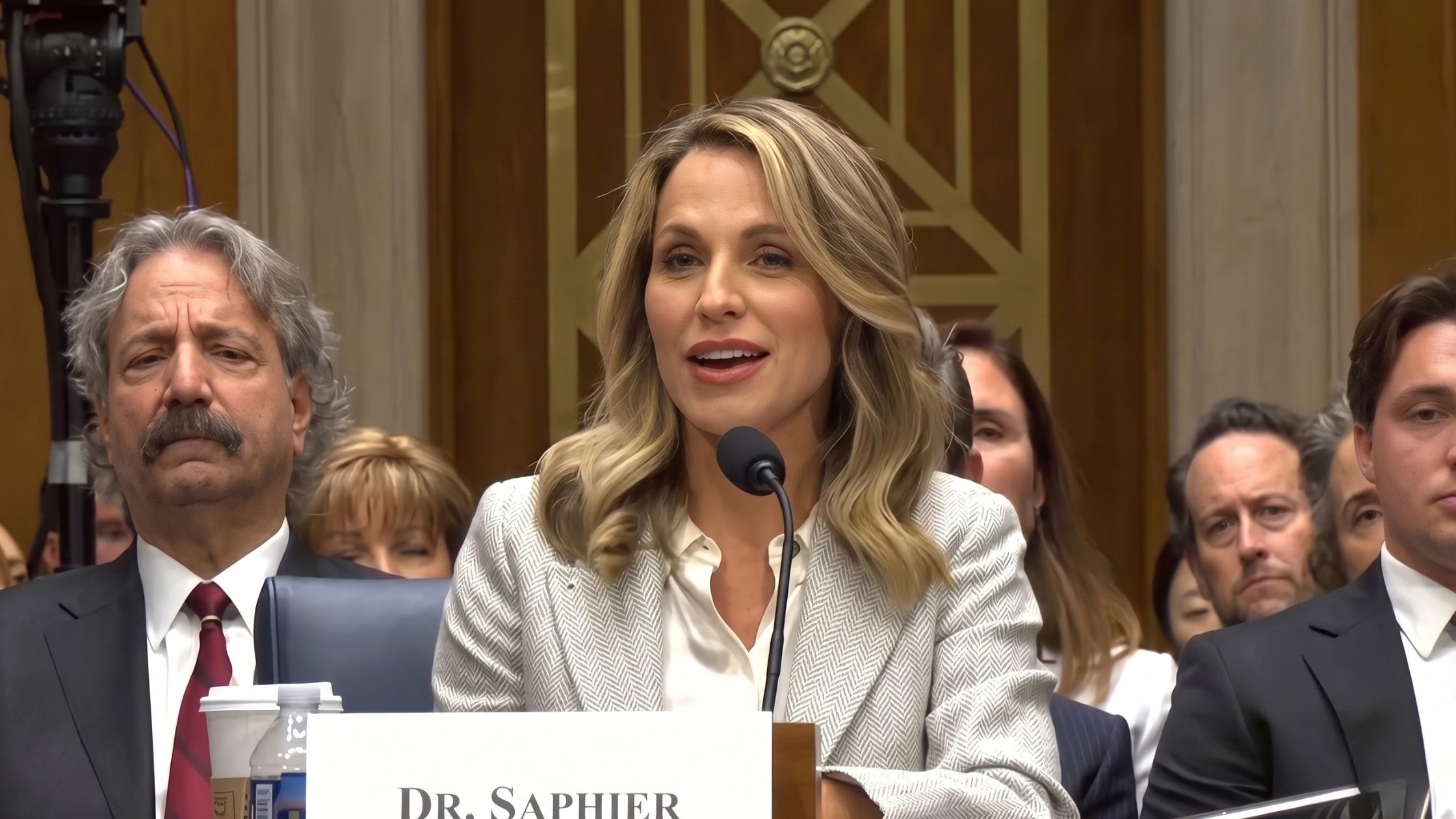
Thank you, sir. Next, we are joined by Dr. Nicole Saphier. She is a board certified diagnostic radiologist, author, former Fox News medical contributor, and host of the iHeartRadio podcast, Wellness Unmasked. She currently serves as director of breast imaging at Memorial Sloan Kettering, Monmouth?
Kim (22:11):
Monmouth.
Senator Bill Cassidy (22:14):
Monmouth, I'm sorry. She is an attending physician at Memorial Sloan Kettering and an associate professor of radiology at Weill Cornell Medical College. I felt a little bit like Kim though I was disrespecting, not pronouncing it correctly, but Dr. Saphier received her medical degree from Ross University School of Medicine and completed her residency at Maricopa Integrated Health Systems and a fellowship at the Mayo Clinic. Thank you, ma'am, for being here and please proceed.
Dr. Nicole Saphier (22:45):
Thank you, Chairman Cassidy, Senator Baldman, and other distinguished members of the committee. I am grateful to be sitting before you today. I am thankful to President Trump for trusting me with the opportunity with this nomination and for Secretary Kennedy in supporting that. I'm very happy that I have been surrounded by friends, family, and colleagues and eternally grateful for their support during this confirmation process, several of which are with me today. It is the honor of my life to be considered for the role of surgeon general of the United States, but I come before you today as a physician, a longtime advocate for prevention, and someone who has spent much of her career communicating with the American public about their health. Patient care prevention and communication are what I hope to bring to this role if confirmed. For nearly 15 years, I have worked full-time as a board certified radiologist with advanced training in oncologic and breast imaging, caring for patients during some of the most vulnerable moments of their lives.
(23:43)
Every day I sit face-to-face with patients and families delivering difficult diagnoses and guiding them through uncertainty. One of the hardest parts of my job, it's not interpreting the images, it's not doing the biopsies, it is sitting across from someone and telling them that they have cancer. No training or textbook fully prepares you for that moment. And over the years, I have told this news to my friends, to my colleagues, and various other members of my community. These interactions have taught me that good medicine isn't only about diagnosing and treating disease, it is about listening to people. It is about earning their trust and giving them information they can actually use. That physician-patient relationship shaped how I think about medicine, and it's what first drew me to patient-centric advocacy. Years ago, I put into practice by advocating for breast density notification legislation, Just That. I had seen what difference catching disease early can make and realize the most powerful thing you can do for a patient is arm them with information.
(24:39)
And in this case, that dense breast tissue both raises the cancer risk, but it also makes cancer harder to find on a mammogram. Now, it was not at the time an uncontroversial position to take, and as a young physician, that was scary for me. I had a lot of people with more experience who were pushing back, but that fight and its eventual adoption as national policy taught me that our health system advances when we're willing to challenge complacency and have honest conversations, even uncomfortable ones. Empowering patients with accurate information about their own health is never the wrong decision. My commitment to prevention predates the current national conversation around it, including in my 2020 book, Make America Healthy Again. I have long believed that we spend too much time and resources treating chronic disease after it takes hold and not enough time helping Americans reduce their risk before illness begins.
(25:29)
And unfortunately, we're seeing the consequences of that imbalance right now. Rising cancer rates in people under 50, cardiovascular disease, that remains the number one killer, but also is largely preventable in lots of cases, rising infertility rates and mental health crises, particularly among young people. My approach to health is not complicated. We should treat illness when it occurs, but we also need to do a far better job of helping people stay healthy in the first place. That is the same conviction that animates the president and the secretary's focus on chronic disease and the Make America Healthy Again agenda, that we cannot build a health system focused only on treating disease. We have to help Americans live healthier lives before disease takes hold. The same skills that matter in an exam room, listening, building trust, explaining risk and complicated information clearly become even more important when the audience is the American public, the entire country.
(26:24)
For a decade, I have specialized in translating complex, fast evolving medical information on various media platforms into content that millions of Americans can understand and use, including during the uncertainty of the global pandemic. I realized then how badly this country needs public health communication that is straightforward and grounded in the best evidence available, honest about what we know, honest about what we don't know, and humble enough to say when something once considered settled no longer is. During COVID-19, confusion, politicization, and the dismissal of reasonable questions did lasting damage to public trust in our institutions, and regardless of party, that should concern us all. If confirmed, restoring that trust would be one of my highest priorities. Also, during the COVID pandemic, I saw what the men and women of the US Public Health Service Commission Corps are capable of. Watching thousands of officers deploy to hospitals, nursing homes, tribal communities, and other underserved regions throughout the country left me profoundly inspired by their professionalism, experience and sense of duty.
(27:31)
If confirmed, I would be honored to serve alongside them. My years as a physician have kept me grounded in the needs of patients and families. My work in prevention has convinced me that we must do more to help Americans live healthier lives, and my years of communicating directly with the public have prepared me to explain complex topics in a way that they can understand. If confirmed to surgeon general, I would bring those experiences together in the service of the president's mission to make America healthier. Thank you for your time and consideration. I respectfully ask for your support, both in this committee and on the Senate floor, and so that I may have the honor of serving this country, and I look forward to your questions today.
Senator Bill Cassidy (28:10):
Thank you. Next, we're joined by Dr. Timothy Westlake. Dr. Westlake is a board certified ER doc with more than 25 years of experience practicing community emergency medicine. He currently serves as chief of staff for SAMHSA and has extensive experience addressing the opioid and fentanyl crisis at both the state and federal level. Dr. Westlake helped develop the fentanyl related substance scheduling framework for Wisconsin, which inspired federal policy permanently enacted through my HALT Fentanyl Act. He also served as the chair of the Wisconsin Medical Examining Board. Dr. Westlake received his undergraduate degree from the University of Wisconsin, his medical degree from the Medical College of Wisconsin, and completed emergency medicine residency at Eastern Virginia Medical School. Sir, thank you for being here and we look forward to your testimony, your statement.
Dr. Timothy Westlake (28:58):
Thank you. Good morning, Chairman Cassidy. Senator Baldwin, good to see you all, distinguished members of the committee. Thank you for the opportunity to appear before you today. Receiving President Trump's nomination to serve as the assistant secretary for mental health and substance use at the Department of Health and Human Services is the honor of my lifetime. If confirmed to lead the Substance Abuse and Mental Health Services Administration, I'll be humbled by the opportunity to work with this committee to ensure that every American struggling with mental illness or addiction has a path to treatment, lasting recovery, and a meaningful life. Until five months ago, and for more than 27 years, I worked as an emergency physician and EMS medical director in my own community, serving on the front lines, treating people in their most vulnerable moments and at times bearing witness to incomprehensible suffering. So many of these moments have stayed with me. I remember watching families who've loved ones cycle between addiction, overdoses, mental health emergencies, treatment, jail, and homelessness. The anguish left behind by overdose, suicide and the devastating collateral damage...
Dr. Timothy Westlake (30:00):
... left behind by overdose, suicide, and the devastating collateral damage of untreated substance abuse and mental illness.
(30:06)
In fact, my good friend, Lori Badura, is sitting behind me. Her son, Archie, is the inspiration of the Halt Fentanyl Act. He was an altar server with my two daughters and struggled with addiction. I resuscitated him on his second overdose, second-to-last overdose. We showed him a body bag, hoping to warn him of the dangers of the disease. He got into treatment and was clean for six months until an overdose led his family to seeing him zipped up in a body bag for the last time.
(30:38)
I've also had the privilege of serving Wisconsin and our country by leading policy reform efforts addressing the prescription opioid and fentanyl crisis. That work has given me the distinct honor of collaborating with leaders committed to confronting this devastating public health scourge. I want to especially thank Senator Chairman Cassidy for his leadership on the Halt Fentanyl Act and Senator Baldwin, from my home state of Wisconsin, for her work and leadership on Title IX of the Comprehensive Addiction Recovery Act in 2016, along with other acts that she's taken part in. Both are important pieces of legislative efforts in the fight against opioid abuse, and I'm grateful to have had the opportunity to contribute to them.
(31:16)
My commitment to this work is not only professional, it's personal. I've been in recovery, myself, for 29 years. This lived experience has shaped the physician, policymaker, husband, father, and person that I am today. It has taught me that behavioral health cannot be reduced to science or policy alone. Science matters, evidence matters, but so do compassion, faith, family, human connection, and the belief that people can heal.
(31:44)
Like so many others working in this space, this work is a calling for me. I thank God every day for my family, and I'm living a life of purpose. Far too many Americans across the country share these mental health and addiction challenges. They are struck, trying to navigate broken systems, and they are not receiving the care needed to get well and build a life in recovery. These people deserve a champion in their corner who believes in the human spirit and the ability to heal, who understands the importance of faith and connection in building a meaningful life, and who will lead with the experience that recovery is not an abstract policy objective. And I believe that person is me.
(32:24)
If confirmed, I will work with states, tribes, and territories to build a system that works, where people are supported the moment they seek help, when that window of opportunity is open. No gaps in care, no stalling out and starting over, no one left to navigate the complex systems alone. We go back to the fundamentals of good medicine, combining science and compassion and connecting Americans to healthcare that works. We should leave no stone unturned in pursuing effective treatment. The right care for the right person at the right time, for the right amount of time.
(32:58)
I vision moving from chemical coping to human connection and from a pill culture to a purpose culture. We do this by recognizing the powerful roles that family, faith, purpose, and community play in recovery. I want to build a culture where recovery is not merely possible but expected and celebrated, where the chronic disease of mental illness and addiction will be understood and treated with the same diligence as any other deadly chronic disease, where the principles of recovery and connection grow to extend beyond the healthcare system and into our workplaces and communities.
(33:33)
I believe it's SAMHSA's responsibility to listen to the people giving the care at the bedside, to listen to the states, the communities, the health systems, the tribal nations, and to help make available resources, evidence, tools, and support needed to achieve these goals. This is not a one-size-fits-all approach to government and medical care. There's not one system that will work for every community, but there are standards that we can highlight and best practice models that we can elevate and barriers that we can break down. We must continually evaluate and reevaluate whether our programs are working and reaching the people who need them and measure the outcomes that really matter, true healing and recovery from disease. Our success cannot continue to be defined simply by dollars spent and programs administered. It must ultimately be reflected in whether more Americans are able to heal, recover, rebuild their lives, restore their families, strengthen their communities, and rediscover purpose and meaning.
(34:25)
If confirmed, I will partner with this committee to bring hope and healing to the American people. I firmly believe that my life's work, my faith in God, and my family have brought me here before you today. I would be deeply honored and humbled to receive your support and lead this agency, and I look forward to answering your questions.
Senator Bill Cassidy (34:45):
Thank you, Dr. Westlake. I really enjoyed all of your opening statements.
(34:52)
Dr. Westlake, you spoke repeatedly of purpose, and I thank you for having the purpose to serve our fellow American.
(34:58)
Dr. Saphier, I noted, I underlined your thing, noted a very difficult time, a thing, can be to speak to patients. I'm a physician, and at least three of us here, or four of us, with Dr. Marshall, we've had that experience of speaking. Parents want clarity on immunizations. You would be the nation's doctor, charged with messaging. What would be your message to a parent regarding vaccines?
(35:32)
And I only have a few minutes, so be tight.
Dr. Nicole Saphier (35:36):
Chairman Cassidy, I appreciate the question, and I thank you for your time on the phone and also meeting with me in person. And I understand how important that this topic is for you and also the American public.
(35:46)
Like you, as a physician, I see... Every day, I talk to patients. When I tell them they have cancer, there are some patients, in that moment, they are ready to start treatment. Anything I recommend, they are ready to do. And then I also have patients who, they can't even comprehend that I have told them they have cancer yet, and they need more time, and they need more conversation. Both of these patients deserve my compassion, and I will adapt and meet them in the moment that they need.
Senator Bill Cassidy (36:10):
So if she asks you, the mom asks you specifically, and obviously, this is topical, "Does the MMR vaccine cause autism?" what do you say?
Dr. Nicole Saphier (36:22):
Well, humbly, I don't know what causes autism, but I have not seen repeatable evidence that would suggest that vaccines cause autism.
Senator Bill Cassidy (36:28):
Can you tell the parent, I assume you've reviewed the literature-
Dr. Nicole Saphier (36:33):
Certainly.
Senator Bill Cassidy (36:33):
... that there is no credible evidence that vaccines cause autism?
Dr. Nicole Saphier (36:39):
Certainly, I have not seen any evidence presented to me that is reputable or respectable.
Senator Bill Cassidy (36:42):
There's a little bit of a wiggle room there-
Dr. Nicole Saphier (36:45):
Oh, I'm sorry?
Senator Bill Cassidy (36:45):
... and I'm so sensitive to this because I've had wiggle room from people sitting there, as Senator Baldwin said, who later used that wiggle room to do things which are quite contrary.
Dr. Nicole Saphier (36:57):
Okay.
Senator Bill Cassidy (36:57):
Do you... I assume you've reviewed the literature. Would you feel comfortable communicating with clarity? Because when you spoke about the COVID vaccine and the need for clarity... Not, "Oh, well, well." But, no, clarity. Are you up to saying to the American people... Well, let me ask you. Is the MMR vaccine extremely lethal, as the president said?
Dr. Nicole Saphier (37:20):
Chairman Cassidy, I cannot speak to what the president has said, but I-
Senator Bill Cassidy (37:22):
If you cannot say-
Dr. Nicole Saphier (37:24):
As a physician, I can tell you that I do not believe the MMR vaccine to be lethal. I believe the MMR vaccine is our greatest tool for combating measles infections.
Senator Bill Cassidy (37:31):
That's great. That's great. Music. And does it cause autism?
Dr. Nicole Saphier (37:37):
I do not believe childhood vaccines cause autism.
Senator Bill Cassidy (37:39):
And should a parent be vaccinating their child with the MMR?
Dr. Nicole Saphier (37:46):
I think that the recommendation is to combat what we are seeing right now. The best tool we have to combat these infections, to save the most lives and to also create population herd immunity is vaccination against the MMR.
(37:56)
I appreciate that the president is trying to reach the vaccine- hesitant people who are wanting more answers or who are concerned that there are too many doses-
Senator Bill Cassidy (38:04):
Let me stop you for a second.
(38:05)
I'm not sure that you reach people who are vaccine hesitancy by feeding into untruths. The way to dispel confusion is not to sow more confusion. The way is to say, "No, it does not cause autism." And frankly, even "Well, I've never seen any evidence for it" suggests that there might be evidence out there, but you just are not briefed on it. That's a little bit of an equivocation.
Dr. Nicole Saphier (38:31):
I understand what you're saying. I do not believe that there is reputable evidence that shows as causation of childhood vaccines and autism. What I can say is that I believe vaccines save lives and they are one of the strongest tools in our arsenal when it comes to public health.
Senator Bill Cassidy (38:45):
So going back to-
Dr. Nicole Saphier (38:47):
And as a communicator, and I believe that that is one of the things that I bring to this administration is my experience communicating with patients, but also the American public, is working-
Senator Bill Cassidy (38:55):
Let me... I'm almost out of time.
Dr. Nicole Saphier (38:56):
... with the administration... Okay.
Senator Bill Cassidy (38:58):
So you've mentioned again, very effectively, about the need to prevent chronic disease. But if a child is infected with hepatitis B at the child's birth or right after, they have a 95% chance of becoming a chronic carrier of hepatitis B and they're more likely to spread it to other people. Now, the secretary, who doesn't know anything about hepatitis, wants to eliminate the recommendation, it's not a mandate, for a birth dose of hepatitis B. Is that wise public policy?
Dr. Nicole Saphier (39:34):
Chairman Cassidy, you're speaking to someone who tells people they have cancer every day, and the hepatitis B vaccines are one of the most tangible ways we have to prevent cancer. And that is something that I absolutely am always excited about because it is so hard to prevent cancer in so many patients.
(39:49)
I support universal hepatitis B vaccination. And looking at areas in the country, it has been widely effective, specifically in Western Alaska. Senator Murkowski knows the most about this, that they led the world in pediatric liver cancer cases. The seventh-
Senator Bill Cassidy (40:09):
So should we do away with the recommendation of a birth dose of hepatitis B vaccine?
Dr. Nicole Saphier (40:13):
In the United States, the most tried-and-true way to prevent hepatitis B infection and effectively lower hepatitis B associated illness is universal birth dosing. And that is what has worked here in the United States.
Senator Bill Cassidy (40:26):
Okay. And it is effective, so therefore should it be recommended?
Dr. Nicole Saphier (40:28):
I do believe that that is what is tried and true. I understand it can be a nuanced conversation, and some parents have concerns that they can have with their pediatrician-
Senator Bill Cassidy (40:36):
It's not a mandate, they can walk out if they-
Dr. Nicole Saphier (40:37):
... but in the United States, we have the most evidence showing universal birth-dose vaccination to be safe and effective.
Senator Bill Cassidy (40:44):
But that stops short of saying that it should be recommended.
Dr. Nicole Saphier (40:47):
Well, just based on our data that the overwhelming recommendation should be, this is what we have shown is tried and true. I'm open to future discussions about it, but at this point, the data that we have is based on the universal birth dose. And being someone in academic medicine, I believe in evidence-based medicine. And that's all I have right now is that the universal birth dose has been the most effective policy here in the United States for reducing infection.
Senator Bill Cassidy (41:11):
Doctor... Doctor. Senator Baldwin.
SenatorTammy Baldwin (41:14):
Thank you, Mr. Chairman.
(41:17)
Mr. Klomp and Dr. Westlake, I met with each of you on July 23rd and August 3rd, respectively. One of the issues that I discussed in each of those meetings was the pride that I have in authorship of the bipartisan 988 bill that allows people in mental health crisis or who are considering suicide to get the help they need.
(41:53)
And when we set that up, stood that service up, we realized that there were certain populations that were more vulnerable to suicide. Veterans have a "press one" option to get care and specialized response from people who, say, have walked in their boots before and understand maybe the trauma that they have been exposed to. We also had a "press three" option for LGBTQ youth, that experience higher rates of suicide. That was abruptly cut off more than 13 months ago by this administration. And the reaction of this committee and the appropriations committee that I also sit on was to write into law that we must restore those services. As of today, those services have not been restored.
(42:53)
There are two weeks left in this fiscal year, yet in our appropriation bill, we directed the department to restore these services. I don't want to see any more LGBTQ youth in body bags either. Nothing has happened since our conversations, respectively on July 23rd and August 3rd, to restore the "press three" option. So I would like to hear from each of you, who are currently in positions to make things happen, why they haven't and what you will do to immediately comply with federal law and restore these services.
(43:32)
Mr. Klomp, first you, and then Dr. Westlake.
Chris Klomp (43:37):
Thank you, Senator Baldwin. Thank you, Senator Baldwin. I appreciate the candor. I wasn't aware of that issue before we met.
(43:44)
With respect, much has happened since that conversation, and I believe our office has updated yours as well, at least, so I'm told. You're right, the contract was not active. It was re-competed. My understanding, and I'll defer to my colleague because it's his agency and he'll be able to speak with more clarity, but a contract has been awarded, and I'm told it will be effective before the end of the fiscal year, with the "press three" functionality, specifically.
(44:11)
I was very grateful that you brought it to my attention. We immediately dug into that issue.
SenatorTammy Baldwin (44:16):
Well, doesn't mean that people can press three right now.
Chris Klomp (44:20):
I understand.
SenatorTammy Baldwin (44:21):
And we have two weeks left in this fiscal year.
(44:23)
Dr. Westlake.
Dr. Timothy Westlake (44:25):
First of all, Senator Baldwin, I wanted to thank you for all your efforts on behalf of 988. I think 988 has been shown, with over 30 million calls, to be a supremely effective way at treating suicide. Suicide, to me, I've seen what happens when people try to kill themselves, and kill themselves, and adolescents do that.
(44:42)
I was not at the agency when that happened. I came on board five months ago. I think a lot of what you're seeing is the bureaucratic silos and the way that the grants work out and the bids get re-competed to the network and the sub-network. One of the reasons I wanted to come into governing was to help make things more efficiently-
SenatorTammy Baldwin (44:59):
How would you cut through that?
Dr. Timothy Westlake (45:02):
I don't know. I would have to look. I don't know. I'm trying to learn what the systems are that are impeding the progress of action to happen throughout the entire government.
(45:11)
But I can assure you that the call volume did not drop when that "press three" went away, that the people that are on, the operators on board are culturally competent, and that the service will be restored, based on the appropriation's language.
SenatorTammy Baldwin (45:23):
On that topic of cultural competence, can you, both Mr. Klomp and Dr. Westlake, commit to ensuring that 988 counselors serving these youth will not be subject to gag orders or limitations in the language they can use, based on any executive orders that have been signed by this president?
Chris Klomp (45:45):
Senator Baldwin, I'm unaware of any such request of our team members. They should be free to engage those who are struggling in crisis in any way they can to reach those individuals.
(45:58)
Suicidal ideation is a critical issue in our country. Our responsibility as caregivers, our responsibility at the department is to wrap our arms around those individuals, to meet them where they are, to shower them with love, to support them, and to help them restore to a place of health and happiness and joy.
SenatorTammy Baldwin (46:14):
Then restore these services.
(46:18)
I have further questions, but my time has expired, so I will hope either for a second round or questions for the record.
Senator Bill Cassidy (46:26):
Dr. Marshall.
Dr. Roger Marshall (46:27):
Well, thank you, Chairman. I'll start with Mr. Klomp. There was a rumor that when you arrived they were still using punch cards in the technology department. COBOL, FORTRAN, whatever it was called. Where were we, where are we now, and what do you need to take us to the next level?
Chris Klomp (46:43):
Sir, you're not far off. As a healthcare technologist, the state of technology in the Department of Health and Human Services maybe made a little part of my soul die each day, but we're getting our arms around it, is the good news.
(46:57)
I'll give you some examples, maybe just one for the sake of time. While running the Center for Medicare, we have two programs, Medicare Advantage and Original Medicare. We're responsible for paying claims in Original Medicare. We pay a billion and a half dollars a day of claims, and we do that on a system that runs on those old, green screen terminals, written in COBOL. That's a little over 50 years old.
(47:21)
And I showed up and said, at the end of the first month, "Hey, I'd like to see the financials. And show me how we did, and where we're spending money, and I'd like to see some metrics, ED visits per thousand, inpatient visits per thousand." You know, basic things you might want to see if you run the largest health plan on the planet. And we weren't able to produce those metrics. The closest we got was, "Well, some of that will be available next year for the Medicare Trustee's board meeting."
(47:46)
That's unacceptable. It prevents us from making faster, more nimble policy decisions. It prevents us from attacking fraud, waste, and abuse, to maximize every dollar that should go to our beneficiaries. And so we have brought in extraordinary talent, some of which is in this room. With your support, including in the requested budget from the president that's been approved, we're able to fund these extraordinary, transformative technology projects so that we don't just shovel more money out the door, assuming healthcare will get better, but we spend, wisely, the money that you appropriate to us, and we get more value for each dollar spent.
Dr. Roger Marshall (48:20):
Great, great. Thanks.
(48:21)
Dr. Saphier, as surgeon general and you try to address the chronic-disease epidemic, what can you do? What would be your priorities to specifically address the chronic-disease epidemic, and any particular chronic disease you'd really like to go after?
Dr. Nicole Saphier (48:38):
Senator Marshall, thank you for that question and thank you for your time meeting with me. I enjoyed our candid conversation.
(48:44)
Preventing chronic disease is something that I have been talking about for much longer than the current movement. And oftentimes, when I'm sitting in front of a patient and I diagnose cancer to them, one of the most devastating things that happens is they say to me, "What could I have done? Did something I do cause this? Could I have prevented it?" And it has been in those very raw moments with my patients that I've realized, "Why does it take a cancer diagnosis to have that conversation of 'What can you do to prevent illness?'" And it's not limited to cancer. It is all throughout our entire healthcare system.
(49:20)
Up to 50% of cancers potentially could be prevented through certain lifestyle changes, up to 80% of cardiovascular disease as well. Mental health, and unfortunately, is rampant illness throughout our country [inaudible 00:49:34]
Dr. Roger Marshall (49:33):
So, what can you do? What can your voice... We know that that's the problem. What would your voice be? How can we change the narrative here?
Dr. Nicole Saphier (49:41):
Well, I think the narrative is already being established. Finally, there's been priority being placed on preventing illness, and I am very excited to be part of that because that is something that I have been talking about for a long time. And to be part of a larger movement, I'm very excited to be here. And taking my years of experience with patient care and communication, I'm very excited to work on the perfect messaging for it, making sure that people have the information on what they can do.
(50:04)
There are small, tangible lifestyle modifications that people can do. That doesn't mean that you have to become a nutrition expert or someone who is at the gym every single day, but there are small modifications that people can do that will drastically reduce their risk of illness. And if I can communicate that to the American people, arm them with the knowledge, give them what the risks are with some of the behaviors, that is the way to start tackling preventive illness. And then also encourage early cancer detection in forms of cancer screening and other things of sorts.
Dr. Roger Marshall (50:35):
Okay. Dr. Westlake, I'm so proud of my community behavioral health centers and my community health centers. We have 26 behavioral health centers now in Kansas. I think they're meeting patients where they are. They're going to the scene, to their homes, to the emergency room, all those types of things. What can we do to empower that model and then make sure that we're including that community health center in this system as well?
Dr. Timothy Westlake (51:01):
Yeah, that's really exciting. I think you bring up really good points, Senator Marshall.
(51:04)
I think what we have to do, and I think the role of the government shouldn't be to dictate what happens down into the community. I think what I learned in Wisconsin with the prescription opioid reform strategy, when I kind of bootstrapped that on my own, 15 years ago, was that you have to look to the people that are doing the work at the bedside, at the patient side, and see what they need, and then you put those resources in place to do that. You can highlight the best practices on what works, you share them together. State policy academies are huge vehicles that would be, if I'm confirmed, we'd be planning on using to drive that cultural change.
Dr. Roger Marshall (51:35):
Thank you. Thank you so much.
Senator Bill Cassidy (51:37):
Next is Senator Hassan.
Senator Maggie Hassan (51:39):
Well, thank you, Mr. Chair and Senator Baldwin, for holding this hearing. Thanks to all three of you for not only being here today, but for your willingness to serve your country, and thank your families as well.
(51:51)
I already asked Mr. Klomp this question at a different hearing yesterday, but to Dr. Saphier, Dr. Westlake, before turning to other issues, I want to ask you a simple question. If directed by the president to take action that would break the law, would you follow the law or follow the president's directive?
(52:08)
Dr. Saphier.
Dr. Nicole Saphier (52:11):
I have no intention of breaking the law, Senator.
Senator Maggie Hassan (52:14):
So you will follow the law.
Dr. Nicole Saphier (52:15):
You will follow the law.
Senator Maggie Hassan (52:16):
And Dr. Westlake?
Dr. Timothy Westlake (52:18):
My ultimate responsibility is to the American people. I'd follow the law and my conscience.
Senator Maggie Hassan (52:21):
Thank you. Dr. Westlake, I want to follow up on a conversation we had in my office. I recently met with groups in New Hampshire, including members of law enforcement, who worked together to distribute overdose prevention kits, including fentanyl test strips. They told me that fentanyl test strips help prevent fatal overdoses and ultimately help engage people to get them into recovery. This is a small community, by the way, that hasn't seen an overdose now since 2020 because of their work.
(52:51)
However, earlier this year, your agency released guidance that says that grantees cannot purchase or distribute test strips with federal funds. This guidance directly contradicts a bipartisan provision that I led in last year's SUPPORT Act to ensure that test strips can be purchased with federal funds. Now, because of this administration's actions, a community organization in New Hampshire is scrambling to reorganize its budget so that they can find a way to keep getting these test strips.
(53:19)
Dr. Westlake, if confirmed, will you rescind the guidance that takes test strips away from recovery organizations?
Dr. Timothy Westlake (53:26):
Senator Hassan, thank you for the question, and thank you for meeting with me, and thank you for the work in the past, when we were working on Halt Fentanyl.
(53:35)
The question is harm reduction. What is harm reduction? So, harm reduction, for me, means eliminating the risky behaviors that lead to the devastating effects of the disease process. So when we look at the evidence on fentanyl test strips, there's no evidence that it reduces overdose.
Senator Maggie Hassan (53:49):
But that's not what we're hearing. You just gave very eloquent testimony about the importance of listening to people on the ground. Here's what's happening on the ground in my state. Tiny town I just told you about, they haven't even seen an overdose because the chief of police has worked so closely with families in the community to make sure that we are being evidence-based and effective and meeting people where they are as they're challenging their addiction and turning to law enforcement or to health entities for help. And one of the things that they tell me is that the fentanyl test strips build trust, among other things.
(54:22)
In Manchester, New Hampshire, we can all celebrate today, because in August, it's our biggest city, for the first time since 2015, we had zero overdose deaths. I have been to more funerals than I can count where parents have lost more than one child to this epidemic. We know that fentanyl test strips work. Also, the law says you have to provide them.
(54:42)
So, the evidence is really clear. I am looking for you to commit to follow the law and allow community organizations to purchase test strips with federal funds.
Dr. Timothy Westlake (54:54):
Senator, so my first overdose that I resuscitated was more than 30 years ago.
Senator Maggie Hassan (54:58):
Right.
Dr. Timothy Westlake (54:59):
And-
Senator Maggie Hassan (54:59):
So, I have another question for you. So I'm looking very specifically, will you rescind this guidance?
Dr. Timothy Westlake (55:06):
The evidence does not support that. There's anecdotal stories about the way it works-
Senator Maggie Hassan (55:13):
Yeah, well... But-
Dr. Timothy Westlake (55:13):
... and then there's evidence-based studies-
Senator Maggie Hassan (55:13):
... my people on the ground... You cannot tell me that it's important to listen to providers on the ground, that they have the best evidence... And they are very evidence-based. I am telling you, one, that the law requires it, and two, that it works. Because people who are on the ground, who you say you trust, health providers, law enforcement, say it works.
(55:34)
So we will follow up, but what I'm looking for today is a commitment to rescind guidance that violates the law.
Dr. Timothy Westlake (55:42):
I promise to follow the science and the evidence-based to the [inaudible 00:55:46] including Naloxone [inaudible 00:55:47]
Senator Maggie Hassan (55:47):
How about following the law? You just said you'd follow the law. The SUPPORT Act says the federal government must provide these test strips. Follow the law.
Dr. Timothy Westlake (55:56):
My understanding is it says that they "may be used" for that and not "shall be used" for that. So I believe we are following the law, from what my legal counsel has talked to me about.
Senator Maggie Hassan (56:04):
Well, my legal counsel would differ with that, and I will likely not vote for you if you cannot commit to do that.
(56:12)
Now, let me go onto one other thing. SAMHSA has hosted a system called the Drug Abuse Warning Network to monitor addiction-related visits to emergency departments across the country. This system has provided us with critical insight into where overdoses are rising across the country and has helped us direct resources to get people into recovery and prevent overdose deaths.
(56:33)
One, are you familiar with this program? Two, are you aware that the program was shut down last year? And three, will you reinstate the Drug Abuse Warning Network if you're confirmed?
Dr. Timothy Westlake (56:45):
Senator, so, I'm not aware. I'm not up to speed. I've been here for five months. I'm not up to speed on every program. What I don't want to do is speak to anything that I'm not fully clear about, so I would need to get briefed on that to come up with that.
(56:55)
And then, what I promise to do is put the best policies, procedures, and practices in place to give the best mental health and addiction care to the people in the country.
Senator Maggie Hassan (57:03):
Okay, this is-
Dr. Timothy Westlake (57:04):
I look forward to working with you [inaudible 00:57:06]
Senator Maggie Hassan (57:05):
This is an early warning system. 60 hospitals across the country. It's been very effective, so I hope we can reinstate it. Thank you.
Dr. Timothy Westlake (57:16):
Thank you.
Senator Bill Cassidy (57:16):
Senator Collins.
Senator Susan Collins (57:16):
Thank you, Mr. Chairman.
(57:19)
Dr. Saphier, you've been a strong advocate for women to get early breast cancer screenings in order to better treat and prevent this disease. Just this morning, I met, in my office, with a group of Mainers who had had cancer. They are big advocates for screening, for research, and it's very difficult in rural states where they may have to travel long distances. That's one reason that I secured funding for a mobile mammography machine to go all over rural areas, and I'm very proud of the fact that they've screened more than a thousand women who most likely would not have been screened. And in some cases, breast cancer has been detected.
(58:15)
Senator Baldwin and I have introduced legislation that would reauthorize the National Breast and Cervical Cancer Early Detection Program. It's been proven successful. It's detected nearly 80,000 breast cancers and over 25,000 pre-malignant breast lesions. Without access to early detection programs, many people, particularly those who are uninsured, are forced to delay or forego screening.
(58:55)
As a surgeon general, how would you work to spread awareness about the importance of screenings and also ensure that women, particularly those living in rural areas, have access to screening?
Dr. Nicole Saphier (59:16):
Thank you, Senator Collins, for the question and for taking the time. You had a very busy day, and you were able to connect with me on the phone and we spoke on a wide array of topics. And we both obviously have a passion for women's health and preventative medicine. And what you've already highlighted, your advocacy and your attention to breast cancer and cervical cancer screening awareness and accessibility is something that I have seen and have been in awe of for a very long time with you. And I appreciate your efforts because, as someone who reads mammography and someone who is continuously trying to educate her patients and the public on the benefits of cancer screening, it is important for me.
(59:54)
And if confirmed as Surgeon General, one of my crucial, crucial messages is going to be that early detection matters. And with that is cancer screening, but as you are-
Dr. Nicole Saphier (01:00:00):
... early detection matters. And with that is cancer screening. But as you are, again, pointing out, the fact that I can say everything that I want, but access is equally as important as the information. And I am very much looking forward to working with the other leaders in HHS because access and coverage are not in the purview of the surgeon general, but I will take my knowledge as a physician and my experiences communicating and I will do what I can to get that message to patients. You also mentioned something else during our meeting that probably I'm the only person in this entire building that care about as much is the fact that in Maine that you are seeing areas where radiologists are scarce, radiologists like myself.
(01:00:40)
And so the people of Maine are not having access to the high quality healthcare in the United States that I believe every American should have access to. And so being creative with various ways on how we can mobilize various portions of healthcare is something I am very eager to work with. You had mentioned teleradiology, but being a part of the Commission Corps is something that I am incredibly excited about if I am confirmed and working with you and your staff to identify any potential healthcare deserts in Maine that we might be able to help serve.
Senator Susan Collins (01:01:12):
Thank you. I look forward to working with you on that. I want to bring up one other issue in my remaining time. Since we were both elected to the Senate, Senator Dick Durbin and I have worked very closely to address the serious health risks associated with smoking, which includes the spread of youth vaping. The recent decision by the FDA with which I strongly disagree to permit additional flavored e-cigarettes and nicotine pouches risk reversing the progress that we've made in reducing the number of youth who are vaping. And to have three new flavors, mango, blueberry and mint added, that only makes vaping more attractive to young people. As surgeon general, you will play a very important role in the messaging to young people about the dangers of smoking and vaping. Do you agree with the FDA's decision to allow additional flavors in the vapes?
Dr. Nicole Saphier (01:02:34):
Well, Senator Collins, thank you for that. That's an important question. As a physician, I don't want anyone smoking anything. The lungs are very sensitive and they don't regenerate. But the reality is in the United States that we still have about 14% of the population smoking