Speaker 1 (00:00):
Good morning, Your Honor. May I proceed?
Judge William Sullivan (00:02):
Yes, please.
Speaker 1 (00:02):
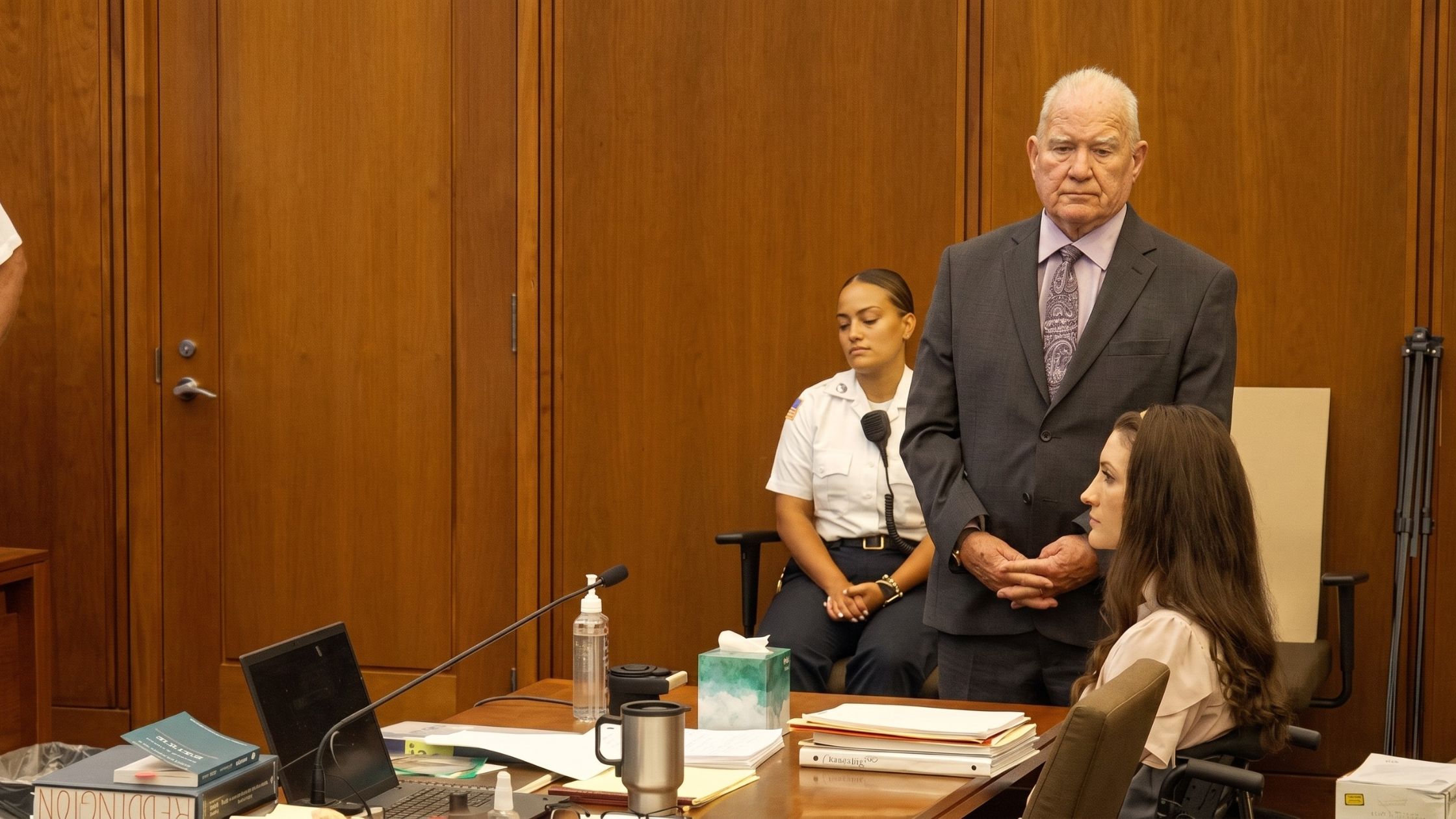
Your Honor, before the court today we have the matter of Commonwealth versus Lindsay Clancy. Ms. Clancy is present. She is represented by attorney Kevin Reddington. The Commonwealth is represented by Assistant District Attorney Jennifer Sprague and Assistant District Attorney Shannon Buckingham.
Judge William Sullivan (00:16):
All right. Well, good morning, counsel.
Jennifer Sprague (00:17):
Morning.
Kevin Reddington (00:18):
Morning, Judge.
Judge William Sullivan (00:18):
Good morning, Ms. Clancy. All right, can I see counsel sidebar, please?
Speaker 1 (00:47):
Exhibit J for ID.
Kevin Reddington (00:58):
I'm sorry, Your Honor. Thank you.
Judge William Sullivan (00:59):
All right, thank you. All right.
Speaker 1 (01:01):
May I swear in Ms. Clancy?
Judge William Sullivan (01:02):
Yeah. What we're going to do at this point, Ms. Clancy, my understanding is that you, through counsel, have offered to stipulate to certain facts that would be introduced during the course of this trial. So what I want to do is just ask you a series of questions to make sure that you understand the effect of stipulating to these facts. So I'm going to just ask you some brief questions at this point, and then we'll go from there. So if you could swear Ms. Clancy in, please.
Speaker 1 (01:36):
Please raise your right hand. Do you solemnly swear that [inaudible 00:01:40], so help you God?
Lindsay Clancy (01:38):
[inaudible 00:01:46].
Judge William Sullivan (01:45):
All right. Ms. Clancy, I have been shown a list or a summary of stipulations that's been marked as Exhibit J for identification. So it's my understanding that you are requesting or offering to stipulate to certain facts. Is that correct?
Lindsay Clancy (02:06):
Yes, Your Honor.
Judge William Sullivan (02:06):
All right. And before I accept that, I got to make sure, ask you some questions, make sure that your decision to do so is voluntary and that you understand the consequences. So I'm going to ask you some questions. If at any time you need to speak to Mr. Reddington or you have any questions or have problems understanding what I'm saying, just let me know, okay?
Lindsay Clancy (02:27):
Okay.
Judge William Sullivan (02:27):
All right. Now, do you understand that the Commonwealth in this case is required to prove each and every element of the case against you beyond a reasonable doubt? Do you understand that?
Lindsay Clancy (02:39):
Yes, Your Honor.
Judge William Sullivan (02:40):
All right. Do you understand that there are certain facts that could be introduced during the course of the trial that might support the Commonwealth's position regarding those elements? Do you understand that?
Lindsay Clancy (02:54):
Yes, Your Honor.
Judge William Sullivan (02:56):
All right. And do you understand that by signing the stipulation, you're agreeing that the Commonwealth does not have to prove these certain facts that are contained in the stipulation? Do you understand that?
Lindsay Clancy (03:06):
Yes, Your Honor.
Judge William Sullivan (03:07):
All right. And do you understand by signing or going along with that stipulation, you are basically relieving the Commonwealth of its burden to prove those certain facts? Do you understand that?
Lindsay Clancy (03:20):
Yes, Your Honor.
Judge William Sullivan (03:21):
All right. Is that what you want to do at this point?
Lindsay Clancy (03:22):
Yes.
Judge William Sullivan (03:23):
All right. Have you gone over this stipulation or the summary of the stipulations with Attorney Reddington?
Lindsay Clancy (03:30):
Yes, I have.
Judge William Sullivan (03:30):
All right. Need any more time to do that?
Lindsay Clancy (03:33):
No, thank you.
Judge William Sullivan (03:35):
All right. Now, by entering into this stipulation, you've given up some important rights, so I kind of want to go over those with you at this time. Do you understand by law you're presumed to be innocent of each charge against you, and you do not have to prove your innocence? All right, so instead, at trial, a Commonwealth, as I said before, has the burden of proving you are guilty of each element of the charges against you. And by entering into this stipulation, you're giving up your right to force the Commonwealth to prove the facts that are contained in these stipulations. Do you understand that?
Lindsay Clancy (04:09):
Yes, Your Honor.
Judge William Sullivan (04:10):
All right. You also, at trial, where we are now, you have the right to confront the witnesses that would testify about these facts. And by entering into this stipulation, you're giving up that right with respect to these stipulated facts. Do you understand that?
Lindsay Clancy (04:26):
Yes, Your Honor.
Judge William Sullivan (04:27):
All right. You also, if you wanted to, could call your own witnesses at the trial to contest these stipulated facts if you want to. You understand you'd be giving up that right by entering into this stipulation?
Lindsay Clancy (04:42):
Yes, Your Honor.
Judge William Sullivan (04:44):
All right. You also, at trial, have the right to remain silent and cannot be forced to testify at this. You understand by entering into this stipulation, you're giving up in a limited way that right with respect to just those facts?
Lindsay Clancy (04:59):
Yes, Your Honor.
Judge William Sullivan (05:00):
All right. Are you doing this willingly and voluntarily?
Lindsay Clancy (05:03):
Yes, I am.
Judge William Sullivan (05:04):
All right. Has anyone forced you or threatened you to enter into this stipulation?
Lindsay Clancy (05:09):
No, Your Honor.
Judge William Sullivan (05:10):
Have you had enough time to talk to counsel about this?
Lindsay Clancy (05:13):
Yes, I have.
Judge William Sullivan (05:22):
All right, I make the following findings. I find that Ms. Clancy is knowingly, intelligently, voluntarily, and willingly entered into the stipulation of the facts that are contained and summarized in Exhibit J for identification. I find that she is competent to enter into this stipulation, and I find she understands the consequences of entering into this stipulation. So accordingly, I now accept the proposed stipulation of facts. Thank you.
Kevin Reddington (05:52):
I just would like, Your Honor, for the record, to again, reiterate the fact that we have not been contesting the government's case in chief, if you will. Have been agreeing to evidence, and this stipulation basically relieves the government of having to bring in dozens, if not more, witnesses, to prove chain of custody of blood, fluids, the bands, DNA, all of that. Rather than have days of testimony, this stipulation will avoid that. So that's why we're stipulating to it.
Judge William Sullivan (06:27):
All right. All right. Commonwealth, anything else you want to add?
Jennifer Sprague (06:30):
No, Your Honor.
Judge William Sullivan (06:31):
Okay, all right. So like I said, I have made those findings. I'm going to accept the stipulation that Ms. Clancy has agreed to and that the parties have agreed to consistent with J for identification. Counsel, are we ready for the jury then? Any further?
Jennifer Sprague (06:54):
Yes, Your Honor.
Judge William Sullivan (06:54):
All right, why don't we bring the jury in.
Kevin Reddington (06:54):
[inaudible 00:07:12]. Yeah, that's fine.
Judge William Sullivan (07:21):
Counsel, while we're... I forgot to ask. While we wait for the jury, can I see very briefly?
Speaker 2 (07:24):
[inaudible 00:08:46]. All rise. Jury [inaudible 00:08:48].
Speaker 3 (09:20):
Hear ye, hear ye, hear ye, all persons having anything to do before the honorable William Sullivan, Justice of the Superior Court now sitting in Plymouth. But then for the Commonwealth, we're all here in attendance and you shall be heard. [inaudible 00:09:31] the Commonwealth of Massachusetts, this court is now in session. Please be seated.
Speaker 1 (09:36):
Good morning, Your Honor. May I proceed?
Judge William Sullivan (09:37):
Yes, please.
Lindsay Clancy (09:38):
Your Honor, before the court today, we have the continuation of the jury trial in the matter of Commonwealth versus Lindsay Clancy. Ms. Clancy is present. She is represented by attorney Kevin Reddington. The Commonwealth is represented by Assistant District Attorney Jennifer Sprague and Assistant District Attorney Shannon Buckingham.
Judge William Sullivan (09:55):
Well, good morning everyone. Sun's out today. A little nicer weather for us, so if it was nice for you coming in here today. So what I'm going to do is ask you those questions as I always do, and then I'll go over a little bit the schedule and then we'll return to the Commonwealth's case, all right? So the first question, everybody's probably got it memorized by now anyway, but let me ask it. Has any member of the jury read, seen, heard, or overheard anything from any source about any aspect of this case that would affect your ability to be fair and impartial?
Jury (10:28):
No.
Judge William Sullivan (10:29):
All right. Last question. Is there any other matter, serious matter or concern bearing on your service as a juror in this case that anybody needs to bring to my attention at this time? Again, thank you for following those instructions. Now, in regards to the schedule, if you remember, I said yesterday that sometimes we have to adjust on the fly and it's going to be my call. Well, we may have to do that a little bit, all right? So today we're going to go through some cases. Now, we may break a little bit early today, all right? And then tomorrow there is a matter I'm going to have to talk to counsel pretty much in the afternoon.
(11:11)
So the thought is tomorrow, the plan for you should be pretty much 9:00 to 1:00, all right? And then in the afternoon I'm going to deal with counsel in regards to some other issues that will, I believe, keep this case going well on track, and that's kind of where we are. So I just kind of wanted to give you that update. So that's, like I said, the best we could do. Give you as much notice in regards to that. But you will not, I say we, you will not be sitting here tomorrow afternoon. We may be. [inaudible 00:11:49]. So with that, what we're going to do is continue with the Commonwealth's case. We're going to go back. Commonwealth, call your next witness, please.
Shannon Buckingham (12:00):
Thank you. The Commonwealth would call Christina Carpio.
Speaker 2 (12:02):
Good morning.
Christina Carpio (12:30):
Good morning, sir.
Speaker 2 (12:31):
Can you stop right there and raise your right hand for the clerk?
Speaker 1 (12:35):
Do you solemnly swear that the testimony [inaudible 00:12:39] so help you God?
Christina Carpio (12:35):
So help me God.
Speaker 1 (12:35):
Thank you, you may be seated.
Speaker 2 (12:35):
[inaudible 00:12:47] please.
Judge William Sullivan (12:48):
Good morning.
Christina Carpio (12:49):
Good morning, sir.
Judge William Sullivan (12:50):
All right. Buckingham, please.
Shannon Buckingham (12:53):
Thank you. Good morning.
Christina Carpio (12:54):
Good morning.
Shannon Buckingham (12:54):
Could you please tell the jury your first and last name?
Christina Carpio (12:57):
Christina Carpio.
Shannon Buckingham (12:58):
And can you spell your last name for the record?
Christina Carpio (13:00):
C-A-R, P as in Peter, I-O.
Shannon Buckingham (13:02):
And what do you do for work?
Christina Carpio (13:03):
I am a general surgeon trained in trauma and critical care.
Shannon Buckingham (13:06):
And where do you currently work?
Christina Carpio (13:08):
I'm hired by Brigham, but I work at South Shore Hospital.
Shannon Buckingham (13:12):
Can you tell us a little bit about your educational background?
Christina Carpio (13:15):
I completed medical school and then went to general surgery residency for five years at Columbia Presbyterian. I then did two additional years of trauma and surgical critical care at Yale. And then I've been working for Brigham and South Shore Hospital since 2016.
Shannon Buckingham (13:33):
And explain to us how it is that you work for both Brigham and South Shore Hospital as a trauma surgeon.
Christina Carpio (13:40):
Brigham has many physicians of all specialties who are at South Shore Hospital. At one point, I think there was a merger attempted between the two institutions. Either way, my salary comes from Brigham, but I work only at South Shore Hospital.
Shannon Buckingham (13:55):
Okay, so that was kind of my follow-up question. Generally, your day-to-day work is at the South Shore Hospital in Weymouth?
Christina Carpio (14:01):
That's correct.
Shannon Buckingham (14:02):
And what kind of hospital, what level hospital, trauma level hospital is the South Shore Hospital?
Christina Carpio (14:08):
A level two.
Shannon Buckingham (14:09):
And so if there are cases that come in that need more acute care, are they generally sent over to a hospital in Boston like the Brigham?
Christina Carpio (14:18):
Yes, depending... Sometimes we get input from the subspecialist to guide that decision.
Shannon Buckingham (14:23):
And as far as your role as a trauma surgeon, do you actually do surgeries at the South Shore Hospital?
Christina Carpio (14:29):
Yes, that's correct.
Shannon Buckingham (14:31):
I'm going to draw your attention to January 24th of 2023. Were you working at the South Shore Hospital that day?
Christina Carpio (14:37):
Yes.
Shannon Buckingham (14:37):
And what was your role that day?
Christina Carpio (14:39):
I was the on-call surgeon. I was physically in the hospital working.
Shannon Buckingham (14:44):
At some point in the evening hours, were you advised that a patient was being transported to the South Shore emergency room as a level one trauma?
Christina Carpio (14:53):
Yes.
Shannon Buckingham (14:55):
And so when you are advised of that level of trauma or you're advised of a critical patient coming into the emergency department, what do you do?
Christina Carpio (15:03):
There are guidelines for how quickly we have to be present in the emergency room because I'm also operating. At times I may be in the operating room when that notification happens.
Shannon Buckingham (15:14):
So in this particular case, when a patient, a female patient by the name of Lindsey Clancy was coming into the emergency department, were you able to go down to the emergency department as part of the assessment team?
Christina Carpio (15:26):
Yes.
Shannon Buckingham (15:27):
And who were you working with from the emergency department in this case?
Christina Carpio (15:31):
Dr. Kelly McDonough.
Shannon Buckingham (15:33):
Now, is that a common thing, that you collaborate with the emergency room doctors or nurses and technicians in a situation like this?
Christina Carpio (15:41):
Yes.
Shannon Buckingham (15:44):
Did you have information that came in through the EMS or the paramedics about the nature of the patient's condition?
Christina Carpio (15:53):
I recall that we were told it was a fall of unclear mechanism from a height of about 20 feet.
Shannon Buckingham (16:00):
And were you advised that there was the possibility of maybe neurological deficits or some serious spinal injury?
Christina Carpio (16:06):
Yes.
Shannon Buckingham (16:07):
And as a result of that information, did that inform your trauma assessment?
Christina Carpio (16:14):
It was already activated as a level one. That's the highest mechanism when there is concern for a fall from a height of a certain level and with possible neurological injury.
Shannon Buckingham (16:27):
So were members of the neurology department also part of that trauma assessment team?
Christina Carpio (16:33):
No.
Shannon Buckingham (16:34):
Okay. As far as your assessment, did you go and physically see the patient, make observations?
Christina Carpio (16:42):
Yes.
Shannon Buckingham (16:42):
And did you observe her in the emergency department to be intubated?
Christina Carpio (16:47):
Shortly after arrival, she was intubated.
Shannon Buckingham (16:49):
So that was done by the staff at South Shore Hospital, to your knowledge?
Christina Carpio (16:52):
Yes.
Shannon Buckingham (16:53):
And did you observe injuries to her neck and her wrists?
Christina Carpio (16:56):
Yes.
Shannon Buckingham (16:57):
Did you evaluate those to determine whether they needed an immediate surgical intervention?
Christina Carpio (17:01):
Yes.
Shannon Buckingham (17:02):
Did they?
Christina Carpio (17:03):
No, they were superficial.
Shannon Buckingham (17:05):
And as far as additional tests to assess whether there's any other surgical intervention that's needed, are you aware that CT scans were ordered?
Christina Carpio (17:15):
Yes.
Shannon Buckingham (17:16):
And are you aware what areas of the body they were ordered for?
Christina Carpio (17:19):
We did a pan-scan, which means we scanned the head, the neck, the chest, and the abdomen pelvis.
Shannon Buckingham (17:26):
As far as your physical observations of the patient, did you observe any obvious injuries to her head area, like abrasions, contusions, fractures?
Christina Carpio (17:35):
There were lacerations to her neck.
Shannon Buckingham (17:38):
Okay. But as far as the rest of her head or around her-
Christina Carpio (17:41):
Not obvious, no.
Shannon Buckingham (17:42):
... skull or face? So when those CT scans were done, were you able to review the information that came from them?
Christina Carpio (17:57):
Yes.
Shannon Buckingham (17:57):
And as far as those CT scans, you're aware that there was a head CT scan or two head CT scans, one with contrast and one without.
Christina Carpio (18:10):
Mm-hmm.
Shannon Buckingham (18:11):
And were you aware that the findings were there no definite acute intracranial findings on the non-contrast enhanced head CT?
Christina Carpio (18:20):
Yes.
Shannon Buckingham (18:21):
And there were no significant findings on the contrast head CT, correct?
Christina Carpio (18:26):
The head CT with contrast was what we call an angiogram head and neck. So it's ordered in two parts and has two reports. At the time of the documentation that was performed, we had the report back on the head section, but the neck was not completed at that time.
Shannon Buckingham (18:45):
Okay. Was there eventually a completed angiogram of the neck area at South Shore Hospital?
Christina Carpio (18:57):
The images were done, the report was completed. I don't know the timeline of when the report came in compared to when the patient was transferred.
Shannon Buckingham (19:03):
So as far as your initial assessment in that trauma assessment period, that wasn't information you had available to you about the neck findings, correct?
Christina Carpio (19:12):
The angio neck findings, correct.
Shannon Buckingham (19:13):
Okay. And that's different from other CT scans on the cervical spine and other areas of the spine. Is that fair to say?
Christina Carpio (19:21):
Yes, that's correct.
Shannon Buckingham (19:21):
Okay. As the trauma surgeon evaluating this case, did you identify that there were some serious spinal injuries to the cervical and thoracic areas?
Christina Carpio (19:32):
Yes.
Shannon Buckingham (19:33):
Did any of those require you to intervene with surgical intervention?
Christina Carpio (19:38):
No.
Shannon Buckingham (19:43):
Do you recall making note that while in the emergency department, the patient became hypertensive and that she was identified as being hypothermic to 82.1 degrees?
Christina Carpio (19:56):
I remember that she was hypothermic when I reviewed my documentation. The two numbers I saw in my note were normal values of blood pressure, not high values, not hypertension.
Shannon Buckingham (20:11):
Okay. If I may approach you just with one of the pages from the notes, read your review. And you could just tell me if I'm misinterpreting.
Christina Carpio (20:21):
Oh, no problem. Which part?
Shannon Buckingham (20:24):
It's towards the bottom, the second to last paragraph.
Christina Carpio (20:28):
Oh, sorry. She was hypotensive, which means low blood pressure, different from hypertension, which is high blood pressure.
Shannon Buckingham (20:34):
Okay, sorry.
Christina Carpio (20:35):
Yeah, no, no, not at all.
Shannon Buckingham (20:41):
But as far as the hypothermic, that you recall that she was at a very low core body temperature?
Christina Carpio (20:45):
Yes, that's correct.
Shannon Buckingham (20:46):
And do you know what was done to raise her body temperature?
Christina Carpio (20:49):
We raised the temperature in the trauma room to be able to raise her body temperature. That's usually our first line of intervention.
Shannon Buckingham (20:59):
And do you also have available to you at the South Shore Hospital what's called a bear hugger or some sort of blanket or wrappings that you can wrap around an individual to try to get their body temperature up?
Christina Carpio (21:10):
Yes, we have that.
Shannon Buckingham (21:12):
And at some point her body temperature did come up to 95.2 degrees, correct?
Christina Carpio (21:18):
Yes.
Shannon Buckingham (21:18):
And based on your observations of her, did anything change about those lacerations that you observed once her body temperature was up that warranted some surgical intervention of those injuries?
Christina Carpio (21:31):
No.
Shannon Buckingham (21:38):
What was the ultimate recommendation for the care of this patient?
Christina Carpio (21:44):
She had complex fractures in her spine at the thoracic level. We conferred with our neurosurgery colleague who was on call who recommended transfer to a tertiary hospital.
Shannon Buckingham (21:55):
And so where did this patient go?
Christina Carpio (21:57):
Brigham.
Shannon Buckingham (22:10):
Okay. Now you identified that your hospital is a level two trauma, correct?
Christina Carpio (22:14):
Yes.
Shannon Buckingham (22:15):
After fully reviewing this patient, did you agree that this was a level one trauma situation?
Christina Carpio (22:21):
Yes.
Shannon Buckingham (22:22):
Are you able to do surgical intervention for these particular injuries that you observed on this patient at South Shore Hospital?
Christina Carpio (22:31):
The spinal injuries require input from our neurosurgical team.
Shannon Buckingham (22:36):
And there was none available to you at the South Shore Hospital?
Christina Carpio (22:39):
We did contact the on-call neurosurgeon. Because we are a level two trauma center, they are not required to be physically present in the hospital, but they were immediately available and they can remotely review images.
Shannon Buckingham (22:51):
So I guess my question is why didn't you do any surgeries regarding those injuries at South Shore Hospital? Why did you recommend the care to a tertiary hospital?
Christina Carpio (23:02):
The complex level of spinal injuries was deemed necessary for transfer by our neurosurgery colleague.
Shannon Buckingham (23:08):
Okay. Thank you.
Judge William Sullivan (23:11):
Are you ready to...
Kevin Reddington (23:15):
Morning.
Christina Carpio (23:16):
Good morning.
Kevin Reddington (23:18):
Just a few questions. South Shore Hospital, and you made reference to as being a trauma hospital, and the injuries suffered by Lindsay were at level one. Is that what it was?
Christina Carpio (23:29):
Yes, that's correct.
Kevin Reddington (23:30):
That would be the highest level, is that right?
Christina Carpio (23:32):
Yes.
Kevin Reddington (23:32):
As far as risk or concern of the person's safety and health and survival?
Christina Carpio (23:37):
Yes.
Kevin Reddington (23:39):
What time... If you remember, what time approximately was she admitted to South Shore Hospital?
Christina Carpio (23:46):
The word admission means that she would've remained there as a patient, so she was never formally admitted. For the time that she was brought in by EMS, I would have to refer to that information from the record.
Kevin Reddington (23:56):
Do you have an idea as to how long she was at your hospital?
Christina Carpio (24:03):
Likely several hours. But again, I would have to see the specifics in the charts of... There is documentation with EMS for arrival and for her when transfer occurred to Brigham.
Kevin Reddington (24:12):
Okay. And at some point it was decided that she would be transferred to Boston, right?
Christina Carpio (24:19):
Yes.
Kevin Reddington (24:19):
Brigham and Women's Hospital?
Christina Carpio (24:20):
Yes.
Kevin Reddington (24:21):
And it was decided by someone that they weren't going to put her in an ambulance for that transport, right?
Christina Carpio (24:29):
I would have to look at the record for what was the method of transfer to Brigham.
Kevin Reddington (24:33):
Do you know how she was transferred? By helicopter? MedFlight?
Christina Carpio (24:37):
I don't know because MedFlight covers two modes of transportation, MedFlight ambulance and MedFlight helicopter.
Kevin Reddington (24:44):
Do you know that she was MedFlight helicoptered to Boston?
Christina Carpio (24:48):
I don't know that.
Kevin Reddington (24:50):
And the time that she left was after you all had provided the treatment that you were able to provide to Lindsay as a patient, right?
Christina Carpio (25:01):
Yes.
Kevin Reddington (25:02):
And you reached the end of your rope. She had to be transferred because she needed immediate high level medical care, right?
Christina Carpio (25:11):
She needed higher level of care, yes.
Kevin Reddington (25:13):
Higher level of care. And as a result, she was then brought to Brigham and Women's Hospital. Now, the treatment that you had given would include raising her, apparently, temperature, I guess, because she came in at a low temperature, right?
Christina Carpio (25:31):
Yes.
Kevin Reddington (25:33):
And did you use IV fluids?
Christina Carpio (25:35):
I would have to check the record, but that is a common intervention.
Kevin Reddington (25:39):
So your memory would be that you believe that you used IV fluids, but you'd have to have me get out of the box and check the record to ask that question, right?
Christina Carpio (25:47):
Yes, correct.
Kevin Reddington (25:48):
Okay. It didn't really work out very well though, did it, because you know that when she was brought to Boston after all of the time that she was treated at your hospital, she was still core temperature of 82 when she hit Brigham and Women's?
Jennifer Sprague (26:01):
Objection.
Judge William Sullivan (26:03):
Allow it if she knows.
Christina Carpio (26:05):
I did not look at the medical record from another institution. I only reviewed my note from South Shore Hospital.
Kevin Reddington (26:11):
Did you know that your patient had coded shortly after being brought to Brigham and Women's Hospital?
Christina Carpio (26:17):
No.
Kevin Reddington (26:18):
Did you know that she had to have massive transfusions right after being brought to the hospital in Boston?
Christina Carpio (26:24):
No.
Kevin Reddington (26:25):
Did anybody in South Shore Hospital make a determination that she had lost a lot of blood?
Christina Carpio (26:32):
The EMS report did not share that there was a large volume of blood at the scene. She was evaluated to... Part of her CAT scans also help us evaluate for intraabdominal blood loss.
Kevin Reddington (26:44):
Okay. So when you raised the issue of the EMS, that would be the ambulance, right?
Christina Carpio (26:51):
Yes.
Kevin Reddington (26:52):
And their report, their run sheet that they prepare, right, that's what you're talking about, right?
Christina Carpio (26:58):
There's verbal report from EMS when a patient is brought in and also the run sheet of the details.
Kevin Reddington (27:03):
Okay. And when the people from the EMS came in, did they speak to you about the verbal report?
Christina Carpio (27:11):
They address the entire room, so all the staff in the room is available to hear the details.
Kevin Reddington (27:16):
And you're able to look at the run sheet, correct?
Christina Carpio (27:18):
No, the run sheet is not always immediately available.
Kevin Reddington (27:21):
So did the EMTs, to your knowledge as a treating surgeon physician in the trauma center, tell you that there was blood loss?
Christina Carpio (27:30):
Not to my recollection.
Kevin Reddington (27:32):
Did anyone tell you that at the scene where she was being treated after coming out of the window and striking the ground, that there was blood in the snow and on the leaves and in the grass?
Christina Carpio (27:45):
I cannot recall if they commented on that.
Kevin Reddington (27:48):
Is that important for you to know if there's blood loss on a patient?
Christina Carpio (27:52):
If there is a large volume of blood loss, yes. The EMS will routinely comment on a patient being found. No,
Kevin Reddington (28:02):
But that's the EMS. You're the surgeon, right?
Christina Carpio (28:03):
That is correct, sir. Yes.
Kevin Reddington (28:05):
Yeah. And one of the things would be blood pressure, right? What the person's blood pressure is, correct?
Christina Carpio (28:10):
Yes.
Kevin Reddington (28:11):
And she had, if I understand your testimony correctly, low blood pressure?
Christina Carpio (28:15):
She initially, when she came in, the note has a normal blood pressure, and then after intubation, her blood pressure dropped.
Kevin Reddington (28:25):
Okay. Do you know what caused the blood pressure to drop?
Christina Carpio (28:26):
There were several factors at play. As we discovered from her CAT scan, she had an injury to her spinal cord in the thoracic region that very commonly causes issues with maintaining your blood pressure.
Kevin Reddington (28:38):
And do you know what her blood pressure was? I mean, if you don't, that's fine. You need the records.
Christina Carpio (28:43):
Blood pressure at which point?
Kevin Reddington (28:45):
At the point I'm asking you about when you noted that she had low blood pressure.
Christina Carpio (28:49):
No, I don't remember how hypotensive she was, no.
Kevin Reddington (28:52):
As far as being hypotensive, did you know that when she finally hit the Boston Hospital that she had massive transfusion of blood?
Christina Carpio (29:01):
I thought I asked and answered.
Kevin Reddington (29:04):
Oh, did you?
Christina Carpio (29:05):
You asked me before and I answered that no, I did not know that.
Kevin Reddington (29:09):
Okay. So how about did you know that they introduced pleural tubes in both sides of her chest and removed many, many CCs of blood from both the right and left pleural cavity?
Shannon Buckingham (29:23):
Your Honor, I just object to the line of questioning. The witness has already indicated she hasn't reviewed those records. She's not aware of what happened at the Brigham. To go through each and every injury is [inaudible 00:29:33].
Judge William Sullivan (29:32):
Oh, she can answer that.
Christina Carpio (29:34):
No, I do not know that about the patient when she was not at South Shore Hospital.
Kevin Reddington (29:38):
How about the superficial cuts that you were talking about? Would you suggest or would you agree that on the right ulnar area and the left ulnar area of the upper extremities, right and left, that there were a deep cut noted in the skin?
Christina Carpio (29:57):
The notes about her wrist injuries said that it was through the skin with exposed fat, but there was no exposed muscle or tendon. So those are more superficial.
Kevin Reddington (30:08):
So you would not agree that they were deep cuts on both arms? You wouldn't agree with that?
Christina Carpio (30:13):
No, I would not.
Kevin Reddington (30:14):
And again, you're not aware of anything that was diagnosed in Brigham and Women's Hospital, right?
Christina Carpio (30:18):
That is correct.
Kevin Reddington (30:21):
As far as the injury to her spine, what kind of injury was it? Do you remember?
Christina Carpio (30:28):
It was at thoracic level T5-T6.
Kevin Reddington (30:31):
And what type of injury was there to the spine?
Christina Carpio (30:34):
The report said that... The pattern of it indicated that there was instability of the spine, which is why we conferred with the neurosurgeon.
Kevin Reddington (30:44):
Right. And nothing much came out of that either, as far as conferring with the neurosurgeon, right?
Christina Carpio (30:49):
I'm not sure what you mean by nothing much came of that.
Kevin Reddington (30:52):
Well he didn't show up to come to the hospital, right?
Christina Carpio (30:56):
I'm not sure what-
Kevin Reddington (30:57):
Okay, the spine was transected at T5-T6, right?
Christina Carpio (31:03):
The team, or rather the input you would need for further commentary on the spine would be a neurosurgery team. I am not a neurosurgeon. I am a general surgeon.
Kevin Reddington (31:11):
So you're not aware of the transection. You know what a transection is, don't you?
Christina Carpio (31:16):
Yes.
Kevin Reddington (31:17):
Okay. And on your CAT scans or on your pictures that you were describing for the jury with no problem for the DA, did you notice that the spine was transected at T5 and T6?
Christina Carpio (31:28):
There was compression of the bones. I would have to specifically look at the report to see if it used the word transection.
Kevin Reddington (31:34):
How about her thyroid? Did you notice anything about a thyroid?
Christina Carpio (31:37):
It said that there was edema at the thyroid, concern for a contusion or laceration.
Kevin Reddington (31:43):
And that's the extent of your knowledge. You don't know whether or not the thyroid was destroyed or anything, do you?
Christina Carpio (31:49):
Correct.
Kevin Reddington (31:50):
Okay. How about her ribs? You noticed that some of her ribs were broken?
Christina Carpio (31:55):
I would have to look at her CAT scan report again.
Kevin Reddington (31:57):
Yeah. So coming in here today, you're not aware whether or not she had broken ribs because you haven't been able to look at your records. Is that right?
Christina Carpio (32:05):
I did review my records. I would have to specifically state into the record what was the injuries. I would be happy to read from my note, which I know is part of the evidence.
Kevin Reddington (32:15):
Yeah. So who is it that decides that a patient is going to be MedFlighted into Boston from South Shore Hospital?
Christina Carpio (32:24):
Some of it depends on the level of injury and the transport teams that are available at that moment. Sometimes a MedFlight ambulance is faster. Sometimes MedFlight is available. It all depends on the available resources at the time of the event.
Kevin Reddington (32:39):
So what I asked you is who decides whether or not somebody's getting MedFlighted out of South Shore Hospital?
Christina Carpio (32:44):
Is collaborative between what resources are available for us to transport the patient. The decision to transfer the patient is made between the emergency room team and the trauma team and the input from the subspecialist.
Kevin Reddington (32:54):
Go ahead.
Judge William Sullivan (32:56):
Let her finish.
Kevin Reddington (32:57):
Yeah, I know. I didn't know she was still talking. Go ahead.
Christina Carpio (33:02):
I'm finished, sir.
Kevin Reddington (33:02):
All right.
Kevin Reddington (33:00):
Go ahead.
Speaker 4 (33:02):
I'm finished, sir.
Kevin Reddington (33:02):
All right. So you as the trauma surgeon, would you agree that you had a little bit to do with whether or not she was in dire straits and had to be med-flighted to Boston?
Speaker 4 (33:14):
I would be part of the decision to transfer her.
Kevin Reddington (33:16):
Do you remember that decision being made, and do you remember the meeting that you had to make that decision?
Speaker 4 (33:22):
I remember conferring with the emergency room team that neurosurgery had said she needed transfer.
Kevin Reddington (33:28):
And it was by med flight, right?
Speaker 4 (33:29):
Again-
Kevin Reddington (33:30):
You don't know whether it was an ambulance or a helicopter, but you know it was med flight?
Speaker 4 (33:34):
It should have been med flight, yes.
Kevin Reddington (33:35):
Okay. That's all I have.
Speaker 5 (33:38):
Commonwealth, any redirect?
Shannon Buckingham (33:39):
Just very briefly. Doctor, it was very clear to you that this patient was suffering from multiple injuries.
Speaker 4 (33:45):
Yes.
Shannon Buckingham (33:46):
And is it the policy of the South Shore Hospital to make sure a patient is stable before they're transported?
Speaker 4 (33:52):
Yes, that's correct.
Shannon Buckingham (33:53):
And so that's what the emergency team and the entire team that's collaborating on her did, right?
Speaker 4 (33:59):
Yes, correct. We would not put an unstable patient in any mode of transport to another facility.
Shannon Buckingham (34:04):
So in the review of all the CT scans, the abdominal scans, the head scans, the chest x-rays, all of the things that were reviewed as identified that she was stable enough to be transported to another-
Kevin Reddington (34:14):
So I'm going to object because they think she's-
Speaker 4 (34:16):
Yes, [inaudible 00:34:16].
Kevin Reddington (34:16):
... accosting the witness and this is leading, which I haven't objected to yet, but at this point I am on this witness.
Speaker 5 (34:21):
I'll allow this question.
Kevin Reddington (34:23):
Okay.
Shannon Buckingham (34:23):
I'm sorry, what was your answer?
Speaker 4 (34:25):
Could you repeat the question please?
Shannon Buckingham (34:26):
Sure. So after reviewing all of the imaging, the CT scans, the chest x-rays, everything, you and your team were comfortable that she was stable enough to be transported to another hospital, correct?
Speaker 4 (34:38):
Yes.
Shannon Buckingham (34:39):
And I think your testimony was that a large contributor to the decision to transport was the information that you got from the neurosurgery team?
Speaker 4 (34:48):
Yes.
Shannon Buckingham (34:49):
Thank you. Nothing further.
Speaker 5 (34:49):
Anything on that?
Kevin Reddington (34:49):
No.
Shannon Buckingham (34:49):
Ms. Brington?
Speaker 5 (34:49):
All right, thank you, doctor.
Speaker 4 (34:49):
All right. Thank you, sir.
Speaker X (34:49):
[inaudible 00:34:55].
Speaker 4 (34:49):
Okay.
Kevin Reddington (34:49):
Thank you.
Speaker 5 (35:06):
All right, commonwealth?
Shannon Buckingham (35:06):
Okay. The Commonwealth would call Joseph Rabbit to the stand.
Speaker 9 (35:18):
Good morning, sir. Can you stop right here? Raise your right hand for the clerk.
Speaker 7 (35:18):
Good morning. Do you solemnly swear and affirm the testimony you'll give [inaudible 00:35:51] whole truth and nothing but the truth, so help you God?
Lieutenant Joseph Rabbitt (35:18):
I do.
Speaker 7 (35:18):
Thank you. You may have a seat.
Kevin Reddington (35:18):
[inaudible 00:36:00], please.
Speaker 5 (35:18):
All right. Good morning, sir.
Lieutenant Joseph Rabbitt (35:18):
Morning, Your Honor.
Shannon Buckingham (35:18):
Let me just have one moment, [inaudible 00:36:07].
Speaker 5 (35:18):
Sure. Sure.
Speaker 8 (35:18):
[inaudible 00:37:12]. Let me see.
Speaker X (35:18):
[inaudible 00:37:15].
Shannon Buckingham (35:18):
Oh, it's on the... See the one with the...
Speaker 8 (35:18):
This one right here?
Shannon Buckingham (35:18):
Yeah.
Speaker 8 (35:18):
Thank you.
Shannon Buckingham (37:27):
Good morning, sir.
Lieutenant Joseph Rabbitt (37:28):
Good morning.
Shannon Buckingham (37:29):
Can you please tell the jury your first and last name?
Lieutenant Joseph Rabbitt (37:32):
Lieutenant Joseph Rabbitt, R-A-B-B-I-T-T.
Shannon Buckingham (37:35):
And where do you work?
Lieutenant Joseph Rabbitt (37:37):
The Massachusetts State Police, currently assigned to the Cyber Crime Unit.
Shannon Buckingham (37:40):
How long have you been with the State Police?
Lieutenant Joseph Rabbitt (37:42):
Since March of 2012.
Shannon Buckingham (37:46):
And I'm going to draw your attention back to January of 2023. What was your assignment then?
Lieutenant Joseph Rabbitt (37:52):
I was a trooper assigned to the State Police Detective Unit for Plymouth County.
Shannon Buckingham (37:55):
And do you recall how long you were a detective or trooper assigned to the detective unit in Plymouth County, approximately?
Lieutenant Joseph Rabbitt (38:03):
From February of 2017 to September of 2024.
Shannon Buckingham (38:08):
Okay. I'm going to draw your attention to January 24th of 2023. Do you recall being involved in an investigation in the town of Duxbury that day?
Lieutenant Joseph Rabbitt (38:18):
I do, yes.
Shannon Buckingham (38:19):
And do you recall where you went in Duxbury or where the investigation was unfolding out of?
Lieutenant Joseph Rabbitt (38:25):
I first went to Jordan Hospital, or Beth Israel Deaconess, Plymouth.
Shannon Buckingham (38:30):
Okay. And so you didn't initially go to 47 Summer Street, correct?
Lieutenant Joseph Rabbitt (38:35):
Correct.
Shannon Buckingham (38:36):
Fair to say you weren't the case officer in this case?
Lieutenant Joseph Rabbitt (38:38):
That is correct.
Shannon Buckingham (38:42):
And in your experience, working with the detectives unit, fair to say when a investigation or a death investigation is ongoing, it's all hands on deck and everyone's kind of directed to do different things, correct?
Lieutenant Joseph Rabbitt (38:55):
That is correct.
Shannon Buckingham (38:56):
And so in this circumstance, you were asked to go to the Beth Israel Deaconess or the old Jordan Hospital here in Plymouth, correct?
Lieutenant Joseph Rabbitt (39:02):
Correct.
Shannon Buckingham (39:04):
Why did you get asked to go there?
Lieutenant Joseph Rabbitt (39:06):
Because three children had been transported there.
Shannon Buckingham (39:09):
And so were you assigned to just go and check in on the status of the kids and what was going on at that hospital?
Lieutenant Joseph Rabbitt (39:16):
Check in on the status and have any potential victims documented by crime scene services.
Shannon Buckingham (39:23):
Okay. And so while you were at the hospital, you did have the occasion to speak with Patrick Clancy, correct?
Lieutenant Joseph Rabbitt (39:28):
I did, yes.
Shannon Buckingham (39:29):
Okay. And after you left the hospital, did you go to 47 Summer Street in Duxbury?
Lieutenant Joseph Rabbitt (39:35):
I did, yes.
Shannon Buckingham (39:36):
And are you aware that other members in your unit had obtained a search warrant for that home?
Lieutenant Joseph Rabbitt (39:42):
I was, yes.
Shannon Buckingham (39:43):
And so when you arrived at 47 Summer Street, were you there to assist with the execution of the warrant?
Lieutenant Joseph Rabbitt (39:49):
I was, yes.
Shannon Buckingham (39:50):
And part of the warrant execution, is it fair to say that everyone's kind of asked to look at particular areas and search for potential evidence related to the offense?
Lieutenant Joseph Rabbitt (40:04):
That is correct.
Shannon Buckingham (40:06):
Fair to say this search warrant was executed shortly after the incident occurred?
Lieutenant Joseph Rabbitt (40:10):
Fair to say, yes.
Shannon Buckingham (40:12):
And so did you and other investigators have limited information about what had happened?
Lieutenant Joseph Rabbitt (40:16):
Yes.
Shannon Buckingham (40:18):
Okay. At the home, were you in the kitchen area, assisting with the search?
Lieutenant Joseph Rabbitt (40:27):
I was, yes.
Shannon Buckingham (40:28):
Okay. And I'm going to show you what's already been marked as Exhibit 144. If you could look at the screen. Are you familiar with that photograph or what's depicted in that photograph?
Lieutenant Joseph Rabbitt (40:45):
I am, yes.
Shannon Buckingham (40:47):
And is that the kitchen area at 47 Summer Street?
Lieutenant Joseph Rabbitt (40:49):
It is, yes.
Shannon Buckingham (40:50):
Were you there on January... Well, the early morning hours, I would say of January 25th?
Lieutenant Joseph Rabbitt (40:55):
I was, yes.
Shannon Buckingham (40:58):
And so fair to say you made observations while you were there, right?
Lieutenant Joseph Rabbitt (41:00):
Correct.
Shannon Buckingham (41:00):
And what was an observation that you noted to other investigators in that kitchen area on the island?
Lieutenant Joseph Rabbitt (41:07):
A CVS bag.
Shannon Buckingham (41:09):
Okay. I'm just going to show you exhibit number 40. That's a little bit of a closer view of the bag, correct?
Lieutenant Joseph Rabbitt (41:15):
That is correct.
Shannon Buckingham (41:17):
And how about this larger paper bag? Did you observe that as well?
Lieutenant Joseph Rabbitt (41:21):
I did, yes.
Shannon Buckingham (41:21):
And I'm going to just approach you with what's been already marked as Exhibit 31. Is that also familiar to you?
Lieutenant Joseph Rabbitt (41:32):
It is, yes.
Shannon Buckingham (41:33):
There's a receipt that was not with that bag?
Lieutenant Joseph Rabbitt (41:35):
Correct.
Shannon Buckingham (41:39):
And fair to say all of these things, the CVS bag, the receipt, were noted and certain things were collected, including the receipt, Exhibit 31, and the CVS bag?
Lieutenant Joseph Rabbitt (41:49):
Correct.
Shannon Buckingham (41:50):
Do you recall what was inside the CVS bag?
Lieutenant Joseph Rabbitt (41:52):
I believe it was a bottle of PDLX.
Shannon Buckingham (42:01):
You also observed other areas of the kitchen, correct?
Lieutenant Joseph Rabbitt (42:13):
Correct.
Shannon Buckingham (42:14):
And so there was a particular cabinet in the kitchen. Did you open a cabinet and discover something that stood out to you?
Lieutenant Joseph Rabbitt (42:20):
I did, yes.
Shannon Buckingham (42:21):
And what was the cabinet and what stood out?
Lieutenant Joseph Rabbitt (42:25):
An upper kitchen cabinet with medication bottles.
Shannon Buckingham (42:28):
Okay. And fair to say that was pointed out and documented as well?
Lieutenant Joseph Rabbitt (42:39):
It was, yes.
Shannon Buckingham (42:39):
Okay. If I may approach.
Speaker 5 (42:40):
You may.
Shannon Buckingham (42:44):
Okay. First photograph, is that familiar to you?
Lieutenant Joseph Rabbitt (42:48):
It is, yes.
Shannon Buckingham (42:48):
And that's the cabinet that you opened and saw the items inside?
Lieutenant Joseph Rabbitt (42:54):
Correct.
Shannon Buckingham (42:54):
Okay. And I'm just going to show you a second photograph. And is that fair to say just a closer of those top shelves?
Lieutenant Joseph Rabbitt (43:01):
It is, yes.
Shannon Buckingham (43:02):
And what particularly stood out to you about the medication in the cabinet? Was it the spices or the generic medications or something else?
Lieutenant Joseph Rabbitt (43:11):
The prescription medications.
Shannon Buckingham (43:13):
I would move to admit these as the next two exhibits.
Speaker 5 (43:15):
All right. It may be admitted.
Speaker 4 (43:27):
It's 152 and 153.
Shannon Buckingham (43:33):
So just showing you now on the screen, Exhibit 152, and that's just the cabinet open and there looks to be like an air fryer below it, correct?
Lieutenant Joseph Rabbitt (43:48):
Correct.
Shannon Buckingham (43:48):
And now showing you 153, which has those top two shelves. And it's the very top shelf has the prescription bottles, correct?
Lieutenant Joseph Rabbitt (43:57):
Correct.
Shannon Buckingham (44:00):
What did you do with the prescription bottles?
Lieutenant Joseph Rabbitt (44:02):
I placed them on the island and notified other members that were searching, so they could be photographed by crime scene services.
Shannon Buckingham (44:10):
Okay. So I'm just going to show you another photograph. Is that fair as to you placing those bottles on the island?
Lieutenant Joseph Rabbitt (44:30):
It is, yes.
Shannon Buckingham (44:30):
I'm going to move to admit this as the next exhibit.
Speaker 5 (44:34):
All right. It may be admitted.
Shannon Buckingham (44:43):
Exhibit number 154? And how many bottles were there?
Lieutenant Joseph Rabbitt (44:45):
There were four.
Shannon Buckingham (44:50):
I'm going to approach you with a bag. [inaudible 00:44:54] take a look at what's it's in the bag. Do those appear to be the four bottles that were in the cabinet?
Lieutenant Joseph Rabbitt (45:06):
They do, yes.
Shannon Buckingham (45:07):
I would move to admit this as the next exhibit.
Speaker 5 (45:10):
It may be admitted.
Shannon Buckingham (45:13):
[inaudible 00:45:12] 155.
Speaker 5 (45:14):
Thank you.
Shannon Buckingham (45:20):
Now, other than pulling these four bottles out of the cabinet, lining them up on the counter and asking crime scene to photograph them, did you do anything further with these pills as far as inventorying them or examining them?
Lieutenant Joseph Rabbitt (45:35):
I did not, no.
Shannon Buckingham (45:38):
And when a search warrant is executed, fair to say there is usually an evidence officer who kind of documents everything and collects everything to take back either to the crime lab or to the state police office?
Lieutenant Joseph Rabbitt (45:53):
That's correct.
Shannon Buckingham (46:03):
Now, in addition to assisting with the execution of the warrant on the early morning hours of January 25th, were you asked to do something else on this case on February 6th of 2023?
Lieutenant Joseph Rabbitt (46:19):
I was, yes.
Shannon Buckingham (46:20):
And on that day, did somebody come into the state police office, at the district attorney's office with some information or evidence?
Lieutenant Joseph Rabbitt (46:29):
They did, yes.
Shannon Buckingham (46:30):
Who was that that came in?
Lieutenant Joseph Rabbitt (46:32):
Mr. Patrick Clancy.
Shannon Buckingham (46:34):
And was he with an attorney, somebody by the name of David Meyer?
Lieutenant Joseph Rabbitt (46:37):
Yes.
Shannon Buckingham (46:38):
And what did they bring to the state police?
Lieutenant Joseph Rabbitt (46:41):
Bottles of medication.
Shannon Buckingham (46:42):
How was it transported to the state police, or how did you receive it?
Lieutenant Joseph Rabbitt (46:45):
In a CVS bag.
Shannon Buckingham (46:46):
Okay. I'm just going to show you a photograph. Is that familiar to you?
Lieutenant Joseph Rabbitt (46:56):
It is, yes.
Shannon Buckingham (46:58):
And is this fair as to the bag that was provided to you on February 6th?
Speaker 5 (47:01):
Yes.
Shannon Buckingham (47:01):
I move to move this as the next exhibit, please.
Speaker 5 (47:01):
It may be admitted.
Shannon Buckingham (47:01):
This is 156.
Speaker 5 (47:01):
Thank you.
Shannon Buckingham (47:14):
When Mr. Clancy and Attorney Meyer brought that bag in, did you do something or ask somebody to do something to memorialize what they were bringing to you?
Lieutenant Joseph Rabbitt (47:24):
Yes, I asked Crime Scene Services to digitally document them.
Shannon Buckingham (47:28):
And so the photograph I just showed you of the bag, that was done by a trooper from Crime Scene Services that came to the office?
Lieutenant Joseph Rabbitt (47:34):
Yes.
Shannon Buckingham (47:35):
Do you recall who that was?
Lieutenant Joseph Rabbitt (47:36):
I believe it was Trooper Rostauffers.
Shannon Buckingham (47:38):
And fair to say that with the crime scene trooper present, you also examined their other contents in the bag, correct?
Lieutenant Joseph Rabbitt (47:45):
That is correct.
Shannon Buckingham (47:46):
And there was a blank greeting card, some paperwork, and a kind of insert for CVS. Is that accurate?
Lieutenant Joseph Rabbitt (48:00):
Correct.
Shannon Buckingham (48:01):
Just show me one more photo. Got it. Is that the other items that were in the bag other than the medication
Lieutenant Joseph Rabbitt (48:10):
Bottles? That is correct.
Shannon Buckingham (48:14):
I move to admit this as the next exhibit.
Speaker 5 (48:28):
That may be admitted.
Shannon Buckingham (48:28):
[inaudible 00:48:28] 157. And again, as to the medications in that bag, when you saw that there were prescription bottles there, did you present them so that they could all be documented?
Lieutenant Joseph Rabbitt (48:37):
Yes.
Shannon Buckingham (48:38):
And did you then inventory or examine each of the bottles?
Lieutenant Joseph Rabbitt (48:42):
I did, yes.
Shannon Buckingham (48:44):
And is it fair to say that Patrick Clancy had indicated that the bag was in his truck and that he was bringing them to the state police as a result of everything that occurred on January 24th?
Lieutenant Joseph Rabbitt (48:54):
I can't recall where he said he got them from, but that is why he was bringing them in.
Shannon Buckingham (48:58):
Okay. And I'm just going to approach with what's previously been marked as Exhibit number 2.
Speaker 5 (49:35):
Okay.
Shannon Buckingham (49:35):
You want to just take a look at that before we go through it. Does that appear to represent all the bottles that were provided to you on February 6th?
Lieutenant Joseph Rabbitt (49:49):
It does.
Shannon Buckingham (49:50):
And that's nine, correct?
Lieutenant Joseph Rabbitt (49:50):
Correct.
Shannon Buckingham (49:54):
Now, just as far as each bottle, just give me one moment. So when you are tasked with tracking or inventorying particular items like this that come in, what do you do?
Lieutenant Joseph Rabbitt (50:35):
Count out how many capsules or tablets are in there, the date that it would note it was filled, and the amount left in the bottle, and the amount that it said should have been there when filled.
Shannon Buckingham (50:47):
Okay. And so referring first to this bottle that's labeled Lorazepam, one milligram, fair to say it says date filled 10/26/22, correct?
Lieutenant Joseph Rabbitt (50:59):
Correct.
Shannon Buckingham (51:00):
And it says that originally it was filled with 30, quantity 30?
Lieutenant Joseph Rabbitt (51:04):
Correct.
Shannon Buckingham (51:05):
And you counted what was left in this particular bottle and there were only 14 pills left in that bottle, correct?
Lieutenant Joseph Rabbitt (51:11):
Correct.
Shannon Buckingham (51:12):
And so the next one, the bottle labeled Sertraline, brand name Zoloft, filled on 9/15/22, quantity 30. Did you count how many pills were left in this bottle?
Lieutenant Joseph Rabbitt (51:27):
I did, yes.
Shannon Buckingham (51:28):
And fair to say there's 23 left?
Lieutenant Joseph Rabbitt (51:28):
Correct.
Shannon Buckingham (51:28):
Now, buspirone, there were in fact two bottles labeled buspirone, correct?
Lieutenant Joseph Rabbitt (51:37):
That is correct.
Shannon Buckingham (51:41):
And one of them with a date of 10/26/22 date filled, quantity 30. You counted how many pills are in this bottle, right?
Lieutenant Joseph Rabbitt (51:50):
Correct.
Shannon Buckingham (51:51):
And there were 28 pills left in this bottle?
Lieutenant Joseph Rabbitt (51:53):
That is correct.
Shannon Buckingham (51:58):
Hydroxyzine filled on 10/26/ 22. Quantity 30. You counted how many pills were in this?
Lieutenant Joseph Rabbitt (52:05):
That is correct.
Shannon Buckingham (52:06):
And fair to say there were 27 left in that bottle?
Lieutenant Joseph Rabbitt (52:08):
Correct.
Shannon Buckingham (52:11):
Clonazepam filled on 11/25/22 with 14 pills in the prescription. You counted how many were in this bottle?
Lieutenant Joseph Rabbitt (52:20):
Correct.
Shannon Buckingham (52:21):
And there were actually 11 and a half, correct?
Lieutenant Joseph Rabbitt (52:24):
That is correct.
Shannon Buckingham (52:29):
Fluoxetine filled on 11/21/22 with 56 in the prescription. You counted how many were left in this bottle?
Lieutenant Joseph Rabbitt (52:38):
I did, yes.
Shannon Buckingham (52:39):
And there were 20... Or excuse me, 43?
Lieutenant Joseph Rabbitt (52:43):
Correct.
Shannon Buckingham (52:45):
Correct. The second bottle of Lorazepam that was 0.5 milligrams filled on 11/2/22 with, it says 40 on the bottle, right?
Lieutenant Joseph Rabbitt (52:53):
Correct.
Shannon Buckingham (52:55):
You counted what was left in this bottle and it was 18 and a half tablets.
Lieutenant Joseph Rabbitt (52:59):
That is correct.
Shannon Buckingham (53:00):
And the second bottle of buspirone filled on 11/9/22, quantity 30, there were actually 30 in this bottle. Is that fair to say?
Lieutenant Joseph Rabbitt (53:07):
Correct, yes.
Shannon Buckingham (53:08):
And Trazodone filled on November 16th, 2022 with a prescription for 30. You counted that there were 22.5 pills left in this bottle. Is that correct?
Lieutenant Joseph Rabbitt (53:19):
Correct.
Shannon Buckingham (53:20):
And then once you identified and counted each and every one of the pills in these bottles, you handed this in for evidence?
Lieutenant Joseph Rabbitt (53:28):
That is correct.
Speaker 5 (53:55):
Thank you.
(54:08)
All right. Cross, counsel?
Kevin Reddington (54:15):
On the pills that you just counted or you went through the bottles that you seized, first of all, there's no doubt that you guys were executing a search warrant, right?
Lieutenant Joseph Rabbitt (54:26):
That is correct.
Kevin Reddington (54:27):
And to have a search warrant, you have to have a reason to seize something from a citizen's person or their home, right?
Lieutenant Joseph Rabbitt (54:36):
That is correct.
Kevin Reddington (54:39):
You have to have probable cause is what it's called, right?
Lieutenant Joseph Rabbitt (54:39):
Correct.
Kevin Reddington (54:40):
And then you have to itemize what you want to have the authority to seize, right?
Lieutenant Joseph Rabbitt (54:45):
Correct.
Kevin Reddington (54:47):
So I take it that when people went in executing the search warrant, that you had authority to seize the medical pill bottles that we've just gone through?
Lieutenant Joseph Rabbitt (55:00):
Correct.
Kevin Reddington (55:00):
And that was set forth right where it says you're therefore command did one of the things that you're entitled to seize, would be prescription medication, right?
Lieutenant Joseph Rabbitt (55:08):
Correct.
Kevin Reddington (55:09):
And that would be on January 25 of 13 that this affidavit was submitted to the clerk in this court, right?
Lieutenant Joseph Rabbitt (55:16):
Correct.
Kevin Reddington (55:18):
At 3:00 in the morning, warrant was issued on January 25, right?
Lieutenant Joseph Rabbitt (55:24):
I didn't write it, but that sounds right.
Kevin Reddington (55:26):
All right. But do you recall what time you went into the Clancy home to execute the warrant or serve the warrant?
Lieutenant Joseph Rabbitt (55:32):
It was very early morning hours, yes.
Kevin Reddington (55:34):
All right. So early morning hours, you're in there to look for and among other things like computers and things, seize any medication bottles that you saw?
Lieutenant Joseph Rabbitt (55:46):
Correct.
Kevin Reddington (55:47):
So it's not that it's a random search that some police officer just happened to grab bottles that he or she saw. There was a specific intent to seize prescription medication, correct?
Lieutenant Joseph Rabbitt (56:00):
It was on the affidavit, yes.
Kevin Reddington (56:02):
And that's what you all did when you went in to try to execute the warrant and seize the items, right?
Lieutenant Joseph Rabbitt (56:08):
I mean, for myself, what I found in the kitchen is what I seized, yes.
Kevin Reddington (56:11):
So were you the officer in charge of the warrant execution?
Lieutenant Joseph Rabbitt (56:14):
I was not, no.
Kevin Reddington (56:15):
Okay. Did you leave the kitchen and go elsewhere?
Lieutenant Joseph Rabbitt (56:19):
I did, yes.
Kevin Reddington (56:20):
And where did you go?
Lieutenant Joseph Rabbitt (56:21):
I believe I went to one of the children's bedrooms because somebody informed me there was a nest camera in there.
Kevin Reddington (56:29):
A camera?
Lieutenant Joseph Rabbitt (56:29):
Yes.
Kevin Reddington (56:30):
Okay. Did you go anywhere else, if you recall?
Lieutenant Joseph Rabbitt (56:33):
Not that I can recall.
Kevin Reddington (56:34):
Did you go in the master bedroom?
Lieutenant Joseph Rabbitt (56:36):
I can't recall if I did.
Kevin Reddington (56:38):
Do you recall whether or not anybody in your presence or anybody went into a drawer, a nightstand, and looked in the drawer and saw an Apple Watch, a bunch of pills, things to use to assist your sleeping, things of that nature? Do you remember anybody doing that?
Lieutenant Joseph Rabbitt (57:00):
I don't know if anybody did or not.
Kevin Reddington (57:02):
And there were one, two, three, four, five prescription bottles that were seized. Have you ever seen these?
Lieutenant Joseph Rabbitt (57:08):
I have not, no.
Kevin Reddington (57:09):
So you went through the pill count on the bottles with the district attorney, and you did that when you did inventory, apparently of these pill bottles that you already talked about, right? For the DA, she asked you to look and tell us how many pills were missing, right?
Lieutenant Joseph Rabbitt (57:26):
I did that for the ones that were turned in.
Kevin Reddington (57:29):
Right. And nobody ever looked at these bottles, right?
Lieutenant Joseph Rabbitt (57:31):
I don't know if they have or not.
Kevin Reddington (57:45):
Okay. And if I understand correctly, lorazepam, as counsel asked you, the dates that these scripts were written. The lorazepam, as you indicated, was October 26th, the buspirone was the same date, October 26th, the hydroxyzine was October 27th. Flonazepam was into November 25. Fluoxetine was November, lorazepam was the beginning of November, November 2nd, Buspirone. These were all pills that were issued on prescriptions in about a three week period of time. Is that correct?
Lieutenant Joseph Rabbitt (58:24):
Yeah, whatever the dates are when they would've been prescribed.
Kevin Reddington (58:36):
Would you say that Patrick Clancy was very cooperative with your investigation? Anything you needed, he was pretty much there to try to help you out?
Lieutenant Joseph Rabbitt (58:44):
I think I only dealt with him at the hospital, but he was very forthcoming.
Kevin Reddington (58:48):
Okay. Thank you, that's all I have, sir.
Speaker 5 (58:51):
Commonwealth?
Shannon Buckingham (58:52):
Nothing further. Thank you.
Speaker 5 (58:52):
Thank you, sir.
Lieutenant Joseph Rabbitt (58:54):
Your Honor.
Speaker 5 (59:05):
Counsel, Commonwealth?
Shannon Buckingham (59:07):
The Commonwealth would call Maureen Hartnett as its next witness.
Speaker 6 (59:22):
You can go on [inaudible 00:59:22] the witness stand, [inaudible 00:59:31].
Kevin Reddington (59:22):
Good morning. Morning.
Lieutenant Joseph Rabbitt (59:22):
You
Speaker 9 (59:37):
Can stop right here and raise your right hand for the clerk.
Maureen Hartnett (59:54):
All right.
Speaker 7 (59:54):
Good morning. Do you solemnly swear that the testimony and the evidence you shall give to the court, [inaudible 00:59:55]?
Maureen Hartnett (59:54):
Yes, I do.
Speaker 7 (59:54):
Thank you. You may have a seat.
Maureen Hartnett (59:54):
Thank you.
Speaker 10 (59:54):
[inaudible 00:59:55].
Speaker 5 (59:54):
And good morning.
Maureen Hartnett (59:55):
Morning. All right, counsel.
Shannon Buckingham (01:00:00):
Thank you. Good morning. Could you please tell the jurors your first and last name?
Maureen Hartnett (01:00:06):
Maureen Hartnett.
Shannon Buckingham (01:00:08):
And how are you employed? What do you do for work?
Maureen Hartnett (01:00:10):
I'm a Forensic Scientist II in the Criminalistics Unit, as well as the Crime Scene Response Unit at the Massachusetts State Police Crime Laboratory.
Shannon Buckingham (01:00:17):
And how long have you worked for the crime lab?
Maureen Hartnett (01:00:19):
Approximately a total of 10 years.
Shannon Buckingham (01:00:22):
And what are your general responsibilities as a Forensic Scientist II?
Maureen Hartnett (01:00:26):
In the Criminalistics Unit, I examine items of evidence for the possible presence of biological fluids such as blood, semen, and saliva. And those items would include clothing, weapons, or sexual assault kits among other items. I also collect and identify trace materials such as hairs and fibers. I perform damage analysis on clothing and collect gunshot residues.
Shannon Buckingham (01:00:50):
Do you have to undergo some specific training and education in order to perform those tasks at the crime lab?
Maureen Hartnett (01:00:55):
Yes. I have a bachelor's degree in biology as well as a master's degree in forensic science. In addition, I received approximately nine months of training in the crime laboratory as well.
Shannon Buckingham (01:01:06):
Do you have to take proficiency or competency tests on a regular basis?
Maureen Hartnett (01:01:11):
Yeah. So a competency test is taken after each module in the training. They address certain things like blood identification, semen identification. And after each of those modules, I took a competency test to move on to the next portion of the training. Yearly, I also take multiple proficiency tests in biological fluid identification, as well as trace identification and crime scene response.
Shannon Buckingham (01:01:35):
I'd like to talk a little bit first about the crime scene response. So you as a forensic scientist are a civilian, correct?
Maureen Hartnett (01:01:42):
Yes, that's correct.
Shannon Buckingham (01:01:43):
Do you often work in tandem with a trooper from the crime scene services section?
Maureen Hartnett (01:01:48):
Yes. Generally I work alongside law enforcement as well as crime scene services when processing a crime scene.
Shannon Buckingham (01:01:53):
And when you go to a crime scene to process with the crime scene response unit, what's the goal or what are you looking to do there?
Maureen Hartnett (01:02:00):
My focus generally is on biological evidence, such as blood, semen, saliva, as well as documentation through sketches and diagrams.
Shannon Buckingham (01:02:10):
And the trooper from the crime scene services section that is usually there, the law enforcement, are they also documenting the scene as well and reviewing those same areas, but through photographs?
Maureen Hartnett (01:02:23):
Yeah. So I can't speak for all of their responsibilities. I do know they take photographs, video, and they also take their own diagrams on occasion.
Shannon Buckingham (01:02:32):
Now, in addition to locating biological evidence, do you sometimes perform what's called screening tests at crime scenes?
Maureen Hartnett (01:02:42):
Yes, I do.
Shannon Buckingham (01:02:43):
And what are the common screening tests that you can do at a crime scene?
Maureen Hartnett (01:02:46):
I perform screening tests for blood as well as screening tests for semen, depending on the case history and what the forensic relevant evidence is.
Shannon Buckingham (01:02:54):
And does that help inform you on what to collect from a crime scene sometimes?
Maureen Hartnett (01:02:58):
Yes, that's correct.
Shannon Buckingham (01:02:59):
Okay. Fair to say if there's a pool of blood on a floor, you can't collect that all and take it back to the lab, correct?
Maureen Hartnett (01:03:06):
Yes, that's correct.
Shannon Buckingham (01:03:07):
So how do you collect a sampling of it in order to then later process something like a red-brown stain or some sort of biological spot or stain that you observe?
Maureen Hartnett (01:03:18):
Depending on the substrate on which the biological fluid is located, I'll take a swabbing of the item, which is generally something like a Q-tip to swab up the stain. Or if it's on a soft surface, I could potentially take a cutting to preserve that biological evidence for future testing.
Shannon Buckingham (01:03:33):
And in some instances, do you actually take the whole object if it's possible?
Maureen Hartnett (01:03:37):
In some instances, yes, that's correct, we would take the whole object ,depending on what it is.
Shannon Buckingham (01:03:42):
Okay. I'm going to draw your attention to January 24th of 2023. Do you recall being asked to come out with the crime scene response unit on that day or that evening?
Maureen Hartnett (01:03:52):
Yes, I do.
Shannon Buckingham (01:03:53):
And where was the first place that you went in this response?
Maureen Hartnett (01:03:58):
I responded to South Shore Hospital, the emergency department.
Shannon Buckingham (01:04:01):
And fair to say that Trooper Rostauffers was also dispatched to that location as well?
Maureen Hartnett (01:04:07):
Yes, that's correct.
Shannon Buckingham (01:04:08):
And did you make observations of a person who was identified as Lindsay Clancy at South Shore Hospital?
Maureen Hartnett (01:04:14):
Yes, I did.
Shannon Buckingham (01:04:16):
And did you observe her to have red brown stains on her body?
Maureen Hartnett (01:04:21):
I noted red brown stains on her hands. I did not have the opportunity to examine her entire body. She was mostly covered with blankets and other types of medical equipment, but I did note red brown stains on her hands.
Shannon Buckingham (01:04:32):
And clearly she was there for some sort of treatment, right? So why was your focus on her hands as a crime scene response technician and a criminalist?
Maureen Hartnett (01:04:41):
At that point in time, I was collecting samples from her hands for potential biological evidence relating to the crime. So when I noted the red brown stains, I collected samples from her hands.
Shannon Buckingham (01:04:51):
And while at South Shore Hospital, you were also aware that she had come into the hospital with clothing that was cut off, correct?
Maureen Hartnett (01:04:58):
Yes, that's correct.
Shannon Buckingham (01:04:59):
And that clothing was bagged up and collected?
Maureen Hartnett (01:05:03):
Yes. I returned that clothing to the crime laboratory.
Shannon Buckingham (01:05:07):
Who did you receive the clothing from? Do you recall?
Maureen Hartnett (01:05:10):
I believe it was Trooper Dan Lawler.
Shannon Buckingham (01:05:15):
At some point after being at South Shore Hospital, did you then respond to 47 Summer Street in Duxbury?
Maureen Hartnett (01:05:21):
Yes, I did.
Shannon Buckingham (01:05:21):
Did you have somebody with you that day?
Maureen Hartnett (01:05:24):
I had a forensic scientist trainee at that time.
Shannon Buckingham (01:05:29):
Okay. At 47 Summer Street, were you directed to a particular area to examine first?
Maureen Hartnett (01:05:36):
I first entered the home through the main floor and then was directed into the basement of the home.
Shannon Buckingham (01:05:43):
And when you came into the basement, or I guess this could be true of when you respond to most crime scenes, is it the best practice to be one of the first in the home to examine the home as it is, or the scene as it is?
Maureen Hartnett (01:06:00):
Generally, crime scene services would enter first to photograph and video...
Maureen Hartnett (01:06:00):
Generally, crime scene services would enter first to photograph and video so that there's no personnel in those photos or videos. Then I would normally enter or the crime scene response unit would enter next so that nothing is disturbed and that we can mark and test and collect evidence as is prior to the detective unit coming in. And then once our things are marked and documented, then the detective unit would also enter the residence.
Shannon Buckingham (01:06:26):
So when you came into the basement at 47 Summer Street, did you observe some areas of the basement that were of significance to you as the crime scene response?
Maureen Hartnett (01:06:41):
Yes, I did.
Shannon Buckingham (01:06:42):
And did you observe a red brown stain on the floor?
Maureen Hartnett (01:06:46):
Yes, I did.
Shannon Buckingham (01:06:46):
Once you observe it, what do you do with that stain?
Maureen Hartnett (01:06:51):
I marked the stain using a piece of ruler tape and I designated that stain as Stain A so that I can properly refer to it in my report.
Shannon Buckingham (01:06:59):
Okay. I'm going to approach with the photo. Is that familiar to you?
Maureen Hartnett (01:07:06):
Yes, it is.
Shannon Buckingham (01:07:07):
And is that Stain A that you just told us about?
Maureen Hartnett (01:07:10):
Yes, that's correct.
Shannon Buckingham (01:07:10):
I move to admit this as the next exhibit.
Judge (01:07:10):
It may be admitted.
Speaker 11 (01:07:10):
Exhibit 158.
Judge (01:07:10):
Thank you.
Shannon Buckingham (01:07:23):
I'm showing you now on the screen what's been marked as Exhibit 158. Obviously this appears to be on carpet, correct?
Maureen Hartnett (01:07:30):
Yes, that's correct.
Shannon Buckingham (01:07:30):
What did you do to collect sampling of that? Well, I guess, what is the first thing you did with that stain?
Maureen Hartnett (01:07:36):
So once I marked it, I then requested it be photographed, and that is a resulting photograph from that request. I then performed a screening test for the presence of blood on that stain. The screening test was positive. And at that point, once I documented that result in my notes, I then took two swabs of that stain for further testing.
Shannon Buckingham (01:07:54):
Now, when you're at a scene and you see something that is a red brown stain, you don't refer to it as blood, correct?
Maureen Hartnett (01:08:01):
That's correct.
Shannon Buckingham (01:08:01):
And even after a screening test, you don't refer to it as blood, do you?
Maureen Hartnett (01:08:05):
That's correct.
Shannon Buckingham (01:08:07):
Those preliminary tests are just screens. And so what do you do to then later confirm it?
Maureen Hartnett (01:08:13):
Once the swab is collected and then submitted to the lab, later when I'm assigned to the case in the criminalistics unit in the lab, I'll then perform a confirmatory test on any swabs that they're interested in that need to be tested further.
Shannon Buckingham (01:08:25):
And so as it pertains to the stain, Stain A, how do you take the swab? What do you do?
Maureen Hartnett (01:08:30):
I apply deionized water to two Q-tips and apply it to the stain. And then the red brown stain is then transferred to the Q-tips. I then package those, seal them, and enter them into our laboratory system and store them in a cold storage unit until they're ready to be further tested.
Shannon Buckingham (01:08:46):
And fair to say with this particular investigation, the swabbing from that stain, Stain A on the basement floor was labeled as Item 3-3 for this case?
Maureen Hartnett (01:08:56):
That's correct.
Shannon Buckingham (01:08:58):
Did you also go to another area of the house?
Maureen Hartnett (01:09:01):
Yes, I did.
Shannon Buckingham (01:09:02):
And what other areas did you go?
Maureen Hartnett (01:09:05):
I went up to the master bedroom on the second floor of the house.
Shannon Buckingham (01:09:08):
Did you observe additional red brown stains in that master bedroom?
Maureen Hartnett (01:09:12):
Yes, I did.
Shannon Buckingham (01:09:13):
And so again, when you observe stains, you then note them, mark them, document them, correct?
Maureen Hartnett (01:09:21):
That's correct.
Shannon Buckingham (01:09:22):
And how many stains did you document in the master bedroom?
Maureen Hartnett (01:09:26):
Four.
Shannon Buckingham (01:09:27):
Okay. And again, just like the stain on the basement where you labeled A, do you kind of start over with the stains in the other bedroom or do you continue to label them in sequence?
Maureen Hartnett (01:09:39):
I continue to label them in sequence, so they were B through E.
Shannon Buckingham (01:09:43):
Okay. So first referring to Stain B, do you recall where that was in the master bedroom?
Maureen Hartnett (01:09:50):
That was on the floor of the master bedroom in between the bed and the mirror.
Shannon Buckingham (01:09:53):
I'm going to show you the photo. And is that fair to say Stain B?
Maureen Hartnett (01:10:02):
Stains, yes. True. Correct.
Shannon Buckingham (01:10:03):
[inaudible 01:10:04].
Judge (01:10:06):
May be admitted.
Speaker 11 (01:10:14):
Exhibit 159.
Shannon Buckingham (01:10:15):
Ms. Hartnett, showing you 159 on the screen. Previously that's not one stain that was observed, correct?
Maureen Hartnett (01:10:21):
That's correct.
Shannon Buckingham (01:10:25):
But what did you do to collect, if anything, or screen this particular area of red brown stains?
Maureen Hartnett (01:10:34):
Sure. So in this particular case, based on the stains size and distribution, I consider them a related group of stains. So I tested one of the stains, performed a screening test for the presence of blood that was positive. So then I collected two swabs from that stain, just like the other one as before.
Shannon Buckingham (01:10:55):
Just showing you another photograph of that area. Is that familiar as well?
Maureen Hartnett (01:11:02):
Yes.
Shannon Buckingham (01:11:03):
I move to admit this as the next exhibit.
Judge (01:11:05):
All right. That may be admitted.
Speaker 11 (01:11:08):
Exhibit 160.
Shannon Buckingham (01:11:12):
And again, now showing what's been marked as 160, you've now testified that there was a grouping of stains. And so based on your observations of the grouping, you were able to identify that they appeared related?
Maureen Hartnett (01:11:25):
That's correct.
Shannon Buckingham (01:11:27):
How about Stain C? Where was that located?
Maureen Hartnett (01:11:30):
Stain C I believe was located on the mirror.
Shannon Buckingham (01:11:42):
And just going back to 159, just for reference, can you see the bottom legs of the mirror in this photograph?
Maureen Hartnett (01:11:49):
Yes.
Shannon Buckingham (01:11:50):
So it was close to that cluster of stains?
Maureen Hartnett (01:11:54):
That's correct.
Shannon Buckingham (01:12:00):
Showing you another photograph. And does that depict the Stain C that you noted on the mirror?
Maureen Hartnett (01:12:05):
Yes, it does.
Shannon Buckingham (01:12:08):
I move to admit this as the next exhibit.
Judge (01:12:08):
That may be admitted.
Speaker 11 (01:12:08):
Exhibit 161.
Shannon Buckingham (01:12:20):
With what's now been marked as 161, Stain C, again, would this be kind of a cluster of related red brown stains?
Maureen Hartnett (01:12:29):
Yes. Based on their location and their shape, I collected one stain from that area.
Shannon Buckingham (01:12:34):
Did you perform that same screening test?
Maureen Hartnett (01:12:36):
Yes, I did.
Shannon Buckingham (01:12:37):
And what was the result?
Maureen Hartnett (01:12:38):
It was positive.
Shannon Buckingham (01:12:41):
And did you then swab and collect from one of those stains as well?
Maureen Hartnett (01:12:44):
Yes, I did.
Shannon Buckingham (01:12:52):
Now, Stain D, do you recall where that was in the bedroom?
Maureen Hartnett (01:12:56):
That was on the windowsill.
Shannon Buckingham (01:13:01):
Show you two more photos. And do those represent where you identify them as Stain D?
Maureen Hartnett (01:13:12):
Yes.
Shannon Buckingham (01:13:14):
I would ask these be [inaudible 01:13:15], please.
Judge (01:13:15):
They may be admitted.
Speaker 11 (01:13:16):
Exhibit 162 and 163.
Shannon Buckingham (01:13:30):
And showing you 162 first. Fair to say that's the inside of the windowsill, correct? Inside the bedroom?
Maureen Hartnett (01:13:38):
Yes, that's correct.
Shannon Buckingham (01:13:40):
That night that you were there, did you make any observations of any stains on the outside of the windowsill?
Maureen Hartnett (01:13:46):
Yes. Each of those were documented through photographs.
Shannon Buckingham (01:13:48):
Did you collect any swabbings from the stains on the outside of the windowsill that night?
Maureen Hartnett (01:13:53):
No, I did not.
Shannon Buckingham (01:13:54):
And just kind of showing you for the jury, 163, that's just a further closeup of some of the stains. And is that fair to represent the area that you tested for the screen and then later swabbed?
Maureen Hartnett (01:14:08):
Yes, that's correct.
Shannon Buckingham (01:14:24):
And Stain E, do you recall where that was located?
Maureen Hartnett (01:14:27):
That was located on the nightstand next to the bed.
Shannon Buckingham (01:14:33):
Another photograph. Is that familiar to be Stain E?
Maureen Hartnett (01:14:36):
Yes, that's correct.
Shannon Buckingham (01:14:37):
Okay. I would move to admit that.
Judge (01:14:37):
All right, that may be admitted.
Speaker 11 (01:14:37):
Exhibit 164.
Shannon Buckingham (01:14:46):
And I'm just showing you another photograph of the outside of the house. Do you see staining that you observed that night on the outside?
Maureen Hartnett (01:14:52):
Yes, I do.
Shannon Buckingham (01:14:53):
And I would move to admit this as the next.
Judge (01:14:54):
All right. That may be admitted.
Speaker 11 (01:15:05):
Exhibit 165.
Shannon Buckingham (01:15:09):
So first, Exhibit 164, you observed several stains in that location?
Maureen Hartnett (01:15:16):
Yes, I did.
Shannon Buckingham (01:15:18):
And did you do the same thing as some of the other grouping of stains? Screen one area, collect a swab from one area?
Maureen Hartnett (01:15:24):
Yes, that's correct.
Shannon Buckingham (01:15:27):
And just now showing Exhibit 165, if you can see at the top, there's a stain on the outside of the windowsill. Did you observe that on January 24?
Maureen Hartnett (01:15:40):
Yes, I did.
Shannon Buckingham (01:15:41):
But you did not swab or screen that stain, correct?
Maureen Hartnett (01:15:44):
That's correct.
Shannon Buckingham (01:15:48):
Why not?
Maureen Hartnett (01:15:50):
Generally, we don't collect every single stain from a scene. I organized the stains based on location, size, shape, distribution, and collected from multiple areas. And in this particular case, I knew there was a single bleeder in that area, so I collected from numerous stains, just not that particular one.
Shannon Buckingham (01:16:07):
And in addition to that stain on the windowsill, fair to say you did observe some other staining on the outside of the house as well, further down the window and on top of the first floor window frame?
Maureen Hartnett (01:16:20):
Yes, I did.
Shannon Buckingham (01:16:23):
While you were out in the backyard, did you also observe staining or red brown stains in the yard?
Maureen Hartnett (01:16:29):
Yes, I did.
Shannon Buckingham (01:16:30):
And did you do that same procedure of marking it, screening it, collecting a sample from it?
Maureen Hartnett (01:16:38):
Yes, I did.
Shannon Buckingham (01:16:38):
I'm just going to show you one more photograph. I'm going to show that to you. Is that familiar?
Maureen Hartnett (01:16:47):
Yes, it is.
Shannon Buckingham (01:16:47):
And fair to say that was then documented as Stain F?
Maureen Hartnett (01:16:49):
Correct.
Shannon Buckingham (01:16:49):
I move to admit this as the next exhibit.
Judge (01:16:53):
That may be admitted.
Speaker 11 (01:16:54):
Exhibit 166.
Shannon Buckingham (01:17:07):
As far as the work that you did on the scene at 47 Summer Street on January 24th, fair to say it was limited to documenting these areas, swabbing these areas for the most part?
Maureen Hartnett (01:17:22):
Yes. And I also collected a pair of pajamas and a pink bathrobe from the basement.
Shannon Buckingham (01:17:27):
Were all of the swabbings and those items collected brought back to the Massachusetts State Police Crime Lab?
Maureen Hartnett (01:17:32):
Yes, they were.
Shannon Buckingham (01:17:34):
Are you aware that there were other items that were collected within that home on January 24th that were also brought back to the State Police Crime Lab for further analysis?
Maureen Hartnett (01:17:42):
Yes.
Shannon Buckingham (01:17:51):
Moving to January 25th of 2023, did you go to the Brigham and Women's Hospital as part of the crime scene response again to see Lindsay Clancy, the defendant?
Maureen Hartnett (01:18:04):
Yes, I did.
Shannon Buckingham (01:18:05):
And you observed her at that location as well?
Maureen Hartnett (01:18:08):
Yes, I did.
Shannon Buckingham (01:18:08):
Did you take further samples from her?
Maureen Hartnett (01:18:10):
Yes, I collected samples of swabbings from underneath her fingernails.
Shannon Buckingham (01:18:16):
And then as far as your duties on this case with crime scene response, did you return back to 47 Summer Street on January 15th of 2023?
Maureen Hartnett (01:18:26):
I believe I returned on June 15th.
Shannon Buckingham (01:18:28):
I'm sorry, June 15th. Thank you.
Maureen Hartnett (01:18:30):
Yes, I did.
Shannon Buckingham (01:18:31):
And when you returned to the home on June 15th, did you go in the nighttime, the daytime?
Maureen Hartnett (01:18:38):
I went during the day.
Shannon Buckingham (01:18:39):
And again, with a crime scene services trooper?
Maureen Hartnett (01:18:43):
Yes, correct.
Shannon Buckingham (01:18:44):
What was the purpose of going back to 47 Summer Street on June 15th?
Maureen Hartnett (01:18:48):
I was informed that additional testing was being requested on some of the red brown stains that were noted on the exterior of the house up on the shingles they had not previously collected from. So I went back to see if I could potentially collect samples from those.
Shannon Buckingham (01:19:02):
Is that something in your training and experience is possible to collect biological substances from something like a shingle months after the incident occurred?
Maureen Hartnett (01:19:12):
It's possible. So if it's requested, we'll certainly go out and attempt to do that.
Shannon Buckingham (01:19:16):
And in this particular incident, you went out and first made observations of the rear of the home, correct?
Maureen Hartnett (01:19:22):
Yes, that's correct.
Shannon Buckingham (01:19:24):
And then made closer observations of underneath that second floor window?
Maureen Hartnett (01:19:29):
Yes, correct.
Shannon Buckingham (01:19:30):
Did you observe any obvious staining in that area?
Maureen Hartnett (01:19:33):
There appeared to be a reddish brown stain underneath the windowsill.
Shannon Buckingham (01:19:37):
So what did you do once you observed those stains?
Maureen Hartnett (01:19:41):
I marked that stain as Stain A, and then I also marked additional stains further down on the side of the house on the shingles.
Shannon Buckingham (01:19:52):
Where was Stain A?
Maureen Hartnett (01:19:54):
That was right underneath the windowsill of the window that was farthest right would've been the master bedroom on the exterior.
Shannon Buckingham (01:20:00):
Okay. And I'm going to show you this photograph of the rear of the home. Does this photograph at least show the area where you observed Stain A?
Maureen Hartnett (01:20:29):
Yes.
Shannon Buckingham (01:20:30):
Okay. And can you point out to me where that was?
Maureen Hartnett (01:20:34):
Sure. It was sort of on the left side near where this orange, it seems to be some sort of window insulation. So it was right underneath there. So I did perform a screening test on that.
Shannon Buckingham (01:20:43):
And what were the results of the screening test?
Maureen Hartnett (01:20:45):
That was negative.
Shannon Buckingham (01:20:48):
I would move to admit this photo as the next exhibit.
Judge (01:20:50):
It may be admitted.
Speaker 11 (01:20:58):
167.
Shannon Buckingham (01:20:59):
So again, on June 15th when you were there, 2023, showing you now Exhibit 167, kind of closing in on underneath that window, there's that orange ball that you described. It appeared to be some sort of insulation.
Maureen Hartnett (01:21:17):
Correct.
Shannon Buckingham (01:21:17):
And that was negative, that stain you observed was negative. So you didn't do anything further with that?
Maureen Hartnett (01:21:22):
That's correct.
Shannon Buckingham (01:21:26):
As far as the other areas, you have Stains B, C, and D, correct?
Maureen Hartnett (01:21:30):
Yes, that's correct.
Shannon Buckingham (01:21:44):
Okay. Is that a fair representation of Stain D?
Maureen Hartnett (01:21:47):
Yes, that's correct.
Shannon Buckingham (01:21:49):
And while in here, Stains C and D?
Maureen Hartnett (01:21:55):
Yes, that's correct.
Shannon Buckingham (01:21:56):
Okay. And again, Stain B is kind of in between that top floor window and the first floor window?
Maureen Hartnett (01:22:03):
Correct.
Shannon Buckingham (01:22:04):
And Stains C and D are just above the first floor window?
Maureen Hartnett (01:22:08):
Yes, that's correct. I would ask to submit [inaudible 01:22:12].
Judge (01:22:12):
All right. Those may be admitted.
(01:22:26)
Counsel, it's just about 11:00. Why don't we take the morning recess at this time? All right. So we're going to take the morning break at this time, members of the jury.
Speaker 12 (01:22:36):
Court, all rise. [inaudible 01:22:38]. Please remain in your chairs, please.
(01:22:50)
What's this?
(01:22:50)
Jurors have exited the courtroom.
Judge (01:23:23):
Counsel, anything we need to talk about before the break?
Shannon Buckingham (01:23:25):
No, Your Honor.
Judge (01:23:26):
All right. So we'll be in the morning recess at this time. Thank you.
Speaker 12 (01:23:30):
Court stands in recess.
(01:23:38)
This court is back in session. You may be seated.
Speaker 13 (01:23:40):
Your Honor, for the purpose of the record, we return back to the trial of Commonwealth versus Lindsay Clancy. All parties are present, including the defendant, excluding the jury.
Judge (01:23:48):
All right. Counsel ready to recall?
Shannon Buckingham (01:23:51):
Yes. Would you like the witness back on the stand?
Judge (01:23:52):
Yeah, please. And then we can bring the jury in.
Speaker 12 (01:24:16):
Right this way. Just watch your step.
Speaker 13 (01:24:31):
[inaudible 01:24:33].
Maureen Hartnett (01:24:37):
Yes, thank you.
Speaker 12 (01:25:42):
Court, all rise. [inaudible 01:25:12]. This court's now in session. Please be seated.
Speaker 13 (01:25:44):
Your Honor, for the purpose of the record, we return back to the trial of Commonwealth versus Lindsay Clancy. All parties are present, including the defendant and including the 18 jurors.
Judge (01:25:53):
All right. We will now return to the case on trial. Attorney Buckingham, please.
Shannon Buckingham (01:25:58):
Thank you. Ms. Hartnett, I just want to go back for one second to the night of January 24th at 47 Summer Street and show you one additional photograph, if that's okay.
Maureen Hartnett (01:26:08):
Sure.
Shannon Buckingham (01:26:13):
Is this familiar to you?
Maureen Hartnett (01:26:14):
Yes, it is.
Shannon Buckingham (01:26:15):
And is this an area depicted in the bedroom of the home at 47 Summer Street, that area where you noted later with taped Stain E?
Maureen Hartnett (01:26:24):
Correct.
Shannon Buckingham (01:26:26):
Okay. And you observed on that particular night the knife that was located on that nightstand?
Maureen Hartnett (01:26:30):
Yes, I did.
Shannon Buckingham (01:26:31):
I move to admit this as the next exhibit.
Judge (01:26:33):
All right. That may be admitted.
Speaker 11 (01:26:33):
Exhibit 170.
Shannon Buckingham (01:26:43):
And showing you now on the screen what's been marked as Exhibit 170. You're aware that the knife depicted in this photograph was collected from 47 Summer Street on January 24th, correct?
Maureen Hartnett (01:26:56):
Yes, that's correct.
Shannon Buckingham (01:27:00):
Now, going back to where I think we left off before the break, we were talking about returning to the home on June 15th of 2023, and that you examined some stains on the shingles on the outside of the house. Do you recall that line of questioning?
Maureen Hartnett (01:27:18):
Yes, I do.
Shannon Buckingham (01:27:19):
In addition to marking the stains, did you collect anything from the area of the rear of the house on June 15th related to Stains B, C, and D?
Maureen Hartnett (01:27:32):
Yes, I did.
Shannon Buckingham (01:27:34):
I'm just going to show you some items. You want to take a look at the items that are in those bags?
Maureen Hartnett (01:27:43):
You want me to take them out of the bags?
Shannon Buckingham (01:27:49):
Just so that you can examine them.
Maureen Hartnett (01:27:49):
Sorry.
Shannon Buckingham (01:28:50):
That's okay. And fair to say what's in these bags, first the one labeled shingle with Stain D, then the one labeled shingle with Stain C, and then the third shingle with Stain D. Are these the shingles that you observed those stains on on June 15th, 2023?
Maureen Hartnett (01:29:10):
Yes, they are.
Shannon Buckingham (01:29:11):
I would move to admit these three items as the next.
Judge (01:29:14):
All right. They may be admitted.
Speaker 11 (01:29:14):
Exhibits 171, 172 and 173.
Judge (01:29:14):
All right.
Shannon Buckingham (01:29:14):
And Ms. Hartnett, fair to say those shingles were then collected, brought back to the Massachusetts State Police Crime Lab for further analysis?
Maureen Hartnett (01:29:46):
Yes. I also collected swabs at the scene from each of those shingles in addition to collecting the shingles themselves.
Shannon Buckingham (01:29:53):
Now, turning to your other role at the lab working in the criminalistics unit, did you also perform criminalistics testing in relation to this case?
Maureen Hartnett (01:30:02):
Yes, I did.
Shannon Buckingham (01:30:03):
And fair to say for items that were collected from the home at 47 Summer Street on January 24th, 2023, you did some confirmatory testing on several of those items?
Maureen Hartnett (01:30:16):
Yes, that's correct.
Shannon Buckingham (01:30:17):
And what items did you do confirmatory testing on?
Maureen Hartnett (01:30:20):
I performed confirmatory testing on some of the swabs that were collected from the home. I believe those swabs collected from Stain A. I would have to check my notes specifically for the stains.
Shannon Buckingham (01:30:31):
That's okay. Let's just kind of go through some of the areas of the house first. So as far as the stains that we discovered or that we talked about previously, Stain A on the basement floor, that was Item 3-3. Stain B on the bedroom floor, that cluster, that's Items 3-4, correct?
Maureen Hartnett (01:30:54):
Correct.
Shannon Buckingham (01:30:56):
Stain D from the bedroom windowsill, that was labeled as Item 3-6, correct?
Maureen Hartnett (01:31:02):
Correct.
Shannon Buckingham (01:31:02):
And Stain F, which is the snow on the backyard or the stain on the snow in the backyard, Item 3-8, those were all confirmed at the laboratory to be blood?
Maureen Hartnett (01:31:15):
That is correct.
Shannon Buckingham (01:31:16):
And again, we talked briefly earlier about the fact that there's always a screen and then that you can't make a determination of the substance until a confirmatory test is done, correct?
Maureen Hartnett (01:31:27):
That's correct.
Shannon Buckingham (01:31:28):
And so that is a process that you do at the lab?
Maureen Hartnett (01:31:31):
Yes, correct.
Shannon Buckingham (01:31:32):
And as far as the knife that we just were referring to, the knife that was recovered, what's in Exhibit 170, you were able to examine that further or swabs taken from that knife at the lab?
Maureen Hartnett (01:31:50):
That's correct.
Shannon Buckingham (01:31:51):
And confirmed that what you say was Stain A on the blade of that knife was confirmed to be blood?
Maureen Hartnett (01:31:56):
Yes. I performed the screening test as well as the confirmatory test for blood on Stain A at the laboratory.
Shannon Buckingham (01:32:02):
Now, once you are in the laboratory and determine that blood is confirmed on these particular items or that there is biological substance present, do you do anything to prepare those items for further testing in a different unit of the lab?
Maureen Hartnett (01:32:16):
Yes, I do.
Shannon Buckingham (01:32:17):
What do you do?
Maureen Hartnett (01:32:19):
For the swabs that I collected and for the swabbings that I took of the knife, I then cut them up, give them a separate item number, and preserve those for potential DNA analysis. Half of the samples also preserved for any future analysis if necessary.
Shannon Buckingham (01:32:34):
And fair to say it's a different unit at a different part of the Massachusetts State Police Crime Lab that conducts DNA testing, correct?
Maureen Hartnett (01:32:41):
That's correct.
Shannon Buckingham (01:32:42):
And so if some of the items that you examined or selected for further testing, those swabbings or further snippets would then be sent to the DNA unit?
Maureen Hartnett (01:32:51):
That's correct.
Shannon Buckingham (01:32:52):
Now, as it pertains to some of the other items that were collected from 47 Summer Street, you also did some work on three exercise bands, correct?
Maureen Hartnett (01:33:02):
Yes, I did.
Shannon Buckingham (01:33:03):
And what did you do in relation to the three exercise bands that were collected?
Maureen Hartnett (01:33:09):
After documenting them in the lab, I took samples from each of the ends of the exercise bands as well as a separate sample from the center of each of the exercise bands.
Shannon Buckingham (01:33:18):
Okay. And so the first band, which is identified as a yellow exercise band, had previously been identified as Item 2-2, correct?
Maureen Hartnett (01:33:28):
That's correct.
Shannon Buckingham (01:33:29):
Okay. And so did you take samples from both the ends in the middle of that item?
Maureen Hartnett (01:33:32):
Yes, I did.
Shannon Buckingham (01:33:33):
I'm just going to report with the photograph. Is that familiar to you?
Maureen Hartnett (01:33:40):
Yes, it is.
Shannon Buckingham (01:33:40):
And in addition to actually taking the swabs, you also document the item that you're analyzing and reviewing, correct?
Maureen Hartnett (01:33:48):
Yes. Prior to performing any kind of collection or testing on an item, I'll photograph it.
Shannon Buckingham (01:33:53):
And so this particular photograph, is it fair to say this is a photograph from your work at the laboratory with a yellow exercise band?
Maureen Hartnett (01:34:00):
Yes, it is.
Shannon Buckingham (01:34:00):
I would move to admit this as the next exhibit.
Judge (01:34:02):
All right. That may be admitted.
Speaker 11 (01:34:03):
Exhibit 174.
Judge (01:34:03):
All right. Thank you.
Shannon Buckingham (01:34:28):
Okay. So Ms. Hartnett, now showing you what's been marked as Exhibit 174, the yellow exercise band. You indicated that you took swabbings from around the handle areas, correct?
Maureen Hartnett (01:34:39):
Correct.
Shannon Buckingham (01:34:39):
And then the middle of the band?
Maureen Hartnett (01:34:41):
That's correct.
Shannon Buckingham (01:34:42):
Why didn't you swab the whole thing?
Maureen Hartnett (01:34:44):
The purpose of the collection was to potentially determine who was holding or had contact with the ends of the band and who potentially had contact with the center of the band, potentially those being two different individuals. So I collected samples separate from the ends in addition to the center.
Shannon Buckingham (01:35:00):
And was your approach on each one of the bands the same?
Maureen Hartnett (01:35:03):
Yes, it was.
Shannon Buckingham (01:35:04):
Okay. So the second band, which is the black band that was identified as Item 2-3, you took samples again from the ends in the middle?
Maureen Hartnett (01:35:14):
That's correct.
Shannon Buckingham (01:35:16):
And I'm just going to show you another photograph. And is that the black band you examined?
Maureen Hartnett (01:35:22):
Yes, it is.
Shannon Buckingham (01:35:24):
I move to admit this as the next exhibit.
Judge (01:35:24):
That may be admitted.
Speaker 11 (01:35:24):
Exhibit 175.
Shannon Buckingham (01:35:36):
And finally, the blue exercise band that was recovered from the home at 47 Summer Street, that was identified as Item 2-4. Did you examine it in the same fashion, swabbing the ends in the middle?
Maureen Hartnett (01:35:49):
Yes, I did. Yes.
Shannon Buckingham (01:35:56):
Is that a photograph of the band when you were examining it at the lab?
Maureen Hartnett (01:35:59):
Yes, it is.
Shannon Buckingham (01:36:01):
Next exhibit, please.
Judge (01:36:02):
All right, that may be admitted.
Speaker 11 (01:36:02):
Exhibit 176.
Shannon Buckingham (01:36:09):
And as far as the swabbings that you took of each of these three exercise bands, what did you do with the swabbings after you swabbed the items?
Maureen Hartnett (01:36:18):
I allowed the swabs to air dry. I gave them each a item number, and then I preserved half of each of the swabs for additional testing in the DNA unit.
Shannon Buckingham (01:36:27):
And as far as your knowledge of some of the additional testing, you're aware that the exercise band swabbings were sent forward to the DNA unit for additional analysis, correct?
Maureen Hartnett (01:36:39):
Yes, that's my understanding.
Shannon Buckingham (01:36:41):
Thank you.
Maureen Hartnett (01:36:43):
Thank you.
Judge (01:36:44):
Cross?
Kevin Reddington (01:36:46):
Thank you. Afternoon.
Maureen Hartnett (01:36:48):
Good afternoon.
Kevin Reddington (01:36:52):
So Ms. Hartnett, you initially went into the home at 47 Summer Street at what time that day? Was it in the evening, early morning hours?
Maureen Hartnett (01:37:03):
It was the early morning hours, January 25th.
Kevin Reddington (01:37:07):
Okay. And you had somebody that was learning underneath you that was with you at that time?
Maureen Hartnett (01:37:12):
That's correct.
Kevin Reddington (01:37:13):
And you went into the various areas of the house. You went down to the basement, right?
Maureen Hartnett (01:37:17):
Yes.
Kevin Reddington (01:37:17):
You talked about the stain that you had taken swabs of that was on the carpet down in the basement, right?
Maureen Hartnett (01:37:22):
That's correct.
Kevin Reddington (01:37:23):
And you went upstairs and then ultimately you ended up in the bedroom and you made observations of a number of blood drops, or red brown as you put it, drops on the floor, right?
Maureen Hartnett (01:37:36):
There were numerous red brown stains on the floor, yes.
Kevin Reddington (01:37:38):
On the clothing, the bed clothes that were on the bed as well, right?
Maureen Hartnett (01:37:42):
I do not believe I documented red brown stains on the clothing. It may have been there. I don't know if I have that in my notes.
Kevin Reddington (01:37:47):
How about on top of the nightstand? There was the knife that counselor talked about, correct?
Maureen Hartnett (01:37:52):
Yes, correct.
Kevin Reddington (01:37:54):
And then you look at the window and there was a red brown stain on the right-hand side of the window as you're looking outside from inside in the bedroom, right?
Maureen Hartnett (01:38:04):
Yes, correct.
Kevin Reddington (01:38:07):
And you made observations of some of the markings on the shingles that were directly below the window and directly above where the red brown stains were found in the snow underneath.
Maureen Hartnett (01:38:19):
Yes, that's correct.
Kevin Reddington (01:38:21):
Your confirmatory tests, and first of all, what you do is you have your screening tests. Back in the day, you used the ortho-toluidine. Do you still use that?
Maureen Hartnett (01:38:32):
No, not at this time.
Kevin Reddington (01:38:33):
Now you use what? Crystalline? What do you use now?
Maureen Hartnett (01:38:35):
It's called Kastle-Meyer.
Kevin Reddington (01:38:37):
And the Kastle-Meyer, basically, as I say back in the day, it used to be that you would have vegetation that could give you a false positive, right?
Maureen Hartnett (01:38:46):
Correct.
Kevin Reddington (01:38:46):
Certain chemicals could give you a false positive.
Maureen Hartnett (01:38:48):
Correct.
Kevin Reddington (01:38:49):
Animal feces could give you a false positive, right?
Maureen Hartnett (01:38:52):
Depending on what's in them, possibly, yes.
Kevin Reddington (01:38:54):
The test now that you have, the confirmatory test is a lot more accurate, if you will. But still, nevertheless, I said confirmatory-
Atty. Kevin Reddington (01:39:00):
... accurate, if you will. But still nevertheless... I said confirmatory screening. But nevertheless, you still have to do a confirmatory test, right?
Maureen Hartnett (01:39:08):
That's correct.
Atty. Kevin Reddington (01:39:09):
And back in the day it used to be Takayama tests. What do you do for confirmatory now?
Maureen Hartnett (01:39:14):
We use a human trace test card, which is something similar to a COVID test or a pregnancy test, where you just put the liquid in the beginning of the card, the liquid runs up, and if there's two lines, that's positive. And if it's only one line, it's negative.
Atty. Kevin Reddington (01:39:35):
That's not the Teichmann test, is it?
Maureen Hartnett (01:39:35):
No.
Atty. Kevin Reddington (01:39:35):
Okay. So the confirmatory test that you use, that's a color test though, right?
Maureen Hartnett (01:39:38):
It's a immunographic test. It's an assay. So, it's not really a color test where you add the drops to the swab and it's going to change color. It's a reaction that's happening within the test card between antibodies and antigens that produce either two lines or one line.
Atty. Kevin Reddington (01:39:54):
So let's take, for example, in the bedroom, on the floor that counsel had shown you a number of drops that were in the floor between the bed and that mirror. You did confirmatory testing on that?
Maureen Hartnett (01:40:09):
I did back at the lab. I screened it at the scene and then, I'm sorry, confirmed it back at the lab.
Atty. Kevin Reddington (01:40:14):
And that confirmed that it was human blood?
Maureen Hartnett (01:40:16):
It confirms that it's blood and it indicates human blood. There is class-
Atty. Kevin Reddington (01:40:22):
You have to do a precipitant test or something to determine if it's animal blood or human blood, right?
Maureen Hartnett (01:40:25):
So, the test card that we use indicates that it confirms that it's blood. It indicates human blood because it may react with primate blood. So, it's not specific to human blood.
Atty. Kevin Reddington (01:40:38):
But the bottom line is that you as a chemist working for the Mass. State Police investigating this case are confirming that the stains that are on the floor of the bedroom, all the blood, all those stains are in fact human blood, right?
Maureen Hartnett (01:40:54):
I'm confirming the single stain that I collected from is blood.
Atty. Kevin Reddington (01:40:58):
All right. And when you say the single stain, that would be you used a Q-tip and you swab it, and that would be from all of the stains that were all over the place on the floor, right?
Maureen Hartnett (01:41:06):
I did not swab each individual stain. I took a swab from each collection of stains.
Atty. Kevin Reddington (01:41:11):
Okay. And that was human blood confirmatory, indicating it was human, right?
Maureen Hartnett (01:41:15):
It was confirmatory for blood and indicated human blood.
Atty. Kevin Reddington (01:41:17):
All right. Now, one of the exhibits that the district attorney had pointed out to you was the mirror, Exhibit 161. Do you remember that, the mirror?
Maureen Hartnett (01:41:35):
Yes, I do.
Atty. Kevin Reddington (01:41:37):
You see those drops that appear to be going down from above in a downward direction? See those drops? You tested those?
Maureen Hartnett (01:41:49):
I do see the red-brown stains, and yes, I performed a screening test on one of them at the scene.
Atty. Kevin Reddington (01:41:53):
Okay. And again, you're comfortable that that, in fact, is human blood, correct?
Maureen Hartnett (01:42:00):
I did not perform a confirmatory test on that specific stain back at the lab. So I just screened it at the scene, and that stain was not tested any further at that time.
Atty. Kevin Reddington (01:42:09):
It was what?
Maureen Hartnett (01:42:10):
I performed a screening test at the scene. I did not perform any confirmatory tests on that specific stain back at the lab.
Atty. Kevin Reddington (01:42:16):
Well, there's no doubt that the stains that are depicted on the full-length mirror that we can see in Exhibit 161, and the stains that were on the floor next to the bed, and the stains that were on the floor in front of the bed heading towards the door, all were the same consistency, right?
Maureen Hartnett (01:42:36):
I didn't make any determination whether or not they were all the same consistency.
Atty. Kevin Reddington (01:42:39):
[inaudible 01:42:39] human blood?
Maureen Hartnett (01:42:40):
I did not make a determination that they were human blood. So based on the scientific results, I cannot say that they were human blood.
Atty. Kevin Reddington (01:42:45):
As a chemist and involved in crime scenes many, many times, would you agree that the substance that's on the floor, and the substance that's in the mirror, and the substance that's on the doorknob, and the drops that are heading out of the bedroom, those in fact, more probable than not, would be human blood. Right?
Maureen Hartnett (01:43:07):
I do make certain assumptions based on the color of a stain, the size, the shape of the stain, that it could potentially be blood, and that would indicate what I might want to test further. So, I don't make an assumption off the bat that it's going to be human blood. That's why we performed scientific testing to screen for blood and then to confirm it's blood.
Atty. Kevin Reddington (01:43:28):
Okay. So this here, you indicated it was some type of insulation?
Maureen Hartnett (01:43:33):
That's what appeared to me. I mean, I'm not an expert, but it looked like some sort of foam insulation.
Atty. Kevin Reddington (01:43:38):
And it's a little difficult to see with the... See that there? Above the little orange? Looks like a little balloon, but let's say it's insulation, or let's say it's something for bugs. You see the red substance on that object?
Maureen Hartnett (01:43:56):
I do.
Atty. Kevin Reddington (01:43:56):
See the red substance, red-brown stain on that window ledge or windowsill?
Maureen Hartnett (01:44:02):
Yes, I do.
Atty. Kevin Reddington (01:44:03):
You tested that?
Maureen Hartnett (01:44:05):
I did not test that specific stain, no.
Atty. Kevin Reddington (01:44:06):
Yep. So, do we know if that was blood?
Maureen Hartnett (01:44:09):
No. Not at this time.
Atty. Kevin Reddington (01:44:13):
Pretty obvious that it was though to you, right?
Maureen Hartnett (01:44:15):
It appears to be a red-brown stain on the exterior of the windowsill, but I did not do any testing on it.
Atty. Kevin Reddington (01:44:22):
Okay. And did I hear you correctly that the... January, February. It was five months later that the state police investigators decided that you would get the shingles off the house?
Maureen Hartnett (01:44:39):
I don't know when that decision was made, but that was the day that I was requested to go out.
Atty. Kevin Reddington (01:44:41):
And then the district attorney showed you the shingles and envelopes, you opened them up and looked at them. And you did a confirmatory test on those?
Maureen Hartnett (01:44:50):
I did not. I performed a screening test on each of those stains at the scene. I did not perform a confirmatory test on those stains due to the fact that the red-brown stain color was no longer visible. So potentially, the-
Atty. Kevin Reddington (01:45:03):
It was degraded because of the weather, right?
Maureen Hartnett (01:45:04):
At some point, the red-brown stains appeared darker. They were no longer red-brown. So I thought that the material could be less, so I didn't want to use any additional material for confirmatory testing.
Atty. Kevin Reddington (01:45:16):
[inaudible 01:45:16] school, as a chemist, you learn how to testify, don't you?
Maureen Hartnett (01:45:22):
Yes.
Atty. Kevin Reddington (01:45:23):
One of the things they tell you is look at the jury. When the lawyer asks a question, you look at the jury and you answer the question, right?
Maureen Hartnett (01:45:30):
That's correct.
Atty. Kevin Reddington (01:45:30):
Right. So can you just look at me when I ask you just a little bit a question? Would you agree that weather affects, degrades blood if, in fact, it is on an object and allowed to stay outside?
Maureen Hartnett (01:45:49):
Absolutely.
Atty. Kevin Reddington (01:45:50):
All right. And then if you can look at them. And then you'd agree with me that what you noted appeared to be dark?
Maureen Hartnett (01:46:00):
Yes.
Atty. Kevin Reddington (01:46:00):
It would almost be like bat guano for that matter. We don't know what it is, right?
Maureen Hartnett (01:46:06):
No, I cannot make determination what it was. I just performed a screening test, so I could not confirm it was blood. They just screened positive for blood.
Atty. Kevin Reddington (01:46:14):
Do you remember there was a red-brown stain on the doorknob of the bedroom? From the inside of the bedroom going out. Did you notice that?
Maureen Hartnett (01:46:26):
Potentially, I noticed it. I don't believe I... I didn't collect from that.
Atty. Kevin Reddington (01:46:30):
We don't know if that's blood either.
Maureen Hartnett (01:46:31):
Correct.
Atty. Kevin Reddington (01:46:33):
And how about the drops? The red-brown drops that were by the door, directly underneath the doorknob. Did you test those with your swabs?
Maureen Hartnett (01:46:40):
No, I did not.
Atty. Kevin Reddington (01:46:47):
That's all I have.
Judge (01:46:47):
All right. Commonwealth, any redirect?
Shannon Buckingham (01:46:50):
Just briefly. You were attempting to explain why you did not perform confirmatory testing on the shingles. Can you explain that to the jury?
Maureen Hartnett (01:46:59):
Because I could no longer see the red-brown stain. It just appeared more of a darker stain, a lighter stain than I had previously saw at the scene. Given that that material, whatever it was on the shingle, may have been limited, performing a confirmatory test is using up additional material to perform that test. So given that it was already potentially limited due to the conditions, and the time that had passed, and the fact that I can no longer see the red-brown stain, I simply performed the screening test. And once that was positive, I took a swab and just preserved it. I did not perform any more testing in the lab on that swab.
Shannon Buckingham (01:47:29):
And is that because you would need something to forward onto DNA if you wanted additional testing to be done?
Maureen Hartnett (01:47:35):
Correct. I would've had to use up a portion of that sample to perform the confirmatory tests. And I didn't think that that was in the best interest of the case, given the fact that the material may already have been limited.
Shannon Buckingham (01:47:48):
And you indicated that you had previously seen those red-brown stains in those same areas that you swabbed. I think the shingles were collected back in January, correct?
Maureen Hartnett (01:48:01):
That's correct.
Shannon Buckingham (01:48:05):
Thank you. Nothing further.
Judge (01:48:05):
Anything further? All right. Thank you. You may step down. Thank you.
Maureen Hartnett (01:48:06):
Thank you.
Speaker 14 (01:48:06):
[inaudible 01:48:13]
Judge (01:48:06):
All right. Ms. Buckingham?
Shannon Buckingham (01:48:06):
The Commonwealth would call Jonathan O'Loughlin.
Judge (01:48:54):
Good afternoon, sir. Up right here, raise your right hand for the clerk.
Court Clerk (01:48:55):
Good afternoon. Do you solemnly swear that the testimony [inaudible 01:48:58]?
Jonathan O’Loughlin (01:48:56):
I do.
Court Clerk (01:48:56):
Thank you, sir. You may take a seat.
Jonathan O’Loughlin (01:48:56):
[inaudible 01:49:09]
Judge (01:49:09):
All right. Good morning, sir.
Jonathan O’Loughlin (01:49:10):
Good morning.
Judge (01:49:12):
Yes, Counsel.
Shannon Buckingham (01:49:13):
Thank you.
(01:49:14)
Good afternoon. Could you please tell the jury your first and last name?
Jonathan O’Loughlin (01:49:17):
Yes. My first name is Jonathan. My last name is O'Loughlin.
Shannon Buckingham (01:49:20):
And can you spell your last name for the record?
Jonathan O’Loughlin (01:49:22):
O-L-O-U-G-H-L-I-N.
Shannon Buckingham (01:49:25):
And what do you do for work?
Jonathan O’Loughlin (01:49:28):
I'm a trooper with the Massachusetts State Police.
Shannon Buckingham (01:49:30):
How long have you been a trooper?
Jonathan O’Loughlin (01:49:31):
Hired in October of 2011.
Shannon Buckingham (01:49:34):
And what is your current assignment with the state police?
Jonathan O’Loughlin (01:49:38):
Right now, I work in the Division of Field Services, and I'm assigned to the State Police Logan Airport Barracks.
Shannon Buckingham (01:49:43):
Going back to January of 2023, what was your assignment with the state police then?
Jonathan O’Loughlin (01:49:49):
I worked in Crime Scene Services Section.
Shannon Buckingham (01:49:51):
And how long had you worked in Crime Scene Services?
Jonathan O’Loughlin (01:49:55):
I started in February of 2020.
Shannon Buckingham (01:49:59):
And when did you move to your new assignment?
Jonathan O’Loughlin (01:50:03):
I left crime scene in October of 2023.
Shannon Buckingham (01:50:07):
So, do you undergo specific training as a trooper to work in that Crime Scene Services Section?
Jonathan O’Loughlin (01:50:14):
Yes.
Shannon Buckingham (01:50:15):
And what kind of training do you get?
Jonathan O’Loughlin (01:50:16):
So we did an internal training in the lab, the crime lab. A lot of it was, the beginning was reading about crime scene processing and fingerprinting. And then it would move on to doing mock cases, following other Crime Scene Services members around to observe. And then it went on to do a competency test, where you would process a mock scene, develop fingerprints, and analyze them. They pulled it all together. And then that would go on to a quality assurance program within the lab, and they would determine if you were qualified to be on call.
Shannon Buckingham (01:50:52):
And what things do you do as a Crime Scene Services trooper? What are your responsibilities?
Jonathan O’Loughlin (01:50:57):
We respond to all different types of crime scenes. At every single crime scene, the main thing you do at every scene, no matter what it is, is document the scene with photographs. Depending on the type of scene you're at, you may also document the scene with video. You may also sketch the scene by hand. Then also, you may collect items of evidence to be processed later, or you may even process items at the scene. What you're processing for is fingerprints. You try to develop fingerprints. If there are any, you can do fingerprint analysis and try to determine whose fingerprints are on the items of evidence.
Shannon Buckingham (01:51:33):
And that can be done at a crime scene, but it also can be done back at the crime laboratory, correct?
Jonathan O’Loughlin (01:51:37):
Correct.
Shannon Buckingham (01:51:39):
Depending on the item and where it was located?
Jonathan O’Loughlin (01:51:41):
Yes.
Shannon Buckingham (01:51:43):
As far as your response to particular scenes, do you often go out to crime scenes in tandem with, or with a Crime Scene Response Unit investigator, forensic scientist?
Jonathan O’Loughlin (01:51:56):
Yes.
Shannon Buckingham (01:51:57):
And you indicated that one of the first things, and one of the main things, you do is document scenes. Is it best practice to be that first in after a scene is secured to document the scene as it appeared?
Jonathan O’Loughlin (01:52:09):
Yes.
Shannon Buckingham (01:52:10):
And how do you do that?
Jonathan O’Loughlin (01:52:12):
So when you respond to a scene, usually the town that you respond to, the local police department will secure the scene, which means they don't allow anyone in to disrupt the scene until you get there. Then, you start with photographing the exterior of the residence, and then you walk in and just document the entire scene, room by room, as it is.
Shannon Buckingham (01:52:32):
And after that's done, do you go back through and highlight or identify, in any way, particular things that may be relevant to the investigation of the crime scene you're responding to?
Jonathan O’Loughlin (01:52:45):
Yes.
Shannon Buckingham (01:52:46):
And how do you identify in the documentation items that might have some relevance or evidentiary value?
Jonathan O’Loughlin (01:52:54):
So, some items might kind of be obvious if they're involved in the crime that are still there. Those, you want to document further. And sometimes a detective, or detective unit or a member, will ask you to document another piece of evidence that they would like collected or they would like further looked at.
Shannon Buckingham (01:53:15):
And you indicated that with Crime Scene Services, you respond to all different kinds of scenes and all different types of law enforcement. So sometimes, do you work with the local city or town departments?
Jonathan O’Loughlin (01:53:28):
Yes.
Shannon Buckingham (01:53:29):
And investigations where a death has occurred, who are the primary law enforcement that you're working with?
Jonathan O’Loughlin (01:53:35):
So, there'll be local and there will also be the county. The state police detective unit will also respond for any death investigation.
Shannon Buckingham (01:53:43):
Now, when you are processing a scene or documenting a scene, do you do anything to identify and highlight the items that have been either pointed out to you or that you've seen that could have value in the case?
Jonathan O’Loughlin (01:53:57):
Yes.
Shannon Buckingham (01:53:57):
What do you do?
Jonathan O’Loughlin (01:53:58):
So with those, we put what's called placards. And placards are pieces of plastic that have numbers on them. That way, when you're going through the photos, you can refer to them as Placard 1, Placard 2, and so on and so forth.
Shannon Buckingham (01:54:11):
And as far as further processing the scene between yourself and the Crime Scene Response, are some items sometimes collected by either yourself or the Crime Scene Response Unit?
Jonathan O’Loughlin (01:54:21):
Yes.
Shannon Buckingham (01:54:22):
And when you collect an item, do you identify it in some other way?
Jonathan O’Loughlin (01:54:27):
Yes. When you collect an item and it's put into evidence in the lab, it's given a lab number. The lab number doesn't have to match up with the placard number. The placard's simply for your photos and then the lab number is the number that will be associated with that piece of evidence all through the crime lab procedure process, all the way through the trial.
Shannon Buckingham (01:54:49):
And when you go to crime scenes for inside houses, for instance, is it oftentimes the case that you are processing the crime scene at the same time investigators are getting into a location with a search warrant?
Jonathan O’Loughlin (01:55:02):
Yes.
Shannon Buckingham (01:55:03):
And so when that's the circumstance, do you photograph and document everything that you can?
Jonathan O’Loughlin (01:55:10):
I'm sorry, can you repeat that?
Shannon Buckingham (01:55:12):
Sure, I can. That was a bad question. When you are with the local law enforcement, do you document things oftentimes that maybe you don't collect and take back to the lab or the forensic scientist doesn't, but might have value or relevance to the police?
Jonathan O’Loughlin (01:55:26):
Yes.
Shannon Buckingham (01:55:28):
And in those instances, they're not assigned those same item numbers, correct?
Jonathan O’Loughlin (01:55:32):
Correct.
Shannon Buckingham (01:55:33):
I'm going to draw your attention to January 24th of 2023. Do you recall going or being called out to 47 Summer Street in Duxbury?
Jonathan O’Loughlin (01:55:43):
Yes, I do.
Shannon Buckingham (01:55:44):
And what was your role on that scene?
Jonathan O’Loughlin (01:55:47):
So, the role was the Plymouth State Police Detective Unit had been called out to, what was reported as a homicide, at that address. So, we were called out to document the scene and collect any items of evidence that needed to be processed.
Shannon Buckingham (01:56:04):
Now, in relation to this particular investigation, when you arrived there, had the state police and the Duxbury Police already secured the home?
Jonathan O’Loughlin (01:56:12):
Yes.
Shannon Buckingham (01:56:12):
And again, in this situation, were you arriving and going into the home at the same time that a search warrant was being executed?
Jonathan O’Loughlin (01:56:20):
Yes. We waited for the search warrant to be signed, brought to the scene, photographed the search warrant, and then we started documenting the scene.
Shannon Buckingham (01:56:31):
Okay. And fair to say in this case, there were a number of items that were identified by your unit by the placards?
Jonathan O’Loughlin (01:56:42):
Yes.
Shannon Buckingham (01:56:45):
And if I tell you that you documented eight specific placards at the crime scene on that particular day, does that sound about right?
Jonathan O’Loughlin (01:57:03):
Yes, it does.
Shannon Buckingham (01:57:04):
Okay. Including a brown belt, some exercise bands, three in particular, a pair of red pajamas, a pink sweatshirt or a robe, a pink piece of clothing, a knife with a black handle, and a phone.
Jonathan O’Loughlin (01:57:22):
Yes.
Shannon Buckingham (01:57:23):
Do those sound right?
Jonathan O’Loughlin (01:57:23):
It does.
Shannon Buckingham (01:57:24):
And I won't go through each and every item because we've seen several of those items before. But just in particular, as it relates to Placards 7 and 8, I'm just going to ask you to take a look at some photos. Okay?
Jonathan O’Loughlin (01:57:43):
Okay.
Shannon Buckingham (01:57:50):
So, I'm showing you a photograph of Placard 7. Is that familiar to you?
Jonathan O’Loughlin (01:57:54):
Yes, it is.
Shannon Buckingham (01:57:55):
And what is the Placard 7? What was that to highlight or depict?
Jonathan O’Loughlin (01:57:59):
That was a knife covering a red-brown stain found in the upstairs master bedroom.
Shannon Buckingham (01:58:03):
[inaudible 01:58:05]
Judge (01:58:05):
That may be admitted.
Shannon Buckingham (01:58:10):
[inaudible 01:58:10] And I'm showing you another photograph depicting placard number eight. Is that familiar to you?
Jonathan O’Loughlin (01:58:15):
Yes.
Shannon Buckingham (01:58:16):
And that was a cellphone that was also noted in your documentation of the scene, correct?
Jonathan O’Loughlin (01:58:21):
Yes.
Shannon Buckingham (01:58:21):
I move to admit this [inaudible 01:58:26].
Judge (01:58:25):
That may be admitted.
Shannon Buckingham (01:58:36):
Now, as far as collecting of particular items on this scene, you're aware that there were several of the placarded items that were collected by Crime Scene Services to take back to the lab.
Jonathan O’Loughlin (01:58:52):
Yes.
Shannon Buckingham (01:58:54):
And fair to say the yellow exercise band at placard number two, the black exercise band at placard number three, the blue exercise band at placard number four, the red pajamas, and the silver knife of the black handle were all collected?
Jonathan O’Loughlin (01:59:10):
Yes. I believe the red pajamas were collected by the Crime Scene Response Unit.
Shannon Buckingham (01:59:17):
Okay. Do you recall collecting the knife?
Jonathan O’Loughlin (01:59:22):
Yes.
Shannon Buckingham (01:59:23):
Why would you collect the knife as part of the crime scene response? Or excuse me-
Atty. Kevin Reddington (01:59:27):
There's no objection to any of this physical evidence being introduced.
Judge (01:59:30):
All right. We just... It's all right. We allow this line of inquiry just to put things in perspective. Go ahead.
Shannon Buckingham (01:59:35):
Thank you. Why would you collect the knife as part of the Crime Scene Services as opposed to the Crime Scene Response?
Jonathan O’Loughlin (01:59:43):
So, we would collect the knife because that would be an item that would be processed for fingerprints at the lab.
Shannon Buckingham (01:59:48):
And based on your training and experience, a fingerprint analysis, is that something that should happen before any other biological testing?
Jonathan O’Loughlin (01:59:57):
Yes.
Shannon Buckingham (01:59:57):
And why is that?
Jonathan O’Loughlin (01:59:58):
Fingerprints are extremely fragile. Anything that the forensic scientist would do would destroy any fingerprints that may be on an item of evidence.
Shannon Buckingham (02:00:09):
Okay. And so, I'm just going to approach and show you an item. Is that item familiar to you?
Jonathan O’Loughlin (02:00:44):
Yes, it is.
Shannon Buckingham (02:00:45):
Is that the knife that you collected that was located at placard number seven?
Jonathan O’Loughlin (02:00:49):
Yes.
Shannon Buckingham (02:00:49):
Thank you. I would move to admit this as the next exhibit.
Judge (02:00:58):
All right. That may be admitted.
Court Clerk (02:00:59):
Exhibit 1379.
Shannon Buckingham (02:01:10):
Now, that knife was brought back to the crime lab to your unit?
Jonathan O’Loughlin (02:01:15):
Yes.
Shannon Buckingham (02:01:16):
And in addition to the knife, did you also bring back the exercise bands?
Jonathan O’Loughlin (02:01:21):
Yes.
Shannon Buckingham (02:01:22):
As far as your analysis of those items for fingerprints, what did you do to try to identify if there was anything on them?
Jonathan O’Loughlin (02:01:33):
So when we're examining for fingerprints, we're looking for latent prints, which are fingerprints that aren't necessarily visible to the naked eye. Therefore, chemicals must be applied to bring it out to make them visible. Those are non-porous items. So for those, we would use... It's commonly referred to what was cyanoacrylate ester.bb It's more commonly known as super glue. And we put them in a chamber with the super glue. The superglue is heated. There's water, so there's humidity in this chamber. The entire chamber fills with superglue fume. So, it adheres to anything fingerprint-related on those items. Once the chamber is cleared of the fumes, you open it, and then you can now see if there are any fingerprints on there.
Shannon Buckingham (02:02:19):
Is it fair to say-
Jonathan O’Loughlin (02:02:20):
And it also hardens and preserves the fingerprints on the items of evidence for further testing if needed.
Shannon Buckingham (02:02:24):
Okay. And is it fair to say that when you touch an item and leave some remnants of a fingerprint, it's the oils and everything that are on your finger that leave the impression on the item?
Jonathan O’Loughlin (02:02:36):
Yes.
Shannon Buckingham (02:02:37):
And so, are there things that can affect whether you actually get enough information to analyze a fingerprint?
Jonathan O’Loughlin (02:02:45):
Yes.
Shannon Buckingham (02:02:46):
What kinds of things can influence that?
Jonathan O’Loughlin (02:02:48):
So, it could be the texture of the actual object itself. It could also be environmental factors, if there's low humidity. Could be if there's the person touching the item might not have residue on their hands. There's also movement can affect fingerprints. The grip on an item also affects that as well. They could be wiped off because fingerprints, like I said, are very, very, very fragile.
Shannon Buckingham (02:03:15):
Okay. And so is it oftentimes the case that you analyze for a print and don't find anything of value?
Jonathan O’Loughlin (02:03:21):
Yes.
Shannon Buckingham (02:03:22):
And so as it pertains to these items that you reviewed: the knife, the exercise bands, can you tell us what your findings were when it came to the knife?
Jonathan O’Loughlin (02:03:33):
Yes. The knife did have limited detail, meaning that there were areas of friction ridge impressions, which is referred... That's what we've referred to fingerprints. The friction ridge skin is a skin that covers your palms and your fingers, and your toes and your feet. The friction ridge skin is what leaves the impression on an object. So, there wasn't an area of friction ridge impression on that knife. It was photographed further and given an item number. Upon further analysis, there was not enough detail to do a comparison.
Shannon Buckingham (02:04:12):
So when you photograph it for further analysis, why do you do that?
Jonathan O’Loughlin (02:04:16):
Do that in order to take a deeper look to see if there was enough characteristics or minutiae to do a comparison to a known print.
Shannon Buckingham (02:04:25):
So with a photograph, you can enhance it and look at it closer, correct?
Jonathan O’Loughlin (02:04:29):
Correct.
Shannon Buckingham (02:04:30):
But after doing that, were you able to make any opinions about that area in the knife?
Jonathan O’Loughlin (02:04:37):
Yes. There was not enough characteristics or minutiae to do any comparison, so it was deemed no value.
Shannon Buckingham (02:04:44):
And as far as the exercise bands, fair to say you also did the same and examined those to try to identify if they had any friction ridge detail or anything of value that you could conduct a comparison on, right?
Jonathan O’Loughlin (02:04:57):
Yes.
Shannon Buckingham (02:04:58):
And was there any on either the yellow band, the black band, or the blue band?
Jonathan O’Loughlin (02:05:06):
No, there was not enough to do. No value.
Shannon Buckingham (02:05:07):
And after you're done looking for these delicate fingerprints, what do you do with the items next?
Jonathan O’Loughlin (02:05:14):
So, the items are repackaged and they moved on to the forensic scientists to do their testing.
Shannon Buckingham (02:05:19):
And usually, that's the criminalistics unit first, correct?
Jonathan O’Loughlin (02:05:24):
Yes.
Shannon Buckingham (02:05:26):
Now in this particular case, as we discussed, you were also documenting as state police were executing a search warrant, correct?
Jonathan O’Loughlin (02:05:36):
Yes.
Shannon Buckingham (02:05:37):
And you did that, again, with additional photographs?
Jonathan O’Loughlin (02:05:40):
Yes.
Shannon Buckingham (02:05:41):
I'm just going to show you a couple of photographs, if that's okay. We have three photographs. That's the first one. It's a little hard to see, but do you see an item depicted in there? A square item?
Jonathan O’Loughlin (02:06:03):
I'm sorry. Where exactly do you...
Shannon Buckingham (02:06:08):
Well, do you see that this photograph, a little washed out but it depicts an area of the home?
Jonathan O’Loughlin (02:06:14):
Yes.
Shannon Buckingham (02:06:14):
Or an item in the home?
Jonathan O’Loughlin (02:06:16):
Oh, yes.
Shannon Buckingham (02:06:16):
The dresser?
Jonathan O’Loughlin (02:06:17):
Yes. Oh, yes, the dresser. Yeah.
Shannon Buckingham (02:06:19):
And then I have another photograph with a drawer open. Is that familiar to you?
Jonathan O’Loughlin (02:06:24):
Yes.
Shannon Buckingham (02:06:25):
And then a third one, excuse me, with an item pulled out?
Jonathan O’Loughlin (02:06:29):
Yes.
Shannon Buckingham (02:06:30):
And fair to say when you're photographing things as they are found, you photograph where it comes from as it's being examined, and then the item in and of itself?
Jonathan O’Loughlin (02:06:40):
Yes.
Shannon Buckingham (02:06:40):
So these three photographs, would they depict the location of a brown journal?
Jonathan O’Loughlin (02:06:47):
Yes.
Shannon Buckingham (02:06:47):
Okay. I would move to admit these as an exhibit.
Judge (02:06:49):
All right. Those may be admitted.
Shannon Buckingham (02:07:08):
[inaudible 02:07:06] And sir, as far as the dresser, that was located in the basement of the home, correct?
Jonathan O’Loughlin (02:07:15):
Yes, correct.
Shannon Buckingham (02:07:15):
And the item that was collected was not collected by you or the Crime Scene Response trooper, but, in fact, by the State Police Detectives Unit, to your knowledge?
Jonathan O’Loughlin (02:07:23):
Yes.
Shannon Buckingham (02:07:24):
Thank you. Nothing further.
Judge (02:07:24):
Mr. Reddington.
Atty. Kevin Reddington (02:07:32):
So basically, how long is your course that you take to become a crime scene technician for the state police?
Jonathan O’Loughlin (02:07:41):
So before you're certified for fingerprints, it's usually about a year.
Atty. Kevin Reddington (02:07:45):
So, you're working in that Crime Scene Services Unit for a year while you're going to the school for it?
Jonathan O’Loughlin (02:07:53):
Yes. It's more of an internal training. You don't go to a specific school, but yes.
Atty. Kevin Reddington (02:07:58):
So, you told us about your training. You told us about your experience. You told us about fingerprints. You told us how you seize items in the course of a search warrant. And then you told us about looking at the photographs and the items that would depict friction ridge, if any. But the bottom line is that you didn't get any fingerprints.
Jonathan O’Loughlin (02:08:20):
Correct.
Atty. Kevin Reddington (02:08:22):
And that, you could have just said that, right? Just come on the witness stand and say, "We didn't get any fingerprints."
Judge (02:08:26):
Sustained.
Atty. Kevin Reddington (02:08:28):
So then you're talking about as the state police investigating this case, you guys walk around. And you have cameras, and you take pictures, right?
Jonathan O’Loughlin (02:08:35):
Yes.
Atty. Kevin Reddington (02:08:36):
That's what you told us about. How about when you're executing a search warrant? Are you supposed to be thorough in the course of your search for items?
Jonathan O’Loughlin (02:08:46):
I don't search for items, sir. Everything I do is-
Atty. Kevin Reddington (02:08:48):
Pictures, right?
Jonathan O’Loughlin (02:08:49):
Yes, I document.
Atty. Kevin Reddington (02:08:50):
So if I went into the bedroom and if I found a bunch of drugs, in addition to the drugs that were found in the kitchen, and I found these in a nightstand, with blood on top of the nightstand and the knife that you talked about, you would've photographed that, right?
Jonathan O’Loughlin (02:09:06):
Yes.
Atty. Kevin Reddington (02:09:07):
You never saw that, did you?
Jonathan O’Loughlin (02:09:08):
No.
Atty. Kevin Reddington (02:09:15):
I have no further questions.
Judge (02:09:16):
Redirect?
Shannon Buckingham (02:09:16):
[inaudible 02:09:20]
Judge (02:09:16):
Sir, you can step down. Thank you.
Shannon Buckingham (02:09:16):
The Commonwealth would call Hillary Griffiths as its next witness, please.
Hillary Griffiths (02:09:16):
Thank you.
Judge (02:09:16):
Good afternoon, ma'am. Step right there and raise your right hand for the clerk.
Court Clerk (02:09:16):
Good afternoon. Do you solemnly swear that the testimony of the evidence you shall give to the court and the jury [inaudible 02:10:11]?
Hillary Griffiths (02:09:16):
I do.
Court Clerk (02:09:16):
Thank you. You may have a seat, please.
Hillary Griffiths (02:09:16):
Thank you.
Judge (02:09:16):
Hi, good afternoon.
Hillary Griffiths (02:09:16):
Good afternoon.
Judge (02:10:25):
All right. Counsel?
Shannon Buckingham (02:10:26):
Thank you.
Hillary Griffiths (02:10:29):
Sorry.
Shannon Buckingham (02:10:29):
It's okay. Good afternoon. Can you tell the jurors your first and last name?
Hillary Griffiths (02:10:33):
Hillary Griffiths.
Shannon Buckingham (02:10:35):
And can you spell your last name for the record?
Hillary Griffiths (02:10:37):
G-R-I-F-F-I-T-H-S.
Shannon Buckingham (02:10:40):
And where do you work?
Hillary Griffiths (02:10:41):
I work at the Massachusetts State Police Crime Laboratory.
Shannon Buckingham (02:10:44):
What do you do there?
Hillary Griffiths (02:10:45):
I am a forensic scientist in the toxicology unit.
Shannon Buckingham (02:10:48):
How long have you been with the state police?
Hillary Griffiths (02:10:50):
For 21 years.
Shannon Buckingham (02:10:52):
And have you spent your entire career in the toxicology unit or have you worked in other units?
Hillary Griffiths (02:10:56):
Initially, I worked in the DNA unit and then in the office of alcohol testing, but I have been in the toxicology unit since 2011.
Shannon Buckingham (02:11:04):
What does the toxicology unit do at the crime lab?
Hillary Griffiths (02:11:07):
We test biological specimens, primarily blood and urine and some other sample types for the presence of drugs, alcohol, and some poisons to aid in criminal and legal investigations.
Shannon Buckingham (02:11:21):
Where does the samples, the blood and urine, come from before it gets to your lab?
Hillary Griffiths (02:11:27):
They could come from, often, hospital collections of blood and urine. Occasionally, urine samples can be collected from a defendant at a police station. Also, we receive samples from the medical examiner's office.
Shannon Buckingham (02:11:44):
So normally, it comes through some law enforcement channel, right?
Hillary Griffiths (02:11:48):
Yes.
Shannon Buckingham (02:11:48):
And sometimes through the medical examiner's office?
Hillary Griffiths (02:11:51):
Yes.
Shannon Buckingham (02:11:52):
You don't have any direct involvement in the collection of the blood or urine from an individual, correct?
Hillary Griffiths (02:12:00):
Correct.
Shannon Buckingham (02:12:00):
You're just looking at the blood itself?
Hillary Griffiths (02:12:02):
Yes.
Shannon Buckingham (02:12:02):
Or the urine?
Hillary Griffiths (02:12:03):
Yes.
Hillary Griffiths (02:12:00):
... correct.
Shannon Buckingham (02:12:00):
You're just looking at the blood itself?
Hillary Griffiths (02:12:02):
Yes.
Shannon Buckingham (02:12:02):
Or the urine?
Hillary Griffiths (02:12:03):
Yes.
Shannon Buckingham (02:12:04):
Okay. So what kinds of testing is done in the toxicology unit? You mentioned alcohol and drugs and poison. So how does the toxicology unit handle those things?
Hillary Griffiths (02:12:17):
We initially screen samples following a particular testing strategy depending on case type. And we will screen samples and then confirm whatever is found positive in the screening using a second methodology or repeating the initial methodology using a variety of different techniques.
Shannon Buckingham (02:12:39):
And when a sample comes to your unit, can you explain to us how the personnel in that unit divides up the work?
Hillary Griffiths (02:12:51):
Yes. Our samples are tested in a batch system. So each analyst is assigned a particular task for the month. And then any case that requires that test during that month is performed by that individual. So often, cases could need anywhere from three to 10 different tests to be done. And so, different individuals will conduct each different test.
Shannon Buckingham (02:13:17):
And for any given case or any different lab number, is there an analyst that's assigned at the end of it all to digest or analyze all of the data?
Hillary Griffiths (02:13:28):
Yes. When all of the testing is completed for a case, an analyst takes responsibility for that case and they will review all of the raw data that's generated by the different analysts involved. They'll review the case specific information like the police report, the documentation on the evidence itself. They'll assess the case as a whole and they'll generate a report containing their findings.
Shannon Buckingham (02:13:53):
And do you receive some sort of specialized training to be part of the toxicology unit?
Hillary Griffiths (02:13:57):
Yes.
Shannon Buckingham (02:13:58):
What training do you receive?
Hillary Griffiths (02:13:59):
When I began working in the toxicology unit, I participated in approximately a year long training program where I conducted literature reviews, attended lectures to learn the theory behind the testing and the testing process itself, as well as the interpretation of the results. And then I practiced each of the techniques on mock cases and then took tests to ensure that I understood the logic and the background behind the testing. I understood the interpretation. And I was able to test these mock cases and get the correct results prior to performing those methods on casework samples.
Shannon Buckingham (02:14:38):
And you described to us that the work is done in a batch flow process so that you could be doing different things at various points. Are you trained to do each part of the process?
Hillary Griffiths (02:14:49):
Yes.
Shannon Buckingham (02:14:50):
And so, ultimately, you could interpret, but you don't always interpret with every single case that you work on?
Hillary Griffiths (02:14:57):
Correct.
Shannon Buckingham (02:14:58):
Now, in the toxicology unit, you mentioned that there are screening tests and there are confirmatory tests and those are usually assigned differently in this batch process, correct?
Hillary Griffiths (02:15:09):
They can be, yes.
Shannon Buckingham (02:15:10):
What are generally the screen tests that are done when a case comes into the toxicology unit?
Hillary Griffiths (02:15:19):
For the most part, all cases receive an ELISA screen, which is a very quick color screening test that looks for eight different types of drugs. It's very sensitive, but not very specific. So it basically says this type of drug might be present. Now go do follow-up testing to find out specifically what's present.
(02:15:40)
They also all receive a general unknown screen, which looks for several hundred different prescription drugs, over the counter drugs and drugs of abuse. Then depending on the case type, they can be screened for alcohol and they can be screened... Specific screening tests for GHB can be performed if the case type warrants that-
Kevin Reddington (02:16:01):
GHB, alcohol, I mean really?
William Sullivan (02:16:03):
Overruled. I'll allow it. Go ahead.
Hillary Griffiths (02:16:06):
You can continue. And then depending on what is present from those screening tests, that will guide the follow-up testing.
Shannon Buckingham (02:16:12):
And with the follow-up testing, that's the process of going through that secondary confirmatory testing, right?
Hillary Griffiths (02:16:18):
Correct.
Shannon Buckingham (02:16:19):
And in some instances with the screens, are you looking to get any specific information about a particular drug or substance that might be present or is it just a determination of whether something is detected or not detected?
Hillary Griffiths (02:16:33):
It depends on the test itself and the sample. The general unknown screen only tells us if a substance is detected or not detected. The general unknown screen can be run as both a screening test and a confirmatory test. With other tests, the screening test would just be qualitative and we would determine if a substance is present or not. Such as when we test urine, we can only determine or report out if a substance is present or not. With some tests, when testing blood, we can determine a concentration and know how much of the drug is present.
Shannon Buckingham (02:17:09):
And are there limitations at your lab as far as determining concentration of certain types of drugs in blood?
Hillary Griffiths (02:17:15):
Yes.
Shannon Buckingham (02:17:16):
And so, what happens when your lab might've screened or detected a substance but doesn't have the ability to give a concentration? What do you do with that?
Hillary Griffiths (02:17:27):
If the substance is confirmed, so if we've tested it twice and verified that it's definitely present, we can report it out as just detected as opposed to giving the concentration.
Shannon Buckingham (02:17:37):
Do you often work with other independent outside laboratories to do additional testing that you can't as far as determining concentrations or levels?
Hillary Griffiths (02:17:45):
Yes. If it's important for the case to know a concentration of a substance that we can't quantify ourselves, we can send it to a different laboratory that can perform that testing.
Shannon Buckingham (02:17:56):
I'm going to draw your attention to a laboratory number 23- 01723. Do you recall doing work on that particular lab number?
Hillary Griffiths (02:18:09):
Yes.
Shannon Buckingham (02:18:09):
Do you recall what your role was in that batch process for the lab number?
Hillary Griffiths (02:18:17):
Yes. I performed the confirmation method for benzodiazepines on the urine sample and the quantitation method for benzodiazepines on the blood sample.
Shannon Buckingham (02:18:31):
And in order to do... Well, can you tell us a little bit about the benzodiazepine? What did you do as far as that particular test?
Hillary Griffiths (02:18:42):
When testing both the blood and the urine, for the most part, the same method is used. We use a solid phase extraction method to separate the drugs from the rest of the biological material. Biological materials can have things like lipids and steroids and blood cells and bacteria and other things that can interfere with our testing. So, we use the solid phase extraction method to separate the drugs and concentrate them to be able to run on our instrument. And then we run them on a LCMSMS, which is a liquid chromatograph mass spectrometer that can separate the different drugs and identify specifically which one is present and how much is there. When we're testing blood samples, we can report out that value for how much is present.
(02:19:31)
When testing urine samples by this method, although the method itself can determine how much is present, we don't report that out because concentrations in urine aren't really meaningful. They don't reflect any concentration that had previously been in the blood. They mostly just reflect how much of the drug was present in the urine. So we don't report that. There is an additional step that's needed when testing urine at the beginning of the method, but otherwise, both the blood and the urine are tested in the same manner using the solid phase extraction and the LCMSMS.
Shannon Buckingham (02:20:06):
And in this case, with this laboratory number, the toxicology unit was in fact provided with six vials of blood and one vial of urine, correct?
Hillary Griffiths (02:20:15):
There were four vials of blood and then two vials of serum plasma, which had started out as blood but were serum by the time we received them and then one tube of urine.
Shannon Buckingham (02:20:24):
Okay. And as far as the urine goes, in your role in this batch process, you conducted that benzodiazepine screen, correct?
Hillary Griffiths (02:20:34):
Yes.
Shannon Buckingham (02:20:34):
And it was positive?
Hillary Griffiths (02:20:36):
Yes.
Shannon Buckingham (02:20:37):
And then the further testing, were you able to detect any particular benzodiazepines in the urine?
Hillary Griffiths (02:20:47):
I didn't conduct the initial benzodiazepine screen through the ELISA method, which was positive. Based on that positive result, I ran the confirmation method on the urine, which identified the specific drugs that were present. And that identified in urine, nordiazepam, oxazepam, temazepam, and lorazepam.
Shannon Buckingham (02:21:05):
And based on your training experience when it comes to those substances, if it's detected in either blood or urine, does it mean that there are those four separate substances or could they be derivatives of one particular drug?
Hillary Griffiths (02:21:21):
Yes. Each of those substances is available as its own drug. You can get prescriptions for them, you can purchase them. However, diazepam that's more commonly used than nordiazepam, oxazepam and temazepam breaks down into those other three substances. So often, when we detect nordiazepam, oxazepam, and temazepam, they actually are present in the body because diazepam or another benzodiazepine was initially taken and it broke down to those three.
Shannon Buckingham (02:21:55):
But as far as your testing when it comes to urine, you can't determine or quantify what it was or if it was one drug or multiple?
Hillary Griffiths (02:22:03):
Correct.
Shannon Buckingham (02:22:04):
Now, in this particular case, you indicated that there was also further testing done on the blood, correct?
Hillary Griffiths (02:22:10):
Yes.
Shannon Buckingham (02:22:11):
And was it as well for the benzodiazepines?
Hillary Griffiths (02:22:14):
Yes.
Shannon Buckingham (02:22:15):
And that was just because that was your role in the batch testing for this case?
Hillary Griffiths (02:22:18):
Yes.
Shannon Buckingham (02:22:20):
What were the results in the testing of the benzodiazepines in the blood?
Hillary Griffiths (02:22:26):
The blood contained 8.8 nanograms per mil a liter of diazepam and 20 nanograms per milliliter of nordiazepam, and 4.8 nanograms per mil of oxazepam, and 1.9 nanograms per mil of temazepam, and 61 nanograms per mil of lorazepam.
Shannon Buckingham (02:22:49):
And in your role in this testing process, you're just running the equipment, running the test and getting the data, correct?
Hillary Griffiths (02:22:56):
There is some analysis of the data. I have to ensure that the controls performed appropriately, that the instrument was running properly, and make a decision based on the instrument data, what I consider to be positive or not. But then it's handed off to another analyst who generates the final report.
Shannon Buckingham (02:23:14):
And in this case, were all the controls appropriate, all the equipment running effectively and everything done according to the policies and procedures of the lab?
Hillary Griffiths (02:23:25):
Ultimately, all of the relevant controls that were associated with the samples performed appropriately.
Shannon Buckingham (02:23:30):
And what did you do with the information or the data that you received as a result of these tests? What did you do with it?
Hillary Griffiths (02:23:36):
I put it together in a batch file that contained all the data for my analysis. It contained the case data for the samples that were run on that day, as well as all the control data that was run simultaneously and other traceability type info and gave it to another analyst who reviewed it to ensure that laboratory policies and procedures were followed, that the controls performed appropriately in order to report the results, and that the results were scientifically accurate. And then after that analyst agreed with my findings, the data was put into the individual case files.
Shannon Buckingham (02:24:13):
And in this case, the reporting analyst for the entire lab number of 23-01723 was in fact, somebody by the name of Nicholas Roberts, correct?
Hillary Griffiths (02:24:23):
Yes.
Shannon Buckingham (02:24:24):
And you're aware that there were other forensic scientists who did other testing for other types of drugs in the same test, but it wasn't part of your role or your batch?
Hillary Griffiths (02:24:33):
Correct.
Shannon Buckingham (02:24:34):
Thank you.
William Sullivan (02:24:35):
All right, Mr. Reddington.
Kevin Reddington (02:24:35):
Right. So the toxicology report you're familiar with was dated February 24th of 2023. Is that correct? Do you have it in front of you?
Hillary Griffiths (02:24:53):
I can refer to it. Yeah.
Kevin Reddington (02:24:54):
Yeah. Great. Thank you.
Hillary Griffiths (02:25:01):
Yes.
Kevin Reddington (02:25:03):
Okay. And you can keep it right there and look at it. And then you have, it makes reference to your lab number. And then it talks about the specimens that you've indicated, which would be the toxicology blood times four. Serum plasma. You noted serum plasma and then urine, right?
Hillary Griffiths (02:25:18):
Yes.
Kevin Reddington (02:25:19):
And when you say serum plasma, what is that? Is that just a breakdown of the blood or is it that that was actual plasma that was submitted? How did that come about as opposed to the actual blood in items number one, two, and three?
Hillary Griffiths (02:25:34):
We received samples that were taken for medical reasons. And the sample that was initially drawn would have been blood, but the hospital would have separated the blood cells from the liquid portion of the sample prior to it being submitted to our lab. So when I received it, it was serum plasma, but it would've initially been blood.
Kevin Reddington (02:25:56):
Okay. And likewise with the urine, correct?
Hillary Griffiths (02:25:59):
Yes.
Kevin Reddington (02:26:00):
And you received all of these items in a, indicating light blue top tube, potassium, oxalate, sodium, fluoride. That would just so prevent coagulation, right?
Hillary Griffiths (02:26:10):
Yes.
Kevin Reddington (02:26:13):
And then looking down further, it says on the toxicology blood, you make reference to, as you indicated, the 8.8 diazepam, the nordiazepam, the oxazepam, temazepam, lorazepam. And you're putting down, would that be nanograms per milliliters, NGML?
Hillary Griffiths (02:26:31):
Yes.
Kevin Reddington (02:26:33):
Okay. And it's hard to follow through with that. So, I'm going to approach you. This is a copy of the blood toxicology report that you're referring to, right?
Hillary Griffiths (02:26:53):
Let me [inaudible 02:26:54].
Kevin Reddington (02:26:53):
Sure, of course.
Hillary Griffiths (02:26:53):
Yes.
Kevin Reddington (02:26:53):
And this is the tox report for Lindsay Clancy, right?
Hillary Griffiths (02:26:53):
Yes.
Kevin Reddington (02:26:54):
And it's making reference to incident date of January 24th of '23, correct?
Hillary Griffiths (02:26:58):
Yes.
Kevin Reddington (02:26:59):
I'd offer this, your Honor.
William Sullivan (02:27:01):
Any objection?
Shannon Buckingham (02:27:03):
No.
William Sullivan (02:27:04):
That may be admitted.
Speaker 16 (02:27:04):
[inaudible 02:27:09].
Kevin Reddington (02:27:12):
Now, you can continue [inaudible 02:27:14]. You then make reference to organic bases and neutrals, right?
Hillary Griffiths (02:27:19):
Yes.
Kevin Reddington (02:27:20):
Can you tell me what is an organic base and a neutral? What does that mean?
Hillary Griffiths (02:27:24):
That refers to... So the line above that, the organic acids and neutrals and the organic bases and neutrals refer to the results from the general unknown screen, which is another screen that was performed by a different analyst.
Kevin Reddington (02:27:39):
Okay. Do you know who the analyst was?
Hillary Griffiths (02:27:40):
Lisa Yelle.
Kevin Reddington (02:27:40):
And would that be with the Department of the Massachusetts State Police?
Hillary Griffiths (02:27:46):
Yes.
Kevin Reddington (02:27:46):
Okay. And as it relates to the tox report, it also notes that. What is an organic base and a neutral? What does that mean though? I just don't know.
Hillary Griffiths (02:27:55):
This testing procedure separates the drugs present in the sample into drugs that are more basic in nature and drugs that are more acidic in nature. This test looks for several hundred types of drugs. And so, in order to customize the extraction method to target certain drugs, the sample is divided into two fractions.
Kevin Reddington (02:28:18):
So, in other words, it gives you a broader spectrum, if you will, of the drugs that would be in the person's sample of their blood, right?
Hillary Griffiths (02:28:25):
Yes.
Kevin Reddington (02:28:27):
And that detected mirtazapine, right?
Hillary Griffiths (02:28:29):
Yes.
Kevin Reddington (02:28:30):
Lamotrigine, right?
Hillary Griffiths (02:28:32):
Yes.
Kevin Reddington (02:28:33):
Probably mispronouncing this. Quetiapine?
Hillary Griffiths (02:28:34):
Quetiapine.
Kevin Reddington (02:28:38):
Quetiapine. And quetiapine metabolite, right?
Hillary Griffiths (02:28:40):
Yes.
Kevin Reddington (02:28:40):
As well as trazodone, right?
Hillary Griffiths (02:28:42):
Correct.
Kevin Reddington (02:28:43):
And just tell me, what is a metabolite? What does that mean? Quetiapine metabolite?
Hillary Griffiths (02:28:47):
When we consume drugs, our body will break down the drug often into another molecule before it's being excreted. And sometimes, our testing can detect these breakdown molecules as well. So, this test detected both quetiapine as well as its breakdown product.
Kevin Reddington (02:29:04):
So, that would indicate that there was quetiapine that was in the blood as well as a quetiapine metabolite or a breakdown over a passage of time?
Hillary Griffiths (02:29:15):
Yes.
Kevin Reddington (02:29:16):
Also, just you guys check for everything. There's no alcohol detected, right?
Hillary Griffiths (02:29:21):
Correct.
Kevin Reddington (02:29:21):
No amphetamines detected, right?
Hillary Griffiths (02:29:23):
Correct.
Kevin Reddington (02:29:24):
There was a benzo screen that was positive, which we've already talked about, correct?
Hillary Griffiths (02:29:28):
Yes.
Kevin Reddington (02:29:31):
Buprenorphine screen, none detected, right?
Hillary Griffiths (02:29:34):
Yes.
Kevin Reddington (02:29:34):
Cocaine and fentanyl, none, right?
Hillary Griffiths (02:29:36):
Yes.
Kevin Reddington (02:29:42):
Methamphetamines, none? Correct?
Hillary Griffiths (02:29:45):
Yes.
Kevin Reddington (02:29:46):
Opiates, none?
Hillary Griffiths (02:29:47):
Yes.
Kevin Reddington (02:29:47):
Cannabinoids, that'd be weed, right? None?
Hillary Griffiths (02:29:50):
It's the active molecule in there.
Kevin Reddington (02:29:52):
Okay. Diazepam, none?
Hillary Griffiths (02:29:56):
Yes.
Kevin Reddington (02:30:02):
Nordiazepam detected?
Hillary Griffiths (02:30:04):
Correct.
Kevin Reddington (02:30:04):
Oxazepam detected?
Hillary Griffiths (02:30:05):
Yes.
Kevin Reddington (02:30:05):
Temazepam detected?
Hillary Griffiths (02:30:07):
Yes.
Kevin Reddington (02:30:08):
Lorazepam detected, right?
Hillary Griffiths (02:30:09):
Yes.
Kevin Reddington (02:30:10):
And then finally, it says organic acids and neutrals, none detected. Right?
Hillary Griffiths (02:30:15):
Yes.
Kevin Reddington (02:30:17):
And then you talk about. And that would be the acids. Then you talk about the actual organic basis and it lists all of the other items that we just went through. Trazodone, trazodone metabolite, for example. So you have the trazodone plus the breakdown of the metabolite.
Hillary Griffiths (02:30:30):
Yes.
Kevin Reddington (02:30:31):
You have the mirtazapine as well as mirtazapine metabolite, right?
Hillary Griffiths (02:30:36):
Correct.
Kevin Reddington (02:30:36):
Lamotrigine, quetiapine and the quetiapine metabolite, right?
Hillary Griffiths (02:30:41):
Correct.
Kevin Reddington (02:30:42):
Now, you had also, in your direct examination, made reference to another lab that you all work with apparently, or that you've had occasion to work with, right?
Hillary Griffiths (02:30:52):
Occasionally, we have sent samples to another lab.
Kevin Reddington (02:30:55):
Okay. Would that be NMS Labs located in Horsham, H- O-R-S-H-A-M, Pennsylvania?
Hillary Griffiths (02:31:03):
NMS Labs. I don't recall the location of the lab.
Kevin Reddington (02:31:06):
Okay. But you know NMS Labs?
Hillary Griffiths (02:31:08):
Yes.
Kevin Reddington (02:31:08):
And that's pretty well known, right?
Hillary Griffiths (02:31:09):
Yes.
Kevin Reddington (02:31:09):
You guys, right? And was a sample of Lindsay's blood sent to that place as well?
Hillary Griffiths (02:31:14):
Yes.
Kevin Reddington (02:31:15):
And were there results for that as a result of the examination?
Hillary Griffiths (02:31:19):
I believe so.
Kevin Reddington (02:31:21):
Okay. I'm going to approach you with a toxicology report.
Shannon Buckingham (02:31:22):
[inaudible 02:31:25] sidebar.
William Sullivan (02:31:22):
Sure. Counsel, please stand by.
(02:31:22)
Yeah.
Kevin Reddington (02:31:22):
[inaudible 02:34:02] Thank you.
William Sullivan (02:31:22):
All right. Redirect?
Shannon Buckingham (02:31:22):
Nothing further. Thank you.
William Sullivan (02:31:22):
Okay. Thank you, ma'am. You may step down.
Hillary Griffiths (02:31:22):
Thank you.
William Sullivan (02:31:22):
Thank you. Yeah, Commonwealth.
Shannon Buckingham (02:31:22):
The Commonwealth would call Lisa Yelle as its next witness, please.
William Sullivan (02:31:22):
Thank you so much.
Lisa Yelle (02:31:22):
Thank you.
Speaker 15 (02:35:10):
Good afternoon.
Lisa Yelle (02:35:10):
Good afternoon.
Speaker 15 (02:35:10):
Can you stop right here and raise your right hand for the clerk, please?
Speaker 16 (02:35:10):
Good afternoon. Do you solemnly swear that the testimony that you shall give to the Court and the jury [inaudible 02:35:11] shall be the truth, the whole truth, and nothing but the truth, so help you God?
Lisa Yelle (02:35:10):
Yes, I do.
Speaker 16 (02:35:10):
You may have a seat.
Speaker 15 (02:35:10):
Watch your step right there, please.
William Sullivan (02:35:10):
Hi, good afternoon.
Lisa Yelle (02:35:10):
Good afternoon.
William Sullivan (02:35:10):
Hi. Commonwealth.
Shannon Buckingham (02:35:11):
Thank you. Good afternoon, ma'am. Can you please tell the jurors your first and last name?
Lisa Yelle (02:35:18):
My name is Lisa Yell, spelled Y-E-L-L-E.
Shannon Buckingham (02:35:22):
And what do you do for work?
Lisa Yelle (02:35:24):
I currently work at a biotech pharmacy company.
Shannon Buckingham (02:35:28):
Did you work for the Massachusetts State Police Crime Lab at some point?
Lisa Yelle (02:35:31):
Yes, I did.
Shannon Buckingham (02:35:32):
And how long did you work for the crime lab?
Lisa Yelle (02:35:34):
For 15 years.
Shannon Buckingham (02:35:36):
And in January of 2023, what unit were you working with at the crime lab?
Lisa Yelle (02:35:41):
The toxicology unit.
Shannon Buckingham (02:35:43):
Okay. And more specifically, I guess, February of 2023, were you still in that unit?
Lisa Yelle (02:35:49):
Yes.
Shannon Buckingham (02:35:49):
Okay. Now, I'm just going to draw your attention right to this particular case. We're talking about laboratory number 23- 01723. Did you do any batch work on this particular case?
Lisa Yelle (02:36:04):
Yes, I did.
Shannon Buckingham (02:36:06):
And what testing did you do in relation to the samples of this lab number?
Lisa Yelle (02:36:11):
It was a test that was known as the general unknown screen.
Shannon Buckingham (02:36:15):
Can you tell the jury what the general unknown screen does? What it tests for?
Lisa Yelle (02:36:20):
Sure. That's a screening test for drugs. It essentially would test for hundreds of different prescription medications or drugs of abuse.
Shannon Buckingham (02:36:29):
And in this particular test, the general unknown screen, is there a portion of testing in the lab for general unknowns that would allow you to quantify when certain substances are detected?
Lisa Yelle (02:36:45):
The general unknown screen is not a quantifiable test. It's just an identification screen. So you wouldn't be able to attribute a specific level of the drug, but just the identification that it was present or not.
Shannon Buckingham (02:36:57):
So it would be a detected or non-detected situation?
Lisa Yelle (02:37:00):
Correct.
Shannon Buckingham (02:37:01):
And in this particular case, items 10-101 involved a vial of blood that was submitted to the laboratory, correct?
Lisa Yelle (02:37:13):
Yes.
Shannon Buckingham (02:37:13):
And you did the general unknown screen for the blood?
Lisa Yelle (02:37:16):
Yes.
Shannon Buckingham (02:37:17):
And what were the substances that were detected in that sample of blood?
Lisa Yelle (02:37:23):
Would I be able to reference?
Shannon Buckingham (02:37:25):
Sure.
Lisa Yelle (02:37:26):
Just to ensure that I'm attributing everything?
Shannon Buckingham (02:37:28):
Yeah, go ahead.
William Sullivan (02:37:28):
Any objection?
Kevin Reddington (02:37:29):
No, of course you can. Sure.
Shannon Buckingham (02:37:32):
I can actually show you what's been already marked as Exhibit 183.
Lisa Yelle (02:37:32):
Okay.
Shannon Buckingham (02:37:47):
Does that refresh your memory as to the substances?
Lisa Yelle (02:37:49):
Yes.
Shannon Buckingham (02:37:49):
Okay. So fair to say it's mirtazapine, lamotrigine.
Lisa Yelle (02:37:49):
Trazodone.
Shannon Buckingham (02:37:49):
Trazodone.
Lisa Yelle (02:37:49):
And quetiapine.
Shannon Buckingham (02:37:59):
Quetiapine and the quetiapine metabolite, correct?
Lisa Yelle (02:38:04):
Yes.
Shannon Buckingham (02:38:05):
And in that particular screen of the blood, all you're able to tell is whether they're detected or not?
Lisa Yelle (02:38:11):
Correct.
Shannon Buckingham (02:38:12):
In your work with testing for those items and running that general unknown screen, were there any issues with the controls in that test?
Lisa Yelle (02:38:22):
No, there weren't.
Shannon Buckingham (02:38:23):
Were there any problems with the equipment in that test?
Lisa Yelle (02:38:27):
There was a syringe issue, which means essentially, if you consider a needle that has a plunger on the top, it would've essentially gotten stuck at some point within the batch run, which could run for 24 to 48 hours. It's a very lengthy run. So once the error is notified, it's a very simple switch. You just pull the syringe out, place a new one back into that same spot. And then you would restart your run from that point forward, including a control just to ensure that the instrument is still functioning the way that it should.
Shannon Buckingham (02:38:55):
And so, would that type of error that you observed in the equipment affect the results of the test?
Lisa Yelle (02:39:02):
Not in any way.
Shannon Buckingham (02:39:04):
Okay. And in addition to the testing or running this general unknown screen on the blood, you also ran a general unknown screen on urine, which was identified as item 10-201, correct?
Lisa Yelle (02:39:16):
That's correct.
Shannon Buckingham (02:39:16):
And were those same substances detected in the urine?
Lisa Yelle (02:39:19):
Yes, they were.
Shannon Buckingham (02:39:20):
And again, as far as those particular substances in the general unknown screen or unknown screen test for urine, are you able to quantify it in any way?
Lisa Yelle (02:39:29):
No.
Shannon Buckingham (02:39:31):
Okay. Is it fair to say that there are other laboratories across the country that potentially could quantify those substances?
Lisa Yelle (02:39:38):
Yes.
Shannon Buckingham (02:39:38):
And so, in this case, are you aware that there were samples of the blood that were sent to another lab because of those positive tests for those substances?
Lisa Yelle (02:39:50):
I am not aware.
Shannon Buckingham (02:39:51):
Okay. You weren't the reporting analyst in this case, correct?
Lisa Yelle (02:39:55):
Correct. I was not.
Shannon Buckingham (02:39:56):
So after you did those general unknown screens in the blood in the urine, what did you do with the information?
Lisa Yelle (02:40:02):
The testing, every independent sample receives its own summary sheet where you document any possible drugs that were detected. All of the sheets are submitted to what's called a batch review. So a secondary person will independently review everything and ensure that they drew the same conclusions that I did. Once both people have agreed, all of the paperwork that is generated is filed within the respective case files. And then that's later submitted to an analyst at random to author the report and review the entirety of the case.
Shannon Buckingham (02:40:34):
And in this particular case for lab number 23-101723, you're aware that Nicholas Roberts was the reporting analyst, correct?
Lisa Yelle (02:40:44):
Correct.
Shannon Buckingham (02:40:45):
And any decisions on any further testing were likely made through him in your experience?
Lisa Yelle (02:40:51):
Yes. It definitely would not have been part of the role for someone doing a portion of the testing within a case.
Shannon Buckingham (02:40:57):
And as far as the particular substances that were detected, when you are running these tests, it doesn't tell you that there were several different drugs that were necessarily consumed by the individual, correct?
Lisa Yelle (02:41:13):
I don't know if I understand your question.
Shannon Buckingham (02:41:14):
Well, are there certain substances that come up in these screens that could be attributable to the same type of drug?
Lisa Yelle (02:41:22):
There are certain, we would call them parent drugs and metabolites. Once you ingest the medication, your body will begin to metabolize or break that drug down. So there could be metabolites that are related to the parent compound of the medication that was taken.
Shannon Buckingham (02:41:36):
So where there were five positive or detected substances doesn't mean that there was five specific substances, especially where there was a metabolite detected, correct? I guess that...
Lisa Yelle (02:41:52):
I'm not sure I follow your question again.
Shannon Buckingham (02:41:53):
That's okay. As far as these particular items or these particular substances that were detected in these screens, you weren't able to provide any further information for final review other than they were detected?
Lisa Yelle (02:42:08):
Correct.
Shannon Buckingham (02:42:09):
Okay. Thank you. Nothing further.
William Sullivan (02:42:10):
All right. Mr. Reddington?
Kevin Reddington (02:42:17):
So basically, as the court knows, we agree to this. We stipulate to all of this. As far as the blood, the chain of custody, the testing, you didn't have any problems with the quality of the testing, right? It was a good test?
Lisa Yelle (02:42:28):
It was a good test, correct.
Kevin Reddington (02:42:29):
Okay. So in the results that have been described numerous times, there's the reference to metabolite and there's five drugs, doesn't mean there's five drugs. It could be one drug with a metabolite. All a metabolite means is that it's a breakdown of the same drug at some point, right?
Lisa Yelle (02:42:45):
Correct.
Kevin Reddington (02:42:46):
Like if you're smoking marijuana or something, you have Oxynine or whatever they call it. It can be some residue in your blood, right?
Lisa Yelle (02:42:54):
Yes. The way that-
Kevin Reddington (02:42:55):
From the breakdown?
Lisa Yelle (02:42:56):
Yes.
Kevin Reddington (02:42:57):
And the lab that counsel was referring to again would be the, is it the NMS lab? You're familiar with that NMS?
Lisa Yelle (02:43:08):
I'm familiar with the lab. That lab does exist, yes.
Kevin Reddington (02:43:10):
Yeah. And what does that mean? Do you know what NMS means? Is it like national something?
Lisa Yelle (02:43:15):
I'm not familiar with the acronym.
Kevin Reddington (02:43:16):
All right. Thank you. That's all I have. Thanks.
William Sullivan (02:43:18):
All right. Commonwealth?
Shannon Buckingham (02:43:19):
Nothing further. Thank you.
William Sullivan (02:43:20):
All right. Thank you, ma'am. You step down. Thank you. Counsel, can I see you at sidebar.
(02:43:23)
Afternoon recess at this point, I'm going to ask you to come back 2:00, there's another couple of witnesses. Are we still... I'm not even going to make a commitment, but we'll have a couple witnesses this afternoon. We'll kind of see where we go. Okay? All right. Thank you.
Speaker 15 (02:44:55):
The Court, all rise. [inaudible 02:44:55] chairs, please.
Speaker 18 (02:45:30):
Jury is going to exit the courtroom.
Judge (02:45:33):
All right. So we'll be in recess on this matter till two o'clock. Okay. Thank you.
Speaker 18 (02:45:37):
Court, all rise.
Kevin Reddington (02:45:44):
Can you make sure that this is the [inaudible 02:45:45] woman is the same thing that you have over here?
Speaker 18 (02:45:44):
Court is back in session. Please be seated.
Speaker 17 (02:45:58):
Your Honor, for the purpose of the record, we return back to the trial of Commonwealth versus Lindsay Clancy. All parties are present, including the defendant, excluding the jury.
Judge (02:46:06):
All right. Counsel, can I see it sidebar just for a second?
Speaker 18 (02:46:06):
Court, all rise. Juries enter. This court's now in session. Be seated, please.
Speaker 17 (02:51:24):
Your Honor, for the purpose of the record, we return back to the trial of Commonwealth versus Lindsay Clancy. All parties are present, including the defendant and including 18 jurors.
Judge (02:51:32):
All right. Again, members of the jury, thank you for your patience with us. We're going to do at this point, we're going to return now to the Commonwealth's presentation of the evidence. And Commonwealth, call your next witness, please.
Shannon Buckingham (02:51:44):
Your Honor, before calling the witness, Commonwealth would like to move to enter three stipulations as the next three exhibits. The first regarding postmortem toxicology-
Judge (02:51:53):
Actually, before we get there, let me just give a little explanation about stipulation. So members of the jury, what you're going to hear is what's called a stipulation. All right. And what a stipulation is an agreement between the parties, agreement as to facts. Now keep in mind that the Commonwealth has the burden of proof for every fact and in the elements in this case. All right? But the defendant has stipulated and the Commonwealth has stipulated to these specific facts. All right? And the stipulation is basically may be accepted by you as facts and can be relied by you along with other facts that you find during the course of the evidence. All right? And so with that, counsel?
Shannon Buckingham (02:52:39):
Thank you. The next exhibit, it's a stipulation regarding postmortem toxicology testing of Cora Clancy?
Speaker 19 (02:52:45):
Exhibit 184.
Shannon Buckingham (02:52:54):
As the next exhibit, a stipulation regarding the postmortem toxicology testing of Dawson Clancy?
Speaker 19 (02:52:59):
Exhibit 185.
Shannon Buckingham (02:53:05):
And the third stipulation regarding postmortem toxicology testing, excuse me, for Callan Clancy?
Speaker 19 (02:53:12):
Exhibit 186.
Judge (02:53:15):
All right. Thank you.
Shannon Buckingham (02:53:17):
Your Honor, at the defendant's request, I would defer to the court as far as reading them in.
Judge (02:53:22):
All right. Do you want to...
Shannon Buckingham (02:53:23):
Here.
Speaker 17 (02:53:23):
Thank you.
Judge (02:53:28):
All right. All right. So members of the jury, I'm going to read you what these stipulations are. But keep in mind, you'll have these since they've been entered as exhibits. You'll have them with you back in the deliberations during the deliberations. All right? Back in the jury room. So you'll have these, but let me just read these to you so you can kind of have this as the case is going forward. All right?
(02:53:49)
So Exhibit 184 is a stipulation regarding the postmortem toxicology testing of Cora Clancy. In the above captioned matter, the parties agree to the following facts as it pertains to postmortem toxicology testing conducted for Cora Clancy.
(02:54:08)
Number one, in accordance with laboratory policy and procedure, laboratory staff screen, analyze and review samples submitted for testing using batch testing processing prior to final review and interpretation by the assigned analyst. Two, all policies and procedures were followed in this case. And three, in addition to forensic scientist two, Alicia Zimmermann being the assigned analyst and processing samples associated with case number 23-01875, Cora Clancy, laboratory staff had the following roles in the testing process.
(02:54:47)
A, Brittany Massett and Natalie Law conducted screening analysis on item 1-01, which was the heart blood of Cora Clancy. B, Hannah Knowles conducted batch review analysis of screening tests conducted by Messette and Law. C, Marissa Dreyer and Seth Utter conducted further analysis on items 1-1-01. D, Emily McCall and Jacob O'Connell conducted batch review analysis of testing by Dreyer and Utter respectively. E, Tashie Washington conducted a technical review of the entire case prior to the issuance of Alicia Zimmermann's report. And F, Jennifer Mejia documented the measurements of the specimens collected for possible postmortem toxicology testing. So that's the stipulation on Exhibit 184 regarding the testing related to Cora Clancy.
(02:55:55)
Exhibit 185 is a stipulation regarding postmortem toxicology testing relating to Dawson Clancy. And so number one, in accordance with laboratory policy and procedure, laboratory staff screen, analyze and review samples submitted for testing using batch testing processing prior to final review and interpretation by the assigned analyst. Two, all policies and procedures were followed in this case. Three, in addition to forensic scientist two, Alicia Zimmermann being the assigned analyst and processing samples associated with case number 23-01874, which was Dawson Clancy. Laboratory staff had the following roles in the testing process.
(02:56:45)
A, Brittany Massett and Natalie Law conducted screening analysis on item 1-1-01, which was the heart blood of Dawson Clancy. B, Hannah Knowles conducted batch review analysis of screening tests conducted by Messette and Law. C, Marissa Dreyer and Seth Utter conducted further analysis on item 1-1-01. D, Emily McCall and Jacob O'Connell conducted batch review analysis of testing by Dreyer and Utter respectfully. E, Tashie Washington conducted a technical review of the entire case prior to the issuance of Alicia Zimmermann's report. And F, Jennifer Mejia documented the measurements of the specimens collected for possible postmortem toxicology testing. And that's the exhibit regarding Dawson Clancy. All right.
(02:57:48)
And then the last stipulation at this time is Exhibit 186. And that stipulation is regarding the postmortem toxicology testing of Callan Clancy. Number one, in accordance with laboratory policy and procedures, laboratory staff screen, analyze and review samples submitted for testing using batch testing processing prior to final review and interpretation by the assigned analyst. Two, all policies and procedures were followed in this case. Three, in addition to forensic scientist two, Alicia Zimmermann, being the assigned analyst and processing samples associated with case number 23-0214, which was for Callan Clancy. Laboratory staff had the following roles in the testing process.
(02:58:43)
A, Brittany Massett was a screening analyst for item 1-1-01, which was blood from Beth Israel Deaconess Hospital in Plymouth. B, Natalie Law and Marissa Dreyer conducted further analysis on item 1-1-01. C, Hannah Knowles and Emily McCall conducted batch review analysis of item 1-1-01. D, Seth Utter conducted analysis on item 1-1-07, which was blood from Boston Children's Hospital. And 1-1-04, which was urine from Beth Israel Deaconess Hospital Plymouth. E, Nathaniel Almeda, conducted batch review analysis on item 1-1-07. And F, Robert Anderson conducted batch review analysis on item 1-1-04. He also conducted a technical review of the entire case prior to the issuance of Alicia Zimmermann's report. And G, Jennifer Mejia documented the measurements of the specimens collected for possible postmortem toxicology testing.
(03:00:08)
So those are the stipulations at this time. Keeping in mind that you'll have those with you and everything that's contained there with you back in the jury room. Okay? All right. Commonwealth?
Shannon Buckingham (03:00:20):
Thank you. The Commonwealth would call Alicia Zimmermann.
Speaker 18 (03:00:53):
Stop right here and raise your right hand.
Speaker 17 (03:00:57):
Good afternoon. Do you solemnly swear that the testimony and the evidence you shall give to the court [inaudible 03:01:01]
Alicia Zimmermann (03:00:57):
I do.
Speaker 17 (03:00:57):
Thank you. You may have a seat, ma'am.
Speaker 18 (03:00:57):
Watch your step, please.
Judge (03:01:10):
All right. Well, good afternoon.
Alicia Zimmermann (03:01:12):
Good afternoon.
Judge (03:01:12):
All right. Commonwealth?
Shannon Buckingham (03:01:15):
Thank you. Could you please tell the jurors your first and last name?
Alicia Zimmermann (03:01:18):
Alicia Zimmermann.
Shannon Buckingham (03:01:19):
Would you mind spelling your last name for the record?
Alicia Zimmermann (03:01:22):
Z-I-M-M-E-R-M-A-N-N.
Shannon Buckingham (03:01:27):
And where do you work?
Alicia Zimmermann (03:01:28):
I work at the Massachusetts State Police Crime Lab.
Shannon Buckingham (03:01:31):
And where do you work at the crime lab?
Alicia Zimmermann (03:01:33):
I'm in the toxicology unit.
Shannon Buckingham (03:01:35):
And what's your role there?
Alicia Zimmermann (03:01:36):
I'm a forensic scientist two.
Shannon Buckingham (03:01:38):
How long have you been with the crime lab?
Alicia Zimmermann (03:01:41):
Since August 2014.
Shannon Buckingham (03:01:46):
And in order to work in the toxicology unit, did you receive some specialized training and education?
Alicia Zimmermann (03:01:52):
Yes. I have a Bachelor's of Science in Forensic Science from the Pennsylvania State University, a Master's of Science in Forensic Science from the Virginia Commonwealth University. I also completed the Toxicologies Unit training program, which included wet lab work, literature review, competency exams, and written exams.
Shannon Buckingham (03:02:12):
And in your role as a forensic scientist two at the Massachusetts State Police Crime Lab Toxicology Unit, you're familiar with the batch review testing?
Alicia Zimmermann (03:02:21):
Yes.
Shannon Buckingham (03:02:22):
And as part of that process of working, the workflow being in batches, is it fair to say at various points, different members of the unit are assigned to different tasks within the toxicology unit?
Alicia Zimmermann (03:02:36):
Correct.
Shannon Buckingham (03:02:36):
And at some point you might be doing work on a case where you're actually asked to author a report at the end of the testing. Is that fair to say?
Alicia Zimmermann (03:02:45):
Yes, if you're authorized.
Shannon Buckingham (03:02:47):
And are you authorized to issue reports?
Alicia Zimmermann (03:02:49):
Yes.
Shannon Buckingham (03:02:49):
And what kind of forensic, or excuse me, toxicology testing are you authorized to issue reports for?
Alicia Zimmermann (03:02:57):
I'm authorized for postmortem investigation.
Shannon Buckingham (03:03:00):
Now as it pertains to postmortem investigation in the toxicology unit, where do samples come from?
Alicia Zimmermann (03:03:08):
So the samples are submitted from the office of the chief medical examiner to the evidence control unit in Sudbury. They then assign a unique LIMS number. It's a laboratory information management system number and a corresponding barcode to the evidence. They then transport the evidence to our unit in Maynard. And then we put the evidence into our custody sample... Sorry. Sample the evidence and assign testing to it.
Shannon Buckingham (03:03:37):
And so when a sample comes to you in a postmortem situation, that's because somebody has passed away, correct?
Alicia Zimmermann (03:03:44):
Correct.
Shannon Buckingham (03:03:45):
And there doesn't always have to be a corresponding state police crime lab investigation?
Alicia Zimmermann (03:03:51):
No, our cases are separate.
Shannon Buckingham (03:03:53):
So your case comes to you and gets a separate lab number from the crime lab?
Alicia Zimmermann (03:03:58):
Correct.
Shannon Buckingham (03:03:58):
And it also is tracked by a lab number or a case number from the medical examiner's office, correct?
Alicia Zimmermann (03:04:04):
Yes.
Shannon Buckingham (03:04:05):
And so when you receive in the postmortem toxicology samples, do you sometimes receive blood?
Alicia Zimmermann (03:04:14):
Yes.
Shannon Buckingham (03:04:16):
At times, do you also receive urine samples?
Alicia Zimmermann (03:04:19):
Yes.
Shannon Buckingham (03:04:21):
What types of screening tests does the postmortem toxicology testing, what are the screening tests used in those instances? Or those cases, I should say.
Alicia Zimmermann (03:04:31):
So every case that we receive gets three preliminary screening tests. The first one is a volatile analysis. The second one is an eight panel of commonly abused drugs by enzyme linked immunoabsorbent assay, also known as ELISA. And then the third thing we do is a general and known screen by gas chromatography, mass spectrometry, and that looks for illicit and pharmaceutical drugs.
Shannon Buckingham (03:04:54):
Now in a circumstance where the decedent or the person who died is a child, are there additional screens that can be done?
Alicia Zimmermann (03:05:01):
Yes.
Shannon Buckingham (03:05:01):
And what's the additional screen in a child case?
Alicia Zimmermann (03:05:05):
If the decedent is less than or equal to 11 years old, we also perform an ELISA pediatric panel, a generally known screen for acidic and neutral drugs, and a vitreous chemistry analysis.
Shannon Buckingham (03:05:22):
Now in cases where your unit receives these samples from the medical examiner and a screening test is done, if no substance is detected in either of those three screens, or if in a pediatric case, that fourth screen, what happens?
Alicia Zimmermann (03:05:38):
No further testing is performed.
Shannon Buckingham (03:05:39):
And so if you are the reporting analyst in those cases, you would simply note none detected?
Alicia Zimmermann (03:05:46):
Yes.
Shannon Buckingham (03:05:46):
Okay. I'm going to draw your attention to a case that was submitted by the medical examiner in January of 2023. I think your unit might have reviewed the evidence in February of 2023. Are you familiar with the case involving three different postmortem toxicology testing, but all related?
Alicia Zimmermann (03:06:12):
They are three separate reports.
Shannon Buckingham (03:06:14):
Right. But you're aware that the children that were the subjects were related?
Alicia Zimmermann (03:06:18):
Yes.
Shannon Buckingham (03:06:19):
Okay. So just referring to first what's identified as the state police lab number 23- 2141 involving the decedent, Callan Clancy. You recall receiving several items in the postmortem toxicology unit to test?
Alicia Zimmermann (03:06:41):
Yes.
Shannon Buckingham (03:06:42):
And it included toxicology blood that was taken from the Beth Israel Deaconess Hospital in Plymouth, right? Is that correct?
Alicia Zimmermann (03:06:51):
Yes.
Shannon Buckingham (03:06:52):
As well as blood that was collected from the Children's Hospital in Boston?
Alicia Zimmermann (03:06:59):
Yes.
Shannon Buckingham (03:07:00):
And urine also collected from the Beth Israel Deaconess Hospital in Plymouth?
Alicia Zimmermann (03:07:05):
Yes.
Shannon Buckingham (03:07:06):
And were screens done on the samples, namely the blood from BID Plymouth, the urine from BID Plymouth, and the blood from Children's Hospital?
Alicia Zimmermann (03:07:17):
Yes.
Shannon Buckingham (03:07:17):
Were any substances detected on those three screens and the pediatric screen that you've just described to the jury?
Alicia Zimmermann (03:07:23):
No. They were not.
Shannon Buckingham (03:07:24):
And as far as the next case, which would be laboratory number 23-01875, the decedent being Cora Clancy, you received some heart blood from the medical examiner's office postmortem, correct?
Alicia Zimmermann (03:07:41):
Yes.
Shannon Buckingham (03:07:41):
And as far as that, were those screening tests conducted in this case for Cora?
Alicia Zimmermann (03:07:47):
Yes.
Shannon Buckingham (03:07:47):
And were there any substances detected?
Alicia Zimmermann (03:07:50):
No. We did not detect anything.
Shannon Buckingham (03:07:52):
And as far as laboratory number 23-01874, which is the decedent, Dawson Clancy, your unit received an item 1-101 of heart blood from Dawson Clancy, correct?
Alicia Zimmermann (03:08:06):
Yes.
Shannon Buckingham (03:08:07):
And that was also postmortem?
Alicia Zimmermann (03:08:08):
Yes.
Shannon Buckingham (03:08:09):
And were those screening tests, those same three tests plus the pediatric tests run for Dawson?
Alicia Zimmermann (03:08:14):
Correct.
Shannon Buckingham (03:08:15):
Were any substances detected?
Alicia Zimmermann (03:08:17):
No, they were not.
Shannon Buckingham (03:08:18):
And so where in each one of these three separate cases there was no detection of any substances, did you do anything further other than issue a report saying none detected?
Alicia Zimmermann (03:08:29):
No. I reviewed the data and then I issued the report with the non-detected results.
Shannon Buckingham (03:08:34):
If there had been any positive findings, additional testing would've been conducted, correct?
Alicia Zimmermann (03:08:38):
Yes. If we receive a positive screen, we will either perform confirmatory analysis or quantitative analysis depending on the testing.
Shannon Buckingham (03:08:46):
And just as it pertains to these three cases, the samples received for Cal and Clancy, why did they come from a different source than the other two?
Alicia Zimmermann (03:08:58):
So the medical examiner sends us the samples. If the decedent is in the hospital prior to the autopsy, they will typically send us those hospital samples as well. They prefer to have the hospital samples tested because that date and time is usually prior to the decedent's death. And we can sometimes determine what sort of drugs or poisons may have been in that decedent's body prior to their death and before drugs may have been given at the hospital.
Shannon Buckingham (03:09:29):
And once these tests are conducted in the postmortem toxicology unit, the results, where are they sent to?
Alicia Zimmermann (03:09:36):
They are sent to the medical examiner to go with their report.
Shannon Buckingham (03:09:39):
Thank you. Nothing further.
Judge (03:09:52):
All right. Attorney Reddington?
Kevin Reddington (03:09:52):
No questions. Thank you.
Judge (03:09:52):
All right. Thank you, ma'am.
Alicia Zimmermann (03:09:52):
Thank you.
Judge (03:09:52):
Thank you. All right. Attorney Sprague?
Jennifer Sprague (03:09:53):
Thank you, Your Honor. Commonwealth calls Sherri Crook.
Speaker 18 (03:10:55):
Stop right here. Raise your right hand for the clerk, please.
Speaker 17 (03:10:56):
Good afternoon. Do you solemnly swear that the testimony and the evidence you shall give to the court and the jury [inaudible 03:10:57]
Sherri Crook (03:10:56):
I do.
Speaker 17 (03:10:59):
Thank you. You may have a seat, ma'am.
Speaker 18 (03:10:59):
Watch your step, please.
Judge (03:10:59):
Good afternoon.
Sherri Crook (03:10:59):
Good afternoon.
Judge (03:10:59):
Attorney Sprague, please.
Jennifer Sprague (03:11:00):
Thank you, Your Honor. Good afternoon. Can you please state and spell your name for the record?
Sherri Crook (03:11:03):
Good afternoon. My name is Sherri Crook. S-H-E-R-R-I, last name C-R-O-O-K.
Jennifer Sprague (03:11:12):
What do you do for work?
Sherri Crook (03:11:13):
I'm a supervisor in the Crime Scene Response Unit at the Massachusetts State Police Crime Laboratory in Lakeville.
Jennifer Sprague (03:11:19):
And how long have you held that position at the lab?
Sherri Crook (03:11:22):
I've been a supervisor in that unit approximately 18 years, and I've worked at the lab for 26 years.
Jennifer Sprague (03:11:30):
Can you describe for us your educational background, please?
Sherri Crook (03:11:33):
I have a Bachelor's of Science in Biology from UMass Dartmouth and a Master's of Science in Criminal Justice from Westfield State College.
Jennifer Sprague (03:11:41):
And if you could just describe for us the nature of your work and your duties at the lab.
Sherri Crook (03:11:46):
So my main job is a supervisor in the Crime Scene Response Unit. As a supervisor, I am a liaison for the state when crime scenes occur and a forensic scientist is needed. So I answer calls, figure out what type of services are needed. I then get forensic scientists to respond to areas.
(03:12:09)
I oversee generally the Southern region, which would be Plymouth County, Cape & Islands, Norfolk, Bristol County, but I do take calls for the entire state. I oversee the forensic scientists that respond to my area. I technically review reports.
(03:12:26)
I also am involved in the criminalistics unit where I test and examine physical evidence for the presence of biological fluids. This would be blood, semen and saliva and trace materials, hairs, fibers, gunshot residues. These cases include fatal and non-fatal beatings, stabbings, shootings, sexual assaults, and motor vehicle accidents. We do the testing in the lab similar to the testing at crime scenes.
Jennifer Sprague (03:12:51):
And what type of training have you had to be qualified to be a forensic scientist in all these different areas at the lab?
Sherri Crook (03:12:58):
So when I first began, I've always worked in the criminalistics unit. I went through a training process where I first observed trained chemists in the analysis of evidence. I then performed this analysis under the strict supervision of my supervisor. At the completion of each area that I was testing in, I took written and oral competency exams. So there are several areas in blood, semen, saliva that we take tests on to prove our proficiency.
Jennifer Sprague (03:13:28):
And have you passed all of these competency tests?
Sherri Crook (03:13:30):
I have.
Jennifer Sprague (03:13:31):
And have you passed all of your proficiency tests?
Sherri Crook (03:13:33):
I have.
Jennifer Sprague (03:13:35):
Does your casework go through any type of review process?
Sherri Crook (03:13:38):
It does. It goes through a technical review as well as an administrative review.
Jennifer Sprague (03:13:44):
And have you had any specialized training in the field of forensics?
Sherri Crook (03:13:47):
I have.
Jennifer Sprague (03:13:48):
And what type of training?
Sherri Crook (03:13:50):
So I first had training in the lab, and then I have had external training that has included bloodstain pattern analysis training, crime scene reconstruction training, and a microscope class.
Jennifer Sprague (03:14:03):
And are you affiliated with any professional organizations?
Sherri Crook (03:14:06):
I am. I'm a member of the IABPA, which is the International Association of Bloodstain Pattern Analysts.
Jennifer Sprague (03:14:14):
And you've testified in court many times in the Commonwealth, correct?
Sherri Crook (03:14:16):
I have.
Jennifer Sprague (03:14:19):
Going back to what you talked about bloodstain pattern analysis, can you describe the training you've had in that field in particular?
Sherri Crook (03:14:28):
So it first began with taking a 40-hour course in the basics of bloodstain pattern analysis that was used in my original training at the laboratory. It consisted of a 40-hour course where we do experimentations, look at bloodstains, and prepare reports, as well as taking an exam at the end. So that was my original course that I took. I've since taken seven other additional courses that include another basic bloodstain class. I've taken advanced bloodstain pattern classes. I've taken fluid dynamics of bloodstains, and I've also taken bloodstain classes on fabrics.
Jennifer Sprague (03:15:14):
Now do you undergo any continuing education after all of that training on bloodstain pattern analysis?
Sherri Crook (03:15:22):
I do.
Jennifer Sprague (03:15:23):
Can you describe that?
Sherri Crook (03:15:24):
So we continually get training every year. We have to do at least eight hours, which could be training from readings, attending a course, attending workshops that we have through the IABPA, some sort of educational trainings.
Jennifer Sprague (03:15:42):
And is bloodstain pattern analysis, that discipline, is it accredited?
Sherri Crook (03:15:47):
It is.
Jennifer Sprague (03:15:48):
How so?
Sherri Crook (03:15:49):
It was accredited through our lab during our accreditation in 2008. It became accredited for the Mass State Police Lab.
Jennifer Sprague (03:15:57):
And is it still currently accredited?
Sherri Crook (03:15:59):
It is.
Jennifer Sprague (03:16:00):
Okay. And do you have to take proficiency tests specifically in bloodstain pattern analysis?
Sherri Crook (03:16:04):
I do.
Jennifer Sprague (03:16:05):
How often?
Sherri Crook (03:16:06):
Take a yearly test from an outside vendor agency.
Jennifer Sprague (03:16:10):
And have you passed all of those tests?
Sherri Crook (03:16:11):
I have.
Jennifer Sprague (03:16:14):
And have you testified in courts in the Commonwealth about bloodstain pattern analysis?
Sherri Crook (03:16:19):
I have.
Jennifer Sprague (03:16:20):
And how many times have you done that?
Sherri Crook (03:16:22):
I've testified as an expert more than 10 times in Plymouth County, Bristol County, Norfolk County, and Cape & Islands.
Jennifer Sprague (03:16:29):
What is a bloodstain?
Sherri Crook (03:16:31):
A bloodstain is a deposit of blood on a surface.
Jennifer Sprague (03:16:35):
And what would be a bloodstain pattern?
Sherri Crook (03:16:38):
A bloodstain pattern is stains on the surface by which we look at it and identify how it was created.
Jennifer Sprague (03:16:46):
So could you describe for us what bloodstain pattern analysis is?
Sherri Crook (03:16:51):
So bloodstain pattern analysis is the examination of bloodstains and bloodstain patterns by which that they are deposited on a surface. We can give information about how the blood was deposited, as well as how the incident occurred to deposit those blood stains.
Jennifer Sprague (03:17:11):
And are there different blood stains and blood stain patterns and are there terms ascribed to those that tell you what kind of patterns they are or what kind of blood stains they are?
Sherri Crook (03:17:21):
There are.
Jennifer Sprague (03:17:22):
And what are some of the features and characteristics that you look at when you're performing urinalysis to determine the type of stain or pattern?
Sherri Crook (03:17:32):
So we look at specifically the size, shape, and the distribution of those stains. With looking at that information, we can tell you the how, what, when, where, and how things were created by looking at those stains. That information, the size, shape, and distribution will answer some of those questions.
Jennifer Sprague (03:17:53):
Can you tell the direction of a blood stain pattern?
Sherri Crook (03:17:57):
You sometimes can, yes.
Jennifer Sprague (03:17:58):
And how do you go about doing that and why is that important?
Sherri Crook (03:18:02):
So in some stains-
Jennifer Sprague (03:18:00):
You go about doing that and why is that important?
Witness (03:18:02):
So in some stains, there is an identifying feature that we look for. It's called a tail. So when blood flies through the air and lands on a surface, it usually will land in an oval shape, an elliptical shape that may cause it to have a tail. The tail is an extension of that elliptical shape. We use that to identify the direction that the blood is traveling.
(03:18:27)
So the tail will point in the direction that the blood was flying when it landed on a surface. So we can tell by that tail where that stain may have originated from.
Jennifer Sprague (03:18:38):
And are there different categories of stains?
Witness (03:18:41):
There are.
Jennifer Sprague (03:18:42):
And what would those be?
Witness (03:18:43):
We describe them as passive stains, transfer stains, and dynamic stains.
Jennifer Sprague (03:18:48):
And could you define what those are?
Witness (03:18:50):
Sure. So passive stains are stains where only the force of gravity is acting upon that stain. Some of the examples would be a drip stain, a flow, or a blood pool. We have transfer stains, which are stains that are created when a bloody object or body comes into contact with another surface, transferring that stain there. For that, we have smears or wipes.
(03:19:19)
And then for dynamic stains, dynamic stains are where a outside force has been acted upon the blood. A forceful force that has projected the blood onto a surface either by projecting it out or compression that projects the blood out. In that case, we have projected blood patterns, arterial spurts that are used that term as dynamic stains.
Jennifer Sprague (03:19:47):
And in your analysis, you use the word target?
Witness (03:19:50):
Yes.
Jennifer Sprague (03:19:51):
And what does that mean in bloodstain pattern analysis?
Witness (03:19:54):
So the target is the surface that the bloodstain lands on. Could be a floor, a wall, anything that the bloodstain lands on.
Jennifer Sprague (03:20:02):
So for example, if I have a cut on my arm and blood drops to the floor as I'm just standing here, would that be a passive act and the target is the floor?
Witness (03:20:12):
So yes, it'd be a passive act because just gravity is reacting with that blood, pulling it to the ground, and the floor would be the target surface that it landed on.
Jennifer Sprague (03:20:24):
What is a drip stain?
Witness (03:20:26):
So with that example, if you have a blood source, say, I have a cut in my finger, I hold my finger out, gravity acts on that blood, pulling it to the floor. That would be a drip stain, a single stain hitting the floor due to gravity.
Jennifer Sprague (03:20:41):
What would be a spatter stain?
Witness (03:20:43):
So a spatter stain is a stain where some sort of force is acted on it. So if you think about my finger again, the blood is coming out. If I apply force to my finger, if I flick it, the blood is now flying in the air and landing on a surface, say, a wall. It will land in an elliptical shape and it will be considered a spatter stain.
Jennifer Sprague (03:21:05):
And are you familiar with the phrase cast-off pattern?
Witness (03:21:08):
I am.
Jennifer Sprague (03:21:09):
And what is that?
Witness (03:21:10):
So a cast-off pattern is a collection of stains, usually elliptical or circular in shape. It's created when blood flies off of an object. So if you think of my finger again and the blood is coming out, if I take my finger and I swing it up over my head, the blood is going to release as it goes along, creating elliptical stains, circular stains, and more elliptical stains. The cast-off pattern is created in a linear form, so in a line of those stains.
Jennifer Sprague (03:21:42):
And what is a transfer stain?
Witness (03:21:44):
So a transfer stain is when a bloody object comes into contact with a surface. So if you think of my hand and I put it on the top here and blood is left behind, I lift it up, that's a transfer stain of blood.
Jennifer Sprague (03:22:03):
Okay. And what is a wipe?
Witness (03:22:07):
So if you think of my hand, it's a transfer stain. A wipe is you think of my hand and there's a blood pool on the surface, and I run my hand through that blood pool. I'm wiping that blood, causing a wipe stain. The original stain, which is a blood pool, would now be called an altered stain because there is movement through that stain when I drag my hand through it.
Jennifer Sprague (03:22:32):
Is a swipe different than a wipe?
Witness (03:22:35):
It is.
Jennifer Sprague (03:22:35):
What is a swipe?
Witness (03:22:37):
A swipe is a transfer of blood, but, say, I've made that white stain and I lift my hand up and I have blood on the surface, I then go to a clean surface and wipe it on that. That would be considered a swipe stain. So wipe is going through the blood. I lift it. Swipe is taking that blood and applying it to a secondary surface.
Jennifer Sprague (03:23:00):
And what would be a smear?
Witness (03:23:02):
A smear is usually a combination of swipes and wipes. If there is a blood pool on the floor and you make lateral movements for it, say, you had a socked foot or a cloth that you were wiping it with, using those lateral movements going back and forth would be considered a smear.
Jennifer Sprague (03:23:25):
And what is a pool?
Witness (03:23:27):
A pool is a liquid portion of blood accumulated in one area.
Jennifer Sprague (03:23:34):
So if I'm, for example, standing here and, again, have a cut on my arm and blood is just dropping in that same area, is all the blood that gathers there considered a pool?
Witness (03:23:44):
The stain itself is not considered a pool. We use it to identify blood from a source. So if there is a body laying down and there is an injury and it's seeping out of the injury onto a surface, that would be considered a blood pool. What you have described as a different type of staining.
Jennifer Sprague (03:24:02):
What would that be?
Witness (03:24:03):
That would be considered a drip pattern where you're dripping just due to gravity. The blood falls. It falls into another liquid source in blood stains. It's usually blood into blood. When that drip is hitting and they're hitting each other, it's causing an accumulation on the floor. And the stains that are formed, the accumulation of blood as well as smaller stains would form the drip pattern.
Jennifer Sprague (03:24:36):
And sticking with that for a moment, if the blood is falling and the person is moving, does that create some type of trail or something along those lines?
Witness (03:24:45):
It does. So we would identify that as single drip stains. And then if it's a line with some movement, that would be considered a drip trail of the drip stains.
Jennifer Sprague (03:24:58):
And what is a saturation stain?
Witness (03:25:00):
So a saturation stain is similar to a blood pool, but the surface that is on is an absorbent surface. So it's a portion of liquid blood on, say, a mattress or a carpet that seeps into that absorbent material.
Jennifer Sprague (03:25:16):
And what about a satellite stain?
Witness (03:25:19):
So a satellite stain is a secondary stain. So if you think about my drip stain as it's dripping from my finger, as it hits the ground or the surface, it can break apart. When it breaks apart, those little stains are called satellite stains. They come from the original parent stain.
Jennifer Sprague (03:25:38):
And what about the term flow?
Witness (03:25:41):
Flow is a term that we use when there's an accumulation of blood on a surface and there's enough that gravity can take hold of it and pull it down. So if you think of water dripping down a surface or if there's a large accumulation of blood, it'll create like a stream going down to where gravity is.
Jennifer Sprague (03:26:02):
And are there some blood stains where no determination can be made?
Witness (03:26:06):
Yes.
Jennifer Sprague (03:26:07):
And how so?
Witness (03:26:09):
So we have some blood stains that just don't give us enough information by their size, shape or distribution. So sometimes we can just generally call them red brown stains. When we do our examination, depending on what we're examining and how we're examining it, say it's a blurry photo, we may just call it a red brown stain because we cannot identify anything from the features because the photo is bad.
Jennifer Sprague (03:26:36):
And how are blood stains typically documented at a crime scene?
Witness (03:26:41):
So there's a trained forensic scientist that is at every scene that we document as far as blood stain pattern analysis. They are trained in documenting the stains as far as a sketch. We also document them with ruler tape. We want to know how high up stains are from the floor. And we also use very small ruler tape with individual stains. That tape is used to show the size. It is then photoed by crime scene services. They'll do a far away shot so we can get the whole information in one shot. They will do a medium and then a closeup of stains so we can get the sizes of the stains. Those photos are used for documentation and reviewing when we do our exam.
Jennifer Sprague (03:27:32):
And do you do your interpretation and analysis at the scene or through photographs?
Witness (03:27:39):
So with those photographs, we do the examination back at the laboratory.
Jennifer Sprague (03:27:43):
I want to show you some things on the screen here. Are you familiar with this slide here?
Witness (03:27:58):
I am.
Jennifer Sprague (03:27:59):
And how are you familiar with it?
Witness (03:28:01):
So that is a slide that pictures of drip stains that I've used during my trainings to show how those stains were formed when it hits at a different angle. So depending on how it hits on an angle is how it will form. So the bottom stains, which are more circular, will fall at a 90-degree angle. And as you get to more of elliptical shapes, they fall at different higher angles when they hit the target surface.
Jennifer Sprague (03:28:32):
But these that are shown here labeled drip stains, these are all drip stains. It's just how they fall at different angles?
Witness (03:28:40):
Correct.
Jennifer Sprague (03:28:42):
Mark this as the next exhibit.
Judge (03:28:44):
Any objection? All right. That may be admitted.
Jennifer Sprague (03:28:47):
I'm showing you this next slide. Are you familiar with this slide?
Witness (03:28:59):
I am.
Jennifer Sprague (03:29:00):
And how are you familiar with that?
Witness (03:29:02):
So this is pictures of spatter stains. So this is blood that is in flight, some force acted on the blood to cause it to fly. And you can see the elliptical shapes that it has created.
Jennifer Sprague (03:29:16):
And when you say elliptical, you're talking about kind of the oval shape?
Witness (03:29:21):
I'm talking about the oval shape and as also how I described the tail. Some of them are evident on the bottom side of those elliptical shapes showing the direction when they hit the target, they were moving.
Jennifer Sprague (03:29:35):
So where the tail... So looking at this slide here, this small middle photo at the top where the tail seems to be at the bottom, what does that tell you about the direction of that stain?
Witness (03:29:52):
So if I may refer to the one on the right, it's a little bit more descriptive. So the one on the right. May I stand?
Judge (03:30:00):
Yes, please.
Witness (03:30:01):
If you look at these stains, they are elliptical in shape, and they all have an extension, which we call the tail. So they're hitting the wall and the tail is pointing in the direction that it is moving. So we have the elliptical shape and then the extension. So they are going from a left to right in a downward direction.
Jennifer Sprague (03:30:23):
I could have this marked as the next exhibit.
Speaker 20 (03:30:25):
No objection.
Judge (03:30:26):
All right. That may be admitted.
Clerk (03:30:27):
Exhibit 188.
Judge (03:30:30):
Thank you.
Jennifer Sprague (03:30:38):
Then showing you this next slide. Are you familiar with this?
Witness (03:30:42):
I am.
Jennifer Sprague (03:30:43):
And what are we seeing here?
Witness (03:30:45):
So this is an example of a projected pattern, which is one of those dynamic stains. On the left is an arterial spurt. So there was an artery cut. Say, it was in the arm. With the compression of that blood, it is projected out, and it has landed on the wall in a curvy linear fashion.
Jennifer Sprague (03:31:07):
And did you say that's on the left?
Witness (03:31:08):
On the left, yes.
Jennifer Sprague (03:31:11):
And what about on the right?
Witness (03:31:11):
That is the blood when it hits the ground on the right.
Jennifer Sprague (03:31:13):
So on the left, it's hitting the wall. And then on the right, it's dripping down to the ground?
Witness (03:31:18):
Well, it's projecting out and hitting the ground. It's not dripping onto the ground. It's coming out of the blood source and hitting the ground.
Jennifer Sprague (03:31:25):
Okay. So would it be accurate to state that for a spraying type of flow of blood, say, from an artery, that's on the left is what it would look like as it hits a wall, and on the right is what it looks like hitting the floor?
Witness (03:31:38):
Correct.
Jennifer Sprague (03:31:39):
We could have this marked as the next exhibit.
Judge (03:31:41):
Any objection?
Speaker 20 (03:31:42):
No.
Judge (03:31:42):
All right. That may be admitted.
Clerk (03:31:49):
Exhibit 189.
Jennifer Sprague (03:31:51):
Now, were you asked to do blood stain pattern analysis on this case?
Witness (03:31:57):
I was.
Jennifer Sprague (03:31:58):
And what did you use in terms of materials to conduct that analysis?
Witness (03:32:05):
I used photographs that were supplied from crime scene services. I utilized reports that were written by Maureen Hartnett, the chemist.
Jennifer Sprague (03:32:17):
And were there stains that were labeled by letter?
Witness (03:32:25):
They were.
Jennifer Sprague (03:32:26):
Okay. Did you label them by those letters or did you use the letters that were in the prior reports?
Witness (03:32:32):
I used the letters that they were labeled in the prior reports.
Jennifer Sprague (03:32:36):
And so to start with, did you look at what was labeled stain A on the floor of the basement at 47 Summer Street?
Witness (03:32:46):
I did.
Jennifer Sprague (03:32:48):
And showing you this page here. What are we looking at here?
Witness (03:32:55):
So this is a page of my notes when I was doing my exam. So it has a picture of the stains themselves and then all of the identifying factors written in my handwriting when I was doing my examination.
Jennifer Sprague (03:33:09):
And when you did your examination on this item, what did you determine about the blood stain?
Witness (03:33:17):
So that is a red-brown stain on the carpet in the basement. It was deemed a saturation stain with transfer stain surrounding it. So you have the center stain that's darker red. That is the saturation stain. And then surrounding it, there is lighter red brown staining that was a transfer from that saturation stain across the carpet.
Jennifer Sprague (03:33:41):
And you're not able to say how that transfer happened, correct?
Witness (03:33:44):
I am not.
Jennifer Sprague (03:33:46):
But basically looking here, this larger area in the middle of the bottom photo, that's the original saturation stain where it's soaked into the carpet?
Witness (03:33:56):
Yes.
Jennifer Sprague (03:33:57):
And then at some point, something touched this saturation stain and then touched to the side of it?
Witness (03:34:03):
If I may?
Judge (03:34:04):
You may. Sure.
Witness (03:34:06):
So this is a saturation stain in the center and then surrounding is the lighter red brown. That is the transfer as something moved across the actual saturation stain.
Jennifer Sprague (03:34:17):
And what about the mark to the left there?
Witness (03:34:21):
I think that's just another portion of the saturation stain.
Jennifer Sprague (03:34:23):
Okay. Objection to this? Move to submit this as the next exhibit.
Judge (03:34:30):
All right. It may be admitted.
Clerk (03:34:30):
Exhibit 190.
Jennifer Sprague (03:34:41):
Did you also look at some blood stains on the floor of the master bedroom?
Witness (03:34:46):
I did.
Jennifer Sprague (03:34:47):
And specifically referring to stain B, showing you what's been marked SJC. SJC, are those your initials?
Witness (03:35:00):
They are.
Jennifer Sprague (03:35:02):
E12. These are also from your notes. Is that correct?
Witness (03:35:05):
They are.
Jennifer Sprague (03:35:06):
And is this from the master bedroom floor between the mirror and the bed?
Witness (03:35:14):
It is.
Jennifer Sprague (03:35:15):
Okay. And what did you learn from your analysis of this item?
Witness (03:35:20):
So from my analysis in looking at the stains, there's a couple of different things going on here. So the round circular stains, which are on the outside are drip stains. So that is blood coming from a bloodletting event and going to the ground just due to gravity. The stains that are overlapping are considered a drip pattern. So standing there for a period of time, the blood is dripping due to gravity into itself, causing the overlapping stains as well as the small stains that are all surrounding it.
(03:35:56)
Over here on the right side, there is some movement through some of the red brown stains causing them to have lateral determination. And so those would be smear stains. So they're originally drip stains that were smeared through.
Jennifer Sprague (03:36:16):
And I'm showing you E13 from your notes. Is this a closeup of that same area?
Witness (03:36:23):
It is.
Jennifer Sprague (03:36:24):
And if you could just point out again for us in this lower photo what we're looking at here.
Witness (03:36:30):
So this is just a closeup of it showing some of the drip stains that are singular by themselves and then the drip pattern itself. So that is blood dripping into blood. And then the chalk one that's not in view will have a closeup of these smear stains. So movement through those blood stains.
Jennifer Sprague (03:36:51):
We should have E12 as the next exhibit and E13 as the following.
Judge (03:36:56):
All right. That may be admitted.
Clerk (03:36:56):
Exhibit 191 and 192.
Jennifer Sprague (03:37:11):
And just for clarification, showing you what's been previously marked as Exhibit 159. That's that same area for E12 and E13?
Witness (03:37:23):
It is. The staining on the ground is right in front of the mirror, and the bottom portion is the bed. So between the mirror and the bed.
Jennifer Sprague (03:37:48):
Now, showing you what's been marked previously as Exhibit 161. Is that the mirror we were just discussing?
Witness (03:37:58):
Yes.
Jennifer Sprague (03:38:01):
And did you do an analysis on the blood stains on the mirror?
Witness (03:38:07):
I did.
Jennifer Sprague (03:38:10):
Showing you what's been marked as E14 in your report. I'm just going to zoom in here to the top photo. Now, the stains have been marked there with a ruler, correct, as you described previously?
Witness (03:38:28):
Correct. Yes.
Jennifer Sprague (03:38:30):
And then in the lower left, can you tell us what we're looking at here?
Witness (03:38:34):
So this is a closeup of these stains from the top picture with the ruler attached.
Jennifer Sprague (03:38:40):
And what, if anything, were you able to determine about these blood stains on the mirror?
Witness (03:38:45):
So the blood stains themselves were elliptical in shape. So it did give me some information. There was a larger amount of blood. So you can see on the stains that it starts to go down the mirror. That's due to gravity. So we call that flow. Because they were elliptical in shape, there are two different categories that they could go into, which would be a drip stain that just landed at an angle or an actually a spatter stain, which is a blood in flight, because I couldn't tell the difference, but I did limit it down to either a drip stain that fell at an angle or a spatter stain that was forced onto that mirror. So I couldn't come to a definite conclusion. So I brought it down to either a drip stain or a spatter stain.
Jennifer Sprague (03:39:36):
So would it be accurate to say it could either be from someone being near the mirror bleeding and blood dropping on it or someone with blood or an instrument or something with blood on it moving and spattering the blood on it?
Witness (03:39:49):
Correct. Either of those motions.
Jennifer Sprague (03:39:53):
We could have E14 as the next exhibit.
Judge (03:39:55):
All right. That may be admitted.
Clerk (03:40:01):
193.
Jennifer Sprague (03:40:04):
Showing you what's been previously marked as Exhibit 162. It's the bedroom window sill.
Witness (03:40:16):
Correct.
Jennifer Sprague (03:40:17):
And showing you a close up at 163. Did you examine this blood stain?
Witness (03:40:24):
I did identify it as stain D.
Jennifer Sprague (03:40:27):
And what did you determine based on your training and experience about this blood stain?
Witness (03:40:33):
This blood stain didn't give us too much information. It was irregular in shape. So I couldn't tell exactly what it came from, but I did classify it as a transfer stain. So something bloody, having a red brown stain, coming into contact with a non-bloody surface, leaving that stain there. So a transfer stain on the window sill.
Jennifer Sprague (03:41:12):
Did you also examine the nightstand in that same bedroom?
Witness (03:41:18):
I did.
Jennifer Sprague (03:41:20):
Showing you what's been marked Exhibit 164. Is this the area that you examined?
Witness (03:41:28):
I examined the whole area. So a picture that shows the whole knife and then the area surrounding it.
Jennifer Sprague (03:41:36):
Okay. Showing you another photo. Is this the entire area that you examined?
Witness (03:42:21):
It is.
Jennifer Sprague (03:42:22):
And can you tell us what, if anything, you determined from examining the blood stains on the nightstand?
Witness (03:42:28):
So I identified two different types of bloodstains in that area. There's a point on the bottom portion here as well as the top. They are circular stains. Those would be drip stains. So blood coming from a bloody area due to gravity falling onto the nightstand causing the circular stains. So those would be drip stains.
(03:42:54)
I also identified the linear blood stain up at the top, which is the right of the knife. So that is a transfer stain from the knife itself. The bloody edge of the knife came in contact with the nightstand and left that stain there. Once that stain was left there, it has since been moved. Whether someone knocked into the table or actually pushed the knife over, I can't tell you. But it was originally in the position where it left that linear stain. So drip stains and then a linear red brown stain.
Jennifer Sprague (03:43:30):
And are you able to determine that that was the original position of the knife based on the fact that the line tracks the shape and size of the knife's edge?
Witness (03:43:40):
I wouldn't say that it's an original location, but it is a location that that knife was at for a period of time for that blood to transfer onto the table.
Jennifer Sprague (03:43:50):
Because you can't tell the order of when these blood stains happened, correct?
Witness (03:43:55):
At our lab, we don't necessarily do an order in our examination. There are some things we can tell you in order to. So I know at some point that it was on the table where that linear stain is and has since moved from there. But I can't tell you if that was the original location that it landed.
Jennifer Sprague (03:44:18):
We could have this photo marked as the next exhibit, please.
Judge (03:44:21):
It may be admitted.
Clerk (03:44:24):
194.
Jennifer Sprague (03:44:57):
Showing you what's been marked SGCE17 from your notes. Can you tell us what we're looking at here?
Witness (03:45:05):
So that was stain F, which is a red brown stain in the snow below the windows of the bedroom.
Jennifer Sprague (03:45:14):
And what, if anything, were you able to... What are you able to tell us about this stain based on your training and experience?
Witness (03:45:22):
There's not much information that I can tell you from that stain. It's a diluted red brown stain. It's irregular in shape, so I just classified it as a red brown stain.
Jennifer Sprague (03:45:31):
So that's an example of what you had told us previously in your testimony that sometimes you just don't know?
Witness (03:45:37):
Correct. The pictures were sufficient to see areas of the stain. There's just not a lot of information in the stain itself to determine what it is.
Jennifer Sprague (03:45:47):
We could have E17 marked as the next exhibit.
Judge (03:45:49):
Sure. That may be admitted.
Clerk (03:45:53):
Exhibit 195.
Jennifer Sprague (03:46:13):
Did you also look at some stains on the floor of the master bedroom entrance?
Witness (03:46:18):
I did.
Jennifer Sprague (03:46:21):
Showing you a photograph here. Do you recognize what you see here?
Witness (03:46:24):
I do.
Jennifer Sprague (03:46:25):
And what is that?
Witness (03:46:26):
So those are red brown stains at the doorway to the entrance of the bedroom.
Jennifer Sprague (03:46:33):
And at some point in time... Oh, strike that.
(03:46:39)
What, if anything, can you tell us about these blood stains?
Witness (03:46:42):
So the pictures that were taken were never taken with a ruler tape, but the pictures are good enough that it gave me information on how those stains were formed. So I was able to determine that those are drip stains on the floor.
Jennifer Sprague (03:46:57):
And just zooming in on those a little bit. Again, what we have here, similar to some of the other stains you call drip stains, that's that circular spot of blood?
Witness (03:47:10):
Yes. Circular stain where gravity took a hold of some sort of blood and brought it to the floor, causing those circular stains.
Jennifer Sprague (03:47:19):
And as you described earlier, is that consistent with the blood falling at a 90-degree angle?
Witness (03:47:24):
Correct.
Jennifer Sprague (03:47:24):
So straight down?
Witness (03:47:25):
Correct.
Jennifer Sprague (03:47:26):
If we could have this photo marked as the next exhibit.
Judge (03:47:29):
It may be admitted.
Clerk (03:47:29):
Exhibit 196.
Jennifer Sprague (03:48:03):
Excuse me. Did you also look at what's depicted here in Exhibit 46?
Witness (03:48:13):
I did.
Jennifer Sprague (03:48:14):
And looking at what you've marked in your notes as E21, are these three photos of that same area?
Witness (03:48:30):
They are.
Jennifer Sprague (03:48:31):
Okay. What can you tell us about what you observed when you looked at these blood stains?
Witness (03:48:38):
So these stains were further up on the side of the bed from the area that was between the bed and the mirror. Similar to the stains that were between the bed and the mirror are stains up here, which are circular in nature. So there are drip stains and then an area where the drip stains fell into each other, causing another drip pattern. So this is a drip pattern with singular drip stains in an area between the bed.
Jennifer Sprague (03:49:12):
And showing you another photograph. Does this depict that same area, but also going over to the right of the nightstand?
Witness (03:49:22):
It does. So this is the area on the left side of the bed. Down below it is the area that was between the bed and the mirror, and the window is up over here. So you can see the singular drip stains. you can see the drip pattern where blood is dripping into blood. And then all of the smaller stains are the satellite stains that occur when the blood is hitting and causing it to fly.
Jennifer Sprague (03:49:46):
Are you able to look at the stains here in the drip pattern and tell whether there was any movement or in what direction the movement was?
Witness (03:49:56):
We can't tell what type of movement there was because there are circular stains. The only thing we can say about this is for a drip pattern to be formed, there has to be a stationary blood source. Say, it was your finger. you would have to stand there for a while and allow the blood to drip out into each other, causing that drip pattern. So we know... or I've deemed that there was a period of time that the blood source was in a stationary position causing that drip pattern.
Jennifer Sprague (03:50:26):
And the amount of time that it would take for that amount of blood to pool, would that be dependent on the wound and how it was bleeding at the time?
Witness (03:50:34):
Correct.
Jennifer Sprague (03:50:35):
And you can't tell that from the photograph, correct?
Witness (03:50:37):
I cannot.
Jennifer Sprague (03:50:39):
We could have this photograph marked as the next exhibit.
Judge (03:50:41):
All right. That may be admitted.
Clerk (03:50:58):
Exhibit 197.
Ms. Sprague (03:51:00):
Let me show you some photos of the exterior of the house, what's been marked as Exhibit 106, what's been marked as Exhibit 105 and 108. Are these areas or photographs that you examined as part of your analysis?
Witness (03:51:25):
They are.
Ms. Sprague (03:51:43):
Showing you what you've marked E19 from your notes, what can you tell us about the patterns we're seeing here on the shingles on the exterior of the home?
Witness (03:52:03):
So these are photos of the red-brown stains on the shingles between the second and first floor window.
Ms. Sprague (03:52:11):
A far away view up on the top left and then closer pictures blown up to show the red-brown stains. There were two areas and then there was some excess of blood. You can actually see it dripping down due to gravity-
Kevin Reddington (03:52:25):
I'm going to object to the concept of blood because we all know that that was never tested.
Ms. Sprague (03:52:25):
It actually was tested.
The Court (03:52:25):
All right. Can I see over here?
(03:52:25)
All right, Attorney Sprague.
Ms. Sprague (03:55:24):
Thank you. And so in the upper left-hand corner here, we have the upper window and the lower window, correct?
Witness (03:55:28):
Correct.
Ms. Sprague (03:55:29):
All right. And I'm going to zoom in here on this upper right-hand photo. What are we seeing here?
Witness (03:55:34):
So those are areas of red and brown staining on the shingles between the second floor window and the first floor window.
Ms. Sprague (03:55:41):
And what, if anything, can you tell us about this red-brown staining on the shingles underneath that open window based on your training and experience?
Witness (03:55:49):
So those two areas, which were to the left and the right below the window, were identified as transfer stains. So a bloody object coming in contact with a surface leaving the blood stain there.
Ms. Sprague (03:56:03):
So that would have to be an actual something with blood on it touching those shingles?
Witness (03:56:08):
Correct.
Ms. Sprague (03:56:10):
And showing you below that, the small photo to the right, what is depicted there?
Witness (03:56:19):
So this is an area of the transfer stain where there was an accumulation of blood that was coming off as a droplet off the bottom of the shingle.
Ms. Sprague (03:56:29):
And showing you E20 from your notes, perhaps a little bit clearer here. The top right photo, is that that same area of red-brown staining that you saw in the photos underneath the open window?
Witness (03:56:47):
It is. So the one on-
Ms. Sprague (03:56:47):
Can you get up and point it out with the court permission?
The Court (03:56:48):
Sure.
Witness (03:56:49):
So the window is up above. So to the right looking at the window is an area of the red-brown staining. To the left is the other area of red-brown stain. That left one had the accumulation of blood that was a droplet coming off the shingle.
Ms. Sprague (03:57:05):
And the two photos at the bottom there?
Witness (03:57:08):
Those were a blow up of the right-hand side red-brown stain. As you can see my arrows, they're pointing to the picture above, just showing a closeup of the stains.
Ms. Sprague (03:57:21):
We could mark E19 as the next exhibit and then E20.
The Court (03:57:25):
All right. Any objection?
Kevin Reddington (03:57:27):
No.
The Court (03:57:28):
All right. That may be admitted. Or they may be admitted.
Ms. Sprague (03:57:43):
And then showing you what's been marked as Exhibit 105 and zooming in here on the open window and the orange ball there at the bottom, the red-brown staining right above that. Did you examine photos of that?
Witness (03:58:07):
I did.
Ms. Sprague (03:58:08):
And showing you your notes E18. Is that a closeup of that red-brown staining on the open windowsill?
Witness (03:58:25):
It is.
Ms. Sprague (03:58:26):
And what, if anything, can you tell us based on your training and experience about this area?
Witness (03:58:30):
So similar to the stain that was on the inside of the window on the windowsill, this stain on the outside didn't give me enough information to say the size or shape. So the only thing I could come to the conclusion was that it was a transfer stain. So some sort of bloody object coming in contact with a surface causing the transfer of that blood.
Ms. Sprague (03:58:57):
And are you able to tell the direction of that blood or how it was applied or anything like that?
Witness (03:59:02):
There's not enough information in that stain to give that conclusion.
Ms. Sprague (03:59:07):
So basically all you can tell us is that something with blood on it touched that windowsill and left blood. Something with a red-brown stain on it, touched that windowsill and left a red-brown stain?
Witness (03:59:18):
Correct.
Ms. Sprague (03:59:18):
We could have E18 marked as the next exhibit.
The Court (03:59:24):
All right. That may be admitted.
Ms. Sprague (03:59:35):
And then showing you what's previously been marked as Exhibit 108, the top of the first floor windowsill, did you examine those red-brown stains?
Witness (03:59:54):
I did not.
Ms. Sprague (04:00:17):
I have no further questions.
The Court (04:00:18):
All right. Mr. Reddington.
Kevin Reddington (04:00:20):
Good afternoon.
Witness (04:00:30):
Good afternoon, sir.
Kevin Reddington (04:00:32):
Just a couple of questions. Is it correct you're a trained scientist? Is that what you're referred to?
Witness (04:00:39):
I'm classified as a forensic scientist at the supervisory level.
Kevin Reddington (04:00:44):
Okay. And Maureen Hartnett would be classified as what?
Witness (04:00:48):
She's a forensic scientist as well. The step below me, Forensic Scientist 2.
Kevin Reddington (04:00:55):
Okay. And is she the one that does testing on objects or items or substances to see if there are particular, for example, blood?
Witness (04:01:05):
She does do that. She is also trained in documentation of blood stains. So generally, that's why we do a lot of our examination through photos. So a Forensic Scientist 2 could be at the scene, do all of the documentation, make sure the photos are taken, and then those are examined back at the laboratory by a, in our case in Massachusetts, it's all supervisors in the Crime Scene Response Unit that do bloodstain pattern analysis. We are also all trained in the identification of those biological fluids, doing a screening test as well as confirmatory test for blood.
Kevin Reddington (04:01:47):
I don't want to be referred to as grumpy, but I'm just going to ask if you can just kind of keep your answers down a little bit to maybe a yes in the sentence after that.
Witness (04:01:58):
Okay.
Kevin Reddington (04:01:58):
Okay. So when you go to a crime scene, you're usually with a team. In other words, like Maureen Hartnett might be there, right?
Witness (04:02:07):
Correct.
Kevin Reddington (04:02:07):
And other state troopers might be there searching the area, right?
Witness (04:02:10):
Correct.
Kevin Reddington (04:02:12):
And one of the things that you are doing is relying, if you will, on your associates or other people that are working that particular crime scene to do appropriate and adequate testing of substances, right?
Witness (04:02:28):
Correct.
Kevin Reddington (04:02:29):
So for example, and again, when you're investigating on a murder case and you're dealing with substances that are deposited, for example, in that bedroom, the master bedroom, it's not appropriate, if you will, to speculate that something is blood and that's why it's referred to as a red-brown stain, right?
Witness (04:02:49):
Correct. We use-
Kevin Reddington (04:02:52):
But your experience is such that you have a wealth of knowledge as to the ability to draw an inference as to what it might be, right?
Witness (04:03:02):
We're not able to look at a red-brown stain and call it blood. We call it by adjectives, so it would be deemed as a red-brown stain. We have to wait until we do a confirmatory test to say whether we call it human blood or not.
Kevin Reddington (04:03:19):
All right. So when you say a confirmatory test, you're referring to the fact that you have a screening test you can do that initially would determine if it's possibly blood, right?
Witness (04:03:30):
Correct.
Kevin Reddington (04:03:31):
Then it goes to the next phase, which would be a confirmatory test, which Ms. Hartnett would do, right?
Witness (04:03:37):
Correct.
Kevin Reddington (04:03:38):
And then you go to the determination as to whether it's animal or human. It might be a primate blood, but it could be a human blood. And then you determine that it's human blood, right?
Witness (04:03:48):
The next step after Maureen is actual DNA. So it will tell you whether it's human or not human and whose blood it actually is.
Kevin Reddington (04:03:57):
Okay. So we know that there was a transfer of stain from the inside of the house, if you will, onto that ledge on the right-hand side of the window, right?
Witness (04:04:11):
I believe it was on the left-hand side.
Kevin Reddington (04:04:13):
Okay. So as you're looking out the window, it's your understanding that the smudge, if you will, that was on that window was on the left-hand side?
Witness (04:04:23):
I believe so.
Kevin Reddington (04:04:41):
Looking at Exhibit 106, that shows the first floor window, right?
Witness (04:04:50):
Correct.
Kevin Reddington (04:04:51):
And then further up, it shows the second floor window, right?
Witness (04:04:56):
Correct.
Kevin Reddington (04:04:56):
So if one was standing on the inside of the master bedroom and leaned on it with blood on their hand or red substance, it would be on the right-hand side of that ledge on the window, right?
Witness (04:05:10):
Correct. The one on the outside was on the right-hand side. The one on the inside, I believe was on the left-hand side.
Kevin Reddington (04:05:16):
Now, you know that that was not tested, right?
Witness (04:05:19):
I don't know if it was tested.
Kevin Reddington (04:05:21):
All right. You don't know what it is, right?
Witness (04:05:23):
I called it a red-brown stain.
Kevin Reddington (04:05:25):
But the bottom line is, in your experience, looking at that bedroom with all of what you determined in the investigation to be blood, the inference that you would draw is that that's blood from somebody's hand, right?
Witness (04:05:40):
Correct, and that is what is stated in my report. We infer that it is blood that we are examining.
Kevin Reddington (04:05:50):
Okay. So it shows in Exhibit 105, the same window with the little hornet ball or that substance that was injected, like insulation is what I think you described it. That also has red-brown substance on it, correct?
Witness (04:06:11):
I don't know from that picture. I only looked at the stain that was on the windowsill.
Kevin Reddington (04:06:16):
All right. Did you look at that object?
Witness (04:06:18):
I did not. Just at-
Kevin Reddington (04:06:25):
Okay. Would you agree that underneath that window would be the two equidistant, if you will, red-brown stains on the shingles, right?
Witness (04:06:36):
Correct.
Kevin Reddington (04:06:37):
And that would be an object or something that has blood, or we don't know if it's blood, a red-brown stain on hands or something that was a transfer onto that side of the house, right?
Witness (04:06:52):
Correct.
Kevin Reddington (04:06:59):
Okay. Other areas of the bedroom, for example, counsel showed you the door coming into the bedroom and there were two drop marks of the red-brown stains. You know those were never even tested. I'm just saying this is a murder case, it was never tested, right? But you're assuming fairly that that would be blood, right?
Witness (04:07:18):
I don't know whether they were tested, but I deemed those that they were blood in my examination.
Kevin Reddington (04:07:24):
And blood on the doorknob itself too. So that from the inside of the bedroom going up, right?
Witness (04:07:31):
The windowsill?
Kevin Reddington (04:07:31):
No, no. The doorknob.
Witness (04:07:33):
I don't know of any red-brown stains on the doorknob.
Kevin Reddington (04:07:37):
Okay. Now the knife, the photograph of the knife, and I know people can recall that, that has that linear stain that you referred to that you were able to observe, correct?
Witness (04:07:50):
Correct.
Kevin Reddington (04:07:52):
And looking at Exhibit 162, that would show the left side that you were referring to as to the red marks or the blood, if you will, on the window, right?
Witness (04:08:11):
Correct. That was the left side interior of the window that I examined.
Kevin Reddington (04:08:14):
I can't correct it when I say I was talking about the other side, but it's in both. It's on the right hand and the other side, right?
Witness (04:08:21):
Correct.
Kevin Reddington (04:08:21):
So that would be, again, drawing an inference would be somewhat conceivable with a person with blood on their hands leaning on the window. This portion of the hand out here, this portion of the hand on the inside, leaving the transfer, right?
Witness (04:08:33):
A hand or some sort of bloody object, yes.
Kevin Reddington (04:08:37):
All right. And the knife also has the transfer that you can see. Now, is that coagulated blood? Do you know?
Witness (04:08:55):
In which area?
Kevin Reddington (04:08:57):
With a knife. I mean, you see that linear line? It almost looks like the knife was put down with blood on it, and then it coagulated or it got sticky, I guess, and then it was moved again. Does that sound-
Witness (04:09:09):
I wouldn't call it coagulation. So if you're referring to these areas right here.
Kevin Reddington (04:09:13):
Yes. The linear line, yep.
Witness (04:09:13):
Those were red, brown circular stains that were actually on top of the linear. I could not determine what they came from, so I did not give them any sort of bloodstain pattern terminology. But they were on top of the linear line.
Kevin Reddington (04:09:31):
All right. And you would agree with me that one of the inferences that would possibly be drawn is that something banged into it or moved it, one or the other?
Witness (04:09:39):
Yes, correct. To get that original linear line and then for the knife to be in a different position.
Kevin Reddington (04:09:44):
Now, the photograph in Exhibit 45 is the mirror?
Witness (04:09:54):
Correct.
Kevin Reddington (04:09:55):
And then you were referring to the drip marks on the mirror. I'm having trouble here again. There we go.
Witness (04:10:12):
So I referred to them either as drip stains or spatter stains because I was not able-
Kevin Reddington (04:10:18):
That would be consistent with some type of a violent movement, would it not? I mean, if the person's cutting their throat, for example, and then cast off onto the mirror or leaning, I guess you'd set it in an angle.
Witness (04:10:29):
So it would be either due to gravity or due to blood in flight. So a force applied sending that blood to land on there or drip due to gravity.
Kevin Reddington (04:10:43):
And blood in flight, the inference would be that it's cast off, if you will, from the knife going in a particular direction towards the mirror, right?
Witness (04:10:51):
It would be a spatter stain coming off of any sort of blood source, whether it be the tip of a knife, a cut on the hand, something in flight.
Kevin Reddington (04:11:00):
That's all I have, Your Honor. Thank you.
The Court (04:11:12):
Redirect?
Ms. Sprague (04:11:13):
Thank you. So you were asked about the documentation and collection of samples of red-brown stains at a scene and that there is an initial test done at the scene typically to determine if it might be blood, correct?
Witness (04:11:34):
Correct.
Ms. Sprague (04:11:34):
And you had test that?
Witness (04:11:36):
We do a screening test called the Kastle-Meyer Test. So it identifies possible blood. It does not identify whether it's human or animal though.
Ms. Sprague (04:11:46):
And when that test is positive, but you have a limited sample, do you sometimes skip the confirmatory step and send it right to DNA for testing?
Witness (04:11:57):
Correct. If it's a limited sample, so a smaller stain, like something like a spatter stain, we may not do the in-between step, which is our confirmatory test, because we don't want to use up any portion that we've collected. So we would go right to DNA for that testing if it's a smaller sample.
Ms. Sprague (04:12:15):
And then the DNA testing can tell you if that red-brown stain is from a human and potentially which human it's from.
Witness (04:12:23):
Yeah. We identify who it is from. We don't identify it as human because we only do a human DNA test.
Ms. Sprague (04:12:30):
And defense counsel asked you about the red-brown stains on the windowsill, the one on the exterior and the interior, and asked if it could be from someone leaning out the window, correct?
Witness (04:12:41):
Correct.
Ms. Sprague (04:12:42):
Could it also be from someone hanging out the window holding on in those spots?
Witness (04:12:46):
Correct.
Ms. Sprague (04:12:47):
Nothing further.
Kevin Reddington (04:12:48):
Wouldn't there be drops? If somebody was bleeding significantly from cuts on their wrist to the extent that one of the marks on the shingle you said had a drip on it, right?
Witness (04:13:03):
So depending on the amount of blood, where that contact is coming into place is what is deposited.
Kevin Reddington (04:13:09):
So if somebody was going to climb out the window and hang on the ledge and then what, do a Spider-Man and go down the side of the shingles, they would leave a smear going all the way down on the shingles, wouldn't they?
Witness (04:13:23):
If they came in contact the entire way down, yes, there would be a transfer all the way down.
The Court (04:13:29):
Any further?
Ms. Sprague (04:13:29):
No.
The Court (04:13:30):
All right. Thank you, ma'am. You may step down.
Witness (04:13:31):
Thank you.
The Court (04:13:32):
And counsel, could I just talk to you a second? Sidebar.
(04:13:35)
Jury, rather than start another witness and break it up, I'm going to excuse you till tomorrow. All right? I don't think we'd finish with this next witness anyway. So I'm going to excuse you.
(04:15:06)
Now tomorrow's schedule, we are not going to be sitting in the afternoon. All right? I can tell you that. So I'm going to ask you to be here at 9:00. Remember, I'm going to ask you those same questions, same instructions. Don't talk about this, don't do any research, don't watch anything. Don't listen to anything about this. I appreciate all the work you've done so far. I appreciate all your time. And so I'm going to ask you to follow those and continue to follow those instructions. And I'll see you tomorrow morning and we'll get right back to the case. Okay?
Bailiff (04:15:40):
Court, all rise. Sir, please close the notebooks. Place them on the chairs.
The Court (04:16:20):
All right. Counsel, anything we need to address at this point?
Ms. Sprague (04:16:23):
No, Your Honor.
Kevin Reddington (04:16:24):
No.
The Court (04:16:24):
All right. So like I said, the schedule tomorrow will start at 9:00. We'll go till 1:00 and then we will not sit tomorrow afternoon. So with that, you has a nice evening. We'll see everybody tomorrow.
Kevin Reddington (04:16:40):
Thank you.
Ms. Sprague (04:16:40):
Thank you.
Bailiff (04:16:42):
Court stands in recess.