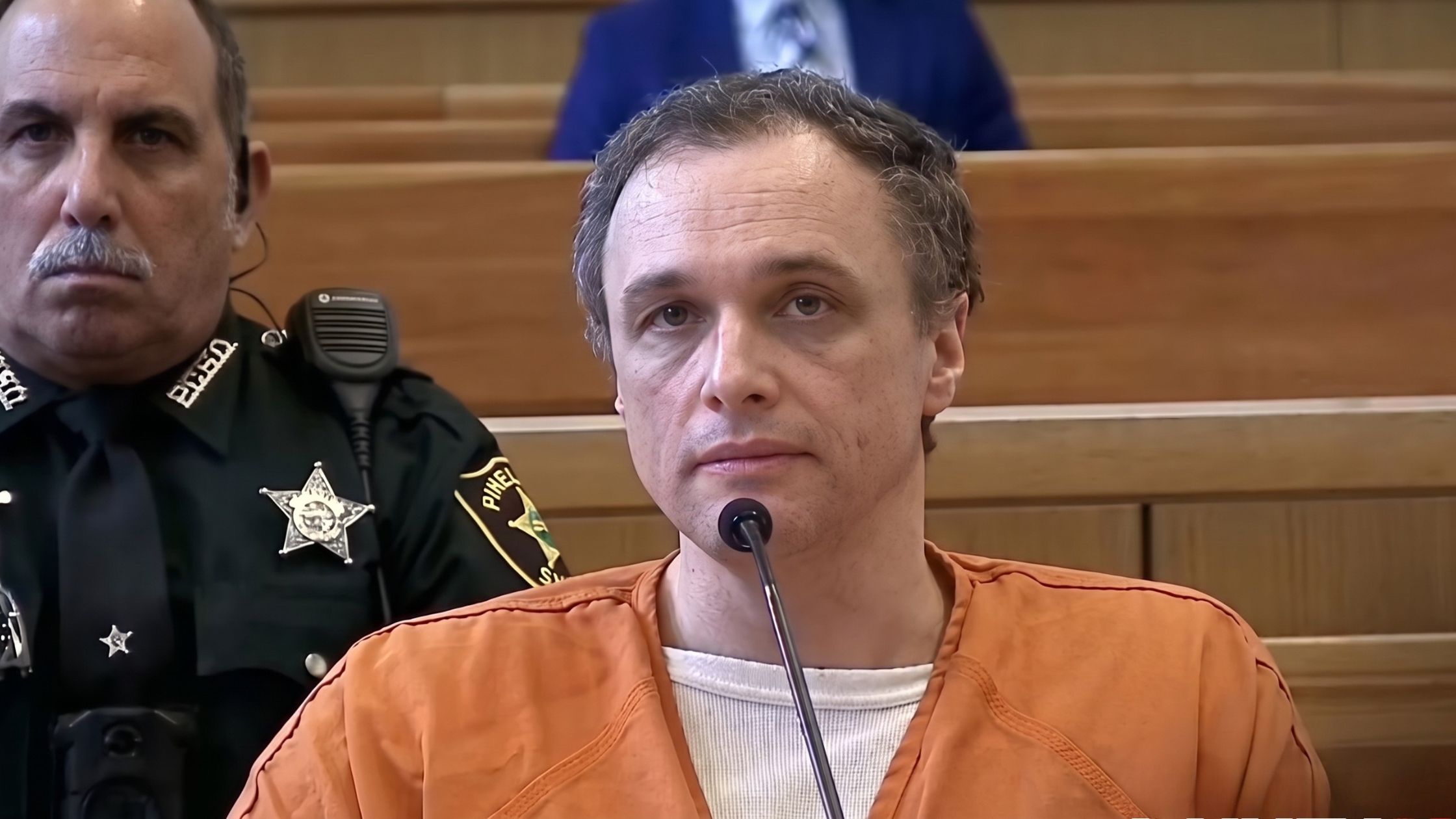
Judge Joseph Bulone (00:01):
You're giving up your right to a lawyer, so please raise your right hand. Do you swear or affirm to tell the truth, the whole truth, and nothing but the truth?
Tomasz Kosowski (00:10):
I do.
Judge Joseph Bulone (00:12):
All right. So you understand that you have the right to a lawyer and that the court has appointed a court appointed lawyer for you and that that lawyer and those lawyers, you actually have two, you have Ms. McNeil and Mr. Hernandez, will represent you for free in this case. Do you understand that?
Tomasz Kosowski (00:36):
Yes, Your Honor.
Judge Joseph Bulone (00:36):
Okay. I'd like to explain to you some of the ways that having a lawyer to represent you can be to your advantage. Before the trial, a lawyer's legal knowledge and experience may favorably affect them or pretrial release possibilities, may result in obtaining information about the case through skillful use of discovery devices, may uncover potential violations of constitutional rights and take effective measures to address them, may ensure compliance with a speedy trial and statute of limitations provisions, and may identify and secure favorable evidence to be introduced later at trial on your behalf. Do you understand that?
Tomasz Kosowski (01:08):
Yes, Your Honor.
Judge Joseph Bulone (01:12):
Okay. And do you still want to go non-jury here in this trial?
Tomasz Kosowski (01:14):
Yes, Your Honor.
Judge Joseph Bulone (01:16):
Okay. So at trial, a lawyer has the experience and knowledge of the entire process. He or she will argue for your side during the whole trial and present the best legal argument for your defense. Understand that?
Tomasz Kosowski (01:30):
Yes, Your Honor.
Judge Joseph Bulone (01:30):
All right. And then if we are going to have a jury trial, obviously they know the rules of evidence. They have plenty of experience as far as selecting a jury, but if we're going to go non-jury, that's really not going to be an issue. Do you understand that?
Tomasz Kosowski (01:49):
Yes, Your Honor.
Judge Joseph Bulone (01:50):
Okay. A lawyer can call witnesses for you, question witnesses against you, and present evidence on their behalf. Do you understand that?
Tomasz Kosowski (01:50):
Yes, Your Honor.
Judge Joseph Bulone (01:58):
Okay. A lawyer can advise you on whether you should testify, the consequences of that decision, and what you have a right not to say. Do you understand that?
Tomasz Kosowski (02:05):
Yes, Your Honor.
Judge Joseph Bulone (02:06):
A lawyer has studied the rules of evidence and knows what evidence can or cannot come into a trial. Do you understand that?
Tomasz Kosowski (02:12):
Yes, Your Honor.
Judge Joseph Bulone (02:13):
A lawyer may provide assistance in ensuring that the jury is given complete and accurate jury instructions. Well, obviously if we're not going to have a jury, that's not an issue, but if you view that as an issue, and obviously they can also make arguments before the court as to what the court needs to be looking at as far as the jury instructions. The court will do the same thing that a jury would do, so they can advise the court on what they think the jury instructions ought to be in the case to the court. You understand that?
Tomasz Kosowski (02:47):
Yes, Your Honor.
Judge Joseph Bulone (02:48):
Okay. And then if you are convicted, you can't argue later that you gave ineffective assistance of counsel. If there is ineffective assistance of counsel and there's prejudice, you could get a new trial, but that's not going to happen if you are representing yourself and if you're ineffective. Do you understand that?
Tomasz Kosowski (03:07):
Yes, Your Honor.
Judge Joseph Bulone (03:09):
Okay. As it is almost always unwise to represent yourself in court, let me tell you a few of the disadvantages of representing yourself in court. You understand you will not get any special treatment from the court and you also won't get any special treatment from the state just because you are representing yourself?
Tomasz Kosowski (03:24):
Yes, sir.
Judge Joseph Bulone (03:25):
You are not required to possess the legal knowledge and skills of an attorney in order to represent yourself. However, you will be required to abide by the rules of criminal law and the rules of courtroom procedure. These laws take lawyers years to learn and abide by. If you demonstrate an unwillingness to abide by these rules I may terminate your self-representation. Do you understand that?
Tomasz Kosowski (03:52):
Yes, Your Honor.
Judge Joseph Bulone (03:54):
You understand that if you are disruptive in the courtroom, that the court can terminate your self-representation and remove you from the courtroom, in which case the trial would continue without your presence. You understand that?
Tomasz Kosowski (03:59):
Yes, Your Honor.
Judge Joseph Bulone (04:00):
You understand that your access to the state attorney obviously is less than what a lawyer would be, although I think we may have rectified that with your iPad or whatever it is over at the jail. I think you've been communicating directly through email with Mr. Vonderheid with the state, is that right?
Tomasz Kosowski (04:19):
Yes, Your Honor.
Judge Joseph Bulone (04:20):
Okay. All right. And obviously you know what the charges are against you and what the possible penalties are, right?
Tomasz Kosowski (04:33):
Yes, Your Honor.
Judge Joseph Bulone (04:35):
All right. Obviously you're charged with first degree murder. If you're found guilty of that, then we would have a penalty phase and you could either get death or life in prison without the possibility of parole. Those are the only two possibilities. Do you understand that?
Tomasz Kosowski (04:50):
Yes, Your Honor.
Judge Joseph Bulone (04:51):
Obviously, if you're found not guilty, then you're not going to get a sentence at all. If you're found guilty of a lesser, like second degree murder, manslaughter, or something else, maybe there could be an argument that you hurt the victim, but he's still alive or whatever, so there may be different lesser included offenses, but you would be looking at some substantial prison sentences with the lesser included offense. Do you understand that?
Tomasz Kosowski (05:22):
Yes, Your Honor.
Judge Joseph Bulone (05:35):
Okay. All right. And then just going over this briefly, I think last time you said you graduated from the University of New Mexico with a degree in music. Is that what you said?
Tomasz Kosowski (05:46):
Yes, Your Honor.
Judge Joseph Bulone (05:48):
All right. And then obviously you graduated from Dartmouth Law School and you became a surgeon, a plastic surgeon, correct?
Tomasz Kosowski (06:06):
No, Your Honor. I went to Dartmouth Medical School.
Judge Joseph Bulone (06:08):
Hm?
Tomasz Kosowski (06:09):
I went to medical school, not law school.
Judge Joseph Bulone (06:10):
Right. Right. Right, you went to Dartmouth Medical School and you became a plastic surgeon, right?
Tomasz Kosowski (06:16):
Correct.
Judge Joseph Bulone (06:16):
Okay. Do you have any other degrees besides those?
Tomasz Kosowski (06:19):
Yes, sir.
Judge Joseph Bulone (06:20):
All right, and what's that?
Tomasz Kosowski (06:22):
I have a BS in biochemistry, an MA in biomedical sciences, an MBA in business.
Judge Joseph Bulone (06:28):
Okay. And no one has told you not to use a lawyer, correct?
Tomasz Kosowski (06:33):
Correct.
Judge Joseph Bulone (06:36):
And no one has threatened you in order to have you decide not to have a lawyer represent you, correct?
Tomasz Kosowski (06:43):
Correct.
Judge Joseph Bulone (06:44):
All right. Do you have any questions about anything?
Tomasz Kosowski (06:46):
No, sir.
Judge Joseph Bulone (06:47):
All right. All right, so the court will find that the defendant is competent to waive counsel and the defendant is waiving the right to court appointed counsel knowingly and intelligently. All right, so then the issue of a jury or a non-jury trial, last time you were here, you indicated that you wanted a non-jury trial and you did sign a waiver of a jury trial and you still want to go non-jury, is that correct?
Tomasz Kosowski (07:15):
Yes, Your Honor.
Judge Joseph Bulone (07:15):
Okay. And you feel that's in your best interest, right?
Tomasz Kosowski (07:15):
Yes, Your Honor.
Judge Joseph Bulone (07:16):
Okay. And you're doing that freely and voluntarily, right?
Tomasz Kosowski (07:26):
Yes, Your Honor.
Judge Joseph Bulone (07:30):
Okay. Are you under the influence of anything at this point, medication or alcohol or drugs or anything?
Tomasz Kosowski (07:34):
No, Your Honor.
Judge Joseph Bulone (07:34):
All right. Is your mind clear today and you understand everything?
Tomasz Kosowski (07:36):
Yes, Your Honor.
Judge Joseph Bulone (07:43):
All right. And no one's been threatening you or forcing you to do anything here against your will, is that correct?
Tomasz Kosowski (07:45):
Yes, Your Honor.
Judge Joseph Bulone (07:53):
All right. All right, so first of all, the comprehensive PSI came back. I want to give that to the parties here as soon as I could. Obviously this has been an issue for the guilt phase at all, but I wanted everybody to get it ASAP. All right, here's the original, [inaudible 00:08:20] court files sealed, and I didn't want to email this to anybody because it's all confidential and email is not confidential. So I have a copy for the state, I have a copy for the defense, which is going to be Mr. Kosowski. And also a copy for Mr. Nolbert, which I'll give to the state, okay? I didn't want to email it to him so when you see him, give him a copy, okay?
Speaker 2 (08:53):
I'll provide it to him.
Judge Joseph Bulone (08:54):
All right. So it's two for the state and one for the defense, but the one's actually for Mr. Nolbert who I appointed as special counsel. All right, that's for the guilt phase. That's only going to be applicable if you're found guilty about murder in the first degree and then we'll deal with that. All right, so I think... I'll also point this out that on Thursday, which was the last day of court, that there was a notice of limited appearance and a motion in limine/motion for protection order filed by Ms. Veronica Burianek on behalf of Judge Patricia Muscarella. I don't know if she's retired now or not yet.
Speaker 1 (09:52):
Yes, Your Honor. She just recently retired.
Judge Joseph Bulone (09:59):
Right, right. She listed it. All right, so here's a copy for the state and a copy for the defense in case you don't have it. You guys have it yet?
Speaker 2 (10:05):
We do.
Judge Joseph Bulone (10:05):
Oh, okay. All right. You have it yet, Mr. Kosowski, the motion in limine, motion for a protective order?
Tomasz Kosowski (10:05):
Yes, Your Honor.
Judge Joseph Bulone (10:05):
Oh, you have it. Okay, good. All right, so do we want to argue that first?
Speaker 1 (10:30):
Yes, Your Honor. I would ask that we can.
Judge Joseph Bulone (10:30):
All right.
Speaker 1 (10:30):
If I may approach to the microphone.
Judge Joseph Bulone (10:30):
All right, you may.
Speaker 1 (10:30):
Yes, Your Honor. Our office, the Office of the Attorney General, filed a limited notice of appearance representing Jim Weaver, who's a state employee, and Judge Muscarella, who's anticipated to testify here today. On the theories of judicial immunity, the purview of inquiry is very limited as to judges. Questioning as to their rulings and how they arrived at their rulings are not permitted. Their observations, inquiries to the observations may be permitted. So based upon that, I would just ask if Your Honor would issue an order limiting the inquiry to preclude any inquiry as to Judge Muscarella's thoughts, processes at arriving at rulings. Judge Muscarella did preside in the civil case in which Mr. Kosowski was a litigant.
Judge Joseph Bulone (11:27):
All right, state, any objection?
Speaker 2 (11:28):
No, Your Honor.
Judge Joseph Bulone (11:28):
All right. Mr. Kosowski, any objection?
Tomasz Kosowski (11:28):
No, Your Honor.
Judge Joseph Bulone (11:28):
All right. Granted.
Speaker 1 (11:29):
I have a proposed order if Your Honor wants.
Judge Joseph Bulone (11:30):
Okay.
Speaker 1 (11:35):
And there's several copies, Your Honor, so there should be enough copies for all parties.
Judge Joseph Bulone (11:46):
All right. State and defense, do you want a copy or not really?
Speaker 2 (11:52):
If there's only one there, Your Honor.
Judge Joseph Bulone (11:53):
Well, I have a lot of copies, so if you want it... All right. So you have standby counsel here for Mr. Kosowski. We have Dani McNeil and we have Daniel Hernandez. And I think Mr. Hernandez had an issue about scheduling.
Daniel Hernandez (12:36):
Your Honor, some of the issues may not really exist anymore. I had an issue, number one, with October 1st and 2nd, which I'm told that that's not going to be a concern. If in fact it was, I was going to ask Ms. McNeil to stand in for me, but from every indication I have, it appears that that's not realistic. The other issue is I noticed the court had a morning docket. Every morning I have something in another courtroom and I would ask permission, if Ms. McNeil, is going to be here to simply let me cover those matters. They shouldn't take very long, but I do have something every day in one of the courtrooms.
Judge Joseph Bulone (13:25):
All right. So let me know in advance and I can tell the other judges to take you first [inaudible 00:13:32].
Daniel Hernandez (13:32):
And then finally, Judge, the third question that I had, it's something that came up late last week, and I had a sentencing in federal court a couple weeks ago and it got continued and we weren't told when it was going to be continued to. I just got a notice for this Wednesday at one o'clock. I was prepared to file a motion to continue... O'clock to two o'clock in Tampa.
Judge Joseph Bulone (14:16):
What day?
Daniel Hernandez (14:17):
Wednesday.
Judge Joseph Bulone (14:22):
Oh, this Wednesday. See if you can get it continued through that. The federal courts are always going to accommodate us here in state court.
Daniel Hernandez (14:32):
And what was surprising is when the judge said she was going to continue, she wouldn't give me a date, so I just get it in an email. So that's why I didn't address it at the time. I'll file a motion this morning.
Judge Joseph Bulone (14:46):
Okay. Very good.All right. So any other issues we need to deal with? And I though about this, Ms. McNeil and Mr. Hernandez, I think we should both stay throughout the trial and... It is what it is there. All right, Mr. Vonderheid?
Mr. Vonderheid (15:12):
I do have something. There were some motions to suppress that were argued on April 17th of 2025. They were denied in court. Court transcript reflects that Your Honor's ruling on page 395 to 418, there was no follow-up written order, so I have a proposed written order that, if I may approach the court. If I may show Dr. Kosowski. See if he has any objections.
Judge Joseph Bulone (16:02):
All right. And we'll make things easy for Mr. Kosowski too and say that he's preserving his right to appeal my orders on the motion to suppress. So he doesn't have to do that in the middle of the trial. It's preserved. All right, so it's an issue on appeal if in fact you're found guilty here.
Mr. Vonderheid (16:27):
Additionally, while we had the ability to communicate via tablet, there was no ability to convey discovery through the pool. So I do have some things to file here today. The first is, I call it the trial itinerary, the list of witnesses that we propose. I don't have to give this over, but sometimes I choose to do it. I told Dr. Kosowski I'd give him a proposal of the witnesses. Case may go quicker. Some may be subbed in and out for different witness names, but we gave him a complete witness list a couple of weeks ago, but this is my proposed itinerary for the trial. If Your Honor would like a copy, I can provide it.
Judge Joseph Bulone (17:05):
I would love a copy.
Mr. Vonderheid (17:07):
Okay. I can certainly do that. I have more. You want to be last now? Well, we'll give you a copy of that as well. Additionally, I filed a notice of intent to offer records under 9902-11 for a vigilant plate documentation. I think independently it's admissible under 9902 sub 11. Additional discovery that was put in today. Most of this was discussed with standby counsel and forwarded to Dr. Kosowski already. We've subbed out the records custodian from PSTA, because the other one moved out of state. So we had the name Charles King. He's just a records custodian. He'll be here testifying. Wayne Gross was somebody that was deposed by his prior defense counsel and became an issue for the motion in limine for the depositions that we conducted, so the depo was done, transcripts been filed. He may come in and testify should it become an issue.
(18:03)
Also, this is just laying out everything else that has been conveyed to Dr. Kosowski. We also have evidence, it was a blue gorilla carp, which I brought to... I didn't know other way to show him. I showed his prior defense counsel during the depo a year ago, maybe two years ago, it was discussed with Dr. John Throgmorton's testimony. I have it here. There was no other way for me to show Dr. Kosowski. It's here if we want to do a demonstration later today for his benefit.
(18:33)
A PowerPoint was updated this weekend for the cell phone analysis, so that's in here. The slides are. Some reports were generated in the last week as it relates to certain... As the police had done on the case, basically opening envelopes, measuring garbage bags, this kind of thing. We got some DHSMV certified documents from the Toyota Tundra that he never registered that he bought from Mark Auto. These are in here as well. And then previously we had discovered the court documentation from the civil case, which is 193057CI, but we hadn't had the e-certification on it, even though I think it's public record, it's admissible anyway under judicial notice.
(19:28)
We asked our investigator to plot his cell phone data and it's an MP4... Convey it to... He wants me to put it into his jail... That Dr. Kosowski had conveyed to his mother last evening, about six o'clock, that I think are relevant to this case and germane to the proceedings that I've included in discovery here that may come up in the case later on in the week. So I do have these documents. Also, I filed notices of experts. They had already been filed in other AADIs, but I wasn't exactly sure which ones he had been privy to from his prior counsels having received those. Basically saying this person's an expert witness. So I followed up with notices of expert witnesses for his benefit. If I may hand to the bailiff.
Judge Joseph Bulone (20:25):
All right. So this is everything that...
Mr. Vonderheid (20:28):
This is everything outstanding and have been discussed.
Judge Joseph Bulone (20:33):
All right. And he was unable to receive any of those through his iPad.
Mr. Vonderheid (20:36):
I can't do that on a tablet... To send a PowerPoint, for example. So there was an updated PowerPoint in there as well. It's like 186 slides, not all of which are going to be admissible, but our lead investigator created it like he did for the grand jury. I provided slides for him. If Dr. Kosowski would like a digital copy of that, I can certainly provide that in some capacity by dropping it off at his jail property. And just given the timeframe I was concerned dropping it on his jail property, he wouldn't get time to even get it anyway before court today.
Judge Joseph Bulone (21:08):
All right. So I assume we're going to have opening statements and then we're going to put on some witnesses today. So are any of those witnesses involving any of this new material here?
Mr. Vonderheid (22:33):
Well, they're going to offer the testimony that they have not seen him and he hasn't returned to contact with them, which I think pursuant to the case law, which is literally corpus, would be evidence that would be relevant to the proceedings and not overly prejudicial.
Judge Joseph Bulone (22:48):
All right. All right. So that's a lot for Mr. Kosowski. Any issues with any of that, sir?
Tomasz Kosowski (22:56):
I'm sorry, I missed probably the last couple of minutes because of a prior discussion, but it's fine.
Judge Joseph Bulone (23:05):
All right. So no issues with any of that, is that correct?
Tomasz Kosowski (23:09):
Yes.
Judge Joseph Bulone (23:10):
All right. So obviously both parties have the option of making an opening statement. You don't have to, but it's an option. And then I think you know this, but an opening statement is your version of what you believe the evidence in the case will show. All right. So state, do you want to begin with your opening statement?
Alexandra Spadaro (23:40):
Yes, Your Honor. May it please the court. On the morning of March 21st, 2023, Steven Cozzi, a 41-year-old lawyer working at the Blanchard Law Firm, vanished. But Steven wasn't just a lawyer. That wasn't his only identity. He was a loving husband, a loving son, a loving brother. He was a friend and a role model to many people in the community, and that's why this made absolutely no sense. And the evidence will show that he didn't disappear on his own terms. He was murdered. He was murdered in the bathroom of his law firm. His body was then placed in a wagon and it was drug out to the parking lot where it was loaded onto a gray Toyota Tundra, and ultimately, his coffin was a dumpster, his hearse was a dump truck, and his burial site where he lays to rest in tiny, unidentifiable little pieces is at the Collier County landfill. He was thrown away like garbage, and that's all at the hands of really the only person that made Steven Cozzi his enemy, and that's Dr. Kosowski.
(25:06)
So how did we get here? Why did this happen? How could this have happened? What will the evidence show? And to answer those questions, I have to go back. Back in May of 2019, Dr. Kosowski filed a lawsuit. He was the plaintiff and he sued multiple individuals as well as professional businesses whom he did work with, and he was suing for monetary damages. He was demanding that he be compensated because he believed he had been wronged. And in June of 2019, the Blanchard Law Firm filed their notice of appearance for the businesses and the individuals who ran those businesses, Dr. Laufer and Dr. Woolstein. Now, Steven was a newer lawyer at the time. He had graduated from Stetson Law School in 2016. He started working in family law, and then in 2018, he got hired at the Blanchard Law Firm.
(25:56)
At the Blanchard Law Firm, they primarily focused in bankruptcy and business litigation, and Jake Blanchard took him under his wing. He mentored him, and you'll learn that Steven thrived. He loved what he did and he was good at it. He cared about doing a good job. He was smart. He cared about his clients, and he cared about representing them with integrity. So Steven became the lead in this case, and he was representing the wealthy corporate clients who Dr. Kosowski was suing, clients that would have the capability of paying Dr. Kosowski if he were to prevail in that lawsuit. Jennifer Friend, on the other hand, was another respondent in that case, and she didn't have the same means as the Lawford Institute or the individuals who owned the medical businesses. But she was one of the respondents, and she was ultimately represented by a few law firms, but in the end, June of 2022, Jake Pillsbury filed his notice of appearance, and he was the one who worked consistently with Steven as the representatives for these respondents who were being sued by Dr. Kosowski. Not long before Jake Pillsbury got involved, Dr. Kosowski's lawyer withdrew from the case. And in March of 2022, he started to represent himself, and he made it contentious, he made it personal, particularly between him and Steven Cozzi. Now, Dr. Kosowski is an Ivy League educated plastic surgeon. He went to Dartmouth. He's intelligent, but he's not a lawyer. He did not understand how the law worked, he did not understand how this process worked, and that made it very difficult for Steven and Jake Pillsbury to work with him. For example, he started demanding discovery that had already been provided. It was so much of a dispute that Judge Muscarella, who was the presiding judge over that civil litigation, had to appoint a special master to handle all of these discovery disputes. He was going to be the one to decide, does Dr. Kosowski not have what he need and is he entitled to anything else?
(27:54)
So in September of 2022, they had that meeting, and that meeting occurred at the Blanchard Law Firm. All parties were there to include Steven Cozzi, Jake Pillsbury, Tomasz Kosowski, and the honorable Jack Day. And they stayed there for hours. It was on a Saturday. Steven Cozzi had brought them through his office that led into the conference room. That's where they spent the majority of their time. He had escorted him back out from his office door into the hallway of the Blanchard Law Firm where the bathroom was located, and that's when Dr. Kosowski really started to familiarize himself with what would ultimately become his crime scene. Jake Pillsbury will tell Your Honor that after this, the issue seemed to have been resolved. The order was primarily in their favor, but they did agree to provide Dr. Kosowski with some more discovery.
(28:47)
Still wasn't enough. Dr. Kosowski was not satisfied with the discovery he received despite being complying with the order that was authored by the honorable Jack Day. And this is primarily because he's not a lawyer and he didn't know how it worked. But Steven was, and he did, and Dr. Kosowski did not like that. Steven filed a motion for summary judgment in October of 2022, and although Dr. Kosowski isn't a lawyer, he had enough wherewithal to know that if that motion had been granted, he would've lost the lawsuit. He would not have been able to recover the money from those wealthy corporate clients that Steven Cozzi represented, and the case would ultimately be dismissed. Steven had also filed something called a motion to tax plaintiff for fees that are related to the special master's hearing, because ultimately it was ruled in their favor. So he was seeking for that to be partially paid by Dr. Kosowski. And Dr. Kosowski really didn't like that. How dare Steven want money from him?
(29:44)
So not only did Dr. Kosowski file a motion for sanctions as a result of this, on multiple occasions, he filed pleadings where he was demanding the removal of Steven Cozzi from the case, and only Steven Cozzi. In December of 2022, he demanded the removal of Mr. Cozzi as the attorney against him, given his, quote, "Recurrent disregard for the rules of civil procedure." Yet again, in January of 2023, he filed a motion where he sought to disqualify Mr. Cozzi as the attorney of record for his, quote, "Recurrent disregard for the Florida Bar rules of professional conduct." And this is something that's not common for opposing counsels to do in civil litigation unless they make it personal.
(30:27)
So it was around this time that Dr. Kosowski really started to plot Steven's murder. He was cold and calculated. He acted deliberate with premeditation. And on December 26th, 2022, he purchased a gray Toyota Tundra TRD in all cash and never registered the vehicle. He ultimately started stalking Steven, but prior to this, he came to the Blanchard Law Firm yet again for a deposition in January of 2023. Now, because Dr. Kosowski was representing himself, he was the one that was going to be asking the deponent questions. Her name was Tricia Mason. She was not a party to the litigation, she was a witness, and it got contentious. Steven was there in the conference room alongside of Dr. Kosowski and the deponent and the court reporter, and Jake Pillsbury had appeared via Zoom.
(31:19)
It got so contentious that when this deponent was getting so upset, they had to take a break. And on this break, Steven had walked out of his office door into the communal bathroom that was down the hallway. And just for reference, Your Honor is going to see photographs and you will see Oscar that kind of walks through the layout of this entire building. But it's a very small bathroom, one urinal, one stall, one sink. If you walk into that bathroom, you're basically on top of the other person. So typically, and you will hear testimony of this, men who use that restroom, if they heard someone was in there, wouldn't go in. But Dr. Kosowski didn't agree. He walks into the bathroom and he confronts Steven. " You're a scumbag just like your clients." And he thought he would win in the end.
(32:05)
He again familiarized himself with the exact room where he would take Steven's life in March of 2023. On February 16th, 2023, Dr. Kosowski visited Steven's home. Unbeknownst to Steven or his husband Michael Montgomery, he had placed himself right outside of 1957 Whitney Way and he photographed Michael's car inside of the carport. On February 22nd, he traveled to Blanchard Law Firm yet again. Only this time there was no hearing set, there was no deposition, there was no motion, no meeting. He had no reason to be there, but he slowly and methodically drives around the parking lot filming it, capturing the different entrances and exits to the building where the Blanchard Law Firm was located, the different cars that were in the parking lot, to include Steven Cozzi's. And Your Honor will see that video, and Your Honor will see that it appears he got caught. He drops the phone and goes down to his leg.
(33:13)
On March 2nd, 2023, he starts to Google Steven, specifically Steven and his husband Michael, their wedding, where Steven lived before, where Steven lived now. He even accessed the warranty deed to their current home at the time. Then on March 7th, 2023, Dr. Kosowski's phone connects again to the Blanchard Law Wi-Fi, putting him on the property. Again, no deposition, no meeting, no hearing, no lawful reason to be there. And he was seen on that day peeking through the law firm window, and that woman who saw him was the maintenance woman, Deborah Henrichs. Your Honor will hear a week later on March 14th, 2023, Deborah walked into the building where the Blanchard Law Firm was located.
Alexandra Spadaro (34:00):
Deborah walked into the building where the Blanchard Law Firm was located because she had to go to the electrical room that was also located in that building. And like I said, Your Honor is going to see the layout. It's a little confusing, but just for context, 1501 South Belcher has two buildings. There's building A and there's building B. Building A has a vet hospital that's located inside. There's a sidewalk that connects to building B, and that's where the Blanchard Law Firm is located. When you walk into building B, you enter into a foyer, and that foyer has two office buildings to the left and to the right. Left is Blanchard Law Firm, right is something called Ranati. There's a big wall with a John Lennon mural and an entry into the hallway where the men's bathroom is located. In order for Deborah Hendricks to get to that utility closet, she had to walk through that entry, take a left around where the men's bathroom is, continue to walk straight.
(34:55)
Now when she gets to the end of this hallway, right about at the end, is where Steven Cozzi's office door is. You take another right, down another hallway. There's two empty suites. And at the end of that hallway, you take another right and there's the electrical closet. It's very disjointed, a lot of hiding spaces. But when she got into the electrical closet, she opens the door and she sees a man just standing there hiding in the dark utility closet. He has a surgical mask on, he has a hat, a backpack, and of course she's spooked. He says something to the effect of, "I'm sorry for startling you. Power outage." Well, Deborah knew that this man was not an electrician as he was dressed in plain street clothes, plus the power was not out that day. So he leaves and he goes through the foyer, takes a left and goes out to the parking lot.
(35:46)
Deborah is standing closely behind trying to see where he goes. Maybe she can get a tag number. And she sees him get into a gray Toyota Tundra TRD. She was unable to get his license plate, but as he pulled away and turned right onto Belcher Road heading north, she saw a New Jersey tag. Now you will hear that she will identify the same person she saw on March 7th as the same person she saw hiding in the utility closet and got into that gray Toyota Tundra on the 14th. But you will also hear that she will take that stand and she will point to Dr. Kosowski as the person that she saw on both of those occasions. You will also hear that a latent print was lifted in that electrical closet and on the inside of that door, the right index finger comes back to Dr. Kosowski.
(36:37)
On March 17th... I'm sorry, let me back up. I forgot something very important. On March 14th, Deborah Hendricks reaches out to Todd Tinsley, who is the nurse manager at the complex. She's freaked out. She just found this guy hiding in the utility closet. And he comes and he goes and checks, there's a ladder that leads up to the roof. He also sees some things that really don't belong there. One of note was about yea tall, rectangular, tan box with no writing on it. He didn't know why it was there. Deborah didn't know why it was there. So he decides to open it. And when he opens that box, he sees the wheels to a wagon with blue fabric. He places it back because there's other office buildings within that suite and he doesn't know who it belongs to. So he places it back into the closet. They called the police, they weren't able to figure out who it was at that time.
(37:36)
Now we go to March 17th, 2023. Dr. Kosowski yet again connects to the Blanchard Law wifi. No hearing, no motion, no meeting, no deposition, no justifiable reason to be there, but the evidence will show that he left something. He left a blue Gorilla cart in the electrical closet that he was hiding in. And that will be confirmed when Your Honor sees the Amazon records. He had purchased three Gorilla carts, one blue, one black and yellow, and one red. It should be noted the blue one was never recovered.
(38:18)
On March 20th, around three o'clock in the morning, he starts to do some research on his phone. Specifically, he starts to research a paralytic called succinylcholine. Specifically, he was searching for the duration of action, the possible dangers of intramuscular succinylcholine. And he read multiple scholarly articles on how this paralytic works. Your Honor will hear from an anesthesiologist. This paralytic can be lethal at the right dose, but at a lower dose, what it does is it affects the ability for someone to resist. It weakens their body. It affects their ability to fight back, but they are cognizant of everything that is going on. They can feel everything that happens to them. You will learn that if someone was stuck with a paralytic and there was a large bloodletting event in the bathroom, they could feel and see everything that was happening to them.
(39:16)
You'll also learn that it's a drug that plastic surgeons or surgery offices often keep in emergency situations. But it's not something the plastic surgeons typically administer, that would be for an anesthesiologist. On March 21st, 2023, at 7:51 in the morning, Dr. Kosowski leaves his house in that gray unregistered Toyota Tundra. At 8:07 AM, he emails Steven and Jake Pillsbury a motion to compel and then he powers off his phone at 8:08 in the morning. Now, although Dr. Kosowski had scoped out the location on multiple different occasions, he either missed or did not care about the multiple surveillance cameras that were on the property. One, in which was affixed to the vets building, which was that building A. And it's facing the entryway to where the Blanchard office is located. It also captures part of the parking lot and a little bit of Belcher.
(40:12)
That surveillance captures his gray truck arriving at the Blanchard Law Firm at 8:32 in the morning on March 21st, 2023. Two minutes later, the camera captures a man who looks and matches the description of Dr. Kosowski. But a man who enters the law firm with a tan rectangular box on his right shoulder, identical to the one that Todd Tinsley had found in the electrical closet back on March 14th of 2023. Now, Steven hasn't arrived to work yet. Earlier that morning, he woke up before Michael like he would every day. He put chicken in the sink to defrost so that they could have dinner that night. He brought Michael a cup of coffee and he kissed him on the forehead and then he left for work. And his home surveillance shows him walking out the door that morning wearing a red cardigan sweater, jeans, and boat shoes.
(41:05)
At 8:37 AM, from that same surveillance, you will then see Mr. Cozzi walking into work, wearing the same exact outfit that he was wearing when he left the house. He was preparing for a telephonic hearing on the Kosowski matter that was supposed to start at 10:30. He was sitting at his desk listening to music and working. Now, the Blanchard Law Firm does have alarms on their doors, they didn't have cameras inside of the building. But they had alarms on their doors that would log when those doors were open and closed. There was only two doors to the Blanchard Law Firm, it was the one from the foyer, which was the main entrance or the front door. And there was Steven Cozzi's that led directly into the hallway where the bathroom was. That was the back door. At 9:50 AM, Steven opens his office door to go to the bathroom, passing the hallway where two empty office suites are, the electrical closet, and after that he was never seen again. At 10:22 AM, the surveillance captures a man, again, similar size description as Dr. Kosowski, wheeling out a heavy wagon, struggling even. And he's wheeling it down the sidewalk. And when he gets there, he flips it around and he goes to the back of the gray Toyota Tundra. But again, he had that hearing at 10:30. Because Steven was laying in that wagon dead, he obviously didn't call in for the telephonic hearing that he had been preparing for, but Dr. Kosowski didn't miss it. At 10:27 AM, he called in and the location to where his phone makes that phone call is very interesting. See, there's a cell tower that is looming over the Blanchard Law parking lot, and that is where his phone connects when he calls in for the hearing. It wasn't like Steven to miss a hearing. He was punctual. He was never late. He wasn't forgetful. He was the one who filed the notice of hearing the day prior. The only reason he would've missed a court date was if something bad happened, was if he were dead.
(43:13)
Alongside Dr. Kosowski on that phone call was Jake Pillsbury who was representing the other respondent, Jennifer Friend, and Judge Moscarello, the presiding judge over the case. Now that call lasted for 30 minutes. And on that call, Dr. Kosowski is referencing the fact that Steven is not there despite him being in the wagon outside of his pickup truck. He's asking for sanctions. He's demanding that he be removed for the case. He's trying to set all of his motions that are demanding that he come off the case while Steven's not there. And Jake Pillsbury is like, "Whoa, let me reach out to him. Let me see where he is. We shouldn't do this, this isn't like him." But obviously no response.
(43:52)
That hearing ends at 11:04 AM and Dr. Kosowski powers off his phone yet again. Surveillance captures the wagon being moved in the parking lot and then it is placed in the back of Dr. Kosowski's truck, ultimately leaving the parking lot at 11:16 and heading north on Belcher Road. Rebecca Waters, who is a paralegal for the Blanchard Law Firm, would bring her dog Molly to work. And on that day, her dog started acting funny. She was inside of her office with the door shut. Molly started whining or barking, just was being abnormal. And this is what prompted Rebecca Waters to open up her door and to see if there was something going on. And when Rebecca opens up her door, catty corner is where Steven Cozzi's office is located, but Steven's not in there. His phone, his keys, his wallet, music is playing, middle of writing an email, all of that is what's in his office, but no Steven.
(44:49)
So she gets their boss and who ultimately became one of Steven's best friends, Jake Blanchard involved, and they go looking for him. They look in the empty suites that were located in the building. They go to the parking lot and they see that his car is still there. They run into people and ask, "Have you seen Steven?" Because he just disappeared. They then ultimately go into the men's restroom. And when Jake Blanchard opens up the door, first of all, there's an overwhelming smell that multiple witnesses will testify to of a cleaning product. Specifically, some will say isopropyl alcohol. And they smell this and they open up the door and Jake sees that there's blood everywhere. There's blood on the toilet seat, there's blood on the wall, there's blood on the floor. The paint to the wall inside of that bathroom stall was eating away at itself as if someone had cleaned it with some heavy duty bleach cleaner. And this caused him really to be concerned.
(45:44)
Rebecca Waters had reached out to Michael. Jake had talked to Michael. No one had seen him. So he calls 911 around 11:46 to report Steven missing. Officers respond to the scene and they start to look for those surveillance cameras. They start to process the bathroom and testing revealed a lot of blood that was located in the bathroom in multiple different locations. You will learn that a major bloodletting event and a struggle took place inside of that bathroom when our blood spatter expert, Anna Cox, testifies. Now, many of those swabs, they tested presumptive positive with using phenolphthalein for blood, and some were even sent to the Pinellas County Forensic Laboratory for further analysis. There was blood on the toilet that was Steven Cozzi's. Blood on the exterior stall wall that was Steven Cozzi's. There was blood on the floor where Steven Cozzi's DNA was located. There was blood on paper towels, some in which the DNA analysis revealed a mixture of both Steven Cozzi and Dr. Kosowski. And finally, a blood swipe on the exterior door of the men's bathroom that was a mixture of Steven Cozzi and Dr. Kosowski.
(46:53)
Now, of course, the DNA results were not known to law enforcement at the time, I'm jumping ahead. But after they were interviewing anyone who was worried about Steven could provide any insight onto where he was, one person really kept coming up as a person of interest. Really only one person was ka trend for all of these people who knew and loved him, and that was Dr. Kosowski. Law enforcement was able to track that unregistered Toyota Tundra back to Dr. Kosowski's house in Tarpon Springs through surveillance at multiple different locations. They did true old-fashioned police work, going down and literally getting over 20 different footage and video cameras to actually track down where he went. And Your Honor will see some of those videos. We're going to have a lot of records custodians testify to get those videos in, but the ones that we're going to highlight for Your Honor show the gray Toyota TRD with a wagon in the back of his truck and the red blanket over it.
(47:49)
One of the best photographs that Your Honor will see came from a Flock camera as Dr. Kosowski was leaving the Blanchard Law Firm that day. And you will see the New Jersey tag that Deborah Hendricks saw back on March 14th when she chased him out of the utility closet. And you will see a blue Gorilla cart wagon with a red blanket over it. And I submit to you, you will see the outline of Steven Cozzi's body inside of that wagon.
(48:16)
Now, Dr. Kosowski gets back home around 11:58 in the morning, and he's home for about 10 minutes shy of five hours, where he packs up his two dogs, Steven, transfers to the Toyota Corolla that actually was registered to him, which was red in color, and he starts to head down south. Now, Your Honor will learn that Dr. Kosowski doesn't take a straight route down to Miami. He makes a little pit stop. Before he does that, he has to go back because he forgot something, and then he ultimately leaves and heads south. He gets onto US 19 and he gets off at East Bay, takes a left at Belcher, swings by the Blanchard Law Firm where he sees Largo police cars, forensics that are processing. And then he gets back onto 19 after he does the semicircle and heads south. After he does this, that's when he starts researching and Googling WFLA Tampa as he continues to drive.
(49:12)
Steven is still missing as of March 22nd, 2023. No one has seen or heard from him. They're still at that point trying to process back to Kosowski's house, which they were ultimately able to do. And on March 23rd, 2023, again, no sign of Steven, law enforcement go to Dr. Kosowski's residence in an attempt to do a knock and talk, but he wasn't home. Then they got a search warrant for his residence later that evening, and his house was a mansion that was located in Tarpon Springs that had a two-car garage. Now after that warrant was served, the garage door opens and inside of the garage is the gray Toyota Tundra TRD with a different license plate.
(49:52)
Now, you'll learn that the garage was searched and the New Jersey tag was not located, but there were a multitude of other tags that didn't belong to him.GHe also had a tag flipper that was installed on his gray pickup truck. And also located was a black and yellow Gorilla cart, not the blue one, but another one that he had purchased off Amazon. So the truck is processed and there's a good amount of blood, both inside and outside the car. One spot of blood that was collected from the tailgate was actually sent to Pinellas County Forensic Laboratory and it came back to Steven. Another blood spot was located on the garage floor that was tested for DNA, and came back to Steven, but after, that mansion was searched for hours, no Steven.
(50:39)
On March 24th, 2023, now they have a truck full of blood, a house with blood in it. They followed it back, no signs of Steven, so now they're looking for Dr. Kosowski. They had learned that he had work up down in Miami, so they had traveled to Miami trying to locate him or his red Toyota Corolla. No luck, so they put out a BOLO. And Dr. Kosowski makes his way back to Tarpon Springs on March 25th, 2023. Prior to returning, however, Dr. Kosowski wants to make sure it's safe for him to come back. And around noon, he starts to Google Largo Police Department and Largo Police warrants. Since nothing came up, he believed he was good to go, but still no sign of Steven. It's March 25th, still haven't heard from him, still haven't seen him, and that BOLO worked.
(51:29)
At 3: 19 PM, Tarpon Springs conducted a traffic stop on his red Toyota Corolla. A search warrant was obtained for that vehicle, but Steven was not found. What was found in his car is rather interesting, in the trunk of his car was a black ballistics vest that had Steven's blood on it. Blood was located inside of the truck, I'm sorry, inside of the trunk that was Steven's DNA. Inside the vehicle were cellphones, plural, one to be an iPhone, the other to be a burner phone or a TracFone. And throughout the vehicle, he had multiple vests, to include a black EMS vest, he had sheriff's office patches, a foldable bike, a gas can, black industrial-sized garbage bags in the trunk of his car, $282,000 in cash, and two passports.
(52:20)
But one of the scariest things that was located inside of that vehicle, and there's really no other way to categorize it, other than what I like to call a murder bag. It was a black duffel bag and inside of it, amongst other things, but most notably were lighters, a taser, scissors, brass knuckles, a crowbar, ski masks, a Guy Fawkes mask, a 3CC syringe, needle, and a vial of succinylcholine that had the lot number from his plastic surgery office in Miami where he had no authority to take.
(52:58)
Now, while this vehicle is being searched, Dr. Kosowski is detained in the back of a police cruiser, and he starts with his hands cuffed behind his back. Well, he's informed by Largo PD that they're going to do a body warrant. They're going to search his body. They're going to collect possible DNA, fingernail clippings, photographs of him. And after he's informed of that, he struggles, but he's ultimately successful in getting his hands underneath his feet and bringing his handcuffed hands in front of his face. And after he hears that the body warrant is in process, en route, one by one, he starts to meticulously suck on each of his fingers. He's using his tongue and getting up underneath it and slurping. He's using his teeth almost as a nail file, trying to destroy any trace of evidence that might bring him back to Steven Cozzi, because again, he still hasn't been located.
(53:52)
He's taken back to the station where photographs are taken of him, and Your Honor will see those photographs. He has injuries on his hands consistent with a struggle. He has a new blood blister on his thumb, consistent with being pinched by a metal object or metal prongs in a wagon. He has a series of bruises that your honor will see or hear, are about three days old, and they're located on his biceps primarily and on his stomach. The testimony will show, and you will hear that the injuries are consistent with lifting 190 pounds of dead weight in a wagon up into the tailgate of a truck.
(54:36)
Law enforcement gets warrants for his cellphones, and we're going to focus on the iPhone, the primary one. And this is where they learn a lot of the information that I had already told Your Honor. This is where they learned about the activity on his phone, some of the location data, his Google searches, the efforts to stalk Steven. His research on the paralytic. And again, they still don't know where Steven is. So they also don't really know the entirety of Dr. Kosowski's route back to Miami. Law enforcement looks and they see that on March 21st, 2023, he gets on the Tamiami Trail to head east, back towards Miami, but he takes another pit stop down a dirt road called Loop Road. He continues after he stops there for a few minutes back to his Miami residence. And law enforcement learned this and they get in their cars and they go down there almost immediately.
(55:26)
Now, when they get there, there's a lot of marshland and pythons, alligators even, but again, no Steven. Most notably in this area was a dumpster. It was right next to the rest area. It was almost as soon as you turned onto Loop Road, it was right there. It's a dumpster that his phone shows he came back to check on March 23rd, 2023. The evidence will support that he wanted to make sure that that dumpster had been dumped, and it had been because it was dumped every Thursday morning and March 23rd, 2023 was a Thursday. Local police agencies down south, they get involved. They came to process the dumpster. They brought K9 Connor out who was specialized in human detection, and they got a hit on the can, but still no Steven. They contacted the garbage truck driver, George Valante. Now, George Valante was no stranger to foul smells. He was working in waste management. He had done it for many years. And he had smelled rotten food, dead carcasses from animals before. He smelled it all, but he recalls this day specifically. It was a smell that he had never experienced. He described that smell as vile. He had to crush the trash back in his garbage truck so many times because the stench was so overwhelming. And this is someone who is a garbage truck driver. He recalls that day he had to stop to get a cup of coffee and an air freshener because he could not stand the scent that was in his nose while he was driving around. And that smell, the evidence will show, was Steven's body decaying in the Florida heat for two days. Now, his dump truck also had footage. Your Honor is going to see that footage. That footage captured the dumpster being dumped into his truck. And what you'll see is a lot of black industrial-sized garbage bags similar to the ones that Dr. Kosowski had in the trunk of his car. But I submit to Your Honor that you will see a bag fall that is heavy. The weight, the size, and the way that it actually falls into the truck, I submit to Your Honor, is consistent with the human body. Now, Largo PD and local agencies go to the Collier County Landfill, and they were able to track down the location where Mr. Valante had dumped the garbage over a week prior. But Your Honor, remember, it was eight days of waste, and you'll hear it was over 6,000 tons of compacted garbage that had been landfilled in the area of question by the time that they got there.
(57:57)
And every day, the workers for the landfill drive over the garbage with heavy duty machinery. You'll hear they have bulldozers that are 89,000 pounds running over the garbage. And that they are trained to run over it until you cannot recognize what it is anymore. It gets compacted to about a third of its size, pushed around for days, filled with filler on some occasions, turned into confetti essentially. And after three long, hot days of searching that landfill, they were not able to find Steven anywhere. Fast-forward three years, it's September 14th, 2026. Steven has not been heard from. He has not been seen, not by his husband, Michael, or there are two fur babies, not by his mom, Lois, or his dad, George, not from one of his best friends, Jake Blanchard. No one has heard or seen from him since March 21st, 2023, when he was there, when he wheeled his body out of the bathroom and loaded him up in the truck. No one has seen him since then. Now, a forensic accountant will testify who has looked at Steven's bank accounts, and she will testify that there's been no activity on his accounts. You also learn that he was a person of habit. He often didn't go outside of a three-mile radius from where his job was located. And the financial documentation, such as credit reports, not only indicate, but will confirm that Steven Cozzi is deceased. We're going to end our case by calling the chief medical examiner from District 6, Jon Thogmartin, excuse me. And after reviewing a lot of evidence in this case and the circumstances surrounding his disappearance, Dr. Thogmartin will give an opinion to a reasonable degree of scientific certainty that Steven Cozzi is dead. Now, Your Honor is very familiar with our burden of proof and the elements that we must prove in order to convict Dr. Kosowski of first degree murder. Your Honor is aware we don't have to prove manner or cause of death. We don't have to have a body where an autopsy was conducted. The state has to prove three elements. One, Steven Cozzi is dead. Two, the death was caused by the criminal act of Dr. Tomasz Kosowski. And three, there was premeditation while killing Steven Cozzi. Excuse me. Now I'm confident at the end of this trial, after all the evidence is presented, Your Honor will find that the state has met its burden proving all three elements. You will be convinced beyond a reasonable doubt that Steven Cozzi is dead and he's not coming back. You'll be convinced that his death was caused by Tomasz Kosowski. And you'll be convinced beyond a reasonable doubt that there is an enormous amount of planning and premeditation in order for Dr. Kosowski to get the job done. And I'm confident that Your Honor will find Dr. Kosowski guilty of first degree murder. Thank you.
Judge (01:01:10):
Mr. Tomasz, would you like to give an opening statement?
Tomasz Kosowski (01:01:14):
No, Your Honor.
Judge (01:01:14):
All right. State, please call your first witness.
Speaker 3 (01:01:15):
Your Honor, can we take a break so we can move the TV and get some evidence marked?
Judge (01:01:18):
Sure. How long do you need?
Speaker 3 (01:01:20):
Maybe 20 minutes, if that's okay by the court, 11 o'clock?
Judge (01:01:21):
All right. We'll take a 20-minute break.
Court Official (01:01:21):
All rise.
Speaker 5 (01:01:21):
[inaudible 01:20:14], you may inquire.
Speaker 4 (01:01:21):
Thanks, your Honor.
(01:01:21)
Good morning.
Michael Montgomery (01:01:21):
Good morning.
Speaker 4 (01:20:18):
Will you please introduce yourself for the Court and spell your full name for the court reporter?
Michael Montgomery (01:20:21):
My name is Michael Montgomery. It's spelled M-I-C-H-A-E-L, M-O-N-T-G-O-M-E-R-Y.
Speaker 4 (01:20:31):
And Michael, I know it might be a little difficult to talk about this stuff today, okay?
Michael Montgomery (01:20:35):
Yeah.
Speaker 4 (01:20:35):
So you tell me if you need a break.
Michael Montgomery (01:20:36):
Okay.
Speaker 4 (01:20:38):
Okay? And before we talk about why you're here today, I want the judge to get to know you a little bit better. Okay? So what do you do for a living?
Michael Montgomery (01:20:46):
I work in finance currently.
Speaker 4 (01:20:48):
And how long have you been doing that for?
Michael Montgomery (01:20:51):
Oh, since 2013.
Speaker 4 (01:20:53):
Okay. And where are you from originally?
Michael Montgomery (01:20:55):
Originally from Idaho Falls, Idaho. Okay.
Speaker 4 (01:20:58):
And did you ever live in Florida?
Michael Montgomery (01:20:59):
I did, yes.
Speaker 4 (01:21:00):
When was that?
Michael Montgomery (01:21:01):
2008 until 2025.
Speaker 4 (01:21:06):
And are you married?
Michael Montgomery (01:21:06):
I am not.
Speaker 4 (01:21:08):
Have you ever been married?
Michael Montgomery (01:21:12):
I have.
Speaker 4 (01:21:12):
When?
Michael Montgomery (01:21:12):
2020, October 2020 through March of 2023.
Speaker 4 (01:21:17):
And who were you married to?
Michael Montgomery (01:21:18):
Steven Cozzi.
Speaker 4 (01:21:22):
Are you now widowed?
Michael Montgomery (01:21:22):
I am, yes.
Speaker 4 (01:21:22):
When was the last time you saw Steven?
Michael Montgomery (01:21:24):
March 21st, 2023.
Speaker 4 (01:21:26):
I want to talk about your relationship with Steven. How did you guys meet?
Michael Montgomery (01:21:33):
Initially, we met online, just kind of dropped in the DMs. In summer of 2018, we had our first official date. We went to a sushi type restaurant in Largo. It was just a random day off and it was just a random date.
Speaker 4 (01:21:53):
When did you two make it official?
Michael Montgomery (01:21:56):
I believe the Facebook status changed in September of 2018. We waited a month or two.
Speaker 4 (01:22:06):
Ultimately, did your relationship with Steven did move fast?
Michael Montgomery (01:22:09):
It did, yeah.
Speaker 4 (01:22:10):
How so?
Michael Montgomery (01:22:12):
Just within the first few months of meeting him, we were pretty close to inseparable right away. It was pre-COVID, so it was before work from home became a big typical practice. So we obviously weren't together when we were at work, but pretty much any time after that, it was almost like I had to stay home one night just to say that I did, but within a few months. And we moved in, or I moved into his condo within a year of dating, just because it made sense because I was there all the time. Half my stuff was already there.
Speaker 4 (01:22:52):
What was the address of that condo?
Michael Montgomery (01:22:54):
501 East Bay in Largo, Florida.
Speaker 4 (01:22:59):
And did you guys ultimately move to a different townhouse or condo?
Michael Montgomery (01:23:04):
We did. At that point I was working from home and we needed a bigger place, so we moved to Whitney Way.
Speaker 4 (01:23:09):
To Whitney Way?
Michael Montgomery (01:23:09):
Whitney Way, yep.
Speaker 4 (01:23:09):
Can you give us the address?
Michael Montgomery (01:23:10):
1957 Whitney Way, Clearwater, Florida.
Speaker 4 (01:23:15):
Okay. And is that where you guys both lived in March 21st of 2023?
Michael Montgomery (01:23:19):
It was, yes.
Speaker 4 (01:23:23):
Was Steven working when you met him?
Michael Montgomery (01:23:25):
He was.
Speaker 4 (01:23:26):
And where was he working?
Michael Montgomery (01:23:26):
I believe that the law firm was called Holistic Family Law.
Speaker 4 (01:23:31):
Okay. So was he working in family law?
Michael Montgomery (01:23:33):
He was, yes.
Speaker 4 (01:23:34):
And was he an attorney when you met him?
Michael Montgomery (01:23:36):
He was.
Speaker 4 (01:23:37):
So he'd already graduated law school?
Michael Montgomery (01:23:38):
Yes.
Speaker 4 (01:23:39):
Do you know what year he graduated?
Michael Montgomery (01:23:41):
2016, I believe.
Speaker 4 (01:23:43):
And where did he go?
Michael Montgomery (01:23:44):
Stetson.
Speaker 4 (01:23:46):
Did he love being a lawyer?
Michael Montgomery (01:23:47):
He did.
Speaker 4 (01:23:48):
How did you know?
Michael Montgomery (01:23:49):
He just talked about it all the time. He loved every facet of it. He loved representing clients, particularly at Blanchard Law, he was typically representing defendants. He loved fighting for people. He just was incredibly brilliant with the law, and so he loved to put that into practice because not a lot of us understand this. He also loved constitutional law. He filled most of our dinner conversations with some Supreme Court ruling that I somewhat understood, but he had a way of talking about it in a way that I could understand it. So you could just really see that he was incredibly passionate about it.
Speaker 4 (01:24:30):
Was he pretty well established when you met him?
Michael Montgomery (01:24:33):
He was.
Speaker 4 (01:24:34):
Stable?
Michael Montgomery (01:24:35):
Yes.
Speaker 4 (01:24:35):
Put together?
Michael Montgomery (01:24:36):
Yes.
Speaker 4 (01:24:38):
Did you both share a commonality in your sobriety?
Michael Montgomery (01:24:40):
We did, yes.
Speaker 4 (01:24:41):
Can you tell the Court a little bit about that?
Michael Montgomery (01:24:43):
Yeah. Well, when we first met, when we were just talking, I had a feeling he might have been in recovery. It was something I was very nervous about just because I was a little bit newer to it than he was. So this was the first person that I had started dating in recovery. And so initially I had just kind of dropped it in there like, "I don't drink," because I was kind of gauging to see if he drank or not, but also just to let him know up front. And he said that was something that was very important to him as well. So that was always just a big part of our relationship from there. How long
Speaker 4 (01:25:24):
Had he been sober when you met him?
Michael Montgomery (01:25:26):
I believe his sobriety date was... well, when I met him was in 2018. His sobriety date, I believe, was September 1st, 2013. So however long that was.
Speaker 4 (01:25:38):
While you knew him, did he maintain his sobriety?
Michael Montgomery (01:25:40):
He did, yes.
Speaker 4 (01:25:41):
Did he even help other people in the community with their sobriety drinks?
Michael Montgomery (01:25:44):
He did, yes.
Speaker 4 (01:25:45):
Tell the Court a little bit about that.
Michael Montgomery (01:25:47):
The main one that he did, I believe it was called FLA. It was for attorneys who may have had issues with some type of substance abuse or issues or alcoholism. So it was a weekly meeting that was sort of a network of different attorneys. And he was very involved in that, even past the point... Because I believe at one point he may have been required to, but that was long passed and he continued to be part of that and continued to mentor newer attorneys, let them know what that process was going to be like. In various other local recovery communities, he helped a lot of people who maybe didn't have as much time or weren't in the same quality of sobriety as him.
Speaker 4 (01:26:27):
I'm not sure if you mentioned it. I'm sorry if you did.
Michael Montgomery (01:26:30):
It's okay.
Speaker 4 (01:26:30):
When did you and Steven get married?
Michael Montgomery (01:26:32):
October 17th, 2020.
Speaker 4 (01:26:34):
And how was your marriage overall? Were you guys happy?
Michael Montgomery (01:26:36):
We were very happy.
Speaker 4 (01:26:38):
Did you have a trusting relationship?
Michael Montgomery (01:26:40):
Very trusting.
Speaker 4 (01:26:42):
Did you ever go through his phone?
Michael Montgomery (01:26:42):
No.
Speaker 4 (01:26:42):
Did you even know the password to his phone?
Michael Montgomery (01:26:43):
I did not.
Speaker 4 (01:26:43):
And why is that?
Michael Montgomery (01:26:47):
Because I trusted him. He was my husband. He was not my property or anything. I wanted him to have that privacy. There was no indication any time throughout from the day that I met him until today, there's never been anything that I identify as him being anything other than honest with me.
Speaker 4 (01:27:09):
Now, you mentioned that he worked in family law.
Michael Montgomery (01:27:11):
Yes.
Speaker 4 (01:27:11):
And I think you said that he eventually went through Blanchard Law.
Michael Montgomery (01:27:15):
Yes.
Speaker 4 (01:27:16):
So he switched practice areas, right?
Michael Montgomery (01:27:16):
He did, yes.
Speaker 4 (01:27:17):
And he went to go work for Blanchard Law. Do you know when that was?
Michael Montgomery (01:27:20):
I believe September-ish of 2018. It was pretty quick after we met.
Speaker 4 (01:27:25):
And was that type of law, was that new to him? [inaudible 01:27:28]?
Michael Montgomery (01:27:28):
It was, yeah.
Speaker 4 (01:27:29):
And did he ultimately learn to love it?
Michael Montgomery (01:27:31):
He did love it.
Speaker 4 (01:27:32):
Just like he did all the other stuff you guys talked about?
Michael Montgomery (01:27:33):
Yes.
Speaker 4 (01:27:36):
Did Jake Blanchard, the owner of that law firm, did he mentor him?
Michael Montgomery (01:27:38):
He did.
Speaker 4 (01:27:41):
And did he eventually become one of Steven's best friends?
Michael Montgomery (01:27:43):
He was the best man for Steven at our wedding.
Speaker 4 (01:27:47):
Did you and Steven have kids?
Michael Montgomery (01:27:48):
We had fur kids, but not human kids.
Speaker 4 (01:27:51):
What kind of fur kids?
Michael Montgomery (01:27:52):
We had a Corgi, Casey Jones, a mixed mutt sprout. She was definitely his. And then he had a cat from before I met him named Saffron, who was the apple of his eye.
Speaker 4 (01:28:09):
Was he close with his family?
Michael Montgomery (01:28:10):
He was very close.
Speaker 4 (01:28:10):
Tell the Court about that.
Michael Montgomery (01:28:13):
Well, I met George and Lois on either our second or third date. It wasn't planned, but Steven had gotten locked out of his condo when I went to drop him off, so we drove up because his mom had his key. He got a Toyota Corolla in 2020 and we had to immediately drive up and show his parents. I mean, that's just the way that the family is. He was incredibly close with both his parents. He has aunts that he was close with. He watched his aunt's condo when she would go up to New Jersey.
Speaker 4 (01:28:48):
Did he have a brother too?
Michael Montgomery (01:28:49):
He does have a brother, yes.
Speaker 4 (01:28:51):
And was he active in the community in any other ways other than what you've already talked about with helping people with their sobriety?
Michael Montgomery (01:28:58):
He was. He was the vice president of our homeowners association. He was the chairperson of the diversity and inclusion chapter for the St. Pete Bar, and he had done that for about a year. Those are the two that are main ones, then he just had a lot of different friends that he would run with, like different members of the running community, I guess you could call it.
Speaker 4 (01:29:27):
And all those things he was doing, was that voluntary or mandatory?
Michael Montgomery (01:29:30):
It was all voluntary.
Speaker 4 (01:29:32):
Okay. So then you said he had some friends he would be running clubs with. So did he have a lot of friends?
Michael Montgomery (01:29:36):
He did.
Speaker 4 (01:29:37):
And was he one to go out all the time or was he more of a homebody?
Michael Montgomery (01:29:41):
He was a split. As our marriage progressed, it became more of a homebody. We loved staying in and I torture him with Grey's Anatomy, but he would still go out for certain occasions. Like, he went to a play right before he passed.
Speaker 4 (01:29:59):
When he would go to a play, you guys would go out to dinner and do things like that, was it typical that he or you would drive or was Steve more of a walker?
Michael Montgomery (01:30:09):
Drive.
Speaker 4 (01:30:12):
Now, if he wanted to grab lunch throughout the work day, he wanted to run down the street, is he driving or is he walking?
Michael Montgomery (01:30:18):
He's driving.
Speaker 4 (01:30:21):
Okay. Did Steven ever suffer from anxiety?
Michael Montgomery (01:30:22):
He did.
Speaker 4 (01:30:24):
And was it something that was debilitating or was it more like generalized yet functional?
Michael Montgomery (01:30:28):
Generalized and functional.
Speaker 4 (01:30:30):
Did he ever miss work as a result?
Michael Montgomery (01:30:32):
No.
Speaker 4 (01:30:33):
Did he ultimately seek some help for that?
Michael Montgomery (01:30:35):
He did.
Speaker 4 (01:30:37):
Okay. And when was that?
Michael Montgomery (01:30:39):
Around 2021-ish, I believe.
Speaker 4 (01:30:42):
Okay. And did it help?
Michael Montgomery (01:30:43):
It helped a lot.
Speaker 4 (01:30:44):
Okay. So in March of 2023, was he still suffering from that generalized anxiety or had it gotten better?
Michael Montgomery (01:30:48):
No, it had gotten a lot better.
Speaker 4 (01:30:51):
And you mentioned that Steve had family, a lot of ties to community, a good amount of friends. Did he have any enemies that you knew of?
Michael Montgomery (01:31:00):
Throughout most of our marriage and our relationship, no.
Speaker 4 (01:31:03):
Anyone who was harassing or stalking him that you knew of at the time?
Michael Montgomery (01:31:08):
That I knew of at the time, I knew of a case that he was working that appeared to be getting personal.
Speaker 4 (01:31:17):
Okay.
Michael Montgomery (01:31:17):
Is this the right way to word it?
Speaker 4 (01:31:18):
Aside from that, did you know anyone who though he was an enemy and wanted to go?
Michael Montgomery (01:31:21):
No.
Speaker 4 (01:31:24):
Let's talk about that case. Are you talking about the case involving Dr. Tomasz Kosowski?
Michael Montgomery (01:31:29):
Yes.
Speaker 4 (01:31:30):
And did he ever discuss that case with you when he got home or over the phone or anything like that?
Michael Montgomery (01:31:37):
He did.
Speaker 4 (01:31:38):
Do you remember if he told you about something specific that happened between him and Kosowski?
Michael Montgomery (01:31:44):
Yes.
Speaker 4 (01:31:45):
And before we talk about what Steven said, how did he first communicate this to you?
Michael Montgomery (01:31:50):
Text message, I believe.
Speaker 4 (01:31:51):
Okay. And do you remember when that was?
Michael Montgomery (01:31:55):
January 26th, 2023.
Speaker 4 (01:31:56):
Okay. And so he texted you. Where was he?
Michael Montgomery (01:32:00):
He was at work.
Speaker 4 (01:32:02):
And where were you?
Michael Montgomery (01:32:02):
I was at home.
Speaker 4 (01:32:04):
Were you working from home at the time?
Michael Montgomery (01:32:05):
I was.
Speaker 4 (01:32:07):
And in that message, did he describe a startling event?
Michael Montgomery (01:32:11):
He did.
Speaker 4 (01:32:11):
And did it appear close in time to what he was describing at your place?
Michael Montgomery (01:32:15):
Yes.
Speaker 4 (01:32:16):
What did he tell you?
Michael Montgomery (01:32:19):
That the... I don't want to use a curse word. The effing doctor called him a scumbag, something like that.
Speaker 4 (01:32:25):
Okay. Did he say where this took place?
Michael Montgomery (01:32:28):
The bathroom.
Speaker 4 (01:32:29):
Where? Which bathroom?
Michael Montgomery (01:32:32):
Bathroom at Blanchard Law.
Speaker 4 (01:32:34):
Okay. So he had told you, he texted you that Dr. Kosowski had called him a scumbag in the bathroom?
Michael Montgomery (01:32:38):
Yes.
Speaker 4 (01:32:41):
When he got home later on that day, did you guys discuss it further?
Michael Montgomery (01:32:44):
We did.
Speaker 4 (01:32:45):
And without telling me what he said, that'd be hearsay at that point, did he give you more detail about the altercation or the confrontation that happened in the bathroom?
Michael Montgomery (01:32:53):
He did.
Speaker 4 (01:32:53):
And did you start to become afraid for the safety after you learned about that?
Michael Montgomery (01:32:54):
I did.
Speaker 4 (01:32:54):
Why?
Michael Montgomery (01:32:54):
It was unusual, was the main thing. Practicing law is adversarial, but this did not feel the same as other cases that he was working. It felt like it had gone outside of that normal scope, so I just started becoming afraid.
Speaker 4 (01:33:22):
Did you do anything to make sure that Steven would have some protection as a result of this?
Michael Montgomery (01:33:24):
I did.
Speaker 4 (01:33:24):
Like what?
Michael Montgomery (01:33:24):
At one point, I had gotten pepper spray, these little pepper spray keychains, also just seemed like a good idea for an attorney. I know that the camera outside of my townhouse had stopped working, so I had fixed it. The main thing was that I had suggested that if he met with this doctor again, that him and Jake Blanchard worked out getting some kind of onsite security.
Speaker 4 (01:33:55):
And to your knowledge, did they ever do that?
Michael Montgomery (01:33:58):
No.
Speaker 4 (01:33:59):
And you mentioned that you had fixed your cameras at your house.
Michael Montgomery (01:34:01):
Yes.
Speaker 4 (01:34:02):
So were they working back in March of 2023?
Michael Montgomery (01:34:05):
March of 2023, they were working, yes.
Speaker 4 (01:34:07):
So I want to talk to you about the last day that you saw Steven, which you previously said was the 21st of March that year, right?
Michael Montgomery (01:34:14):
Yes.
Speaker 4 (01:34:16):
Tell the Court about that morning. Did you see him?
Michael Montgomery (01:34:20):
I heard him.
Speaker 4 (01:34:21):
And what did you hear? What was he doing?
Michael Montgomery (01:34:24):
He always woke up a lot earlier than I did, like hours earlier than I did. I like my beauty sleep. But he came up at one point, typical routine, I was very spoiled, and he brought me coffee on the nightstand, which he did every morning, and he just gave me a kiss on the face, which was very standard again every morning. And then he was getting ready to leave and he realized he couldn't find his wallet.
Speaker 4 (01:34:53):
Okay. Did he also find it?
Michael Montgomery (01:34:55):
He did.
Speaker 4 (01:34:57):
Okay. And was he the cook of the errand?
Michael Montgomery (01:34:59):
He was, yeah.
Speaker 4 (01:35:01):
Okay. Did he have plans for dinner that night?
Michael Montgomery (01:35:02):
He did.
Speaker 4 (01:35:03):
And how do you know that?
Michael Montgomery (01:35:04):
Because he left chicken breast in the sink to defrost.
Speaker 4 (01:35:09):
So planning something for later on that day at some point?
Michael Montgomery (01:35:11):
Yes.
Speaker 4 (01:35:13):
Okay. Now you mentioned that you had surveillance or security footage at your house, right?
Michael Montgomery (01:35:19):
Yes.
Speaker 4 (01:35:20):
Did it capture Steven leaving that day?
(01:35:21)
It did. Do you remember what he was wearing?
Michael Montgomery (01:35:24):
Jeans and a red cardigan is what I could see.
Speaker 4 (01:35:28):
Okay. And do you remember what time he had left that morning?
Michael Montgomery (01:35:30):
8:09, 8:10 AM, around there.
Speaker 4 (01:35:33):
8:09 or 8:10?
Michael Montgomery (01:35:34):
Yes.
Speaker 4 (01:35:35):
Okay. And tell me about your security system. What kind of it?
Michael Montgomery (01:35:38):
It was a... Not Brink's. I'm sorry, it's losing my...
Speaker 4 (01:35:43):
ADT?
Michael Montgomery (01:35:45):
ADT. Yep. ADT.
Speaker 4 (01:35:46):
Okay. And where was the actual camera located?
Michael Montgomery (01:35:50):
It was affixed on the.... It was the doorbell camera.
Speaker 4 (01:35:51):
And did it record?
Michael Montgomery (01:35:51):
It did.
Speaker 4 (01:35:55):
And were you able to ultimately downloaded that recorded video?
Michael Montgomery (01:35:58):
Yes.
Speaker 4 (01:35:59):
And did you provide it to law enforcement?
Michael Montgomery (01:36:00):
I did.
Speaker 4 (01:36:01):
May I approach the clerk?
Speaker 5 (01:36:11):
You may.
Speaker 4 (01:36:11):
I'm showing Dr. Kosowski what's been pre-marked as State's Exhibit 5 for identification.
(01:36:24)
May I approach the witness?
Speaker 5 (01:36:24):
You may.
Speaker 4 (01:36:30):
Mr. Michael, [inaudible 01:36:30] what's pre- marked as State's 5 for identification. Do you recognize this?
Michael Montgomery (01:36:32):
I do.
Speaker 4 (01:36:33):
And how do you recognize it?
Michael Montgomery (01:36:35):
You showed it to me.
Speaker 4 (01:36:36):
Did you review what's on the desktop?
Michael Montgomery (01:36:37):
I did, yes.
Speaker 4 (01:36:38):
And what is it?
Michael Montgomery (01:36:39):
It's a video of Steven leaving.
Speaker 4 (01:36:40):
On March 21st-
Michael Montgomery (01:36:40):
Yes.
Speaker 4 (01:36:42):
... of 2023? Does it fairly and accurately depict the video that you pulled off your surveillance system and gave to law enforcement?
Michael Montgomery (01:36:48):
It does.
Speaker 4 (01:36:49):
At this time, the state would offer into evidence what's been pre-marked as State's 5 for identification state one.
Speaker 5 (01:36:53):
All right. Any objection, sir?
(01:36:53)
All right. It's admitted.
Speaker 4 (01:36:53):
Thank you, Your Honor. May I approach the [inaudible 01:36:59]?
Speaker 5 (01:36:53):
You may.
Speaker 4 (01:37:07):
Can you see that okay? You might have to scoot up a little bit.
Michael Montgomery (01:37:09):
I'm pretty tall. I can see it.
Speaker 4 (01:37:10):
Okay.
Speaker 5 (01:37:10):
Okay. Mr. Kosowski, you can see that, right?
Mr. Kosowski (01:37:19):
Yes.
Speaker 5 (01:37:19):
Okay.
Speaker 4 (01:37:42):
So is that Steven?
Michael Montgomery (01:37:43):
Yes.
Speaker 4 (01:37:43):
That was the bed sweater and the jeans that he was wearing?
Michael Montgomery (01:37:46):
Yes.
Speaker 4 (01:37:47):
He had a blue bag in his hand. Did he pack his lunch that morning?
Michael Montgomery (01:37:50):
He did.
Speaker 4 (01:37:52):
Okay. Now, after he got to work, did you guys communicate at all that day?
Michael Montgomery (01:37:54):
We did.
Speaker 4 (01:37:57):
And was that over text, over the phone?
Michael Montgomery (01:37:59):
Text.
Speaker 4 (01:38:02):
Okay. And were you still home?
Michael Montgomery (01:38:03):
I was, yeah.
Speaker 4 (01:38:05):
Okay. And was he at work at that time?
Michael Montgomery (01:38:06):
He was.
Speaker 4 (01:38:07):
And do you remember around what time you guys were texting back and forth?
Michael Montgomery (01:38:11):
It was around 9:00 maybe.
Speaker 4 (01:38:13):
And what were you guys talking about?
Michael Montgomery (01:38:16):
I texted him a picture of some hearts that I had sent him most mornings and he responded, "I love you too." And then he made mention of he couldn't believe how much money he spent at Costco the night before.
Speaker 4 (01:38:32):
Okay. So just kind of lighthearted messaging?
Michael Montgomery (01:38:34):
Yes.
Speaker 4 (01:38:37):
Was Steven went to call or text throughout the day?
Michael Montgomery (01:38:40):
He was.
Speaker 4 (01:38:41):
And after your text ended with Steven that morning, did you hear from anyone who worked for him?
Michael Montgomery (01:38:47):
I heard from his paralegal.
Speaker 4 (01:38:51):
What was her name?
Michael Montgomery (01:38:52):
Rebecca Waters.
Speaker 4 (01:38:54):
And did she call or message you?
Michael Montgomery (01:38:56):
Initially, she messaged me on Facebook Messenger.
Speaker 4 (01:39:00):
And around what time was that?
Michael Montgomery (01:39:02):
Around noon.
Speaker 4 (01:39:03):
What'd she say?
Michael Montgomery (01:39:04):
She asked me something to the effect of if I had taken Steven out for lunch.
Speaker 4 (01:39:08):
Had you?
Michael Montgomery (01:39:09):
No.
Speaker 4 (01:39:10):
And did you find that message odd?
Michael Montgomery (01:39:11):
I did.
Speaker 4 (01:39:12):
Why?
Michael Montgomery (01:39:14):
Typically, Steven would message me if he was going out to an extended lunch, so it just seemed really odd to me. He also had bought stuff to make his lunch and he brought his lunch, so it just didn't make any sense.
Speaker 4 (01:39:32):
Okay. Did you speak with Jake Blanchard?
Michael Montgomery (01:39:34):
I did.
Speaker 4 (01:39:34):
And did you learn from him that Steven was missing?
Michael Montgomery (01:39:34):
I did.
Speaker 4 (01:39:34):
What did you do with that result?
Michael Montgomery (01:39:41):
I got the puppies in the crate and I ran out the door.
Speaker 4 (01:39:45):
Where'd you go?
Michael Montgomery (01:39:46):
Straight to Blanchard Law.
Speaker 4 (01:39:48):
And is that at 1501 Belcher Road South in Largo?
Michael Montgomery (01:39:51):
Yes.
Speaker 4 (01:39:52):
That's also Pinellas County, right?
Michael Montgomery (01:39:53):
It is, yes.
Speaker 4 (01:39:55):
Now when you got to the law firm, was Steven there?
Michael Montgomery (01:39:56):
No.
Speaker 4 (01:39:56):
Where did you go first?
Michael Montgomery (01:40:01):
I believe I went straight to Blanchard Law right when I got there.
Speaker 4 (01:40:06):
Did he have his own office?
Michael Montgomery (01:40:07):
He did.
Speaker 4 (01:40:07):
And did you go into his office?
Michael Montgomery (01:40:09):
I did.
Speaker 4 (01:40:11):
And what did his desk look like? What did you notice when you walked in?
Michael Montgomery (01:40:15):
It looked like he had just stepped away. His phone was there, his wallet was there, his keys were there. His tablet was there.
Speaker 4 (01:40:24):
[inaudible 01:40:26]?
Michael Montgomery (01:40:26):
Yeah.
Speaker 4 (01:40:26):
I'm sorry to interrupt.
Michael Montgomery (01:40:26):
It's okay.
Speaker 4 (01:40:28):
Did he often listen to music while he worked?
Michael Montgomery (01:40:30):
He did.
Speaker 4 (01:40:30):
And was music playing?
Michael Montgomery (01:40:31):
It was.
Speaker 4 (01:40:31):
Okay.
(01:40:31)
May I approach the clerk?
Speaker 5 (01:40:31):
You may.
Speaker 4 (01:40:56):
I'm showing Dr. Kosowski what's been pre-marked State's 2A to 2F for identification.
(01:40:59)
May I approach the witness?
Speaker 5 (01:40:59):
You may.
Speaker 4 (01:40:59):
Michael, I'm handing you what's been pre-marked as State's 2A to 2F for identification. Can you just look through those and tell me if you recognize them, please?
Michael Montgomery (01:41:02):
Yes. I do.
Speaker 4 (01:41:02):
Okay. And what do those pictures depicted?
Michael Montgomery (01:41:23):
Steven's office desk.
Speaker 4 (01:41:25):
Do those pictures fairly and accurately depict how you saw the office when you went in there looking for him on March 21st of 2023?
Michael Montgomery (01:41:31):
They do.
Speaker 4 (01:41:31):
At this time, the State would offer into evidence what's been pre-marked as State's 2A to 2F for identifications and State's 2A and 2F.
Speaker 5 (01:41:33):
Is there any objection?
Speaker 6 (01:41:33):
I have none.
Speaker 5 (01:41:33):
Admitted.
Speaker 4 (01:41:33):
Permission published?
Speaker 5 (01:41:33):
Okay.
Speaker 4 (01:41:33):
Okay. So for the record, can you see these okay?
Michael Montgomery (01:41:48):
Yes, I can.
Speaker 4 (01:41:50):
Okay. For the record, up on the screen, it states 2A. So is this Steve's office?
Michael Montgomery (01:42:03):
It is.
Speaker 4 (01:42:03):
Okay. And the next one [inaudible 01:42:04]. This is 2B-
Speaker 4 (01:42:05):
So this is 2B. Same office, just a different view?
Michael Montgomery (01:42:06):
Yes.
Speaker 4 (01:42:09):
Okay. Go to the next one. Is that his phone?
Michael Montgomery (01:42:10):
It is.
Speaker 4 (01:42:17):
And that's 2C for the record. Go to the next one. Are those his car keys and wallets?
Michael Montgomery (01:42:25):
They are.
Speaker 4 (01:42:25):
Go to the next one. And is this all the zoomed out picture for 2E?
Michael Montgomery (01:42:25):
Yes, yes.
Speaker 4 (01:42:29):
The same? Phone, wallet, keys all there?
Michael Montgomery (01:42:29):
Yep.
Speaker 4 (01:42:30):
And 2F, same thing, right?
Michael Montgomery (01:42:30):
Yes.
Speaker 4 (01:42:38):
Okay. Now, was it like Steven to leave without his phone?
Michael Montgomery (01:42:42):
No.
Speaker 4 (01:42:43):
And you mentioned that he was one to drive. He wasn't one to walk.
Michael Montgomery (01:42:46):
Correct.
Speaker 4 (01:42:48):
Is there a reason why? Do you know why he would walk down Belcher and go get a snack or go get lunch?
Michael Montgomery (01:42:55):
It just made him nervous with the traffic. He just didn't like walking that close. Belcher's kind of a busy road. People go really fast on it.
Speaker 4 (01:43:03):
So on that morning, did he drive his car to work?
Michael Montgomery (01:43:04):
He did.
Speaker 4 (01:43:04):
And what kind of car did he have?
Michael Montgomery (01:43:06):
A Honda HR-V.
Speaker 4 (01:43:08):
All right. And when you got to the law firm when Steven wasn't there, was his car in the parking lot?
Michael Montgomery (01:43:12):
It was.
Speaker 4 (01:43:12):
May I approach the clerk?
Judge (01:43:12):
You may.
Speaker 4 (01:43:12):
Thank you. Showing Dr. Kosowski what's been pre-marked as State's 1A through 1C for identification. May I approach witness?
Judge (01:43:12):
You may.
Speaker 4 (01:43:36):
Thanks, Your Honor. Michael, I'm handing you what's been pre-marked as state's 1A through 1C. Do you recognize this?
Michael Montgomery (01:43:42):
Yes.
Speaker 4 (01:43:43):
Okay. And what are those photos of?
Michael Montgomery (01:43:44):
Those are photos of Steven's car.
Speaker 4 (01:43:46):
And does that fairly and accurately depict where he was parked when you got to the Blanchard Law firm looking for him on March 21st, 2023?
Michael Montgomery (01:43:53):
Yes.
Speaker 4 (01:43:54):
At this time the state would offer what's going to pre-marked as State's 1A through 1C evidence as State's 3A and 3C.
Judge (01:43:58):
Any objection? Sir, any objection?
Dr. Tomasz Kosowski (01:43:58):
No, Your Honor.
Judge (01:43:58):
All right.
Speaker 4 (01:43:58):
Permission to publish?
Judge (01:43:58):
You may.
Speaker 4 (01:43:58):
So is that his car in the parking lot?
Michael Montgomery (01:43:58):
It is.
Speaker 4 (01:43:59):
Okay. That's 2A for the record. Go to the next one. 2B. Was it locked? Do you know?
Michael Montgomery (01:44:19):
I believe it was locked, yes.
Speaker 4 (01:44:20):
Okay. And 2C, just a different angle of that car?
Michael Montgomery (01:44:22):
Yes.
Speaker 4 (01:44:22):
Did he back into that spot?
Michael Montgomery (01:44:26):
Yes.
Speaker 4 (01:44:26):
Is that normal? Could he normally do that?
Michael Montgomery (01:44:27):
Yeah.
Speaker 4 (01:44:29):
Okay. All right. Thank you. So you saw his wallet and you saw what was a red card on the outside.
Michael Montgomery (01:44:41):
Yes.
Speaker 4 (01:44:43):
Did he have his own bank account?
Michael Montgomery (01:44:43):
He did.
Speaker 4 (01:44:46):
Okay. And do you know what bank that was through?
Michael Montgomery (01:44:47):
TD Bank.
Speaker 4 (01:44:47):
TD Bank?
Michael Montgomery (01:44:47):
Yes.
Speaker 4 (01:44:50):
Did you guys also have a shared bank account?
Michael Montgomery (01:44:51):
We did.
Speaker 4 (01:44:51):
Through what bank?
Michael Montgomery (01:44:53):
Wells Fargo.
Speaker 4 (01:44:54):
Did you ultimately get his wallet after all of this?
Michael Montgomery (01:44:57):
I did.
Speaker 4 (01:45:00):
And were his bank cards located in his wallet or did you locate them ultimately?
Michael Montgomery (01:45:04):
They were in his wallet.
Speaker 4 (01:45:06):
And have you reviewed the bank accounts that Steven had?
Michael Montgomery (01:45:09):
Yes.
Speaker 4 (01:45:09):
Have you ever seen any activity from Steven since March 21st of 2023?
Michael Montgomery (01:45:13):
No.
Speaker 4 (01:45:17):
Were you informed that there were surveillance cameras at the property of 1501 South Belcher facing the Blanchard Law firm?
Michael Montgomery (01:45:23):
Yes.
Speaker 4 (01:45:25):
Before we talk about that, had you been to his job before prior to this day?
Michael Montgomery (01:45:30):
I had, yes.
Speaker 4 (01:45:31):
So just so the court can understand the layout, are there two buildings on that property?
Michael Montgomery (01:45:35):
There are.
Speaker 4 (01:45:36):
And is it divided by building A and building B?
Michael Montgomery (01:45:38):
It is, yes.
Speaker 4 (01:45:39):
Where was the Blanchard Law firm located, in A or B?
Michael Montgomery (01:45:44):
I believe it's building B.
Speaker 4 (01:45:46):
Is it at the south or the north end of the property?
Michael Montgomery (01:45:50):
I'm terrible with directions. If I turn right in or if I turn left into the building and then I go right, I believe it's the second building of the two.
Speaker 4 (01:45:58):
Closer to Ulmerton?
Michael Montgomery (01:45:58):
Yes.
Speaker 4 (01:46:01):
Okay. And so did you learn ultimately that there was a surveillance camera that was on building A that faced the door to building B where the law firm was?
Michael Montgomery (01:46:09):
I did learn that, yes.
Speaker 4 (01:46:11):
And have you seen any of that surveillance from that angle?
Michael Montgomery (01:46:15):
Yes.
Speaker 4 (01:46:16):
Did you see Steven enter the building that morning wearing the same thing he wore when he left?
Michael Montgomery (01:46:20):
Yes.
Speaker 4 (01:46:21):
Permission to approach the clerk?
Judge (01:46:22):
You may.
Speaker 4 (01:46:42):
May I approach the witness? Or I'm sorry, may I approach... Showing opposing counsel what's been pre-marked as State's 3 for identification. May I approach the witness?
Judge (01:46:46):
You may.
Speaker 4 (01:46:48):
Thank you. All right, Mr. Montgomery, I'm showing you what's been pre-marked as State's 3 for identification. Do you recognize this?
Michael Montgomery (01:46:51):
Yes.
Speaker 4 (01:46:51):
And what is it?
Michael Montgomery (01:46:52):
That's Steven walking.
Speaker 4 (01:46:53):
Is he walking into the Blanchard Law firm?
Michael Montgomery (01:46:54):
He is, yes.
Speaker 4 (01:46:55):
Is that a clip from the surveillance you reviewed?
Michael Montgomery (01:46:57):
It is.
Speaker 4 (01:46:58):
From March 21st of 2023?
Michael Montgomery (01:46:59):
Yes.
Speaker 4 (01:47:01):
And does this fairly and accurately depict what he was wearing that day?
Michael Montgomery (01:47:03):
It does, yes.
Speaker 4 (01:47:05):
And what he looked like that day?
Michael Montgomery (01:47:05):
Yes.
Speaker 4 (01:47:06):
Okay. At this time, the state would offer what's been pre-marked as a State's 3 for identification as State's 4 at this time.
Judge (01:47:11):
All right. Any objection?
Dr. Tomasz Kosowski (01:47:11):
No, Your Honor.
Judge (01:47:11):
All right. So State's 4?
Speaker 4 (01:47:11):
Yes.
Judge (01:47:11):
Okay.
Speaker 4 (01:47:11):
Thank you. Permission to publish?
Judge (01:47:11):
You may.
Speaker 4 (01:47:11):
Okay. And is that Steven?
Michael Montgomery (01:47:11):
It is.
Speaker 4 (01:47:11):
Where would the law firm's door be, if this is Steven? It's up on the left?
Michael Montgomery (01:47:11):
I believe it's on the left, yes.
Speaker 4 (01:47:33):
Okay. Now when you got to the location, did you drive to get there?
Michael Montgomery (01:47:35):
I did.
Speaker 4 (01:47:36):
And what kind of car did you drive at that time?
Michael Montgomery (01:47:38):
Red Dodge Journey.
Speaker 4 (01:47:40):
May I approach the clerk?
Judge (01:47:40):
You may.
Speaker 4 (01:47:40):
Showing Dr. Kosowski what's been pre-marked as State's 4 for identification. May I approach the witness?
Judge (01:47:40):
You may.
Speaker 4 (01:47:52):
Mr. Montgomery, I'm handing you what's been pre-marked as State's 4 for identification. Do you recognize this?
Michael Montgomery (01:47:56):
Yes.
Speaker 4 (01:47:56):
Is that your car?
Michael Montgomery (01:47:57):
It is.
Speaker 4 (01:47:59):
And where is it located, that picture?
Michael Montgomery (01:48:01):
That's in my carport in my driveway of my town, 1957 Whitney Way.
Speaker 4 (01:48:06):
Okay. And does this fairly and accurately depict the car that you were driving back in early months of 2023?
Michael Montgomery (01:48:10):
Yes.
Speaker 4 (01:48:10):
At this time, State would offer into evidence what's been pre-marked State's 4 for identification as State's 5
Judge (01:48:19):
Any objection?
Dr. Tomasz Kosowski (01:48:20):
No, Your Honor.
Judge (01:48:21):
All right, it's admitted.
Speaker 4 (01:48:22):
Permission to publish?
Judge (01:48:26):
You may.
Speaker 4 (01:48:26):
Did you take that picture?
Michael Montgomery (01:48:27):
I did not take that picture.
Speaker 4 (01:48:29):
Do you know who took that picture?
Michael Montgomery (01:48:32):
I don't.
Speaker 4 (01:48:33):
Did you ever give Dr. Kosowski permission to take that picture?
Michael Montgomery (01:48:35):
No.
Speaker 4 (01:48:42):
Now, when you reviewed that surveillance footage prior to coming and testifying today, did you ever see Steven leaving the Blanchard Law firm?
Michael Montgomery (01:48:50):
No.
Speaker 4 (01:48:52):
While you were on scene back in March of 2023, did law enforcement arrive to Blanchard?
Michael Montgomery (01:48:57):
Yes.
Speaker 4 (01:48:57):
And did you speak with them?
Michael Montgomery (01:48:58):
I did.
Speaker 4 (01:48:59):
Did you provide a buccal sample?
Michael Montgomery (01:49:02):
I did.
Speaker 4 (01:49:04):
Do you remember who you gave it to? Was it a male or female officer?
Michael Montgomery (01:49:05):
It was a female, I believe.
Speaker 4 (01:49:10):
Okay. Did you also let law enforcement into your home to take photographs?
Michael Montgomery (01:49:12):
Yes.
Speaker 4 (01:49:12):
Did you provide them with video?
Michael Montgomery (01:49:15):
Yes.
Speaker 4 (01:49:15):
Did you give them Steven's toothbrush?
Michael Montgomery (01:49:18):
Yes.
Speaker 4 (01:49:18):
Well, did you hand it to them or did they-
Michael Montgomery (01:49:20):
No, no. They took Steven's toothbrush.
Speaker 4 (01:49:22):
Okay. Did you show who it was?
Michael Montgomery (01:49:23):
Yes.
Speaker 4 (01:49:24):
And was that the same officer that took your buccal or-
Michael Montgomery (01:49:26):
No.
Speaker 4 (01:49:27):
Was that a male?
Michael Montgomery (01:49:28):
I believe it was a male, yes. Yes.
Speaker 4 (01:49:30):
Okay. Did you give law enforcement Steven's electronics that were at the house?
Michael Montgomery (01:49:35):
I believe I handed them some electronics.
Speaker 4 (01:49:38):
I guess anything they asked [inaudible 01:49:40]
Michael Montgomery (01:49:39):
Yeah. Anything that they were asking for, I was going to get them.
Speaker 4 (01:49:43):
Did you give Steven's demographics to them hoping that they could locate him?
Michael Montgomery (01:49:48):
Yes, I believe I gave them a description.
Speaker 4 (01:49:50):
So what about his date of birth? What's his date of birth?
Michael Montgomery (01:49:53):
His date of birth is May 12th, 1981.
Speaker 4 (01:49:57):
Which would've made him how old at this time?
Michael Montgomery (01:50:01):
1981, 41.
Speaker 4 (01:50:02):
He was going to be turning 42 in May?
Michael Montgomery (01:50:05):
Yes. Yes.
Speaker 4 (01:50:06):
Okay. What about his height and weight? How tall was he and how much did he weigh?
Michael Montgomery (01:50:11):
5'9, 5'10 and 195 pounds.
Speaker 4 (01:50:14):
And you gave all that information to law enforcement?
Michael Montgomery (01:50:15):
Yes.
Speaker 4 (01:50:16):
What about speaking with forensic accountant, Tiffany Gorman? Did you do that?
Michael Montgomery (01:50:21):
I did.
Speaker 4 (01:50:21):
And did she ask you personal questions about your finances?
Michael Montgomery (01:50:24):
She did.
Speaker 4 (01:50:24):
And did you completely cooperate with her as well?
Michael Montgomery (01:50:27):
Absolutely.
Speaker 4 (01:50:28):
Did you want to help them find Steven?
Michael Montgomery (01:50:29):
Absolutely.
Speaker 4 (01:50:30):
Did Steven ever come get his car?
Michael Montgomery (01:50:34):
No.
Speaker 4 (01:50:35):
Did law enforcement ever find him?
Michael Montgomery (01:50:37):
No.
Speaker 4 (01:50:37):
Have his friends or family heard from him or seen him?
Michael Montgomery (01:50:40):
No.
Speaker 4 (01:50:40):
Have you heard from him or seen him since March 21st of 2023?
Michael Montgomery (01:50:40):
No.
Speaker 4 (01:50:40):
Can I have a moment to confer?
Judge (01:50:40):
You may.
Speaker 4 (01:50:40):
I have no further questions at this time. [inaudible 01:51:06]
Judge (01:50:40):
Thank you.
Michael Montgomery (01:50:40):
Thank you.
Judge (01:50:40):
Any cross-examination, Mr. Kosowski?
Dr. Tomasz Kosowski (01:50:40):
No, your Honor.
Judge (01:50:40):
All right. Thank you. State, please call your next witness. State [inaudible 01:51:15]
Speaker 7 (01:50:40):
Come up this way. Stand right here. Face the clerk raise your right hand and receive the oath.
Clerk (01:50:40):
Do you solemnly swear the testimony you're about to give will be the truth, the whole truth, and nothing but the truth, so help you God?
James Oliver Weaver (01:50:40):
I do.
Speaker 8 (01:51:58):
Sir, come on over here. Watch your step going up the steps. Make yourself comfortable and speak in a loud, clear voice in the mic, please.
Attorney (01:52:09):
Good morning, sir.
James Oliver Weaver (01:52:11):
Good morning.
Attorney (01:52:14):
[inaudible 01:52:13] Mr. Weaver, could you please state your full name and spell your last name for the court reporter?
James Oliver Weaver (01:52:18):
James Oliver Weaver. Weaver, W-E-A-V-E-R.
Attorney (01:52:23):
Where are you presently employed?
James Oliver Weaver (01:52:25):
The Sixth Judicial Circuit.
Attorney (01:52:26):
Okay. And what's your capacity here? What do you do?
James Oliver Weaver (01:52:30):
What do I do here?
Attorney (01:52:30):
Yes.
James Oliver Weaver (01:52:31):
I'm the court technology officer. I oversee all the technology for Pinellas and Pasco County courts.
Attorney (01:52:36):
Okay. And how long have you been doing that?
James Oliver Weaver (01:52:39):
I've been working for Court Technology for a little over 34 years and in the current position for over 7
Attorney (01:52:46):
Now back in March of 2023, were you asked by law enforcement to pull a call log for a telephonic judicial hearing?
James Oliver Weaver (01:52:54):
Yes, I was.
Attorney (01:52:55):
Okay. And did you do that?
James Oliver Weaver (01:52:58):
I did with proper approval.
Attorney (01:53:00):
Okay. Once you got the proper approval, you were able to access the system and you saw that it was kept in the normal course of business, you downloaded it and you provided it to law enforcement?
James Oliver Weaver (01:53:07):
Correct.
Attorney (01:53:07):
Your Honor, if I may approach Madam Clerk.
Judge (01:53:22):
You may.
Attorney (01:53:22):
May I approach the witness, Your Honor?
Judge (01:53:22):
You may.
Attorney (01:53:25):
I'm showing you what's been previously marked as State's Exhibit 6 for identification purposes. Take a look at that and tell me if you recognize it.
James Oliver Weaver (01:53:32):
Yes, I recognize it.
Attorney (01:53:33):
All right. And how do you recognize it?
James Oliver Weaver (01:53:36):
I actually downloaded this information and provided it.
Attorney (01:53:38):
Okay. And it's the confidentiality words?
James Oliver Weaver (01:53:44):
Yes. Yes, it is.
Attorney (01:53:46):
Okay. Your Honor, at this time I'd request to move into evidence State's ID 6 as State's 6 and request to publish on the video board.
Judge (01:53:52):
Any objection?
Dr. Tomasz Kosowski (01:53:53):
No, sir.
Judge (01:53:53):
It's admitted.
Attorney (01:54:00):
So Mr. Weaver, you were able to go through the system, locate the hearing on March 21st of 2023 with Judge Muscarella's telephonic hearing?
James Oliver Weaver (01:54:11):
Yes, sir. It's just a call log from a certain time to a certain time for that date range. The judge could have multiple hearings, but that does include that 10:30 hearing that was requested.
Attorney (01:54:26):
All right. So does this reflect all of the hearings that morning? Maybe not just-
James Oliver Weaver (01:54:29):
Just during that time period there from 10:11 to 10:43.
Attorney (01:54:31):
Okay. I have nothing further.
Judge (01:54:43):
All right. Any cross-examination?
Dr. Tomasz Kosowski (01:54:43):
No, Your Honor.
Judge (01:54:44):
All right. Thank you, sir. You may step down. Thank you.
Speaker 8 (01:54:48):
Sorry, [inaudible 01:54:51]
Dr. Tomasz Kosowski (01:54:51):
State, please call your next witness.
Attorney (01:54:57):
Before I call the next witness, I would request to move into evidence and request to take judicial notice pursuant to Florida Statute 9202, documents from court case 193057CI.
Judge (01:55:08):
All right. Any objections, Kosowski?
Dr. Tomasz Kosowski (01:55:11):
No, sir.
Judge (01:55:11):
All right.
Attorney (01:55:12):
I will. So just want me to read the record?
Judge (01:55:14):
Go ahead.
Attorney (01:55:19):
Okay. State's Exhibit 7 for ID is State's Exhibit 7. State's Exhibit 8 for ID is State's Exhibit eight. State's Exhibit 9 for ID purposes is State's Exhibit 9. State's Exhibit 10 for ID purposes is State's Exhibit 10. State's Exhibit 11 for ID purposes is State's Exhibit 11. State's Exhibit 12 for ID purposes is State's Exhibit 12. State's Exhibit 13 for identification purposes is State's Exhibit 13. State's Exhibit 14 for identification purposes is State's Exhibit 14. State's Exhibit 15 is for identification purposes is State's Exhibit 15. State's Exhibit 16 for identification purposes movement is State's Exhibit 16. State's Exhibit 17 for identification purposes is State's Exhibit 17. And State's Exhibit 18 for identification purposes is State's Exhibit 14.
Judge (01:55:53):
All right. So is that 7 through 18?
Attorney (01:56:09):
Yes, correct.
Judge (01:56:14):
All right. They are admitted.
Attorney (01:56:16):
And Your Honor, at this time, the state calls Judge Muscarella.
Judge (01:56:24):
All right. Very good.
Speaker 8 (01:56:24):
Judge Muscarella's on her way in. Comes to through the back. [inaudible 01:56:33]
Judge (01:56:24):
Mr. [inaudible 01:56:45] The state has your copy of the PSI, gave it them to give it to you, okay?
Attorney (01:56:24):
Thank you, Your Honor.
Judge (01:56:24):
And the state owes me copy [inaudible 01:57:06]
Attorney (01:56:24):
You know what? I can provide that right now, Your Honor. If I may approach.
Judge (01:56:24):
Thank you.
Attorney (01:56:24):
[inaudible 01:57:24]
Judge (01:56:24):
[inaudible 01:58:46] Your Honor. Face the clerk, raise your right hand, receive the oath.
Clerk (01:56:24):
Do you solemnly swear the testimony you're about to give will be the truth, the whole truth, and nothing but the truth, so help you God?
Judge Patricia Ann Muscarella (01:56:24):
I do.
Speaker 8 (01:56:24):
Right up here. Make yourself comfortable.
Judge Patricia Ann Muscarella (01:59:02):
You okay?
Speaker 8 (01:59:02):
[inaudible 01:59:04]
Judge (01:59:02):
Good morning.
Judge Patricia Ann Muscarella (01:59:02):
Good morning.
Judge (01:59:02):
[inaudible 01:59:06]
Attorney (01:59:06):
Thank you, Your Honor. Good morning, Judge Muscarella. Can I please have you state your full name and spell your last name for the court report?
Judge Patricia Ann Muscarella (01:59:17):
Yes. Patricia Ann Muscarella, M-U-S-C-A-R-E-L-L-A.
Attorney (01:59:22):
All right. And where are you presently employed?
Judge Patricia Ann Muscarella (01:59:24):
I'm not employed.
Attorney (01:59:27):
As of how many weeks ago?
Judge Patricia Ann Muscarella (01:59:29):
Two weeks today.
Attorney (01:59:30):
And why is that?
Judge Patricia Ann Muscarella (01:59:32):
I retired. So you
Attorney (01:59:34):
Retired two weeks ago. Prior to that, what did you do for a living?
Judge Patricia Ann Muscarella (01:59:37):
For 15 years I was a judge, circuit judge.
Attorney (01:59:42):
Okay. And so in 2019, were you a circuit court judge?
Judge Patricia Ann Muscarella (01:59:44):
Yes.
Attorney (01:59:45):
What division were you in?
Judge Patricia Ann Muscarella (01:59:47):
Civil.
Attorney (01:59:48):
What type of law would you handle in that civil division?
Judge Patricia Ann Muscarella (01:59:55):
Civil handles a lot of different areas of law, mostly statutory or disputes within businesses or real estate, foreclosures, contracts, those kind of things.
Attorney (02:00:12):
Which courthouse were you based out of?
Judge Patricia Ann Muscarella (02:00:13):
Clearwater.
Attorney (02:00:14):
All right. So back in 2019, were you assigned to handle the case of Tomasz Kosowski versus a variety of defendants?
Judge Patricia Ann Muscarella (02:00:23):
Yes, sir.
Attorney (02:00:24):
And for the record, was that 193057CI? Is that case that you can recall?
Judge Patricia Ann Muscarella (02:00:31):
I have no idea, but it sounds right.
Attorney (02:00:33):
All right. If we had documents purporting to be from that case with the case number and certified by [inaudible 02:00:40] would that be a more accurate reflection?
Judge Patricia Ann Muscarella (02:00:41):
Yes.
Attorney (02:00:43):
In that litigation, was Dr. Kosowski represented by counsel at first?
Judge Patricia Ann Muscarella (02:00:49):
At first, yes.
Attorney (02:00:49):
Okay. What happened towards the middle of that litigation? Was he still represented?
Judge Patricia Ann Muscarella (02:00:56):
The attorney, as I remember, withdrew.
Attorney (02:00:59):
Okay. Did you sign an order that allowed her to withdraw?
Judge Patricia Ann Muscarella (02:01:03):
Yes.
Attorney (02:01:04):
All right. And was Dr. Kosowski then representing himself?
Judge Patricia Ann Muscarella (02:01:06):
Yes.
Attorney (02:01:08):
How would you characterize that litigation as it relates to maybe Dr. Kosowski looking for discovery issues?
Judge Patricia Ann Muscarella (02:01:16):
Discovery was pretty contentious. Dr. Kosowski did not think he was getting everything that he was entitled to, and I was trying to figure it out.
Attorney (02:01:29):
Okay. In the midst of trying to figure it out, did you have to order what's called, I think, a special master to figure out discovery issues?
Judge Patricia Ann Muscarella (02:01:39):
Yes, sir. I did.
Attorney (02:01:40):
Okay. And did I get that right? Is it called a special master?
Judge Patricia Ann Muscarella (02:01:43):
Yes, sir.
Attorney (02:01:44):
Okay. And so who was appointed for that?
Judge Patricia Ann Muscarella (02:01:47):
I think it was retired Judge Jack Day.
Attorney (02:01:50):
And was this a hearing that you were not a part of? It was all Jack Day-
Judge Patricia Ann Muscarella (02:01:54):
Yes, sir.
Attorney (02:01:54):
... figuring out discovery? And do you know where that happened, where that hearing occurred?
Judge Patricia Ann Muscarella (02:02:00):
No idea.
Attorney (02:02:02):
Okay. Did they report back to you?
Judge Patricia Ann Muscarella (02:02:03):
Yes.
Attorney (02:02:05):
All right. And what was the report back as it relates to discovery?
Judge Patricia Ann Muscarella (02:02:08):
Discovery had been completed by the defendants and there was no other discovery due.
Attorney (02:02:15):
Okay. So as a result of the special master finding that there was no more discovery due, what did you do with the case?
Judge Patricia Ann Muscarella (02:02:25):
I don't remember exactly, but normally I would try to move it along. It had been some time and I may have had case management. I don't remember.
Attorney (02:02:33):
Okay. You said discovery appeared contentious before the special master's hearing. After that, did there seem to be a reason for a contention with the discovery?
Judge Patricia Ann Muscarella (02:02:46):
I don't recall anything specific.
Attorney (02:02:49):
Because it appeared the defendants in this case represented by Steven Cozzi and Mr. Pillsbury had answered the discovery to Dr. Kosowski?
Judge Patricia Ann Muscarella (02:02:56):
Yes, sir.
Attorney (02:02:57):
All right. So were you just having the case go along at normal speed with case management conferences at that point?
Judge Patricia Ann Muscarella (02:03:06):
I would say it dragged some, but it's normal these days to have that happen.
Attorney (02:03:16):
Now, I want to go to when you have a case management conference in the case, how would people appear before you?
Judge Patricia Ann Muscarella (02:03:23):
I think everything was by phone. They're usually short. Trying to figure out what the next steps are.
Attorney (02:03:29):
And when someone appears, parties appear by phone in your courtroom, do you have them identify themselves?
Judge Patricia Ann Muscarella (02:03:35):
Yes.
Attorney (02:03:36):
All right. So when this particular case was Dr. Tomasz Kosowski versus various defendants who he was suing, when you would have these hearings, you would have everybody identify themselves?
Judge Patricia Ann Muscarella (02:03:48):
Yes.
Attorney (02:03:49):
So that would include Jakes Pillsbury?
Judge Patricia Ann Muscarella (02:03:51):
Yes.
Attorney (02:03:52):
That could include Steven Cozzi?
Judge Patricia Ann Muscarella (02:03:54):
Yes.
Attorney (02:03:54):
And then that would include Dr. Tomasz Kosowski, right?
Judge Patricia Ann Muscarella (02:03:57):
Yes.
Attorney (02:03:58):
I want to ask you about March 21st of 2023. Do you recall you had a court hearing in this case?
Judge Patricia Ann Muscarella (02:04:06):
Yes.
Attorney (02:04:08):
All right. And do you remember what the status of that court hearing, what was the point of that hearing?
Judge Patricia Ann Muscarella (02:04:15):
I think it was a case management to try to conclude any other outstanding motions and set those for hearing.
Attorney (02:04:22):
Now when a notice of a hearing for a case management... And we call them pretrials and criminal. Is that what you're doing at a case management conference is you're figuring out the status of the case and when you can set a trial?
Judge Patricia Ann Muscarella (02:04:34):
Generally, yes.
Attorney (02:04:36):
So on this particular date, March 21st of 2023, you had a 10:30 telephonic conference scheduled with Dr. Tomasz Kosowski versus a variety of parties, right?
Judge Patricia Ann Muscarella (02:04:47):
Yes, sir.
Attorney (02:04:48):
And the defendants in that case were represented by Mr. Pillsbury and Mr. Cozzi?
Judge Patricia Ann Muscarella (02:04:52):
Yes.
Attorney (02:04:52):
All right. Did you start the hearing at 10:30?
Judge Patricia Ann Muscarella (02:04:57):
I'm assuming thereabouts.
Attorney (02:04:59):
Would the records best reflect that if there were phone records?
Judge Patricia Ann Muscarella (02:05:00):
Yes. Yes.
Attorney (02:05:04):
Did you ask for the name of the appearance of the people that were involved in the room?
Judge Patricia Ann Muscarella (02:05:08):
I'm sure I did.
Attorney (02:05:08):
Okay. And was Mr. Pillsbury present?
Judge Patricia Ann Muscarella (02:05:12):
Yes.
Attorney (02:05:12):
All right. Was Dr. Tomasz Kosowski present?
Judge Patricia Ann Muscarella (02:05:15):
Yes.
Attorney (02:05:17):
Was Mr. Cozzi present?
Judge Patricia Ann Muscarella (02:05:18):
No.
Attorney (02:05:20):
And as it relates to the voices that you recognized from other hearings, did you recognize the voices of the people who identified themselves?
Judge Patricia Ann Muscarella (02:05:30):
Yes.
Attorney (02:05:31):
All right. During that case management conference, did Mr. Cozzi ever appear?
Judge (02:05:37):
No.
Attorney (02:05:39):
Did Dr. Tomasz Kosowski have requests that he made throughout the course of that hearing?
Judge Patricia Ann Muscarella (02:05:46):
I think we went over what was pending that Dr. Kosowski still wanted me to hear.
Attorney (02:05:53):
Okay. So was the goal and the result of that case management conference that you would set time for hearing for some of Dr. Kosowski's motions?
Judge Patricia Ann Muscarella (02:06:03):
Yes.
Attorney (02:06:05):
Was a date set?
Judge Patricia Ann Muscarella (02:06:06):
I believe so.
Attorney (02:06:07):
Okay. Do you recall when it was?
Judge Patricia Ann Muscarella (02:06:09):
I think it was about a week later.
Attorney (02:06:11):
All right. So if the paperwork from certified for [inaudible 02:06:16] circuit clerk said it was for March 28 of 2023, would that be an accurate reflection?
Judge Patricia Ann Muscarella (02:06:21):
Yes.
Attorney (02:06:22):
And the hearing went on for 30 minutes, everybody hung up, and then you went about to the next hearing, is that right?
Judge Patricia Ann Muscarella (02:06:30):
Yes, sir.
Attorney (02:06:31):
Your Honor, may I have a moment?
Judge Patricia Ann Muscarella (02:06:32):
Sure.
Judge (02:06:35):
You may.
Judge Patricia Ann Muscarella (02:06:35):
Oh, no. I'm sorry.
Judge (02:06:48):
Going to have to get used to be Trish again.
Judge Patricia Ann Muscarella (02:06:50):
Please do call me Trish.
Attorney (02:06:53):
Your Honor, I have no further questions and I pass the witness.
Judge (02:06:56):
Okay. Thank you. Any cross-examination?
Dr. Tomasz Kosowski (02:07:00):
No, Your Honor.
Judge (02:07:00):
All right.
Judge Patricia Ann Muscarella (02:07:00):
Okay.
Judge (02:07:00):
All right. Thank you, ma'am.
Judge Patricia Ann Muscarella (02:07:00):
Am I released?
Judge (02:07:01):
You are released from your subpoena, right?
Attorney (02:07:03):
Yeah, that's correct.
Judge Patricia Ann Muscarella (02:07:04):
Thank you.
Attorney (02:07:05):
Thank you.
Judge Patricia Ann Muscarella (02:07:05):
Appreciate it.
Attorney (02:07:06):
[inaudible 02:07:07]
Speaker 4 (02:07:16):
Your Honor, if I could just very briefly ask if Judge Muscarella and Mr. Weaver are excused from both parties.
Attorney (02:07:23):
From my subpoena, for sure. I don't know if Dr. Kosowski wishes to recall them.
Judge (02:07:27):
All right. Well, if he wants to recall them, we'll let you know, and then you can come back if you want.
Speaker 4 (02:07:34):
I believe [inaudible 02:07:35] next week at the trial date continue after that.
Judge (02:07:40):
All right. I don't know. I mean, I can ask him now. Do you plan on recalling either one of those witnesses at this time?
Dr. Tomasz Kosowski (02:07:44):
No, Your Honor.
Judge (02:07:45):
All right. No. Okay. If something changes, we'll let you know.
Judge Patricia Ann Muscarella (02:07:51):
Thank you, Your Honor. May I be excused?
Judge (02:07:51):
You may.
Judge Patricia Ann Muscarella (02:07:51):
Thank you, have a good day.
Judge (02:07:56):
Thank you. All right. State, do you want to call your next witness or do you want to take a lunch break? I don't know how long he's going to be.
Attorney (02:08:03):
It's a lengthy witness. I'll leave it in the court's discretion. We don't typically eat during trials, so it's waste lunch breaks throughout the course of the week. I'll leave it up to Your Honor's discretion.
Judge (02:08:14):
All right. Well, why don't we do this? Call him and then around noon, if there's a good time for a break, then we'll take a break, okay?
Attorney (02:08:22):
Okay. Fair enough.
Judge (02:08:25):
Right.
Attorney (02:08:25):
State of Florida calls Jacob Pillsbury.
(02:08:25)
[inaudible 02:08:49]
Speaker 7 (02:08:25):
[inaudible 02:09:05] you can stand right next to me. Face the clerk. Raise your right hand and receive the oath.
Clerk (02:09:15):
Do you solemnly swear the testimony you're about to give will be the truth, the whole truth, and nothing but the truth, so help you God?
Jacob Pillsbury (02:09:19):
I do.
Speaker 8 (02:09:20):
Come over here, sir. Make yourself comfortable in the chair. Watch your step. Speak clearly and loudly into the mic.
Judge (02:09:30):
Good morning, sir.
Jacob Pillsbury (02:09:30):
Morning, Your Honor.
Judge (02:09:32):
You may inquire, State.
Attorney (02:09:34):
Morning, Mr. Pillsbury.
Jacob Pillsbury (02:09:35):
Good morning.
Attorney (02:09:36):
Could you please state your full name and spell your last name for the court reporter?
Jacob Pillsbury (02:09:40):
Jacob Pillsbury. That's spelled P-I-L-L-S-B-U-R-Y.
Attorney (02:09:45):
All right, sir. And what do you do for a living?
Jacob Pillsbury (02:09:47):
I'm an attorney.
Attorney (02:09:48):
All right. How long have you been an attorney?
Jacob Pillsbury (02:09:50):
Since September 2012.
Attorney (02:09:53):
Okay. And back in 2023, what kind of law were you practicing?
Jacob Pillsbury (02:10:01):
I had a small law firm. I was a solo practitioner. I handled primarily criminal defense cases. I did some family law and a handful of random civil cases here and there.
Attorney (02:10:17):
All right. So let's talk about some of these random civil cases. Did you end up defending a client who was being sued by Dr. Tomasz Kosowski?
Jacob Pillsbury (02:10:25):
I did.
Attorney (02:10:27):
All right. And who was that client?
Jacob Pillsbury (02:10:29):
Jennifer Friend.
Attorney (02:10:31):
And as it relates to, what was Jennifer Friend's sort of role in that litigation from being sued by Dr. Kosowski?
Jacob Pillsbury (02:10:40):
So he was suing his former employer, his former employer's business, some other businesses that were owned by him and his business partners. And my client was an employee... Well, I guess she really wasn't an employee. She was a contractor who was working with those businesses to assist them with billing and negotiating fees with attorney's offices.
Attorney (02:11:17):
So as an independent contractor, was she associated with the medical clinic that Dr. Kosowski had worked for?
Jacob Pillsbury (02:11:25):
Yes. So she was primarily for them she negotiated bills for the Laufer Institute, Brian Wolstein, Erel Laufer, several of these... I don't know which ones specifically she did this for, but she would negotiate with attorneys on their bills. She was hired by one of these two guys. I can't remember if it's Wolstein or Laufer that she had the relationship with, and then she also assisted Dr. Kosowski with some insurance billing, but that wasn't part of her contract. It's just something that she was doing.
Attorney (02:12:06):
So as it relates to the entirety of that litigation, what would you characterize her role in it?
Jacob Pillsbury (02:12:13):
Well, she was being sued for alleged conspiracy to, I guess, defraud him out of, I don't know, some sort of money that he believed he was entitled to from these people. She did not own the company. She had her own small business. That was, I guess, why she was a contractor, but she was not in a position to be able to pay him anything or even pay me realistically.
Attorney (02:12:50):
Well, so let me ask you about that. So there's sort of two entities being sued, Jennifer Friend is one of them. How would you characterize Dr. Kosowski's ability to recover from your client?
Jacob Pillsbury (02:13:01):
She was judgment proof. He was never going to collect anything from her. She did not have a significant amount of money for him to be able to get, and he wasn't suing her business, he was suing her personally. There was just really nothing for him to get out of her, which was probably why she didn't have representation. She didn't have any insurance coverage. So there's nothing to get.
Attorney (02:13:29):
Now let me talk about the other side of the litigation. Who was the lawyer with you in that case with the other defendants?
Jacob Pillsbury (02:13:38):
So Steve Cozzi, I met him because of getting involved in this case. He was not the attorney of record on that case. The attorney of record for all of the other defendants was Jake Blanchard and his law office, and Steve was his associate, and Steve handled everything that I was involved in. So I wasn't on the case from the very beginning, so I don't know whether Steve handled it from the very beginning or whether he took over in the middle. But at the point when I got involved in the case, Steve was the only lawyer I ever dealt with up until he went missing.
Attorney (02:14:14):
Now you said your client's judgment proof. What about Steven's clients?
Jacob Pillsbury (02:14:19):
They were absolutely... I'm sure they were not judgment proof. These people were very wealthy doctors with many businesses that are well known in the area. Some of these businesses are... I'm sure they have a substantial amount of money that he could have recovered from them had his case had any merit.
Attorney (02:14:38):
Okay. And so as it relates to where Dr. Kosowski worked, what kind of business were they in?
Jacob Pillsbury (02:14:44):
They were doctors. They owned, it was a plastic surgery clinic, which was who he worked with. It was a chiropractor's office. It was a surgery center. I mean, we're talking massive money in these businesses, I would imagine. I mean, obviously I don't know that for sure, but we're talking about wealthy people, very wealthy people.
Attorney (02:15:09):
All right. And Dr. Kosowski was seeking damages, right?
Jacob Pillsbury (02:15:13):
Yes.
Attorney (02:15:17):
Throughout the course of the litigation, did you learn things about Dr. Kosowski, for example, where he went to medical school?
Jacob Pillsbury (02:15:22):
I learned a lot about him during the case. I knew he was a doctor. I knew he went to Dartmouth Medical School. I knew he was a plastic surgeon. By reviewing all the documents in the case, I learned a lot about his reputation, his clients, I guess the clients that were at issue in the case, their unhappiness with him. I learned a lot about him. Yeah.
Attorney (02:15:58):
And the suit itself, what was he suing the parties for? Why was-
Speaker 9 (02:16:00):
What was he suing the parties for? Why was he suing them?
Jacob Pillsbury (02:16:05):
He wanted money. His claims were convoluted and theoretical. And based on my review of what I could see in the case weren't really based on any real facts. But he was angry that they had, I guess, not paid him for his services to plaintiffs in personal injury cases that he had provided services to under a letter of protection. And specifically these cases were cases where either the recovery was very low or they didn't recover anything because the plaintiffs had been dishonest. One example, a plaintiff, they thought it was a high value case. He ended up having a surgery. Dr. Kosowski provided some minor services to him as well. He had treated this person under a letter of protection, which is basically just a promise to pay from a payout in a civil case.
Speaker 9 (02:17:13):
And if I can stop you right there, you mentioned letter of protection. What does that mean as it relates to recovery on a personal injury suit? Because that's what we're talking about here, right?
Jacob Pillsbury (02:17:23):
So when a person gets injured, if they either don't have health insurance or they're getting a procedure that's not covered by health insurance or just for whatever reason they decide not to submit the medical bill to health insurance, a doctor can treat them under a promise that they will pay that doctor from any recovery they get in the civil case that's been filed. That is what is commonly referred to as a letter of protection. It used to be only in writing. Now I guess they can consider oral agreements as well, letters of protection. But back then they were pretty much all in writing. And basically it's a plaintiff saying, "Treat me now. I don't have the money, but I'll pay you from my settlement or my judgment after trial."
Speaker 9 (02:18:11):
All right. So when there's a settlement or judgment after trial, how do people get paid under the letter of protection?
Jacob Pillsbury (02:18:19):
So basically the promise has been made. So what happens is the attorney's office typically takes the settlement check or the judgment check. They negotiate with the physicians based on the amount that was recovered and they pay the physicians directly from the settlement funds before the funds are issued to the plaintiff themself. I know that's kind of convoluted, but realistically, basically what happens is the attorney takes the money from the defendant, the attorney negotiates the bills down, sends the money to the doctors, and then finally whatever's left over, they send to the plaintiff.
Speaker 9 (02:19:07):
So if somebody performed a relatively minor procedure in a case, is their percentage going to be much lower than somebody who did major surgery on someone?
Jacob Pillsbury (02:19:17):
So my understanding based on in this particular case, I'm more on the defense side. I've done some plaintiff work in the past, but my understanding is when a case is resolved for much less than what was expected at the beginning of the case, they try to compensate the providers who either had to spend money in order to provide the services or who provided more services first. So let's say somebody gets a chiropractic adjustment and it costs them $500 and then later on they get a neck surgery for $100,000.
(02:20:10)
Typically, they try to compensate the surgeon and the surgery center who does the surgery first because they've lost a bunch of money on medical equipment, on surgery centers, on things like that. They're out a bunch of money and in the red basically on the procedure. So they try and compensate those people first and then they compensate everybody else if there's funds left.
(02:20:33)
And then if they recover enough for everybody to get paid, generally what happens is all of the bills get negotiated down somewhat and everybody takes the same percentage off. The reason they do this is because they bill at rates that are much higher than they would normally get from health insurance or Medicaid or...
Speaker 9 (02:20:55):
So the fundamental disagreement in the complaint of Dr. Kosowski versus the defendants in the case, i.e., the medical clinic and your client, was it based on a misunderstanding as to how the letter of protection worked?
Jacob Pillsbury (02:21:10):
That was my ultimate determination is that he did not realize that there would be cases where he would not be able to recover when he agreed to whatever his contract or oral agreement or whatever it was with law firm. I don't think he understood that there were going to be some cases where he was not going to get paid at all, which is understandable, but the benefit on the other side of that would've been some of these cases he was going to be making much more than he normally would if he was billing an insurance company. So my understanding was the main concern was that. And then he had gripes with my client about not doing proper billing to an insurance company for cases that were unrelated to personal injury litigation.
Speaker 9 (02:22:07):
How would you characterize this litigation?
Jacob Pillsbury (02:22:12):
Odd, contentious. The complaint was extremely long and a little bit hard to follow. The theory was very strange. I was never able to hammer down any realistic numbers as to what he expected to get out of anybody. It was contentious. I'm dealing with a pro se litigant, which is always difficult in civil cases because they don't understand the rules of procedure, they don't understand the proper methods for questioning. It was very contentious. And when you have a person who is representing themself, they're emotionally involved in a case and it becomes very personal, very fast. And that was what I experienced in this case.
Speaker 9 (02:23:05):
When you got on the case in 2022, was Dr. Kosowski already representing himself?
Jacob Pillsbury (02:23:11):
Yes.
Speaker 9 (02:23:12):
All right. So you got to experience from the minute that you jumped in the case the way he was handling the litigation?
Jacob Pillsbury (02:23:19):
Yes. The first thing I was asked to do was appear with Ms. Friend for a deposition where Dr. Kosowski was going to be doing the questioning himself. Her significant other contacted me, asked me to help her with this. I agreed to do it on a limited basis. Again, this is not what I was doing regularly. So I agreed to do it on a limited basis to appear for this just to make sure that the deposition didn't go off the rails because. And they had warned me upfront that he was very difficult, that he was very aggressive. So I was kind of expecting that from the beginning. I wasn't expecting it to the extent that I experienced.
Speaker 9 (02:24:02):
So what did you experience at the deposition with your client?
Jacob Pillsbury (02:24:05):
Just very aggressive questioning. The type of questioning you do not expect in a professional legal setting, more of a interrogation technique, asking the same question repeatedly over and over and over, changing topics randomly and then going back again and asking the same question again. It was aggressive. It was very stressful. People don't realize when you're being hammered with the same question over and over and over, it can be taxing and there's a reason why we don't let people do that and it's because it's abusive. And that's how it felt during the first depo that I was involved in. And I got the gist at that point, like this is why they felt the need to have somebody here.
Speaker 9 (02:25:01):
Was Steven there?
Jacob Pillsbury (02:25:02):
Yes.
Speaker 9 (02:25:03):
Okay. Was he taking part in the deposition as well?
Jacob Pillsbury (02:25:09):
He was. That was the first time I met Steve in person. I had communicated with him beforehand a little bit just to let him know I'd be getting involved and he was happy to have somebody else getting involved, but we objected a lot because a lot of the questions were improper. So both of us objected a lot because most of that transcript would never have been able to be used because of the way it was done.
Speaker 9 (02:25:36):
So let me ask you this. At some point in the litigation when you were there, was Judge Day appointed to handle some discovery issues?
Jacob Pillsbury (02:25:45):
Yes. So I formally filed in on the case in June, I believe. My initial work was either April or May. I formally filed in total in June. There was supposed to be an arbitration in August. It got continued because he was complaining about, when I say he, Dr. Kosowski was complaining about discovery issues. And so ultimately Judge Muscarella, who was the presiding judge, she ordered us to go to a meeting with a special master judge to determine whether or not Dr. Kosowski's complaints regarding discovery were warranted. And then that happened, I believe, in September.
Speaker 9 (02:26:32):
Okay. Where did that happen?
Jacob Pillsbury (02:26:34):
That was at Steve's office. Steve hosted it.
Speaker 9 (02:26:36):
Blanchard Law Firm?
Jacob Pillsbury (02:26:37):
Yes.
Speaker 9 (02:26:38):
1501 Belcher?
Jacob Pillsbury (02:26:39):
Yes.
Speaker 9 (02:26:41):
And how long were you all there?
Jacob Pillsbury (02:26:43):
Hours. Half a day, probably. Not a full day. It was a while.
Speaker 9 (02:26:50):
You were there in person?
Jacob Pillsbury (02:26:51):
Yes, I was.
Speaker 9 (02:26:51):
Steven was there in person?
Jacob Pillsbury (02:26:52):
Yes.
Speaker 9 (02:26:53):
Judge Day was there in person?
Jacob Pillsbury (02:26:54):
Yes.
Speaker 9 (02:26:55):
Dr. Kosowski, was he there in person?
Jacob Pillsbury (02:26:56):
He was.
Speaker 9 (02:26:58):
All right. And were you all there for that multi-hour period?
Jacob Pillsbury (02:27:01):
Yeah. Yeah. Everybody showed up basically the same time. Honestly, I may have been the last one there. I don't remember.
Speaker 9 (02:27:11):
Okay.
Jacob Pillsbury (02:27:12):
Steve was always very punctual and it was his office, so obviously he was there first, but I think we were all there until the end. Yeah.
Speaker 9 (02:27:21):
And where were you at in the Blanchard Law Firm? What room were you in?
Jacob Pillsbury (02:27:26):
We were in that main conference room. Actually, I think it was their only conference room. It was a small office.
Speaker 9 (02:27:30):
Okay. And was Steven's office adjacent to that conference room?
Jacob Pillsbury (02:27:35):
Yes. Yes. So Steve's office was actually off of the back of the conference room, basically as far back into the office as you could get.
Speaker 9 (02:27:46):
And was there an exit into the hallway from Steven's office?
Jacob Pillsbury (02:27:50):
Yes. So you could walk through Steve's office and out a side door into the hallway, which was the main hallway, which was part of the shared part of the building. So their office was a part of this whole building. You could walk out Steve's office through a side door and into that main hallway where all of the other doors to other businesses were.
Speaker 9 (02:28:11):
So the bathroom that everybody had to use, was it out in that hallway?
Jacob Pillsbury (02:28:15):
Yes.
Speaker 9 (02:28:16):
Did you go through Steve's office to get to that bathroom?
Jacob Pillsbury (02:28:20):
I did.
Speaker 9 (02:28:21):
Did everybody else go through that hallway to the bathroom?
Jacob Pillsbury (02:28:24):
Yes. I can't remember if Judge Day used the restroom while we were there, but I know for sure that Steve and myself and Dr. Kosowski all went to the bathroom that day through Steve's office.
Speaker 9 (02:28:38):
And it was always through Steve's office out to the hallway?
Jacob Pillsbury (02:28:41):
Yeah, because otherwise you would've had to walk all the way through the whole office and it just didn't make sense to do that. So Steve was just like, "Go through here."
Speaker 9 (02:28:50):
Okay. What was Judge Day's findings?
Jacob Pillsbury (02:28:55):
It was weird because up until this meeting, Dr. Kosowski was repeatedly telling the court that he never received anything in response to all these discovery requests, which he had. He'd received hundreds, maybe thousands of documents before I ever got involved in the case. He repeatedly tells the court that he hadn't received anything. And then we get to the meeting with Judge Day and Judge Day says, "Okay, point out specifically what you want. Tell me what you want."
(02:29:32)
And so while we're there with Judge Day, he identifies specific documents and I, in real time, am digging through a Dropbox of things that I did not produce and finding the things that he's asking for and showing them to Judge Day as he's requesting them during the meeting. And that happened, I don't know, four or five times. And finally Judge Day is like, "How long are we going to do this for?" He's like, "I get that you don't like the method that they produced this stuff to you in, and maybe there were some written responses that weren't proper, but what you're asking for seems to all be here." So we, I guess, agreed to do a joint statement on some of these details.
(02:30:13)
I got to be honest with you, I can't specifically recall what we agreed to do, and it was a stipulation basically to make this easier because discovery was over. It had been over. It was supposed to have been over for a long time at this point. And so we were trying to come to an agreement to make this resolved, because at this point we're still trying to resolve the case amicably. And so we agree to do that and we do it. And then so Judge Day says, "Okay, basically the things that Dr. Kosowski is requesting have been produced, but despite that, the defense has agreed to do a joint statement stating X, Y, and Z, and then look and see if there are any more responsive documents and address those things in the joint statement," which we eventually did, I think a couple months later.
Speaker 9 (02:31:10):
So I want to ask you about from that point forward in the litigation, did the defense ask for costs against Dr. Kosowski for the special master hearing?
Jacob Pillsbury (02:31:22):
Steve did. I didn't. Yeah, because we did have to pay Judge Day to do it. And because Judge Day was requested by the plaintiff and because most of what the plaintiff was asking for in this special master hearing was inaccurate, was not supported by what the special master said, Steve asked the court to require Dr. Kosowski to pay for the cost of that meeting. It wasn't a ton of money, but it was, you're asking for something kind of on false pretenses. The findings at the end of it didn't support what you used to justify requesting it, so you should have to pay for it, which is a totally normal thing to ask for in civil litigation.
Speaker 9 (02:32:13):
And so did Dr. Kosowski have some responses to that?
Jacob Pillsbury (02:32:18):
He did. I think he filed a motion also asking for the same thing, basically asking that his portion be covered by my client and Steve's clients.
Speaker 9 (02:32:30):
Did he file a motion in late December of 2022 to remove Mr. Cozzi from the case?
Jacob Pillsbury (02:32:38):
He filed a motion for sanctions against Steve, which I could not really understand his justification for realistically. I mean, he made a bunch of completely unwarranted inappropriate accusations about Steve throughout the litigation, which were absurd. And as a part of that motion for sanctions, which included some of those allegations, he asked that Steve be removed as defense counsel, which I've never seen anybody do before.
Speaker 9 (02:33:10):
So that was pretty unusual from your perspective?
Jacob Pillsbury (02:33:13):
Yes. It was very unusual to ask for the other party's attorney to be removed without some conflict of interest being brought up and there was no conflict.
Speaker 9 (02:33:24):
Now those documents are already in evidence. Do you have an independent recollection of the date that that would've been filed?
Jacob Pillsbury (02:33:29):
The specific dates? No. No, I can't recall specifically. There were quite a few filings that happened after that special master hearing. Steve filed a motion for summary judgment, I believe in October. The motion to tax the costs would've probably also been filed in October or November. Dr. Kosowski's motion would've been probably, he was very responsive in the litigation, so I'm sure his motion was filed shortly thereafter, but it all would've been between that special master hearing in September and the end of the year, December, somewhere in that area.
Speaker 9 (02:34:05):
Let's talk about a depo with Tricia Mason. Who was Tricia Mason in the litigation?
Jacob Pillsbury (02:34:10):
Tricia Mason worked for either Laufer or Wolstein as the head of their support team. I don't know what her specific position was, but she was basically like the lead office assistant or office manager maybe. I don't know if her title was that high, but she was just one of the random employees of one of the businesses that had worked with him.
Speaker 9 (02:34:37):
Where did that depo take place?
Jacob Pillsbury (02:34:40):
That depo, it was scheduled several times, rescheduled several times, and it was scheduled at Steve's office always. Steve made his office available throughout the litigation for a variety of things as a courtesy.
Speaker 9 (02:34:54):
I mean, it seems like Steve was being more than accommodating to Dr. Kosowski and setting up times and places for things?
Jacob Pillsbury (02:35:00):
Yes. Steve was very on top of everything. He was very professional. He was very easygoing. He was obviously very willing. He wanted the litigation to end, so he was doing everything that he could to try and facilitate it getting to that end. And yeah, I think he was very accommodating to say the least.
Speaker 9 (02:35:28):
Did you attend in person that deposition?
Jacob Pillsbury (02:35:31):
I was supposed to, but I did not. I contacted Dr. Kosowski and Steve that morning because I had a last minute hearing in Bradenton, and I was concerned that I would be late to the depo, so I was able to get permission to appear for the depo via Zoom. It did not really involve my client at all, so I didn't feel like I needed to be there in person and I was worried about being late, so I showed up on a video conference.
Speaker 9 (02:36:00):
So were you able to hear the depo and how it was going?
Jacob Pillsbury (02:36:03):
Yes. Actually, they had the audio on before the depo started, so I actually was able to hear the whole thing from when they got there, basically before the depo started and throughout the entire deposition.
Speaker 9 (02:36:18):
How would you characterize the mood of that depo, let's say?
Jacob Pillsbury (02:36:23):
That depo was way over the top. For somebody who was not a defendant, who was just a lay person, the amount of time, the amount of pressure that was being put on her by Dr. Kosowski was absurd to me. Same tactics, repeatedly asking the same questions, drilling her about what was wrong with her mom or her dad. One of her parents was sick and she was having to take care of them, and that's why the depo had had to be rescheduled a few times. He questioned her about that probably for 15 minutes before he got to any relevant details of the case. Steve had to step in multiple times despite the fact that he did not represent this person because it was just so inappropriate.
(02:37:10)
At one point, he was questioning her about things that my client had said during her deposition, misquoting my client, so I had to correct him and tell him that he needed to stop misquoting my client on the record or I would be seeking sanctions. I told him the appropriate way to do it. It was very contentious all around.
Speaker 9 (02:37:36):
And was Dr. Kosowski the aggressor in that situation?
Jacob Pillsbury (02:37:39):
Yeah, nobody else involved in a litigation was emotionally invested. We were just doing our job and he was always the aggressor. I like to think of myself as easygoing when it comes to litigation. I try to be as accommodating as possible. I'm not always the best or easiest person to deal with, but I try. Steve was always way easier to deal with than I was throughout the entire thing. And the only reason there was any aggression at all was because of Dr. Kosowski and just throughout the whole thing.
Speaker 9 (02:38:21):
You and Steve both have to object frequently to his line of questioning?
Jacob Pillsbury (02:38:24):
Yes. Yes. And we were frustrated about it, to be honest with you.
Speaker 9 (02:38:30):
Sorry for interrupting.
Jacob Pillsbury (02:38:31):
No, it's all right.
Speaker 9 (02:38:33):
Were you in communication with Mr. Cozzi?
Jacob Pillsbury (02:38:36):
Yes. Steve and I spoke on the phone. We communicated via email, via text message regularly. It was kind of a situation where we're both dealing with this crazy situation, and so whenever we had to deal with this case together, we would always debrief a little bit. Our clients were not really positioned against one another realistically, so we coordinated on things. We collaborated as much as we could without crossing any boundaries or attorney-client privilege stuff. So I dealt with Steve a lot. I liked him a lot. Over the course of the litigation, I realized he was a very good person.
Speaker 9 (02:39:22):
Did he tell you something happened during that depo?
Jacob Pillsbury (02:39:24):
Yeah. So in the middle of the deposition, he texted me and told me that Dr. Kosowski had approached him in the bathroom, which is already weird, had called him a scumbag and had told him he was going to win and made some disparaging comments about his clients as well. I don't remember all the details beyond this fact that he approached him in the bathroom, called him a scumbag and said he was going to win or something like that.
Speaker 9 (02:39:55):
And he texted you that?
Jacob Pillsbury (02:39:57):
He texted me that, and I was concerned that this had happened in front of the person being questioned because of how aggressive it had already been with her. I was concerned that if she had seen this, that obviously would've been extremely inappropriate. And I was hopeful that if it had happened in front of her, maybe it had been caught on the record, but it wasn't. It was in the toilet. And I can't remember whether I texted him that he should stop the depo or if I suggested it, or maybe I talked to him about that later on. I can't remember whether that was via text message or via phone call and whether. I know we had a phone call about it later. I can't remember whether we spoke before the depo restarted or not, but I do know we texted about it.
Speaker 9 (02:40:51):
And you talked about it with him afterwards too?
Jacob Pillsbury (02:40:53):
Yeah. I talked to him for an hour after that depo, at least.
Speaker 10 (02:40:58):
Is this a good point for our break?
Speaker 9 (02:41:02):
Sure.
Speaker 10 (02:41:03):
Okay. Can everyone leave with 45 minutes? Does that work for everybody?
Speaker 9 (02:41:07):
That works.
Speaker 10 (02:41:09):
Okay. So we'll take a 45-minute break.
Speaker 11 (02:41:10):
All rise. For the recess [inaudible 02:41:18].
Speaker 12 (02:50:00):
(silence)
Jacob Pillsbury (03:24:00):
... than I even remember. But yeah, these are all the texts between me and Steven from, looks like from July all the way... Yeah, all the way to the last time I texted him.
Attorney (03:25:19):
Okay. So from when you first got on the case through March 21st, 2023?
Jacob Pillsbury (03:25:25):
Looks that way, yeah.
Attorney (03:25:26):
And is that a fair and accurate depiction of screenshots of the text messages between you and Steven [inaudible 03:25:32]?
Jacob Pillsbury (03:25:32):
Yes. Yes.
Attorney (03:25:34):
Your Honor, at this time I'd request to move into evidence state's ID 19 as State's Exhibit 19.
Judge (03:25:39):
All right, [inaudible 03:25:42].
Attorney (03:25:42):
I offered it to him, he said he was good.
Judge (03:25:45):
All right. Any objections?
Dr. Kosowski (03:25:46):
No, sir.
Judge (03:25:56):
They're admitted into evidence.
Attorney (03:25:56):
Okay. [inaudible 03:25:57].
Jacob Pillsbury (03:25:56):
Okay.
Judge (03:25:56):
[inaudible 03:25:59].
Attorney (03:25:56):
Pardon?
Judge (03:25:56):
Was it 19?
Attorney (03:26:00):
19, correct. All right, Mr. Pillsbury, we got it on the screen here. There we go. Can you read that?
Jacob Pillsbury (03:26:27):
Yes, I can see it.
Attorney (03:26:28):
All right, and that was January 26th of 2023?
Jacob Pillsbury (03:26:32):
Right. Yeah.
Attorney (03:26:34):
And the first part, what is that referring to?
Jacob Pillsbury (03:26:35):
So this is when I asked Steve that morning if he was okay with me appearing for Zoom for that Tricia Mason depo. And it was same day because it was a... I probably could have reached out the day before, but I reached out that morning.
Attorney (03:26:58):
Okay. All right. So 3:18, the January 26th at 3:18, it says, "I hate that guy." Who sent that text to you?
Jacob Pillsbury (03:27:06):
That's obviously Steve texting me and obviously we're referring to Dr. Kosowski.
Attorney (03:27:14):
Okay. So 3:18 PM, is this still during the deposition?
Jacob Pillsbury (03:27:18):
Yes.
Attorney (03:27:18):
All right. So, you say what?
Jacob Pillsbury (03:27:22):
I said, "He's the worst."
Attorney (03:27:24):
Okay. And Steven says, "He just called me a scumbag." And what's your question?
Jacob Pillsbury (03:27:32):
That's when I asked him if it was in front of Ms. Mason.
Attorney (03:27:35):
Okay.
Jacob Pillsbury (03:27:36):
It says the deponent, but I was referring to Ms. Mason there.
Attorney (03:27:39):
Okay. Can you go to the next slide? Yeah. [inaudible 03:27:55]. All right. And then Steven says, "In the men's room, then he told me he's going to..." And what was your response?
Jacob Pillsbury (03:28:02):
I mean, obviously I sent a laughing text. I think that was probably in reference to him thinking he was going to win the case, which is what I thought he may have been referring to if he told him he was going to win, because that was just never going to happen.
Attorney (03:28:26):
Was the depo up to that point very contentious?
Jacob Pillsbury (03:28:28):
Yes.
Attorney (03:28:29):
All right. After that point, at 3:18, after the bathroom incident, was it still contentious?
Jacob Pillsbury (03:28:33):
Yes.
Attorney (03:28:37):
Okay. And then you guys go on talking about Dr. Kosowski.
Jacob Pillsbury (03:28:40):
Right.
Attorney (03:28:40):
Was his behavior throughout the course of this litigation something that you did not like to be dealing with?
Jacob Pillsbury (03:28:46):
Yes, he was terrible to deal with. He made accusations about Steve, which were completely unreasonable and unwarranted. He was not fun to be around, and I personally find it offensive when people openly lie to courts, and it's upsetting to me when people do that because it breaks the justice system when you do that, and it was just constant with him.
(03:29:24)
And so I did not like dealing with him. I didn't like being in the same room with him. I didn't like talking to him. I didn't like the sound of his voice. I didn't like the way he treated other people. I think one time I even said the only person I've ever seen him be nice to, including Judge Muscarella, was Jack Day. And frankly, that's just because he wanted something out of him. No, I did not like him. I mean, he was difficult from the very beginning.
Attorney (03:29:52):
All right. Between January 26th, 2023 and March 21st of 2023, was there ongoing litigation, paper litigation, motions against each other and responses?
Jacob Pillsbury (03:30:02):
Yes.
Attorney (03:30:04):
And in that time period, but scheduled for beyond that time period, was there a motion for summary judgment that had been filed by Steven?
Jacob Pillsbury (03:30:14):
Steven filed a motion for summary judgment sometime after the special master hearing, because that was supposed to be the end of discovery and you're supposed to wait till discovery is over to file them. So I believe he filed it in October or November, and there were a ton of other motions filed, but that was filed in October. It was never heard until after Steve died.
Attorney (03:30:36):
Okay. And was it actually scheduled for May 2nd of 2023?
Jacob Pillsbury (03:30:40):
Yes.
Attorney (03:30:40):
Okay.
Jacob Pillsbury (03:30:41):
I believe that sounds right.
Attorney (03:30:43):
And the notice of hearing that would already be in the evidence here today, would accurately reflect that date, right?
Jacob Pillsbury (03:30:51):
It would've been noticed and typically a summary judgment hearing, especially one as lengthy as that, would've been noticed many months out. Civil court dockets are very hard to get time on, and so something like that would've been scheduled five, six months out realistically, maybe even more.
Attorney (03:31:09):
Was this something that Steven's clients, they were going to win the summary judgment motion?
Jacob Pillsbury (03:31:15):
Yes. It was very clear that they were going to win that motion.
Attorney (03:31:18):
Was it clear to Dr. Kosowski?
Jacob Pillsbury (03:31:26):
I honestly have no idea because he never filed a response. You're obligated to file a response within a certain amount of time and he never filed one. So I don't know whether he just wasn't paying attention to it or if he knew he was going to lose or... Honestly, I don't know. I don't know.
(03:31:43)
We were supposed to do arbitration first, so maybe he just thought the case would be resolved at arbitration, which it obviously never would've been. But frankly, he obviously thought he was going to win. I thought he though he was going to win the case based on what he said to Steve in January. So I mean, clearly he didn't think that summary judgment was going to get granted, but maybe he knew. I don't know.
Attorney (03:32:09):
March 21st, 2023, did you guys have a hearing set that day?
Jacob Pillsbury (03:32:13):
Which day? I'm sorry.
Attorney (03:32:14):
March 21st.
Jacob Pillsbury (03:32:16):
Yes. I believe a CMC was scheduled that day. Yeah, there was a phone conference hearing scheduled for 30 minutes. We had to have them regularly in the case because it was so contentious. And normally you have one, I think we had two or three from when I got involved in the case, which was less than a year. So I believe that was scheduled for a phone conference for 30 minutes, which is long for a CMC, and it was scheduled that morning at 10:30.
Attorney (03:32:51):
Do you remember who sent out the notice for that?
Jacob Pillsbury (03:32:56):
Steve filed most things in the case, so I would guess it was Steve. As I mentioned earlier, I wasn't getting paid, so Steve did a lot of the extra work, a lot of the... The court would ask him to do proposed orders and things like that, and he would do all of it, and he was very timely with everything. So I would imagine he did that.
Attorney (03:33:19):
Now on these notices that you get for these civil statuses, is there a phone number that's listed on the notice itself?
Jacob Pillsbury (03:33:26):
So now most everything's in Zoom, so we don't do these as much, but back then they would do telephone conferences and there would be a conference provider that would have a call-in number, you'd call in, and then you'd enter the meeting number in as a password, and then they would connect you to the rest of the people on that conference through them. It was like a switchboard situation. It's interesting.
Attorney (03:33:55):
And did you dial into that hearing that day?
Jacob Pillsbury (03:33:58):
On the 21st, I did, yes.
Attorney (03:33:59):
Okay. And did you use the phone number provided on the notice?
Jacob Pillsbury (03:34:02):
Yes.
Attorney (03:34:03):
And you used the passcode that was provided on the notice as well?
Jacob Pillsbury (03:34:05):
I did.
Attorney (03:34:05):
Okay. And did the hearing start at its scheduled time?
Jacob Pillsbury (03:34:11):
Yes. Actually, I think it started early, if I remember correctly. I think it actually started a couple of minutes early, which is weird.
Attorney (03:34:18):
All right. Mr. Pillsbury, I'm going to show you, it's already in evidence. No, you're good. All right. Do you see this document here on the TV?
Jacob Pillsbury (03:34:46):
I do.
Attorney (03:34:47):
Do you see your phone number on there?
Jacob Pillsbury (03:34:48):
I do.
Attorney (03:34:49):
Okay. Tell me when your phone number called in.
Jacob Pillsbury (03:34:54):
I called in at 10:26.
Attorney (03:34:57):
All right. But on that document we just published, you saw your phone number on there, right?
Jacob Pillsbury (03:35:12):
I did, yeah. My number was on there. I called in at 10:26 and I was on the phone, looks like for 38 minutes.
Attorney (03:35:17):
Okay. Who was in that hearing?
Jacob Pillsbury (03:35:20):
Well, it was me and Dr. Kosowski and Judge Muscarella, and Steve was supposed to be there, but he wasn't.
Attorney (03:35:29):
Okay. Was that unusual for Steve?
Jacob Pillsbury (03:35:31):
Yes, very. He was always early.
Attorney (03:35:34):
He was always early in these hearings?
Jacob Pillsbury (03:35:37):
Yes. He was always there before me, and, I'm not perfect, but Steve was as far as attendance goes. So he was always early. He was always punctual and prepared, and he wasn't this time. It was very weird.
Attorney (03:35:56):
What did you think when he wasn't in the hearing?
Jacob Pillsbury (03:36:00):
I thought, I don't know, I was concerned. I texted him like, "Hey, where are you?" Or something along those lines.
Attorney (03:36:09):
Did you get a response?
Jacob Pillsbury (03:36:10):
No.
Attorney (03:36:20):
Dr. Kosowski was there though, right?
Jacob Pillsbury (03:36:22):
He was.
Attorney (03:36:23):
And you recognized his voice?
Jacob Pillsbury (03:36:24):
I did.
Attorney (03:36:26):
How would you describe his demeanor in that hearing?
Jacob Pillsbury (03:36:32):
He was complaining about the same things. I think, based on my recollection, he brought up more discovery that he had filed after the deadline had ended that he wanted me to answer. And I think we talked about to the court, "Okay, I didn't realize that this had been filed. I'll get him answers as soon as possible." He was complaining about the same things he had always been complaining about, I never received any responses to discovery, I never received any responses to discovery. And he wanted to have his motions heard that day, even though they hadn't been noticed for that day. Just typical, the same thing I had grown accustomed to every time I had to deal with him.
Attorney (03:37:20):
Same demeanor that he's always had?
Jacob Pillsbury (03:37:22):
Yes.
Attorney (03:37:22):
All right. Was he asking for his motions for sanctions to be argued?
Jacob Pillsbury (03:37:28):
Yes, he wanted that.
Attorney (03:37:29):
All right. And those motions for sanctions were against Mr. Cozzi, right?
Jacob Pillsbury (03:37:32):
Yes. He wanted that done. The court said, "Well, he's not here and it wasn't noticed, so we're not going to do that today." He did want it heard. He wanted all of his... He had a bunch of random nonsensical motions scheduled, or not scheduled, but that he wanted heard that day. And the court, I guess, by the end of the hearing, she's like, "Okay, we'll just do it next week."
Attorney (03:38:01):
Okay. So he was asking for and receiving dates for his motions to be argued in the future?
Jacob Pillsbury (03:38:07):
Yes.
Attorney (03:38:08):
I'm going to show you, this is State's Exhibit 19, it's the last page. What does this show here? What does this reflect? It says March 21st.
Jacob Pillsbury (03:38:14):
That is me texting Steve during the phone hearing, telling him what's going on, asking him where he was, telling him he's setting the hearings without consulting him. And I'm just trying to keep him in the loop of what's going on because he's not there, which is not normal, and I was worried about him.
Attorney (03:38:46):
All right. We see another text at 9:57 PM.
Jacob Pillsbury (03:38:49):
So yeah, I sent that text at the end of the day because I knew Steve was missing. I had learned a little bit about what had happened at his office, I just knew he was gone and I was very worried about him at that point.
Attorney (03:39:09):
All right. And I see this...
Jacob Pillsbury (03:39:11):
And I was hoping that he would call me or text me back.
Attorney (03:39:13):
All right. So March 21st, 9:57 PM, that text was delivered. Did he ever respond to you?
Jacob Pillsbury (03:39:21):
No, I never got another text from him after that. He always responded to me before.
Attorney (03:39:31):
Now we're in court, we have a court reporter and in criminal court it's always recorded. In a civil hearing, are they recorded?
Jacob Pillsbury (03:39:40):
Sometimes. Typically, for dispositive motions, evidentiary hearings, things that have real serious impacts on a case, you would want to have a court reporter there. It also depends on whether or not your client will spring for it. For a CMC though, no, you don't have a court reporter for that. It's typically just a meeting with the court for the court to find out what's going on with the case, what's taking so long, whether or not we can move forward for trial, that type of thing. It was kind of used like a way to maintain problem cases.
Attorney (03:40:21):
So the hearing concludes, you hang up. Do you hear from Mr. Blanchard later that day?
Jacob Pillsbury (03:40:29):
Yeah. I had a lunch appointment scheduled with somebody and either on my way there or once I got there, Jake called me and asked me if Steve had shown up for the hearing, which I thought that he was in trouble for missing a hearing, which again, I didn't know Jake very well, so I didn't know what their relationship was, but he asked me if Steve had shown up. I told him no, and I said, "Why? What's going on?" And he said he disappeared. And so that's the first time I had realized that something wrong, something bad had happened.
Attorney (03:41:20):
And so were you concerned about Mr. Cozzi?
Jacob Pillsbury (03:41:21):
Immediately.
Attorney (03:41:22):
Okay. As a result of that, I mean, you sent your text message at 9:57, had you heard anything else that day about Mr. Cozzi's whereabouts?
Jacob Pillsbury (03:41:35):
Yes. I mean, the first thing that pops into my mind is, oh my God, what has happened? What did this guy do to him? And then I'm telling myself, don't be silly. Don't jump to conclusions on something you don't know what happened. And then Jake calls me later that day and tells me to make sure that I'm taking care of myself and tells me to be careful and stuff, and basically just tells me that Steve went missing, all of his stuff was still in his office, his phone was still on in his office playing music.
(03:42:24)
He had been there that morning. Everyone had seen him there that morning, and he just disappeared from his office right before the hearing, and nobody knew where he was. And the police had been called, and I ended up talking to a detective about what I knew about Dr. Kosowski and his feelings towards Steve. So yeah, I learned quite a bit. I mean, as much as you can learn in that situation, and I just hoped that my suspicions were wrong at that point. I just hoped, but obviously that's not what happened.
Attorney (03:43:12):
Have you heard or seen Steven since March 21st, 2023?
Jacob Pillsbury (03:43:16):
No.
Attorney (03:43:19):
And your original suspicions were that Dr. Kosowski had something to do with it?
Jacob Pillsbury (03:43:24):
It became pretty clear to me... If you knew Steve, he's not the kind of guy that's going to collect enemies. He was friendly, he was kind. I mean, he was kind to me. We became friends while working on this horrible case together, and he didn't owe me anything, but he would help me out. I didn't know what I was doing, to be honest with you. I was learning business litigation on the fly on a case I wasn't getting paid on.
(03:43:49)
So Steve was helping me out. He was doing me favors. He was just a good person when he didn't have to be, and this guy treated him like he was the worst person in the world, like he was some nightmare, and he wasn't. And so it was just very obvious, this is the person that did this. And we knew he was scary already just by the way he behaved and the way he is. Yeah, I knew right away that he had something to do with it. I mean, I knew. I didn't have proof at that point, but I knew.
Attorney (03:44:37):
The person that was in that hearing that day, Dr. Kosowski, and that you had personal experience with as well in that multi-hours special master hearing for discovery, do you see him here in court today?
Jacob Pillsbury (03:44:50):
Yeah, he's right there.
Attorney (03:44:51):
Can you please point to him and identify an article of clothing, please?
Jacob Pillsbury (03:44:55):
Gray receding hair, orange jail issued clothing, sitting at the table with a deputy right behind him.
Attorney (03:45:06):
Okay. Your Honor, if the record could reflect he's identified Dr. Kosowski. I pass the witness.
Judge (03:45:12):
Any cross-examination?
Dr. Kosowski (03:45:14):
No, Your Honor.
Judge (03:45:15):
All right. Thank you, sir. You may step down.
Alexandra Spadaro (03:45:23):
The state of Florida calls Jake Blanchard. And Your Honor, if I could just retrieve the exhibits from the witness stand.
Judge (03:45:30):
Go ahead.
Alexandra Spadaro (03:45:30):
Thank you.
Speaker 13 (03:46:58):
Sir, step this way, please. Sir, can you come stand right next to me, please? [inaudible 03:46:59], raise your right hand.
Speaker 14 (03:46:58):
Do you solemnly swear the testimony you're about to give will be the truth, the whole truth, and nothing but the truth, so help you God?
Jake Blanchard (03:46:59):
Yes.
Judge (03:46:59):
Sir, come on over here. Watch your steps, make yourself comfortable. [inaudible 03:46:59]. Good afternoon, sir.
Jake Blanchard (03:46:59):
Good afternoon.
Alexandra Spadaro (03:47:00):
Thank you, Your Honor. Good afternoon.
Jake Blanchard (03:47:04):
Hello.
Alexandra Spadaro (03:47:05):
Will you please introduce yourself to the court, and will you spell your full name for the record, please?
Jake Blanchard (03:47:10):
Jake Blanchard, J-A-K-E B-L-A-N-C-H-A-R-D.
Alexandra Spadaro (03:47:15):
Okay. And Mr. Blanchard, what do you do for a living?
Jake Blanchard (03:47:17):
I'm an attorney.
Alexandra Spadaro (03:47:18):
And how long have you been an attorney?
Jake Blanchard (03:47:21):
Going on about 18 years now.
Alexandra Spadaro (03:47:24):
Okay. Do you own your own law firm?
Jake Blanchard (03:47:24):
Yes.
Alexandra Spadaro (03:47:25):
And what is the name of that law firm?
Jake Blanchard (03:47:28):
Blanchard Law.
Alexandra Spadaro (03:47:29):
What type of law do you practice?
Jake Blanchard (03:47:31):
Bankruptcy and civil litigation, business law.
Alexandra Spadaro (03:47:36):
Okay. In the Pinellas County area?
Jake Blanchard (03:47:37):
Yes.
Alexandra Spadaro (03:47:37):
And how big is your law firm?
Jake Blanchard (03:47:42):
There's four of us now.
Alexandra Spadaro (03:47:46):
Okay. How many lawyers versus non-lawyers?
Jake Blanchard (03:47:49):
There's two lawyers and two non-lawyers-
Alexandra Spadaro (03:47:52):
Okay. And does that...
Jake Blanchard (03:47:53):
... at the present time.
Alexandra Spadaro (03:47:55):
And now, would that include yourself as one of the lawyers?
Jake Blanchard (03:47:57):
Correct. Yep.
Alexandra Spadaro (03:47:58):
Okay. So do you have another associate at this time?
Jake Blanchard (03:48:00):
Yes, I do.
Alexandra Spadaro (03:48:02):
Okay. Now, I want to take you back to March 21st of 2023. Did you have your own law firm at this time?
Jake Blanchard (03:48:09):
Yes, I did.
Alexandra Spadaro (03:48:10):
And how many people worked at Blanchard back on this day?
Jake Blanchard (03:48:13):
Four. Or I'm sorry, there was Rebecca, Steven. Three at that time.
Alexandra Spadaro (03:48:21):
Three. So you mentioned Rebecca. Is that Rebecca Waters?
Jake Blanchard (03:48:24):
Correct. Yeah.
Alexandra Spadaro (03:48:24):
And does she still work for you?
Jake Blanchard (03:48:26):
Yes.
Alexandra Spadaro (03:48:26):
And was she as a paralegal?
Jake Blanchard (03:48:29):
Yes.
Alexandra Spadaro (03:48:29):
Okay. And then who was the third member of your team back in March of 2023?
Jake Blanchard (03:48:32):
Steven Cozzi.
Alexandra Spadaro (03:48:32):
Okay. So when did you first meet Steven Cozzi?
Jake Blanchard (03:48:37):
I first met Steven Cozzi at a, it's a BNI called Business Networking International. They had a weekly meeting, and so we would be guests at different meetings. And so I was a guest at one of the meetings that he was at, and he was in that group and he did family law at the time. And so he did a presentation, just a 30-second elevator speech type of presentation, and it was great and it was really funny. And so I introduced myself and then I just became friends with him.
Alexandra Spadaro (03:49:25):
Did you offer him a job?
Jake Blanchard (03:49:26):
I did. I did.
Alexandra Spadaro (03:49:28):
And when did he come to work for you?
Jake Blanchard (03:49:29):
About September 2018, around there.
Alexandra Spadaro (03:49:33):
Okay. And how long did he work for you?
Jake Blanchard (03:49:35):
Until March 21st, 2023.
Alexandra Spadaro (03:49:40):
Okay. Now, while he was working for you, were you his mentor?
Jake Blanchard (03:49:44):
Yes.
Alexandra Spadaro (03:49:45):
And did you eventually develop a friendship with him over time?
Jake Blanchard (03:49:48):
Yes. Very close friendship. I was in his wedding.
Alexandra Spadaro (03:49:52):
You were in his wedding?
Jake Blanchard (03:49:53):
Yeah.
Alexandra Spadaro (03:49:53):
Were you his best man?
Jake Blanchard (03:49:54):
Yes.
Alexandra Spadaro (03:49:56):
Would you say that he was one of your best friends?
Jake Blanchard (03:49:57):
Yes. Yeah, absolutely.
Alexandra Spadaro (03:49:59):
So more than just boss-employee relationship?
Jake Blanchard (03:50:01):
Correct. We would go running and Michael would go running with us, and I would come over for... He was a great cook, so he'd make me dinner and bring stuff in, and he was just. Yeah, he was like a little brother.
Alexandra Spadaro (03:50:18):
Okay. You mentioned that he was doing family law when you first met him. So was this his first job as a lawyer doing the type of work that your law firm does?
Jake Blanchard (03:50:26):
Yes. He used to tell people that I rescued him from family law. So as an attorney, that's a tough area, but yes.
Alexandra Spadaro (03:50:37):
So you rescued him from family law and he started doing civil litigation and bankruptcy?
Jake Blanchard (03:50:41):
Yeah, bankruptcy and civil litigation. Yeah.
Alexandra Spadaro (03:50:44):
Okay. And tell me, what type of employee was Steven?
Jake Blanchard (03:50:52):
You couldn't ask for a better employee. He was punctual. He was ambitious. He was excited. He was smart, driven, and in a lot of ways he became better at certain things, and it was really fun to see. And he was always on top of everything, just you couldn't want anything more, right? So he worked it like it was his firm, and eventually we were talking about that and he was going to be my partner, so that's how he acted. Everything was just very astute and very on top of things.
Alexandra Spadaro (03:51:44):
Could you tell that he loved his job?
Jake Blanchard (03:51:45):
Yes, he did. He used to... And he loved being a lawyer. He would read Supreme Court opinions for fun, so not many people do that. Yes, he did.
Alexandra Spadaro (03:52:01):
Okay. And obviously this was kind of his first experience doing some new law, so a learning curve to say the least.
Jake Blanchard (03:52:08):
Yes.
Alexandra Spadaro (03:52:09):
Would you say over time his work improved?
Jake Blanchard (03:52:12):
Oh, yes.
Alexandra Spadaro (03:52:13):
Okay. Picked it up, started to thrive?
Jake Blanchard (03:52:15):
Yes. Yeah, but it didn't take him very long either. He was very coachable.
Alexandra Spadaro (03:52:21):
Okay. Can you describe Steve's personality to the court? Was he social, antisocial, extrovert, introverted? Kind of walk us through that.
Jake Blanchard (03:52:32):
He was everybody's friend. As soon as you met him, he was just super friendly. I mean, he would tell people that he was an introvert, but once you started getting him talking, you could tell he did drama in high school and he was very funny, very witty off the top of his head, and just a super nice guy. He was very careful about trying to be friendly and not offend people. He was just one of the nicest guys. I never met anybody other than ... that had a problem with him.
Alexandra Spadaro (03:53:07):
A lot of friends?
Jake Blanchard (03:53:07):
Yes.
Alexandra Spadaro (03:53:13):
A lot of friends. And he was married to Michael, right?
Jake Blanchard (03:53:15):
Yes.
Alexandra Spadaro (03:53:16):
How was their relationship?
Jake Blanchard (03:53:18):
He loved Michael very much. And I remember when they were dating and he would tell me how much he loved him and that he wanted to get married, and so I was very excited for them when they did, but he and Michael were very close.
Alexandra Spadaro (03:53:34):
And they didn't have kids, but they had pets, right?
Jake Blanchard (03:53:36):
They did.
Alexandra Spadaro (03:53:37):
Did he love his pets?
Jake Blanchard (03:53:38):
Oh, yes. Yes.
Alexandra Spadaro (03:53:39):
And what about ties to the community? Was he an active member doing things outside of working?
Jake Blanchard (03:53:46):
Yes. He was active with the St. Pete Bar. He was on their diversity committee. He was very active with that, very passionate about that. In St. Pete Pride, we had a tent that we had for that and he was active in that community. He was whatever he could do to... And he wanted to help people genuinely, so he did some pro bono work and things like that as well.
Alexandra Spadaro (03:54:23):
So all of that was voluntary. It wasn't mandatory by any means?
Jake Blanchard (03:54:27):
No, absolutely not.
Alexandra Spadaro (03:54:29):
Now, did Steve, in the time that you knew him, did he suffer from anxiety?
Jake Blanchard (03:54:33):
He did for a short period of time. I remember, because we confided in each other and I could tell he was off, and so like I said, we were close. He was like my little brother. I was like, "What's going on?" He's like, "Man, I'm just worried I'm going to miss this. I'm worried about that. I'm worried, I just got anxiety, I'm going to miss a deadline. A client's going to be mad at me or I'm going to mess up in court. I'm just going to miss something on the counter." And I was like, "You should go talk to somebody, this is a stressful job, so don't be ashamed."
Alexandra Spadaro (03:55:23):
I'm going to stop you there and I'm going to dive into that. So kind of generalized anxiety, is that fair?
Jake Blanchard (03:55:30):
Yes. Yes.
Alexandra Spadaro (03:55:30):
Anything that was debilitating, like he wouldn't come to work or couldn't get out of bed or anything like that?
Jake Blanchard (03:55:35):
No. If anything, he worked probably even more.
Alexandra Spadaro (03:55:40):
Through it. He worked through the anxiety?
Jake Blanchard (03:55:42):
Well, yes. And I'd have to be like, "Okay, you can go home now." Sometimes, "I'm tired. Let's go." He was... yeah.
Alexandra Spadaro (03:55:52):
Now you've been a lawyer for 18 years, you said, right?
Jake Blanchard (03:55:55):
Correct. Yeah.
Alexandra Spadaro (03:55:56):
This anxiety that he had, was it anything different than what a lot of lawyers face working in this field?
Jake Blanchard (03:56:05):
No, it wasn't unusual and I wasn't that surprised because I have the same issue myself. They should probably hand out Prozac when you pass the bar exam. It's just a very stressful career.
Alexandra Spadaro (03:56:18):
So when was this? When did you notice that he was just anxious about work and life?
Jake Blanchard (03:56:25):
I want to say probably maybe a year prior to, around 2022, like spring of 2022-ish.
Alexandra Spadaro (03:56:33):
Okay. And did you encourage him to go talk to someone and get some help about it?
Jake Blanchard (03:56:37):
Yes, I did.
Alexandra Spadaro (03:56:38):
And did he do that?
Jake Blanchard (03:56:39):
Yes, he did.
Alexandra Spadaro (03:56:40):
Did it improve after? Did it improve after he did that?
Jake Blanchard (03:56:43):
Yes. He came back. I remember the first session they had, he came back and was like, "Man, that really helped." And I was like, "I told you." And then I was like, "Keep going. You got to keep it up." And we talked about it maybe once or twice and then that was it.
Alexandra Spadaro (03:57:03):
Okay. So it seemed like he was starting to make his mental health a priority. Is that fair?
Jake Blanchard (03:57:07):
Yes.
Alexandra Spadaro (03:57:08):
And were you concerned after this for his mental health in any way?
Jake Blanchard (03:57:11):
No. And like I said, we didn't really even talk about it after that. And if there was an issue, we would because we talked about a lot of stuff. So it was kind of carrying on, really. He took care of it. He handled it like he did everything else.
Alexandra Spadaro (03:57:28):
Now, in getting to know Steven, did you learn that he was sober?
Jake Blanchard (03:57:32):
I did.
Alexandra Spadaro (03:57:33):
And what can you tell the court about his sobriety, what you've witnessed?
Jake Blanchard (03:57:38):
Well, I have personal experience with it. My father was in Vietnam and he came back and then he had been in AA for 35 years and I didn't even know it. And he was so dedicated, I never saw the man drink any alcohol. And I remember...
Jake Blanchard (03:58:00):
... drink any alcohol. And I remember when I talked to Steve, and the way Steve approached that, it reminded me of that. And my dad was sober for the rest of his life. And that kind of commitment was just inherent. I could just see it. I remember because we did bankruptcy, and so clients would bring us cakes and things for helping them out. We did consumer bankruptcy a lot, actually. And so I remember one time a lady brought in a rum cake and he wouldn't touch it. So he was just very dedicated to staying on that track.
Alexandra Spadaro (03:58:48):
And in the many years that you knew him, did you ever see him fall off the wagon?
Jake Blanchard (03:58:50):
No. And he made it look easy. It wasn't even a thing.
Alexandra Spadaro (03:58:57):
Were you ever concerned about his sobriety?
Jake Blanchard (03:59:02):
No.
Alexandra Spadaro (03:59:02):
Now I want to talk about March 21st, 2023. Is that the last day that you saw Steven?
Jake Blanchard (03:59:08):
It is.
Alexandra Spadaro (03:59:09):
And were you working that day?
Jake Blanchard (03:59:11):
Yes.
Alexandra Spadaro (03:59:11):
Where was your law firm located back on March 21st, 2023?
Jake Blanchard (03:59:15):
1501 South Belcher Road, Largo, Florida.
Alexandra Spadaro (03:59:18):
Is that Pinellas County?
Jake Blanchard (03:59:19):
Yes.
Alexandra Spadaro (03:59:20):
And on that property, are there two buildings, like a building A and a building B?
Jake Blanchard (03:59:25):
Yes.
Alexandra Spadaro (03:59:26):
Okay. And where was your law firm located?
Jake Blanchard (03:59:28):
We were in B.
Alexandra Spadaro (03:59:33):
Okay. Who else? What other businesses at that time were in building B alongside of you?
Jake Blanchard (03:59:36):
At that time, there were only two businesses. There was many offices in there, but there was only two businesses. There was Ronati, which was across the foyer from us. I'm still not entirely sure what they did. And then the veterinary clinic that was in the building next to us, they had administrative personnel in that building too.
Alexandra Spadaro (04:00:02):
Okay. Is building B, is it fair to say there's a lot of different hallways? It's kind of disjointed the-
Jake Blanchard (04:00:07):
Yes.
Alexandra Spadaro (04:00:07):
... way it's set up?
Jake Blanchard (04:00:08):
Okay.
Alexandra Spadaro (04:00:08):
Have you seen a blueprint of that building?
Jake Blanchard (04:00:10):
Yes.
Alexandra Spadaro (04:00:11):
May I approach the clerk?
Joseph Bulone (04:00:34):
You may.
Alexandra Spadaro (04:00:35):
Showing Dr. Kosowski what's been pre-marked as State's 21 for identification. May I approach the witness?
Joseph Bulone (04:00:37):
You may.
Alexandra Spadaro (04:00:38):
Okay. Mr. Blanchard, I'm showing you what's been pre-marked as State's 21 for identification. Do you recognize this?
Jake Blanchard (04:00:39):
I do.
Alexandra Spadaro (04:00:40):
And what is it?
Jake Blanchard (04:00:42):
This is a layout, not technically a blueprint, but a layout of the office.
Alexandra Spadaro (04:00:50):
Layout.
Jake Blanchard (04:00:50):
Floor plan.
Alexandra Spadaro (04:00:51):
Floor plan?
Jake Blanchard (04:00:51):
Right.
Alexandra Spadaro (04:00:52):
And how long were you in the office?
Jake Blanchard (04:00:55):
I was in that office... I was in 6B. Before that I was in 2B, entirely in the building. I was in there from August 2015 until March 2023.
Alexandra Spadaro (04:01:10):
So got pretty familiar with that before?
Jake Blanchard (04:01:12):
Yes. Yes.
Alexandra Spadaro (04:01:13):
Does this fairly and accurately depict the layout of building B?
Jake Blanchard (04:01:15):
Yes.
Alexandra Spadaro (04:01:25):
At this time, the state would offer into evidence what's been pre-marked as State's 21 for identification as State's 21.
Joseph Bulone (04:01:29):
Right, any objection?
Dr. Tomasz Kosowski (04:01:32):
No objection, Your Honor.
Joseph Bulone (04:01:33):
It's admitted.
Alexandra Spadaro (04:01:34):
Thank you. And permission to publish?
Joseph Bulone (04:01:35):
You may.
Alexandra Spadaro (04:01:38):
May I also have permission for the witness to step down so we can walk through the floor plan?
Joseph Bulone (04:01:42):
Yes.
Alexandra Spadaro (04:01:43):
Okay. Mr. Blanchard, I'm going to give you a pointer, and it's going to be published over here on this screen. Okay. And you can stand right here. Judge, can you see that, okay?
Joseph Bulone (04:02:11):
Yeah. I can see it fine now, but I'll go up here.
Alexandra Spadaro (04:02:11):
Okay. I'll stand over here so that everybody can see it. Is that good?
Joseph Bulone (04:02:11):
Yeah.
Alexandra Spadaro (04:02:16):
Okay. So kind of walk us through this layout. So where would the entrance be to where your law firm was located?
Jake Blanchard (04:02:24):
So this would be the south, or sorry, the north side of the building. This would be the west. This would be the east, and then on the south down here. This is a little off because there's a door here, obviously, and then there's a door right in here.
Alexandra Spadaro (04:02:43):
Okay. So that foyer that's listed is that kind of the entryway to where the Blanchard Law firm would be located?
Jake Blanchard (04:02:48):
Right. So you'd come through the door here and then the door here.
Alexandra Spadaro (04:02:53):
Okay. So is there a door where it says reception?
Jake Blanchard (04:02:56):
Yes.
Alexandra Spadaro (04:02:57):
Okay. And would that have gone into where your office was located?
Jake Blanchard (04:03:01):
Yes.
Alexandra Spadaro (04:03:01):
So can you show us which rooms were part of your actual law firm?
Jake Blanchard (04:03:05):
So this office was, which was sort of like an extra office. And then this was Rebecca's office, this was my office, and then this was Steve's office, and then this is the conference room. And then this down here went into the common area, and this door went to the foyer.
Alexandra Spadaro (04:03:28):
Okay. So how many entrances were there into the law firm?
Jake Blanchard (04:03:32):
There was two, the one that's here and then the one that's right here. I mean, this was [inaudible 04:03:42].
Alexandra Spadaro (04:03:43):
So the one that leads into where it says "reception," would you call that the front door?
Jake Blanchard (04:03:49):
Yes. This would be the front door.
Alexandra Spadaro (04:03:49):
And that other door that you just showed that came out of Steven's office that leads into that common area hallway, would that be the back door type?
Jake Blanchard (04:03:54):
Technically speaking.
Alexandra Spadaro (04:03:57):
Okay. Now, did you guys have any exits from your office into the parking lot or outside?
Jake Blanchard (04:04:01):
No.
Alexandra Spadaro (04:04:02):
Okay. So how did you have to leave in order to leave the Blanchard Law firm?
Jake Blanchard (04:04:07):
Either out this door or out the foyer or out this door and out the foyer.
Alexandra Spadaro (04:04:12):
Okay. Did you guys have any restrooms located within your office?
Jake Blanchard (04:04:15):
No.
Alexandra Spadaro (04:04:16):
Okay. So did you only have communal restrooms to use in that building?
Jake Blanchard (04:04:19):
Yes.
Alexandra Spadaro (04:04:20):
Where were the restrooms located?
Jake Blanchard (04:04:21):
Right here.
Alexandra Spadaro (04:04:23):
Okay. So you're pointing to, is that a men's room and a ladies' room?
Jake Blanchard (04:04:28):
Right. Ladies' room, men's room.
Alexandra Spadaro (04:04:28):
Okay. And is that able to be accessed if you were to leave Steven's office door and go directly to that common area hall?
Jake Blanchard (04:04:35):
Yes. So this would be Steven's office, and then right here would go to the bathroom.
Alexandra Spadaro (04:04:42):
Okay. And you mentioned that there was another business at this time. I think you said it was Ronati?
Jake Blanchard (04:04:45):
Yeah.
Alexandra Spadaro (04:04:45):
Where were they located?
Jake Blanchard (04:04:48):
They were over here on the other side of the foyer from there.
Alexandra Spadaro (04:04:55):
Okay. And did they have a lot of men working there at that time back then?
Jake Blanchard (04:04:55):
No.
Alexandra Spadaro (04:04:57):
Okay. Now you also mentioned there was one other business, and it was the vet clinic's administration office. Where was that located?
Jake Blanchard (04:05:05):
It would've been here.
Alexandra Spadaro (04:05:16):
Okay. So all the way in the back?
Jake Blanchard (04:05:18):
Right, right, right. This would be facing Belcher Road. This unit would be right there.
Alexandra Spadaro (04:05:23):
Okay. And to your knowledge at that time, were there a lot of men working in the vet administration office?
Jake Blanchard (04:05:29):
No.
Alexandra Spadaro (04:05:30):
Okay. So in that building, you and Steven were the primary men; is that fair?
Jake Blanchard (04:05:34):
At that time, yes. The rest of the building was vacated.
Alexandra Spadaro (04:05:38):
Okay. So you guys would be the ones that's really primarily to use the men's room, is that fair?
Jake Blanchard (04:05:40):
Correct.
Alexandra Spadaro (04:05:42):
Okay. Now you mentioned some vacant offices. We may have to scroll down to see the bottom right. Can you point out the offices that were vacant?
Jake Blanchard (04:05:58):
That's good. So all of this was vacant. All this was vacant, and all of this was vacant, so yeah.
Alexandra Spadaro (04:06:13):
Okay. So lots of vacant offices right next to yours?
Jake Blanchard (04:06:15):
Correct.
Alexandra Spadaro (04:06:16):
Okay. Now you mentioned that hallway that leads out from Steven's office into the bathroom, but was there another hallway that if you leave Steven's office, you turn left?
Jake Blanchard (04:06:24):
Right here.
Alexandra Spadaro (04:06:26):
Okay. And so is that where at the end of the hall? Is that where the empty offices were located?
Jake Blanchard (04:06:30):
Yeah, they're here and here.
Alexandra Spadaro (04:06:34):
Okay. Now, was there also an electrical closet that was located? So how would, if you were looking from Steven's exit door, the back door? How would you have to walk to get to that closet?
Jake Blanchard (04:06:42):
You'd have to come out here and go left. So if you were leaving his office and you were walking out the door, you'd go left.
Alexandra Spadaro (04:06:54):
Okay. And then would you have to make another right to go down another little hallway to get to the closet?
Jake Blanchard (04:07:01):
Yes. Yeah, but it's more like a... Yeah, it's like a little hallway-ish area.
Alexandra Spadaro (04:07:03):
Now there's a lot of rooms in this layout.
Jake Blanchard (04:07:05):
Yeah.
Alexandra Spadaro (04:07:05):
Is it fair to say there were a lot of little hiding spaces, almost, in this building?
Jake Blanchard (04:07:09):
Yes.
Alexandra Spadaro (04:07:09):
You have a seat. Thank you. Now back on March 21st, 2023, around what time did you get to work that day?
Jake Blanchard (04:07:33):
I got to work a little after nine-
Alexandra Spadaro (04:07:34):
Okay.
Jake Blanchard (04:07:34):
... in the morning.
Alexandra Spadaro (04:07:38):
And was that before or after Steven had gotten to work?
Jake Blanchard (04:07:39):
It was after.
Alexandra Spadaro (04:07:40):
Did you see him when you came in?
Jake Blanchard (04:07:43):
I did.
Alexandra Spadaro (04:07:44):
And where was he located?
Jake Blanchard (04:07:45):
He was sitting in his office. I could see because of right where his desk was, and you could see when I walked in.
Alexandra Spadaro (04:07:49):
Okay. And did you speak to him?
Jake Blanchard (04:07:55):
Yes.
Alexandra Spadaro (04:07:55):
What was he doing?
Jake Blanchard (04:07:56):
He was working.
Alexandra Spadaro (04:07:57):
And do you know what he was working on?
Jake Blanchard (04:08:00):
At that time, I think he was getting ready for a case management conference in the case with Kosowski.
Alexandra Spadaro (04:08:12):
Okay. Now, did you handle really any of that litigation, or was that more Steven?
Jake Blanchard (04:08:20):
He did 90% of it, and he ran the case, and I was supervising it. I reviewed all the pleadings. I signed all the pleadings. I oversaw the work product, but he was running the case. He was managing, calendaring with it and everything else, and doing depositions and arguing in court because he had, like I said, there was some things that he just ended up being better than me at.
Alexandra Spadaro (04:08:52):
Okay. And who did your firm represent in that lawsuit?
Jake Blanchard (04:08:56):
We represented Total Vitality Medical Clinic, Dunedin Surgical Center, Earl Lawford, MD, Adam Rosoff, and Brian Wolfstein.
Alexandra Spadaro (04:09:12):
So corporate clients?
Jake Blanchard (04:09:14):
Yes.
Alexandra Spadaro (04:09:14):
Okay. With pretty wealthy people?
Jake Blanchard (04:09:16):
Somewhat, yeah, I would say so.
Alexandra Spadaro (04:09:20):
Okay. So if there was a case management conference, for example, or some type of hearing, would Steven be the one to appear for those in the Kosowski matter?
Jake Blanchard (04:09:26):
Yes.
Alexandra Spadaro (04:09:27):
Okay. And to your knowledge, did Steven have any meetings or hearings for that Kosowski matter on March 21st, 2023?
Jake Blanchard (04:09:34):
Yes.
Alexandra Spadaro (04:09:35):
And how do you know that?
Jake Blanchard (04:09:37):
It was on the calendar.
Alexandra Spadaro (04:09:38):
Do you remember what time it was?
Jake Blanchard (04:09:40):
10:30.
Alexandra Spadaro (04:09:41):
And was it an in-person hearing or a telephonic hearing or something else?
Jake Blanchard (04:09:45):
It was telephonic.
Alexandra Spadaro (04:09:47):
Okay. Was Steven the type of employee you had to monitor and double-check his calendar to make sure he knew about hearings or case management conferences?
Jake Blanchard (04:09:56):
No, not at all.
Alexandra Spadaro (04:09:57):
What about monitor him to make sure he hit his deadlines?
Jake Blanchard (04:10:00):
Never.
Alexandra Spadaro (04:10:01):
Was he ever one to miss an appointment or miss a hearing in court?
Jake Blanchard (04:10:04):
No.
Alexandra Spadaro (04:10:05):
Okay. So around what time was the last time that you saw Steven that morning?
Jake Blanchard (04:10:15):
I went and I peeked in his office, probably around... A little after nine, and I also myself went to the bathroom a little after nine, so probably, I don't know, 9:30 or so.
Alexandra Spadaro (04:10:42):
Okay. Before 10 o'clock, is that fair?
Jake Blanchard (04:10:42):
Yes.
Alexandra Spadaro (04:10:42):
Okay. And when did you notice that he wasn't in his office anymore?
Jake Blanchard (04:10:50):
Like I said, I had to use the restroom, and so I was kind of looking around to see where he was, and he wasn't in his office, and that was around 10, not quite 10:30 or so. And I didn't know where he was, but then I went back in my office. I thought maybe he went to the restroom.
Alexandra Spadaro (04:11:25):
Okay. So after some time passed, a little after 11:00, did you text him?
Jake Blanchard (04:11:29):
I did.
Alexandra Spadaro (04:11:29):
And do you remember what you asked?
Jake Blanchard (04:11:31):
I asked him, "Did you go to that?" We call that a CMC case management conference. "Did you go to the CMC in person? Where'd you go? Where are you at?"
Alexandra Spadaro (04:11:45):
And did he ever text back?
Jake Blanchard (04:11:46):
No.
Alexandra Spadaro (04:11:46):
Okay. So after you didn't hear back from Steven, he's no longer in his office, do you go to look for him?
Jake Blanchard (04:11:54):
Yes.
Alexandra Spadaro (04:11:55):
And do you start by going to his office to see what's on his desk, what's on his computer, things like that?
Jake Blanchard (04:12:12):
Yes. Yeah.
Alexandra Spadaro (04:12:17):
Okay. So I'm going to request to publish. It's already been entered into evidence as State's 2. Can you see that, okay, from where you are?
Jake Blanchard (04:12:21):
Yes.
Alexandra Spadaro (04:12:22):
Okay. Now, is this Steven's office?
Jake Blanchard (04:12:25):
Yes.
Alexandra Spadaro (04:12:25):
And this is 2A for the record. If you could go to 2C. Now, when you walked into his office, did you see if his computer was on?
Jake Blanchard (04:12:34):
Yes.
Alexandra Spadaro (04:12:36):
And I know it's not on this picture. Were these photos taken by law enforcement later on?
Jake Blanchard (04:12:39):
Yes.
Alexandra Spadaro (04:12:40):
Okay. And what was he doing on his computer?
Jake Blanchard (04:12:44):
It looked like he was in the middle of sending an email or writing an email.
Alexandra Spadaro (04:12:48):
Now, what about his belongings? Was his phone on the desk?
Jake Blanchard (04:12:51):
Yes.
Alexandra Spadaro (04:12:51):
His wallet?
Jake Blanchard (04:12:52):
Yes.
Alexandra Spadaro (04:12:53):
His car keys?
Jake Blanchard (04:12:54):
Yes.
Alexandra Spadaro (04:12:54):
Okay. Did this cause you to be concerned, the fact that he's missing? All the stuff is here.
Jake Blanchard (04:13:05):
Yes.
Alexandra Spadaro (04:13:06):
Don't know where he is, not responding to you?
Jake Blanchard (04:13:08):
Right.
Alexandra Spadaro (04:13:09):
Was his car still in the parking lot?
Jake Blanchard (04:13:16):
At that time, I went and looked for him.
Alexandra Spadaro (04:13:18):
Okay.
Jake Blanchard (04:13:21):
So I checked the bathroom and then I checked the parking lot, and the car was still in the parking lot when I did look.
Alexandra Spadaro (04:13:27):
So let's go chronologically. So like you just said, you look in the office, he's not there.
Jake Blanchard (04:13:31):
Right.
Alexandra Spadaro (04:13:31):
You then go and do you check empty suites first and look around the building?
Jake Blanchard (04:13:35):
No, I went to the bathroom.
Alexandra Spadaro (04:13:36):
Went straight to the bathroom?
Jake Blanchard (04:13:37):
Correct.
Alexandra Spadaro (04:13:37):
Okay. And what did you notice when you walked to the men's restroom?
Jake Blanchard (04:13:42):
When I walked to the door, I noticed some blood on the door.
Alexandra Spadaro (04:13:46):
Blood on the door?
Jake Blanchard (04:13:47):
Yes.
Alexandra Spadaro (04:13:47):
Did you smell anything at that time?
Jake Blanchard (04:13:50):
Probably within three or four feet of the office, I smelled bleach.
Alexandra Spadaro (04:13:57):
Okay. And was that normal?
Jake Blanchard (04:13:59):
Some sort of chemical smell, but I'm thinking it's bleach.
Alexandra Spadaro (04:14:01):
And how far away from you from the door were you when you smelled that?
Jake Blanchard (04:14:05):
Three or four feet, I'd say. And you could smell it.
Alexandra Spadaro (04:14:09):
Was that normal for just a weekday around 11 o'clock? Is that normal for it to smell like that?
Jake Blanchard (04:14:15):
No.
Alexandra Spadaro (04:14:16):
Okay. Do you open the bathroom door eventually?
Jake Blanchard (04:14:19):
Yes. I do.
Alexandra Spadaro (04:14:20):
And when you opened the bathroom door, what did you see?
Jake Blanchard (04:14:26):
Towards the right, I looked over at the urinal, and nobody's there, and there's some blood on the stall to the left, and then the stall door was open. I see paint that looks like it was rubbed off or removed. There was a spot on the floor that was darker than the rest. And then I looked at the toilet, and then I saw blood on the toilet.
Alexandra Spadaro (04:14:52):
May I approach the clerk?
Joseph Bulone (04:15:02):
You may.
Alexandra Spadaro (04:15:02):
Showing Dr. Kosowski what's been pre-marked as State's 23A through G for identification? Okay. May I approach the witness?
Joseph Bulone (04:15:07):
You may.
Alexandra Spadaro (04:15:07):
Mr. Blanchard, I'm handing you what's been pre-marked as State's 23A through G. Could you just look through those and tell me if you recognize them?
Jake Blanchard (04:15:33):
Yes.
Alexandra Spadaro (04:15:35):
Okay. And what do these photos depict?
Jake Blanchard (04:15:36):
The bathroom at the office.
Alexandra Spadaro (04:15:38):
Now, does this fairly and accurately depict the way you saw it when you walked in back on March 21st, 2023, when you were looking for Steven Cozzi?
Jake Blanchard (04:15:45):
Yes, it does.
Alexandra Spadaro (04:15:46):
At this time, the state would offer into evidence that's been pre-marked as State's 23A through G for identification. I said 23A through G.
Joseph Bulone (04:15:52):
Any objection?
Dr. Tomasz Kosowski (04:15:54):
No, Your Honor.
Joseph Bulone (04:15:54):
It's admitted.
Alexandra Spadaro (04:15:55):
Permission to publish?
Joseph Bulone (04:15:56):
You may.
Alexandra Spadaro (04:15:58):
So before we go through all the photos, Mr. Blanchard, is this what you would see when you open the door?
Jake Blanchard (04:16:06):
Yes.
Alexandra Spadaro (04:16:06):
To the bathroom? Now, does the door swing in towards the bathroom?
Jake Blanchard (04:16:10):
Yes.
Alexandra Spadaro (04:16:11):
Okay. And how many stalls was this bathroom?
Jake Blanchard (04:16:15):
Just one.
Alexandra Spadaro (04:16:16):
Okay. So there was one urinal, and then to the left, is there a bathroom stall with a toilet in it?
Jake Blanchard (04:16:21):
Correct.
Alexandra Spadaro (04:16:21):
How many sinks?
Jake Blanchard (04:16:22):
One.
Alexandra Spadaro (04:16:23):
Okay. And was there a vanity that had cleaning products underneath?
Jake Blanchard (04:16:28):
Yes.
Alexandra Spadaro (04:16:29):
Do you recall if it was open like that when you walked in?
Jake Blanchard (04:16:31):
I don't recall, but I think it was.
Alexandra Spadaro (04:16:31):
Okay.
Jake Blanchard (04:16:32):
I don't remember for sure.
Alexandra Spadaro (04:16:38):
Now we can go to the next one. So you mentioned that you saw some spots that appeared to be blood, and if Mr. Vonderheide could just zoom in. Is this what you noticed on the bathroom stall?
Jake Blanchard (04:16:55):
Yes.
Alexandra Spadaro (04:16:55):
Okay. We can go to the next one. Is that just a closeup picture?
Jake Blanchard (04:17:02):
Yes.
Alexandra Spadaro (04:17:03):
Okay. We can go to the next one. And you said that you saw some spots on the floor that kind of looked discolored and some blood on the floor. Is that what you saw?
Jake Blanchard (04:17:10):
Yes.
Alexandra Spadaro (04:17:11):
Okay. Now there's some shredding of paper towels throughout. Did you see that when you walked in?
Jake Blanchard (04:17:16):
Yes.
Alexandra Spadaro (04:17:17):
And was that normal for the bathroom to be in that kind of state?
Jake Blanchard (04:17:20):
No.
Alexandra Spadaro (04:17:21):
Okay. How often was the bathroom cleaned, do you know?
Jake Blanchard (04:17:25):
I think at least once a week, maybe more.
Alexandra Spadaro (04:17:30):
Okay. And because you and Steven were the primary users of that bathroom, was it often kept pretty clean?
Jake Blanchard (04:17:36):
Yes.
Alexandra Spadaro (04:17:37):
So this was not like what you had seen before?
Jake Blanchard (04:17:39):
No.
Alexandra Spadaro (04:17:40):
Okay. You can go to the next one. Now we're looking at some more paper towels, and the trash looks like it's overflowing. Was that common?
Jake Blanchard (04:17:48):
No.
Alexandra Spadaro (04:17:49):
Okay. Normally not as much paper towels located in that garbage?
Jake Blanchard (04:17:52):
No.
Alexandra Spadaro (04:17:53):
Okay. You can go to the next one. Now, this one captures a couple of things. One, you'd mentioned some dark spots on the floor. Is that what you see in this photo?
Jake Blanchard (04:18:03):
Yes.
Alexandra Spadaro (04:18:04):
And then you had also mentioned that there was blood on the toilet when you walked in, and I don't know if Mr. Vonderheide can zoom in.
Jake Blanchard (04:18:10):
I can see it from here.
Alexandra Spadaro (04:18:10):
Okay. Is that what you saw?
Jake Blanchard (04:18:11):
Yes.
Alexandra Spadaro (04:18:13):
And another thing you had mentioned was it appeared like the paint was coming off of the wall. Is that blue mark that we see in that photograph?
Jake Blanchard (04:18:20):
Yes.
Alexandra Spadaro (04:18:21):
Is that not what it looked like earlier that day when you had used the restroom?
Jake Blanchard (04:18:25):
It didn't look like that when I went in there earlier.
Alexandra Spadaro (04:18:28):
Okay. You can go to the next one, if there is one. And is that just a zoom-in picture of the toilet that you saw the blood on?
Jake Blanchard (04:18:35):
Yes.
Alexandra Spadaro (04:18:37):
So you said after this... After this, did you go to look in the empty office suites?
Jake Blanchard (04:18:43):
Yes.
Alexandra Spadaro (04:18:44):
And were those doors to those empty office suites that was kind of by the utility closet, were those unlocked?
Jake Blanchard (04:18:51):
Yes.
Alexandra Spadaro (04:18:51):
And anybody in there?
Jake Blanchard (04:18:53):
No.
Alexandra Spadaro (04:18:54):
Okay. And then you eventually mentioned that you went and looked in the parking lot and his car was here, right?
Jake Blanchard (04:18:59):
Yes.
Alexandra Spadaro (04:19:00):
So what's your state of mind at this point? You see this mess in the bathroom, Steven's missing, stuff is there, his car is there, he missed his hearing, he's not responding to you. What are your thoughts?
Jake Blanchard (04:19:12):
I'm worried and just sick to my stomach.
Alexandra Spadaro (04:19:16):
Okay. And so do you decide to call 911?
Jake Blanchard (04:19:17):
Yes.
Alexandra Spadaro (04:19:17):
May I approach the clerk?
Joseph Bulone (04:19:25):
You may.
Alexandra Spadaro (04:19:25):
Showing Dr. Kosowski what's been pre-marked as State's 20 for identification. May I approach the witness?
Joseph Bulone (04:19:35):
You may.
Alexandra Spadaro (04:19:35):
Mr. Blanchard, I'm handing you what's been pre-marked as State's 20 for identification. Do you recognize this disc?
Jake Blanchard (04:19:38):
Yes.
Alexandra Spadaro (04:19:39):
And did you have an opportunity to listen to it?
Jake Blanchard (04:19:41):
Yes.
Alexandra Spadaro (04:19:42):
When was that?
Jake Blanchard (04:19:43):
September 2nd, 2026.
Alexandra Spadaro (04:19:46):
Did you initial and sign it?
Jake Blanchard (04:19:47):
I did.
Alexandra Spadaro (04:19:50):
And what was on the disc?
Jake Blanchard (04:19:51):
It was the recording of when I called 911.
Alexandra Spadaro (04:19:58):
Now, when you made that recording, was that close in time to when you looked for Steven and couldn't find him?
Jake Blanchard (04:20:02):
Yes.
Alexandra Spadaro (04:20:03):
And were you scared while-
Jake Blanchard (04:20:03):
Yes.
Alexandra Spadaro (04:20:03):
... making this call?
Jake Blanchard (04:20:03):
Yes.
Alexandra Spadaro (04:20:06):
Were you startled and upset?
Jake Blanchard (04:20:07):
Yes.
Alexandra Spadaro (04:20:08):
And can you hear that through your voice?
Jake Blanchard (04:20:10):
Yes. It was the worst day of my life. Yeah.
Alexandra Spadaro (04:20:14):
And after listening to this disc, does this fairly and accurately depict the 911 call that you made back on March 21st of 2023?
Jake Blanchard (04:20:20):
Yes.
Alexandra Spadaro (04:20:21):
At this time, the state would offer into evidence what's been pre-marked as State's 20 for identification as State's 20.
Joseph Bulone (04:20:25):
Any objection?
Dr. Tomasz Kosowski (04:20:25):
No, Your Honor.
Joseph Bulone (04:20:25):
It's admitted.
Alexandra Spadaro (04:20:25):
Permission to publish?
Joseph Bulone (04:20:25):
You may.
Audio: Jake Blanchard (04:20:45):
Been my friend and associate for five years. He got up to go to the bathroom, and he's gone, and I can't find him. His wallet and phone and keys are at his desk, and he went to the bathroom. There's blood in the bathroom, but I can't find him, and my paralegal Rebecca is here with me. We looked through the whole building. We don't know what happened to him.
Audio: 911 Operator (04:20:49):
Okay. What's the address, sir?
Audio: Jake Blanchard (04:20:49):
1501 Belcher Road South.
Audio: 911 Operator (04:20:49):
Is there a suite number?
Audio: Jake Blanchard (04:20:49):
Yes. It's B.
Audio: 911 Operator (04:20:49):
B? Oh, okay. All right.
Audio: Jake Blanchard (04:20:49):
[inaudible 04:20:53].
Audio: 911 Operator (04:20:49):
And you said he was in the-
Audio: Jake Blanchard (04:20:49):
His car is here.
Audio: 911 Operator (04:20:49):
And then he left?
Audio: Jake Blanchard (04:20:49):
Huh?
Audio: 911 Operator (04:20:49):
You said he was there, and then there's blood in the bathroom?
Audio: Jake Blanchard (04:20:49):
Yeah. Uh-huh.
Audio: 911 Operator (04:20:49):
Okay. And how long ago did you see him?
Audio: Jake Blanchard (04:20:49):
I think I saw him... The last time I saw him was maybe an hour ago because we're all working in our offices, and so he got up and went somewhere, and then I thought he went to his hearing, but then I didn't see him. And I sent him a text and asked him if he went to his hearing, [inaudible 04:21:59], and I went to his office and he was just gone.
Audio: 911 Operator (04:20:49):
Okay. What is his name?
Audio: Jake Blanchard (04:20:49):
Steve Cozzi, C-O-Z-Z-I. His name's Steven, middle name Randall.
Audio: 911 Operator (04:20:49):
How old is he?
Audio: Jake Blanchard (04:20:49):
31.
Audio: 911 Operator (04:20:49):
Okay. You said his vehicle's still there?
Audio: Jake Blanchard (04:20:49):
Yeah, his vehicle's still here. His phone and his keys are on his desk.
Audio: 911 Operator (04:20:49):
Okay. Did he go outside at all?
Audio: Jake Blanchard (04:20:49):
I don't know. I can't find him.
Audio: 911 Operator (04:20:49):
All right.
Audio: Jake Blanchard (04:20:49):
I'm walking around outside right now looking for him.
Audio: 911 Operator (04:20:49):
And what is your name?
Audio: Jake Blanchard (04:20:49):
I don't know where he would've gone. My name is Jake Blanchard.
Audio: 911 Operator (04:20:49):
And is this the phone number for you, Jake?
Audio: Jake Blanchard (04:20:49):
Yes.
Audio: 911 Operator (04:20:49):
Okay. All right. I'm going to have an officer come out from [inaudible 04:22:41], all right?
Audio: Jake Blanchard (04:20:52):
All right, thank you.
Audio: 911 Operator (04:20:52):
You're welcome.
Alexandra Spadaro (04:22:51):
At any point, did you reach out to Steven's husband, Michael?
Jake Blanchard (04:22:55):
Yes.
Alexandra Spadaro (04:22:56):
Have you heard from him?
Jake Blanchard (04:22:58):
No.
Alexandra Spadaro (04:23:00):
Okay. Now, did your law firm or... Let's back up, actually. Inside of building B, were there cameras inside?
Jake Blanchard (04:23:08):
No.
Alexandra Spadaro (04:23:08):
Okay. What about your law firm? Did you have any security measures?
Jake Blanchard (04:23:12):
I did, but I did not have cameras inside. It's the law office, and so it was attorney-client privilege and things like that. But I had a security system, and you would have to either know the code or have a badge to get in unless someone let you in because it had a magnetic lock on it. And so I had that security system, and then it also tracked the door over by Steve's office.
Alexandra Spadaro (04:23:43):
Okay. So did you have an alarm system on both the front door into the reception area that you identified, as well as an alarm on the back door, which would be Steven's office into the hallway?
Jake Blanchard (04:23:53):
Yes.
Alexandra Spadaro (04:23:54):
And do you remember that was Iron Shield Security? Is that what it was?
Jake Blanchard (04:23:57):
Yes.
Alexandra Spadaro (04:23:57):
Now, how were you able to go back and access if the doors had been opened or shut or what time, that kind of thing?
Jake Blanchard (04:24:05):
You could either log in on an app, or they had a website that you could log into.
Alexandra Spadaro (04:24:12):
Okay. And ultimately, did you do that in this case?
Jake Blanchard (04:24:14):
I did. Okay.
Alexandra Spadaro (04:24:15):
May I approach the clerk?
Joseph Bulone (04:24:26):
You may.
Alexandra Spadaro (04:24:26):
Showing Dr. Kosowski what's been pre-marked as State's 24 for identification. At this time, pursuant to Florida Statute 90.803 Sub 6A and C, as well as 90.902, Subsection 11, I'm asking this to be moved in as a business record and it's self-authenticating.
Joseph Bulone (04:24:41):
Any objection?
Dr. Tomasz Kosowski (04:24:41):
No, Your Honor.
Joseph Bulone (04:24:41):
It's admitted.
Alexandra Spadaro (04:24:46):
Okay. Now, may I approach the witness?
Joseph Bulone (04:24:49):
You may.
Alexandra Spadaro (04:24:49):
Okay. I'm still going to hand it to you.
Joseph Bulone (04:24:54):
What number is this?
Alexandra Spadaro (04:24:54):
This is number 24.
Joseph Bulone (04:24:54):
Okay.
Alexandra Spadaro (04:24:55):
So I'm going to hand you State's 24, Mr. Blanchard. We're also going to publish it on the screen so the judge can see it. You can follow along with the exhibit. And I want to start with page one. No, I want one.
(04:25:17)
All right. Can you see that, okay, Judge? You can zoom it in a little bit if we need to. So I'm looking at page one of this exhibit, and there's some headings at the top. So there's device, event, and time. So what does each of those-
Jake Blanchard (04:25:57):
Can you zoom it in a little bit?
Alexandra Spadaro (04:26:00):
Oh, sure. You also have it in front of you. It's the same thing if you want to look at that.
Jake Blanchard (04:26:01):
Oh, okay. Well, that's true.
Alexandra Spadaro (04:26:03):
It's okay.
Jake Blanchard (04:26:05):
Yes. Device, event, and time.
Alexandra Spadaro (04:26:08):
Okay. So with the device, is that to indicate front door versus back door?
Jake Blanchard (04:26:13):
Yes.
Alexandra Spadaro (04:26:13):
Okay. And what about event? Is that to indicate when the doors are opened and closed?
Jake Blanchard (04:26:18):
Can be, yes. Or whether the system is armed or I was able to log in to the website or whatever.
Alexandra Spadaro (04:26:27):
Okay. And then the time, it gives both a date and a timestamp. To your knowledge, were those accurate?
Jake Blanchard (04:26:32):
Yes.
Alexandra Spadaro (04:26:33):
Okay. So we said, just want to make sure we're clear: front door is reception, back door is Steven's office, right?
Jake Blanchard (04:26:39):
Correct.
Alexandra Spadaro (04:26:40):
Okay. So now I want to move to page five. Were you able to determine whether or not Steven, on the 21st of March in 2023, had exited out his door and into the hallway?
Jake Blanchard (04:26:53):
Yes.
Alexandra Spadaro (04:26:54):
Okay. And what time was that?
Jake Blanchard (04:26:58):
9:50.
Alexandra Spadaro (04:26:58):
Okay. And we're looking at that on page five. How do you know that that was him and nobody else, and how do you know that he didn't return?
Jake Blanchard (04:27:08):
I know that was him because I had seen him shortly before that.
Alexandra Spadaro (04:27:14):
Okay.
Jake Blanchard (04:27:16):
And Rebecca and I were in the office, and he would've been the only one to have left.
Alexandra Spadaro (04:27:24):
Okay. Now, if he were to return back from going to the bathroom, would he have entered back through his door?
Jake Blanchard (04:27:29):
Yes.
Alexandra Spadaro (04:27:30):
And what's the next time that his door is opened on the 21st?
Jake Blanchard (04:27:35):
11:33.
Alexandra Spadaro (04:27:39):
Okay.
Jake Blanchard (04:27:43):
Yes, 11:33.
Alexandra Spadaro (04:27:46):
Okay. Thank you. Was it like Steven to just leave work without mentioning it to you?
Jake Blanchard (04:27:53):
No.
Alexandra Spadaro (04:27:54):
And would he normally leave without his phone?
Jake Blanchard (04:27:57):
No.
Alexandra Spadaro (04:27:57):
Without his wallet, without his keys?
Jake Blanchard (04:27:59):
No.
Alexandra Spadaro (04:28:00):
What about his car? Did he ever walk anywhere?
Jake Blanchard (04:28:02):
No.
Alexandra Spadaro (04:28:03):
Okay. And do you know why not?
Jake Blanchard (04:28:07):
He was afraid to just walk down the street by himself. A week or so ago, I had to come change his tire in public because he didn't want to call the AAA or whatever. So, yeah.
Alexandra Spadaro (04:28:23):
Okay. He relied on his friends and his loved ones to kind of help him?
Jake Blanchard (04:28:25):
Yes.
Alexandra Spadaro (04:28:25):
Okay.
Jake Blanchard (04:28:25):
Yeah.
Alexandra Spadaro (04:28:27):
And ultimately, after all of this, did law enforcement come out to the Blanchard Law firm that day?
Jake Blanchard (04:28:32):
Yes.
Alexandra Spadaro (04:28:33):
Did you speak with them?
Jake Blanchard (04:28:34):
Yes.
Alexandra Spadaro (04:28:35):
And did they ever ask you about people whom you may have thought wanted to hurt Steven?
Jake Blanchard (04:28:40):
Yes.
Alexandra Spadaro (04:28:41):
Could you think of anyone? Give any names?
Jake Blanchard (04:28:43):
At first, I couldn't because like I said, everybody just liked him. And then this person came to my mind because this is the only person I had ever known that had a problem with him. Go ahead. I'm sorry.
Alexandra Spadaro (04:29:01):
You were gesturing. This person came to mind the only person you've really ever known... Who are you talking about?
Jake Blanchard (04:29:08):
Kosowski.
Alexandra Spadaro (04:29:08):
Okay. And he was the only person that you could think of when you really started to think about it?
Jake Blanchard (04:29:12):
When I really... Yes.
Alexandra Spadaro (04:29:12):
Why is that?
Jake Blanchard (04:29:14):
Because like I said, he was a really nice guy. I mean, I couldn't imagine... I never saw him have a problem with someone that, especially that would ever want to do anything to him. And so the only person I ever knew in five years was this person.
Alexandra Spadaro (04:29:35):
So obviously lawsuits can be adversarial, right?
Jake Blanchard (04:29:41):
Yes.
Alexandra Spadaro (04:29:42):
In any of the other lawsuits separate and apart from Dr. Kosowski, to your knowledge, did he ever have anyone who made it personal or any enemies on the opposing side?
Jake Blanchard (04:29:51):
No.
Alexandra Spadaro (04:29:51):
Okay. Now you mentioned that the only person you could think of was Kosowski.
Jake Blanchard (04:29:56):
Correct.
Alexandra Spadaro (04:29:57):
And I want to talk a little bit about the lawsuit. So you obviously weren't leading that lawsuit, but you supervised Steven, right?
Jake Blanchard (04:30:03):
Correct.
Alexandra Spadaro (04:30:04):
And can you tell the court a little bit about the subject matter of that lawsuit? What was the dispute over?
Jake Blanchard (04:30:12):
I think there was 12 or 15 counts. The complaint was just count after count, but basically at the end, it sort of boiled down to that Kosowski, who was a surgeon at the time, had a bad review about him, and it involved the Dunedin Surgical Center, and there was a contract biller named Jennifer Friend who did the medical billing for the doctors that used the surgical center. And as in also, she did billing for other medical businesses. And there was something that... The woman had a problem with the work that Kosowski did. There was a dispute over whether or not the insurance would cover it. I think he accused Jennifer Friend of not doing the billing correctly.
Alexandra Spadaro (04:31:24):
And to be clear, your firm didn't represent Jennifer Friend, right?
Jake Blanchard (04:31:27):
No, no. Yeah.
Alexandra Spadaro (04:31:28):
So with the clients that you had, was it over money?
Jake Blanchard (04:31:32):
Yes. And there was another aspect of the suit. I mean, he also accused the other defendants of conspiring. He claimed that there was an oral contract for him to get, I think, 50% of all the proceeds that came through for letter of protection-type cases. So yeah, it was over money, but I...
Jake Blanchard (04:32:00):
It was over money, but the thing that I remember the most was just someone posted something about him and that was what really kind of drove it.
Alexandra Spadaro (04:32:13):
Now, at some point during this litigation, was the lawsuit filed by Dr. Kosowski in 2019?
Jake Blanchard (04:32:17):
Correct.
Alexandra Spadaro (04:32:19):
And did it last up until 2023?
Jake Blanchard (04:32:22):
Yes, it lasted almost exactly four years.
Alexandra Spadaro (04:32:26):
Okay. And at any point in time during the pendency of that lawsuit, did Dr. Kosowski become pro se, start to represent himself?
Jake Blanchard (04:32:34):
Yes.
Alexandra Spadaro (04:32:35):
And after that, he would be the one who was communicating with Steven about scheduling or discovery or anything?
Jake Blanchard (04:32:41):
Correct. Yep.
Alexandra Spadaro (04:32:45):
Was it contentious between him and Steven?
Jake Blanchard (04:32:47):
It was.
Alexandra Spadaro (04:32:47):
Okay. How so?
Jake Blanchard (04:32:50):
Well, I think some of the emails that Kosowski would send Steve were obviously accusatory about some discovery issue or they were somewhat nasty emails. Kosowski would file motions for sanctions against Steve. I think he tried to have him removed from the case one time. And so it was very contentious, yes.
Alexandra Spadaro (04:33:27):
Now, in your 18 years of practice, would you say that it's common for opposing counsels to ask the removal of another opposing counsel from a civil case?
Jake Blanchard (04:33:36):
No, it's not common.
Alexandra Spadaro (04:33:37):
Did it appear that Dr. Kosowski had made it personal with Steven?
Jake Blanchard (04:33:41):
It did.
Alexandra Spadaro (04:33:42):
Okay. Now, had you ever seen Dr. Kosowski in person?
Jake Blanchard (04:33:47):
I had.
Alexandra Spadaro (04:33:50):
When was that?
Jake Blanchard (04:33:51):
I had seen him at the office a few times. They would have depositions at the office. There was a special [inaudible 04:33:59] hearing over a discovery dispute at our office. So he'd been there four, maybe five times. And then at the last deposition prior to the March incident, I saw him in the bathroom hallway. I almost bumped into him and I was like, "Excuse me." And then just kept on going.
Alexandra Spadaro (04:34:24):
Okay. That deposition, did he come to the Blanchard Law Firm for a deposition with the deponent, Tricia Mason?
Jake Blanchard (04:34:30):
I believe that's who it was, yes.
Alexandra Spadaro (04:34:32):
Was that in January of 2023?
Jake Blanchard (04:34:34):
Yes.
Alexandra Spadaro (04:34:35):
Okay. And were you actually in that deposition?
Jake Blanchard (04:34:39):
No.
Alexandra Spadaro (04:34:40):
Who was?
Jake Blanchard (04:34:42):
Steven Kosowski, I think Jake Pillsbury may have been by Zoom, and then the deponent and the court reporter.
Alexandra Spadaro (04:34:51):
Court reporter? Okay. And this took place where in your law firm?
Jake Blanchard (04:34:55):
So if you had that up, my office would be in the next room over, conference room.
Alexandra Spadaro (04:35:01):
The conference room. Was that directly behind Steven's office?
Jake Blanchard (04:35:05):
It was right next to it and there was a door that would go into Steven's office from the conference room.
Alexandra Spadaro (04:35:10):
Okay. Now, during that deposition, although you weren't present, were you at the office?
Jake Blanchard (04:35:17):
Yes.
Alexandra Spadaro (04:35:17):
And did Steven email you during that deposition?
Jake Blanchard (04:35:22):
Yes.
Alexandra Spadaro (04:35:22):
And was that while Dr. Kosowski was still present?
Jake Blanchard (04:35:25):
Yes.
Alexandra Spadaro (04:35:26):
Now, did that email that he sent you describe something that appeared to have happened between him and Dr. Kosowski during that deposition or the time that he was there?
Jake Blanchard (04:35:33):
Yes.
Alexandra Spadaro (04:35:33):
And did the content of that email appear startling?
Jake Blanchard (04:35:36):
Yes.
Alexandra Spadaro (04:35:38):
What he was describing in that email, was that the startling event that you're talking about?
Jake Blanchard (04:35:42):
Yes.
Alexandra Spadaro (04:35:43):
Okay. May I approach the clerk?
Judge (04:35:51):
You may.
Alexandra Spadaro (04:35:51):
I am handing or I'm showing Dr. Kosowski has been pre-marked as State's 22 for identification. May I approach the witness?
Judge (04:35:54):
You may.
Alexandra Spadaro (04:35:54):
Mr. Blanchard, I'm handing you what's been pre-marked as State's 22 for identification. Can you look at that and tell me if you recognize it?
Jake Blanchard (04:36:03):
Yes.
Alexandra Spadaro (04:36:11):
Okay. And is it an email from Steven Cozzi?
Jake Blanchard (04:36:13):
Yes.
Alexandra Spadaro (04:36:13):
And was it from that January 26th, 2023 deposition?
Jake Blanchard (04:36:20):
Yes.
Alexandra Spadaro (04:36:21):
And do you recognize his email?
Jake Blanchard (04:36:23):
Yes.
Alexandra Spadaro (04:36:23):
Do you recognize your email?
Jake Blanchard (04:36:25):
Yes.
Alexandra Spadaro (04:36:25):
Okay. Does this fairly and accurately depict the email you received from him back on that day?
Jake Blanchard (04:36:30):
Yes.
Alexandra Spadaro (04:36:31):
At this time, the state would offer into evidence that's been pre-marked as State's 22 for identification. State's 22.
Judge (04:36:35):
Any objection?
Speaker 15 (04:36:37):
No objection, your Honor.
Judge (04:36:38):
It's admitted.
Alexandra Spadaro (04:36:39):
Permission to publish?
Judge (04:36:40):
You may.
Alexandra Spadaro (04:36:48):
Okay. Can you see that okay, Mr. Blanchard?
Jake Blanchard (04:36:50):
Yes.
Alexandra Spadaro (04:36:51):
All right. So the from line, that says Steven Cozzi?
Jake Blanchard (04:36:54):
Correct.
Alexandra Spadaro (04:36:54):
Sent to you and also Rebecca Watters?
Jake Blanchard (04:36:57):
Correct.
Alexandra Spadaro (04:36:58):
What time was that email sent on January 26th of 2023?
Jake Blanchard (04:37:01):
3:22 PM.
Alexandra Spadaro (04:37:03):
Okay. And the subject line was what?
Jake Blanchard (04:37:04):
Kosowski.
Alexandra Spadaro (04:37:07):
What did Steven say to you in that email?
Jake Blanchard (04:37:10):
"He just called me a scumbag like the clients I represent."
Alexandra Spadaro (04:37:14):
Okay. After you received this email, you're at the office?
Jake Blanchard (04:37:19):
Right.
Alexandra Spadaro (04:37:20):
What do you do?
Jake Blanchard (04:37:21):
I was furious. I jumped up out of my chair. My door was closed. I flung my door open. I basically kicked open the conference room door and I was about to go in there, grab him by his neck, throw him out of my office. I was furious. Before I did that, Steve turned facing the door and told me to, "Stop. Stop. I got this. I got this. Stop." And so ...
Alexandra Spadaro (04:37:52):
Did you?
Jake Blanchard (04:37:53):
I did.
Alexandra Spadaro (04:37:56):
Was that normally what Steven would do? Was he one to be confrontational or did he kind of just want to keep the peace?
Jake Blanchard (04:38:01):
He wanted to keep the peace. He wanted to. And I respected that. Honestly, if he had been sooner in our time together, I may not have listened to him, but I had grown to. But I was upset. I mean, this is like my little brother and I sometimes can have a little bit of a temper and I was fuming, but the veins were coming out of my neck, my face was red, and he stopped me and told me he's got it. He'll handle it. And I said, okay.
Alexandra Spadaro (04:38:48):
How did Dr. Kosowski react when you came barging in there, ready to throw him out?
Jake Blanchard (04:38:55):
He just had this kind of blank look on his face. He seemed sort of ... I didn't look at him other than just to see where he was to find him so I could grab him and throw him out. Then I turned my attention to Steve and that was the last I saw him.
Alexandra Spadaro (04:39:17):
Now you've gestured and you've talked about Dr. Kosowski, but do you see him in the courtroom today?
Jake Blanchard (04:39:21):
I do.
Alexandra Spadaro (04:39:22):
And can you please point to him and identify what he looks like, what he's wearing?
Jake Blanchard (04:39:26):
That person over there with the orange jumpsuit on.
Alexandra Spadaro (04:39:31):
May the record reflect the witness has identified the defendant.
Judge (04:39:34):
The records [inaudible 04:39:35].
Alexandra Spadaro (04:39:35):
Did you later learn where this altercation took place or this confrontation took place?
Jake Blanchard (04:39:39):
Yes.
Alexandra Spadaro (04:39:40):
And where was it?
Jake Blanchard (04:39:40):
In the bathroom.
Alexandra Spadaro (04:39:42):
Now that bathroom, we saw pictures of it, very small.
Jake Blanchard (04:39:46):
Yes.
Alexandra Spadaro (04:39:46):
Was it a bathroom that you and Steven would use at the same time or was there some kind of unspoken rule that you would not?
Jake Blanchard (04:39:53):
In the afternoon after some sodas and stuff, yes. But in the morning we had a bit of an unspoken because there was only one actual toilet in there, so I would see if he was gone and he would see if I was gone and then it was ... Yeah.
Alexandra Spadaro (04:40:13):
Two people in the bathroom would be a cramped space, fair?
Jake Blanchard (04:40:15):
Yes.
Alexandra Spadaro (04:40:15):
Especially calling someone a scumbag in that cramped space.
Jake Blanchard (04:40:17):
Correct, yes.
Alexandra Spadaro (04:40:20):
Okay. Now, after this happened, did you want to file a motion as a result of this for sanctions?
Jake Blanchard (04:40:27):
I did, but I left it up to Steve because like I said, at that point he had come so far. I had a great deal of respect for him. He was running the case and I didn't want to ruin his case for him, but I did, yes.
Alexandra Spadaro (04:40:48):
Okay. And did you ultimately end up filing it?
Jake Blanchard (04:40:50):
No.
Alexandra Spadaro (04:40:50):
Why?
Jake Blanchard (04:40:52):
Because Steve was always worried about the Florida Bar. He was worried that someone was going to make a complaint about him and that he was going to have a bar complaint. He basically thought ... And Kosowski had already filed motions for sanctions at that point and he was motion-sanctions happy, Kosowski was. And so I think that ... And Steve wrote it and I added it and I signed it and I sent it to him and I said, "Okay, go ahead." And then he just decided that he didn't want to at the last minute and I said, "Well, I support you. I love you. You do what you think you do. You're a grown man." And so that was it.
Alexandra Spadaro (04:41:44):
Would you say he took his professionalism and his ethics very seriously?
Jake Blanchard (04:41:48):
Very, very seriously. I mean, he would be hurt if someone called him unethical, which Kosowski did many times.
Alexandra Spadaro (04:41:59):
So he didn't want to stir the pot anymore, is that fair?
Jake Blanchard (04:42:03):
No, he did not.
Alexandra Spadaro (04:42:04):
Okay. During the pendency of that litigation, did Steven draft and was a motion for summary judgment ultimately filed in the case?
Jake Blanchard (04:42:09):
Yes.
Alexandra Spadaro (04:42:10):
And did you review that motion?
Jake Blanchard (04:42:12):
I did.
Alexandra Spadaro (04:42:13):
And just for the record, the court is aware, but just for the record, what is the purpose of a motion for summary judgment?
Jake Blanchard (04:42:19):
It's a dispositive motion in that it could end the case based on the premise that there are no legal issues or fact that are disputed, and as a matter of law, we should win or ... Well, yes.
Alexandra Spadaro (04:42:40):
Right. So no disputed facts, no material disputed facts as a matter of law?
Jake Blanchard (04:42:44):
Correct.
Alexandra Spadaro (04:42:44):
You should win. Okay. And if the court would've granted that motion, ultimately Dr. Kosowski's case would've been dismissed against your clients, is that fair?
Jake Blanchard (04:42:54):
It wouldn't have been ... I don't know that it would've been dismissed. I think it would've been more of a judgment in favor of my clients.
Alexandra Spadaro (04:43:03):
Okay. So either way, Dr. Kosowski wouldn't have received the compensation he was seeking, is that fair?
Jake Blanchard (04:43:07):
Correct.
Alexandra Spadaro (04:43:11):
Okay. Do you know how much he wanted out of this lawsuit?
Jake Blanchard (04:43:15):
I talked to him on the phone a couple of times and I tried to get that out of him and I never really could. I never really could figure out what he really wanted out of this.
Alexandra Spadaro (04:43:23):
Was there a threshold over a certain number that he had to plead in his complaint in the civil case in order to-
Jake Blanchard (04:43:32):
Yes, it was in circuit court, so at that time, I think the threshold, it's up to 50 now. I think at that time it was 30, so it was above that.
Alexandra Spadaro (04:43:39):
Above 30,000 at least?
Jake Blanchard (04:43:40):
Yes.
Alexandra Spadaro (04:43:41):
Okay. So he was seeking at least $30,000 or more?
Jake Blanchard (04:43:48):
To have the jurisdiction of circuit court at that time, yes.
Alexandra Spadaro (04:43:50):
Okay. Have you heard from Steven since March 21st of 2023?
Jake Blanchard (04:43:56):
No.
Alexandra Spadaro (04:43:57):
Have you seen him?
Jake Blanchard (04:43:58):
No.
Alexandra Spadaro (04:43:59):
Active on Facebook or any social media accounts?
Jake Blanchard (04:44:02):
No.
Alexandra Spadaro (04:44:04):
Now, Dr. Kosowski, was he ultimately arrested for Steven's murder?
Jake Blanchard (04:44:07):
Yes.
Alexandra Spadaro (04:44:08):
And after he was arrested, was there a hearing set for Steven's motion for summary judgment that you attended that Steven couldn't?
Jake Blanchard (04:44:14):
Yes.
Alexandra Spadaro (04:44:15):
Okay. And do you remember when that was?
Jake Blanchard (04:44:16):
I think it was May of 2023, and it was four years to the day of the-
Alexandra Spadaro (04:44:22):
March of 2023?
Jake Blanchard (04:44:22):
Yeah.
Alexandra Spadaro (04:44:22):
After he had been arrested?
Jake Blanchard (04:44:22):
Yes. Yes. Yes.
Alexandra Spadaro (04:44:23):
Okay. And obviously Steven did not appear because he was no longer with us.
Jake Blanchard (04:44:36):
I think it was in May of 2023.
Alexandra Spadaro (04:44:39):
Okay. And we have the court documents that are certified, so those would be an accurate reflection of the date.
Jake Blanchard (04:44:44):
Correct. Yeah, I don't remember the exact day.
Alexandra Spadaro (04:44:45):
That's fair. Did you appear on behalf of the Blanchard Law Firm now that Steven was no longer with us?
Jake Blanchard (04:44:51):
Yes.
Alexandra Spadaro (04:44:52):
And was that an in-person hearing, Zoom, or telephonic?
Jake Blanchard (04:44:55):
It was telephonic.
Alexandra Spadaro (04:44:56):
Okay. Who was present for that hearing?
Jake Blanchard (04:45:00):
Judge Muscarella. There was Bjorn Brunvand. I'm not sure I'm saying his name right, but-
Alexandra Spadaro (04:45:08):
Was an attorney for Dr. Kosowski?
Jake Blanchard (04:45:10):
Yes. And then Kosowski was on the phone, Jake Pillsbury was on the phone, and myself.
Alexandra Spadaro (04:45:11):
Okay. Now, this was after Dr. Kosowski's arrest, so did he appear on the phone with a deputy nearby?
Jake Blanchard (04:45:26):
Yes.
Alexandra Spadaro (04:45:27):
Okay. And in that hearing, was the motion for summary judgment that Steven filed, was it granted?
Jake Blanchard (04:45:33):
Yes.
Alexandra Spadaro (04:45:34):
And what did Dr. Kosowski do as a result of hearing that?
Jake Blanchard (04:45:38):
At some point, he hung up the phone and just walked away because in order for him to be on the hearing, there had to be a corrections officer, and so the corrections officer, towards the end of the hearing when the judge was giving a ruling, indicated that Kosowski had disconnected and walked away.
Alexandra Spadaro (04:46:02):
Okay. So the correctional officer, the deputy made sure that you guys knew it wasn't just a disconnected phone call, he hung up?
Jake Blanchard (04:46:07):
He hung up.
Alexandra Spadaro (04:46:08):
Okay. May I have a moment to confer?
Judge (04:46:13):
You may.
Alexandra Spadaro (04:46:13):
I have no further questions. Thank you.
Judge (04:46:14):
Any cross examination?
Speaker 15 (04:46:17):
No, Your Honor.
Judge (04:46:22):
Thank you sir, you may step down. [inaudible 04:46:23].
Attorney (04:46:23):
State calls Rebecca Watters.
Speaker 16 (04:46:24):
Step this way, please.
(04:46:24)
Stand here right next to me ma'am. [inaudible 04:47:14].
Speaker 17 (04:46:24):
Do you solemnly swear the testimony you're about to give will be the truth, the whole truth, and nothing but the truth, so help you God?
Rebecca Watters (04:46:24):
Yes.
Speaker 16 (04:46:24):
[inaudible 04:47:19].
Rebecca Watters (04:46:24):
Okay. Thank you.
Judge (04:46:24):
Good afternoon ma'am.
Rebecca Watters (04:46:24):
Good afternoon.
Attorney (04:47:30):
Thank you. Ms. Watters, can I have you state your full name and spell it for the record, please?
Rebecca Watters (04:47:35):
Yes, it is Rebecca Leigh Watters, R-E-B-E-C-C-A L-E-I-G-H W-A-T-T-E-R-S.
Attorney (04:47:46):
And where are you presently employed?
Rebecca Watters (04:47:47):
Blanchard Law, PA.
Attorney (04:47:49):
How long have you been with Blanchard Law, PA?
Rebecca Watters (04:47:52):
Around 10 or 12 years.
Attorney (04:47:53):
10 or 12 years. So is it safe to say that you worked with Mr. Cozzi?
Rebecca Watters (04:47:57):
Yes.
Attorney (04:47:57):
Okay. Do you remember what years he started working for you?
Rebecca Watters (04:48:01):
Not the exact year. Around probably 2018.
Attorney (04:48:03):
Okay. And what is your role in the office?
Rebecca Watters (04:48:06):
I'm the paralegal.
Attorney (04:48:08):
Okay. And Mr. Cozzi was what? What was his role in the office?
Rebecca Watters (04:48:12):
Associate attorney.
Attorney (04:48:13):
Okay. And what kind of law did you practice back then?
Rebecca Watters (04:48:18):
Myself?
Attorney (04:48:19):
Yeah.
Rebecca Watters (04:48:20):
Bankruptcy.
Attorney (04:48:21):
Okay. And did Mr. Cozzi do the same?
Rebecca Watters (04:48:23):
Yes.
Attorney (04:48:24):
And did he do some other civil litigation as well?
Rebecca Watters (04:48:26):
Yes.
Attorney (04:48:28):
Okay. I want to ask you about some litigation that was with Dr. Tomasz Kosowski. Do you remember that litigation?
Rebecca Watters (04:48:35):
Not very well.
Attorney (04:48:36):
Okay. Do you remember ever having any contact with Dr. Kosowski?
Rebecca Watters (04:48:38):
Yes.
Attorney (04:48:39):
Okay. And in what capacity?
Rebecca Watters (04:48:41):
Just answering phones and transferring him over to Attorney Cozzi.
Attorney (04:48:45):
Okay. Now, when he would call into your office, would he have a friendly conversation with you or would he just try to ... To Mr. Cozzi?
Rebecca Watters (04:48:55):
Usually it was terse, direct, just needed to speak to Steve. I was more of a means to an end.
Attorney (04:49:00):
Okay. And you weren't working on that case?
Rebecca Watters (04:49:04):
No.
Attorney (04:49:05):
So as a result, you're handing the phone at his direction to Mr. Cozzi?
Rebecca Watters (04:49:10):
Yes. Yes.
Attorney (04:49:11):
All right. I want to talk about March 21st of 2023. I'm sure you remember that day?
Rebecca Watters (04:49:17):
Yes.
Attorney (04:49:18):
Okay. Let me talk about just sort of what goes on in the daily Blanchard Law routine. Where is your office in relation to Mr. Cozzi's office in that suite?
Rebecca Watters (04:49:29):
My office was directly across from Steve's office.
Attorney (04:49:33):
Okay. From your office, could you see into his office?
Rebecca Watters (04:49:36):
Not usually because of how his desk was, but I could see the door if I peered around.
Attorney (04:49:40):
Okay. So if you peer around, you can see the door?
Rebecca Watters (04:49:42):
Yes.
Attorney (04:49:43):
Would you ever talk to him through the door openings?
Rebecca Watters (04:49:46):
Yeah.
Attorney (04:49:47):
All right. And would you guys ever go to lunch?
Rebecca Watters (04:49:49):
We would do lunch and coffee runs.
Attorney (04:49:51):
Okay. So let's talk about March 21st. About what time did you get to work that day?
Rebecca Watters (04:49:55):
I don't remember the exact time.
Attorney (04:49:57):
All right. Do you know if Steven was there before you or after you?
Rebecca Watters (04:50:00):
He was there before me.
Attorney (04:50:01):
Okay. Did you contact him when you walked in?
Rebecca Watters (04:50:05):
Yes. I got there in the morning and procedurally I had my dog Molly with me. So I would come in, take my little lunch pail, drop it off into the break room, and from there I would say hi to Steve, he'd pet Molly, and we would chat.
Attorney (04:50:18):
Okay. Would you pass through his office to get to the break room?
Rebecca Watters (04:50:20):
Not that day, no.
Attorney (04:50:21):
Okay. Is the break room behind his office, for lack of a better term?
Rebecca Watters (04:50:26):
Yes.
Attorney (04:50:26):
All right.
Rebecca Watters (04:50:27):
You pass it to get to it.
Attorney (04:50:27):
Separate door? When you say you stopped in there with Molly, describe how that went.
Rebecca Watters (04:50:32):
Just seeing how he was, how he was doing, talking about the day, he'd pet her and he pet her that day. And we were talking about possibly doing lunch. He seemed a little preoccupied about the hearing coming up in the morning, so I said we should go get Wendy's afterwards. And that was the plan. I was like, "Okay, we're going to go get Wendy's afterwards, after the hearing."
Attorney (04:50:53):
And you mentioned the hearing. What was the hearing?
Rebecca Watters (04:50:54):
It was the hearing with Dr. Kosowski.
Attorney (04:50:57):
Okay. Was that a hearing that he wasn't particularly looking forward to?
Rebecca Watters (04:51:02):
He was really preoccupied about it. He was just keeping a safe face, I guess, for me.
Attorney (04:51:07):
Okay. After Molly gets her pets in, Mr. Cozzi, you go into your office. What are you doing in your office?
Rebecca Watters (04:51:17):
I went into the office. I had a big project case that day, and I said, "I'm going to go and work," and I shut the door and I started working on my project.
Attorney (04:51:24):
Okay. Do you recall about what time of the morning that was?
Rebecca Watters (04:51:27):
I don't recall the exact time.
Attorney (04:51:28):
Okay. What's the next thing you noticed that's maybe out of the ordinary?
Rebecca Watters (04:51:33):
So out of the ordinary, Molly was kind of acting a little strange, a little weird. She's usually quiet, subdued, naps under my chair till it's time for us to get up, and something felt off and I decided to get up to see what was going on.
Attorney (04:51:47):
All right. Now, can you describe what breed of dog is Molly?
Rebecca Watters (04:51:52):
She's a Corgi Jack Russell mix.
Attorney (04:51:54):
Okay. So what about her behavior was atypical that day?
Rebecca Watters (04:51:58):
She was just agitated and not herself. She usually sleeps on a in the office, no matter if clients come in or out, and just her stirring around, kind of whining, I was like something ... I just felt weird, so I decided to get up and check just to see what was going on.
Attorney (04:52:16):
All right. So where did you go once you got up to check?
Rebecca Watters (04:52:18):
From there, I opened the door and I saw that Steve's office was empty, and I went to Jake and I just said, "Something just feels bad."
Attorney (04:52:26):
Okay. Did you look around for Steve?
Rebecca Watters (04:52:29):
I did.
Attorney (04:52:32):
Okay. And where'd you go to look for him?
Rebecca Watters (04:52:34):
Both Jake and I, I followed him and we went around to the office, went out into the hallway, were calling. Behind Jake the whole time, he was into the bathroom and then into the other back offices.
Attorney (04:52:46):
Okay. And when you say into the other back offices, what do you mean by that?
Rebecca Watters (04:52:49):
He would open the back doors and go into them and both of us would call out and we would say, "Steve, where are you?"
Attorney (04:52:55):
All right. And when you said you were in the hallway, were you in the hallway that's where the bathrooms are located?
Rebecca Watters (04:52:59):
Yes.
Attorney (04:53:00):
All right. And in that same hallway, is there an electrical closet?
Rebecca Watters (04:53:03):
Yes.
Attorney (04:53:03):
All right. Do you remember if there was a doorknob on at the time?
Rebecca Watters (04:53:06):
I don't.
Attorney (04:53:09):
Okay. So you go through the business suite, you can't find Steven?
Rebecca Watters (04:53:13):
Correct.
Attorney (04:53:13):
So what happens from there?
Rebecca Watters (04:53:15):
From there, I reached out to Michael and asked him if Steve went to a lunch or left early, which was not like him at all. And then we decide, I think Jake called the police or from there the police were called.
Attorney (04:53:29):
Okay. And did Michael show up to the law firm?
Rebecca Watters (04:53:33):
Yes.
Attorney (04:53:34):
And did you speak with the police that day?
Rebecca Watters (04:53:37):
Yes.
Attorney (04:53:38):
And did you provide him with your statement?
Rebecca Watters (04:53:41):
I did.
Attorney (04:53:42):
And so did you ever hear back from Steven that day?
Rebecca Watters (04:53:45):
No.
Attorney (04:53:46):
All right. And since that day, March 21st of 2023 at nine-ish in the morning when you shut the door of your office, have you seen him since then?
Rebecca Watters (04:53:55):
I have not.
Attorney (04:53:59):
I have nothing further. I will pass the witness, Your Honor.
Judge (04:54:06):
Thank you. Any cross-examination?
Speaker 15 (04:54:07):
No, Your Honor.
Judge (04:54:13):
Thank you, ma'am. You may sit down.
Rebecca Watters (04:54:13):
Thank you Your Honor.
Attorney (04:54:14):
Your Honor, can we have 10 minutes to triage our witness list to see who's here?
Judge (04:54:18):
All right.
Attorney (04:54:19):
Thank you.
Judge (04:54:19):
All right. Why don't we take 15 minutes?
Attorney (04:54:21):
That sounds wonderful. Thank you.
Speaker 16 (04:54:22):
All rise [inaudible 04:54:31].
Judge Joseph Bulone (04:54:22):
All right. Mr. [inaudible 05:10:14] were you able to find a witness?
Attorney (05:10:16):
We have all our witnesses through the end of the day that we planned for. Tomorrow we will readdress the situation as it relates to timing, and we will have more witnesses potentially to be able to call. So we have three, I would say they're silent witness, camera custodian type witnesses, and then we have two eyewitnesses from the law firm/veterinary clinic building who are going to testify here today. Then we've kind of run out of witnesses just for planning purposes, so tomorrow we'll come back and be ready to go all day.
Judge Joseph Bulone (05:10:50):
All right. I mean, we can talk more about that at the end of the day.
Attorney (05:10:53):
Sure.
Judge Joseph Bulone (05:10:53):
I have some days where I've got plenty of time and I have other days where I don't have time. If we're getting caught with time, we can try to get things to another judge. We'll talk about that at the end of the day.
Attorney (05:10:57):
Sure, absolutely.
Judge Joseph Bulone (05:10:59):
All right. All right, so Mr. Kosowski is here, everybody is here. All right. State, please call your next witness.
Alexandra Spadaro (05:11:13):
Yes, Your honor. The state of Florida would call Frederick Craig.
Speaker X (05:11:15):
[inaudible 05:11:17].
Speaker 18 (05:11:36):
Sir, step the way please. Please stand right next to me, sir. Raise your right hand [inaudible 05:11:37].
Madam Clerk (05:11:36):
Do you solemnly swear the testimony you're about to give will be the truth, the whole truth, and nothing but the truth, so help you God?
Frederick D. Craig (05:11:36):
I do.
Speaker 18 (05:11:56):
Step over here, sir. Watch your step up the stairs, make yourself comfortable speaking loud to your voice into the mic.
Frederick D. Craig (05:11:59):
Yes, sir.
Judge Joseph Bulone (05:11:59):
Thank you.
(05:11:59)
Good afternoon, sir.
Frederick D. Craig (05:12:03):
Hello.
Judge Joseph Bulone (05:12:03):
[inaudible 05:12:05].
Alexandra Spadaro (05:12:05):
Thank you, Your Honor.
(05:12:06)
Good afternoon.
Frederick D. Craig (05:12:07):
Good afternoon.
Alexandra Spadaro (05:12:08):
Will you please introduce yourself to the court, and spell your full name for the record?
Frederick D. Craig (05:12:11):
Frederick D. Craig, F-R-E-D-E-R-I-C-K, D, C-R-A-I-H-G.
Alexandra Spadaro (05:12:18):
Okay. And Mr. Craig, where do you work?
Frederick D. Craig (05:12:20):
I work at Profusion Corporation. I'm the owner there.
Alexandra Spadaro (05:12:23):
You're the owner?
Frederick D. Craig (05:12:23):
Yes.
Alexandra Spadaro (05:12:24):
And how long have you been the owner of that business?
Frederick D. Craig (05:12:26):
Since 1998.
Alexandra Spadaro (05:12:27):
And what kind of work do you do?
Frederick D. Craig (05:12:29):
We're a metal fabrication business.
Alexandra Spadaro (05:12:31):
Okay. And where's your business located?
Frederick D. Craig (05:12:34):
1701 South Belcher Road in Largo.
Alexandra Spadaro (05:12:38):
Okay. And is that Pinellas County?
Frederick D. Craig (05:12:39):
Yes, it is.
Alexandra Spadaro (05:12:41):
How long have you been at that location?
Frederick D. Craig (05:12:43):
2013 I moved in.
Alexandra Spadaro (05:12:45):
Okay. And where does the front of the business face?
Frederick D. Craig (05:12:50):
The front of the business faces west.
Alexandra Spadaro (05:12:52):
Okay. And can you see Belcher Road if you're standing at the front of your business?
Frederick D. Craig (05:12:55):
Yes, it's real close to the road.
Alexandra Spadaro (05:12:58):
Okay. Do you have any security cameras on your business or on your building?
Frederick D. Craig (05:13:02):
Right around seven, yes.
Alexandra Spadaro (05:13:03):
Seven? Now, back in March, specifically on March 21st, 2023, did you have those cameras?
Frederick D. Craig (05:13:10):
Yes.
Alexandra Spadaro (05:13:11):
Did you have all seven?
Frederick D. Craig (05:13:12):
Yes.
Alexandra Spadaro (05:13:14):
And where are those seven cameras located on your building?
Frederick D. Craig (05:13:17):
There's two in the very front facing on our building, and then there's some along the inside of the building there within my fenced-in yard. They face north and then there's some on the interior.
Alexandra Spadaro (05:13:28):
Okay. So two specifically that would be facing towards Belcher Road, is that fair?
Frederick D. Craig (05:13:32):
Correct.
Alexandra Spadaro (05:13:33):
Okay. Back in March of 2023, were you familiar with where the Blanchard Law Firm was?
Frederick D. Craig (05:13:41):
Yeah, very.
Alexandra Spadaro (05:13:41):
I'm sorry?
Frederick D. Craig (05:13:43):
Yes, very familiar with them.
Alexandra Spadaro (05:13:44):
Very? Okay. And where, in respect to Profusion, where were they located?
Frederick D. Craig (05:13:49):
They're just north of me. It's not even a block away. They're literally adjacent to my property.
Alexandra Spadaro (05:13:56):
Okay. So they're just kind of next door north of you?
Frederick D. Craig (05:13:59):
North of me, yes.
Alexandra Spadaro (05:14:00):
And would you even say they're walking distance is a block away?
Frederick D. Craig (05:14:02):
Yes.
Alexandra Spadaro (05:14:04):
Okay. Back on March 21st, 2023, did you have any cameras that faced Belcher but pointed north towards the Blanchard Law Firm?
Frederick D. Craig (05:14:18):
Yes. There's two cameras, they both kind of face to the north as well. Yeah.
Alexandra Spadaro (05:14:19):
Okay. Were they working at that time?
Frederick D. Craig (05:14:21):
Yes.
Alexandra Spadaro (05:14:21):
And did they record?
Frederick D. Craig (05:14:24):
Yes, they do, to a DVR.
Alexandra Spadaro (05:14:26):
To a DVR?
Frederick D. Craig (05:14:26):
Yes.
Alexandra Spadaro (05:14:27):
So were they ultimately saved then to a DVR?
Frederick D. Craig (05:14:30):
Yes, they were.
Alexandra Spadaro (05:14:31):
And did law enforcement come to Profusion and ask to see your surveillance footage from March 21st of 2023?
Frederick D. Craig (05:14:38):
Yes. Several individuals came by. They were detectives.
Alexandra Spadaro (05:14:41):
Okay. And did you let them access your video cameras?
Frederick D. Craig (05:14:45):
Yeah, I really wasn't a lot of help to them. I don't use the cameras unless there's some incidents, and I was looking for the login information, so I actually called the company that was servicing the cameras to get them into them.
Alexandra Spadaro (05:15:01):
And what was that company called?
Frederick D. Craig (05:15:03):
It's American Security.
Alexandra Spadaro (05:15:07):
So you contacted them directly, and did they give you a code?
Frederick D. Craig (05:15:09):
Yes.
Alexandra Spadaro (05:15:10):
And after they give you the code, does that allow you or anyone who has that code to then access the recordings on that system?
Frederick D. Craig (05:15:17):
Yeah. They have to be present there at the DVR in order to log in to do that. There's a keyboard there at the DVR that they can use, and then they can key in the code and then they have access to download or if you just want to view it.
Alexandra Spadaro (05:15:28):
Okay. So you can do both. You can just view or you can download?
Frederick D. Craig (05:15:31):
Correct.
Alexandra Spadaro (05:15:32):
Back when law enforcement came looking for that specific surveillance, did you allow them to access the cameras that they were specifically interested in?
Frederick D. Craig (05:15:39):
Yes.
Alexandra Spadaro (05:15:40):
And were they able to download footage from March 21st of 2023?
Frederick D. Craig (05:15:45):
Yes.
Alexandra Spadaro (05:15:46):
Okay. And what were the cameras that they were particularly interested in? You said you had seven, but were there some that they were more interested in than others?
Frederick D. Craig (05:15:54):
Yeah. The building faces to the west. And the northwest corner there at the building, there's one camera view there that kind of points to the north, and then the other one, obviously, it's so you can see my parking lot and my gate to the north there.
Alexandra Spadaro (05:16:13):
Can you even see part of the Blanchard Law Firm's parking lot?
Frederick D. Craig (05:16:16):
Yeah. You can see quite a distance through there. You can see their dumpster that's over there, and they have a parking lot right there.
Alexandra Spadaro (05:16:25):
Okay. And the Blanchard Law Firm, there's, well, I guess at that property over, there's two buildings, right?
Frederick D. Craig (05:16:30):
Yeah. Their law firm is actually on the north side of the building, so you really can't see their law firm from there, but you can see the parking lot that's used by the law firm there.
Alexandra Spadaro (05:16:37):
Okay. May I approach the clerk?
Judge Joseph Bulone (05:16:46):
You may.
Alexandra Spadaro (05:16:51):
I'm just asking this pre-marked as State's 26 for identification.
Attorney (05:16:51):
Okay.
Alexandra Spadaro (05:16:52):
May I approach the witness?
Judge Joseph Bulone (05:16:52):
You may.
Alexandra Spadaro (05:16:53):
Mr. Craig, I'm handing you what's been pre-marked as State's 26 for identification. Do you recognize this?
Frederick D. Craig (05:16:59):
Yes.
Alexandra Spadaro (05:16:59):
And what is it?
Frederick D. Craig (05:17:01):
That is a disc with the video footage from my camera view.
Alexandra Spadaro (05:17:04):
Okay. And that video footage, was that from March 21st, 2023?
Frederick D. Craig (05:17:08):
I believe so.
Alexandra Spadaro (05:17:10):
Okay. And did you ever alter the footage in any way?
Frederick D. Craig (05:17:13):
I honestly have never looked at it.
Alexandra Spadaro (05:17:15):
Okay. Did you look at what's on this disc?
Frederick D. Craig (05:17:17):
Yeah, I was shown that, yes.
Alexandra Spadaro (05:17:18):
Okay. And when you reviewed that, did it fairly and accurately depict back what your cameras faced and looked at on March 21st of 2023?
Frederick D. Craig (05:17:25):
Yes.
Alexandra Spadaro (05:17:26):
Okay. And were these the videos that were actually from your security cameras?
Frederick D. Craig (05:17:30):
Correct, yes.
Alexandra Spadaro (05:17:31):
At this time, the state would offer into evidence this pre-marked as state 26 for identification as state's 26.
Judge Joseph Bulone (05:17:34):
Any objection?
Tomasz Kosowski (05:17:34):
Just a matter of clarification, Judge. The standing objection to the motion to suppress for this evidence that applies in this case as well?
Judge Joseph Bulone (05:17:46):
All right. Yeah, it's reserved. So anything that involves the motions to suppress, [inaudible 05:17:52] we're denied are preserved, so.
Tomasz Kosowski (05:17:51):
I understand. And no objections to it.
Judge Joseph Bulone (05:17:59):
Okay. Except for that?
Tomasz Kosowski (05:18:00):
Yes, sir.
Judge Joseph Bulone (05:18:00):
All right. We're good. So it's admitted.
Alexandra Spadaro (05:18:04):
Thank you, Your Honor. Moment to confer? Nothing else. Thank you.
Attorney (05:18:08):
Yep.
Judge Joseph Bulone (05:18:09):
Any cross-examination?
Tomasz Kosowski (05:18:11):
No, sir.
Judge Joseph Bulone (05:18:13):
All right. Thank you, sir. You may step down.
Frederick D. Craig (05:18:14):
Yes, sir. Thank you.
Judge Joseph Bulone (05:18:18):
State please call your next witness.
Attorney (05:18:19):
State calls Craig Sexton.
Speaker 18 (05:18:43):
Sir, step this way, please. Stand here right, [inaudible 05:18:57]. Face Madam Clerk, raise your right hand [inaudible 05:18:59].
Madam Clerk (05:18:44):
Do you solemnly swear the testimony you're about to give will be the truth, the whole truth, and nothing but the truth, so help you God?
Craig Sexton (05:18:44):
I do.
Speaker 18 (05:19:02):
Sir, come on over here. Watch your step. Have a seat in the chair and make yourself comfortable. Adjust your mics. Be clear [inaudible 05:19:11].
Judge Joseph Bulone (05:19:06):
Good afternoon, sir.
Craig Sexton (05:19:15):
Good afternoon.
Judge Joseph Bulone (05:19:15):
[inaudible 05:19:17].
Attorney (05:19:18):
Good afternoon, sir. Please state your full name and spell your last name for the court reporter.
Craig Sexton (05:19:22):
Craig Sexton, S-E-X-T-O-N.
Attorney (05:19:25):
And sir, where are you presently employed?
Craig Sexton (05:19:27):
Achieva Credit Union.
Attorney (05:19:28):
How long have you been there?
Craig Sexton (05:19:29):
About 11 years.
Attorney (05:19:31):
All right. What's your assignment there?
Craig Sexton (05:19:33):
Right now I'm in the risk management operations risk. At the time that I pulled the video, I was the operations risk manager over physical security.
Attorney (05:19:42):
Okay. And so how long have you been in the risk management portion of working at the credit union?
Craig Sexton (05:19:48):
Eight years.
Attorney (05:19:49):
Okay. And as part of your duties, are you responsible for pulling surveillance footage from your various branches?
Craig Sexton (05:19:57):
At that time I was. That duty has now been reassigned to another colleague, but at the time I would be responsible for receiving subpoena requests for video and other surveillance. At that point, I would have access to all of our branch cameras. I could retrieve the video, download it, save it, and send it to the requester.
Attorney (05:20:20):
Okay. And so when you say you had access to all the branch cameras, was that something that you could do remotely from your own office?
Craig Sexton (05:20:25):
Correct.
Attorney (05:20:25):
All right. And so you are familiar with all your different Achieva Credit Union branches and the location of the cameras?
Craig Sexton (05:20:31):
I am.
Attorney (05:20:32):
Okay. And then how is it recorded? Is it a cloud-based system?
Craig Sexton (05:20:35):
No, it's a hard drive.
Attorney (05:20:37):
Okay. Is it a hard drive system that you can access remotely?
Craig Sexton (05:20:41):
Correct.
Attorney (05:20:42):
All right. And were you contacted by Largo Police Department back in March of 2023 to pull some video from a branch location?
Craig Sexton (05:20:51):
I presume so. Honestly, I get numerous subpoenas. I don't really pay attention to anything other than the specifics of the date, the time, and the cameras that are being requested. But since the video has been delivered to the Largo Police Department, I would assume that I processed it.
Attorney (05:21:07):
Well, since you're here and you saw the video, you're assuming that you pulled it right that day?
Craig Sexton (05:21:11):
Correct.
Attorney (05:21:12):
Okay. And do you have a branch location at the corner of Drew and Belcher?
Craig Sexton (05:21:17):
We do.
Attorney (05:21:18):
All right. What's the address for that location?
Craig Sexton (05:21:20):
It's 2201 Drew Street, Clearwater, Florida. Not sure of the zip code.
Attorney (05:21:25):
Okay. Well, I had you view a portion of a surveillance recording captured from that corner. Was that the Drew Street location?
Craig Sexton (05:21:35):
Correct.
Attorney (05:21:36):
All right. And you saw a date and time on there as well?
Craig Sexton (05:21:40):
I did.
Attorney (05:21:41):
Okay. And you are familiar with how the system works and how you would've pulled video at the time as part of your duties there for Achieva Credit Union?
Craig Sexton (05:21:49):
Correct.
Attorney (05:21:50):
All right. And what you observed was an accurate depiction of the cameras as they capture that area of Drew Street and Belcher Road?
Craig Sexton (05:21:58):
That is correct.
Attorney (05:21:59):
All right. Your Honor, may I approach the witness?
Judge Joseph Bulone (05:22:04):
You may.
Attorney (05:22:05):
I'm just going to show you what's been previously marked for identification purposes as State's 29. Take a look at their disc and tell me if you recognize anything on it.
Craig Sexton (05:22:14):
I do. My initials and the date that I initialed it.
Attorney (05:22:19):
Okay. And that's the disc that you viewed earlier, and viewed the content?
Craig Sexton (05:22:22):
That is correct.
Attorney (05:22:22):
All right. Your Honor, at this time I'd request to move into evidence State's Exhibit 29 for identification purposes as State's Exhibit 29.
Judge Joseph Bulone (05:22:29):
Any objection?
Tomasz Kosowski (05:22:31):
No, sir.
Judge Joseph Bulone (05:22:31):
It's admitted.
Attorney (05:22:33):
And Your Honor, I will reserve publication until later on in the case.
Judge Joseph Bulone (05:22:36):
All right. Very good. Any further questions?
Attorney (05:22:38):
No further questions. I'll pass the witness.
Judge Joseph Bulone (05:22:39):
Any cross examination?
Tomasz Kosowski (05:22:41):
No further questions.
Judge Joseph Bulone (05:22:42):
All right. Thank you, sir. You may step down.
Craig Sexton (05:22:43):
Thank you.
Judge Joseph Bulone (05:22:43):
State please call your next witness.
Attorney (05:22:43):
State calls Jocelyn Lucidi.
Jocelyn C. Lucidi (05:22:43):
Thank you.
Speaker X (05:22:44):
[inaudible 05:23:13].
Attorney (05:22:44):
[inaudible 05:23:20].
Speaker 18 (05:22:44):
Please [inaudible 05:23:24]. Raise your right hand [inaudible 05:23:26].
Madam Clerk (05:23:28):
Do you solemnly swear the testimony you're about to give will be the truth, the whole truth, and nothing but the truth, so help you God?
Jocelyn C. Lucidi (05:23:29):
[inaudible 05:23:30].
Alexandra Spadaro (05:23:29):
[inaudible 05:23:30].
Speaker 18 (05:23:30):
Come on here, ma'am. Watch your step. Have a seat in this chair. Make yourself comfortable. Speak loud and clearly [inaudible 05:23:38].
Jocelyn C. Lucidi (05:23:33):
Thank you.
Judge Joseph Bulone (05:23:33):
Good afternoon, ma'am.
Jocelyn C. Lucidi (05:23:33):
Good afternoon.
Judge Joseph Bulone (05:23:33):
[inaudible 05:23:43].
Attorney (05:23:43):
Thank you, your Honor.
(05:23:45)
Ma'am, can you please state your full name and spell your full name for Madam Court Reporter?
Jocelyn C. Lucidi (05:23:49):
Jocelyn C. Lucidi, spelled J-O-C-E-L-Y-N, C initial, and then Lucidi, L-U-C-I-D-I.
Attorney (05:24:00):
And ma'am, do you live in Pinellas County, Florida?
Jocelyn C. Lucidi (05:24:03):
Yes.
Attorney (05:24:04):
What city?
Jocelyn C. Lucidi (05:24:05):
Tarpon Springs.
Attorney (05:24:06):
All right. And what's the name of your street?
Jocelyn C. Lucidi (05:24:09):
Seaview Drive.
Attorney (05:24:10):
Okay. Did you have a neighbor on Seaview Drive?
Jocelyn C. Lucidi (05:24:13):
We have a few neighbors, yes.
Attorney (05:24:15):
Did you have a neighbor immediately to your north on Seaview Drive?
Jocelyn C. Lucidi (05:24:18):
Yes.
Attorney (05:24:19):
All right. What was his name?
Jocelyn C. Lucidi (05:24:21):
Tom Kosowski.
Attorney (05:24:22):
Is that how you knew him, Tom?
Jocelyn C. Lucidi (05:24:22):
Yes.
Attorney (05:24:25):
And how long did Dr. Kosowski live next door to you?
Jocelyn C. Lucidi (05:24:30):
I don't know exactly how many. A few years.
Attorney (05:24:33):
Okay. Was there anything remarkable about your relationship with Dr. Kosowski?
Jocelyn C. Lucidi (05:24:38):
Besides neighbor and friend.
Attorney (05:24:40):
Okay. So it was a fairly friendly neighbor dynamic?
Jocelyn C. Lucidi (05:24:44):
Yes.
Attorney (05:24:45):
Would you spend a lot of time hanging out with him?
Jocelyn C. Lucidi (05:24:50):
I wouldn't say a lot of time, just neighbors and friendly chat in the backyard and been in our house a couple of times.
Attorney (05:25:00):
Okay. Now let me ask you about the backyard. Is there a low fence in the backyard?
Jocelyn C. Lucidi (05:25:04):
Yes.
Attorney (05:25:05):
All right. And it's not a privacy fencing by any means, right?
Jocelyn C. Lucidi (05:25:08):
No privacy fence.
Attorney (05:25:09):
All right. And did Dr. Kosowski have some dogs that he would have in the backyard as well?
Jocelyn C. Lucidi (05:25:13):
Yes.
Attorney (05:25:15):
Did you know Dr. Kosowski to drive a particular car back in 2023?
Jocelyn C. Lucidi (05:25:23):
I saw him drive, yes, a red car.
Attorney (05:25:25):
Okay. Like a little red compact car?
Jocelyn C. Lucidi (05:25:27):
Yes.
Attorney (05:25:29):
At the time, had you ever seen him drive a full-size gray pickup truck?
Jocelyn C. Lucidi (05:25:34):
No.
Attorney (05:25:35):
No? Since you guys were neighbors, did you or your husband have Dr. Kosowski's cell phone number?
Jocelyn C. Lucidi (05:25:47):
Yes, we do.
Attorney (05:25:48):
Okay. And so you were able to access it and text him if something came up in the neighborhood?
Jocelyn C. Lucidi (05:25:54):
Yes.
Attorney (05:25:54):
All right. Do you happen to recall that phone number off the top of your head?
Jocelyn C. Lucidi (05:25:57):
No.
Attorney (05:25:57):
No? Okay. Fair enough. Do you have cameras on your home?
Jocelyn C. Lucidi (05:26:02):
Yes, we do.
Attorney (05:26:03):
All right. And did you have cameras on your home back in March of 2023?
Jocelyn C. Lucidi (05:26:07):
Yes, we did.
Attorney (05:26:08):
And what brand cameras are these?
Jocelyn C. Lucidi (05:26:10):
We have a Ring camera.
Attorney (05:26:11):
Ring camera. All right. So are you familiar, maybe not with how all the technology works necessarily, but are you familiar that when there's an alert, the information is recorded?
Jocelyn C. Lucidi (05:26:22):
Yes.
Attorney (05:26:23):
All right. So do you have access to a passcode that allows you access to look at your Ring footage?
Jocelyn C. Lucidi (05:26:28):
We do.
Attorney (05:26:29):
All right. And so back in March of 2023, did some law enforcement officers come to your house?
Jocelyn C. Lucidi (05:26:35):
Yes.
Attorney (05:26:36):
All right. And did they ask to look at your surveillance footage?
Jocelyn C. Lucidi (05:26:40):
Yes.
Attorney (05:26:41):
All right. Now, initially, were you able to access that surveillance footage?
Jocelyn C. Lucidi (05:26:44):
Initially, no.
Attorney (05:26:45):
Okay. Why is that?
Jocelyn C. Lucidi (05:26:48):
I didn't have the passcode, and I didn't have it memorized.
Attorney (05:26:52):
Okay. And where was your husband at, at the time?
Jocelyn C. Lucidi (05:26:53):
He was playing golf.
Attorney (05:26:54):
All right. Did he have the passcode?
Jocelyn C. Lucidi (05:26:57):
He did.
Attorney (05:26:58):
Did some detectives go out on the golf course and find him to get the passcode?
Jocelyn C. Lucidi (05:27:02):
They did.
Attorney (05:27:03):
All right. And so was that passcode later relayed to you?
Jocelyn C. Lucidi (05:27:06):
Yes.
Attorney (05:27:06):
And knowing that information, were you able to assist the law enforcement officers in looking for the camera footage that they were seeking?
Jocelyn C. Lucidi (05:27:15):
Yes.
Attorney (05:27:15):
Okay. May I approach the witness?
Judge Joseph Bulone (05:27:18):
You may.
Attorney (05:27:22):
I'm going to show you what's been previously marked as State's Exhibit 27 for identification purposes. I want you to take a look at this disc and tell me if you recognize any writing on it. If you could just take a look at it and see if you recognize it.
Jocelyn C. Lucidi (05:27:34):
Any writing in the bottom part?
Attorney (05:27:36):
Well, just are your initials on there?
Jocelyn C. Lucidi (05:27:38):
Yeah, up top I initialed it, yes.
Attorney (05:27:41):
Okay. And did you have an opportunity to view the contents of this recording earlier today?
Jocelyn C. Lucidi (05:27:45):
Yes.
Attorney (05:27:45):
And does that accurately reflect the cameras that face out on Seaview Drive at your house?
Jocelyn C. Lucidi (05:27:51):
Yes.
Attorney (05:27:52):
Okay. And fair and accurate depiction?
Jocelyn C. Lucidi (05:27:54):
Yes.
Attorney (05:27:54):
Your Honor, at this time I'd request to move into evidence State's ID 27 as State's 27.
Judge Joseph Bulone (05:27:57):
Any objection, Mr. Kosowski.
Tomasz Kosowski (05:27:58):
No, Your Honor.
Judge Joseph Bulone (05:27:58):
It's admitted.
Attorney (05:28:02):
And I would request at this time to publish these tracks.
Judge Joseph Bulone (05:28:05):
Okay.
Attorney (05:28:16):
Ms. Lucida, can you see the TV screen this way?
Jocelyn C. Lucidi (05:28:18):
I have to stand up this way. Okay.
Attorney (05:28:20):
Okay. May she-
Judge Joseph Bulone (05:28:21):
She may.
Attorney (05:28:22):
... move around the courtroom? You can step down if you need to.
Jocelyn C. Lucidi (05:28:24):
Can I just stand like this?
Attorney (05:28:25):
You can stand like that, yes.
Jocelyn C. Lucidi (05:28:27):
Okay.
Attorney (05:28:29):
All right. So before we hit play on here, what are we looking at on this camera view here?
Jocelyn C. Lucidi (05:28:35):
A view of the driveway and the neighbor from my house.
Attorney (05:28:39):
Okay. So that we see a blue house across the street. Is that Dr. Kosowski's house, the blue house across the street?
Jocelyn C. Lucidi (05:28:45):
No.
Attorney (05:28:46):
Where was his house?
Jocelyn C. Lucidi (05:28:48):
His house is north of our house.
Attorney (05:28:51):
Okay. So if I may point, you tell me if I'm pointing in the right direction. Is it that direction?
Jocelyn C. Lucidi (05:28:57):
Yes.
Attorney (05:28:57):
Okay. Yeah. This is March 14th at 08:00 hours. Now, that truck, you didn't know Dr. Kosowski to drive that truck, right?
Jocelyn C. Lucidi (05:29:20):
No.
Attorney (05:29:34):
Okay. For the record, second track is March 14th, 10:12 hours.
(05:29:45)
Beyond Dr. Kosowski's house, is there another house due north of him or is it a park?
Jocelyn C. Lucidi (05:29:50):
No, it's a park.
Attorney (05:29:57):
Okay. No. Yeah. Thank you.
(05:29:57)
And for the record, March 21st, 07:51 hours.
(05:30:19)
Now, does Seaview Drive in at Dr. Kosowski's house?
Jocelyn C. Lucidi (05:30:27):
Not really. Well, it kind of goes around in a curve like a L-shape past and then goes to the right.
Attorney (05:30:33):
All right. When it goes to the right, is it named another street at that point?
Jocelyn C. Lucidi (05:30:36):
I think it's Sunset.
Attorney (05:30:38):
All right. Is that a through street or is that a [inaudible 05:30:40]-
Jocelyn C. Lucidi (05:30:40):
No. Well, there are two houses there and it kind of dead-ends because there's a turtle sanctuary right there.
Attorney (05:30:48):
Okay. So the turtle sanctuary prevents you from ingress or egress from that road, right? You got to turn around?
Jocelyn C. Lucidi (05:30:53):
You can walk through it.
Attorney (05:30:54):
You can walk through. But can you drive a full-size pickup truck through it as a throughway to the regular road?
Jocelyn C. Lucidi (05:30:59):
No.
Attorney (05:31:09):
Okay. All right. We're looking at 3/21, 11: 58 hours. All right. 3/21, 16:47 hours. Now, that little red car that came on, does that look like the car that you recognize Dr. Kosowski driving most of the time?
Jocelyn C. Lucidi (05:31:42):
Right.
Attorney (05:32:00):
Okay. All right. 3/21, 16:51 hours. And 3/21: 16:56 hours. Again, same red car you recognize Dr. Kosowski as driving in the past?
Jocelyn C. Lucidi (05:32:27):
Yes.
Attorney (05:32:28):
Okay. Thank you, ma'am. You can have a seat. Do you see your neighbor, Dr. Kosowski, here in court today?
Jocelyn C. Lucidi (05:32:39):
Yes.
Attorney (05:32:39):
All right. Can you please point to him and identify an article of clothing?
Jocelyn C. Lucidi (05:32:43):
Point to him?
Attorney (05:32:44):
Point to him and identify an article of clothing.
Jocelyn C. Lucidi (05:32:49):
Orange shirt.
Attorney (05:32:50):
Okay. Your Honor, if the record will reflect she's identified Dr. Kosowski.
Judge Joseph Bulone (05:32:53):
The record shall so reflect.
Attorney (05:32:55):
I have no further questions. I'll pass the witness.
Judge Joseph Bulone (05:32:57):
Thank you. Any cross-examination?
Tomasz Kosowski (05:32:57):
No, Your Honor.
Judge Joseph Bulone (05:33:01):
Okay. Thank you, ma'am. You may step down.
Jocelyn C. Lucidi (05:33:02):
Thank you.
Judge Joseph Bulone (05:33:02):
State, you can call your next witness.
Attorney (05:33:14):
State calls Armando Masciantonio.
Speaker 18 (05:33:18):
Sir, step this way, please. Stand right next to me, sir. Face Madam Clerk, raise your right hand [inaudible 05:33:58].
Madam Clerk (05:33:58):
Do you solemnly swear the testimony you're about to give will be the truth, the whole truth, and nothing but the truth, so help you God?
Armando Masciantonio (05:33:58):
Yes.
Speaker 18 (05:33:58):
Step over this way, sir. Watch your step up the stairs. Have a seat in the chair right here. Adjust the mics, speak clearly [inaudible 05:34:07].
Judge Joseph Bulone (05:33:58):
Good afternoon, sir.
Armando Masciantonio (05:34:10):
Good afternoon.
Judge Joseph Bulone (05:34:10):
[inaudible 05:34:13].
Attorney (05:34:13):
Sir, could you please state your full name and spell your last name for the court reporter, please?
Armando Masciantonio (05:34:16):
Yes. My name is Armando Masciantonio it's M-A-S-C-I-A-N-T-O-N-I-O.
Attorney (05:34:24):
All right, sir. And do you live in Pinellas County, Florida?
Armando Masciantonio (05:34:27):
Yes, I do.
Attorney (05:34:27):
What city do you live in?
Armando Masciantonio (05:34:30):
Tarpon Springs.
Attorney (05:34:31):
Okay. And just tell me the street. What street do you live on?
Armando Masciantonio (05:34:36):
Grand Central Drive.
Attorney (05:34:37):
Okay. Do you have a surveillance camera system on your house?
Armando Masciantonio (05:34:41):
Correct. Yes.
Attorney (05:34:42):
All right. And where does it face?
Armando Masciantonio (05:34:45):
There are several cameras. One faces the street, mostly in the front of the house.
Attorney (05:34:49):
Okay. Back in March of 2023, did some Largo Police Department officers come to your house?
Armando Masciantonio (05:34:56):
Yes, they did.
Attorney (05:34:57):
All right. Did they ask you about the surveillance video that you had?
Armando Masciantonio (05:35:00):
Yes. He asked if it was operable. I told them yes. And he followed asking if he could see what was on the hard drive.
Attorney (05:35:11):
Okay. So let me ask you this. Do you yourself have success accessing that hard drive?
Armando Masciantonio (05:35:17):
The videos, yes. I can go back several days on it. Yes.
Attorney (05:35:24):
All right. Did you, on this particular day, provide the login information for the Largo Police Department officers?
Armando Masciantonio (05:35:29):
Yes. I turned it on myself and they had access to it.
Attorney (05:35:32):
Okay. And were they able to get into your system and download the videos?
Armando Masciantonio (05:35:37):
Yes. They said they did, yes.
Attorney (05:35:39):
Okay. Now let me ask you this, was the system crashing on them a little bit and resetting the date?
Armando Masciantonio (05:35:46):
The date resets automatically, periodically. Every time I go there to see previous day's video, I find that the date and the time has reset to the factory setting.
Attorney (05:36:00):
Okay. And the factory settings are what? What year?
Armando Masciantonio (05:36:02):
I think it goes back to 2000, January of 2000.
Attorney (05:36:06):
All right. May I approach the witness?
Judge Joseph Bulone (05:36:11):
You may.
Attorney (05:36:11):
I'm going to show you what's been previously marked as State's Exhibit 28 for identification purposes. Can you take a look at State's ID 28 and tell me if you recognize it?
Armando Masciantonio (05:36:20):
Yes, I do.
Attorney (05:36:21):
Okay. And how do you recognize it?
Armando Masciantonio (05:36:23):
I put my initials and the date on it.
Attorney (05:36:25):
Okay. And did you have an opportunity to view a portion of that video?
Armando Masciantonio (05:36:29):
Yes, I did.
Attorney (05:36:30):
All right. Did you recognize your house, your car, the driveway, and the street in that?
Armando Masciantonio (05:36:34):
Yes, I did.
Attorney (05:36:35):
All right. Fair and accurate depiction of the front of your house?
Armando Masciantonio (05:36:38):
Yes.
Attorney (05:36:39):
And the date on it, was it an accurate date?
Armando Masciantonio (05:36:43):
No, it was not accurate. It had defaulted again to the factory settings.
Attorney (05:36:48):
Okay. Your Honor, at this time I'd request to move into evidence State's ID 28 is State's 28.
Judge Joseph Bulone (05:36:54):
Any objection?
Tomasz Kosowski (05:36:54):
No, Your Honor.
Judge Joseph Bulone (05:36:54):
It's admitted.
Attorney (05:37:09):
I reserve publication of that video until later, Your Honor, and I pass the witness.
Judge Joseph Bulone (05:37:14):
All right. Any cross-examination?
Tomasz Kosowski (05:37:17):
No, Your Honor.
Judge Joseph Bulone (05:37:17):
All right. Thank you, sir. You may step down.
Armando Masciantonio (05:37:17):
Thank you.
Judge Joseph Bulone (05:37:17):
State, please call your next witness.
Alexandra Spadaro (05:37:26):
Yes, Your honor. The State of Florida would call Sam Mordenga.
Speaker 18 (05:38:04):
Sir, step this way, please.
(05:38:05)
Stand right here next to me. Face the clerk, raise your right hand and receive the oath.
Madam Clerk (05:38:14):
Do you solemnly swear the testimony you're about to give will be the truth, the whole truth, and nothing but the truth, so help you God?
Samuel Philip Mordenga (05:38:14):
I do.
Speaker 18 (05:38:22):
Sir, step on over here. Watch your step. Have a seat. Speak clear into the mic.
Samuel Philip Mordenga (05:38:34):
Thank you.
Judge Joseph Bulone (05:38:34):
Good afternoon, sir.
Samuel Philip Mordenga (05:38:34):
Afternoon.
Judge Joseph Bulone (05:38:34):
[inaudible 05:38:36].
Alexandra Spadaro (05:38:36):
Thank you, your Honor.
(05:38:38)
Just make sure she's good. Good afternoon.
Samuel Philip Mordenga (05:38:40):
Good afternoon.
Alexandra Spadaro (05:38:41):
Will you please introduce yourself, and spell your full name for the record?
Samuel Philip Mordenga (05:38:43):
Samuel Philip Mordenga.
Alexandra Spadaro (05:38:45):
Will you spell it for the record?
Samuel Philip Mordenga (05:38:47):
Spell it? S-A-M-U-E-L P-H-I-L-I-P M-O-R-D-E-N-G-A.
Alexandra Spadaro (05:38:53):
Okay. Thank you. And what do you do for a living?
Samuel Philip Mordenga (05:38:56):
I'm a handyman.
Alexandra Spadaro (05:38:57):
Handyman? Do you work for someone or do you own your own business?
Samuel Philip Mordenga (05:39:00):
I own my own business.
Alexandra Spadaro (05:39:01):
And how long have you had your own business?
Samuel Philip Mordenga (05:39:02):
Since July 2021, 2021, sorry.
Alexandra Spadaro (05:39:07):
2021 in July?
Samuel Philip Mordenga (05:39:08):
Yep.
Alexandra Spadaro (05:39:09):
And what's the business called?
Samuel Philip Mordenga (05:39:10):
Handyman Sam.
Alexandra Spadaro (05:39:11):
Okay. And as a handyman, what do you typically do?
Samuel Philip Mordenga (05:39:15):
A lot of different things. Painting mostly. I do service ICU units at veterinarian hospitals, keep them running.
Alexandra Spadaro (05:39:25):
So servicing ICU units, so at vet hospitals. Were you working in this capacity back on March 21st of 2023?
Jocelyn C. Lucidi (05:39:33):
Yes.
Alexandra Spadaro (05:39:34):
And on that day, did you go to 1501 South Belcher, which was a veterinary clinic?
Samuel Philip Mordenga (05:39:41):
I did, yes.
Alexandra Spadaro (05:39:41):
What kind of work did you do for that vet clinic?
Samuel Philip Mordenga (05:39:43):
I was servicing the ICU unit that day.
Alexandra Spadaro (05:39:48):
Okay. And when you say servicing the ICU, walk us through what you do.
Samuel Philip Mordenga (05:39:50):
So they have to maintain a level of oxygen, oxygen level, and there's seals that go bad after a while. So the seals need to be replaced and their sensors need to be checked. So that day it wasn't holding the proper oxygen level, so-
Samuel Philip Mordenga (05:40:00):
That day it wasn't holding the proper oxygen level, so they asked me to come in and take a look at it.
Alexandra Spadaro (05:40:06):
Prior to March 21st of 2023, how often had you gone and serviced the ICU there?
Samuel Philip Mordenga (05:40:12):
Three times.
Alexandra Spadaro (05:40:13):
Okay. So not your first time there?
Samuel Philip Mordenga (05:40:15):
Correct.
Alexandra Spadaro (05:40:16):
And do you remember what time you got to that location on March 21st, 2023?
Samuel Philip Mordenga (05:40:21):
I normally shoot for 10:oo. My day was running a little behind. I needed to stop and get gas. So it was between 10:15, 10:45 is the best I could remember.
Alexandra Spadaro (05:40:31):
So walk us through that day. Where do you go first when you get on the property?
Samuel Philip Mordenga (05:40:36):
Park in the front parking lot, visitor parking underneath the big tree there. Walk down the center corridor between the two buildings. There's an outdoor area patio or a sidewalk. There's an entrance, depending on what building I'm going to be working in the hospital or the administrative building. So in this particular day, I walked up the center sidewalk into the foyer, John Lennon poster on the wall, went right into the men's room and basically was overwhelmed and knocked over by the scent of isopropyl alcohol.
Alexandra Spadaro (05:41:09):
So I'm going to break all that down, if that's okay?
Samuel Philip Mordenga (05:41:11):
Okay.
Alexandra Spadaro (05:41:13):
So to be clear, the vet clinic itself is not in the building that you entered that day?
Samuel Philip Mordenga (05:41:16):
Correct.
Alexandra Spadaro (05:41:17):
That's where the vet administration building is?
Samuel Philip Mordenga (05:41:19):
Correct.
Alexandra Spadaro (05:41:20):
Okay. And where's the ICU unit?
Samuel Philip Mordenga (05:41:23):
It's in the hospital.
Alexandra Spadaro (05:41:24):
Okay. So why did you end up going into the building where the administration office was?
Samuel Philip Mordenga (05:41:28):
So, it was the second official day of my wife's, she's the manager there, so it was her second official day. She had been there for about a month or so. It was her second day and her boss was going to be there. So she asked me to come in and meet her boss.
Alexandra Spadaro (05:41:43):
Okay. So she worked in that same building where the administration building was?
Samuel Philip Mordenga (05:41:46):
Correct.
Alexandra Spadaro (05:41:49):
Okay. Now, you mentioned that when you walked through the foyer, you then passed the men's bathroom and you smelled this overwhelming smell of what you described-
Samuel Philip Mordenga (05:41:55):
I went right into the bathroom.
Alexandra Spadaro (05:41:56):
Oh, I'm sorry.
Samuel Philip Mordenga (05:41:57):
Yeah. I had to go to the bathroom because I had been driving, so I went straight into the bathroom to go to the bathroom and take a look, make sure I look appropriate to meet her boss. And I noticed things were kind of disoriented there. The smell was overwhelming. My heart stopped for a moment and I just became very heavy chested. I knew something had happened there because it didn't look the way it did prior two or three times that it had been in there.
Alexandra Spadaro (05:42:25):
So you'd used that restroom prior to that day?
Samuel Philip Mordenga (05:42:27):
Yes.
Alexandra Spadaro (05:42:28):
And what was the state of the restroom, the men's bathroom normally? Was it clean?
Samuel Philip Mordenga (05:42:32):
Very clean. Very clean.
Alexandra Spadaro (05:42:33):
Okay.
Samuel Philip Mordenga (05:42:33):
Yeah, always very clean.
Alexandra Spadaro (05:42:35):
Paper towels aren't usually all over the floors?
Samuel Philip Mordenga (05:42:36):
Never.
Alexandra Spadaro (05:42:37):
Okay. And the smell, you described it specifically as isopropyl alcohol.
Samuel Philip Mordenga (05:42:42):
Yes.
Alexandra Spadaro (05:42:44):
How are you able to describe it as that versus some other cleaning product?
Samuel Philip Mordenga (05:42:48):
So I had the pleasure before I became a handyman, I worked for the Xerox Corporation for 36 years in research and development, and Xerox produced a product called film remover and it's 100% isopropyl alcohol. So we use that for cleaning selenium drums, the photoreceptors and stuff like that. So I was very familiar with that. I mean, I use it all the time for cutting aluminum. It's a very useful tool, but yeah, I'm very familiar with that.
Alexandra Spadaro (05:43:16):
Is it a distinct smell separate from bleach or other cleaning products?
Samuel Philip Mordenga (05:43:19):
For sure.
Alexandra Spadaro (05:43:21):
And is it one that maybe if you don't work with isopropyl alcohol all the time, like you have, you wouldn't be able to necessarily identify that?
Samuel Philip Mordenga (05:43:27):
Wait, say the question again.
Alexandra Spadaro (05:43:29):
If you are not one to be familiar with the smell of isopropyl alcohol, it just smells like cleaning product to some people. Is that fair?
Samuel Philip Mordenga (05:43:35):
It could.
Alexandra Spadaro (05:43:35):
Okay.
Samuel Philip Mordenga (05:43:36):
Yes.
Alexandra Spadaro (05:43:38):
Visually, so you mentioned it was kind of in disarray. Did you see any blood in the bathroom?
Samuel Philip Mordenga (05:43:42):
I did, yes.
Alexandra Spadaro (05:43:43):
Okay. Where did you see blood?
Samuel Philip Mordenga (05:43:44):
So, I saw the floor was discolored, but there was paper towel on the floor that had red spots on it.
Alexandra Spadaro (05:43:51):
Okay. And did you use the bathroom?
Samuel Philip Mordenga (05:43:54):
I did not.
Alexandra Spadaro (05:43:55):
Okay.
Samuel Philip Mordenga (05:43:55):
The smell was so strong and it was such a... The feeling in there just felt wrong, and something obviously had occurred there, and I didn't want any part of that, so I just left.
Alexandra Spadaro (05:44:07):
And around what time was that?
Samuel Philip Mordenga (05:44:09):
Again, between 10:15, 10:45.
Alexandra Spadaro (05:44:13):
Okay. So you ultimately decide not to use that restroom because of what you saw and smelled.
Samuel Philip Mordenga (05:44:17):
Correct.
Alexandra Spadaro (05:44:17):
What do you do next?
Samuel Philip Mordenga (05:44:19):
So I exit, went down the hall to my wife's office and we had a quick conversation. I was, again, there to do a service. I really wasn't concerned about what was really happening in there because it wasn't my responsibility. We had a quick conversation and I kind of said to my wife, I said, "You guys, what happened in the bathroom smells like iso." They looked at me like I was crazy like, "I don't know what you're talking about." And then Todd Tensley and I, he was the interface that I would meet to go in to get access to the hospital because it's locked up. So Todd and I started walking towards the hospital. He was going to take me to the ICU unit, and that's when a gentleman approached us, and was asking us if we had seen where Steve was. And having only been there three times, I didn't know who Steve was.
(05:45:09)
So I said, "I don't really know where Steve is." And he was kind of frantic. By that time, we were pretty much, I think, in front of the bathroom. I can't remember exactly if we went back in and I showed Todd what I had seen. I can't remember exactly if I did, but I think we had.
Alexandra Spadaro (05:45:24):
Okay. And was that smell still strong?
Samuel Philip Mordenga (05:45:27):
Yes. For sure.
Alexandra Spadaro (05:45:27):
Okay. And you had never met that person who was asking, "Have you seen Steve?" Before.
Samuel Philip Mordenga (05:45:33):
Never. Never.
Alexandra Spadaro (05:45:33):
You didn't know who Steve was?
Samuel Philip Mordenga (05:45:35):
Did not.
Alexandra Spadaro (05:45:36):
So fair to say you didn't see Steve?
Samuel Philip Mordenga (05:45:38):
Did not see Steve.
Alexandra Spadaro (05:45:39):
May I have a moment to confer?
Judge (05:45:40):
Mm-hmm.
Alexandra Spadaro (05:45:42):
I have no further questions for this witness. Thank you, sir.
Judge (05:45:44):
Oh, sorry.
Alexandra Spadaro (05:45:47):
Oh, sorry.
Judge (05:45:47):
[Inaudible 05:45:47]
Tomasz Roman Kosowski (05:45:47):
No, Your Honor.
Judge (05:45:50):
Thank you, sir. You may step down.
Samuel Philip Mordenga (05:45:51):
Thank you.
Judge (05:45:51):
[inaudible 05:45:56]
Alexandra Spadaro (05:45:55):
[inaudible 05:45:56] in the state of Florida, we call Todd Tensley.
Speaker 19 (05:46:22):
Set it up this way. Stand beside here, please. [inaudible 05:46:34]
Clerk (05:46:23):
Do you solemnly swear the testimony you're about to give will be the truth, the whole truth, and nothing but the truth, so help you God?
Todd Tensley (05:46:23):
I do.
Judge (05:46:40):
Sir, come on over here. Watch your step forward up. Have a seat in the chair. Speaking at the top of your voice into the microphone.
Todd Tensley (05:46:48):
Yes. Afternoon.
Judge (05:46:48):
You may [inaudible 05:46:53]
Alexandra Spadaro (05:46:53):
Thank you, Your Honor. Good afternoon.
Todd Tensley (05:46:55):
Hi.
Alexandra Spadaro (05:46:56):
Will you please introduce yourself and spell your full name for the record?
Todd Tensley (05:46:59):
It's Todd Tensley. Last name, T-E-N-S-L-E-Y.
Alexandra Spadaro (05:47:05):
Okay. And Mr. Tensley, what do you do for work?
Todd Tensley (05:47:07):
I am a nurse manager at the vet clinic, Tampa Bay Vet Specialist.
Alexandra Spadaro (05:47:12):
Okay. And where is that located?
Todd Tensley (05:47:15):
It is 1501 South Belcher Road, Largo, Florida.
Alexandra Spadaro (05:47:18):
Okay. And is that in Pinellas County?
Todd Tensley (05:47:20):
Yes.
Alexandra Spadaro (05:47:21):
How long have you worked there?
Todd Tensley (05:47:23):
About five years now.
Alexandra Spadaro (05:47:24):
And what is your job title?
Todd Tensley (05:47:26):
Nurse manager.
Alexandra Spadaro (05:47:27):
Nurse manager? And were you working in this capacity back in March of 2023?
Todd Tensley (05:47:32):
Yes.
Alexandra Spadaro (05:47:33):
Back then, what were your duties as a nurse manager?
Todd Tensley (05:47:37):
Back then, I was taking care of the nursing staff, so scheduling any call-outs, things like that, operational day-to-day things for the technicians.
Alexandra Spadaro (05:47:50):
Okay. And the court has heard that there were two separate buildings located on the premises. Where were you primarily working out of?
Todd Tensley (05:47:56):
In Building A.
Alexandra Spadaro (05:47:57):
Okay. And is that on the north or the south side of the property?
Todd Tensley (05:48:00):
That is the north side.
Alexandra Spadaro (05:48:01):
North side. What about Building B? Back then, so the vet clinic was in A. What kind of businesses, if any, were in Building B back then?
Todd Tensley (05:48:09):
So back then, Building B had at least three businesses that I was aware of. Our admin side was in there, in Suite 2. That's where our phone room and administrative assistant and myself would occasionally be, but then there had the law office and then Ronati.
Alexandra Spadaro (05:48:25):
And the law office, was that Blanchard Law Firm?
Todd Tensley (05:48:30):
Yes.
Alexandra Spadaro (05:48:32):
Would you often back then go back and forth between Building A and Building B?
Todd Tensley (05:48:36):
Yes.
Alexandra Spadaro (05:48:36):
And why is that?
Todd Tensley (05:48:38):
To interact with my boss who was in Suite 2.
Alexandra Spadaro (05:48:41):
In Suite 2.? Is that the-
Todd Tensley (05:48:43):
In Building B, yeah.
Alexandra Spadaro (05:48:44):
Administration building for the vet's office?
Todd Tensley (05:48:45):
Yeah, pretty much.
Alexandra Spadaro (05:48:47):
Okay. Now, are there bathrooms located in Building A where the actual clinic is located?
Todd Tensley (05:48:52):
Yes.
Alexandra Spadaro (05:48:52):
How many?
Todd Tensley (05:48:53):
Let's see, there's one, two, three, four.
Alexandra Spadaro (05:48:55):
Four?
Todd Tensley (05:48:55):
Four.
Alexandra Spadaro (05:48:58):
And are those unisex bathrooms or are they separated by gender?
Todd Tensley (05:49:01):
They're unisex.
Alexandra Spadaro (05:49:02):
Okay. What about Building B? Are there bathrooms located in Building B?
Todd Tensley (05:49:06):
Yes.
Alexandra Spadaro (05:49:07):
Are they communal bathrooms?
Todd Tensley (05:49:09):
There are two bathrooms there, a woman's bathroom and a men's bathroom.
Alexandra Spadaro (05:49:13):
Okay. Have you ever used the men's bathroom, Building B before?
Todd Tensley (05:49:16):
Yes.
Alexandra Spadaro (05:49:17):
So I want to talk about the size. How big is the men's bathroom, give or take?
Todd Tensley (05:49:21):
I'd say it's pretty small. It's about eight feet by six feet, give or take.
Alexandra Spadaro (05:49:27):
And the court's already seen some photos of the bathroom, so there's a urinal and there's a stall with a toilet in it, right?
Todd Tensley (05:49:32):
Yep.
Alexandra Spadaro (05:49:32):
So if you're standing at the urinal and somebody walks in where the door swings inward, are they within two feet away from you?
Todd Tensley (05:49:39):
If not closer, yes.
Alexandra Spadaro (05:49:40):
So is there this silent rule that if you hear somebody in the bathroom in the men's room that maybe you go somewhere else?
Todd Tensley (05:49:48):
For me particularly, yes.
Alexandra Spadaro (05:49:48):
For you at least?
Todd Tensley (05:49:50):
I rarely interacted with people in there, but that's typically what would happen is you wouldn't go in, you would just see them in there and step out.
Alexandra Spadaro (05:49:57):
It's awkward, right? Tight orders?
Todd Tensley (05:49:58):
It's very awkward. You're right on top of each other.
Alexandra Spadaro (05:50:02):
Okay. Now, back in March of 2023, you mentioned that you would go and work in the administrative building or administrative office, excuse me. How many other men were working in the administration office at that time?
Todd Tensley (05:50:15):
For us, there was no other men working there.
Alexandra Spadaro (05:50:19):
Okay. So it was really just you?
Todd Tensley (05:50:20):
Really just me going back and forth. I mean, we might have our doctors from next door that would go over there occasionally, but they would rarely be over there.
Alexandra Spadaro (05:50:27):
Okay. And then what about Ronati? Was there a lot of men working in that office at the time?
Todd Tensley (05:50:32):
I don't recall there being any other men from that group.
Alexandra Spadaro (05:50:36):
Okay. And the law firm, two men working there at the time?
Todd Tensley (05:50:38):
Yeah, at least two.
Alexandra Spadaro (05:50:40):
Okay. So fair to say not a lot of men are using the men's restroom in that hallway, is that fair?
Todd Tensley (05:50:44):
Correct.
Alexandra Spadaro (05:50:45):
Okay. Could you hear inside of the bathroom from the hallway if somebody was in there?
Todd Tensley (05:50:53):
Yeah, I would say you could.
Alexandra Spadaro (05:50:55):
Okay. So now I want to bring you back to a particular day in March of 2023, and I want to start with March 14th, 2023. Did something suspicious happen in Building B that day?
Todd Tensley (05:51:06):
Yes. One of our members found someone in a utility closet.
Alexandra Spadaro (05:51:11):
Okay. And who was that member who found that person?
Todd Tensley (05:51:15):
That was Deb.
Alexandra Spadaro (05:51:15):
Deb?
Todd Tensley (05:51:16):
Yeah.
Alexandra Spadaro (05:51:16):
And what's her last name?
Todd Tensley (05:51:18):
Hendricks.
Alexandra Spadaro (05:51:18):
Okay. And she says she found someone in the utility closet. Is that also located in Building B?
Todd Tensley (05:51:25):
Yes.
Alexandra Spadaro (05:51:25):
Also known as maybe the electrical closet?
Todd Tensley (05:51:27):
Yes, electrical, utility.
Alexandra Spadaro (05:51:29):
Okay. Electrical or utility. How did you get involved in this?
Todd Tensley (05:51:34):
I was in Building A and then got a phone call saying, "Hey, Deb just came upon a strange person in this closet. We need you to come over here immediately."
Alexandra Spadaro (05:51:44):
So you did?
Todd Tensley (05:51:46):
That's when I came over and checked it out.
Alexandra Spadaro (05:51:48):
Okay. And what was Deb's role at the time?
Todd Tensley (05:51:52):
Her title of facilities person, so cleaning our Building A location, the bathrooms, laundry and things like that.
Alexandra Spadaro (05:52:00):
Was she also responsible for certain maintenance, like if she had to go flip a breaker or flip a switch in the electrical closet, was that something that she would be responsible for doing?
Todd Tensley (05:52:08):
Yeah, on occasion I would see her doing that, yes.
Alexandra Spadaro (05:52:11):
Okay. So it wasn't abnormal for her to necessarily enter the electrical closet?
Todd Tensley (05:52:15):
Correct.
Alexandra Spadaro (05:52:17):
After you were contacted about what happened, what did you do?
Todd Tensley (05:52:21):
I went through and looked through that utility closet, see if I could find anything out of the ordinary and search the area.
Alexandra Spadaro (05:52:30):
Was there a door knob on that door?
Todd Tensley (05:52:33):
There was not.
Alexandra Spadaro (05:52:34):
There was not? So there was no way to lock it, is that fair?
Todd Tensley (05:52:36):
Correct.
Alexandra Spadaro (05:52:37):
At that time. Do you know why?
Todd Tensley (05:52:41):
I don't know the whole reason why. It just wasn't there from what I recall.
Alexandra Spadaro (05:52:46):
So you go into this utility closet, and what's the first thing you do when you go into the utility closet?
Todd Tensley (05:52:52):
I look around, to see if there's anything out of place, anything that's new that's not supposed to be there or something that just looks out of the ordinary.
Alexandra Spadaro (05:53:03):
Okay. And is there a ladder that leads up to the roof?
Todd Tensley (05:53:04):
There is.
Alexandra Spadaro (05:53:05):
Okay. Did you go up the ladder and check the roof?
Todd Tensley (05:53:07):
I went up the ladder, checked the roof.
Alexandra Spadaro (05:53:08):
Did you find anything up there?
Todd Tensley (05:53:10):
Not anything that looked obvious.
Alexandra Spadaro (05:53:12):
Okay. Now, you said that you were looking to see if there was anything in there that didn't appear like it belonged. Did you locate anything that you felt didn't belong, or you hadn't seen before?
Todd Tensley (05:53:22):
Yeah, there was a torch lighter on the shelvings in there, and then Deb had mentioned that there was a box that didn't belong in there either. Okay.
Alexandra Spadaro (05:53:32):
Let's talk about the torch lighter. So is it one of those little ones that either you could use it for Crème Brûlée or it could be paraphernalia?
Todd Tensley (05:53:39):
Correct. Yeah, that was my initial thought is that it was paraphernalia.
Alexandra Spadaro (05:53:42):
Drugs?
Todd Tensley (05:53:43):
Drugs.
Alexandra Spadaro (05:53:43):
Did you find any drugs?
Todd Tensley (05:53:45):
No.
Alexandra Spadaro (05:53:45):
Any other pipes or anything like that?
Todd Tensley (05:53:47):
No.
Alexandra Spadaro (05:53:49):
Okay. And then you mentioned that she had noticed this box that wasn't there prior to that. Did you see the box?
Todd Tensley (05:53:55):
Yes.
Alexandra Spadaro (05:53:56):
And was there any writing on the box?
Todd Tensley (05:53:58):
Not that I recall.
Alexandra Spadaro (05:53:59):
What color was it?
Todd Tensley (05:54:00):
Brown.
Alexandra Spadaro (05:54:01):
And do you remember the shape and size of it, give or take?
Todd Tensley (05:54:04):
I'd say it was about three feet tall, rectangular.
Alexandra Spadaro (05:54:09):
Okay. May I approach the clerk?
Judge (05:54:24):
You may.
Alexandra Spadaro (05:54:24):
Approach the witness.
Judge (05:54:24):
All right.
Alexandra Spadaro (05:54:30):
All right. Mr. Tensley, this is State's Exhibit, I believe 25 for identification. Is this about the size of the box that you saw in that closet?
Todd Tensley (05:54:36):
Yes.
Alexandra Spadaro (05:54:36):
Same shape, same height. Any differences?
Todd Tensley (05:54:41):
The writing on the box, identifying that there might be something of a wagon in there.
Alexandra Spadaro (05:54:45):
Okay. So there's no, this says here, "Gorilla Park", for the record. There's no writing on the box. There's no label who may have sent that, right? Just blank.
Todd Tensley (05:54:54):
Correct.
Alexandra Spadaro (05:54:54):
So as a result, you decided to open the box?
Todd Tensley (05:54:58):
Yes.
Alexandra Spadaro (05:54:58):
And when you opened the box, what did you see?
Todd Tensley (05:55:01):
Well, the section I opened up, as soon as we opened up, there's wheels, maybe about three inches in. I'm not sure about size, but bigger wheels and then a cloth-like material, blue in color.
Alexandra Spadaro (05:55:14):
Let me ask you, is this what when you opened it?
Todd Tensley (05:55:23):
Yes.
Alexandra Spadaro (05:55:26):
What did it look like to you? So you see the wheels and you see this blue cloth-like material. What did you identify was inside of box?
Todd Tensley (05:55:31):
I immediately thought it was a wagon.
Alexandra Spadaro (05:55:42):
Now, did you see anything inside of it that would go inside the wagon to stabilize it?
Todd Tensley (05:55:50):
I didn't look hard enough to see anything else.
Alexandra Spadaro (05:55:58):
Okay. After you opened it and saw this, what did you do with that box?
Todd Tensley (05:56:00):
Put it back.
Alexandra Spadaro (05:56:00):
Why?
Todd Tensley (05:56:04):
It wasn't mine. I didn't know who it belonged to, so if it was somebody who worked at that building, maybe it was theirs and they put it there for storage.
Alexandra Spadaro (05:56:13):
Okay. So fair to say that maybe it could have been someone from the Blanchard Law Firm, or Ronati, or even maybe someone from the administrative building who put it there?
Todd Tensley (05:56:21):
Correct.
Alexandra Spadaro (05:56:22):
So you just left it. What'd you do with this torch?
Todd Tensley (05:56:24):
Threw it away.
Alexandra Spadaro (05:56:30):
Okay. Was this incident reported to police?
Todd Tensley (05:56:32):
Yes.
Alexandra Spadaro (05:56:33):
And at that time, were they able to locate the man that Deb found hiding in the electrical closet?
Todd Tensley (05:56:38):
To my knowledge, they were not.
Alexandra Spadaro (05:56:39):
Okay. Were there surveillance cameras inside of Building B at this time?
Todd Tensley (05:56:44):
No.
Alexandra Spadaro (05:56:45):
What about on the outside, like the depicted Building B?
Todd Tensley (05:56:48):
That saw Building B, yes.
Alexandra Spadaro (05:56:49):
Okay. And where were they located?
Todd Tensley (05:56:51):
On the, I guess we want to do directions like southeast corner of Building A, or the south side of Building A.
Alexandra Spadaro (05:56:58):
Okay. Was there a camera that would face the entrance into Building B, where you entered the foyer?
Todd Tensley (05:57:05):
Yes.
Alexandra Spadaro (05:57:06):
Okay. And that was affixed on Building A?
Todd Tensley (05:57:08):
Correct.
Alexandra Spadaro (05:57:08):
Okay. After this happened, did you, as the nurse manager, take any additional precautions to make sure that the premises were safe after this?
Todd Tensley (05:57:18):
Yeah. So after the 14th, I would go around each day after that, I would go around and check the Building B to make sure the doors were shut, make sure the atrium was locked, that our main admin door was locked, and the doors on Building A.
Alexandra Spadaro (05:57:33):
Okay. Would you drive around the premises and make sure there was no trespassers, or any abnormal cars that shouldn't be there?
Todd Tensley (05:57:39):
Yes.
Alexandra Spadaro (05:57:39):
And around what time would you get to work?
Todd Tensley (05:57:42):
Between 5:00 and 6:00 a.m.
Alexandra Spadaro (05:57:43):
Okay. Now, those aren't normal working hours probably for Building B, is that fair?
Todd Tensley (05:57:49):
Yes, fair.
Alexandra Spadaro (05:57:50):
It's fair? Okay. So then would the door that enters into Building B, would that be locked when you would check in?
Todd Tensley (05:57:56):
Yes.
Alexandra Spadaro (05:57:56):
Okay. Throughout the day, though, when business hours for other people who aren't up at 5:00 a.m. would open, was that door one that locked, or needed a code to get in, or could anybody just walk in?
Todd Tensley (05:58:07):
During normal business hours, it would be open.
Alexandra Spadaro (05:58:09):
Okay. So now I want to fast-forward to March 21st of 2023. Were you working that day?
Todd Tensley (05:58:18):
Yes.
Alexandra Spadaro (05:58:19):
And on that day, do you remember around what time you got there? Same time?
Todd Tensley (05:58:22):
Same time, about 5:00, probably.
Alexandra Spadaro (05:58:24):
Okay. And did you do your new routine?
Todd Tensley (05:58:27):
Yeah, I did. I went and checked the perimeter.
Alexandra Spadaro (05:58:32):
Okay. And did you see anything that seemed out of place?
Todd Tensley (05:58:35):
Nope.
Alexandra Spadaro (05:58:35):
No cars in the parking lot that you didn't know?
Todd Tensley (05:58:37):
Nope.
Alexandra Spadaro (05:58:38):
And nobody lurking or squatting or trespassing?
Todd Tensley (05:58:41):
Not that I noticed.
Alexandra Spadaro (05:58:42):
And did you check the doors in Building B that day?
Todd Tensley (05:58:45):
I did check the atrium doors, yes.
Alexandra Spadaro (05:58:47):
And were they locked?
Todd Tensley (05:58:48):
Yes.
Alexandra Spadaro (05:58:48):
Okay. Later on, as business starts to open, the other businesses, what do you do? How does your day kind of start and progress?
Todd Tensley (05:59:01):
That particular day was a busy day for me. We were doing interviews for supervisor roles, so I was back and forth between Building A and Building B, taking candidates from one building to the next for the interview process.
Alexandra Spadaro (05:59:14):
Okay. So lots of back and forth?
Todd Tensley (05:59:16):
Yeah.
Alexandra Spadaro (05:59:16):
On that day, did you attempt to use the men's restroom that was located in Building B?
Todd Tensley (05:59:20):
Yes.
Alexandra Spadaro (05:59:21):
And do you remember around what time that was?
Todd Tensley (05:59:23):
I want to say it was between 9 and 10.
Alexandra Spadaro (05:59:26):
Okay. And did you go in?
Todd Tensley (05:59:29):
I did not.
Alexandra Spadaro (05:59:29):
Why?
Todd Tensley (05:59:30):
I heard some noise in there and thought it was occupied, and there's something going on. Knowing how small it is, I was not going to go in there.
Alexandra Spadaro (05:59:39):
Okay. And do you remember what kind of noise you heard?
Todd Tensley (05:59:42):
It sounded like paper rubbing on a wall.
Alexandra Spadaro (05:59:44):
Paper rubbing on the wall?
Todd Tensley (05:59:45):
Yeah.
Alexandra Spadaro (05:59:46):
On a surface, like cleaning something maybe?
Todd Tensley (05:59:48):
Maybe, yeah.
Alexandra Spadaro (05:59:48):
Potentially? Okay. So you hear something, you said, "Nope, I'm not going to do that."
Todd Tensley (05:59:54):
Yep.
Alexandra Spadaro (05:59:55):
So what do you do instead?
Todd Tensley (05:59:56):
I went back to Building A.
Alexandra Spadaro (05:59:58):
Okay. At any point, did you come back to Building B?
Todd Tensley (06:00:01):
Yes.
Alexandra Spadaro (06:00:02):
And at that point, did you go into the administration office?
Todd Tensley (06:00:06):
Yeah, we started walking towards the atrium.
Alexandra Spadaro (06:00:09):
Okay. And did you make contact with anyone by the name of Sam Mordena that day?
Todd Tensley (06:00:13):
Yes.
Alexandra Spadaro (06:00:14):
And what was he there for?
Todd Tensley (06:00:15):
He was there doing handyman work for our clinic.
Alexandra Spadaro (06:00:19):
Okay. And where did you first make contact with him?
Todd Tensley (06:00:23):
I don't recall exactly where I connected with him. Either it was Building A to Building B or in the atrium building, somewhere in that vicinity.
Alexandra Spadaro (06:00:33):
Okay. When you guys were together, did you guys notice anything different about the hallway or the bathroom? What did you notice?
Todd Tensley (06:00:43):
When I walked into the atrium, you could tell that there was a smell, pretty powerful smell, chemical, bleach smelling, something different, and then went from there.
Alexandra Spadaro (06:00:56):
And was that normal?
Todd Tensley (06:00:57):
No.
Alexandra Spadaro (06:00:58):
How often was that bathroom cleaned, give or take?
Todd Tensley (06:01:01):
Maybe once a week, I would assume.
Alexandra Spadaro (06:01:04):
And maybe tidied up throughout the day?
Todd Tensley (06:01:06):
Yeah.
Alexandra Spadaro (06:01:06):
Throughout the week. Did you ever, even when it was clean, did you ever smell something like that before?
Todd Tensley (06:01:11):
No.
Alexandra Spadaro (06:01:12):
Okay. At any point, did you go into the bathroom after you smelled that?
Todd Tensley (06:01:16):
Yes, we peeked in the bathroom.
Alexandra Spadaro (06:01:18):
Okay. And what did you see when you walked in the bathroom?
Todd Tensley (06:01:21):
It looked like a disaster happened and there's something. Initially, I was like, this is what was happening when the noise was going on that somebody didn't quite make it to the restroom and they were trying to clean it up. And then looking into the stall and seeing the wall with the paint just gone, a big spot of paint gone, paper all over. Then there's what could have been blood, red in color throughout the floor. So we saw that and it was like, "All right, we're getting out of here."
Alexandra Spadaro (06:01:52):
Okay. So I want to break all of that down.
Todd Tensley (06:01:54):
Yeah.
Alexandra Spadaro (06:01:54):
So you have the smell, and then you walk in and there's paper towels everywhere?
Todd Tensley (06:01:58):
There's pieces of paper.
Alexandra Spadaro (06:01:59):
Pieces?
Todd Tensley (06:02:00):
Yeah.
Alexandra Spadaro (06:02:01):
What about the garbage can?
Todd Tensley (06:02:03):
It was overflowing with paper.
Alexandra Spadaro (06:02:04):
Okay. And was that normal?
Todd Tensley (06:02:06):
No.
Alexandra Spadaro (06:02:07):
Did it normally look like that? Was it kept pretty tidy normally?
Todd Tensley (06:02:10):
Yes.
Alexandra Spadaro (06:02:10):
And then you also mentioned that there was kind of what appeared to be blood throughout. Do you remember where specifically?
Todd Tensley (06:02:17):
I think on the floor and then on some of the door there, but it's hard to see exactly where, because again, fixating on the wall, that big spot missing, and then just all over little spots.
Alexandra Spadaro (06:02:32):
So let's talk about the wall. So which wall are you talking about?
Todd Tensley (06:02:34):
In the stall. So if you walked into the bathroom, turned to the left and the stall door was open, there's just a big white spot on the wall that someone's working really hard to clean.
Alexandra Spadaro (06:02:46):
Now, had you had been in that bathroom maybe the day or so prior?
Todd Tensley (06:02:48):
Yes.
Alexandra Spadaro (06:02:49):
And did it look like that?
Todd Tensley (06:02:50):
It did not.
Alexandra Spadaro (06:02:50):
And when you're saying this white on the wall, did it look like maybe the paint had been tore off the wall or something?
Todd Tensley (06:02:56):
It had been removed, yeah.
Alexandra Spadaro (06:02:57):
Okay. And what color was the wall prior to that big white or light spot that you saw?
Todd Tensley (06:03:02):
Like a brownish color.
Alexandra Spadaro (06:03:05):
Okay. Now, at some point, did you go down the hallway and make contact with Jake Blanchard?
Todd Tensley (06:03:12):
Not in the hallway. It was in the atrium.
Alexandra Spadaro (06:03:13):
Okay. I'm sorry. So in the atrium, which is not far away from the men's bathroom, is that fair?
Todd Tensley (06:03:18):
Right.
Alexandra Spadaro (06:03:19):
Did you make contact with him?
Todd Tensley (06:03:20):
Yes.
Alexandra Spadaro (06:03:22):
And at that time, did you really know who he was?
Todd Tensley (06:03:24):
No.
Alexandra Spadaro (06:03:26):
Okay. And did he seem frantic?
Todd Tensley (06:03:28):
He did. He seemed very frantic.
Alexandra Spadaro (06:03:29):
Okay. Did he seem upset and startled?
Todd Tensley (06:03:31):
Yes.
Alexandra Spadaro (06:03:31):
And did he say anything to you?
Todd Tensley (06:03:33):
He had asked me if I had seen his friend, Steve.
Alexandra Spadaro (06:03:35):
Okay. Did you know who he was talking about?
Todd Tensley (06:03:37):
At that time, I did not.
Alexandra Spadaro (06:03:38):
Okay. And now that you know who Steven is, did you see Steve that day?
Todd Tensley (06:03:44):
I did not.
Alexandra Spadaro (06:03:45):
Okay. May I have a moment to confer?
Judge (06:03:46):
You may.
Alexandra Spadaro (06:04:06):
I have no further questions. Thank you.
Judge (06:04:07):
All right. Any cross examiners?
Tomasz Roman Kosowski (06:04:07):
No, Your Honor.
Judge (06:04:07):
All right. Any further witnesses from the state today?
Speaker 20 (06:04:07):
No, Your Honor.
Judge (06:04:07):
All Right. All right. So Tuesday, Wednesday, and Thursday we're good. Tomorrow, I think we can start 9:15-ish. Wednesday, we can start at 8:45, I have one case on Wednesday, and we'll hopefully be done at 8:35, but we can start at 8:45, okay?
Speaker 20 (06:04:49):
Okay.
Judge (06:04:50):
All right. Thursday, another 9:15-ish day. Friday's a bit of a problem. What I have is going to take most of the morning. I didn't realize I had that much, but I do. So we can talk later in the week if you think we need the time for whatever reason. I can see if I can find a volunteer to handle my violation of probation calendar. All right. And then we have off on Monday mandated by the Florida Supreme Court for Yom Kippur. So, we're off that day. The 22nd, I have kind of a big pretrial calendar in the morning. So on Friday afternoon and Monday afternoon, I know I have plenty of time then. The morning pretty much is going to be full on the 18th and the 22nd unless we do something different. And then the 23rd and the 24th, which is next Wednesday and Thursday, we have plenty of time there. So just let me know later in the week if you think we need me to find someone to cover on Friday the 18th or Tuesday the 22nd.
Speaker 20 (06:06:04):
We've been efficient so far. I think we had planned through next Tuesday anyway. I don't think it's stretching much to say Friday afternoon, we could get everything accomplished that we set out in the itinerary provided for everyone this morning. And then Tuesday, I think same deal.
Judge (06:06:22):
Okay. And then we can finish-
Speaker 20 (06:06:24):
On Tuesday afternoon, but we could probably rest if that were the case.
Judge (06:06:27):
Okay. And then we do have the 23rd and the 24th if we need it, so there's plenty of time there. Okay. So anything else we need to talk about at this point? All right, Ms. McNeill?
Ms. McNeill (06:06:40):
What time would the court like the attorneys back tomorrow?
Judge (06:06:43):
9:15.
Ms. McNeill (06:06:43):
9:15, thank you.
Judge (06:06:45):
All right. So I don't know exactly how long that's going to take because if they just want to continue things, it's pretty quick. If they want to resolve things, it takes a little bit longer. And then we tried to call the private lawyers and ask them to be here right at 8:30, so hopefully that works. So 9:15, hopefully we'll be able to start, but we'll see. All right. Any other issues? And you're okay for tomorrow, right, Mr. Hernandez? [inaudible 06:07:15] 9:15 is okay with you for tomorrow?
Mr. Hernandez (06:07:21):
Actually, I think I have something.
Judge (06:07:23):
I think you have something in here, right?
Mr. Hernandez (06:07:24):
Okay.
Judge (06:07:25):
Right. So that shouldn't be a problem then. Do you have anything anywhere else?
Mr. Hernandez (06:07:33):
I have B, T, and C.
Judge (06:07:36):
Oh my goodness. All right. Okay. All right. Then how are you on Wednesday? Because I can start right after 8:30 that day.
Mr. Hernandez (06:07:53):
Me?
Judge (06:07:53):
Yeah.
Mr. Hernandez (06:07:55):
Wednesday, I have C, and then Thursday I have M, and then Friday I have T.
Judge (06:08:03):
Okay. Yeah, I'm not really worried about Friday right now. Well, can you get anyone to cover for you maybe?
Mr. Hernandez (06:08:11):
Sir?
Judge (06:08:11):
Can you get anyone to cover for you on some of those?
Mr. Hernandez (06:08:15):
Let me do some checking. It's going to be difficult, but I'll do some running around in the morning and try to see if I can find somebody.
Judge (06:08:21):
Okay.
Speaker 21 (06:08:22):
And I have one on Thursday morning in division B, I believe, but it'll be very short.
Judge (06:08:28):
All right. So I'll send an email out to all the judges that, when you guys show up to try to take you guys first, because obviously we're busy in here.
Alexandra Spadaro (06:08:38):
Do you mind including me on that email because I have some court as well?
Judge (06:08:41):
Okay.
Alexandra Spadaro (06:08:41):
Please.
Judge (06:08:44):
Right. I know one person's on vacation.
Alexandra Spadaro (06:08:48):
I think we're all fully staffed, but...
Judge (06:08:51):
Okay.
Alexandra Spadaro (06:08:51):
I'll try and get coverage, but if not.
Judge (06:08:53):
Yeah. See if you can get coverage, but I'll send the email out about you, too.
Alexandra Spadaro (06:08:57):
Thanks, Your Honor.
Judge (06:08:58):
All right. So anything else we need to talk about? All right.
Mr. Hernandez (06:09:00):
No, Your Honor.
Judge (06:09:01):
So we'll see you tomorrow at 9:15, so we'll see you then.
Speaker 19 (06:09:06):
All rise.