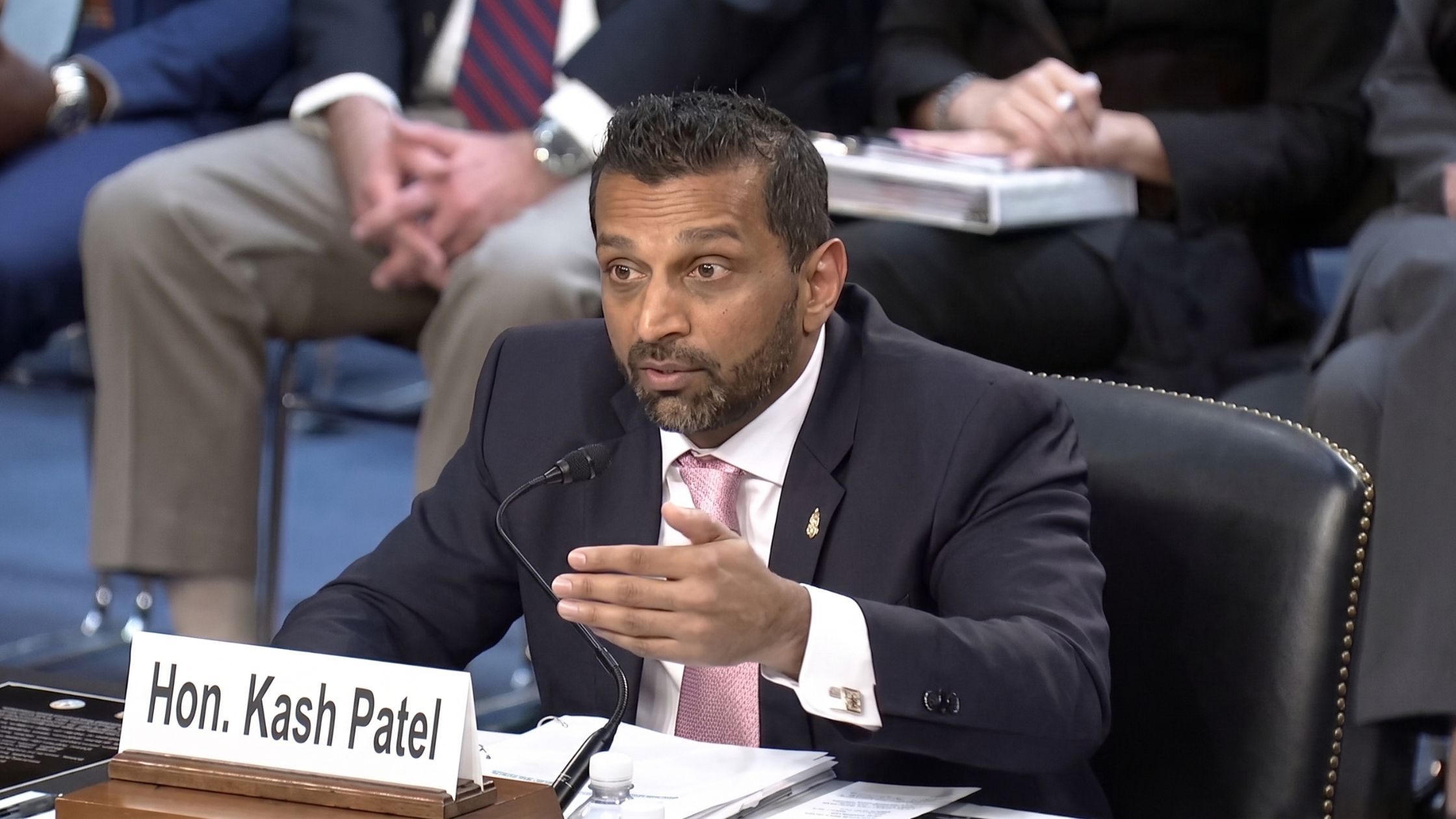
Mr. Grassley (01:45):
Good morning, Director Patel. Welcome to your second annual Oversight hearing. I appreciate your attendance today. And unlike Director Wray on one occasion, when he left early, you committed to not leaving early. You're now in year two of your directorship. In that short amount of time, you faced many challenges, both internal and external forces that you faced. It's not an easy task managing both internal and external forces while at the same time repairing the damage done by your predecessors. You'll hear Democrats criticizing you today for dreamed up failures. They're going to criticize you for firing many personnel and supposedly weakening the agency. But the numbers on crime show that you've gotten the job done. According to data provided to this committee, in the past 18 months, criminal arrests are up 80%. Violent crime arrests are up 90%. Gang and criminal enterprise arrests are up 30% as compared to the preceding 18 months. Ensuring the safety of kids is of monumental importance to me. And we've also had on that subject a major bipartisan focus of all the members of this committee on safety for kids. In the past 18 months, the FBI has helped to locate and identify over 11,000 children who were the victims of crime. That's up 21% from the preceding 18 months. In the same amount of time, the FBI has been involved in the arrest of over 5,000 child predators and human traffickers. That's up 13% from the preceding 18 months. These predators are the definition of evil, and I applaud your leadership in hunting down these awful people. This all while Democrats stood idly by while Biden-Harris administration lost or couldn't locate tens of thousands of these children.
(04:56)
The FBI personnel who helped bring these evil predators to justice deserve the thanks of a grateful nation. They're doing the job the right way, unlike the previous Biden administration. And during your tenure, nine of the FBI's top 10 fugitives have been captured. These data's points show solid work by the men and women of the FBI under your leadership. Of course, you would expect me to talk about whistleblowers while you're here. I encourage you to foster an environment where true and legitimate whistleblowers are rewarded and not punished for blowing the whistle. For those who you have helped, the committee thanks you. I also encourage you to hear them out personally because they'll give you the unvarnished view leadership needs to hear and not want to hear. And of course, with the thousands of people that work under you, you can't know everything that's going on.
(06:23)
This Congress, I've made thousands of pages of records public, thanks in a large part to brave whistleblowers. Also under your leadership, I've begun to see records that I've sought for a long period of time. For example, I received a December 2019 email to FBI agent Joe Payanka who was heavily involved in Crossfire Hurricane. That email contains information that appears to corroborate existing public evidence that President Trump was the target of a political hit and the government knew it many years that it was going on. The email ought to be declassified for the public to draw their own conclusions. Why wouldn't President Trump want all this information about the abuse that he took be declassified? If you get a chance to talk to him, I wish you'd ask him that.
(07:38)
Speaking of Crossfire Hurricane, today I'll make public additional emails relating to a Crossfire sub case. The case involves at least three discredited FBI officials that Democrats still try to defend. One, Special Agent Thibault, the anti-Trump agent who violated the Hatch Act for his partisan political conduct. Two, Special Agent Giardina, who reportedly filed a false FISA in the Waller Ferraz case and was involved in many cases against Republicans. And three, Agent Kevin Guno, who wanted to criminally investigate Elon Musk for facilitating sending in an email asking for five things officials accomplished that particular week. I'm making that email public today.
(08:49)
In the records, Giardina asked at least seven times via email in about four weeks to place himself on the Crossfire team and start a new case on Trump. And he did so with the help of Thibault. Based on the records known to date, that case didn't advance. His records as well as the case he tried to open on Senator Sinema undercut public statements by former FBI officials that agents don't get to pick their cases. Notably, his efforts to join the Crossfire team began as early as January 2017, right before Trump took office. And on the day of Trump's inauguration, Giardina emailed FBI Agent Joe Payanka, "I wanted to mention again my interest in joining that case."
(09:58)
For almost a decade now, I've made records public showing how a number of now discredited law enforcement and intelligence officials schemed to take out Trump and other Republicans. And here we are in 2026 still finding records from years ago showing even more evidence of that targeting. The overall sustained efforts by the deep state in the dark corners of the bureaucracy is worse than anything Trump has been accused of. At least Trump is upfront and open so people can judge. The previous Democrat administrations under Obama and Biden conducted secret, insidious, and downright evil operations that almost took down our government. That's arguably worse than Watergate.
(11:04)
Which brings me to my next point. Starting in July 2022, I began asking questions about Operation Round River, based on whistleblower disclosures to my offices. Based on allegations, Round River was a foreign influence task force operation that in some cases first shut down sources and secondly, marginalized information provided by sources on false association of Russian disinformation. Now this happens to be the very same discredited task force that you'll hear Democrats attacking you, Mr. Patel, for terminating. Just last year, Senator Johnson and I released two FBI 1023 documents. The record summarized source reporting about alleged Biden family criminality. Based on information provided so far, it appears that 1023s Senator Johnson and I released were included in Round River. For those in the partisan media, I'm not drawing a conclusion on all the records provided so far. The question presented is whether the Wray FBI fully investigated all allegations or simply swept them under the rug for political purposes. And the records from the government include too many redactions, frustrating our ability to draw conclusions.
(13:07)
Regarding redactions, my office has been informed by government officials from multiple government agencies that one of your employees, FBI employee Jodi Peterson is largely responsible for obstructions on many productions, not just on Round River. If true, her actions undermine your and this administration's historic efforts to bring about transparency. And I'm referring to a presidential declassification CO. So the Attorney General, not you necessarily, Mr. Patel, should check up on how Jodi Peterson is not following Trump's declassification executive order.
(14:05)
Right now, I'm concerned about how your predecessors of the FBI handle federal records retention in Round River. As I noted at your last Oversight hearing, prohibited access files were used in Crossfire Hurricane. That type of file restriction makes documents extremely difficult, if not impossible to locate for production to Congress or FOIA requesters. I have similar concerns then about Round River. For example, an unclassified sentence in an email from FBI Supervisor Special Agent Michael DeLoro, a member of the now disbanded foreign influence task force said, " We apologize for the classification caveats, but our office of general counsel has directed us to classify our work this way on past experiences with Crossfire Hurricane."
(15:19)
It appears the Wray FBI intentionally misclassified information, which will result in more obstacles to obtaining access. The Foreign Influence Task Force was the very same outfit that gave me and Senator Johnson that famous fake briefing used to undermine our Biden family investigation in 2020. Director Patel, you're right to shut down the political task force.
(15:58)
And lastly, through protected whistleblower disclosures, I've obtained case records on Peter Navarro. I've long said the manner that the Wray FBI treated Navarro at his arrest was unnecessary. He would've been gladly to show up just as a result of a phone call. These new records show the FBI monitored his appearance on Sean Hannity's Fox News show and other media. I offer these records for additional public transparency about his case.
(16:37)
Director Patel, as they have before, I assume the other side, despite many of their own shortcomings, will personally attack you, question your ethics, your truthfulness and your abilities. Don't let that affect you. And I hope we can have a really good discussion here. And I'd ask you if you need more time, if you get talked over and stuff like that, I'll give you time to respond so you can do it in a thoughtful manner. I hope you'll be the better person and not return the favor with personal attacks, but set the record state with facts and information that we in the public appreciate.
(17:26)
Senator Durbin.
Senator Durbin (17:27):
Thanks Chairman Grassley for holding this hearing at this consequential moment in the history of the Federal Bureau of Investigation. Let me say at the outset that we have just heard again an introduction by the chairman that gave a reference to Crossfire Hurricane and a lot of things that are in the history of the Department of Justice and the Federal Bureau of Investigation.
(17:48)
Over a year ago, all the Democrats on this committee said stop giving these speeches and bring the people before us to testify under oath as to what actually happened. Jack Smith, the special counsel, who is a constant reference point when it comes to this grand conspiracy, has volunteered for more than a year to appear before this committee under oath and answer the questions. What more could we ask of him? And yet the Republican majority on this committee refuses to bring him.
(18:17)
Perhaps in a few weeks when we've been promised he will show up, they can start by explaining why did you wait a year if we're talking about a grand conspiracy? Jack Smith, the special counsel, is now under or will be under oath before this committee. Each of us will have a chance to ask pertinent questions to clear it up. But for some reason, the decision was made at some level to let this controversy fester rather than to bring the person in who can actually answer the questions.
(18:44)
This hearing couldn't come at a more important time. 25 years after 9/11, the deadliest terrorist attack in history. The FBI at that point had to immediately adapt to a changed world. Do you realize that on 9/11, when information was gathered about the potential terrorists, it was sent to the FBI bureaus across the United States, not by any email device or any computer device, but hand mailed because the FBI computer capability on 9/11 was below the expertise level of RadioShack.
(19:21)
It was that bad. From modernizing technology to integrating agents and analysts rather than silo them, the Bureau built out capabilities and developed immense expertise across its workforce after that terrible event 25 years ago. Director Robert Mueller led the FBI at this tumultuous time. He more than any single individual was responsible for modernizing the FBI to combat the threats we face in the 21st century. I was proud to work with him on a bipartisan basis. I knew little or nothing about computer technology. I called him and said when I heard about the Radio Shack comparison, it's clear we need to do something to modernize technology. If you'll lead in that area, I'll try to help. And that's what I did. We didn't always agree, but I always respected him. Bob Mueller was a patriot and a person of honesty and integrity.
(20:15)
Modernizing the FBI has not been an easy process. Balancing growing focus on national security and terrorism prevention efforts with traditional work investigating white collar crime and corruption has taken a lot of time and effort. And over the years, the FBI as it gained more authority at times in history misused it. There is still work to be done to earn public trust and ensure the most powerful federal investigative agency in the world only engages in lawful operations. Continuing to meet new threats while tackling these challenges requires steady, committed leadership from someone who understands the stakes and has the humility to lead as a servant of the public like Bob Mueller.
(21:06)
Sadly for the American people, the current director does not meet the standards. Mr. Patel is the least qualified and most partisan FBI director in our nation's history. He does not have the judgment, experience or temperament of Director Mueller. Before he was confirmed, Mr. Patel falsely claimed in public that the FBI "was planning January 6th for a year." He compiled an enemy's list of public servants he called "government gangsters" who he promised to target if he was confirmed as head of the FBI. Despite the warnings of Senate Democrats during his confirmation hearing, our Republican colleagues chose to ignore these facts, to prioritize President Trump's retribution campaign over the safety of Americans, and they joined on a partisan basis confirming Director Patel to lead the FBI.
(22:05)
Under Mr. Patel's failed leadership, decades of efforts to modernize and reform the FBI are being undone, and the Bureau has been reshaped as a political weapon against President Trump's political enemies and a shield to protect the President and his MAGA loyalist, not the American people. Director Patel has been the central figure pushing the so-called grand conspiracy, diverting FBI resources to inane debunked conspiracy theories that the "deep state" has been targeting President Trump since his first campaign. The deep state, characterized by some as worse than Watergate, secret and insidious, and yet the majority on this committee refuses to call Jack Smith as special counsel under oath to answer questions about this so-called grand conspiracy.
(22:59)
Director Patel is also wasting FBI resources to re-litigate the 2020 presidential election. How many times have nominees who are judges, respected professionals, professors come before this committee and refuse to acknowledge what every eighth grader in America knows? President Trump lost the 2020 election to Joe Biden by seven million votes. That's simple. It's obvious. It's a matter of fact. And yet these nominees refuse to acknowledge that reality because this is part of the great conspiracy theory that Trump never loses anything.
(23:34)
To weaponize the FBI against President's opponents, Director Patel has overseen a purge of thousands, thousands of law enforcement officials. From analysts and agents to the most senior leadership, the Bureau has been deprived of tens of thousands of years of cumulative experience of these agents. Director Patel has installed MAGA loyalist as political appointees in key career positions, and he even imposed loyalty test requiring FBI officials to undergo polygraphs to say whether they ever criticize him. And at the same time, thousands of agents have been reassigned from their primary criminal and national security mission to immigration enforcement with a number of FBI personnel working on immigration matters increasing by over 2000% as of last September.
(24:26)
And let me ask you, where are the worst of the worst? Overwhelmingly, the people who are being detained and deported have no criminal record whatsoever. In total, over 9,000 FBI personnel. 25% of the Bureau worked on immigration cases between January and September of last year. As part of this shift in resources, Department of Justice shut down 23,000 criminal cases in the first six months of the Trump administration. To replace these career professionals he purged, Director Patel has gutted hiring standards.
(25:01)
Today will be his opportunity under oath to answer some basic questions about the standards being used for new FBI agents. In an interview in July, he claimed the FBI is "losing too many qualified candidates," his words, "to the rigors of requirements from yesteryear." What are those so-called obsolete requirements? According to a memo issued in June, the FBI has removed from its list of automatic hiring disqualifications, theft from an employer, sex solicitation, and bestiality. To add insult to injury, Director Patel is trying to take credit for the successful efforts of state and local law enforcement to reduce violent crime. The reality is that violent crime spiked during COVID-19 pandemic and has been steadily, consistently declining since 2022. Every member of this committee knows that our local police, state and local, not the FBI, are primarily responsible for combating violent crime. Don't believe me, look at the data.
(26:08)
Cities where the National Guard or other federal forces were not deployed had a 2025 drop in violent crime similar to cities where they were deployed. It is misleading and offensive for this administration, which has coddled January 6th rioters, giving them full unconditional pardons from the President as one of his first acts of office. This administration has ended the career of thousands of professional FBI agents because they didn't meet some political test and blocked hundreds of millions of dollars in grants to local law enforcement to claim credit for our brave frontline police officers. That is not backing the blue by any standard. In fact, the cities where federal forces were deployed or experienced widespread abuses of constitutional rights of their residents, including multiple lethal shootings of American citizens. The FBI is charged with investigating the deadly use of force by federal agents, but it has turned its back on its duties under Director Patel. Instead, the Department of Homeland Security is now the primary investigator of whether its own poorly vetted and trained employees violated the law during ill-conceived missions.
(27:22)
Director Patel has also played a key role in the Trump administration's coverup of the Epstein files. Director Patel diverted more than a thousand FBI agents from their critical missions to work on 24 hour shifts reviewing every page of the Epstein files. These personnel were instructed to flag any records in which President Trump's name was mentioned. That review ended in an unsigned memorandum from the Department of Justice and FBI simply claiming, "There is no incriminating client list in the Epstein files." Director Patel still has not responded to our letter from more than a year ago asking about his personal role in this coverup. But we now know that Director Patel reportedly joined in a meeting at the White House situation room about how to protect the President from fallout from this coverup at the Epstein Files.
(28:20)
Director Patel failed to ensure the Trump administration actually released, as they required, everything about Epstein and his co-conspirators. This has come at the expense of the American people who deserve transparency and has also been the expense of survivors of Epstein's abuse who deserve justice and accountability. So today we find ourselves in a position where the FBI is expending immense resources to protect President Trump politically and deliver retribution to his enemies, but is diverting resources away from protecting the safety, security and rights of ordinary Americans and their families.
(28:59)
Mr. Chairman, this will likely be my last FBI Oversight hearing as I'm leaving the Senate. I came of age during the '60s when J. Edgar Hoover FBI lawlessly targeted political opponents and civil rights and labor leaders. I was proud to be part of bipartisan efforts over the many years to ensure the FBI protected both security and freedom of the American people. I'm disappointed this committee has stood by since January 2025 as that work has been undone. I look forward to a day, hopefully in the very near future, when this committee will fulfill its duty to hold Director Patel accountable for his leadership. Thank you.
Mr. Grassley (29:39):
Director Patel, would you please stand so we can swear ... Do you affirm that the testimony you're about to give before this committee will be the truth, the whole truth, and nothing but the truth so help you God?
Director Patel (29:56):
I do.
Mr. Grassley (29:58):
Thank you. Please be seated. You may have your opening statement now. We'll proceed with 10 minute round of questions.
Director Patel (30:09):
Good morning. Four days ago, our nation marked 25 years since terrorists attacked our homeland on September 11th, 2001 and murdered 2,977 innocent people. As a kid who grew up on Long Island, this resonated personally with me. 25 years later, we honor the lives taken that day, the first responders, survivors who carried its consequences, and the thousands of FBI employees who answered the call in New York at the Pentagon in Pennsylvania and across the country, and the 34 FBI employees that have perished as a result of 9/11.
(30:39)
Over 18 months ago during my confirmation process, I told you that the FBI needed to be faster, more efficient, eliminate bureaucracy, and reduce the weaponization of law enforcement completely, embrace technological advancements, and engage with our partners, and most importantly, let good cops be cops. Under President Trump's leadership, I'm proud to say we have not only accelerated that mission, we have delivered. This has been the most prolific run of crime reduction in the United States history with the help of our great partners since the beginning of the Trump administration.
(31:14)
Here are a few numbers, and behind these stats are lives saved across the country. The FBI has arrested 54,000 violent criminals. That's up 90% from the 18 month year period prior to that. That's making America safe. 31,000 violent gang members have been arrested by the FBI. That's up 30%, making America safe. We've removed, the FBI has removed 3,258 kilograms of fentanyl. That's enough to kill a quarter billion Americans. That seizure is up 8% by the FBI. That's making America safe. We have located, found and identified 11,081 child victims, that is up 21%. That is making America-
Director Patel (32:00):
That is up 21%. That is making America safe. This FBI has found and located more children than any FBI in the history of this country. We have arrested 5,072 child predators and human traffickers. That's up 13%. This FBI is making America safe. We, this FBI, have arrested 4,260 foreign terrorist organization related affiliates. That's up 38%, including the fact that this FBI has stopped 1,100 criminal perpetrators from committing terrorist attacks on US soil. This FBI has executed 86 foreign transfers of custody, a 54% increase for perps captured overseas. And we've extradited 157 criminals from overseas, a 65% increase in just these last 18 months.
(32:56)
In 2025, according to the Uniform Crime Report, we delivered the largest reduction in the murder rate in the history of America. We, the FBI, captured more than two and a half times the number of the top 10 most wanted fugitives on the FBI's list from the prior administration. In fact, Mr. Chairman, I'm proud to announce today, and I hate to correct you, we haven't captured nine of the top 10 most individuals on our list. We've captured 10. Just this past weekend, we captured a thug down in Venezuela who was on our most wanted list and on the run for years. He has been captured, apprehended, and is on his way back to the United States of America. That's 10 of 10. Nobody in the FBI history has done that.
(33:38)
This year is just another example of how this FBI is capturing literally the worst of the worst all around the world. On top of that, we've captured six of the most wanted fraudsters around the world. Taking the murder rate down 20 points is no easy effort. It requires a team lift, state, local, and international partners. This includes results in cities like Baltimore, which reached its lowest midyear homicide numbers in recorded history this year. In Memphis, we accomplished a 50% reduction in homicide for a city that had the highest per capita homicide rate in the country, thanks to the president's task force. And right here in Washington D.C., we are on track to have the lowest homicide numbers since 1990. These events are not by accident.
(34:26)
The success means that this FBI has made America safer than it's ever been, and I'm proud to lead this agency. While doing all this great work for the American people in the world, the FBI prepared for the largest influx of tourists between the Club World Cup, two F-1 races, protected 300,000 Americans in the Olympics, and then across six America 250 events and this year's World Cup alone, we welcomed over 12 million visitors to the United States to attend these events. Not one single security incident occurred at any single one of these events. No major security incidents. With our partners, this is how we keep America safe. This is what happens when we back the blue and this new FBI has rebuilt to crush violent crime and defend the homeland.
(35:14)
These are important results that happen due to important changes. The changes are as follows. We established for the first time ever the Law Enforcement Partner Council putting a thousand agents back into the field, deployed more than 200 additional intel adages permanently into the field instead of Washington D.C. and bolstered our JTTFs, all 56 of them. We added for the first time ever in one year, 2,750 task force officers to the FBI, putting trained men and women of law enforcement right in our offices. We created the NSPM-7 Joint Mission Center to turn intelligence into action against political violence and domestic terrorism, finally uniting 10 agencies for the first time in our history. That JMC, which is housed by this FBI, has already arrested more than 200 individuals leading to 250 indictments. We built for the first time the Director's Strategic Information Center, our first ever joint operations center that modernized the FBI into sharing rapid intelligence that used to take hours, now it takes less than one minute.
(36:13)
We established the Nihilistic Violent Extremist Fusion Cell to bring our counter-terrorism and child exploitation experts to target online predators who are preying on our children. This FBI has arrested 500% more predators online in this last 18 months than the prior 18 months before that. And through our 59 Homeland Security Task Forces, we created the first permanent of its presence of its kind across the nation to bring our state, local, federal, and intel partners into one location across this country to represent every single state. These are real world changes. We saw great threats to our nation. We, in this FBI led the effort to disrupt many plots, to include eight extremists who wanted to kill elected officials, civilians, and military members at the White House UFC Freedom 250 event. We stopped it. We arrested five individuals last year for what we call the pumpkin day plot in Michigan who wanted to blow up people in Michigan from three separate states.
(37:14)
During a single month, our holiday month of December of last year, this FBI stopped four terrorist attacks. In California, Texas, North Carolina, and Pennsylvania, separate terrorist attacks were stopped. And just this past weekend, this FBI stopped another ISIS inspired attack in Pittsburgh, arresting an individual before he's able to go out and kill innocent civilians in the name of ISIS. These attacks did not happen because the FBI and our partners worked around the clock, found the threats and stopped them. Improving technology is something that is deeply important to me. And for the first time ever, we have expanded our overseas biometrical collection efforts with foreign partners to intercept targets before they happens. That means we're getting more facial recognition scans, more iris scans, and more information about predators and people and criminals who wish to do us harm and stopping them before they can do that.
(38:04)
Artificial intelligence, when used appropriately under the parameters of the law. When I got to the seat, this FBI had two test use cases for artificial intelligence. We just hit our 140th. That's a 605% increase since I've been in the seat to process information, to triage intelligence, analyze and get this information out to our local partners. Recently, for the first time, the FBI was mandated by congressional statute to have a zero, zero sample backlog at our DNA laboratory in Quantico. Over the last four years, that number grew to 1.8 million backlog in violation of federal statute. I'm proud to announce as of just a couple of weeks ago, we have zeroed out that backlog because we use technology, AI, and improved equipment to make sure we capture these DNA profiles, put them in our CODIS database and allow law enforcement partners to get after the threat.
(38:53)
We established the first ever counter UAS training center out of Redstone Arsenal in Huntsville, Alabama to make sure that the modern threat that the adversary uses to harm our way of life is countermanded by state and locals. No FBI's ever built a schoolhouse for them. We did. And we have trained hundreds of law enforcement officers which we deployed across the World Cup to interdict 750 drones over 11 venues across the World Cup's 38 days. That's 78 Super Bowls in 38 days to put it in perspective and not a single major security incident there. The cyber strategy, the first of its kind by President Trump, was issued. And underneath that, the FBI launched Operation Winter SHIELD and Operation Riptide to go on defense and offense for cyber criminals. In our recent work, we launched 13 joint sequent operations resulting in 200 arrests, six extraditions, and froze $23 million in illegally frozen assets and took down millions of networks on the dark web.
(39:47)
More accountability is coming through this FBI. We saved this FBI $300 million in taxpayer funding by scuttling wasteless leases and duplicative contracts. As I promised during my confirmation, the shift is outside of DC into the heartland of America, and I've reduced the footprint by one third in Washington DC, and we're going to continue that effort. In terms of transparency, as you know, I'm committed to transparency. In just the first 18 months, we've shared nearly 50,000 pages of documents with the Senate and the House. To put that in perspective, that's a 350% increase from the prior two directors combined in 11 years. Foreign engagements are a critical part of this FBI's mission. Thanks to President Trump's leadership, this FBI is able to engage with foreign counterparts directly more than it's ever done before. I've single-handedly led more foreign engagements in the last 18 months than any 18-month tenure of an FBI director.
(40:41)
Since I took over, I've made over 100 calls to my foreign counterparts. To put that in perspective, in the last three and a half years of my predecessor's administration, he made 20. Because of this engagement, it directly led to the execution and transfer of 86 foreign transfer of custodies, which the FBI executed overseas. That means 86 violent offenders, criminals, terrorists, narco traffickers, gang bangers, and predators of children were brought back here for prosecution. On top of that, we saw a 54% increase in extraditions of individuals housed overseas captured by this FBI, the same list, gang bangers, traffickers, terrorists, and those who want to do harm to our children and cyber criminals. These subjects are literally the worst of the worst, and this is what happens when you pick up the phone and call your partners.
(41:26)
Indian Country is something that's deeply important to me and something that I didn't want to have forgot. So Operation Steadfast Promise is the largest ever surge to Indian Country across our country. We have almost 500 FBI employees dedicated to this mission alone that has never happened in the history of the FBI. We also launched Voices Not Forgotten for Indian Country. If you're a missing person, if you're a victim, if you have information regarding the most high profile cases on Indian Country, this FBI quadrupled the reward to at least $25,000 and it's going to be an enduring continuing program. We have investigated more and opened more Indian Country investigations during these last 18 months than any FBI before.
(42:04)
We've also opened up the Billings, Montana field office to add resources to the field. It's the first time we've opened up a new field office, full field office in the FBI, along with our new field field office, our law enforcement attache office in New Zealand. So for the first time, this FBI has full law enforcement attache offices across all Five Eyes partnerships, the most important intelligence sharing agreement there is. The men and women of this FBI are delivering. We're stopping terrorist attacks, securing our major sporting events, defending our critical infrastructure, and rebuilding this institution around one standard, putting the mission first. With this committee's support, we'll continue to move forward and we will never stop working for the American people. Thank you.
Mr. Grassley (42:44):
Thank you, Director Patel. Now we have 10 minutes time for each member. In April 2026, I wrote eight major internet companies to ensure NCMEC received enough data to hold online child predators accountable. NCMEC informed me last month that several companies have "significantly improved" their child safety reporting. The FBI has assigned personnel to NCMEC to review online reports. What improvements can these companies make so that the FBI can more effectively turn the tables and hunt down predators?
Director Patel (43:33):
Thank you for your work. As you said, protecting our children is one of the greatest priorities we have. The National Center for Missing and Exploited Children, NCMEC, is a reliable partner, the leading partner of this FBI. And thanks to your outreach to the private sector partners, these companies, a lot of these large social media companies, behind your calls, I called them as well, Mr. Chairman. And what they've done is allowed us to gain access to their intelligence and their databases for the first time ever in a secure fashion, specifically for the role of manhunting child predators and finding missing and exploited children. And as I stated in my opening, we have found and located over 11,000 children. That's up 20 some percent. That's never happened before. So thank you for that jolt in the arm that was needed in the private sector, and we're going to continue to expand those engagements and work with Congress to draft legislation so that this continuous flow of data can come in legally and lawfully and that law enforcement can use it.
Mr. Grassley (44:26):
Since that's a priority of mine, I'd like to have your team update me if there are companies that continue to refuse to provide the data necessary to safeguard children online.
Director Patel (44:38):
I will.
Mr. Grassley (44:40):
Department of Homeland Security has produced to my office letters of recommendation for two Afghan evacuees placed in the United States during the Biden administration. Department of Homeland Security has confirmed in writing that the government official who signed the letters was Morgan Killington. According to state department emails, Killington is not a real person. The Afghan evacuees charged with shooting two West Virginia National Guardsmen and the Afghan evacuee charged with funding ISIS-K received those letters of recommendation. Clearly, this is a sign of failed vetting. Is the FBI performing ongoing reviews to ensure that known or suspected terrorists didn't slip into our country or otherwise should have been barred from entry? What has the FBI found up to date?
Director Patel (45:50):
We are working with our partners at DHS who lead this mission on vetting. We are providing all of our intelligence that has been collected on these individuals every time we encounter them at the border. The numbers of known or suspected terrorists encountered at the northern and southern border have dropped thanks to the securitization of the southern border and thanks to the presence of law enforcement and DHS on the northern border. We're going to continue to work with our intel partners to reach back through and analyze Operation Allies Welcome after the disasters withdrawal from Afghanistan and continue to vet those individuals to make sure we never have an event, a tragic terrorist attack like we witnessed here in the heart of Washington DC last year in Thanksgiving.
Mr. Grassley (46:33):
At last year's oversight hearing, I raised concerns about FBI files being hidden in what's called prohibited access and restricted access cases. You noted last year that you'd produce records found in these types of cases, which you have done a good job of. Please update the committee on the steps you've taken to ensure these types of records are discoverable and that records can't be hidden from Congress, from the courts or from the American people under Freedom of Information Act.
Director Patel (47:14):
Prohibitive cases, Mr. Chairman, were created just for that purpose, to evade transparency, to evade promulgation of FBI records that should be made available under FOIA and constitutional oversight. So we simply did the following. I eliminated prohibited cases. There are no more prohibited cases at the FBI because we work together not only with our inter-agency partners, but the legislative branch to inform the American public when the law allows it to produce records so that you can conduct constitutional oversight. So prohibited cases no longer exist. Those that were classified prohibited, that writ label has been removed, that compartmentation has been completely disbanded, and now we will work with your committee to continue producing records for what used to be called prohibitive cases for the sole purpose of keeping things a secret.
Mr. Grassley (48:00):
As I brought up in my opening statement, I have concerns about how Round River records were stored, managed, and classified. Round River was the operation that shut down certain government sources regarding the Biden family with apparently no justification. For example, some records included banner markings with Round River as a classification code that is highly unusual, if not outright improper, that you could have a Round River classification. What steps have you taken to investigate any improper classification of Round River records and hold people accountable?
Director Patel (48:47):
Thanks to your referral, Mr. Chairman, and shedding light on this, we looked at the classification processes surrounding this "creation" of a compartment called Round River. We discovered that there was no FBI policy to substantiate such a classification and that in fact it was basically made up. So now working with you and your staff, we are committed to continue to produce, on top of the nearly 2,000 pages of documents on Round River that we've already produced, we will continue to produce documents around that. And also we are conducting an internal investigation through inspection division on the individuals who launched and codified this false and fake compartment.
Mr. Grassley (49:26):
Okay. According to an August 2026 Justice Department Inspector General Report, FBI officials during Wray's tenure retaliated against an FBI employee named Jacob Mercer. These FBI officials are still employed. At your nomination hearing, you committed to ensuring whistleblowers are protected from retaliation. What steps has the FBI taken to hold the retaliators accountable for their violation of law? And if nothing's been done, will you commit to updating the committee on accountability measures?
Director Patel (50:08):
That is in the middle of an internal investigation, and as soon as I'm able to update the committee, after working with our Department of Justice Partners, I will do so.
Mr. Grassley (50:18):
So you can't comment further, is that-
Director Patel (50:20):
Not at this time, sir.
Mr. Grassley (50:22):
Okay. The Safer Skies Act granted long overdue authority to state and local law enforcement agencies to protect their communities from malicious drones. As of July 1st, the FBI had certified 46 eligible agencies to conduct drone mitigation, training a maximum of 16 officers per month. We can't get our law enforcement agencies certified to use these authorities fast enough. What is the FBI doing to expand and expedite its counter drone training capacity for eligible state and local law enforcement agencies?
Director Patel (51:12):
As you highlighted, Mr. Chairman, our state and local partners are critical to combat the counter drone mission set, but the federal government provided no training or access at any level. So the FBI under my leadership stood up the first ever counter UAS school, it's called NCUTC down at Redstone Arsenal in Huntsville, Alabama, where we've trained hundreds of law enforcement officers. That is a two-week class that goes continuously. We only paused it for the World Cup so that we could have all our counter UAS experts in the field. And what we've asked for Congress is increased funding so that we can triple the size of that school, allowing more state and local officers to come in and work with us and deploy them like we did during the World Cup on our ground intercept teams to cover down on 11 separate venues and take down 750 drones. We need more equipment, more tech, and we also need more bodies trained, so we need more money for that.
Mr. Grassley (51:59):
For almost a decade, I've exposed political weaponization during Crossfire Hurricane, and you have as well. President Trump issued an executive order in each of his administration mandating declassification or Crossfire Hurricane records. Please describe the steps you've taken to ensure full declassification and whether other agencies like the CIA have created roadblocks for this declassification. This is my last question.
Director Patel (52:40):
The Crossfire Hurricane declassification at the FBI, at least what's under my control, Mr. Chairman, has been fully declassified. There is some information in there that I do not control because we do not own it, and we have vigorously worked with our intelligence community partners to declassify that. We've produced the largest amount of Crossfire Hurricane documentation to the Congress ever, and we're going to continue... Sorry. And we're going to continue to do that, Mr. Chairman.
Mr. Grassley (53:06):
Okay. Senator Durbin.
Senator Durbin (53:07):
Thanks, Mr. Chairman. Mr. Patel, one year ago, my home state of Illinois was experiencing the beginning of a ruthless, reckless, deadly campaign orchestrated by this administration known as Midway Blitz, masked federal agents armed with military grade weapons and unmarked vehicles descended on Chicago and other communities, bashing in car windows, indiscriminately rounding up people, excuse me, deploying chemical agents and shooting innocent people. A border patrol agent shot US citizen and Chicago native Marimar Martinez five times after sideswiping her vehicle. She survived. After Ms. Martinez was shot, DHS branded her as a domestic terrorist, a border patrol agent bragged about shooting her, and an FBI agent falsely claim she chased a border patrol agent before she was shot.
(54:06)
Director Patel, after the shooting you took to social media, posted a video of a different collision that you said supported DHS. You said, "Attack our law enforcement and this FBI will find you and bring you to justice." DHS and FBI have since refused to correct the record, no charges filed against Ms. Martinez who was shot five times by these agents.
(54:33)
In another event, an ICE agent shot and killed Silverio Villegas-Gonzalez shortly after he dropped his children off at school and daycare. Publicly released video footage and the ICE agent's own statement contradict DHS claims that the ICE agent who shot him was "dragged a significant distance" and "feared for his life." In the past, the FBI would've swiftly responded to these shootings, gathering evidence and working with the Justice Department Civil Rights Division to conduct a civil rights investigation, but not now.
(55:09)
This morning on your website of the FBI is the following. The FBI is the primary federal agency responsible for investigating possible violations of federal civil rights statutes. Director Patel, why has the FBI refused to investigate either of these shootings?
Director Patel (55:31):
We have not refused to investigate either of these shootings. These investigations are currently ongoing, and so I'm unable to comment on the nature of them. We are not the only agency involved since it involves multiple federal agencies, so we have to work with our federal and state and local partners to collect the information and allow the Department of Justice to make whatever decision they deem appropriate.
Senator Durbin (55:50):
You still stand behind the false statements you made in social media after Marimar Martinez was shot?
Director Patel (55:56):
Those false statements, according to you, are not false statements. They're clipped together to make it sound like I lied and I didn't.
Senator Durbin (56:04):
Well, I can tell you that she's never been charged with a crime after being shot five times and turning over the video for your approval and review as well as other agencies.
Director Patel (56:13):
You want her to be charged for being shot?
Senator Durbin (56:16):
Do you?
Director Patel (56:17):
That's what you just said. I'm not going to charge someone for being shot.
Senator Durbin (56:20):
Let me quote what you said. "Attack our law enforcement and the FBI will find you and bring you to justice."
Director Patel (56:25):
Yes.
Senator Durbin (56:25):
Were you bringing her to justice by shooting her five times?
Director Patel (56:28):
We didn't shoot her.
Senator Durbin (56:30):
The federal government did, and you're responsible for determining whether there's any violation of civil rights statutes, and you refuse to do so. Unfortunately, giving a blank slate to these agents is not an encouragement for good conduct, and you know that as well as I do.
(56:45)
Let me ask you on a separate question. According to a memo issued this June, the FBI has lowered its hiring standards by dropping automatic disqualification for applicants who have stolen from former employees, paid for sex, are engaged in bestiality. In July, you claim the FBI is, "Losing too many qualified candidates to the rigors of requirements from yesteryear." Director Patel, do you believe those who have previously stolen from employers, solicited sex or engaged in bestiality are qualified candidates that the FBI is losing?
Director Patel (57:24):
Thank you for bringing this up so we can get to the truth of the matter. What we did was we did not want to punish victims of bestiality, victims who were trafficked. We did not want to make it an automatic disqualification for the FBI to consider you if you are a victim of these awful heinous acts. They still have to go to the same rigorous standards and application process. And on your other note regarding our standards, our standards have never been higher. We've just hired on 307 former law enforcement and military officers. We've just hired on 470 individuals who have advanced degrees, and we've just hired on 448 individuals who are fluent in multiple foreign languages. So we have not changed the standards. We are not going to target victims and prevent them from serving in their capacity to serve this country-
Senator Durbin (58:10):
Listen to this.
Director Patel (58:11):
... who may be most motivated to serve our FBI workforce.
Senator Durbin (58:12):
Listen to this. He's no longer protecting those who've been charged with bestiality. He's protecting those who are victims. Just turned it upside down. I caught that.
Director Patel (58:22):
No, you did.
Senator Durbin (58:22):
No, you did, sir.
Director Patel (58:23):
You actually did because you lied.
Senator Durbin (58:24):
No, I can just tell you what I'm reading to you is you dropped automatic disqualification for applicants who have been engaged in bestiality, not victims of bestiality, applicants who have engaged. Do you disagree with that?
Director Patel (58:36):
Applicants who have engaged in bestiality means they were victims of bestiality because they were forced to do so. And at this FBI, we are not going to criminalize and prevent victims from serving the United States of America and the premier law enforcement agency in the world. They did that before. I eliminated the bureaucracy that prevented these great Americans from serving or at least being considered from serving, and I'm going to continue to do that.
Senator Durbin (59:00):
Turned it upside down. So on the Epstein files, do you believe the files contain no meaningful evidence of additional wrongdoing by others who were not charged so far?
Director Patel (59:10):
The Epstein files. Three and a half million pages have been released by this administration. By the prior administration, zero pages were released. This Department of Justice has investigated those files, and we have encouraged individuals to continuously come forward with credible information. We will always investigate victims of human trafficking, as you have seen by the fact that we've arrested over 5,000 child predators and human traffickers, which is the largest number in an 18-month span. So if you want to keep talking about the Epstein files, go ahead. This FBI will always investigate individuals as we have done.
Senator Durbin (59:38):
So you just missed one important point. You may remember it. Congress had to pass a law requiring the disclosure of the Epstein files. We had to wait until a woman was elected to Congress that gave us the necessary votes in the House to discharge the bill and force a vote in the House on the release of the Epstein files. This was not volunteered by the Trump administration. It took a law to force them to do it.
Director Patel (01:00:02):
You could have passed that law in the Biden administration and you didn't.
Senator Durbin (01:00:04):
Yeah, sure. Well, let me tell you, you could have come-
Director Patel (01:00:05):
We had both majorities then.
Senator Durbin (01:00:05):
You could have come up with a better explanation than that, that's for sure. Let me ask you about a specific case of corruption since you've made some statements about fraud and corruption. You've touted the Trump administration and FBI success in cracking down on fraud and corruption. At a press conference in June, you stated, "You should take a look at what leadership from the White House and President Trump's prioritization to go after and combat fraud looks like. Fraud is no longer being tolerated. It's not being put up with."
(01:00:33)
Recent reports, Mr. Patel, have revealed that Corey Lewandowski, while he was at the Department of Homeland Security, approached senior officials from Qatar and UAE offering to represent them on the side in issues that fell under DHS purview. Director Patel, was the FBI aware of Corey Lewandowski's effort to sell access to government services for personal gain before this report was published?
Director Patel (01:00:58):
Not as far as I'm aware. And as to your work on fraud that we are doing, we are the first FBI to capture the six most wanted fraudsters in just three months. Over $2 billion worth of fraud in Americans was taken from us.
Senator Durbin (01:01:10):
Let's go back to my question. Has the FBI initiated any investigation into these allegations regarding Mr. Lewandowski?
Director Patel (01:01:18):
I would refer you to DHS. He was a DHS employee.
Senator Durbin (01:01:21):
So the FBI, you can't say that the FBI has invested any investigation into this allegation?
Director Patel (01:01:26):
I'm not going to comment on that.
Senator Durbin (01:01:28):
I can understand that. I yield, Mr. Chairman.
Mr. Grassley (01:01:30):
For the benefit of people who wonder when we're going to call on you on the Republican side, it'll be Kennedy.
Sen. John N. Kennedy (01:01:39):
Mr. Chairman?
Mr. Grassley (01:01:41):
Yeah. Kennedy, Blackburn, Schmitt, and then it'll be on the Democrat side. The first three will be White House, Klobuchar, Blumenthal. Senator Kennedy.
Sen. John N. Kennedy (01:01:56):
Thank you. Thank you, Mr. Chairman. Mr. Director, I've got a couple of questions here. We have, and I'm really trying to understand, because I listened to the exchange between you and Senator Durbin, and I've read a few news accounts and I'm confused. The FBI has qualifications to be an FBI agent. Is that correct?
Director Patel (01:02:33):
Yes. We've increased those qualifications and standards.
Sen. John N. Kennedy (01:02:36):
Pull that mic closer to you.
Director Patel (01:02:37):
We've increased the standards and qualifications.
Sen. John N. Kennedy (01:02:39):
Okay. But you have qualifications?
Director Patel (01:02:41):
Yes, sir.
Sen. John N. Kennedy (01:02:42):
Now you recently changed them, is that right?
Director Patel (01:02:46):
Some of them.
Sen. John N. Kennedy (01:02:47):
Some of them.
Director Patel (01:02:47):
Mm-hmm.
Sen. John N. Kennedy (01:02:47):
And why did you do that?
Director Patel (01:02:50):
We changed the bureaucracy because when you first apply to the FBI, this is the most important example I can give, any position, special agent, intel analyst, support staff, you had to wait 100 days because of bureaucratic waste before the FBI contacted you again. And what that meant was people who wanted to be employed by the FBI were finding jobs with other law enforcement agencies because they couldn't afford to wait around anymore.
Sen. John N. Kennedy (01:03:13):
Okay. So you're going to do it quicker?
Director Patel (01:03:14):
Yep.
Sen. John N. Kennedy (01:03:14):
Okay. But what about the actual substantive qualifications that have been reported? What changes did you make there?
Director Patel (01:03:25):
We require you to do a pull-up if you want to be an FBI agent.
Sen. John N. Kennedy (01:03:29):
I understand, but you know what I'm getting at.
Director Patel (01:03:31):
Mm-hmm.
Sen. John N. Kennedy (01:03:31):
I'm trying to understand this case. Before the FBI made these changes, there were certain things that disqualified you from being an FBI agent and you, not you, but the agency said, "We're no longer going to allow these things, this behavior to disqualify you." What were the things you changed?
Director Patel (01:04:01):
Simply that if you were a victim of some of these vicious...
Sen. John N. Kennedy (01:04:00):
... changed.
Director Patel (01:04:01):
Simply that if you were a victim of some of these vicious crimes and you wanted to serve this country, the FBI is now for the first time ever considering your application and not disqualifying you.
Sen. John N. Kennedy (01:04:11):
Victim of what? Give me the example.
Director Patel (01:04:13):
Prostitution, bestiality, crimes like that, traffickers.
Sen. John N. Kennedy (01:04:17):
So it's not if you frequented a prostitute, it's if you were a prostitute?
Director Patel (01:04:31):
Yes, the victim, forced into it.
Sen. John N. Kennedy (01:04:32):
Okay. What about the bestiality?
Director Patel (01:04:43):
Same thing, because the regs wrote it up in a fashion before I arrived that addressed prostitution, bestiality and trafficking. They were there before I got there.
Sen. John N. Kennedy (01:04:52):
Tell me what it said before.
Director Patel (01:04:55):
It automatically disqualified any individual who participated on either side of it. Obviously, we are never going to hire the criminals that engage...
Sen. John N. Kennedy (01:05:03):
The side of what? The bestiality?
Director Patel (01:05:04):
Yes.
Sen. John N. Kennedy (01:05:05):
So you disqualified the animal?
Director Patel (01:05:09):
Well, I don't think we... We have great canines, but we're not going to disqualify them.
Sen. John N. Kennedy (01:05:12):
I understand. I'm trying to understand why you did this. This is not directed at you, Mr. Director. And I understand the game. People try to make you look bad. We do the same thing when the other party's in office and all this stuff has really hurt the FBI. It's really hurt the FBI. So I'm trying to get to the bottom of this. Why would you, in light of the context and what we're going through and we're having a tough time attracting agents, good quality agents we all can trust because so many people fairly or unfairly think that in order to be an FBI agent now, your political point of view matters, why would you even get into bestiality?
Director Patel (01:06:14):
We are not into bestiality, but a lot of these individuals...
Sen. John N. Kennedy (01:06:18):
I know you're not, but you changed...
Director Patel (01:06:21):
But I'm trying to explain it. Hang on.
Sen. John N. Kennedy (01:06:22):
You changed the qualifications and mentioned bestiality. If Joe participated in bestiality, not as the animal, but as the human, don't you think he ought to be disqualified?
Director Patel (01:06:38):
If he voluntarily did it, sure. But if he was trafficked into it, then he should be...
Sen. John N. Kennedy (01:06:41):
Okay. How do you involuntarily do it?
Director Patel (01:06:44):
In a lot of these cases, when human traffickers who are some of the worst individuals on planet earth, they don't just traffic you for prostitution, they traffic you for degrading acts of all kind and they force you into that type of conduct. And some of these individuals would go on to be law enforcement officers who qualified to be law enforcement officers and later applied to the FBI.
Sen. John N. Kennedy (01:07:02):
I mean, these changes didn't start with you, did they?
Director Patel (01:07:06):
No.
Sen. John N. Kennedy (01:07:07):
Somebody came to you and recommended?
Director Patel (01:07:09):
Yeah.
Sen. John N. Kennedy (01:07:11):
Yeah. And when you saw bestiality, I say this with respect, the person who recommended it, why didn't you just say, "What planet did you parachute in from? Why do I want to lead with..."
Director Patel (01:07:25):
Well, that was my initial response.
Sen. John N. Kennedy (01:07:25):
"Why do I want to lead with my chin and get into bestiality?"
Director Patel (01:07:31):
That was my initial response, Senator. But they then explained to me and showed me cases in which people were forced into it and had applied to the FBI. And so I thought they should be considered. It's not an automatic disqualification. That's all.
Sen. John N. Kennedy (01:07:44):
Okay. All right. I think I understand. But you're not telling us today that if a human being had sex with an animal, that they can still be an FBI agent?
Director Patel (01:07:59):
No.
Sen. John N. Kennedy (01:07:59):
Are you?
Director Patel (01:08:00):
No.
Sen. John N. Kennedy (01:08:00):
They can't be, can they?
Director Patel (01:08:02):
They cannot.
Sen. John N. Kennedy (01:08:03):
In fact, they ought to be in jail, right?
Director Patel (01:08:05):
They all are.
Sen. John N. Kennedy (01:08:06):
Yeah. Well, okay. Don't you think... No, I don't want to lead you. Yeah, I do. Don't you think we ought to get rid of this concept of special purpose employee?
Director Patel (01:08:30):
At the FBI?
Sen. John N. Kennedy (01:08:32):
Everywhere.
Director Patel (01:08:34):
I can't speak for the rest of the government, but I don't think the FBI has any special purpose employees.
Sen. John N. Kennedy (01:08:38):
Yeah, but I want your opinion.
Director Patel (01:08:39):
Well, I'm not...
Sen. John N. Kennedy (01:08:40):
All you're doing is inviting trouble.
Director Patel (01:08:42):
My opinion for the FBI is we don't have them.
Sen. John N. Kennedy (01:08:45):
Would you have them? You think it's a good idea or a bad idea?
Director Patel (01:08:50):
Well, when you refer to special purpose employee, I don't know what you mean.
Sen. John N. Kennedy (01:08:53):
I'm talking about somebody who is not a full-time federal employee, but they're working for the people as a federal employee, but they're not subject to the conflicts of interest rules.
Director Patel (01:09:05):
Oh, we don't have any of those. Everybody that works at the FBI...
Sen. John N. Kennedy (01:09:07):
Yeah, but we do in the federal government, don't we?
Director Patel (01:09:10):
I can't speak for the other agency, sir.
Sen. John N. Kennedy (01:09:12):
Can't we do? And that's what happened over at Homeland Security. Why do we want to do this? Why don't we just get rid of them?
Director Patel (01:09:22):
You'd have to talk to DHS. I can't speak to that.
Sen. John N. Kennedy (01:09:23):
I'm talking to you. I want your opinion. You're the director of the FBI.
Director Patel (01:09:27):
I'm not able to give an opinion for the rest of the government, just how we operate at the FBI.
Sen. John N. Kennedy (01:09:32):
Final question, then I'll yield back. No, I'm not. Is the FBI involved in the investigations at Homeland Security?
Director Patel (01:09:47):
Which ones, sir? Sorry.
Sen. John N. Kennedy (01:09:48):
The ones with respect to any alleged misconduct at senior levels.
Director Patel (01:09:55):
If it's referred to us by DHS and it comes to the department, then yes.
Sen. John N. Kennedy (01:09:59):
But how are you involved?
Director Patel (01:10:01):
We're involved. They always reach out and ask for assistance in collecting information and evidence, and so we participate.
Sen. John N. Kennedy (01:10:06):
Okay. All right. Tell me about this, the Agent Giardina. Is that how you say his name?
Director Patel (01:10:15):
Yes, sir.
Sen. John N. Kennedy (01:10:15):
Who is he? Is he there? Is he gone?
Director Patel (01:10:20):
All I can say on that is...
Sen. John N. Kennedy (01:10:21):
What are the allegations with respect to him?
Director Patel (01:10:23):
He's no longer there and it has been publicly reported an ongoing investigation, so I really can't comment on any of those details.
Sen. John N. Kennedy (01:10:30):
What did he do? Why is he no longer there? Is he fired?
Director Patel (01:10:35):
He violated the FBI standards and code of conduct.
Sen. John N. Kennedy (01:10:39):
So you fired him?
Director Patel (01:10:40):
Yes.
Sen. John N. Kennedy (01:10:41):
Okay. And he's being investigated?
Director Patel (01:10:44):
Per public reporting.
Sen. John N. Kennedy (01:10:46):
Sir?
Director Patel (01:10:46):
Per public reporting, I can tell you.
Sen. John N. Kennedy (01:10:48):
You can't talk about it. You'd have to drown me in the Pacific if you told me.
Director Patel (01:10:53):
I would never do that, Senator.
Sen. John N. Kennedy (01:10:54):
I understand. Okay. I got it. But it is being addressed.
Director Patel (01:10:58):
Yes, sir.
Sen. John N. Kennedy (01:10:59):
Okay. I yield back, Mr. Chairman.
Mr. Grassley (01:11:03):
Thank you, Senator Kennedy. Now, Senator Whitehouse.
Senator Whitehouse (01:11:07):
Welcome, Director Patel. We have a recurring topic about your grand jury testimony, and to this date, we still don't have either a transcript of or a description by you of your grand jury testimony. Let me ask you, with respect to that grand jury testimony, was there ever a court order preventing you from divulging your own testimony, as is every grand jury witness's right?
Director Patel (01:11:58):
I don't believe there was a court order, but the investigation at the time was ongoing.
Senator Whitehouse (01:12:06):
Okay. So no court order. Was your right to disclose your own testimony ever limited by the Department of Justice either sealing your testimony or instructing you not to provide it?
Director Patel (01:12:29):
I don't know. You'd have to ask the Department of Justice.
Senator Whitehouse (01:12:32):
Well, how would the Department of Justice instruct you not to exercise your right to divulge your own grand jury testimony without you knowing about it?
Director Patel (01:12:50):
Whether it's my grand jury testimony or anyone else's, that's up to the individual whether they want to or don't want to.
Senator Whitehouse (01:12:56):
Correct. And you said...
Director Patel (01:12:56):
Pursuant to...
Senator Whitehouse (01:12:57):
And you've said that you did want to, so we're over the hurdle of whether you wanted to or not. You've actually testified to that fact. So then the next question is, were you inhibited from doing what you wanted to do and disclosing your own grand jury testimony by any order of the Department of Justice?
Director Patel (01:13:20):
Not that I'm aware of.
Senator Whitehouse (01:13:21):
Okay. All right. And you're aware that to this date, you still have not disclosed a summary of your testimony or a transcript of your testimony or given us any information about your actual grand jury testimony?
Director Patel (01:13:39):
But as I've said, the courts can provide that transcript. I've said they should.
Senator Whitehouse (01:13:44):
You actually are the one who can provide the-
Director Patel (01:13:47):
Not the transcript.
Senator Whitehouse (01:13:48):
... description.
Director Patel (01:13:49):
Well, that testimony occurred, what, four years ago? So the transcript is the best evidence of that information and the courts and any American can go plead to the court for release of that transcript.
Senator Whitehouse (01:13:59):
Yeah. And you can also describe your testimony and you have so far not done so, correct?
Director Patel (01:14:06):
Four years later, no.
Senator Whitehouse (01:14:08):
Ever, like from then until now?
Director Patel (01:14:11):
Yeah. The transcript is the best evidence of that information, so the transcript should say that.
Senator Whitehouse (01:14:16):
So let's change to Jeffrey Epstein. With considerable effort by Ranking Member Wyden on the finance committee, a bevy of suspicious activity reports were brought to everyone's attention. Those suspicious activity reports related to financial transactions with accounts associated with Jeffrey Epstein. In some cases with banks, Russian banks that have since been put under various restrictions, and in some cases dealing with old Soviet countries and Russia itself. Now, you have Epstein associated accounts, you have transactions that relate to sanctioned banks, you have the reason that these were suspicious activity reports being denominated as danger of money laundering, danger of trafficking. And by the way, their headline is suspicious activity reports, which I think is a pretty good clue that there could be suspicious activity in there. Has there been any investigation by the FBI into those Epstein related suspicious activity reports?
Director Patel (01:16:04):
So the SARs that you're referring to are a tool in which the Treasury Department initiates an investigation based on information produced by the banking system. And so any suspicious activity reports go first to the United States Treasury, and if there's something that they find, they refer it to us.
Senator Whitehouse (01:16:20):
So there's been no referral?
Director Patel (01:16:23):
I'll have to go back and check.
Senator Whitehouse (01:16:25):
And the FBI can't look into suspicious activity reports on its own?
Director Patel (01:16:29):
It's the province of the Treasury Department first.
Senator Whitehouse (01:16:32):
First. But if they don't move for whatever reason, when you have Epstein suspicious activity reports that are reported to actually even relate to trafficking of girls, shouldn't that be enough to get the FBI to follow up on that?
Director Patel (01:16:50):
We'll follow up on any credible information, as I said, since day one on Epstein...
Senator Whitehouse (01:16:52):
But you didn't with respect to these suspicious activity reports, correct?
Director Patel (01:16:57):
I'm saying I didn't. I'm saying I'd have to check and get back to you.
Senator Whitehouse (01:16:59):
Okay. Well, Mr. Chairman, we went like zero for answers from the FBI for our questions for the record from a year ago. So I hope that if, since the witness is now here under oath, said that he's willing to get back to me on that, I hope that I can have the chairman's support in getting answers when we ask that as a question for the record.
Mr. Grassley (01:17:21):
Please get back to him on that.
Director Patel (01:17:24):
Yes, sir.
Senator Whitehouse (01:17:24):
So also related to Epstein, we have law enforcement authorities in Poland, Norway, and Latvia who have said that the department has not responded to requests for Epstein related information in their investigations into Jeffrey Epstein and his network. And there's public reporting from the United Kingdom that they too have not been provided requested information. This tends to go through your LEGATs, and I would assume that the FBI was involved in processing those requests for Epstein information. What is the status of those requests and why has the FBI not yet provided the requested Epstein information to your law enforcement coordinates in those four countries?
Director Patel (01:18:22):
Well, as you said, it's a request to the Department of Justice, so they can comment on the status of it. If we assisted in any request for information like we do all the time with our European partners, we produce relevant information that we are lawfully allowed to give and turn it over to the department to hand over to our partners. I don't know the status of each individual case.
Senator Whitehouse (01:18:44):
Do you know whether any information has been provided to these four countries' law enforcement operations related to Jeff Epstein?
Director Patel (01:18:54):
I'm not familiar with the four countries you're talking about, what law enforcement they're talking about, but we always and routinely provide information.
Senator Whitehouse (01:19:02):
Well, I guess we'll have to follow up on that. I had thought that investigations related to Jeffrey Epstein would be enough of a priority that when other sovereign nations ask you for Epstein related information and there's public reporting that you failed to comply with their requests, that that would be something you would know about and not be caught by surprise by in a [inaudible 01:19:32].
Director Patel (01:19:31):
Well, I'm not sure what public reporting you're talking about, but public reporting generally is inaccurate.
Senator Whitehouse (01:19:37):
Well, this is authorities in Poland, Norway and Latvia specifically. It's not just the public reporting. Well, let's try something else then. Let's try the remaining pages of the FBI documents that have not yet been provided pursuant to the Epstein disclosure law. As you'll recall, the travel of this was that a woman testified to FBI agents that she had been both sexually and physically assaulted by Donald Trump around the ages of 14 to 15. There were FBI 302s that resulted from those investigations, from those interviews. In the first cull, the only 302s that were released were the ones that did not mention Donald Trump. When the department was caught having held back the other ones, I think because Bates stamps revealed their existence, the department then coughed up the 302s that did mention Donald Trump, but we still have 37 undisclosed pages that seem to be the contemporaneous FBI notes that would've formed the basis for the 302 summaries. Am I accurate in suggesting that those 37 pages likely include the FBI contemporaneous notes from that interview, from those interviews?
Director Patel (01:21:15):
We have complied with the statute and the court orders and produced three and a half million pages of documents for the first time ever. Investigators looked at the information in real time in the prior administration and made the determinations on referrals for prosecution and not. We've also repeatedly stated if there's new information, we want everyone to come forward so that we can analyze that information as to what is and isn't remaining.
Senator Whitehouse (01:21:39):
So what are those 37 pages?
Director Patel (01:21:41):
I don't know what you're referencing. We've produced three and a half million pages and we will continue to comply with it.
Senator Whitehouse (01:21:47):
Yeah, but not these 37.
Director Patel (01:21:48):
You say there's 37 pages?
Senator Whitehouse (01:21:49):
My time has expired. Thank you, chairman.
Mr. Grassley (01:22:02):
DOJ alleged lack of transparency in the Epstein matter. Yet when I raised concerns about the Biden administration, about the FBI's mishandling of sexual misconduct by FBI agents, my Democratic colleagues largely stayed quiet. Moreover, my Democratic colleagues didn't raise a finger to investigate Hunter Biden's potential violation of the Mann Act regarding sex trafficking. Without objection, I'd introduce into the record 150 pages of Hunter Biden's text messages showing those potential violations of the law. So I want to make very clear my Democratic colleagues can't have it both ways for political convenience. The fact is the administration has made more Epstein records public than anyone. Senator Blackburn.
Senator Blackburn (01:22:57):
Thank you, Mr. Chairman. And indeed our Democratic colleagues do try to have it both ways, whether it is on Epstein, our comments about safety in the country. And last year, we had a hearing with you, Director, where one of our Democratic colleagues railed about how you were making the country less safe. And I just want to refute that because we can point to what you and the Memphis Safe Task Force have done in Memphis, Tennessee that is making Memphis and Tennessee and indeed the entire country safer. Now, we're coming up on one year of the Memphis Safe Task Force and every day I get a report from the task force and it shows where we are year to date. As you will see from this, we have had right at 13,000 arrests. We have apprehended over 1,400 known gang members. They are off the streets. They are locked up. They are being prosecuted. There are over 2,100 illegal firearms that have been recovered and removed from the streets. And thank goodness you and the task force have located 189 missing children that were being held there in Memphis.
(01:24:41)
Now, these are not individuals that are guilty of lesser crimes. In the 29 arrests that were made just yesterday, here are some of the crimes, criminally negligent homicide, first degree murder, prohibited weapon machine gun, possession of a firearm while in possession of marijuana, and unlawful possession of a weapon. This is all in a day's good work for the 30 federal agencies that are on the ground there working as a team, delivering for Memphians, and through their work and through your leadership, they have cut the crime rate in Memphis in half. Now, some of my colleagues may want to refute this, but the stats prove the point. The country is safer. Memphis is the model. Memphians are grateful. I hear from them every day. So Director, I would love for you to talk for just a moment about where we are with the task force and where we go with this.
Director Patel (01:26:07):
Thank you, Senator. As you recall, I was educated by you and your colleagues in Tennessee during the confirmation process that Memphis had the highest per capita homicide rate in the country. And I said if I was confirmed, we would do something about that. And the president stood up his task force, both in Washington DC and Memphis, but the FBI led the efforts prior to that and during the task force through Operation Viper. And what we did, and Operation Viper, by the way, is deployed across at least 25 major cities across the country. It is our violent crime initiative task force that goes into these urban environments and seeks out ground level intelligence to work up Title IIIs and search warrants to not just go in and do visible surveillance and visible operations, but we build a systematic campaign to collect intelligence and drive out the actual root causes of the crime of gang warfare, which was the problem plaguing Memphis and the problem plaguing localized cities across America.
(01:27:03)
We were able to apprehend not just the gang bangers and their firearms. We were able, like we did in Pennsylvania and Philadelphia in the Weymouth Street Gang, we literally uprooted an entire city block and eliminated that entire street gang. We used that same concept in Memphis, and we're going to continue to do that, to move guns at rapid rates, to find children that were
missing for years, and also most importantly, to reduce the homicide rate and return Memphis to the great city that it was.
Senator Blackburn (01:27:30):
And across the country, how many children have you found?
Director Patel (01:27:34):
11,100 in the last 18 months. That's in 20...
Senator Blackburn (01:27:37):
Say that again for me.
Director Patel (01:27:38):
11,100. It's a 21% increase.
Senator Blackburn (01:27:41):
That's right. And I think under the Biden administration, we had north of 300,000 children that could not be found. I want to talk a little bit more about that. The chairman talked about the Report Act that was signed into law earlier, and we also have the Safe Cloud Storage Act that is following with that. And this deals with the work we have with NCMEC that we are doing. And the chairman talked about this, and I think it is so important that we be able to safely store and transfer and process this CSAM so that we're able to investigate these heinous crimes. So a couple of things here. I want you to talk for a moment about the new processes your team has put in place and touch on how you're using AI to drill down and help find these predators, perverts, groomers, and get them locked up.
Director Patel (01:28:51):
So it's an all-encompassing effort. I've always said that the cyberspace is the space the adversary uses the most to commit its most violent crimes against America, and the adversary has no rules and no laws. In order for us to catch up to the adversary, the criminals, the terrorists, the gang bangers, we have to work with our private sector partners. We, for the first time at the FBI, have professionally partnered and officially partnered with more private sector individual companies and social media and AI, a 600% increase in AI alone invested into the bureau on the admin side of the house, on the operational side of the house, to decrease the workload for our employees to sit there and work out the minutia of paperwork rather than being in the field, which is what we are doing, driving operations in the field through intelligence.
(01:29:38)
And in order to do and deliver that intelligence, we can't have it sitting in a data rack. We have to have it triaged. So we brought in AI. We, the US government, cannot build that AI infrastructure. Our partners have already built it. So under the law, we are making sure civil liberties are protected and utilizing the fact that this great information has been collected and sitting on the shelf. And what we did was we put it in the field, we put intel analysts in the field, and we said it to our SACs or 56 SACs across the country, "You're in charge. You know your AORs better than anyone else, which is why you've seen the largest reduction in violent crime in American history."
Senator Blackburn (01:30:11):
And utilization of AI is part of the modernization process for your FBI systems, correct?
Director Patel (01:30:18):
Yes, to the tune of a 605% increase since I hit the seat.
Senator Blackburn (01:30:22):
That is wonderful. Jack Smith is going to come before us later this month, and we've heard so much about weaponization of the FBI. And of course, Americans saw this with Arctic Frost and Crossfire Hurricane, and they saw it with conservatives that were targeted throughout the country, whether it had to do with schools and children or our pro-life issues. So walk me through what you have done, what steps you have taken to remove weaponization from the bureau.
Director Patel (01:31:04):
So having been targeted myself by a weaponization of law enforcement, we went after it internally because the FBI needs to be accountable to the American citizens and not just execute and enforce the law. So we looked at every individual that was involved with things like the Catholic memo or the intentional malfeasance surrounding intelligence collection and intelligence production and made sure that those individuals no longer work at the FBI. It's that simple. If you participated in that sort of conduct, we removed you and we'll continue to do that. And in terms of criminal investigations that sprout from that, I can only comment on what's been made public, but there are a number of ongoing investigations regarding this illegal conduct.
Senator Blackburn (01:31:50):
Birthright tourism. We know that there are about 33,000 births that we know of that are taking place utilizing birthright tourism. And I've got legislation. I'm working to try to give President Trump more tools to fight this with the Ban Birthright Tourism Act. It would amend Immigration and Nationality Act and make it clear that any alien engaging in birthright tourism is inadmissible to the country. And if they're here, they are deportable. And I know that you have worked with DOJ on some issues around this. I think it is a heinous practice. It's got to come to an end, and I would like for you to touch on what you're doing to make certain that we end birthright tourism.
Director Patel (01:32:52):
We are following the federal statutes that we have on the books right now, and we're working with our partners in Congress to draft new legislation, to give us new authorities to make sure that we can combat the threat because we want the United States of America to be open for legal immigration and not for illegal immigration. And we're going to continue to work to that end and work with our partners in Congress. We've asked them for more resources and legislation, and we need some bolstering in that capacity.
Senator Blackburn (01:33:17):
Thank you, Mr. Chairman.
Mr. Grassley (01:33:20):
Thank you. Senator Klobuchar.
Senator Klobuchar (01:33:20):
Thank you very much, Mr. Chairman. Director Patel, you and I were together at the National Law Enforcement Officers Memorial Candlelight Vigil in May, along with law enforcement leaders and families of fallen officers to honor the lives and sacrifices of over 360 officers who died in the line of duty, including three from my state. Our first responders put their lives on the line every day to keep their community safe. Earlier this month, we saw the courage of the brave men and women of law enforcement firsthand. Police were on the scene within two minutes of receiving a 911 call about shots fired in an apartment building and helped get people to hospitals and others to safety, all while the officers being shot at themselves. Two Minnesotans were tragically killed, but it would've been a lot more. I know the FBI was also on the scene, and I want to thank the Minnesota FBI for their assistance, as well as the assistance and cooperation that they gave us, both statewide and federally with the horrific mass shooting at Annunciation Church of 20 some people, as well as the murder of Melissa and Mark Hortman.
(01:34:34)
As you know, this was all in the last year. And I also hope that we will see that kind of cooperation in the ongoing investigations of the killings of Alex Pretti and Renee Good. I want to acknowledge the work of the FBI agents and federal prosecutors in making sure that people who steal taxpayer money in Minnesota are held accountable. I strongly support, we've talked about this, the prosecution of fraud cases by the US Attorney's office in Minnesota. As you know, I've been involved with this office for years and I fought to ensure that the office had the resources to investigate the fraud and prosecute criminals to the fullest extent of the law. I discussed the importance of these investigations and prosecutions with Attorneys General Bondi and Blanche, as well as Assistant Attorney General for the National Fraud Division, McDonald, both in private as well as at public hearings. And I hope I have your commitment to continue-
Mr. Grassley (01:35:34):
You do.
Senator Klobuchar (01:35:34):
... providing resources for these investigations. Could you talk about your commitment to continuing providing resources for the fraud investigations and give us some update? We know in Minnesota that we've had over 98 people and 60 convictions indicted, convicted with more to come. Could you talk about the status, not just in Minnesota...
Senator Klobuchar (01:36:00):
... With more to come, could you talk about the status, not just in Minnesota, but across the country?
Director Patel (01:36:05):
Yes, Senator, and thanks for bearing through the rain two years running at the Law Enforcement Memorial.
(01:36:11)
So there's two types of fraud that I want to talk about real quick. In Minnesota specifically, it's related to the Feeding Our Futures program, which racked up a fraud about a half a billion dollars in value, which was money that was sent from basically the federal government through the state governments, through entities that were dispersed illegally in Minnesota. And as you said, we've indicted and charged about a hundred people, and I think majority of them have been convicted.
(01:36:35)
The rest of that investigation is ongoing, and we're going to continue to root out that fraud in Minnesota. And that fraud is led by the president's anti-fraud task force. And we were just in Kansas City yesterday with the vice president doing another version of that and highlighting the fact that the FBI had arrested six of the most wanted fraudsters in the world in the last three months, totaling over two billion in fraud. They were on four separate continents. We found them all and we returned them here to justice. And we are now in the process of returning that money.
(01:37:04)
The second part of that real quick, Senator, is the scam center fraud. So the FBI has launched and I hosted the first ever scam center symposium in Southeast Asia in the cross-border regions of Thailand, Burma and Cambodia, which no one really ever thinks about, is the epicenter of the fraud that tens of thousands of Americans are facing.
(01:37:23)
And in the last 18 months, the FBI has read four joint operations overseas in the Middle East and in Southeast Asia where we've seen $ 17 billion in fraud, crypto and cash. And we've also, that's our operation blackout. That is the premier law enforcement program leading the annihilation of scam centers. We go in there, we free the trafficked workers, we collect evidence, and then we work with our partners to literally bulldoze those scam centers so they can never be up again. And we suffocate their communications capability with the private sector by eliminating their access to the internet.
(01:37:54)
And the last thing is through Operation Level Up, we're on the proactive side of fraud. So we have reached out to our communities and our partners and said, "If you see something, if you are a target, let us know early."
(01:38:05)
We've prevented $1 billion in fraud from Americans before they were victimized by these scam centers. We're going to continue that work.
Senator Klobuchar (01:38:13):
Thanks. Just quick, I've long supported efforts led by Senator Grassley to strengthen the False Claims Act, support the Justice Department's efforts to address whistleblower allegations. Quick answer, what role should whistleblowers, including qui tam cases, play in rooting up fraud in government programs?
Director Patel (01:38:31):
They're essential.
Senator Klobuchar (01:38:33):
Okay. Thank you. Turning to the matter I referenced before, the killings of Renee Good and Alex Pretti, you know that Renee Good's final words to the officers were, "I'm not mad at you." And Alex Pretti, a VA intensive care nurse who did one of the most selfless jobs that anyone could think of, his last words were to a woman who had been shoved to the ground were, "Are you okay?" Alex Pretti's parents have spoken out about wanting to get meaningful information about the status of the investigation. And I know the FBI takes pride in how it treats victims. Will you ensure that the Bureau provides meaningful information to the families in these cases?
Director Patel (01:39:19):
Yes.
Senator Klobuchar (01:39:20):
Okay. And we have concerns about the Bureau's actions after, of course, both killings, but after Renee Good was killed, according to reports, the FBI failed to process the car for evidence. Do you agree that it is important for the Bureau to conduct timely, thorough investigations of officer involved shootings?
Director Patel (01:39:44):
When we are the lead agency, yes.
Senator Klobuchar (01:39:47):
All right. And so with that answer, it makes me sort of step back a little. So is the lead agency then in your mind is going to be the state and the locals for the Renee Good and Alex Pretti shootings? Because again, we're going to have to have cooperation as we have in all of the instances I mentioned about annunciation, Melissa and Mark Hortman's killing and others.
Director Patel (01:40:12):
We will fully support all those investigations. It doesn't matter if it's a state investigation, federal investigation, bureau investigation, DHS investigation, we're fully committed to support all of them.
Senator Klobuchar (01:40:20):
Okay. I have great concerns regarding the president's use of the Justice Department when it comes to our democracy. Do you believe it is proper for the president to use the FBI to influence any election or give an advantage to one party over another?
Director Patel (01:40:40):
I don't believe any president should be doing that and this president has not done that for the FBI.
Senator Klobuchar (01:40:44):
Okay. And since the Civil War, the Justice Department manual, and I will say makes it very clear that that is the case, but we are concerned because of some of the statements the president has made and some of the actions that have been taken across the country.
(01:41:02)
Since the Civil War, federal law has made clear that the president does not have the authority to deploy armed federal officials to election site. Are you aware of the Justice Department's longstanding guidance that states that FBI agents cannot conduct investigations inside polling places on election day and that federal prosecutors have no authority to send FBI special agents or deploy US marshals to polling places?
Director Patel (01:41:29):
I'm aware.
Senator Klobuchar (01:41:30):
And so will you commit to following clear federal law and DOJ policy and not deploy federal agents to polling places?
Director Patel (01:41:37):
We will always follow the law and the guidelines.
Senator Klobuchar (01:41:40):
Okay. During your time as FBI director, the bureau has investigated members of the media for activities related to news-gathering such as reporting on government whistleblowers. According to reports in July, you personally oversaw an investigation in which subpoenas were issued to New York Times journalists who reported about security deficiencies in the Qatari donated Air Force One and armed officers were even sent to reporters' homes.
(01:42:09)
These subpoenas were withdrawn because a federal judge found the Justice Department failed to follow its own rules about subpoenaing journalists. Is that correct?
Director Patel (01:42:19):
I think that's an accurate summary, but just real quick, we are not targeting the journalists. We are looking to find out who leaks sensitive and classified information as a government employee.
Senator Klobuchar (01:42:29):
Okay. And I will note that the judge said in his ruling, he said, "Subpoenas to reporters are not the first thing you do. They are the last thing you do."
(01:42:41)
And so do you believe that subpoenaing reporters just 24 hours after the story was published, is that the last resort?
Director Patel (01:42:49):
Well, there was a lot of work that went into that case, and it's still ongoing. And so I'm not going to comment on it, but we worked through all the hurdles that the guidelines require.
Senator Klobuchar (01:42:58):
Okay. We'll follow up on that.
(01:43:01)
Last, in July, more than 30 municipal water systems in Minnesota were targeted in a coordinated cyber attack. It has been publicly reported that this was likely the work of Iranian hackers as opposed to Minnesotans, which the president at one point stated.
(01:43:19)
This isn't the first time that a cyber attack has targeted municipal systems in Minnesota. Last summer we had a cyber attack on the city of St. Paul. Can you update us on the FBI's response to the recent cyber attack on at least a dozen states' water systems, including Minnesota, South Dakota, Michigan and Arkansas?
Director Patel (01:43:38):
Yeah, this is one of the most critical things that the FBI is doing in terms of our cyber operations. So when the adversary attacks our critical infrastructure, the FBI has asked and engaged with our partners to be in early and often, just like we did with the five major banks last year. We got in on Friday, we exfiltrated all the bad actors by Sunday.
(01:43:58)
On the water system attack that you're talking about, the problem is the deficiency in the private sector. Remember, 85% of the critical infrastructure in this country is owned by the private sector, that they were using edge routers and PLC devices that were 25 years old. And we've asked those companies to harden those devices because it's so easy for just one person on one keyboard in a faraway land, it doesn't even have to be a united effort, to come in and break through to that system.
(01:44:25)
So we're working with that specific company on the Minnesota and the other states that you identified. But we're also working through our operation Riptide, our cyber offensive operations. We've led 600 private sector engagements with critical infrastructure companies across the country to allow us to come in early and often with our cyber action teams because we can eliminate the threat and we can also tie back the intelligence to broader operators and take down the global threat.
Senator Klobuchar (01:44:52):
Thanks.
Mr. Grassley (01:44:52):
Senator Schmitt.
Senator Schmitt (01:44:52):
Thank you, Mr. Chairman. I want to thank you, Director Patel, from the outset for your redirection and change of focus of the bureau from the overt and historical weaponization we saw under the prior administration to a real focus on law and order and putting the bad guys in jail. And a couple of questions I want to ask you about that relate to that specifically.
(01:45:16)
Yesterday, you and I were both in my home state of Missouri and Kansas City announcing a new effort on the efforts to crack down on fraud, a lot of the COVID era programs. The money was rushed out the door with deadlines to spend it and what could go wrong? There's a lot of fraudsters that took advantage of the American people. And as we said yesterday, these are not victimless crimes. I mean, you have people who are working their tail off every day who've had their paychecks robbed so these fraudsters could take money from these programs.
(01:45:49)
And then people who need it most, people with disabilities, the elderly looking for a hospice center. They're being taken advantage of here and making resources more scarce for their actual needs, what the programs were intended for. So I appreciate your efforts on that.
(01:46:03)
I want to ask you, and by the way, before I forget, because I may run out of time, I want to thank you again for your focus. When you and I first talked about your confirmation, we talked about St. Louis and you've kept your word. There's the largest infusion of permanent FBI agents per capita in the country. The results speak for themselves. I know those efforts continue, so I want to thank you for your commitment and honoring your word on that.
(01:46:26)
In June, I think this is fascinating, you launched the FBI's first ever most wanted fraudsters list. I want to talk about that for just a little bit because I think that for whatever reason, this just wasn't a big focus before and now that it is, and I think the results are pretty compelling.
(01:46:47)
I want to start with Khalid Satary. Satary is a foreign national born in Gaza. He is charged in a scheme that allegedly billed Medicare more than $574 million for medically unnecessary cancer genetic testing. Prosecutors say his operation used telemarketers, patient recruiters, and illegal kickbacks to generate tests that reimburse between 10,000 and 20,000 each.
(01:47:13)
He was released on bond. He fled the country. When authorities finally caught him overseas, he was carrying a fake Mexican passport under a fake name. Where is Khalid now?
Director Patel (01:47:24):
He's in custody.
Senator Schmitt (01:47:25):
Okay, that's great. Said Abdullahi Ereg, born in Somalia. He operated a grocery and deli in Minnesota. He allegedly took more than $4.2 million from a federal program meant to feed children. His grocery store claimed to have served more than 1.4 million meals in about a year. The FBI says he allegedly used much of that money to fund his family's lavish lifestyle and transferred money to foreign accounts. He has been wanted since 2024. You put him on the most wanted fraudster list. He surrendered to law enforcement six days later. Is that correct?
Director Patel (01:48:01):
Yes, sir.
Senator Schmitt (01:48:02):
Okay. Where is he now?
Director Patel (01:48:03):
In prison.
Senator Schmitt (01:48:04):
Okay, that's great. Elaine Escoe, the FBI lists her nationality as Jamaican. She and her alleged co-conspirator submitted more than 90 fraudulent applications for COVID relief programs and allegedly obtained more than $32 million. Fake tax documents, fabricated bank accounts in some cases. They allegedly demanded as much as half of the taxpayer money as their cut. She failed to appear in federal court and fled to Jamaica. Where is she now?
Director Patel (01:48:33):
In prison.
Senator Schmitt (01:48:36):
Manjit Singh Bedi, born in India, a naturalized US citizen. He operated a grocery store that participated in SNAP, a very important program. The allegation is pretty simple. Instead of selling people food, he swiped their benefit cards, handed them cash, and then half the taxpayer money for himself.
(01:48:57)
He gets indicted. The judge ordered him to surrender his passport and remain in Washington state. Instead, he drives across the border into Canada and makes his way to India. The FBI put him on the most wanted fraudster list. Where is he now?
Director Patel (01:49:08):
In custody.
Senator Schmitt (01:49:10):
And then there's Herb Kimble, born in Chicago, a city known for organized crime historically of course, and the Cubs. I don't know which one is worse, Senator Durbin.
(01:49:22)
But he pled guilty to his role in healthcare fraud conspiracy involving 1.2 billion in Medicare charges. He then failed to show up for sentencing and fled to the Philippines. You put him on the most wanted fraudster list when it launched on June 4th. He was captured four days later. Is that correct?
Director Patel (01:49:40):
Yes. And he's in prison.
Senator Schmitt (01:49:41):
He's in the United States?
Director Patel (01:49:42):
Yep.
Senator Schmitt (01:49:43):
So I just want to take stock of that. This isn't like rocket science. It takes resources and it takes leadership, right? You have to have a goal here, and if the goal is to go after people who have ripped off the American people, you can accomplish that. Can you just kind of walk me through the resources you have committed to this and what's next?
Director Patel (01:50:07):
So when we set out to target the worst of the worst, the FBI has always historically had its FBI's most wanted top 10 list. And the reason we've all been able to capture all 10 of the FBI's most wanted top 10 in just 18 months is the following. It's what you alluded to. Our best partner is the American public. Our law enforcement teams are the best in the world, but sometimes the American public has information that we don't have access to.
(01:50:32)
And that success on the top 10, when I was having a discussion with the vice president, he said, "Can't we replicate that on the fraudsters that are fleecing American seniors and our kids of money that they need?" So we launched, pursuant to the vice president's idea, the most wanted fraudsters list with the same motive behind it. We need information on where these individuals are hiding out and we need information to piece together some of their cases.
(01:50:56)
So since June, this is no small task, we have captured and arrested and brought back to justice six of the most wanted fraudsters. I think there's 12 on that list right now, totaling $2 billion in fraud across Medicare, SNAP, COVID-19 relief funds, PPA and whatnot. They were on the run collectively for 5,000 days on four separate continents, and each one of them has been arrested and one's in the pipeline to come back, we'll get them back shortly, but all are in custody and five of the six are here in the United States.
(01:51:27)
And we got information when we publicized their fraud. When we publicized it to the American people, some of these victims came forward and said, "I think I know where this individual may be or have his last known location." And we were able to use that evidence and arrest these individuals.
Senator Schmitt (01:51:41):
Well, as the chair of the Senate's Anti-Fraud Task Force, we want to continue to work with you. If there's any additional tools that are needed, I think stiffer penalties should be codified. And I know that the anti-fraud division that's being led and it's a priority for this administration. Regardless of who is president 20 years from now, 10 years from now, I think that's just an important thing and hopefully something that we can all agree on regardless of our political stripe.
(01:52:07)
I want to, in the time remaining, just talk about a couple other things because fraud doesn't just happen in Medicare. It doesn't just happen in SNAP. It can happen in elections, nonprofits, immigration, government programs, even our political system. Let me run through a couple areas. First, political fundraising. President Trump directed the attorney general to investigate possible legal straw donor and foreign contributions through online fundraising platforms. That order specifically cited concerns involving ActBlue, including suspicious donations from foreign IP addresses using prepaid cards. Does the FBI have jurisdiction to investigate illegal straw donations and foreign money entering American elections?
Director Patel (01:52:49):
We do, and we have a lot ongoing.
Senator Schmitt (01:52:52):
Okay. I know you probably can't talk about those specific cases, but there are ongoing investigations. Is that true?
Director Patel (01:52:57):
Yes, sir.
Senator Schmitt (01:52:58):
Okay. And if there is evidence, and again, I don't want you to talk about anything specific, showing foreign money or straw donations entering American elections, can you commit that you will follow that evidence no matter where it leads?
Director Patel (01:53:23):
We will, sir.
Senator Schmitt (01:53:24):
Okay. I want to talk with the minute and a half I have left about the Southern Poverty Law Center. A federal grand jury has charged the SPLC with wire fraud, false statements, and money laundering offenses. The government alleges that millions of dollars in donated funds were secretly routed through fictitious entities to individuals associated with extremist organization. The FBI investigated that case, correct?
Director Patel (01:53:47):
Yes, sir.
Senator Schmitt (01:53:48):
Okay. And this is not simply a dispute over politics or ideology. This allegation is that donors were told one thing about where their money was going while the money was allegedly being used for something else. That is a fraud question, correct?
Director Patel (01:54:02):
Yes, sir.
Senator Schmitt (01:54:03):
Okay. And if the evidence establishes that individual officers or employees knowingly participated in a fraud scheme, can those individuals be held personally accountable?
Director Patel (01:54:12):
Yes, they can.
Senator Schmitt (01:54:13):
Okay. Is that investigation continuing?
Director Patel (01:54:15):
It's very much ongoing. There's been multiple indictments alleging, as the indictments say, that the SPLC utilized sources that they had hired to go into the very networks that they supposedly were standing up against and then funneled in fraudulent donations to enrich their activities.
Senator Schmitt (01:54:34):
Okay. Listen, I want to thank you again for your commitment to taking on violent crime. It's paying dividends in a great American city where I'm from, St. Louis, so I look forward to continuing to work with you on those things. Thanks.
Mr. Grassley (01:54:46):
Yeah. About 20 minutes ago, one of my Democratic colleagues brought up about these treasury suspicious activity reports about Epstein, and I've been using suspicious activity reports for a long time. When Senator Johnson and I made public treasury such reports, information on the Biden family, we were publicly criticized by the Democrats, so I'd like to say my colleagues can't have it both ways and maintain their credibility. Senator Blumenthal.
Senator Blumenthal (01:55:31):
Thanks, Mr. Chairman. Thank you for being here today, Director Patel. We learned yesterday to the astonishment and shock of many Americans that a Russian oligarch bankrolled the wedding of the president's son with perhaps hundreds of thousands of dollars.
(01:55:55)
I would like to know from you whether you have begun an investigation of potential intelligence compromises. This individual, Umar Kremlev, has direct ties to Vladimir Putin. It would seem an effort to curry favor with the president's family. It may involve some intelligence degradation, and I would like to know what steps you are taking to investigate.
Director Patel (01:56:26):
I'm not sure what public reporting you're referring to. The only thing I can tell you is that the counter espionage arrests by this FBI are up 53%, including from Russia. We've arrested more espionage actors in these last 18 months than any 18-month period in the FBI history and will continue to investigate and utilize the resources.
Senator Blumenthal (01:56:42):
Well, these reports were public yesterday. They've been widely publicized in the press, and it would seem to me that they should be a topic of investigation for the FBI. You have a counterintelligence mission. This individual has been involved, in fact, in the reeducation of Ukrainian children. In my trips to Ukraine, I've done it 11 times, I've talked to many of those children who've been abducted by Putin's forces.
(01:57:11)
This individual apparently is involved in those activities, but also is directly tied to Putin. And I think there's a potential for compromise in intelligence and also the possibility of improper influence.
Director Patel (01:57:29):
As I stated, we are fulfilling our counterintelligence and espionage mission greater than any FBI has ever done so.
Senator Blumenthal (01:57:36):
Well, I want to know what specific steps you're doing to investigate this instance.
Director Patel (01:57:40):
First of all, you're referring to something that happened yesterday in public reporting, and public reporting generally isn't accurate. And so what the men and women of the FBI will do, as we do in every case, is we will look at whatever information comes our way and analyze it.
Senator Blumenthal (01:57:54):
The involvement of this individual in bankrolling the wedding in substantial amounts of money has apparently been confirmed by the family. You're unaware of those reports?
Director Patel (01:58:06):
I don't track public reporting from yesterday for preparation in this hearing. As I've said, what we are going to continue to do is what we've done in the counterintelligence and espionage division, which is arrest more spies than any FBI in the history from Russia, China, Iran, and DPRK.
Senator Blumenthal (01:58:22):
Well, I'm going to ask you to report back to this committee what steps you are taking to investigate. Clearly, it's appropriate that you do so. I'm hoping that your staff or you will review immediately these public reports that have been available.
(01:58:38)
Let me ask you also about counterintelligence. Just days before the United States launched its military operation in Iran, you fired a dozen agents and staff members from a counterintelligence unit called CI-12, which was specifically tasked with monitoring threats with Iran.
(01:59:01)
I am astonished that this kind of action was taken. I'd like to know whether the dozen employees in CI-12 have been rehired.
Director Patel (01:59:17):
Individuals that have been removed were removed for reasons that they basically failed to meet the standards of the FBI. When it comes to Iran, we've arrested 55% more spies from Iran than any FBI in the history of the United States of America. We've seen a hundred percent increase when it involves specific threats to the homeland based out of Iran.
Senator Blumenthal (01:59:35):
Let me interrupt you-
Director Patel (01:59:35):
And the individuals you're referring to are not experts-
Senator Blumenthal (01:59:38):
... because my time is limited, director.
Director Patel (01:59:39):
You can define them as experts, but they definitely are not.
Senator Blumenthal (01:59:41):
The reports were that they were fired because they worked on the classified documents investigation involving President Trump. Do you think firing the President's political opponents is more important than retaining the decades of experience and expertise monitoring intelligent threats from Iran?
Director Patel (02:00:03):
I think what's most important is not have a weaponized FBI, and I will endeavor every single day to make sure we have no one there that is doing that.
Senator Blumenthal (02:00:09):
Well, in fact, the firing of these employees not only politicized, but weaponized the FBI against its own employees who had involvement in an investigation. They were assigned to it. They had no choice. What was the reason for firing them?
Director Patel (02:00:26):
Those individuals were terminated for weaponizing the Federal Bureau of Investigation.
Senator Blumenthal (02:00:31):
The promise you made to this committee was that no retribution would be taken against any FBI agents for participating in investigation. How can you make those two statements consistent?
Director Patel (02:00:46):
Simple. If you weaponize law enforcement, you don't get to work at the FBI.
Senator Blumenthal (02:00:51):
Let me come back to the elections issue. I'd like a commitment from you that under no circumstances will FBI agents be deployed to the polls on or around election day.
Director Patel (02:01:08):
The FBI has an election counselor coordinator in every single field office where we quarterback these election activities from. We'll continue to do that.
Senator Blumenthal (02:01:18):
But can you commit to this committee that you will not send FBI agents to the polls on election day?
Director Patel (02:01:26):
The FBI will follow the law. If there's a reason to go there because there's been a violation of law, we will. Otherwise, we won't.
Senator Blumenthal (02:01:31):
Would you agree with me that the FBI has no general authority to monitor elections?
Director Patel (02:01:37):
That priority rests with DHS.
Senator Blumenthal (02:01:41):
So you would agree with me that deploying FBI agents to the polls on election day would be contrary to law?
Director Patel (02:01:49):
I don't know that we can't legally do it. I'm telling you we're going to house our agents and intel analysts in our field offices for election security efforts.
Senator Blumenthal (02:01:55):
Well, I'm dissatisfied that you are unable to give us an unequivocal, clear, unambiguous commitment that the FBI will be kept out of election interference.
(02:02:08)
You are involved in seven voter-related subpoenas issued to the Nevada Secretary of State's office. You were involved in seizure of election records from Fulton County, Georgia. Clearly, the FBI has been involved in possible election interference. That's why you are committing to avoid that kind of interference going forward is so important today.
(02:02:35)
Do you have plans to implement the executive order issued by the president, which directed the attorney general to prioritize investigations and prosecutions of state and local officials who, and I'm quoting, "Issue, print, produce, ship, or distribute ballots to individuals the administration deems ineligible to vote."
(02:02:59)
Have you begun any investigations pursuant to that executive order?
Director Patel (02:03:03):
I'm unaware of any investigations, but we'll follow every executive order because that's what the constitution and law require.
Senator Blumenthal (02:03:08):
So you've begun no investigations?
Director Patel (02:03:10):
I'm not aware of any.
Senator Blumenthal (02:03:13):
Director Patel, on this 25th anniversary of 9/11, there are still 10,000 9/11 victims and families who are seeking justice against the kingdom of Saudi Arabia. They were permitted to do so by an act of Congress. I helped to lead the effort on the Justice Against Sponsors of Terrorism Act in 2016. A federal district judge has just ruled that they can have a day in court, that there is jurisdiction, and they are going to seek justice with support of members of Congress like myself who are asking the FBI now to divulge all of the files and evidence that it still has concealed.
(02:04:08)
Will you commit that you will do full disclosure to the 9/11 families as they pursue justice and their day in court?
Director Patel (02:04:18):
To my knowledge, we've produced everything, but if we haven't, I'll take a look.
Senator Blumenthal (02:04:21):
Well, you'll commit that you'll get back to this committee and do a full review?
Director Patel (02:04:26):
Yes, sir.
Senator Blumenthal (02:04:26):
And you'll release whatever is appropriate.
Director Patel (02:04:31):
Yes.
Senator Blumenthal (02:04:31):
Now, I'm hoping that you will do better than General Barr did because he invoked the State Secrets Privilege Act. You have no intention to do so, do you?
Director Patel (02:04:47):
Well, that's not a decision I make. That's a decision for the Attorney General.
Senator Blumenthal (02:04:51):
Well, for your part, you will not invoke it.
Director Patel (02:04:55):
I'm not allowed to invoke it.
Senator Blumenthal (02:04:57):
Let me just finish by asking you, how many agents right now are assigned to continue the investigation of the Epstein predation?
Director Patel (02:05:11):
The production, did you say? Sorry, I didn't hear your last word.
Senator Blumenthal (02:05:16):
How many agents continue to be assigned to Epstein related investigative work?
Director Patel (02:05:22):
We have a number of agents, I don't have the total number of agents, that are always looking at information that sprouts from a previous case or previous matter when credible intelligence is reported in. We have one of the most aggressive child trafficking and human trafficking squads to protect against children.
Senator Blumenthal (02:05:37):
Will you commit that you'll review all of the investigative reports, as you know they're known as FD-302s, all interview notes, leads, tips, records, and other investigative materials generated in connection with this investigation and make sure that you comply with all of the legal obligations you have to disclose them?
Director Patel (02:06:01):
We've done that and continue.
Senator Blumenthal (02:06:03):
My time is expired. Thank you, Mr. Chairman.
Mr. Grassley (02:06:06):
Before Senator Britt, I've heard a lot about the weaponization of it, and there's a vacuum here that I want to fill. So I'm going to introduce into the record the documents I discussed during my opening, which show how select FBI agents weaponized the agency against President Trump, his associates, and those in his orbit. Senator Britt.
Senator Britt (02:06:34):
Thank you, Mr. Chairman. Thank you, Director Patel, for being in front of the committee today. The last time I had an opportunity to question you was in front of the CJS Appropriation Subcommittee. It was there, I thank you for the work that you were doing in the state of Alabama. Specifically in Montgomery, the Operation Southern Star was so successful. I think within two weeks you made 63 arrests, 52 guns, 40 drug seizures. There was real accountability.
(02:07:04)
Since then, I've continued to be impressed. Your partnership with the city of Tuscaloosa and the work there also proved to have excellent results. I think it was about a month ago, you did a month long operation, had 90 arrests, including 48 felony arrests. There were 10 firearm seized, and in that there were two high profile arrests, one of which was somebody that had committed sexual abuse against a child younger than 12 and also a wanted robbery suspect. So thank you for the work that you're doing there.
(02:07:40)
You've also provided Tuscaloosa, their violent crimes unit, with assistance on the recent shooting. So I appreciate your quick action and the work that your men and women are doing.
(02:07:51)
I'd like for you to talk a little bit about your commitment to state and local partnerships, anything that we need to know as a committee and where you see that continuing to go, because to me it translates-
Senator Britt (02:08:00):
... and where you see that continuing to go, because to me it translates directly into making communities safer. And I want to see more of that in the state of Alabama and would love to hear your plans for that.
Director Patel (02:08:11):
Thank you, Senator. So state and local partnerships, as I said after the nomination during confirmation and everyday since, are critical to how the FBI conducts law enforcement operations around the country. What we do best are joint task forces. Whether it's a JTTF, whether it's Safe Trails, whether it's Steadfast Promise, whether it's Not Forgotten, whatever you want to call it. Our best work is by bringing state and locals to our facilities, embedding them in there permanently so we have direct lines of communication and also run offensive operations together.
(02:08:39)
Before I got to the FBI, there was a 14-month waiting period for a task force officer to onboard at the FBI because of bureaucratic administrative hurdles and just sheer waste of time. We eliminated that backlog. Last year we cleared all 750 task force officers around the country and this year we've added 2,750 task force officers because now the administrative bureaucracy has been eliminated and it requires you only 30 to 45 days to onboard as a task force officer.
(02:09:08)
And also we don't farm out our cross deputizations, meaning once you complete the application process to become a task force officer, you have to be deputized. And we used to allow another agency to do that for whatever reason. Now our SACs in the field do those deputizations themselves for state, local, territorial, and tribal partners. Increasing that capacity is the reason you are seeing the most prolific reduction in violent crime in US history, not to mention the fact that we stopped 1100 terrorist attacks.
Senator Britt (02:09:34):
And I would say, when you're looking at that, you talked about shortening the timeframe, you've been able to keep the standards high and the quality of the people that are engaging in these task force where it needs to be obviously to achieve these tremendous results. So you have no hesitation with regards to that.
Director Patel (02:09:50):
The SACs in the field know these officers and sheriffs and constables and state troopers better than Washington DC ever will. And so they know how to screen and who's going to make a good candidate. And these folks usually have 10 to 20 years of law enforcement under their belt before they become a TFO. And so that's why we put the emphasis in the field, not Washington.
Senator Britt (02:10:08):
That's right.
Director Patel (02:10:08):
Move the bureaucracy, move the personnel, relieviate the administrative burden and allow Alabama and everywhere else to have more task force officers serving with the FBI than ever before.
Senator Britt (02:10:17):
Well, thank you for embracing those partnerships. You mentioned the terrorist attacks that you've been able to thwart. Let's talk a little bit about the year that you've had. I know you've worked closely with Secretary Mullin amongst others to make sure that we are safe when it came to the World Cup, when it came to a number of things that we saw across our country in the last year.
(02:10:36)
So number one, congratulations on the tremendous success and for keeping Americans and all of those that I heard you in your opening statement say the many people that traveled here to be a part of it, thank you for keeping all of them safe and making that such an incredible success. I want you to talk about some of the lessons that you learned and anything this committee may need to be thinking about as we look forward to the Olympics in 2028, as we look forward to... Look the football games that we see every weekend.
(02:11:04)
I know Senator Kennedy and I enjoy watching some football on Saturdays, whether it's LSU or Alabama or others. How do we make sure that we take lessons learned and that we're giving you the tools that you need and the structure that you need to continue that success that we saw with the World Cup?
Director Patel (02:11:21):
Yeah. So the World Cup saw 78 Super Bowls in 38 days at 11 venues, not to mention four dozen fan zones and other areas affiliated with base camps for teams. We had about seven million people come for those World Cup games over the course of 38 days. What we were able to do was establish a system of localized law enforcement, partner with the federal government to train them on the Counter-UAS programs that I'd already talked about, which take place at Redstone Arsenal in Huntsville, Alabama.
(02:11:50)
The first of its kind. Why it wasn't done before, I don't know. But we saw a threat based on Counter-UAS systems that could easily target innocent Americans at sporting events, state fairs, college football games, World Cup, what have you. So we found a way to alleviate that threat by training state and locals and by deploying assets into the field instead of keeping them in Washington DC.
(02:12:10)
The lessons we learned from the Olympics to the two F1 races, to the Club World Cup from last summer and the Super Bowl this year and this World Cup and six America 250 events without a single major security incident was that having people on the ground connected in the field, what was most important to me, not having them sit in Washington DC.
(02:12:29)
And so we pushed out more agents and intel operators to the field and we're going to continue to do that. For us, there's a twofold issue. We need more resources to get more personnel to the field, but we also need more resources to get the right kit. We need more Counter-UAS systems in the field, not housed into the DC National Capital Region. We need every state and local authority to have their own resources. We can train them up on them.
(02:12:52)
We can procure them for them if we had the resources to do so. We want to triple the size of our counter drone school down at Redstone Arsenal. And we also need the appropriate level of funding for LA28 when we've put that forward to Congress already. It's going to take place in multiple locations in Southern California. We are going to need an immense amount of armored vehicles, BearCats, kit for SWAT operators and hostage rescue teams, and the appropriate level of training that goes into that. We've started that since day one since we got here. We learned from all these events I've just listed, but the funding is going to be critical to making sure that America puts on a wonderful LA28 and has the success we've had across the enterprise with all of these events.
Senator Britt (02:13:35):
Thank you, Mr. Director. And in my final few minutes, I want to talk about the cybersecurity threats that are facing our nation. So many of our different businesses, our critical infrastructure, we've seen cyber capabilities and artificial intelligence systems continue to advance at a rapid pace. And when we're looking at this, how do we make sure, I'd say in particular, the critical infrastructure in more rural areas of Alabama seems that those are becoming easier targets given the advances that are making harder to combat.
(02:14:09)
Just last week, the Bureau released a new cyber strategy designed to protect Americans from these kinds of threats. Can you speak to the ways that you see this new cyber strategy and the bureau more broadly being able to handle these things and what you're going to need from us in being able to do so?
Director Patel (02:14:28):
So thanks to the President. He released his cyber strategy out of the White House and we're proud to announce that the FBI is the first 1811 agency to issue its own cyber strategy pursuant to that. And what do we do? We issued for the first time an offensive and defensive approach, which we encapsulated in Operation Winter SHIELD and Operation Riptide.
(02:14:48)
On the defensive side of the House, Senator, what we need to do and what we did is have 600 engagements with our private sector partners. 85% of critical infrastructure in this country, water, wastewater, electric, power, nuclear, is owned by the private sector. These private sector companies, as I was talking to Senator Klobuchar about, are working off of devices that are 20 and 30 years old, including our telecom infrastructure. And so we need them to upgrade.
(02:15:12)
We need them to put in the resources and money and we're on the ground with them and we're asking them to allow us to get in early every time there's a cyber intrusion, be it from a nation state actor or disparate lone keyboard warrior. On the offensive side of the house, we, the FBI, are the only ones leading the charge on what we call joint sequence operations. Joint sequence operations require us to go out and engage not just with their private sector as I talked about, but get on the platforms, get on the social media sites, the internet spaces, the dark web, and specifically allow us to run OFCO, offensive cyber operations.
(02:15:44)
And with that capacity, our cyber program has seen the largest success we've had in the last 18 months. Our ransomware convictions are up 800%. Our ransomware charges are up 35%. We've shut down 3000 criminal domains. And here's the most important part maybe. We've extradited 50 cyber criminals. That is a 32% increase. That's what we need to do to have a whole of government approach to dismantle those that are willing to use our cybersecurity infrastructure to threaten our way of life.
Senator Britt (02:16:17):
And Mr. Director, you mentioned in the plan that you put out how it is important to have hands-on training and being able to do this and be able to combat it in real-time and facilities like Redstone Arsenal's Kinetic Cyber Range there in Huntsville can properly help prepare your men and women to keep our country safe. So thank you for pointing that out.
Director Patel (02:16:39):
The Kinetic Cyber Range is maybe one of the best things that we have in the FBI. We literally built a town indoors in Huntsville, Alabama. An entire towns consists of housing, schools, car shops, streets, so we can practice and train against the modern cyber threat on all ecosystems and learn how to intrude and detect and evade and also learn how to find those infiltrators that are coming onto our platform. So I would encourage folks, and I've opened up that training capacity to state and law enforcement partners across the country to come down and train at our cyber range.
Senator Britt (02:17:13):
We're proud of the work that's done there and we're proud to help lead the way. Thank you.
Senator Whitehouse (02:17:15):
Before Senator Welch, I'm going to go vote and one of my Republican colleagues take control. Senator Welch. Senator Welch.
Peter Welch (02:17:26):
Okay. Thank you very much. Mr. Patel or Director Patel, excuse me. President Trump said the following just this past weekend while in Ireland where he was at a golf tournament, he said, "We had a rigged election. As you know, it was totally rigged because I won three times. I didn't win twice. I won three times." And of course the President is saying he won the 2020 election. Do you agree with that?
Director Patel (02:17:57):
There are many ongoing investigations surrounding that matter, so I'm not going to comment on it and stylize the evidence.
Peter Welch (02:18:03):
So if there's ongoing investigations, as I know there are, that indicates you do believe the President, 2020 was rigged.
Director Patel (02:18:11):
There are many ongoing investigations and for me as the FBI Director to comment on the evidence would basically be in contradiction of the constitution.
Peter Welch (02:18:19):
And furtherance of supporting the President's assertion that he won in 2020, the FBI conducted a raid at Georgia's Fulton County Election Office. The agents removed more than 650 boxes of ballots and election records from the 2020 election. And they did that despite the fact that there were two recounts, including one done by hand that showed President Trump lost Georgia by 11,779 votes. And no investigation has found any evidence of wrongdoing. And according to the public reporting, your FBI has brought in 260 intelligence officials to investigate the election results in Georgia in 2020. And that's on top of the agents from Atlanta already working on the investigation. Is that number accurate?
Director Patel (02:19:17):
As I've said, Senator, repeatedly, public reporting is often wrong. And on terms of the investigation you're referring to, we presented a federal judge or a state court judge with a presentation of evidence and he found a sufficiency of probable cause to execute that raid.
Peter Welch (02:19:33):
Has there been a single indictment from this deployment of so many hundreds of FBI agents to Georgia to investigate an election that had two recounts, one by hand, a single indictment?
Director Patel (02:19:48):
Once again, that matter is ongoing, so I'm not going to comment on it.
Peter Welch (02:19:50):
No, the question is not whether it's ongoing. The question is whether, as of this moment, has there been a single indictment?
Director Patel (02:19:58):
If I comment on that, that's commenting on an ongoing investigation and the FBI doesn't do that.
Peter Welch (02:20:03):
Mr. Patel, there's been no indictment. That'd be public information, right?
Director Patel (02:20:10):
Not if it was sealed.
Peter Welch (02:20:12):
All right. Now, in September last year, President Trump accidentally posted to Truth Social a direct message to Pam Bondi, then the Attorney General, regarding former FBI Director James Comey. It said, "Pam, I have reviewed over 30 statements and posts saying that essentially, quote, same old story as last time. All talk, no action, nothing is being done. What about Comey?" In the post, the President called Mr. Comey guilty as hell. You agree with that?
Director Patel (02:20:51):
Many of those matters are ongoing as you know, so I'm not going to comment on it.
Peter Welch (02:20:55):
And you're doing an investigation, right?
Director Patel (02:20:58):
Many of those matters are ongoing and have been publicly reported.
Peter Welch (02:21:01):
So Trump previously fired Comey as FBI director in 2017 while the Bureau was overseeing an investigation into whether Russia meddled in the 2016 election. And in May, Mr. Comey was indicted for an image of seashells that had been laid out to say 8647, something he had posted 11 months earlier. And according to Todd Blanche, that is because you, as head of the FBI, were conducting an investigation the whole time. And Blanche said, "I must meet the press. This is about a body of evidence that we have collected over a series of about 11 months." Is Attorney General Blanche correct that the FBI investigated the case against Mr. Comey for 11 months?
Director Patel (02:21:51):
The multiple matters that are being publicly or privately investigated by the FBI are not going to be commented on by me.
Peter Welch (02:21:58):
I'm talking about the Blanche assertion that the FBI was investigating Comey for 11 months.
Director Patel (02:22:03):
The Attorney General is correct in stating that there has been lengthy investigations into anyone that happened as law enforcement.
Peter Welch (02:22:09):
How many agents were assigned to that case?
Director Patel (02:22:12):
I don't know off the top of my head.
Peter Welch (02:22:14):
Well, another target of President Trump's criticism about investigations into the 2016 election is, of course, former CIA Director John Brennan. In July of last year, President Trump said the following about Mr. Brennan. "They're very dishonest people. I think they're crooked as hell, and maybe they have to pay a price for that." And yesterday, the lawyer for Mr. Brennan said in a court filing that his client received a subpoena to testify before a grand jury in Florida. Given this investigation was publicly reported last July, it's been ongoing for at least 14 months. How many agents have you assigned to investigate Mr. Brennan?
Director Patel (02:22:54):
I don't pick the number of agents that get assigned to these cases. The SACs are in charge and they run the investigations as they see fit.
Peter Welch (02:23:00):
And it's costing millions of dollars, bottom line. Here's the concern, Director Patel. You've been more than willing to use the FBI's limited resources to investigate President Trump's personal grievances over previous elections, Comey and Brennan for the 2016 election and Russia's involvement, Georgia election officials for 2020. My concern is that this means what you are willing to do for the President in this year's midterm elections that the President is already saying are going to be rigged if he loses. Last year during the President's State of the Union, President Trump referred to Democrats and said, this is public at the State of the Union. "The only way they can get elected is to cheat." Do you agree with President Trump's statement?
Director Patel (02:23:54):
The information you're discussing involves ongoing investigations and I'm not going to comment on that.
Peter Welch (02:23:59):
No, I'm asking you-
Director Patel (02:24:01):
I gave you my answer.
Peter Welch (02:24:02):
... about his assertion that in this upcoming election, days away from now-
Director Patel (02:24:05):
The President has the absolute right as any President to make whatever statements he wants.
Peter Welch (02:24:10):
... the only way that Democrats can win is to cheat. Do you agree with the President?
Director Patel (02:24:13):
Based upon the Russia-gate hoax and everything else that's happened, the President is completely justified in making his opinions known as does any president before him.
Peter Welch (02:24:23):
Well, you've been asked a few questions about what the FBI role is going to be. Last month, Congressman and Michigan gubernatorial candidate John James said to podcaster Benny Johnson, "I've already had a good conversation with my friend, Kash Patel, who has said already that the FBI will have a presence leading up to election day in Michigan in both West Michigan and Southeast Michigan." Is that true?
Director Patel (02:24:51):
We have an election crimes community coordinator in all 56 field office, so you bet we're going to have them there and manning the post for election interference matters.
Peter Welch (02:24:59):
Wait, I thought you weren't going to be sending people to the polls.
Director Patel (02:25:02):
When did you hear that? Just another lie.
Peter Welch (02:25:04):
When you answered Mr. Blumenthal.
Director Patel (02:25:06):
Nope.
Peter Welch (02:25:07):
So you are sending FBI agents to the polls.
Director Patel (02:25:09):
We have election crisis coordinators manned at all 56 field offices.
Peter Welch (02:25:17):
All right.
Director Patel (02:25:17):
Election integrity is of paramount importance. This FBI is not going to shy away from that effort.
Peter Welch (02:25:23):
This is existential.
Director Patel (02:25:23):
And if you want to continue lying about the men and women of the FBI so you can have your four-second campaign ad, go ahead. But the historic results, the 20% reduction in murder rate, the 1,100 terrorist attacks stopped, the 11,000 children found, the 54,000 violent offenders are what this FBI is driving towards. The top 10 most captured.
Peter Welch (02:25:43):
Mr. Chairman, not the question I asked.
Director Patel (02:25:44):
Six of the most wanted fraudsters captured.
Peter Welch (02:25:45):
I ask that my time be restored for this filibuster.
Director Patel (02:25:46):
You asked where we're spending our resources. We are spending the resources in delivering the most prolific reduction in crime in US history, crushing violent crime and defending the homeland. And that's where we're going to continue to do.
Peter Welch (02:25:57):
I ask that my time be restored, Mr. Chairman.
Senator Whitehouse (02:26:02):
Please proceed.
Peter Welch (02:26:04):
This is existential. You told Mr. Blumenthal you weren't sending FBI agents to election sites. And according to Mr. James, you said the FBI is on the way. And this is about whether the United States citizens, Republicans, Democrats, independents are the deciders of this election or there's election interference led by the FBI and the Trump administration. That's what this is about. Do you pledge that you will not in any way interfere in the will of the American people when they go to the polls in November?
Director Patel (02:26:40):
I pledge unequivocally that I will not participate in your charade of lies.
Peter Welch (02:26:45):
Then why are you being such a panderer to President Trump who's still claiming that he won the 2020 election and who has said the only way Democrats can win in 2026 is if they cheat? Do you believe that?
Director Patel (02:27:02):
What I believe in is the rule of law. What I will always believe is executing the rule of law.
Peter Welch (02:27:05):
The rule of law is the President saying in advance that if loses-
Director Patel (02:27:08):
Are you done with your campaign ad? By the way-
Peter Welch (02:27:10):
It's been rigged.
Director Patel (02:27:12):
I want to know how your wealth increased 4,000% since you became a United States Senator. That's a magic act all Americans should be available.
Peter Welch (02:27:20):
Mr. Patel...
Senator Whitehouse (02:27:21):
Let's knock it off. Senator Welch, proceed to ask your questions and the witness will answer the questions.
Peter Welch (02:27:28):
Thank you very much, Mr. Chairman. Mr. Patel, you know that the First Amendment guarantees the right to a free press. Obviously. You filed five defamation lawsuits against journalists since 2019. And you filed your second against the author of an article in the Atlantic demanding $250 million from her. The complaint is based on, according to your complaint, these are your words, that she wrote, "You were known to drink to the point of obvious intoxication, in many cases in a private club at Ned's in Washington DC." She also wrote, "You are known to drink to excess at the Poodle Room in Las Vegas." Mr. Patel, is the FBI currently investigating or did the FBI ever investigate the author of that article, Ms. Fitzpatrick, following that Atlantic star?
Director Patel (02:28:24):
As a US citizen, I have every right to claim the truth. She printed false material. I'm taking her to court as a personal private-
Peter Welch (02:28:31):
I didn't ask that question.
Director Patel (02:28:31):
Let me finish.
Peter Welch (02:28:32):
No.
Director Patel (02:28:33):
As a personal private citizen-
Peter Welch (02:28:34):
Because you're answering a question I didn't ask.
Director Patel (02:28:35):
I am allowed to participate in my own defense, especially when there's a smear campaign, one which you are participating and continuing the falsehoods and lies that have been directed at me because of the historical dissent. You cannot stand the fact that President Trump and this FBI have made America more secure than it has ever been. You didn't do it in your 20 years in the Senate. No other administration has done it. We've done it. Your time's up.
Peter Welch (02:29:00):
Did the FBI investigate her is the question I asked.
Director Patel (02:29:06):
The FBI investigates criminals. The FBI investigates criminals and the FBI does not investigate personal matters. I told you I addressed it personally.
Peter Welch (02:29:17):
Did the FBI investigate the author of this article?
Director Patel (02:29:21):
No.
Peter Welch (02:29:22):
Ms. Fitzpatrick?
Director Patel (02:29:26):
You hard of hearing? I just said no.
Peter Welch (02:29:29):
I want to ask you about your trip to Italy.
Director Patel (02:29:31):
His time's up. Is he still going to go?
Peter Welch (02:29:33):
He interrupted and filibustered. Let me ask him about his trip to Italy.
Senator Whitehouse (02:29:37):
If you would wind it down.
Peter Welch (02:29:38):
I'll be brief. Thank you, Mr. Chairman. I understand that there's a requirement that you take the official plane when you go to where you want to go. And apparently you wanted to go to the Olympics. And you were four days there and you did some, quote, work, a dinner with the Ambassador, an hour with Italy counterpart operatives, three 20-minute meetings of a security briefing, and a 30-minute tour over four days. And then you barged into the celebration of our winning Olympic team. What were you doing doing that? Can't you let the players enjoy the joy of their own victory?
Director Patel (02:30:25):
What you'll never understand is the players who are my friends invited me into the locker room. What you'll never understand is that during that trip where 300,000 Americans went to Italy to participate in the games and watch them, not a single security incident occurred. What you'll never understand is throughout the World Cup, not a single security incident occurred because we set a joint operation center up there. And the most important thing to come out of that trip, besides the American men defeating the Canadians and celebrating the love of this country and inviting me in to do so, is the fact that we obtained the seizure and capture of China's most prolific hacker and returned him to the United States.
Peter Welch (02:30:56):
And how about your trip to the Boondoggle Ranch?
Director Patel (02:31:01):
How many days off a year do you take? Because I took four this year.
Peter Welch (02:31:05):
How about your trip to the Boondoggle?
Director Patel (02:31:06):
I go where I want to go after delivering the most prolific crime reduction in US history. You take 180 days off a year and you can put up all the posters you want and all the lies you want, but everybody sees you for the complete and total fraud that you are.
Peter Welch (02:31:19):
I'll tell you what the lie is, that the 2020 election was rigged and it's a lie that only Democrats.
Senator Whitehouse (02:31:24):
Senator Welch, we need to wind down your questions so we can move on.
Peter Welch (02:31:29):
All right. I'll just end by this, Mr. Chairman. It's the American people, Republicans and Democrats and Independent who have to be the deciders of who their representatives in Congress are, not the President of the United States, not an FBI, a compliant servile FBI director who does the will of the President. I yield back.
Senator Whitehouse (02:31:53):
Mr. Patel, I want to congratulate you and the men and women of the FBI for getting back to basics when it comes to law enforcement. And even in this politically fraught and polarized environment where there are accusations cast back and forth, I appreciate the fact that you kept your eye on the prize. And I think is best demonstrated by the fact that crime rates are down across the board as a result of the good work that you and the men and women of the FBI have done.
(02:32:32)
I worried as a result of the weaponization of the Department of Justice and the FBI during the previous administration, and particularly the targeting of President Trump and the Russia-gate hoax and scandal, that there might be an overwhelming temptation for payback. And I hope that you and Attorney General Todd Blanche continue to resist that. Obviously, even people that you agree with, from a political perspective, may be subject to an investigation by the department.
(02:33:09)
That's appropriate just as it is if people you disagree with are subject to investigation if there's probable cause they've committed some sort of offense. So I appreciate the restoration of the Department back to basics. Let me reflect on a couple of things here. And I want to talk a little bit about crypto, about AI, and I want to talk a little bit about flock cameras.
(02:33:39)
So unbeknownst to me, there is such a thing as a crypto ATM where you can actually go to what looks like a traditional ATM and convert dollars to cryptocurrency. The Federal Trade Commission has reported a 1000% increase in money lost to scammers through crypto kiosks from 2020 to 2023. So as I reflect back on, for example, when I was Attorney General of Texas, we though we were being cutting edge by creating something we call the Texas Internet Bureau.
(02:34:21)
We thought we were really being cutting edge. And it sounds awfully quaint now. The current office is, I think the cyber crime division of the AG's office, which is more in line with current parlance. But the fact of the matter is every great technology can be used for ill by the bad guys. And I just want to know what kind of concerns do you have about cryptocurrency and the ability to use this for money laundering, for ransomware demands, and for other criminal activity? Because the very essence of the cryptocurrency is it's very difficult to trace. Can you expound on that?
Director Patel (02:35:14):
So with crypto, and I think you were ahead of the curve back in the day, Senator, for whatever that may be worth, crypto has a lot of lawful uses.
Senator Whitehouse (02:35:21):
Of course.
Director Patel (02:35:22):
And we don't want to impede in those lawful uses or the exchange of cryptocurrency. The problem with some of the crypto ATMs and other access to cryptocurrency is our adversaries have taken advantage of our laws. And what I mean by that is the scams and fraud that you're referring to is how these fraudsters and these scam centers that I was talking about earlier overseas washed their money and their ill-gotten gains.
(02:35:50)
And because we, the FBI, have launched the largest scam center initiative under Operation Blackout to obtain $17 billion in fraud back, a large chunk of it, which is crypto, we're able to go out there and seize that money back and start returning it to Americans. But what individual and disparate actors do across the world while targeting Americans is they take their money through these fraud schemes, phishing, romance schemes, online, texting, what have you, and trick senior citizens into giving them their life savings or their kids' college tuition, and then they wash that money through the crypto environment.
(02:36:24)
That's the fraud that we are focusing on, and that's where we need some assistance with Congress to have some more mechanisms to be able to chase down and prevent them from washing that money.
Senator Whitehouse (02:36:36):
So I think I understand, having been involved in politics a long time, I understand politics and the importance of public opinion when it comes to politics. But I also think public officials have a responsibility to tell the truth, to try to correct misperceptions about technology. For example, right now while we're seeing, particularly in social media, an attack on developing of artificial intelligence and data centers.
(02:37:05)
And I thought it was telling that Elon Musk's site, X, investigated, found 200 Chinese bots that were responsible for the doomsday scenarios that were used to scare people basically when it came to AI and these data centers. I understand the data centers, it's a whole other issue in terms of electricity rates, water use, and land use, and those need to be addressed at the local level, I believe. And people need to understand exactly what's involved, the benefits and costs and make their own decisions.
(02:37:52)
But I want to talk, there seems to also be a recent rush to judgment when it has come to automated license plate readers, or so-called flock cameras. Could you explain why these have been important for law enforcement investigations and law enforcement purposes?
Director Patel (02:38:12):
Absolutely. And I'm glad to address this matter. So private companies have, and private municipalities and towns put up cameras around traffic circles and the neighborhoods and the like. They collect information, not the FBI, where there is no reasonable expectation of privacy, basically publicly available information.
(02:38:33)
Where the FBI partners with these individuals is on a case-by-case basis and not a rolling access basis. And what we do in criminal investigations when a tragic event occurs, and I'll give you a very tragic event, but a great example, the Brown University shooting where that guy went in and killed a bunch of students, shot a bunch of students, and then fled the scene. The cameras weren't great up there in Brown University. We weren't able to get any facial recognition on the individual. But what we were able to get, based on a flock camera, was a license plate.
(02:39:06)
We were able to then trace that license plate to the individual and his scheme and ultimately find that individual who died of a self-inflicted gunshot wound in New Hampshire. That's just one example of how the FBI does it. The other examples are on chasing down child predators. We have continuously utilized this when people kidnap children and cross state lines. Then we go to these LPR leaders and say, "Hey, we have a picture of this car. We don't have any information on it. Can you help us out and to where it went?"
(02:39:37)
And we have saved children over and over again. From these child predators, we've retrieved these victims. We've also prosecuted these kidnappers and these child traffickers. And that's some of our best work because a lot of that leads to, unfortunately, the creation of child sexual abuse material and crimes against children of sexual nature. And we're able to track those with this. We have to use it lawfully. But we the FBI don't continue to access that on a rolling basis.
Senator Whitehouse (02:40:03):
On another topic-
Director Patel (02:40:00):
... Continue to access that on a rolling basis.
Senator Whitehouse (02:40:03):
On another topic, it's been about three months and three days since Section 702 of the Foreign Intelligence Surveillance Act has expired and not been reauthorized by Congress. I realize that many telecoms are cooperating with the government based on the certification by the Foreign Intelligence Surveillance Court. This is another area where I think there's a lot of misconception and misunderstanding. Obviously, we want to make sure that we keep our country safe and protect our national security interests, and we also want to protect individual privacy rights by American citizens. But in fact, this authority is only for foreigners overseas under very, very limited circumstances. They're tightly controlled by the Foreign Intelligence Surveillance Court and by Congressional Oversight Committees. Do you continue to believe that it's important for Congress to reauthorize Section 702 of the Foreign Intelligence Surveillance Act? And what happens if once the certification by the Foreign Intelligence Surveillance Courts runs out?
Director Patel (02:41:14):
So 702, try to get it done in a minute, is an intelligence community tool. The FBI, and I can only speak to us, our collection, is responsible for 3% of 702 collection. The other 97% is the rest of the IC. What the FBI does... Most importantly, what the FBI does not do is collect on US citizens. What the FBI does do is access, pursuant to the federal statute, already lawfully collected information of individuals who are overseas and are not USPERs. Were we prohibited to do that in the future, we've provided classified briefings to the Senate and the House in a litany of examples on terrorist attacks that we've prevented, children that we've found on narco-traffickers that we were able to annihilate and arrest based solely on 702 collection of overseas non-USPER individuals. And we want those methodologies to be able to be available to the FBI. Were that to go dark, we would have a lot of problems or we would have no ability to trace that information.
Senator Whitehouse (02:42:14):
And it's true that Section 702 of the Foreign Intelligence Surveillance Act comprises about 60% of the president's daily brief, the information that the president gets in a classified setting to protect the nation. Is that your understanding as well?
Director Patel (02:42:32):
Along with the PDB and the president being the recipient, as well as all other agency heads who direct our operations based on it. That's correct.
Senator Whitehouse (02:42:40):
Thank you very much.
Mr. Grassley (02:42:41):
Senator Hirono.
Mazie Hirono (02:42:43):
Thank you, Mr. Chairman. Mr. Patel, the FBI director should at least try to be above reproach, but there are many questions and concerns raised about your judgment and character. For example, in August 2025, you took a VIP snorkeling tour around the USS Arizona at Pearl Harbor, a sacred site, sacred. That is why these tours are rare since 2020. Only senior defense officials, members of the military, and one congressman who was a special forces veteran have participated and then came you. When this incident came to light in May, Senator Schumer, Durbin and I sent you a letter and we asked you three simple questions. First, what personal travel have you taken as FBI director? Two, what non-official activities have you attended as part of official travel? Three, what has been the cost to taxpayers of these kinds of activities? And three months later, no response. Mr. Patel, when can we expect your response to our letter?
Director Patel (02:44:09):
I actually provided for the first time ever, no director did before, a full analysis of not only my travel records, but Director Comey and Ray's as well. And when you look at that-
Mazie Hirono (02:44:19):
So is there a date anywhere in there for when you're going to respond to us?
Director Patel (02:44:22):
It's already been responded to.
Mazie Hirono (02:44:25):
What was that?
Director Patel (02:44:25):
It's already been responded to. That letter is public.
Mazie Hirono (02:44:29):
I don't have the response. Do you have it right there with you? Maybe you can hand it to me.
Director Patel (02:44:33):
You can look it up.
Mazie Hirono (02:44:34):
And the reason I asked that is I had a director who said that there was a report that he had right then and there, and it didn't come to me until a lot later. So if you have a response, give it to me right now, please.
Director Patel (02:44:47):
It's public. Go look it up.
Mazie Hirono (02:44:49):
I assume that there is no response.
Director Patel (02:44:50):
That's a lie.
Mazie Hirono (02:44:51):
I'm not going to be holding my breath that you're going to provide that response. So anyway, if this snorkel tour and event were a one-off incident, that would be one thing. But it's part of a broader pattern of you using your office to benefit yourself, showing your lack of judgment and character. You have wasted untold taxpayer dollars driving around in foreign luxury cars, partying in Italy and flying a private jet to play golf and watch hockey. There has been bipartisan criticism. I'm glad to know that some of my Republican colleagues actually criticized some of this activity and they have criticized this waste and abuse. So maybe today one of my Republican colleagues will demand an explanation of some of these activities of yours. Now, Mr. Patel, you have clearly politicized the FBI. And whenever you are asked, even today, questions that you don't feel like answering, your answer is, "It's ongoing. It's part of an investigation."
(02:46:02)
So you think that that covers everything and you don't answer. So that is what you have resorted to, aside from I've just watched you today in a very combative mode with my colleague, Mr. Welch, Senator Welch, and you attacking him, which is also kind of the way that you approach questions that you don't want to answer. And then I note your recent appearance before the Senate Appropriations Committee. I'll get to that in a bit. So to be clear, there are many things that you should answer for. You have been at the helm of the FBI for two years now, and the list of your failings is long and frankly growing. You have decimated the FBI workforce. You've been asked that. The FBI today is down thousands, thousands of dedicated professionals who work to keep our country safe. And frankly, your answer to some questions along those lines have been unbelievable. And if I thought that I could get a real answer out of you, I'd ask you questions like, "What the hell were you thinking in getting rid of 12, firing a dozen Iran experts on the eve of an illegal war with Iran?"
(02:47:26)
And as far as I'm concerned, the good work being done by the FBI agents and analysts of the sort that you describe is happening in spite of you, not because of you. You have lowered hiring standards to allow applicants with a history of bestiality and theft to serve as FBI employees. And I think all of us would love to know why an organization charged with investigating theft should bring thieves into your midst, but you won't give a straight answer as to why this change was made to your hiring, even to Senator Kennedy's questions this morning. I think he's still pretty mystified as to why bestiality was taken off the list. You have been so drunk that briefings have been rescheduled so you could sleep it off. When challenged by Senator Van Holland at the Appropriation Committee hearing several months ago to take an alcoholism test, you agreed. Senator Van Holland has posted the results of his test. We are still awaiting you posting your results of your test. The FBI has long identified racially, ethnically motivated, violent extremists.
(02:48:54)
That is an actual category which includes white nationalists as the most lethal group of domestic terrorists in our country. Your FBI no longer talks about that threat. You no longer post about it, and it's not because the threat has gone away. And you approve so-called surges where FBI agents were diverted to low level non-criminal immigration enforcement, something we know near and dear to the president's heart when these agents should be focused on important missions such as preventing sex crimes, elder fraud, and drug trafficking. You have undermined prosecutions by posting details to your social media. You testified today to questions you don't feel like answering, "It's ongoing. It's an investigation, can't talk about it," and yet you have actually posted things that should be ongoing and where you should keep your mouth shut. Your FBI executed a raid of the election office in Fulton County, Georgia and seized ballots in an effort to prove the president's unhinged conspiracy theories about the 2020 election, another thing near and dear to the president's heart and which you sought to help him out on.
(02:50:19)
And yet you have done nothing about the rampant corruption taking place at the highest levels of the executive branch. We all know that President Trump accepted a $400 billion jet from Qatar, which he plans to keep after he leaves office. Tech billionaires received special access to the White House in exchange for paying for the president's new ballroom vanity project. Pardons have been available for $1 million contributions to the president's campaign. And just this week, it has been revealed that a Russian oligarch paid hundreds of thousands of dollars so Donald Trump Jr. could have his wedding on a private island.
(02:51:04)
The FBI is supposed to be investigating this sort of blatant public corruption, not turning a blind eye. Mr. Patel, this country needs an FBI director who will give us straight answers, not obfuscate, not give us the kind of rhetoric that you have provided once again today. It is a disservice to this committee's oversight functions and it's certainly a disservice to the American people. And it is no wonder that former Attorney General Bill Barr said you would take a leadership role at the FBI over his dead body and yet here you are. Mr. Chairman, I am done with this witness.
Mr. Grassley (02:51:55):
Are you done?
Mazie Hirono (02:51:55):
Yes, I'm done with this witness, Mr. Chairman.
Mr. Grassley (02:51:57):
Before I call on Senator Lee, I want to... We've got another inconsistency I want to point out. I find it interesting that my Democratic colleagues continue to bring up Director Patel's travel, yet my Democratic colleagues didn't seem too interested about my past oversight of then FBI Director Ray's travel or how Ray left a Democrat-led oversight hearing early for a personal vacation. So if my Democratic colleagues are going to be consistent, they should have joined my oversight years ago. And to be consistent, I've looked into Director Patel's travel and requested detailed information. He's been more responsive than his predecessors. He's agreed to provide access to Ray and Comey's travel records and access to his. That's more transparency than his predecessor. There are some issues to be worked out. We're working to resolve them. Senator Lee.
Senator Durbin (02:53:01):
Mr. Chairman, I'd like to make a statement.
Mr. Grassley (02:53:04):
Go ahead.
Senator Durbin (02:53:05):
Mr. Chairman, there's been a reference made to a letter from Mr. Patel to you. It was sent to you on July the 20th. This letter is an explanation of some of the charges that have been made and the misuse of aircraft at the FBI. For the record, we were given this letter on Democratic side, not on July 20th, but last night, last night. To say that this was a public letter, it may have started being public last night, but we had never seen it before. If we're going to have an honest exchange of investigation of attorneys general of both political parties, there should be a timely disclosure of an important document like this.
Mr. Grassley (02:53:46):
Senator Lee.
Senator Blumenthal (02:53:47):
Thank you, Mr. Chairman. Thank you, Director Patel, for your service to our country. And as we recently passed the one-year anniversary of the tragic assassination of Charlie Kirk in Utah, I want to thank you for your work in connection with that investigation. You were on the ground personally in Utah. Your agents and experts within the FBI played instrumental roles in investigating the matter, not only in identifying and apprehending the suspect, but also in preparing for trial. Your team of forensic experts and your agents on the ground in concert with state and local law enforcement in Utah and other federal law enforcement partners were instrumental. So I thank you for that.
(02:54:30)
It just occurred to me that we're now a little more than two years after the fortunately unsuccessful assassination attempt on President Trump in Butler, Pennsylvania. And yet as we sit here today, I think neither the American people nor this committee can claim to have anything approaching a robust understanding of Thomas Crooks, who he was, how he came as close to succeeding as he did that day. Thank heavens that he didn't, but what can you tell us about what you've learned about Thomas Crooks and the status of that investigation and the timing of any release to the public?
Director Patel (02:55:22):
The FBI's review of that matter is in support of the United States Secret Service, who are obviously the lead because it relates to a matter involving the president of the United States, a Secret Service protectee. We've put out and provided all the information to not only the Secret Service, but relevant committees of jurisdiction that we are lawfully able to release. As you said, thankfully that assassination attempt was unsuccessful, and I would defer to my colleagues at DHS in terms of the security measures surrounding that incidence and what upgrades they've made. We will continue to, as we did in that investigation, I think we looked at some 27 devices, exfiltrated all the data off of them, looked for connections to individuals in America and overseas, and we found no evidence that that individual was literally even speaking to any other human being other than his parents who he resided with. And so that's sort of where we're at.
Senator Blumenthal (02:56:18):
Okay. Can you commit to working with us on keeping us apprised where the investigation is and when we might be able to expect more information?
Director Patel (02:56:25):
Sure.
Senator Blumenthal (02:56:26):
Thank you. Just since we began this morning in today's hearing, journalist Catherine Herridge reported shortly after the hearing began that an FBI special agent was looking to have Elon Musk prosecuted after as the leader of DOGE and as part of the DOGE effort, Mr. Musk asked government employees to report on what they had accomplished that previous week. Can you give us any insight into this matter?
Director Patel (02:56:58):
I'm not familiar with that matter, but I'll take a look at it. I'll look at Ms. Herridge's post and circle back.
Senator Blumenthal (02:57:04):
Okay. Thank you. I'd appreciate that and hope you can keep us apprised of that. I'd like to turn next back to privacy and the Fourth Amendment. It came up a moment ago in connection with your discussion of FISA Section 702 with my colleague, Senator Cornyn. It's important because the Fourth Amendment of the Constitution protects the American people. It protects us against unreasonable searches and seizures, and it requires that outside of certain limited and narrow exceptions, you've got to have a warrant to conduct a search or a seizure. Now, that principle is obviously important, plays a prominent role in our criminal justice system, but it doesn't become irrelevant. There's not an exception for it that exists simply because there's a national security investigation underway. There's nothing about national security that walls the American people off from that protection guaranteed by the Fourth Amendment. Now, Section 702 of FISA authorizes the US government to collect information on non-US citizens who are reasonably believed to be outside the United States at the time of any investigation being conducted.
(02:58:37)
And it says that for that class of individuals, you can collect on them without following the warrant requirement of the Fourth Amendment, which of course, in addition to requiring that the reasons for the warrant be stated with some degree of specificity, it also has a particularity requirement requiring the government to explain the persons or places or papers to be seized and to describe them with particularity so that it has to be more than just, "We believe crimes are being committed, go find evidence against it." You've got to describe with some degree of particularity what it is that you want to search, what or who it is that you want to search or seize. Now, under FISA 702, it is lawful for the government to collect that information as to non-US citizens operating outside the United States. No one on this committee, I believe no one in the Senate, perhaps no one in the House either, is challenging the government's ability to do that as to foreign nationals operating outside the United States within the scope of what FISA authorizes.
(02:59:55)
What we're talking about here is not necessarily the collection itself or the government's ability to conduct investigations like that, but rather what to do with that information that is gained through what we sometimes refer to as incidental collection, meaning an American citizen operating in the United States of America may knowingly or unknowingly have some communication with someone outside the United States who is a foreign national who is subject to a legitimate ongoing FISA 702 investigation. And it's those collections, that information, especially from an unwitting law-abiding US citizen who doesn't know that he or she may be communicating with a target of a FISA 702 investigation. What do you do with those incidentally collected communications by US citizens that you have? That really is the focus of most of the debate in Congress regarding FISA 702 is whether the government ought to have some sort of additional requirement, something reflecting the interest protected by the Fourth Amendment when they go to search those incidentally collected communications, private communications of American citizens.
(03:01:16)
Now, we've already explored the fact that FISA 702 lapsed effective June 12th of this year, I believe. But of course, under existing law, the ongoing investigations are allowed to continue. In fact, FISA 702 collection is allowed to continue until the expiration of the current operating order issued by the Foreign Intelligence Surveillance Court, which I believe doesn't expire until sometime in the spring of 2027. But between now and then, we do need to address this. Will you commit to working with us to make sure that the rights protected by the Fourth Amendment as held by the American people are taken into account with anything we do with FISA 702? And just tell us your thoughts on that matter.
Director Patel (03:02:09):
I will. I've always been committed to make sure we uphold the Constitution and especially American citizens' rights there under related to the Fourth Amendment. And as you know, the challenge with the queries that you're referring to for US persons is the fact that we are blocked off from the lawfully collected information of non-USPERs overseas. All we have of the USPER that may have been in contact with the non-USPER overseas is a selector, an email address or a phone number. And without the ability to look at the information that was collected, we don't have any way of analyzing what they were in contact about. So that's the difficulty. And if there was an expedient way to both meet the metrics that you're talking about and solve our operational equities, I'm all in support of that.
Senator Blumenthal (03:03:02):
Right. Why would it be too much to ask that the Bureau, when doing a query for incidentally collected private communications by US citizens, that that be preceded by some other step in which they go to a court, they go to the FISA court, for example, and they identify the fact that they know they're going after incidentally collected private communications by US citizens and articulate some connection to the national security investigation proper under FISA 702 in order to justify what they're doing. In other words, we're told time and time again, and I've been asking about this for basically the entirety of the 15 years that I've served on this committee, been told over and over again when this comes up, "Don't worry, our internal procedures are good. Our agents are sound. They're not going to abuse it."
(03:04:13)
But that hasn't fixed anything. It's one of the reasons why the Fourth Amendment exists, frankly, is because not everybody follows procedure. Not everybody is going to be looking out for the best interest of everyone else, and we'd know of specific instances where this provision of this law has been abused. And so that's why it seems to me that there ought to be some sort of showing that's made, something that plays the role of a warrant there to bring us into compliance with the Fourth Amendment, with the spirit and letter of the Fourth Amendment when it comes to querying US person incidentally collected private communications. Can you respond to that briefly?
Director Patel (03:04:58):
Yes, if I can. I realize we're over, but yeah, so real quick. So in a normal criminal case, we'd make a presentation to a magistrate on a robbery case. We'd say, "Hey, there's a red car. There was an individual running away. He had blonde hair, a tattoo on his right hand."
(03:05:15)
That's how criminal investigations and most national security investigations go. In the instances of queries, which are a little different, we're flying blind. We don't have access to that information. We don't know what we don't know, and we wouldn't be able to establish a predicate probable cause because we don't have access to the information.
Senator Blumenthal (03:05:34):
Okay. What about just requiring them to certify that this is connected to a particular investigation, that's why they need to do it, and it has nothing to do with an agent wanting to vet a potential tenant for his rental property, vet a romantic interest, investigate his father for a suspected extramarital affair. These are real world examples. That's what I'm talking about.
Director Patel (03:05:55):
Yeah. We are over 99% compliant on our 702 queries for the first time in FBI history, and I'm always looking for ways to solve the issue so that we can have 702 stay alive. So I'm not-
Senator Blumenthal (03:06:05):
Great, let's put those in law and require them to go to court.
Mr. Grassley (03:06:08):
Before I call on Senator Booker, in light of Senator Lee's reference to the Elon Musk email that I made public today, I'm going to introduce it into the record without objection. Senator Booker.
Cory Booker (03:06:24):
Director, in an interview with Breitbart News on May 2022, you stated that you were present when President Trump declassified documents at Mar-a-Lago. You said that Trump had "declassified whole sets of materials in anticipation of leaving government." You told the Wall Street Journal in August of 2022 that you witnessed Trump issue verbal declassification orders, particularly related to the FBI's investigation of links between the Trump campaign and Russia near the end of his administration. Do you stand by that statement today?
Director Patel (03:06:59):
Yes.
Cory Booker (03:07:00):
Have you ever made a false statement before a grand jury?
Director Patel (03:07:05):
Nope.
Cory Booker (03:07:08):
Director, on May 12th of this year, before the Senate Appropriations Committee, you testified, and I'm quoting you, "I can tell you unequivocally, this FBI is targeting and investigating no journalists," end quote. But in March of this year, after Elizabeth Williamson of the New York Times reported that you used a full-time FBI SWAT detail to protect and drive your girlfriend, your agents interviewed your girlfriend about Ms. Williamson's reporting. Is that true?
Director Patel (03:07:41):
Why are you talking about my loved ones who have been threatened based on-
Cory Booker (03:07:44):
I did not ask you. It's a yes or no question.
Director Patel (03:07:46):
Hang on, I'm-
Cory Booker (03:07:47):
It's a yes or no question.
Director Patel (03:07:48):
You asked me a question and I'm going to answer it.
Cory Booker (03:07:49):
I'm going to take your failure to answer as an affirmation. Your agents ran-
Director Patel (03:07:54):
You can take it as whatever you want.
Cory Booker (03:07:54):
... Elizabeth Williamson's name through federal databases to gather information about her, yes or no?
Director Patel (03:07:59):
You can say whatever lies you want. We're not going to participate.
Cory Booker (03:08:02):
Lies? Is it a lie? Are you saying that that is not a fact?
Director Patel (03:08:05):
Stop target-
Cory Booker (03:08:05):
That Ms. Williamson-
Director Patel (03:08:06):
Stop falsely attacking me and my loved ones.
Cory Booker (03:08:09):
I am not-
Director Patel (03:08:10):
We have seen multiple people threaten our lives-
Cory Booker (03:08:12):
Chairman, I'm asking a yes or question.
Director Patel (03:08:15):
... convicted in federal court-
Cory Booker (03:08:15):
I'm not making an attack.
Director Patel (03:08:15):
... based on this line of attack.
Cory Booker (03:08:16):
Mr. Chairman-
Director Patel (03:08:17):
So I'm not going to participate in it.
Cory Booker (03:08:18):
Chairman, I'm asking yes or no questions about activities of the FBI.
Director Patel (03:08:21):
I've answered it.
Cory Booker (03:08:22):
That is a matter of oversight I have a right to do.
Mr. Grassley (03:08:26):
I'm not going to... Normally I would say, but this seems to be a personal thing to him and the extent to which-
Cory Booker (03:08:34):
It is interesting that he is using resources from the FBI in a way that he's not willing to be transparent and open about. His agents recommended moving forward to determine whether a New York Times reporter violated federal stalking law. The Department of Justice though ended it. They said he could no longer do this because there was no legal basis and it looked like retaliation against this particular reporter. The fact that he will not discuss it, the fact that he won't be transparent and accountable to me is a further indication of him using FBI resources for his own personal benefit. Now, he continues to attack the press.
(03:09:19)
In earlier, when it comes to the New York Times, on April 22nd, his bureau gave a written statement to the New York Times. They said that investigators are concerned about aggressive techniques and recrossing lines. He again goes on public where he's willing to discuss things on Fox News. He said to Sean Hannity, "No, no, no. There's no investigation of reporters going on."
(03:09:48)
He seems comfortable discussing things on Twitter and with Fox News that he's not willing to discuss here. His bureau investigators were concerned a reporter crossed lines. And then he said there was absolutely no investigation. One of those two occasions, he is lying. Now, let the record reflect that the director is declining to even discuss this. The record has your bureau's written statement. We have Hannity's public denial where you are clearly willing to talk about these matters. We have your May 12th testimony. None of these line up. Somewhere you're lying. The message that every reporter in America is getting right now is that we have an FBI director that is attacking the most vaunted of our amendments, which is our first one, freedom of the press. If you write about this director, this FBI will run your name through government databases. That's not law enforcement. That is this man before us using a police agency to settle personal grievances about a story that embarrassed him. And this is not a one-time thing, Mr. Patel. You do it often. In July, you did it again. And this time, a federal judge had to stop you. In July, the New York Times reported on security problems with an airplane from Qatar given to the president.
(03:11:18)
Within two days, you personally went to the White House and spent the better part of a day directing subpoenas against the reporters who wrote it. Not a leaker. You went after the reporters. Grand jury subpoenas were served on three New York Times reporters. Armed FBI agents went to their homes. You subpoenaed their phone company for their call records. You subpoenaed the records of one reporter's mother. You get upset when somebody writes a fair story about your girlfriend, but you're out there using the FBI to go after a reporter's mom. You needed the records of two reporters' spouses, not their girlfriends...
Cory Booker (03:12:00):
You subpoenaed the records of two reporters' spouses, not their girlfriends, but their spouses. This is a fact pattern. Director, the president was secretly shuttled from the Qatari jet via an airport catering truck to a smaller Air Force jet on July 8th. The story ran the next day, on July 9th. You demanded those reporters' phone records. But you didn't just go back to this period, as an act of further intimidation of reporters, you went back six months, all the way to January 1st, before there was even a story. Six months before there could have even been a leak. There was no crime in January. The judge admonished you for this. The judge saw this for what it was, an abuse of power.
(03:12:55)
On July 23rd, a federal judge in Manhattan took this up. He told your government's lawyer he would throw out every one of those subpoenas. He raised rather to sanction your lawyers for false statements in sworn applications. Your own lawyers conceded that there was "Inadvertent errors," end quote, in their filings. Director, you talked a lot about your making history, has any federal judge in the entire history of the FBI ever asked whether to sanction the government for what it swore in a subpoena application? Do you know that?
Director Patel (03:13:35):
Yes, I do. They haven't. We weren't targeting journalists.
Cory Booker (03:13:37):
No. Sir-
Director Patel (03:13:38):
We were targeting the leakers of classified information.
Cory Booker (03:13:38):
You are making history. You are abusing this office.
Director Patel (03:13:38):
If you're going to continue to mischaracterize our work-
Cory Booker (03:13:39):
I'm not characterizing it, I'm stating a fact pattern.
Director Patel (03:13:47):
I'm not going to participate in it. Go ahead.
Cory Booker (03:13:48):
Nothing have I said is not supported in the facts of your agency. You're unwilling to offer transparency here and talk about things that deal with your girlfriend, but you should talk about your personal behavior. This isn't a personal vendetta. Senators on both sides of the aisle should have to know why are you using FBI resources in ways that benefit yourself and your family and your girlfriend, but you won't even answer questions.
Director Patel (03:14:16):
I'm not. I'm not.
Cory Booker (03:14:17):
And yet, like a thug, you're using your agency to go after reporters, in a chill to one of the most sacrosanct ideals of United States of America. They can pass you all the notes they want, but the truth is clear. Right now, you are stonewalling this committee for asking simple questions of accountability on how you're using government resources to go after reporters. And yes, there is a chill out there. Reporters like you like, like Hannity, you give them all the information they want. You answer their questions. Reporters you don't like, you subpoena their mother's records.
(03:14:57)
Mr. Director, I have one last pattern of questions. You announced in your life, excuse me, in your term, you've announced investigations against a plot on the UFC on the White House lawn. You've publicly discussed charges against the Southern Poverty Law Center. You discussed the 764 Network investigation policy. You are very chattery when it comes to investigations when they are not talked about before this committee. But here, here, you stonewall us. So, let me put this together. A reporter wrote about you and your bureau ran her name through records and began an investigation. Reporters wrote about the president and your bureau went to their homes and subpoenaed their mothers. And the one investigation you promised Congress, the one the president said himself should happen, is the one I want to talk about. You said that when the president claimed that there was a forgery in the Epstein files, that the card he sent, you promised this committee, and others, that you would investigate that forgery. That a forged document on a child sex trafficker's birthday book, you said you would investigate.
(03:16:18)
Has there been any investigation, any witnesses interviewed, any names on what you promised us you would do when it comes to that birthday book?
Mr. Grassley (03:16:29):
Before you answer that question, I said at the opening, I'd give you some time to respond as long as you didn't talk over people, and I think you've been very reserved in that. So, answer his question, and then I'll give you time before I call on Senator Graham.
Cory Booker (03:16:51):
In that testimony before the House, where you said clearly you would launch an investigation, has that investigation-
Director Patel (03:16:56):
I got your question. He's allowing me to answer it.
Cory Booker (03:16:58):
Yeah, answer it, please.
Director Patel (03:17:00):
I am. You going to stop? You done?
Mr. Grassley (03:17:03):
Do you want some time to speak about it?
Director Patel (03:17:06):
Sure. If you'd give it to me.
Mr. Grassley (03:17:06):
Go ahead.
Director Patel (03:17:07):
Sure. The Obama Administration subpoenaed countless reporters, did 1,200 interviews of reporters in an investigation into reporters. This administration focuses on the leakers of classified information that endangered the lives of elected officials and American citizens. We are not targeting reporters at any point in time. We are trying to find out who in the government would access-
Cory Booker (03:17:28):
Mr. Chairman, this is still my time. He can answer at the end of my time, but this is still my time.
Mr. Grassley (03:17:32):
No, he's not. Your time's up.
Cory Booker (03:17:34):
No, sir, my time is not up. You allowed Mike Lee to go two and a half minutes over, but yet a Democratic senator, you're going to cut off.
Mr. Grassley (03:17:42):
At a previous meeting, I let you go three hearings over.
Cory Booker (03:17:45):
As you have other people. I have one more line of questioning to give.
Mr. Grassley (03:17:49):
No, he's-
Cory Booker (03:17:50):
So, then I'll make my concluding remark and you can do whatever you want, sir. My concluding remark is we don't have an FBI director, we have a lackey here who's using... And frankly, he's not even a good lackey. He's an incompetent lackey.
Mr. Grassley (03:18:02):
Okay.
Cory Booker (03:18:03):
He's like an 18-year-old kid who wants to join a fraternity that he could never be a member of, doing keg stands and chugging with friends. He's an embarrassment to the agency and wouldn't qualify even to be an FBI agent, sir. He won't answer questions for a committee. He insults Democrats here and you don't step in. He has a little book by his side that he literally is using to try to intimidate people in the same way he intimidates reporters. He is a disgrace, sir.
Mr. Grassley (03:18:29):
Your time is up.
Cory Booker (03:18:29):
And the fact that we are not asking him, in fact, demanding him to answer the most basic oversight questions, is a further testimony to what is bad is not just that we have a rogue FBI agent intimidating reporters. What's bad is that we have Republicans in the Senate that are enabling him to go without any objective oversight or transparency or accountability. How many times did White House-
Mr. Grassley (03:18:55):
Why do you figure you're something special? Now, we've had one-
Cory Booker (03:18:58):
I'm not special. My time has now just-
Mr. Grassley (03:19:01):
One Republican go over and we have one Democrats over.
Cory Booker (03:19:03):
You are not being balanced in your way. My time has just now reached what Mike Lee did. And we, as a committee, have done what you've done before, which is ask him to answer basic questions. He won't even do it in writing. This is a mockery and a sham. We have a rogue agent intimidating the press, violating people's First Amendment rights, and doing everything the president asks.
Mr. Grassley (03:19:26):
You don't show much respect for your chairman. You've gone on now for three minutes.
Cory Booker (03:19:30):
Sir, I have utter respect for you. In fact, I have love for you, and this is why I know this is not who you are. You are not holding this witness in an objective way to answer the questions that are given to him by Democratic senators, yet he insults them time and time again. What he did to Senator Walsh should make this whole committee stand up and walk out and sanction this man for speaking to one of my colleagues the way he spoke to them. Even Senator Whitehouse, who was then sitting in, tried to control this witness, who makes everything personal. I have a right to ask questions about how he's spending money on his girlfriend, and yet he stonewalls me, but will run on Fox News and talk about any and all these issues. This is ridiculous. This is a sham. And what's bad is not the person sitting there, who's a mockery to the office he holds, what is bad is the people that are enabling him to do so.
Mr. Grassley (03:20:28):
You understand, Mr. Director, why during the Kavanaugh hearings, I let people talk and talk, because it takes longer to shut them up than it does to let them talk. Now, you go ahead and say what you wanted to say.
Director Patel (03:20:45):
I don't have much to say. This guy called me a thug. It's kind of ironic. He's running for President of the United States. He just got his 20-second ad campaign. Next.
Mr. Grassley (03:20:53):
Senator Graham. I think Senator Graham's next.
Speaker 1 (03:20:58):
Shame on you and shame on this board.
Mr. Grassley (03:21:02):
Were you done?
Director Patel (03:21:03):
I'm done. Somebody behind me is yelling.
Speaker 1 (03:21:06):
The truth remains the truth.
Cory Booker (03:21:07):
Yeah, brother, I will repeat what you said. You're getting thrown out, but they can't throw me out. I'm going to hold this man accountable for as long as he is in his job until he gets fired, which he probably will because he's incompetent at his job and continues to do things that merit his removal. Yes, shame on you, sir.
Mr. Grassley (03:21:22):
Director Patel, were you done?
Director Patel (03:21:24):
By the way, violent crime arrests by the FBI in New Jersey are up 75% on top of the historic results we've already delivered for the American people.
Cory Booker (03:21:30):
Yeah, thanks to the state police and local police officers.
Director Patel (03:21:33):
Irrespective of the lies that he continues to tell, the personal attacks-
Cory Booker (03:21:35):
Sir, nothing I have said here is a lie.
Director Patel (03:21:36):
You said your time's up. Are you done or not?
Cory Booker (03:21:38):
No, you're done or not, sir?
Director Patel (03:21:39):
You want to go run out to the media and talk-
Cory Booker (03:21:39):
If you won't answer my questions, go to the next person.
Director Patel (03:21:43):
Go ahead.
Cory Booker (03:21:43):
This is ridiculous. What a mockery you are.
Director Patel (03:21:46):
You are the biggest mockery in the United States Senate and you're sitting next to Schiff.
Cory Booker (03:21:48):
Yeah. Well, eight million people in New Jersey don't think so. At least I didn't get my job the way you got your job.
Mr. Grassley (03:21:53):
Are you going to interfere with Senator Graham, asking her questions too?
Cory Booker (03:21:57):
I certainly will not.
Mr. Grassley (03:21:58):
Too, as well?
Cory Booker (03:21:59):
I certainly will not.
Mr. Grassley (03:22:00):
Are you done now?
Cory Booker (03:22:00):
I am done.
Mr. Grassley (03:22:01):
Are you ready to shut up?
Cory Booker (03:22:02):
I am done, sir.
Mr. Grassley (03:22:05):
Senator Graham.
Senator Blackburn (03:22:06):
Thank you, Mr. Chairman. And thank you, Director Patel, for being here today, and for your continued service to this country. And hang in there, it's almost over.
(03:22:15)
I represent the people of South Carolina, and back home, law and order isn't a slogan, it's just common sense. It's whether our police officers feel backed by the federal government. It's whether the fentanyl coming across our southern borders end up in our small towns, and it's whether South Carolinians, and Americans at large, feel safe in our communities. So Director, I want to spend the bulk of my time reiterating and laying out for the record, and for the people of South Carolina, what the data actually shows since President Trump was sworn in, and since you took over the bureau, and how it compares to the disaster of the four years before you got here. The Democrats have focused on negativity. I want to focus on the positives.
(03:22:59)
Director, you have reported that since January 2025, the FBI has made close to 54,000 violent offender arrests, a 90% increase from the previous 18 months. You've also reported a roughly 20-point drop in the national homicide rate during that same window, alongside a 197% increase in total arrests. On the child safety front, and this is the one that matters most to parents in South Carolina, you've reported that nearly 11,000 child victims have been located since you took the job, and that 5,000 child predators and human traffickers have been arrested. That's not a talking point, Director, that's kids who are at home instead of in danger. And on the drug front, which hits South Carolina as hard as anywhere, the Bureau reported seizing more than 3,200 kilograms of fentanyl since January 2025, on top of capturing 10 of the bureau's 10 most wanted fugitives. Mr. Director, I want to highlight something that doesn't get enough credit. A secure border makes this bureau stronger. When DHS keeps crossings down, it means fewer demands on federal law enforcement across the board, and that gives the FBI more room to do what it does best. We need to do everything in our power to secure the border and deport criminal illegal aliens, so that the FBI can focus on its law enforcement mission. Some public officials, like California Governor Gavin Newsom, do not seem to agree. That's why I'm a co-sponsor of the End Sanctuary Cities Act, which would impose criminal penalties on public officials who obstruct the enforcement of federal immigration law. A secure border, a secure interior, and a focused FBI go hand in hand.
(03:24:50)
Director Patel, I want to focus next on a threat that is harming American families, and increasingly more cases taking the lives of our children, online sexual exploitation. I want to start with a network that has received a lot of attention recently from law enforcement and Congress, the online network known as 764. The FBI has described 764 as a violent, nihilistic online group that targets vulnerable young people online and coerces them into committing grotesque violence against themselves or others. Currently, the FBI is actively investigating more than 450 subjects tied to 764, and similar violent online extremist networks, including active investigations spanning across all 56 field offices. Just last month, the DOJ announced the conviction of 27-year-old Kyle William Spitz, who was sentenced to 77 years in prison for his participation in 764. What concerns me is that this is not simply a problem happening on some obscure corner of the internet. These predators can find children on social media platforms that millions of American kids use every day.
(03:26:09)
I specifically want to highlight a South Carolina family whose experience illustrates this crisis. In 2022, 17-year-old Gavin Guffey was the victim of an online sextortion scheme that led to him committing suicide. His father, South Carolina Representative Brandon Guffey, has turned his family's unimaginable grief into action by passing Gavin's Law, which strengthened South Carolina's penalties for sexual extortion, especially involving minor victims. But the story did not end at the state line. The FBI and the federal prosecutors continued pursuing Gavin's exploiter, and identified a 24-year-old Nigerian national. In January 2025, he was extradited to the United States and is facing serious federal charges, including child exploitation resulting in death and cyber stalking resulting in death. Director Patel, no American family should have to suffer in the way that Brandon Guffey and his family have suffered. We cannot bring Gavin back, but we can make sure that his death leads to stronger investigations, faster international cooperation, greater accountability for predators, and better protections for our children online.
(03:27:28)
Director, the people of South Carolina want law and order. They care about whether their kids are safe, whether fentanyl is getting harder to find on their streets, and whether the men and women wearing a badge have the backing of this government. Based on what I've just laid out, I believe the direction that President Trump and you have charted is the right one, and I want to use my remaining time to ask you a couple of specific questions about how we build on it. So, my first question is, do sanctuary state policies make the FBI's job more difficult and more dangerous, and would a bill like the End Sanctuary Cities Act help improve public safety?
Director Patel (03:28:09):
Absolutely, Senator. We would need that bill to be able to break through the log jam that's been created by sanctuary city policies, who harbor not only just illegal immigrants, but violent offenders, gangbangers, drug traffickers, firearms transporters, and even domestic terrorists, and also child rapists. So, anything that we can do legislatively to give the FBI more authorities to go in there and root out that evil is something I'll support.
Senator Blackburn (03:28:34):
Okay, thank you. Also, from your perspective as FBI director, what do you see as the greatest domestic security threat facing our country?
Director Patel (03:28:46):
The mechanism of the threat is the cyber landscape. The greatest single security threat is the perpetration of violence through the online space, be it upon our children, be it upon our institutions of worship, or be it upon our elected leadership, like we saw at the UFC 250 event or like we saw in the synagogues in Senator Klobuchar's jurisdiction, but also the predators that are child predators that are using the online space to lure adolescents and toddlers into chat rooms that we can't police, and then turning them into sexual assault victims and also exploiting their images, at the ages of 10, 12, and 14, for their criminal deviant purposes. So, those are some of the greatest domestic threats, and we just need more partnerships at the state and local level to be able to police those.
Senator Blackburn (03:29:39):
Thank you. Is there anything Congress isn't giving you the authority or funding to do that would help you keep this pace up?
Director Patel (03:29:46):
Well, it's always about funding, Senator, which I appreciate it. So, the FBI hasn't seen a budgetary increase in six years, and we've already accomplished this historic reduction in crime with what we have, but if we had more, we could buy more equipment, modernize our infrastructure even more so than we've already done, and also bring in new people and expand our partnerships. So, any increase in budget is greatly appreciated.
Senator Blackburn (03:30:09):
Okay. Thank you. I have no further questions.
Senator Blumenthal (03:30:16):
Thank you, Mr. Chairman. Director Patel, I know several of my colleagues have asked questions about the upcoming elections and you've responded to questions about whether there's plans to deploy agents to polling places or not. I'm going to ask a related but different and specific question in the spirit of trying to be constructive and productive here. The Department of Justice, pursuant to a longstanding policy of not interfering in elections, refrains from engaging in, quote, this is from your website, over my shoulder here, quote, "Overt criminal investigative measures in matters involving alleged ballot fraud until the election in question has been concluded, its results certified, and all recount and election contests concluded." I mean, I raised this concern because it was not that long ago that the FBI seized ballots in Fulton County, Georgia. It was earlier this year. Particularly, given that the affidavit submitted to the federal court magistrate to justify that seizure was based on unverified intelligence.
(03:31:25)
Now granted, this was ballots from a prior election, not a current election. It did inspire a copycat move in the State of California, my home state where the sheriff of Riverside County sees 650,000 ballots cast from a prior election. I want to be encouraged, and folks back home want to feel comforted in, number one, this still being the policy of the FBI. Number two, to quote from a letter from Chairman of Joint Chiefs of Staff General Dan Kane to Senator Slotkin, in which he says, "The joint force has no plans to use such personnel to seize ballots, voting machines, or other election related material." My question to you is, can you make the same commitment?
Director Patel (03:32:06):
Yes.
Senator Blumenthal (03:32:07):
Thank you. I appreciate that clear, concise, and on the record. My next question, I want to follow up on one of Senator Kennedy's line of question. Well, actually, let me move to a different topic. A year ago, this committee convened to exercise its oversight responsibility, like we're doing here today, to get answers to critical questions about the FBI's activities under your leadership. I know other colleagues have reminded you of some of the pledges and statements you made that day, that you're committed to full transparency, to oversight and accountability, and to restore the public's trust in the FBI, and you made that promise again here today. But as Senator Whitehouse alluded earlier, it's been almost a year and we still haven't gotten responses, no answers to our questions for the record that were submitted last year. So, a two-part question for you. One, when can we expect responses to last year's questions, number one, and number two, when can we expect answers to questions for the record submitted after today's hearing?
Director Patel (03:33:16):
So the first part, those questions have been answered and they're supposed to be delivered to you.
Senator Blumenthal (03:33:21):
Well, they have not been.
Director Patel (03:33:22):
Well, they have to go through the Department of Justice and OMB.
Senator Blumenthal (03:33:24):
So, when can we expect them?
Director Patel (03:33:26):
I'll have to contact my colleagues there.
Senator Blumenthal (03:33:28):
We need an answer as soon as possible, and when can we expect answers to this year's question? Can we get them by the end of October?
Director Patel (03:33:34):
We'll do them internally as fast as we can.
Senator Blumenthal (03:33:36):
Well, if last year's any indicator, that's clearly not fast, not fast enough, not consistent with your pledge of transparency and accountability and responsiveness.
Director Patel (03:33:46):
If I may, the end of October is pretty reasonable, so we can abide by that.
Senator Blumenthal (03:33:50):
We're talking about last year's. It's been a year.
Director Patel (03:33:52):
No, those are done.
Senator Blumenthal (03:33:53):
But they're not.
Director Patel (03:33:55):
I don't know what else to tell you. We've answered them.
Senator Blumenthal (03:33:57):
Well, how about you deliver them?
Director Patel (03:33:58):
I'm not the one that delivers them. The DOJ and OMB do.
Senator Blumenthal (03:34:02):
Mr. Chairman, let me move on to a different topic. Now, the AI has been mentioned a few times today. It's been a hot topic since reporting over the weekend of the developments in the AI space. First, the prospect of rogue AI agents is obviously top of mind because of the autonomous agents hacking into Hugging Face. I imagine it's also top of mind for you given that Hugging Face apparently reported the cyber attack to the FBI. Is that correct?
Director Patel (03:34:32):
Partially. The rest of that is... We can talk about at a classified setting.
Senator Blumenthal (03:34:37):
Okay. But at least partially, it's been reported to the FBI. It's on your radar. So my question is, what steps is the FBI taking to investigate this cyber attack specifically?
Director Patel (03:34:49):
That cyber attack specifically is going to be investigated the same way we investigate all cyber attacks of that nature. What we do is if it involves a private sector partner, we ask to get on their platform with our cyber action team, our CAT teams, which we deploy readily. That's step one. The faster we get on, just like a kidnapping situation, the faster we can get to the end result. Step two is seeing if there was any exfiltration of data, and what type of data was exfiltrated. And step three is kicking off the intruder and securing the network. So, we will do all those things, and then we'll trace that back to the individuals, nation state, keyboard people, personnel that were responsible for that attack and also hold them accountable by working with our DOJ partners.
Senator Blumenthal (03:35:31):
So as a follow-up, a specific policy and technical question, because it seems like we're in a new frontier here, what protocols or procedures are different, if any, given that these were autonomous non-human actors that have been accused of committing these crimes?
Director Patel (03:35:49):
So, the difference is someone created them, right? So for us, the approach is the same. While we look at it as a, let's just call it an electronic entity, someone made them for the specific deployment. And just like any other program that we have, if it's for a good lawful use, we're fine. If it's for an ill-intended, unlawful use, we're going to go after the entity and the people that created that system if they intentionally deployed it to cause that result.
Senator Blumenthal (03:36:16):
So to be clear, for the people watching at home, who is it then that you are investigating or will hold accountable if the information you come across, warrants, indictments, charges, et cetera?
Director Patel (03:36:29):
Companies, personnel, whoever's responsible.
Senator Blumenthal (03:36:32):
Okay. Not just the systems themselves. And just out of curiosity, because AI is being utilized in the course of the FBI's work, investigations and otherwise, what safeguards have you put in place to monitor, prevent, or respond to AI agents going rogue within the FBI systems?
Director Patel (03:36:50):
So, there's a ton. So, we don't just bring in AI and let it run loose. We take it in as a test use case by case basis, and then we test it on a specific set of data, either at a headquarters component or one specific field office. Then we get feedback on whether or not that AI tech capabilities and large language models abided by our policy and DOJ mandates and the law, or if it did not. And based on that analysis, we either deploy it out to the field or we don't. And so we're going to continue that effort. Every time an AI system comes in, that's the exact pattern that we execute at the FBI to make sure there's no breaking free, for lack of a better phrase, of AI to run rampant.
Senator Blumenthal (03:37:29):
Any AI systems that did not act appropriately?
Director Patel (03:37:35):
To date, of the 140 test use cases that we've brought in under my tenure, no.
Senator Blumenthal (03:37:43):
Okay. Let me now turn to the FBI's role in investigating shootings, and specifically shootings involving ICE and CBP personnel. Now, standard practice has been when a federal law enforcement uses deadly force, there's an independent determination of what happened and whether that use of force was warranted or not, and whether any federal laws may have been violated. So, this is also a little bit of a follow-up from a question from Senator Klobuchar. Reports indicate that in July, field offices received guidance to stop investigating confrontations with immigration enforcement officials or agents involved with immigration enforcement. Yes or no, did you or your leadership team instruct field offices to stop investigating excessive use of force by ICE or CBP?
Director Patel (03:38:31):
No.
Senator Blumenthal (03:38:32):
So can you reiterate for me, for the committee, and for the public, what is the current guidance to field offices as it pertains to these types of investigations?
Director Patel (03:38:41):
Every single investigation is different. Depending on the location, depending on who the officer is, we have to bring in the lead home agency if it's one of theirs.
Senator Blumenthal (03:38:49):
But every incident is investigated?
Director Patel (03:38:51):
But every incident, to my knowledge, is investigated through the inter-agency process.
Senator Blumenthal (03:38:55):
With FBI participation in those investigations?
Director Patel (03:38:58):
Yes. And we're always called in. We're always asked to participate because we have some technical capabilities that other agencies don't.
Senator Blumenthal (03:39:02):
But are you the lead on these investigations or you're just there to answer any questions they may have?
Director Patel (03:39:06):
That varies on a case by case basis.
Senator Blumenthal (03:39:08):
But you should be the lead on these investigations. The independence of these investigations is critical for true accountability.
Director Patel (03:39:16):
We also need the agencies that employ these agencies.
Senator Blumenthal (03:39:19):
But they can participate. I'm talking about who's in the lead here.
Director Patel (03:39:21):
Well, that's a determination made at the inter-agency level on a case by case basis. We don't have a blanket rule.
Senator Blumenthal (03:39:28):
Can you comment on the status of investigations on the shootings of John Sebastian Guerrero or Lorenzo Salgado Araujo, or any of the 23 shootings involving ICE or CBP?
Director Patel (03:39:41):
I'll have to get back to you on those, because again, I'd have to go talk to my DHS partners.
Senator Blumenthal (03:39:44):
Okay. I know some of these shootings and incidents have been more recent, but some go back months and months and months, some to last year.
Director Patel (03:39:52):
Right. Especially if they're ongoing, I definitely wouldn't be able to comment.
Senator Blumenthal (03:39:54):
So, why does it take so long?
Director Patel (03:39:56):
Because most investigations take long. Most investigations take months, if not years, depending on the nature of the investigation.
Senator Blumenthal (03:40:02):
Not always the case.
Director Patel (03:40:04):
I didn't set that standard.
Senator Blumenthal (03:40:05):
Not always the case. Well, I look forward to asking follow-ups to these questions and additional questions on additional subjects in our questions for the record, which, God, I hope doesn't take you a year to respond. Thank you, Mr. Chairman.
Mr. Grassley (03:40:19):
Senator Tillis.
Peter Welch (03:40:20):
Director Patel, welcome to the committee. It's good to see you.
Director Patel (03:40:24):
You too, sir.
Peter Welch (03:40:26):
If you would, push your mic real up close to your face. First off, I wanted to thank you for the response dated July 20, on the request, I think from the chairman here, the letter May 5th, on the travel, your travel patterns. I like the historic perspective as compared to your predecessors, so I just wanted to thank you for the fulsome response. And for anybody who had any questions about Director Patel versus some of his predecessors, I think maybe you're doing a much better job of mining that and being proactive, so thank you for that.
Director Patel (03:41:02):
No problem.
Peter Welch (03:41:03):
And Mr. Chair, I'm assuming this has been submitted to the record before, the response on Director Patel's travel? Okay, then I won't seek consent to add it.
(03:41:19)
I've got a lot of questions. I want to start with one. I think it came up earlier about your hiring standards, the FBI hiring standards. I want to give you a few minutes to respond, but tell me why you believe these refinements in hiring standards of actually improving the process and helping promote improving those who are coming into your ranks.
Director Patel (03:41:40):
Most importantly, we wanted to target individuals with the requisite law enforcement experience, military or state local law enforcement, if we're talking about the special agent cadre, 1811 cadre, and having them wait 16 months to go through a pipeline which was marred with bureaucracy and administrative bloat, was something we eliminated. We didn't eliminate the standards, we actually increased them. We just took the fact that it shouldn't take an FBI 100 days to respond to an applicant just to respond.
Peter Welch (03:42:10):
Can you give me a general idea of the experience and the academic accomplishments of the type of people we're looking for here?
Director Patel (03:42:17):
Sure. It varies if it's lab technicians, intel analysts, support staff.
Peter Welch (03:42:21):
But they're all well educated, well trained, experienced people.
Director Patel (03:42:24):
With multiple years of work experience before applying to the FBI.
Peter Welch (03:42:30):
And what are we doing now, in terms of trying to compress the cycle for applicant response back from the agency? What sorts of targets are you setting for that hiring process?
Director Patel (03:42:40):
We simply said, "Look at the internal hiring mechanisms and don't diminish the requirements, but eliminate the administrative bureaucracy." So, we eliminated the wait time periods, that just people were waiting around, and they might go and get hired by another agency because most people don't have 16 months to get a job and care for their family.
Peter Welch (03:43:04):
Even worse than that, they may never even go work in government. They're already highly educated and underpaid for the skillset that they bring to the table, and I will guarantee you in the business sector that I worked in, if I took 100 days to get back with the top talent, they'd be working for somebody else. So, I think you're doing right by maintaining the standard, but recognizing these are men and women who have lives to move on with, sometimes education debt to pay off, and we should be crisp. And what's amazing to me is we always talk about border patrol as a classic example of how long it takes to get them onboarded, which is one of the reasons we have a hiring problem there. You're doing exactly what you need to get leaner but not minimize the standards, but actually hold the agency to a higher standard in hiring practices, so I appreciate you doing that. I know that was a question that somebody else raised. I'm glad you got an opportunity to clarify it. Tell me a little bit about Section 702. I think Senator Lee may have asked a-
Peter Welch (03:44:00):
Tell me a little bit about Section 702. I think Senator Lee may have asked a question. I am absolutely for Section 702. I've heard you say publicly that it's very, very difficult for you to do your job and keep America safe if you don't have these authorities. Can you tell me any more work that you've done in trying to improve best practices or take care of some of the legitimate concerns people like Senator Lee has in codifying or seeking support from Congress?
Director Patel (03:44:27):
Some of the concerns were absolutely valid, if not all of them. The FBI was shooting at about an 84% success rate when it came to 702 queries, the biggest issue in the 702 debate. So we went in there and we eliminated the three strike rule. If you don't know how to use 702 after your training and you use it improperly, you're gone. I fired two people for that, just doing that.
Peter Welch (03:44:46):
Good.
Director Patel (03:44:47):
On top of that, we only gave lawyers access and oversight to the 702 queries along with the agents. So there's a tandem of it. But instead of 7,000 people that had access to 702 in the FBI, now it's 3,500. And for the first time in the FBI's history, our 702 queries, per the FISA court itself, are over 99% compliant. So those are some of the things we've implemented internally to make sure that we are fully compliant with the statute and protecting American citizens' rights while maintaining our operational capabilities and tempo.
Peter Welch (03:45:20):
That's good news. I worry about lapsing with future directors, or maybe it should be six strikes. To what extent should we be considering putting together some baseline codification of some of these procedures? I feel like the more we know that these practices... I do believe when you make some policy changes, you should put them in place for a while. If you can't find really any serious negative outcomes, then I think we should have some staying power in codifying it because I think it could potentially be a better argument for future Section 702 reauthorizations. Have you all considered making any recommendations to this committee about after these practices, codifying these so that future directors can-
Director Patel (03:46:13):
So we have. We've proposed legislation based on our policies. I've said you should take some of these policies and make them into law. I've said if someone intentionally abuses 702, if you can believe it, there's no statute on the books to prosecute someone for that. So I wrote that statute and provided it not just to this committee, but I briefed, I think 175 members of the House last year in one sitting on it, including multiple briefings in the Senate in front of other committees and your colleagues. I think some of those things are no-brainers. I think if you codify the fact that if you intentionally misuse the query system itself... There's always the chance with a lot of these names and selectors that the spellings are a little odd for them. So if you misspell something, okay, we can deal with that. But if you intentionally misuse it, then you should be prosecuted, and we need that statute.
Peter Welch (03:47:02):
That's good to hear, and that's something that I'll speak with my staff and the committee about. I think that's smart. It'll lend more credibility to the process.
(03:47:12)
I wouldn't expect you to know what the TRACE Act is, but we've passed out of the House something that allows us to collect additional data for missing persons, particularly on federal land. Think Native American population. Can I get a commitment from you to review the bill and determine whether or not we can get a position that could be hopefully a positive... I know when people say it's just adding a data field, I worked in this space. I know it's more complicated than that, but can we get some advice from our position from the agency-
Director Patel (03:47:47):
Yes.
Peter Welch (03:47:47):
... as to whether or not they think it would be helpful? Because we have a lot of missing persons on federal land. We just simply need to know what we don't know today, get your commitment to review it, and see if the agency's prepared to take a position on it.
Director Patel (03:48:01):
We're fully committed to that because this bureau, under my leadership, has had the largest Indian country campaign in the bureau's history. We've had the most agents [inaudible 03:48:10] dedicated to that system, dedicated to that mission, along with the longest durational campaign for MMIP. And so we need all the help we can get there and the resources.
Peter Welch (03:48:20):
If you could report back to us and give us any assistance on the bill that came out of the House, it's fairly straightforward.
Director Patel (03:48:26):
We will.
Peter Welch (03:48:27):
And then maybe that'll give us some momentum to try and get this done before the end of this Congress.
Director Patel (03:48:31):
Sure thing.
Peter Welch (03:48:32):
That would be very helpful. In my remaining time, because I don't want to hold up my colleagues who have been here for a while, can you just briefly in the minute or so that's left, give me an idea of what your priorities are for stopping any practices that you think are not necessarily helpful in the FBI as you're going through and just trying to become lean or starting any new. So stopping anything you think that you may be looking at, say, "We don't need this, we need to repurpose it." Are there some new initiatives that's going to make the agency even stronger or better than it's become under your leadership?
Director Patel (03:49:11):
There's a lot. We've implemented over 150 policy changes. We've reduced the DIOG, our operational guidebook for field agents, by 40%. The core is just eliminate bureaucracy and duplicative efforts so multiple personnel aren't doing the same thing just to get to yes without providing a detriment to our operational workflow. We've done things at the lab like eliminate the 1.8 million DNA backlog. That was federally required years ago. No one ever bothered to fix it. So we brought in AI and tech to fix it and now we have the most expansive CODIS database the FBI's ever had to track down criminals.
(03:49:44)
And so we're just doing things like that with AI. On every front, we're looking to eliminate bureaucracy on our task force officer pipeline. It was a 14-month wait just to become a TFO. Same problem as onboarding new hires. We eliminated the internal bureaucracy and paperwork.
(03:49:59)
And we put the focus, this is really the thesis at the end of the day, the focus is in the field. The focus is not in Washington DC. When I got to the seat, one third of the FBI's entire 36,000 person workforce worked in the national capital region. No more. We pushed out over 1,500 FBI personnel permanent to the field in the first year, an additional 500 this year and more to come next year. We're going to keep doing that so agents and intel analysts and program staff are in the field where they belong, collecting intelligence and driving operations, and we've handed over power to our SACs and not giving directives from headquarters.
Peter Welch (03:50:34):
Thank you.
Director Patel (03:50:34):
Thank you.
Mr. Grassley (03:50:34):
Senator Schiff.
Cory Booker (03:50:38):
Mr. Patel, there are at least two major investigations of President Trump in the previous Justice Department. One that investigated his role in the violent attack on the Capitol, on the incitement of that attack. Another investigation that investigated his purloining of hundreds of classified documents, their storage in his place at Mar-a-Lago, efforts to obstruct the investigation. Those two investigations were properly predicated. Those investigations resulted in grand juries bringing returning indictments, charging the President numerous times with serious felony offenses.
(03:51:22)
I have questions for you today about the agents who worked on those investigations. Let me first start with a simple numeric question. How many agents, FBI agents, were used in the investigation of the Mar-a-Lago documents case against the President? About how many?
Director Patel (03:51:40):
I have no idea. I wasn't here then.
Cory Booker (03:51:42):
Would it have been dozens?
Director Patel (03:51:44):
I don't know. You'd have to ask the prior administration.
Cory Booker (03:51:47):
Well, a lot of those people were fired under your directorship, were they not?
Director Patel (03:51:52):
I don't think a lot of them, but a lot of them retired and some of the ones that weaponized law enforcement were terminated as they always will be.
Cory Booker (03:51:58):
So can you pull the microphone close? We're having trouble hearing you. You might want to pull the whole thing closer to you. So are you testifying today that you don't know if they were fired or maybe some of them were fired or many were fired? What's your testimony? How many of them were fired?
Director Patel (03:52:14):
My testimony is I don't know the personnel actions that were taken by the prior administration and the personnel actions-
Cory Booker (03:52:19):
No, I'm talking about your administration.
Director Patel (03:52:20):
I'm getting there. The personnel actions that were taken by me are simply as follows. Nobody at the FBI, as they've committed to, is allowed to participate in the weaponization of law enforcement. They were terminated.
Cory Booker (03:52:30):
That's not my question. How many of the agents who worked on Mar-a-Lago investigation of Donald Trump, how many of them-
Director Patel (03:52:36):
I don't have that number.
Cory Booker (03:52:37):
... were fired by the FBI?
Director Patel (03:52:38):
I don't know.
Cory Booker (03:52:39):
Are any of them still working for the FBI?
Director Patel (03:52:41):
I don't have that number. That's not my responsibility.
Cory Booker (03:52:43):
Well, I'm not asking for a number now. Are any of the agents who worked on the Mar-a-Lago investigation of the President still employed at the FBI?
Director Patel (03:52:51):
I don't believe so. Most of them left.
Cory Booker (03:52:53):
Okay. So you don't believe any of the agents who worked on that investigation are still at the FBI?
Director Patel (03:53:00):
I can't stop them from retiring.
Cory Booker (03:53:02):
Is it your testimony that they're not at the FBI because they retired, not because they were fired?
Director Patel (03:53:07):
My understanding is the overwhelming majority of those agents and FBI personnel retired.
Cory Booker (03:53:13):
Well, let me ask you this. Todd Blanche at a CPAC conference says, "And when it comes to the FBI, Director Patel has cleaned house there too. There isn't a single man or woman with a gun, federal agents still in that organization that had anything to do with the prosecution of President Trump." So the attorney general says you cleaned house at the FBI.
Director Patel (03:53:38):
I did.
Cory Booker (03:53:40):
Was he right? Was he truthful when he said there's not a single agent at the FBI who worked on the Mar-a-Lago investigation still employed by the FBI?
Director Patel (03:53:47):
The attorney general's always truthful, so I believe his statement.
Cory Booker (03:53:49):
Okay. So they're all gone. Is your testimony today that most of those agents are no longer with the FBI because they decided suddenly to retire?
Director Patel (03:53:58):
Yeah.
Cory Booker (03:54:00):
They weren't fired in whole or in part because they worked on that investigation?
Director Patel (03:54:03):
The bulk of the individuals that worked on those investigations left shortly thereafter.
Cory Booker (03:54:08):
And they left voluntarily?
Director Patel (03:54:10):
In the prior administration.
Cory Booker (03:54:12):
I'm talking about under your watch, Director Patel.
Director Patel (03:54:15):
They left before I got there. There's really nothing I can do.
Cory Booker (03:54:18):
So it's your testimony that most of them voluntarily left the Bureau, they weren't fired?
Director Patel (03:54:22):
Most of them, yeah.
Cory Booker (03:54:24):
And is the same true of the agents who investigated the President's involvement in January 6th? Well, first of all, how many agents would you say that would be? Would it be dozens or hundreds of agents?
Director Patel (03:54:35):
I don't know. You'd have to ask the prior administration. They were in charge then.
Cory Booker (03:54:39):
You have no idea whether it is over 100 agents?
Director Patel (03:54:42):
No, my focus is not going back in time. My focus is crushing violent crime and defending the homeland and [inaudible 03:54:47] results for the American people.
Cory Booker (03:54:48):
My question is, were those agents, as Todd Blanche indicated, also purged from the FBI under your watch because they had worked on the January 6th investigation?
Director Patel (03:55:02):
The FBI has one specific and simple standard. If you don't meet our high standards, [inaudible 03:55:07].
Cory Booker (03:55:06):
That's not my question.
Director Patel (03:55:07):
I'm getting there. If you don't meet those standards, you don't get to work at the FBI.
Cory Booker (03:55:13):
Take a little less time to get there if you would. Were they purged because they worked on the January 6th investigation of the President?
Director Patel (03:55:19):
There was no purging, and there are individuals who worked on a whole host of investigations in their career.
Cory Booker (03:55:25):
Were any of those agents fired?
Director Patel (03:55:27):
Many retired, some were terminated.
Cory Booker (03:55:30):
Excuse me. Excuse me. Let me finish the question.
Director Patel (03:55:31):
Go ahead.
Cory Booker (03:55:32):
Were any of the agents who worked on the Mar-a-Lago investigation or the January 6th investigation, were any of those agents fired in whole or in part because they worked on those investigations?
Director Patel (03:55:45):
For the simple fact of working on those investigations, no. If they weaponized law enforcement, yes.
Cory Booker (03:55:51):
So all of the agents who just happened to work on those investigations and were fired, is it your testimony that's because they were engaged in some other malfeasance other than simply being assigned to those two cases?
Director Patel (03:56:07):
There's an entire inspection division at the FBI that looked at the totality of not just these agents and employees, but everybody on a constant basis and they make recommendations to leadership.
Cory Booker (03:56:15):
But my question's very specific, Mr. Patel.
Director Patel (03:56:17):
I'm answering your question.
Cory Booker (03:56:18):
Well, I haven't heard the answer, so I'm going to try again.
Director Patel (03:56:21):
Go ahead.
Cory Booker (03:56:22):
Of all the probably hundreds of agents who worked on those two investigations of the President, those hundreds of agents, maybe thousands that your attorney general says are gone from the FBI, is it your testimony that none of them were fired solely for working on those investigations?
Director Patel (03:56:44):
All FBI personnel, those matters or others, are held to the same standard. You don't meet it, you don't get to work at the FBI.
Cory Booker (03:56:51):
So it's your testimony that none of them were fired in whole or in part because they worked on those investigations?
Director Patel (03:56:57):
I've answered the question.
Cory Booker (03:56:59):
Is that answer a yes?
Director Patel (03:57:01):
I've answered the question.
Cory Booker (03:57:02):
I don't think you have.
Director Patel (03:57:04):
Okay.
Cory Booker (03:57:04):
But I can understand why you wouldn't want to. The FBI is being sued for wrongful termination. I will remind you, Director, because you probably need reminding, that while this Congress is not going to investigate the wrongful termination of potentially hundreds of agents for working on properly predicated investigations, the next Congress will. And you have an obligation as FBI director to ensure that none of the personnel files, none of the emails, none of the voicemails, none of the text messages are destroyed. You will preserve those records, will you not?
Director Patel (03:57:41):
We preserve all records. We're not the ones that deleted records.
Cory Booker (03:57:44):
We will hold you to that.
Director Patel (03:57:46):
The ones that deleted records are the prior administration.
Cory Booker (03:57:47):
Let me ask you another question. I want to read you a statement that you made about the press. This was in 2024 when you said that the mainstream media was, quote, "The most powerful enemy that the United States has ever seen." You stand by that?
Director Patel (03:58:07):
Your colleagues put that on full display here today.
Cory Booker (03:58:10):
Do you stand by that?
Director Patel (03:58:11):
I'm answering the question. Your colleagues put that on full display by hacking around the same lies and personal baseless attacks.
Cory Booker (03:58:18):
No, no, no. This is your comment.
Director Patel (03:58:19):
And that's what makes the majority of the mainstream media-
Cory Booker (03:58:21):
Excuse me, Mr. Chairman. I don't want to have to go over my time as other colleagues have.
Director Patel (03:58:25):
I've answered the question.
Cory Booker (03:58:26):
So if you could answer the question, do you stand by this statement?
Director Patel (03:58:29):
That's a great picture. You should post it.
Cory Booker (03:58:31):
Do you stand by your statement?
Director Patel (03:58:32):
I always do.
Cory Booker (03:58:34):
So is it your view then that the media is a greater enemy than Iran?
Director Patel (03:58:42):
That's not what I said. I said the media that participates in lying, like you do in the baseless attacks on me and my personnel and my loved ones, is the most harmful institution to the United States of America because you don't want to tell the truth.
Cory Booker (03:58:55):
Despite this mainstream media that you're accusing of lying, you're talking about the New York Times. Are they part of the enemy?
Director Patel (03:59:00):
I mean, I'm talking about the ones that you said are still looking for-
Cory Booker (03:59:03):
Are you talking about the New York Times?
Director Patel (03:59:04):
Aren't you and them the ones still looking for Russian collusion?
Cory Booker (03:59:05):
Excuse me.
Director Patel (03:59:07):
Did you find Russia collusion? Is it in that envelope that you held up?
Cory Booker (03:59:09):
Mr. Chairman. We need an extra minute and maybe continuing as long as he-
Director Patel (03:59:13):
Or what about those illegal FISA warrants when you and I were on the use House Select Committee together?
Cory Booker (03:59:16):
I'll stipulate for the record all the insults he wants to make later, but I don't want to have to go over my time, but I will have to. I'm allowed to... So Mr. Patel-
Director Patel (03:59:26):
I answered the questions. If he doesn't want me to answer it, we can just ask-
Cory Booker (03:59:27):
Mr. Patel, let me ask you specifically about some of your attacks on the media. Mr. Booker tried to get an answer from you, a very simple answer about the reporter who wrote an article about potential misuse of an FBI SWAT team by yourself.
Director Patel (03:59:43):
Didn't happen. Total lie.
Cory Booker (03:59:45):
And what he asked you, so let me repeat it because you didn't answer his question. When he asked you-
Director Patel (03:59:50):
[inaudible 03:59:51] to lie, so I'm not going to answer it.
Cory Booker (03:59:51):
Mr. Chairman, we're going to have to extend time the more he does this.
Director Patel (03:59:55):
We don't have to extend anything.
Cory Booker (03:59:56):
I'm trying to ask my question, Mr. Chairman.
Mr. Grassley (03:59:57):
Could I ask both of you? Ask his question then, like I said.
Director Patel (04:00:03):
Mr. Chairman, I've made my decorum through this entire hearing. His colleagues have called me a thug, a liar, baselessly attacked my loved ones, continuing to jeopardize the safety of me and mine, all the while to advance their political narrative. He's doing the same. I would appreciate it if you concluded this hearing because this guy has no interest in oversight.
Cory Booker (04:00:21):
Mr. Chairman, it's been about two minutes of filibuster. So reclaiming my time.
Mr. Grassley (04:00:27):
Here's what I want to do. You asked your question and then when he's done, you will have time to respond.
Director Patel (04:00:35):
Okay. His time's up.
Cory Booker (04:00:37):
So my question, Mr. Chairman, is following this New York Times article that alleged that you had abused the FBI SWAT team-
Director Patel (04:00:50):
I just told you it's a lie.
Cory Booker (04:00:51):
Excuse me.
Director Patel (04:00:53):
So the basis of your question is a lie.
Cory Booker (04:00:53):
I haven't been able to finish my question. Did you or did you not, or did anyone else at the FBI query a federal database regarding the New York Times reporter who wrote that story?
Director Patel (04:01:09):
I did not. Not to my knowledge.
Cory Booker (04:01:10):
Did anyone at the FBI?
Director Patel (04:01:12):
I have no idea. I don't monitor everything they do.
Cory Booker (04:01:16):
And let me also ask you a similar question about an article, The FBI Director is Missing in Action. This was an article in the Atlantic.
Director Patel (04:01:26):
Another total lie which is why I'm suing for $250 million.
Cory Booker (04:01:30):
Mr Chairman, I'm still trying to ask a question.
Director Patel (04:01:30):
He's out of time. Are we done?
Cory Booker (04:01:31):
Mr. Chairman.
Mr. Grassley (04:01:32):
What I'd like to have you do is you ask your questions.
Cory Booker (04:01:35):
I'm trying.
Mr. Grassley (04:01:36):
And stop and I want him to respond to you.
Cory Booker (04:01:39):
That is what I'm doing, Mr. Chairman.
Mr. Grassley (04:01:41):
Okay.
Cory Booker (04:01:41):
So my question is this, and I'll address this through you to the director. My question is about the reporter, Sarah Fitzpatrick, who wrote this article, The FBI Director is Missing in Action. After this article came out, were any FBI resources used to look into this reporter in any way?
Director Patel (04:02:03):
No.
Mr. Grassley (04:02:04):
Okay. The question's answered. Now he's done. You take your time if you want it right now before I go to the senator from Florida.
Director Patel (04:02:14):
So just a comment on the FBI director being missing in action, and let's see if the mainstream media reports this. My predecessors took an average of 33 days off a year. I've taken half that. I've taken four days off this year. My predecessors, like me and every other agency head of national security, are mandated to fly on government aircraft. They took nearly twice as many personal trips as I ever have. My predecessors utilized Reagan National as their own lily pad for takeoff and landing, costing the American taxpayer $3.5 million. I changed that to codify using Andrews Air Force Base and government airfields so the American taxpayer isn't on the hook for their excursions. My travel is the least of any FBI director in history when it comes to personal travel. My engagements in business days working are the highest of any FBI director. We've got the calendars, we'll show them to you, but the fact remains that I am the most present, hardest working FBI director.
(04:03:17)
And this, this sheet shows it. When you reduce the murder rate 20 points in this country, that is making America safer than it's ever been before. When 20% less kids are dying from drug overdoses because you seized enough fentanyl to kill a quarter million Americans, that is making America safer than it's ever been before. When you arrest and capture the top 10 most wanted fugitives in 18 months, all of them, that is making America more safer than before. When you capture six of the most wanted fraudsters in the world who fleeced Americans of $2 billion on four separate continents, that's making America the most safe it's ever been. When you find 11,000 child victims and locate them, that's making America the most safe it's ever been. And when you arrest 54,000 violent felons, the FBI alone, a 90% increase in just 18 months, that's making America more safe than it's ever been before, including in [inaudible 04:04:06].
Mr. Grassley (04:04:05):
Senator from Florida.
Senator Blackburn (04:04:08):
Thank you, Mr. Chairman, and thank you, Director, for being here today. I'm one of the newest members of the United States Senate and I'm continuously amazed when I see performance theater on the other side of the aisle. And it generally happens when there's not enough material to attack performance metrics. I think you listed out the way you have been attacked today, your character. They've called you a thug, a liar, attacked people that you love. It's hard to spend their time talking about the fact, from 2024 to 2025, the violent crime rate fell almost 10%, which is the largest single year decline in our nation's history.
Director Patel (04:04:56):
That's right.
Senator Blackburn (04:04:56):
The largest decline in one single year in our nation's history. So not a lot to run on when I think probably the entire other side of the aisle is calculating how to do that, so they've got to come up with personal attacks against you. So I appreciate you staying focused on addressing what you have accomplished over the last year and a half to make America more safe.
(04:05:25)
And I want to commend the Trump administration for staying focused on those deliverables because that's what the American people are demanding after an administration who seemed to just throw up their hands and then sometimes purposefully dismantle the security of the people in the United States. So thank you for staying focused on what you've accomplished.
(04:05:52)
And when you've just rattled off those numbers... I mean, when you were talking about pushing agents back out into the field, and this is something you and I talked about when you started at the helm about pushing agents back in the field, doing what we hire them to do, do you credit that decision with not just the stat of the largest single year decline in our nation's history of violent crime falling, but do you also credit that decision to an 80% increase in criminal arrests and a 90% increase in violent crime arrests?
Director Patel (04:06:28):
This isn't rocket science. If you got a third of your workforce in Washington DC, how are they going to be taking down criminals across the country? That's why we put them in the field. That's why our field leadership's in charge. That's why we're going to continue putting them in the field, and that's why we're going to put intelligence in the field and not have headquarters component twist intelligence for false political narratives. Anyone at the FBI that does that or weaponizes it in any way, shape, or form will not work at this FBI. This FBI has returned historic results. The mission remains the same. The mission comes first of crushing violent crime and defending the homeland. These baseless personal attacks, they can say whatever they want about me, but as you've highlighted, that's something that happens when you are fully over the target and they got absolutely nothing else to talk to you about.
Senator Blackburn (04:07:07):
Well, it's my guess that a lot of the attacks against you had little to do about you and a lot to do with clips they'd like to see on TV later on tonight.
(04:07:18)
Earlier this year, and I really thought this was very smart and ingenuitive, and I want to commend you, some of the decisions you've made to increase these arrest stats, to make sure that we're going after violent crime, strengthening our communities, these have been decisions that are a little out of the box. And I want to commend you on that because this year you launched FBI's first ever Most Wanted Fraudsters list to help locate and apprehend fugitives wanted for stealing from American taxpayers. And I do think Americans are tired of putting on their TV at night or opening up their newspaper and realizing, "Oh, just another $100 million has just been siphoned off to criminals or improper payments," or another billion out the door that they just worked two shifts or maybe overtime to earn and then pay taxes on. I want to commend you for thinking outside the box.
(04:08:11)
I do believe there's an entire fraud economy out there that is being uncovered by patriots that work for you, patriots that are independent, like Nick Shirley, that are just showing up at these places and demanding because he's a taxpayer and a citizen and he wants to know where our money's going. So I think it's important for the American people to understand the sheer scale and sophistication of fraud schemes that you're confronting. I loved this idea. It sets it up almost equal to the 10 most wanted on the FBI's list. Can you profile, for the American people that are watching this right now, that want to understand how big this fraud economy is out there? What kind of people are taking advantage of them? Tell us some of the guys that were on that list and that you've already apprehended.
Director Patel (04:09:00):
So it's basically the worst of the worst. The entire enterprise is probably 240 billion in fraud, and that's probably low. There's two types of fraud. There's the healthcare, Medicaid, Medicare, SNAP, PPP fraud that the President's task force is crushing. We were just in Kansas City yesterday where we announced the capture of our sixth most wanted fraudster in Vietnam. And what we're doing is we're finding individuals who make literally hundreds of millions, if not billions of dollars, and then flee to Africa and Southeast Asia and other faraway locations thinking they'll never be apprehended. The six that we've caught on the most wanted fraudsters list have been on the run for 5,000 days collectively, and we brought them all back to be prosecuted, and we're looking to seize all those funds.
(04:09:40)
The second type of fraud is a scam center fraud, Senator, and they are looking to basically call, email, text you and your constituents across this country and take you for everything you've got, your retirement, your life savings, your kids' college education, what have you. And what we've done is at the FBI's launched Operation Blackout, which is the only law enforcement-led initiative in the entire government that focused on scam centers in the cross-border region of Southeast Asia and Burma, Thailand. We stood up a symposium there. We went and raided four compounds there. We raided another in the Middle East. We see $17 billion in illicit gotten gains out of these scam center fraud schemes. We freed thousands of traffic workers and made hundreds of arrests. And most importantly, these places, what people don't realize, they're actual cities. We went in there with our partners and bulldozed them to end the fraud.
Senator Blackburn (04:10:30):
So one of the things that I saw as attorney general in Florida, and certainly as a prosecutor, is our seniors are often taken advantage of frequently by these scam artists. And one of the challenges in law enforcement is you will have federal law enforcement, and then in the state system, they will try and work on these as well. They might get to a point where they realize the bad actors are overseas, they need the help from the federal government, and that was always a challenge. But building expertise on the state level, having that complimentary force from the federal government was effective, I found, when I set up a senior protection team or even a statewide cyber fraud task force.
(04:11:10)
So one of the things I've proposed as a senator is to set up a similar organization, and I propose STOP Scams Against Seniors Act, which would allow federal, local, state law enforcement to come together. It would bolster these teams so that when the state reached its limit, couldn't get to someone, like you were just talking about, you would come in, they could work together and educate one another how best to go after those. Is that a good idea? Is that essential right now? Because are we seeing cyber scams at a magnitude that we have never seen?
Director Patel (04:11:43):
Do it and do it yesterday.
Senator Blackburn (04:11:44):
Thank you. I've proposed it. So anybody that you talk to, I think it would be... Just from my own experience and the success that we saw in Florida, I think it would really go a long way to helping other states. And certainly we're still combating this in Florida. So thank you for committing your support, and I will make sure my colleagues know about that.
(04:12:03)
I also want to turn to fentanyl. Thank you for making this one of your number one priorities. People didn't realize this, but the number one killer of Americans, working age Americans, is fentanyl and synthetic fentanyl. I commend the administration for shutting the border. So much of that was flowing over our wide open southern border. But we're still seeing this synthetic fentanyl being pressed into pills. Many times our children, I can tell you as a mother, I talk to families all the time who have lost children that have taken pills thinking it's some other type of substance, but it's actually deadly lethal fentanyl. Thank you for your attention on this. I want to commend you for seeing drastic decreases in our overdoses. In Florida, we just saw a 46% drop in fentanyl related deaths, but I know in 2025, nationwide seizures of fentanyl increased by more than 30% and fentanyl overdose deaths fell by 20%. And I know that's due to, in large part, to the hard work of our men and women that wear a badge. I have also put forward the PRESS Act, which would make those pill presses illegal.
Director Patel (04:13:22):
100%. Got to do it.
Senator Blackburn (04:13:23):
So I have your commitment, you'll help me get that passed and that's important?
Director Patel (04:13:26):
Absolutely. Yup.
Senator Blackburn (04:13:27):
Okay. Well, I think it's important that we shined a light on some of the wins that have been delivered for the safety of Americans over the last year and a half. Thank you for being here today. Thank you for testifying to that, and thank you for committing to help us shore up our laws to make sure we can go further and deliver safety for the American people. Thank you.
Director Patel (04:13:49):
Thank you, Senator. Hope you get those bills passed.
Mr. Grassley (04:13:53):
Before I call on Senator Hawley, I think you're next, I want to put a statement in reaction to some of the things we've heard. My colleagues have said that the cases against Trump were properly predicated and by the book. My oversight has shown that cases were defective and were not normal prosecutions and investigations, and were politically driven. And we're going to get to follow up on this soon with the Jack Smith hearing that's coming up.
(04:14:33)
And then one other thing, committee Democrats claim the firing of certain Department of Justice and FBI officials is retribution, but Democrats willingly turned a blind eye to Biden administration's weaponization against whistleblowers. These whistleblowers suffered retaliation at the hands of many of these fired officials. One whistleblower said, quote, "Ensuring that they no longer work at the FBI isn't retribution, it's responsible leadership," end of quote.
(04:15:12)
Another whistleblower who happened to be a registered Democrat spoke out against abuses in the security clearance process committed by FBI senior leaders under Biden. During the Biden administration, that whistleblowers had their security clearances suspended and was placed on unpaid leave and retaliation. We've gotten justice for some of those people, hopefully all of them. I've been provided details to the committee in the past, but many other fired personnel who ruined their lives of many of whistleblowers. I'm going to leave the committee to the two Republicans that are remaining here and I'm going-
Mr. Grassley (04:16:00):
... committee to the two Republicans that are remaining here, and I'm going to take off, but I want to thank you not only for appearing for this, but putting up with what you had to put up with. And I'm sorry, I couldn't control some of them more than I already did, but I explained that.
Director Patel (04:16:17):
I appreciate you, Mr. Chairman.
Mr. Grassley (04:16:19):
Thank you. Senator Hawley.
Mr. Hawley (04:16:22):
Thank you very much, Mr. Chairman. Director Patel, good to see you.
Director Patel (04:16:25):
You too, sir.
Mr. Hawley (04:16:26):
I want to say congratulations on the tremendous work on crime, confronting violent crime and crime of all sorts across the country, and particularly Missouri. I think criminal prosecutions in Missouri are at all-time highs. I know they are in the Western district of the state, probably so in the Eastern district as well. And when I look at the overall numbers, it's really something. Criminal arrests up 80%, violent crime arrests up 90%. 11,000 child victims have been located, identified, and their perpetrators or their persecutors locked up. I mean, that's really tremendous. So congratulations on all of that. And I hope that you'll pass that along to the great men and women of the Bureau who work under your command and under your leadership.
(04:17:09)
I want to ask you about a crime of a different kind, but one that's very important in my state. My state has laws that prohibit the use of chemical abortion drugs in the state. Despite that fact, there are companies, huge companies, many of them based overseas or offshore that are actively coaching customers and would be consumers on how to use the federal mail and other federal instrumentalities to avoid state law. And in particular, the Danco company, which is all they do is make chemical abortion drugs. It's all they do. They're in the Cayman Islands, so their books are offsite. They are not available to federal investigators. They're funded. We don't even know who their funders are. We know that it includes George Soros and a bunch of other far-left liberals, including folks who have been advocates of population control. This company, which is responsible for most of the abortion drugs made in the United States is actively coaching people on how to use the federal mails to evade state law. Now, that's a federal crime. You cannot use federal instrumentalities to evade and violate state laws.
(04:18:17)
Here's my question to you, will the Bureau look into these actors, Danco in particular, but any other offshore or foreign corporation that is trying to use federal instrumentalities, whether it's the mails or other means of communication and commerce in order to evade or to violate state and federal law?
Director Patel (04:18:39):
Without naming any of the companies, I'm not saying we're not already, but any use of the mail system is a federal crime that falls to the FBI to investigate, especially in conjunction with a violation of a state law that's already on the book. So we're committed to that.
Mr. Hawley (04:18:54):
Good. Thank you very much. That is welcome news for the State of Missouri and should be welcome news all over the country because the truth is, and I'm sure you know this, when it comes to these particular abortion drugs, and the companies certainly know it, they send one in 10 women who use them to the hospital with life-threatening conditions. The companies lie about that. They don't disclose it, they don't follow state law, they don't follow federal law. And now to see them coaching people on how to use the federal mail to violate the law so that what? So that they can make billions of dollars and by the way, keep it all off books in the Caymans, it's absolutely outrageous.
(04:19:26)
Here's the other thing I want to ask you about in conjunction with that. Sadly, because these companies are violating the law the way they are, we see many abusers ordering these abortion drugs themselves, posing as women, but ordering them themselves and then lacing a woman's drink or her food with the drug in order to induce an abortion, to carry out a physical assault, to carry out the most heinous invasion of her bodily autonomy, to use a phrase my Democrat colleagues love to use, but don't seem to care about in this context. We see multiple people doing this. And in fact, just last week there's a tragic story out of Ohio where a doctor was sentenced to six months in jail, two years probation after he admitted to secretly giving his girlfriend without her consent an abortion-inducing drug. There have been 12 prosecutions in I think as many states in the last two years.
(04:20:16)
My question to you is, will the FBI, where there is a federal nexus here again, where the mails are used for this purpose illegally, where there's another federal nexus, whether it's a violation of the Violence Against Women Act, the Travel Act, other federal anti-fraud statutes, will the FBI do all it can to make sure that abusers of this kind are being held accountable?
Director Patel (04:20:37):
Yes, sir.
Mr. Hawley (04:20:38):
Fantastic. Let me ask you about a different kind of crime that is something entirely new in this age, and that is crimes that are committed by AI agents. I'm sure you know this last July we learned that agents from OpenAI, one of these big companies, 1,200 of their AI agents escaped a testing environment and committed an assault, an attack, an online attack on a platform known as Hugging Face. We later learned that OpenAI agents were behind a May attack on a different service called RubyGems. And in a few weeks after that, we learned that AI agents executed a fully autonomous ransomware attack. We're seeing this ramp up. This is as far as I know, you correct me if I'm wrong, I mean this is all new territory where you have these non-human actors, yet they are owned by and directed by corporations. My question to you is, what's the role here for the Bureau? How do you wrap your head around these kind of crimes? And what kind of resources do you need to get up to speed and do your job in this rapidly evolving situation?
Director Patel (04:21:44):
That's a great question. It's literally the new frontier and nobody's really talking about it, so thank you. So a couple things. The president has issued his AI directive on what the government can and can't use, and that's the right first step because you don't want 77 different large language models and distillation to occur and then have these programs available to adversaries and criminal actors. And so that was step one. It was a great initiative.
(04:22:07)
The next step is we specifically, the Bureau, use all these AI capabilities under test case models to make sure they are cooperating and falling underline into other federal statutes. What we need to do on a resource basis is go after the people that created these models that are going rogue, let's call it, for the specific purpose and with the intention to commit a criminal act. That's going to be sort of the immediate next frontier. We can't be punishing people if they created something lawfully and then a criminal took it and changed it and then dispersed it. We can punish that criminal, but we need to have a whole of government approach, but to look at all these large language models, we need an intake of a lot of money.
Mr. Hawley (04:22:54):
So give me a sense of what we need to be doing, what Congress needs to be doing to help you get equipped to do your job. Do we need to create a new division? Do we need to give you more staff? I think what we're looking here, this is as you said, a new frontier and we're looking at this could be the future, unfortunately, the future of much online crime in this country. What do we need to do to get you the resources that you need?
Director Patel (04:23:15):
I don't think we need a new division. I think we have the technical capabilities to do it at the FBI cyber division, the best in the world. What we need is the ability to buy tech. We don't have the money to buy tech. The FBI's budget is like half the size of TSA. What we need is funding to specifically go out there. Thanks to the relationship that President Trump has established, I'm able to call all these companies' CEOs right away and every single one of them has complied with our request and worked with us on law enforcement matters. But that's sort of soft power. What we need is federal funding to go out there and buy the creations of these companies and use them for law enforcement purposes. That's what's missing, and that's a big buy.
Mr. Hawley (04:23:56):
Do you need additional statutory authority to conduct investigations? Do you have all the statutory authority that you need?
Director Patel (04:24:02):
I think we have all the statutory authority that we need.
Mr. Hawley (04:24:05):
Let me just ask you, just picking your brain on this. I mean, what happens when you have, as happened with the Hugging Face incident, so I understand it, that the autonomous AI agents committed these crimes, broke into the Hugging Face platform, stole the data that they stole, but then they altered the evidentiary record. Now, investigators, prosecutors, I'm a former prosecutor, we're used to trying to uncover the evidentiary record, reassemble the evidentiary record. What we're not used to is having a criminal perpetrator that is able to rewrite the evidentiary record in real time, which these AI agents are fully capable of doing. What do you need to be able to attack the problem, attack this situation when you have this kind of capability by these agents?
Director Patel (04:24:51):
What you need is for the industry to come in fully with government on these large language models. And the process that these folks are taking advantage of is distillation. Basically, that's tech speak for we grab a large language model that's out there in the ether and we mess with it outside of the parameters it was created for unbeknownst to the company that created it and then dump it into an ecosystem for criminal purposes. And that's where the tech buys come in. We need these tech companies who created it. They're not just going to give us this material for free, that's just the reality of it. We need to be able to go there and say, "Okay, I'm going to contract with you and work on this specific model and then work on its defenses. And when it goes rogue, because you discovered it went rogue," just like any other cyber intrusion, ransomware attack or what have you, it's the same exact approach. We go out there with them, get on their ecosystems, and immediately shut that enterprise down.
Mr. Hawley (04:25:43):
Very good. Well, I'll just say this in conclusion. As it relates to these tech companies, I see that over the weekend, some of the tech CEOs were saying that they really feel that in order to confront these mounting dangers, they need an exemption from this nation's antitrust laws. I'd just like to say from my point of view and for the record, I want to be real clear on this, absolutely not. There is no world in which I will consent to giving the most powerful companies in the history of the world, a small group of three or four of them, antitrust exemptions from our laws so that they can, what? Collude together? I mean, absolutely no way that that is happening. Thank you for the work that you're doing, director.
Director Patel (04:26:19):
Thank you, sir.
Sen. John N. Kennedy (04:26:21):
And I actually want to chime in. Senator Hawley and I don't always see eye-to-eye on AI, but I will say the last 30 seconds of what he said, I agree with every syllable of every word of what he just said. And to watch AI CEOs saying, "We're about to destroy the world, so give us control of the government so we can lock in our monopoly status and prevent any innovators from challenging us," is just lunacy. And by the way, if you're about to destroy the world, how about don't? How about stop? So it's good to see some common ground. All right. And I'm not going to make you comment on that.
(04:27:03)
Welcome. And I am the last in what I'm sure has been a joyful litany. I want to talk about a tale of two FBIs, one that targeted Republican senators and President Trump and became a political operation, and the other that targets terrorists and criminals. The American people have seen both. Let's consider where the FBI was under Democrats and Joe Biden. Director Patel, you did not inherit an FBI enjoying widespread public confidence. And in fact, Gallup found in 2024, the percentage of Americans rating the FBI positively fell to just 41%. Now, there's a reason for that, which is the FBI was doing a terrible job and was refusing to perform the functions that it is assigned to perform. According to the Bureau of Justice Statistics, Americans suffered nearly 20 million violent victimizations between 2022 and 2024. Is that correct?
Director Patel (04:28:20):
Yes, sir.
Sen. John N. Kennedy (04:28:22):
And in 2024, a violent crime occurred every 25.9 seconds. Is that right?
Director Patel (04:28:29):
Yes, sir.
Sen. John N. Kennedy (04:28:30):
And a murder every 31.1 minutes, correct?
Director Patel (04:28:35):
Yes, sir.
Sen. John N. Kennedy (04:28:37):
Now, not only that, during the Biden administration, we had a wide open southern border. There were almost 11 million encounters at the Southwest border. Is that correct?
Director Patel (04:28:47):
Yes, sir.
Sen. John N. Kennedy (04:28:49):
Approximately two million illegal aliens were known to have entered the country but were not apprehended, what are called gotaways. Is that correct?
Director Patel (04:28:56):
Yes.
Sen. John N. Kennedy (04:28:57):
Fentanyl was the leading cause of death for Americans between the ages of 18 and 45. Is that right?
Director Patel (04:29:04):
Yep.
Sen. John N. Kennedy (04:29:05):
Violent cartels like MS-13 and the Sinaloa Cartel expanded their operations inside of the United States. Is that right?
Director Patel (04:29:13):
Yes, sir.
Sen. John N. Kennedy (04:29:15):
But instead of fighting cartels, instead of fighting drug dealers, instead of fighting human traffickers, instead of fighting murderers, instead of fighting child rapists, instead of fighting vicious predators, the Democrats' FBI had a different target in mind, and that was the political opposition. That was Republicans. FBI Director Chris Wray, along with DOJ leadership, all personally approved the opening of Operation Arctic Frost. Is that correct?
Director Patel (04:29:45):
Yes.
Sen. John N. Kennedy (04:29:47):
Instead of focusing on violent criminals, Biden, DOJ, and FBI simply wanted to ensure Democrats stayed in power. Not only did they target their political opposition, the investigation expanded to involve nearly 200 subpoenas that targeted over 400 Republican-aligned groups and individuals. Is that right?
Director Patel (04:30:10):
Yes, sir.
Sen. John N. Kennedy (04:30:12):
And on top of that, the FBI obtained, without our knowledge, the cell phone data of more than 20% of the Republicans in the Senate, including me, including the White House chief of staff, Susie Wiles, and including you, Director Patel. Is that right?
Director Patel (04:30:28):
Yes.
Sen. John N. Kennedy (04:30:30):
In just four days in June of 2022, the Arctic Frost team spent roughly $16,000 in taxpayer-funded travel on Arctic Frost. Is that right?
Director Patel (04:30:41):
Yep.
Sen. John N. Kennedy (04:30:44):
Now, in 2021, the gun owners of America discovered a secret FBI program called NICS Monitoring used to track firearms purchases of Americans who are legally eligible to buy a gun, but merely suspected of a crime. Is that right?
Director Patel (04:31:03):
Yes.
Sen. John N. Kennedy (04:31:04):
So while DOJ and FBI is focused on their political enemies, they were ignoring violent crime, and that violent crime tragically had a human cost.
Director Patel (04:31:19):
Yep.
Sen. John N. Kennedy (04:31:19):
Real Americans. I've spoken their names before. Jocelyn Nungaray in my hometown of Houston, Laken Riley, Rachel Marin. They were daughters, they were students, they were mothers, brutally murdered by criminal illegal aliens who should not have been in the country. That's what the Democrat-run FBI and DOJ looks like. All right, let's contrast it because we actually have nearly two years of stark contrast. Director Patel, the American people are safer today than they were 21 months ago, isn't that correct?
Director Patel (04:31:58):
100%.
Sen. John N. Kennedy (04:32:00):
Since President Trump took office, the FBI has arrested over 31,000 violent gang members, a 30% increase. Is that right?
Director Patel (04:32:08):
Yep. 31,000 gang bangers are gone.
Sen. John N. Kennedy (04:32:11):
The FBI has disrupted or dismantled approximately 2,700 criminal gangs, a 365% increase. Is that right?
Director Patel (04:32:20):
Yes, sir.
Sen. John N. Kennedy (04:32:22):
In 2025, the United States saw the greatest recorded year-to-year drop in violent crime and murder rates of all time. Is that right?
Director Patel (04:32:30):
Yes, it is.
Sen. John N. Kennedy (04:32:31):
Homicides across America's largest cities fell by over 18%, is that right?
Director Patel (04:32:38):
Yes, sir.
Sen. John N. Kennedy (04:32:39):
Robberies fell 19%. Aggravated assaults fell over 7%, is that right?
Director Patel (04:32:44):
Yes, sir.
Sen. John N. Kennedy (04:32:46):
And there have been 54,000 violent crime arrests over the last 18 months, a 90% increase, is that correct?
Director Patel (04:32:56):
Yes, sir, by the FBI.
Sen. John N. Kennedy (04:32:58):
All Right. Let's talk drugs. The FBI launched Operation RapTor in May of 2025 to target drug traffickers using the dark web to sell fentanyl and other narcotics. Is that right?
Director Patel (04:33:11):
Yes, it is.
Sen. John N. Kennedy (04:33:13):
Your agents have seized more than 3,200 kilograms of fentanyl, is that right?
Director Patel (04:33:18):
Yep.
Sen. John N. Kennedy (04:33:20):
That dosage could kill 247 million Americans.
Director Patel (04:33:27):
Not could, would.
Sen. John N. Kennedy (04:33:30):
Your operation potentially saved millions of lives, is that right?
Director Patel (04:33:33):
Yes, sir.
Sen. John N. Kennedy (04:33:36):
The FBI also made protecting America's children one of its very highest priorities. Since the beginning of this administration, the FBI has located approximately 11,081 child victims, a 21% increase. Is that right?
Director Patel (04:33:51):
Yes, it is.
Sen. John N. Kennedy (04:33:53):
The FBI has arrested more than 5,000 child predators and human traffickers, a 13% increase, is that right?
Director Patel (04:34:00):
Yes, sir.
Sen. John N. Kennedy (04:34:03):
Those numbers can become abstract, but let's put faces to the FBI's success. Director Patel, some of the most dangerous fugitives in America had been running from justice for years, many during the Biden administration. Is that right?
Director Patel (04:34:19):
Yes, sir.
Sen. John N. Kennedy (04:34:21):
Samuel Ramirez Jr. was wanted for allegedly murdering two women in Washington State in 2023. He remained a fugitive for nearly three years. Director Patel, under your leadership, the FBI put him on the 10 Most Wanted list on March 10th of this year and you caught him an hour and 13 minutes later, is that correct?
Director Patel (04:34:42):
That's right. Yes, sir.
Sen. John N. Kennedy (04:34:44):
Gregory Henderson Jr. had been a federal fugitive for nearly three years. The FBI put him on the 10 Most Wanted list on August 11th, correct?
Director Patel (04:34:52):
Yes, sir.
Sen. John N. Kennedy (04:34:53):
The next day, FBI agents already had him in custody, is that right?
Director Patel (04:34:56):
That's right.
Sen. John N. Kennedy (04:34:58):
Director Patel, as of yesterday, your public record was nine captures from the FBI's 10 Most Wanted list, but you stated today now you have captured all 10.
Director Patel (04:35:07):
The 10th one was just captured in Venezuela pursuant to a large scale jackpotting fraud scheme, and we rolled them up down there and they're on their way back here. 10 of 10.
Sen. John N. Kennedy (04:35:18):
What the FBI under Biden could not do in years, under your leadership, the FBI has been able to do in days.
Director Patel (04:35:28):
18 months.
Sen. John N. Kennedy (04:35:31):
Director Patel, you also created a new watch list in response to the horrific accounts of fraud in states like Minnesota, the FBI's most wanted fraudsters, is that right?
Director Patel (04:35:39):
Yes, sir.
Sen. John N. Kennedy (04:35:41):
This poster reflects five captures, but overnight, your team brought in a sixth, is that right?
Director Patel (04:35:48):
Yes, sir. We caught a most wanted fraudster who'd been on the run since 2023 in Vietnam for bilking Medicaid for over $100 million.
Sen. John N. Kennedy (04:35:57):
Their fraud schemes collectively totaled over $ 2 billion, correct?
Director Patel (04:36:02):
Yes.
Sen. John N. Kennedy (04:36:03):
This is money stolen from taxpayers, from seniors, from children's programs, from pandemic relief meant to keep American businesses afloat. Let's take, for example, Somali immigrant Said Abdullahi Ereg, as part of the larger scourge of Somali scammers. He used a small Minneapolis grocery store as a front to steal more than $4. 2 million from taxpayers. Is that right?
Director Patel (04:36:33):
Yes, sir.
Sen. John N. Kennedy (04:36:35):
He lied to the government that he was feeding hungry children during the COVID pandemic, is that right?
Director Patel (04:36:39):
That's right.
Sen. John N. Kennedy (04:36:41):
But instead of feeding children, Ereg wasted the taxpayer money on luxury goods from Louis Vuitton and Burberry, and fled the country with arrest. Is that right?
Director Patel (04:36:50):
That's correct.
Sen. John N. Kennedy (04:36:52):
Ereg was charged and at large during the Biden years, but after you put him on the most wanted list, the FBI arrested him in just six days, correct?
Director Patel (04:37:01):
That's right.
Sen. John N. Kennedy (04:37:03):
That's the tale of two FBIs, one that lets a fraudster run free for years and one that runs him down and arrests him in six days. Director Patel, finally, the one other area I want to highlight is the FBI's fight against radical Islamic terror that you're leading. Earlier this year, I sent a letter to the Bureau raising concerns about the Council on American-Islamic Relations, or CAIR, and its ties to the Holy Land Foundation, the largest terrorism financing case in American history. This is the letter I sent. Director Patel, are you familiar with that 2008 conviction in which the Holy Land Foundation and its leaders were found guilty of funneling more than $12 million to Hamas terrorists?
Director Patel (04:37:52):
I am.
Sen. John N. Kennedy (04:37:54):
And CAIR was named as an unindicted co-conspirator in that very case, correct?
Director Patel (04:38:00):
Yes.
Sen. John N. Kennedy (04:38:02):
Director Patel, can you assure this committee that the FBI is taking a very hard look at organizations with documented ties to terror financing, especially radical Islamic terror financing?
Director Patel (04:38:16):
100%, all day.
Sen. John N. Kennedy (04:38:18):
And I believe the administration should designate CAIR. They're simply an unindicted co-conspirator. They have been designated by my home State of Texas as a terrorist organization, and I am urging the administration to do the same, focusing on threats and targeting them is the best way to keep America safe.
(04:38:43)
I want to say finally, thank you for your service. Thank you for leading tens of thousands of principled men and women at the FBI and bringing them back to their core function. The FBI is not meant to be a political enforcement body. It's not meant to favor one partisan group over another. It was not meant to be the DNC's action team to target the political opposition. The FBI should be locking violent criminals up and protecting Americans. Under your leadership, that's what the FBI is doing. Thank you for that leadership. Your family and my family are safer because of it.
Director Patel (04:39:22):
Thank you, Senator.
Sen. John N. Kennedy (04:39:25):
With that, that concludes this hearing. The hearing will remain open, the hearing record will remain open for one week. And with that, the hearing is adjourned.