
Colorado AI Rules for Lawyers: Ethics, Sanctions & 2026 Updates
Learn how Colorado’s 2026 AI ethics rules affect lawyers, plus key sanctions, federal court AI orders, and practical steps for responsible AI use.



In 2025, a federal judge in Colorado sanctioned two lawyers representing MyPillow CEO Mike Lindell after a filing contained nearly 30 defective citations, including citations to cases that did not exist.
Less than a year later, another filing in the same case misidentified a federal district court opinion as Tenth Circuit precedent, among other major errors. U.S. District Judge Nina Y. Wang imposed another $5,000 sanction on one of the attorneys.
The lesson from both rulings was hard to miss: whatever tech lawyers use to research or draft a filing, they are still ultimately responsible for verifying what reaches the court. Since then, Colorado has made that principle even more explicit.
Colorado has since made that principle even clearer. In January 2026, the Colorado Supreme Court adopted AI-specific amendments to its lawyer ethics rules, becoming one of the first U.S. jurisdictions to take major action against this growing problem.
Colorado’s AI Ethics Rules
On January 8, 2026, the Colorado Supreme Court adopted Rule Change 2026(02), amending the Scope of the Colorado Rules of Professional Conduct and the comments to Rule 1.1’s duty of competence.
The new language says technology, including AI, does not diminish a lawyer’s responsibilities or duty to exercise independent professional judgment. It also makes clear that AI use can implicate duties involving communication, fees, confidentiality, meritorious claims, candor toward the tribunal, supervision, advertising, and bias.
In plain terms: Colorado didn’t make an entirely separate code of AI ethics. It just made it more explicit that lawyers’ existing professional obligations still apply, even when AI is involved.
If you’re practicing in the state of Colorado, be aware that more rules are coming. The Colorado Supreme Court established a Legal Technology Advisory Committee in late 2025, and it’s scheduled to deliver its first recommendations by October 2026.
Federal Court Orders In The District Of Colorado
There is no single AI-certification rule for the entire District of Colorado, however, individual judges have adopted their own requirements.
U.S. District Judge Nina Y. Wang’s standing order, effective December 1, 2025, requires filings before her to include an AI certification signed by everyone who contributed. If AI was used, the certification must confirm that a human reviewed the material for accuracy and verified all cited authorities.
Magistrate Judge Susan Prose has a similar but narrower standing order on AI certification. It applies to Rule 12 motions, Rule 56 motions, motions to amend, and opposed motions. In referral matters, it applies to referred nondispositive opposed motions.
Filings covered by either order may be stricken for noncompliance. The takeaway? Check your assigned judge’s practice standards and standing orders before filing anything AI helped draft, as more and more judges may be adding their own unique orders over time.
What Colorado Lawyers Should Do Before Using AI
Colorado’s rules do not prohibit lawyers from using AI; rather, they reinforce the importance of human oversight. Before relying on AI in legal work:
- Verify every case, quote, statute, and legal proposition yourself.
- Check your assigned judge’s AI-specific rules before filing.
- Protect confidential client information under Rule 1.6.
- Understand the risks and limitations of the technology you use.
- Review the final document that actually gets submitted.
- Supervise AI-assisted work just as you would work performed by staff.
- Use AI to assist professional judgment, not replace it.
And keep in mind that, separate from attorney ethics and litigation, Colorado also has broader AI laws. Do your research on things like SB24-205 and SB26-189 to make sure you are following all legal requirements.
Curious how other states handle AI? Check out our guides to Texas AI rules for attorneys and California AI guidance for lawyers.
Where Rev Fits In
Colorado’s new rules all have a similar, underlying goal: AI usage of any kind still needs to keep the lawyer connected to the underlying source.
That matters when a case runs on recorded evidence: think depositions, jail calls, witness interviews, body camera footage, and court hearings.
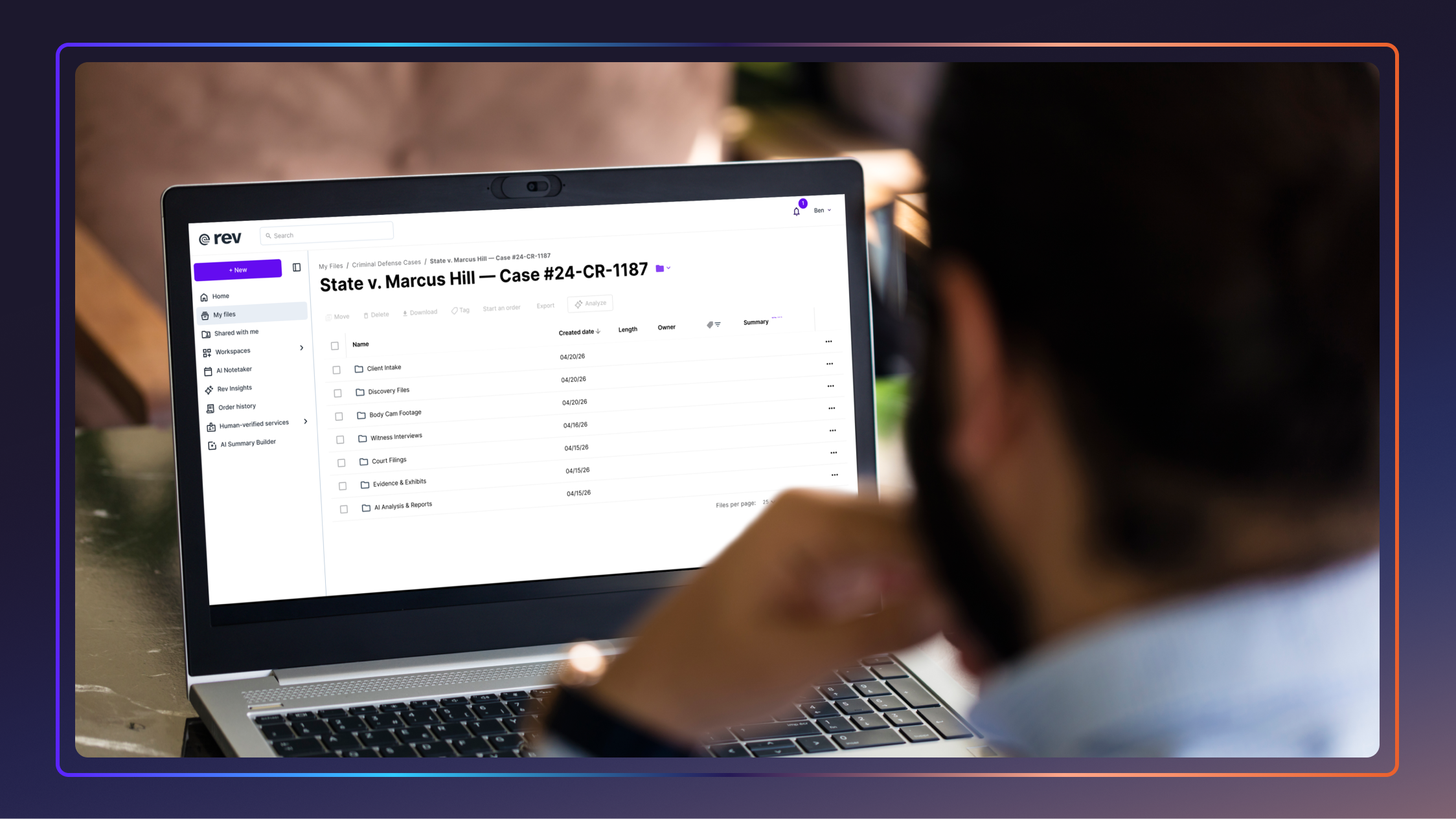
Rev’s Investigative Intelligence Platform turns multimedia evidence into interactive files and source-linked insights. Attorneys can search across recordings, photos, and documents to find relevant moments, and easily find the source for every single finding.
That fits the principle Colorado has now written directly into its professional-conduct rules: technology can help you move faster, but it should not replace a lawyer’s independent judgment.
Learn more about Rev’s legal transcription services in Colorado.